Could overturning the Insular Cases — a series of controversial early 1900s Supreme Court decisions that established a doctrine of “separate and unequal” treatment for residents of the territories — affect how we pay taxes in the Virgin Islands?
Right to Democracy, a nonprofit that works to advance democracy, equity, and self-determination in U.S. territories, released a report Tuesday — Tax Day in the United States — addressing assumptions and fears around the topic head-on.
“Each year people in U.S. territories pay more than $5 billion in federal taxes. However, most do not pay federal income tax. There is an assumption among many that what makes this unique tax treatment possible is the Insular Cases. This assumption creates a fear among many that overruling the Insular Cases could result in the automatic extension of federal taxes or other tax changes,” the nonprofit said in a press release announcing the new report.
Overruling the Insular Cases: What About Federal Taxes?, a report co-authored by Right to Democracy Co-Director Neil Weare and tax law experts Sumaya H. Bouadi and Alex Golubitksy, unpacks how overruling the Insular Cases would not trigger the automatic imposition of federal income taxes or other feared tax changes on the territories, according to the release. It also questions the common belief that federal policies related to taxes and benefits serve to benefit people in U.S. territories.
“This time of year, when people have taxes on their minds, is a good time to dispel the persistent myth that overruling the racist Insular Cases would trigger new taxes or disrupt the current tax framework. People do not have to choose between challenging the Insular Cases and protecting their wallet,” said Weare, who grew up in Guam.
“While it may be a surprise to many, Congress has broad powers under the Constitution not only to treat people in territories different from people in states but also to treat people between states differently from each other based on differences in geography and economic considerations,” said Bouadi, a tax law expert. “The U.S. Supreme Court has made clear for decades that the Uniformity Clause of the Constitution does not mandate the kind of strict uniformity many assume it does.”
“The Supreme Court re-emphasized as recently as 2022 that Congress has special powers – powers unrelated to the Insular Cases — when it comes to questions of federal taxes and benefits in U.S. territories,” said Golubitsky of St. Croix, a tax law expert with a specific focus on U.S. territories. “So, overruling the Insular Cases would not prevent unique tax treatment for people in U.S. territories.”
Right to Democracy is working to challenge the Insular Cases and the undemocratic colonial framework they established. In 2024, responding to a campaign led by Right to Democracy, the U.S. Justice Department established a formal policy “that the racist language and logic of the Insular Cases deserve no place in our law.” This followed statements in 2022 by Supreme Court Justice Neil Gorsuch that the Insular Cases “have no foundation in the Constitution and rest instead on racial stereotypes” and by Justice Sonia Sotomayor that the Insular Cases “were premised on beliefs both odious and wrong.”
The new report is the first in what will be a series examining common questions and concerns about what impact overruling the Insular Cases will have on people in U.S. territories, the release stated. As this series is being developed, Right to Democracy encourages people to reach out and share any questions or concerns they might have at info@righttodemocracy.us.
The full report is available on Right to Democracy’s website.
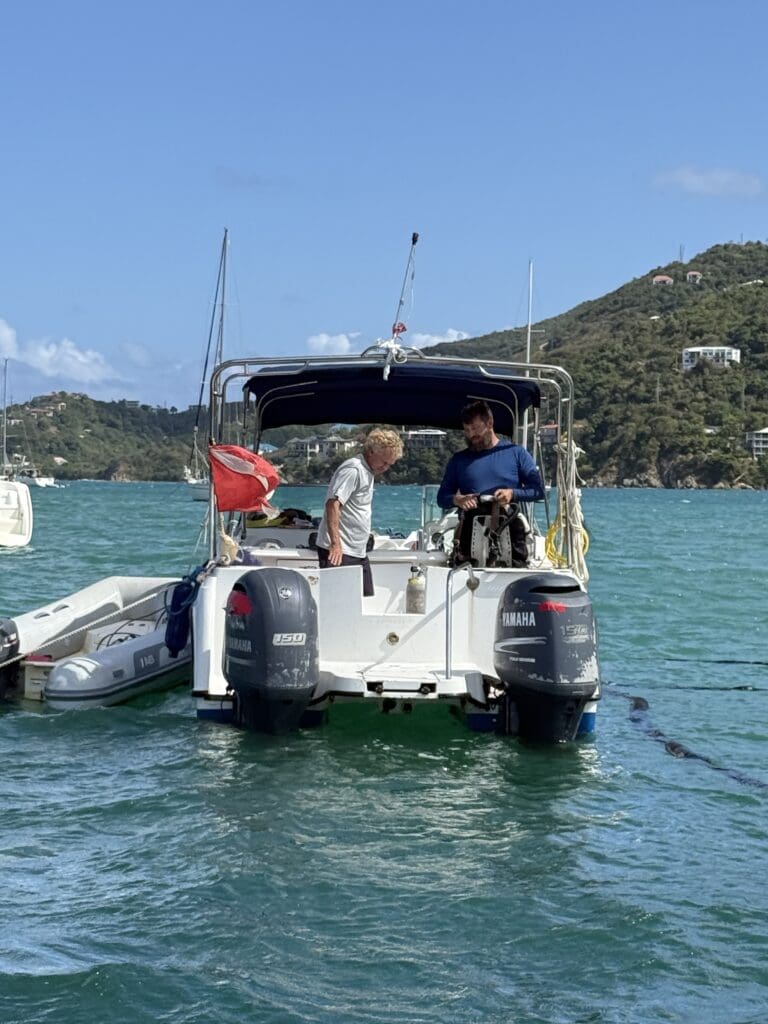
A team of investigators led by archaeologist Ken Wild has been conducting a study of a historic shipwreck in Coral Bay Harbor since February.
Ken Wild holds a metal detector to use underwater at the shipwreck site. (Photo by Colin Hanson)
They are conducting excavations and mapping the remains of a ship, officially known as Coral Bay Shipwreck 1, which has been partially submerged in mud for as many as 300 years.
The ship, around 65 feet in length, is typical of sailing vessels of the early 18th century, according to Wild, but it’s still unknown what flag it might have sailed under or what its primary purpose might have been. “Did it belong to a planter, a trader, a smuggler, a military unit? There seem to be gun barrels, but any ship would have to be armed because of the danger of piracy,” Wild said.
Wild is hoping that artifacts they find, such as ceramics and bottles, will narrow down the date of the ship’s activity, and wood samples might indicate where the ship was built. One of the main objectives of the testing is to determine the integrity of the ship. The fact that it is buried in thick mud raises the possibility that organic remains — such as cloth, rope, and plant remains — could be preserved.
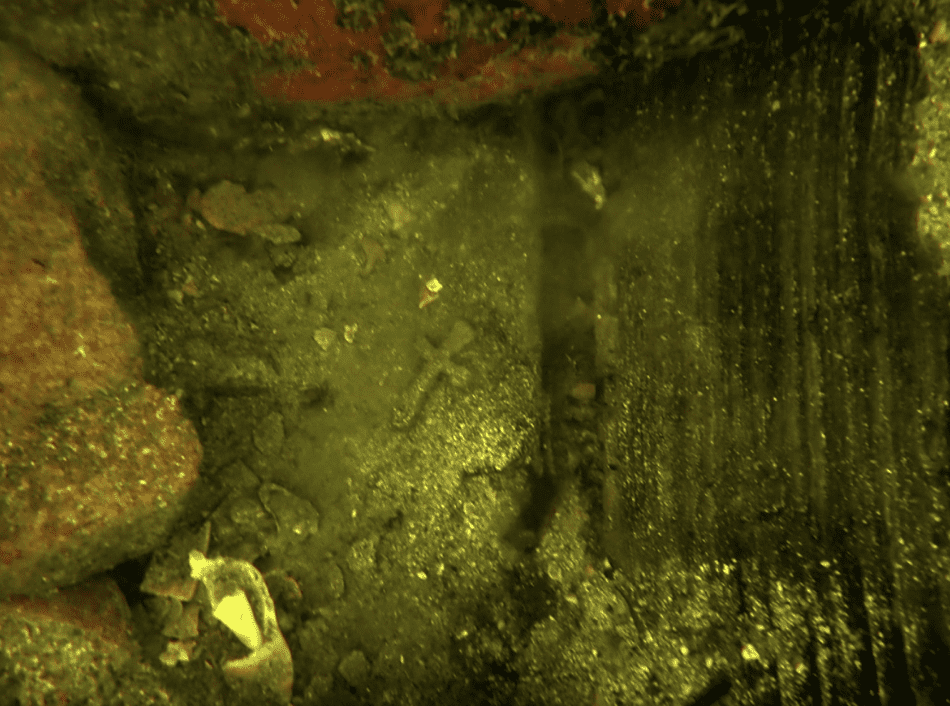
If so, Wild said the wreck would be extremely important as it could answer many research questions about the history of the Virgin Islands during this era. He’s looking forward to the subsurface testing in the coming weeks. So far, earlier investigations have revealed clay pipe stems commonly used by Dutch planters, a small cross of pewter or silver, and bottles that were in use in the 1730s or 1740s.
An earlier investigation of Coral Bay Shipwreck 1 revealed a cross made of pewter or silver. (Photo by Leah Hanson)
These artifacts suggest the boat was Dutch and was plying the seas around the time of the Slave Insurrection in 1733 on St. John, but at this point, it’s impossible to know.
“The Virgin Islands comprise approximately 90 islands, islets, and cays, all within a day’s sail of one another and visible from Puerto Rico, “ Wild wrote in his study proposal. “Proximity to Spain’s prosperous Puerto Rican port rendered these small islands, with their excellent anchorages and surrounded by high hills such as Coral Bay, ideal rendezvous and hideouts for Dutch interlopers, Queen Elizabeth’s Sea Dogs, and French Huguenots.”
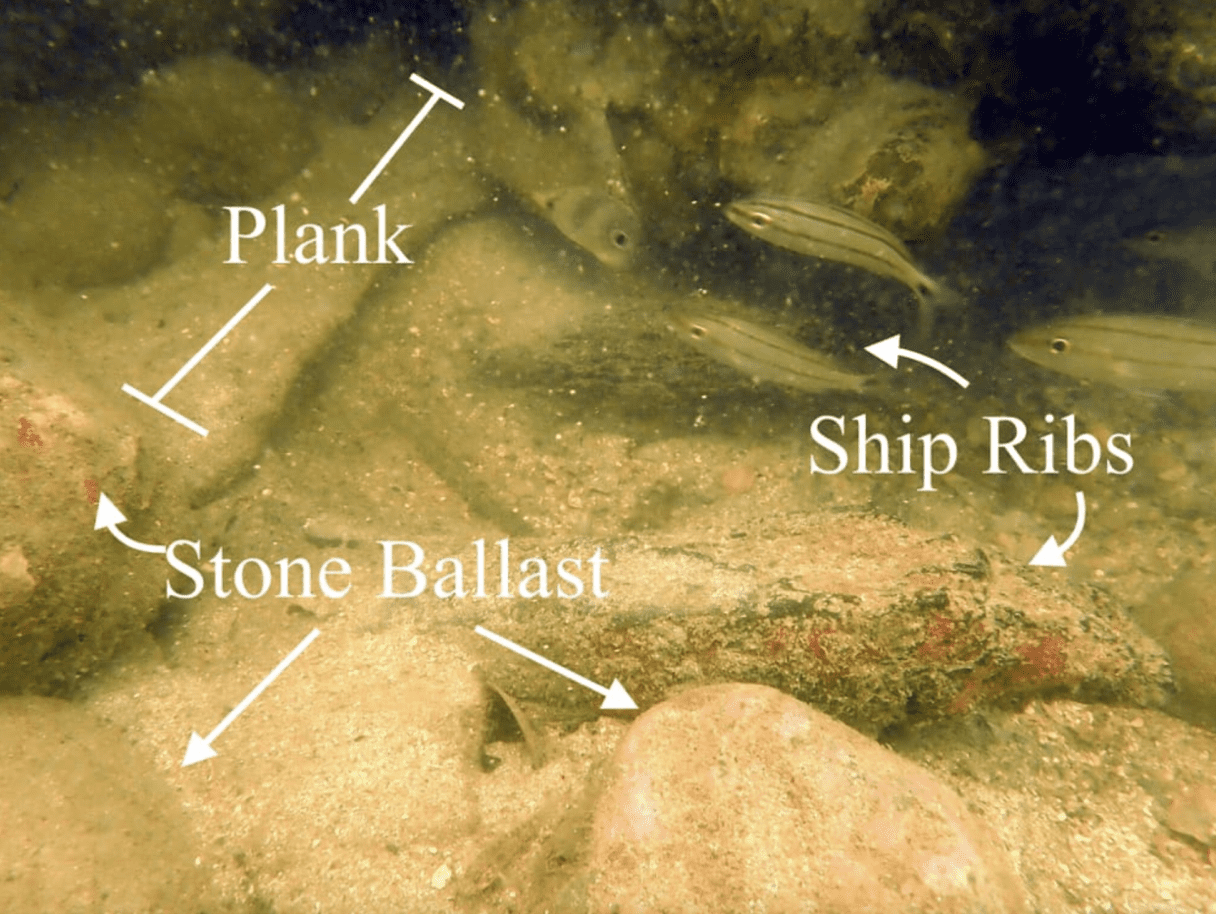
Parts of the shipwreck in Coral Bay are visible but are difficult to detect after being submerged for centuries. (Photo by Leah Hanson)
Wild is working with a select team of volunteer divers to map out a grid for further exploration of the wreck. They will use a dredge to suck up the mud and carefully screen it for artifacts and other clues that might tell the ship’s story in more detail. Anything of significance they find will be replaced after the investigation has been completed. Then the site will be covered by a protective mat.
Ken Wild and maritime architect Steve Lacey prepare to examine sediment dredged from the bottom that is pumped up through a hose. (Photo by Colin Hanson)
Their work isn’t easy. The ship is submerged under about 18 feet of water. On a really good day, visibility is around 10 feet. On most days, it’s more like two. “You kind of do it by braille,” joked lead diver Colin Hanson. “You can usually see the ballast pile, and sometimes you can see the ribs and timbers.”
The investigative study is being financed by private donors and funding from the St. John Historical Society, and donations are being gratefully accepted.
The project is being conducted under the auspices of the Virgin Islands State Historic Preservation Office, headed up by Sean Krigger.
“My hope is that Ken will be able to verify the age of the ship. Thus far, he thinks it’s a Dutch ship from the 1700s, a very interesting part of our history,” said Krigger.
Wild has said ships of this size were oceangoing and were used in the Slave Trade.
Until last year, the shipwreck was located directly below a section of a planned marina. The Yacht Club Summer’s End, also known as the St. John Marina, has been planned since 2014 but has not yet received all its permits. As more data confirmed the wreck’s historical significance, the marina designers cut back on the docks’ footprint.
Krigger said he hoped that this study will better define the site. “We have been working with the developers of the Summer’s End Group. They have committed to protecting this resource and made changes to their marina design. The better we can define the limits of the site, the better we can protect it.”
More than 30 years ago, mariners in Coral Bay discovered portions of Coral Bay Shipwreck 1 in the middle of the mooring field. Wild completed the first archaeological report on the shipwreck for the Virgin Islands government, identifying it as an early 18th-century wreck several years ago.
Since then, a number of researchers have visited the site, including a team of investigators that arrived on island to conduct an additional survey. Fearing that news of the discovery would lead to the desecration of the site, the information was kept quiet until 2021.
Krigger said the Historic Preservation Office usually does not publish the location of shipwrecks to protect them from being plundered by modern-day treasure hunters. “We have resources to enjoy but not for individuals to profit from,” he said. Recently, however, they decided to mark the location of the wreck of the Santa Monica in Round Bay to keep boaters from damaging it when they drop their anchors.
This phase of the investigation of Coral Bay Shipwreck 1 is expected to be completed by the end of April. Members of the public who wish to donate or assist in other ways should contact Ken Wild at 904-583-4721.
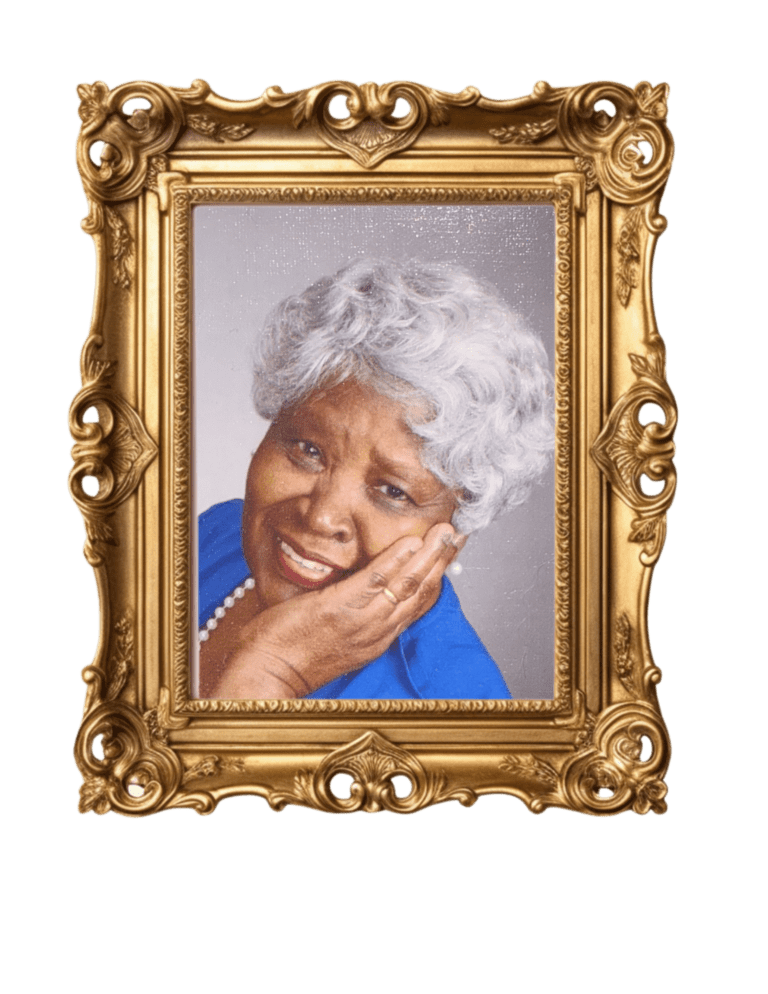
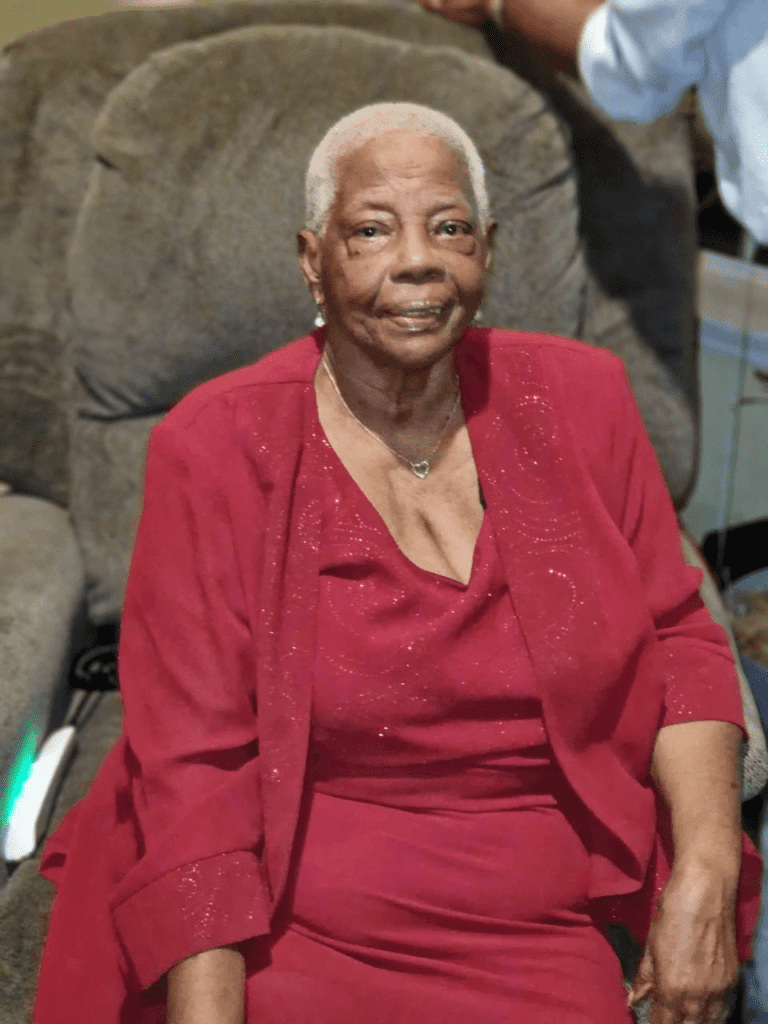
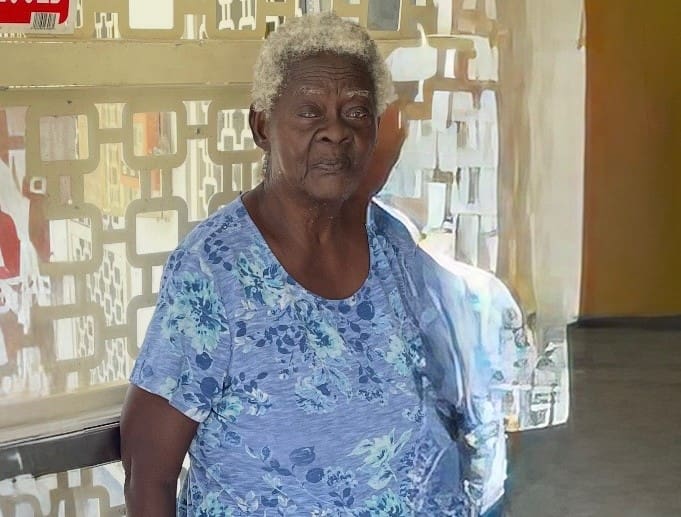
Anna Maria Molloy Ferdinand, a beloved wife, mother, grandmother, sister, aunt, and friend went home to be with the Lord on March 20, 2025, at the age of 84. Anna Maria Molloy Ferdinand
She was born on July 4, 1940, in Christiansted, St. Croix, United States Virgin Islands, to Clarence A. Molloy Sr. and Mabel I. Molloy. Anna graduated from St. Mary’s Catholic School in Christiansted, St. Croix USVI in 1958, and went on to attend the University of St. Mary in Leavenworth, Kansas, where she was enrolled in the Nursing Program through 1960. Anna’s academic journey continued in 1988 when she attended Trinity University in Washington, D.C., and graduated in 1990 with a Bachelor’s Degree in Human Relations. Throughout her career, Anna worked as a Registered Nurse in various departments and hospitals across St. Croix, St. Thomas, New York, and Washington, D.C.
Anna is survived by her bonus daughter Dahlia Petersen, daughter Derika Ferdinand Walker; sons Derone F. Ferdinand and DiJon F. Ferdinand Sr.; son-in-law, Reginald Walker, daughter-in-law, Venus Ferdinand; grandchildren, Caresse Hansen, Ajahnique Smith, Maleeka Jarratt, DaVionne Ferdinand, Malik Jarratt, De’Ja Ferdinand, Dai’Ana Ferdinand, and DiJon Ferdinand Jr.; her sister Judith Molloy; sisters-in-law Elizabeth Ferdinand, Ethel Ferdinand, Amy Ferdinand, and Juel Molloy; along with a host of nieces, nephews, and extended family. Anna also cherished her close friendships with Shelley Thomas, Juliet Thomas, Doris Henneman, Verna C. Garcia, Myrtle Daniel, Asta Evans, Christine Rudinski, Eltha Hendrickson, and many others.
Anna was preceded in death by her parents Mabel I. Molloy and Clarence A. Molloy, Sr.; husband, Franklin D. Ferdinand; daughter, Caresse D. Ferdinand; brothers, Clarence Molloy, Jr., Claude Molloy, Sr., and David Molloy; sisters, Mariel Williams, Eileen Roberts, Florabelle Abbott, Doris Tobias, Eleanor Singh, Teresa Molloy and Rita Vallarde.
A memorial service will be held to celebrate the life of Anna Maria Molloy Ferdinand on Friday, April 25, at 11 a.m., at St. Joseph Catholic Church, 2020 St. Joseph Dr., Largo, MD 20774.
U.S. Virgin Islands Attorney General Gordon C. Rhea joined attorneys general from 38 states and territories Monday in calling on Congress to bar pharmacy benefit managers from owning or operating pharmacies — a move they say is necessary to protect independent drugstores and consumer access to affordable medications, the Justice Department announced.
“Pharmacy benefit managers were meant to serve as intermediaries to help manage drug costs, but instead, they’ve used their position to dominate the marketplace and crush independent pharmacies,” Rhea said in a statement. “It’s time for Congress to act decisively and prohibit PBMs from owning or operating pharmacies.”
In a joint letter led by the attorneys general of Arkansas, Massachusetts, Missouri and Vermont, the bipartisan group warned congressional leaders that PBMs have shifted from administrative facilitators to powerful conglomerates that exert control over drug pricing and pharmacy competition. The top PBMs — 4now vertically integrated with insurers and health care providers — operate their own pharmacies, while simultaneously managing prescription plans that affect their competitors, the letter said.
According to the coalition, this structure allows PBMs to impose arbitrary, confusing and unfair contract terms on independent pharmacies, leveraging their market position to edge out smaller rivals.
The letter urges Congress to pass legislation that would prevent PBMs and their parent companies from owning any pharmacy, arguing that such action is critical to restoring transparency and competition in the prescription drug market.
Attorneys general from states including California, New York, Texas, and Florida joined the effort, along with representatives from Washington, D.C., and U.S. territories such as American Samoa.
A woman who called police to report a theft at her St. Croix residence was arrested early Sunday morning after allegedly assaulting the person she accused, the V.I. Police Department announced.
According to a police report, officers were dispatched at approximately 2:51 a.m. Sunday, to Anna’s Hope Villas, following a report of a stolen lounge chair and a pet rabbit. The complainant, identified as 42-year-old Keosha Richards, told responding officers that she believed a friend had taken the items.
Officers proceeded to the friend’s residence to investigate the complaint. While police were present at the location, Richards arrived, exited her vehicle holding a gray baseball bat, and advanced toward the individual, who had just stepped outside. Officers instructed Richards to drop the bat, but she refused and kicked down the gate to the property, the police report stated.
Police said they intervened and removed the bat from her hands, but Richards continued to approach the individual. She then picked up a five-gallon bucket filled with sand and struck the man on his left leg, causing pain, the report stated.
Richards was arrested at the scene and charged with simple assault and battery. She was remanded to the John Bell Correctional Facility after failing to post $1,000 bail. She is awaiting her advice of rights hearing, police said.
In Loving Memory of Cecil S. Jones
December 21, 1943 – March 25, 2025
It is with deep sorrow and love that we announce the passing of our beloved Cecil S. Jones, who departed this life on March 25, 2025, at the age of 81.
Cecil S. Jones
Born on December 21, 1943, Cecil was a cherished husband, devoted father, proud grandfather, and loyal friend. He leaves behind a legacy of strength, wisdom, and unwavering faith that will forever be treasured by all who knew and loved him.
Cecil is survived by his loving wife, Hilarie Jones, and his children: daughters Linda I. Samuel and Laverne Jones-Ferrette; and sons Mark Jones, Jeffery Jones, Stephen Jones, and Timothy Jones. He is also lovingly remembered by his grandchildren: Everton Samuel Jr., Shanika Fausty, Cyanna Samuel, Michael Sammuel, Makayla Samuell, and Asana Ferrette; and great-grandchildren Kalise Faust, Serene Faust, and Malachi Faust.
He was predeceased by his parents, Helen Douglaus-Jones and Edward Jones; his son Richard Jones; his brothers Vincent Jones and Fregis Jones; and sister-in-law Mona Matthew.
Cecil is survived by his brothers Kenneth Jones and his sisters Rita Brooke Jones; uncles Belham Jones, Cleaver Jones, and Johnson Jones; and aunts Vectorine Jones and the late Gertrude Jones. He is fondly remembered by his nieces Bernadette Jones, Judy Jones, Jessica Jones, and many more too numerous to mention; nephews Mitch Jones, Vincent Brook, Lindon Brook, and others; as well as cousins Dr. Huggins, Weston Huggins, Desmond Ryner and family.
Also mourning his loss are his sons-in-law Everton P. Samuel and Stephen Ferrette; brother-in-law Mac Thompson, Denzel Matthew, Manny Thompson, Alford Thompson, and Neville Alexander; sister-in-law Carol Matthew-Mitchelle; and grandson-in-law Trey Faust.
Cecil was a man of principle and purpose, a guiding light in the lives of many, and a source of comfort, laughter, and encouragement to all who crossed his path.
The viewing is scheduled for Tuesday, April 15, between 3 and 5 p.m. at Divine Funeral Services Chapel. Funeral service celebrating the life of Cecil S. Jones will be held on Wednesday, April 16, at Frederiksted Baptist Church. A public viewing will begin at 10:00 a.m., followed by the funeral service at 11 a.m. Interment will take place at Kingshill Cemetery.
Though Cecil has departed from this world, the impact of his life and the love he gave will remain in our hearts forever.
Rest in eternal peace, Cecil. You are dearly missed and forever loved.
Bernice C. Coumarbatch, 89, of St. Thomas, U.S. Virgin Islands passed away Tuesday, March 25, 2025.
Bernice C. Coumarbatch
She is survived by her Daughters: SeSe Estrada Jackson, Mable Estrada Hurtault, Kathleen Barry, Linda Karen LaMotta; Son, Denroy Coumarbatch; Grand-Children: Salih, Femi, Louis, Jr., Zacch Estrada Petersen; Tawangka and Tamika Lake, Khadeem and Khasani Coumarbatch; Great Grand Children: Christian Estrada (deceased), D’Ajahni, Majestik, Nemah, and Sydney Estrada-Petersen, Kamali Brooks, Sade Brooks (Deceased); Kenyon, Kaylie, Keliyah, Lenowan and Milan Lake and Soleil Beauplant; Step Mother-in-Law, Millicent Coumarbatch; Brothers, Denis Prosper and Reuben Prosper; Sister-in-Law, Kendra Prosper and Marie Prosper; Daughter-in-Law, Anitra Santos Coumarbatch; Sons-in-Law: Charles Jackson, Keith Lamotta, Rufus Hurtault and Remi Lake; Nieces: Marvo Azille, Stanley, Debra, Galina, Suzanne, Janet Prosper and many others too numerous to mention; Nephews: Stanley, Collins, Weaver, Denzel and Delanee Prosper, Peter Azille, and many others too numerous to mention; Great Nieces & Nephews: Chesney Seaman, Zoey, Cody, Aameer, Aidan, Ajani, Nathan, Shernon, Shaheed Prosper, Mattie Azille, Joaquin Prosper-Jones and many others too numerous to mention; Godchildren: Shawn Aaron, Sonia Athanaze, Alex Bruney, Brittany James, Desiree M. Questel-Darling, Selden Samuel and Alicia Taylor.
Special Family and Friends
Jones and Eunice Pond & Family, Paula Pond, Nalda & Kenneth Owens & Family, Ann Paynter & Family, Heather James, Bertha Samuel & Family, Francisca Aaron & Family, The Williams Family, Jean Winston & Family, Felix Colaire, Elaine Williams, SonnyBoy Samuel & Family, Terrence Toddy, Helen Bruney & Family, Lucy Dabreau & Family, Marie & MarieRose Oracius, Clementina Athanaze & Family, Annette Cooper & Family, Arinus Laudat & Family of Dominica, The Laudat Family, Janey Colaire & Family, Betty Bellot Bruney & Family, Dorna Hendricks, Ursuline Estrada & Family, Juliana Williams, LeBlanc Family, Pat Lander Prosper & Family, Nanyamka Farrelly & Family, The Colaires, The Thomas Family, The Coumarbatch Family, The Davis Family, Angelo Matthew & Family of Dominica, Franklin Lawrence & Family, Harold Attidore & Family, The Hurtault’s of Dominica, Laronde Family, The Austrie/Green Family, Jean Winston & Family, Janice Grant, Celestine Martin & Family, Dara Cooper & Family, Gracita Abraham, Bernard Lanclos & Family, Francis John Baptiste & Family, Justina Bernard & Family, Bernadine Vincent & Family, Church of God of Prophecy Family, Bishop Kenneth Benjamin & Family, Yvonne Henley & Family, Doretta Dunrod, Myrtle Burnett & Family, Daisy Hodge, Annette Hodge & Family, Bernice Osborne & Family, Mary & Collins Romney, Joyce Fahie & Family, Sarah Kingston & Family, Dean Saunders & Family, Ruth Frett, Delpha & Ashley Rogers, Corina Martin, Lillian Caines, Joan Pascal, Sylvia Sylo Dumas, Osborne JohnBaptiste, Graveny Carbon, Ricky Martin, Darius Benjamin and a host of other relatives and friends too numerous to mention.
The Funeral Service Celebrating Bernice’s Life will be held on Monday, April 28 in Oasis Church of God of Prophecy at 10 a.m. The Viewing will be held the morning of the Services from 9 a.m. until 10 a.m. Interment will be in Eastern Cemetery, Smith Bay.
Arrangements entrusted to Turnbull’s Funeral Home & Crematory Services.
We regret to announce the passing of Rosalita Meyers Johnson, better known as “Rosie”, “Rose”, “Mrs. Johnson” who passed away Sunday, April 06, 2025.
Rosalita Meyers Johnson
The funeral services will be held Tuesday, April 29 with viewing at 9 a.m. until 10 a.m. followed by service at 10 a.m.in Turnbull’s Funeral Home. Interment will follow at Eastern Cemetery, Smith Bay.
She is preceded in death by her brothers: Ebenezer Meyers and Alphanso “Jake” Jacobs, Jr. Left to mourn is her sister, Araminta Meyers Liburd, better known as “Minta”; niece, Coleen Liburd; nephews: Calvin Liburd, Jr., Eugene Challenger, Sergio Henry and Shawn Henry. Arrangement entrusted to Turnbull’s Funeral Home & Crematory Services.
As the Senate prepares to consider a special-order bill Monday to address the financial crisis facing the territory’s hospitals, the executive committee of the Virgin Islands Government Hospital and Health Facilities Corp. met Sunday to formalize its response — crafting a detailed letter to Senate President Milton Potter and outlining immediate steps needed to stabilize operations.
According to territorial board Chair Jerry Smith, Delegate to Congress Stacey Plaskett also joined Sunday’s meeting, offering federal support and pledging to advocate for the administration and hospital staff as they navigate a path forward. The executive committee, meanwhile, authorized Smith to draft the communication to the Legislature, which he said he hopes will be read into the record during Monday’s session.
Smith expressed regret that the hospital board was not invited to testify but said the letter offers a clear and comprehensive look at both the roots of the crisis and the reforms already underway.
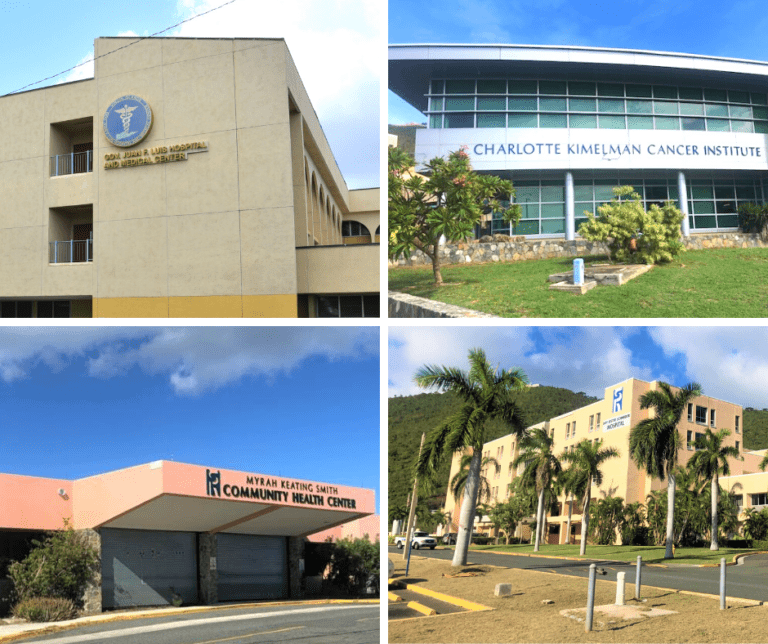
Monday’s special session comes after months of escalating concern over severe staffing shortages, delayed vendor payments, and deteriorating conditions at both the Schneider Regional Medical Center on St. Thomas and Gov. Juan F. Luis Hospital on St. Croix. In recent public meetings and interviews, physicians warned that the system is on the brink of collapse, with some doctors resigning over unsafe conditions and the lack of timely intervention.
In the draft letter, the board outlines a series of priorities grouped into immediate, midterm, and long-term needs. At the top of the list: short-term stabilization funding to cover critical vendor debt, which now totals approximately $80 million across the two hospitals. “This debt reflects a long history of fiscal imbalance that can no longer be managed with temporary or incremental measures,” the letter reads, urging lawmakers to establish a reliable revenue source to support a bond issuance that would repay vendors and restore financial credibility.
The board also points to deeper structural challenges, including outdated technology, inefficient administrative practices, and inflexible Medicaid funding rules. “This practice not only limits transparency but also places an unfair financial burden on the hospital system,” the letter says of the current model, where the local Medicaid match is bundled into the hospitals’ operating allotment without being paid directly.
The letter goes on to detail several key initiatives already underway, including a strategic restructuring effort led by Ernst & Young consultants, a search for a centralized chief financial officer and chief technology officer, and a Request for Proposals process for a new revenue cycle management partner expected to be selected at the board’s April 23 meeting. Plans to transition to a cloud-based electronic health records system — MEDITECH as a Service — are also highlighted as part of a broader push toward modernization and efficiency.
In a significant workforce-related move, the board is also seeking to revisit a long-expired collective bargaining agreement with the Association of Hospital Employed Physicians and introduce a modern compensation model. Officials say similar renegotiations with nurse unions in recent years helped reduce reliance on costly contract labor and stabilized staffing. Updating the physician agreement is seen as a necessary next step to improve continuity of care and allow the hospitals to directly bill for professional services.
Other policy recommendations include expanding autonomy for certified registered nurse anesthetists to increase surgical capacity, decoupling the Medicaid match from hospital allotments to improve transparency, and authorizing flexible retirement options to enhance recruitment and retention. The board also calls for legislation to address the issue of “boarders” — patients who are elderly or incapacitated and abandoned in hospitals due to the lack of long-term care facilities or family support.
“While short-term support is deeply appreciated and urgently needed,” the letter states, “we respectfully emphasize that only sustained reform — across funding mechanisms, workforce policies, and structural operations — will lead to the stability and future viability of the Territory’s hospital system.”
Sunday’s meeting also included a decision to move the board’s annual strategic planning retreat from August to June, in light of the urgency surrounding the hospitals’ future. The session, Smith said, will focus on finalizing systemwide reforms and mapping out implementation timelines.
Gov. Albert Bryan Jr. said “amen to destroying” the federal Education Department, calling it “terrible” in a panel discussion on “Trump 2.0” Saturday, hosted by the League of Women Voters of the Virgin Islands at the UVI Innovation Center on St. Thomas and remotely via Zoom.
Gov. Albert Bryan Jr. (Submitted photo)
The move is among several bright spots in the administration of President Donald Trump that the governor touted, noting he “always looks for the opportunity.” His fellow panelists — UVI economics Professor Mark Wenner of St. Thomas and financial and business development expert Jed JohnHope of St. Croix — sounded a more cautious note, warning that the 116 executive orders signed by Trump since he returned to office have brought economic uncertainty and the potential for inflation, a downturn in tourism, and the decimation of the territory’s immigrant workforce that is the backbone of the hospitality and construction industries.
“I promise I’m not a Republican,” Bryan joked. While there are “a lot of things that are frightful and that we should definitely pay attention to … the news media does a terrible job of informing us of what is actually going on and they do an excellent job of terrifying everybody about what is going on,” he said, riffing on a familiar GOP trope.
“Actually, we went to the White House and had the opportunity to sit down with many of his cabinet members as well as listen to the president firsthand, and there are a lot of things that are skewed because the news wants them to be that way. There are many opportunities,” said Bryan, referring to a series of meetings his office and V.I. senators held with federal officials in Washington, D.C., in February. He said he’s also hewing closely to Puerto Rico Gov. Jenniffer González-Colón, who is Republican and “a Trumper,” as part of his strategy to deal with the new administration.
Among the bright spots is Trump’s “drill baby, drill” attitude toward fossil fuels, which bodes well for reopening the St. Croix refinery, Bryan said, while lamenting the Biden administration’s EPA that shut down the aged plant under an emergency order in May 2021 because it deemed the environmental risks too grave for it to continue operating.
Dr. Mark Wenner (Submitted photo)
While the refinery will “probably get expedited permitting” to come back online, “the problem is we don’t have the capacity to monitor it. For example, there’s no air pollution specialists at DPNR, and with a retrenchment of the federal EPA, who is going to monitor the safe operation of this facility?” said Wenner, referencing massive cuts across all federal departments by Trump’s “Department of Government Efficiency,” run by Elon Musk. Over the medium- to long-term, this will increase the risk of accidents and emissions to the detriment of Crucians on the South Shore of St. Croix or downwind of the refinery, he said.
“I certainly adhere to what Mr. Wenner was saying in terms of the safety around it, but I was visited by Mike Martucci of the EPA last week [the new Region 2 administrator], and the one thing he said to us, he said that ‘I’m going to do everything I can do within the letter of the law to ensure that you get your refinery back.’ And that’s important to him and it’s important to me, because the law is the law,” said Bryan, referring to a visit by Martucci that was announced after the fact, so there was no press availability.
“What we were dealing with in a Biden administration was total unreasonableness. When you have the EPA administrator tell you that he doesn’t care about your economy, that it is of no concern, I think that’s blatant disregard for the people,” he said. “I mean, you have to be able to figure out a way where the people and these corporations can [operate] in a safe environment, and I think that’s what we’re working on now.”
Federal Departments in Flux
As for the U.S. Education Department, Bryan said he welcomes funds going directly to the states, or in this case the territory, to manage instead.
“I am behind President Trump 100%. Why do you think we send back all that money to Education?” he said, referring to grants that are lost if not used within a specific timeframe for tightly targeted projects, but which he said bureaucratic red tape makes impossible.
“The Education Department is terrible. It’s terrible. Amen to destroying in it. The way that they look at this is that they’re gonna give us the money directly. Instead of all this red tape — every year we have to go to this third-party fiduciary, and then we have to go through the Department of Education, which you could say is a fourth-party fiduciary,” he said.
Wenner cautioned that “at least in the interim transition there will be lots of uncertainty as to how our Department of Education will be able to continue programs that are essentially heavily supported by the federal government,” such as Pell Grants, a need-based federal financial aid program for college students from low- or middle-income households.
The same goes for FEMA, he said, which is also being dismantled under Trump, with the idea that funds will go directly to state governments to handle disaster relief. “We need to be concerned about a kind of cumulative effect of all of these policy changes and uncertainty and reduction in funding in the sense that we are an extremely vulnerable society and the combination of all of these other policy changes … will have a magnified effect,” said Wenner.
Tourism and Tariffs, Tariffs, Tariffs
With so much uncertainty, consumers curtail spending, and that could directly affect tourism, the USVI’s main economic driver, he said, noting that the Consumer Confidence Index is at its lowest level since the 2008 recession. “When people lose confidence and when their disposable income is going down, one of the first things they economize on is travel. So, as a major tourist destination, we probably suffer from less tourist demand, less tourist expenditures,” said Wenner. Moreover, as tourism declines, so does airlift as airlines reconfigure their routes.
Bryan, however, expressed confidence the V.I. market will weather the changes. “Tourism is on fire. St. Croix went from 60,000 to 250,000 cruise tourists. We’re upping our [airline] seats, we’re upping our occupancy rates, where we have one of the highest average daily rates in the Caribbean, which is good. Our tourism product is expensive and like Mr. Wenner said, it is getting more expensive because we don’t cater to a middle class. We cater to the upper-middle class, semi-luxury part of the market,” he said, which isn’t as affected by financial downturns.
Wenner also cautioned that the Trump administration’s seesawing on tariffs, and its proposed levy of up to $1.5 million on Chinese-built or flagged ships calling on U.S. ports, will increase the price of everyday goods, 96% of which the USVI must import, most often using smaller Chinese-made vessels. Additionally, there’s the backlash by other countries that have retaliated with their own tariffs on the U.S., including Canada, which has also pulled all American liquor from store shelves nationwide, including rum produced in the U.S. Virgin Islands — rum the territory is dependent on selling to help fund the Government Employees’ Retirement System.
Still, Bryan sees opportunity, given the territory’s unincorporated status, which exempts it from federal tariffs and duties that apply to goods entering the U.S. mainland and offers advantages for businesses that want to ship products to the USVI, add value, and then export them stateside without paying tariffs.
“Lately I’ve been having real good conversations with Guyana. As you know, they have a lot of oil there. It’s interested in bringing that oil to the Virgin Islands to refine if we could get our refinery up, and it looks like there’s a possibility with the Trump administration,” Bryan said. Likewise, it could revive the USVI’s luxury goods market, he added.
“With these new tariffs coming out of China, we can bring stuff through the Dominican Republic, through Trinidad, through Barbados, from China, bring it directly from China into St. Croix, into St. Thomas, and be able to sell those products at a considerably less rate than we have before,” Bryan said. “That means all of a sudden a Gucci bag where you might have paid $675 for plus tax in Florida will be $650 with no tax in the Virgin Islands. Rolex, you can think about all the things that we sell that will become appealing to us again. We capitalize on that market. Electronics direct from China, they would be 145% cheaper than in the states. Imagine telling millions of millennials and Gen Z, hey, you could get your iPhone in the Virgin Islands for half the price. What do you think is gonna happen to our tourism market?” he said. (On Friday night Trump exempted some electronics such as smartphones, laptops and televisions from the tariff, though they are still subject to a 20 percent fee.)
The question remains, however, who will work in manufacturing and rebuilding from the 2017 hurricanes if the USVI is not exempted from the administration’s crackdown on migrants, which has been most visible at the territory’s ports of entry and ferry terminals.
Unless temporary protective status for Haitians and Venezuelans remains — a judge has temporarily blocked Trump’s March 25 order to end the program — the USVI stands to be hit hard, said Wenner. “This will affect us because we have two sectors that are dependent on immigrant labor, our construction sector and our hospitality leisure sector, so we will have an even more huge shortage of labor,” he said.
The Way Forward
Jed JohnHope (Submitted photo)
JohnHope, in a presentation titled “Flipping the Johnnycake,” said that in response to the unpredictability and chaos of the Trump administration, the territory needs to strengthen its economic base, including building regional trade alliances; diversify its revenue sources, including reducing its reliance on federal funding and protecting against tourism volatility or declining rum sales; make more efficient use of public funds, including austerity measures, anti-corruption initiatives, and public-private partnerships; and aggressively attract private capital. “Public funds alone cannot fund our future,” he said.
Now is the time for the USVI to leverage its duty-free status into niche manufacturing — construction materials, modular housing components, agri-processing and marine tech, for example — that feeds mainland markets or disaster recovery supply chains. “Made in America” is a priority of the Trump administration, “and the Virgin Islands can help,” he said.
It also needs to lobby Trump to bring back Section 936 of the federal tax code, enacted in 1976, that allowed subsidiaries of U.S. firms operating in Puerto Rico to pay no federal taxes on profits derived there, even if the money was returned to the United States, said JohnHope. Additionally, through the Caribbean Basin Initiative in 1982, 936 funds also became a low-cost source for commercial development activities in other countries of the region, according to the nonprofit Teaching for Change. However, the exemption was deemed ineffective and was phased out by 2006.
To address workforce shortages, the territory should “scale vocational training and certification programs to support manufacturing and technical industries,” said JohnHope, and as a secondary strategy, leverage Puerto Rico’s workforce. The USVI could also take lessons from its neighbor and focus on “high-value, low-weight sectors like pharmaceuticals and medical devices — ideal for an island economy with limited port capacity,” he said. There are also opportunities in petroleum products, rum, watches, renewable energy components, and emergency supply manufacturing tied to FEMA and Housing and Urban Development needs.
“Puerto Rico taught us that tax incentives can drive rapid industrialization — but unless they’re paired with long-term local investment, workforce development, and economic diversification, they can vanish as quickly as they came,” said JohnHope.
The Economic Development Authority “has great incentives” but they need to be better marketed to make substantial strides in business attraction, he said. As Bryan often notes, 87 people pay 70 percent of the income taxes in the Virgin Islands, and the territory should invest in a program to attract 87 more, said JohnHope.
Additionally, with tourist demand forecast to decline, St. Thomas needs to increase its offerings to become more competitive and should make reopening the Mahogany Run Golf Course a priority. The territory also should subsidize flights and invest in opening new markets, he said. “Airline routes can be bought for around a $2 million per year minimum revenue guarantee. Airlines are very interested in adding new routes, which drives hotel demand.”
Bottom line, said JohnHope, the USVI needs to be decisive and strategic in addressing the chaos and uncertainty of the Trump administration.
“The effects of the tariffs will be worse in the isolated Virgin Islands. We need to be proactive and tell Washington what we need to be successful,” he said.
Saturday’s panel discussion is available to view on the League of Women Voters of the Virgin Islands’ Facebook page.
Editor’s Note: A previous version of this story incorrectly stated that the Education Department oversees school lunch programs. That is a function of the U.S. Department of Agriculture’s Food and Nutrition Service.