


Dominican Republican National Convicted of Alien Smuggling by Federal Jury

St. Croix Student Charged in Bus Driver Beating Takes Plea Deal
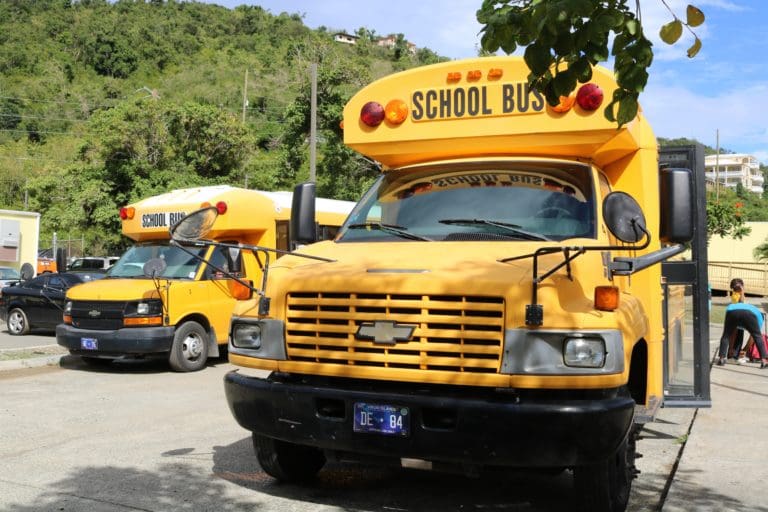
A St. Croix student charged with attacking a school bus driver in October has agreed to plead guilty to one count of third-degree assault following a hearing last week in V.I. Superior Court.
Caleave Nigel Mascall Jr. was arrested Oct. 2 and charged with third-degree assault, damaging or tampering with a vehicle and disturbance of the peace. He was remanded to the John A. Bell Adult Correctional Facility but was released to a third-party custodian on Oct. 16 after posting 10 percent of the $25,000 bail and agreeing to abide by a curfew, among other conditions.
According to a record of the court hearing and a subsequent status conference held on Jan. 31, the remaining charges will be dismissed with prejudice, meaning they may not be brought again, and Mascall will be sentenced to probation on March 12 under the territory’s laws governing young offenders once a presentence report is completed.
“The Court inquired of the Defendant and found that he was competent to enter an informed plea, and that his plea was knowingly and voluntarily given,” according to the order issued by Superior Court Judge Ernest E. Morris Jr. “The Court accepted the Defendant’s guilty plea but did not adjudge the Defendant guilty, in contemplation of considering the Defendant’s plea under 5 V.I.C. § 3712(a). The Defendant is 18 years old and has no prior offenses. The Court determined that the Defendant is suitable for treatment under 5 V.LC. § 3712(a). The Court required a presentence report, pursuant to 5 V.I.C. § 3712(b),” it said.
Described in the court filing as the “3712(a) Treatment,” it refers to a section of V.I. Code dealing with first-time offenders under the age of 21 convicted of a nonlife offense and offers the possibility of expungement after five years if the defendant maintains a clean record. Mascall was 18 at the time of his arrest.
Two minors who were arrested along with Mascall were released to their parents pending juvenile court proceedings. All three were students at St. Croix Central High School.
The attack occurred after a verbal altercation between the driver and the students as they were getting off the bus, the V.I. Police Department reported at the time. Video of the incident showed the driver on the floor of the vehicle as he was punched and kicked, suffering injuries that required his hospitalization. Mascall allegedly then left the bus but returned to smash the glass in the door, according to the police.
The incident led to the suspension of all school bus services in the St. Croix district as drivers staged a two-day job action in support of their colleague, and was strongly condemned by the V.I. Education Department.
Vincent K. Lake Dies

The family of the late Vincent K. Lake is saddened to announce his passing on Jan. 3, 2025.

Vincent is preceded in death by his mother, Evelyn Lake and sister, Pearl Lake.
Vincent is preceded in death by his Mother, Evelyn Lake and Sister, Pearl Lake. He is survived by his Daughters, Julie and Cherise, Sons, Attiba, Kareem, and Alpha, Daughter-in-law, Sandrine Lake, Aunts-in-law, Elenath and Frances Lake, Uncle, Henry Lake Sr., Uncle-in-law, Curtis Watty, Niece, Karen Carty, Cousins, Lucien, Ludrick, Henry Jr., Lomist, Hertta, Dale, Claude Watty, Carleen, Ron, Leslie, Syl, Al, Angie, Arnette and second and third cousins too numerous to mention, Eldon Rey and family, Sasso family, Renford and family, and other relatives in Anguilla, Special friends, Osborne, Ruby, Berry, Lee, Pope and family, and all of Fleming’s Transport workers and family, Carty Family, and Danielson FamilyMemorial Service is scheduled to be on Feb. 15 at Divine Funeral Services Chapel in Peter’s Rest. Service begins at 10 a.m.
Professional Services Entrusted to Divine Funeral Services & Crematory.
Ray Enrique Romero Dies

The family of the late Ray Enrique Romero is saddened to announce his passing on Jan. 10.

He is preceded in death by his Grandparent: Candida Bolques
He is survived by his mother and father, Miriam Romero and Ray Romero; daughters, Veronica and Aurora Romero; son, Ray E. Romero Jr.; grandchildren, Aliana Romero, Elianny Romero, Xiete Romero, Isabelle Brooks, Sayuri Vasquez; brother, Luis E. Ayala; sister, Maritza Porcil; uncle, Edwin Figueroa; nieces, Melissa Porcil and Adesha Porcil; cousins, Julio Figueroa, Angelie Figueroa, Annie Bolques, Papo, Alejandro Bolques, Ashley, Joel, and Joshua; brother-in-law, Evans C. Porcil; special friends the Trinidad family, Glenda Bautista, Alphonso Daniel, Emily, and Alejandro Bolques.
Funeral services will be on Feb. 11 at El Triumpho Church in Mon Bijou, Viewing at 9 a.m., Service 10 a.m.
Interment will be following to Kingshill Cemetery.
Professional Services Entrusted to Divine Funeral Services & Crematory
VIDE Announces Task Force To Support Students Amid Immigration Enforcement Anxiety
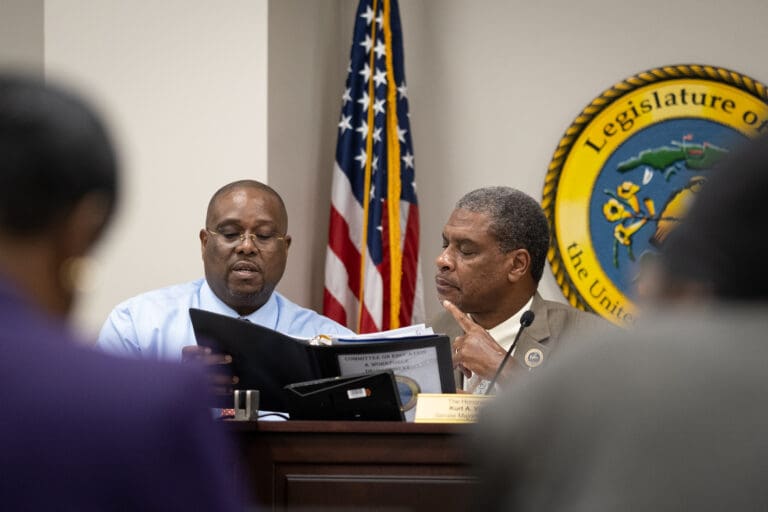
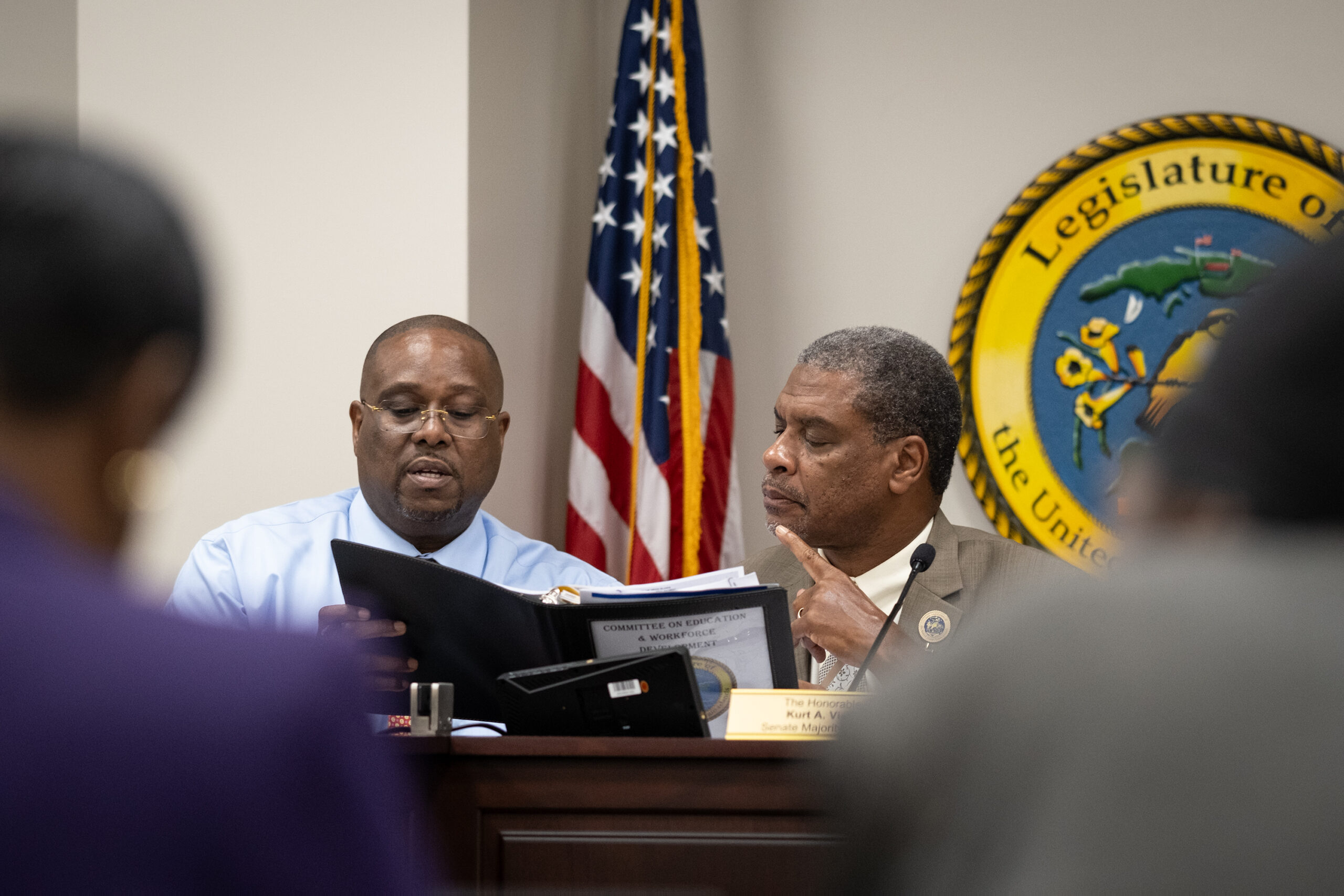
Leadership from the Virgin Islands Education Department told lawmakers on the Senate Education and Workforce Development Committee Wednesday that policies set by the Trump administration have “direct implications for our public education system, as many undocumented students are currently enrolled in our schools.”
St. Croix Deputy Superintendent Victor Somme III said hard-line immigration policies at the federal level — and an increase in enforcement activities by Immigration and Customs Enforcement — have placed “significant” pressure on immigrant communities. Reports of visits to territory schools by immigration agents circulated last week, though a Homeland Security Investigations spokesperson told the Source Tuesday that no enforcement actions had taken place in U.S. Virgin Islands schools.
“Despite the political debates surrounding immigration, one undeniable legal and moral obligation remains,” Somme said. “All children, regardless of their immigration status, have the right to a free public education.”
That precedent dates back to the 1982 court case Plyler v. Doe when the U.S. Supreme Court ruled that a state cannot prevent the children of undocumented immigrants from attending public schools. Somme said the V.I. Education Department “stands firmly behind this legal precedent and remains fully committed to educating every child who walks through our doors.”
“We do not, and will not, inquire about a student’s immigration status, nor will we allow external pressures to dictate who is entitled to an education,” he said.
Noting a Jan. 29 directive issued by Gov. Albert Bryan Jr. stating that government employees and educators are not required to assist federal immigration authorities unless mandated by law, Somme said the Education Department has created a task force to protect undocumented students’ right to learn and shared a guidance document with school administrators, staff, bus drivers and school professional unions.
Lawmakers, including Sen. Marise James, who chaired the Senate Education and Workforce Development Committee during the 35th Legislature, and freshman Sen. Hubert Fredericks pointed out that the specter of immigration enforcement threatened to inflict even more learning loss on a group of students who have already weathered two massive disruptions to their schooling.
“So clearly, clearly we had the storm loss, we had the COVID loss — pandemic loss — and now we’re going to have the ICE loss,” Fredericks said. “These losses will be reflected in the forthcoming numbers because these students will not be coming to school, as we have already experienced.”

Education Commissioner Dionne Wells-Hedrington said the newly created task force is working on “bridging that gap” for affected students.
“My — an additional concern that we have is them being able to focus,” she said. “They may be coming to school, but focusing and worrying about whether your mother or father could be deported still is an issue — that social-emotional piece — and those coordinators play an intricate role there as well.”
Wells-Hedrington added that it’s not only students who are worried. The school system’s international teachers have also expressed concern that they could be subject to deportation.
Wednesday’s testimony from Education leadership also included an analysis of student test scores for the 2023-2024 academic year. Third- through eighth-grade students, high school sophomores and high school juniors were tested using the Smarter Balanced assessment system.
According to the Education Department, 17.2 percent of tested students achieved grade-level proficiency in English Language Arts, compared to 13.1 percent last year. Just over 6 percent exceeded standards, compared to 4 percent last year.
In math, 6.3 percent achieved proficiency — up from 4.1 percent last year — and 21.3 percent of students demonstrated proficiency in science.
Lawmakers found plenty else to chew on, and several were plainly exasperated by the recent theft of two industrial stoves, stove hoods, an ice machine, tiles and tiling equipment from the Eulalie Rivera Elementary School.
“Equipment arrives on Saturday, we experience thefts on Sunday,” Wells-Hedrington said, urging people with information to come forward. The incident was far from the first large-scale theft from a St. Croix school. In July 2023, more than a hundred solar panels purchased with federal funds were stolen from the St. Croix Educational Complex.
Senate Majority Leader Kurt Vialet, who chairs the Senate Education and Workforce Development Committee, opened questioning by asking whether any doors or locks at Eulalie Rivera had been broken.
“I am putting this on the record because we’re having a lot of these types of incidents that clearly speak to it being inside jobs, that clearly speak to it being individuals who have access,” he said. “And at some point, we have to hold everybody responsible.”
Sen. Novelle Francis Jr. said he was “seriously considering” moving legislation to double the penalties for such crimes.
“It does a disservice to our community and again, sets the students way back,” he said. “And that’s unacceptable.”
Lawmakers took aim at maintenance of the territory’s aging school facilities and plans to build new schools during the second block of Wednesday’s meeting.
School Construction and Maintenance Bureau Updates Senate on Mold, Repairs
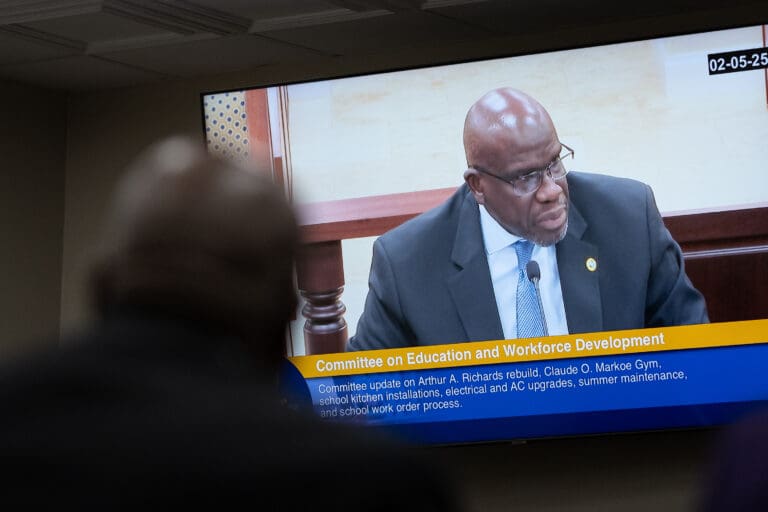
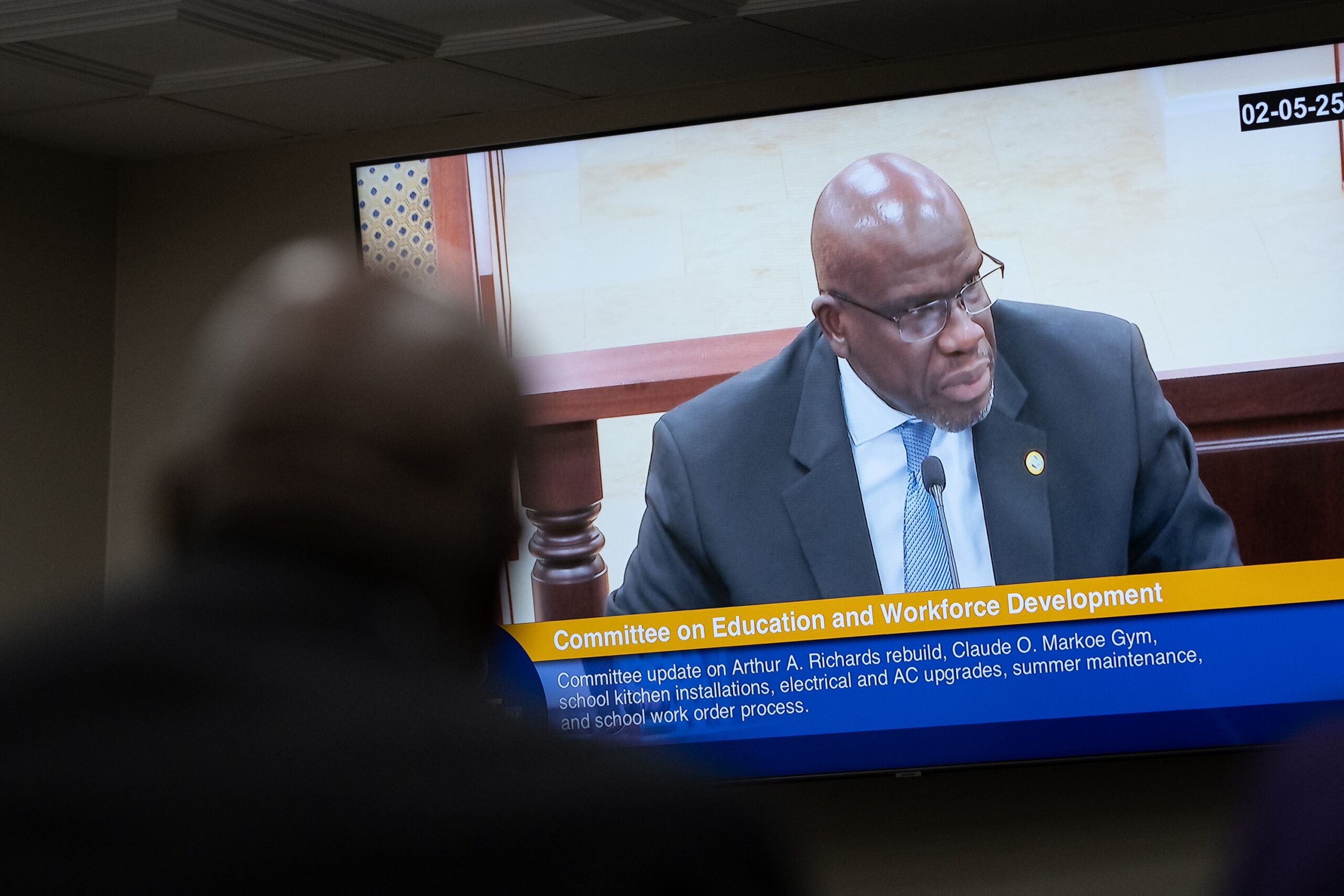
Leadership from the new School Construction and Maintenance Bureau provided lawmakers on the Senate Education and Workforce Development Committee with an operations update Wednesday.
The bureau was established in 2023 through the enactment of Act 8717, which shifted school maintenance responsibilities, funding and personnel from the Virgin Islands Education Department to a dedicated entity under the Office of the Governor. Gov. Albert Bryan Jr. tapped Craig Benjamin, a St. Thomas native with stateside experience in school construction, to head the bureau last July. Territory schools have continued to grapple with a lack of air-conditioning and mold, and in September, a falling ceiling fan seriously injured a St. Croix Educational Complex student, leading to student protests and community concern.
On Wednesday, Benjamin told lawmakers that the bureau is still navigating the transition of resources and staff from the Education Department. Addressing recent complaints of mold at the John H. Woodson Junior High School on St. Croix, Benjamin said the bureau immediately brought in its mold remediation contractor to deep clean the affected classrooms, and mold testing has been scheduled for Feb. 14-16.
“Due to the aging infrastructure of our schools and the environmental conditions in the region, we anticipate ongoing electrical, structural and mechanical issues, such as water leaks and fluctuation in humidity,” he said. “These factors can sometimes contribute to a moldy smell — a mildew smell — returning, even after remediation.”
Benjamin said the bureau will implement quarterly deep cleanings in all of the territory’s schools and test for mold every six months.
Lawmakers acknowledged the bureau’s cleaning efforts at Woodson but noted that until the school’s roof is repaired, the mold will keep coming back.
“If you clean the rooms … if you don’t repair the problem, we’re going to be cleaning the rooms over and over and over,” Sen. Clifford Joseph said. “Now, I want every government work, at the start, to think — and everybody who’s sitting here right now — if this was in your own house, would you pay somebody to clean mold, knowing that your roof leaking, and two weeks later, you gotta come back and pay a next person to clean your roof?”
“If you managing for the government, you have to defend the government money that you spending,” he added.
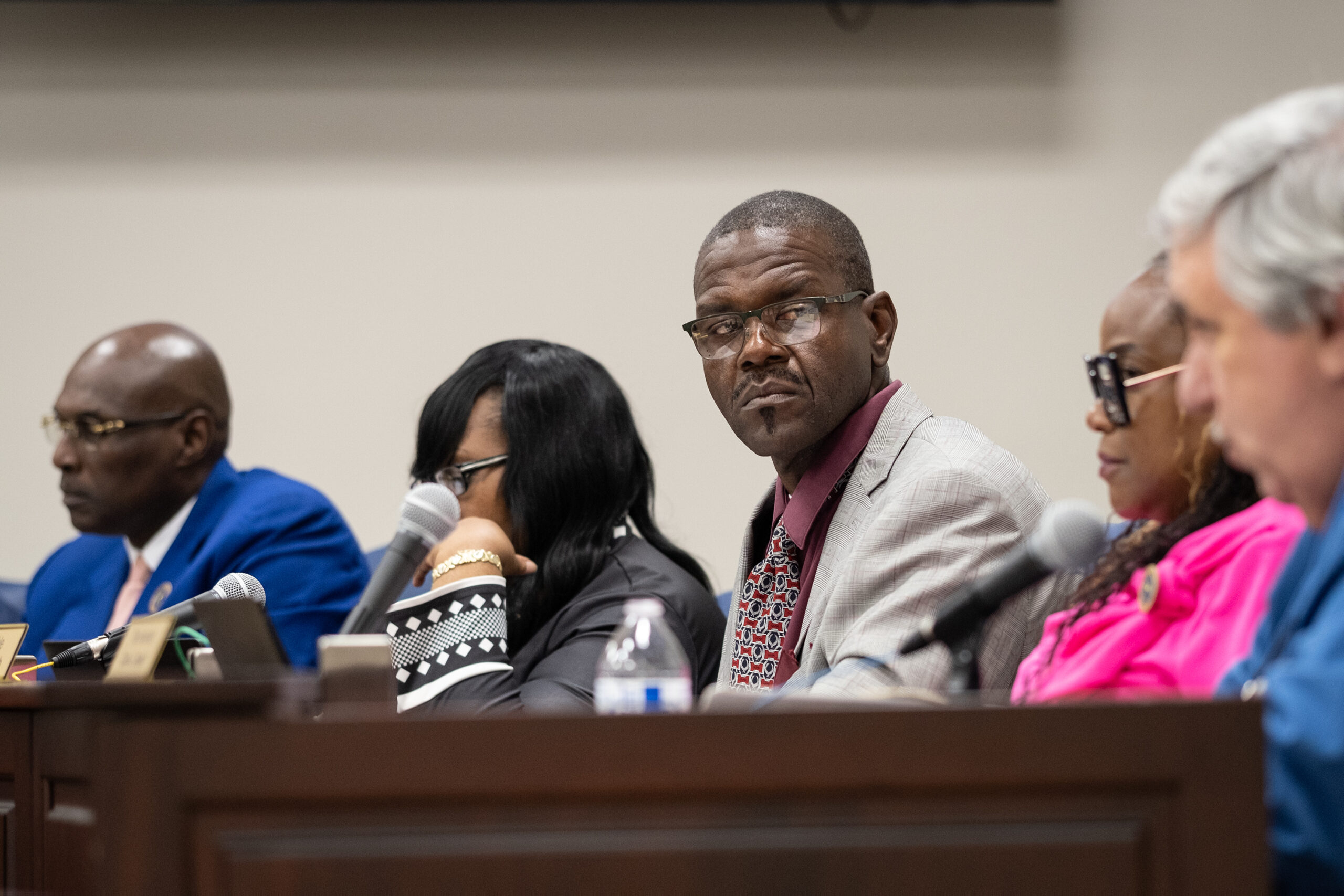
Several senators questioned the bureau’s reliance on — and oversight of — contractors, even though the bureau employs 65 maintenance workers.
“There’s stuff that maintenance should be able to do in-house,” said Senate Majority Leader Kurt Vialet, who chairs the Senate Education and Workforce Development Committee, “so we can’t continuously be hearing ‘contractors’ … When I’m walking in these schools, some of these repairs are very basic.”
Benjamin said the issue underscored the bureau’s need for skilled labor.
“We are getting what we pay — what we’re currently paying for, which is unfair to us, but we’re going to train these guys,” he said. “Some of them will accept the training and some won’t, but it’s going to be on me to get them trained.”
Lawmakers also sought clarity about the bureau’s work order processes. After Sen. Carla Joseph shared photographs of gaping holes in floors and walls at the Julius E. Sprauve School on St. John, she repeatedly pressed testifiers for a repair timeline.
“These are easy fix — these are very easy fix,” she said. “I mean, I could go with a two-by-four and fix that hole quickly, right in the floor. That’s not a major issue. That’s one two-by-four — and I’m good with a drill — so tell me, what is the issue? Why these can’t have some kind of temporary fixes?”
Benjamin said the bureau is “in the process of addressing the issues.”
“I’m trying very hard to hold my patience with you guys for this minute, because I still don’t have a date,” Joseph said after several minutes of back and forth. “You have funding available — local and federal funding. These are our children. That’s an emergency issue.”
Cannabis Advisory Seeks To Reorganize Board Members


The Cannabis Advisory Board held its monthly meeting Wednesday, covering various updates. During the session, Chair Dr. Catherine Kean, who has served in the role for four years, invited fellow board members to submit nominations for board positions.
In addition to the chairperson role, the newly created position of vice chair and the secretary position, previously held by Nicole Craigwell-Syms, were also up for nomination.
Kean shared that based on her experience, “I interface directly with the executive director regularly. Because this is a new and growing industry it is taking a lot of interface time to move into the position where we currently are which is basically getting ready to launch. The chair and the vice chair positions really need to be dedicated to the executive director and the board.”
After asking if she would be willing to continue serving in the chair position by board member Chris Jones, Kean said she would be willing to take the position of vice chair.
The board currently has seven members, with four additional positions open. Two of these vacancies require nomination by the governor and approval by the Legislature, while the other two are designated for groups affiliated with the University of the Virgin Islands.
“In order to not stagnate the work of the board I think it would behoove us to fill these officer positions until a future date,” said Office of Cannabis Regulation Executive Director Joanne Moorehead. The board agreed to postpone nominations until the next meeting to allow time for better organization.
During the meeting, it was mentioned that a contract was in place between the government of the Virgin Islands and Metrc for the seed-to-sale inventory tracking system required by the Virgin Islands Cannabis Use Act (Act 8680).
“It has taken a lot longer than we expected, but it is finally completed, and the contract has been executed. We have kick off and training meetings scheduled this month with Metrc,” confirmed Moorehead.
Moorehead also noted that the process will take time to get underway as further development is needed with Metrc, a cannabis compliance tracking system.
Moorehead also mentioned that the Office of Cannabis Regulation officially has an enforcement team fully staffed. “They will all be fully onboarded by the end of February. We have a fully staffed unit for St. Thomas, St. John and St. Croix,” she said.
The enforcement staff must complete training before beginning their duties. Once trained, they will assist with the application process, ensure compliance for registered and authorized growers, and lead cannabis enforcement efforts.
The Office of Cannabis Regulation is still not accepting business applications for registration. Initially, they planned to use the GVI Buy’s website for this process but determined it wasn’t a good fit. As a result, they are now pursuing an alternative plan. Moorehead remains hopeful that the application goal will be met by the first quarter. In the meantime, they will be issuing requests for proposals (RFP) for lab testing facilities on each island.
Finally, updates were given on registered medical patients, caregivers, practitioners, and sacramental organizations. Currently, three medical practitioners are registered on St. Thomas and four on St. Croix. There are 10 registered patients on St. Croix, but none on St. Thomas or St. John. Additionally, no sacramental users are registered on any of the islands.
To register as a practitioner, patient or sacramental user, visit the Office of Cannabis Regulation website. at https://ocr.vi.gov/. Registered practitioners can also be viewed in the system.
Cannabis Advisory Board members present were chair Catherine Kean, Nathalie Hodge, Justa Encarnacion, Louis Petersen, Gary Jett, and Chris Jones.
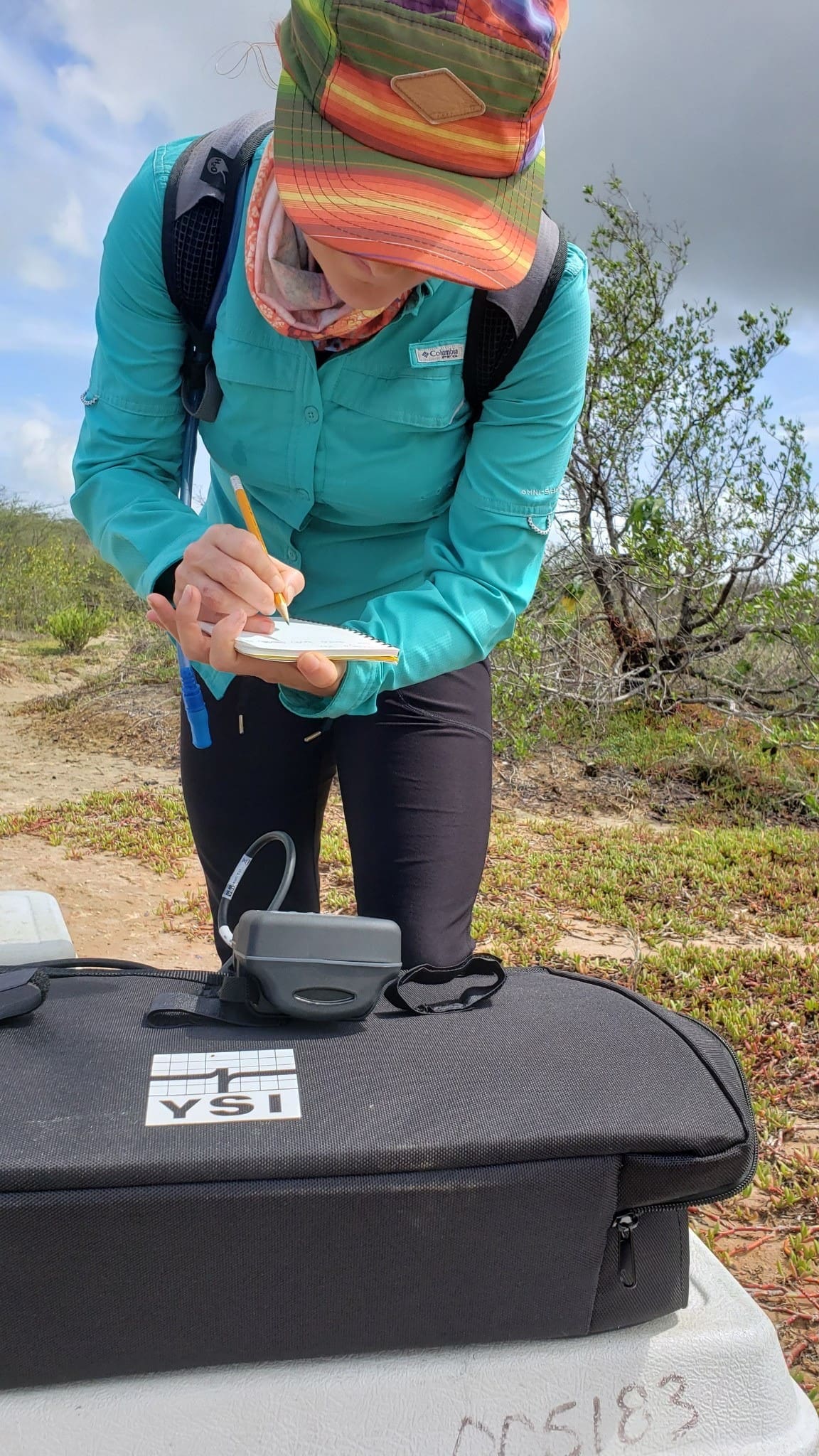
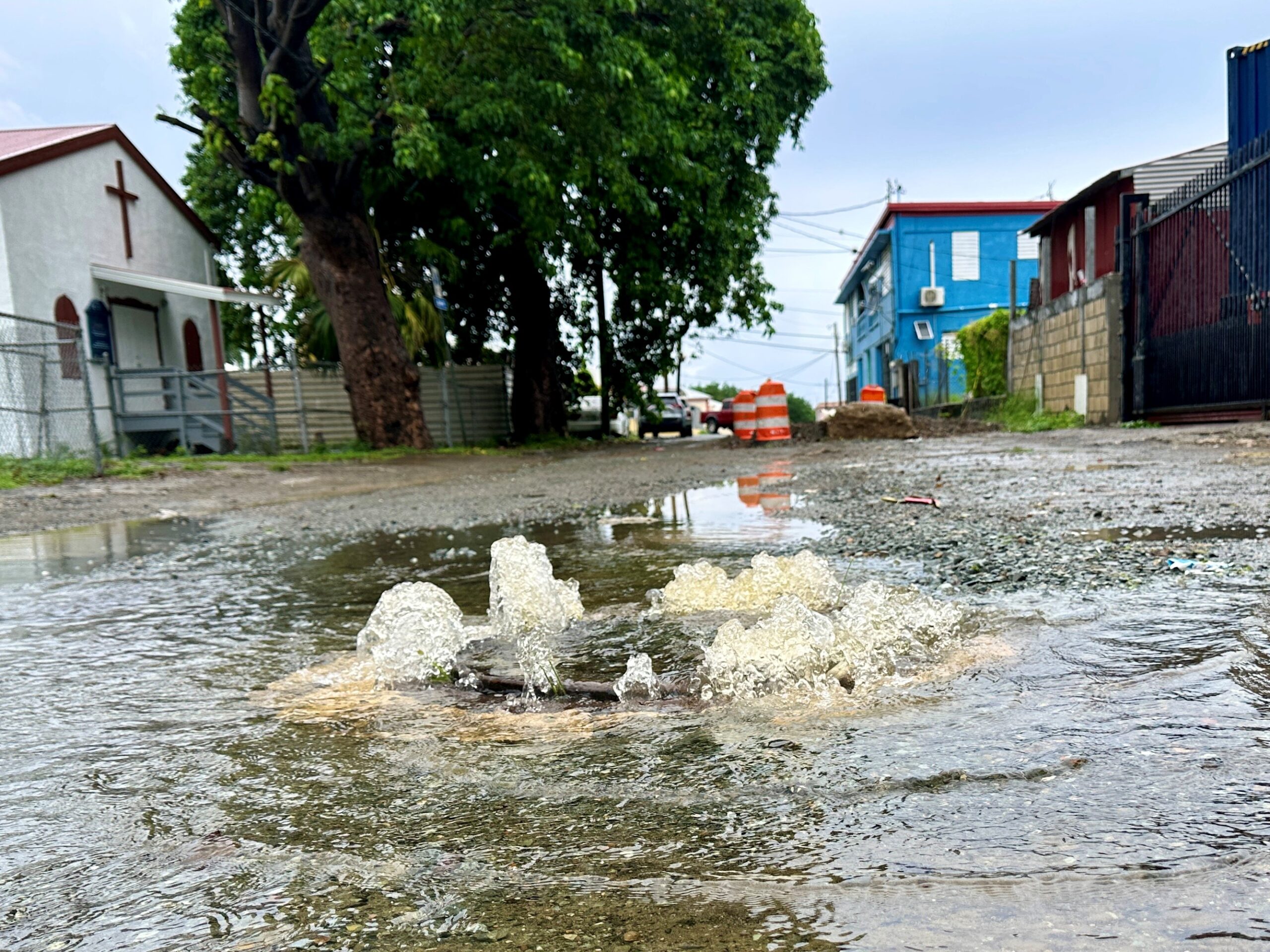
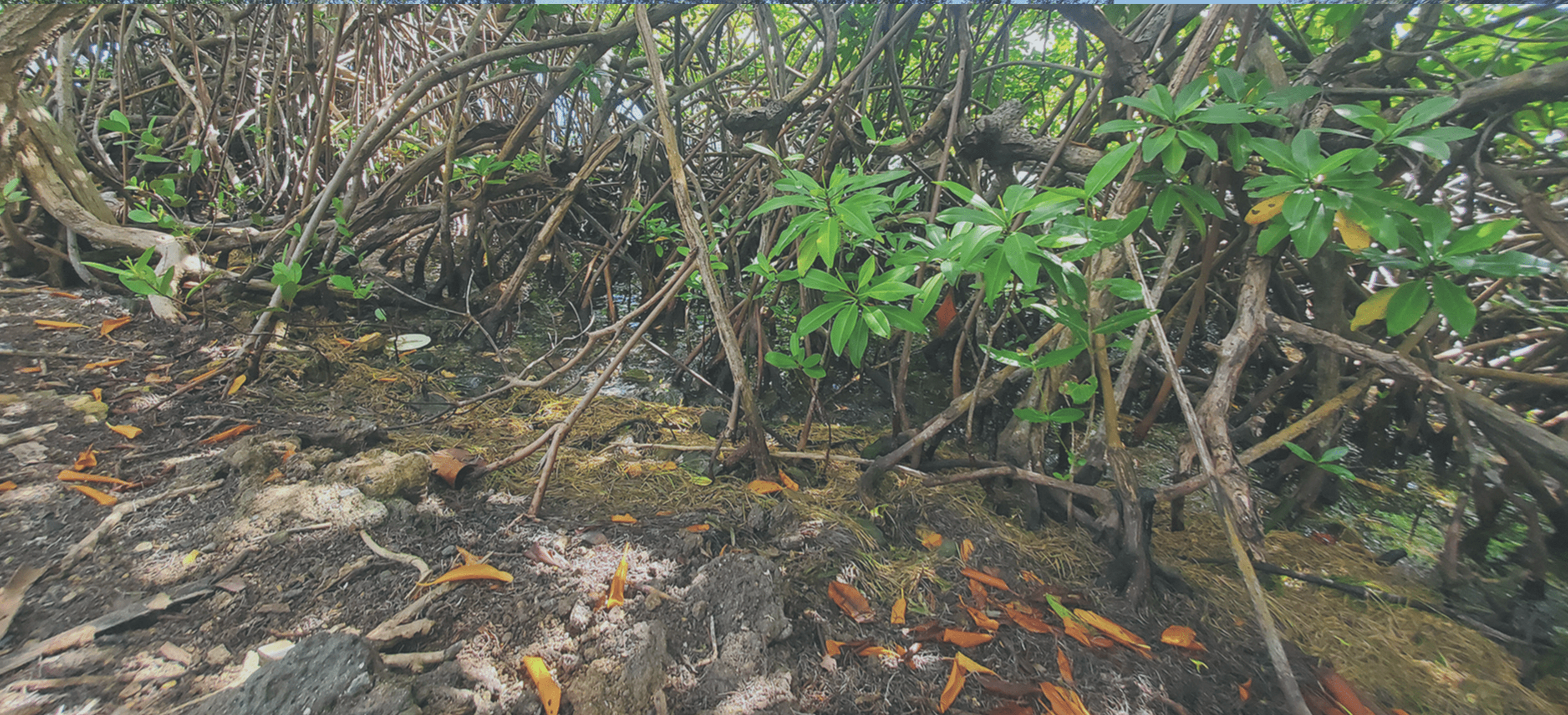
Climate Workforce Training Will Begin Across USVI and Puerto Rico To Improve Environmental Sustainability and Resilience

Two Acclaimed Photographers Team Up To Teach at the St. John School of the Arts Starting Tuesday







Frederiksted Health Care Inc. Acknowledges Black History Month