St. John’s Episcopal Church, also known as St. John’s Anglican Church, in Christiansted, St. Croix, was built by enslaved Africans and the so-called “free colored” people, who really were not free but just held to another standard of slavery in the Danish West Indies. (Photo by Olasee Davis)
I will keep on saying it until I die. We Virgin Islanders don’t value our natural and cultural resources. It is just a handful of us in the Virgin Islands trying to preserve whatever historical buildings, ruins or natural sites —including historic trees — that remain on these beautiful islands and cays. In October, St. John’s Episcopal Church, also known as St. John’s Anglican Church, in Christiansted on St. Croix made 264 years. It was built by enslaved Africans and the so-called “free colored” people, who really were not free but just held to another standard of slavery in the Danish West Indies.
Olasee Davis (Submitted photo)
These islands are so rich in history that we miss the mark of who we are as a people. On July 20, 1906, the funeral service of Susannah Abrahamsen — known in our history as “Bottom Belly,” one of the Queens in the Fireburn labor riot in 1878 — was held at St. John’s Episcopal Church. We drive by every day and have no idea that “Bottom Belly’s” service was held at this historic church.
According to historical records, “Bottom Belly” was buried adjacent to Christiansted Cemetery. While I am talking about cemeteries, the church yard and gravesites are full of graves dating back to the 1700s. In fact, within the church building, there are tombstones on the floor giving the history of people who once attended service there. In 2016, the church graveyard was listed on the National Register of Historic Places. Vivian I. Ebbesen-Fludd, a native Crucian, is an endangered species of a woman and I consider her to be very articulate in giving the history of the church.
I toured the church with her several times, and I was very impressed. Believe me, she loves her church and those who laid down their lives for our freedom. It was during the period when the English ruled the Danish West Indies, from 1645-1650, that an Anglican community of faith first begin to develop on St. Croix. Also, it was during the golden era when sugar was king on St. Croix, from 1760 to 1814, when St. John’s Episcopal Church was established in 1760 or 1761.
The church was built on a hill of local limestone and bricks that came from Denmark in ships. It has a distinctive Gothic Revival English style and is located at the western entrance of King Street by the main entry to the town of Christiansted. Due to the growing population of English, Irish and Scots inhabiting St. Croix during this period in our history, the church was frequently referred to as the “Mother Church” of the Diocese of the Virgin Islands.
In 2016, the St. John’s Episcopal Church graveyard was listed on the National Register of Historic Places. (Photo by Olasee Davis)
According to historical documentation, the Rev. Cecil Wray Goodchild left Teddington, England to become rector of St. John’s Episcopal Church. The Society for the Propagation of the Gospel in Foreign Parts funded the first year of the construction of the church. The Society (SPG), which is an arm for the Church of England in the Americas, felt that the Christianity ordinances of their colonies in the Western Hemisphere were neglected and the moral standards of their citizens were too relaxed.
When Goodchild arrived in 1760 on St. Croix, he was placed under the jurisdiction of the Bishop of London. Thus, Goodchild served as the first rector of St. John’s Episcopal Church. The Danish planter Reimert Haagensen noted, “The British … have a pastor who holds services on Sundays in town [Christiansted] and again on the west end, in order to spare those who live far from town a long trip. This greatly satisfies his congregations, which pays him an annual salary of 1,000 Rdlr. [Rigsdaler].”
Goodchild had other sources of income that included a 75-acre cotton plantation at Prince’s Quarter, later named “Clear Mount,” and which eventually became part of Estate Beck’s Grove plantation, according to the late native historian William Fleming Cissel. Nevertheless, at St. John’s Episcopal Church, enslaved Africans and “free coloreds” made up a large part of the congregation, worshiping along with their white residents.
However, the service in the church was segregated. Black worshippers had allocated spots in the church apart from their white counterparts. They were unable to sit in the pews of the church. With contention between the two races, in 1794, “Free Black parishioners” petitioned the church leadership for them to rent pews where they could worship. This was approved by the vestry in 1794. As a result, slaves and “free coloreds” were allowed to sit in the north part of the church gallery to worship. However, this was reversed in 1810. Therefore, Black parishioners could no longer sit in the north gallery of the church.
Eventually, the white parishioners contested Blacks sitting in the church gallery and the decision was reversed, barring them from occupying any pew. Also, they were disallowed from bringing their own chairs to sit in the church. They were allowed, however, a section in the middle of the aisle of the church that was made available for them.
However, Crucian Blacks continued to worship at St. John’s Episcopal Church. Until the 1848 emancipation, there were separate marriage, burial, and baptism registers kept for slaves and “free worshippers” in the church. As time moved forward in history, Black Crucians had allocated spots to worship in the church, but they were made aware to enter the church through a separate entrance from where whites entered. By 1910, segregation in the church no longer existed.
Alexander Hamilton, together with his mother Rachel Fawcett Levine and his older brother James, lived a short distance from the church in Christiansted. They worshiped in the church occasionally and the pew of one of America’s Founding Fathers still exists there today. In 1768, Rachel died of yellow fever at age 49 and her burial records are registered in St. John’s Episcopal Church. Other prominent parishioners of the day were Nicholas Cruger, Thomas Stevens, whose family was from Antigua, and Edward Stevens, a renowned physician.
There is a lot more history of the church. I just wanted to point out how rich Virgin Islands history is that touches the fourth corner of the world. St. John’s Episcopal Church is a major asset to the historic district of Christiansted. You can contact Vivian I. Ebbesen-Fludd, at viefludd@gamil.com. Believe me, she is good in telling the history of the church.
Happy Birthday, St. John’s Episcopal Church!
— Olasee Davis is a bush professor who lectures and writes about the culture, history, ecology and environment of the Virgin Islands when he is not leading hiking tours of the wild places and spaces of St. Croix and beyond.
The Pre-Veterans Day Parade and Ceremony, originally scheduled for Sunday, on St. John, has been canceled. This decision was made in response to the projected 80% chance of rainfall between 1 p.m. and 3 p.m. on the day of the event. The safety of all participants, attendees, and staff is a top priority.
The organizers understand the significance of this event to the community and apologize for any inconvenience this may cause. They thank everyone for their understanding and continued support.
The Virgin Islands Education Department is asking for feedback on a policy draft outlining mandatory reporting requirements for all school-affiliated personnel in cases of suspected child abuse or neglect. (Shutterstock image)
The Virgin Islands Education Department invited the public to review and comment on a newly drafted policy on mandatory reporting of child abuse and neglect in a press release issued on Friday.
Virgin Islanders have until the end of day on Nov. 22 to comment on the policy, which can be found here.
According to Education, the policy “is designed to establish a uniform process for reporting any suspicions of abuse, sexual abuse, or neglect by mandatory reporters within VIDE. This includes prompt reporting to the appropriate authorities, maintaining accurate records, and collaborating with other Government of the Virgin Islands (GVI) agencies.”
The policy, applicable to all Education-affiliated personnel, “aims to standardize VIDE’s approach to safeguarding and supporting the well-being of children across the Territory.”
The new draft comes almost seven months after former Charlotte Amalie High School hall monitor and track coach Alfredo Bruce Smith was sentenced to 35 years in federal prison for sexually abusing numerous students over fifteen years.
Smith was convicted in 2021, and his case raised questions about the Education Department’s reporting policies — and whether school officials knew about Smith’s crimes but failed to report them.
A long-awaited audit — conducted by the Praed Foundation and released in September — found shortcomings in the department’s reporting protocol, noting that 24 percent of survey respondents feared retaliation if they reported abuse and 16 percent said previous reports had gone unanswered. Thirty-eight percent said they felt adequately trained to identify signs of abuse and 13 percent believed students had been provided with information on how to report it.
In the months leading up to the audit’s public release, officials repeatedly stressed that the report was not related to any single incident. During an Aug. 12 press briefing, Gov. Albert Bryan Jr. said the report, completed in May, “didn’t do what I wanted it to do.”
“But that’s … another case — I’m working on something for that shortfall,” he said. “But it really just shows the tweaks in the policy that we need to do.”
When the report was released in September, Government House spokesperson Richard Motta Jr. stated that a follow-up investigation is being conducted, but he did not provide details.
Education did not respond to an emailed request for the department’s current policy on reporting abuse and neglect or questions about how the new draft differs.
According to a Title 5 section of the V.I. Code, teachers and other school personnel are among those who, if they have reasonable cause to suspect child abuse or neglect, shall “immediately report it or cause a report to be made.”
The punishment for failure to report suspected cases was heightened in 2022. The offense is now considered a felony, and mandatory reporters who fail to act could face between two and five years in prison and a fine of up to $10,000.
The Education Department affirmed its commitment to the safety and well-being of students in its Friday press release.
“Protecting children goes beyond instruction. Educators and staff have a profound responsibility to create a secure environment where students’ mental and physical health are prioritized. This commitment extends to swiftly reporting any suspected signs of abuse, neglect, or abandonment, as a matter not only of policy but of ethical duty,” the department stated.
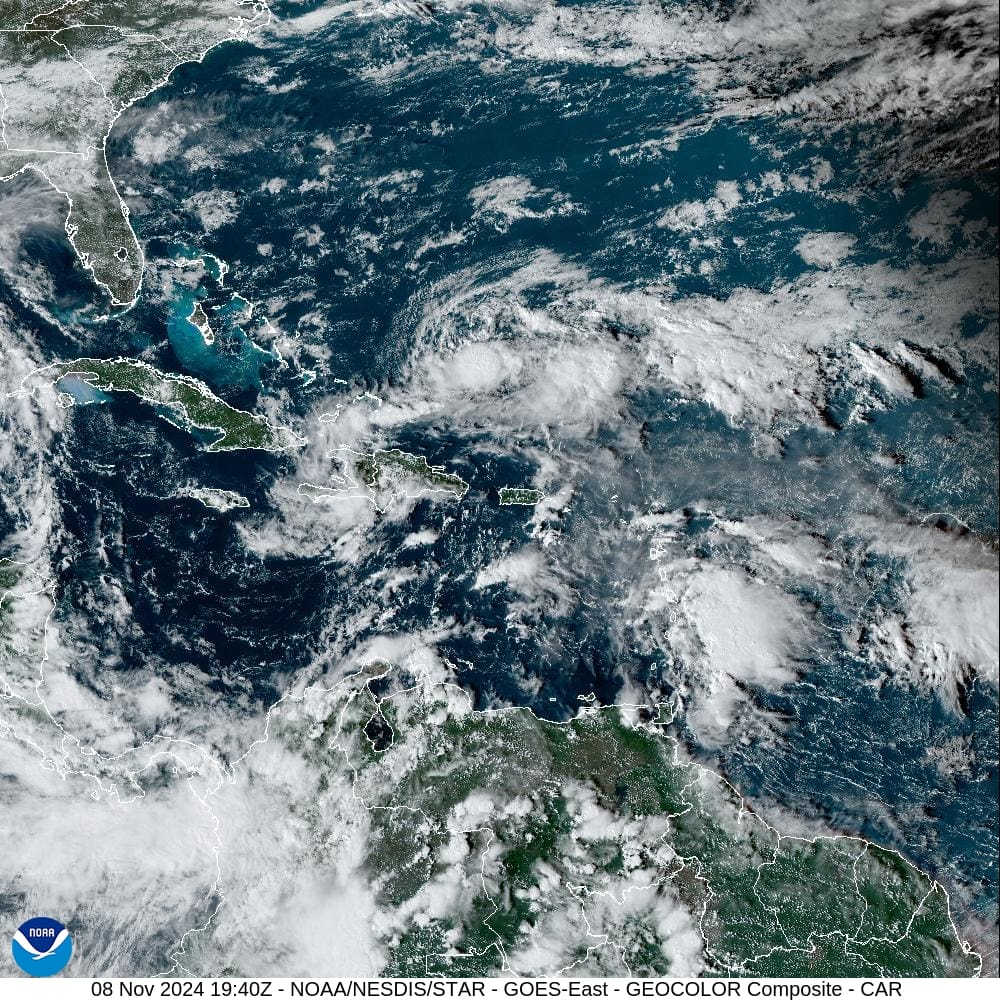
Visible satellite imagery obtained at 3:40 p.m. on Friday shows numerous cloud clusters across the Caribbean as abundant tropical moisture surrounds the local islands. (Photo courtesy NOAA)
The National Weather Service (NWS) in San Juan, Puerto Rico, has issued a Flash Flood Watch for areas of Puerto Rico and the U.S. Virgin Islands as an unsettled weather pattern continues across the region.
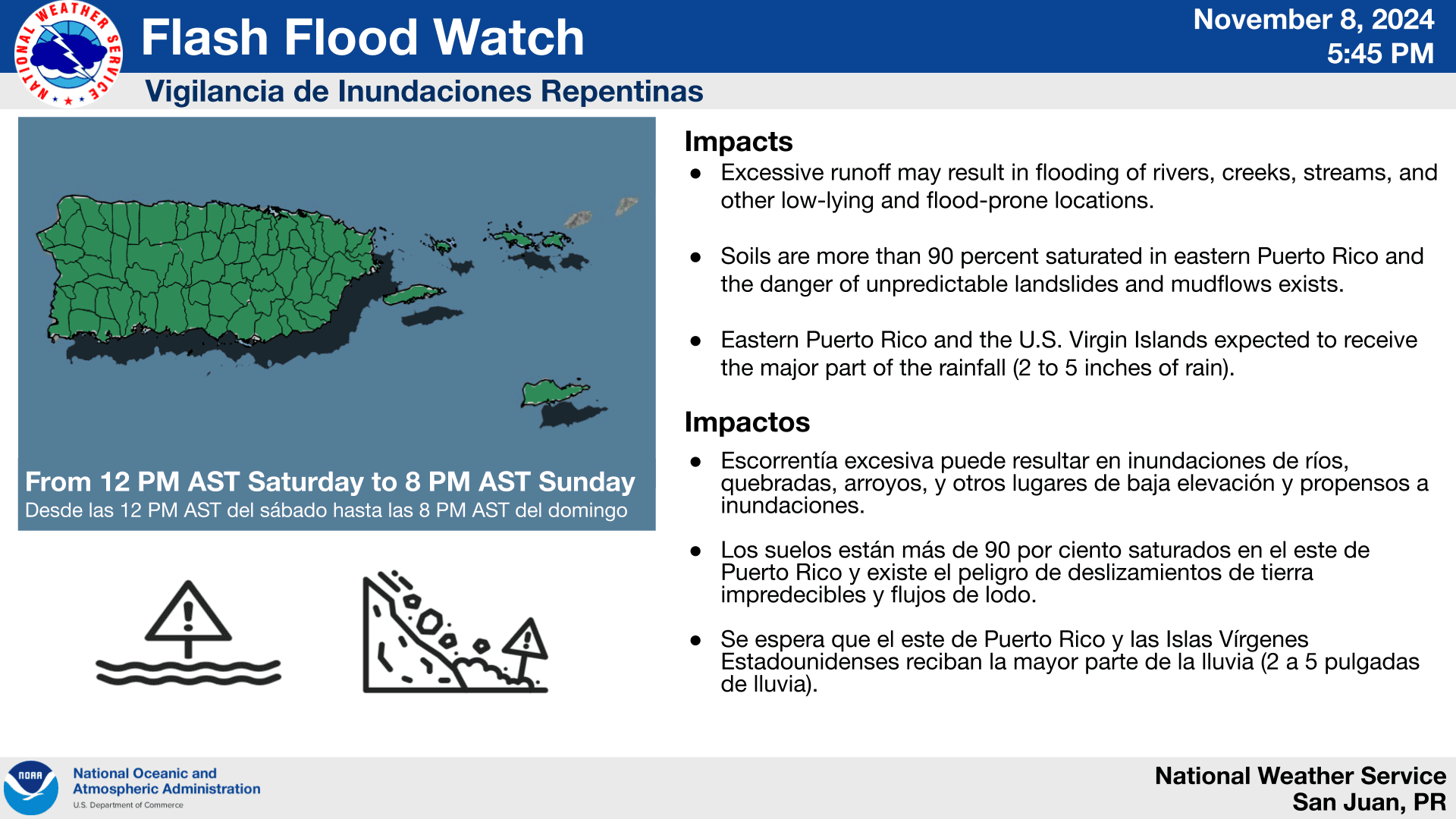
A Flash Flood Watch will be in effect for portions of both U.S. territories from noon on Saturday until 8 p.m. on Sunday, and excessive rainfall is expected.
A Flash Flood Watch will be in effect for portions of Puerto Rico and the U.S. Virgin Islands from noon on Saturday until 8 p.m. on Sunday. (Photo courtesy NWS)
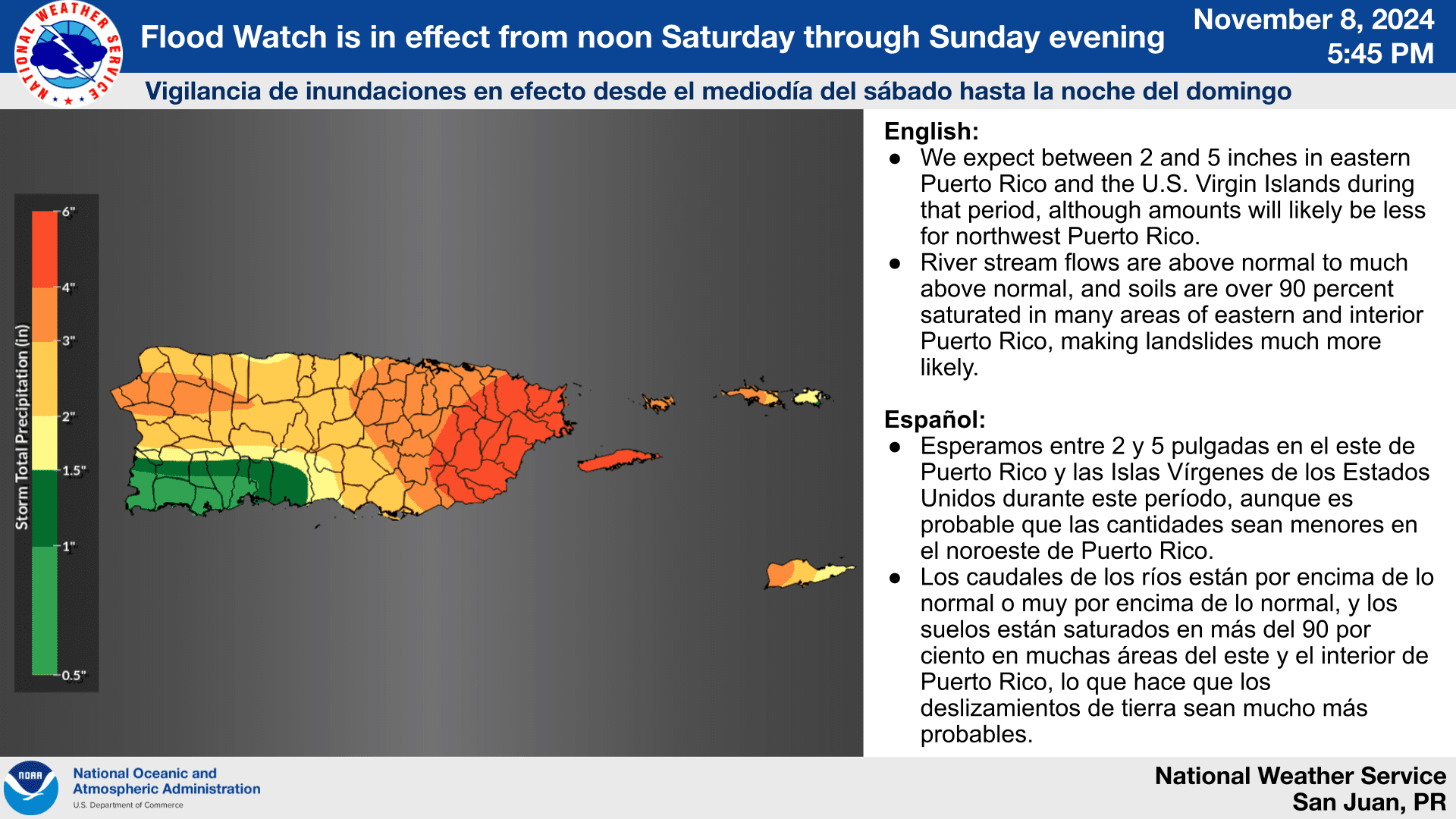
“Rain showers and thunderstorms will continue intermittently overnight [on Friday] and [will] redevelop on Sunday for another round of heavy rains,” according to an update from the NWS on Friday. “We expect between 2 and 5 inches in eastern Puerto Rico and the U.S. Virgin Islands during that period, although amounts will likely be less for northwest Puerto Rico,” the NWS said.
On Friday, The Source spoke with Ernesto Morales, a warning coordination meteorologist at the NWS in San Juan. Morales noted that the combination of an unstable weather pattern, abundant moisture traveling across the islands, and an approaching tropical wave will lead to the anticipated wet weather.
“There is a lot of moisture [over] the [local] area,” Morales explained. “There is a trough [an area of low pressure] [located] just along the north side of the region, and we are going to have a tropical wave passing by [between Saturday and Sunday],” Morales said. “[These weather features] will be interacting with each other and will generate the [expected] rain,” he added.
Possible Impacts to the Local Islands
Friday’s update from NWS explained that saturated soils, as well as rivers that are already flowing full of water, may lead to the possibility of flash flooding and landslides.
The rainfall forecast for Puerto Rico and the USVI depicts areas across both U.S. territories potentially receiving high amounts of precipitation. (Photo courtesy NWS)
“Excessive runoff may result in flooding of rivers, creeks, streams, and other low-lying and flood-prone locations,” the NWS said. “Creeks and streams may rise out of their banks, [and] flooding may occur in poor drainage and urban areas,” the NWS continued.
“Storm drains and ditches may [also] become clogged with debris, [and] extensive street flooding and flooding of creeks and rivers are possible,” the NWS warned. “Soils are more than 90 percent saturated in eastern Puerto Rico and the danger of unpredictable landslides and mudflows exists,” the NWS noted.
In addition to the potential for rain on Saturday and Sunday, conditions will remain unsettled through next week.
“Be aware, however, that this will not be the end of wet conditions,” the NWS cautioned. “The synoptic pattern [the current weather pattern across the region] will be favorable to the continuation of periodic heavy rains through at least Friday of next week,” the NWS stated.
The NWS also explained that marine conditions will be hazardous, and there will be an elevated risk of rip currents over the next few days.
“Life-threatening rip currents are expected along the Atlantic coastline of Puerto Rico and the northern US Virgin Islands, as well as the north and east-facing [coastline] in St Croix throughout the holiday weekend,” according to the NWS.
National Hurricane Center Monitoring Tropics
The National Hurricane Center (NHC) continues to monitor the tropics for cyclonic development.
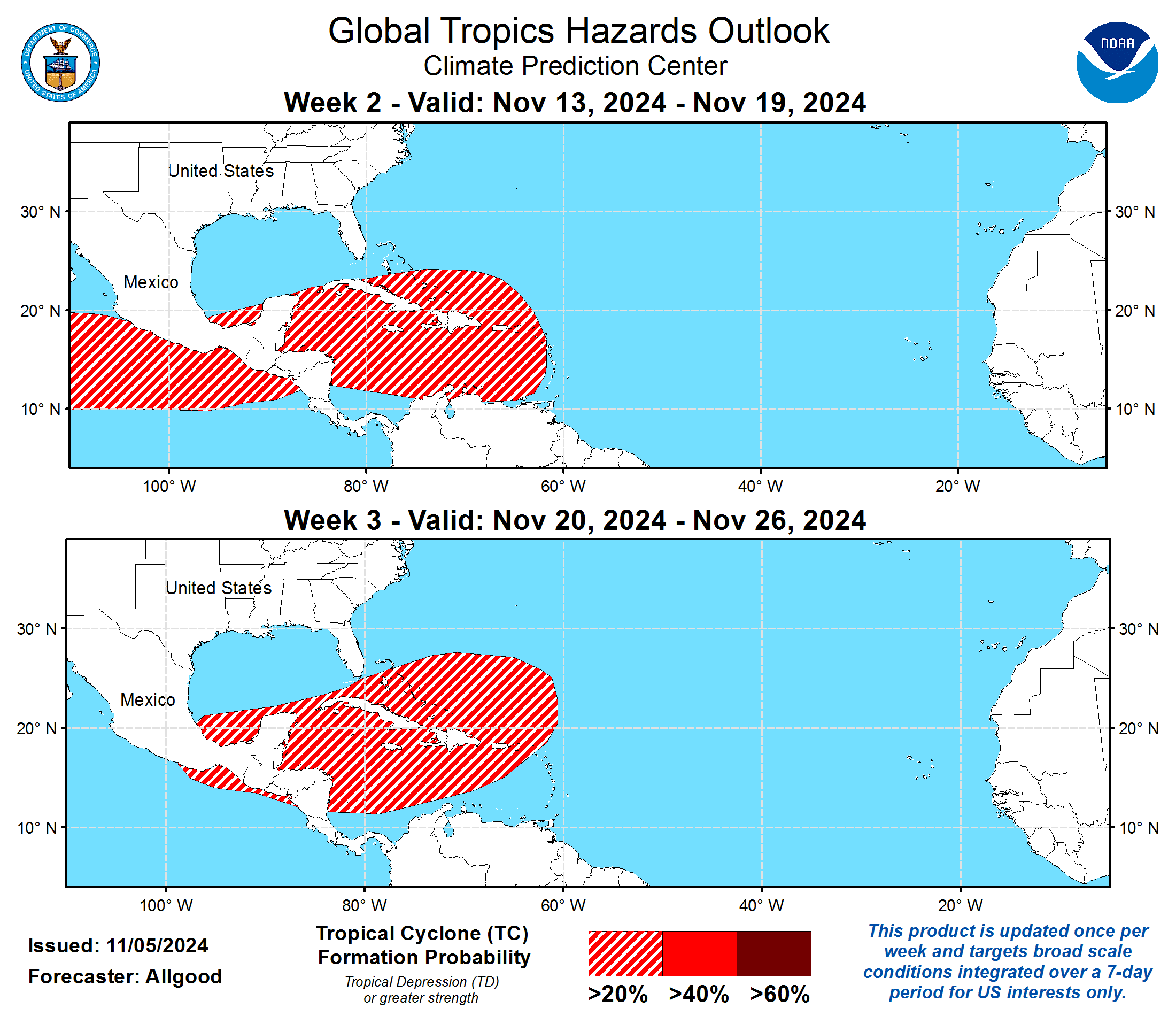
The Climate Prediction Center’s Global Tropics Hazards Outlook indicates an elevated risk of cyclone formation during the next few weeks. (Photo courtesy CPC)
As of Friday afternoon, Hurricane Rafael was spinning in the Gulf of Mexico, packing maximum sustained winds of 100 mph. The system is expected to take a turn to the south, potentially avoiding a strike on the U.S. mainland.
The Climate Prediction Center’s Global Tropics Hazards Outlook indicates an elevated chance of cyclonic development over the next few weeks. Hurricane season officially ends on Nov. 30, and USVI residents and visitors are encouraged to stay up to date with forecasts from the NHC. Hurricane preparedness tips are available from the Virgin Islands Territorial Emergency Management Agency and the National Oceanic and Atmospheric Administration.
Weather Updates
Detailed weather information and forecasts, including severe weather alerts, are available from the VITEMA website and the National Weather Service.
The Source Weather Page also publishes a daily weather forecast and offers readers the opportunity to view weather forecast videos and disaster preparedness video segments.
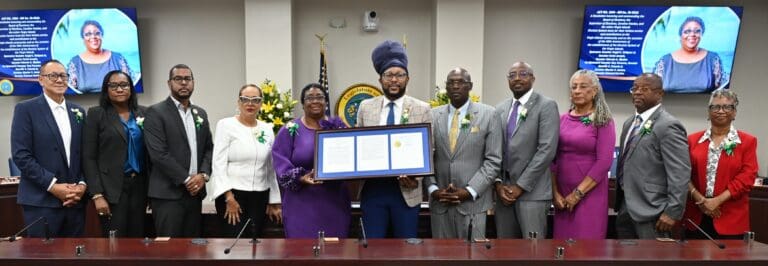
Elections System Supervisor Caroline Fawkes honored by 35th Legislature at Perma Plaque Ceremony. (Photo courtesy V.I. Legislature)In a ceremony that brought together generations of Virgin Islanders, the 35th Legislature honored 10 individuals whose contributions have shaped the territory across medicine, music, law enforcement, and public service.Through Resolution No. 1913 (Bill No. 35-0242), Miguel “DJ Papi Pops” Santos Jr. was recognized for his contributions to music and radio broadcasting. “I ain’t pretty good at this part,” Santos said, “but I just wanna say thank you to the public, to the senator, Angel Bolques, Ray Fonseca, and to the community for accepting me throughout my career. But I can’t forget my dad, my family, and I try to stay strong because my mom played a major role in my life.”Dr. Olaf “Bronco” Hendricks, honored under Act No. 8737 (Bill No. 35-0101) for his contributions to psychiatry, shared insights from his decades of service. “On my first day at work on Saint Croix in the hospital, I was ready to show off,” he recalled. “But my first patient… said to me something else that would always be in my mind… ‘I don’t really believe that you’re a psychiatrist. I want an annoying doctor, I want a crazy doctor, but you look like a person whose roommate I would like to be.'”The ceremony recognized a diverse group of honorees, including Lieutenant Colonel Leayle Gerard Galiber through Resolution No. 1910 (Bill No. 35-0116) for his leadership in the Virgin Islands National Guard and the Board of Elections, Caroline Fawkes, supervisor of Elections and the entire Virgin Islands Elections System team through Resolution No. 1904 (Bill No. 35-0016) for their 60 years of service to the electoral system.Medical professionals honored included Dr. Ralph A. deChabert under Act No. 8810 (Bill No. 35-0102) for his contributions to the medical field, and posthumously, Dr. Rafael Garcia under Act No. 8657 (Bill No. 34-0292) for his years of service as a medical doctor and public servant.Under Act No. 8671 (Bill No. 34-0376), Valmy Thomas, the first Virgin Islander to play Major League Baseball, was posthumously honored. His daughter, Shelley Thomas, described him as “a renaissance man, headstrong, determined, funny, serious, stubborn, all the things that made him who he was. He was never satisfied with hearing the word no.”Speaking about the importance of such recognition ceremonies, Senate President Novelle Francis explained, “There is a grueling, long process in order for us to get these resolutions completed… It’s really important for us to be able to recognize the contributions that have been made by our community members and really to pay tribute. Because guess what? If you don’t know your history, again, you don’t know where you’re coming from or where you’re going.”Sen. Franklin D. Johnson emphasized the necessity of these honors despite public criticism: “The Legislature takes a lot of licks for honoring our people… But how could we not honor men and women who serve this territory? How can we not name roads in their honor?”Public Works Commissioner Derek Gabriel noted the lasting impact of these honors: “Our beloved territory has a tremendously rich history and culture… For me, it’s always an honor to bestow names on our facilities and roads as it means that for generations to come, we’ll continue to honor their lives dedicated to serving our community.”The ceremony concluded with the recognition that these honors serve not just to commemorate the past but to inspire future generations of Virgin Islanders to serve their community with similar dedication and excellence.
The St. Croix Chamber of Commerce works for small and large businesses on the island of St. Croix. (Source photo by Diana Dias)
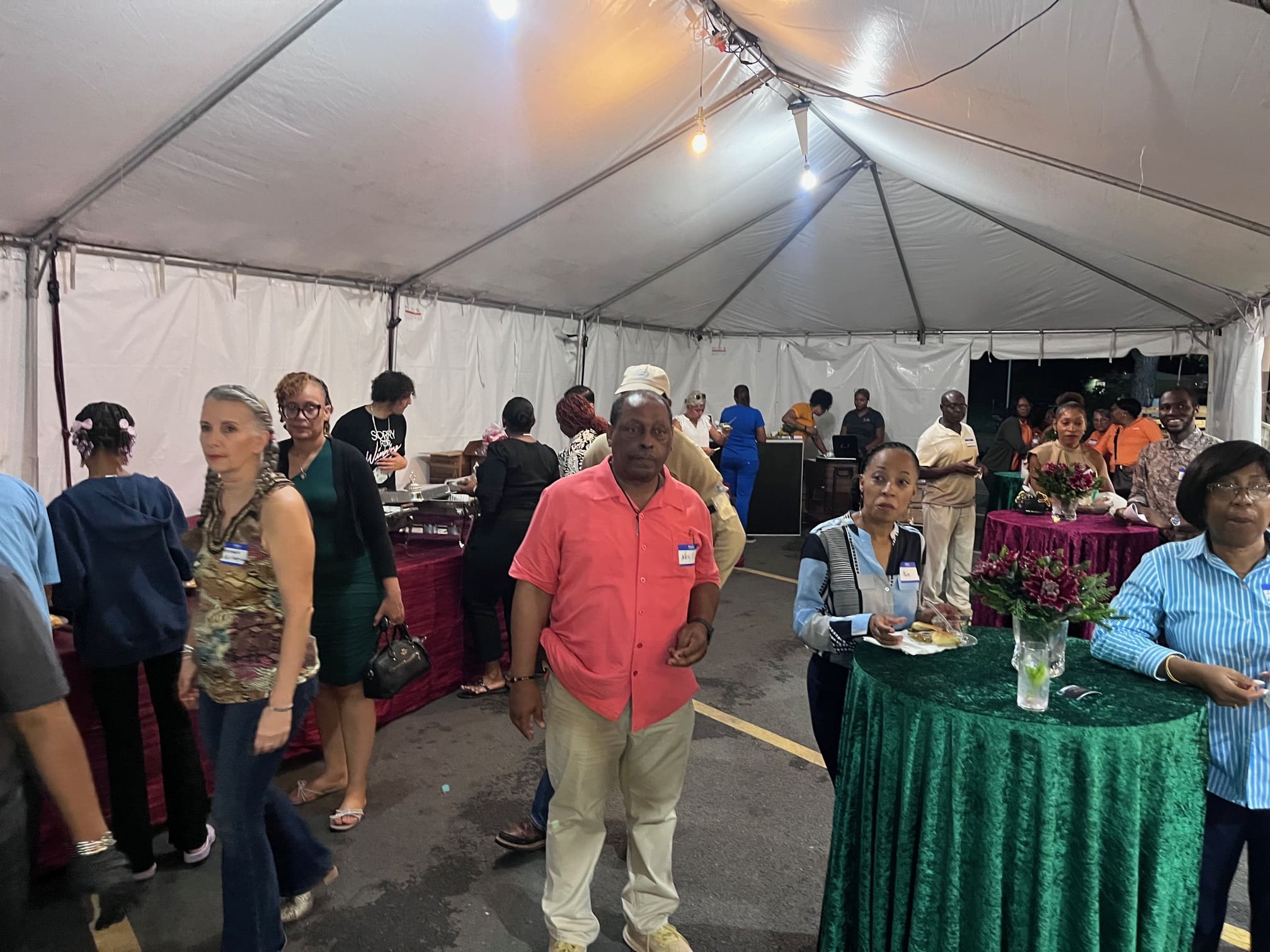
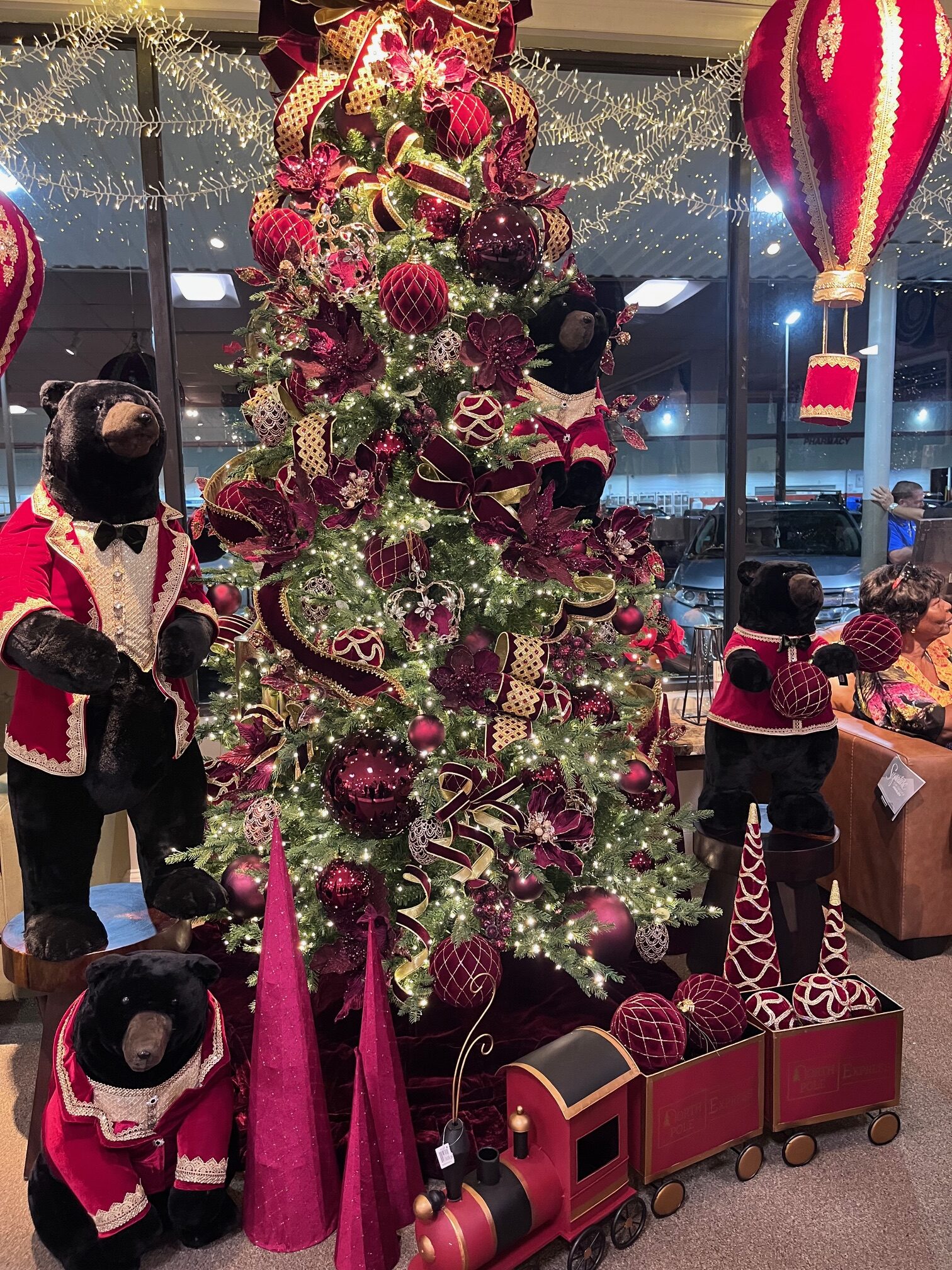
The holiday season is fast approaching, and to kick off the season, Ashley Furniture HomeStore hosted “Business After Hours” for the St. Croix Chambers of Commerce. Located near the Sion Farm Shopping Center across from Plaza Extra, the Christmas designs bring sophistication, exclusivity, and artistry.
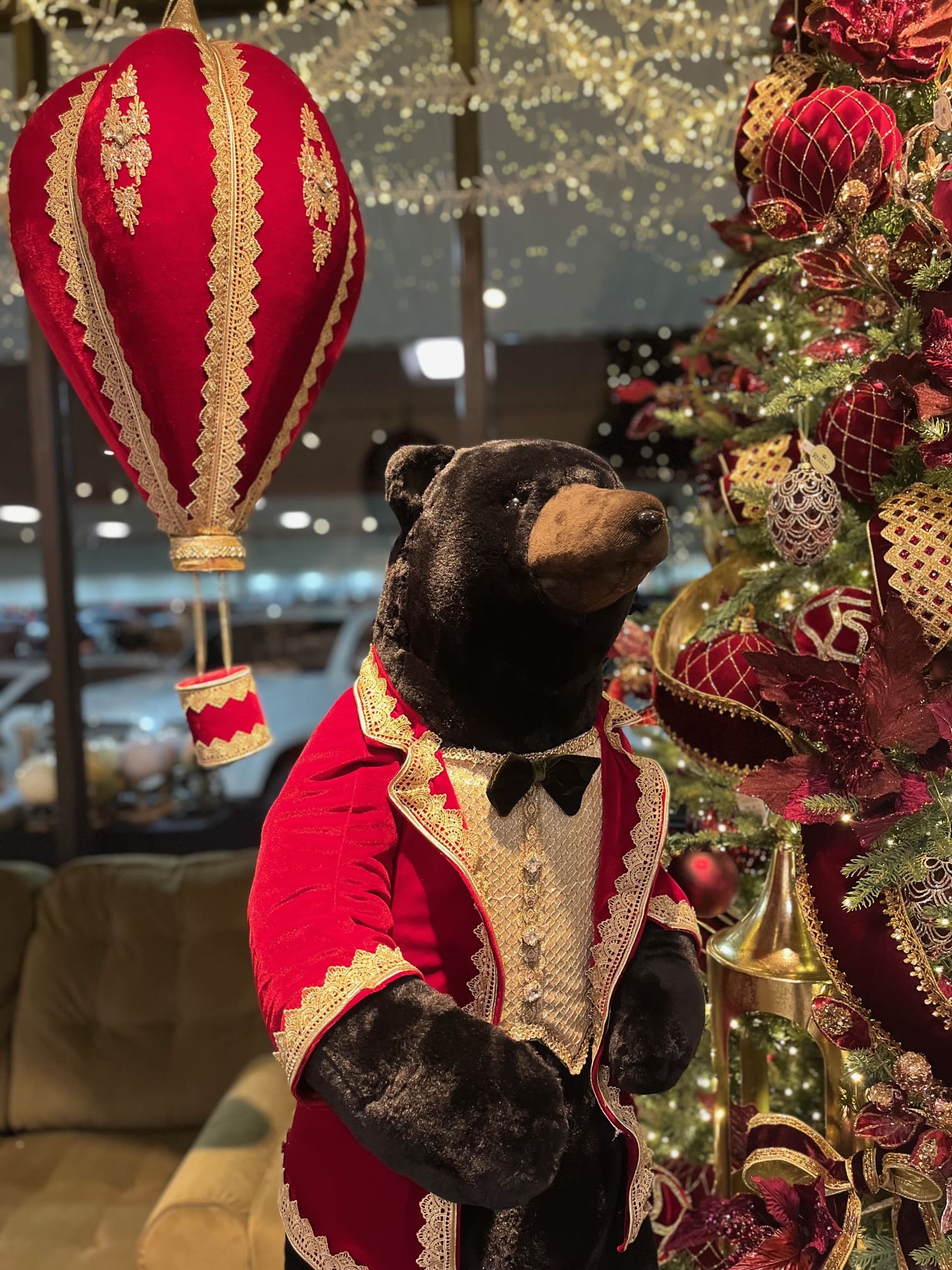
A Russian Circus brings an enchanted feel to the holiday season. A mixture of burgundy décor, hints of gold, and a family of bear entertainers with detail to their blinged-out jackets. (Source photo by Diana Dias)
As you step in, a sense of holiday spirit and cheer is spread throughout the store. Guests mixed and mingled as they enjoyed light bites, cocktails, and the beautiful “Holiday Haven” décor.
There’s a wide range of décor provided at Ashley Furniture HomeStore, which was showcased for the St. Croix Chamber of Commerce on Thursday. (Source photo by Diana Dias)
This is the second year of hosting, said managing officer Ahmad Hussein of Ashley Furniture HomeStore. “This event is to start the positive energy for the holiday season, and we are very fortunate to team up with the St. Croix Chamber of Commerce,” said Hussein.
A very Hampton holiday. Reminiscent of a natural beauty of the coastline with shades of blues, crisp whites, sandy beiges and navy blues. (Source photo by Diana Dias)
“It is time to get into the holiday shopping mode and start early,” he said. Hussien also expressed his gratitude to the team that spent three weeks designing and decorating.
A hallmark of a winter wonderland tree accented with elves, dear and gifts frosted in white. (Source photo by Diana Dias)
Creative Director Abigail Atwell and brother Jesse Atwell, who both have full-time careers outside of the design industry, were the heads of the designs on display. The Atwells spend from 5 p.m. to 2 a.m. creating the designs put on display.
A close-up of the Hamptons tree looks very similar to the Chaney jewelry design. (Source photo by Diana Dias)
Abigail Atwell said the idea started last year. “I was shopping for an event and could not find anything on island and a month before we opened, I said, ‘I am opening a Christmas store.’” Within a week, the floor was decorated and was such a success the store decided to do it again.
Abigail Atwell said that this year, she began to hand-select each piece in January.
The detail of every tree was carefully designed to the vibe of each section. (Source photo by Diana Dias)
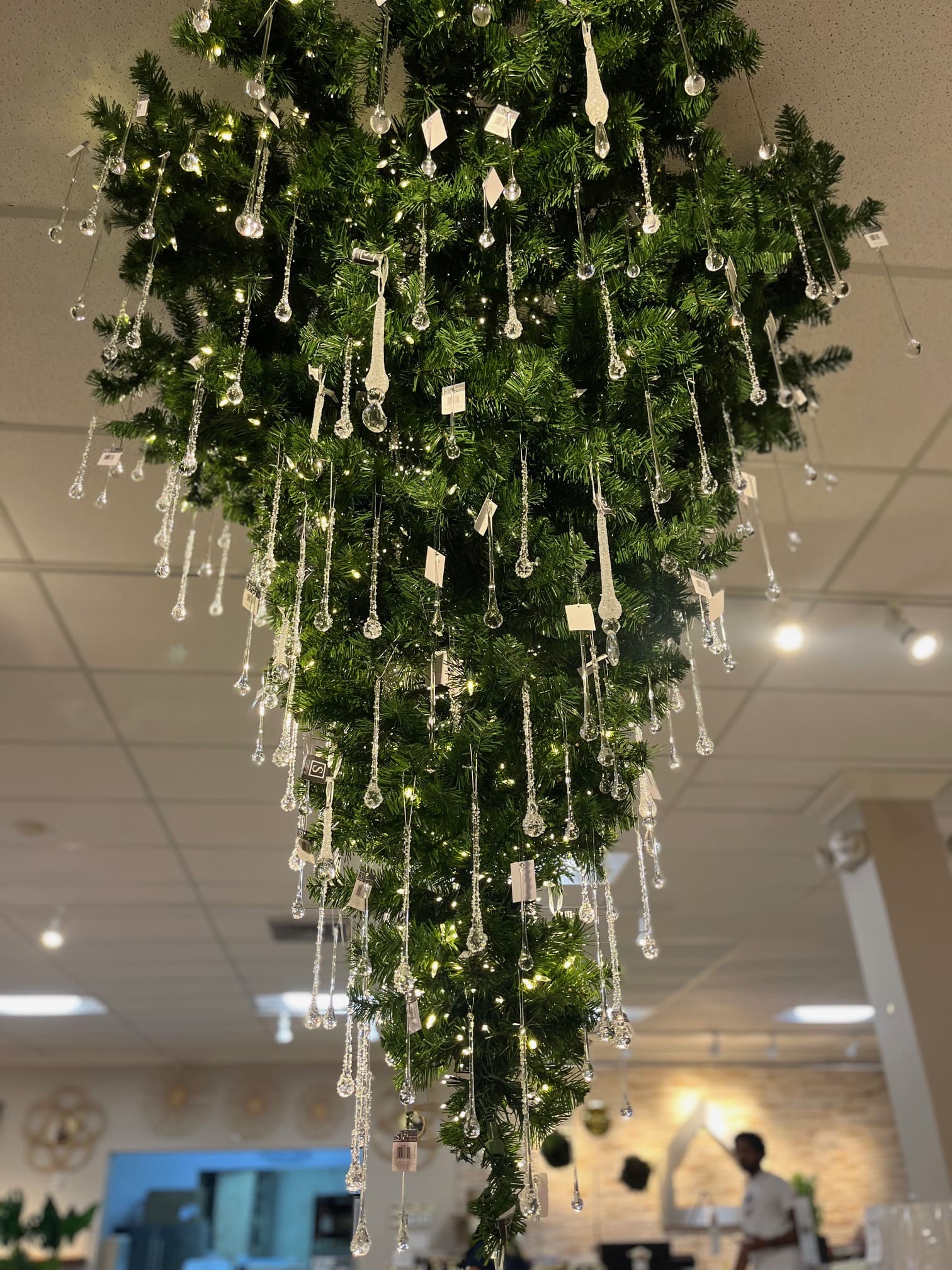
Jesse Atwell, also the owner of ALJ Construction, assisted in his sister’s vision to bring the designs to life by assisting with the engineering and design, which was an asset to the team’s execution. “He always finds a way to do it that makes sense,” said Abigail Atwell. A good example would be an upside-down Christmas tree depicting a chandelier in the “Champagne and Pearls,” section one of Abigail Atwell’s favorites.
An upside-down tree designed as a chandelier gave a level of sophistication. (Source photo by Diana Dias)
Ashley Furniture HomeStore provides an extensive range of décor options, from ornaments, twinkling lights, and charming accessories to lighting and festive accessories. Whether you prefer a traditional or modern aesthetic, they have something to suit every style and taste.
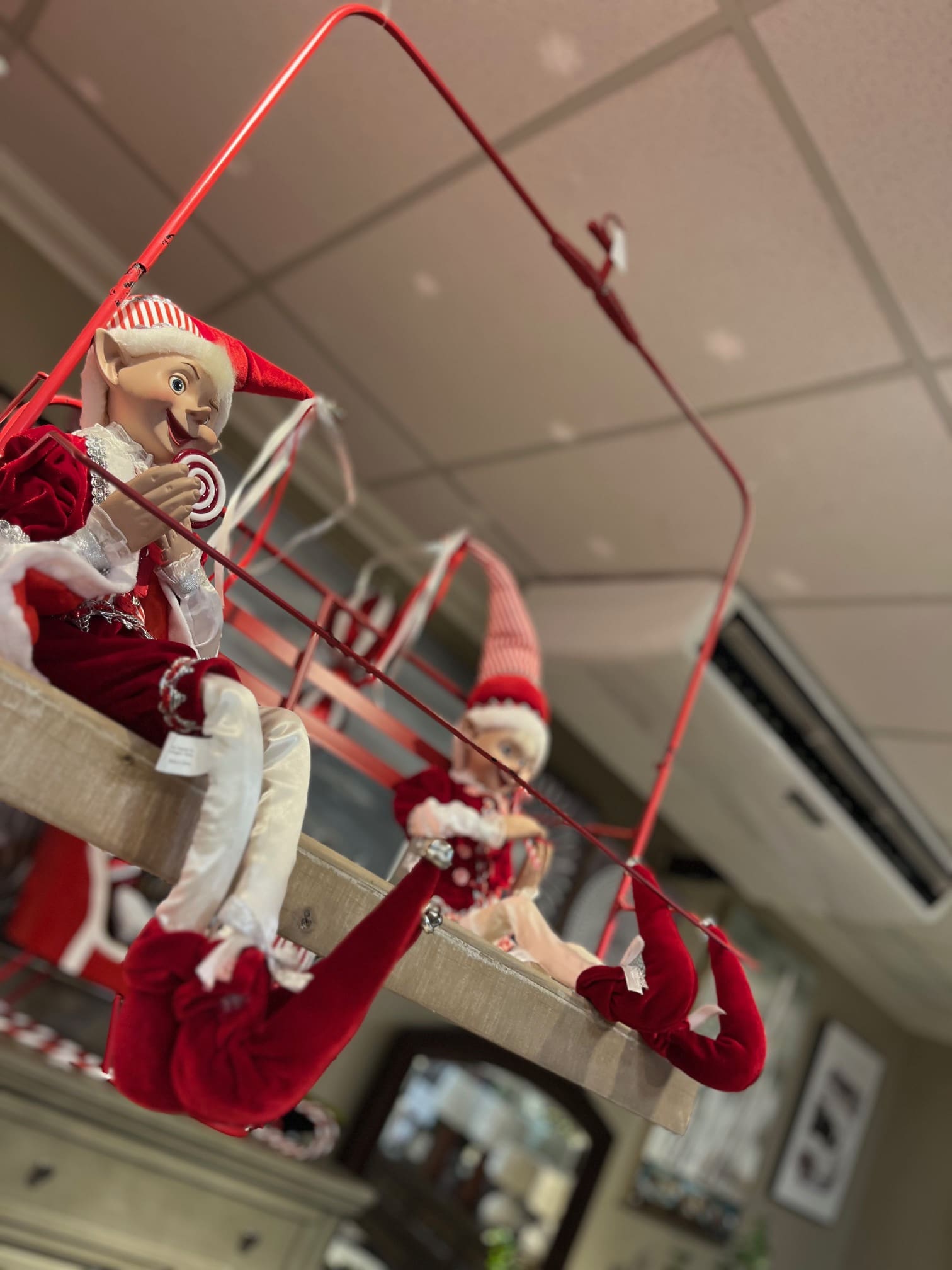
Elves are ready for a ski ride in Candy Land. (Source photo by Diana Dias)
After the attendees enjoyed the designs, a 50/50 raffle was drawn and the mix and mingling continued. According to the St. Croix Chamber of Commerce website, they work for small and large businesses on the island of St. Croix and support pro-business governmental initiatives.
A modern twist on the traditional holiday décor. A minimalist yet luxurious vibe to the holiday. (Source photo by Diana Dias)
To see and hear more about this interview, stay connected to the V.I. Source to view a new episode of “Consider the Source,” which is dropping this weekend.
Gov. Albert Bryan Jr. signs landmark agreement to share data and transform care coordination and care delivery for U.S. Virgin Islanders. (Shutterstock image)
After 20 years of trying to create a better health care system in the U.S. Virgin Islands, the Bryan-Roach administration announced on Friday that they are partnering with CRISP Shared Services. This nonprofit group helps improve health technology and data sharing on the U.S. mainland and will now offer its services in the USVI.
“In an era of rapid change and achievements in health care around the world, the USVI is still seeing far too many fall through the cracks of a decentralized, disconnected system for medical care, behavioral health, substance use, and social services,” said Gov. Albert Bryan Jr. “With vision and great effort by many, our time has come in the USVI to adopt the lessons learned by those who have gone before us on a journey of transformation – and put in place the data exchange infrastructure we need to support equitable health outcomes,” he emphasized.
Medical providers and the public are invited to the 3rd Annual Digital Health Summit from Nov. 18 to 20 at The Westin Frenchman’s Reef on St. Thomas to learn more about the Health Information Exchange (HIE) and its impact on health care in the U.S. Virgin Islands, according to the press release.
This event is a great chance to meet the CRISP Shared Services technology team, learn about the timeline for full HIE operations, understand how providers can get involved, and listen to expert speakers on health technology and policy changes that can improve your health care experience. Registration is free and open to everyone on the Office of Health Information Technology’s (OHIT) website, the press release stated.
In 2021, the Bryan-Roach administration shifted its approach to reenvision the path toward establishing an integrated health care system in the territory. Former Policy Advisor Julia Sheen, former Chief of Staff Karl Knight, and Bryan initiated a centralized effort by launching the OHIT and appointing Michelle Francis as its director, the release stated.
OHIT was created to build a modern health technology system, teach health care providers and patients about the benefits of digital health services, and help the local workforce learn the skills they need. Over the last three years, with solid planning, committed leadership, and teamwork, OHIT has made significant progress in all of these areas, it said.
For people in the Virgin Islands and local health care providers, the HIE helps solve the problem of scattered patient medical records. Right now, this information is kept in different paper and electronic forms, making it hard to share the data needed for quicker and better patient care. The HIE, backed by CRISP Shared Services, offers the technology and support needed to fix this issue, the release stated.
The HIE allows the Virgin Islands Health Department, Human Services Department, hospitals, Federally Qualified Health Centers, laboratories, pharmacies, and private providers to share patient data through a secure and reliable data exchange. This system ensures that health care providers and patients can access the necessary health information anytime and anywhere, it said.
The HIE is bringing a Master Patient Index to the USVI for the first time, which helps keep track of people’s identities in one place. It also includes a tool that can gather lab results, medication information, and allergy details from different patient records. Additionally, CRISP provides a notification service that sends alerts about patient admissions, discharges, transfers, and lab results, and it allows for sharing data with places outside the territory across the U.S., the release stated.
“Enterprise transformation of this scale requires consistent, collaborative effort,” explained Francis. “The Department of Human Services Medicaid Director, Gary Smith, and I have been working together since 2020 to understand and integrate the health IT goals and resources of our local providers and agencies with the goals and incentive dollars from the Centers for Medicaid and Medicare and the Office of the National Coordinator to access funding and resources for maximum impact,” she explained.
Both offices have been dedicated to securing the necessary funding and infrastructure, working closely with the provider community to finalize agreements and establish the technical foundation for data exchange, the release stated.
“I couldn’t be more thrilled to lead this office and play a role in bringing this much-needed, long-sought infrastructure to fruition. This advancement will improve data flows between providers, hospitals, and plans, while empowering patients with access to their medical records,” Francis added.
The data shared through the HIE will help provide faster and better care during emergencies and daily situations. In the future, it will be important in dealing with big challenges in the USVI, like public health issues such as the COVID-19 pandemic and increasing health care costs. Additionally, the HIE will make it easier for residents to connect with mental health providers and social services, the release stated.
A new system called the Health Data Utility is being created to help share health information better in the U.S. The goal is to form a partnership with different groups to provide clear and fair rules on how health data in the USVI will be shared and used. More information about the Health Data Utility will be shared in the coming months, it said.
The announcement of this health care innovation achievement is being celebrated by federal partners and the other U.S. Territories, including the Governor of Guam, the Honorable Lourdes Guerrero, who are expressing interest in partnering with OHIT and the Division of Medicaid to launch various health innovation projects, including an HIE, it said.
For more information about OHIT, visit www.ohitusvi.com.
Effective Nov. 8, the Virgin Islands Energy Office overhauled the Virgin Islands Energy Storage (VIBES) program, opening up the application specifications to allow for larger battery systems to participate.
VIBES is all about keeping the lights on, even when a storm or other event causes electrical service in the territory to be disrupted.
Launched this May, the federally funded rebate program aims to help Virgin Islands residents defray the cost of investing in energy storage solutions that can switch on automatically in the event of a power outage.
To achieve this goal, VIEO is offering to rebate as much as $6,000 -up from an initial maximum of $4,000 – against the cost of installing residential scale battery backup storage solutions, and an automatic transfer switch or smart critical load panel. An automatic transfer switch typically works so that when the power goes out, all of a homes electrical demands are routed straight to the backup power source. Critical load panels, allow for more selectivity on the other hand, and gives the homeowner the option to discriminate between individual circuits so that they can decide to keep power running to critical appliances like refrigerators, water pumps, or even whole rooms.
The maximum capacity of the battery installation has also been increased, with systems as large as 20 kWh now eligible. VIEO has also expanded the purchase options applicable to the rebate, and is now allowing consumers to buy battery packs and other hardware from vendors outside of the territory. Please note, systems purchased from vendors outside of VIEO’s network of vetted suppliers will be subject to additional technical review by VIEO staff and must have an approved Electrical Final Certificate from the Department of Planning and Natural Resources before an application can be submitted to VIBES.
The first come first serve rebate program has been initially endowed through a $800,000 grant from the State Energy Program Bipartisan Infrastructure Law. To qualify for the program you must be a full time resident of the territory, own a home and or business/non-profit, and have an active Water and Power Authority bill in your name. Further, the automatic battery backup system must have a capacity between 3 kWh to 20 kWh. For a full list of eligibility requirements, and to apply for the program, please visit our website at energy.vi.gov, or call us at 340-713-8436 on St. Croix, or 340-714-8436 on St. Thomas.
Diabetes is a condition that occurs when the pancreas is not able to produce enough insulin or use the insulin it produces effectively (Diabetes, 2023). Insulin is a hormone the body uses to regulate blood sugar. There are 3 types of Diabetes. Diabetes Mellitus Type 1, Diabetes Mellitus Type 2 and Gestational Diabetes. Even though these are the main 3 Diabetes, one should also consider monitoring Prediabetes as well. Let’s take a closer look.
Type 1 Diabetes, also known as juvenile diabetes, is a chronic condition where the pancreas makes little to no insulin (Type 1 Diabetes, 2024). Symptoms of type 1 diabetes are excessive urination, increase in hunger, bed-wetting in children who never wet the bed at night, unexpected weight-loss, feeling tired and weak, feelings of irritability, and having blurry vision. Though the cause of Type 1 Diabetes is unknown, some factors may include genetics and/or environmental factors (Type 1 Diabetes, 2024).
Type 2 Diabetes, also known as adult-onset diabetes, occurs when the body is having trouble regulating glucose for energy. Like type 1 diabetes, this happens when the pancreas is not able to produce enough insulin. Another cause occurs when cells in our muscles, liver and fats become resistant to insulin, causing the cells to not take in enough glucose. You will mostly find DM2 in older adults, however, with the rising growth of obesity in children, DM2 is becoming more common in young adults and children. Symptoms to look for in Type 2 Diabetes includes, frequent urination, excessive thirst, increased hunger, fatigue, blurred vision, frequent infections, slow-healing sores, numbness or tingling in the feet or hands, dark spots commonly found on the neck and/or armpits (Type 2 Diabetes, 2023).
Gestational Diabetes is diabetes that is diagnosed during pregnancy for the first time. This type of diabetes causes the unexpected mom to have high blood sugar which may also affect her baby. These complications may include severe breathing difficulties, low blood sugar, early birth, need for c-section, obesity and type 2 diabetes later in life, high blood pressure, preeclampsia, and still birth. In gestational diabetes, the blood sugar usually returns to its usual levels after delivery (Gestational Diabetes, 2022). Though the cause of gestational diabetes is still unknown, one factor that seems to play a part is excessive weight before pregnancy. Some risk factors of gestational diabetes include having polycystic ovary syndrome, having an immediate family member with diabetes, being overweight or obese, not being physically active, being of certain ethnicity or race such as Hispanic, Black, American Indian or Asian American, and having prediabetes (Gestational Diabetes, 2022).
Now that we’ve learned about the different types of diabetes and their symptoms, let try to minimize our risks. Exercise more, select healthy food options, loose excess weight and stay positive to decrease stress levels. Let us continue to fight for health lifestyles and minimize diabetes and its risks.
References
Diabetes. (2023, April 5). Retrieved from World Health Organization: https://www.who.int/news-room/fact-sheets/detail/diabetes
Gestational Diabetes. (2022, April 9). Retrieved from Mayo Clinic: https://www.mayoclinic.org/diseases-conditions/gestational-diabetes/symptoms-causes/syc-20355339
Type 1 Diabetes. (2024, March 27). Retrieved from Mayo Clinic: https://www.mayoclinic.org/diseases-conditions/type-1-diabetes/symptoms-causes/syc-20353011
Type 2 Diabetes. (2023, March 14). Retrieved from Mayo Clinic: https://www.mayoclinic.org/diseases-conditions/type-2-diabetes/symptoms-causes/syc-20351193
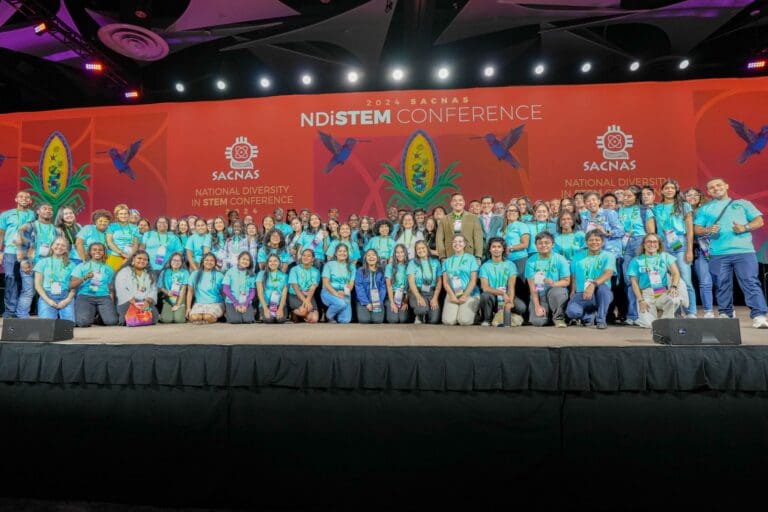
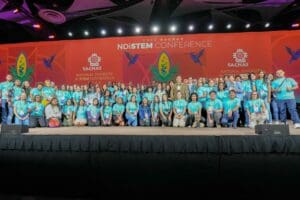
University of the Virgin Islands (UVI) students, faculty and staff joined students from the U.S. Territories of Guam and Puerto Rico at the National Diversity in STEM (NDiSTEM) Conference in Phoenix, Arizona held Oct. 31 – Nov 2. Hosted by the Society for Advancement of Chicanos/Hispanics & Native Americans in Science (SACNAS), the event is the largest multidisciplinary and multicultural STEM diversity conference in the U.S.
Students and Mentors from the U.S. Virgin Islands, Guam and Puerto Rico at SACNAS, the Largest Multidisciplinary and Multicultural STEM Diversity Event in the Country.
Among the 20 USVI participants were seven UVI undergraduate students, four UVI graduate students, four UVI faculty and staff including a representative from the VI Coastal Zone Management Agency (CZM)/ VI Department of Planning and Natural Resources (DPNR), and five UVI workforce fellows. For many it was the first large STEM diversity conference they had attended.
Amanda Boissiere, a St. Croix native, UVI graduate and U.S. National Science Foundation (NSF) Securing STEM Island Pathway Workforce Fellow spoke highly of the experience stating, “I loved the cultural element of SACNAS—it was a STEM conference that truly embraced diversity and welcomed individuals from all walks of life. Networking with and learning from scientists across the nation was incredibly inspiring, and it motivated me to take the next step in my academic journey by applying to graduate programs.”
Participation in the conference was made possible through the Navigating Home project, a National Science Foundation-funded alliance of the United States territories of Guam, the U.S. Virgin Islands and Puerto Rico. The project is dedicated to supporting individuals from historically marginalized and underrepresented groups in the geosciences hailing from one of these territories. A total of seventy-one alliance representatives attended the conference. To learn more about the Navigating Home Project and workforce fellowship opportunities visit https://www.navigatinghomeproject.com.
“Our commitment to diversity brought together a vibrant group of islanders, allowing them to connect across oceans at this conference. In addition to connecting with Alliance members, the conference created opportunities for professional development, cultural celebrations and peer connections,” said Elisabeth Leerdam, UVI’s Center for Marine and Environmental Studies SEAS Islands Alliance coordinator. “It was an honor to represent UVI and our U.S. territories.”

















Op-Ed: St. John’s Episcopal Church on St. Croix Marks 264 Years
I will keep on saying it until I die. We Virgin Islanders don’t value our natural and cultural resources. It is just a handful of us in the Virgin Islands trying to preserve whatever historical buildings, ruins or natural sites —including historic trees — that remain on these beautiful islands and cays. In October, St. John’s Episcopal Church, also known as St. John’s Anglican Church, in Christiansted on St. Croix made 264 years. It was built by enslaved Africans and the so-called “free colored” people, who really were not free but just held to another standard of slavery in the Danish West Indies.
These islands are so rich in history that we miss the mark of who we are as a people. On July 20, 1906, the funeral service of Susannah Abrahamsen — known in our history as “Bottom Belly,” one of the Queens in the Fireburn labor riot in 1878 — was held at St. John’s Episcopal Church. We drive by every day and have no idea that “Bottom Belly’s” service was held at this historic church.
According to historical records, “Bottom Belly” was buried adjacent to Christiansted Cemetery. While I am talking about cemeteries, the church yard and gravesites are full of graves dating back to the 1700s. In fact, within the church building, there are tombstones on the floor giving the history of people who once attended service there. In 2016, the church graveyard was listed on the National Register of Historic Places. Vivian I. Ebbesen-Fludd, a native Crucian, is an endangered species of a woman and I consider her to be very articulate in giving the history of the church.
I toured the church with her several times, and I was very impressed. Believe me, she loves her church and those who laid down their lives for our freedom. It was during the period when the English ruled the Danish West Indies, from 1645-1650, that an Anglican community of faith first begin to develop on St. Croix. Also, it was during the golden era when sugar was king on St. Croix, from 1760 to 1814, when St. John’s Episcopal Church was established in 1760 or 1761.
The church was built on a hill of local limestone and bricks that came from Denmark in ships. It has a distinctive Gothic Revival English style and is located at the western entrance of King Street by the main entry to the town of Christiansted. Due to the growing population of English, Irish and Scots inhabiting St. Croix during this period in our history, the church was frequently referred to as the “Mother Church” of the Diocese of the Virgin Islands.
According to historical documentation, the Rev. Cecil Wray Goodchild left Teddington, England to become rector of St. John’s Episcopal Church. The Society for the Propagation of the Gospel in Foreign Parts funded the first year of the construction of the church. The Society (SPG), which is an arm for the Church of England in the Americas, felt that the Christianity ordinances of their colonies in the Western Hemisphere were neglected and the moral standards of their citizens were too relaxed.
When Goodchild arrived in 1760 on St. Croix, he was placed under the jurisdiction of the Bishop of London. Thus, Goodchild served as the first rector of St. John’s Episcopal Church. The Danish planter Reimert Haagensen noted, “The British … have a pastor who holds services on Sundays in town [Christiansted] and again on the west end, in order to spare those who live far from town a long trip. This greatly satisfies his congregations, which pays him an annual salary of 1,000 Rdlr. [Rigsdaler].”
Goodchild had other sources of income that included a 75-acre cotton plantation at Prince’s Quarter, later named “Clear Mount,” and which eventually became part of Estate Beck’s Grove plantation, according to the late native historian William Fleming Cissel. Nevertheless, at St. John’s Episcopal Church, enslaved Africans and “free coloreds” made up a large part of the congregation, worshiping along with their white residents.
However, the service in the church was segregated. Black worshippers had allocated spots in the church apart from their white counterparts. They were unable to sit in the pews of the church. With contention between the two races, in 1794, “Free Black parishioners” petitioned the church leadership for them to rent pews where they could worship. This was approved by the vestry in 1794. As a result, slaves and “free coloreds” were allowed to sit in the north part of the church gallery to worship. However, this was reversed in 1810. Therefore, Black parishioners could no longer sit in the north gallery of the church.
Eventually, the white parishioners contested Blacks sitting in the church gallery and the decision was reversed, barring them from occupying any pew. Also, they were disallowed from bringing their own chairs to sit in the church. They were allowed, however, a section in the middle of the aisle of the church that was made available for them.
However, Crucian Blacks continued to worship at St. John’s Episcopal Church. Until the 1848 emancipation, there were separate marriage, burial, and baptism registers kept for slaves and “free worshippers” in the church. As time moved forward in history, Black Crucians had allocated spots to worship in the church, but they were made aware to enter the church through a separate entrance from where whites entered. By 1910, segregation in the church no longer existed.
Alexander Hamilton, together with his mother Rachel Fawcett Levine and his older brother James, lived a short distance from the church in Christiansted. They worshiped in the church occasionally and the pew of one of America’s Founding Fathers still exists there today. In 1768, Rachel died of yellow fever at age 49 and her burial records are registered in St. John’s Episcopal Church. Other prominent parishioners of the day were Nicholas Cruger, Thomas Stevens, whose family was from Antigua, and Edward Stevens, a renowned physician.
There is a lot more history of the church. I just wanted to point out how rich Virgin Islands history is that touches the fourth corner of the world. St. John’s Episcopal Church is a major asset to the historic district of Christiansted. You can contact Vivian I. Ebbesen-Fludd, at viefludd@gamil.com. Believe me, she is good in telling the history of the church.
Happy Birthday, St. John’s Episcopal Church!
— Olasee Davis is a bush professor who lectures and writes about the culture, history, ecology and environment of the Virgin Islands when he is not leading hiking tours of the wild places and spaces of St. Croix and beyond.