Senator Milton E. Potter (Submitted by Clinton Stapleton)
Senator Milton E. Potter is proud to announce the introduction of Bill 35-307, a transformative piece of legislation aimed at empowering nearly 9,000 active government employees across the Virgin Islands by granting them the right to directly elect their representatives to the Government Employees’ Retirement System (GERS) Board of Trustees. This bill represents a significant step toward ensuring greater transparency, fairness and accountability in the governance of GERS, which serves as the backbone of retirement security for government workers.
Currently, the Central Labor Council nominates representatives on behalf of unionized employees in both districts.
However, this process does not allow the broader base of active employees to have a direct voice in selecting who represents their interests. Bill 35-307 seeks to change this by enabling all active employees within GERS—those still working in government service—to elect their representatives directly, in a manner similar to the current democratic election process.
Furthermore, the bill strengthens the GERS Board by ensuring that all voting members meet the same minimum qualifications required to serve on the Board. This provision is designed to enhance the board’s effectiveness in managing the retirement system and protecting the interests of the entire GERS membership.
“With the passage of Bill 35-307, we are empowering active government employees by putting them on par with the retirees with respect to their representation on the GERS Board,” said Senator Potter. “No longer will this vital decision-making process be in the hands of a select few; instead, the power will rest in the hands of the employees themselves.
This is about giving all active employees a voice in shaping the future of their retirement security.”
Key Features of Bill 35-307:
Direct Election of Representatives: Nearly 9,000 active government employees will have the right to directly elect their representatives to the GERS Board of Trustees.
Uniform Qualifications: All voting members of the Board must meet the same minimum qualifications to ensure consistent expertise and accountability in overseeing GERS.
Inclusion: The bill fosters a more inclusive process, empowering all active members of the GERS to have a direct say as to who are the decision-makers at the highest level at the GERS.
Sen. Potter encourages all government employees to stay informed and engaged as Bill 35-307 moves through the legislative process. “This bill is a critical opportunity to enhance democratic participation and ensure that the GERS Board of Trustees is truly representative of the employees it serves,” Potter added. “You now have a voice — let’s make it heard.”
Senator Milton E. Potter
Member of the 35th Legislature of the United States Virgin Islands
Blossie Becky Julien
Blossie Becky Julien died on Oct. 8.
She was preceded in death by her parents; brothers: Randolph “Masjohn” and Boston Julien; sister, Dorothy Julien Liburd; and grandson, Javares Neal.
She is survived by her son, Anthony F. Clarke; grandchildren: Shannon Short and Dominic Jones; sister, Bernadine Williams; brother, Peter Julien; sister-in-law: Grace Julien and Ianthie Julien; and nieces and nephews: Delia, Lorna, Vera, Christine Liburd, Gloria, Jacqueline, Marcia, Annette, Yvonne, Valecia, Barbara, Biann, Lisa, Valerie, Diane, Dawn Julien, Sandra Baker, Deborah Riviere, Trevor Liburd, Roy, Kerwin Williams, Oneil, Nigel, Alphonso, Clifton Wayne Julien and Darrel Riviere.
She is also survived by godchild, Giftus Jones; caregiver, Sonia Maynard Liburd; many relatives to include: Weston and Eustace Huggins, the Huggins and Stanley families and friends, Pearly Rhymer and family, Francis George, Mary Donovan, Josephine Williams, Alphonso Farrell and family, all the caretakers, and the members and staff of the Senior Center; as well as other relatives and friends too numerous to mention.
The first viewing will be held from 3-5 p.m., Wednesday, Oct. 30, at Kingshill Funeral Home Chapel, 303 Clifton Hill, St. Croix.
The second viewing will be held at 9 a.m. followed by a funeral service at 10 a.m., Thursday, Oct. 31, at St. Ann’s Church, 42 Barron Spot, Kingshill, VI 00850. Interment will be at Kingshill Cemetery.
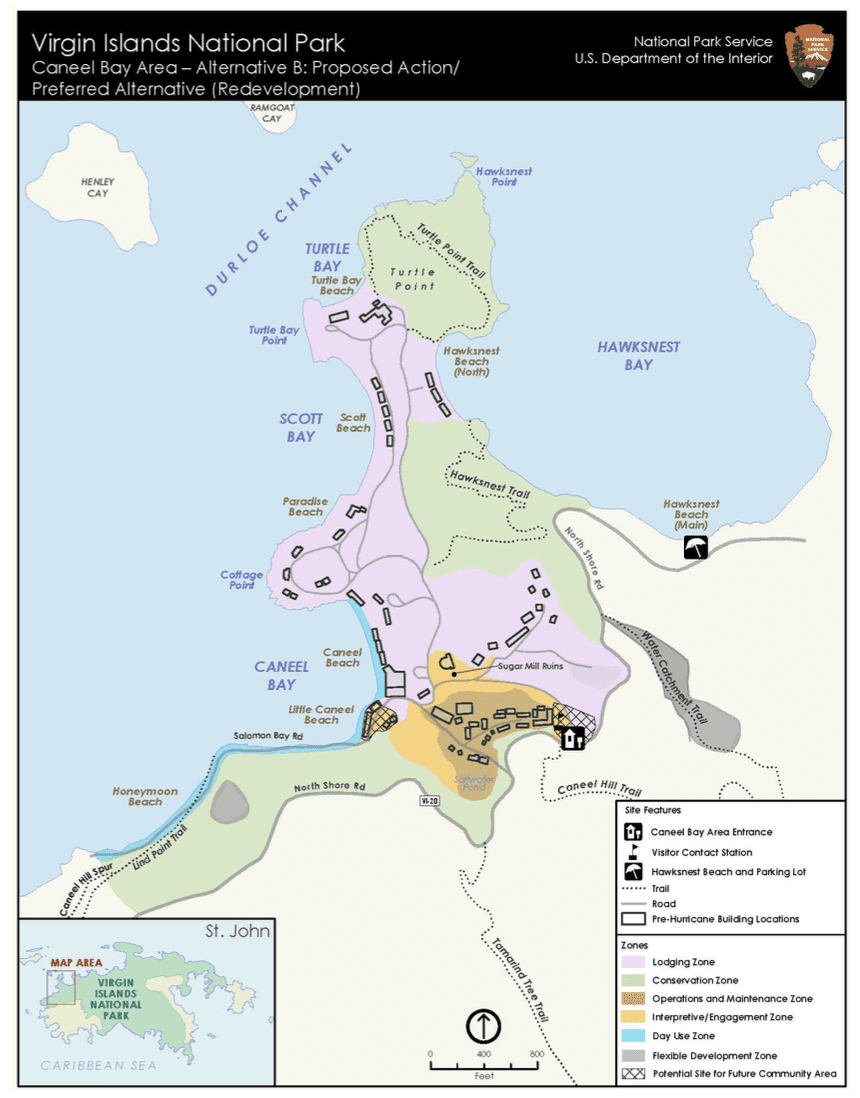
According to a map included in the RFQ package for the redevelopment of Caneel Bay on St. John, the property will consist of six zones to include Lodging (67 acres), Conservation (78 acres), Operations and Maintenance (7 acres), Interpretive/Engagement (11 acres), Day Use (5 acres), and Flexible Development (7 acres), with two areas set aside as potential sites for future community uses. (Image courtesy NPS)
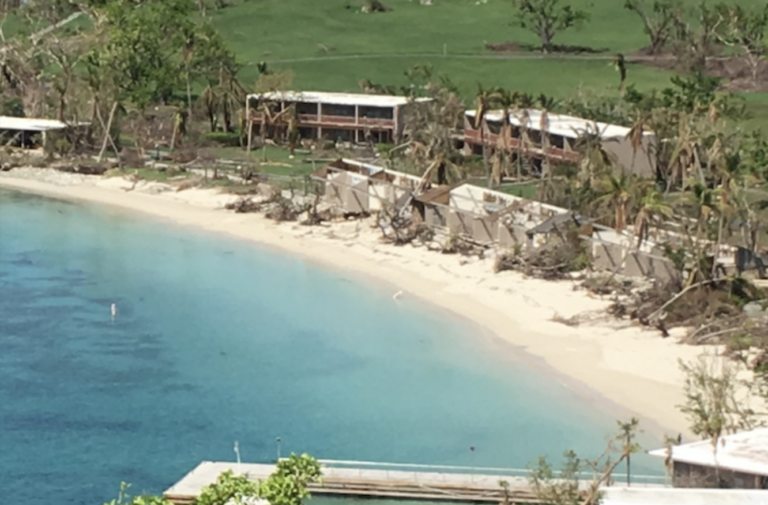
The National Park Service has issued a Request for Qualifications as the first step in the redevelopment of the Caneel Bay resort on St. John as a “premier eco-destination” since it was destroyed in the twin Category 5 hurricanes of 2017.
The property had been mired in a legal dispute since 2022 when the previous leaseholder, EHI Acquisitions, sued the government over ownership of the land and its improvements. However, the V.I. District Court ruled in April that the resort and the 150 acres of prime beachfront land it sits on belong to the U.S. government and while EHI has appealed that decision to the Third Circuit Court of Appeals in a case that remains ongoing, the NPS is moving ahead with the redevelopment.
“Caneel Bay overnight accommodations provide a unique publicly offered lease opportunity with stunning ocean views along the north shore coastal landscape,” Superintendent Penelope Del Bene said in a press release announcing the RFQ. “The cultural and natural resources of the area are significantly important to the local communities.”
Indeed, the storied resort — originally established by Laurance Rockefeller and Jackson Hole Preserve, Inc. as one of its “Rockresort” locations in the mid-1950s — has historically represented an early model of eco-tourist luxury accommodations, Del Bene noted. However, it has been largely shuttered since hurricanes Irma and Maria severely damaged the guest rooms and other support structures in September 2017.
The best qualified offerors responding to the RFQ, as determined by the NPS, will be asked to submit a development proposal under a subsequent Request for Proposals that is expected to be issued next summer, according to Tuesday’s announcement.
Site visits will be held on Nov. 7 and 8, and interested parties are asked to RSVP by 4 p.m. on Nov. 5, it said. The RFQ is available to view and download on the SAM.gov website. Any questions regarding the lease must be received no later than Nov. 22 via email to SERCommercial_Services@nps.gov or through the link here.
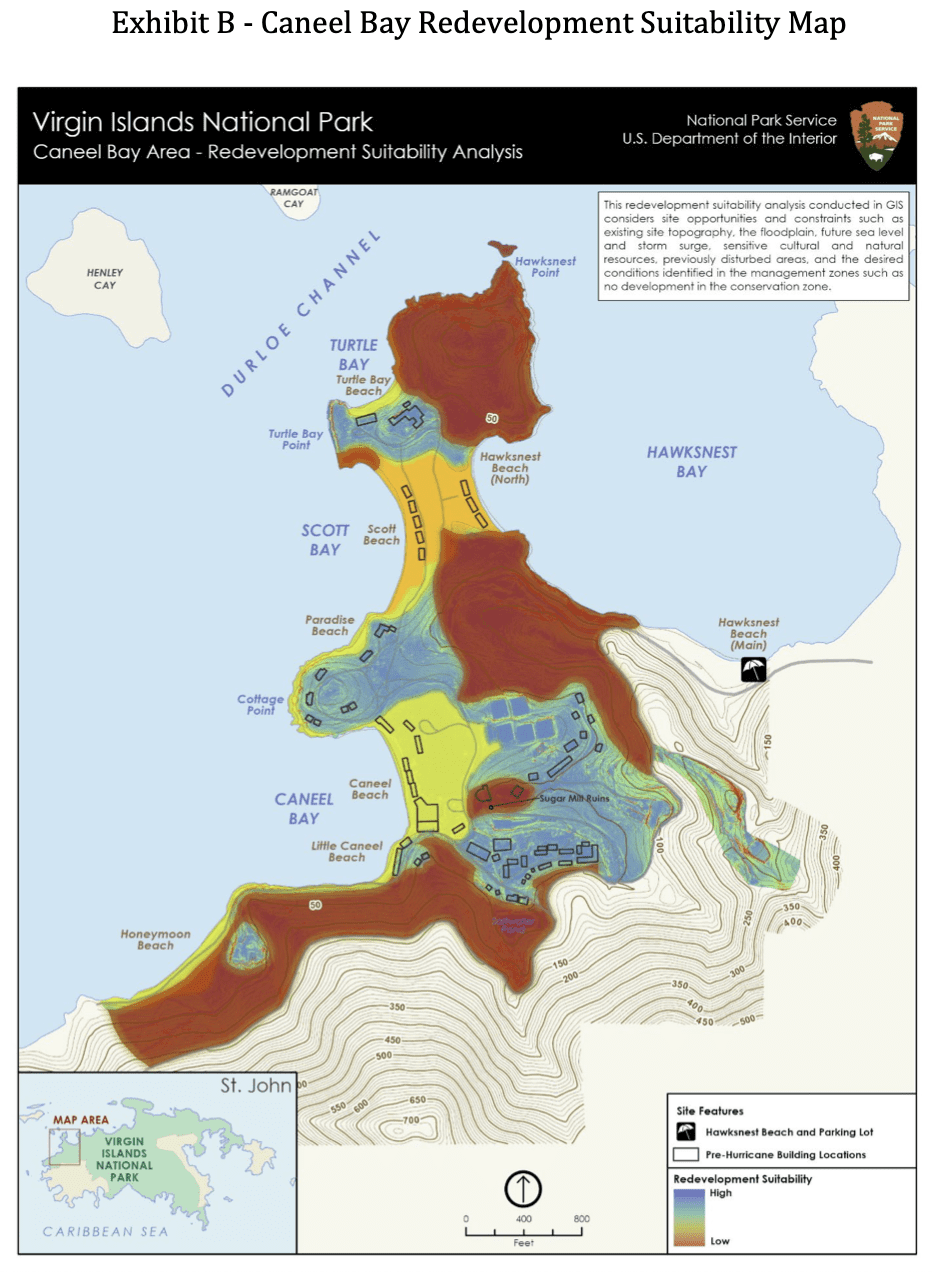
This map included in the RFQ package for Caneel Bay on St. John highlights areas based on their lowest (red) to highest (blue) suitability for redevelopment. (Image courtesy NPS)
The NPS is offering what it has called an “unprecedented” 60-year lease term for 74 acres of its property — a term EHI had sought but was denied when it argued it would take that long to recoup the $100 million it would need to invest to rebuild the storm-damaged resort.
According to a map included in the RFQ package, the property will consist of six zones to include Lodging (67 acres), Conservation (78 acres), Operations and Maintenance (7 acres), Interpretive/Engagement (11 acres), Day Use (5 acres), and Flexible Development (7 acres), with two areas set aside as potential sites for future community areas.
According to the management zone descriptions, the redevelopment will attempt to reuse existing structures and infrastructure where possible, though their integrity is unknown. Additionally, “public access of day-use areas and facilities via roads and trails in this zone will be a condition of any lease(s) or concession contract(s) and coordinated with the larger Caneel Bay area redevelopment.”
The Day Use zone will be required to have public bathroom and shower facilities, picnic areas, food services, and equipment rentals for non-motorized watersports. The Conservation zone calls for reestablishing the Turtle Point and Hawksnest trails, limited expansion of pedestrian trails throughout the site, and no new development for overnight lodging or amenities.
The Flexible Development zone remains to be determined, but includes lands that were previously disturbed, such as for a landfill, and could include storage and parking, among other uses, according to the RFQ.
The Interpretive/Engagement zone is intended to ensure visitors “have an opportunity to have a national park experience by engaging with the NPS onsite, including through an NPS visitor contact station,” according to its description. “All of the archeological sites previously determined eligible for the National Register of Historic Places, including the plantation sugar factory complex, are located within this zone and will be subject to active NPS preservation,” it says.
“Visitors will be encouraged to learn about the site’s history through interpretation of cultural sites, including the archaic, colonial, and post-emancipation era sites.”
Prosecutors added nine new federal charges against the St. Croix couple accused of working with a former V.I. Housing Finance Authority executive to bilk $4 million from taxpayers. (Source file photo)
Prosecutors added nine new federal charges against the St. Croix couple accused of working with a former V.I. Housing Finance Authority executive to bilk $4 million from taxpayers through a contract to store wood for hurricane recovery. On Thursday, a judge ordered them to court Friday afternoon for arraignment and advice of rights by U.S. Magistrate Judge Emile A. Henderson III.
In addition to money laundering conspiracy, husband and wife Davidson and Sasha Charlemagne were charged Tuesday with making false claims upon the United States. Prosecutors allege Sasha Charlemagne submitted timesheets to the U.S. Department of Housing and Urban Development from July 2021 through October 2023, claiming she was working eight hours a day at woodpiles in the territory. In fact, according to court records, Charlemagne was not even in the Virgin Islands at the time.
Davidson Charlemagne had previously been charged with wire fraud in the alleged scheme and fraud related to receiving federal funds.
Prosecutors allege Sasha Charlemagne used some of the fraudulently acquired money to spend lavishly on credit cards. She allegedly made payments to her American Express card totally nearly $38,500 in July 2022 and again in August 2022.
In September, V.I. District Court Judge Wilma A. Lewis ruled the Charlemagnes’ case could be separated from their alleged co-conspirator, former VIHFA Chief Operating Officer Darin Richardson. Richardson has been charged with criminal conflict of interest and making false statements by allegedly lying to HUD investigators about recusing himself from contracts related to the woodpiles.
The trio was arrested in June after a federal grand jury returned an indictment. The charges stem from a two-year FBI investigation into a VIHFA contract for the storage and management of wood that was shipped to the territory for the reconstruction of commercial and residential buildings following hurricanes Irma and Maria in 2017, funded by the Department of Housing and Urban Development Community Development Block Grant Disaster Recovery program.
According to court documents, Davidson Charlemagne, head of maintenance for the V.I. Education Department, approached the owner of ISG — referred to as Individual One in the indictment — to submit a bid for the contract that named Charlemagne’s company, D&S Trucking, as the subcontractor.
In a bid process overseen by Richardson, ISG and D&S Trucking were awarded the contract in January 2021 for $2.9 million over a three-year period, an amount that was increased to $4.4 million in October that year — a sum the government alleges was grossly inflated.
Richardson had significant control over the procurement process and allegedly manipulated the evaluation of bids to favor ISG’s proposal, according to the complaint. Moreover, it was unlawful for him to formally award the contract after convening a bid evaluation committee in June 2020 to rate the proposals, the government alleges. Federal regulations contemplate a bifurcation of these two duties, and Richardson violated the regulations by performing both roles, it said.
According to court documents, VIHFA paid Charlemagne’s trucking company a total of $3.6 million in federal funds, of which $3,177,000 was credited to bank accounts owned and controlled by him and his wife.
Just over a year after the contract was awarded, Davidson Charlemagne allegedly received a payment of $107,000 from Individual One.
Meanwhile, the woodpiles on St. Croix and St. Thomas remained almost entirely unused and stacked on pallets outdoors and exposed to the elements for more than three years. Additionally, the St. Croix woodpile was stored rent-free at Henderson Elementary School — meaning the government was paying millions to store its own property on its own land — the Justice Department alleges.
It was an UberSoca Cruise 2024 takeover as cruise ship passengers gave their best zombie “Thriller Walk” through the streets of Frederiksted. (Source photo by Diana Dias)
On Thursday morning, 2,500 revelers flooded the streets of Frederiksted for the J’ouvert & Beach Turn-Up during the 2024 UberSoca Cruise. The theme for the event was “Thriller Walk,” and many passengers showcased their creativity in elaborate zombie costumes.
A farmer zombie perhaps dances through the street of Frederiksted. Many participants were sprayed with paint and covered in powder after the J’ouvert. (Source photo by Diana Dias)A pretty set of zombies stayed in sync as they tramped down north of Strand Street. (Source photo by Diana Dias)A grandpa or a zombie holds a paint bottle in preparation to spray participants with paint. (Source photo by Diana Dias)
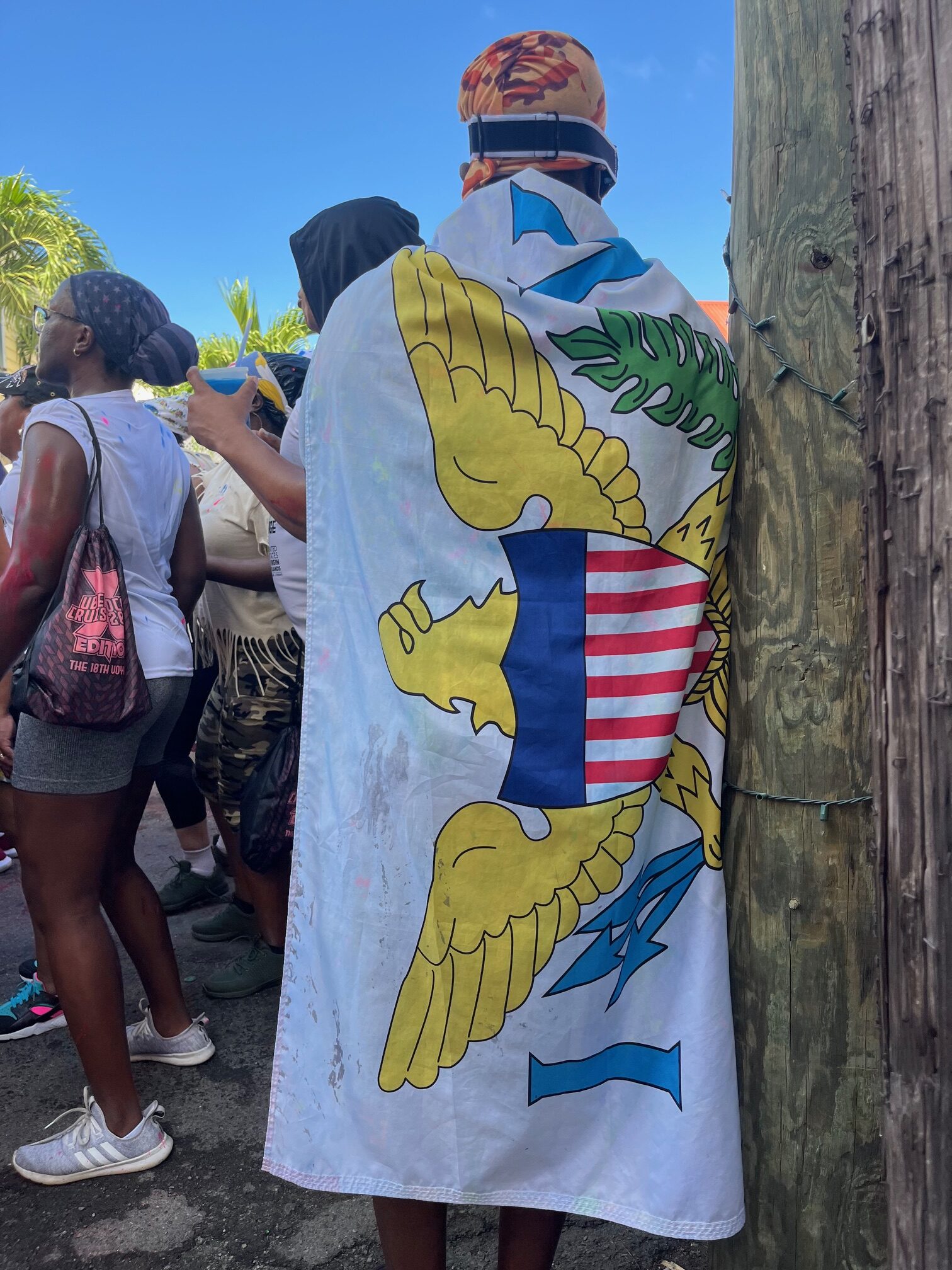
Vendors and Frederiksted businesses opened shop as visitors danced through the streets. “Feters” from Haiti, Jamaica, Barbados, Bahamas, and other islands waved their flags and danced as they squirted paint and powder on participants.
A zombie smiles! Some passengers aboard the UberSoca Cruise are from other neighboring Caribbean islands and showed support to vendors along the street. (Source photo by Diana Dias)Many participants sported different flags from neighboring Caribbean islands. (Source photo by Diana Dias)
The J’ouvert event began at 9:00 a.m. at the Festival Village grounds. It started by heading south on King Street, then made a right onto Fisher Street, where a water truck operated by Marcos was waiting to create a “wet fete.” After that, they continued south on Veteran’s Shore Drive, turned around, and proceeded north on Strand Street. The J’ouvert concluded at the beach, where there was a turn-up.
A scary-looking zombie makes his way through King Street. (Source photo by Diana Dias)Say cheese! Zombies strike a pose and smile before heading down the road for the UberSoca J’ouvert 2024. (Source photo by Diana Dias)
The V.I. Police Department, which was heavily present, ensured that the traffic moved smoothly and that no incidents transpired. They also released a video before the event to ensure residents knew about the J’ouvert route.
“Men at Wuk” or men at play? Many passengers and locals were dressed in creative festive costumes. (Source photo by Diana Dias)
The cruise left at 3 p.m., but the party didn’t end. Locals continued to enjoy the music, take a dip in the ocean, and patronize vendors and businesses into the evening.
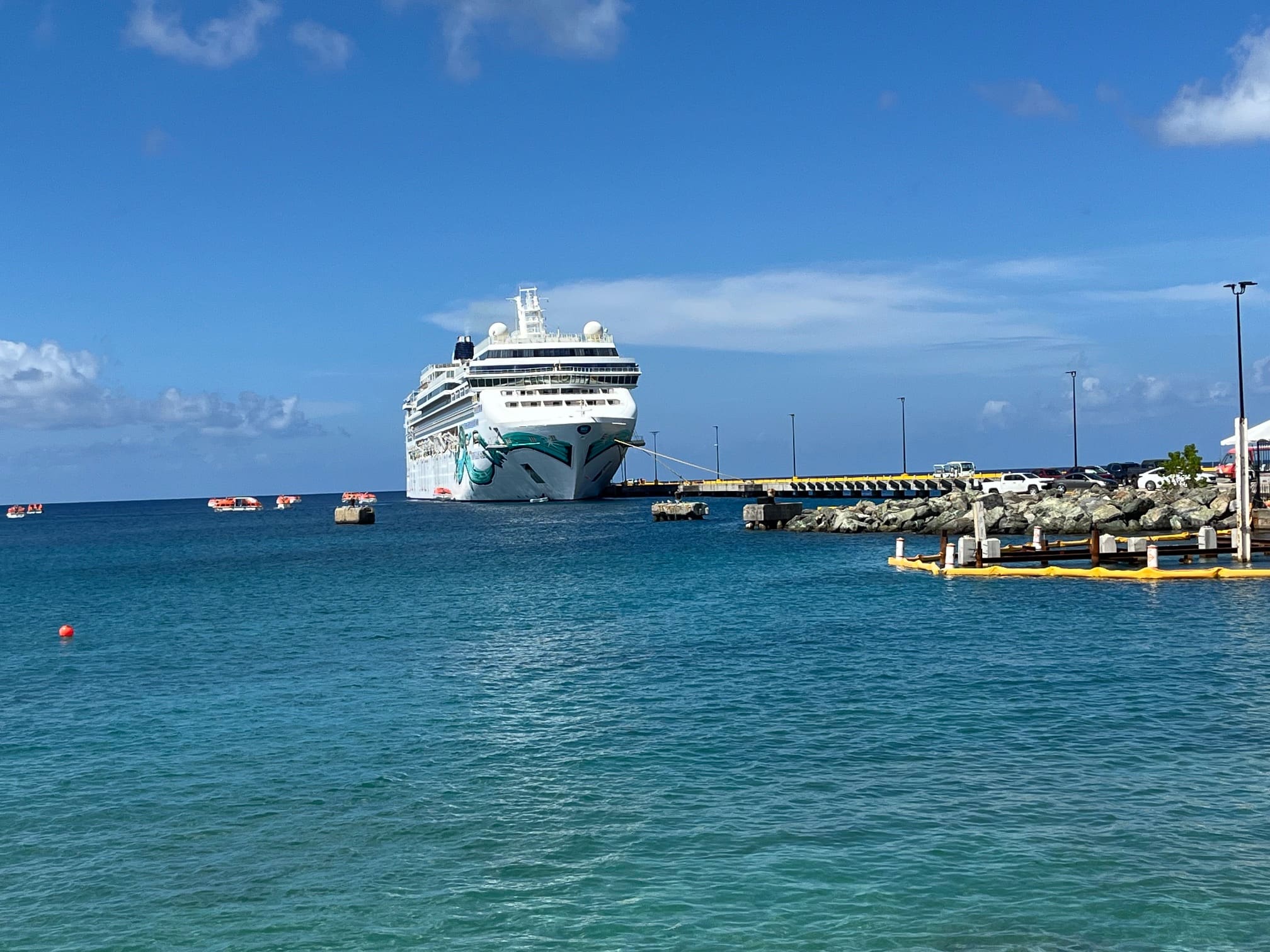
“The Norwegian Jade” or UberSoca Cruise sits at the Ann E. Abramson Marine Facility on Thursday morning and afternoon. (Source photo by Diana Dias)
Virgin Islands Water and Power Authority CEO Karl Knight discusses the progress of the Wartsila project. (Source photo by Ananta Pancham)The Virgin Islands Water and Power Authority has been navigating a complex landscape of operational needs and strategic decisions, as seen in a series of recent board meetings. From contract negotiations to budget planning and infrastructure improvements, the utility provider has sought stability and efficiency in its services amid a challenging economic and operational environment.During WAPA’s Governing Board meeting on Thursday, a new three-year contract with Solar Petroleum USVI Ltd. was a focal point of discussions. The agreement is designed to provide WAPA with the flexibility to secure emergency fuel supplies, especially during critical situations like hurricanes, and will allow it to purchase fuel incrementally, making it easier to manage cash flow while maintaining a steady power supply to its plants. “It just adds another tool in the toolbox,” said CEO Karl Knight. He emphasized the importance of this contract in maintaining operational reliability, especially when typical fuel deliveries are disrupted due to weather or other unforeseen events. Knight said new agreement allows WAPA to make real-time decisions about fuel purchases, ensuring that the utility can meet short-term needs without overextending its budget.WAPA’s employee benefits were also under scrutiny as the board addressed renewing health plans for 2025. The negotiation process with Cigna led to a 8.4 percent increase, down from the initial proposal of 27.6 percent. The renewal plan includes enhancements such as reduced out-of-pocket expenses for retirees and improved life insurance coverage. According to Christian Bergstrom, a senior consultant with the Gehring Group, “Employees will have the opportunity to enroll in higher coverage amounts without evidence of insurability, a major improvement from previous years.”WAPA has also focused on its fiscal planning for the coming year as part of its broader strategy. The board approved a zero-surplus budget for WAPA’s electric and water divisions for fiscal year 2025 that was crafted after a comprehensive review of departmental needs and included strategic forecasting to address critical operational areas. Quarterly reviews have been planned, allowing for adjustments based on real-time market conditions, particularly in fuel prices, which have been a persistent concern. Interim Chief Financial Officer Elaine Kelly highlighted the need for adaptability, saying, “We are implementing a new quarterly review process to ensure we remain on track throughout the year, adjusting as necessary to meet our goals.”Beyond its operational planning, WAPA is investing significantly in infrastructure to improve service reliability, the board heard. Projects at the Richmond plant on St. Croix and the Harley plant on St. Thomas are underway, including upgrades to cooling systems and explorations into alternative greenfield opportunities. These efforts are expected to enhance the efficiency and flexibility of WAPA’s power generation capabilities. Perhaps the most promising development is the near completion of Phase 2 of the Wartsila project, which could significantly boost power generation on St. Croix. Knight noted that the project was “rounding third base and heading for home,” signaling that residents might soon see the benefits of these upgrades in the form of fewer outages and, eventually, reduced energy rates.Community engagement has also been a priority for WAPA, especially during Energy Awareness Month. The utility has been active in local schools, educating students about energy efficiency and sustainability. These initiatives, which included demonstrations by WAPA linemen, aim to foster a deeper understanding of how energy is produced and delivered, building trust and support within the community. Despite these positive strides, WAPA continues to face numerous challenges, particularly in managing procurement processes and adapting to market shifts. The local government’s extension of the state of emergency, originally declared due to WAPA’s financial difficulties, has provided critical support, underscoring the need for continued investment in infrastructure to safeguard energy supplies. According to Knight, focusing on fuel procurement, infrastructure upgrades, and employee welfare are all parts of a cohesive strategy to stabilize operations and lay the groundwork for a more reliable future.“It’s been a long road, but we are confident that the steps we are taking now will lead to greater operational stability and, eventually, lower costs for our customers,” said Knight. While WAPA’s efforts may not immediately translate into lower energy rates, the increased reliability and strategic planning are setting the stage for long-term improvements, he said. With Phase 2 of the Wartsila project nearing completion and a new fuel contract in place, there is cautious optimism that the future will be brighter for both WAPA and its customers, the board was told.For now, the utility continues its work, balancing immediate operational needs with long-term strategic goals. The board’s approval of the FY 2025 budget, coupled with ongoing negotiations and infrastructure projects, marks a step forward in stabilizing WAPA’s services, said Knight. “We are rounding third base, and while there’s still a ways to go, we are on track to get there,” he said.
The GERS building on St. Thomas is undergoing roof repairs. (Source file photo)
The Government Employees’ Retirement System Board of Trustees knows it must send out around $23 million in annuity checks each month, so on Thursday, board members asked, as they usually do at their monthly meeting, if enough money was coming in.
Board Member Andre Dorsey wanted to know if the government was resisting the board’s recent decision to raise the government’s contribution to the system by 3 percent.
Angel Dawson, the GERS administrator, said he had not seen any and added that it did not matter because the system had the authority to raise the contribution level. Dawson said the 26.5 percent for employer contribution would go into effect at the beginning of 2025.
Dorsey said that the system had been wading into financially troubling waters since the plan for its rescue was based on receiving the rum cover-over funds at $13.25 per proof gallon, but the federal government was only approving $10.50. Dorsey said that actuaries were raising the possibility that GERS could be on the road to insolvency in 2037 or 2038.
Delegate Stacey Plaskett had recommended that rescue plan calculations be based on the lower proof gallon rate, but they weren’t.
As the hotel construction on the GERS property in Havensight has been progressing and is over half completed, Trustee Nellon Bowry wanted to know if GERS was collecting lease payments from the developers. After discussing who was responsible for collecting the lease payments, a copy of the lease agreement was found. The document showed that no lease payments were to be made until the hotel was open. Dawson said the amount to be paid was not a figure to be released publicly.
The Trustees approved an amendment to a contract with Advance Restoration Services, Inc. The original contract was to repair the southern section of the roof at GERS St. Thomas Complex. The amendment adds $64,000 so the company can also repair the western section of the roof.
In addition to the trustee meeting, the GERS held a 65th-anniversary open house for active and retired members on Thursday on St. Croix. On Friday, the system will hold an Open House at its St. Thomas office from 1 to 5 p.m.
The number of retirees receiving benefits from GERS is nearing 9,000.
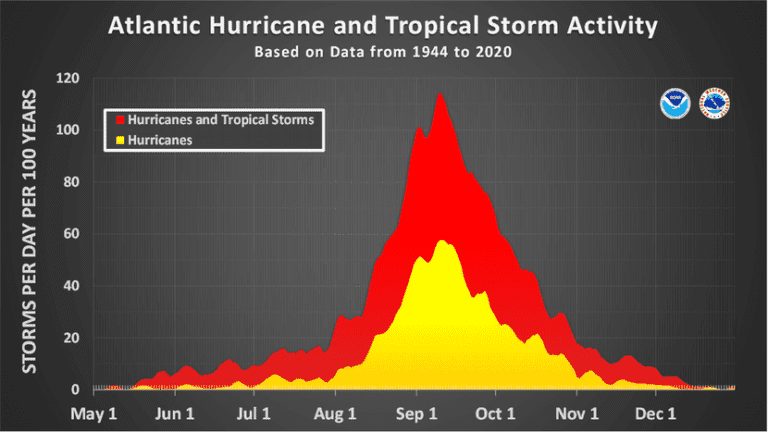
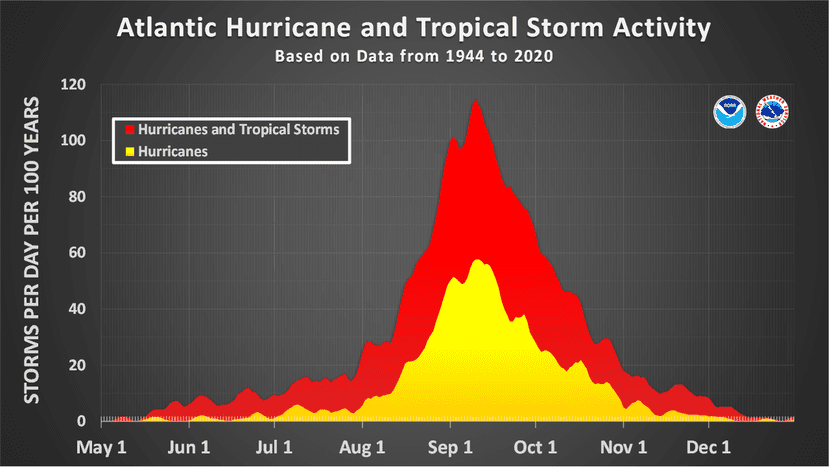
Based on climatology, cyclonic development is still possible through the end of hurricane season, which officially ends on Nov. 30. (Photo courtesy NOAA and NWS)
The 2024 Atlantic Hurricane Season officially ends on Nov. 30, but with more than a month remaining, the forecast continues to suggest the potential for cyclonic development.
The Source contacted Matt Rosencrans, National Weather Service Lead Hurricane Seasonal Forecaster, to obtain an update on what may occur regarding tropical development for the rest of the season. Rosencrans explained that there will be a risk of development across the Caribbean and the Atlantic.
Cyclonic Development Across Atlantic and Caribbean
“I think the remainder of the season could include some more activity,” Rosencrans said. “The Caribbean Sea surface temperatures (SST) are still [the] second warmest [on record] since 1981, and Gulf of Mexico SSTs are still the warmest on record [according to information from the Optimum Interpolation Sea Surface Temperature dataset, associated with the National Oceanic and Atmospheric Administration],” Rosencrans explained.
Rosencrans pointed out that, based on climatology, cyclonic development occurs less frequently across the Main Development Region (MDR) of the Atlantic, an area between the west coast of Africa and the Lesser Antilles. Still, tropical waves over the MDR are possible in the coming weeks.
“The [atmospheric conditions] that create the waves over Africa is waning, as it does every year around this time, but it’s not yet done,” Rosencrans warned. “The latest model outlooks [predicted] two [tropical] waves [during the current] week, and then there could be another couple [of tropical waves emerging off the west coast of Africa] after that,” Rosencrans continued. “Later in the season, the Caribbean and [the] Gulf of Mexico become the favored spots for tropical storm development [based on climatology], as the African Easterly [Tropical] Waves diminish [and] the West African Monsoon wanes,” Rosencrans stated.
So far this year, several notable systems have occurred near the U.S. Virgin Islands, including Tropical Storm Ernesto’s trek across the territory in August. Additionally, destructive Hurricane Berylrapidly intensified into a major hurricane, devastatingly impacting portions of the Caribbean in July.
U.S. Mainland Impacts Through Remainder of Hurricane Season
The United States mainland has been pummeled particularly hard throughout this year’s hurricane season. Five cyclones have made landfall across the mainland as of the writing of this article, including Hurricane Milton, which made landfall near Sarasota, Florida, at the beginning of October, and Hurricane Helene, which crashed into Florida’s Big Bend region before causing catastrophic flooding across the southeastern U.S. in September.
Over the past few weeks, areas of high pressure have helped to protect the southeastern states, nudging tropical systems away from the area. When asked about the potential for another cyclone to strike the U.S. mainland before the season is over, Rosencrans explained that it is a distinct possibility that a storm could form and take a track between periods of higher pressure, which might allow a system to affect the mainland.
The Climate Prediction Center’s Global Tropics Hazard Outlook calls for an increased potential for cyclonic development over the next couple of weeks, particularly in the western Caribbean region. (Photo courtesy CPC and NOAA)
Indeed, the Climate Prediction Center’s Global Tropics Hazards Outlook indicates an elevated risk of cyclonic development near the western Caribbean over the next few weeks, and particularly during the week of Oct. 30 to Nov. 5. Individuals located in this area are encouraged to remain vigilant.
“Tropical storm tracks are very difficult to predict more than about a week out,” Rosencrans acknowledged.
An Emerging La Niña Weather Pattern
For months, meteorologists have predicted a transition into a La Niña weather pattern, and the latest forecast continues to expect an emergence of La Niña soon.
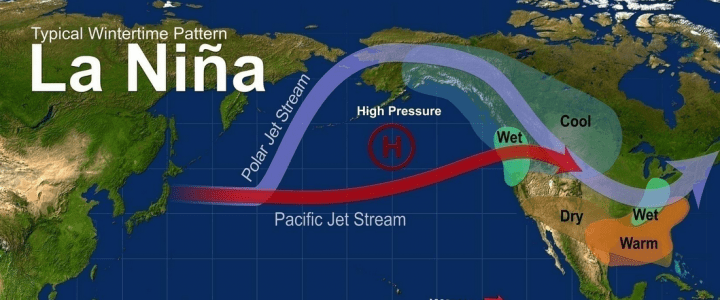
A La Niña weather pattern may emerge soon, and a “La Niña Watch” is currently in effect. (Photo courtesy NOAA)
During a La Niña cycle, the ocean waters across the equatorial Pacific Ocean cool significantly, affecting global weather. During La Niña, wind shear—a change in wind direction and velocity with height in the atmosphere—also typically decreases in the Atlantic Ocean. A reduction in wind shear can favor cyclone development. This pattern is the opposite of El Niño, a warming of the equatorial Pacific, which usually increases wind shear in the Atlantic Ocean, helping to rip apart storms and prevent hurricane formation and intensification.
“Scientists call [the two opposing climate patterns of El Niño and La Niña] the ‘El Niño-Southern Oscillation’ (ENSO) cycle. El Niño and La Niña can both have global impacts on weather, wildfires, ecosystems, and economies,” according to NOAA.
A La Niña Watch is currently in effect, an alert that is “issued when conditions are favorable for the development of La Niña conditions within the next six months,” according to the National Weather Service. Nevertheless, if a La Niña pattern sets up, it may not last long.
The CPC has noted that a “La Niña is favored to emerge [between] September-November [with a] 60 percent chance [of development,] and [the cycle] is expected to persist through January-March 2025.”
“[A] La Niña [weather pattern] is likely to [continue] to progress,” Rosencrans explained. “Vertical wind shear over the Caribbean has been quite low over the last 30 days, and it is likely to remain low,” he said.
“[However,] wind shear over the Gulf of Mexico is picking up, as it does every year as we transition into winter,” Rosencrans stated. [Therefore,] putting [all of these components together], I think the rest of the season could have a couple more tropical storms,” he noted. “A normal [season] would [have one or two systems form], and in a year with such warm SSTs, [the number] of cyclones that may continue to form could be slightly higher than the normal.”
Rosencrans also noted that if a La Niña does take hold, computer forecast models show that the Caribbean may experience a wet winter season.
“The [CPC’s] North American Multi-Model Ensemble [computer forecast models] show a wet pattern during the winter for the Caribbean and [a] dry [winter season] for the southeastern U.S., [which is] close to [the] composites of La Niña events,” Rosencrans stated.
Remain Prepared Through Hurricane Season
Rosencrans concluded his comments by sharing what he has found noteworthy thus far in the 2024 Atlantic Hurricane Season.
“This season has been interesting [due to] both the lack of early September [tropical] activity and the incredible burst of late September to early October [tropical] activity, [which was] record-breaking [between] Sept. 24 through Oct.12,” Rosencrans revealed. “The loss of life during [the five hurricanes that have made landfall across the United States so far] is heartbreaking,” he added. “[Moving forward,] the team at NOAA will set out to see what can [be learned] from this year to advance our predictions and hopefully minimize future loss of life and suffering,” he said.
USVI visitors and residents are encouraged to stay up to date with forecasts from the NHC. Hurricane preparedness tips are available from the Virgin Islands Territorial Emergency Management Agency and NOAA.
Weather forecast information, including severe weather alerts, is available from the VITEMA website and the National Weather Service.
Additionally, the Source Weather Page publishes a daily weather forecast and offers readers the opportunity to view weather forecast videos and disaster preparedness video segments.
Jane E. Tuitt Elementary School on St. Thomas will receive virtual instruction on Thursday due to a sewage issue impacting the campus, the Education Department reported. Teachers will share “Learn from Home” plans with parents in the morning through online communication platforms, it said, adding that Waste Management will be on site to assess the situation.
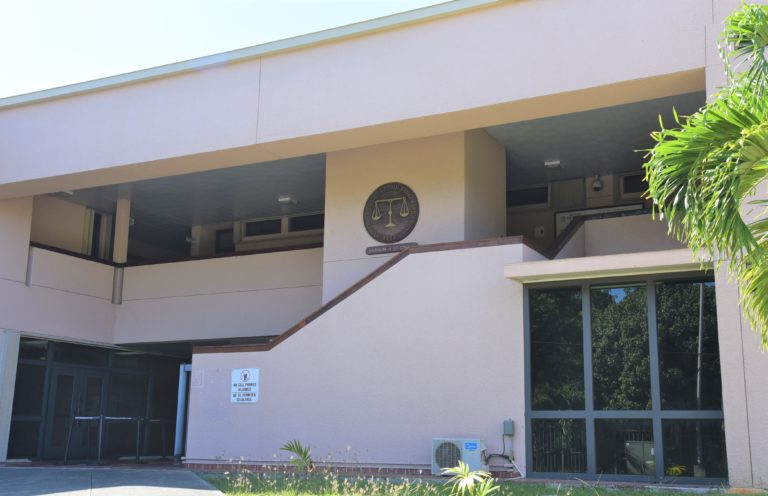
The R.H. Amphlett Leader Justice Complex, home of the V.I. Superior Court on St. Croix (Source file photo)
Presiding Judge Debra S. Watlington informs the public and the members of the Virgin Islands Bar Association of the appointment of Attorney Venetia H. Velazquez as Magistrate Judge of the Superior Court of the Virgin Islands.
Pursuant to 4 V.I.C. § 123, magistrate judges administer oaths and affirmations; issue civil and criminal process, including warrants of arrest, search warrants, subpoenas and orders (release on bail, for detention of persons pending trial and contempt); take acknowledgments, affidavits and depositions; conduct marriages; hear all non-felony traffic offenses, litter cases, misdemeanor criminal cases (up to 364 days imprisonment); conduct arraignment and probable cause hearings in any criminal or traffic offense matter; hear small claims cases, probate matters and civil cases where the amount in controversy does not exceed $75,000; issue temporary and permanent restraining orders in domestic violence cases; and, hear forcible entry, detainer, landlord and tenant actions.
In addition, magistrate judges may be designated by a superior court judge to hear and determine any pretrial matter pending before the court; conduct evidentiary and other hearings to submit proposed findings of fact and recommendations for disposition by a superior court judge; conduct all proceedings in a jury or non-jury civil matter upon consent by the litigants; and perform such other duties as conferred or imposed by law.
Attorney Velaquez’s legal career has been distinguished by her service as an appellate public defender with the Office of the Territorial Public Defender, where she represented indigent persons challenging their convictions on appeal before the Supreme Court of the Virgin Islands and in initial proceedings before the superior court; deputy counsel to the Office of the Governor; and as assistant attorney general where she served as a prosecutor, police advisor, hearing officer, civil litigator and, finally, chief of the Civil Division.
She is admitted to practice law in the U.S. Virgin Islands, the U.S. Supreme Court and the U.S. Court of Appeals for the Third Circuit. She brings with her her experience as a certified mediator and trained arbitrator to the bench.
Presiding Judge Watlington warmly welcomes Magistrate Velazquez to the Superior Court of the Virgin Islands family and thanks her for her willingness to serve the people of the Virgin Islands.