“Don’t hold your breath”
Don’t hold your breath
You might turn blue
Exhale instead
And breathe anew
Reciting Om
And keeping calm
In diesel fumes
Of toxic balm
Don’t wait in vain
For WAPA’s fix
Just lie still
And don’t complain
No muscle twitch
No itchy sneeze
Simply pray
For ocean breeze
And light of day
To burn away
The beads of sweat
That swell and grow
In salty streams
Down cleavage flow
To groin and cracks
You did not know
Enjoy the sauna
What a treat!
No price too high
For shedding pound
And cleansing pore
A “WAPA spa”
Oh, bring on more!
You over there
On feeders all
Please listen up
And heed my call
Perspire with me
On 9 dash C
Rotate they say
In our alerts
And live your life
In two hour parts
Are we on
Or are we not
Eat all you can
So food won’t rot
I love to dance
Rotate and spin
But island-wide
Just does me in
When fridges fail
And blow their fuse
Devices fry
I lose my muse
My fans they die
And with no spark
The World Wide Web
Goes very very very dark
My hotspot’s now
Full body flush
From butt to brow
In mottled hues
Of menopausal blush
And, yes, indeed
I know of them
The chosen few
Illuminati
One and all
So wise and cool
In solar bubbles
Unaware
Of sweaty crotch
And melting ice
As to their lips
They raise and sip
A crystal glass
Of chilled Rosé
Or frosty can
Of IPA
I could go on
With soggy brain
Dripping words
Like English rain
Tap tap tap
The finger goes
Puddles forming
Round my toes
In nonsense pools
Of Tweedledee
And Tweedledum
Of Tedium
Ad Nauseam
With finger proud
To WAPA raised
Dark to the masses
Power be praised!
And so, I beg
In one last plea
Don’t hold your breath
Come sweat with me.
— Corinne Van Rensselaer is a 41-plus-year resident of St. Thomas.
The V.I. Department of Planning and Natural Resources’ Elaine Ione Sprauve Public Library and Museum of Cultural Arts on St. John will be closed to the public until further notice.
Commissioner Jean Pierre Oriol apologizes for the inconvenience and thanks the community for its understanding.
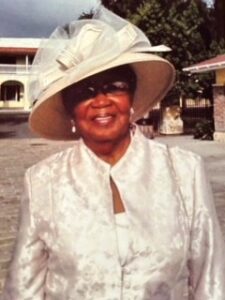
Daphney I. Davis
Daphney I. Davis of Estate Whim died on May 23. She was 94 years old.
She was preceded in death by her mother, Alma Doward; father, Ludwig Doward; sister, Eglantine Weekes; brothers: Augustin Doward and Clement “Bobby” Doward; niece, JoAnn Weeks; and nephew, Gene H. Weeks.
Her daughters survive her: Deborah Gibbs-Gulledge, Bernice Davis-Prince and DeSilva R. Davis; son, Kevin A. Davis; grandchildren: Hydeia Wright, Kenijah Davis, Ausaru Davis, Jaylon Williams and DeAshley Williams; great-grandchildren: Vaughnel Blake and Josiah Blake; sister, Anastasia Doward; and brothers: Gerard Doward and Vincent Doward.
She is also survived by nieces: Joan Weeks, Joyce Webster, Lisa Doward, Maria Christina Feldtfos Doward, Nanette Doward, Patrisha Doward-Jones, Bolivia Doward, VernaMae Doward, Cynthia Doward, Bernice Francis and Rena Francis-Hendrickson; nephews: Clement “Boopy” Doward, Vincent “Tito” Doward, Damian Doward, David Doward, Dwayne Doward, Ricardo “Pando” Doward, Ludvig “Theo” Armstrong, Raymond “Stuff” Armstrong, James E. Weeks, Alexis Doward, Shawn “Deli” Francis and Divinci Francis;
Other survivors include stepson, Lloyd Davis; daughter-in-law, Kimberly Davis; sons-in-law, Gregory Gulledge Sr. and Joseph G. Prince; special friends: Ada Golden, Perline Begraff, Phyllis Spalding Sr. Florine Bailey ICM, Curtis and Magnolia Williams, Claudia and Harold Brown and family, Jeanne Garcia and family, Inez Wc and other relatives: the McIntosh family, John Isaac and family, Petrus, Panky and Gittens family, Mason family, Bernadette and Alphonso and Hansen family; as well as other relatives and friends too numerous to mention.
There will be a viewing at 9:30 a.m. followed by a funeral service at 10:30 a.m., Tuesday, June 18, at St. Patrick’s Catholic Church. Interment will be at Frederiksted Cemetery.
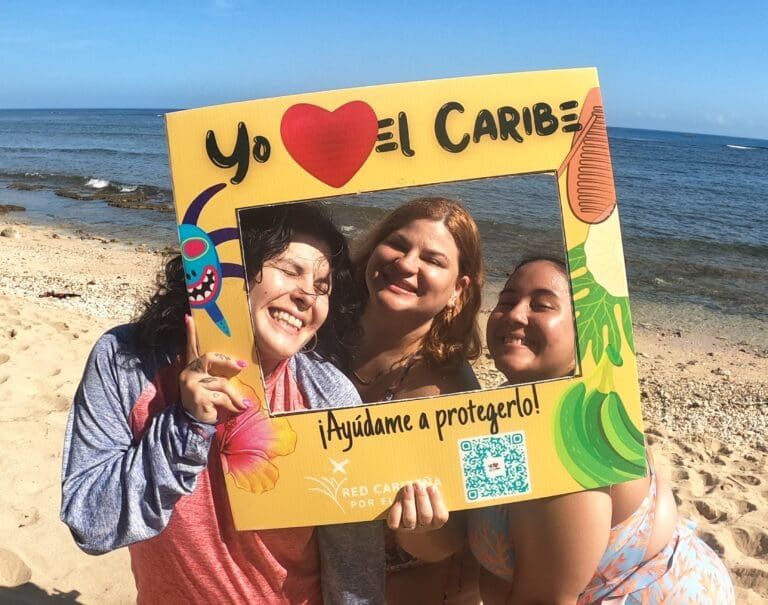
Caribbean Activists Raise Voices Amidst Climate Emergency (Submitted photo)
The Caribbean region is bracing for record heat levels until October, with the peak expected in August and September. Climate scientists continue to emphasize that the recurring heatwaves in the Caribbean are symptomatic of the worsening climate crisis, despite the region contributing minimally to global emissions. Amidst this situation, the Caribbean Climate Network (CCN) is spearheading the ‘I Love the Caribbean’ campaign, highlighting how climate change effects, like the current heat levels are impacting daily life, communities and cultural heritage across the region and also making a call to action.
A worrisome scenario is resonating throughout many Caribbean nations. For example, the extreme heat took a toll on vulnerable populations in places like Puerto Rico last year, where the elderly suffered most, in a rapidly aging demographic comprising around 750,000 individuals aged 65 and above. In Grenada, there is currently a water crisis precipitated by prolonged drought conditions, aged water infrastructure and exacerbated by the heat. There, the current water restrictions mark the most severe water crisis experienced in 14 years.
Across the region, highly exposed to the scorching temperatures are various occupational groups, including construction workers, airport staff, maritime and fishing industry workers, road construction laborers and farmers. The health risks associated with prolonged exposure to extreme heat have prompted authorities to issue advisories for residents to remain indoors, abstain from strenuous activities and maintain proper hydration, something that is not easily accessible to all persons.
In response to the climate effects already visible, like the heat wave, Caribbean Climate Network, along with various partner groups and leaders, are hosting over 15 events during June, urging participants to connect their love for the Caribbean to the climate action needed to protect these places, things and festivities that are loved by many.
On June 14-16, Caribbean Climate Network members and collaborators across the region will draw attention to the ongoing heat emergency and other climate effects with pervasive effects on livelihoods.
Members of the Caribbean Climate Network, part of the global climate action organization www.350.org, have also released a video highlighting the urgent need to address the heat emergency. The collective endeavors aim to underscore the critical importance of climate action in safeguarding the beloved Caribbean region. Their activities include learning programs, trainings, events, mobilizations and mentorship to upcoming climate advocates.
For media inquiries or further information, contact caribbean@350.org
The Caribbean Climate Network Team
El equipo de la Red Caribeña por el Clima
https://caribbeanclimatenetwork.org/
Power crews working near J. Antonio Jarvis search for the cause of a fault on Feeder 13. (Source photo by Ananta Pancham)In an effort to keep power on, on St. John, St. Thomas was switched to rolling blackouts late Wednesday into Thursday night as V.I. Water and Power Authority crews searched for the cause of a fault on Feeder 13.Prior to hurricanes Irma and Maria in 2017, there were three underground lines servicing St. John and the eastern end of St. Thomas. However, Feeder 11 was never restored after the storms, putting the load of three on Feeders 12 and 13, according to WAPA officials.That’s why, when Feeder 13 tripped late Wednesday, rolling blackouts went into effect as the lone feeder remaining – Feeder 12 – was not enough to carry the entire load, WAPA spokesperson Shanell Petersen said Thursday night, as new schedules continued to be issued for St. Thomas-St. John.She added that WAPA, helped along by teams from Haughland VI and F&R Electric, would be working through the night to restore Feeder 13. The latest, as of 9:30 p.m., were two-hour rotational outages implemented for Feeders 6A and 7A.
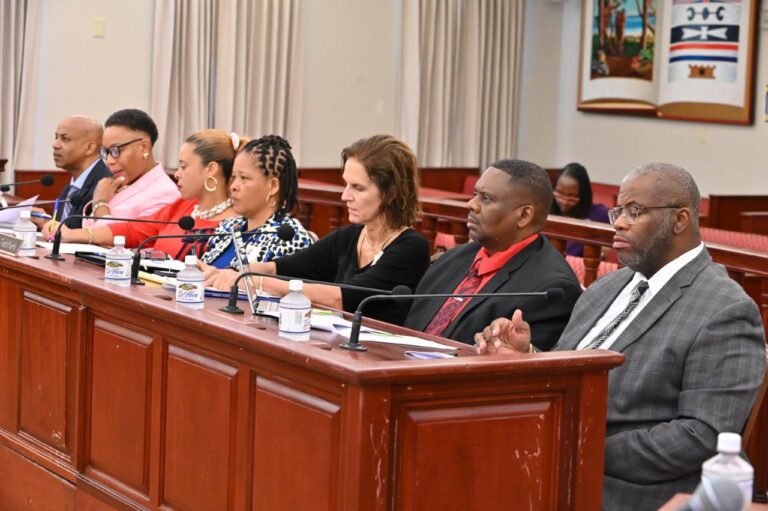
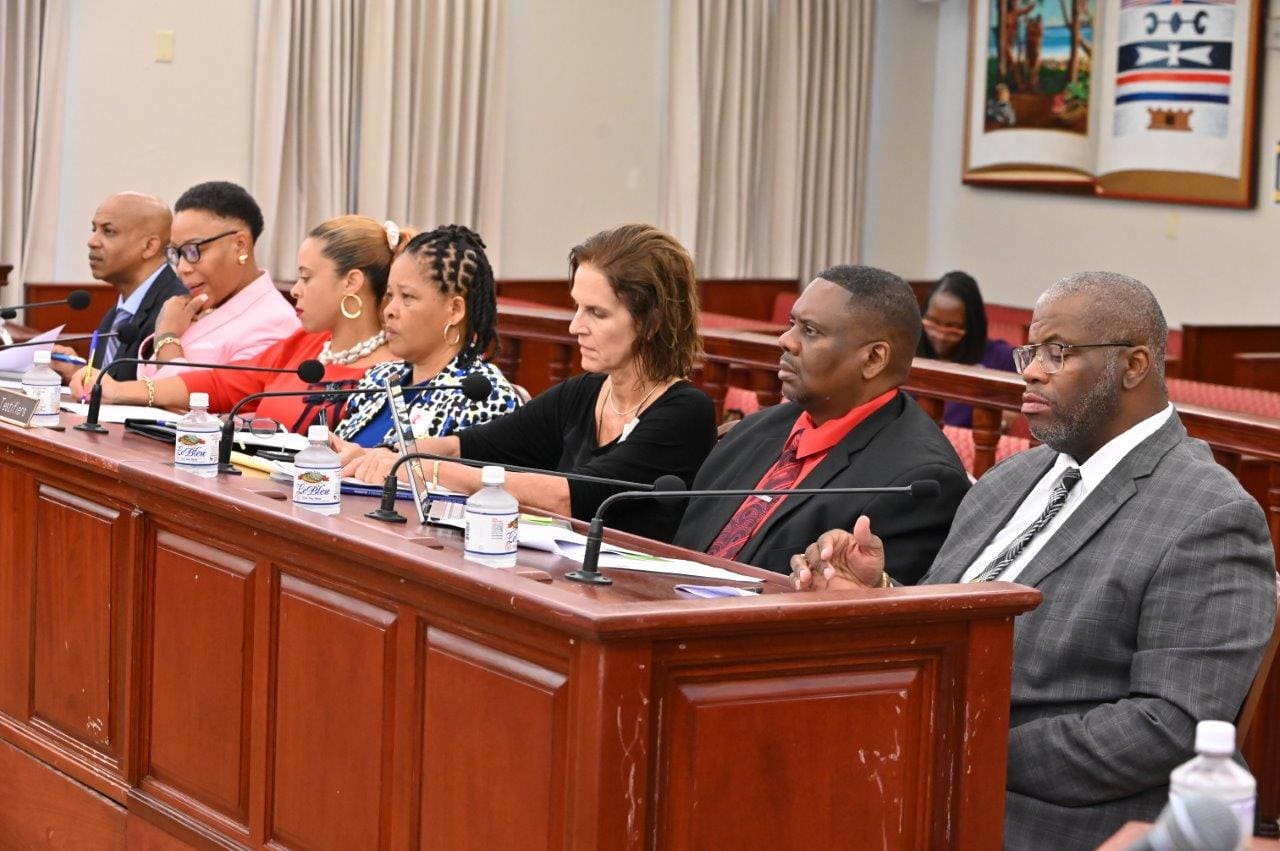
Some of the testifiers at Wednesday’s hearing on Mental Health Care in the Virgin Islands. (Photo by Alvin Burke Jr., Mario Fonseca and Barry Leerdam, Legislature of the Virgin Islands)
Although the subject has been discussed in media for at least two decades and the last two governors have declared mental healthcare emergencies, senators heard Wednesday why the subject is still a “crisis” for residents of the Virgin Islands and is a legacy for politicians.
In March 2019, Gov. Albert Bryan Jr. signed an executive order declaring a mental healthcare emergency in the V.I. due to a shortage of psychiatric physicians and behavioral health providers. In 2016, Gov. Kenneth Mapp also declared a mental health emergency.
More than 20 providers of mental and emotional care were called to testify by the Committee on Health, Hospitals and Human Services with Sen. Ray Fonseca, the chairman. Most of the entities have outreach activities and literature for the public on mental illness, suicide and substance abuse. And some lead support groups. All said they need resources and lack a psychiatrist.
Dr. Nicole Craigwell-Syms, V.I. Health Department assistance commissioner said the Behavioral Health Department continues to apply for grants and hire professional personnel able to live on the wages paid by the government. Currently, DOH has two part-time psychiatrists, 10 case managers, three clinical staff, an opioid project director and several support staff.
Craigwell-Syms said the Eldra Schulterbrandt residence, with its 25 residents, is the responsibility of DOH. Another testifier, Dr. Laura McDonald, suggested some of those residents could be released if there was a psychiatrist to ensure they would not harm themselves or others, have outpatient care and have access to long-acting injectable medications.
“Bringing back just one of the 44 people with serious mental illness being housed off island more than pays for the additional money to put into this position (psychiatrist),” she said.
The department also works with prisoners requiring care. The doctor said it costs Health $14,000 to $15,000 per trip just to transport two patients and officers.
Additionally, DOH pays $500-$600 a day for 48 V.I. residents in off-island facilities. The division also oversees case management and participates in team meetings. As legal guardians, the commissioner approves changes to care plans and medication.
“Often mandated by court orders, these patients require intensive services to address their acute mental health diagnoses, highlighting the increasing demand for specialized care for those facing severe mental health challenges,” the assistant commissioner said.
As a result of Act 8688, sponsored by Sen. Novelle Francis, DOH set up an interdepartmental coordinating committee that communicates with various governmental entities.
Psychiatrist and family physician Laurie McCormick, a part-time resident since the 2017 hurricanes, said the reason there is a mental health crisis in the territory is because there hasn’t been adequate funding for a full-time community psychiatrist for the DOH on St. Thomas. She said there isn’t enough funding because the bill for off-island patients takes most of DOH’s $7 million Mental Health Division budget.
Since the demolition of the behavioral inpatient unit on St. Croix over 10 years ago, there has not been adequate psychiatric treatment nor the funds to send patients to St. Thomas.
McCormick pointed out that there is one psychiatrist on St. Croix who covers the hospital and the Bureau of Corrections but is not available to the public. The two part-timers on St. Thomas cannot take on the St. Croix patients.
Schneider Regional Medical Center’s Chief Executive Officer, Tina Comissiong, said the hospital is required to provide emergency stabilization and inpatient care for people with acute mental health concerns, whether the patient can pay or not. The 8-bed unit usually has six patients. (Gov Juan Luis Hospital is under the same mandate.)
In 2023, there were 107 mental health admissions, and this year, there have been 83. Operating the unit cost SRMC $1.2 million during that time. Additionally, 541 patients were treated in the emergency department for behavioral health issues.
Schneider Regional is also mandated to accept court-ordered patients from the Bureau of Corrections, which adds security and medical care costs to the hospital. The BOC currently owes SRMC $877,000, which she said the Legislature should provide.
“Without sufficient funding, accessible treatment choices, short-term housing options and community-based support services…individuals grappling with mental health challenges often find themselves in a cycle of crises, leading to recurrent hospitalizations,” Comissiong said.
The critical resources called for by testifiers were a residential facility for mental health patients, at least one psychiatrist for each island, a database to search for and apply for grants, and, of course, funding.
Other testifiers included representatives from the Human Services Department, St. Thomas East End Medical Center, Frederiksted Health Care Inc., The Women’s Coalition of St. Croix, Gov. Juan Luis Hospital, the V.I. Bureau of Corrections, The Family Resource Center, Nana Baby Children’s Home, St. Croix Foundation and the Education Department.
Sens. Fonseca, Kenneth Gittens, Marvin Blyden, Diane Capehart, Francis, Marise James, and Milton Potter attended the hearing.
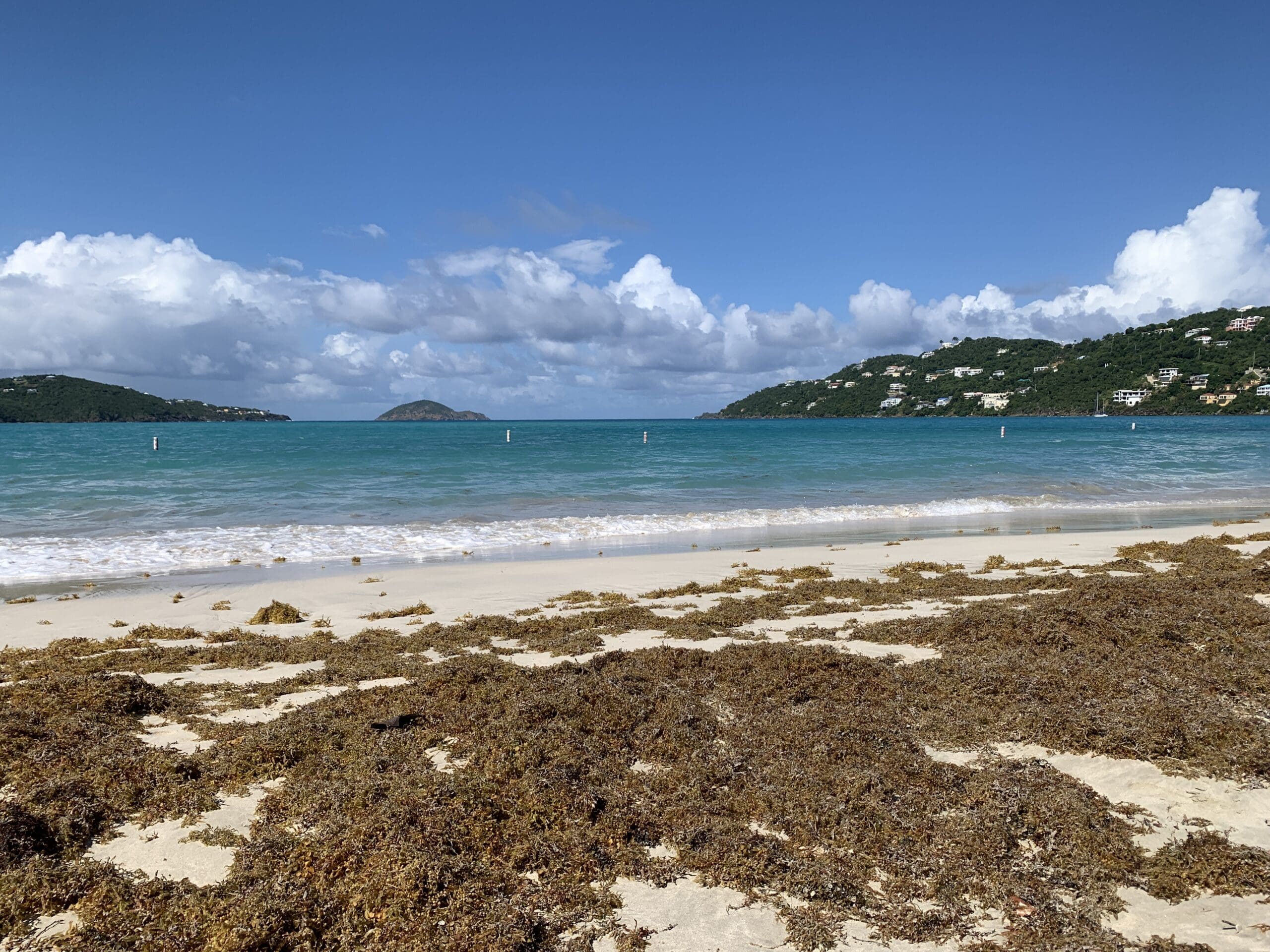
Magens Bay on St. Thomas was inundated with sargassum seaweed in December 2022. Sargassum could soon arrive again across the USVI. (Source photo by Jesse Daley)
An increase in sargassum seaweed has been observed across the Atlantic Ocean and the Caribbean Sea. The seaweed could soon arrive at coastlines across the region, including the U.S. Virgin Islands.
“As in previous years, we expect continuous increases of sargassum in the central west Atlantic, the Caribbean Sea, and the Gulf of Mexico over the next month [in June],” according to a sargassum outlook from the University of South Florida (USF) Optical Oceanography Lab released on May 31.
“Many Caribbean nations and islands will see increased sargassum inundations in June, including the regions along the Mexican Caribbean coast,” the update continued.
The USF report explained that all regions where sargassum is monitored indicated an increase in the seaweed during May, except for the Eastern Atlantic Ocean. The report also stated that while there has been a notable rise in the amount of sargassum in the ocean and that it will likely arrive at locations including Caribbean islands, it is currently not a significant reason for concern.
“In May 2024, while continuous increases in sargassum abundance were observed in most regions, they are not at an alarming level when comparing with major sargassum years in the past decade,” the report said.
Plentiful Sargassum Areas
The USF update provided the following details regarding where sargassum (measured in million metric tons) has become more prevalent and how much seaweed has been observed.
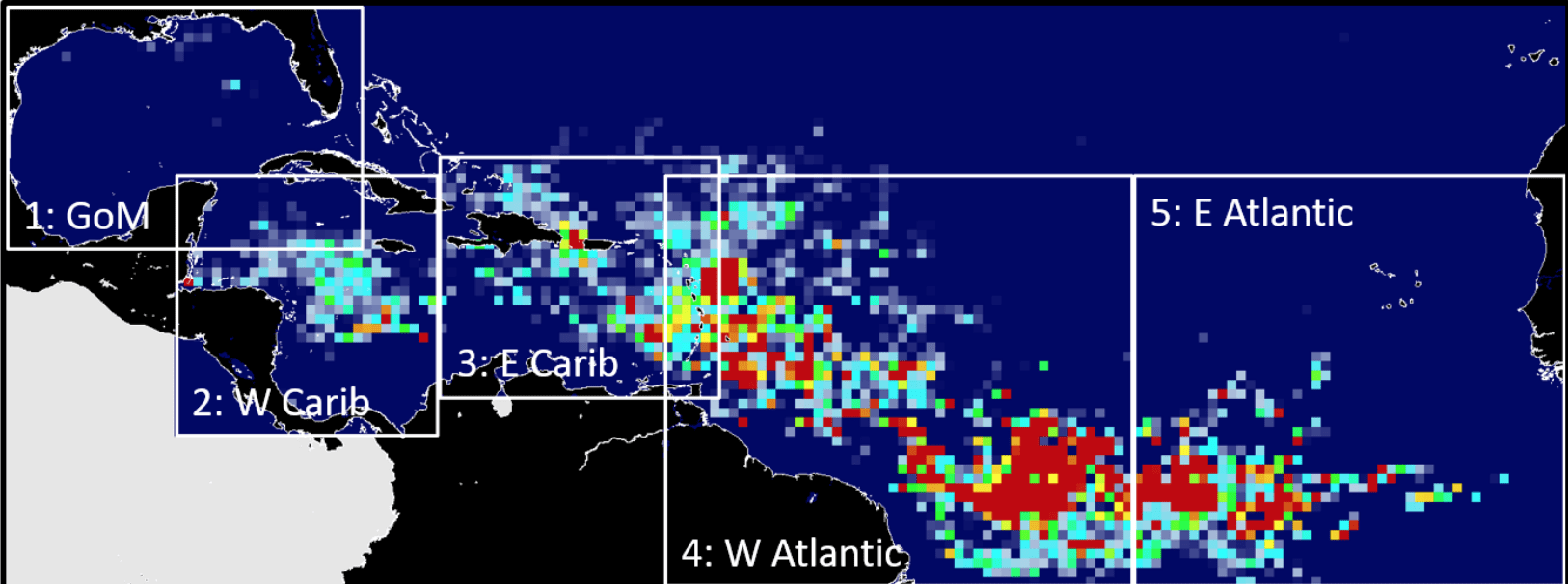
“As predicted last month, [the amount of] sargassum increased in May in every region except the Eastern Atlantic, with a total biomass of 10.0 million metric tons. The Western Atlantic region showed the largest increase of 1.9 million tons in the last month, making it in the 75th percentile of historical levels for the month of May. The Western Caribbean Sea experienced the largest relative increase (400%) to 0.4 million tons, but it is still below the 75th percentile of historical levels.”
A map of sargassum across the Atlantic Ocean, the Caribbean Sea, and the Gulf of Mexico in May 2024. Darker reds indicate more seaweed. (Photo courtesy USF Optical Oceanography Laboratory)
The update continued, “The total sargassum amount in the Eastern Caribbean Sea doubled to 1.0 million tons, slightly above the 50th percentile of historical levels. Sargassum abundance in the Gulf of Mexico remained low, but small amounts were found near the Mississippi River delta and in the Straits of Florida.”
Chuanmin Hu, a professor of Oceanography and Director of the Optical Oceanography Lab at the University of South Florida, provided the Source with more information about his work studying sargassum and details about when and where the seaweed may start to appear.
“Total biomass in a month [for a particular area] means that at any moment in that month if you collect all sargassum and weigh them, you get a number, [and] that is total biomass,” Hu explained. “[Total biomass is] determined by satellites calibrated by field measurements,” he added.
“We have been using field and laboratory measurements as well as satellite remote sensing to map, monitor, track, and understand sargassum in the past ten years,” Hu said. “We have established the Sargassum Watch System (SaWS) to help people monitor and track sargassum in many different regions across the Atlantic. We are doing this work to [better] understand this seaweed, to help the people [affected by its arrival] in various aspects, [and] to educate our next generation of scientists.”
Hu explained that seaweed could arrive across the USVI in June and July.
“The USVI was [largely] spared [from sargassum impacts] in May 2024 as compared with other [islands, such as] Puerto Rico,” Hu explained. “This situation will likely change in June and July, [because] more sargassum will come from the east and southeast to reach the USVI. [However,] the exact amount [of the sargassum that arrives] is unknown,” he added.
Still, the USF report described there could be an “inundation” of sargassum. Hu clarified what an inundation of seaweed means.
“There is no strict definition of [sargassum] inundation,” Hu acknowledged. [However], anything resulting in a continuous band [without] gaps of sargassum accumulations on the beach or in nearshore waters parallel to the shoreline may be called an inundation,” he said. “In [terms of] numbers, it may be equivalent to several tens of kilograms of sargassum biomass per meter of shoreline accumulated in a few days.”
Sargassum — Explained
A previous Source article included additional information about sargassum through an interview with Yuyuan Xie, Ph.D., a research scientist at the University of South Florida. Xie is also involved with the university’s Optical Oceanography Laboratory.
“Pelagic sargassum seaweed is a brown macroalgae floating on the ocean surface,” Xie said. “It was first reported in the 15th century by Christopher Columbus, and a regional sea in the North Atlantic Ocean, the Sargasso Sea, was named after this plant. [Sargassum] serves as a habitat for many marine animals, such as turtles, fish, shrimp, crabs, and so on. These macroalgae can grow to a length of several meters and form floating mats on the ocean surface,” Xie continued.
Health Impacts
Sargassum has positive and negative benefits for the environment. Fortunately, the arrival of the algae is not extremely dangerous to people. However, there are some significant health risks to be aware of.
“Most of the time, moderate amounts on beaches would not represent a risk factor for humans. However, there are exceptions,” cautioned Xie. “After a couple of days onshore, sargassum starts to decompose and release noxious and stinking gases such as ammonia and hydrogen sulfide. The bad smell can cause respiratory problems. There are reports that in some of the Caribbean Islands, the hospitalization rate has gone up during the sargassum season,” he said.
“Sargassum can be both good and bad for the environment. In the ocean, it is a critical habitat for many animals, so they should like to see increased sargassum. Sargassum on beaches can also stabilize sand dunes, thus helping to avoid beach erosion. But too much of a good thing can also make it bad — excessive amounts of sargassum can also cause environmental and economic problems,” Xie added.
“There is no scientific consensus on exactly what caused the sargassum increases in the past decade in the Atlantic Ocean, but climate change may be part of the reason, as it affects precipitation, ocean circulation, and dust events, among others. This is still a research topic.”
Sargassum Updates
Visitors and residents in the USVI can follow the progression of the current mat of seaweed traversing the Atlantic and stay up to date each month on where sargassum may be headed.
“For the general audience, we’re generating a Sargassum Outlook Bulletin on a monthly basis, which can be downloaded via accessing our SaWS page, stated Xie. “This bulletin provides a general picture of the current bloom conditions and future bloom probability for the regions under watch. The SaWS system also provides satellite imagery every day for the current sargassum situation, where a user can download the images and surface currents,” Xie concluded.
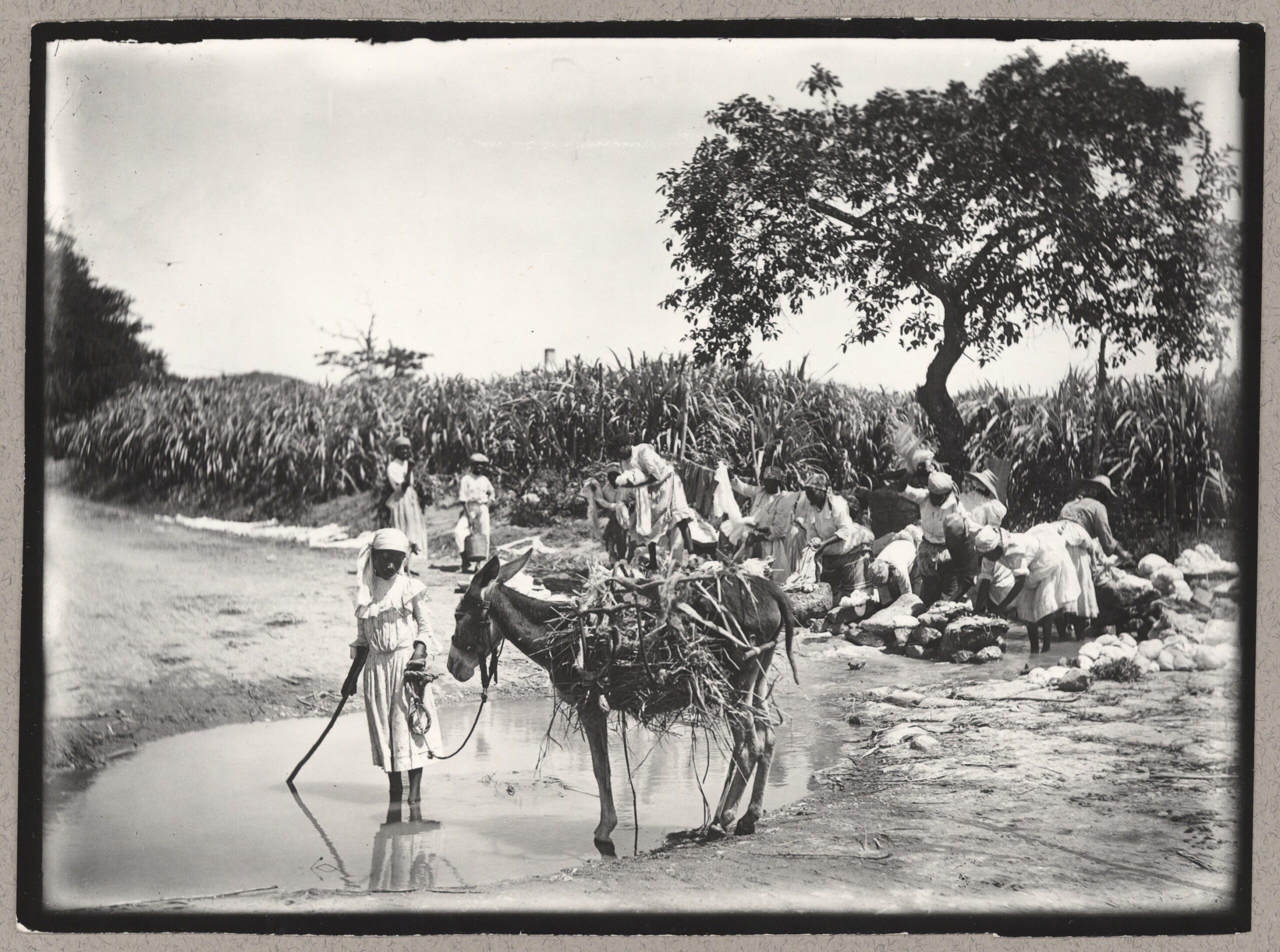
Young woman traverses Harden Gut, where laundry was once done. (Photo courtesy David Berg)
Find Your Archives a Home (FYAH), a nonprofit organization dedicated to locating, preserving, and sharing archives focused on the Virgin Islands, invites the community to attend their upcoming workshop on Saturday at 2:00 p.m. in the Chant Building located in Frederiksted, St. Croix. Participants will learn how to comb through the archives and navigate photos, documents, and census records while connecting with fellow history enthusiasts.
David Berg, a fine art photographer residing on the island of St. Croix and the co-founder of FYAH alongside Juliana Berry, has always been a purveyor of Virgin Islands history but found his passion for his community’s history deepened in 2018 when he began exploring the archives.
“I have always been fascinated by our island’s history, particularly its visual aspects. Delving into the Virgin Islands archives was a profoundly moving experience. It was like uncovering cherished memories I didn’t even know were missing,” said Berg.
Old photo of a desolate roadway in the Virgin Islands. (Photo courtesy David Berg)
In 2020 the desire to establish a nonprofit centered around archival research began to bloom but wasn’t quite cemented until Berg and Berry made a trip to Denmark where they realized how imperative it was for Virgin Islanders to connect with the archives and their historical lineage. The acronym FYAH is a coincidental derivative from a tragic fire that took place at Berg’s family home, where almost everything was lost two years ago.
One of the reasons why this workshop is so invaluable is because navigating the archives can be challenging. Various barriers, such as language variations and interpreting complex government documents, can stymie a person’s ability to explore the records.
A group of women, believed to be family, take turns doing each other’s hair. (Photo courtesy David Berg)
“We want to support our community in developing the skills necessary to engage with the archives. Unintuitive websites, unfamiliar terminology, and mislabeled images often organized by individuals unfamiliar with our unique history are roadblocks that can deter people before they ever get a chance to see the value in the information that they have access to. Our workshops will equip you with the tools and strategies to overcome these obstacles and unlock the rich history hidden within these records,” explained Berg.
“By teaching others how to access this treasure trove, I hope to share this sense of rediscovery and connection to our shared heritage. A community engaged with its archives is a community empowered, and together, we might even bring our historical records back home where they belong,” he said.
For questions about the Archival Workshop, contact David Berg and Juliana Berry at fyahvi@gmail.com.
The flag of France (file photo)
This week, Congresswoman Plaskett joins a bipartisan Congressional Delegation traveling to Normandy, France, to commemorate the 80th anniversary of the D-Day invasion. On Thursday, June 6, the delegation will take part in observances of the anniversary along with veterans and their families, active duty service members, government and military officials, and foreign dignitaries.
The flag of the United States of America (Source file photo)
“It is my honor to pay homage to the men and women who serve in the armed forces especially those Virgin Islanders who, despite their second-class status, answered the call during World War II to defend our democracy and those who continue to defend America’s best values and support the efforts of other nations to do the same,” said Congresswoman Plaskett. “On the eightieth anniversary of D-Day, we honor the men who made the ultimate sacrifice and went directly into the heat of battle on behalf of their country during a time of great turmoil and danger. We, as citizens and as a community, are forever indebted to our servicemembers. Our resolve is that their sacrifice is not in vain as we continue to fight for liberty and justice for all, both at home and abroad.”
“Eighty years ago, these brave servicemembers went directly into conflict because they knew that the future of civilization was at stake,” said Democratic Leader Hakeem Jeffries. “We remember the remarkable courage under fire of our veterans and know that America is free only because of their extraordinary bravery.”
The D-Day Ceremony will begin at approximately 6:30 a.m. ET, Thursday, June 6.
Congresswoman Stacey E. Plaskett
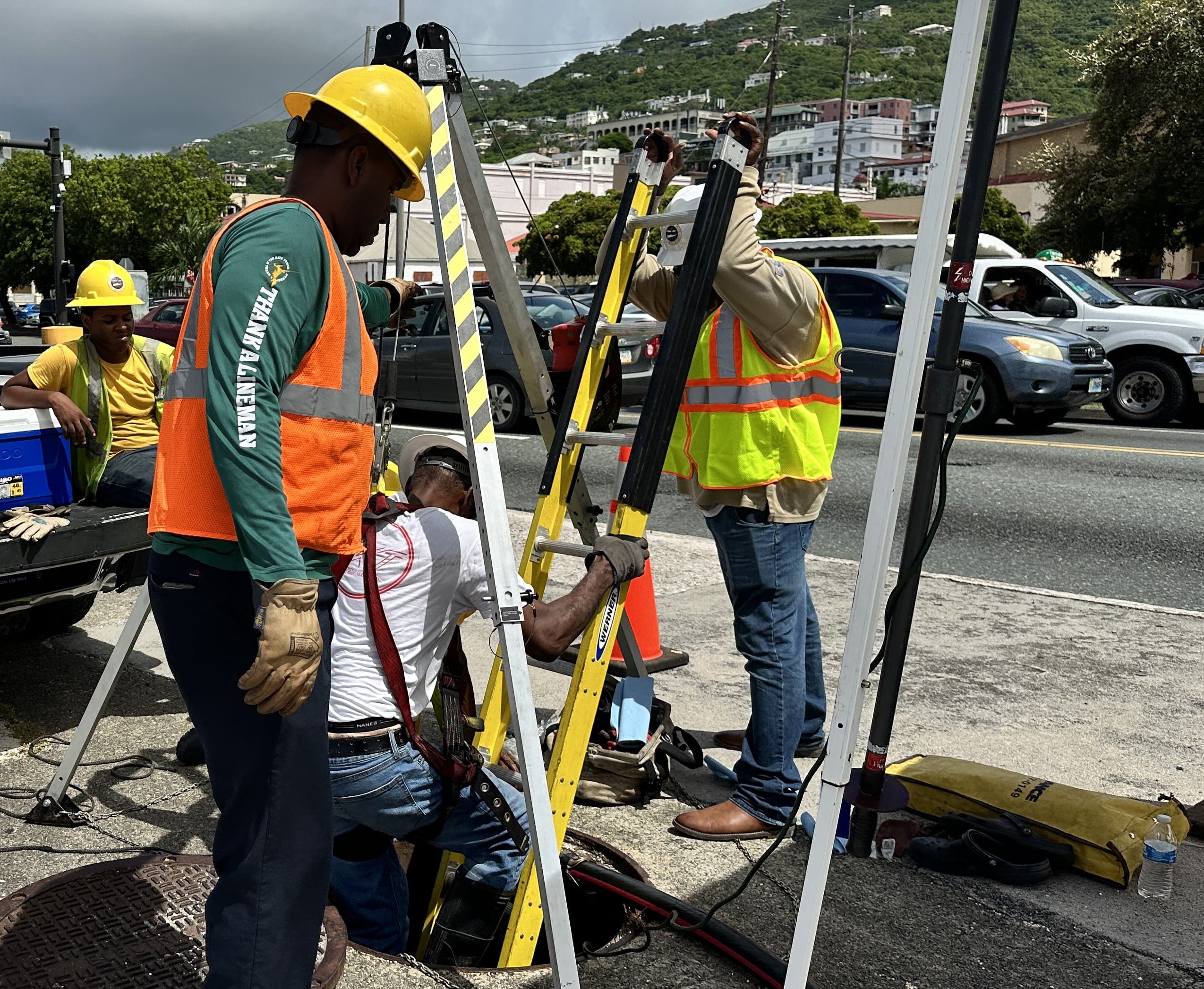
Crews troubleshooting Feeder 13 through manholes on St. Thomas. (Photo courtesy WAPA)
Efforts continue to safely repair the fault in the underground section of Feeder 13, impacting customers in the St. Thomas-St. John district, the V.I. Water and Power Authority announced Thursday.
Due to a severe weather forecast, including a flash flood warning and significant lightning activity, WAPA temporarily halted the restoration work late Wednesday afternoon to ensure the safety of personnel and contractors. The extreme weather conditions present heightened risks that prevent safe access and repair efforts in the underground infrastructure, according to the press release.
Unlike overhead power lines that can be seen on poles, underground feeders are hidden from view, making them less vulnerable to weather conditions and accidental damage. They deliver power safely and efficiently without cluttering the landscape with wires. Though underground infrastructure has many benefits, locating and accessing underground feeders for maintenance or repairs is often difficult and time-consuming. Additionally, these systems are more susceptible to flooding and degradation over time due to soil conditions, moisture, and temperature fluctuations, leading to complicated repairs, the press release stated.
Despite the current challenges, crews have located the fault between Moe’s on Waterfront and the overhead riser by Jarvis Annex in Charlotte Amalie. Since the initial trip of Feeder 13 on Tuesday at approximately 5:00 p.m., crews have been diligently working to isolate and test the cables to find the exact location of the cause. As weather conditions allow a safe work environment, efforts to repair the fault will resume, the release stated.
For information on the active rotational outage schedule and/or other general updates on restoration efforts, please sign up for WAPA Alerts here.
Additional updates will be provided regularly via the WAPA alerts system, the website, radio and Government Access Channel public service announcements, and social media channels, according to the release.











Opinion: Ode to WAPA: “Don’t Hold Your Breath”