



Virgin Islanders Urged to Rethink Coastal Development
Summer Camps 2024: The Adventure Awaits


As students receive their final report cards and close the chapter on another school year, parents are gearing up for summer activities and asking, “What summer camps are available?” For the 2024 summer camp schedule, the adventure awaits, and May is the month to read about planned activities for children and teenagers.
Summer camps are a place where your child can grow, learn and thrive. Whether your child is interested in the arts or learning a new skill. To get you started, here’s a guide for all three islands (St. Croix, St. Thomas, St. John) on some activities your children can get into.
St. Croix Summer Camps and Programs:
Saddle up, campers! The St. Croix Pony Club Summer Riding Clinic is expected to be a fun-filled week of learning about horses and how to properly care for them. Enjoy riding lessons, horse care, games, crafts and water fun. Secure your camper’s spot by emailing stxponyclubvi@gmail.com.
Fees: $250 per camper
Age Group: Not advertised
Date and Time: June 10 – June 14 (8:00 a.m. – 4:00 p.m.)
All high school students, recent graduates, and college freshmen can attend summer camp from anywhere as it is virtual. The “Virtual Cybersecurity Summer Camp” will provide hands-on labs, career/collegiate mentoring, and cybersecurity fundamentals. For more information, interested participants should contact cybersummercamp001@gmail.com.
Fees: Not advertised
Age Group: High school students, Recent high school graduates and college freshmen.
Dates: May – August (Time not Advertised)
The Sports Parks and Recreation Department will be hosting a summer camp on all three islands (St. Croix, St. Thomas and St. John) and are calling all children between the ages of seven and 15 for a sport-filled summer. Campers are eligible to learn baseball, tennis, marine, softball, dance, cheer, soccer and more. Depending on the sport, there’s a different location. Interested campers should email Jamilah.henry@hpr.vi.gov.
Fees: $150
Age Group: 7–15
Date and Time: June 10–July 19 (Time not advertised)
Children can learn how to create a short film and earn school credits with “Film over Gun Violence.” Participants will learn how to create a film from start to finish and be able to share with families at the end of their final product. To enroll, interested campers can register through the Caribbean Museum Center for the Arts here. The camp runs July 1 to July 27 and will include courses in writing, pre-production, filming and more.
Fees: $75 fee to secure spot
Age Group: 16–18
Date and Time: July 1–July 27 (9 a.m. to noon from Monday to Friday)
The U.S. Virgin Islands Education Department, Division of Curriculum and Instruction is inviting seventh-, eighth-, and ninth-graders to participate in their “2024 Career and Technical Education Summer Exploration Program,” which will teach students skills for the real world. Students will learn about aviation, information technology, barbering, cosmetology and other skills. To apply, fill out the registration form here.
Fees: Not advertised
Age Group: 7th, 8th, and 9th grade students
Date and Time: June 10–July 5 (8 a.m. to 2:30 p.m. from Monday to Friday)
This is an opportunity for environmental change-makers to make an impact on St. Croix. The program welcomes youth who have a passion for the environment and are interested in learning how to lead and inspire positive change in their community. To apply, email owalton@stxenvironmental.org.
Fees: Not advertised
Age Group: 14–17
Date and Time: July 8–July 26 (Time not advertised but from Monday to Friday)
The University of the Virgin Islands School of Agriculture on both St. Croix and St. Thomas is providing a summer program. Children will be able to take field trips to farms, career explorations, hiking the island, digging in the garden and much more. Different age groups are available for St. Thomas and St. Croix. To apply, parents can contact 340-692-4094 or 340-692-4087 on St. Croix and 340-693-1080 or 340-693-1078 on St. Thomas.
Fees: Registration fee: $300 (Discount for siblings/immediate family only)
Age Group: Varies
Date and Time: June 10–July 12 (8:30 a.m. to 2:30 p.m. from Monday to Friday)
Ascension Aerial and Flow Summer Kids Camp is taking children to new heights with its aerial hoop and hammock classes for students between the ages of six and 10. Space is limited, and the classes are weeklong. To apply, parents can visit www.ascensionspace.org/aerial-camp.
Fees: $250
Age Group: Varies depending on classes but begins from 4- to 10-years-old.
Date and Time: Date depends on the week you are interested. Camp is a weeklong experience. Campers can select various dates between June 3–July 20.
Keeping the culture alive, the Superior Court Rising Stars summer program will teach children between the ages of 10 and 15 how to play the steel pan. The program features field trips, cultural activities and guest speakers. Parents can register by calling Natasha Modeste or Uniqua Malone at 340-778-9750, extension 6647 and 340-244-7152 or by email at risingstars-stx@vicourts.org.
Fees: $200 and $50 (Registration fee and non-refundable)
Age Group: 10–15
Date and Time: June 10 to July 19
Future Fit Fun Camp for children with diabetes and at risk for diabetes is offering an activity camp. Learn about nutrition and fitness, and enjoy beach days, field trips, and much more. For more information on this two-week program, contact Izhani Rosa at irosa@vidcoe.org or 340-208-0260.
Fees: $100
Age Group: 10 to 12
Date and Time: Two week program July 1 to July 12 (Monday to Friday from 9 a.m. to 3 p.m.)
For the little kids Happy Faces II Academy will be having a summer camp starting on June 10–Aug. 1. Children between the ages of two and six will take part in week-to-week themed activities. For more information, parents can email happyfaces2academy@gmail.com.
Fees: $175
Age Group: 2–6
Date and Time: June 10–Aug. 1 (Monday through Friday from 8:30 a.m. to 3 p.m.)
St. Thomas
For the young aspiring sailors who are interested in learning about sailing for free, there will be a free sailing program brought to you by VIPCA, the Virgin Islands Professional Charter Association. To apply, visit vipca.org/junior-sailing-summer-camp/.
Fees: Free
Age Group: 13–17
Date and Time: Swimming Courses from June 17–July 12 and Sailing Courses from July 15–July 26
The Career and Technical Education Center for the St. Thomas and St. John district will also be hosting a four-week, fun-filled, hands-on educational program. Campers will learn skills in barbering, cosmetology, culinary arts, carpentry/woodworking, and more. Contact by email at cleone.marrishow@vide.vi.
Fees: Not advertised
Age Group: 6th to 9th grade
Date and Time: June 10–July 12 (Times and days not specified)
FAPA USVI Dance Academy will have a 10-week program for interested dancers between the ages of three to 14 years old. The program will include language classes, arts and crafts, body stretch and placement, ballet and more. Limited spaces are available, and interested parents should contact 340-626-1545 and 340-514-2240 or register at www.fapausvi.com.
Fees: $180
Age Group: 3–14
Date and Time: June–August (Monday to Friday/time not specified)
For the little campers, Paradise Learning Academy will be hosting an 11-week interactive and educational camp.
Fees: $75 per week
Age Group: 3 to 12
Date and Time: June 3–Aug. 16 (Monday to Friday from 7:30 a.m. to 5:30 p.m.)
Artists between the ages of 12–17 can explore their skills through the “81Carts Expression through The Arts,” a summer youth art program. Students can choose between two options of participating from June 17 to July 11 or July 15 to August 8. To learn more about this opportunity, visit their Instagram page @81CVI and click the link in their bio.
Fees: Not advertised
Age Group: 12 to 17
Date and Time: June 17 to July 11 or July 15 to Aug. 8 (time not specified)
Enjoy some fun in the sun with the “Sunshine Kidz Klub” who will be hosting outdoor games, nature walks, kayaking, beach trips and more for campers from June 10–Aug. 2. Age group for this camp is between three and 12 and to register contact 352-679-2965 to secure your camper’s spot.
Fees: Not advertised
Age Group: 3 – 12
Date and Time: June 10–Aug. 2 (Days of the week and time not specified)
Also, for the little ones, “Handy Spandy’s Summer Camp” will be having fun arts and crafts, reading and writing, weekly field trips and sports for your little ones. If interested, parents should contact 340-776-4974 or by email at handyspandy@hotmail.com.
Fees: $50 registration fee
Age Group: 2 to 12
Date and Time: June 3 to July 12
“Unique by Maria Banwaree Art Studio and Boutique” will be hosting a six-week camp that will include art and painting, crafts, jewelry, beading, organization of ideas, writing, Spanish lessons and more. The camp will take place from June 10–June 19, and to register, parents can contact 340-473-1104 or email uniquembvi@gmail.com.
Price: $250
Age Group: Not specified
Date and Time: June 10-19 (From 9 a.m. to 4 p.m.)
St. John Summer Camps and Programs:
Friends of Virgin Islands National Park (FVINP) offers a Learn to Swim Program year-round for adults and kids. Swimming lessons will be directed by the Learn to Swim Coordinator, Tara Murza, with support from a cohort of certified lifeguards and swim instructors. Friends of the Park is also offering their Learn to Swim program and School Kids in the Park (SKIP) to be coordinated through four camp providers on St. John. These programs will be supplied to Sports Parks & Rec., Boys and Girls Club, Art and Literacy Initiative, and Gifft Hill School Summer Adventure Camp. The details for each of these summer camps are below.
Price: Free
Age Group: 4 and up. Adults and all levels of swim experience are welcome.
Date and Time: Running every first and third Saturday at Cinnamon Bay from 9:30 a.m.-11:30 a.m. FVINP provides a shuttle service leaving Cruz Bay at 8:30 a.m. and returning at 11:40 a.m.
The Boys & Girls Club is offering summer programs and weekend activities. The St. John Unit has moved to the Julius E. Sprauve School (JESS) The program leader is Ms. Loraine “Pat” Richards, and Ms. Brown is the Regional Director for St. Thomas and St. John. For further information, contact Richards at 340-626-4804, or Brown at 340-725-6540. On St. John email: stjclub@bgcvi.org and on St. Thomas email: sttclub@bgcvi.org.
Fees: Free
Dates: June 10 – July 19
Gifft Hill School Summer Adventure Camp will take place at the Gifft Hill School’s Lower Campus. There will be a different focus each week of camp providing structure and exploration. Registration will continue as long as spaces are open. For further information, contact Emma J. at emmajohnson@giffthillschool.org and link to register your child: https://tinyurl.com/uezd6uaf
Fees: $250/week Ages: 6 and up; all St. John children who are rising kindergarteners and older.Dates: July 15-Aug. 9, 8 a.m.-3 p.m. Monday-Friday
“St. John Outdoor ‘Love City’ Learning Summer Creative Arts & Literacy Workshop” has partnered with Cinnamon Bay to host the parent and family orientation scheduled for June 8. “The orientation includes an introduction to financial literacy, the historical ancestors of St. John, and Storytime with Dr. Sewer, which includes an art activity after each read-aloud. Anyone wanting to volunteer to read aloud, please contact Dr. Sewer.” For further information, please contact Dr. Carla M. Sewer at drcarlamsewer@neguseducation.com “Dr. Sewer sends a special shout-out to Sherry Compton, a local St. John business owner, for a $5,000 donation to support this year’s workshop.”
Workshop registration: $50 per child, $25 per child if more than one child in a household is registering. Final registration accepted at Parent and Family Orientation must be paid and registered to attend on Monday, June 10.Fees: Parents Pay What You Can is a new initiative to support children and families during the summer months. Contact camp for more details.
Age Group: Workshop leaders ages 16 and up are asked to submit resumes to Dr. Sewer. Must pass a background check. Must be willing to work outdoors with children. Must be willing to submit daily reports. Campers ages 5 to 15 years old.
Date and Time: The workshop is scheduled to begin on June 10-Aug. 16, Monday-Friday from 8 a.m.-3 p.m.
The JESS summer program will incorporate academic enrichment, career and technical education, STEAM activities, and social-emotional wellness. For further information, please contact sharon.richardson@vide.vi
Fees: Not advertisedDates: June 3-June 28, Monday-Friday from 8:30 a.m.-2 p.m.
Ages: Grades K-8
Linda Ward will be conducting a St. John Summer Fun Camp. She is planning 11 separate sessions. Parents may enroll for each session (week) separately or for the whole summer. While the basic structure of the day plan is the same, each week will be unique and different. “Children will need a size appropriate backpack style bag, refillable water bottle and shoes they can put on and off themselves. Parents are responsible for daily transportation and packed lunch. Enrollment is limited.” For further information, please contact Linda at 252-256-3743.
Fees: $175 per session. There is a “Multiple Discount” for multiple siblings and/or multiple (3+) sessions. Ages: 5 – 12Dates: June 10-Aug. 30, Monday-Friday from 9 a.m.-2 p.m.
Surfer Gary was a lifesaver, and he’s still teaching children how to surf. It’s not a scheduled camp but an activity for kids. You can contact Gary at 340-626-6377. Kids and the Sea (KATS) is a year-round sailing activity every Saturday morning in Coral Bay. For further information, please contact info@katsvi.com
Friends of the Virgin Islands National Park’s description of SKIP and Learn to Swim: Program participants will receive a combination of in-water swimming lessons and onshore educational activities from FVINP and the Virgin Islands National Park.
The program participants will be divided into two age groups, with half the participants attending the onshore educational experiences consisting of presentations by local scientists, subject matter experts, culture bearers, and community partners. The other half will learn the basics of swimming and water safety. “Program participants will see themselves as the next generation of environmental stewards and conservation professionals. FVINP will service about 120 youth this summer.” Programs will be coordinated through the summer camps, but if you have questions, you may contact Taylor White at twhite@friendsvinp.org.
If interested in adding a program or camp to this list, recreational directors can contact visource@gmail.com to provide information. All camps and programs must have established credibility to be considered for inclusion in the Source’s 2024 summer camp list.
Havensight Hiring Manager to Guide Its Future


Havensight Mall on St. Thomas might be gaining a new character with more nightlife and a new hotel.
To guide the developments, Jahmed Mills has been hired as the director of retail, dining, and entertainment and property manager for the mall. He starts June 3.
According to a press release from the Government Employees’ Retirement System, which owns the mall, Mills will be its first full-time, permanent manager of Havensight Mall.
GERS acquired the Havensight Mall property from the West Indian Company in 1993. WICO managed the property until April 2020, when GERS assumed direct management.
GERS Administrator Angel Dawson, who announced the appointment last week, said the appointment is timely “as GERS is in the process of broadening Havensight Mall’s business model and appeal beyond retail, with an increased emphasis on dining and entertainment.”
Dawson thanked Roy Moorehead, who has been acting property manager since January and will now be assistant director of retail, dining, and entertainment, in addition to his primary role as Havensight’s chief security officer. GERS has before the Senate a proposal to give some of its security officers peace officer status because of more nightlife activities. Several senators are against the proposal.
Dawson also mentioned the five-story, 126-room, 71,040-square-foot hotel contributing to Havensight’s new character. Construction of the hotel, which includes in-house power production, is moving forward, and its expected completion date is April 1, 2025.
Mills has worked at the Marriott Corporation. He was general manager at French Leave Resort in Eleuthera, Bahamas, and at Point Pleasant Resort on St. Thomas.
He earned his bachelor’s degree in accounting and financial management and a master’s in business administration from the University of the Virgin Islands. He was credit manager at Frenchman’s Reef and Morning Star Beach Resort on St. Thomas and is currently the owner of Mills Enterprise on St. Thomas.
“Together with our Haven Development partner, which is constructing a new Hampton by Hilton Hotel at the 14-acre Havensight property, and our professional consultants who spent decades working with the Walt Disney Corporation, Mr. Mills will take the lead in transforming this valuable, historic investment by the GERS into a thriving experience-driven destination that will delight our local population and visitors alike for decades to come,” the press release stated.
Op-Ed: Whelks are Delicious to Eat, and Important to Protect
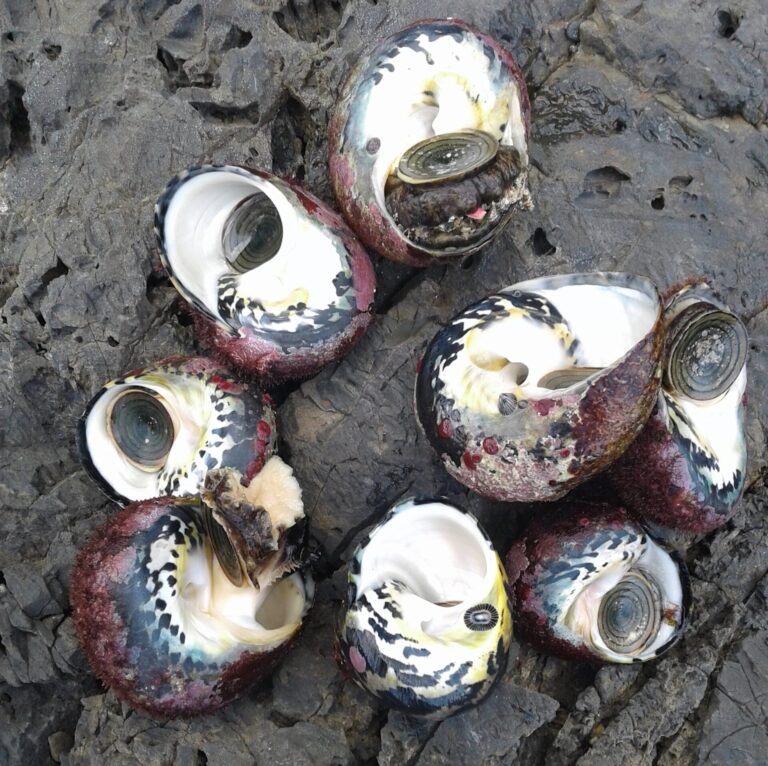
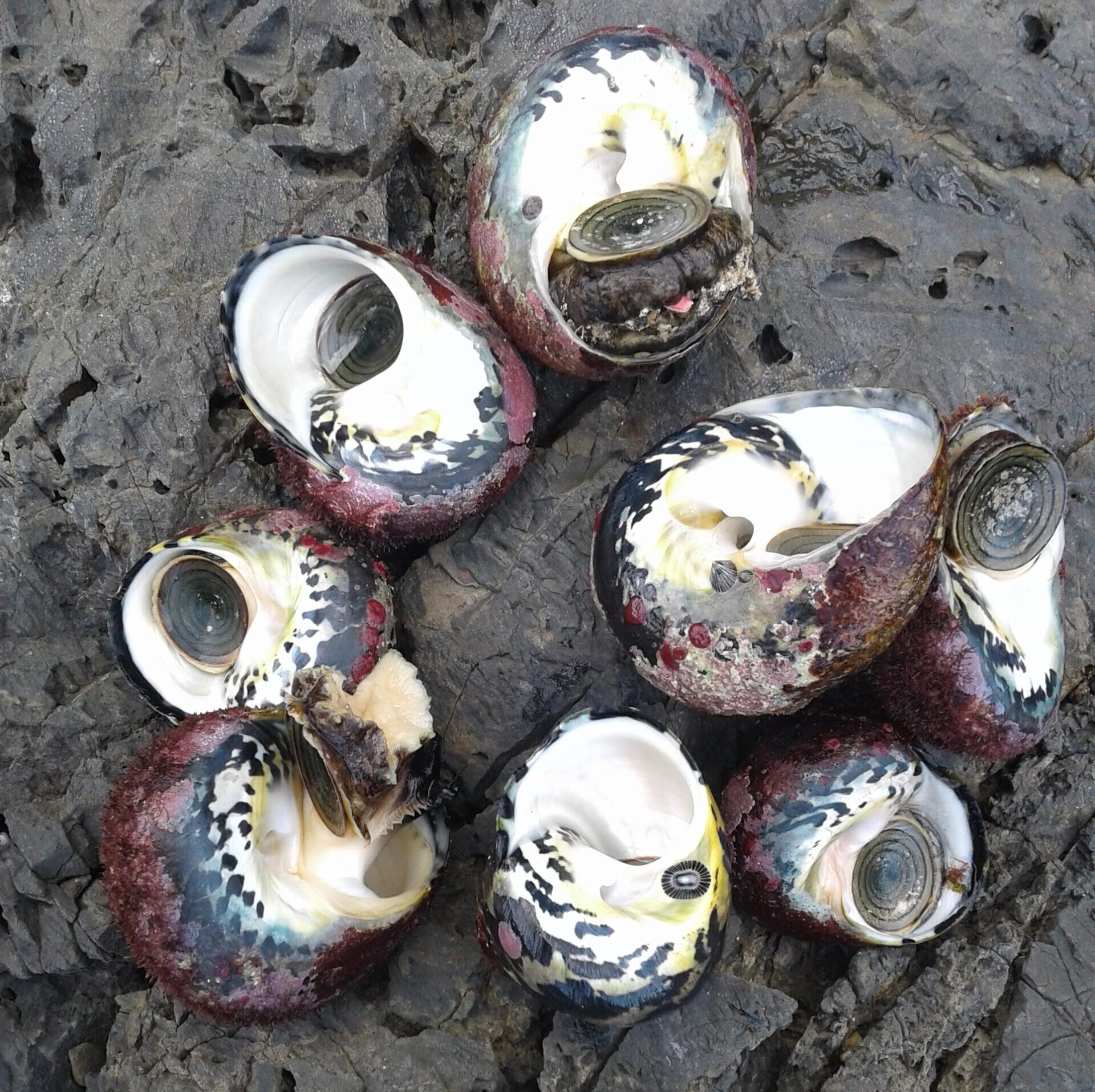
Recently, I had an email discussion with a friend about whelks, also called West Indian Topshell or Cittarium pica. During Carnival season on St. Thomas, she said to me that she “looks forward eating whelks.” Whelk is a cultural food item in the Virgin Islands and throughout the Caribbean region and the central coast of South America. In fact, eating of whelks goes back to the indigenous inhabitants of the West Indies archipelago. They lived off the islands’ abundance of sea life, such as fish, crustaceans, and mollusks, as well as from the island’s forests and wild native fruits and animals.

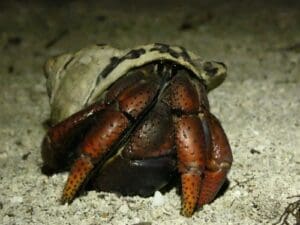
Who also depends on whelks, not for food but shelter? It is the soldier crab (hermit crab), Coenobita clypeatus. Every year in the Virgin Islands around August time, soldier crabs migrate to the shore for their annual ancient love-making ritual. After laying 1,000 to 50,000 eggs, they return to the upland forest. As the soldier crabs grow, they abandon their old shells and move into larger shells. In Japanese culture, they call soldier crabs “rent me a house” because they move out of a shell and into a new home.
It is for this reason and others that Virgin Islands Code prohibits the taking, catching, possessing, transporting, or exporting of indigenous species. The prohibition also incudes the removal of coral shells, sand, and other native species of flora and fauna. This also includes taking of whelk shells off our beaches. Solider crabs depend on whelk shells to use for a home. You might not be aware, but solider crabs are not born with shells. Terrestrial soldier crabs have a somewhat soft body, which is protected by a hard shell-like whelk.
For those who don’t know what a whelk looks like, whelks are large snails (marine gastropod) that you find in our coastal shallow rocky marine environment. Some grow to large sizes, such as 4 inches wide or more with a popular tasty flesh that locals like to eat. The shells are hard and heavy, equaling about three-fourths of a whelk’s weight. They can be easy to identify with a heavy black or purple stripe on a white background color. However, sometimes it might be hard to identify them because of algae growth on the shells.
Young whelks of about one-half-inch wide are common in our rocky coastal environment. They are mostly white shells with regular black spots. As they grow older, the white color changes as the black spots become larger and more zigzagged on the shell. You will find whelks in intertidal zone areas along rocky coasts. What this means is the shoreline that extends from the highest high tide down to the lowest level of waterline along the coast.
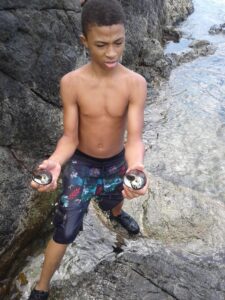
Whelk habitat in the coastal environment doesn’t extend very deep in the water. Most whelks, however, can be found immediately at the edge of the waterline. Adult whelks might occur slightly deeper, but they are generally not more than three feet below the waterline. They restricted themselves to the intertidal zone. They also like to eat thin strands of seaweed that grow on the intertidal rocks and filamentous algae. Whelks grow very slowly. However, if there is plenty of good food, their shell width increases about one 16th of an inch per month.
As a result of their slow growth, it could take whelks about five years or probably more to reach the size of reproductive adults. Although scientists believe the lifespan of whelks is about 30 years, they are still trying to figure out how long whelks can live. Whelks don’t move very far. Most of their movements take place at night when whelks’ activity is searching for food. Therefore, there are laws in place in the Virgin Islands and probably elsewhere in the Caribbean region where there is a season to harvest whelks.
For example, in the early 19th century, Bermuda’s whelk population was driven to extinction because of over-harvesting. This impacted the island fishing industry and impacted soldier crabs that depend to some extent on the shells of whelks. Laws were put in place and successfully Bermuda was able to revive its whelk industry. Believe me, depleting our resources like whelks can lead to culture extinction of a particular dish like whelk and rice or whelks with coconut sauce in the Virgin Islands.
Let me stop before your mouth becomes watery. I think we all get the message of protecting our natural resources to continue our cultural tradition of eating whelks in the Virgin Islands, especially during our cultural events. Let me ask this question to my reading audience: you heard the term “picking whelks?” Where do you think it comes from? It’s simple and it means traditionally in these islands and throughout the Caribbean that men and women roll up their pants to above their knees as they pick whelks along the coast. This is cultural.
Believe me, I love our Caribbean culture. We are such a unique people on the planet. Nevertheless, there are predators in the natural environment of whelks. There are three water snails that prey upon whelks. These predators are the mouthed rock shell (Puqura patula), rustic rock drill (Thais rustica), and the deltoid rock drill (Thais deltoidea). Fish like porcupine, puddingwife wrasses, octopuses, and birds like oystercatchers pluck whelks off the rocks. But the number one predator of whelks is humans.
I can never forget the time when the St. Croix Hiking Association members camped out at White Bay Camp in Jost van Dyke. We explored the rocks in White Bay Camp and harvested whelks. Well sir, we put a pot on a three stone fire and boiled the whelks for hours. When the whelks done boil, it would be a meal fit for a king under a full moon at the beach. I will never forget that experience. I will leave you with one of many traditional Virgin Islands recipes for whelks from our “Native Recipe Cookbook” from the UVI School of Agriculture.
Whelks & Rice
2 dozen whelks ½ pound rice 2 cups water 2 tablespoons butter 6 cups cooking ham (cubed) 1 medium sweet pepper (chopped) 1 medium onion (chopped) 1 clove garlic (chopped) 1 small can tomato sauce 1 sprig thyme
Boil whelks slightly. Remove from shell, discard tail ends. Cut into small pieces. Sauté ham, onion, sweet pepper, garlic and thyme in butter. Add tomato sauce and water. Add whelks. Cook for 10 minutes. Add rice and continue cooking on medium heat for 15 to 20 minutes or until rice is cooked.
— Olasee Davis is a bush professor who lectures and writes about the culture, history, ecology and environment of the Virgin Islands when he is not leading hiking tours of the wild places and spaces of St. Croix and beyond.
Two More Arrests in St. John Jewelry Store Robbery
D’Amour Continues to Improve in Korea and Turkey in the Lead Up to Olympics


Fare Increase for Fixed-Route Bus Services and Paratransit Services Begins June 1.
An increase in the fares for fixed-route bus services and paratransit services will begin June 1. These are the changes:
New Rate: $2 Fixed Route Bus | $4 Paratransit Van
*Fixed Route service discounts for Medicare cardholders and free rides for seniors will remain in effect.
Important updates are coming soon.
Visit www.vitranvi.com for more information on routes, schedules and ferries.
STT-STJ District Registration Division to Close Four Days.
The St. Thomas-St. John (STTJ) District Registration Division will be closed this week from Wednesday, May 28, through Friday, May 31, for district professional development and year-end events.
For additional information, email Rhona Pinney-Simon, St. Thomas-St. John district director of student services at rhona.pinney@vide.vi
VIEO Launches VI Battery Energy Storage Program (VIBES)


Bryan Outlines Plans to Energize WAPA



