



Updated: Delay Start Canceled; STTJ Public Schools Closed Due to Power Outages Thursday

National Hurricane Season Preparedness Week: Planning for Possible Cyclones
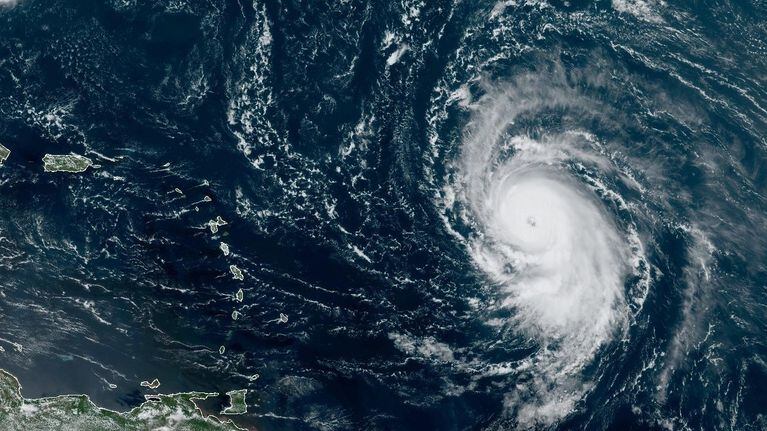

- Compile a disaster kit, including flashlights, batteries, a first-aid kit, medications, food, and water.
- Create an evacuation plan. This can include flights off-island as well as locating emergency shelter locations.
- Review insurance documents and ask questions to an insurance agent. Remember that “flood insurance” and “hurricane/wind insurance” policies can be very different.
- Assess your home and evaluate areas in need of reinforcement or repair.
- Become familiar with hurricane/tropical storm alerts and updates. Remember that emergency services may not be available during a storm.
- Stay away from windows.
- Keep a radio and communication device charged up and have extra batteries available.
- Be on guard against rising water. Flood waters can rise very quickly.
- Remain in a sheltered location, such as an interior bathroom, until the storm completely passes.
- Remember that if the eye of the storm passes over, the weather will temporarily improve. However, since the eye of the storm is at the center of the cyclone, it is just a matter of time before the other side of the hurricane moves over the area, the weather again deteriorates, and high winds return.
- Be alert for hazards such as downed power lines or damaged structures.
- Ensure that generators are placed away from interior areas or spaces where toxic fumes could be inhaled.
- Only drink water if it is deemed safe to do so. Contamination is possible during storms.
- Connect with neighbors and fellow islanders and assess any needs for medical treatment. (Don’t forget about pets and animals, too!)
- Stay updated on the weather and news and monitor for future developments about severe weather or additional cyclone development in the region.
Public Invited to Final Review of New Five-Year Disaster Mitigation Plan
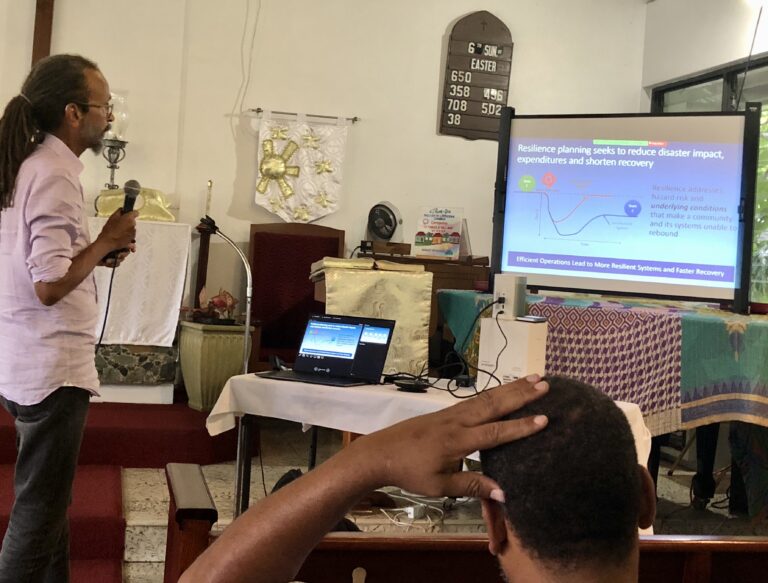

With the start of the 2024 Atlantic Hurricane Season less than a month away, officials working to finalize a five-year disaster management plan want the public to weigh in. The first of a series of town hall meetings took place Monday in Cruz Bay.
The meetings are hosted by the University of the Virgin Islands and the V.I. Territorial Emergency Management Agency. About a dozen people came to Nazareth Lutheran Church on Monday to hear from project managers who’ve worked on the plan since 2018. More participants attended virtually via live stream video.
Two more forums are scheduled for next week May 14 on St. Croix and May 16 on St. Thomas.
Co-Director Kim Waddell said major natural disasters have disrupted life and commerce in the territory in the past. With help from partner agencies and stakeholders, the team has produced guidance on how well the Virgin Islands will be prepared to withstand and recover from the next big disaster.
“The plan development is fairly complex. It’s taken us four-plus years to put this together … We’ve done intense assessments and analyses of the sector series and the hazards. We’ve done the hazard profiles, the risk assessments and the sustainability analyses,” Waddell said.
While averting a natural disaster is impossible, the plan’s architects said they sought ways to reach the shortest path to recovery. “We want to reduce the disaster impact,” he said.
In addition to assessing the risks that arise from storm-force winds, rain-induced flooding, droughts, and the impact of earthquakes, “HMRP provides a road map for the territory to mitigate, adapt, and quickly recover from the impacts of new types of hazards associated with climate change,” said language found on the meeting announcement.
One of the emerging threats is heat driven by climate change; researchers note that St. Croix saw its highest recorded temperatures in 2023. Concerns are also rising for the arrival of compound disasters where more than one type of natural hazard presents itself at the same time.
“A hot, dry future is something we are thinking about,” said Plan Development Co-Director Gregory Guannel. “This sort of confluence of hazards is something we have to think about when we think about climate change.”
Every five years, U.S. states and territories are encouraged to submit to FEMA new plans detailing their anticipated response to natural disasters. This improves the chance that appropriate disaster assistance will quickly arrive.
Organizers also announced the website address where the Hazard Mitigation and Resilience Plan can be viewed in its entirety and the start of a 30-day public comment period during which residents and business owners can log their questions, suggestions, ideas, and concerns.
“The plan is online for your review,” Guannel said.
Holding town meetings is one of the compliance steps plan developers must take to comply with federal government requirements. As the public reviews the plan over the next 30 days, a plan administrator said FEMA and Government House are also giving their final review before the V.I. Hazard Mitigation and Resilience Plan becomes the playbook for handling disasters for the next five years.
Children’s Museum of St. Croix Hosts a Playdate for Adults


“Home Sweet Home” is what the Children’s Museum of St. Croix hopes to achieve with its annual fundraiser on Saturday.
The St. Croix Tennis Club will host “A Night at the Museum” from 6 to 10 p.m. The event will include good food and an online auction.
Tickets are $125 and can be purchased on the Children’s Museum of St. Croix website or by texting kidsmuseum to 79230.
“A museum home will enable the Children’s Museum of St. Croix to expand programming and opportunities to explore, discover, create, and learn through play,” Board Member Ellie Hirsh said in an email.
Since Winifred “Oyoko” Loving came up with the idea in 2017 with a group of friends, museum founders, and board members have hosted crowd-pleasing and unique pop-ups at community events, including Agrifest, Christmas Spoken Here, and Mango Melee.
For each pop-up, the museum provides crayons, paint, paper, clay, and straws to create art and build train tracks and weather stations. There have been live sea creatures to observe, puzzles to solve, and building blocks to erect.
The Children’s Museum pop-ups draw a large number of children and adults. Under a 3,000-square-foot tent, around 450-500 children learned through playing during the three days of the 2023 Ag Fair.
“It’s an opportunity for the community to come out and support the Children’s Museum of St. Croix to expand programming and opportunities to explore, discover, create and learn through play,” Hirsh said.
The Children’s Museum of St. Croix is a 501c3, donations are also welcome.JetBlue Airlines Announces New Route to St. Croix


“I am excited to welcome JetBlue back to the island of St. Croix,” shares US Virgin Islands Tourism Department Commissioner Joseph Boschulte. “The addition of seats into the territory from Puerto Rico not only expands our accessibility from the island and mainland United States but also provides a new opportunity for inter-Caribbean travel. We want to extend our gratitude to the JetBlue team and look forward to welcoming travelers to experience a Vibe Like No Other in St. Croix.”
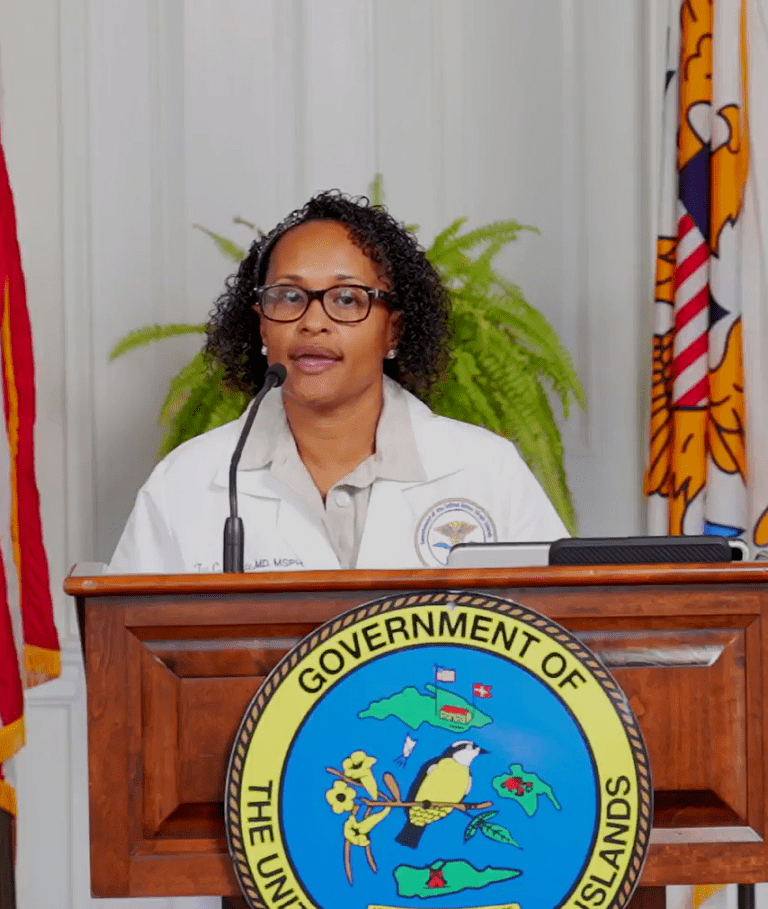
Office of the Governor, Department of Health to Host Large-Scale USVI Wellness Event
David S. North Dies at 95

David S. North, internationally recognized authority on immigration policy, died on Friday April 26, 2024 at the age of 95. Son of the author Sterling North and Gladys North, David was born February 29, 1929 in Chicago, Illinois, and grew up in Downers Grove, a Chicago suburb. When David was 14 years old, the family moved to Morristown, NJ. David graduated from Morristown High School, where he had been editor of the school paper. He went on to graduate magna cum laude in Politics at Princeton, where he was Managing Editor of the Prince. He received a Fulbright Scholarship to study at Victoria University in New Zealand, where he received his Masters in Political Science.
David’s first career was in journalism, writing after college for the Newark Star-Ledger and much later life in life for the Fiji-based Pacific Islands Monthly. But early on he was actively engaged in New Jersey Democratic Party politics, first as an organizer and then as a candidate for the State Assembly and, in 1958, a candidate for the US Congress. This activism led to appointments in the Labor Department during the Kennedy and Johnson Administrations, where he began his life’s work studying labor markets and immigration. During this time he also served as Assistant to the Chairman of the Democratic National Committee in the landslide election of 1964.
Following his time in Government, David transitioned to what turned out to be a more than 55-year career in public policy. He frequently testified before Senate and House committees, and before federal immigration policy commissions. His analyses appeared in media outlets, including CNN, the Economist, and the International Labour Organization. Mr. North’s overseas research included projects for the German Marshall Fund of the U.S., the governments of Haiti and Australia. As an activist David advocated for a bill that eliminated a state income tax break for those with unearned income from foreign sources which cost him $1,000 a year personally, but netted the Commonwealth of Virginia as much as $10 million annually. From 2020 to 2024 he supported various political and civic efforts to support the African American community in Randolph County, a rural area in SW Georgia. This included a change in banking practices that netted the city of Cuthbert an extra $28,000 annually. David’s work ethic and lifelong passion for contributing to the public debate continued into his 95th year; after more than 2,700 blog posts over the previous 15 years, his last article for the Center for Immigration Studies’s website was published just one week before he died.
David is survived by his wife of 45 years, Ruth Blau, three sons from an earlier marriage, Gregory, Jeffrey, and Rodney; two step-children, Amy Robertson and Bruce Robertson; a sister, Arielle North Olson; three granddaughters; a step-granddaughter, a step-grandson, and a great-granddaughter.
In keeping with his environmental beliefs, he was cremated.
St. Croix Public Schools to Close at Noon Wednesday Due to Inclement Weather
All St. Croix district public schools will close at noon on Wednesday due to inclement weather conditions impacting school operations and the safety of students, faculty and staff across school campuses, the V.I. Education Department announced.
Lunch will be provided for all students prior to the early dismissal, according to the press release. Bus transportation will be available at 1:30 p.m. for students who utilize the school bus services.
Parents and guardians are asked to pick up their children promptly at noon to ensure their safe return home. The department encouraged everyone to stay updated through official channels for further announcements regarding school operations.
Lightning Strike Causes District-Wide Power Outage


Heavy Rain Forecast Through Thursday; Schools Close on STT and STX
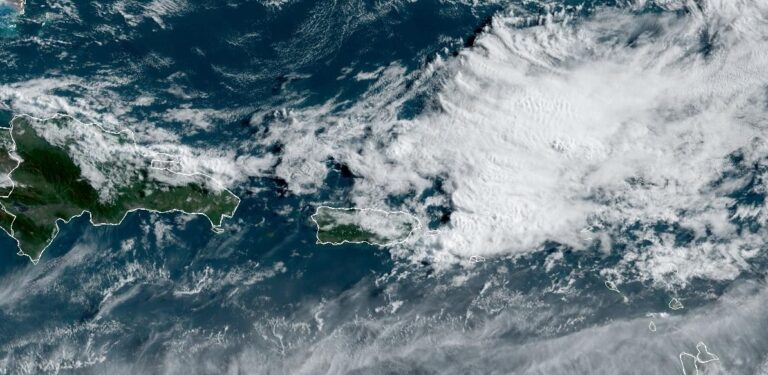
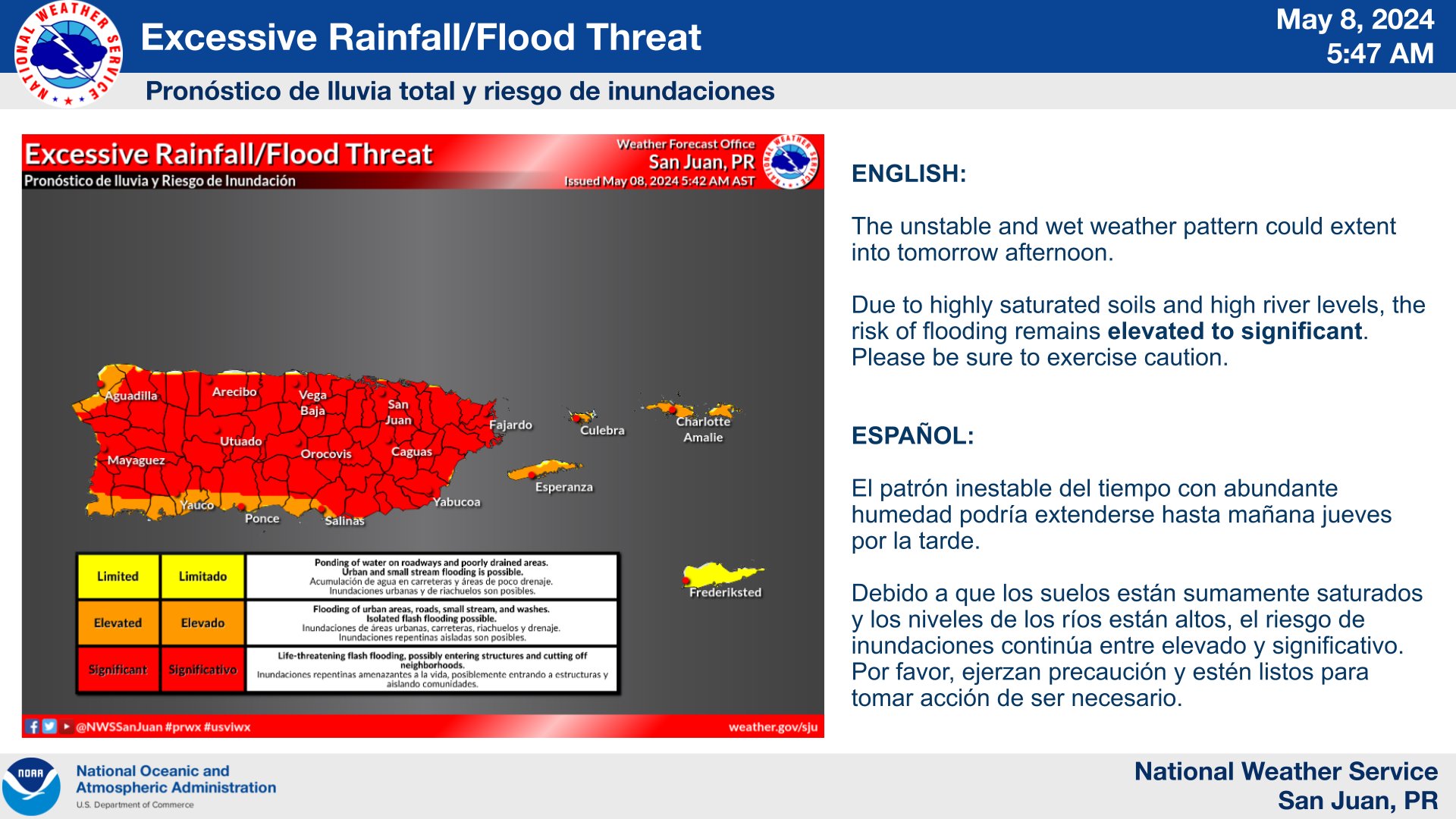
Heavy rain and thunderstorms may continue to occur across Puerto Rico and the U.S. Virgin Islands through at least Thursday. Flash flooding and mudslides are possible.
“The continuation of a wet and unstable weather pattern will maintain the risk of flooding between elevated and significant across the islands through this evening and may extend into Thursday evening,” according to an update on Wednesday from the National Weather Service.
“A series of troughs [areas of low pressure] will promote thunderstorms and excessive rainfall across the area, enhancing the potential for flooding across the islands,” the NWS continued.
Stormy weather on Wednesday morning resulted in a flash flood warning for the island of St. Thomas until at least 9:30 a.m. School was cancelled in the St. Thomas-St. John district as of Wednesday morning, and the Virgin Islands Water and Power Authority reported widespread power outages. Later in the morning, the Education Department announced that all public schools on St. Croix would close at noon due to the heavy rain.
“Any additional moderate to locally heavy rain poses a risk of dangerous flooding, including sudden mudslides and landslides in steep terrain areas,” the NWS warned. “Thunderstorms may produce strong winds capable of causing tree falls, power line disruptions, and movement of unsecured objects,” the NWS noted.
Flash Flood and Mudslide Safety
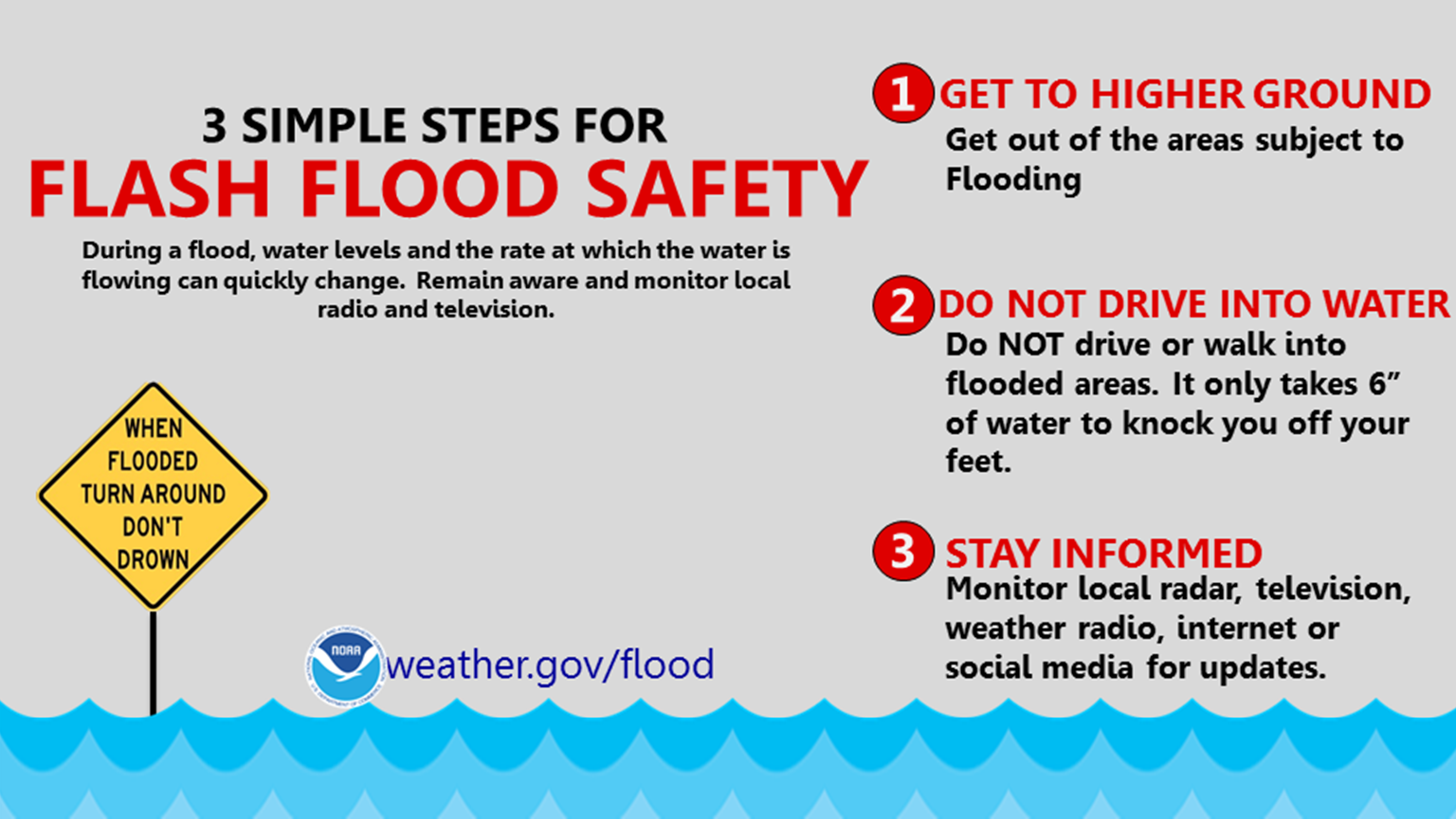
Individuals may be caught off-guard during a flash flood, including while driving in a vehicle, as described in a Source article regarding flash flood safety. If a flood happens while driving, the NWS offers the following tips to stay safe.
“Never drive your car into water of unknown depth. Most flash flood deaths occur when people drive their vehicles into flood waters. Remember: Turn Around, Don’t Drown,” the NWS advised.
In the event of a mudslide or a landslide, the United States Geographical Survey recommends remaining alert and as far away from a debris flow as possible. Additional safety tips are available on the USGS official website.
Weather conditions are expected to improve at the end of the workweek as an area of high pressure builds across the region and a mass of drier air moves over the islands. However, Saharan dust particles may be prevalent in the atmosphere.
Individuals are advised to stay current on the latest weather conditions. Forecast information, including severe weather alerts and updates, is available from the Virgin Islands Territorial Emergency Management Agency website and the National Weather Service.
The Source Weather Page publishes a daily weather forecast, and readers can also view weather forecast videos and disaster preparedness video segments.