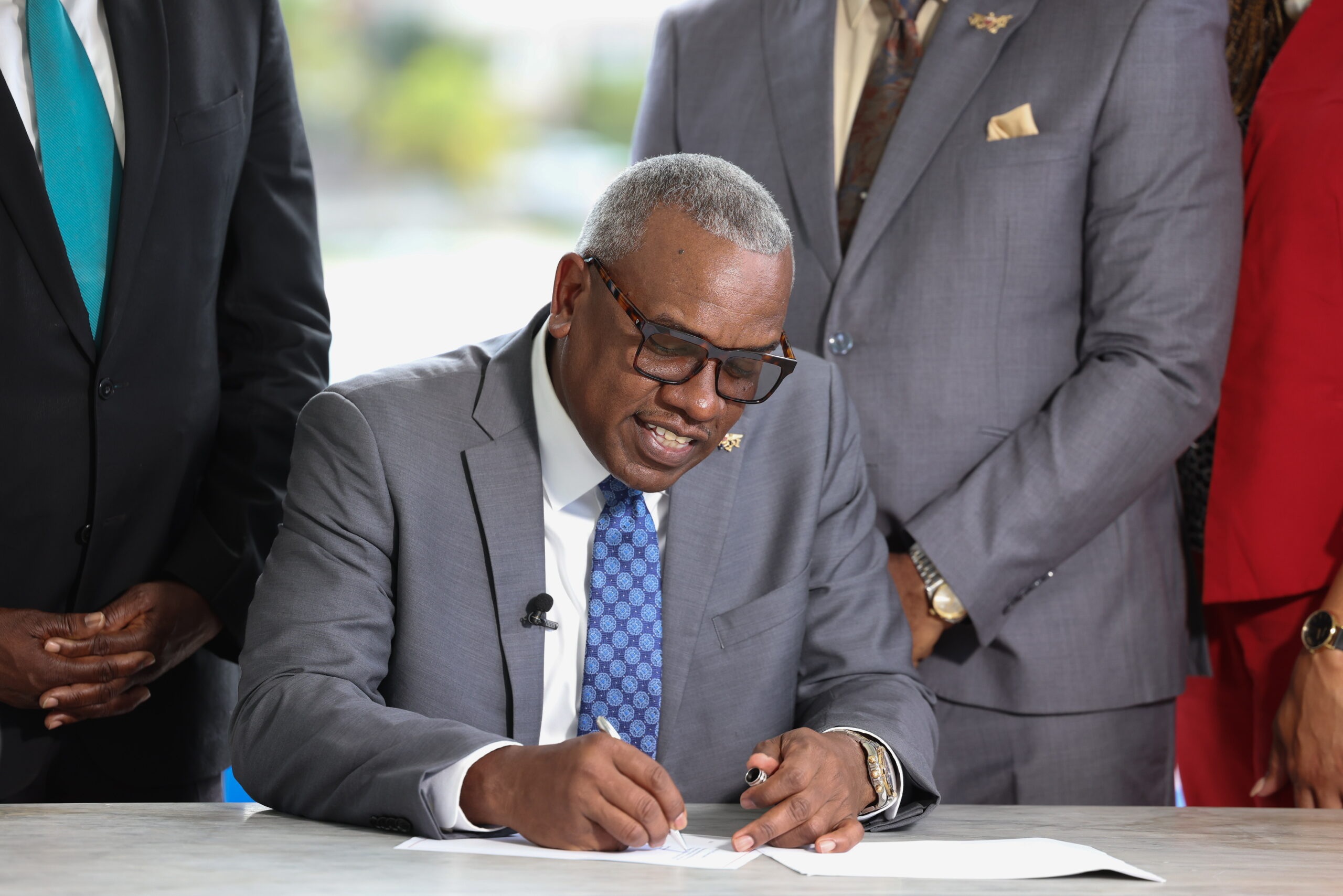
Gov. Albert Bryan Jr. signed 13 bills into law Tuesday, including several rezoning land in St. Thomas and St. Croix. (Submitted photo)
Gov. Albert Bryan Jr. signed 13 bills into law Tuesday that had been passed March 18 by the 36th Legislature.
Honoring the former Senate president, Bryan signed into law a bill renaming Hull Bay Road to Lorraine L. Berry Drive. Previously, the Earl B. Ottley Legislative Hall’s annex had been renamed for the longtime St. Thomas lawmaker in 2013. Berry was the only senator to serve 12 consecutive terms, the only one to serve as Senate president twice, and one of only two women to hold the position. Throughout her tenure as a legislator, Berry chaired eight Senate committees, served as majority leader, and drafted roughly 400 pieces of legislation.
The governor also signed into law an act honoring Alva Alphonse “Coach Tumba” Swan for his significant contributions to the sport of basketball in the Virgin Islands.
More controversial was a new law rezoning 15.9 acres of virgin green space in the Beeston Hill, St. Croix, to allow for as many as 800 people to move into the restive area. The new zoning meant buildings as high as six stories could be built, or potentially a hotel complex. The rezoning went against the recommendation of experts at the Department of Planning and Natural Resources, the new Comprehensive Land and Water Use Plan — which warned against the dangers of unplanned spot zoning — and the pleas of people in the neighborhood who worried noise, traffic, and environmental degradation would soon follow. Although the property’s owners have said they planned to use the land for housing, they had previously sought to build a strip mall, medical complex, and other business-related enterprises there.
The governor also approved rezoning part of Estate Smith Bay from agricultural use to allow for medium-density residential use, and part of Christiansted’s Strand Street from residential use to secondary business. He also granted a zoning variance for a bus and passenger terminal in Estate Body Slob, St. Croix.
Bryan allowed for $200,000 from the St. Croix Capital Improvement Fund to go to the Virgin Islands Department of Public Works for repairs to the Frederiksted Public Cemetery and signed off on a new law establishing a 15-business day amnesty to assist taxpayers and businesses recovering from the aftermath of Hurricanes Irma and Maria and Tropical Storm Ernesto by waiving penalties and interest imposed for the nonpayment of taxes.
Bryan approved a new law amending title 23 Virgin Islands Code, chapter 10, to establish civil penalties for disregarding marine advisories and to create the Territorial Marine Safety Fund. He also signed into law acts amending Title 22, Virgin Islands Code, Chapter 31, relating to the Virgin Islands Producer and Adjuster Licensing Act by modifying renewal provisions for insurance producer licenses, redesignating the funding source for several entities, and amending Act No. 9072 regarding the disposal of intoxicating cannabinoid products.
Concerns are mounting over the deteriorating condition of the Ivanna Eudora Kean High School track, as officials warn delays in a funded reconstruction project could put student-athletes at risk. (Kyle Murphy photo).
The Virgin Islands Track & Field Federation is voicing concerns over what it describes as unsafe conditions at the Ivanna Eudora Kean High School track and field facility, along with continued delays in beginning a fully funded reconstruction project.
A professional assessment conducted by John Beynon, chief executive officer of Beynon Sports, found that the track surface is severely deteriorated and poses direct risks to student-athletes. Beynon Sports is one of the world’s leading track and field construction companies.
According to the assessment, the current surface could contribute to growth plate injuries in developing athletes, stress fractures in teenagers, long-term joint and musculoskeletal damage and an increased risk of falls due to surface instability.
Because of these issues, the Legislature appropriated $2.5 million for the design and renovation of the Kean track, with a dedicated funding source and the money placed in the proper account.
Despite this, the Bureau of School Construction and Maintenance has not yet executed the contract required to begin the professional services phase of the project, even though all necessary documents are reportedly in place.
According to the VITFF, the Education Department has reversed its earlier position, now stating that the facility will be included as part of a broader school rebuild, despite previously confirming two years ago that it was not part of that project.
The shift raises concerns that the work could be delayed by five to seven years, leaving St. Thomas without a World Athletics Class 2 – certified track and, according to the federation, jeopardizing the development and health of hundreds of young athletes.
Keith A. Smith Sr., president of the Virgin Islands Track & Field Federation, said the issue involves both safety concerns and a broader missed opportunity for development.
“It’s a much bigger picture than just fixing the track,” Smith said. “When we look at the track and the possibilities in terms of sports tourism, it is something that goes unnoticed in terms of its potential. We have to really focus on the big picture.”
Smith said the territory is already attracting interest from outside organizations.
“We’ve been approached by youth organizations that want to bring 1,000 people to the VI for a track meet,” he said. “If you have 1,000 athletes, how many parents are coming? We’re talking about a big economic boost to the territory.”
He said interest from U.S.-based track and field organizations is strong in part because athletes can travel to the Virgin Islands without needing a passport, making it a more accessible destination for events than many other Caribbean locations.
Smith also pointed to interest from NCAA programs, which he said are limited by rules governing how often they can compete abroad and could instead return to the territory annually if a properly maintained facility were available.
He added that the Kean track was previously certified to World Athletics Class 2 standards, allowing it to host professional-level competition, and said restoring that status could position the Virgin Islands more competitively in the region as other areas, including Puerto Rico, work to improve their own track infrastructure.
Smith said the issue is not only about money or tourism, but also about safety for student-athletes.
“Anytime you operate on a faulty surface, as in a track, you find that injuries are reoccurring,” he said. “You have hip issues, knee issues, ankle issues … shin splints … stress fractures … those things really detrimentally affect our youths and end careers.”
“We have to take our youth seriously,” Smith said. “We have to show them that we care. We have to demonstrate that with our use of funding and money, not just by saying it.”
“That’s my impetus, as president of the VI Track and Field Federation,” he said. “To push to hold our elected officials accountable and to show the youths that I’m willing to focus on making sure they have somewhere to compete and train.”
Smith said Kean High School needs an operable track as soon as possible to allow for cross-territorial competitions, which he described as vital for raising the level of competition across the territory and attracting outside talent.
He said that if existing funding were used as intended, the track could be resurfaced and brought back to international standards within nine to 12 months. However, if the project is tied to a broader school reconstruction, Smith said the timeline could stretch to five to seven years, potentially delaying access to a certified facility for an entire generation of athletes.
In a press release, Mireille Smith, general secretary of the federation, said the delay is especially concerning given the risks identified in the report.
“The track is not in a condition that supports safe training or competition, and every delay increases the risk to our student-athletes,” she said. “The funding exists. The expert assessment is clear. The law requires action. Our athletes deserve better — and they deserve it now.”
The Virgin Islands Department of Licensing and Consumer Affairs rolled out a new consumer-focused initiative on Wednesday to address rising costs, according to a press release.
Commissioner Nathalie Hodge said the 2026 “Affordability First” Initiative introduces new pricing transparency tools designed to help residents compare costs and make informed purchasing decisions, the press release stated.
“Our goal is simple,” Hodge said. “We are putting the data directly into the hands of the consumer. When you know where the best prices are, you have the power to make informed decisions and drive competition across the market.”
The initiative includes a Comprehensive Pricing and Inflation Report supported by fuel survey data, supermarket analyses, and other economic indicators. It also introduces a “Wall of Transparency” framework that provides real-time pricing information to consumers, according to the release.
DLCA reported that fuel prices rose sharply in March after remaining steady earlier in the year. Diesel increased by more than 61% between early February and late March, while gasoline rose by over 45%, driven by higher wholesale import costs. Price differences between islands persist, with St. Croix reporting lower fuel prices than St. Thomas, the release stated.
(Image courtesy DLCA)
Grocery prices continue to reflect the territory’s reliance on imported goods, DLCA said. Produce items such as peppers and lettuce saw notable increases between December 2025 and March 2026, while staples including bananas, canned tuna, and rice remained relatively stable, the release stated.
As part of the rollout, DLCA introduced a Market Basket Comparison Tool that identifies retailers offering competitive pricing on essential goods, the release stated.
The department encouraged residents to compare prices and use the new tools to make informed economic choices, it stated.
In a grainy video from a performance at the Lugano Jazz Festival in Switzerland in 1986, the iconic rhythm and blues singer and pianist Ray Charles, attired in a tuxedo, beams broadly behind his signature dark glasses. He is seated at a Steinway grand piano as the guitar player behind him deftly coaxes the first few grinding bars of a slow and swampy blues from a Gibson ES335. The searing bends, soulful tone and soaring vibrato are suggestive of BB King and as the full brass orchestra kicks in, punctuating the guitar with counterpoint stabs, the guitar player rises from his chair as if propelled to his feet by an invisible force. His tall and lanky frame pitches forward and lurks backward as if the guitar he holds were some wild animal attempting an escape. A torrent of vocal-like, blues-inflected notes leaps from the guitar’s fretboard like sparks of electricity arching and cascading through the air of the auditorium.
At his piano stool, Ray Charles’ muted smile has become an infectious grin. He bops and sways in a frenzy of ecstasy precipitated by the guitar player’s feverish, quicksilver introduction to “I’ve Got News for You.” The guitar player has set it up perfectly for the legend to launch into the tune’s opening verse, “You said before we met, That your life was awful tame, Well, I took you to a night club, And the whole band knew your name ….”
To witness the first minute and 30 seconds of this video is to understand why Jeff Pevar would go on to earn the reputation for being “the guitar player who made Ray Charles smile.” Little could Pevar have known at the time that performance, when he was in just his mid-20s, of the storied and prolific career that lay ahead of him:
Previous to being recruited by Ray Charles in 1984, Pevar had toured and recorded with Rickie Lee Jones, but he would go on to collaborate with a lengthy “who’s who?” list of iconic artists such as Crosby, Stills & Nash, Bette Midler, Joe Cocker, James Taylor, Phil Lesh & Friends, Jefferson Starship, Jazz is Dead, Marc Cohn and many others, all the while showcasing his exceptional talent across diverse genres and musical landscapes. In addition to becoming known in the industry as a “guitar player’s guitarist,” Pevar became an internationally sought after session player and studio musician as well as a prolific composer in his own right, crafting scores for film and TV while also producing an impressive catalog of albums featuring his own music.
During this second of what hopefully will become an annual pilgrimage to the island, Pevar will be visiting with his wife, the singer/songwriter Inger Nova Jorgensen, and the two will perform together alongside former Blues Brother Johnny Rosch. It’s become customary among some on St. Croix to mourn the halcyon days of yore when headlining national acts routinely came to the island to perform, as if those bygone days seem fated never to return. Jeff Pevar’s visit, however, bucks that trend and offers island residents and visitors a chance to witness world-class guitar virtuosity and rousing blues and rock music in intimate local venues, including The Deep End Bar & Grill on Saturday from 6 to 9 p.m. and Sunday, April 12 from 4 to 7 p.m., and Rhythms at Rainbow Beach on Easter Sunday from 3 to 6 p.m.
Jeff Pevar with his wife, singer/songwriter Inger Nova Jorgensen. (Submitted photo)
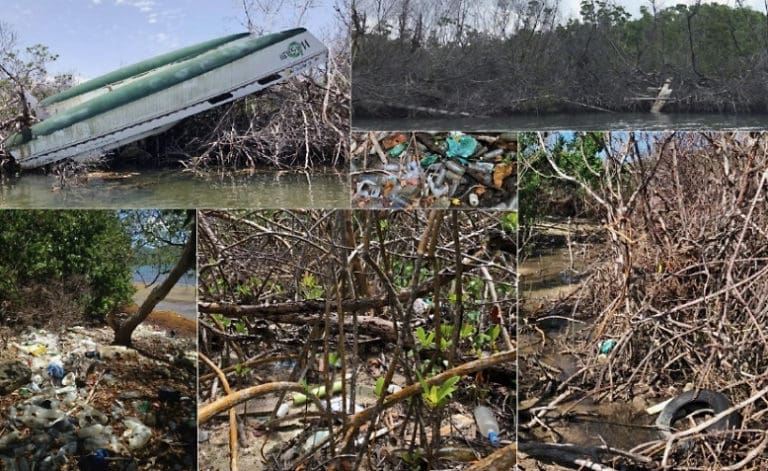
National Park Service collage shows previous debris in local mangroves. (Submitted by National Park Service)
The ninth annual St. Thomas Great Mangrove Cleanup is set for April 18 at Vessup Bay along the National Park Road in Red Hook, where volunteers will gather from 9 a.m. to noon to remove debris from mangrove shorelines.
The event is part of a broader territorial effort led by the University of the Virgin Islands Center for Marine and Environmental Studies.
According to Research Associate Professor Kristin Wilson Grimes, the St. Thomas cleanup follows two earlier events this year on St. Croix and St. John, which drew dozens of volunteers and removed thousands of pounds of debris.
“It’s been really successful,” Grimes said, noting the St. Croix cleanup brought out 62 volunteers who removed 2,834 pounds of marine debris, while 73 participants on St. John removed 4,125 pounds.
The annual cleanups began in 2018 in the wake of the devastating 2017 hurricanes, which left large amounts of debris tangled in mangrove forests across the territory. What started as a targeted response to storm damage has grown into a yearly tradition spanning all three major islands.
Since the program began, volunteers have removed more than 26 tons of marine debris and engaged over 1,200 participants of all ages.
Mangroves, Grimes said, are critical to the Virgin Islands’ coastal environment.
“They protect our shorelines from erosion. They can buffer the impacts of wind and waves when we have storms,” she said. “They can provide shelter for our boats as hurricane holes during those storm events.”
She added that mangroves also play an important ecological role, supporting marine life that local communities depend on.
“Most of our commercially important fish species in the territory spend some time during their lifespan in mangrove environments,” Grimes said.
One of the most consistent challenges the cleanups face is rampant single-use plastic pollution.
“People always ask, what’s the most common thing that we find? And it’s always plastic bottles,” Grimes said, noting that the same materials appear year after year.
Volunteers are encouraged to wear sturdy shoes, long pants, and sun protection, while gloves, data sheets, and other materials are provided on site. Grimes said the cleanups are designed to be accessible, allowing participants to engage at their own comfort level.
“There are all different ways to engage that day, depending on folks’ comfort being in the bush and the mud,” she said. “We engage people of all ages, of all abilities, and of all interests to help protect these environments.”
The cleanup is part of the GRROE mangroves program at the university, which focuses on growing, research, restoration, outreach and education. In addition to cleanup efforts, the program conducts classroom initiatives, community outreach and mangrove monitoring to track forest health.
“This is just one of the activities we use to engage the community and take action,” she said.
Michael Niemeyer, a mangrove research technician with the program, said mangroves are an extremely important coastal ecosystem, both locally and globally.
“They protect shorelines from erosion and storms. They provide habitat for fish and wildlife, including migratory birds, and support local fisheries and biodiversity,” he said.
Niemeyer said marine debris, especially plastics, poses a major threat to these environments.
“They harm wildlife, damage the ecosystem, and breakdown into microplastics, which are very negative for mangroves and the species that depend on them,” he said.
Beyond removing debris, he said, the cleanups play an important role in data collection, helping the community better understand where pollution is coming from and how to address it.
“The purpose of the cleanup is to remove marine debris and hurricane-related waste from the mangrove shoreline, but it’s also to collect data on the types of trash found to better understand pollution sources,” he said.
Niemeyer said the cleanups serve as an educational and hands-on experience for the community.
“This is a hands-on way to make an impact,” he said. “It’s a great way to get involved on a physical level … it’s also an educational tool to help understand where the pollution comes from and how to prevent it from reaching the environment in the first place.”
Grimes said the events continue to bring people together while encouraging environmental stewardship. “It’s a nice way to build those feelings of community and contribute to helping steward our natural resources here in the Virgin Islands,” she said.
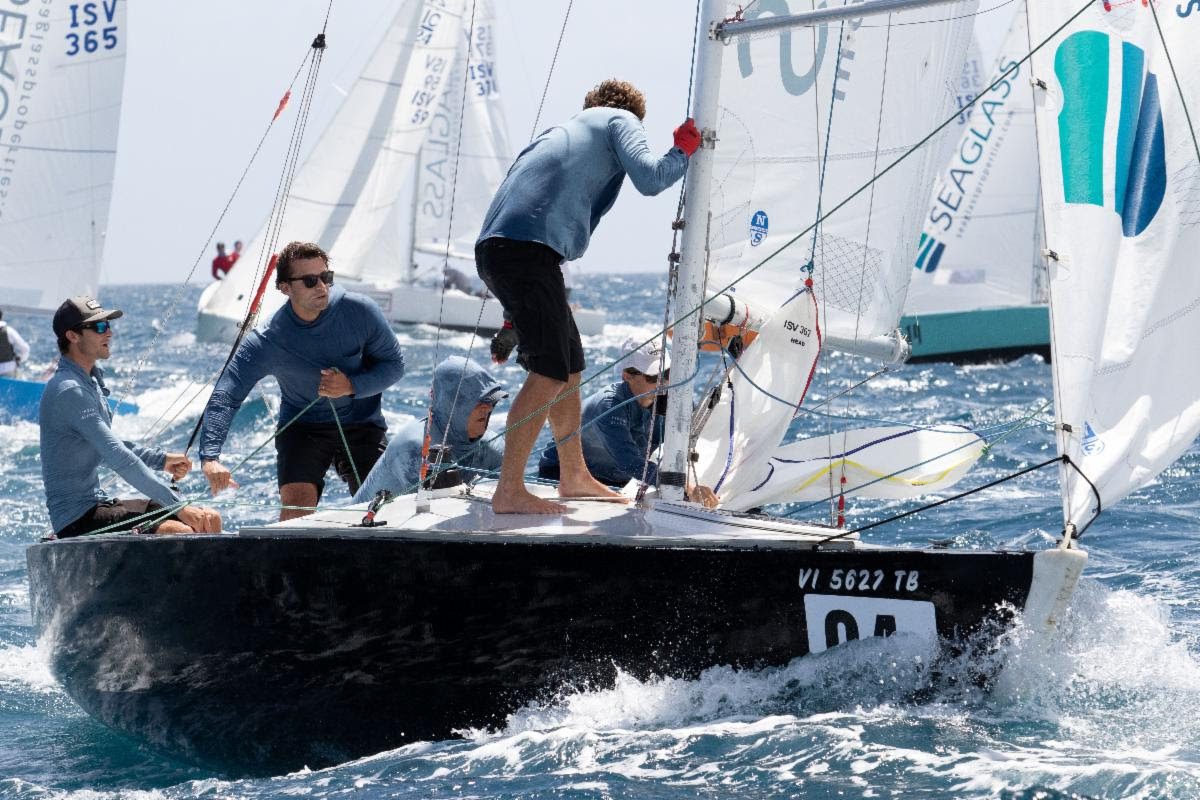
St. Thomas, U.S. Virgin Islands. More than 40 boats and hundreds of sailors from across the Caribbean, the United States and Europe will converge on St. Thomas April 3 to 5 for the 52nd St. Thomas International Regatta, organizers announced in a press release.
The USVI’s Teddy Nicolosi driving the IC24 Class Winner in STIR 2025. (Photo by Ingrid Abery Photography/www.ingridabery.com)
Now in its sixth decade, the territory’s flagship regatta will feature three days of racing alongside nightly shoreside events at the St. Thomas Yacht Club, blending competitive sailing with a social schedule of food, drinks and live music, according to the press release.
“Excitement is building for the week ahead as the fleet features our core spinnaker racing and non-spinnaker racing classes alongside elements unique to STIR, including the Caribbean’s largest IC24 class … Hobie Waves … and, this year, Sunfish sailors using the regatta as a tune-up for November’s Worlds in St. Croix,” said Pat Bailey, who co-directs STIR 2026 with Greer Scholes.
Racing will take place on professionally set courses with real-time online scoring for a global audience. The regatta includes CSA spinnaker and non-spinnaker classes along with one-design fleets such as IC24, Hobie Wave and Sunfish. Sailors may also compete under ORC, IRC and multihull handicaps across racing, cruising, bareboat and one-design divisions, the press release stated.
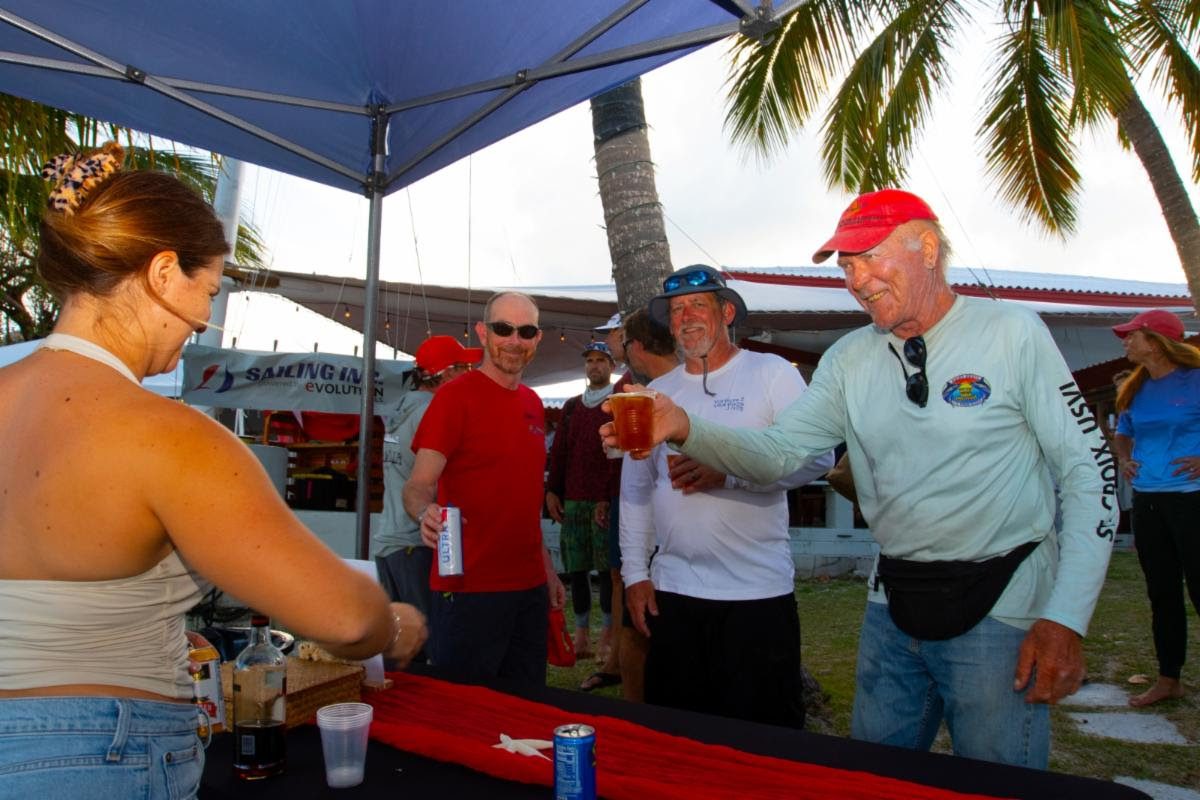
The USA’s Stephen Schmidt and his crew on the Santa Cruz 70, Hotel California Too, enjoying shoreside refreshments after racing in 2025. (Photo by Ingrid Abery Photography/www.ingridabery.com)
Entries remain open, with fees set at $340, reduced to $240 for IC24s, $150 for Hobie Waves and $75 for Sunfish. Organizers are also offering the Round the Rocks Race as a tune-up event, a course that circumnavigates St. John, the release stated.
The on-the-water lineup includes a range of returning and new competitors. Donald Nicholson’s J/121 Apollo enters after winning the CSA spinnaker class at the BVI Spring Regatta. Boats that competed in that event receive a 10% discount on STIR registration, the release stated.
The IC24 fleet, expected to include nearly a dozen boats, is the largest class in the regatta and will also host the 2026 IC24 Caribbean Championship. Among the entries is Stinger, helmed by St. Thomas sailor and Yale University All-American Teddy Nicolosi, the release stated.
International competitors are also scheduled to take part, including a team from Dublin, Ireland sailing aboard Black Pearl.
“We have heard great things about it and are really looking forward to coming over,” said Roger Smith. “We will do our best, have a bit of fun, and hopefully make a decent showing of ourselves along the way.”
IC24 Team from Ireland having just arrived to St. Thomas earlier this week. Sailors are L to R: Johnny White, Caragh Heagney, and Roger Smith on the far right. (Photo courtesy Team Ireland)
Charter opportunities remain limited, with only a few IC24 boats still available. Charter rates are listed at $3,400 for St. Thomas Yacht Club members and $3,700 for non-members, according to organizers. Reserve through the St. Thomas Sailing Center by contacting Bobby Brooks at 340-690-3681 or info@stthomassailingcenter.com.
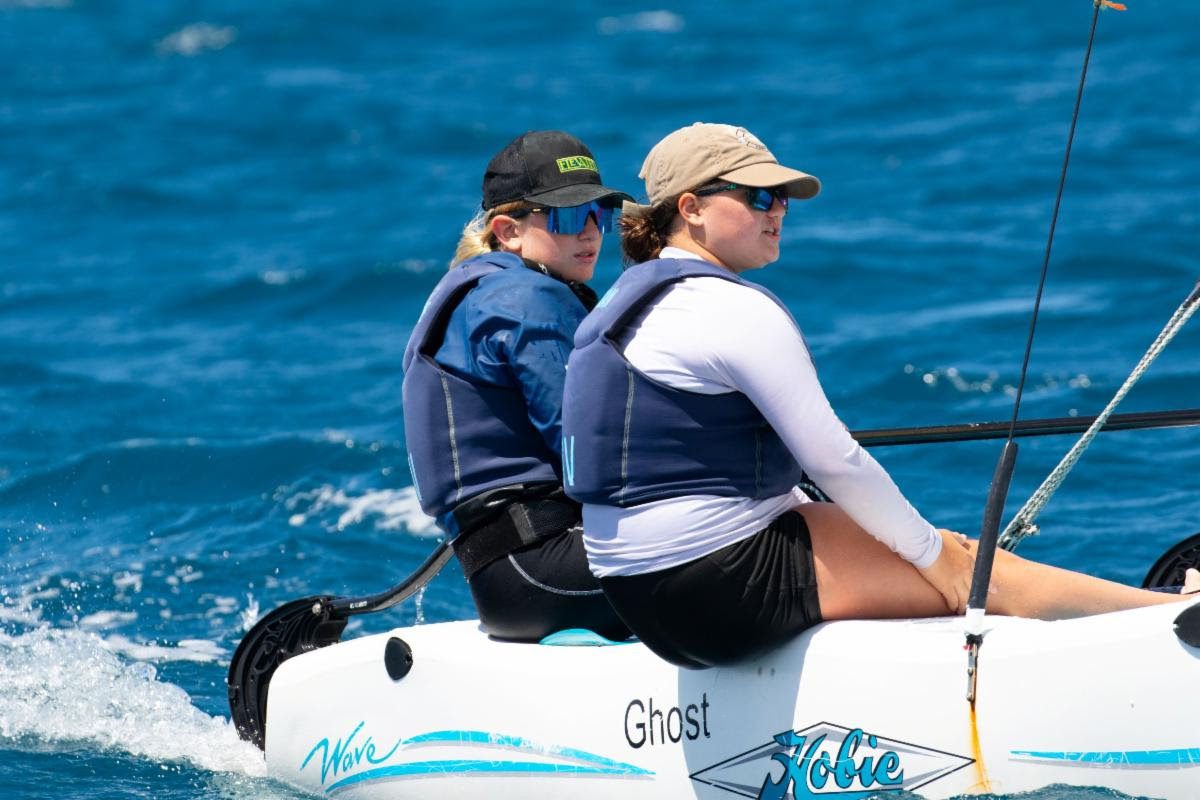
The Hobie Wave class continues to draw younger sailors, with several boats already registered. St. Thomas sailor Mila Melbourne, who placed third last year, is expected to compete again.
“Regattas are my favorite, and the STIR Hobie class is a really fun one,” Melbourne said. “I enjoy the fun racing environment with my friends and the competition.”
The USVI’s Mila Melbourne skippering a Hobie Wave in STIR 2025. (Photo by Ingrid Abery Photography/www.ingridabery.com)
Shoreline events begin Thursday with the Mount Gay Trade Winds Cocktail Party following the Round the Rocks Race, where sailors will be welcomed dockside. Awards for that race are scheduled for 5 p.m., followed by dinner and music.
Friday’s festivities feature the Dark ’n Stormy, with dinner and live music by Stephen Sloan. Saturday’s schedule includes Aperol Spritz-themed events and music by Roxnonstop. The regatta concludes Sunday with the Mount Gay Regatta Rum Punch, a 5 p.m. awards ceremony and live music by Tim West.
“At CC1 Virgin Islands, we recognize how important it is to support local initiatives and community causes, especially ones like STIR with such a historical footprint on our islands,” said Loretta Biss, commercial director at CC1.
Organizers said STIR 2026 is designated as a Sailors for the Sea Clean Regatta, incorporating environmental initiatives.
Sponsors include the Virgin Islands Tourism Department, The Moorings, K3 Waterproof Gear, Ocean Surfari, Cardow Jewelers and beverage brands distributed by CC1 USVI.
As the U.S. Virgin Islands continues to experience a rapidly aging population, AARP Virgin Islands, in partnership with the Government Employees’ Retirement System of the Virgin Islands, is offering a free, virtual Financial Wellness Workshop Series to help residents plan ahead and prepare for the financial realities of retirement.(shutterstock image)
According to U.S. Census data, over one-fifth of the Virgin Islands population is already 65 or older, and demographic projections show this proportion will continue to rise over the next decade as thousands of residents approach retirement age. This shift emphasizes the increasing importance of early, informed financial planning to help individuals protect their assets, understand retirement income options, and make confident long-term decisions.
The AARP VI–GERS Financial Wellness Workshop Series provides trusted, easy-to-understand guidance on key topics, including estate planning, retirement savings strategies, tax planning, and account ownership. Each session is virtual, interactive, and focused on real-life planning, with clear takeaways participants can apply right away—regardless of where they are on their financial journey.
“Financial planning is no longer optional—it’s essential,” said Troy De Chabert-Schuster, State Director of AARP Virgin Islands. “As more Virgin Islanders move closer to retirement, our partnership with GERS helps ensure residents have access to reliable information and practical tools that support long-term financial security and peace of mind.”
All workshops are held virtually at 5:30 p.m. AST and run throughout 2026, covering a wide range of topics including legal documents and estate planning, retirement timing, tax planning, and hands-on demonstrations of AARP planning tools. One registration provides access to the full series, allowing participants to attend the sessions most relevant to their needs.
The series is open to adults at every stage—whether just beginning to plan, actively preparing for retirement, or already retired and seeking to make informed financial decisions.
Why This Matters Now
The U.S. Virgin Islands has one of the fastest-aging populations in the region, with more than 20% of residents already age 65 or older.
Over the next decade, many more Virgin Islanders will reach retirement age, increasing the need for clear guidance on savings, income planning, taxes, and estate decisions.
Financial decisions made before and during retirement can have long-term impacts on stability, healthcare access, and quality of life.
Free, trusted education—offered in partnership by AARP VI and GERS—helps residents make informed choices without pressure to purchase products or services.
To learn more about the Financial Wellness Workshop Series and view upcoming sessions, visit: https://events.aarp.org/2026VIFinancialWellness
Three Virgin Islands National Guards biathletes braved punishing arctic conditions in Maine over the weekend to secure multiple podium finishes at the annual National Guard Bureau Biathlon Championships.
The USVI National Guard’s Staff Sgt. Travis Herbert, Maj. Stephanie Senogles, and Sgt. Nick Felicien in Maine. (Photos by Chief Warrant Officer 5 Mervin Mills)
The competition, held at the Fort Kent Outdoor Center, saw temperatures plummet to -2 degrees in the early mornings, averaging only 15 degrees during midday events.
Coach Chief Warrant Officer Five Mervin Mills, said the VING athletes demonstrated remarkable resilience, balancing the high-cardio demands of crosscountry skiing with the precision of marksmanship.
“Our soldiers trained in conditions that are the opposite of our home environment, but we exceed the standards,” Mills said in a written statement.
The USVI team took home medals in both the Sprint and Pursuit events:
Maj. Stephanie Senogles dominated the Women’s Novice Class, capturing 1st Place in both the Sprint and Pursuit races. Her performance highlights a burgeoning talent in the VING winter sports program, Mills said.
Staff Sgt. Travis Herbert demonstrated consistency in a highly competitive Men’s field, earning 3rd Place in both the Sprint and Pursuit Novice Class events.
The team and coach Chief Warrant Officer Five Mervin Mills.
Sgt. Nick Felicien rounded out the elite trio, contributing to the team’s overall success and maintaining a strong pace throughout the grueling weekend, Mills said.
This year’s championship marked a historic shift for the VING team, as it was their first iteration of the event being open to civilian participants. The inclusion of civilian athletes raised the level of competition, making the VING team’s podium sweeps even more impressive.
“The VING Biathlon program continues to serve as a testament to the versatility of NGB’s Biathlon program, proving that even ‘Island Soldiers’ can become masters of the snow,” Mills said.
The Virgin Islands National Guard serves as a dual-mission force, providing ready-to-respond support for territorial emergencies and augmenting the U.S. Army and Air Force in global operations.
The biathlon program promotes physical fitness, marksmanship, and mental toughness in extreme environments.
The families of Rivera and Thomas announce the passing of their beloved AlJami Thomas, who departed this life on Feb. 26.
Al-Jami Thomas
He is survived by his wife,Latisha Thomas; children, Shuquan Thomas, Kayla Thomas, Kimora Thomas, Shalaya Thomas; stepchildren, Jaheem Sealey, Zareyah Joseph and Tishyla Adams; mother, Medelicia Rivera; father, Ronald Thomas; sister, Karishma David; nephews, Ausar Parris and Acebo Parris; aunts, Eva Rivera, Andrea RiveraJensen, Maria, Elva and Marilyn Rivera, Alma Roberts, Yolanda “Donna” Thomas Anthony, Gwendolyn “Pat” Patricia Thomas Sandra “SimSim” Simmonds and Brendalee “Brenda” Simmonds Springer; uncles, Rosendo “Rochie,” Louis Alfredo “Feddy” and Luis Antonio “Atiba” Rivera, Cortwright “Keba” Thomas and Gustave “Leche” Simmonds, Jr.; precious cousins and other relatives too numerous to mention.
Acknowledgement: The family thanks everyone for their prayers, support, and expressions of sympathy during this difficult time. May his soul rest in eternal peace.
A Homegoing Service for AlJami Thomas will be held on April 8 at Holy Cross Catholic Church in Christiansted, St. Croix. Viewing begins at 9 a.m. with service at 10 a.m. Interment will follow at Kingshill Cemetery.
Funeral arrangements are entrusted to James Memorial Funeral Home, Inc.
Rotational outages continued across St. Thomas and St. John Tuesday after a key generator failed again just one day after being returned to service, further straining an already limited power supply.
In a statement issued Tuesday, the Virgin Islands Water and Power Authority acknowledged the “continued hardship” facing residents and apologized for the disruption to homes, businesses, and essential services. At approximately 9:25 a.m., Unit 15 — one of the Randolph Harley Power Plant’s aging generators — tripped again, triggering a districtwide interruption. WAPA said plant personnel identified additional mechanical defects as the root cause and will continue efforts to keep the unit available until its replacement is in service under the Prudent Replacement program.
The authority said efforts to restore Unit 27 are progressing and represent the fastest path to restoring generating capacity. Replacement parts are expected to arrive from Florida by Thursday so crews can begin accelerated repairs, while work on Unit 15 continues simultaneously. Until sufficient capacity is restored, outages are expected to continue, particularly during peak usage periods between approximately 9:30 a.m. and 11:30 p.m.
The repairs come as the territory continues work toward replacing its aging power infrastructure through a FEMA-funded “prudent replacement” initiative, which includes rebuilding the Randolph Harley Plant on St. Thomas and the Richmond Plant on St. Croix. Puerto Rico-based RG Engineering was selected in December to lead design and pre-construction work for both sites under a progressive design-build approach.
However, the broader contract needed to move the project into its next phase — including the installation of temporary generation tied to that effort — has not yet been finalized. The agreement, being negotiated between the Public Finance Authority and the Office of Disaster Recovery, is expected to allow additional capacity to come online while long-term replacements are built.
Asked Monday afternoon for an update, the Office of Disaster Recovery responded Tuesday to say negotiations are ongoing. “The PFA and ODR are in the final stage of negotiating the contract terms,” officials said. When asked if a timeline could be provided, ODR added, “Since the contract is under negotiation, there are not any specifics that can be disclosed at this time.”
Gov. Albert Bryan Jr. said during his weekly press briefing Monday that the territory’s response is focused on repairing existing units and bringing additional generation online, rather than pursuing an emergency declaration. He said such a declaration is typically used to unlock funding or bypass procurement, neither of which he believes is limiting the response at this stage.
Bryan added that he had hoped to see improvements as soon as Tuesday, but more realistically by the end of the week.