



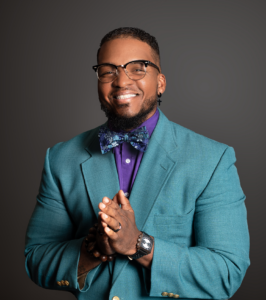
 In his biweekly column, Langley Shazor speaks to issues important to men within the territory.
Leadership is not for the fragile. It will expose you, exhaust you, and test your character in ways titles cannot protect you from. And if you are not emotionally mature, you will eventually use the weight of leadership as a weapon instead of a responsibility. That is why emotional intelligence is not optional for leaders — it is foundational.
When I say leadership, I am not just talking about corporate or political spaces. I am talking about the pastor. The father. The coach. The big brother. The community voice. The neighborhood anchor. The boss and the business owner. I am talking about the kind of leadership that has nothing to do with salary but everything to do with influence. If people look to you for direction, support, or protection, you wear the collar — whether you admit it or not.
And that collar has weight.

A lot of people want the mic. They want the title, the applause, the recognition. But they do not want the accountability that comes with it. They do not want to examine how their unresolved issues spill out onto the people they lead. They do not want to admit how ego can dress itself up as excellence. But here is the truth: if your emotional world is out of control, your leadership will eventually mirror that chaos.
I have learned that people do not just respond to your vision — they respond to your presence. They respond to how you carry stress, how you navigate conflict, how you apologize, how you listen, how you admit when you are wrong. And they remember how you made them feel more than they remember your big idea. That is the part of leadership nobody puts in the brochure.
The dangerous thing is that many leaders think that because they are in control of the outcomes, they are in control of the impact. But that is not always true. A leader can be hitting numbers, closing deals, delivering sermons, and still be hurting people with their tone, their temper, or their silence. This is why emotional intelligence is grown folks’ work. Because it demands that you do not just know your stuff — you know yourself. You do not just manage the room — you manage your reactions inside the room.
Leadership without emotional intelligence becomes performance. It becomes about what you can produce, not who you are becoming. But leadership with emotional intelligence? That is where impact lives. That is where legacy is built. That is when people start following you, not because they have to, but because they trust what flows from your life.
There are things you can only see clearly when you are in the lead. When you are at the front, people do not always tell you the full truth. They tiptoe. They flatter. They hesitate. So you have to be the kind of leader who creates safety, not fear. That means watching how you respond when someone gives you feedback. It means owning your energy. It means taking inventory of the room and not pretending things are fine when you know the atmosphere is heavy. Emotional intelligence will have you asking, “What did I miss? What part of this do I need to own?” And accountability will have you doing something about it.
I have been the leader who was too tired to deal with people’s needs. I have been the one who thought the goal mattered more than the people on the team. I have pushed through burnout, ignored signs, and spiritualized my stress. And every time, God had to sit me down and remind me that leadership is not about me. It is not about how much I can endure in silence. It is not about how well I can mask my mood. It is about how intentionally I create space for others to grow, thrive, and succeed—especially when I am under pressure.
You do not have to be perfect to lead well. But you do have to be accountable. You have to be willing to pause before you speak. You have to be open to growing in areas that nobody else sees but everyone else feels. You have to let people know that their value is not tied to their output. You have to be emotionally steady enough not to transfer your frustration onto your team. That is what wearing the collar means. Not just showing up — it means showing up with care, clarity, and consistency.
So to every leader reading this — check your weight. Not your status, not your calendar, not your numbers. Check the weight of your emotional habits. Check your tone. Check how people feel after leaving a meeting with you. Check whether you are building a culture or just managing a task list. Leadership will always require vision, but great leadership also requires vulnerability, humility, and self-regulation. Because people can feel when you are leading from a wound, and they can tell when you are leading with wisdom.
If they cannot trust your tone, they will not follow your vision.
And if you are not willing to be accountable for your emotional impact, you are not ready for the collar.
Editor’s Note: Opinion articles do not represent the views of the Virgin Islands Source newsroom and are the sole expressed opinion of the writer. Submissions can be made to visource@gmail.com.