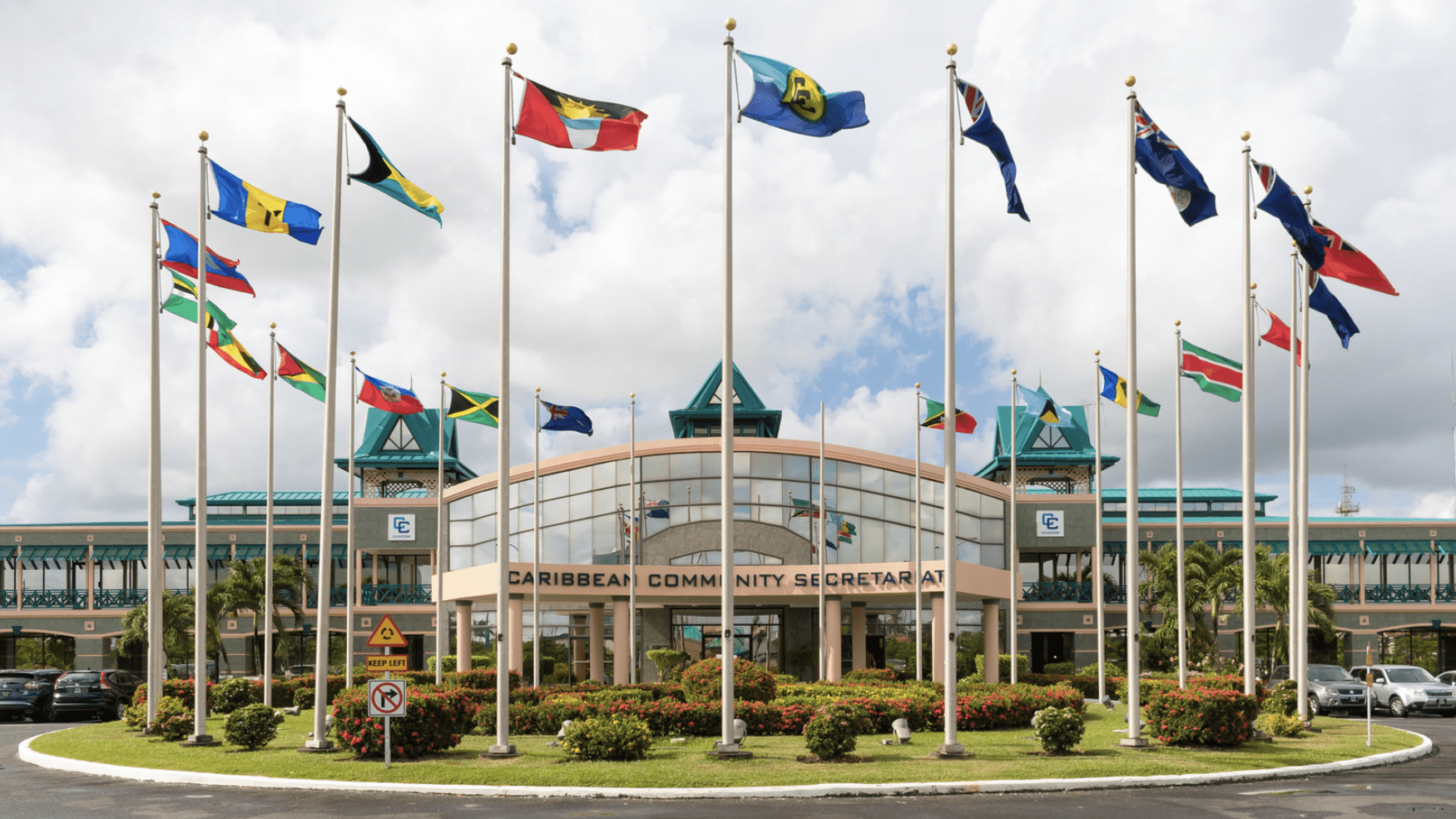
The escalating territorial controversy between Guyana and Venezuela demands more than just a reflexive defense of borders; it requires a critical re-evaluation of the Caribbean Community (CARICOM) as the primary institutional expression of our regional construct. In previous interventions, I have argued that “the Caribbean” is often less a geographical certainty than a historical proposition, a name retroactively imposed on a field of disparate colonial trajectories that never fully coalesced into a single consciousness.
We have historically mistaken linguistic convenience for organic community, treating regionalism as an administrative solidarity of necessity rather than one of deep-seated conviction. However, the current geopolitical crisis reveals that if we are to survive the pressures of continental expansionism, CARICOM must complete its transition from an imagined geography into a decisive instrument of sovereign protection.
Historically, CARICOM’s position on the Guyana-Venezuela border has been one of “aspiration” and rhetorical unity, often hamstrung by the varying bilateral dependencies of its member states. We saw this in the past with the uneven influence of initiatives like PetroCaribe, which at times blurred the lines of regional solidarity. Yet, we are witnessing a profound shift. The Community’s unqualified support for the International Court of Justice (ICJ) process marks a departure from the “administrative solidarity” of the past toward a more rigorous, legally-grounded collective security.
By moving beyond mere communiqués to active diplomatic encirclement of the aggressor, CARICOM is finally performing the substance it long only implied. It is no longer enough to “speak the Caribbean into being” at annual summits; the institution is now enacting a coherence that is essential for Guyana’s survival.

This evolution is consistent with the “geography of our future” that I have previously outlined. For Guyana to walk creatively into the 21st century, it must recognize that its inclusion in the British West Indies was a colonial logic based on labor regimes and imperial convenience, not on ecological or continental continuity.
As we turn our face toward the South American mainland to discover a new horizon of possibilities, our “Caribbean-ness” must not be a fixed destiny but a strategic affiliation. In this context, a strong, pro-government stance that reinforces CARICOM’s role is not a surrender to colonial categories, but a sophisticated use of the regional apparatus to safeguard the Republic’s legal and moral architecture.
The current administration’s success in marshaling CARICOM’s support proves that when the State upholds both justice and sovereignty, it transforms the regional construct from a historical artifact into a modern shield. We must confront the fact that our fragmentation is structural, yet our solidarity remains a conscious, ethical choice.
By standing firmly with Guyana against the nullification of the 1899 Arbitral Award, CARICOM is finally validating itself as more than a colonial residue; it is becoming the institutional bedrock of a sovereign, continental future that history did not design for us, but which we are now determined to build.
— Walter H. Persaud, Ph.D., is a retired Guyanese-Canadian professor of political and cultural studies. He has worked in national broadcasting media in Canada and taught in Thailand for a quarter century. He currently resides in Guyana where he publishs regularly on a variety of national and regional issues. Dr. Persaud holds a Bachelor’s in History and a Ph.D. in Social and Political Thought from York University, Toronto.
Editor’s Note: Opinion articles do not represent the views of the Virgin Islands Source newsroom and are the sole expressed opinion of the writer. Submissions can be made to visource@gmail.com.