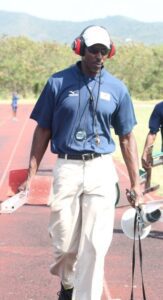
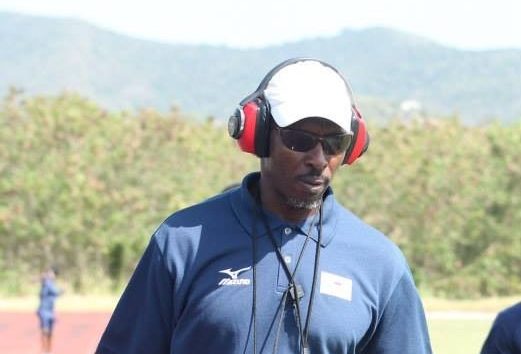
The Virgin Islands Track and Field Federation proudly congratulates its president, Coach Keith A. Smith Sr., on his selection as a distinguished recipient of the Maria Rodriguez Foundation Award — an honor reserved for individuals whose lives embody a giving spirit, selfless service, deep love for community, and the ability to uplift others even in the face of adversity.
Coach Keith Smith Sr.
Coach Smith’s leadership and impact extend far beyond the sport of track and field. As noted in the nomination and support letters, his influence reaches deeply into the personal and social development
of the many lives he touches. He is celebrated not only as an outstanding coach, but as a mentor, humanitarian, and unwavering pillar of the Virgin Islands community.
One supporter wrote:
“His influence extends far beyond athletic performance. He is recognized as someone who cares for people as whole human beings, supporting their personal development, education, values, and sense of purpose.”
Another described his humility and servant leadership:
“His focus is never on himself, but on those he serves. His pride in others is authentic and deeply felt, reflecting how invested he is in their growth and well-being.”
Perhaps one of the most powerful testaments to Coach Smith’s character emerged during the aftermath of Hurricanes Irma and Maria, when devastation left families without basic necessities and communication. While many were facing overwhelming loss, Coach Smith responded instinctively with action, service, and hope.
“I personally witnessed him clearing roads of debris so neighbors could move freely and safely once again. Drawing on his technical expertise in telecommunications, he also assisted in restoring critical communication links at a time when connectivity meant access to emergency services, family reassurance, and hope.”
These acts, however, were not isolated moments. They reflect a lifetime of consistent service to others:
“This was not a one-time gesture, but a window into Keith’s instinctive generosity—he routinely gives his evenings, weekends, and limited personal resources to ensure that no young person feels left behind at the track or in life.”
Coach Smith’s commitment to community empowerment was further evidenced through his recent work supporting USDA/DFAP applications for local farming families facing hardship:
“Mr. Smith completed technical documents for many community farming families, allowing them to obtain farming funding after experiencing discrimination. This was done in an extremely short period due to late information, and his dedication carried him through sleepless nights.”
Through these actions and countless others, Coach Keith Smith Sr. embodies the very spirit of the Maria Rodriguez Foundation Award—compassion, resilience, service, and the unwavering belief in the dignity and potential of every individual.
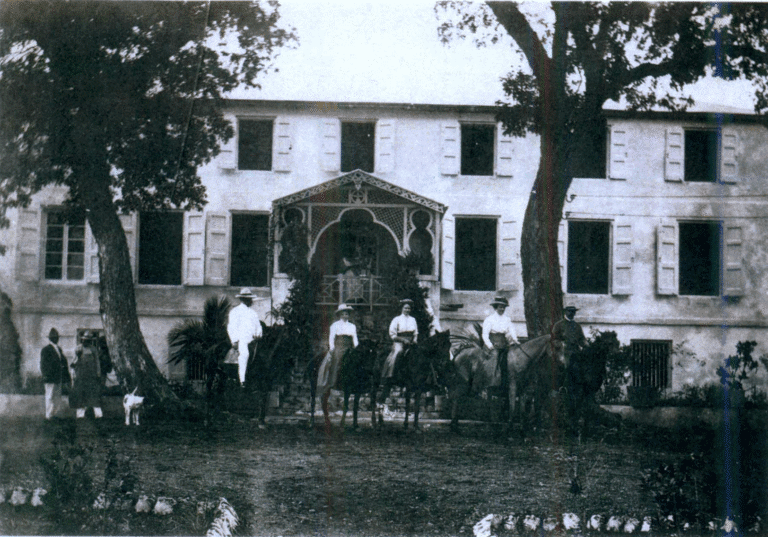
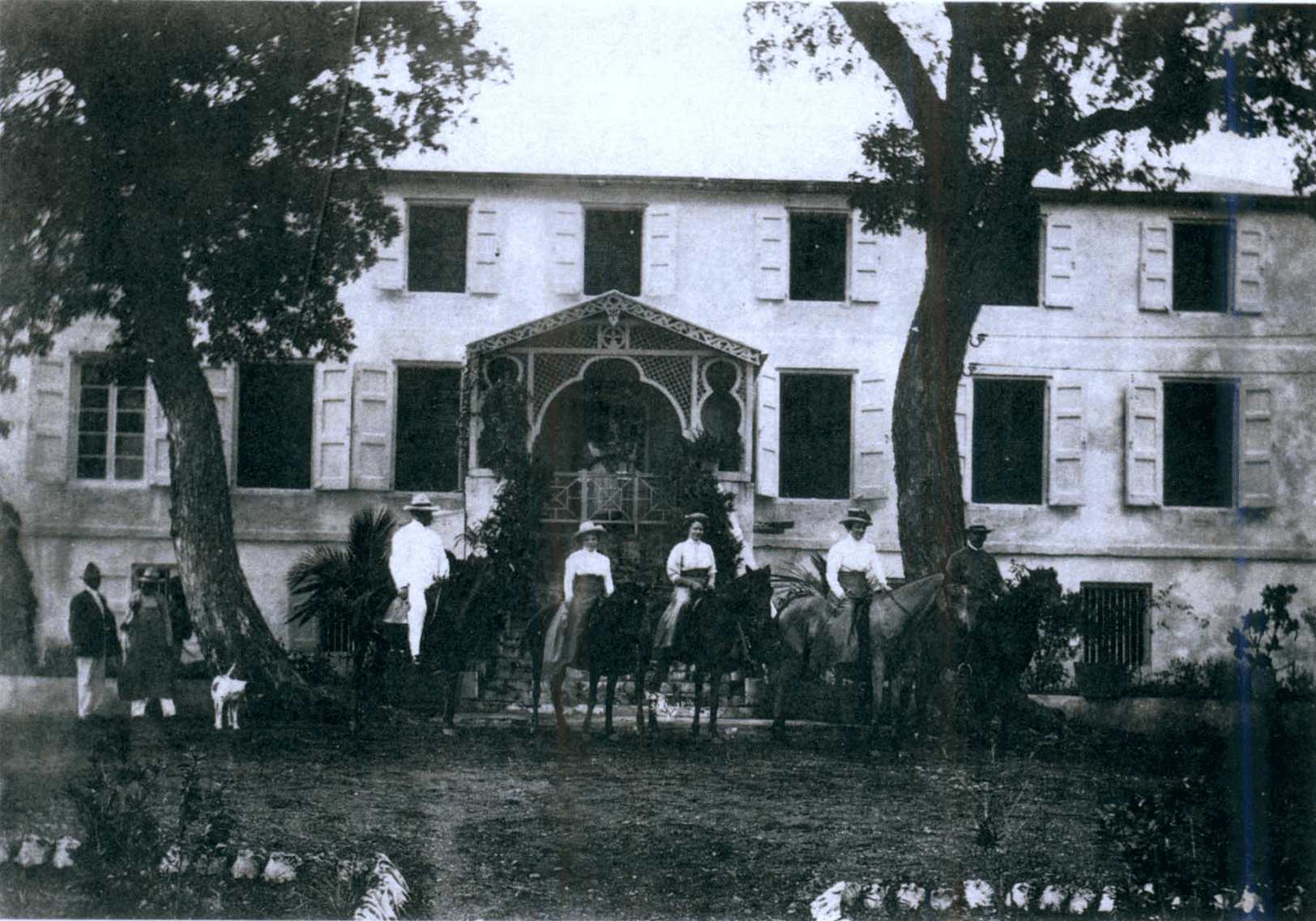
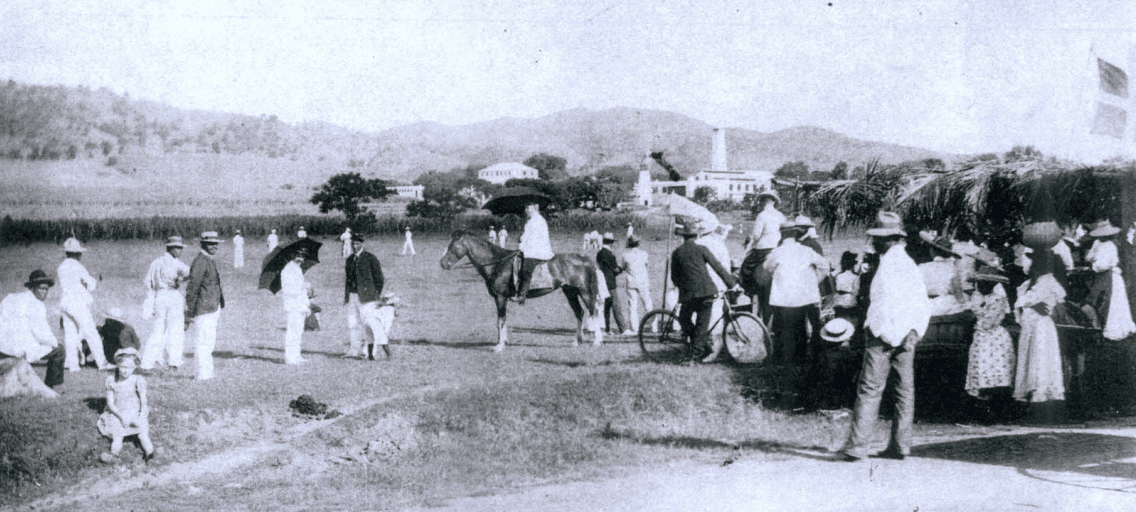
In the old days of St. Croix a riding party, as it was called locally, was common around the island. This is Estate Prosperity in the 1920s with a local riding party in front of the great house. (Photo courtesy the late Erik Lawaetz)
In August of 2022 a public hearing at the Rotary West Club building in Frederiksted was packed with people, including Robert Apfel who presented his proposal to build a distillery plant at Estate Prosperity. Believe me, it was a controversial proposal. That evening, Sen. Kurt Vialet, who sponsored the bill, found himself in “hot water” with the backlash of the community.
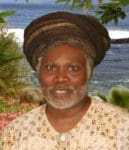
Olasee Davis, Ph.D. (Submitted photo)
I sat there and listened, and then I got up and testified. After the public hearing, Apfel approached me about his situation and how could I assist or guide him where he found himself in “water more than flour,” a local expression. In other words, a controversial issue concerning whether he could build a rum distillery or simply an agricultural processing distillery plant at his Estate Prosperity farm.
The V.I. Code, Title 29, Chapter 3, § 228 permits “agricultural processing” as a right in both A-1 and A-2 agricultural zones. Distillation, on the other hand, is an expression named as a form of agricultural processing in code. Rum distillation is disallowed on farmland in the Virgin Islands. Nevertheless, at my UVI office, I had several meetings with Apfel, along with former Sen. Okland Benta, my colleagues Dr. Amy Dreves and Dr. Usman Adamu, dean of the School of Agriculture at the University of the Virgin Islands.
I encouraged Apfel not to give up on his farm operation. Believe me, if you started off on the wrong foot, you would probably get backlash from the community. Trust me, Virgin Islanders are loving, kind, and friendly people. In our cultural history, we welcome people with open arms from around the world to our shores. However, if you try to get “over the people,” as we would say in local terms, or “pull a sheet over their heads,” then there will be “good trouble,” according to the late U.S. Congressman and civil rights icon John Lewis.
Nevertheless, I said to him, you must be upfront and honest with the community. Trust is an important ingredient in doing business in the Virgin Islands. There was a time in our history when a handshake was all you needed to do business. I gave Apfel some ideas for his farm and the history of the site. I wanted him to succeed in his agricultural enterprise. Without a doubt, agriculture should be an important factor in our local economy.
In fact, Apfel is blessed. He purchased an agricultural historic site. Talking about agritourism! Estate Prosperity is one of many historic sites on St. Croix. It is listed on the National Register of Historic Places since 1978. Estate Prosperity, founded in 1749 as a sugar plantation and rum distillery, has been operated by many prominent figures in Virgin Islands history, such as Frederik Moth, who became the first governor of St. Croix in 1733 shortly after the island was purchased from France.
A cricket match at the Estate Prosperity cane field in the 1920s. Cricket was once a popular sport during the Danish and early American rule of the Virgin Islands. Here at Estate Prosperity cane field, a crowd gathers to watch the match. (Photo courtesy the late Erik Lawaetz)
The estate was first patented to Augustine or August Boyd from London around the 1740s. In 1751, it was sold to a French Huguenot named Isaac Markoe. Thus, the estate was first referred to as Estate Prosperity in the 1780s. In 1792, Markoe’s heirs mentioned that Estate Prosperity consisted of 450 acres. About 350 were planted in cane and the rest of the property was in pasture for livestock and provisions. There were about 113 enslaved Africans working on the estate.
In fact, let me mention this before I forget, Estate Prosperity grounds were a major archaeological site, with studies focusing on the lives of the enslaved population. This was one of the reasons it became a historic Danish colonial site on St. Croix, due to its many significances as a plantation complex. Estate Prosperity was an extensive sugar plantation with a great house, slaves’ quarters, a hospital, sugar factory, stable, stock pen, water tower, and other historical structures.
Elmer August Heilbuth was the first Danish owner who purchased Estate Prosperity shortly after the 1848 Emancipation. He remained on the plantation until 1860, the same year Mary Thomas (Queen Mary) came from Antigua to St. Croix as a laborer to work in the cane fields. However, Heilbuth’s heirs sold Estate Prosperity to a Catholic priest named Mr. O’ Ryan, a man from Ireland. Eventually, O’ Ryan sold the estate to another Irishman named Hugh Roberts in the 1870s. The 1890s census record of the Danish government shows 75 acres were being taxed under cane cultivation, with a total of 215,02 pounds of sugar on the estate — about 2,600 pounds of sugar per acre.
Other statistical census records of Estate Prosperity are as follows:
– 1891, 75 acres taxed under cane cultivation, producing 46,143 pounds of sugar
– 1892, 80 acres taxed under cane cultivation, producing 281,619 pounds of sugar
– 1893, 105 acres taxed under cane cultivation, producing 138,276 pounds of sugar
– 1894, 115 acres taxed under cane cultivation, producing 349,704 pounds of sugar
– 1895, 125 acres taxed under cane cultivation, producing 222,056 pounds of sugar
– 1896, 140 acres taxed under cane cultivation, producing 288,738 pounds of sugar
– 1897, 140 acres of cane taxed under cultivation, producing 329,314 pounds of sugar
– 1898, 140 acres taxed under cane cultivation, producing 157,880 pounds of sugar
– 1899, 140 acres cane taxed under cultivation, producing 38,853 pounds of sugar
The statistics mentioned above gave a history of cane production during the 1800s on the estate. However, rainfalls, droughts, pests, and storms determined the outcome of cane production on the estate. The entire crops from Estate Prosperity in the 1900s were taken to La Grange Sugar Factory for processing. Businessman and engineer Gustav Adolph Hagemann, another Danish owner of Estate Prosperity, started to operate the property in 1901.
He also purchased Estate Wheel of Fortune, La Grange, Williams, and Punch, improving the sugar operation by modernization. Despite his investments, Hagemann had some good and not so good years with droughts, low sugar prices, and ferocious hurricanes.
Frederik J. Christensen, another Dane, and his wife Frances Elcock, a person of color, purchased Estate Prosperity in the 1940s. He and his family have a long history with the estate. Crucians can recall back in the day when Estate Prosperity was the place to be with music, dancing, and other cultural events at the great house. The estate was also served as a nightclub called The Plantation Nightclub.
This is the agricultural processing distillery plant on Estate Prosperity Farm. The farm produces a bottle of spirits like gin with ingredients grown locally like bananas, sorrel, and sugarcane. (Photo by Olasee Davis)
In 2018, Apfel acquired the property, growing over 100 acres in cane cultivation. He is using the latest modern technology in agriculture such as AI (artificial intelligence), drones, and satellite imagery for aerial surveying of the farm. A Geographic Information System (GIS) is also another tool for data integration and planning the farm. Today, this 100-plus-acre farm is becoming a major eco-tourism enterprise with the state-of-the-art technology and tours of a major historic site on the West End of St. Croix.
Cruise ship passengers and local events can take farm tours to see how cane juice is made, visit historic sites on the estate, and get a ride through the cane field, etc. I am glad Apfel didn’t get discouraged and leave St. Croix. He has several employees working on his farm, earning good wages, I was told from one of his workers. I encourage residents and visitors alike to visit this working farm. You can visit their website for more information. It is one of the farms that brings the history of the sugar industry alive in the Caribbean region.
— Olasee Davis is a bush professor who lectures and writes about the culture, history, ecology and environment of the Virgin Islands when he is not leading hiking tours of the wild places and spaces of St. Croix and beyond.
Editor’s Note: Opinion articles do not represent the views of the Virgin Islands Source newsroom and are the sole expressed opinion of the writer. Submissions can be made to visource@gmail.com.
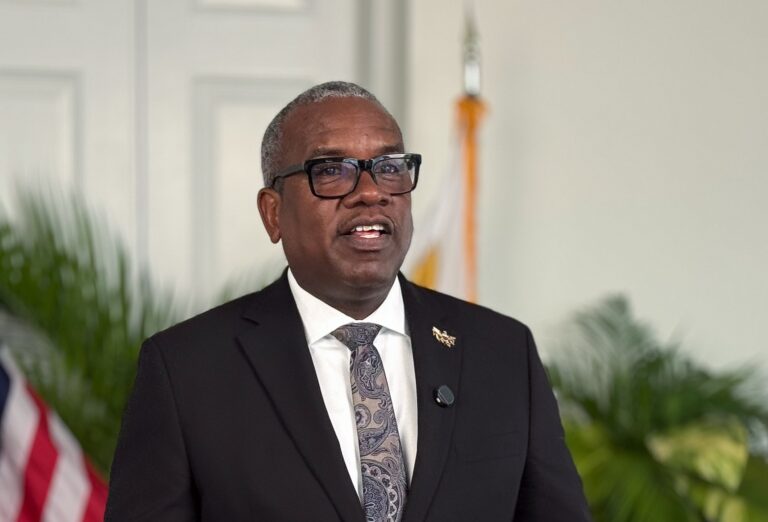
Gov. Albert Bryan Jr. has proposed the Second Amendment Rights and Public Safety Act, legislation that would comprehensively revise Virgin Islands firearm laws in response to recent U.S. Supreme Court guidance and issues raised in a U.S. Justice Department lawsuit, Government House announced.
The proposal would update Chapter 5 of Title 23 of the Virgin Islands Code to align local law with the Supreme Court’s decision in N.Y. State Rifle & Pistol Association v. Bruen while maintaining restrictions the Court has recognized as permissible, including limits in sensitive places and prohibitions on possession by certain individuals, according to the press release.
Bryan said the legislation is the result of work that began about six years ago, developed in collaboration with the Virgin Islands Justice Department and Sens. Angel Bolques and Clifford Joseph, who previously introduced legislation addressing parts of the issue, according to the press release.
“This is an issue we began working to address about six years ago,” Bryan said. “We knew we needed a modern framework that protects the constitutional rights of Virgin Islands residents while keeping common sense protections in place to help law enforcement and keep the public safe. This bill is an effort to directly address the concerns raised in the recent U.S. Department of Justice lawsuit, align our laws with the Supreme Court’s direction, and put forward a framework that is clear, fair, and enforceable.”
The Second Amendment Rights and Public Safety Act would establish one uniform set of rules governing firearm ownership and carrying within the territory. The measure would require individuals to hold a Virgin Islands firearms license and a registration certificate for each firearm to possess, purchase, sell, transfer, transport, or carry. Active duty military personnel and law enforcement officers would be exempt when acting within the scope of their official duties, the press release stated.
The proposal would create an objective licensing process with defined timelines. Applicants must meet eligibility standards, complete background checks, submit required documentation, and certify compliance with safe storage rules under oath. Knowingly providing false or misleading information would be a felony. The Virgin Islands Police Department must issue a license or provide a written, detailed denial within 90 days of a completed application. Licenses would generally be valid for five years unless renewed, the release stated.
The legislation would also establish registration timelines, requiring the VIPD to issue a registration certificate for each firearm or provide a written denial within 60 days of a completed application, provided the applicant holds a valid firearms license and the firearm is not prohibited, the release stated.
Under the proposal, individuals with a valid firearms license would be allowed to carry a registered handgun in public only in a concealed manner, without a separate carry permit. Open carry would be prohibited, as would carrying long guns in public, according to the release.
The Act would define specific sensitive places where firearms may not be carried, including government buildings and grounds; schools and childcare facilities; hospitals and medical or mental health offices; penal institutions; polling places while voting is occurring; stadiums and arenas; public parks and playgrounds; and public beaches. Additional provisions would address firearms at certain public gatherings and demonstrations, subject to defined notice requirements, and on private property, based on posted signage or direct notice, the release stated.
The proposal would strengthen requirements for safe storage and responsible handling, including rules for firearms stored in vehicles. It would establish penalties when unsafe storage allows an unlicensed person to access a firearm and injury or death results, the release stated.
The Act would also restrict silencers, bump stocks, and conversion kits, with felony penalties, and clarify that federal authorization does not override local law. Large capacity magazines would be restricted, with escalating penalties for licensed firearm holders and felony penalties for unlawful possession by unlicensed individuals, the release stated.
Existing prohibitions on certain weapons would be maintained, including bans on automatic weapons, ghost guns, explosive devices, short-barreled rifles and shotguns, and other restricted firearms, with limited exemptions for authorized personnel acting within the scope of official duties, it stated.
The legislation would include transition provisions recognizing existing, unexpired Virgin Islands firearms licenses for a defined period and establishing a structured surrender process, with specific timelines and requirements, for certain unlicensed or unregistered firearms possessed before the law takes effect, it stated.
“Our community deserves laws that are constitutional, clear, and enforceable,” Bryan said. “This proposal protects the rights of law-abiding residents while drawing bright lines that protect our schools, our parks, our beaches, and our families. It gives our police the clarity they need to enforce the law and keep people safe.”
If approved by the Legislature and signed by the governor, the Second Amendment Rights and Public Safety Act would take effect upon approval.
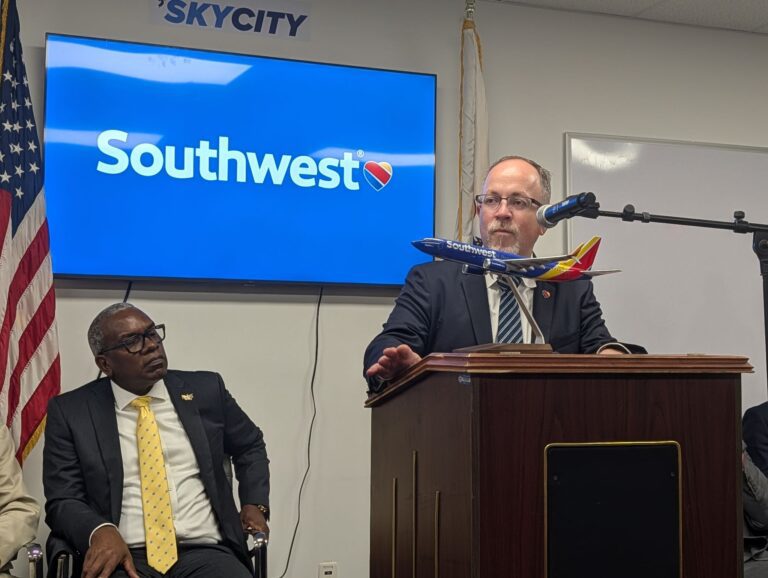
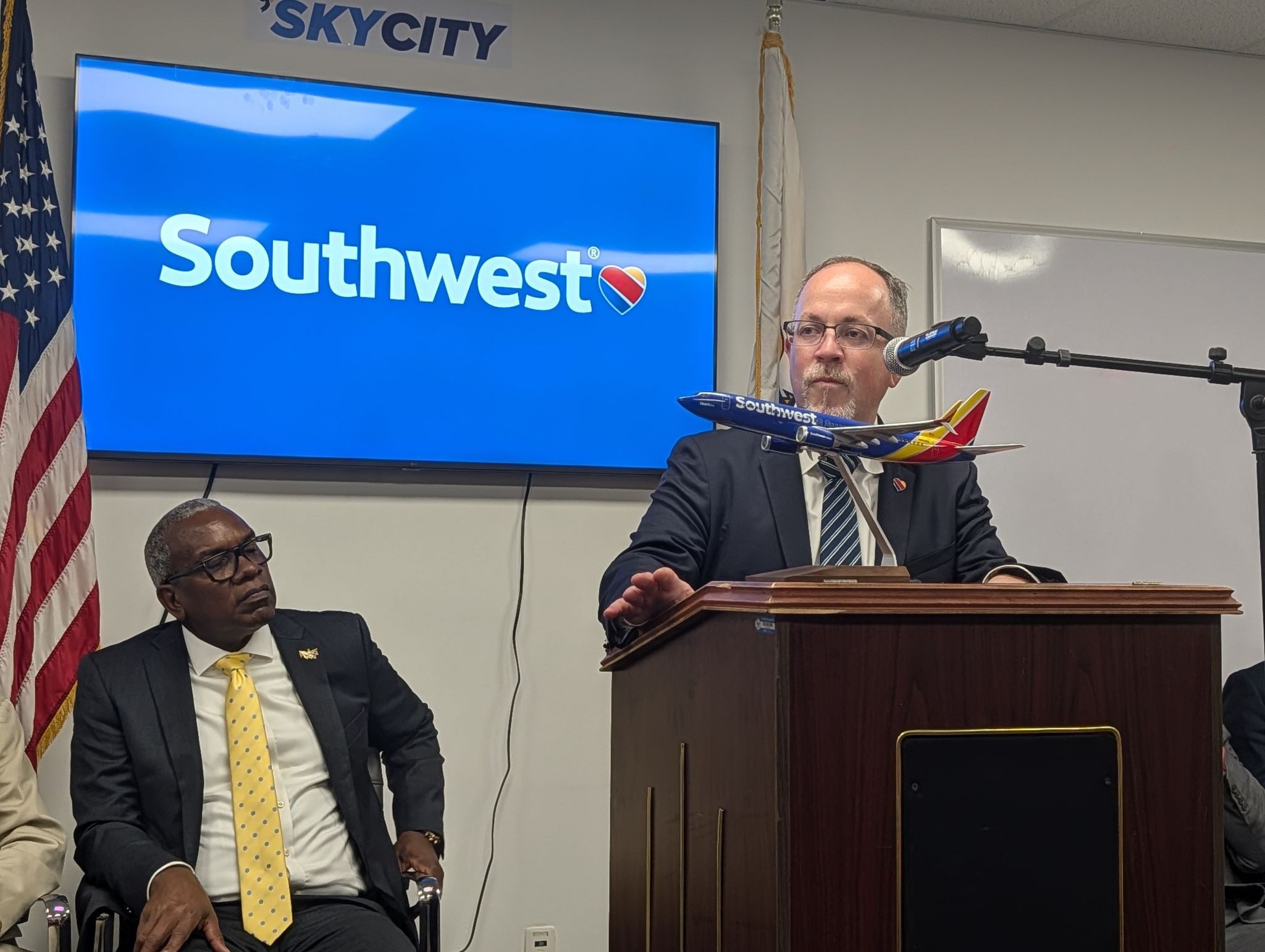
Adam Decaire of Southwest Airlines speaks at the podium, with Gov. Albert Bryan Jr. seated nearby. A toy Southwest airplane, a gift from the airline to the governor’s office, sits on the podium. (Source Photo by Finn Sharpless)
Officials in the U.S. Virgin Islands welcomed Southwest Airlines’ inaugural nonstop flight from Orlando to St. Thomas Thursday at Cyril E. King International Airport, marking the start of the airline’s new direct service to the territory. Local leaders called the arrival a major boost for tourism and the territory’s economy.
The flight received a traditional water salute on the runway before taxiing to the gate, where local officials, airline representatives and media gathered for a press conference. Speakers framed the service as part of a broader effort to expand air connections and improve travel options for both tourists and Virgin Islanders.
“Many times we minimize what it takes to get these things done. It isn’t just one conversation. It’s about building a relationship with our partners at Southwest Airlines, and this is just the beginning,” said Jennifer Matarangas-King, commissioner of the U.S. Virgin Islands Tourism Department, noting the multiyear collaborative effort to bring the carrier to the territory.
Adam Decaire, senior vice president of network planning and network operations control at Southwest Airlines, said the company values “partnerships and long-term relationships” and is “looking forward to many years of serving the U.S. Virgin Islands.”
Willard John, chair of the Virgin Islands Port Authority governing board, said the arrival of Southwest’s new service “signifies more than just the arrival of an aircraft” and represents “enhanced connectivity, improved access and new possibilities for our people and our economy,” adding that “consistent and affordable air travel is crucial to Virgin Islands vitality.”
“Southwest Airlines’ decision to begin service to St. Thomas represents a powerful vote of confidence in our islands and our people,” said Senate President Milton E. Potter. He added, “Connectivity is not a luxury, it’s a necessity for economic survival and growth.”
Port Authority officials said the new flights follow years of outreach to the airline at industry route conferences. Those efforts were interrupted when hurricanes hit the territory and delayed further talks, but the parties resumed negotiations that eventually led to the new St. Thomas service.
“The Virgin Islands Port Authority is dedicated to enhancing collaboration with airlines that align with our vision for growth, accessibility and outstanding customer service. We take pride in partnering with Southwest Airlines, and we urge you to take a look at St. Croix for future expansion,” said Carlton Dowe, executive director of the Virgin Islands Port Authority.
“We are pleased that you have joined us by providing another avenue for people to come to this beautiful territory and experience our greatest resource, the people and hospitality of the Virgin Islands,” Lt. Gov. Tregenza A. Roach said. “I want this partnership to be sustained. Every person you bring here will return affected by this beautiful space, and we look forward to repeat visits,” Roach added.
Gov. Albert Bryan Jr. said the new Southwest Airlines service to St. Thomas will help strengthen the territory’s economy and improve access to essential services for residents.
Bryan highlighted the importance of affordable air travel for residents who must fly to the U.S. mainland for health care, family events and other services. “What I really love about Southwest is the affordability it provides to our local people, because we live on an island and we depend so much on services that are offered in the state. So whether it’s a birthday, a christening or, unfortunately, a funeral, our people could go,” he said.
Bryan also linked the new flights to broader workforce development, noting the territory’s need for professionals across multiple sectors. “We need professionals in construction, in health care. We need lawyers. We need doctors. We need everybody,” he said, adding, “We need more people to move here and live here in the Virgin Islands. We have so much work to be done.”
Bryan also emphasized the value of connecting the Virgin Islands with major U.S. markets, highlighting Orlando. The inaugural flight marked the start of Southwest’s new nonstop service from Orlando to St. Thomas. “I think Orlando is the most visited place in the United States. And we want to make sure that we connect the Virgin Islands and that airport, we get some advertisements up so more people can actually recognize the Virgin Islands and come here. This is a great partnership,” he said.
Officials said the new service is expected to increase visitor traffic, strengthen tourism, and give residents more affordable options to travel to the U.S. mainland. Port Authority and tourism leaders noted that additional routes, along with ongoing investments in ferry service and airport infrastructure, will be central to the territory’s long-term plans for economic growth and connectivity.
The Virgin Islands Board for Career and Technical Education has selected Anthony Mardenborough Jr. as chair and reelected Anastasie Jackson as vice chair for the 2026 term, according to a press release issued by the board.
The leadership team will oversee the board’s work supporting career and technical education programs across primary, secondary and post-secondary levels in the territory, according to the press release.
“I am deeply honored and grateful to my colleagues for selecting me to serve as chairperson of the Board for Career and Technical Education,” Mardenborough said. He noted that he previously served as board secretary and said the work has been “both rewarding and impactful.”
“I am proud of the progress we have made and look forward to continuing this important work alongside dedicated partners as we strengthen pathways that prepare learners for meaningful careers and a dynamic workforce,” he said. “The opportunity to change lives is immediately available, and it’s called Career and Technical Education, and we are called to invest as all of us exist within CTE.”
Jackson was reelected to continue serving as vice chair for the upcoming term, the press release stated.
The Virgin Islands Board for Career and Technical Education is responsible for establishing, improving and overseeing career and technical education programs designed to prepare students for workforce readiness, postsecondary opportunities and lifelong learning, release stated.
Marise C. James (Source photo by Kit MacAvoy)
Shirley Chisholm’s words feel uncomfortably prophetic when examining the Virgin Islands’ relationship with Jeffrey Epstein. They capture, in one sentence, how money can eclipse conscience—and how power, when lubricated by wealth, too often looks the other way.
In the Virgin Islands, we often speak about protecting our children, preserving our culture, and honoring our values. Those words ring hollow if we are unwilling to examine moments when access to power appears to have outweighed moral clarity. There are moments in public life when silence becomes complicity. The relationship between money and political power in the Virgin Islands is one of those moments—especially when that money came from Jeffrey Epstein after he was known, convicted, and classified as a high-risk sex offender.
By 2005, law enforcement in Palm Beach, Florida, was investigating Epstein after a parent reported that he had sexually abused her 14-year-old daughter. In 2008, Epstein pleaded guilty in Florida state court to procuring a child for prostitution and soliciting prostitution. By 2009, he was a registered sex offender. In November 2011, he was classified as a Level 3 sex offender—the highest risk category, indicating a serious threat to public safety and a high likelihood of re-offense.
This was not melee. These facts were not secret. They were public. They were documented. They were known.
Yet even after Epstein’s convictions and sex-offender classification, his money continued to circulate— finding its way into political campaigns, social institutions, civic life, and circles of influence, including here in the Virgin Islands. That reality is not something we can dismiss as an excuse of “how things were done.” It requires reflection, especially from those entrusted with public leadership.
That reality also raises an uncomfortable but necessary question: What does it say about a political culture when money matters more than morality?
Campaign finance laws may allow contributions from many lawful sources, but legality is not the same as ethics. When elected officials or candidates accept money from a convicted sex offender—particularly one designated as a Level 3 risk—the message sent to victims, parents, and the broader community is devastatingly clear: access can be purchased, and accountability can be ignored.
The real question is ethical: What does it say about a political culture when elected officials or candidates accept money from a convicted, high-risk sex offender?
The answer is deeply troubling.
Money buys more than advertisements and campaign mailers. It buys access. It buys proximity to power. It buys silence. It creates comfort where discomfort should exist. And in the Virgin Islands, Epstein’s money appears to have bought something else as well: a willingness to compartmentalize, to rationalize, and ultimately to ignore the human cost attached to his wealth.
That is exactly the dynamic Chisholm warned about—when morality collides with profit, morality rarely wins.
In the Virgin Islands, where our communities are close-knit and our children are precious, that moral failure cuts especially deep. We cannot credibly claim to protect children while benefiting from the resources of someone whose wealth was inseparable from documented harm to minors. We cannot claim moral leadership while accepting funds that carry such a heavy human cost.
Epstein did not donate out of altruism. His giving was transactional. Like so many powerful figures before him, he used wealth strategically to secure legitimacy, influence, and insulation from scrutiny. When public officials accept that money, they become participants—whether knowingly or not—in a system that allowed abuse to continue unchecked for years.
The harm is not theoretical. It lives with survivors whose trauma was minimized, with families who trusted institutions that failed them, and by a public that is left to wonder whose interests truly come first.
This is not about partisan blame or retroactive purity tests. It is about standards. It is about whether public officials believe that there are lines that should never be crossed—even when crossing them is legal, convenient, or profitable. Leaders who will say no—not because the law requires it, but because conscience demands it.
In a Daily News weekly column dated February 15, 2019, writer Mariel Blake reflected on one such Virgin Islands leader who understood the true cost of power—the late Senator Ruby M. Rouss, a woman who knew how to say no. I remember watching Senator Rouss on television, holding up a campaign contribution check she publicly refused to cash because, as she explained, she would not be beholden to anyone simply because they donated to her campaign. Ms. Blake noted that many who opposed Senator Rouss derisively labeled her firm principles a “morality kick,” a characterization Rouss wore as a badge of honor. That kind of integrity stands in stark contrast to how power is often wielded when money is allowed to dictate access and influence. It is especially sobering to confront this reality during Black History Month. Recent revelations that Jeffrey Epstein allegedly instructed recruiters not to approach girls of color—using a racial slur to describe them—force us to confront an uncomfortable truth: despite our shared humanity, there are powerful people who view communities like ours as disposable, exploitable, or invisible. As a predominantly Black community, we must be clear-eyed about how people like Epstein see us—and why leaders like Senator Rouss, who refused to sell their conscience for money or favor, matter now more than ever.
Public service is a public trust, not a transaction. In a community as small as ours, the acceptance of money is never just transactional. It carries meaning. It signals values. It tells people—especially parents and survivors—what matters and what can be overlooked. That the source of money matters as much as the amount. That there are some profits too costly to accept
Shirley Chisholm was right. Too often, morality loses when it confronts profit. The Virgin Islands is not immune to that truth. But acknowledging that truth is the first step toward changing it.
Reflection is not weakness. It is leadership.
The Virgin Islands is not a place that prides itself on being anonymous. We are small by design, relational by nature, and bound together by shared history, shared schools, shared churches, and shared responsibility for one another’s children. That closeness is our strength—but it also means that when we fail morally, we do so in ways that are deeply personal.
If we are serious about protecting children, restoring public trust, and breaking the corrosive grip of money on politics, then we must be willing to say that some money comes at too high a cost. That public service is not just about winning elections but about modeling the values we expect our children to live by. That there are moments when saying no matters more than the resources gained by saying yes.
The Virgin Islands deserves leaders—and a political culture—that understands this distinction.
Morality may not always win when it confronts profit. But it should never be absent from the conversation. And it should never be sacrificed without acknowledgment.
That reflection is long overdue.
— Marise C. James is a senator in the 36th Legislature of the Virgin Islands of the U.S.
Editor’s Note: Opinion articles do not represent the views of the Virgin Islands Source newsroom and are the sole expressed opinion of the writer. Submissions can be made to visource@gmail.com.
The University of the Virgin Islands is proud to announce that it has been awarded a $60,000 grant from the National Endowment for the Humanities to update and revise two upper-level courses in Caribbean and Virgin Islands history. The award is part of NEH’s recent announcement of $75.1 million in funding for 84 humanities projects nationwide.
University of the Virgin Islands
UVI is one of only two Historically Black Colleges and Universities selected to receive an NEH award in this category this year, underscoring the University’s commitment to excellence in humanities education. The grant was awarded to UVI under the leadership of Dr. Molly Perry, principal investigator and associate professor of history and geography.
The funding will support comprehensive updates to two critically important upper-level courses: HIS 341 Caribbean History and HIS 342 History of the Virgin Islands. These courses are required for most majors and are central to the UVI undergraduate experience. Both are courses that train teachers in the Virgin Islands public school system.
“We’re thrilled to integrate new research, primary sources and experiential learning opportunities that reflect the dynamic cultural and historical heritage of the U.S. Virgin Islands and the Caribbean,” said Dr. Perry. “With the support from the NEH, these course revisions will allow us to better connect our students, as well as educators and community members across the Territory, to lived historical experiences and community-based learning.”
UVI Vice President for Research and Economic Development, Dr. Richard Nader, added, “The award highlights the critical role federal funding plays in strengthening academic innovation at HBCUs like UVI. Congratulations to Dr. Perry on securing this highly competitive award that will ensure our faculty and students have the resources to preserve cultural heritage and expand access to humanities scholarship.”
This latest award builds on a series of NEH-supported projects at UVI led by Dr. Perry since 2021, which have strengthened the University’s role in oral history collection and digital cultural preservation. Earlier NEH support was awarded to UVI through the Community Foundation of the Virgin Islands via its Humanities grants program, providing funding for equipment purchases and curriculum development.
Most notably, in 2023, Dr. Perry co-led an NEH Digital Humanities Advancement Grant supporting Community Conversations: A Digitized Cultural Preservation Project in the United States Virgin Islands, which trained students to collect, digitize and share oral histories while creating a publicly accessible digital archive.
These initiatives not only preserve the Territory’s unique dialects, stories and cultural traditions but also engage students in real-world humanities scholarship.
The revised courses, to be implemented beginning Fall 2026 and continuing into Spring 2027, will include:
Updated scholarship and materials reflecting recent humanities research
Community-based learning experiences across St. Croix, St. Thomas and St. John
Opportunities for students to engage in archival work, oral history collection and digital preservation projects
Field experiences that connect historical scholarship with local places and stories
The project reinforces UVI’s role as a cultural and intellectual center for the Territory, particularly in the wake of hurricanes and the COVID-19 pandemic, which caused significant losses to heritage resources. The updated curriculum will empower students to preserve and promote the U.S. Virgin Islands’ unique history and cultural diversity for future generations.
The St. Croix Foundation for Community Development will host its Eighth Annual Philanthropy Retreat, “Falling into Formation: A Blueprint for Coherence in Philanthropy,” Feb. 12–14, convening funders, nonprofit leaders, and systems thinkers from across the country and territory for a transformative three-day experience rooted in equity, coherence, and community ownership.
St. Croix Foundation for Community Development
As a vehicle for engaging national and regional philanthropic leaders while exposing them to the unique realities of the U.S. Caribbean, St. Croix Foundation’s (SCF) 3-day retreat will host guests across a diverse philanthropic landscape from the Foundation for the Mid-South (Mississippi-based Funder) and the Robert Wood Johnson Foundation (National Funder) to Grantmakers for Southern Progress, One Eleuthera Foundation (Bahamian Funder), and Global Giving (Global Funder).
The invitation-only convening will connect National and Regional Senior Philanthropy Executives with the Board and Staff of the Foundation’s Nonprofit Consortium, a 9-year-old coalition of approximately 30 St. Croix-based Nonprofits. During the retreat, members of St. Croix Foundation’s Nonprofit Consortium, Helping Ordinary People Everyday (HOPE), VI Good Food, Per Ankh, and the Virgin Islands Architecture Center for Built Heritage and Crafts, Inc., will lead a panel focused on collective impact, with additional local nonprofit partners hosting island tours, site visits, and an opening reception dinner.
A Living Case Study in Place-Based Philanthropy
“This retreat represents a curated space wherein the Foundation has sought to lead a conversation about the power of philanthropy and place-based civic wisdom to reimagine and repair communities,” said Deanna James, President of St. Croix Foundation.
James continued, “After assuming the helm of the Foundation in 2015, we almost immediately lost the majority of our local donors. The Retreat was my brainchild, conceptualized back in 2017, in order to fill a growing funding gap while also fostering new national philanthropy relationships and champions committed to advocating for deeper philanthropic investment into the territory. Over the past 9 years, the retreat has exceeded our expectations, diversifying our funding streams; marshaling philanthropic resources to our local nonprofits; and expanding the Foundation’s national and regional philanthropic network from under 5 in 2017 to over 200 in 2025.”
To date, the national partnerships being nurtured through the Foundation’s Annual Philanthropy Retreat have generated over $5,000,000 in funding for St. Croix nonprofits, and the Foundation has also connected local nonprofits to relevant intellectual brain-trusts and funding networks in targeted ‘sectors’ including arts & culture; the environs; health & human services; and youth & education. Noteworthy partnerships include the HIVE Fund, Global Giving, and the Andrew W. Mellon Foundation. In addition to the networks and resources that result from this yearly gathering, the Philanthropy Retreat is one of many convenings throughout the year in which SCF introduces national and international field experts to St. Croix. From 2023-2025, SCF has hosted 320+ national partners on St. Croix, creating over half a million dollars of revenue for the territory’s hotel and tourism industry (not including ground transportation, dining, shopping, or excursions). Strategies such as this allow SCF to advocate for the U.S. Virgin Islands while also presenting unique opportunities for the islands to serve as models of innovation and Philanthropic Tourism.
St. Croix Foundation extends its sincere gratitude to its local, national, regional, and international partners (new and veteran) who have made this convening possible. For more information on the Foundation’s 8th Annual Philanthropy Retreat or how to support the Foundation’s efforts, please call the Foundation’s office at 340.773.9898 or visit their website at www.stxfoundation.org.
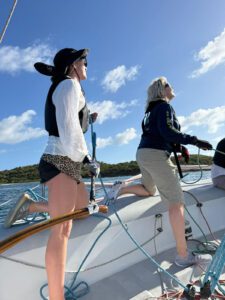
Donna Crocker didn’t travel to St. Thomas expecting to take the helm of an IC24 sailboat at race starts. A lifelong sailor from Gloucester, Massachusetts, and a member of the Annisquam Yacht Club, Crocker had only a little racing experience. She simply wanted to take part in the Women’s Regatta Camp, held Jan. 25–30, out of the St. Thomas Sailing Center at the St. Thomas Yacht Club, to build skills so she could join local yacht club regattas back home.
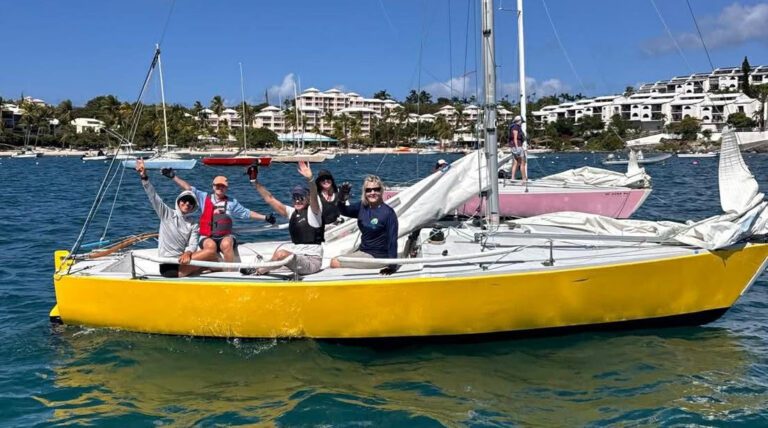
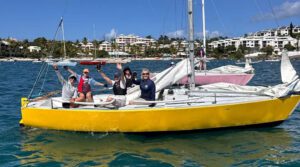
Sara Rachlin and Darlene Evans sail an IC24 in the STSC Women’s Regatta Camp. (Photo courtesy STSC)
Four days into the week-long camp, that plan had shifted. Still on the water late in the afternoon, with warm sun overhead and 15 to 18 knots of steady trade-wind breeze, Crocker paused to text a close friend: “I drove the boat for six of seven starts in the last two days, and we finished first in all but two races.” The clinic, a birthday present to herself, provided the hands-on coaching, instant camaraderie with sailors who were formerly strangers, and the confidence for the New Englander to step into the helm and lead a fleet. That leap — from limited racing experience to driving starts and winning — is exactly what this second annual Women’s Regatta Camp is designed to deliver.
A dozen women from several U.S. states and the U.S. Virgin Islands embarked on this second annual event, run by the STSC in partnership with Sailing World and Team One Newport. The signature format combined coaching by world-class Olympic, one-design World Champion, and Match Racing-winning women sailors with round-the-buoys and round-the-islands racing on converted J/24s called IC24s.
“The women came in hungry to learn,” says Beka Schiff, elite collegiate sailor at the College of Charleston and Match Racing National Champion with extensive J/70 and Melges 24 experience, who is currently based in Florida. “They asked more ‘why’ questions than I’ve ever seen, which pushed the coaching to a high level. It was a firehose of information — starts, maneuvers, teamwork — but balanced with beach breaks, island lunches, and pizza nights. Even on the lay day, everyone wanted more, so we spent three hours just answering questions. What really stood out was watching sailors who had never sailed together, and some brand-new to key roles, quickly come together as a team, get competitive, and get good fast. It was intense, productive, and genuinely fun.
“The five-day Women’s Regatta Camp kicked off with two days of classroom sessions followed by on-the-water practices with on-board coaching, and a video debrief at day’s end. Olympian and St. Thomas native Nikki Barnes stepped away from her 2028 Olympic campaign in the Mixed 470 to serve as Head Coach. Barnes was joined by Schiff and professional sailing trailblazer Martha Parker, who has an Olympic campaign and World and national champion titles to her credit.
“I heard about this camp through a women’s chat group at the Chicago Yacht Club, where I’m a member,” says Jennifer Brand, a camp sailor. “I took a Basic Keelboat course this summer, so this was very much a beginner experience for me. What I liked the best was the education. I learned more than I could absorb in a week. I could take this camp multiple times and learn something new every time. Also, the camaraderie, the location, Bobby Brooks, the Sailing Center director as a host, and the quality of the coaches.”
Coach Nikki Barnes, Hilary Klotz Steinman, Meg Kelly, Sara Rachlin and Darlene Evans get rigged and ready to sail. (Photo courtesy STSC)
The mid-week lay day included a morning education session followed by sailing Hobie Waves to the floating pizzeria, Pizza Pi, for lunch. Later, Camp sailors took a ferry to neighboring St. John for dinner.
The week concluded with two exhilarating regatta days featuring buoy and short-distance races, culminating in an Awards Ceremony.
“The biggest benefit for me was learning how to fly the spinnaker,” says Linda Giles, who spends part of the year on St. Thomas and participates in regular IC24 sailing and the remainder in Annapolis, MD, where she sails with the Universal Sailing Club in Baltimore. “Setting the pole used to intimidate me so much that I’d always say no, but the coaching made it manageable and clear. Now I’m confident with the pole, the sheets, and the spinnaker work, and that opens a whole new part of sailing for me. It’s practical, hands-on learning that I’ll be using right away — and it’s exactly why I’d recommend this camp to other women.”
Jeffrey Epstein’s primary residence was his private estate on Little St. James in the U.S. Virgin Islands. (Shutterstock photo)
A V.I. Superior Court judge has denied a third request by two media companies to unseal reports filed in Jeffrey Epstein’s probate case, saying that the privacy interests of third parties outweigh the public’s right to access “this highly sensitive information” under the First Amendment or common law.
Additionally, the Epstein Files Transparency Act, enacted by Congress on Nov. 19, applies only to materials in the possession of the U.S. Justice Department and not the estate’s Special Master’s reports, Magistrate Judge Simone Van Holten-Turnbull said in her seven-page order issued Jan. 29.
In a letter dated Jan. 27, The New York Times Company and The McClatchy Company, publisher of the Miami Herald, had asked Van Holten-Turnbull to reconsider her orders of Sept. 23 and Oct. 3 denying access to the reports.
The Epstein estate opposed their release, stating the news organizations offered no good reason for the court to revoke its prior orders.
While the Times and McClatchy cited the recent passage of the Epstein Files Transparency Act and subsequent actions taken by the U.S. Justice Department and three federal courts in compliance with that act, federal statute and its application by those courts does not require the V.I. Superior Court to reverse itself, the estate argued.
“The Act simply requires the United States Attorney General to make publicly available those materials relating to Jeffrey Epstein that are ‘in the possession of the Department of Justice, including the Federal Bureau of Investigation and United States Attorneys’ Offices,’” it said.
“[H]ere the Court-sealed Reports are not, and have never been, in the DOJ’s possession. To unseal that material on the basis of the Act would ignore its plain language,” the estate’s attorney Christopher Allen Kroblin wrote.
Moreover, public interest in Epstein has only increased since the media outlets’ initial request for the files last August, he said. “And so has the potential for undue harassment to third parties identified in the Reports,” including minors who were sexually abused.
In their letter to the judge, the media outlets said the estate misconstrued their argument and failed to address their most critical point: redaction can adequately protect the privacy interests at issue.
“The Estate sets up a strawman argument when it notes that the Epstein Files Transparency Act … does not apply to these files. The News Organizations never said otherwise. Instead, we directed the Court to the Act and the court decisions applying the Act to Epstein court files in order to demonstrate the heightened public interest in the activities of Mr. Epstein and the capacity of the courts, including this one, to safeguard the relevant privacy interests without resorting to blanket sealing,” they said.
Additionally, the suggestion that the activities of Congress in regard to Epstein “have nothing to do with this case is belied by the fact that the Estate’s executors, Darren Indyke and Richard Kahn, were subpoenaed to testify by the House Committee on Oversight and Government Reform” on Jan. 23.
Moreover, the estate “has nothing to say as to why redaction cannot be employed here. Instead, it repeats the concerns about ‘innocent third parties’ that were raised by the Court in its initial decision,” their attorney Kevin Rames wrote.
“There is no dispute that Mr. Epstein’s victims should not be identified in a release of documents and that their names should be redacted,” the letter stated. “But the Estate is wrong to assume that businesses or individuals who conducted business with Mr. Epstein would be subject to ‘undue harassment’ if documents identifying them are released. If they did nothing more than engage in innocent and routine business transactions with Mr. Epstein, that will be apparent from the documents themselves. They stand in no different place than all the third-party witnesses and others who are routinely identified when they become involved in high-profile court proceedings.”
However, Van Holten-Turnbull disagreed.
“This Court maintains, as it has emphasized in its previous orders, that the privacy interests of third parties outweigh the public’s right to access this highly sensitive information under the First Amendment or common law,” she wrote in her order.
Nor is the court legally required to unseal the reports, the judge said. The Epstein Files Transparency Act is limited to the federal government, and the estate’s sealed Special Master’s reports are not judicial documents to which the public is entitled access, she said.
Even if it was determined that the federal act applied to the sealed reports, or that the probate documents are judicial documents, “this Court will continue to use its discretionary authority to keep the Reports sealed,” Van Holten-Turnbull said.
The judge also rejected the argument that sensitive information could be redacted, noting that redacted files released under the Epstein Files Transparency Act were able to be unredacted and were subsequently circulated on social media.
She was referring to digital redactions by the U.S. Justice Department that were improperly applied to Epstein files it released in late 2025, making it simple to reveal the text underneath.
“Here, the information contained in the Reports the News Organizations argue can be redacted, the names and identifying information of third parties and potential victims of sexual abuse, many of whom were minors, is too sensitive to be released to the public given the public’s demonstrated ability to remove redactions,” Van Holten-Turnbull wrote in her order.
It is necessary to balance the need for public knowledge with the real potential that releasing information that supports this desire could both retraumatize victims and cause them and third parties excessive humiliation, she said in denying the release of the reports.
A registered sex offender who pleaded guilty to procuring a minor for prostitution in Florida in 2008, Epstein died by apparent suicide in August 2019 at age 66 while in detention in New York on federal trafficking charges. His primary residence was Little St. James, his private island off St. Thomas, where for years he ran a complex web of shell companies registered in the USVI that enabled his crimes.
Interest in his case has only deepened since President Donald Trump was elected for a second term, having run on the promise of releasing classified files on UFOs, the John F. Kennedy assassination and the Epstein case.