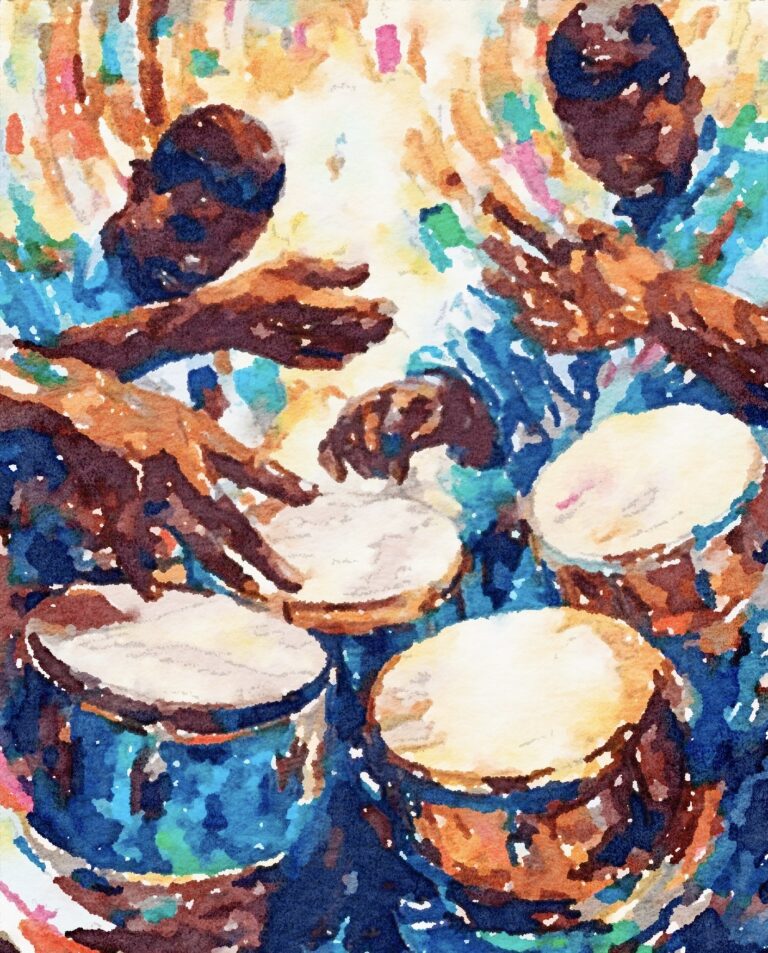
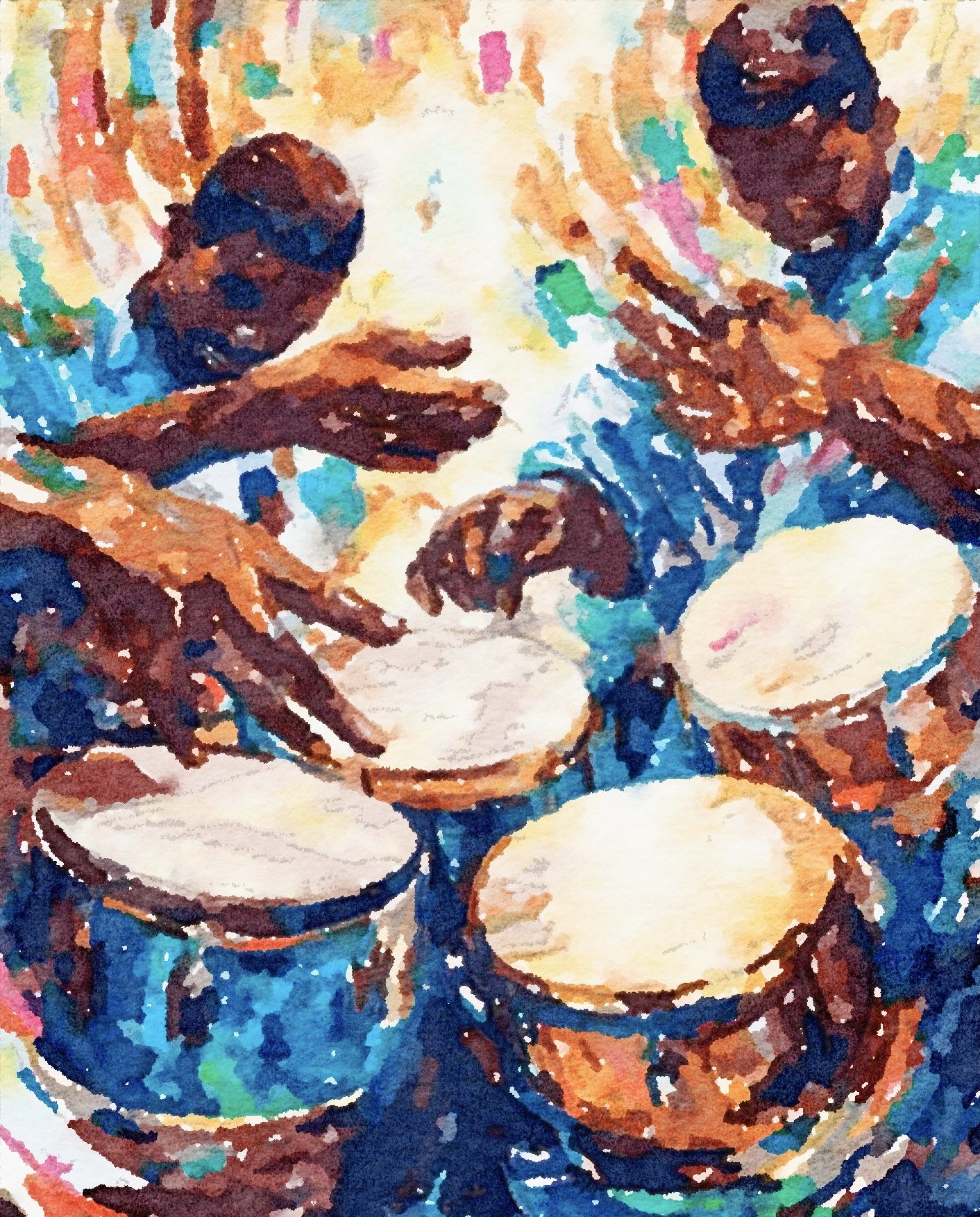
Watercolor of drummers by Vickie Lawrence. (Image copyright Vickie Lawrence)
Mango Tango opens the Fresh Paint and Seasoned Strokes Show on Saturday, May 30 from 5:30 to 8:30 p.m., featuring work from three compelling voices in art: newcomer to the local scene Vickie Lawrence, regional icon Eric Winter — builder, educator, and painter — and master teacher David Millard, whose influence extended from St. Thomas to galleries and museums across the mainland.
The harmonious sounds of Sammy Watts and Ras Abu will fill the parking lot, where appetizers and spirits will be served.
Vickie Lawrence debuted at the gallery in March, and her talent immediately captivated gallery owner Jane Coombes. “When I opened the gallery in 1988, I was fortunate enough to find and represent a superb artist, Dana Wylder. Although Dana works in different media, she excels in watercolor. No one since that time has come even close to her level of excellence — until I met Vickie. The positive response to her work earned her a second show.” Lawrence’s acrylics and watercolors celebrate the rhythmic energy of Carnival and the shimmering color and movement of sea life.
A painting by David Millard. (Image courtesy Mango Tango Art Gallery)
David Millard is revered for his inventive exploration of color relationships. His honors include recognition from the National Academy of Design and gold medals from the American Watercolor Society, the New England Watercolor Society, and the Rockport Art Association. He divided his time between St. Thomas and Needham, Massachusetts, teaching and painting in both communities. His career spanned six decades and included more than 30 one-man shows before his passing in 2002. His widely respected instructional books feature numerous paintings of historic Virgin Islands buildings.
A painting by Eric Winter. (Image courtesy Mango Tango Art Gallery)
Eric Winter arrived in the Virgin Islands in 1954 following completion of his Fine Arts degree at the University of Maryland. A true Renaissance man, he worked as both a building contractor and an accomplished boat builder, while maintaining an active studio practice as a painter and teacher. Antilles School and the College of the Virgin Islands were fortunate to count him among their art faculty. Winter’s oil-on-canvas paintings capture the beauty, joy, and serenity of West Indian life. He left behind a treasure trove of work when he passed in 2001.
The show continues for one month. To learn more or view the exhibition, visit mangotangoart.com or call 340-777-3060.
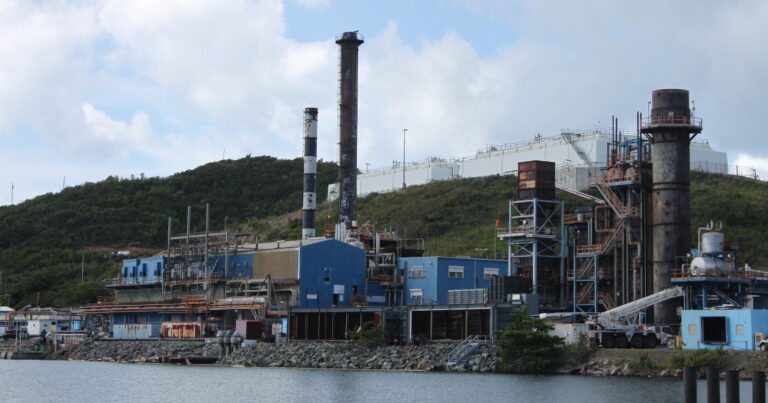
St. Thomas-St. John customers are on a rotating schedule of outages Monday due to “reduced power generation capacity,” the V.I. Water and Power Authority announced.
In a press release issued just after 9:30 a.m. on the Memorial Day holiday, WAPA set the following schedule, which it said is subject to change based on demand:
On Saturday, May 30, Rhyme and Lime STJ and the Gri Gri Project will host the next Rhyme and Lime at Bajo El Sol Gallery on St. John. Starting at 7 p.m., attendees can share their original works, works by a poet they admire, or they can sit and enjoy the poetry.
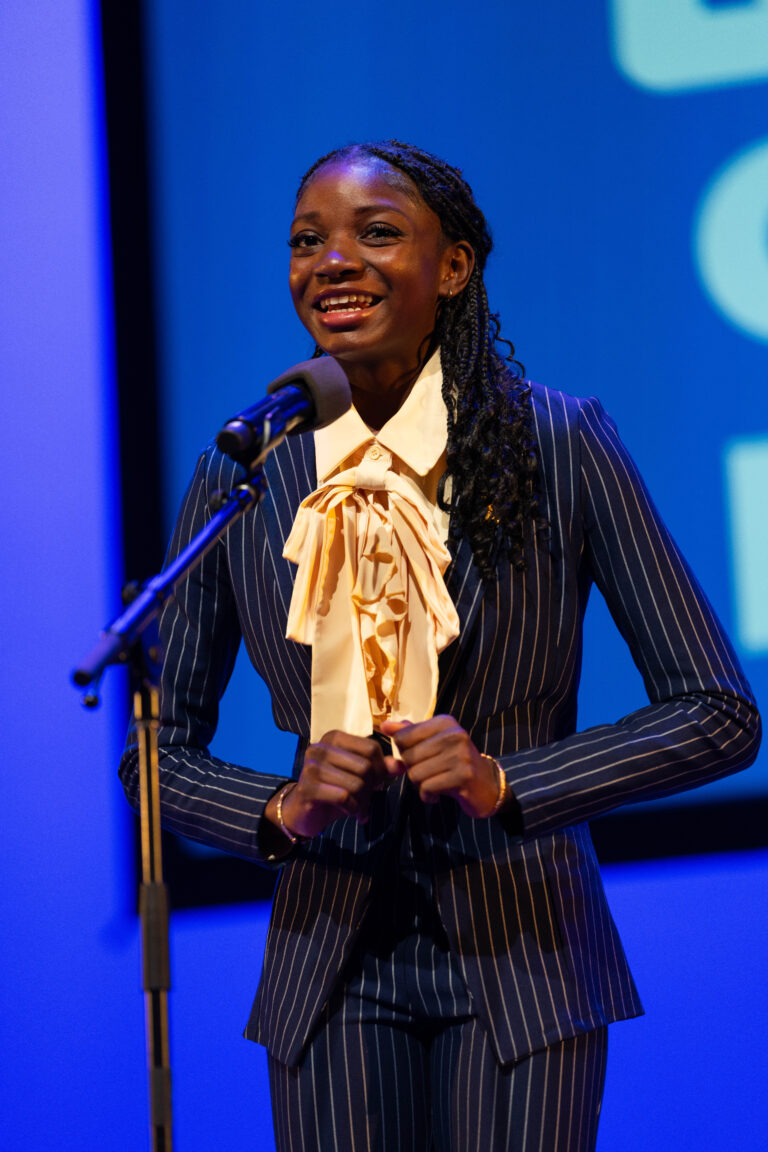
Joeltica Rogers gives crowd a lively performance at the National Poetry Out Loud Competition today. (Photo courtesy James Kegley)
The suggested theme is, “Truth, Power, and Satire”, and this month’s featured poet is Joeltica Rogers, the 2026 Poetry Out Loud Finalist who represented the U.S. Virgin Islands in this year’s national competition. The event will also feature jazz and R&B selections by Pam1Love.
Joeltica Rogers is a rising senior at Charlotte Amalie High School. Through her hard work and dedication, and the coaching of Wendy Bougouneau-Andrews, Joeltica became the 2026 U.S. Virgin Islands Poetry Out Loud Champion. She then advanced to the national competition in Washington D.C. in late April, where she competed amongst nine other finalists for the national champion title and a $20,000 grand prize.
Poetry Out Loud is a nationally held poetry recitation competition that began in 2005. The competition aims to engage students in literary history, improve their public speaking skills, and build their confidence. The competition begins at school level or through non-profit organizations, and then those winners compete at the state or territorial level to qualify for the national competition in Washington D.C. Prizes are awarded to the student champions, their coaches, and their school. Poetry Out Loud on the national level is made possible by a partnership of the National Endowment for the Arts and the Poetry Foundation, and it is hosted by the Virgin Islands Council on the Arts on the local level.
For this edition of Rhyme and Lime, works inspired by truth, revelations, power, resistance, and satire are encouraged, but not required. For more information, please email the host Raven Phillips at ravenphillipslove@gmail.com, or call Bajo El Sol Gallery at 340-693-7070.
Bajo El Sol Gallery & Art Bar is home to thought-provoking monthly exhibitions, readings by award winning V.I. writers & poets, documentary screenings on some of the Caribbean’s most respected thinkers, as well as talks by local academics and visiting curators.
Bajo El Sol Gallery is also home of the Gri Gri Project. The Gri Gri Project’s mission is the creation of interpretive exhibitions, critical writing, events and archives related to the cultural patrimony of the U.S. Virgin Islands and the broader Caribbean region.
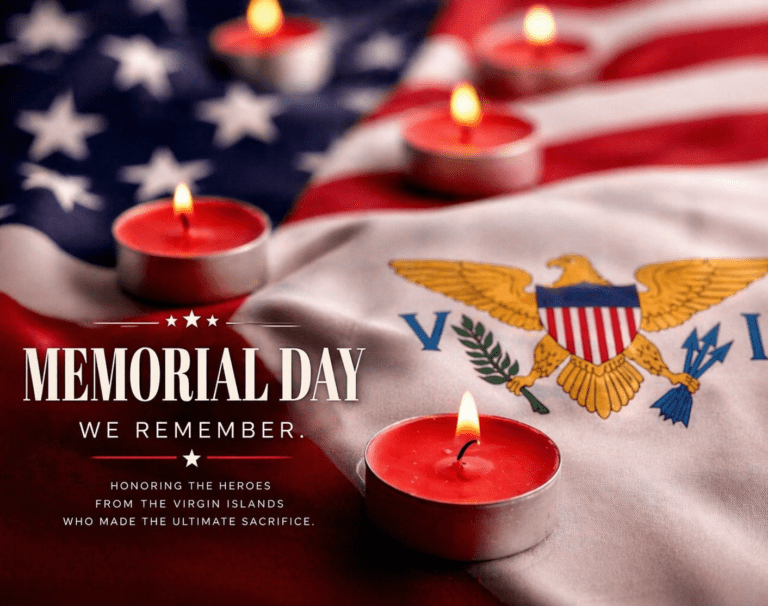
There are freedoms we enjoy every day that came at a cost most of us will never fully know.
(Submitted photo)
On Memorial Day, we pause not to celebrate war, but to remember those who never came home. We honor the brave men and women who answered the call to serve and gave their lives in defense of our nation and the ideals we hold dear.
Their sacrifice was not measured only on distant battlefields. It is measured in the birthdays they missed, the families they left behind, the dreams they never had the opportunity to fulfill, and the future they secured for generations they would never meet.
This year, as we observe Memorial Day under the theme “For We Are Grateful,” we are reminded that gratitude is more than words. It is a commitment to remember. It is a promise that the lives of our fallen heroes will not fade from our collective memory.
Here in the Virgin Islands, we pay special tribute to the sons and daughters of these islands who wore the uniform of our nation with honor, courage, and pride. Their legacy lives on in the freedoms we enjoy, the opportunities we pursue, and the communities we continue to build.
As we gather with family and friends, attend ceremonies, visit memorials, or simply observe a moment of quiet reflection, let us remember those whose sacrifice made our way of life possible.
To the families who carry the weight of that loss every day, know that your loved ones are remembered, honored, and deeply appreciated by a grateful Territory.
Today, and always, we remember.
For we are grateful.
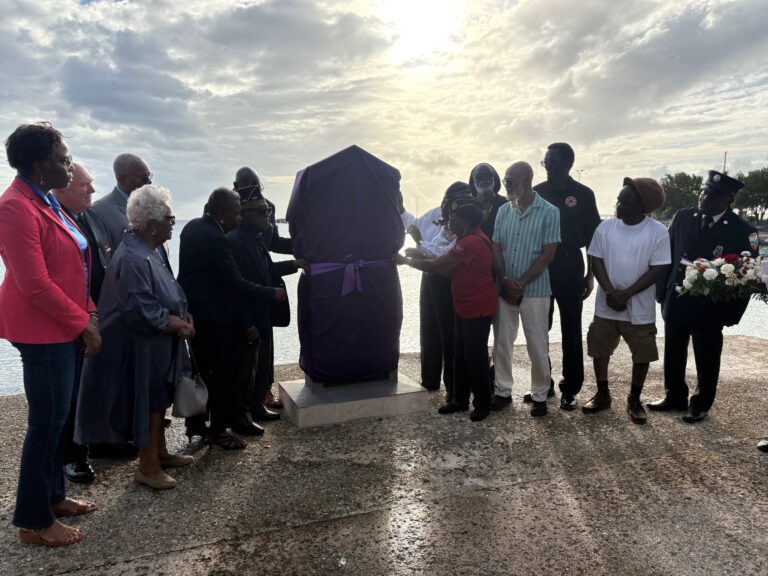
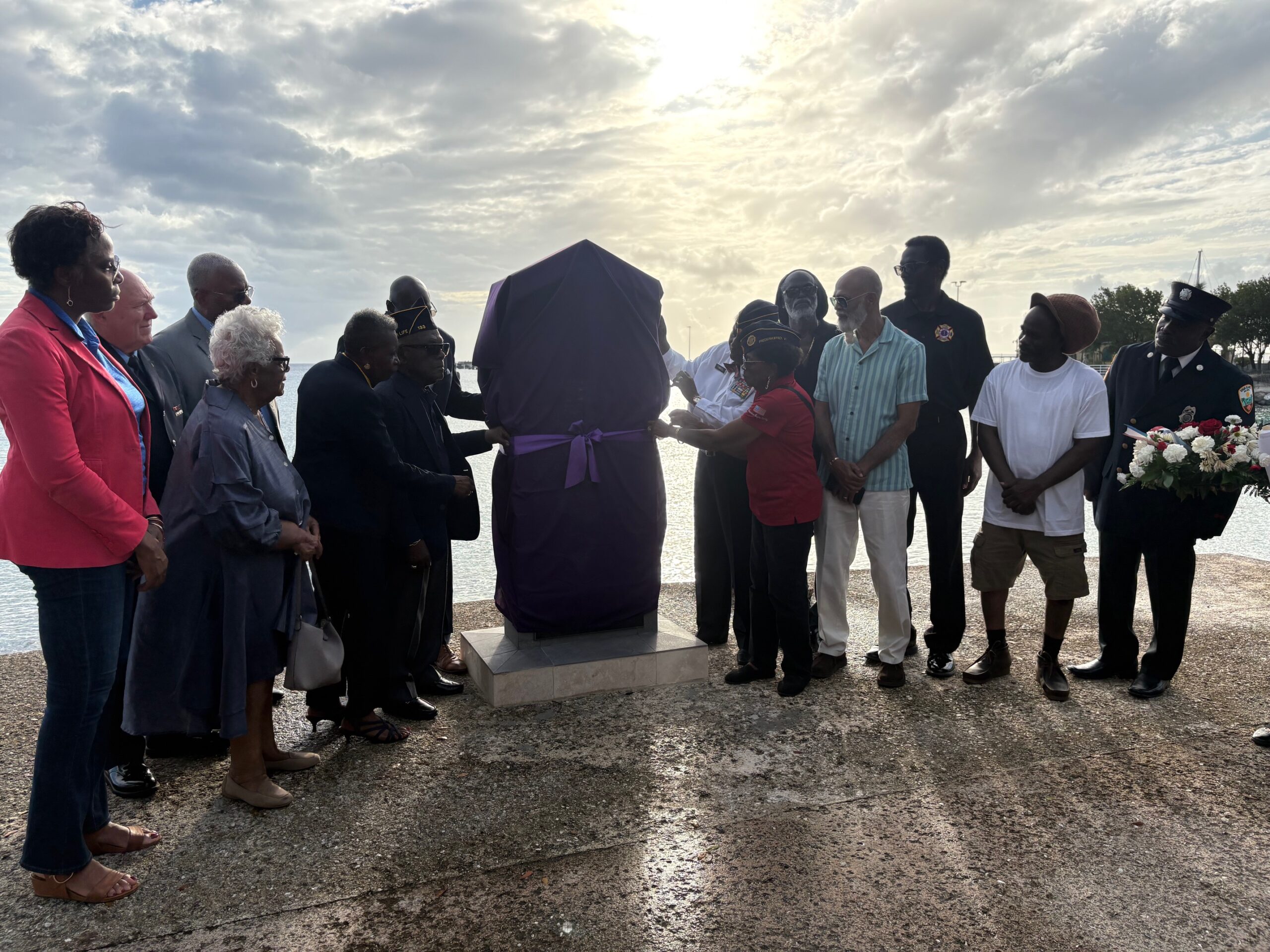
Veterans, elected officials, first responders, family members and community residents gathered for the emotional ceremony ahead of Memorial Day. (Source photo by Diana Dias)
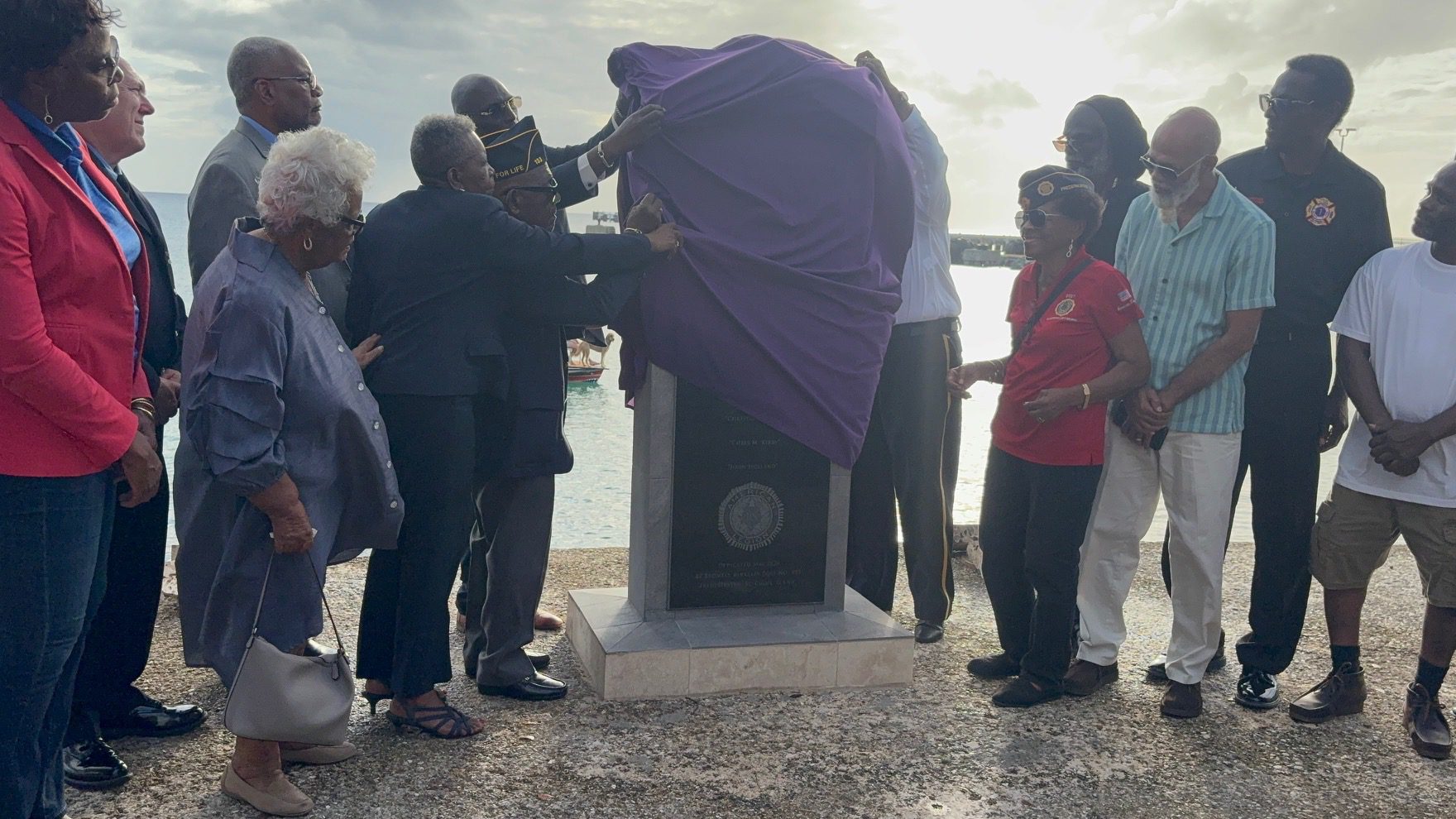
In a special Memorial Day tribute, members of American Legion Bromley Berkeley Post 133 gathered along the Frederiksted waterfront Sunday to dedicate a permanent memorial honoring Virgin Islanders lost in the terrorist attacks of Sept. 11, 2001 — a solemn moment of remembrance nearly 25 years after the tragedy changed the nation forever.
Veterans, elected officials, first responders, family members and community residents gathered for the emotional ceremony ahead of Memorial Day.
The memorial stands as a tribute not only to the thousands killed during the attacks, but also to Virgin Islanders whose lives were forever connected to that day.
“This monument is a declaration that these lives matter, and that this community remembers,” said Delegate to Congress Stacey Plaskett. “The Virgin Islands will always honor those who gave everything in service to this nation.”
Unveiling of the tribute on Sunday in honor of the victims from the U.S. Virgin Islands who lost their lives during 9/11. (Source photo by Diana Dias)
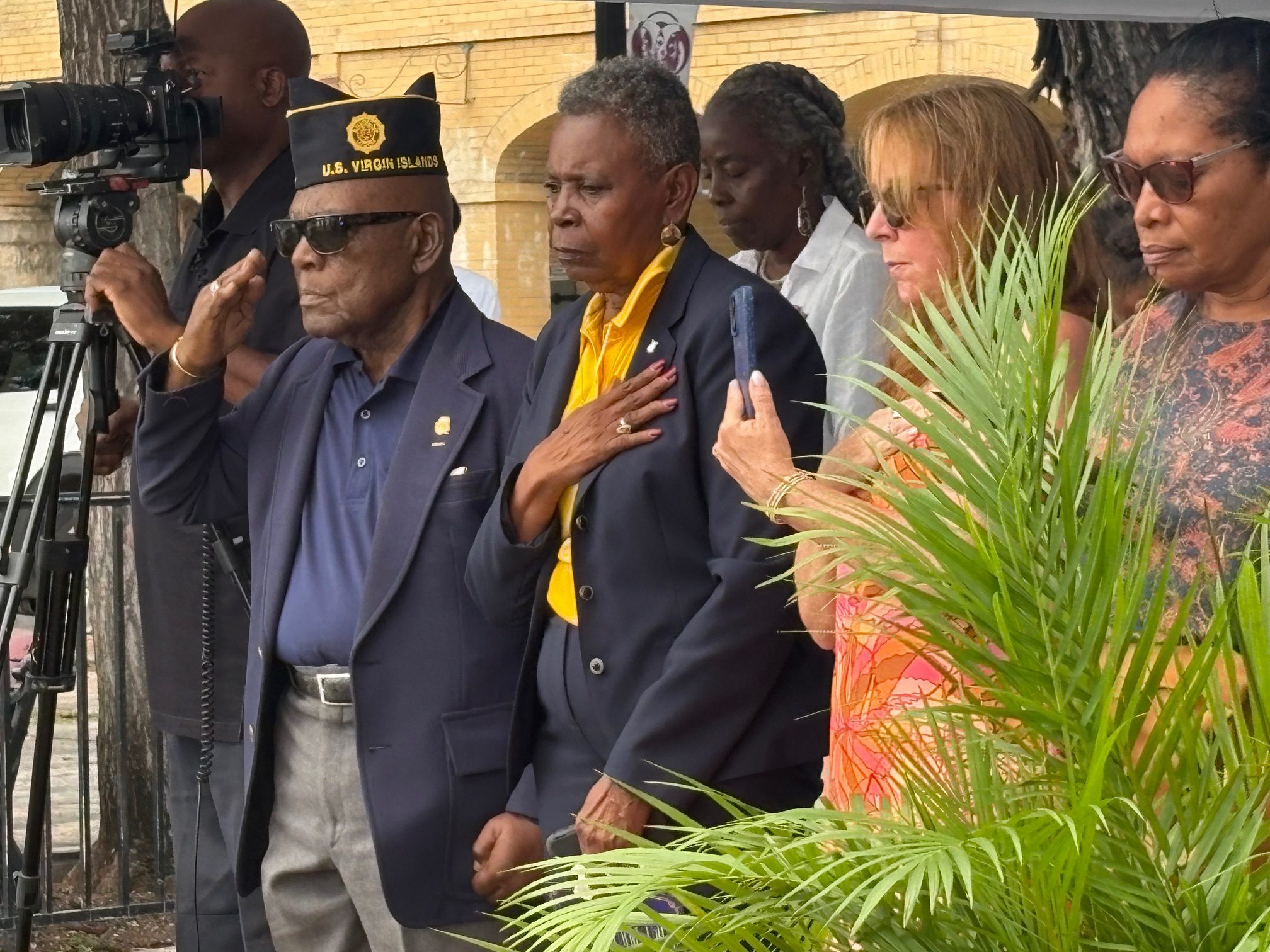
The idea for the memorial was first introduced in 2021 by Comrade Charles Farrell of American Legion Bromley Berkley Post 133, who said the Frederiksted waterfront was missing a permanent tribute to the victims of 9/11.
“We’re going into 25 years and it’s not there,” Farrell said. “And that’s the monument for the 9/11 destruction. And I said, that is it.”
Comrade Charles Farrell of American Legion Bromley Berkley Post 133, salutes during a program to commemorate the new memorial honoring the victims. (Source photo by Diana Dias)
Farrell said the project faced years of paperwork, government approvals and logistical challenges before becoming reality.
“It was not an easy task,” he said. “The paperwork, the red tape with the government and everything like that — there’s certain rules and regulations you have to go through. But here we are today.”
Commander Caroline Fawkes of American Legion Bromley Berkley Post 133 described the memorial as “more than a stone structure.”
“It is a symbol of remembrance for the lives lost on September 11, 2001,” Fawkes said. “It reflects the grief carried by families, the resilience of survivors, and the enduring spirit of a people who refuse to be broken.”
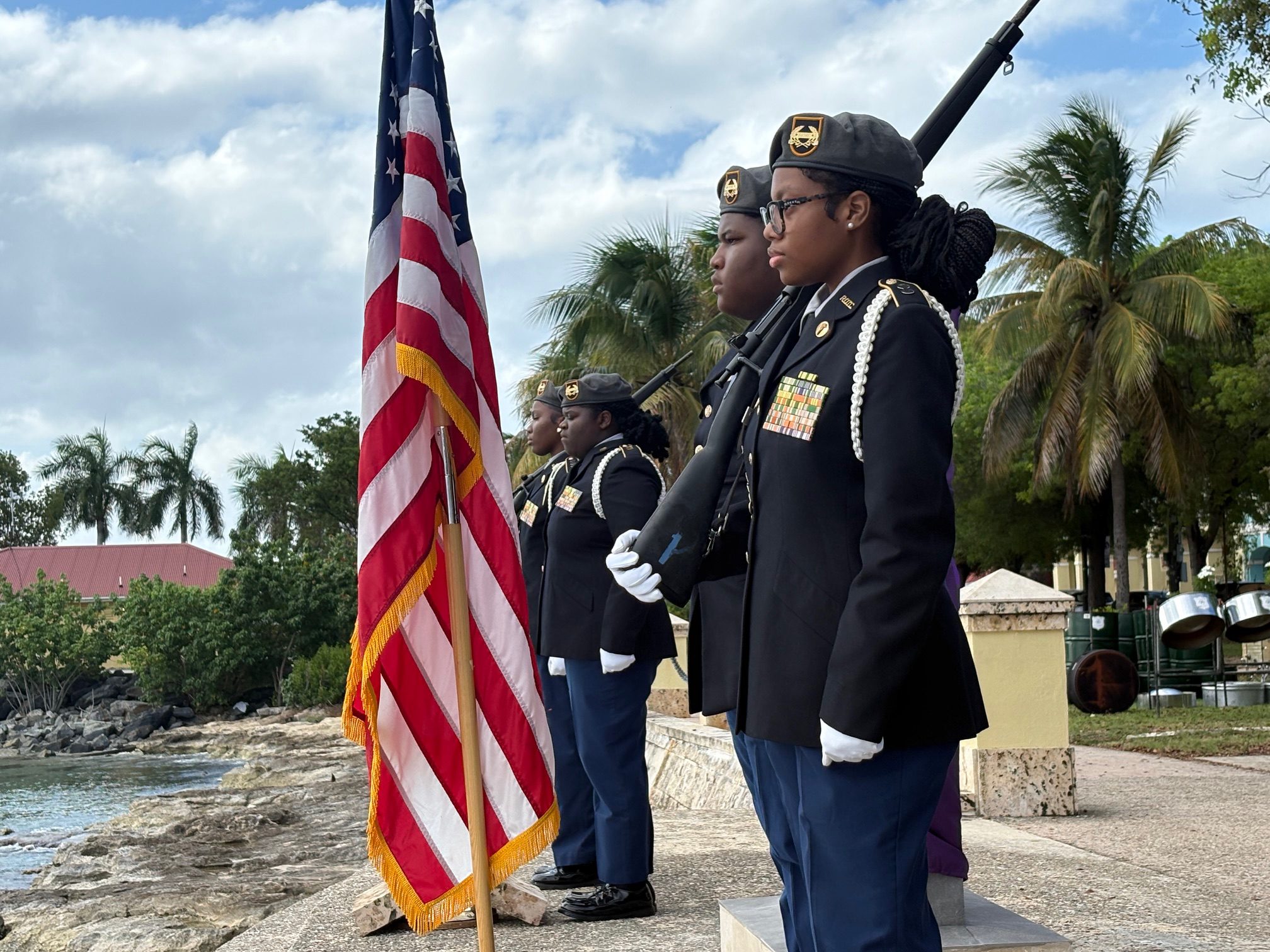
Members of the St. Croix Educational Complex JROTC present arms in tribute to victims of 9/11. (Source photo by Diana Dias)
Fawkes also acknowledged the many agencies and individuals who helped bring the project to life, including the Sports, Parks and Recreation Department, the Property and Procurement Department, planners, draftsmen and local fabricators.
Remarks were also delivered by Sen. Novelle Francis Jr., representing the 36th Legislature, and St. Croix Administrator Sammuel Sanes on behalf of Gov. Albert Bryan Jr. and Lt. Gov. Tregenza Roach.
Francis, who served as police chief at the time of the attacks, called the memorial a lasting reminder of resilience and unity.
“We are preserving memory. We are honoring sacrifice,” Francis said. “We’re ensuring that future generations never forget the lessons, the pain, and the unity that emerged from that tragic day.”
A highlight of the ceremony was remarks from retired firefighter John Fila of the New York City Fire Department, who served with Engine 54 in Manhattan and responded in the aftermath of the attacks.
Fila recounted the devastating loss of 15 firefighters from his firehouse on Sept. 11 and described the emotional toll of returning to the station where grieving family members waited for answers.
“I cannot describe to you how absolutely low we felt when we walked in that firehouse and people asked us, ‘Did you find Dan? Did you find Alan?’ and we had no answers for them because we didn’t,” he said.
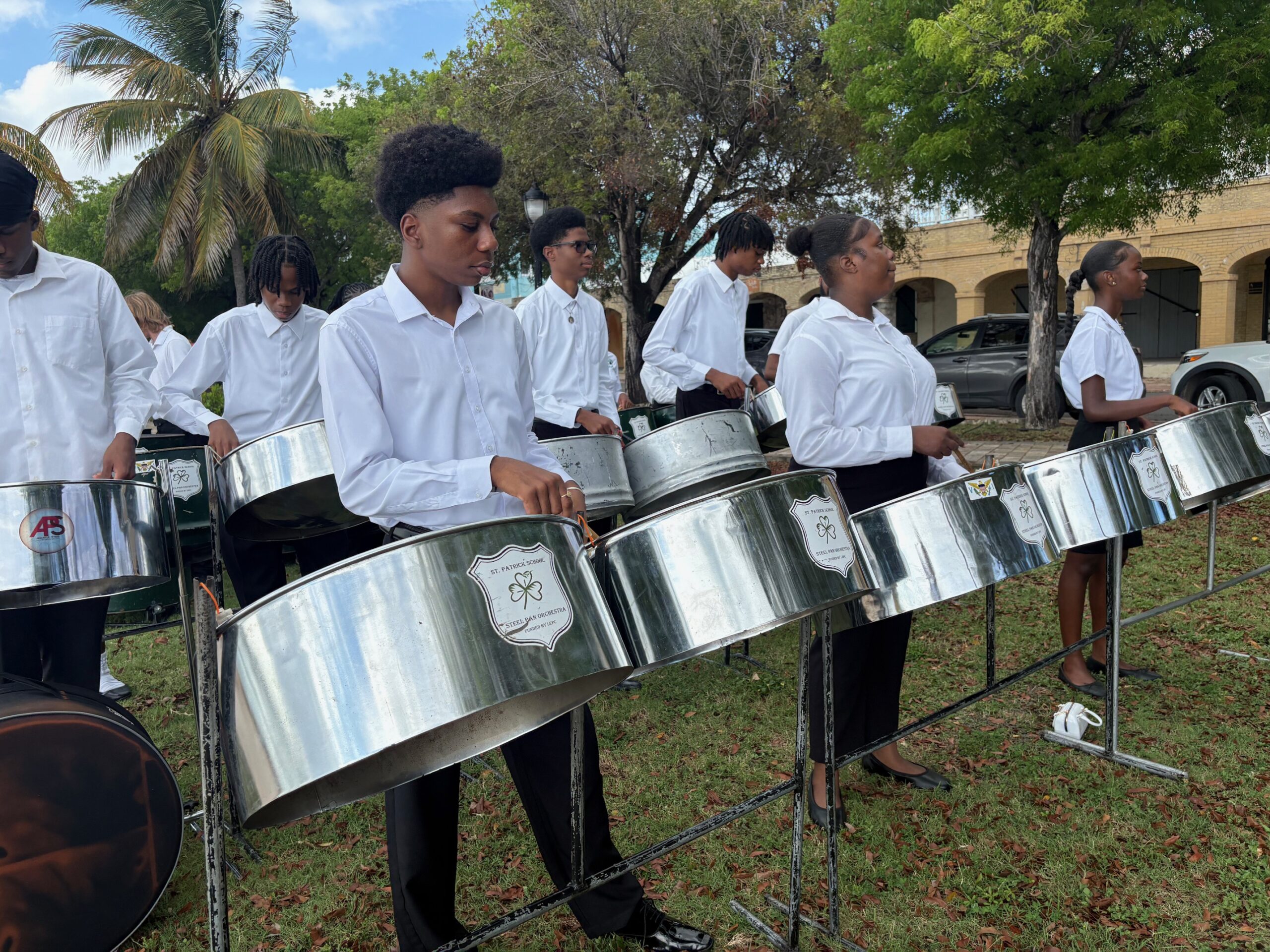
St. Patrick Catholic School Steelpan Orchestra play during 9/11 tribute. (Source photo by Diana Dias)
He also reflected on the overwhelming support firefighters received from across the country in the days following the attacks.
“That is the true bond and brotherhood of firefighters,” Fila said. “No matter what goes on, we always go to support each other.”
Throughout the ceremony, speakers emphasized the deep connection between the Virgin Islands, military service and emergency response.
The names of Virgin Islands victims were read aloud during a bell-ringing ceremony followed by the playing of taps. Honored names included Felix “Bobby” Calixte, John Holland, Christian Maltby, William Henry Jr., Chris M. Kirby, and Staff Sgt. Madlyn A. White and Claudia S. Sutton.
Family representatives later received commemorative coins as symbols of remembrance, strength and unity.
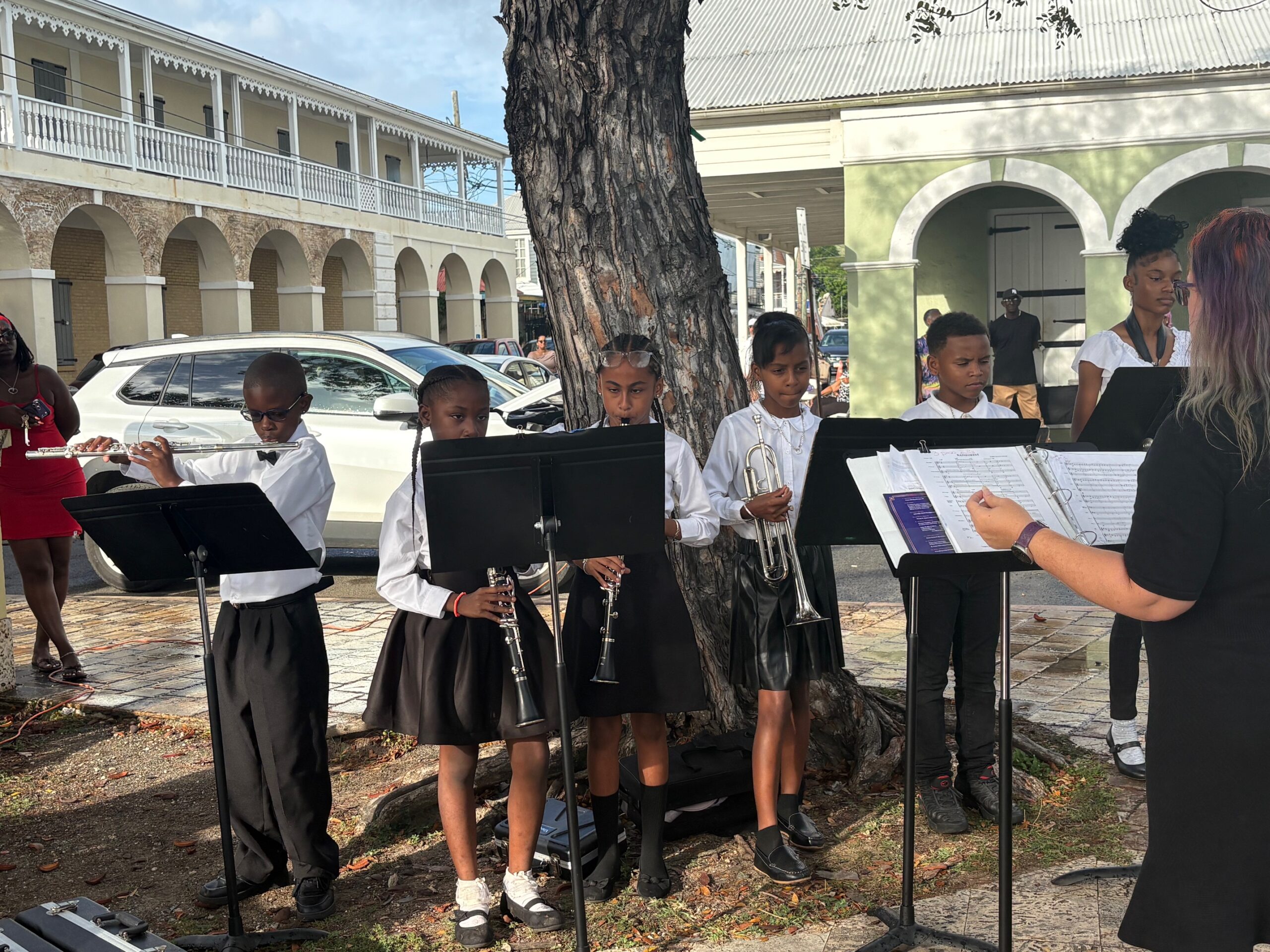
Children from Claude O. Markoe Elementary School band play “Rain Forest” during memorial unveiling. (Source photo by Diana Dias)
The memorial pillar, built by local fabricator Clarence Henry of Iron Lion, now stands prominently along the Frederiksted waterfront, where organizers hope it will serve as a permanent place of reflection for generations to come.
“We will remember. We will honor. And we will never forget,” Fawkes said.
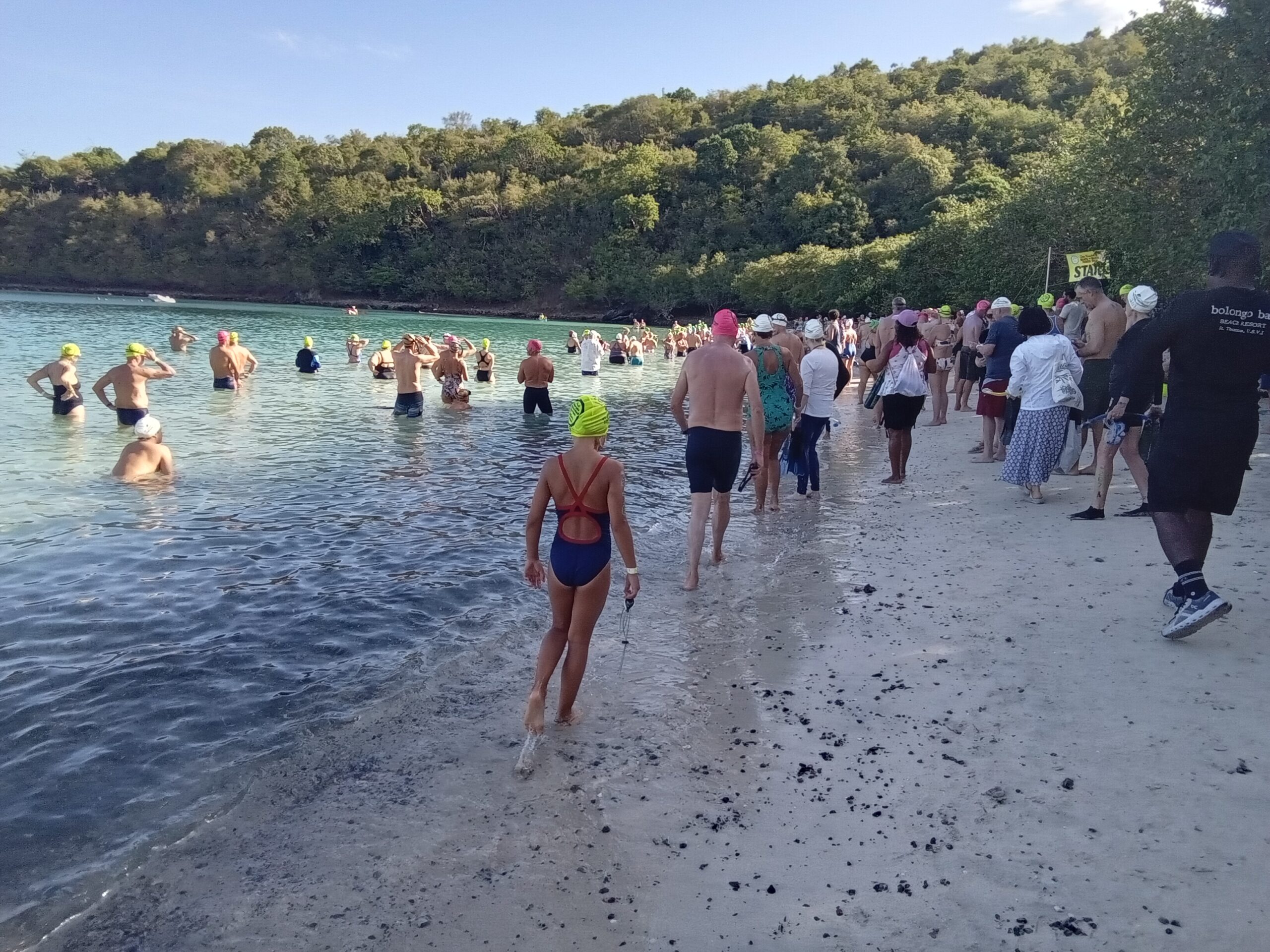
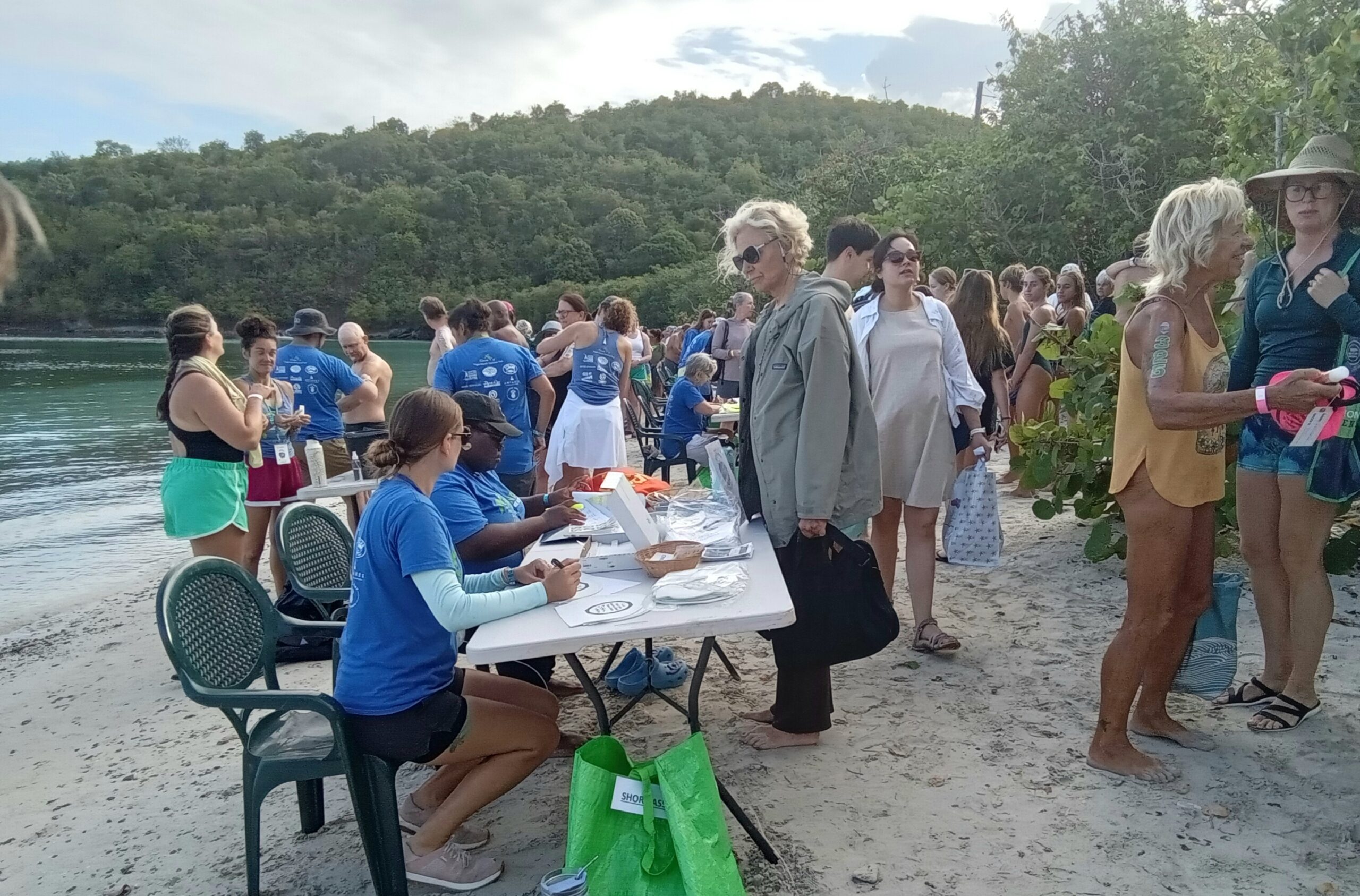
Swimmers gather at Maho Bay on St. John Sunday morning before the start of Joe Kessler’s Beach 2 Beach Power Swim. (Source photo by Judi Shimel)
Two swimmers from Fairhope, Alabama, led the field Sunday at Joe Kessler’s Beach 2 Beach Power Swim on St. John, with 16-year-old David Rainer winning the one-mile short course men’s division and 19-year-old Suzanne Rainer topping female competitors in the same race from Maho Bay to Cinnamon Bay.
David Rainer finished the short course race from Maho Bay to Cinnamon Bay in 21 minutes, 45.4 seconds. Suzanne Rainer won the women’s division with a time slightly over 24 minutes.
By the time they crossed the finish line Sunday, the Rainers were already familiar names in the event’s record books. In 2023, David — then 13 — placed third overall in the short course race, while Suzanne, along with Leighton and Virginia Raider, won the long course relay.
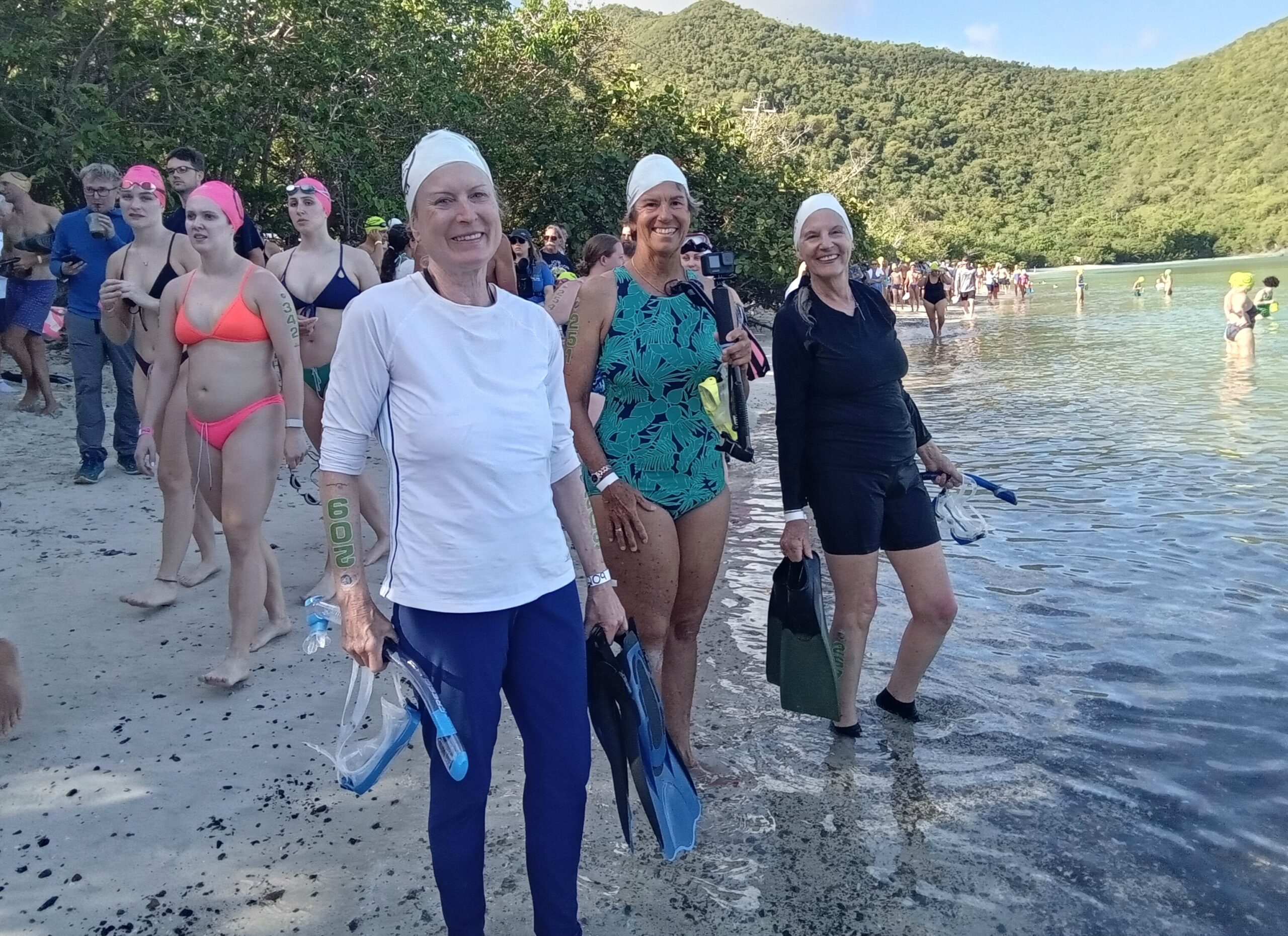
Three hundred sixty-one swimmers entered the waters of Maho Bay in staggered starts beginning around 8 a.m. Sunday. Long course, unassisted swimmers led the way on the 3.5-mile route from Maho Bay to Hawksnest Beach. Organizers with Friends of the Virgin Islands National Park said the oldest competitor was 86 and the youngest was five years old.
Volunteers check in swimmers moments before the start of Joe K’s Beach 2 Beach 2026. (Source photo by Judi Shimel)Race officials posted results throughout the day as swimmers completed the one-mile short course, the 2.25-mile intermediate course from Maho to Trunk Bay and the long course.
John Flowers, 54, placed second in the men’s short course division with a finish time of 22 minutes, 59.7 seconds. Edward Uszenski finished third in 23 minutes, 0.8 seconds.
Mia Sayan, 16, placed second in the women’s short course division with a time of 24 minutes, 07 seconds. Twenty-eight-year-old Kelsey Hahn took third place in 26 minutes, 35.3 seconds.
Leslie Carle and friends prepare to take the plunge at Maho Bay. (Source photo by Judi Shimel)
In the intermediate race, 17-year-old Sasha Poe claimed the overall win with a time of 49 minutes, 40.7 seconds and also led the women’s division overall. Katie Papa, 32, finished second overall in 51 minutes, 19.1 seconds, followed by Quinnton Caines in third at 51 minutes, 35 seconds.
Sixteen-year-old Caines led the men’s intermediate division. Troy Lane, 51, followed with a time of 56 minutes, 7.8 seconds.
Chris Delafuente placed third in the intermediate men’s division with a finish time of 57 minutes, 56.1 seconds.
Twenty-seven competitors under age 18 participated in Sunday’s races. There were also three relay teams entered in the long course event, including one made up of swimmers who have participated in all 23 Beach 2 Beach Power Swim races.
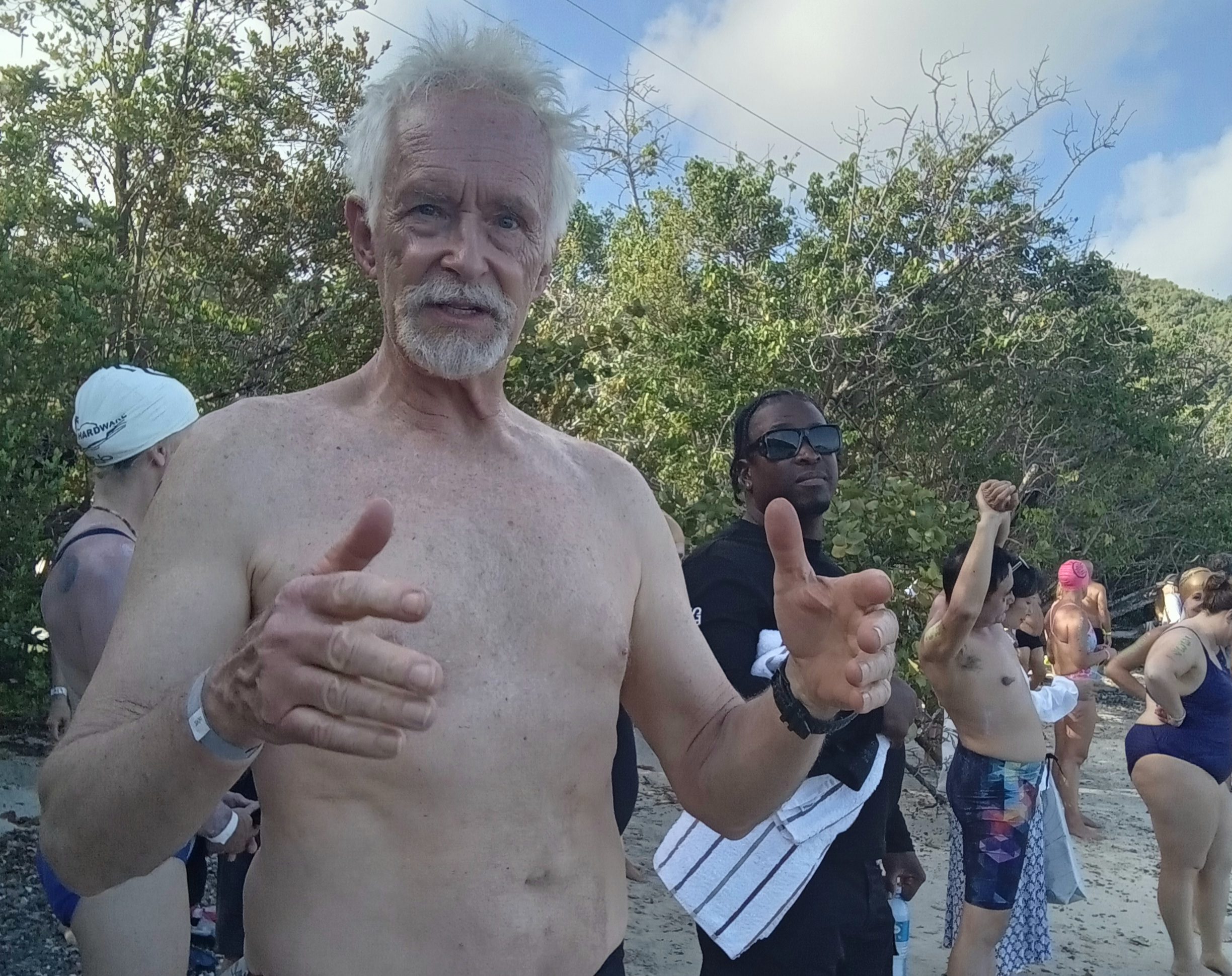
“This year I’m in a relay with the other two people who’ve done every one — Alfredo Del Omo and Karen Cannell. We’re calling ourselves the Venerable Veterans,” former Senator-at-Large Craig Barshinger said. Barshinger traveled from Colorado, where he lives with his family, to compete.
Craig Barshinger ready to swim a long-course relay race. (Source photo by Judi Shimel)
The atmosphere before the race was relaxed, with swimmers greeting friends and fellow competitors along the shoreline.
Nancy Veldren said she returned to the event after stepping away for several years. She participated in the first Beach 2 Beach Power Swim in 2004.
“Twenty-twenty-six was her fourth outing since making her comeback,” Veldren said.
For Leslie Carle of San Rafael, California, Sunday marked her first appearance in the race.
“We’ve been here for almost a week, so we’ve had a lot of practice with all the beaches,” Carle said.
Racers, volunteers and supporters gathered later in the day for an after-party at Cinnamon Bay Campground.
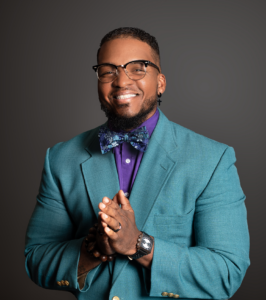
In his biweekly column, Langley Shazor speaks to issues important to men within the territory.
For generations, strength has been defined in narrow terms. It has been measured by volume, dominance, endurance, and control. A strong man was the one who did not flinch, did not fold, and did not feel too much. He was steady, unshaken, and often unreachable. That image became the blueprint for masculinity, and many men shaped themselves around it, whether it fit or not.
But strength is evolving.
The world today demands a different kind of resilience. It requires men who can lead without intimidation, who can endure without emotional shutdown, and who can hold responsibility without losing their humanity. The traditional image of strength as stoicism alone is no longer sufficient. In relationships, especially, strength that refuses to feel becomes distance, and distance erodes connection.
When strength looks different, it does not mean it disappears. It becomes more complete.
True strength includes emotional mastery. It is the ability to remain grounded when conflict arises. It is the discipline to pause before reacting and the wisdom to choose words carefully. It is restraint in moments when pride wants to escalate. Many men were taught that raising their voice proves authority. In reality, control over one’s tone and temper often reveals far greater power.
Emotional steadiness is not softness. It is regulation. A man who can manage his anger without suppressing it demonstrates depth, not weakness. A man who can acknowledge hurt without deflecting it shows security, not fragility. These expressions of strength are quieter, but they are often more transformative. They create safety in relationships rather than fear.
Women often struggle to recognize this shift because it challenges older expectations as well. Some may unconsciously associate strength with dominance simply because that was the model they grew up observing. When a man chooses calm over control, it can initially feel unfamiliar. But calm leadership creates consistency. Consistency builds trust. And trust forms the foundation of emotional security.
Strength that looks different also includes accountability. Admitting fault has long been seen as diminishing authority. Yet in healthy relationships, accountability increases respect. When a man can say, “I was wrong,” without collapsing into shame or defensiveness, it signals maturity. It communicates that the relationship matters more than ego. That posture does not reduce influence. It deepens it.
Another expression of evolved strength is vulnerability with boundaries. Vulnerability does not mean emotional chaos or unfiltered expression. It means choosing to share internal experiences in ways that invite connection. A man who can articulate stress, fear, or uncertainty without feeling diminished demonstrates self-awareness. He is not abandoning strength. He is expanding it.
Strength also shows up in patience. In a culture that rewards immediacy and reaction, patience requires intention. It is the willingness to sit in discomfort long enough to understand before responding. Many relational conflicts escalate because neither side pauses. When a man models patience, he changes the rhythm of the conversation. He signals that clarity is more important than control.
There is also strength in emotional presence. Being physically present but emotionally absent is not resilience. It is withdrawal. Emotional presence means engaging, listening, and responding with care. It means showing up consistently, not only when convenient. This kind of presence reassures a partner far more than performative gestures.
For men who were raised in environments where emotion was minimized, this transition can feel unnatural. It requires unlearning habits that once protected them. It requires stepping into spaces that feel unfamiliar. But growth always feels unfamiliar at first. The discomfort is not proof of weakness. It is evidence of expansion.
Strength that looks different benefits everyone involved. Women feel safer when emotional steadiness replaces volatility. Children feel more secure when they see fathers express both conviction and compassion. Communities become healthier when leadership reflects balance rather than bravado.
Importantly, redefining strength does not require abandoning traditional masculine traits. Decisiveness, protection, ambition, and responsibility still matter. The difference lies in how they are expressed. Decisiveness paired with empathy becomes wise leadership. Protection paired with gentleness becomes safety. Ambition paired with humility becomes purpose. Responsibility paired with rest becomes sustainability.
The tension between men and women often arises when strength is misinterpreted. A man who withdraws to regulate himself may be seen as detached. A man who expresses frustration calmly may be seen as cold. Communication becomes essential here. Explaining intention reduces assumption. When men articulate why they respond the way they do, and women articulate how those responses feel, clarity replaces confusion.
Strength is not static. It adapts to context. What once required physical endurance now often requires emotional intelligence. What once required dominance now often requires diplomacy. The strongest man in a room today may not be the loudest or the most imposing. He may be the one who listens carefully, speaks deliberately, and responds thoughtfully.
When strength looks different, relationships flourish because fear is replaced with respect. Performance gives way to authenticity. Pride yields to partnership. Men are no longer forced to choose between being strong and being emotionally available. They discover that the two can coexist.
This shift does not weaken masculinity. It refines it. It allows men to embody both firmness and empathy without contradiction. It creates space for relationships built on mutual understanding rather than silent tension.
When strength evolves, connection deepens. And when connection deepens, the bridge between men and women becomes far more stable than any display of dominance ever could.
Editor’s Note: Opinion articles do not represent the views of the Virgin Islands Source newsroom and are the sole expressed opinion of the writer. Submissions can be made to visource@gmail.com.
Related Links:
Op-Ed: The Lounge | A Column for Men: Before the Bridge: Why This Work MattersOp-Ed: The Lounge | A Column for Men: Before the Bridge: What Men Wish Women Knew and Why We Never Said ItOp-Ed: The Lounge | A Column for Men: Before the Bridge: What Women Wish Men Would Hear
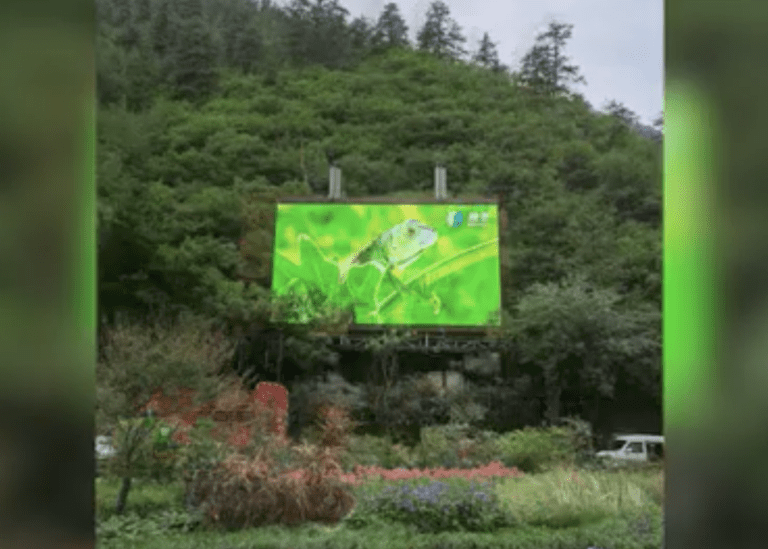
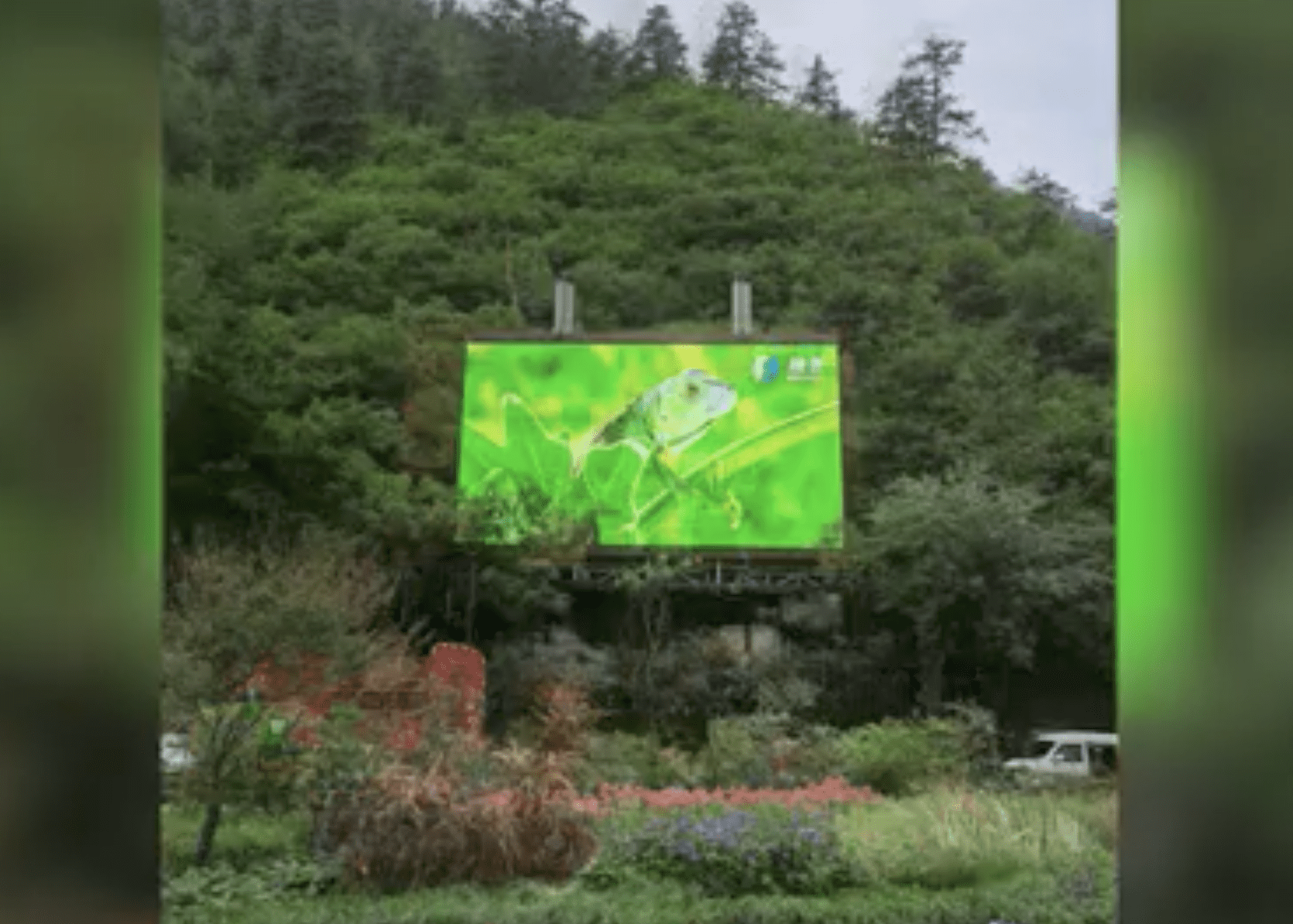
Some fear giant LED-lit billboards, like this one in China, could forever change the Virgin Islands. (Photo courtesy onumen.com)
As the public comment deadline for a massive billboard proposed on St. Thomas nears, one Virgin Islands attorney warned preventing the glowing highway sign, or removing it once built, could be difficult unless new laws were enacted.
This spring, Derek Gabriel, commissioner of the Public Works Department, received a request from a private company to approve a 10-foot by 30-foot LED-lit billboard on an enormous pillar near the Edith L. Williams Academy High School.
The company and Public Works employees worked to ensure the enormous sign would be windstorm-resistant and minimize distraction to drivers, Gabriel said. Still, the commissioner was personally against it, concerned the billboard would profoundly change the feel of the area.
Rather than rely on his own opinion, however, Gabriel asked Virgin Islanders what they thought in early May, setting a May 26 deadline for comment.
One commenter writing to contactdpw@dpw.vi.gov was St. Croix attorney Russell Pate. A former St. Thomas resident, Pate looked into groups working to limit similar billboards littering the mainland.
For 40 years, the Washington, D.C.-based nonprofit Scenic America has worked against proliferation of giant billboards and documented lengthy, costly court battles when municipalities try to stop or remove such signs.
In 2012, the State of Texas acquired land outside Houston through eminent domain to widen a highway. Two of the properties had 48-foot-by-14-foot billboards attached to wooden poles embedded deeply in the ground, according to the Scenic America website.
The company that owned the billboards, Clear Channel Outdoor Inc., had been leasing the land but still wanted compensation for their now-unusable infrastructure. They also wanted the state to pay for lost revenue on future advertising at the sites.
A jury awarded Clear Channel $268,235. The state appealed and the case went all the way to the Texas Supreme Court, where, in 2015, Clear Channel was awarded the cost of their infrastructure — between $15,000 and $25,000 per sign. They were not awarded any damages for lost revenue, however.
Civic leaders in New Hampshire, Michigan, Pennsylvania, Tennessee, Arizona, and California, among others, have also fought court battles against the billboard industry, arguing the signs block natural beauty, distract drivers, and improperly advertise products not sold at that location.
Laws restricting billboards have been met in court, with mixed results.
In 2017, Reagan National Advertising and Lamar Advantage Outdoor Company applied for permits in Austin, Texas, to convert their traditional, static billboards to dynamic LED signage like the one suggested for St. Thomas.
The city of Austin declined, citing an ordinance meant to keep glowing eyesores from cluttering its skyline. Similar laws have been around since at least 1919.
In 2021, the U.S. Supreme Court heard arguments in the case, eventually siding with the city of Austin, saying the billboard companies had not had their First Amendment rights violated. Austin’s ordinance banned billboards from advertising products that were not allowed on that site but did not ban particular topics or ideas, wrote Justice Sonia Sotomayor.
Pate, writing to the Virgin Islands Public Works Department Friday, suggested the Legislature enact a carefully-worded law to protect the natural beauty of America’s Paradise.
“I would also recommend the V.I. Legislature take up the billboard issue, to prohibit large outdoor billboards and advertisements. Further, I recommend the V.I. Legislature review the ScenicUtah.org website to correct certain billboard tax loopholes that actually encourage billboard proliferation,” Pate wrote to contactdpw@dpw.vi.gov.
Not having mainland-style roadside advertising was a key selling point for the Virgin Islands’ primary industry. Tourists come to the territory because it’s not like home, Pate said.
“The natural beauty of our Islands is our greatest asset. That is why tourism is nearly 50% of the USVI GDP,” Pate wrote to Gabriel. “Whenever I have to travel to the States, I am disappointed, to sometimes revolted and astounded, that so many billboards are approved considering the safety hazard for drivers – not to mention how ugly and tacky giant billboards look.”
More than an economic driver that pleases tourists, freedom from flashy distractions is an important part of Virgin Islanders’ lives.
“This natural beauty not only makes the USVI a lot of money, but it creates peace, happiness and joy for our residents,” he wrote. “I doubt there is a Virgin Islander that goes to the United States and finds the abundance of billboards on roads and highways a good thing.”
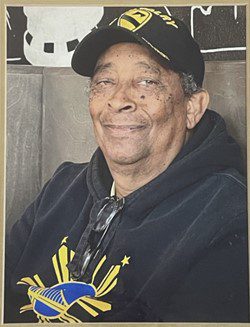
Carl E. B. Lovgren Jr. passed away on Oct. 15, 2025. He was 80 years old.
Carl E. B. Lovgren Jr.
He is survived by his wife, Violeta C. Lovgren; children, Kimnicha Ngov, Delainah Borgonia; grandchildren, Jazmine Krystal Lovgren Tuliao, Kailani Ngov, Katana Ngov, Mahalani Borgonia, Malakai Borgonia; special friends, Lovgren Family, Carrillo Family, Schuster Family, Jackson Family, Cerezo Family; precious friends and other relatives too numerous to mention.
A memorial service will be held on June 3, 2026, at Holy Cross Catholic Church at 10 a.m.
Funeral arrangements are entrusted to James Memorial Funeral Home, Inc.
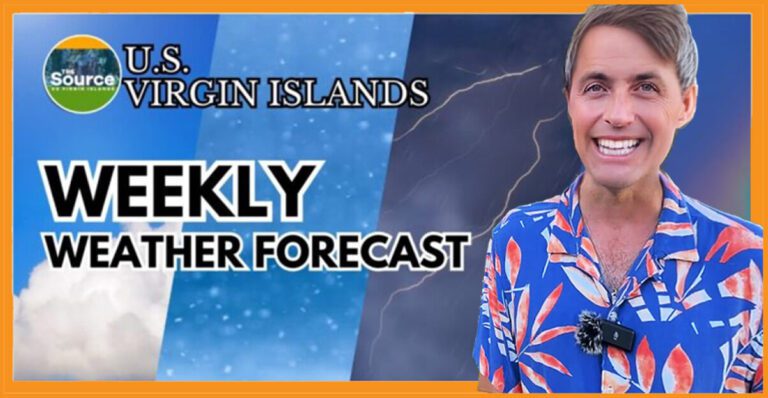
Check out our weekly weather forecast with Jesse Daley, covering Sunday, May 24, through Saturday, May 30.
Please stay safe and follow the Source for more weather updates!







 In his biweekly column, Langley Shazor speaks to issues important to men within the territory.
For generations, strength has been defined in narrow terms. It has been measured by volume, dominance, endurance, and control. A strong man was the one who did not flinch, did not fold, and did not feel too much. He was steady, unshaken, and often unreachable. That image became the blueprint for masculinity, and many men shaped themselves around it, whether it fit or not.
But strength is evolving.
The world today demands a different kind of resilience. It requires men who can lead without intimidation, who can endure without emotional shutdown, and who can hold responsibility without losing their humanity. The traditional image of strength as stoicism alone is no longer sufficient. In relationships, especially, strength that refuses to feel becomes distance, and distance erodes connection.
When strength looks different, it does not mean it disappears. It becomes more complete.
True strength includes emotional mastery. It is the ability to remain grounded when conflict arises. It is the discipline to pause before reacting and the wisdom to choose words carefully. It is restraint in moments when pride wants to escalate. Many men were taught that raising their voice proves authority. In reality, control over one’s tone and temper often reveals far greater power.
Emotional steadiness is not softness. It is regulation. A man who can manage his anger without suppressing it demonstrates depth, not weakness. A man who can acknowledge hurt without deflecting it shows security, not fragility. These expressions of strength are quieter, but they are often more transformative. They create safety in relationships rather than fear.
Women often struggle to recognize this shift because it challenges older expectations as well. Some may unconsciously associate strength with dominance simply because that was the model they grew up observing. When a man chooses calm over control, it can initially feel unfamiliar. But calm leadership creates consistency. Consistency builds trust. And trust forms the foundation of emotional security.
Strength that looks different also includes accountability. Admitting fault has long been seen as diminishing authority. Yet in healthy relationships, accountability increases respect. When a man can say, “I was wrong,” without collapsing into shame or defensiveness, it signals maturity. It communicates that the relationship matters more than ego. That posture does not reduce influence. It deepens it.
Another expression of evolved strength is vulnerability with boundaries. Vulnerability does not mean emotional chaos or unfiltered expression. It means choosing to share internal experiences in ways that invite connection. A man who can articulate stress, fear, or uncertainty without feeling diminished demonstrates self-awareness. He is not abandoning strength. He is expanding it.
Strength also shows up in patience. In a culture that rewards immediacy and reaction, patience requires intention. It is the willingness to sit in discomfort long enough to understand before responding. Many relational conflicts escalate because neither side pauses. When a man models patience, he changes the rhythm of the conversation. He signals that clarity is more important than control.
There is also strength in emotional presence. Being physically present but emotionally absent is not resilience. It is withdrawal. Emotional presence means engaging, listening, and responding with care. It means showing up consistently, not only when convenient. This kind of presence reassures a partner far more than performative gestures.
For men who were raised in environments where emotion was minimized, this transition can feel unnatural. It requires unlearning habits that once protected them. It requires stepping into spaces that feel unfamiliar. But growth always feels unfamiliar at first. The discomfort is not proof of weakness. It is evidence of expansion.
Strength that looks different benefits everyone involved. Women feel safer when emotional steadiness replaces volatility. Children feel more secure when they see fathers express both conviction and compassion. Communities become healthier when leadership reflects balance rather than bravado.
Importantly, redefining strength does not require abandoning traditional masculine traits. Decisiveness, protection, ambition, and responsibility still matter. The difference lies in how they are expressed. Decisiveness paired with empathy becomes wise leadership. Protection paired with gentleness becomes safety. Ambition paired with humility becomes purpose. Responsibility paired with rest becomes sustainability.
The tension between men and women often arises when strength is misinterpreted. A man who withdraws to regulate himself may be seen as detached. A man who expresses frustration calmly may be seen as cold. Communication becomes essential here. Explaining intention reduces assumption. When men articulate why they respond the way they do, and women articulate how those responses feel, clarity replaces confusion.
Strength is not static. It adapts to context. What once required physical endurance now often requires emotional intelligence. What once required dominance now often requires diplomacy. The strongest man in a room today may not be the loudest or the most imposing. He may be the one who listens carefully, speaks deliberately, and responds thoughtfully.
When strength looks different, relationships flourish because fear is replaced with respect. Performance gives way to authenticity. Pride yields to partnership. Men are no longer forced to choose between being strong and being emotionally available. They discover that the two can coexist.
This shift does not weaken masculinity. It refines it. It allows men to embody both firmness and empathy without contradiction. It creates space for relationships built on mutual understanding rather than silent tension.
When strength evolves, connection deepens. And when connection deepens, the bridge between men and women becomes far more stable than any display of dominance ever could.
Editor’s Note: Opinion articles do not represent the views of the Virgin Islands Source newsroom and are the sole expressed opinion of the writer. Submissions can be made to
In his biweekly column, Langley Shazor speaks to issues important to men within the territory.
For generations, strength has been defined in narrow terms. It has been measured by volume, dominance, endurance, and control. A strong man was the one who did not flinch, did not fold, and did not feel too much. He was steady, unshaken, and often unreachable. That image became the blueprint for masculinity, and many men shaped themselves around it, whether it fit or not.
But strength is evolving.
The world today demands a different kind of resilience. It requires men who can lead without intimidation, who can endure without emotional shutdown, and who can hold responsibility without losing their humanity. The traditional image of strength as stoicism alone is no longer sufficient. In relationships, especially, strength that refuses to feel becomes distance, and distance erodes connection.
When strength looks different, it does not mean it disappears. It becomes more complete.
True strength includes emotional mastery. It is the ability to remain grounded when conflict arises. It is the discipline to pause before reacting and the wisdom to choose words carefully. It is restraint in moments when pride wants to escalate. Many men were taught that raising their voice proves authority. In reality, control over one’s tone and temper often reveals far greater power.
Emotional steadiness is not softness. It is regulation. A man who can manage his anger without suppressing it demonstrates depth, not weakness. A man who can acknowledge hurt without deflecting it shows security, not fragility. These expressions of strength are quieter, but they are often more transformative. They create safety in relationships rather than fear.
Women often struggle to recognize this shift because it challenges older expectations as well. Some may unconsciously associate strength with dominance simply because that was the model they grew up observing. When a man chooses calm over control, it can initially feel unfamiliar. But calm leadership creates consistency. Consistency builds trust. And trust forms the foundation of emotional security.
Strength that looks different also includes accountability. Admitting fault has long been seen as diminishing authority. Yet in healthy relationships, accountability increases respect. When a man can say, “I was wrong,” without collapsing into shame or defensiveness, it signals maturity. It communicates that the relationship matters more than ego. That posture does not reduce influence. It deepens it.
Another expression of evolved strength is vulnerability with boundaries. Vulnerability does not mean emotional chaos or unfiltered expression. It means choosing to share internal experiences in ways that invite connection. A man who can articulate stress, fear, or uncertainty without feeling diminished demonstrates self-awareness. He is not abandoning strength. He is expanding it.
Strength also shows up in patience. In a culture that rewards immediacy and reaction, patience requires intention. It is the willingness to sit in discomfort long enough to understand before responding. Many relational conflicts escalate because neither side pauses. When a man models patience, he changes the rhythm of the conversation. He signals that clarity is more important than control.
There is also strength in emotional presence. Being physically present but emotionally absent is not resilience. It is withdrawal. Emotional presence means engaging, listening, and responding with care. It means showing up consistently, not only when convenient. This kind of presence reassures a partner far more than performative gestures.
For men who were raised in environments where emotion was minimized, this transition can feel unnatural. It requires unlearning habits that once protected them. It requires stepping into spaces that feel unfamiliar. But growth always feels unfamiliar at first. The discomfort is not proof of weakness. It is evidence of expansion.
Strength that looks different benefits everyone involved. Women feel safer when emotional steadiness replaces volatility. Children feel more secure when they see fathers express both conviction and compassion. Communities become healthier when leadership reflects balance rather than bravado.
Importantly, redefining strength does not require abandoning traditional masculine traits. Decisiveness, protection, ambition, and responsibility still matter. The difference lies in how they are expressed. Decisiveness paired with empathy becomes wise leadership. Protection paired with gentleness becomes safety. Ambition paired with humility becomes purpose. Responsibility paired with rest becomes sustainability.
The tension between men and women often arises when strength is misinterpreted. A man who withdraws to regulate himself may be seen as detached. A man who expresses frustration calmly may be seen as cold. Communication becomes essential here. Explaining intention reduces assumption. When men articulate why they respond the way they do, and women articulate how those responses feel, clarity replaces confusion.
Strength is not static. It adapts to context. What once required physical endurance now often requires emotional intelligence. What once required dominance now often requires diplomacy. The strongest man in a room today may not be the loudest or the most imposing. He may be the one who listens carefully, speaks deliberately, and responds thoughtfully.
When strength looks different, relationships flourish because fear is replaced with respect. Performance gives way to authenticity. Pride yields to partnership. Men are no longer forced to choose between being strong and being emotionally available. They discover that the two can coexist.
This shift does not weaken masculinity. It refines it. It allows men to embody both firmness and empathy without contradiction. It creates space for relationships built on mutual understanding rather than silent tension.
When strength evolves, connection deepens. And when connection deepens, the bridge between men and women becomes far more stable than any display of dominance ever could.
Editor’s Note: Opinion articles do not represent the views of the Virgin Islands Source newsroom and are the sole expressed opinion of the writer. Submissions can be made to