The University of the Virgin Islands women’s basketball team defeated Jarvis Christian University 53-46 in its first matchup of the Tiffany Jackson HBCU Classic on Friday night, held at the Mary E. Branch Gymnasium in Austin, Texas. This event, hosted by Huston-Tillotson, features the host school alongside UVI, Jarvis Christian, and Stillman College.
Junior guard Khaelii Robertson-Mack (Submitted photo)
UVI (2-2) opened the game sluggishly as its offense struggled initially. In a low-scoring first half, the Lady Buccaneers found themselves trailing by five points at the end of the period. A spirited second quarter surge allowed the Lady Buccaneers to take their first lead of the game at 17-16 on a made layup by senior forward Kashay Bass. UVI took a narrow 20-18 lead into the locker room at halftime.
In the second half, the two teams would trade baskets early on. During a pivotal stretch, UVI would extend its lead, highlighted by true freshman guard Ashlynn Lemos, with a flurry of baskets, scoring nine of her team’s next 10 points, establishing a 34-28 lead. However, a 14-2 run by Jarvis Christian enabled them to reclaim the lead. The resilient Lady Buccaneers would respond with a run of their own, tying the score at 42-all with another two-point basket by Bass. A crucial three-pointer by junior guard Atalia Thomas later secured the lead for UVI, ultimately sealing the 53-46 victory.
Bass emerged as the leading scorer for the Buccaneers, amassing 21 points, with 13 scored in the second half. The six-foot forward also contributed eight rebounds, three steals, and two blocks.
Junior forward Keshara Romain was dominant in the painted area for the Lady Buccaneers with another double-digit rebounding game, securing 18 rebounds. The current Historically Black Colleges and Universities Athletic Conference (HBCUAC) Defensive Player of the Week and Newcomer of the Week also recorded a season-high with seven blocks.
For the Lady Bulldogs, Jacy Reese led the team with 14 points.
Next, the Lady Buccaneers will face the Stillman College Lady Tigers on the second day of the Tiffany Jackson HBCU Classic. In their last matchup with this HBCUAC conference rival, the Lady Tigers emerged victorious. The Lady Buccaneers will be seeking revenge in the game scheduled to tip off at 1 p.m. Central Time at the Branch Gymnasium.
About UVI Athletics
The University of the Virgin Islands (UVI) is a member of the National Association of Intercollegiate Athletics (NAIA) and a member of the HBCU Athletic Conference (HBCUAC), formerly the Gulf Coast Athletic Conference (GCAC). Entering the 2025-26 season, the Buccaneers will begin their 19th season of athletic competition. As the only Historically Black College or University (HBCU) in the Caribbean, UVI currently sponsors six sports, including men’s and women’s cross country, men’s and women’s basketball, and men’s and women’s outdoor track and field. For more information on UVI Athletics, visit UVIAthletics.com.
The University of the Virgin Islands women’s basketball team fell to the Stillman College Lady Tigers 60-44 despite a second-half surge on the second day of the Tiffany Jackson HBCU Classic at the Mary E. Branch Gymnasium in Austin, Texas.
Freshman guard Ashlynn Lemos (Submitted photo)
UVI (2-3) found itself playing from behind from the opening tip as Stillman established an early lead. A turnover-plagued first half sent the Lady Buccaneers into halftime, facing a 14-point deficit of 31-17.
An inspired Lady Buccaneers team emerged from the locker room as they mounted a second-half comeback to bring themselves within striking distance. Senior forward Kashay Bass narrowed the gap to five points with two consecutive free throws, leaving 1:31 on the clock in the third quarter. UVI outscored Stillman 20-12 in the period, setting the stage for a potential comeback in the final quarter.
The comeback attempt continued in the fourth quarter as the Lady Buccaneers responded to Stillman’s scoring with offense of their own as the teams traded baskets early in the period. Despite bringing the lead down to just a two-possession game at 46-41, the comeback attempt faltered as the Lady Tigers maintained their lead and secured the victory.
Bass finished the game with her second double-double of the season, recording 16 rebounds and a career-high 23 points, 16 of which were scored in the second half, as she led her team in their second-half surge.
Senior forward Keshara Romain contributed 12 rebounds, while junior guard Arianna Renault added four assists.
The Lady Buccaneers will now set their sights on a matchup with Philander Smith University at Mims Gymnasium in Little Rock, Arkansas, on November 15. They will then travel to Hot Springs, Arkansas, to face Champion Christian College before returning to the Virgin Islands. Both games can be seen on www.UrbanEdgeNetwork.com.
Stay informed with Consider the Source — your weekly breakdown of the biggest stories across the U.S. Virgin Islands. This episode covers developments in the Calvert White bribery case, new historic housing in downtown Charlotte Amalie, a community-led donation to Cancer Support VI, the ongoing refinery deposition dispute on St. Croix, and updates on SNAP assistance during the federal shutdown. We also look at the latest from the Legislature, progress on the regulated cannabis rollout, questions surrounding WAPA’s fuel contract, and standout performances from our young athletes representing the territory abroad. There’s always something new on Consider the Source!
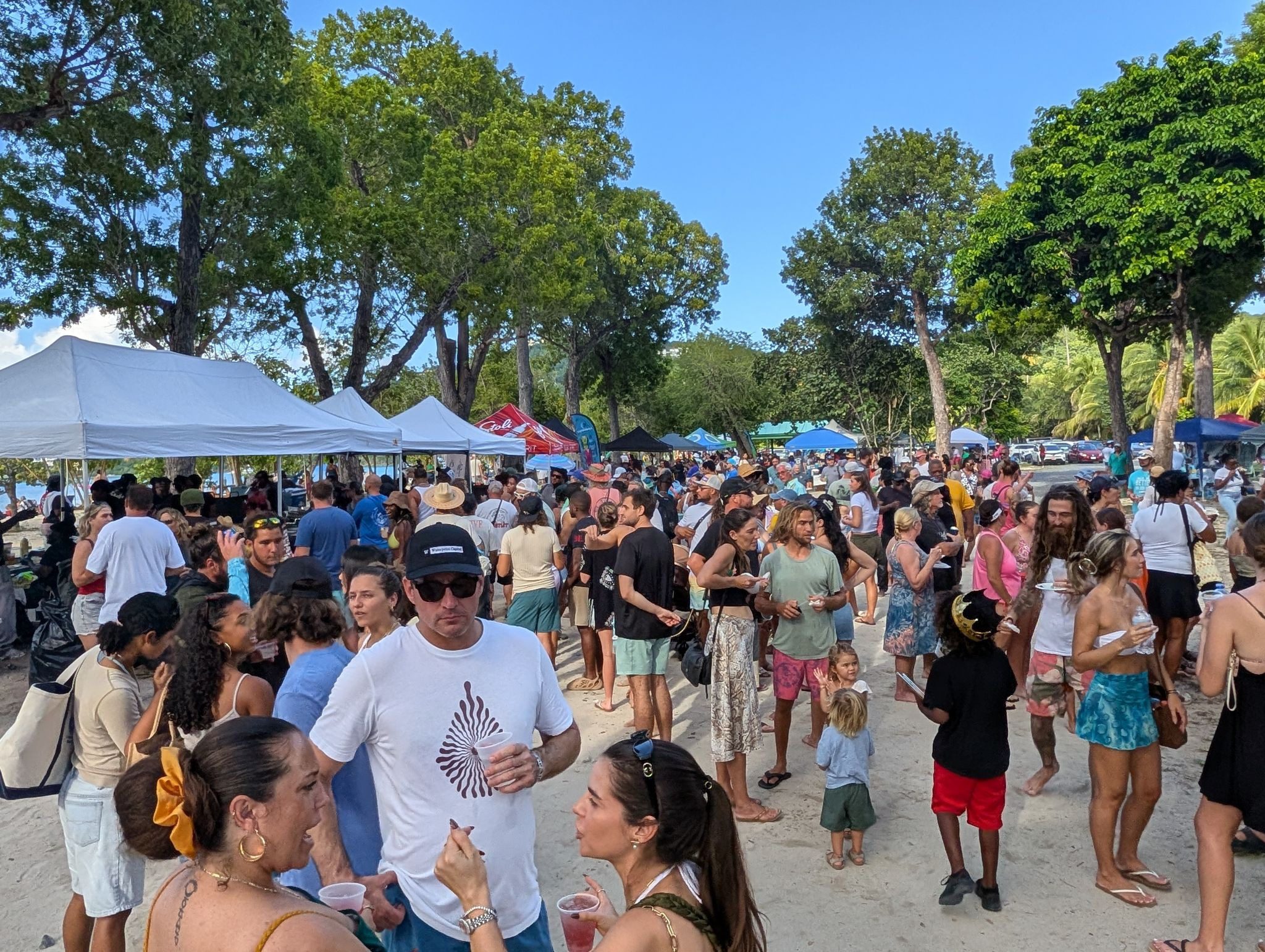
On Saturday, the fourth annual Tunes and Tacos Throwdown fundraiser brought the St. Thomas community together at Magens Bay to support Nana Baby Children’s Home.
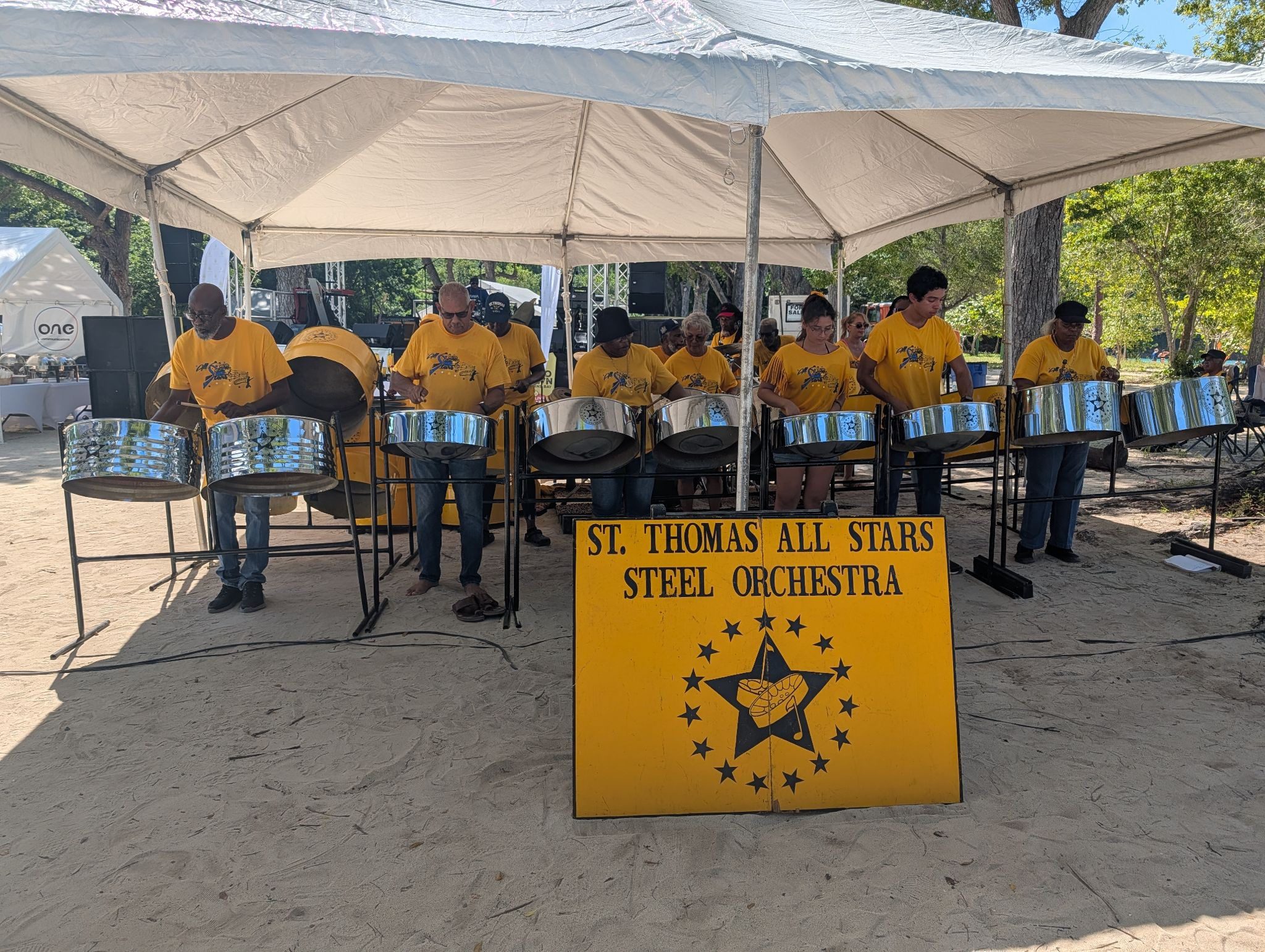
The event, which featured 22 taco booths and 10 local vendors, was the largest throwdown yet. Live music was provided by several local acts, including the DubLab Reggae Band and the St. Thomas All Stars Steel Orchestra.
The St. Thomas All Stars Steel Orchestra performs at the Tunes and Tacos Throwdown event on Nov. 8, 2025. (Source Photo by Finn Sharpless)
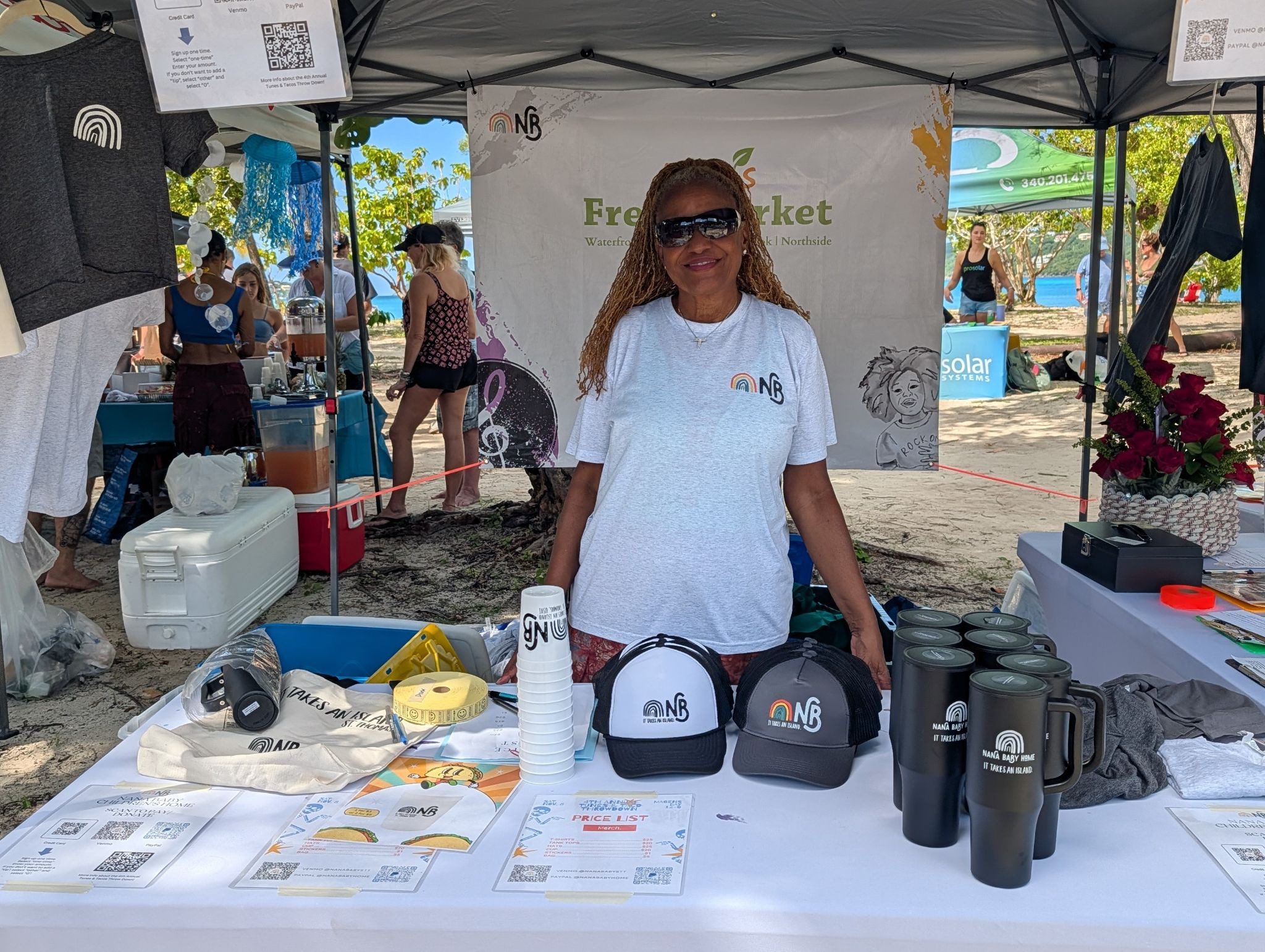
Volunteer Terry Seabrook praised the event’s mission and the dedication of Nana Baby Children’s Home leaders. “This is my third year volunteering,” Seabrook said. “I’m a retired person from the mainland, but I make sure I’m here to help because it means so much. You’ve got kids that don’t have a place to sleep, and they take them in no matter the time of day or night. They really make a difference.”
Terry Seabrook brings smiles and island pride to the Tunes and Tacos Throwdown. (Source Photo by Finn Sharpless)
Several local organizations joined the effort to support Nana Baby Children’s Home, ranging from health and wellness providers to longtime community fixtures and independent artists.
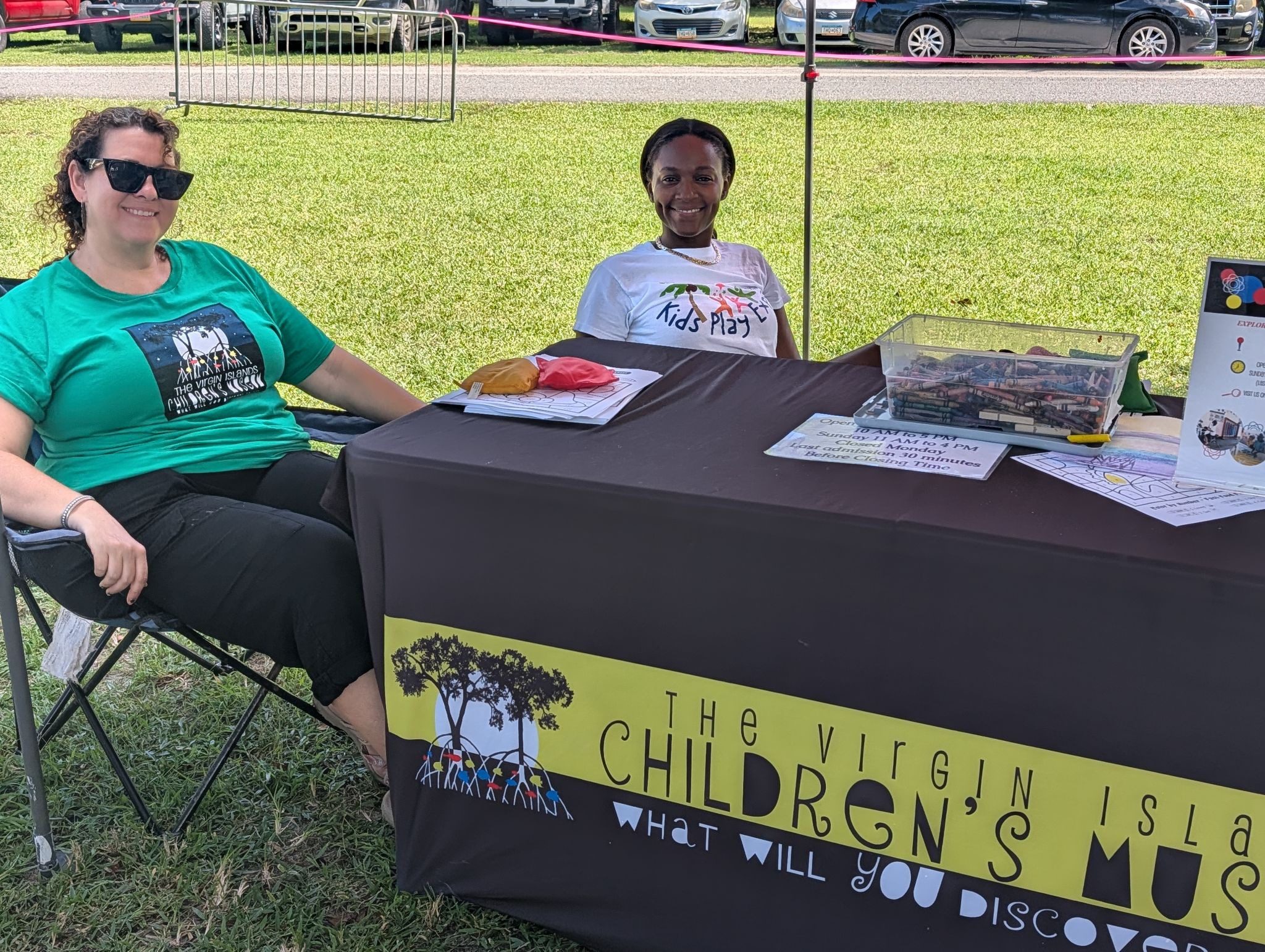
The Virgin Islands Children’s Museum was among the supporters, with CEO Amber McCammon and Education and Outreach Coordinator Zenaide Rogers volunteering to run a booth with games and activities for children.
“We’re a nonprofit ourselves, and we just want to support other nonprofits in the territory that are doing good work,” McCammon said.
As the museum expands its outreach, including a “Teen Time” program planned for December, Rogers said the organization “supports any cause that involves children. Nana Baby Home has been doing great community service for so many years. It’s wonderful that they’re getting recognized, and we want to continue to help with their mission.” McCammon added that “it’s so important that local children and families have a safe place to go in times of trouble.”
Representatives from the Virgin Islands Children’s Museum share interactive activities and information about upcoming programs at their community booth. (Source Photo by Finn Sharpless)
Wellness professionals were also on hand to highlight local services. Dr. Keisha Hamilton of the Chiropractic Health Center said, “It’s always a great event. We love the cause. The tacos are amazing, so it’s a win-win.”
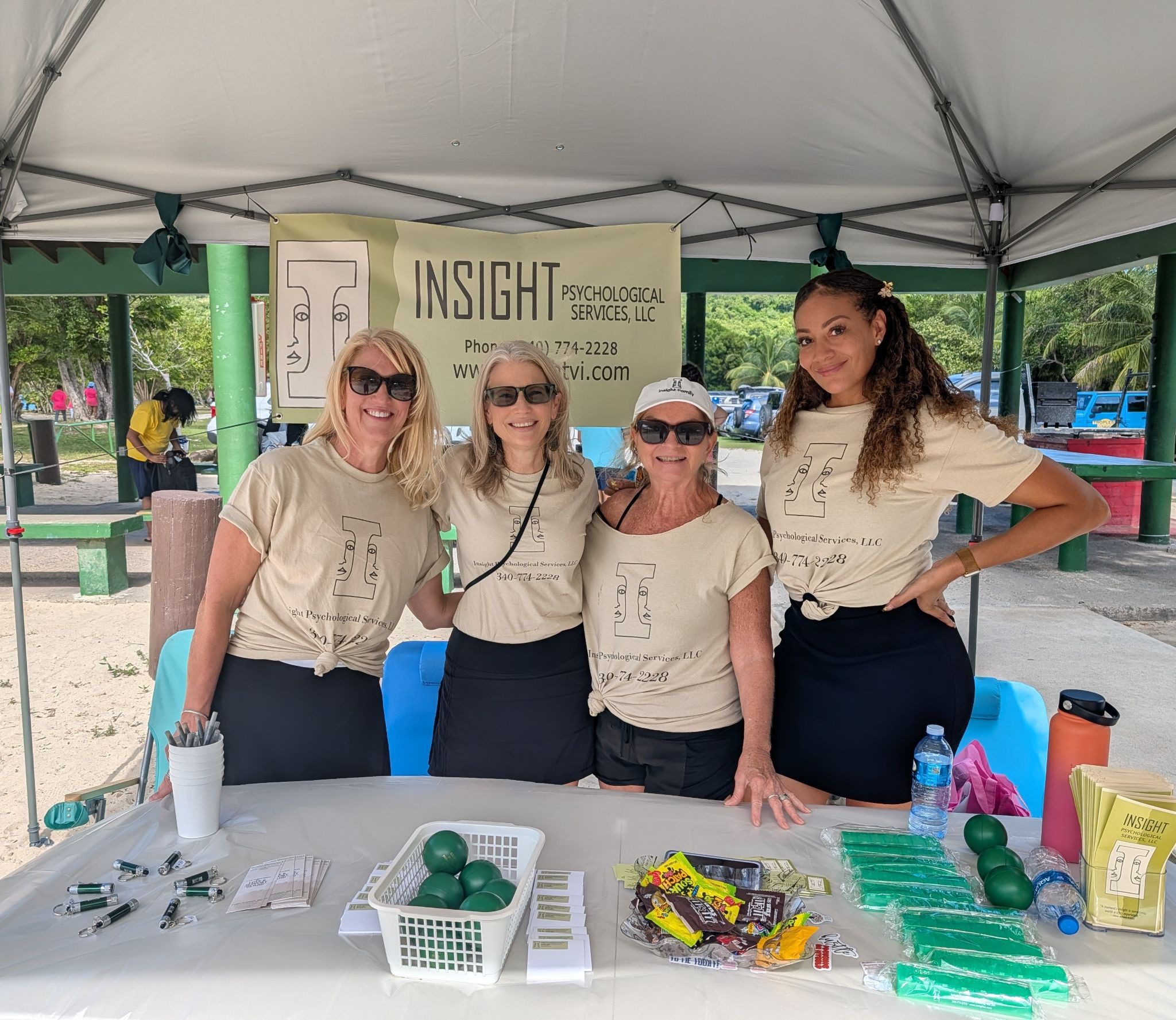
Dr. Angelina J. Prince, a licensed clinical psychologist with Insight Psychological Services, emphasized the importance of mental health care in the community. “We look at any agency that’s providing critical care services to children, especially in our community, especially the underserved,” Prince said. She added her support for the event. “You’ve got amazing food. You’ve got the entire community coming together for a worthwhile cause. It’s a great way for us to unite and support each other.”
Insight Psychological Services team members showed up in full force to promote mental wellness and connect with the community. (Source photo by Finn Sharpless)
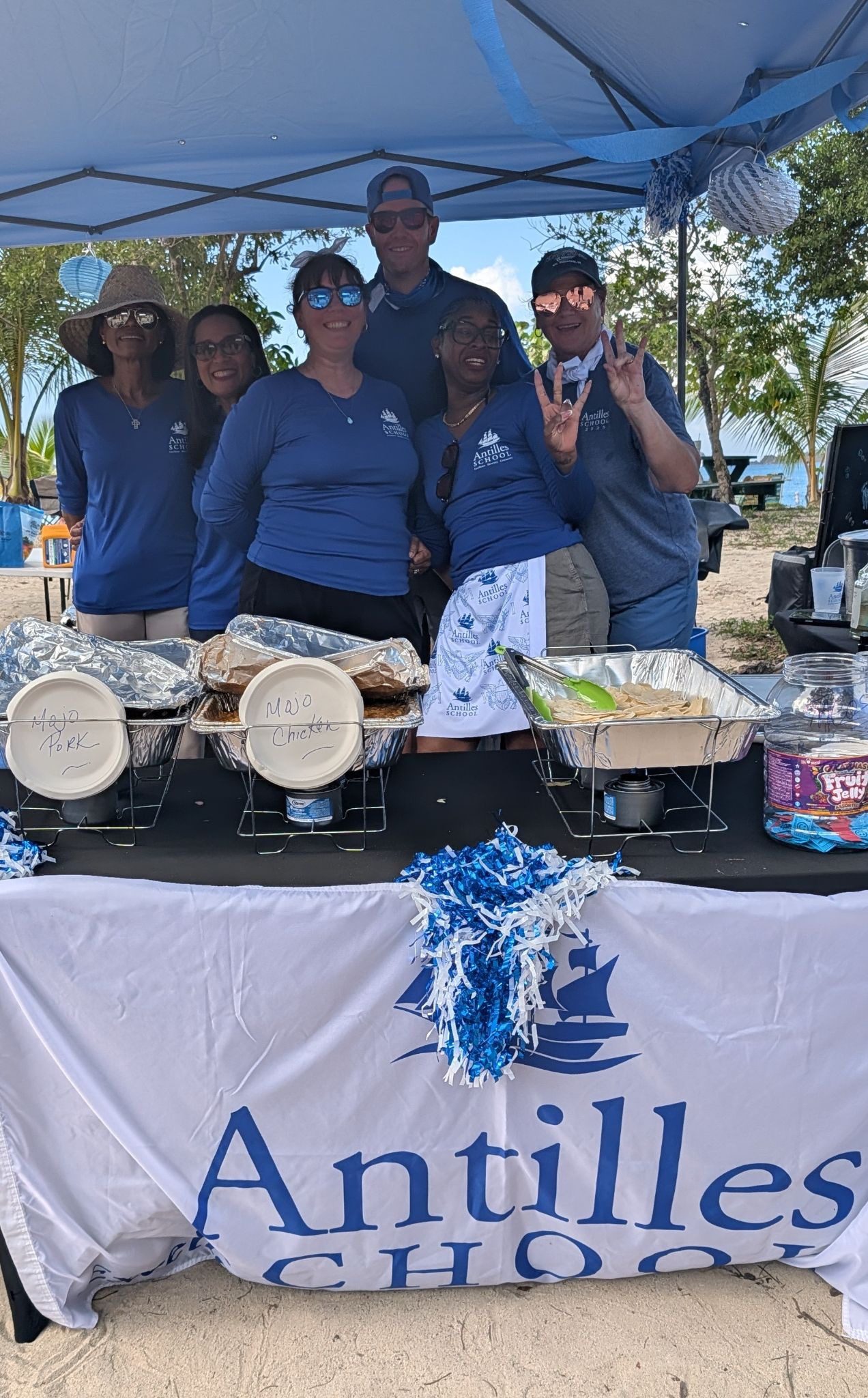
Antilles School alumni and staff joined the fundraiser to celebrate the school’s 75th anniversary and highlight its commitment to community service. “We just want to make community outreach one of the pillars of our 75th year,” said Amy Gurlea, alumni campaign chair and former faculty member.
Hugh Arnold, administrator of admission and advancement, added, “Today, it’s all about supporting Nana Baby and having fun.” Gurlea described Nana Baby Home as “an amazing cause … They create a family and community for kids.”
Antilles School alumni and staff serve up good food and community spirit at the Tunes and Tacos Throwdown, celebrating the school’s 75th anniversary while supporting Nana Baby Home. (Source photo by Finn Sharpless)
At the fundraiser, local food vendors and chefs brought creativity and community spirit to the competition. A representative from An Hour Late said, “We’ve been supporting since day one,” noting that this year they were competing in the dessert taco category with cannoli tacos. “Last year, we made ice cream tacos. It was a lot of fun.”
Chef Pepe, representing St. Thomas Restaurant Group, made his debut in the competition. “It’s my first time competing, it’s really nice,” he said.
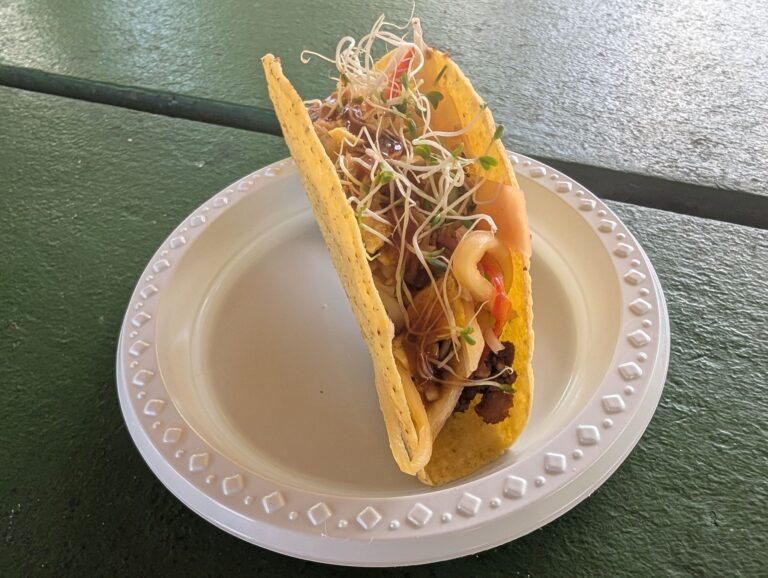
A taco entry by St. Thomas Restaurant Group at the Tunes and Tacos Throwdown highlights the creativity and flavor local chefs brought to the friendly competition in support of Nana Baby Children’s Home. (Source photo by Finn Sharpless)
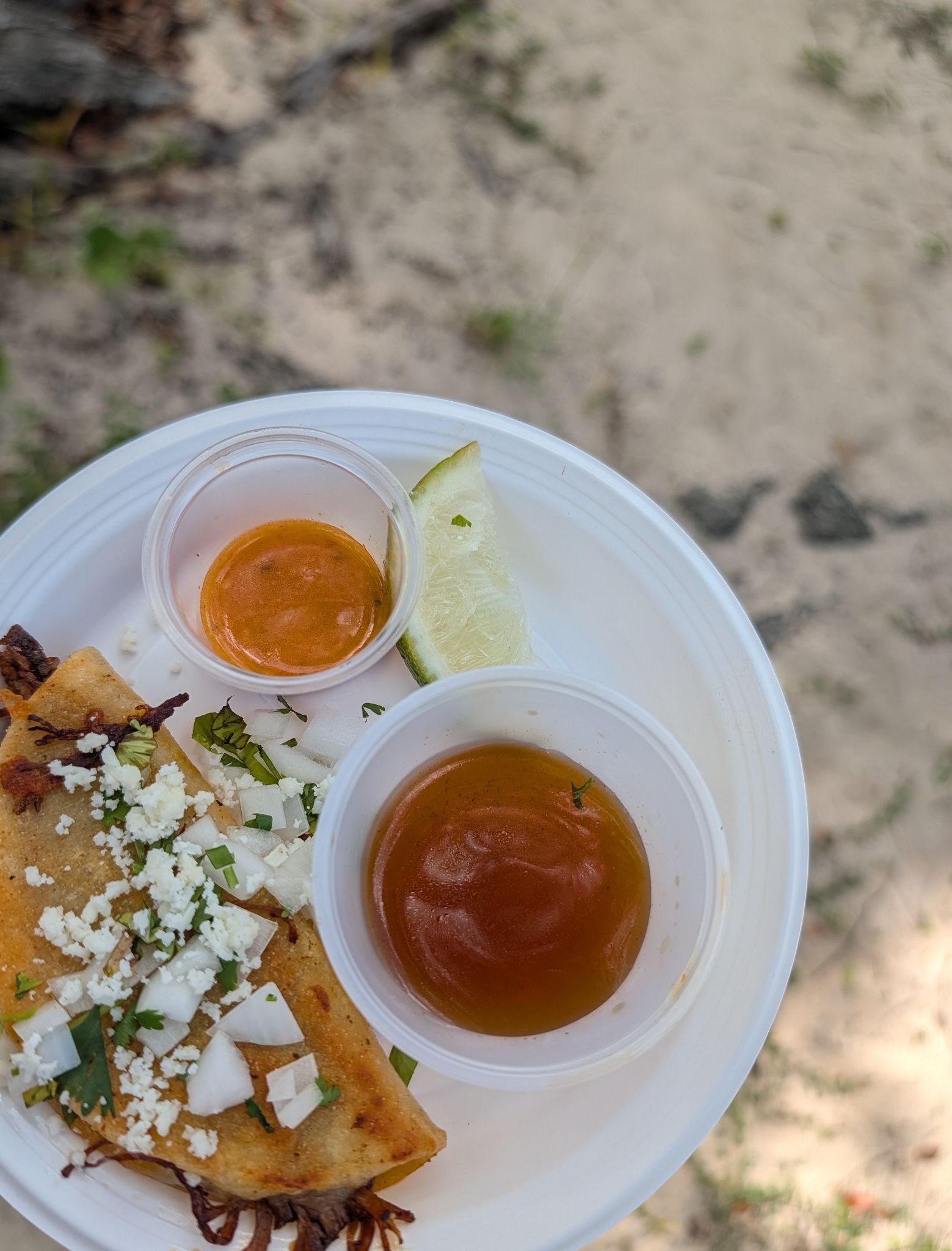
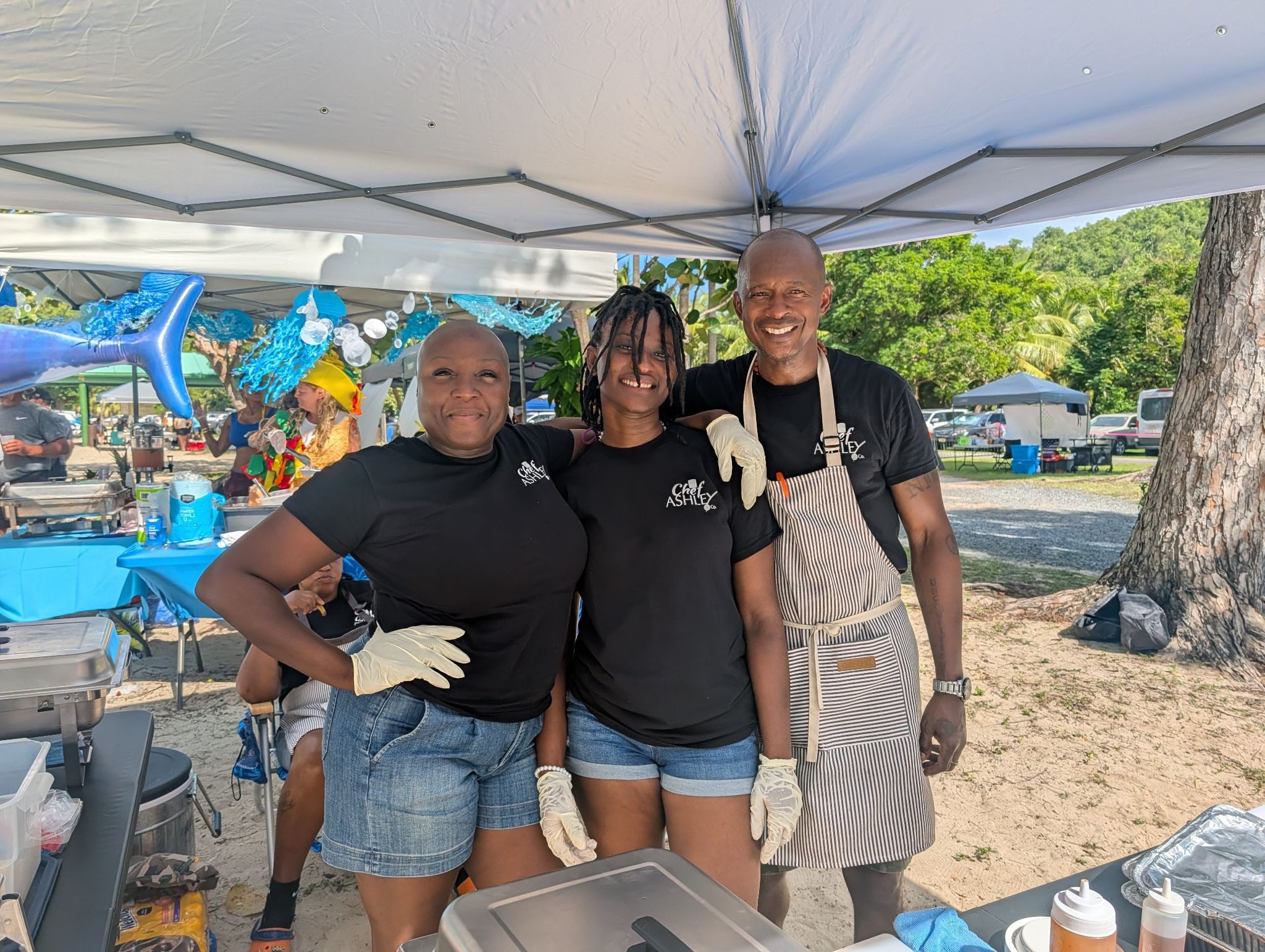
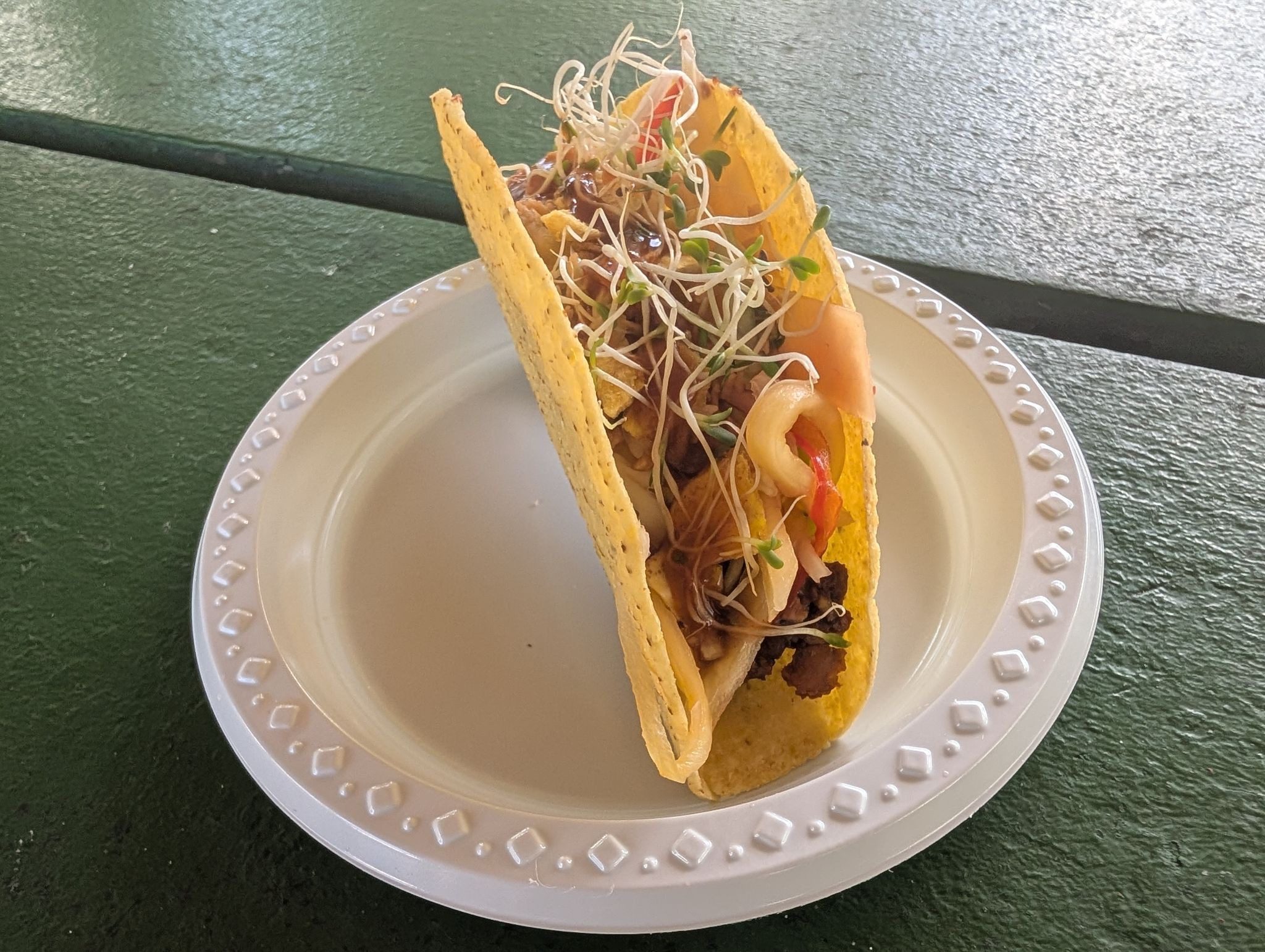
Chef Ashley, representing his team, emphasized the event’s mission. “Everyone needs to support Nana Baby,” he said. “I love the competition and can’t wait for next year.”
Chef Ashley and his team bring flavor and heart to the Tunes and Tacos Throwdown. (Source photo by Finn Sharpless)Taco prepared by Chef Ashley (Source Photo by Finn Sharpless)
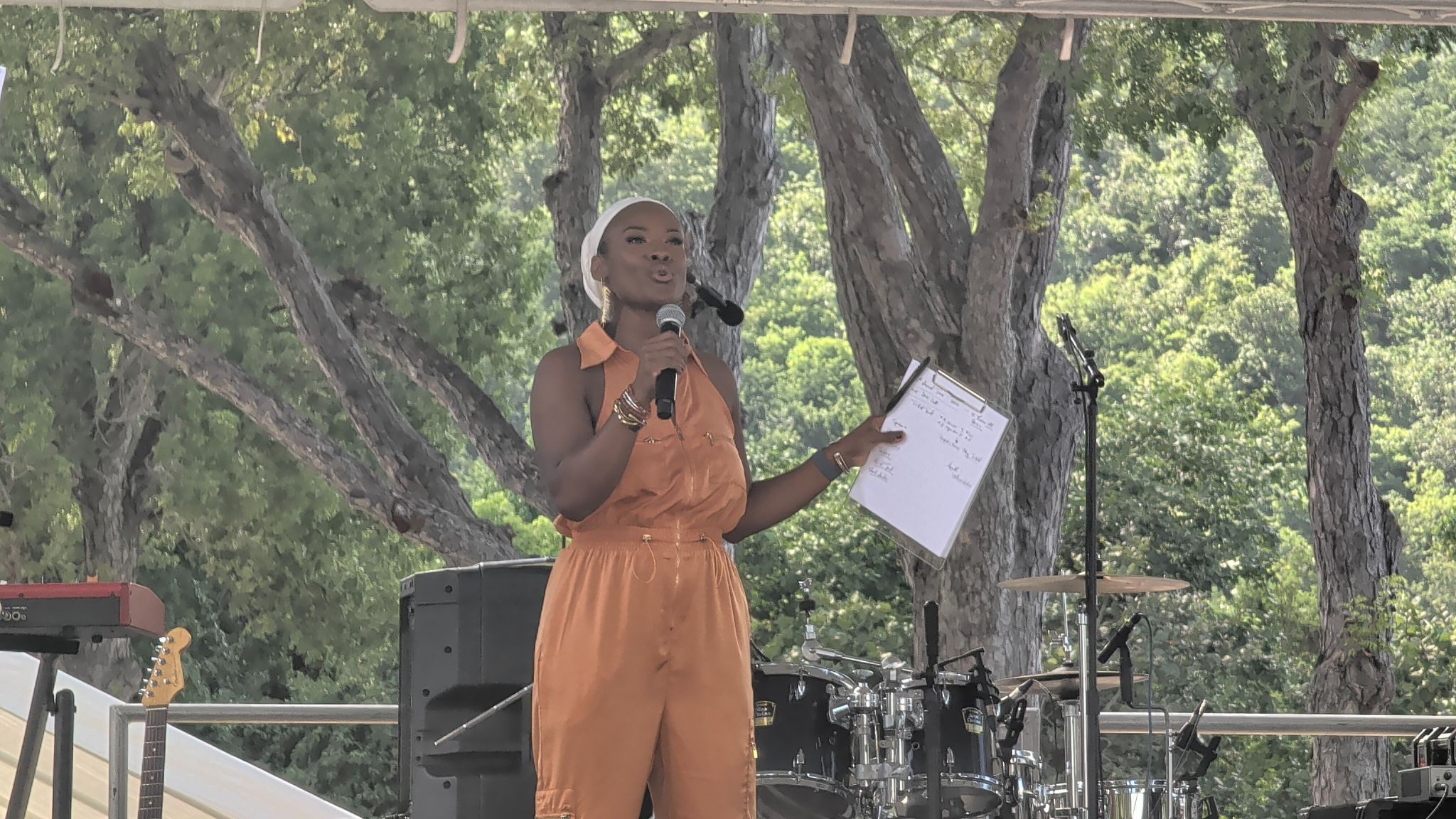
Tricia Homer, host for the event, praised the fundraiser and its organizers. “I don’t know of any other organization that does what they do here on the island,” she said. “I saw the way the community comes out and supports them. That inspired me to reach out.”
Event host Tricia Homer energizes the crowd at the Tunes and Tacos Throwdown, praising the fundraiser’s community impact and spirit of giving. (Source photo by Finn Sharpless)
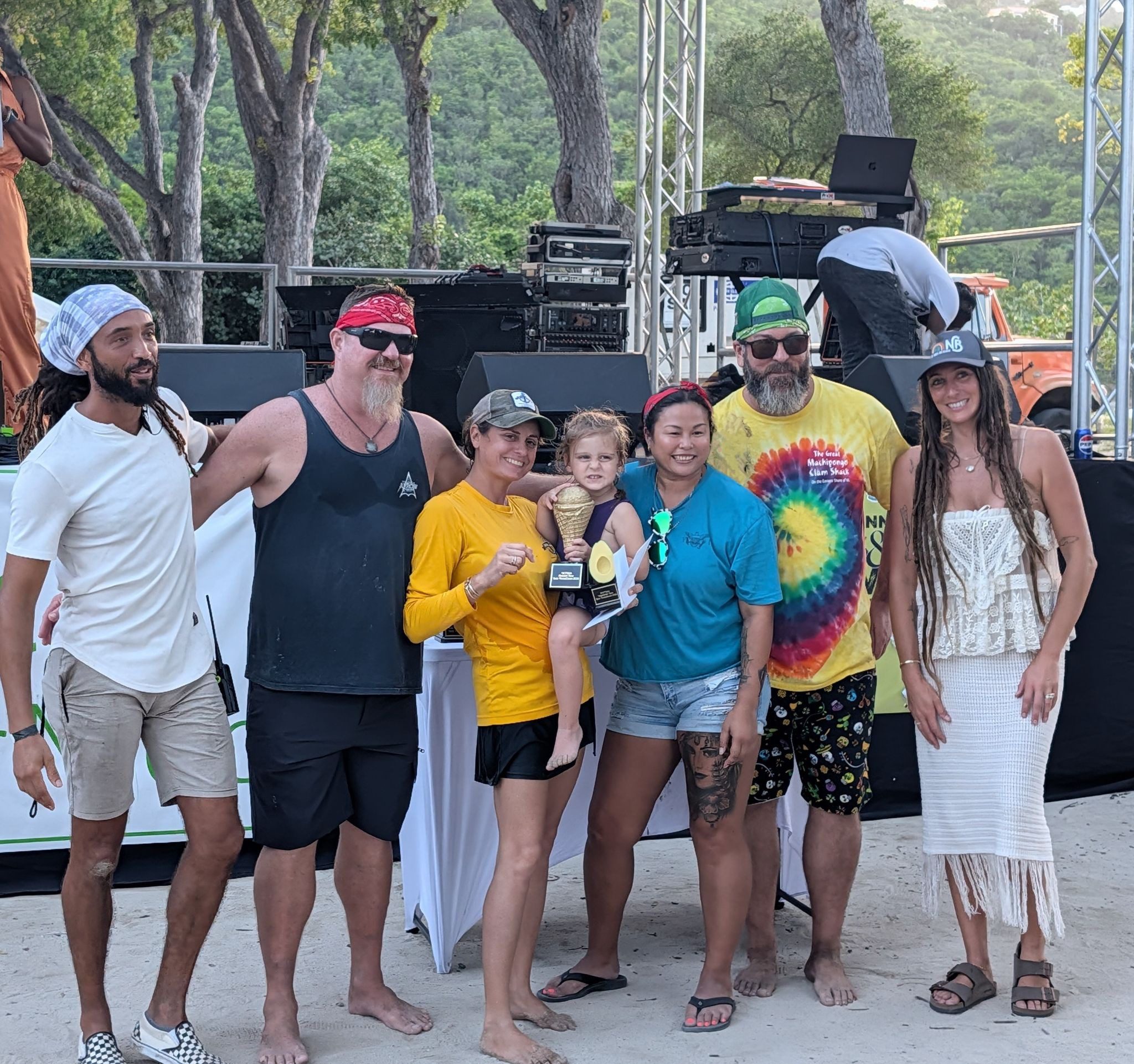
After the judges cast their votes, the results were: In the Taco Competition, the Vegetarian Taco category was won by Sun & Sea Bar and Grill, followed by Dive Bar in second place and Chef Ashley in third. Sun & Sea Bar and Grill also claimed first place in the Meat Taco category, with Caribbean Fish Market in second and Movin’ Too Spicy in third. Alphonso Betty won the Fish Taco category, followed by Agave Red Hook in second and VI Pizza Pop Up in third. In the Dessert Taco category, An Hour Late earned first place, VI Pizza Pop Up was second, and Agave Havensight placed third.
Representatives from An Hour Late celebrate their first-place win in the dessert taco category with Nana Baby Children’s Home Executive Director Darian Torrice-Hairston. (Source photo by Finn Sharpless)
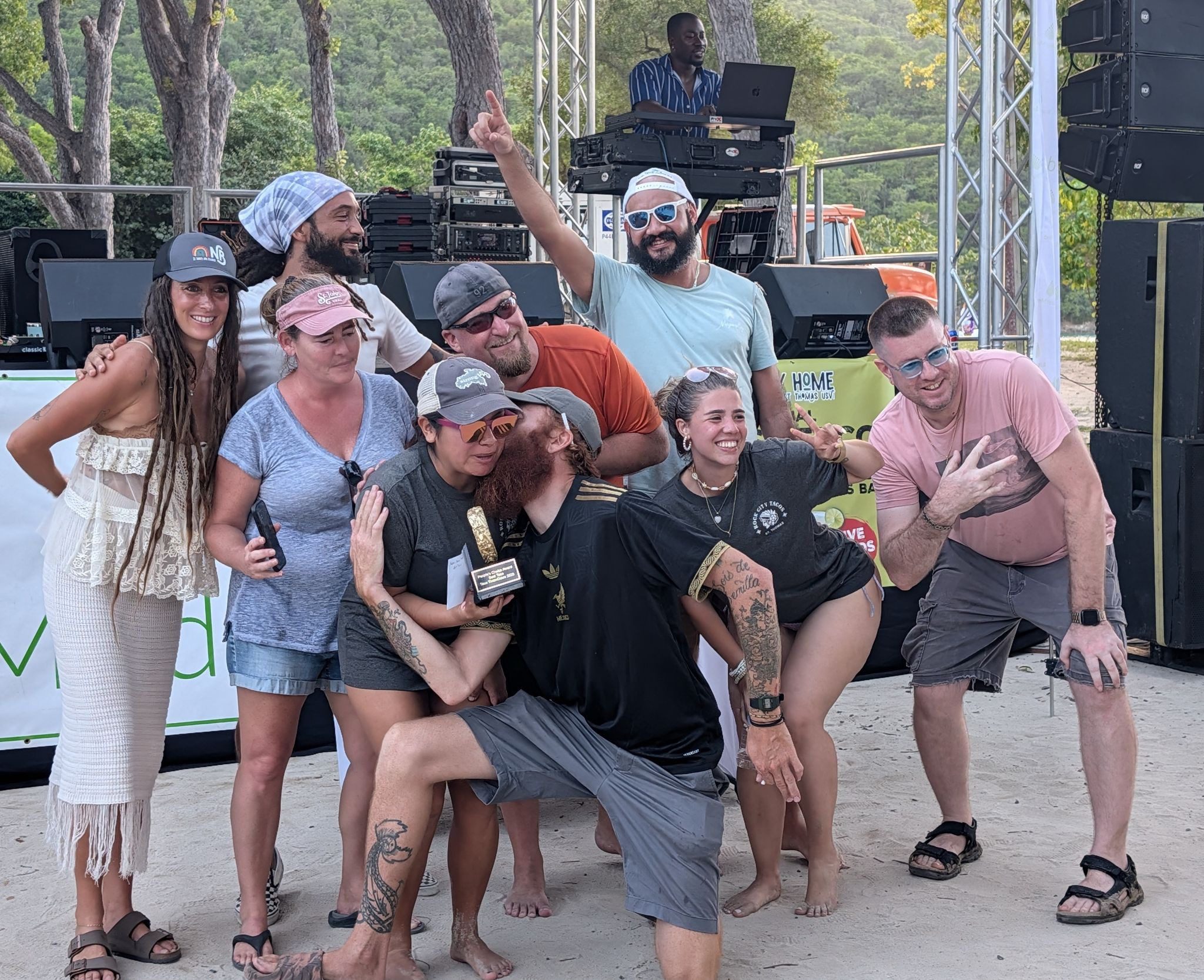
In the Margarita Competition, La Marina Bar & Restaurant’s Sauvignon Blanc Margarita took first place, followed by Tillet Garden Productions’ Watermelon Margarita in second and Agave Red Hook in third. The People’s Choice Awards went to Rock City Tacos for tacos and La Marina Bar & Restaurant’s Sauvignon Blanc Margarita for margaritas.
Rock City celebrates its win for the People’s Choice Taco with Nana Baby Children’s Home Executive Director Darian Torrice-Hairston. (Source Photo by Finn Sharpless)
Darian Torrice-Hairston, executive director of Nana Baby Children’s Home and organizer of the event, called this year’s fundraiser “super successful,” noting it was the largest yet, with 22 taco booths and 10 local vendors. “If you’re doing a good thing, it grows,” she said, crediting sponsors and competitors for making the expanded event possible.
Funds raised this year will support the creation of a teen program at Nana Baby Children’s Home. “We see a more pressing need for the teenage population,” Torrice-Hairston said, noting there are no homes for teenagers on St. Thomas. She added that the fundraiser “is basically going to help us become two organizations, so we can support kids of all ages, in all of their different walks of life.”
She expressed gratitude to the community for all the support and expressed optimism that next year’s Tunes and Tacos Throwdown will be even bigger.
A crowd celebrates during the fourth annual Tunes and Tacos fundraiser for the Nana Baby Children’s Home. (Source photo by Finn Sharpless)
For the third year, the Children’s Program at the BVI Lit Fest put the focus on local creatives, giving a younger generation the chance to connect with the seasoned musicians, writers, and visual storytellers who shape the culture around them.
Saturday on Tortola, Kamyce Penn-O’Neal, who helps to organize the experience under the guidance of Rochelle Smith, director of the H. Lavity Stoutt Community College Virgin Islands Studies Institute, said the structure of the day is intentional.
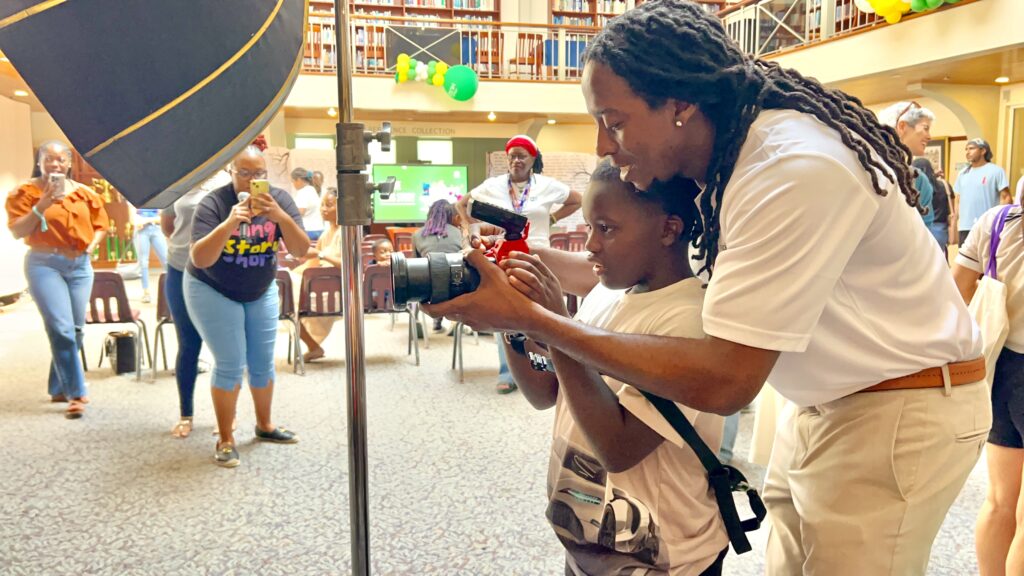
BVI photographer Shaun Black showed his group how to work a professional shoot (Source photo by Ananta Pancham)
“This part of the festival is strictly about our local authors and creatives,” she said. “Every year we continue to get more creative, to expand. The parents enjoy it as much as the children, and we want to keep building so the numbers can double and triple in the years ahead.”
This year’s presenters included children’s author Rick S.S. Grant, photographer Shaun Black, multimedia visual artist Via Donovan-Hodge, and musician Kayron Todman of the Razor Blades fungi band, each leading sessions aimed at sparking curiosity, creativity, and cultural grounding. The progression of the day moved with the age groups, from reading circles for younger children to hands-on art and music demonstrations for older elementary students.
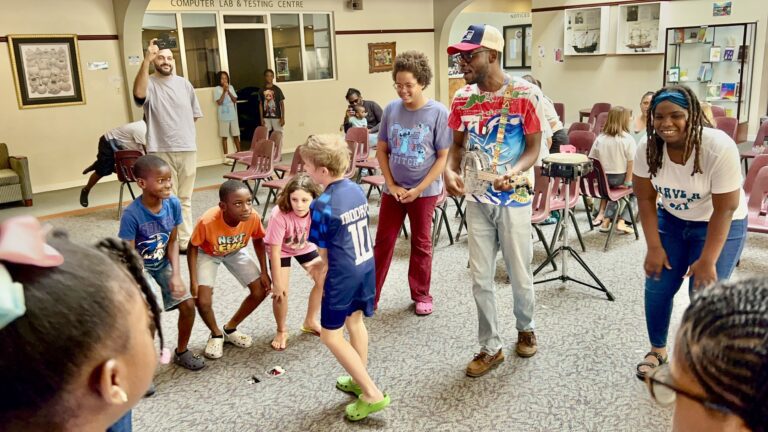
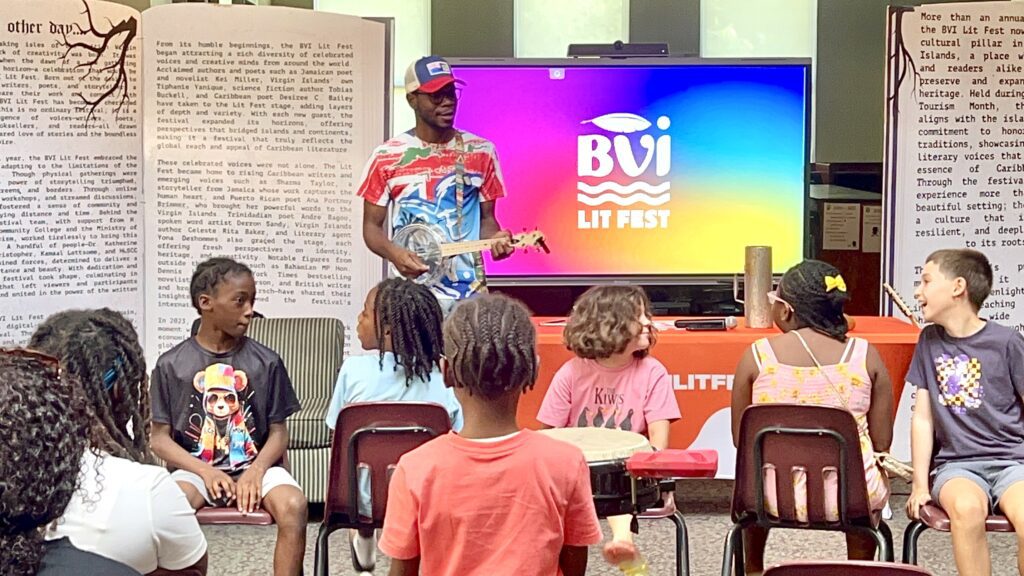
Culture bearer Kayron Todman leads his group in a game of musical chairs set to fungi music (Source photo by Ananta Pancham)
Todman, who serves as a School Improvement Officer for the BVI’s Ministry of Education, led a workshop on fungi music — known in the U.S. Virgin Islands as quelbe. He spoke to students about the history of the music, its roots, and its role as a form of storytelling that has carried the experiences of Virgin Islanders across generations. He explained the instruments used in fungi bands and how they each contribute to the sound, demonstrating the link between musical rhythm and narrative memory.
He said the music is personal to him, formed through time spent with older tradition-bearers. “I grew up hanging out with the older guys, like my grandfather, going out during Christmas and New Year’s serenading from house to house,” Todman said. “It became ingrained in me. So now it’s about passing it on to the younger generation.” Seeing students’ excitement, he added, was the highlight. “Seeing the smiles on their faces and getting them involved — that’s the part that matters.”
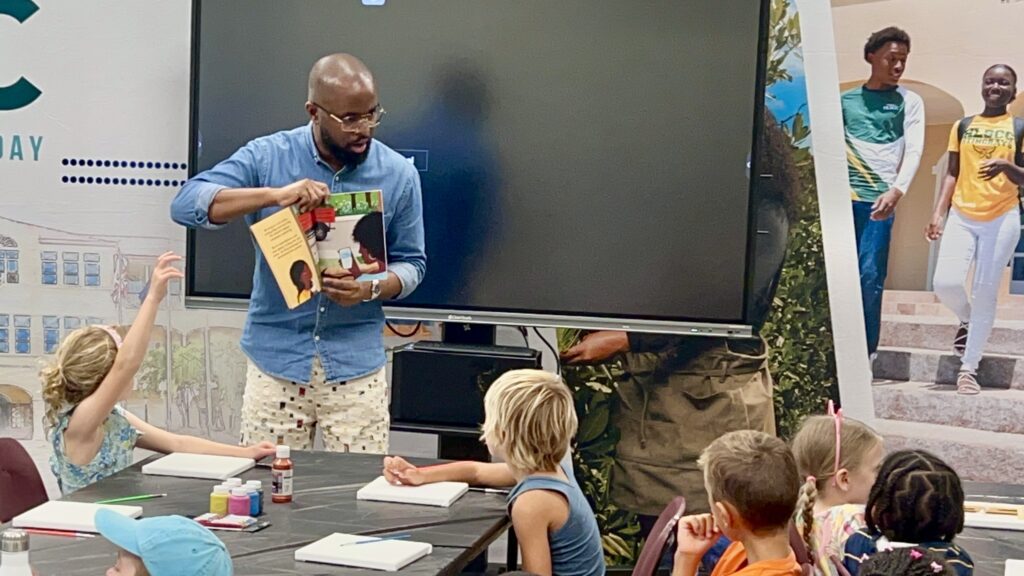
Saturday gave children’s book author Rick Grant the chance to engage young readers in a storytelling session featuring his books (Source photo by Ananta Pancham)
In the next room, Grant concluded a reading session with children ages four to seven, sharing all four of his books before transitioning into a collaborative painting activity with Donovan-Hodge, who explained how pictures can also tell a story. He guided students through conversations about what stories can do — how they can express emotion, record memory, and offer new ways to see familiar surroundings.
“Reading is fundamental — it’s the crux of life,” Grant said. “Being able to impart knowledge and read with children and just engage is really important to me.” He emphasized that storytelling is not something reserved for adults. “You get to tell your stories as a writer, and when you put pen to paper, the world gets to see it. I wanted to inspire imagination, to get them thinking about the feelings in the stories and how they might tell their own.”
Penn-O’Neal said that having presenters who are not only artists but also community stewards and educators is key. Many of them were teachers to today’s parents – and in some cases, to Penn-O’Neal herself, who spoke about her experiences with Todman as her music teacher.
“It’s important for the children to see that the people who taught us are still here, still contributing,” she said. “They’re not just performing; they’re explaining the culture, the origins, and the stories behind what they do.”
She stressed that the intention is not nostalgia, but continuity. “We as adults keep culture close to us, but it has to start with the children,” she said. “When they meet the people who hold these traditions, they understand that culture isn’t something in the past – it’s something living, and they’re part of it.”
As the festival looks toward next year, Penn-O’Neal said the goal is steady growth — not just in attendance, but in depth of connection. “We want more children, more families, more conversations,” she said. “This is where storytelling begins.”
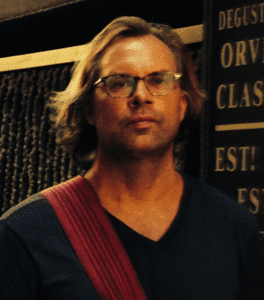
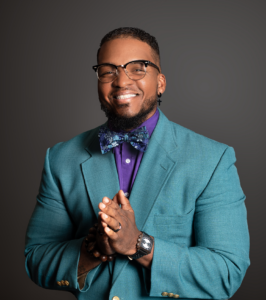
In his biweekly column, Langley Shazor speaks to issues important to men within the territory.
For generations, manhood has been passed down like an old toolset. Some of what we inherited was sturdy and worth keeping. Things like responsibility, protection, and sacrifice had value. They gave shape to our sense of duty and helped us build lives around stability and provision. But mixed in with the good were ideas that no longer fit the times or the truth. Some were never true to begin with. They were just repeated long enough to sound sacred.
We were told what a man should be, how he should sound, and what he should never show. We learned early that tears were a liability, that pain was something to swallow, and that silence somehow meant strength. We learned that respect was earned through control and that success was proven through how much we could carry without complaint. We grew up measuring our worth by how little we needed, how long we could endure, and how well we could pretend.
Those lessons made sense in the world our fathers and grandfathers knew—a world that rewarded endurance over expression. But somewhere along the way, those lessons stopped protecting us and started imprisoning us.
The result is a generation of men who are proud, capable, and exhausted. Men who love deeply but struggle to say it out loud. Men who work tirelessly but feel unseen. Men who lead but rarely feel led. We have become experts at holding everything together while quietly falling apart.
This series, The Myth Cracker, is not an attack on manhood. It is an invitation to recover it.
It is about separating strength from suffering, discipline from detachment, and confidence from arrogance. It is about reimagining what it means to be a man in a time when the world no longer needs us to be unbreakable, it needs us to be real.
We live in a time when old ideas are colliding with new realities. The image of manhood we grew up with does not fit the life most of us are living now. We are raising children who are emotionally aware. We are loving women who are bold, independent, and honest. We are leading in spaces that require empathy, creativity, and emotional intelligence. The silent, stoic model of manhood no longer works. It does not build homes, heal relationships, or sustain peace.
Yet many of us still carry that image like armor. We think it protects us when, in truth, it only keeps us separate from others and from ourselves.
Every myth we unpack in this series will touch something real because it lives in all of us. These ideas shaped how we worked, loved, and led. They shaped how we hid. But the truth is, manhood was never meant to be a performance. It was meant to be a process.
A man becomes by evolving, not by pretending.
There is nothing weak about change. The willingness to unlearn is not rebellion—it is wisdom. We do not dishonor our fathers by growing beyond them. We honor them by carrying forward the parts that still serve us and leaving behind what does not.
That is the spirit of The Myth Cracker Series.
This series will challenge what we have accepted as truth about men. It will dismantle the illusions that keep us from living freely and loving fully. We will talk about the myth that real men do not need help and how that mindset has turned too many brothers into silent prisoners. We will confront the belief that a man’s worth is tied to his wallet and how it robs us of peace and purpose. We will look at the notion that manhood is earned through dominance and why that kind of control is just disguised insecurity. We will take apart the pressure to always have the answers and show why humility is not weakness but strength. And we will end with a reflection on fatherhood, why being present means more than paying bills and how legacy is about connection, not control.
This series will not lecture. It will not preach. It will speak plainly, as one man to another, as one voice to a culture that has forgotten how to be honest about the weight of being a man.
The world does not need perfect men. It needs whole ones. Men who can listen, admit, forgive, and grow. Men who can lead with both courage and care. Men who understand that strength without tenderness becomes tyranny and that silence without purpose becomes suffering.
We were not created to be shells of strength. We were meant to be sources of life.
It is time for a new definition of manhood, one built on truth, integrity, and accountability. The myths have lasted long enough. They have divided fathers from sons, husbands from wives, and brothers from brothers. They have left too many of us hiding behind hard exteriors while craving the permission to breathe.
The only way forward is through honesty.
That is the work of a myth cracker. Not to destroy what was, but to reveal what is real. To take the pieces we inherited and rebuild something that can stand the test of time. Something rooted in truth, grounded in compassion, and shaped by purpose.
If we are brave enough to tell the truth about what we have believed, then we are brave enough to build what comes next.
So, let’s begin.
Editor’s Note: Opinion articles do not represent the views of the Virgin Islands Source newsroom and are the sole expressed opinion of the writer. Submissions can be made to visource@gmail.com.
A 17-year-old student was arrested Friday morning after officers recovered a fully loaded firearm at St. Croix Central High School, the Virgin Islands Police Department reported.
At about 8:08 a.m. Friday, officers from the School Security Bureau assigned to the campus were alerted by school officials that a student had made threats to shoot anyone who approached, police said. Officers and school staff immediately took precautionary safety measures and searched the student’s backpack, where they found a black-colored, fully loaded firearm.
The student was arrested for carrying a firearm openly or concealed and transported to the Youth Rehabilitation Center pending an advice of rights hearing.
Police said they are continuing to work in coordination with the Virgin Islands Education Department to maintain safety on school grounds.
The department urged anyone with information about weapons or threats on school campuses to contact law enforcement or school administrators.
Check out our weekly weather forecast with Jesse Daley, covering Sunday, Nov. 9, through Saturday, Nov. 15. Our YouTube playlist is updated every week, AND check out Jesse’s daily weather updates here.
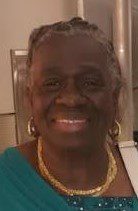
With the deepest regret, the family announces the passing of Onnestine E.S Marshall on Tuesday, Oct. 28, 2025 at the Roy Lester Schneider Hospital.
Onnestine E.S.Marshall
Funeral services is as follows:
1st family viewing will be on Nov. 7 from 12 p.m.-2 p.m. at Turnbull’s Funeral Home.
2nd viewing Nov. 10 from 9 a.m.-10 a.m. with service at 10.
Interment East Moravian Cemetery
She precedes in death her sons Dion Hamm and Ferdinand Marshall Sr.
She is survived by her husband of 23 years of marriage Daniel Marshall better known as “Biege or John.”
Son: Dennis Hamm and Kerry Marshall
Adopted son: Arlindo Vanterpool
Daughter: Kimberly Marshall-Stapleton
Daughter-in-law: Stacey Marshall
Son-in-law: Jahmari Stapleton
Sisters: Rosella Dore, Isaline Brown, Eudora Hamm and Valerie Hamm-Hussey
Sisters-in-law: Opal Hamm, Effna Carrington (Deceased) and Lillian Yearwood
Brothers: Leonard, Melvin, Loston and Don Hamm
Brothers-in-laws: Orlando Brown Sr., Yearwood, Cecil Marshall (Deceased), Joseph Marshall(Deceased) Mr. Carrington (Deceased)
Grandchildren: Terrell Hamm, Mia Hamm, Jazmin Turner, Cameron Turner, Akiem Marshall, Tamilea Marshall, Kaylene Marshall, KyOari Sanders,
Kamari Marshall, K’Nai Marshall, Jekoi Marshall, Kajari Marshall, Secoiya Marshall, Fernanda Marshall and Ferdinand Marshall Jr.
Great grandchildren: A’kera Hamm, Tristan Hamm, Trinity Hamm, Carson Turner, Milan Hamm, Luke Turner and Ka’mazi Marshall
Nephews: Orlando Brown Jr., Melvin HammJr., Noel Hussey, Kevin Hussey, Kirt Hussey, Jermaine Hussey, Garfield Marshall, Delvin Marshall, Dale and Dwight Henry, Anthony Marshall, Michael Yearwood, David Carrington, Roger,Junior and Gabriel Sealey, Ezra, Jason, and Jamar Cumberbatch
Nieces: Sheyenne Hamm, Gabrielle Hamm, Delriese Marshall, Berecia Marshall-Letsome, Desiree Marshall, Marilyn Marshall, Sandra Cumberbatch, Catherine Maynard, Ingrid and Kathy Henry, Carol Yearwood, Margaret and Sandra Carrington, Vida Carrington-Barnett(Deceased)
Great Nephew: Orlando Brown the 3rd, Adrian Hamilton, Jeremy Lettsome, Leondre Marshall, Delvon Marshall and Delvin Marshall Jr.
Great Nieces: Jouleen, Chelsea, Shakira, Kimisha Marshall, Shakira, Shamika Marshall-Colbourne, Lisa-Marie Hodge-Smith, Victoria Hamilton, Olivia Lettsome, Patricia Colon
Cousins: Patricia King,Aubrey Marshall, Ricardo Medford, Ainsley Ward, Cleo Marshall, Theolipus Medford, Rudolph Fabian, Ann, Marva,David,Tony and Lionel Medford, Cynthia Sealey, Glen Marshall
Special Friends: Carollee Brunn, Carmen Allen, Millentine Courts, Leah Lettsome, Leslie and Kurdy George, Bernadette and Reggie Mason
Special thanks to: the Roy Lester Schneider ER staff and also the Medical 4th Floor Team
Dr. Lisa Forester
Pastor Cortroy Jarvis
Memorial Moravian Church
The Wendy’s Family
The McDonald’s Family
The Former Sugar Bay Family and Turnbull’s Funeral Home
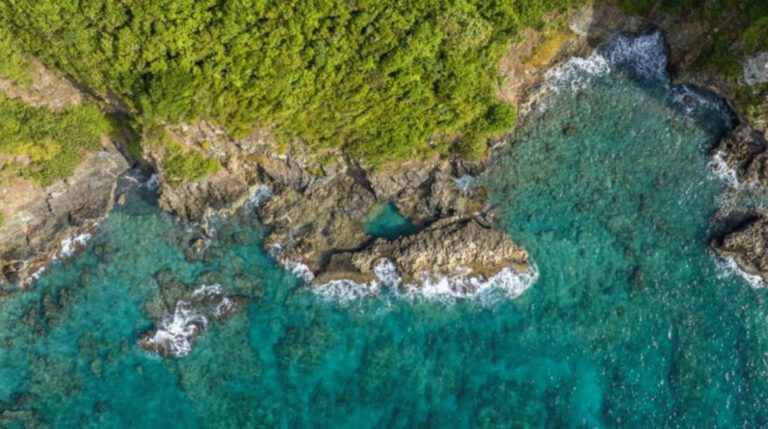
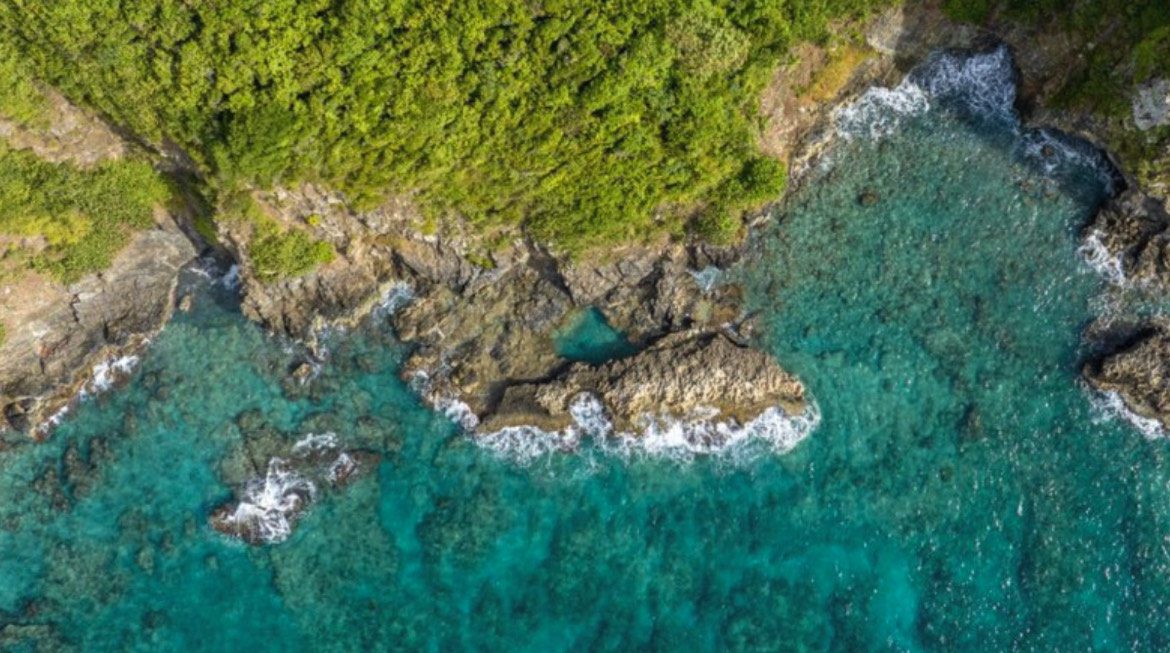
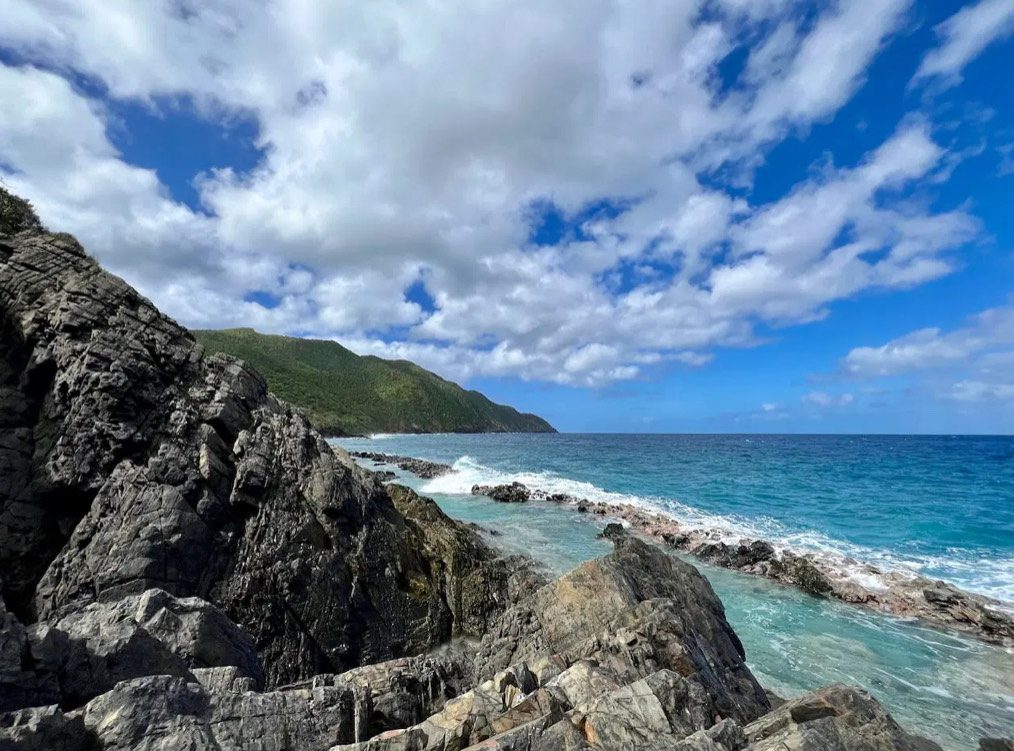
Maroon Sanctuary Park protects the region’s pristine shoreline and fragile coastal ecosystems. (Photo by Dan Mele for DPNR)
Editor’s Note: This article is part 2 in the series Sacred Geography, Ancestral Memory & the Restoration of Meaning, which explores the natural and cultural history of the recently designated Maroon Sanctuary Territorial Park in northwest St. Croix.
Part 1 can be found here.
“Hope” is the thing with feathers
That perches in the soul
— Emily Dickinson
“At night, the stars light up in the heavens where you can see the Big Dipper and the North Star and you can hear the sounds of the forest, the gushing streams flowing during the rainy season, and the waves hitting against the shore. If we are talking about culture, history and spiritual revival, the northwest is a world unto itself.”
— Olasee Davis
From a break in the dense tree cover, high on a bluff along Maroon Ridge, the view northward is an unbroken expanse of cobalt and turquoise water to the distant horizon. Pausing to drink from my water bottle, my gaze drifts across that immensity of blue water and I remind myself that this very vista once fueled dreams of self-emancipation for runaway slaves from nearby colonial Danish West Indian sugarcane plantations. Inspired, I imagine, by the tantalizing vision of Puerto Rico gleaming on the distant horizon to the northwest, “Maritime Maroons” were known to take to stolen boats, improvised rafts or carved wooden canoes and set to sea rather than risk the harsh punishments that were meted out to runaway slaves by plantation owners.
The moment prompts a consideration of how this landscape took the shape that it has. Few exercises, however, prove more withering to the human sense of exceptionalism than even the most rudimentary contemplation of time on a geologic scale. Like a consideration of eternity, it can jam the mind’s circuitry and short circuit even the most nimble imagination. Indeed, on the incomprehensibly vast scale of the clock that measures geologic time, the entire feverish drama of hominid evolution is accomplished in but the tiniest fraction of a single tick. Understanding Maroon Country and its affiliation with escaping slaves, however, demands a basic grasp of the ways in which forces conspired over the slow ticking vastnesses of geologic time to create this jumbled topography that would prove so inviting to slaves fleeing for their lives.
The view that meets my gaze north to the horizon is a sweep over a deep sea region that geologists refer to as the “Virgin Islands Basin.” Formed in the Earth’s geothermal cauldron starting some 80 million years ago during the Cretaceous Period, its trenches plunge some 15,000 feet to where the South American and Caribbean plates meet, separating St. Croix from its sister islands to the north. Over vast stretches of geologic time the twin forces of upthrust and subduction crumpled and folded the sedimentary limestone plates of this region into several distinct watershed catchment basins, forming a jumbled terrain that would prove ideal for concealing fleeing “Maroons.”
As if geology were conspiring on their behalf, these forces forged a landscape of folded contours and jagged cliffs that embraced the Maroons who found refuge in caves, in steep valleys and along the cliffs that line the ridges. From our vantage point here in the Holocene, the 80 million years that separate us from the Cretaceous Period, when the story of these rumpled hills began and when the first stirrings of the diversification of mammalian life on the planet were occurring, may seem like an eternity, but in fact, it’s just a drop in the bucket and the park’s geology is considered to be of relatively recent origin.
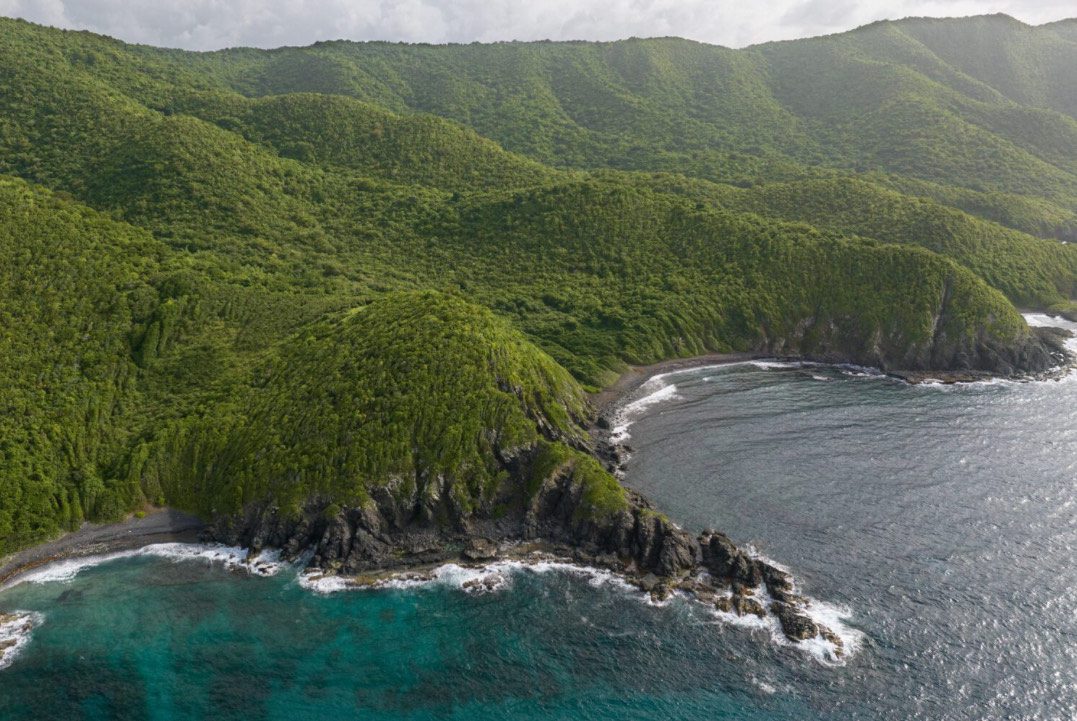
Geologic forces forged a landscape of folded contours and jagged cliffs that embraced the Maroons who found refuge in caves, in steep valleys and along the cliffs that line the ridges of what is now Maroon Sanctuary Territorial Park in Northwest St. Croix. (Photo by Dan Mele for DPNR)
My desire to get a rudimentary grasp of these matters became the occasion for yet another of several repeat visits to talk with Professor Olasee Davis (ecologist, historian, all around polymath!) at the St. Croix campus of UVI. The topography of his office is as jumbled as the terrain in Maroon Country, though its sedimentary layers are of an eclectic conglomerate accumulation of books, maps, papers, field guides, pamphlets and the various artifacts that the life of an incurably curious and voracious naturalist tends to attract. All about his cubicle is the detritus of a 40-year-long pursuit to achieve protected status for Maroon Country and the natural wonders and ancestral memory that the park now enshrines. As the nutrient-rich surficial limestone layers feed the soil that grows the trees that bring the birds that eat the fruits — the park’s geology helps sets the stage and provides the context for the subtle and nuanced interplay of abiotic and biological factors that make up the park’s functioning ecosystem.
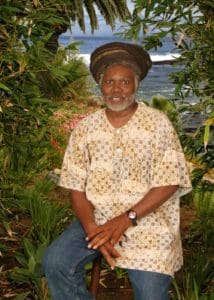
Olasee Davis, Ph.D. (Submitted photo)
Nothing remotely like a Dewey Decimal system of order holds sway in Davis’s office. It’s more like chaos frozen in motion. And yet, whenever it occurs to the professor that a particular book or article might help illustrate whatever point he happens to be making at a given time, he seems to know exactly where to find it and frequently he knows the exact page of a paper or magazine on which the information is to be discovered. This pattern repeats itself often. His tutorials on the park’s geology have helped me immeasurably and yet, given the complexity of the subject and the considerable limitations of my brainpower, a firm knowledge of it remains elusive. It’s a work in progress.
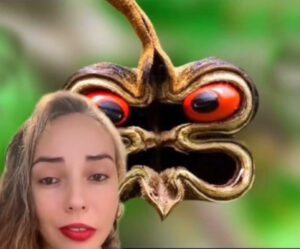
Back in the park, the vibrant red sheen of Arbus precatorious, known in the local vernacular as the “Jumbie Bead,” glints in brilliant juxtaposition to the forest green at the trail’s edge. The beads stand out in high relief against the penumbral shadow of the understory, broadcasting their toxic warning while also proclaiming their fabled place in Crucian and Afro-Caribbean folklore. The fierce glare of a single bead through the shadowed forest is a sort of a visual siren or an All Points Bulletin signaling “danger!” Davis tells me that a mere seven Jumbie Beads can “kill a full grown cow!”, conveying a sense of the potency of their concentrated poison. Equal to their potency as a poison, however, is their perceived power as a spiritual aid. Gently holding the stalk of the plant in one hand and lightly caressing the beads with the fingers of the other, Davis explains that this was a plant the Maroons used to protect themselves from “Jumbies” or evil spirits. He is referring, of course, to the very spirits that the beloved and iconic “Moko Jumbies” are known to chase from treetops in Afro-Caribbean myth and folklore.
The presence of Jumbie Beads both at the trail’s edge and in the folklore of these islands is an elegant illustration of that intricate weave of people with “place” that we call “culture.” Perhaps one avenue to understanding what we mean by “culture” might be to consider the myriad ways in which a landscape expresses itself through human beings. Indeed, the membrane between nature and culture is a permeable one and the Jumbie Bead here in Maroon Sanctuary is just one example, among many, of the interpenetration of landscape and story. As the stories of the Maroons are indelibly etched into the topography of the park, so does their legacy hold an enduring place in the history of the Virgin Islands. Indeed, it is their stories of resistance and resilience that consecrate this landscape.
“The Maroons would make a bracelet out of jumbie beads whenever a child was born and would tie it around its wrist to protect it from evil spirits,” Davis explains. “Elders in town used the beads in their kerosene lamps. The beads would expand and would release the oil slowly. It was believed that, at night, as you were walking home, a jumbie might follow you, but as you open the door, there is the lamp to protect you from the evil spirit. If you didn’t have the beads in the lamp, you’d have to walk backwards inside the house. That’s part of our tradition.”
Content creator Gabrielle Querrard, whose work focuses on Caribbean culture, history, and news, describes the Jumbie Bead’s place in Afro-Caribbean folklore and spirituality.
These traditions and their related folklore date back to ancestral lands in West Africa. “The presence of the Jumbie Bead in the Caribbean, is a byproduct of the transatlantic slave trade,” according to Gabrielle Querrard, a multigenerational Virgin Islander and content creator whose work focuses on Caribbean culture, history and news. “Enslaved Africans” she continues, “would bring plants and seeds that were deeply connected to their own African traditions with them as they boarded the ships that would take them to the Caribbean and to North America.” Jumbie Beads are an illustration of the phenomenon that Querrard describes: “Because enslaved Africans had to suppress their religious and spiritual belief systems, Jumbie Beads were a way that they covertly hung on to their heritage.”
Jumbie Beads have long functioned as a symbol of resistance and their association with Maroons seems especially appropriate. Historically, they have been perceived to possess powerful spiritual properties. “It is believed that Jumbie Beads were a very potent form of protection from evil spirits,” Querrard explains, echoing Davis, and “throughout the centuries Jumbie Beads have been used in forms of divination, magical practices, ceremonies and ancestral veneration.” According to Querrard, the tiny black spot at the center of a Jumbie Bead, which accounts for its other vernacular name “Rosary Pea,” is perceived to be the “Eye of God.” “This connects with African spiritual traditions that put heavy emphasis on the eye: insight, intuition, spiritual awareness and bolsters the notion of seeing beyond the material world in order to find deeper understanding and spiritual truths.”
Davis is quick to make the point that the new park is not just a physical space, but a spiritual one. He remains ever conscious of the palpable spirit of the legacy of the Maroons actively infusing the landscape with a quality of the sacred. Their presence in the landscape and their ancestral memory infuses this geography with a sense of the divine. The obvious reverence that he has for this landscape brings to mind the Shinto tradition in Japan. My years of residence there familiarized me with Japan’s indigenous religion, Shintoism, which recognizes “kami,” or divine forces believed to inhabit features of the natural world: a sedate boulder parting the waters of a mountain stream, a stately “sugi” or “hinoki” tree deeply rooted while towering through the overstory to engage in communion with the clouds, or a forest waterfall cascading over a cliff-face green-hued by moss and lichen. Inconspicuous shrines and modest altars are often erected at these spots, which are thought to vibrate with a concentration of divine energy. For Davis, the landscape in Maroon Sanctuary seems to pulse with a similar power of the sacred.
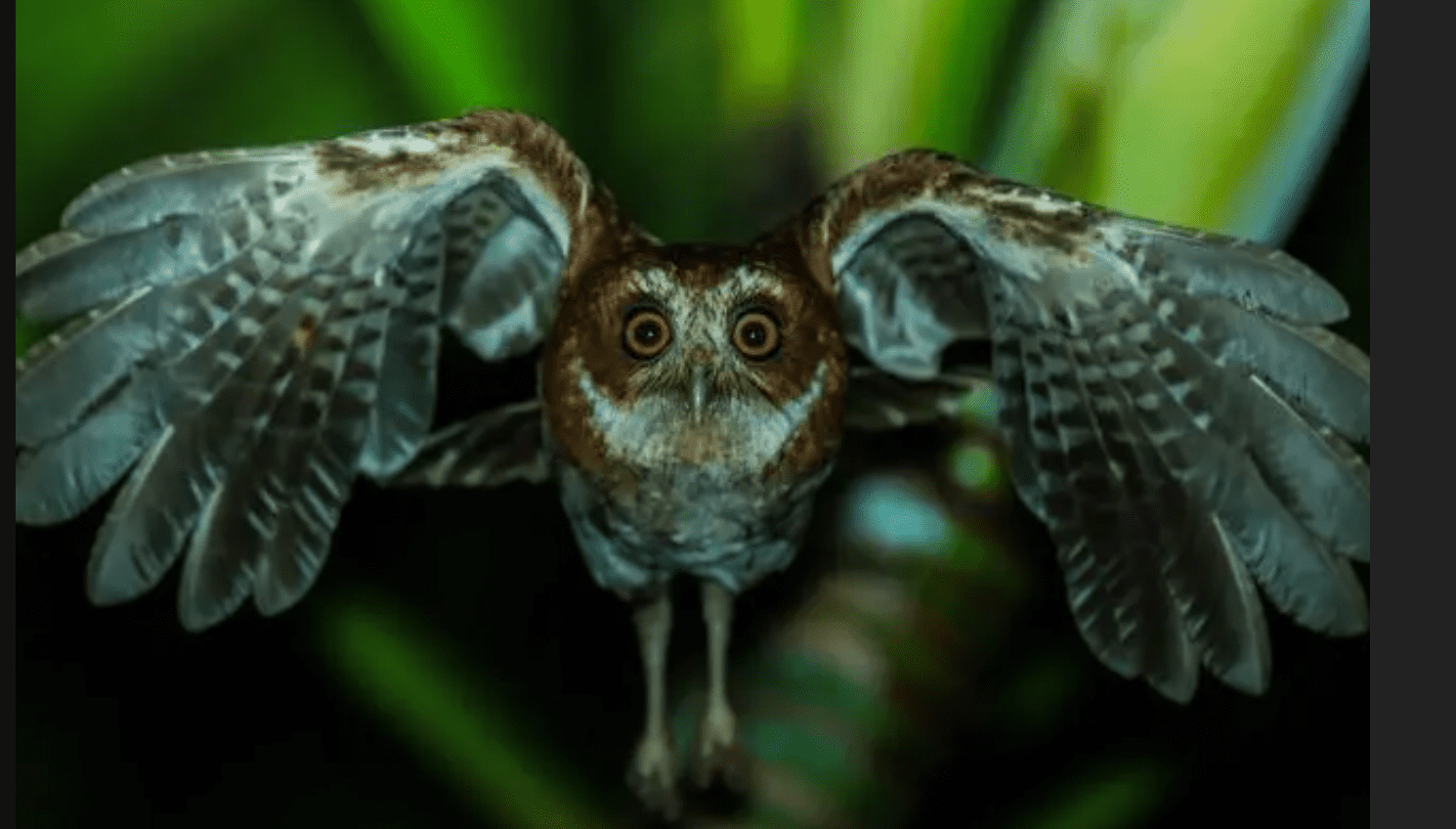
The Puerto Rican Screech Owl (Megascops nudipes), of which the Virgin Islands Screech Owl (Otus nudipes newtoni) is a subspecies. (Photo courtesy Peregrinefund.org)
As for the park’s avian life, the rare and endangered Virgin Islands Screech Owl, Otus nudipes newtoni, is shy and elusive, a shadow-bird of nighttime that is rarely encountered by human beings. In its talent for stealth and for stubbornly remaining undetected, it seems to share a kinship with the Maroons themselves. A subspecies of the Puerto Rican Screech Owl, Otus nudipes, our own Virgin Islands Screech Owl is thus perhaps an emblematic bird for the park itself and for its Maroon legacy.
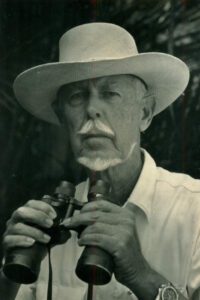
George A. Seaman (1904-1997) was a beloved St. Croix naturalist, author and conservationist who, according to Olasee Davis, “knew every inch of the island intimately.(Submitted photo)
The celebrated 20th century Crucian naturalist George A. Seaman spent a lifetime living in the promise of one day sighting one of these shy owls. Born in Frederiksted in 1904, Seaman’s early childhood on the island provided a rich preparation for his later years as ornithologist, explorer, naturalist, adventurer, poet, author and protector of wildlife. Although never blessed with his coveted sighting of the screech owl, on the night of Nov. 25, 1966, according to Davis, “Seaman heard the bird making noise in an almond tree while he and his best friend, Harry Beatty, were camping in the deep forest of the northwestern side of St. Croix.” The clarion call of the screech made a lasting impression on Seaman: “To say that I was thrilled is not enough. To hear this rare bird calling from deep in the woods on a glorious moonlight night after more or less a life span of patient watching and listening, well, I can assure you it was to me like finding a Spanish galleon full of gold. I tell you, at that moment if the world had come to an end I couldn’t have cared less!”
Amidst the abundant scholarly flotsam and jetsam of Davis’s office, the files and boxes of Seaman’s original papers and his fastidiously kept records of the waxing and waning of St. Croix’s bird and animal life hold a special place for him. “George Seaman knew every inch of this island and its natural history intimately,” he tells me. Indeed, many of the thousands of articles and papers that Davis has published were informed by what he had learned in Seaman’s writings. When Seaman passed away in 1997, it might be said, the torch he carried all his life was effectively passed into the very capable hands of Davis. After he died, Seaman’s son passed his father’s books and papers on to Davis, telling him that this would keep the memory of his father alive. What may be regarded as a powerful symbol for this proverbial “passing of the torch” is the fact that, while a sighting of the screech owl that Seaman so craved never materialized in his lifetime, it was later granted to Davis. “More than 20 years ago” as he tells it, “I happened to see an owl on a moonlit night deep in the valley of Sweet Bottom Bay. I just happened to stumble on the bird. It turned its head and looked right at me.” While in the lore of some Native American cultures, the mythic owl casts a dark and foreboding shadow, more broadly in world mythology, owls are frequently depicted as guardians of the night representing mystery and the unknown, much as the Maroons do in Afro-Caribbean history. In some African cultural traditions owls are viewed as messengers of the spirit world, conveying important messages.
The story of the park’s underlying geology has its origins in the Cretaceous Period 80 million years ago when the planet’s mammalian life was just beginning to diversify. (Photo by Dan Mele for DPNR)
Night falls on Maroon Country and one imagines an immensity of stars overhead, bathing the forested ridges in celestial light. Unobscured by even a hint of the 21st century and its technologies, the stars shine in the firmament over a landscape of dreams that will now forever remain protected from the ravages of wanton development, thanks to the persistent dedication of modern-day heroes like Olasee Davis and George Seaman before him. “Hope,” wrote the 19th century New England poet Emily Dickinson, “is the thing with feathers,” and on this imagined night of brilliant starlight one can envision “hope” itself materializing in the feathered form of the rare screech owl that Davis glimpsed on a moonlit night some 20 years ago. Undetected by any human being and in stealth worthy of its kindred Maroons, the emblematic screech owl wheels out of the shadows and upon the night sky, casting its benediction over the landscape below and the ancestral memories it enshrines.
Joshua Grant Canning
— Joshua Grant Canning holds a Master’s Degree in Environmental Journalism and in his writing he pursues projects that involve the intersection of nature and culture. On the basis of his writing about the ecological and cultural implications of the reintroduction of wolves to Yellowstone National Park, he was awarded a Middlebury College Graduate Fellowship in Environmental Journalism 2008-2009. The fellowship enabled him to travel widely in Japan (where he had lived previously for four years) to research and write about pressing environmental and cultural issues. He and his wife, Wendy, moved from Vermont to St. Croix in 2010 and he taught World Literature and AP English at Good Hope Country Day for over a decade. He is also a musician and jazz guitar enthusiast and performs regularly at events and venues around the island.









 In his biweekly column, Langley Shazor speaks to issues important to men within the territory.
For generations, manhood has been passed down like an old toolset. Some of what we inherited was sturdy and worth keeping. Things like responsibility, protection, and sacrifice had value. They gave shape to our sense of duty and helped us build lives around stability and provision. But mixed in with the good were ideas that no longer fit the times or the truth. Some were never true to begin with. They were just repeated long enough to sound sacred.
We were told what a man should be, how he should sound, and what he should never show. We learned early that tears were a liability, that pain was something to swallow, and that silence somehow meant strength. We learned that respect was earned through control and that success was proven through how much we could carry without complaint. We grew up measuring our worth by how little we needed, how long we could endure, and how well we could pretend.
Those lessons made sense in the world our fathers and grandfathers knew—a world that rewarded endurance over expression. But somewhere along the way, those lessons stopped protecting us and started imprisoning us.
The result is a generation of men who are proud, capable, and exhausted. Men who love deeply but struggle to say it out loud. Men who work tirelessly but feel unseen. Men who lead but rarely feel led. We have become experts at holding everything together while quietly falling apart.
This series, The Myth Cracker, is not an attack on manhood. It is an invitation to recover it.
It is about separating strength from suffering, discipline from detachment, and confidence from arrogance. It is about reimagining what it means to be a man in a time when the world no longer needs us to be unbreakable, it needs us to be real.
We live in a time when old ideas are colliding with new realities. The image of manhood we grew up with does not fit the life most of us are living now. We are raising children who are emotionally aware. We are loving women who are bold, independent, and honest. We are leading in spaces that require empathy, creativity, and emotional intelligence. The silent, stoic model of manhood no longer works. It does not build homes, heal relationships, or sustain peace.
Yet many of us still carry that image like armor. We think it protects us when, in truth, it only keeps us separate from others and from ourselves.
Every myth we unpack in this series will touch something real because it lives in all of us. These ideas shaped how we worked, loved, and led. They shaped how we hid. But the truth is, manhood was never meant to be a performance. It was meant to be a process.
A man becomes by evolving, not by pretending.
There is nothing weak about change. The willingness to unlearn is not rebellion—it is wisdom. We do not dishonor our fathers by growing beyond them. We honor them by carrying forward the parts that still serve us and leaving behind what does not.
That is the spirit of The Myth Cracker Series.
This series will challenge what we have accepted as truth about men. It will dismantle the illusions that keep us from living freely and loving fully. We will talk about the myth that real men do not need help and how that mindset has turned too many brothers into silent prisoners. We will confront the belief that a man’s worth is tied to his wallet and how it robs us of peace and purpose. We will look at the notion that manhood is earned through dominance and why that kind of control is just disguised insecurity. We will take apart the pressure to always have the answers and show why humility is not weakness but strength. And we will end with a reflection on fatherhood, why being present means more than paying bills and how legacy is about connection, not control.
This series will not lecture. It will not preach. It will speak plainly, as one man to another, as one voice to a culture that has forgotten how to be honest about the weight of being a man.
The world does not need perfect men. It needs whole ones. Men who can listen, admit, forgive, and grow. Men who can lead with both courage and care. Men who understand that strength without tenderness becomes tyranny and that silence without purpose becomes suffering.
We were not created to be shells of strength. We were meant to be sources of life.
It is time for a new definition of manhood, one built on truth, integrity, and accountability. The myths have lasted long enough. They have divided fathers from sons, husbands from wives, and brothers from brothers. They have left too many of us hiding behind hard exteriors while craving the permission to breathe.
The only way forward is through honesty.
That is the work of a myth cracker. Not to destroy what was, but to reveal what is real. To take the pieces we inherited and rebuild something that can stand the test of time. Something rooted in truth, grounded in compassion, and shaped by purpose.
If we are brave enough to tell the truth about what we have believed, then we are brave enough to build what comes next.
So, let’s begin.
Editor’s Note: Opinion articles do not represent the views of the Virgin Islands Source newsroom and are the sole expressed opinion of the writer. Submissions can be made to visource@gmail.com.
In his biweekly column, Langley Shazor speaks to issues important to men within the territory.
For generations, manhood has been passed down like an old toolset. Some of what we inherited was sturdy and worth keeping. Things like responsibility, protection, and sacrifice had value. They gave shape to our sense of duty and helped us build lives around stability and provision. But mixed in with the good were ideas that no longer fit the times or the truth. Some were never true to begin with. They were just repeated long enough to sound sacred.
We were told what a man should be, how he should sound, and what he should never show. We learned early that tears were a liability, that pain was something to swallow, and that silence somehow meant strength. We learned that respect was earned through control and that success was proven through how much we could carry without complaint. We grew up measuring our worth by how little we needed, how long we could endure, and how well we could pretend.
Those lessons made sense in the world our fathers and grandfathers knew—a world that rewarded endurance over expression. But somewhere along the way, those lessons stopped protecting us and started imprisoning us.
The result is a generation of men who are proud, capable, and exhausted. Men who love deeply but struggle to say it out loud. Men who work tirelessly but feel unseen. Men who lead but rarely feel led. We have become experts at holding everything together while quietly falling apart.
This series, The Myth Cracker, is not an attack on manhood. It is an invitation to recover it.
It is about separating strength from suffering, discipline from detachment, and confidence from arrogance. It is about reimagining what it means to be a man in a time when the world no longer needs us to be unbreakable, it needs us to be real.
We live in a time when old ideas are colliding with new realities. The image of manhood we grew up with does not fit the life most of us are living now. We are raising children who are emotionally aware. We are loving women who are bold, independent, and honest. We are leading in spaces that require empathy, creativity, and emotional intelligence. The silent, stoic model of manhood no longer works. It does not build homes, heal relationships, or sustain peace.
Yet many of us still carry that image like armor. We think it protects us when, in truth, it only keeps us separate from others and from ourselves.
Every myth we unpack in this series will touch something real because it lives in all of us. These ideas shaped how we worked, loved, and led. They shaped how we hid. But the truth is, manhood was never meant to be a performance. It was meant to be a process.
A man becomes by evolving, not by pretending.
There is nothing weak about change. The willingness to unlearn is not rebellion—it is wisdom. We do not dishonor our fathers by growing beyond them. We honor them by carrying forward the parts that still serve us and leaving behind what does not.
That is the spirit of The Myth Cracker Series.
This series will challenge what we have accepted as truth about men. It will dismantle the illusions that keep us from living freely and loving fully. We will talk about the myth that real men do not need help and how that mindset has turned too many brothers into silent prisoners. We will confront the belief that a man’s worth is tied to his wallet and how it robs us of peace and purpose. We will look at the notion that manhood is earned through dominance and why that kind of control is just disguised insecurity. We will take apart the pressure to always have the answers and show why humility is not weakness but strength. And we will end with a reflection on fatherhood, why being present means more than paying bills and how legacy is about connection, not control.
This series will not lecture. It will not preach. It will speak plainly, as one man to another, as one voice to a culture that has forgotten how to be honest about the weight of being a man.
The world does not need perfect men. It needs whole ones. Men who can listen, admit, forgive, and grow. Men who can lead with both courage and care. Men who understand that strength without tenderness becomes tyranny and that silence without purpose becomes suffering.
We were not created to be shells of strength. We were meant to be sources of life.
It is time for a new definition of manhood, one built on truth, integrity, and accountability. The myths have lasted long enough. They have divided fathers from sons, husbands from wives, and brothers from brothers. They have left too many of us hiding behind hard exteriors while craving the permission to breathe.
The only way forward is through honesty.
That is the work of a myth cracker. Not to destroy what was, but to reveal what is real. To take the pieces we inherited and rebuild something that can stand the test of time. Something rooted in truth, grounded in compassion, and shaped by purpose.
If we are brave enough to tell the truth about what we have believed, then we are brave enough to build what comes next.
So, let’s begin.
Editor’s Note: Opinion articles do not represent the views of the Virgin Islands Source newsroom and are the sole expressed opinion of the writer. Submissions can be made to visource@gmail.com.