


Student Arrested After Loaded Firearm Found at St. Croix Central High School

Weekly Weather Forecast With Jesse Daley

Onnestine E.S Marshall Dies
Of Geology, Jumbie Beads and Starlight
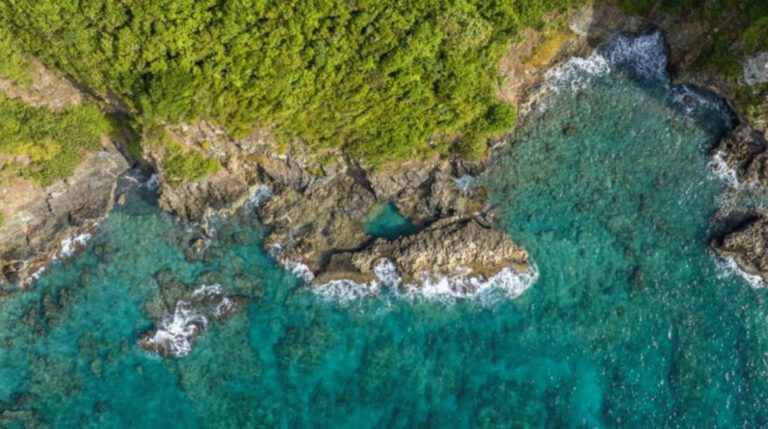
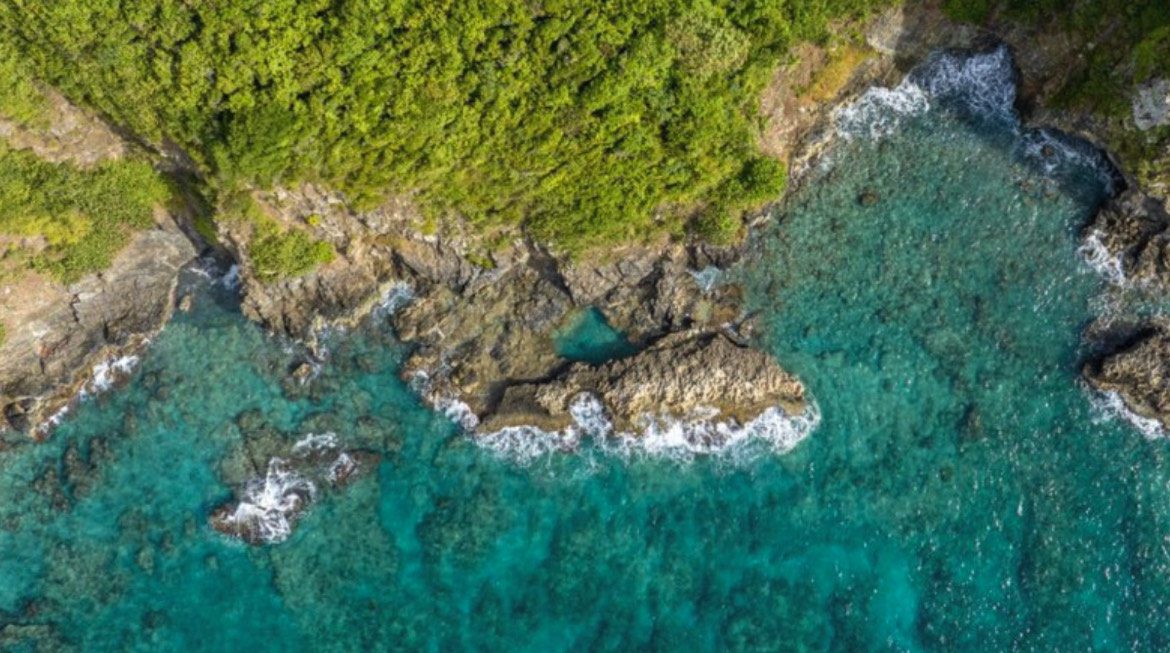
Editor’s Note: This article is part 2 in the series Sacred Geography, Ancestral Memory & the Restoration of Meaning, which explores the natural and cultural history of the recently designated Maroon Sanctuary Territorial Park in northwest St. Croix. Part 1 can be found here.
“Hope” is the thing with feathers That perches in the soul — Emily Dickinson
— Olasee Davis
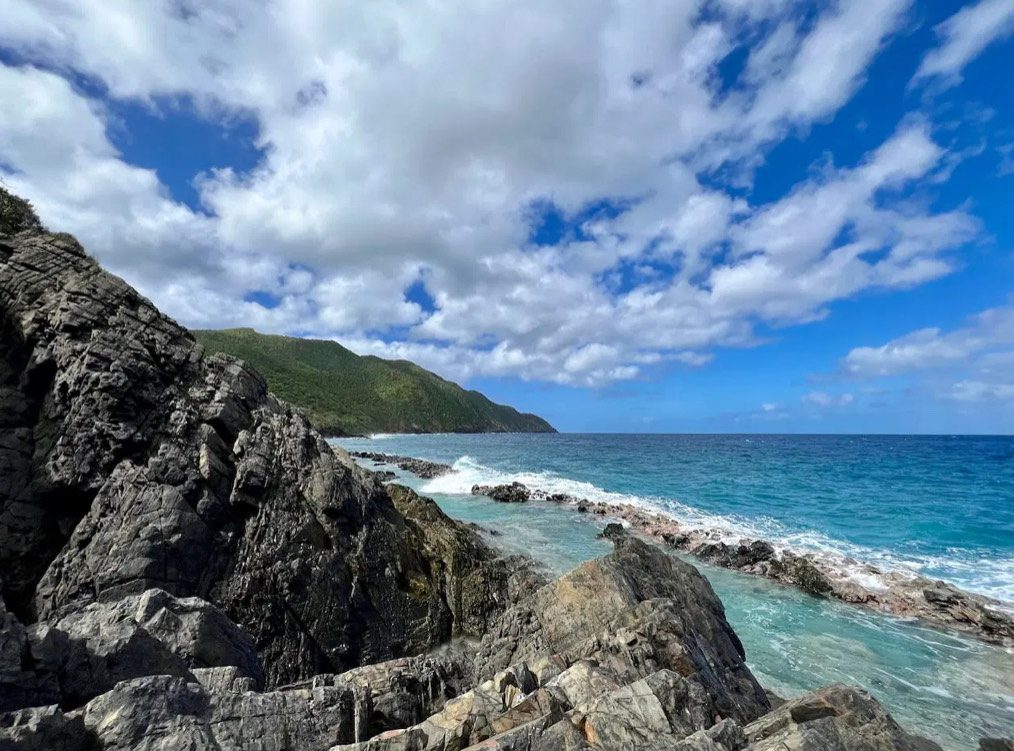
From a break in the dense tree cover, high on a bluff along Maroon Ridge, the view northward is an unbroken expanse of cobalt and turquoise water to the distant horizon. Pausing to drink from my water bottle, my gaze drifts across that immensity of blue water and I remind myself that this very vista once fueled dreams of self-emancipation for runaway slaves from nearby colonial Danish West Indian sugarcane plantations. Inspired, I imagine, by the tantalizing vision of Puerto Rico gleaming on the distant horizon to the northwest, “Maritime Maroons” were known to take to stolen boats, improvised rafts or carved wooden canoes and set to sea rather than risk the harsh punishments that were meted out to runaway slaves by plantation owners.
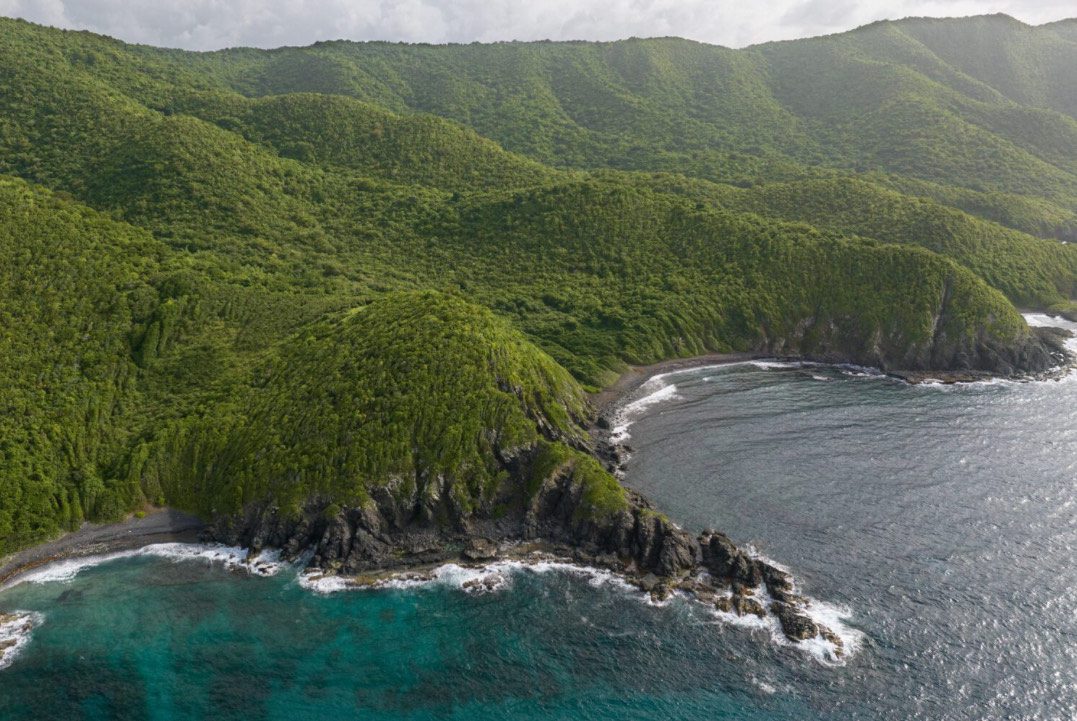
The moment prompts a consideration of how this landscape took the shape that it has. Few exercises, however, prove more withering to the human sense of exceptionalism than even the most rudimentary contemplation of time on a geologic scale. Like a consideration of eternity, it can jam the mind’s circuitry and short circuit even the most nimble imagination. Indeed, on the incomprehensibly vast scale of the clock that measures geologic time, the entire feverish drama of hominid evolution is accomplished in but the tiniest fraction of a single tick. Understanding Maroon Country and its affiliation with escaping slaves, however, demands a basic grasp of the ways in which forces conspired over the slow ticking vastnesses of geologic time to create this jumbled topography that would prove so inviting to slaves fleeing for their lives.
The view that meets my gaze north to the horizon is a sweep over a deep sea region that geologists refer to as the “Virgin Islands Basin.” Formed in the Earth’s geothermal cauldron starting some 80 million years ago during the Cretaceous Period, its trenches plunge some 15,000 feet to where the South American and Caribbean plates meet, separating St. Croix from its sister islands to the north. Over vast stretches of geologic time the twin forces of upthrust and subduction crumpled and folded the sedimentary limestone plates of this region into several distinct watershed catchment basins, forming a jumbled terrain that would prove ideal for concealing fleeing “Maroons.”
As if geology were conspiring on their behalf, these forces forged a landscape of folded contours and jagged cliffs that embraced the Maroons who found refuge in caves, in steep valleys and along the cliffs that line the ridges. From our vantage point here in the Holocene, the 80 million years that separate us from the Cretaceous Period, when the story of these rumpled hills began and when the first stirrings of the diversification of mammalian life on the planet were occurring, may seem like an eternity, but in fact, it’s just a drop in the bucket and the park’s geology is considered to be of relatively recent origin.
My desire to get a rudimentary grasp of these matters became the occasion for yet another of several repeat visits to talk with Professor Olasee Davis (ecologist, historian, all around polymath!) at the St. Croix campus of UVI. The topography of his office is as jumbled as the terrain in Maroon Country, though its sedimentary layers are of an eclectic conglomerate accumulation of books, maps, papers, field guides, pamphlets and the various artifacts that the life of an incurably curious and voracious naturalist tends to attract. All about his cubicle is the detritus of a 40-year-long pursuit to achieve protected status for Maroon Country and the natural wonders and ancestral memory that the park now enshrines. As the nutrient-rich surficial limestone layers feed the soil that grows the trees that bring the birds that eat the fruits — the park’s geology helps sets the stage and provides the context for the subtle and nuanced interplay of abiotic and biological factors that make up the park’s functioning ecosystem.
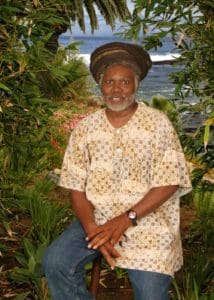
Nothing remotely like a Dewey Decimal system of order holds sway in Davis’s office. It’s more like chaos frozen in motion. And yet, whenever it occurs to the professor that a particular book or article might help illustrate whatever point he happens to be making at a given time, he seems to know exactly where to find it and frequently he knows the exact page of a paper or magazine on which the information is to be discovered. This pattern repeats itself often. His tutorials on the park’s geology have helped me immeasurably and yet, given the complexity of the subject and the considerable limitations of my brainpower, a firm knowledge of it remains elusive. It’s a work in progress.
Back in the park, the vibrant red sheen of Arbus precatorious, known in the local vernacular as the “Jumbie Bead,” glints in brilliant juxtaposition to the forest green at the trail’s edge. The beads stand out in high relief against the penumbral shadow of the understory, broadcasting their toxic warning while also proclaiming their fabled place in Crucian and Afro-Caribbean folklore. The fierce glare of a single bead through the shadowed forest is a sort of a visual siren or an All Points Bulletin signaling “danger!” Davis tells me that a mere seven Jumbie Beads can “kill a full grown cow!”, conveying a sense of the potency of their concentrated poison. Equal to their potency as a poison, however, is their perceived power as a spiritual aid. Gently holding the stalk of the plant in one hand and lightly caressing the beads with the fingers of the other, Davis explains that this was a plant the Maroons used to protect themselves from “Jumbies” or evil spirits. He is referring, of course, to the very spirits that the beloved and iconic “Moko Jumbies” are known to chase from treetops in Afro-Caribbean myth and folklore.
The presence of Jumbie Beads both at the trail’s edge and in the folklore of these islands is an elegant illustration of that intricate weave of people with “place” that we call “culture.” Perhaps one avenue to understanding what we mean by “culture” might be to consider the myriad ways in which a landscape expresses itself through human beings. Indeed, the membrane between nature and culture is a permeable one and the Jumbie Bead here in Maroon Sanctuary is just one example, among many, of the interpenetration of landscape and story. As the stories of the Maroons are indelibly etched into the topography of the park, so does their legacy hold an enduring place in the history of the Virgin Islands. Indeed, it is their stories of resistance and resilience that consecrate this landscape.
“The Maroons would make a bracelet out of jumbie beads whenever a child was born and would tie it around its wrist to protect it from evil spirits,” Davis explains. “Elders in town used the beads in their kerosene lamps. The beads would expand and would release the oil slowly. It was believed that, at night, as you were walking home, a jumbie might follow you, but as you open the door, there is the lamp to protect you from the evil spirit. If you didn’t have the beads in the lamp, you’d have to walk backwards inside the house. That’s part of our tradition.”
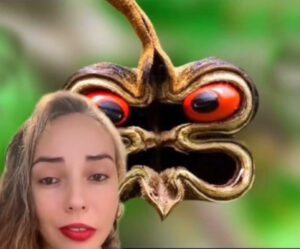
These traditions and their related folklore date back to ancestral lands in West Africa. “The presence of the Jumbie Bead in the Caribbean, is a byproduct of the transatlantic slave trade,” according to Gabrielle Querrard, a multigenerational Virgin Islander and content creator whose work focuses on Caribbean culture, history and news. “Enslaved Africans” she continues, “would bring plants and seeds that were deeply connected to their own African traditions with them as they boarded the ships that would take them to the Caribbean and to North America.” Jumbie Beads are an illustration of the phenomenon that Querrard describes: “Because enslaved Africans had to suppress their religious and spiritual belief systems, Jumbie Beads were a way that they covertly hung on to their heritage.”
Jumbie Beads have long functioned as a symbol of resistance and their association with Maroons seems especially appropriate. Historically, they have been perceived to possess powerful spiritual properties. “It is believed that Jumbie Beads were a very potent form of protection from evil spirits,” Querrard explains, echoing Davis, and “throughout the centuries Jumbie Beads have been used in forms of divination, magical practices, ceremonies and ancestral veneration.” According to Querrard, the tiny black spot at the center of a Jumbie Bead, which accounts for its other vernacular name “Rosary Pea,” is perceived to be the “Eye of God.” “This connects with African spiritual traditions that put heavy emphasis on the eye: insight, intuition, spiritual awareness and bolsters the notion of seeing beyond the material world in order to find deeper understanding and spiritual truths.”
Davis is quick to make the point that the new park is not just a physical space, but a spiritual one. He remains ever conscious of the palpable spirit of the legacy of the Maroons actively infusing the landscape with a quality of the sacred. Their presence in the landscape and their ancestral memory infuses this geography with a sense of the divine. The obvious reverence that he has for this landscape brings to mind the Shinto tradition in Japan. My years of residence there familiarized me with Japan’s indigenous religion, Shintoism, which recognizes “kami,” or divine forces believed to inhabit features of the natural world: a sedate boulder parting the waters of a mountain stream, a stately “sugi” or “hinoki” tree deeply rooted while towering through the overstory to engage in communion with the clouds, or a forest waterfall cascading over a cliff-face green-hued by moss and lichen. Inconspicuous shrines and modest altars are often erected at these spots, which are thought to vibrate with a concentration of divine energy. For Davis, the landscape in Maroon Sanctuary seems to pulse with a similar power of the sacred.
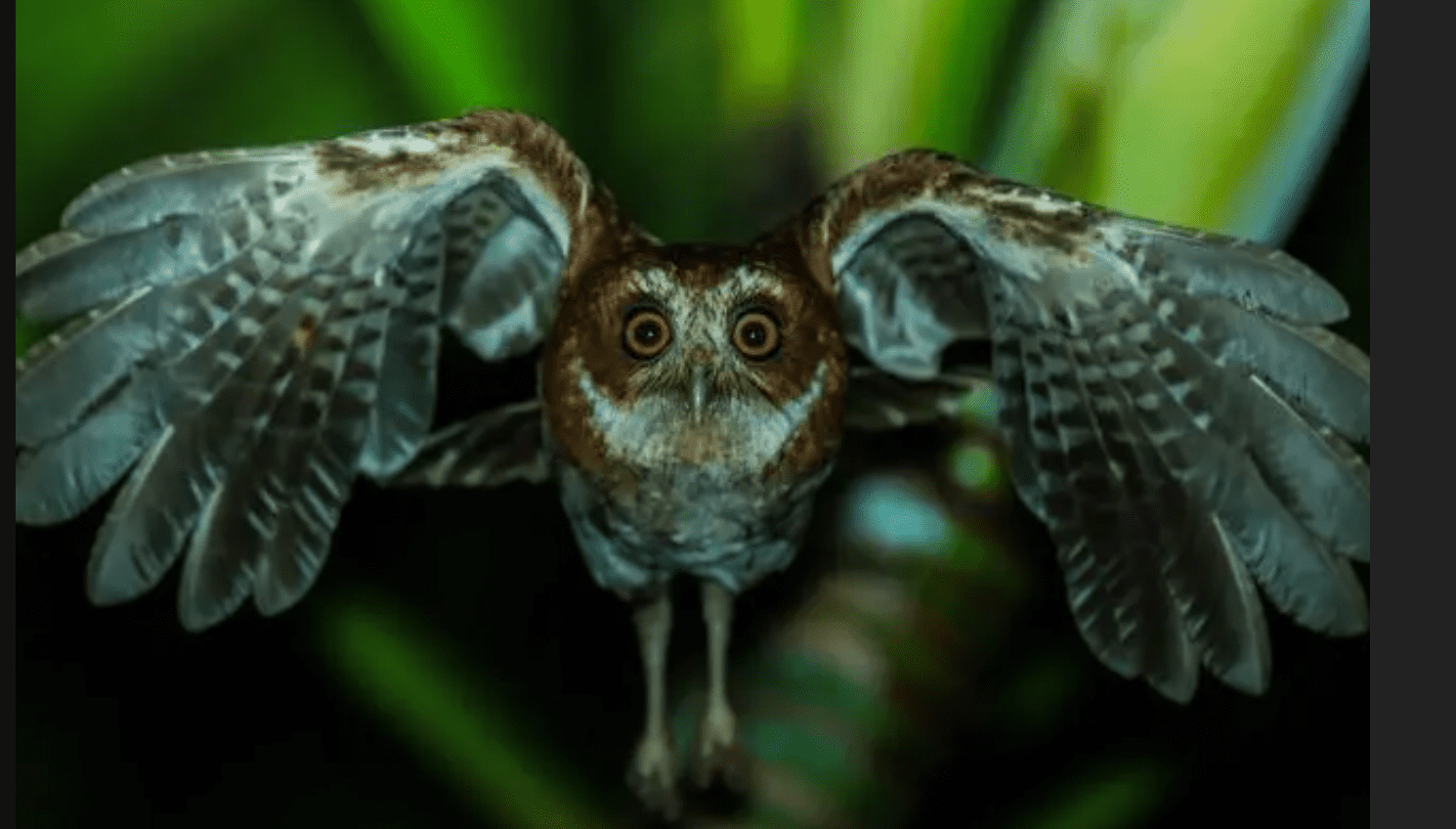
As for the park’s avian life, the rare and endangered Virgin Islands Screech Owl, Otus nudipes newtoni, is shy and elusive, a shadow-bird of nighttime that is rarely encountered by human beings. In its talent for stealth and for stubbornly remaining undetected, it seems to share a kinship with the Maroons themselves. A subspecies of the Puerto Rican Screech Owl, Otus nudipes, our own Virgin Islands Screech Owl is thus perhaps an emblematic bird for the park itself and for its Maroon legacy.
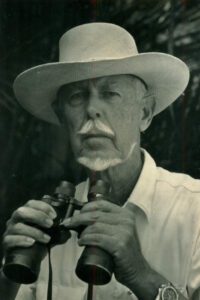
The celebrated 20th century Crucian naturalist George A. Seaman spent a lifetime living in the promise of one day sighting one of these shy owls. Born in Frederiksted in 1904, Seaman’s early childhood on the island provided a rich preparation for his later years as ornithologist, explorer, naturalist, adventurer, poet, author and protector of wildlife. Although never blessed with his coveted sighting of the screech owl, on the night of Nov. 25, 1966, according to Davis, “Seaman heard the bird making noise in an almond tree while he and his best friend, Harry Beatty, were camping in the deep forest of the northwestern side of St. Croix.” The clarion call of the screech made a lasting impression on Seaman: “To say that I was thrilled is not enough. To hear this rare bird calling from deep in the woods on a glorious moonlight night after more or less a life span of patient watching and listening, well, I can assure you it was to me like finding a Spanish galleon full of gold. I tell you, at that moment if the world had come to an end I couldn’t have cared less!”
Amidst the abundant scholarly flotsam and jetsam of Davis’s office, the files and boxes of Seaman’s original papers and his fastidiously kept records of the waxing and waning of St. Croix’s bird and animal life hold a special place for him. “George Seaman knew every inch of this island and its natural history intimately,” he tells me. Indeed, many of the thousands of articles and papers that Davis has published were informed by what he had learned in Seaman’s writings. When Seaman passed away in 1997, it might be said, the torch he carried all his life was effectively passed into the very capable hands of Davis. After he died, Seaman’s son passed his father’s books and papers on to Davis, telling him that this would keep the memory of his father alive. What may be regarded as a powerful symbol for this proverbial “passing of the torch” is the fact that, while a sighting of the screech owl that Seaman so craved never materialized in his lifetime, it was later granted to Davis. “More than 20 years ago” as he tells it, “I happened to see an owl on a moonlit night deep in the valley of Sweet Bottom Bay. I just happened to stumble on the bird. It turned its head and looked right at me.” While in the lore of some Native American cultures, the mythic owl casts a dark and foreboding shadow, more broadly in world mythology, owls are frequently depicted as guardians of the night representing mystery and the unknown, much as the Maroons do in Afro-Caribbean history. In some African cultural traditions owls are viewed as messengers of the spirit world, conveying important messages.
Night falls on Maroon Country and one imagines an immensity of stars overhead, bathing the forested ridges in celestial light. Unobscured by even a hint of the 21st century and its technologies, the stars shine in the firmament over a landscape of dreams that will now forever remain protected from the ravages of wanton development, thanks to the persistent dedication of modern-day heroes like Olasee Davis and George Seaman before him. “Hope,” wrote the 19th century New England poet Emily Dickinson, “is the thing with feathers,” and on this imagined night of brilliant starlight one can envision “hope” itself materializing in the feathered form of the rare screech owl that Davis glimpsed on a moonlit night some 20 years ago. Undetected by any human being and in stealth worthy of its kindred Maroons, the emblematic screech owl wheels out of the shadows and upon the night sky, casting its benediction over the landscape below and the ancestral memories it enshrines.
— Joshua Grant Canning holds a Master’s Degree in Environmental Journalism and in his writing he pursues projects that involve the intersection of nature and culture. On the basis of his writing about the ecological and cultural implications of the reintroduction of wolves to Yellowstone National Park, he was awarded a Middlebury College Graduate Fellowship in Environmental Journalism 2008-2009. The fellowship enabled him to travel widely in Japan (where he had lived previously for four years) to research and write about pressing environmental and cultural issues. He and his wife, Wendy, moved from Vermont to St. Croix in 2010 and he taught World Literature and AP English at Good Hope Country Day for over a decade. He is also a musician and jazz guitar enthusiast and performs regularly at events and venues around the island.
Dollar fo’ Dollar History Tour Takes to the Seas for its 20th Observance
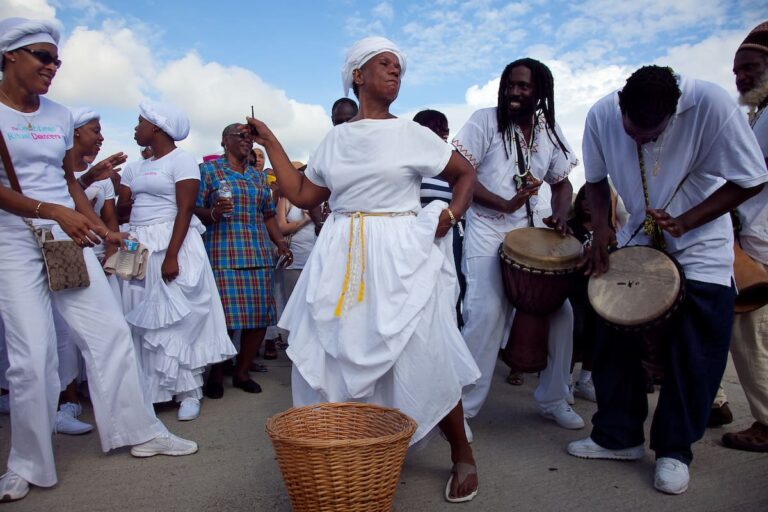
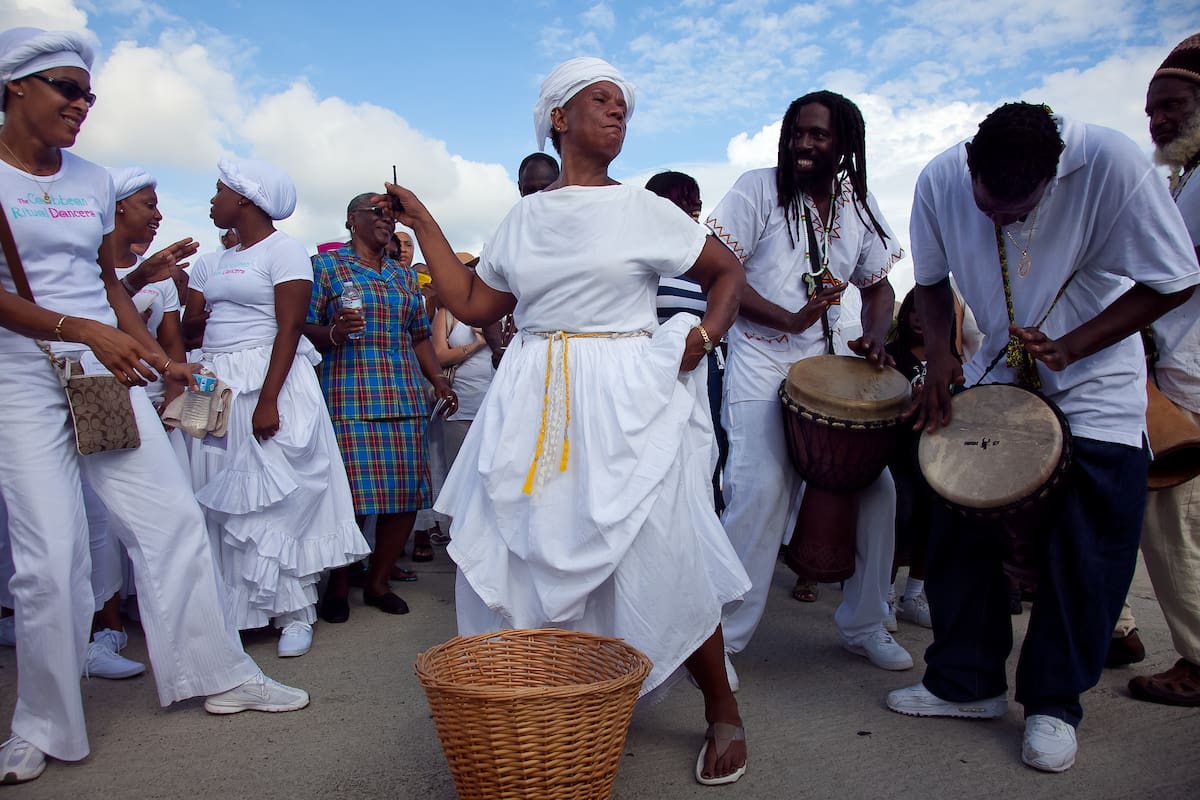
The commemoration of the 1892 Coal Workers on St. Thomas will appear in a different venue over the Veterans Day weekend. Organizers are inviting residents and visitors to join them on a cultural, historical tour aboard the motor vessel Kon Tiki on Sunday.
Those who have enjoyed the land-based tour over the past 20 years know the event as the Dollar fo’ Dollar history tour. According to those who recount the tale, the phrase comes from a slogan used by striking coal carriers protesting underpayments made when they received devalued Mexican tokens instead of Danish silver.
The commemoration also pays homage to 19th-century labor leader Clothilde Simonet — also known as Queen Coziah — who led hundreds of St. Thomas coal carriers through a successful job action.
Historic and cultural tours are a popular attraction among residents and visitors throughout the Caribbean. Regional travel sites found online point to the walking tours of Old San Juan, the cultural tours in the Dominican Republic and historic tours in Curaçao and Antigua. The Fortsberg History Tours on St. John will soon mark its 42nd year, remembering the 1733 Akwamu uprising in Coral Bay.
Event cofounder Ayesha Morris said the seagoing Dollar fo’ Dollar event has been very popular in the past, attracting up to 300 participants. “This is our 20th anniversary of honoring the coal workers … This year we’re doing our tour on Sunday, Nov. 9, from 11 a.m. to 2 p.m. It’s going to be on board the Kon Tiki this year. We’ll be boarding at 10:30 at Yacht Haven behind Moe’s grocery,” Morris said.
In addition to presentations by historians, Sunday’s event is expected to feature bamboula dancers, drummers and dramatic presentations. Those who wish to are encouraged to wear white in honor of the St. Thomas coal workers.
Proceeds from ticket sales will help organizers cover expenses for use of the vessel, Morris said.
Those wishing to attend Sunday’s event are encouraged to wear white in honor of the St. Thomas coal carriers.
Tides of Freedom: Honoring Virgin Islands Artists as Living Archives
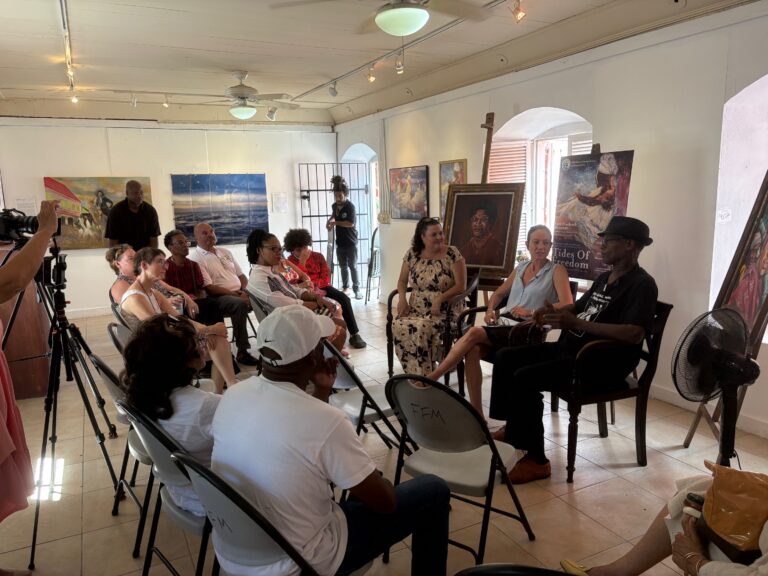
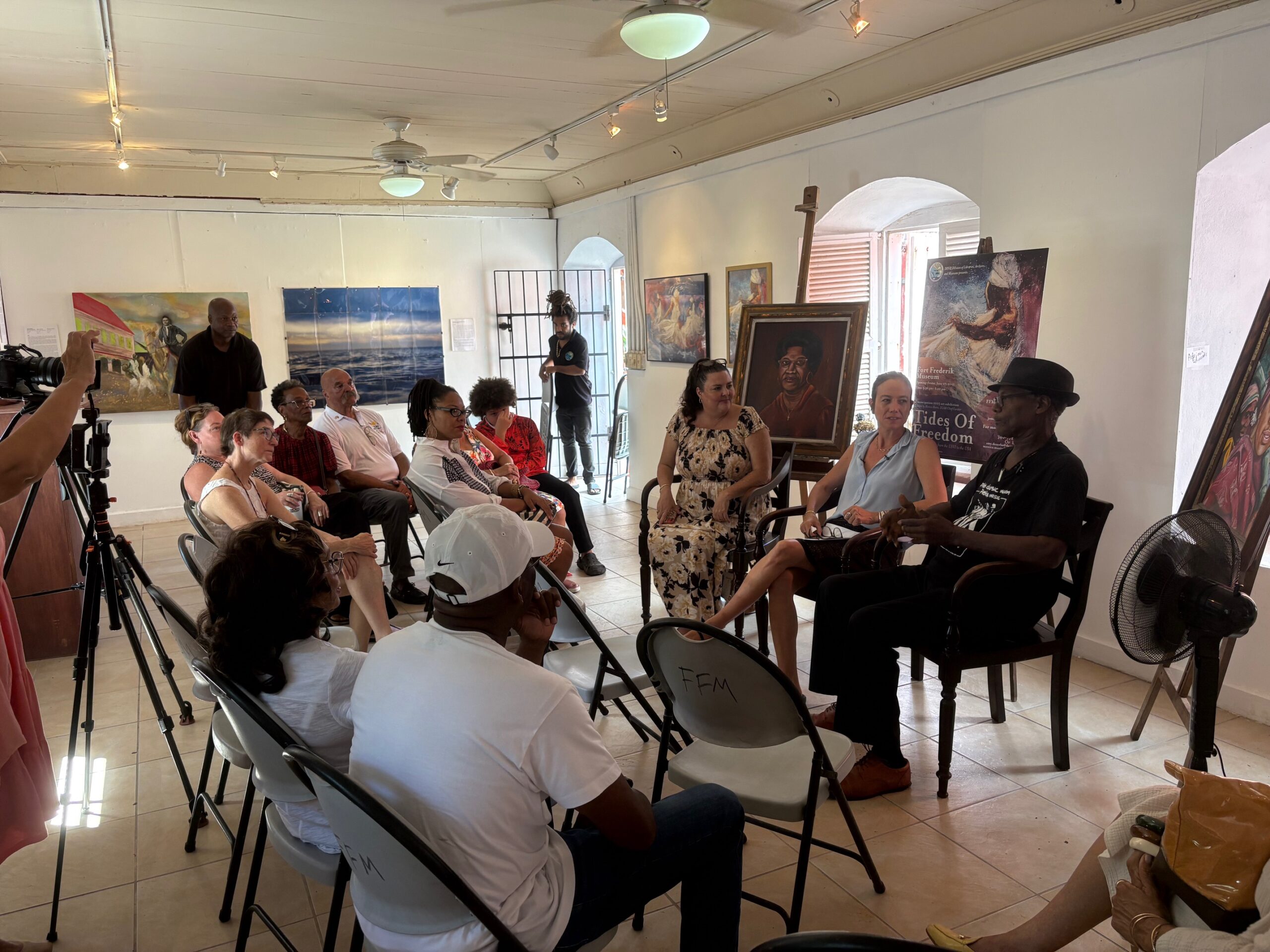
“Lunchtime with the Artist,” an ongoing artist talk series through October, spotlighting artists whose work is part of the Department of Natural Resources-Division of Libraries, Archives and Museums and offers a unique opportunity to hear directly from participating artists, held its final talk Thursday at Fort Frederik Museum on St. Croix.
The discussion provided a unique opportunity for community members to talk to artists from “The Tides of Freedom: Legacies of Resistance from the U.S. Virgin Islands to the U.S.A.”
Tides of Freedom is a multidisciplinary visual art exhibition that seeks to bridge geographical and historical divides, highlighting how freedom movements and African people and their descendants are deeply interconnected, rooted in liberatory practice, cultural memory, and resilience. Curated by Monica Marin, the project celebrates the resilience and creative excellence of Virgin Islands artists while honoring them as “repositories of knowledge” and “living archives.”
“We sit on the fact that Virgin Islands artists are repositories of knowledge, and they are living archives. This series of conversations was really a way to feature them talking about what inspires them and how their work is shaped by larger liberation movements. It’s also a way to give the community a chance to know them and their process,” Marin said.
This year’s Tides of Freedom “Lunchtime with the Artist” exhibition featured artists El’ Roy Simmonds, Edney Freeman, Lucien Downes, Ralph Motta, Victoria Rivera, Elwin Joseph, Regina Keys, David Berg, Adrian M. Edwards, and Joia Woods.
For artist Adrian M. Edwards, Tides of Freedom offers an opportunity to deepen his exploration of what freedom means in a contemporary context. His featured work, Slave Ship: His First Bullet, draws inspiration from the Middle Passage and the ongoing struggle for liberation around the world.
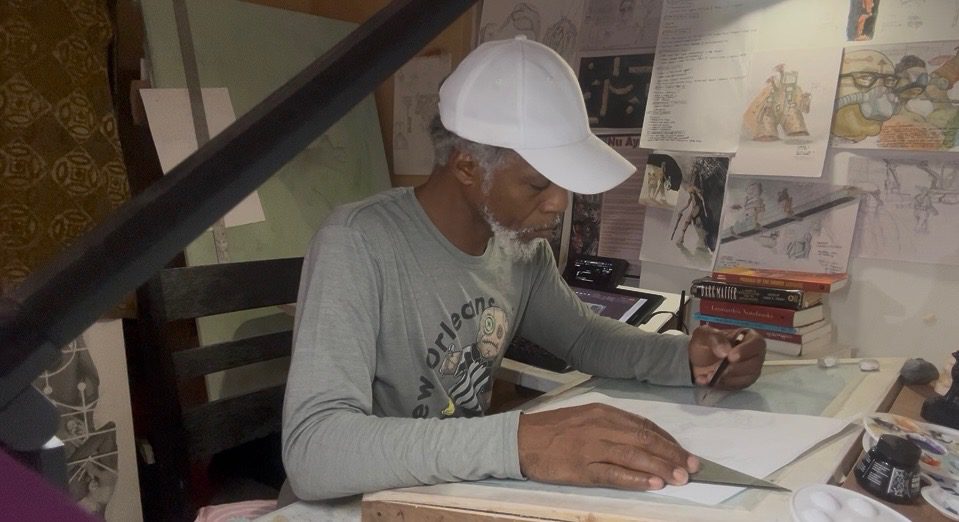
“The exhibition is about resilience and the work that freedom fighters have done in the Virgin Islands,” Edwards said. “When Monica reaches out for art, I see it as an opportunity to study and to create pieces that push my understanding of freedom and humanity.”
His piece reimagines the silhouette of a slave ship, symbolizing the violent uprooting of African peoples, as a visual dialogue between past and present. “There’s a connection between that history and what’s happening now in Gaza or even here in the Caribbean,” he said. “Freedom is a living thing.”
A multidisciplinary artist influenced by Salvador Dalí, Banksy, and Jean-Michel Basquiat, Edwards combines surrealism and Afrofuturist imagery to explore love, suffering, and identity. “Art is how I read and heal,” he said. “Everyone wants to be seen. When people look at my work, I hope they understand me better and that what I’m saying about love, suffering, and humanity comes through.”
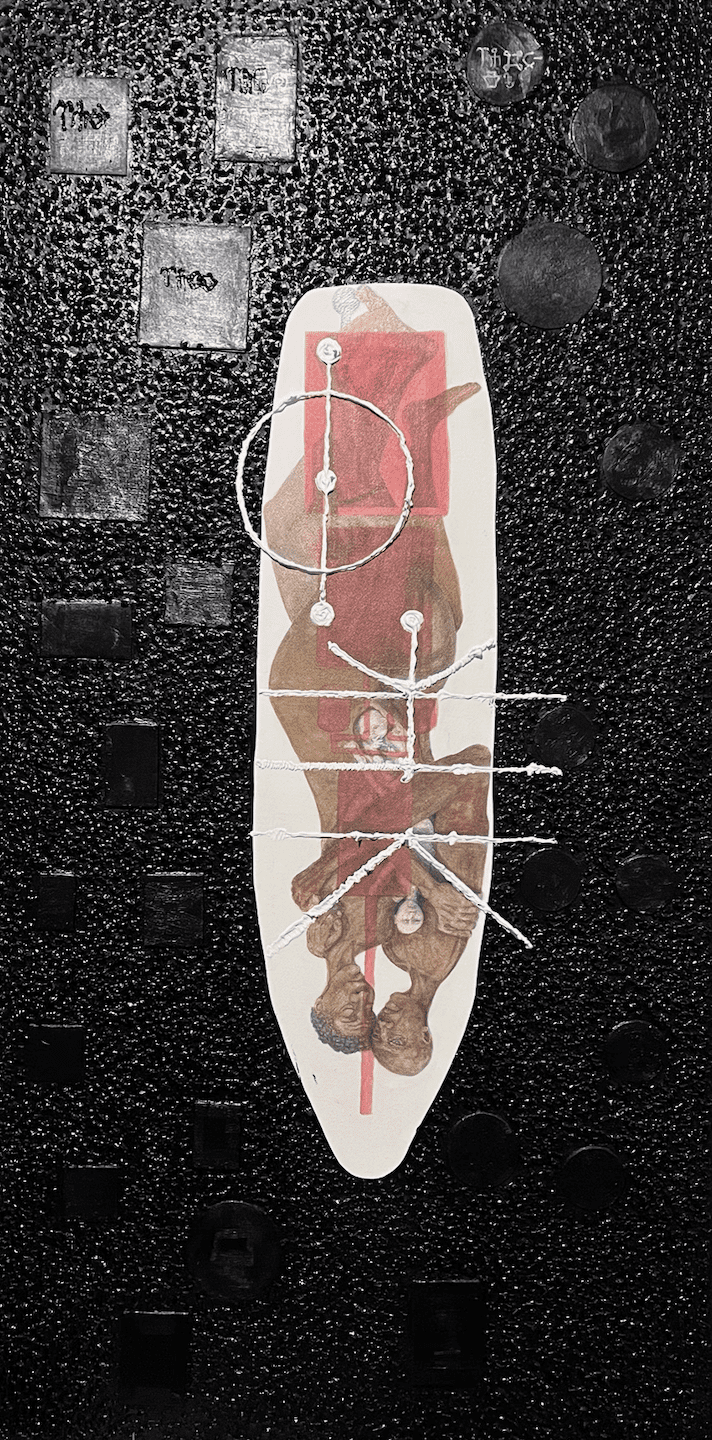
Edwards, who also performs African drumming with the St. Croix Conservatory, said he hopes to see more local infrastructure to support artists. “There are services that could make the art life less of a struggle,” he said. “I’d love to see a local division or private entity help artists with funding and paperwork.”
Another featured artist, El’ Roy Simmonds, embodies the spirit of Tides of Freedom. His life’s work spans visual arts, music, and education, each serving as a vessel of cultural preservation and resistance.
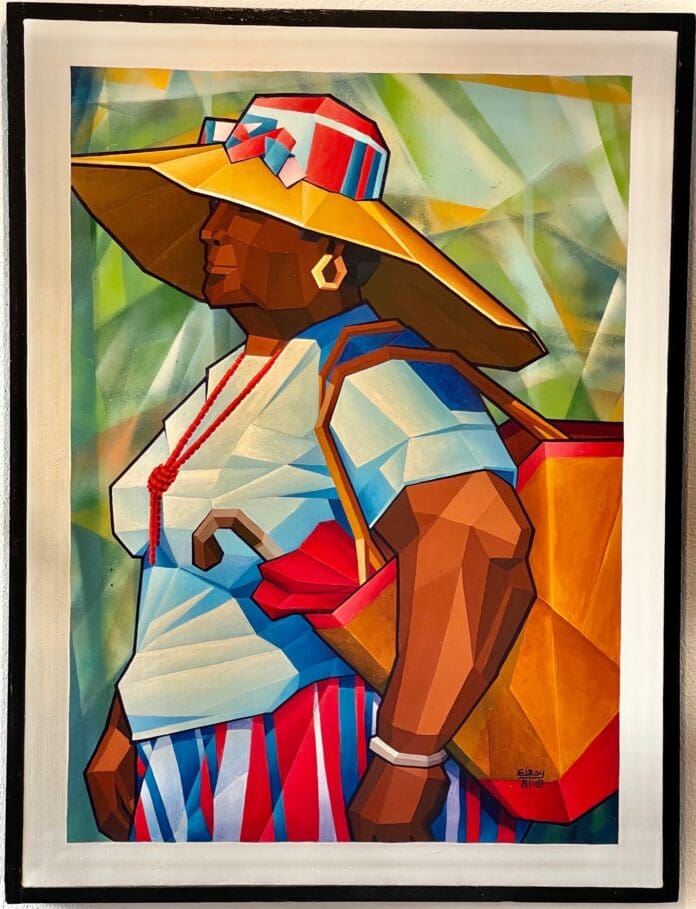
Born and raised on St. Croix, Simmonds’ creative path began early. “I didn’t know it then, but art was a part of my spirit,” he said. “My mother taught me that culture isn’t just something you read, it’s something you live.”
Simmonds studied fine arts and music education, blending his passions to form a holistic philosophy of creativity rooted in community. His art often references historical struggles, local music traditions, and everyday life in the Virgin Islands, depicting them with a reverence that connects the spiritual to the tangible. He spoke about his time as an exchange student at the Kuntz Academy in Copenhagen, Denmark, and earning his Master’s in Fine Art from Pratt Institute in Brooklyn, New York.
“For me, art is the essence of who we are as a people,” Simmonds said. “We are the descendants of those who survived, people who turned pain into rhythm, movement, and color. When I paint, I’m speaking for them. I’m adding another verse to our song.”
Simmonds has long been a mentor to emerging artists, including some of those featured in the exhibition. His participation in Tides of Freedom reinforces the exhibition’s intergenerational dialogue, where established voices like his stand alongside new and evolving artists such as Edwards, illustrating how each carries forward the story of emancipation in their own way.
Through Tides of Freedom, Marin and the participating artists are cultivating an enduring record of Virgin Islands identity, struggle, and imagination. The exhibition not only commemorates emancipation but also redefines it as an ongoing act of creativity and self-determination.
“This is about honoring the living archive,” said Marin. “Our artists hold wisdom that’s just as vital as any historical text. Their work is our history, alive, breathing, and evolving.”
Marin said the initiative was so well-received that it will now be integrated into every exhibition moving forward. “This really gives the community an opportunity to hear directly from the artists and creates a space for intellectualism, for scholarship, and for recognizing art as a form of knowledge and knowledge-sharing,” she said. “We need to honor our artists and culture bearers while they’re living.”
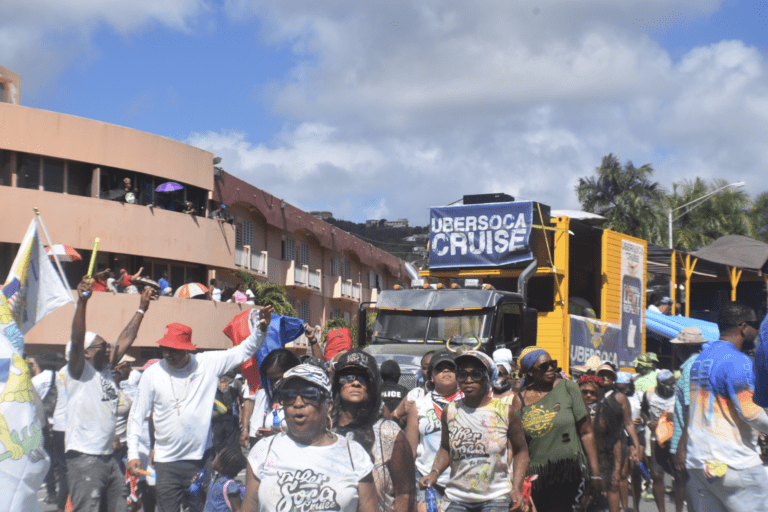
UberSoca Cruise Set to Bring High-Energy Celebration to St. Thomas Nov. 19
Lionel Michael George Dies
WAPA Invites Water Customers to Participate in Line Material Survey Across the Territory


- The presence of any potential lead-containing components in your homes or businesses
- How your home’s plumbing aligns with regulatory Tier criteria
- Where targeted sampling should take place for water quality monitoring


Op-Ed: The Lounge | A Column for Men: Why We Need to Crack the Myths