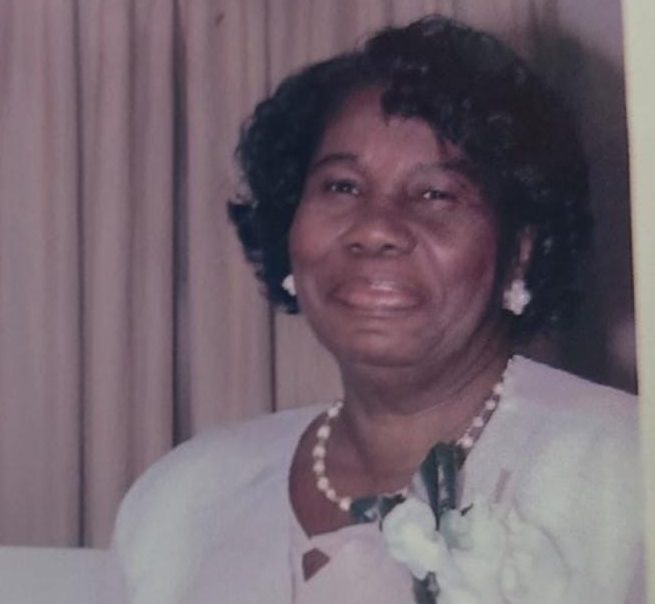
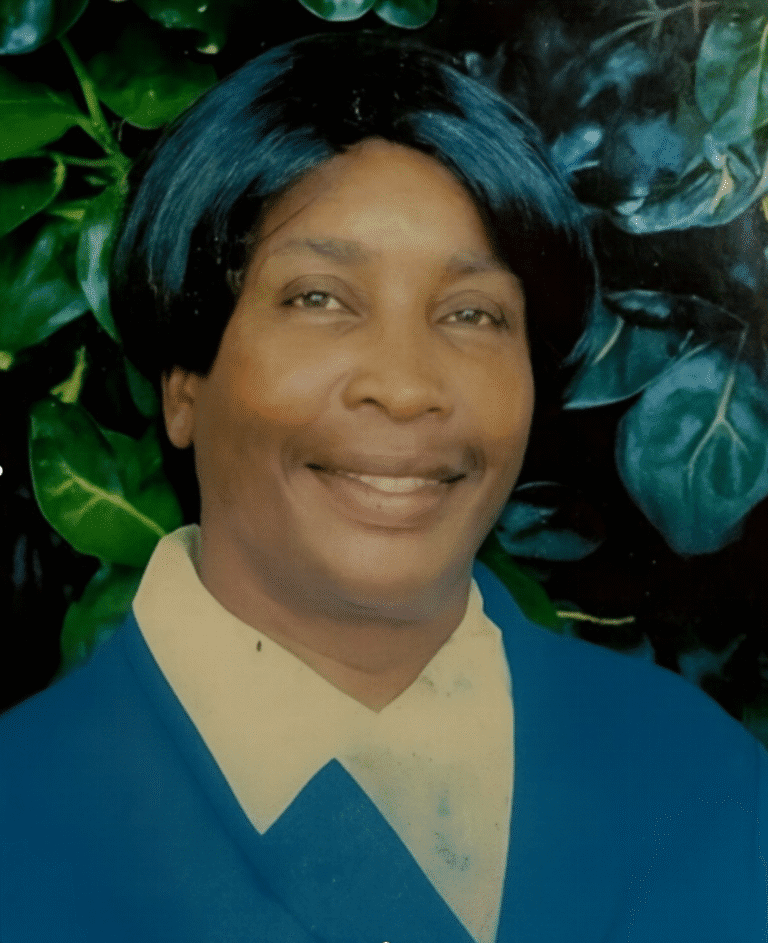
Ineta Iotha “Ota” Laffetta Thomas, of Estate Sion Hill, transitioned into eternal life on Oct. 20. She was 79 years old.Ineta Iotha Laffetta Thomas
She was preceded in death by her, father, Charles Thomas; mother, Virginia Heskey; sister, Venita M. Harrigan; brother, Luchland “Dala” Thomas; niece, Jacqueline Harrigan-Wickham; nephews, Nolly “Lesroy” King, Sr., Calvin Ferrance, Bluel Ferrance, and Warren Ferrance.
She is survived by her children, Bruno Cameron Gore (Alabama) and Laura Laffetta Yáminah Gore (Georgia); sister, Rosalie Avis Ferrance (St. Martin); brothers, Jeremiah “Enoch” Thomas (Florida) and Bernard Thomas (Texas); sister-in-Law, Kim Thomas (Jeremiah “Enoch”), Alice “Lita” Thomas (Luchland “Dala); grandsons, Bruno Gore, Jr., Khalid Arual Ovesen, Abiyah Pitts, Kasim Nesbitt, Obuasi Boulware; granddaughters, Gloria Slater-Winston, Ariadne Gore, Stephanie Gore, Ashley Gore, Krystal Francis, Octavia Pitts, Grace Henry; great grandsons, Tyheri Jackson, Rashaud Jackson, Nevaeh Hill, Damion “Prince” Bogle, Giovanni Samuel; great-granddaughters, A’Leigha Felix, Arionni Gore, A’Lexxis Jackson, A’Lyviah Jackson, A’Laynah Jackson, A’Layrah Jackson, Ashanti Celestin, Aysha Celestin, Taniya K. Bennett, Deanna Gore, GG Gore, Skichi Gore, Tiana Gore; great great-granddaughter, Novah Wynter Yaminah Felix; nieces, Jean “Pam” Phillip, Alexandra Ferrance, Carolyn Ferrance, Yolanda A.Thomas, Melinda Thomas; nephews, Henry Harrigan, Jr., Cortney Thomas, John Thomas, Lance Thomas, Jase Thomas, Glenmore Ferrance, Devon Ferrance, Dion Ferrance; godson, Craig Rawlins; cousins, Christobelle Heskey & Family, Charles Heskey and Family of Old Roads Antigua, Linnet Simon & Family, Molvine Simon & Family, Lucinda Flemming & Family, Cheryl Coates, Dawnie Yorke, Stacy Hewitt, Joann Lewis, and many more too numerous to mention; special Friends, Rosario Calderon de Calderon, Wesley Issac, Edeen Headley, Helen Hecox, Lorna Davis, Mary Schubert, Lori Daubenspeck, Carole Bartholomew Dusseau, Vivian Greenaway, Kareem Bailey, Esther Sweeney, Spencer Williams, Shirley-Ann Guide, Jennifer Joseph, Pauline Antoine, Chester D. Copeman, PhD, Blanche Rawlins, Beverly Woodrup, Thomas Daubenspeck; other relatives and friends too numerous to mention.
Funeral service will be held on Nov. 14 at James Memorial Chapel. Viewing will begin at 10 a.m. with the service at 11 a.m. Interment will follow at Kingshill Cemetery.
Professional services are entrusted to James Memorial Funeral Home, Inc.
Energy is the foundation upon which every modern economy is built. For the U.S. Virgin Islands, transforming our energy system is not only an infrastructure challenge. It is the gateway to economic competitiveness, innovation, and long-term prosperity.
Every major economic transformation in history began with energy. Nations that secured reliable, affordable power became centers of innovation and growth. Today, the U.S. Virgin Islands stands at a similar moment. To build a globally competitive, AI-ready economy, we must first build the energy foundation that powers it.
For decades, our islands have struggled with high electricity costs, aging infrastructure, and grid vulnerability. These challenges are more than technical issues as they directly affect our cost of living, business growth, and ability to attract investment. To compete in the 21st-century global economy, we must move with urgency and strategic vision.
Leveraging Federal Investment to Lead in Energy Innovation
The Virgin Islands has been entrusted with historic federal recovery and infrastructure funding, providing a once-in-a-generation opportunity. These resources can do more than rebuild what existed as they can launch the territory to the forefront of clean, diversified, and resilient energy leadership.
By aligning federal investment with a short-term and long-term energy strategy, the USVI can:
● Modernize and harden the energy grid
● Deploy large-scale renewable power
● Encourage private-sector energy development
● Build a platform for emerging energy technologies
If executed decisively, the Virgin Islands could become a national model for diversified and resilient island energy systems by reducing costs, improving reliability, and enabling new industries to flourish.
A Diversified Energy Portfolio for Stability and Growth
The future of energy in the Virgin Islands must be balanced, diversified, and resilient. Key pillars include:
● Solar and Wind: Harness world-class renewable resources to reduce costs and dependence on imported fuels.
● Battery Storage (Industrial Scale): Ensure stability and reliability during fluctuations in electrical power generation.
● Liquefied Natural Gas (LNG) as a Bridge: Provide dependable, lower-emission power while renewable capacity scales.
● Small Modular Reactors (SMRs) (long-term): Evaluate next-generation nuclear technology for baseload reliability and hurricane-resilient design.
This diversified approach ensures reliability, reduces price volatility, and positions the territory at the forefront of diversified, clean, and scalable power solutions.
Modernizing the Grid for Reliability and Resilience
Generation is only part of the equation. We must also modernize the transmission and distribution system to support future growth and withstand climate impacts.
Priorities include:
● Grid hardening and undergrounding where feasible
● Smart-grid technology for predictive management and quick restoration
● Microgrids for hospitals, schools, ports, and emergency facilities
This ensures our grid remains stable even in the face of severe storms, which is a critical necessity for our people and for industry.
Energy as the Catalyst for Economic Expansion
A modern energy system is more than utility infrastructure. It is the economic engine that powers every other industry.
Reliable, affordable power enables:
● AI data centers and digital industries
● Advanced manufacturing and biotech facilities
● Cold storage and agricultural expansion
● Tourism resilience and hospitality growth
● Small business development and entrepreneurship
Simply put, energy is the prerequisite for a diversified and thriving economy.
Without dependable power, industries cannot scale. With it, the Virgin Islands becomes a magnet for investment, innovation, and talent.
A Call to Action
We have the opportunity, federal resources and strategic rationale to build an energy system worthy of our future.
Success requires:
● Clear short-term and long-term planning and regulatory alignment
● Public-private partnerships and investment incentives
● Transparent execution and community engagement
● A commitment to a resilient, diversified portfolio
Powering the Future is more than an energy plan, it is the foundation for generational prosperity.
If we seize this moment, the Virgin Islands can become a global model for how small island economies harness diversified, resilient energy systems to drive growth.
If we hesitate, we risk being left behind.
The power to shape our future, literally and figuratively, is in our hands.
This piece is part of the “Virgin Islands at a Crossroads” series, which invites Virgin
Islanders at home and abroad to join the conversation on building a resilient, diversified
future.
— Bernard Dyer is a Virgin Islander in the diaspora, technologist, and strategist withmore than 25 years of public-sector experience, including 17 years with Booz AllenHamilton supporting large-scale digital transformation and system consolidation effortsat the U.S. Food and Drug Administration. He is also a monthly co-host on WSTX AM970 radio’s Community Digest for the last 16 years, where he highlights new ideas andbest practices to help build a more diversified and sustainable Virgin Islands economy.
Governor Albert Bryan Jr. today nominated Magistrate Judge Venetia Harvey Velazquez to serve as a judge of the Superior Court of the Virgin Islands for the St. Croix District.
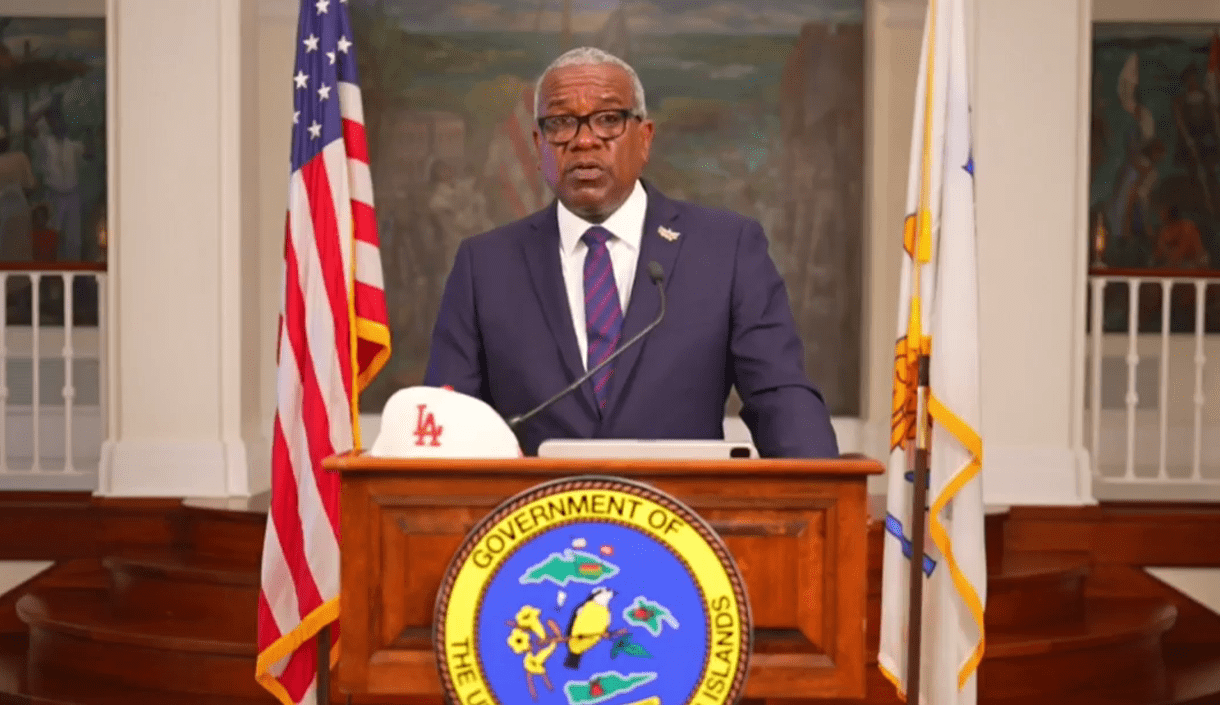
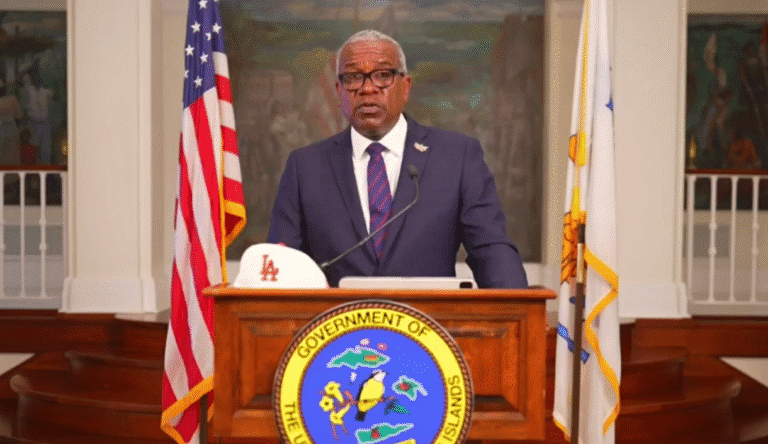
Gov. Albert Bryan Jr. announced nomination of Magistrate Judge Venetia Harvey Velazquez to the V.I. Superior Court during a weekly press briefing Monday on St. Thomas. (Screenshot from V.I. Legislature livestream)
“Judge Velazquez has served our justice system from nearly every seat in the courtroom,” Governor Bryan said. “She has tried cases, protected constitutional rights on appeal, managed court operations, advised law enforcement and led complex civil litigation. That record shows fairness, discipline, and respect for the rule of law. I look forward to a careful review and a favorable vote by the 36th Legislature.”
Judge Velazquez began her career in 2000 as a law clerk to Judge Maria M. Cabret at the then Territorial Court. From 2002 to 2007 she was a staff attorney for the Appellate Division of the U.S. District Court of the Virgin Islands. From 2007 to 2013 she served as Clerk of the Courts for the Superior Court and the Supreme Court.
In 2014 and 2015 she was an appellate public defender. In 2015 and 2016 she served as deputy general counsel in the Office of the Governor. From 2016 to 2024 she was an assistant attorney general at the Department of Justice, prosecuting cases in the Criminal Division and representing the government in the Civil Division, where she served as acting Civil Division chief from April 2023 through October 2024 and was instrumental in the settlement cases against the Jeffrey Epstein Estate.
Since November 2024 she has served as a magistrate judge, presiding over criminal bench trials and civil matters, issuing warrants and mediating civil and family cases.
She earned a Juris Doctor from Howard University School of Law, magna cum laude, ranking fifth in a class of about 130, and served on the Howard Law Journal with multiple achievement awards in legal research and writing, advanced legal research, remedies, corporations, sales and secured transactions, and recognition for appellate advocacy.
She holds a Master of Arts in education administration and leadership from the University of the Virgin Islands, summa cum laude, and a Bachelor of Arts from Howard University, magna cum laude, in human communication studies and political science. Her training includes general jurisdiction for trial judges at the National Judicial College and a 2025 judicial academy for aspiring judges. She is a certified court manager and a certified mediator and arbitrator since 2012, including Florida Supreme Court certification in appellate and family mediation.
Judge Velazquez is admitted before the Supreme Court of the Virgin Islands, the United States Supreme Court, the U.S. Court of Appeals for the Third Circuit and the U.S. District Court of the Virgin Islands, with pro hac vice appearances in the Southern District of New York and special appearances in the District of Columbia.
The Governor will transmit the nomination to the 36th Legislature for its advice and consent.
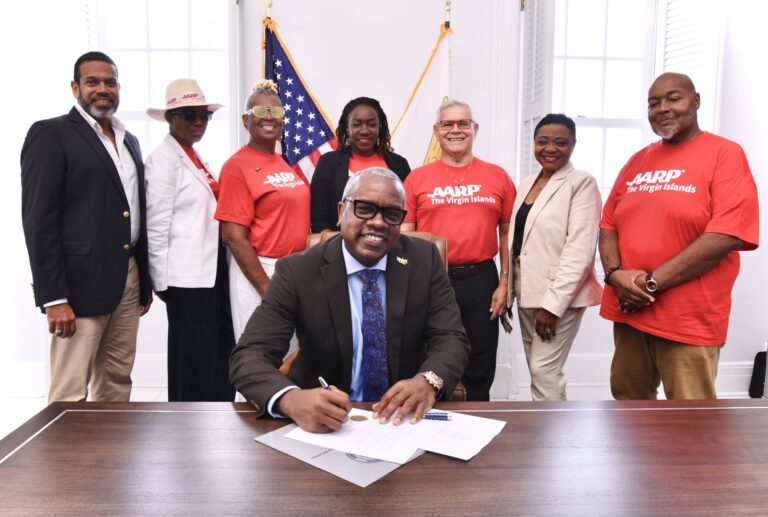
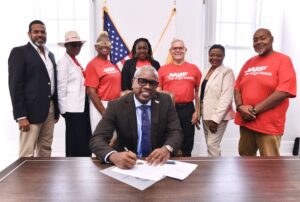
Today, Troy De Chabert-Schuster, State Director of AARP Virgin Islands issued the following statement in response to Governor Albert Bryan, Jr. for recognizing National Family Caregivers Month.(Submitted photo)
“On behalf of AARP’s 22,000 members age 50-plus in the Virgin Islands, I thank Governor Albert Bryan, Jr. for recognizing November as National Family Caregivers Month.
Today, 63 million Americans — including our own Virgin Islanders — step up as family caregivers, helping older parents, spouses, and other loved ones live independently at home rather than in costly nursing homes. These everyday heroes hold up a broken long-term care system, managing medications, preparing meals, helping with bathing and dressing, and more. In the Virgin Islands alone, family caregivers provide thousands of hours of care each year, worth an exceptional amount in unpaid labor.
The toll is heavy: financially, physically, and emotionally. Most family caregivers work full or part-time jobs, and many must reduce their hours or quit their jobs entirely to make sure their loved one gets the care they need.
AARP Virgin Islands applauds Governor Albert Bryan, Jr. for shining a light on family caregivers this November. But more action is needed. That’s why AARP is pushing for commonsense solutions that help them save money and time and provide them with more support.”
AARP Virgin Islands is calling on state lawmakers to advance commonsense solutions that will support family caregivers, including the Caregivers Leave Act (Bill 36-0086), which passed unanimously through the 36th Legislature Committee on Health, Hospitals, and Human Services on October 28, 2025. The next step for this progressive bill is a review by the Committee on Rules and Judiciary.
The family of the late Hodelair Germin are saddened to announce his passing on Oct. 17, 2025.
Hodelair Germin
He is survived by his mother: Isabella Louis Charles, father: Holama Germin, son: Wester Junior Germin, brothers: Leyenda, Rolet, Sedlo, Jo-son.
Many other relatives and friends are too numerous to mention.
A family and friends’ viewing is scheduled to be held on Friday, Nov. 7, at Divine Chapel between 12:30 p.m. – 2:30 p.m.
A funeral service honoring Hodelair’s life will be held on Sunday, Nov. 9 at Divine Chapel, viewing at 10:00am and service at 11 a.m.
Interment follows Kingshill Cemetery.
The Virgin Islands Department of Health joins the National Women, Infants, and Children (WIC) Association in reminding Virgin Islands families that while both the WIC program and the Supplemental Nutrition Assistance Program (SNAP) help families access nutritious food, they are separate programs with different funding sources and benefits.
“Our WIC offices have been receiving calls from participants asking if their WIC benefits ended on November 1, conflating the program with SNAP,” said Acting Commissioner Dr. Nicole Craigwell-Syms. “We want to assure our participants that, at present, the Virgin Islands WIC Program has sufficient funding to continue serving them. Our vendors are aware of this and will continue to redeem benefits. Please feel free to visit your grocery store and shop with your eWIC card.”
The VI Department of Health is also taking the opportunity to explain the difference between WIC and SNAP. Both programs support food access and nutrition for families, but they differ in how they are funded, the rules they follow, and when benefits are provided.
WIC is funded annually by Congress and focuses on nutrition support for pregnant people, infants, and young children. It provides nutrition education, breastfeeding support, healthcare screenings and referrals to include those to social and other services. WIC participants can only purchase specific healthy foods such as milk, eggs, fruits, and vegetables. The program is currently operating with limited federal emergency funds to keep clinics open and benefits active.
SNAP, on the other hand, helps all eligible low-income households purchase groceries. SNAP benefits can be used for most food items, except for alcohol, tobacco, or non-food products. The program is automatically funded based on the number of eligible participants; however, because no additional emergency funds were provided on November 1, SNAP has been impacted by the federal government shutdown.
Recently, Governor Albert Bryan Jr. announced that the local government would cover half of the November SNAP benefits for eligible households. Today, the governor confirmed that those payments have been completed, ensuring families can continue to buy groceries during the federal shutdown.
Lorna Concepcion, Director of the Virgin Islands WIC Program, emphasized that WIC clinics remain open and staff are ready to assist families.
“Our WIC team continues to provide full services — from nutrition education and breastfeeding support to food benefits,” said Director Concepcion. “It’s very important that participants continue to use their WIC benefits each month to keep their participation active and ensure their families receive the nutrition they need. The Department of Health WIC Program staff will contact you if there are any changes.”
Director Concepcion also urged all WIC and SNAP participants to stay informed, check with their local offices for updates, and share accurate information with others in the community.
Acting Commissioner Craigwell-Syms and Director Concepcion both noted that while the Virgin Islands WIC Program can continue operating through the month of November, it — like SNAP — faces potential uncertainty during the federal government shutdown.
The VI Department of Health and its WIC Program continue to monitor the situation closely and remain in continuous communication with federal partners.
It is with deep sadness that the family of Pearline A. Douglas affectionately known as “Pearly” announces her peaceful passing on Oct. 17, 2025. She was 84.
Pearline A. Douglas
She was preceded in death by her Husband, Arnold “Deuce” Douglas.
She is survived by her daughters, Una Pascal, Sheryl Douglas-Mckay, Andy Douglas and Sharon Somersall; sons, Evel Douglas, Shaun Douglas, Gregory Douglas and Ion Douglas, son-in-law Louis “Pete” Pascal; daughter-in-law Kimberly Douglas: 10 grandchildren, and nine great grandchildren; daughter-in-love Jessica Pearce and other relatives and friends too numerous to mention. The funeral service will be held Saturday, Nov. 22, at Blyden Funeral Chapel. The tributes will start at 9 am and the service will begin at 10 am Interment will follow at Western Cemetery #1
Professional services are entrusted to Turnbull’s Funeral Home.
The Virgin Islands Water and Power Authority is pleased to announce that it is now accepting applications for the 2026 Alva C. McFarlane Scholarship Program, providing a unique opportunity to support and build careers in engineering across the U.S. Virgin Islands.
Virgin Islands Water and Power Authority
As the largest monetary high school scholarship program in the territory, the Alva C. McFarlane Scholarship has long supported students pursuing degrees in engineering and related technical fields. Historically offered to graduating high school seniors and college freshmen and sophomores, the program has now, for the first time, expanded to include students seeking a master’s degree in engineering — offering even greater opportunities for advanced study and professional growth for Virgin Islanders.
The Alva C. McFarlane Scholarship Program offers opportunities in three (3) categories:
Bachelor’s Degree – up to $80,000
• Graduating high school seniors
• College freshmen and sophomores, including UVI students enrolled or planning to enroll in the five-year engineering program
Associate’s/Technical Degree – up to $30,000
• Graduating high school seniors planning to pursue an associate’s degree in Electrical Engineering Technology, Electronics Engineering, or a related field, or
• Individuals planning to attend trade school or pursue certification in a technical field
Master’s Degree – up to $60,000
• Students enrolled in an accredited graduate engineering program, or
• Individuals who hold a bachelor’s degree in engineering from an accredited engineering college or university
• Period of scholarship: maximum three (3) years
Scholarships in each category are offered per district.
To be considered, applicants must be U.S. citizens and Virgin Islands residents with no criminal record. Selection criteria include academic achievement, standardized test scores, community involvement, and performance in a panel interview. Eligible costs include tuition, room and board, books, fees, and supplies.
The Alva C. McFarlane Scholarship Program was created to invest in the territory’s future by equipping young engineers to help enhance the Virgin Islands’ energy infrastructure. Over the years, the program has empowered local students to pursue higher education and return to serve their community through the modernization of the territory’s energy systems at WAPA.
Alva C. McFarlane, who was instrumental in developing the scholarship, dedicated his career to supporting the Virgin Islands’ youth as Director of Apprenticeship and Training at the V.I. Department of Labor, leaving a lasting legacy of opportunity and community development.
The Authority encourages all aspiring engineers to apply today at: https://www.governmentjobs.com/careers/viwapa/promotionaljobs
All inquiries should be directed to careers@viwapa.vi.
Gov. Albert Bryan Jr. expanded on the value of a publicly-funded documentary chronicling his life and work during a Government House press briefing Monday on St. Thomas. (Shutterstock image)
Gov. Albert Bryan Jr. said he “wasn’t even aware” a solicitation was issued by the V.I. Property and Procurement Department two weeks ago seeking proposals for a documentary crew to tell the story of his life and tenure in office but that he was aware of the project, which he called “very important work.”
“I know I joke around a lot, but the reality of it is: I am the ninth governor of the Virgin Islands, and I don’t think we tell our stories enough,” he said. “I go to schools and different celebrations, I talk to children all the time and tell them that this grown man was a little boy in Savan in the Virgin Islands who ain’t really come from nothing.”
Bryan implied that the documentary would chronicle his life from those beginnings through his campaign and the major events of his governorship. A request for proposals, first reported by the Virgin Islands Daily News last week, sought a production company to create a feature-length documentary interweaving behind-the-scenes footage, interviews with colleagues and family and archival material to “serve both as a historical record and as a compelling narrative that connects the Governor’s personal story with the challenges and triumphs of the Virgin Islands over the past decade.”
Speaking to the Source last week, Government House communications director Richard Motta Jr. said the proposal also requires that raw footage and unedited interviews be preserved as part of a Government House archive.
“Those archives don’t exist now,” he said. “Retrospectives are usually made years later, based on memory. This would document events while they’re happening.”
On Monday, Bryan repeatedly suggested that the institutions already documenting events while they’re happening — local media outlets — aren’t interested in telling Virgin Islanders’ stories or letting them tell their own stories.
“It needs to be documented so every young Virgin Islander knows that they have an opportunity to contribute on whatever level they want to contribute, regardless of the muck the media puts out every day — telling us we are nobody, discrediting us as a people, discrediting our government, and most, most importantly, telling them that they don’t have a place here when they do,” he said.
Regardless, Bryan peppered Monday’s briefing — during which he announced the issuance of food assistance checks to more than 10,000 local SNAP recipients and the nomination of Magistrate Judge Veletia Harvey Velazquez to the V.I. Superior Court — with digs at coverage of recent events, including a recent meeting with the Christiansted Retail and Restaurant Association. In defending the documentary proposal, Bryan said his administration’s accomplishments need to be documented “because the media will tell them it’s impossible.”
“And if we work together … nothing is impossible for the people of the Virgin Islands,” he said. “Our incredible resiliency through three to four hurricanes — we still here. The shutdown of Hess — we still here. COVID — we still here. We still here and we’re still thriving and doing well, regardless of our challenges.”
Gov. Albert Bryan Jr. announced the issuance of food assistance checks to SNAP beneficiaries and the nomination of Magistrate Judge Venetia Harvey Velazquez to the V.I. Superior Court during a weekly press briefing Monday on St. Thomas. (Screenshot from V.I. Legislature livestream)
Gov. Albert Bryan Jr. lauded staff at the departments of Finance and Human Services for sending out checks to more than 10,000 households across the territory amid a pause in Supplemental Nutrition Assistance Program benefits caused by a shutdown of the federal government, which began last month.
“You worked through the nights — literally through the night and weekend,” he said during a Government House press briefing Monday. “We had people up until 2:30 in the morning trying to get these checks out so our friends, our neighbors and our families would not go without.”
Bryan said the U.S. Virgin Islands was one of only five states, plus the District of Columbia, to use local funds to cover the shortfall in assistance for lower-income households.
Lawmakers in Washington, D.C., have continued to spar over elements of a federal spending bill, and the federal government entered its 34th day of an ongoing shutdown Monday, which effectively halted federal assistance programs like SNAP. The V.I. Human Services Department urged local food stamp recipients to “plan ahead, budget carefully, and conserve current benefits during this uncertain period.” Bryan announced two weeks ago that his administration would tap into the government’s “rainy day” fund to provide SNAP recipients with assistance for the first half of November, and the 36th Legislature approved an emergency $2.77 million appropriation last week.
At least 25 states sued the Trump administration over the funding freeze, and on Monday the administration told a federal judge from the U.S. District Court of Massachusetts that it will use $4.6 billion from the program’s contingency funds to cover SNAP households for half of November. Bryan said during Monday’s briefing that he hoped the federal assistance would come through.
“We got a lot of people out here working hard and still getting food stamps,” he said. “Maybe they have a bunch of kids, maybe their husband or their wife left them, and maybe they have somebody sick in their family that’s draining their finances. Maybe they’re old and they can’t work. I mean it’s like … we have this vision in our heads that it’s only people who live in the projects that don’t do nothing that get food stamps. If you take a drive through any of our housing communities in the day, there’s no cars. Those are working people. People live in public housing in the Virgin Islands, for the most part, because the rent is treacherous and they have families — so we’re doing our best to help and address everybody we can during this time.”
Bryan said checks were sent out to 10,603 households, benefiting approximately 29,000 people in the territory.



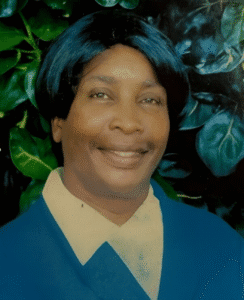



 “Our WIC offices have been receiving calls from participants asking if their WIC benefits ended on November 1, conflating the program with SNAP,” said Acting Commissioner Dr. Nicole Craigwell-Syms. “We want to assure our participants that, at present, the Virgin Islands WIC Program has sufficient funding to continue serving them. Our vendors are aware of this and will continue to redeem benefits. Please feel free to visit your grocery store and shop with your eWIC card.”
The VI Department of Health is also taking the opportunity to explain the difference between WIC and SNAP. Both programs support food access and nutrition for families, but they differ in how they are funded, the rules they follow, and when benefits are provided.
WIC is funded annually by Congress and focuses on nutrition support for pregnant people, infants, and young children. It provides nutrition education, breastfeeding support, healthcare screenings and referrals to include those to social and other services. WIC participants can only purchase specific healthy foods such as milk, eggs, fruits, and vegetables. The program is currently operating with limited federal emergency funds to keep clinics open and benefits active.
SNAP, on the other hand, helps all eligible low-income households purchase groceries. SNAP benefits can be used for most food items, except for alcohol, tobacco, or non-food products. The program is automatically funded based on the number of eligible participants; however, because no additional emergency funds were provided on November 1, SNAP has been impacted by the federal government shutdown.
Recently, Governor Albert Bryan Jr. announced that the local government would cover half of the November SNAP benefits for eligible households. Today, the governor confirmed that those payments have been completed, ensuring families can continue to buy groceries during the federal shutdown.
Lorna Concepcion, Director of the Virgin Islands WIC Program, emphasized that WIC clinics remain open and staff are ready to assist families.
“Our WIC team continues to provide full services — from nutrition education and breastfeeding support to food benefits,” said Director Concepcion. “It’s very important that participants continue to use their WIC benefits each month to keep their participation active and ensure their families receive the nutrition they need. The Department of Health WIC Program staff will contact you if there are any changes.”
Director Concepcion also urged all WIC and SNAP participants to stay informed, check with their local offices for updates, and share accurate information with others in the community.
Acting Commissioner Craigwell-Syms and Director Concepcion both noted that while the Virgin Islands WIC Program can continue operating through the month of November, it — like SNAP — faces potential uncertainty during the federal government shutdown.
The VI Department of Health and its WIC Program continue to monitor the situation closely and remain in continuous communication with federal partners.
“Our WIC offices have been receiving calls from participants asking if their WIC benefits ended on November 1, conflating the program with SNAP,” said Acting Commissioner Dr. Nicole Craigwell-Syms. “We want to assure our participants that, at present, the Virgin Islands WIC Program has sufficient funding to continue serving them. Our vendors are aware of this and will continue to redeem benefits. Please feel free to visit your grocery store and shop with your eWIC card.”
The VI Department of Health is also taking the opportunity to explain the difference between WIC and SNAP. Both programs support food access and nutrition for families, but they differ in how they are funded, the rules they follow, and when benefits are provided.
WIC is funded annually by Congress and focuses on nutrition support for pregnant people, infants, and young children. It provides nutrition education, breastfeeding support, healthcare screenings and referrals to include those to social and other services. WIC participants can only purchase specific healthy foods such as milk, eggs, fruits, and vegetables. The program is currently operating with limited federal emergency funds to keep clinics open and benefits active.
SNAP, on the other hand, helps all eligible low-income households purchase groceries. SNAP benefits can be used for most food items, except for alcohol, tobacco, or non-food products. The program is automatically funded based on the number of eligible participants; however, because no additional emergency funds were provided on November 1, SNAP has been impacted by the federal government shutdown.
Recently, Governor Albert Bryan Jr. announced that the local government would cover half of the November SNAP benefits for eligible households. Today, the governor confirmed that those payments have been completed, ensuring families can continue to buy groceries during the federal shutdown.
Lorna Concepcion, Director of the Virgin Islands WIC Program, emphasized that WIC clinics remain open and staff are ready to assist families.
“Our WIC team continues to provide full services — from nutrition education and breastfeeding support to food benefits,” said Director Concepcion. “It’s very important that participants continue to use their WIC benefits each month to keep their participation active and ensure their families receive the nutrition they need. The Department of Health WIC Program staff will contact you if there are any changes.”
Director Concepcion also urged all WIC and SNAP participants to stay informed, check with their local offices for updates, and share accurate information with others in the community.
Acting Commissioner Craigwell-Syms and Director Concepcion both noted that while the Virgin Islands WIC Program can continue operating through the month of November, it — like SNAP — faces potential uncertainty during the federal government shutdown.
The VI Department of Health and its WIC Program continue to monitor the situation closely and remain in continuous communication with federal partners.