The Governing Board of the Virgin Islands Water and Power Authority has scheduled an Emergency Governing Board Meeting today, Thursday, May 14, at 11 a.m. The meeting is open to the public and will be held via Microsoft Teams:
Join: https://teams.microsoft.com/meet/221927497601554?p=hpWR9xlxYZSKpSNprh
Meeting ID: 221 927 497 601 554
Passcode: Ux7Ed7NT
NOTICE IS HEREBY GIVEN that a Petition for Intestate Probate has been filed on behalf of the Estate of Catherine Grace Kelly, deceased. All persons having claims against the Estate are required to file such claims, along with proper vouchers duly verified by Affidavit, with the Superior Court of the Virgin Islands Division of St. Croix, or Charlotte Sheldon, Esq., Attorney for the Estate of Catherine Gracy Kelly, McChain Hamm & Associates, LLC, 5030 Anchor Way, Ste. 13, Christiansted, VI 00820, within six (6) months from the date hereof. All persons indebted to the Estate shall make payment to the undersigned.
This 14th day of May 2026.
/s/ Charlotte S. Sheldon
Charlotte S. Sheldon
VI Bar No. R2070
McChain Hamm & Associates
Suite 13, 5030 Anchor Way
Christiansted, VI 00820
340-773-6955 (Telephone)
855-456-8784 (Fax)
csheldon@usvilaw.com
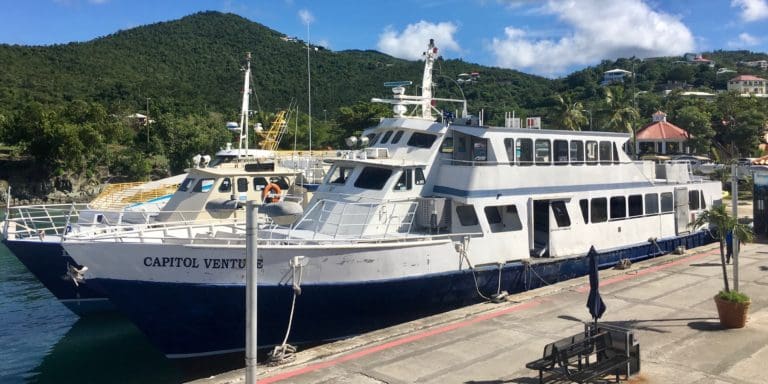
Ferries raft up at Cruz Bay. (Source file photo by Amy H. Roberts)
A final Public Services Commission hearing scheduled for Thursday could shape the future of ferry oversight between St. Thomas and St. John, as hearing examiner Jed JohnHope defends a months-long investigation he says uncovered millions in unwarranted earnings and significant transparency concerns within the territory’s ferry system.
The 2 p.m. closing conference comes days after a contentious PSC meeting in which attorneys for ferry operators challenged nearly $190,000 in hearing examiner assessments tied to the ongoing rate investigation. The broader regulatory fight, however, centers on ferry finances, fuel costs, vessel compensation, and how rates are calculated for one of the territory’s most heavily relied-upon transportation systems.
Ferry operators and their attorneys have argued that portions of the investigation became unnecessarily expensive and overly broad. During Tuesday’s PSC meeting, attorney Maria Tankenson Hodge accused JohnHope of charging excessive fees tied to the proceeding, including high travel and lodging costs associated with February’s public hearing on St. John. The companies also questioned billing totals connected to the investigation and raised concerns about the overall scope of the hearing examiner’s work.
In filings submitted to the PSC this month, JohnHope argued that the current investigation extends far beyond prior ferry rate cases, involving independent financial analysis, public engagement tools, interim reporting, hearing coordination, and comprehensive review of ferry operations and revenue structures.
“The Commission’s last ferry rate investigation occurred about eleven years ago,” JohnHope wrote in a May 4 response to objections raised by ferry operators. “When spread over that period, the total cost of this proceeding amounts to less than $10,000 per ferry company per year.”
According to the filing, the ferry companies collectively generate approximately $7 million annually in revenue. JohnHope further argued that the investigation identified roughly $7 million in what he described as “unwarranted earnings” under the existing regulatory framework — findings he said underscore the importance of stronger financial scrutiny and public oversight.
The hearing examiner has already recommended denying the ferry operators’ proposed rate increases and called for deeper audits tied to fuel consumption, staffing, payroll, vessel disposition, and ticketing operations.
During Tuesday’s PSC meeting, JohnHope questioned whether ferry companies were continuing to receive compensation tied to vessels no longer operating within the territory.
“There are boats that have been outside of the territory for almost 10 years that are being compensated for,” he told commissioners. “There are boats that have been retired — they’re being compensated for.”
JohnHope also criticized the structure of the current ticketing system, arguing that the ferry companies’ joint ownership of the ticketing apparatus makes it difficult to independently verify ridership and revenue figures.
“The numbers were not very transparent,” he said Tuesday while recommending further audits and operational review.
Among his broader recommendations is separating the Charlotte Amalie-to-Cruz Bay route from the Red Hook ferry route for future rate analysis, arguing that the downtown route accounts for only a small percentage of overall ferry traffic and should be evaluated independently.
JohnHope also pushed back against criticism surrounding travel and accommodation expenses tied to the investigation, stating in filings to the PSC that certain travel arrangements had been discussed in advance with PSC administration and represented the lowest available option at the time. He argued that remaining overnight on St. John after February’s public hearing ultimately reduced additional billable travel time that would have been incurred returning to St. Thomas.
Thursday’s closing conference is expected to continue discussions surrounding the proposed rate increases, fuel surcharge requests, hearing examiner assessments, and the broader structure of ferry oversight moving forward.
The St. John Ferry Rate Investigation Closing Conference is scheduled for Thursday at 2 p.m. and will be accessible virtually through Zoom.
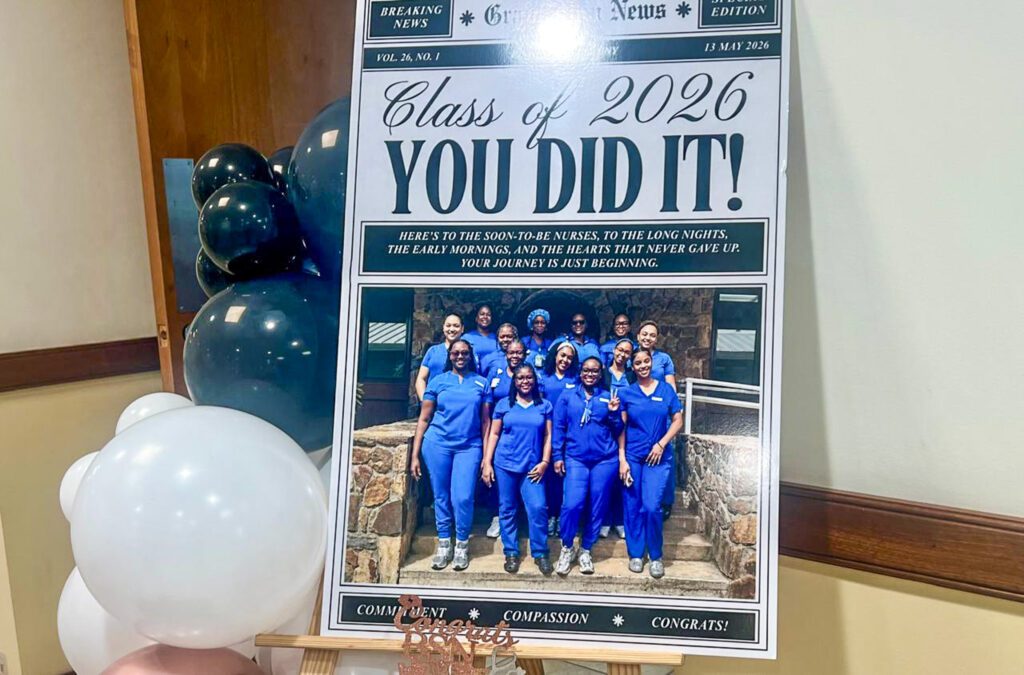
Fourteen students were pinned during UVI’s Nursing Ceremony on Wednesday (Photo by Judi Shimel)
Wednesday was the big day for fourteen undergraduate students from the University of the Virgin Islands School of Nursing, as a pinning ceremony held in their honor celebrated the hard work and persistence each of those students invested in their future nursing careers.
School administrators, government leaders, family and friends filled the conference room at the Laverne E. Ragster Administration and Conference Center on St. Thomas, where they witnessed the tradition marking the entry of graduates into the nursing profession.
On Thursday they will join with other UVI students wearing caps, gowns and sashes at the 62nd Annual Commencement Ceremony.
At the pinning ceremony students wore white uniforms, shoes and caps. Pins were installed by friends and loved ones as host Samantha Duval read personal essays written by each student.
School of Nursing Dean Lisa Lewis commended the Class of 2026. “Your belief in nursing education is an investment in the health of this territory,” Lewis said.
The dean also noted that some of the students pursued studies overseas on the U.S. mainland and in Costa Rica.
Keynote speaker Sierra Jno-Lewis, a psychiatric nurse practitioner, spoke about the ups and downs of lengthy shifts, impatient patients and taxing workloads. “Nursing is more than a career; it is a call to community, compassion and service,” she said.
The ceremony ended with a recitation of the Florence Nightingale Pledge. Students pledge to observe ethical standards, to serve as part of health care teams; to do no harm and to guard confidential information learned on the job.
“May my life be devoted to service and to the high ideals of the nursing profession,” ended the pledge heard at Wednesday’s gathering.
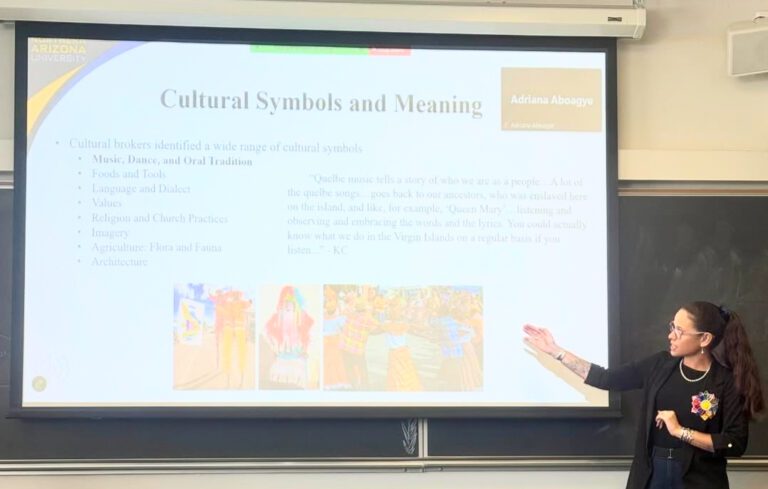
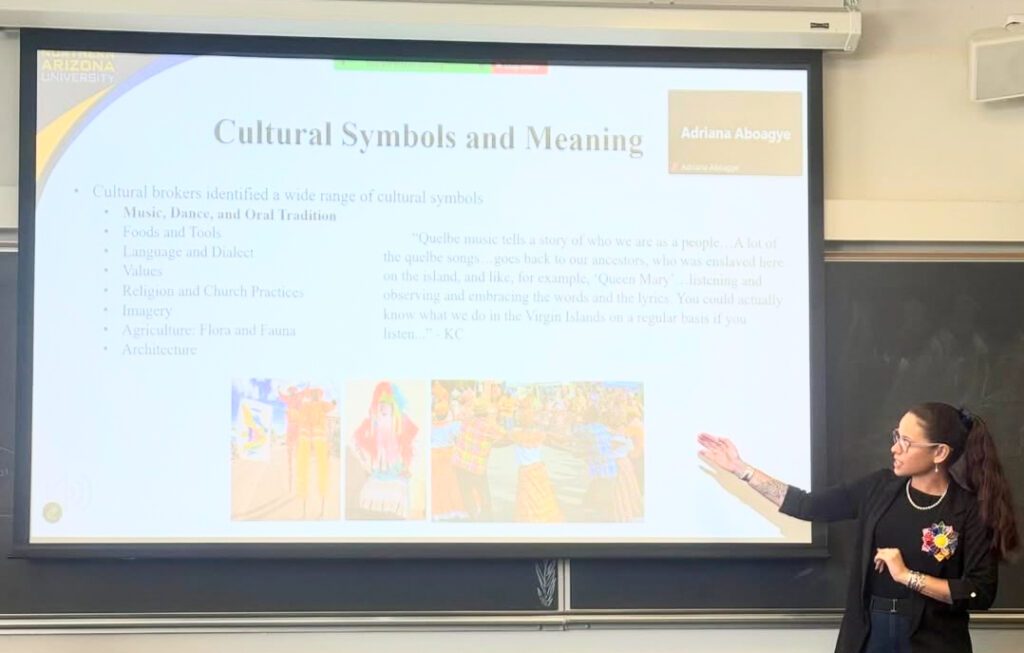
Izhani Rosa presents her doctoral research project “Dynamic and Persistent: Cultural Broker Perception of Crucian Culture.”(Photo courtesy of Izhani Rosa)
St. Croix native and doctoral candidate Izhani Rosa is exploring how Crucian cultural symbols — from quelbe music and masquerade traditions to language, food, religion, and oral storytelling — are understood, preserved, and reflected within local education systems.
Rosa, a graduate of Good Hope Country Day School and current doctoral student in a dual PhD program in School & Counseling at Northern Arizona University, recently presented research entitled “Its Dynamic and Persistent: Cultural Broker Perception of Crucian Culture.” The project examines how local “Culture Brokers” — respected community figures deeply connected to Crucian traditions — interpret cultural symbols and their place in schools and learning environments.
“At present, our local educational system is bound by the expectations and standards of mainland schooling, and so the role that local culture plays is limited and peripheral,” Rosa explained. Through her research, she said, local cultural experts are “calling for a reform that would include a more consistent and intentional integration of cultural symbols within our education system.”
At the outset of the project, Rosa discovered there was little existing research focused specifically on interpreting Crucian cultural symbols within educational settings. “But how,” she asked, “do I get to education and culture, if there are no formal research studies to draw from?” That gap ultimately shaped the direction of the study.
Describing her positionality as an “Afro-Latina Crucian woman” and “fourth generation Crucian native,” Rosa said her upbringing on St. Croix — combined with years spent studying and living on the mainland — positioned her as what she calls a “Partial Insider” in the research process. Her familiarity with Crucian dialect, traditions, and community relationships afforded her both trust and access during extensive interviews with five local culture brokers.
“St. Croix is culturally unique in a variety of ways,” Rosa explained during a Zoom call from Northern Arizona University. “We are kind of an amalgamation of various cultures put together.”
A graduate of Good Hope Country Day School’s Class of 2017, Rosa is also well known in the community for serving as “Miss St. Croix Festival Queen” from 2019 to 2022. She lived on St. Croix for the first 17 years of her life, but said her experience living “within mainland systems” positioned her “slightly further away” from the community she was studying. At the same time, her Crucian roots and shared understanding of local culture helped shape the research process. “They knew who I was and I knew how to interact in a respectful and culturally appropriate way,” she said.
Rosa organized the study around local “Culture Brokers,” which she describes as “individuals who help bridge gaps for historically marginalized communities by serving as voluntary, respected and trusted cultural experts.” The five participants selected for the project represented a wide cross-section of Crucian cultural knowledge and public life — including educators, musicians, historians, legal professionals, and tradition bearers connected to masquerade, quelbe, storytelling, and culinary arts.
Among those who participated were a local storyteller and teacher of masquerade and culinary arts traditions, a University of the Virgin Islands history professor and member of Stanley and the Ten Sleepless Knights, an administrator for Virgin Islands Cultural Education, a quelbe musician and fellow member of the Sleepless Knights, and an Associate Justice.
Serving as a foundation for the study were two guiding questions: How do cultural brokers describe Crucian culture and its symbols? And how do they describe the relationship between education and Crucian culture? Rosa said the work was rooted in the understanding that “culture shapes so many aspects of life, including how kids learn,” adding that research has shown culturally responsive curriculum and pedagogy can help build belonging, identity, and engagement among students.
In describing her methodology, Rosa said she approached the project as “a qualitative pilot study using a focused ethnographic approach” through a “post-positivist theoretical background,” while also utilizing an “Insider/Indigenous psychology perspective.” The interviews focused on defining Crucian culture, interpreting a “constellation” of cultural symbols grouped by likeness, and discussing the role of culture within schools and learning spaces.
Those symbols included language and dialect, music, dance and oral traditions, religion and church practices, architecture, and agriculture. Rosa found that many of the symbols identified by participants were rooted in honoring and remembering African ancestry. “Many of our symbols stem from African practices that were brought in by our enslaved ancestors and persisted despite attempts at erasure during slavery,” she explained. Several traditions, she added, evolved through what participants described as the “Africanization of European practices.”
The culture brokers interviewed agreed that Crucian cultural symbols should be preserved and more intentionally integrated both at home and within schools. Four of the five participants strongly supported the development of curriculum that incorporates cultural practices across core subject areas, while the fifth advocated specifically for a comprehensive K-12 local history and social studies curriculum. Participants said such efforts could help strengthen students’ sense of pride, belonging, and connection to Crucian heritage.
Speaking about the study, the territory’s State Director of Virgin Islands Cultural Education Stephanie Chalana Brown described the work as a “structured and locally grounded examination of how culture is understood by those who actively carry, teach, and shape it.”
“The research centers five Culture Bearers working across education, law, arts, and community practice,” Brown said. “That sample may be small, but it is intentionally selected for depth, and it produces consistent patterns that deserve attention within both academic and policy spaces.” She added that the study identifies “where culture currently lives in schools, how it is experienced by students, and what direction cultural experts are calling for.”
Rosa also expressed appreciation for her own educational experience at Good Hope Country Day School, crediting the school with helping prepare her for doctoral-level research and academic work.
“GHCDS gave me the skills needed to thrive in academia,” she said. “I was exposed to, dare I say, advanced content. I believe that GHCDS instilled values for critical thinking and productive questioning. I was taught to analyze and think deeply about what information is being presented. I also believe that we were taught skills for effective communication and an appreciation for science and research.”
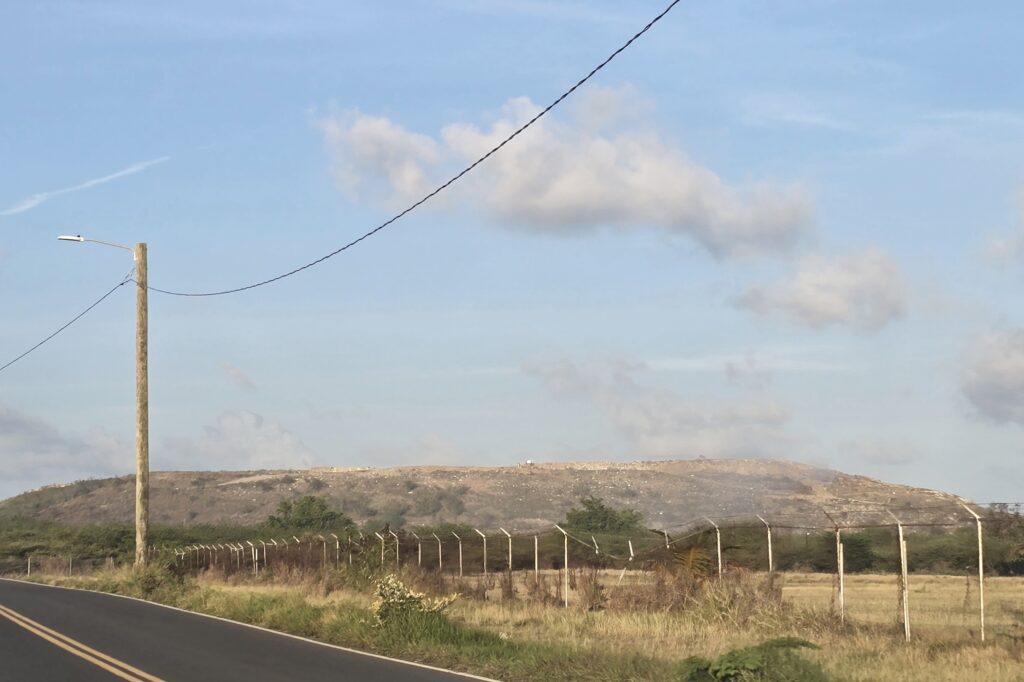
The smell of smoke lingered over the Anguilla Landfill after the V.I. Waste Management Authority and the V.I. Fire and Emergency Medical Services extinguished a fire Wednesday afternoon on St. Croix. (Photo by Kit MacAvoy)
Personnel from the V.I. Waste Management Authority and the V.I. Fire and Emergency Medical Services Wednesday afternoon extinguished a fire at the Anguilla Landfill that temporarily halted dump operations and blanketed the surrounding area in foul-smelling smoke.
The Waste Management Authority announced the fire, which erupted in the southwest side of the landfill’s “working phase” where trash is deposited, shortly after 2 p.m. A WMA spokesperson told the Source after 5 p.m. that the fire was contained and the smoke was diminishing, and she said the fire had been extinguished by 6 p.m. No injuries were reported.
Wednesday’s fire was at least the third to close the St. Croix landfill in 2026. Anguilla temporarily closed during the first weekend in March after flames erupted on the landfill’s southeastern and western sides. A fire on Jan. 2 also closed the landfill, which reopened the following day.
Following the latest fire, WMA had not yet provided information about the landfill’s reopening schedules by Wednesay evening.
Users of the new USVIOutdoors.com website can drop a pin on their favorite recreational site and make suggestions. (Screenshot of Territorial Comprehensive Outdoor Recreation Plan website)
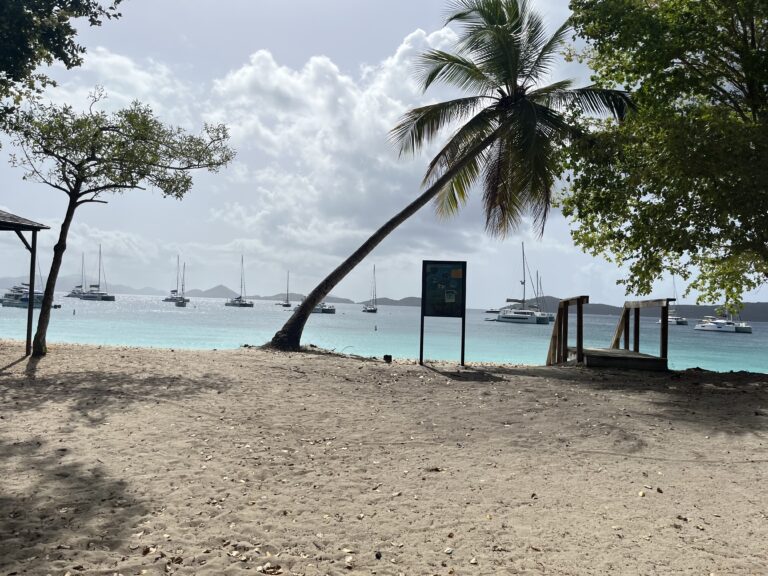
St. John’s picture-perfect Honeymoon Beach changed after retail outlets were added. Some people rejoiced at having food and drink options, chaise loungers and drive-in service via sandy Salomon Bay Road. Others, like this article’s author, found their quiet, pack-a-picnic paradise polluted — sullied and desanctified — by familiar sugary drinks for sale and amplified guitar strumming to endure. Well, for the first time, there’s an official real-time place to give our love-it or hate-it feedback.
The VI Division of Territorial Parks and Protected Areas, part of the Department of Planning and Natural Resources, has launched the website USVIOutdoors.com. The site collects information from locals and tourists alike to catalogue what people value in outdoor recreation and, fittingly, places for conservation.
The new project, launched Wednesday, supports development of a 2026–2036 Territorial Comprehensive Outdoor Recreation Plan. Or, in the character-conservative language of recreational government acronyms, DPNR’s VIDTPPA is creating a 2026-2036 TCORP, according to a media release from the Horsely Witten Group, the Massachusetts-based environmental consulting firm hired to spearhead the effort.
“The online platform marks a key step in the public engagement process for the TCORP, providing tools for island residents and visitors to share how they use outdoor recreation and conservation areas. It features two separate surveys: a traditional public opinion survey for feedback on recreation habits, preferred amenities, and access to parks, trails, and waterfront spaces, and an interactive ‘Survey123’ web map for “location-specific input,” according to the release.
Users can drop a digital pin on the interactive map, leave comments tied to specific sites, suggest improvements and amenities, or lodge pleas to protect an area from commercial use and noise pollution. Maybe something like: Please, in the name of all that is holy, leave Salomon Beach alone.
The project starts with a comprehensive inventory of what people consider recreational sites. Docks, fishing piers, trails, parks, ballparks and courts, sports complexes, recreation centers, walking paths, shade trees, picnic spots, camp grounds, waterfronts, sailing areas, snorkel-friendly no-wake zones, quiet bays, meditative outposts, peaceful non-commercial be-quiet sandy hideouts where no one jangles acoustic guitar classic rock or tries to sell you something, etc.
The data will help inform the territory’s spending on such sites through 2036. Much like the Comprehensive Land and Water Use Plan, the website says residents’ feedback for the recreation and conservation plan is vital.
The website also includes a recap of the Virgin Islands TCORP Five-Year Action Plan 2014-2019, noting the success and failure of efforts across the territory.
In St. Croix, the Paul E. Joseph Stadium remains 40% complete, according to the report, while a plan to develop Altona Lagoon went nowhere. The Estate Profit Basketball Courts were completed, as was the Reinholdt Jackson Recreational Complex and the Rudy Krieger Sports Complex.
In the St. Thomas-St. John-Water Island District, lighting installation at Emil Griffith Ball Park was not yet finished, the Lionel Richards Ball Park still didn’t have a functional concession stand, and the Oppenheimer Beach Restrooms and Concession idea had only recently gone out to bid, according to the report.
The Fairchild Lookout Point Park and the Cruz Bay Tennis Courts and Restrooms were completed. The Cruz Bay Recreation Center was in the planning stage. And, to some folks chagrin and others’ delight, concessions and restrooms at Honeymoon Beach were no longer operational.
The Virgin Islands Department of Public Works is issuing a clarification regarding statements made during the recent ferry rate hearing concerning the operation of the Spirit of 1733, as well as references to other government-owned vessels, Cruz Bay I and Red Hook I.
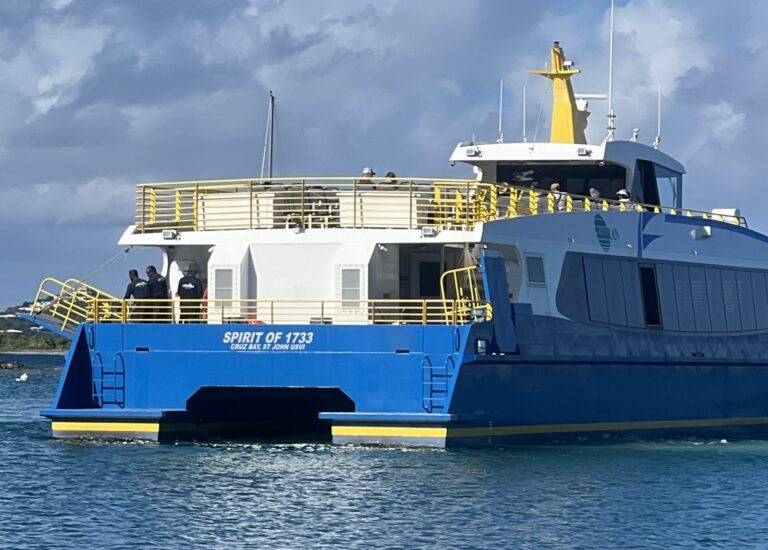
Spirit of 1733 arrives on St. Thomas (Photo courtesy DPW)
The Spirit of 1733 was acquired using federal grant funding based on ridership demand and service commitments for the Red Hook to Cruz Bay route (Route 32M). As such, its use is restricted to that designated service area in accordance with federal requirements.
While a request was made to operate the vessel on the Charlotte Amalie route on a limited basis to access lower fuel costs, the Department cannot authorize passenger operations outside of the federally supported route. The Department has advised the operator that the vessel may transit to Charlotte Amalie for refueling purposes only. No passengers may be transported, and no revenue service may be conducted during such movements.
The Department also clarifies statements made regarding other government-owned vessels. In August 2025, authorization was granted for the use of Cruz Bay I and Red Hook I by Transportation Services and Varlack Ventures, respectively, to operate along Route 30M between Cruz Bay and Charlotte Amalie.
Additionally, the Department is not aware of any conditions that would support claims of significant or prolonged downtime for these vessels. Operating agreements require that the Department be notified of operational challenges. While routine maintenance and repair activities do occur, the Department does not concur with characterizations of excessive downtime.
The Department supports efforts to mitigate rising operational costs and is in favor of reasonable measures, including the consideration of a fuel surcharge applied to non-resident passengers as a means of offsetting increased fuel expenses.
Commissioner Derek Gabriel stated, “We recognize the real cost pressures facing our ferry operators and support practical solutions that help sustain service, including the implementation of a reasonable fuel surcharge for non-resident passengers. At the same time, we have a responsibility to ensure that federally funded assets are operated strictly within the conditions under which they were awarded.”
The Department will continue to engage with the Federal Transit Administration and Federal Highway Administration to explore other compliant operational alternatives.
Attorney General Gordon C. Rhea announced Wednesday afternoon that a $7.4 billion settlement reached with Purdue Pharma and its owners, the Sackler family, has become legally effective, capping nearly a decade of work by attorneys general from across the country in pursuing investigations and litigation over Purdue’s and the Sacklers’ role in fueling the opioid crisis.
V.I. Attorney General Gordon C. Rhea (Photo courtesy DOJ)
With this agreement, the U.S. Virgin Islands has now secured a total of $1,586,934.33 in opioid settlement funds, according to the press release.
The attorneys general launched a multistate investigation of Purdue in 2016, and the U.S. Virgin Islands sued Purdue in September 2020, according to a press release announcing the final settlement.
After Purdue filed bankruptcy in September 2019 in light of massive litigation against it, the attorneys general have taken a lead role in the bankruptcy proceedings, including negotiating a new settlement that obtained more money from the Sacklers after the Supreme Court in June 2024 invalidated provisions in a prior settlement, the release stated.
The settlement gives funds to communities across the country, as well as individual victims and other groups who filed claims in the bankruptcy proceedings.
“While no settlement can undo the devastating impact the opioid crisis has had on families and communities across the Virgin Islands and across the nation, this agreement represents an important step toward accountability and recovery,” said Rhea. “The funds received through this settlement will support critical efforts focused on opioid prevention, treatment, and recovery services, while also helping ensure that those responsible for fueling this public health crisis are held accountable.”
Fifty-five attorneys general representing all eligible U.S. states and territories previously signed onto the settlement. It resolves litigation against Purdue and the Sacklers for producing and aggressively marketing opioids in the United States, fueling the largest drug crisis in the country’s history, the release stated.
The settlement also permanently bars the Sacklers from selling opioids in the U.S. and delivers funds for addiction treatment, prevention, and recovery to communities across the country over the next 15 years.
Most settlement funds will be distributed in the first three years. The Sacklers are paying more than $1.5 billion Wednesday, followed by approximately an additional $500 million in May 2027, $500 million in May 2028, and $400 million in May 2029. Additionally, Purdue is paying approximately $900 million Wednesday.
The settlement also means that Purdue’s manufacturing operations transfer effective Wednesday to Knoa Pharma LLC, which will be overseen by a board of directors who had no connection to Purdue. The settlement prevents Knoa from marketing opioids and provides for an independent monitor to ensure it provides these medicines in the safest possible manner that limits the risk of diversion.
The settlement also provides Purdue and the Sacklers will make public more than 30 million documents related to their opioid business.
Rhea is joined in reaching the settlement by Attorneys General of Alabama, Alaska, American Samoa, Arizona, Arkansas, California, Colorado, Connecticut, Delaware, District of Columbia, Florida, Georgia, Guam, Hawaii, Idaho, Illinois, Indiana, Iowa, Kansas, Kentucky, Louisiana, Maine, Maryland, Massachusetts, Michigan, Minnesota, Mississippi, Missouri, Montana, Nebraska, Nevada, New Hampshire, New Jersey, New Mexico, New York, North Carolina, North Dakota, Northern Mariana Islands, Ohio, Oregon, Pennsylvania, Puerto Rico, Rhode Island, South Carolina, South Dakota, Tennessee, Texas, Utah, Vermont, Virginia, Washington, West Virginia, Wisconsin, and Wyoming.
The DOJ has also participated in settlements with other jurisdictions that have allotted $5,187,299.82 to the V.I. to fight opioid abuse under certain conditions, according to previous statements.
Elvina Maria McIntosh, of Watergut Homes, passed away on April 30. She was 79 years old.
Elvina Maria McIntosh
She was preceded in death by her mother, Maria Agatha Dennery; father, Ivan Stanley McIntosh Sr.; son, Walston Tonge Jr.; daughter, Anita Tonge; sister, Deloris Griffith; and brothers, Allick Griffith, Ivan, and Leander McIntosh.
She is survived by her daughters, Angela Archibald Diab, Elvina M. Tonge, Shavonne M. Tonge Dawson, Uralis Fraites, and adopted daughter, Bernadette Tonge-Richardson; sons, Romeo Archibald, Bob Tonge, and Burgantine Tonge; grandchildren, Nichole and Jamalia Wilkins, Elijah and Jahleo Archibald, Jannai, La’Teisha, Makai Tonge; Janay, Khaleah, Xandria, Khaleed, Shaleed, Jahleed and Nyakoojo Tonge, Renaldo Serrano, Delyshia and Delani Benjamin, Z’Onna Charles, A’zaria Francis, Rishaun and Risheema Burke, Kenya Crump, Allanah and Shavonique Dawson, Saedeek Tonge, D’Shawn Alleyne, K’Ryah and Kerelle Harrigan Jr., Nasir Nestor, adopted granddaughter, Ashley Dawson, and adopted grandson, Kenneth Lawrence; great-grandchildren, Rylee M. Mills, Zhaire Springette, Leilani Serrano, Keran St. Ange, Jannai Jr., Alaura, and Sannai Tonge, Tehya and Ayiana Bowser, Sah’Nai Cherrie Nicole Liburd, Colly Vansandor Cascen III, Kahria Alaia Tonge, and Serena Tonge; great-great grandchild, A. Bowser; sisters, Violet Archibald, Sylvia McIntosh Brathwaithe, Dorothy, Estelle and May McIntosh, Mercedes M. Moorehead, Daphne McIntosh-Rodriguez; adopted sisters Bernadette Hansen (NJ) and Joyce Griffith; brothers, Arthur Dennery, Calvin Griffith, Anselmo Jr., and Rendall Archibald; nieces, Ayanna, Deserie, and Alisha Dennery, Dawn L. Roberts, Janice McFarlane, Annetta Mottley Audain, Monique Milton, Anniscia Montanez, Cheyenne and Teana Samuel, Nikkidah Fredericks, Kimberly M. Portee, Felicia, Lia, Leandra, and Leana McIntosh, Julissa Griffith Graham, Chane, Chantele, Tieshia, Eyeshadow, and Brandi Griffith, D’Laurie and Itanya Guliex, Horasetta S. Wyre, D’niele Meade Hodge, Laurel Moorehead Suarez, Cristel Rodriguez, Cristeen Rodriguez Cox, and Maylecia Samuel; nephews, Shelly and Ali Denerry, Alexis Griffith Jr. Wenceslas Aurilien, Ivan McIntosh III, Rodney McIntosh, Ivan McIntosh IV, Leander McIntosh, Alexander, Kelvin, and Henry Griffith, Lorenzo Hedrington, Yusef Copeman, and Karswell George; great nieces and nephews, Malik, Jaleel, Lionel, Shamali, Chamade, Shelice, Shelly Jr., Shakarie, Shamarnee Dennery; Atiba, Adika, Agyei, Amarii; Caliyaah, Camron, Chloe; Amiyah and Carter Frazer, Jackson and Jillian Headly, Justice Graham, Alexis Jr.; Julicia, Jennaya and Jaleel St. Croix, Jayla Montenez, Tristan Gill, Taliyah Cole, Tamaya, Tanaya and Tanera Barnes, K’shante, Kareem, Kenrick, Kasheem, kymoi, Natifa, Najari, Breyanna, Breyden, Michael, Brandon, Wenecia, and Wenceslas; great great neices and nephews, K’Jahni, KaMiya, Ty’Aire, Naylani, Aaliya, Layla Diziah, Jianna D’Mya, Ketura Isyah, Angel, and Makai; Daejon and Selaira Liburd, Makir Thomas, Sanai A. Hodge, Naysa, Nyora and Naheem Wyre, Lorenzo Jr. and Estella Hedrington, Kkahlisha and Khadisha Cascen, others precious nieces and nephews to numerous to mention; son-in-law, Allan Gregory Dawson; sister-in-law, Joan Dennery; nephew-in-law, Juan Montenez; godchildren, Shevon Richardson and Devon Tonge; special friends, Rita Wilkes, Bernard Brown, VI Housing Authority Family, Brenda Charles Sheryl Christian, Nathalie Humphrey, Walston Tonge Sr., Janette and Janine Crump, Kathleen Woods, Julio Cirilio, Merlinda Sylvestre, Jaynecia Joseph, Malcolm Mills, Desni M. R. Simmiolkjier, Kathleen Meade, Donna Hendricks, Anna Hall and family, Wanda Dogue and family, Melvyn Moses (Al) and family,M. Wathia Hector, Artingston Francis, and Emanuel Cotto, Vedieca Chinouyazue, Aisha Moe, Carmen Russel, Robin, Enrique James, Tristan Jones and Veran St. Ange; cousins and other relatives, Doris Brown, Mevlyn, Julian, and Kevin Williams, Rae Armstrong, Ken, Linda, Dennis, Berthran, John and Mark McIntosh, Isabel Markham (NY), Hulda Edwards (NY), Cecelia Mack Allen (NY), Henry Edwars (NY), Rodney, Steve, and Anthony McIntosh, Nicole M. Christian, Stephannie M. Luis, Thorvald, Cecelia, Phyllis, Paul, Cheryl, Barbara, and Ina McIntosh, Lionel Jr. and Avery Fawkes, Douglas Heywood and family, Wendell McIntosh, Keith Francois and family, Maria Hernandez, Geraldine Samuel and family, Jaime Roebuck, Medora Martin Granville and family, Wanson Harris and family; James family, McIntosh Family, Williams Family, Sackey Family, Heywood Family, Miller family, Griffith Family; other precious relatives and friends to numerous to mention.
Funeral service will be held on May 29 at City of Refuge Worship Center. Viewing begins at 9 am, with service at 10 am. Interment will be held at Kingshill Cemetery.
Funeral arrangements are entrusted to James Memorial Funeral Home, Inc.