




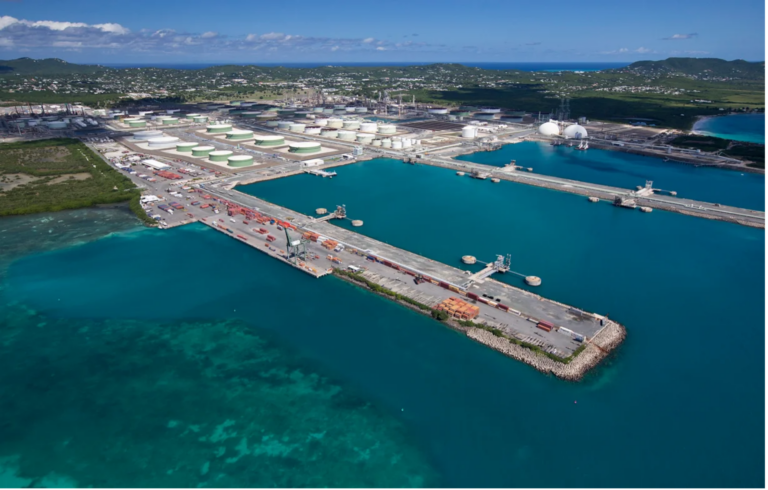
The Virgin Islands Port Authority announced Wednesday that a second public hearing will not be held on St. John regarding proposed amendments to the marine tariff. However, residents are encouraged to submit written feedback or suggestions via email to info@viport.com, and to attend tonight’s hearing on St. Croix, which will also be available via Zoom with an expanded capacity for 500.
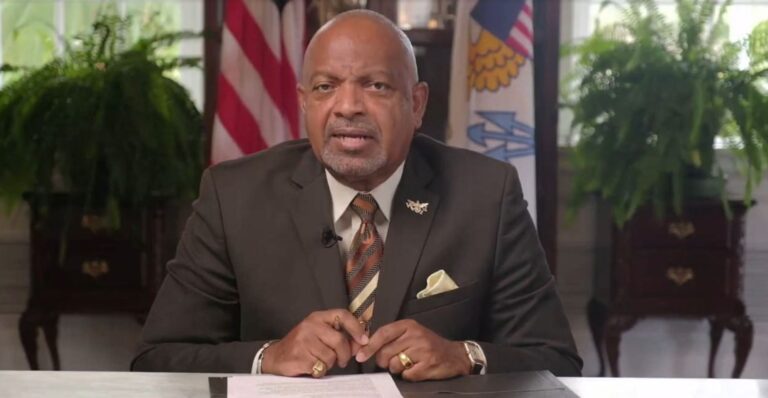
Executive Director Carlton Dowe stated that Monday’s hearing at the Cleone Creque Legislative Hall in Cruz Bay was well attended, and additional residents were accommodated and given the opportunity to speak. St. John residents also participated in the St. Thomas hearing held on Tuesday evening, and VIPA has received feedback via Zoom and email, according to the release.
The St. John meeting was was filled to capacity and locked down 10 minutes before the start of the meeting. A crowd of nearly 60 gathered on the balcony outside the conference room, and some trying to attend the meeting virtually via Zoom reportedly received messages that the online host had reached capacity.
The Port Authority has proposed a slate of fee increases that affect everyone in the territory, including docking fees at V.I. ports, fees for travelers between the BVI and USVI, and pilotage fees (primarily for cargo) for vessels over 100 tons. Dowe’s presentation, which outlines current VIPA projects and provides details of the fees, can be seen here.
The final public hearing will be held tonight at 6 p.m. at the VIPA Conference Room, located on the second floor of the Henry E. Rohlsen Airport in St. Croix. Topics include proposed increases to:
New fees under consideration:
Residents may also attend via Zoom by registering at www.viport.com/events (meeting capacity has been expanded to 500 participants). The presentation and current marine tariff are available for download at www.viport.com.
For questions, contact VIPA’s Public Relations Office at 340-774-1629 ext. 6640.
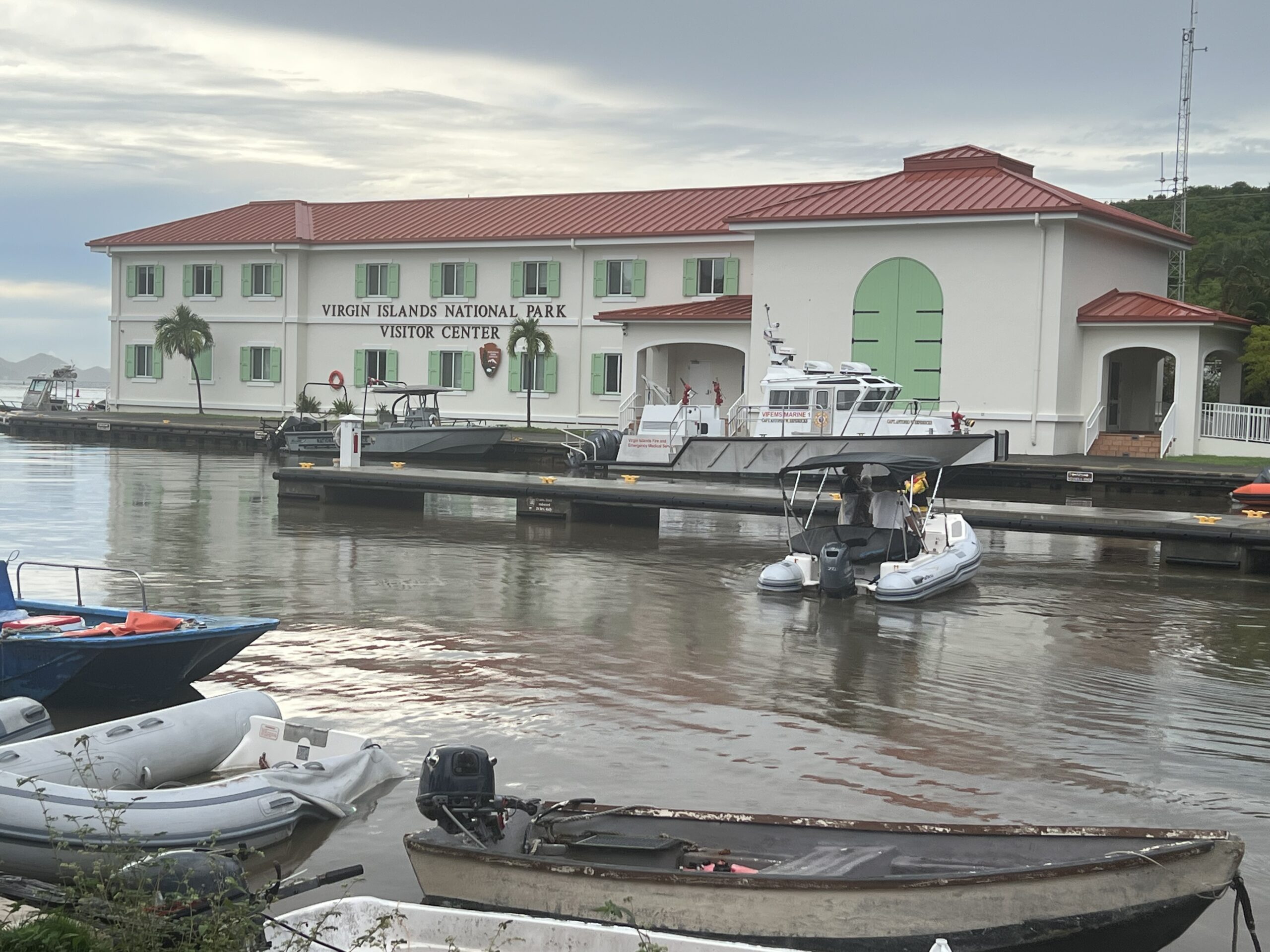
Oct. 1 was supposed to be the first day on the job for a new manager at the Friends of the V.I. National Park Bookstore at the Cruz Bay Visitor Center on St. John. Then came the nationwide federal shutdown.
However, some quick thinking and swift action by Friends’ leadership allowed bookstore manager Ameir Sprauve to perform his first day’s work. Sprauve, along with three others, makes up a team of young staffers working at the bookstore.
A directive issued by the U.S. Department of the Interior in September cited guidance provided by the Office of Management and Budget, stating that all park personnel who are not exempt or granted an exemption are on furlough during the shutdown. Volunteers who work with furloughed park personnel are told not to report for work.
At least they were not to report to the shuttered visitor center, said Friends Executive Director Tonia Lovejoy. “When they got wind of the shutdown, the four store employees were concerned about their jobs,” she said.
So was the staff at the St. John nonprofit. The night before the shutdown took effect, Lovejoy said, they went to the visitor center and moved some of the bookstore merchandise. They reached out to the manager at nearby Mongoose Junction Shopping Center and asked if there was any retail space available.
The manager put them in touch with shopping center owner Glen Speer and a merchant who offered space for a pop-up store.
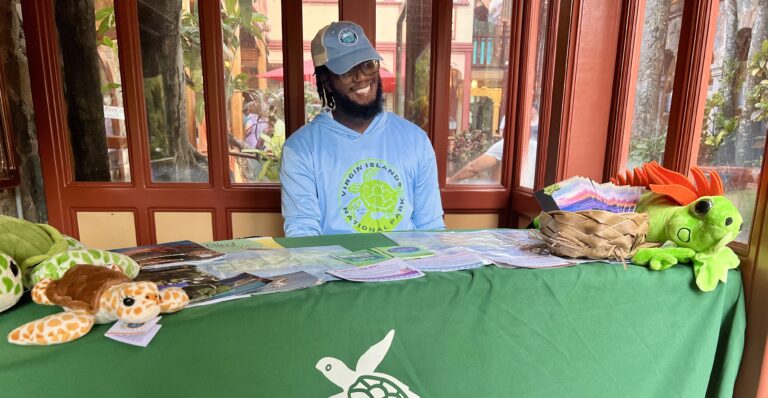
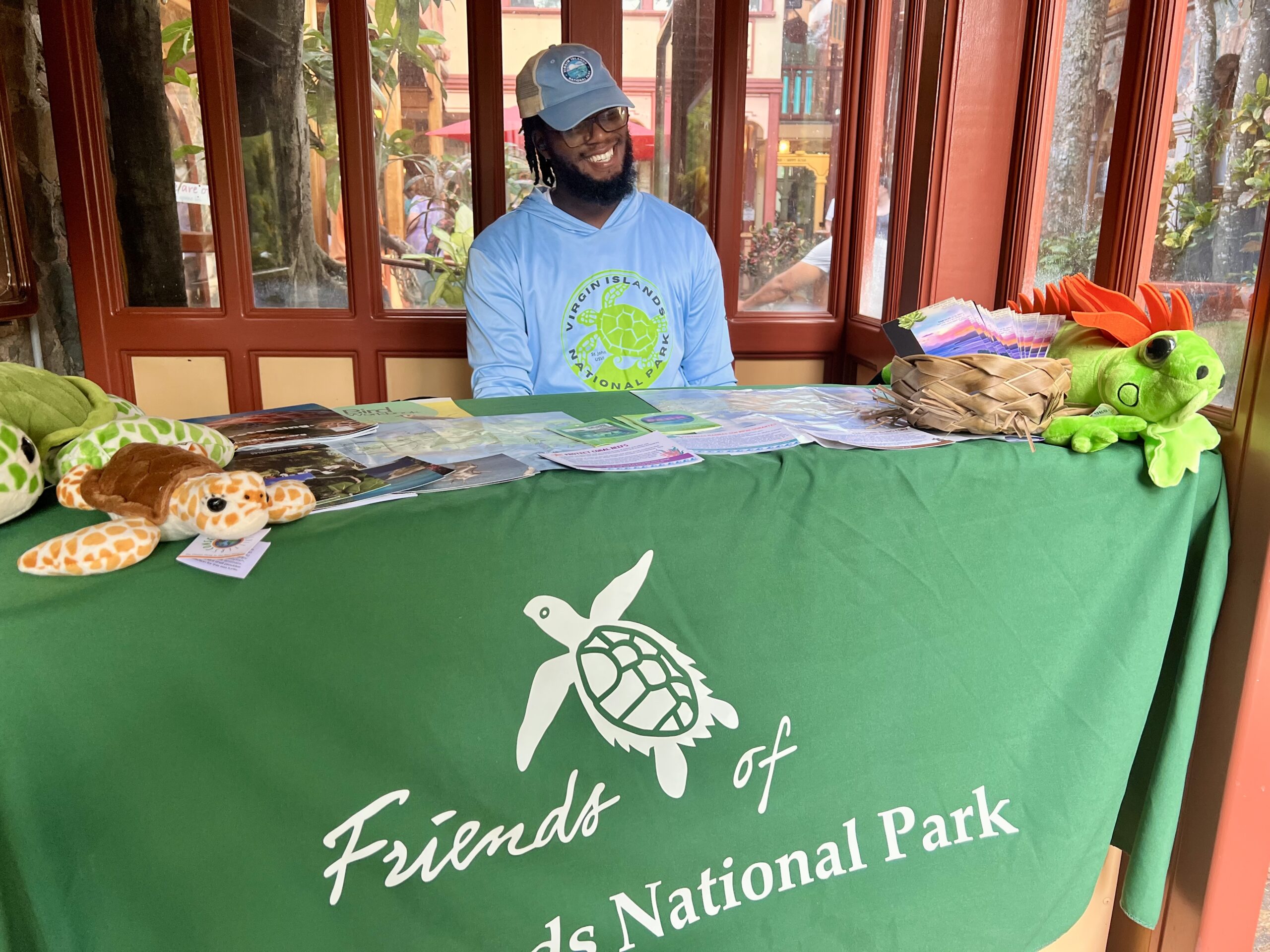
Towards one of the center’s entryways, a former information desk was draped with a Friends of the Park banner and decorated with stuffed animals. Several days after the shutdown began, a smiling Ethan Popo sat there, welcoming guests.
Popo, along with Sprauve, Kevanna Matthews, and Raisa Curry, worked together on the Friends’ youth trail maintenance crew. Popo said he also worked with the University of the Virgin Islands Mangrove Restoration Project. He directed a visitor towards the pop-up bookstore, but said it would only be staffed on days when trail duties weren’t on the schedule.
The director said there was enough work to make up for the team’s lost hours, and if the shutdown stayed in place for a while, she would look around to see what other Friends projects needed attention.
Lovejoy said the group was glad to have the new bookstore manager on the job, despite the interruption. “To have him as part of our team, to have someone knowledgeable about the park’s operation and his interest in business is super,” she said.
Proceeds from the sale of books and souvenirs help fund natural and cultural preservation projects supported by Friends of the Park.





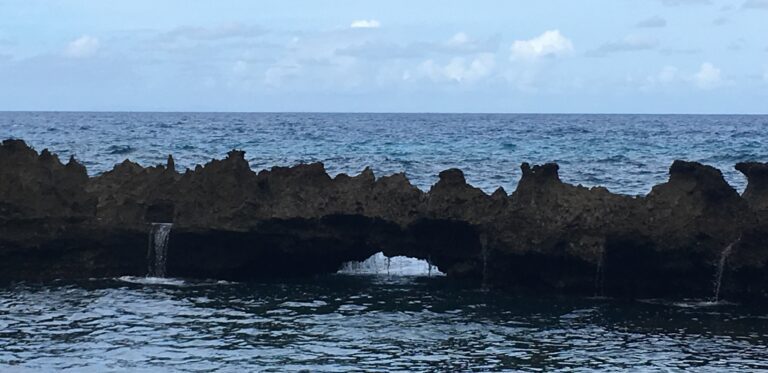

I am so happy that Maroon Country is now protected forever. Believe me, what a long political and social journey it has been trying to preserve 4% of St. Croix’s 54,400 acres and to designate the northwest as a Maroon Sanctuary Territorial Park. I have been getting calls and email messages from the public about how this idea of creating a park in the northwest and northeast central part of St. Croix came about.
In the 1920s and 1930s, there were several attempts by federal officials, especially the Department of the Interior, to help create or jump start a Virgin Islands Territorial Park System.
In those days, creating a territorial park system in the Virgin Islands fell victim to our Legislature. They were not interested. They lacked the vision and political will to create such a system of parks in the Virgin Islands. I don’t need to tell you how national parks in the United States, the Caribbean, and the world benefit the economy while preserving human history, culture, and the integrity of the environment. The late native naturalist George A. Seaman, who was born in 1904, developed a Conservation Master Plan for the Virgin Islands government.
To make a long story short, our government ignored Seaman’s cries in the wilderness to protect the natural and cultural resources of these islands. Seaman left St. Croix with a bitter heart for good and lived in Saba until he died in his 90s with a broken heart. Believe me, I can understand how Seaman felt. I too have struggled with my mortality, but I relied on my faith of making an everlasting difference in my community for the generations after me. Now I will tell, in a nutshell, how the preservation of St. Croix Maroon Country materialized.
It is a long history with many players. However, I will start with a man named Ward M. Canaday, born in 1885, from Toledo, Ohio. He was a wealthy businessman and a friend and advisor to President Franklin Roosevelt. Roosevelt was one of our “conservation presidents” who protected about 230 million acres of public land for parks, national forests, and game preserves — a long list of accomplishments for we the people of this great nation.
In 1933, Canaday visited St. Croix for the first time. He met local people like Betty Skeoch, Eva Armstrong, Frits E. Lawaetz, and other individuals. Meeting local people, Canaday became interested in purchasing lands on St. Croix. There were 2,000 acres of land on the northwest of the island, some 13 estates were up for sale for a long time when Canaday visited St. Croix again in 1936. The price was right for him and he purchased 2,000 acres for $17 an acre.
The estates he purchased were Mt. Victory, Sweet Bottom Bay, Rose Hill, Oxford, Wills Bay, Bodkin, and Pleasant Vale. In 1946, he brought Annaly, Big Fountain, Solitude, Parasol, Mt. Eagle, Hermitage, Blue Mountain, Prosperity northwest, and River estates. This brought his total land ownership to 5,900 acres — the largest private holding ever in the Virgin Islands. Without going into detail of the history of the northwest and northeast central estates, some of them now are part of the newly established Maroon Sanctuary Territorial Park system of the Virgin Islands.
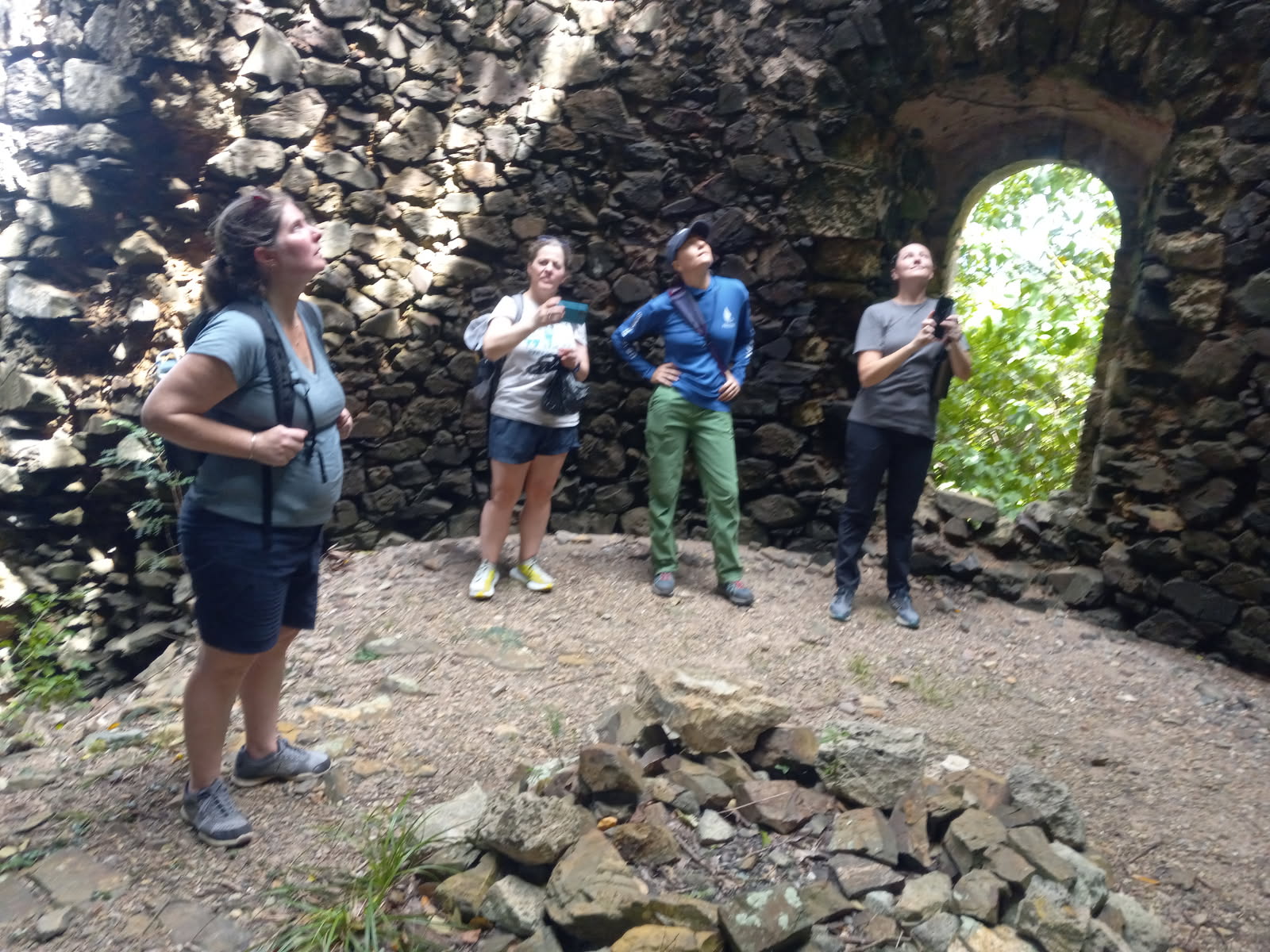
Believe it or not, it was former President Joe Biden that made it all possible to establish the park when he introduced the Inflation Reduction Act to Congress, and it passed. Also, former Sen. Samuel Carrion, who I worked with along with my colleague Toni Thomas from the University of the Virgin Islands, St. Thomas campus, on Bill No. 34-0267 to establish the territorial park system. The bill was passed by the 34th Legislature and Gov. Albert Bryan Jr. signed it into law.
Thus, the Territorial Parks System and Protected Areas was established as a division within the Department of Planning and Natural Resources. Kitty Edwards, a native Virgin Islander, became the first director of the park with a staff of seven people with different expertise. When Kitty became director of the Territorial Parks System, I said to her that Maroon Country had to be the top priority on her agenda. I also talked to the Virgin Islands Source online newspaper Executive Editor Siân Elisabeth Cobb, asking her if I could write a series of articles about Maroon Country, although I have been writing articles since the 1980s about the northwest of St. Croix.
Then, a break came through with the Inflation Reduction Act. A small group of us with Kitty Edwards applied for funding. Kitty and Melissa Hill, project manager for The Trust for Public Land of Florida, worked tirelessly along with the working group assisting them, including myself, to get funding to establish a park in the northwest of St. Croix. I forwarded our working group lots of information from my archive of the northwest, such as the cultural, natural, historical, research, my traditional knowledge of the area, including endangered species animals and plants, archaeological sites, and more to be part of the grant proposal. Other members of the working group submitted information as well.
The other day, I asked my colleague from the National Oceanic and Atmospheric Administration, Aranzazu Lascurain, what made our grant proposal favorable to the U.S. Department of Commerce and NOAA to fund the Virgin Islands government $69 million through the Inflation Reduction Act to acquire four properties at risk for development, including Maroon Country. She responded with a full written page of how superb our application was to NOAA. Lascurain said that Kitty did an excellent job of putting the proposal together with the input she received from the working group.
I believe Kitty deserves a pay increase. For me, I am satisfied that Maroon Country is now protected. Last year, some of NOAA staff came to St. Croix and met with us, including Kitty with her staff and Melissa Hill from The Trust for Public Land from Florida, the Virgin Islands Trust for Public Land, and others. We hiked and drove Maroon Country as I explained to the group the history of the sites. NOAA staff fell in love with Maroon Country and its natural beauty and cultural resources.
Then, early this year, NOAA and other federal agencies personnel visited us again. We hiked part of Maroon Country. Believe me, they were very impressed with the natural, marine environment, and cultural landscape of Maroon Country. Now, the real work of planning the park begins. Thus, the input of the public is the first step of planning for the park. After all, it is the people’s park.
— Olasee Davis is a bush professor who lectures and writes about the culture, history, ecology and environment of the Virgin Islands when he is not leading hiking tours of the wild places and spaces of St. Croix and beyond.
Following are links to previous editorials by Olasee Davis, advocating for Maroon Country to be included as part of the Territorial Parks system:
Op-Ed: It is Beyond Time to Make St. Croix’s Maroon Country a Territorial Park Open Forum: St. Croix’s Maroon Country Should Be a Territorial Park System Priority Open Forum: Estate Annaly Must be Included in Maroon Territorial Park Open Forum: A Maroon Territorial Park is Not an Option But a Must
Since 1999 the Virgin Islands Source – the only online newspaper of general circulation in the U.S. Virgin Islands – has been providing the community with reliable, accurate and balanced local journalism.
Contact us: visource@gmail.com
© 1999-2025 Virgin Islands Source