


USVI U14 Girls to Face Bahamas in International Friendlies

AARP Applauds ABLE Act

Witness Testimony in White, Hendricks Trial Concludes
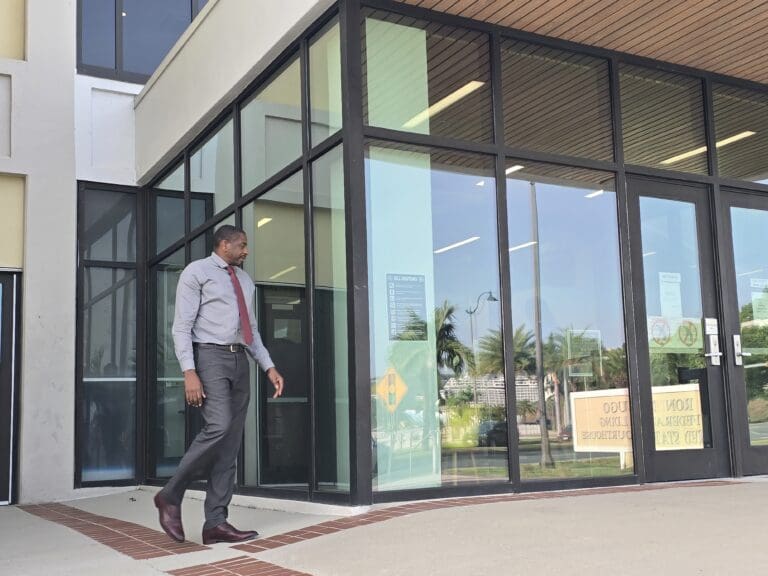

A jury of Virgin Islanders heard from the last witness Wednesday in the federal wire fraud and bribery trial of Calvert White, the former Sports, Parks and Recreation director, and Benjamin Hendricks, a business owner and government contractor. White and Hendricks have pleaded not guilty to the charges.
The government’s key witness in the case, David Whitaker, took the witness stand Tuesday. Amid questioning from the prosecution, Whitaker told the court that White helped steer what ultimately ended up being a $1.43 million federally-funded government contract to Whitaker’s former company, Mon Ethos Pro Support, to install surveillance cameras at DSPR facilities in exchange for a bribe. Though the contract was awarded to Mon Ethos, it was never executed.
The 15-page grand jury indictment of White and Hendricks included partial transcripts of multiple recordings in which Whitaker could be heard discussing elements of the alleged kickback scheme with White, Hendricks or both. Over two days, jurors heard more complete versions of those recordings, most of which were made using a Federal Bureau of Investigation recording device operated by Whitaker. The government also presented multiple screenshots of WhatsApp and text conversations. In one, White told Hendricks to “Let David know I cannot go Into [sic] this meeting today and fight for him unless he settles with me,” an apparent reference to White’s attempts to influence contract award decision of a Property and Procurement Department evaluation committee meeting.
“Done deal I’m on it,” Hendricks replied.
Jurors also heard a recording from the evaluation committee meeting, during which Whitaker and White could be heard colluding to make Mon Ethos’s bid more competitive with rival bidder SmartNet — without the knowledge of evaluation committee members on the call.
Whitaker eventually wired $5,000 to Hendricks — labeling the payment “Partial payment for contract” with his bank — for which he was reimbursed by the Justice Department. That same amount was deposited into one of White’s bank accounts 90 days later. According to Whitaker, White agreed to help him secure the contract in exchange for one percent of the bid price, or $16,000 at the time the alleged scheme was hatched.
White and Hendricks’s attorneys began cross-examining Whitaker Tuesday and attempted to paint Whitaker as a career con man and unreliable witness, citing his lengthy and well-publicized criminal history. According to a plea agreement unsealed in U.S. District Court last September, Whitaker admitted to two counts of wire fraud and one count of bribery concerning programs receiving federal funds in connection with a separate case. One of those charges stemmed from Whitaker “finding” surveillance devices in Virgin Islands government offices after he was hired to sweep the offices for bugs in 2022.
In actuality, Whitaker acknowledged, he planted them himself and billed the V.I. Police Department more than $130,000 for the work. Whitaker maintained in court that he never turned the devices on and that he removed them on the same day that he planted them. Whitaker also said he monitored people at the direction of Ray Martinez, the former police commissioner, who was indicted by a grand jury in January for allegedly accepting thousands of dollars in bribes and kickbacks from Whitaker. Martinez has filed a civil suit against Whitaker alleging entrapment.
Prior to arriving in the Virgin Islands, Whitaker was arrested in Mexico in 2008 and returned to the United States to face charges related to bilking millions from customers by selling — and not delivering — electronic equipment. While on the lam in Mexico, Whitaker allegedly made millions selling steroids and human growth hormone on the black market. He was convicted but received a dramatically reduced sentence in exchange for working with federal investigators in a sting operation that would cost search giant Google $500 million in fines for facilitating online drug sales. While being questioned by White’s attorney, Clive Rivers, Whitaker at times appeared to forget the specifics of previous convictions.
On Wednesday, Judge Mark Kearney denied the defense’s motion to allow the jury to hear certain details about Whitaker’s criminal history. The government argued that many of the crimes occurred decades ago and had no bearing on the matter at hand. According to Whitaker, White and Hendricks were well aware of his history.
Rivers and Hendricks’s attorney, Darren John-Baptiste, attempted to show Whitaker as a technology expert capable of manipulating or doctoring data. An FBI special agent called to the stand, Kiernan Whitworth, told the court that the device used to make most of the recordings heard at trial was a proprietary government recorder that can only be downloaded by federal law enforcement.
The sole witness called by either of the defendants was Julio Rhymer, the current Management and Budget director, whom Rivers asked about information listed on OMB’s website.
The government and the defendants rested Wednesday afternoon, and the trial will continue Thursday with closing arguments and instructions to the jury before they deliberate.
Judge Gives Health A Month To Transfer Prisoner Held in Father’s Death
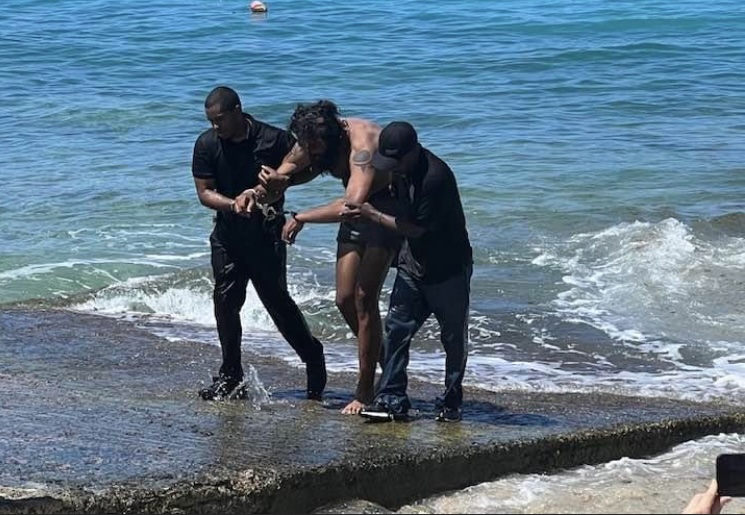
A Superior Court Judge ordered Health Department officials Wednesday to come up with a plan to place Mohammed H. Salem, accused of killing his father, at the John Bell Correctional Facility in an appropriate treatment program within the next 30 days. Superior Court Judge Denise Francois also ordered that Health Commissioner Justa Encarnacion receive notice of the court’s order.
Failure to do so will lead to a show-cause hearing and compel Encarnacion to explain in court why the transfer did not occur, the judge said. “The court is asking what progress is being made by the Department of Health in transferring Mr. Salem to an appropriate facility,” Francois said.
Two Health officials appearing Wednesday said they could not predict compliance. When asked whether they believed their agency would complete the transfer within the designated time frame, Dr. Rolinda McCarthy said, “Unfortunately, no.”
McCarthy added that money matters may factor into any failure to carry out the court’s order within the next 30 days.
Salem, the subject of the Wednesday hearing, was arrested in March 2024 after the fatal stabbing of his father, Hakim Salem, and for an assault on Jamil Salem — his brother — at the family home in Hull Bay on March 5. Jury selection for a July 28 murder trial was called off for now, pending further advisories.
Francois said she had been advised that Mohammed Salem has become a danger to himself and a danger to prison guards because of his behavior. The situation had become so extreme that guards at Bell Correctional once used a taser on the inmate to regain control, Francois said.
One of the factors contributing to those dangers is the reported refusal by Salem to take prescribed psychiatric medications. Previous appeals to the court in May led Francois to permit forced administration of those medicines.
Echoing statements made to the court by psychiatrist Dr. Evadney Sang for a medical transfer, the judge said, “Mr. Salem does not belong in a prison.”
Assistant Attorney General Jeremy Weddle said there had been a number of discussions and follow-ups on the subject of Salem’s behavior and requests for relocation. Francois ordered Weddle to notify Health that Larkin Hospital Behavioral Health Facility in Hollywood, Fla., had a bed available and was willing to accept the transfer.
Francois further ordered that Justice file other matters pertaining to the inmate’s health condition be kept under seal by order of the court.
From Cannabis to Consumer Protection, Agencies Defend Budget Hikes as Operations Expand
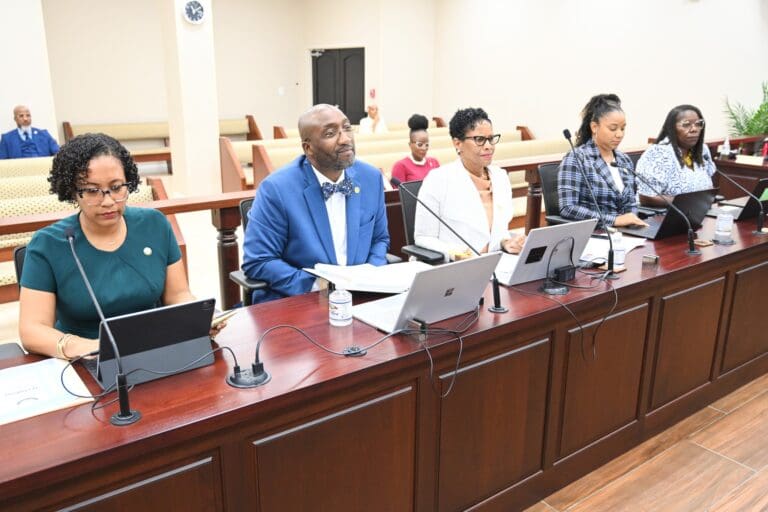
With the territory’s cannabis industry expanding, cybersecurity threats evolving, and consumer protections under increasing pressure, top officials from four government agencies appeared before the Senate this week to defend their FY 2026 budget requests—most of which include hikes aimed at staffing, enforcement, and modernization.
The Office of Cannabis Regulation, which would receive the largest relative increase, is requesting $1.64 million for the upcoming fiscal year—$1.44 million from the General Fund and $200,000 from the Tourism Advertising Revolving Fund (TARF). That’s up more than $500,000 over FY 2025, as the agency transitions from what Executive Director Joanne Moorehead called a “start-up phase” into a full-fledged regulator overseeing the licensing of cultivation and dispensary operations, along with education, enforcement, and the rollout of a seed-to-sale tracking system.
The bulk of the new money will support salaries for three new positions and continued development of enforcement tools. Since last year, OCR has grown from one to six employees and launched a medical and sacramental use registry, opened cultivation and dispensary license applications, and received 26 submissions so far. Moorehead told lawmakers the office has also collected over $103,000 in fees to date.
“The cannabis industry is new, heavily scrutinized, and unlike any other in the territory,” Moorehead testified. “This budget gives us the tools to regulate it effectively, keep the public informed, and ensure our decisions are data-driven and grounded in health and safety.”
The Office used more than $616,000 in TARF funding in FY 2025 to outfit offices, purchase law enforcement vehicles, build digital infrastructure, and support national training for local staff. In FY 2026, additional TARF resources will be used to expand the seed-to-sale tracking system and bolster inter-island compliance.
OCR’s testimony drew questions from lawmakers, including Sen. Novelle Francis Jr., who pressed for more transparency on salary levels and funding allocations. “We want to support your mission,” he said, “but we also need full disclosure on where the money is going before the budget process closes.”
Francis, who chairs the Committee on Budget, Appropriations, and Finance, also fielded testimony from the Department of Licensing and Consumer Affairs (DLCA), which is requesting $6.67 million in FY 2026—$5.87 million from the General Fund and $800,000 from the Consumer Protection Fund (CPF). That’s nearly $1 million more than last year, with the increase tied to boosting personnel and public outreach, modernizing enforcement, and launching new studies on local pricing and licensing.
DLCA Commissioner Nathalie Hodge said the agency’s work touches every corner of the economy. In FY 2025, DLCA processed over 8,200 business licenses and collected $3.1 million in fees, up slightly from the previous year. More than 180 consumer complaints were resolved, resulting in over $16,800 in restitution, while enforcement actions yielded more than $100,000 in fines.
“Our work is about fairness, transparency, and giving consumers confidence,” Hodge said. “This budget allows us to increase visibility, expand after-hours enforcement, and build a better regulatory environment.”
Much of DLCA’s funding—$3.27 million—would go toward salaries and $1.55 million to fringe benefits. The rest supports rent, supplies, public information campaigns, and professional services. New initiatives include updating the fee structure for business licenses, completing cost-of-living and fuel price studies, and restructuring the way short-term rentals are monitored and regulated.
Meanwhile, the Bureau of Information Technology (BIT) asked for $12.3 million—its largest request to date—to support ongoing cybersecurity upgrades, critical infrastructure development, and staffing for 29 positions. Director and Chief Information Officer Rupert Ross said the bureau’s work underpins every government agency’s ability to function.
“In FY 2025, we rolled out ServiceNow to more than 3,700 users, helped manage cybersecurity threats using Microsoft Defender and Sentinel, and continued building the $160 million Land Mobile Radio system to support first responders,” Ross testified. “We’ve made real progress—but we need to stay vigilant, and that means sustained investment.”
BIT’s request includes funding for enterprise tools, software licenses, training programs, and additional technical positions. Among the bureau’s goals are consolidating outdated systems, completing the LMR buildout, and safeguarding citizen data through strengthened network defenses.
Senators raised concerns about delayed hiring and project execution, to which Ross responded by pointing to “market demand for qualified IT professionals” and government procurement processes that lengthen timelines. Still, Ross emphasized that BIT had already saved the government money by leveraging shared tools and reducing agency redundancies.
The final testimony came from Marvin Pickering, Chair and CEO of the Casino Control Commission, who requested $1.72 million—a lump sum allocation to support 17 positions and help launch internet gambling operations. Pickering reported $112,750 in license and permit fees collected so far this fiscal year, along with $381,299 in casino revenue taxes—up 35 percent from FY 2024.
Pickering also noted a clean FY 2022 audit, correction of a prior finding, and ongoing efforts to clear a backlog of 385 enforcement investigations.
“We are preparing to regulate the online gaming environment, which is a major step for us,” he said, adding that a summit to roll out the Internet Gaming and Gambling Act is scheduled for July 31. “We’ve made real strides, but the demand for oversight keeps increasing.”
He said the Commission has issued 432 licenses and permits since October 2024, and now needs to invest in staff training, digital licensing systems, and outreach. The agency is also preparing to celebrate 30 years of service.
Several senators—including Sen. Kurt Vialet and Sen. Carla Joseph—urged agency heads to ensure transparency in staffing and spending, while Sen. Marvin Blyden asked for more inter-agency collaboration, especially as the cannabis and gaming sectors grow.
Sen. Marise James echoed those sentiments, emphasizing the need for regulators to be proactive, not reactive.
“This is a chance to do it right,” she said. “But doing it right means being ready—technologically, legally, and in the eyes of the public.”
Territorial Hospital Board Approves Contracts, Appointments and JFL Updates
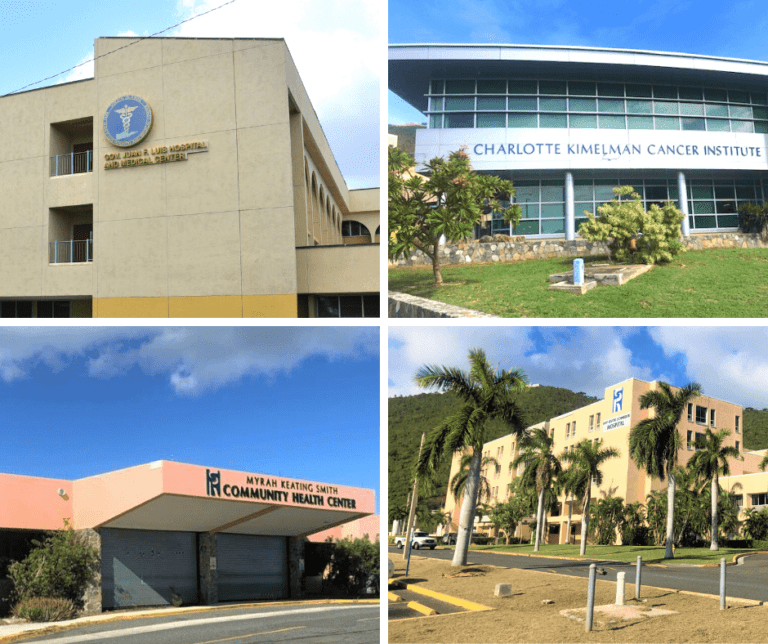
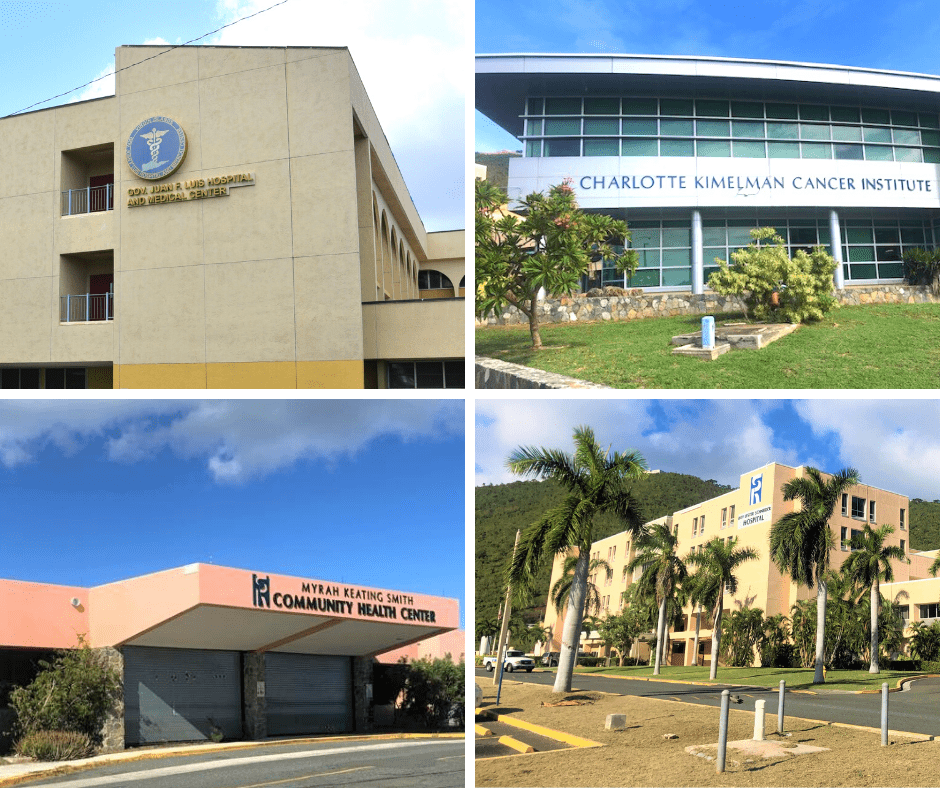
On Wednesday, the V.I. Government Hospital & Health Facilities Corporation Territorial Board held their monthly meeting and approved requests for equipment, medical staff applications, discussed recent protests, and medical projects.
The meeting was held online via Microsoft Teams. Early on, Juan F. Luis Hospital CEO Darlene A. Baptiste shared updates on the hospital’s status, addressing shortcomings, recent achievements, and the protest that took place earlier this month.
“We’re still doing strategic adjustments to address some of our shortfalls and realign operations for our long term goals,” said Baptiste, who added that the hospital is looking at their salary cost reduction plan to specifically address the attrition in their organization. Efforts for employee advisory growth for increased engagement are also being addressed.
Other issues, including arrears, challenges of being on an island, and shortfalls across the country regarding suppliers, were identified. However, one approving update Baptiste mentioned was the FDA recertification for the hospital’s mammography machine.
“That was one of our pieces that we were getting negative press on, so reconstituting that program has been a successful endeavor for Juan F. Luis,” said Baptiste.
Baptiste addressed the code yellow data breach that occurred in April and highlighted that the hospital is now 25 days away from reimplementation of its Meditech system.
Regarding the protest on July 8, “It seemed you handled it excellently, but from there, at least the media reports there will be some continued follow up. Can you bring us up to date?” asked board member Christopher Finch.
Baptiste responded that it was a “unique opportunity to approach the public from that vantage point.” She added, “We had some discussions. I’m trying very hard to keep it at a level of solution based discussion.”
According to the CEO, three and a half pages of concerns were received from nurses and physicians. Some have been addressed, but highlighted that the concern regarding the shortage of supplies has not been.
“It’s strictly not a cash flow issue,” she said. “Our vendors and suppliers don’t have the stock of which we need.”
Additionally, Baptiste stated that the hospital has 196 claims totaling just over $1.3 million and that 99.5% of the Southern Trust Settlement funds have been expended. Furthermore, Aug. 17 is the anticipated date for operations to resume at JFL, with a gradual return of departments. On July 31, there will be community outreach at the Virgin Islands Cardiac Center.
Board member Julio Rhymer addressed the board and asked for approval over the following items:
-
The addition of Adeline Williams Connor, newly appointed chief operating officer, as the certifying officer and signatory to all bank accounts of JFLH.
-
SRMC and JFLH Leadership joint request to enter into a renewal agreement for RYVEX LLC in the form of a combined five-year contract for hematology analyzers and reagents, covering both equipment and supplies for a not-to-exceed amount of $1,161,000, of which the JFLH share shall be $570,000 and the Schneider Regional Medical Center share $591,000. Each hospital will manage and pay its portions separately under the joint contract.
-
A one-year supply agreement with DG Gas for HG-5 grade LPG for a not-to-exceed amount of $400,000 and for performance of one (1) year from date of execution of the contract.
-
Change order #14 for the J Benton Construction contract for the Charlotte Kimmelman Cancer Institute, consisting of a low voltage systems package that will increase the contract sum by $890,030.35, leading to a new not-to-exceed total contract sum of $33,650,035.70 and a continued expiration date of Nov 19.
All actions were approved unanimously.
The board also approved reappointments for Elizabeth Dumas, CRNA, Brittany Dawson, CN, and Hakima Aouchiche, MD, and initial appointments for Travis Edelstein, MD, David Ratliff, MD, Pedro Ondina Diaz, MD, Felipe Rodrigues Ruiz, MD, and Thomas Brim, MD.
Darryl Smalls, executive director for the Territorial Hospital Redevelopment Team, provided updates on ongoing projects for the hospitals.
Cassava Gardens, the relocation site for nonclinical staff, is currently being addressed.
“I know the important thing that the board wants to know, as well as the leadership of JFL, is ‘What is that date that we will actually be moving in? ‘” said Smalls. “The TRHT team continues to work feverishly to get those payments processed,” he added, mentioning that there are a few months of arrears being processed.
Of JFLH 5 Acres, Smalls said they are “currently renovating to support the temporary JFL North as well as to facilitate the demolition of the Juan F. Luis Hospital.”
The project will clear five acres, create over 200 parking spaces, and provide a 10,000-square-foot space for medical waste and storage. Additionally, it will generate an access roadway north of JFL to terminate all traffic south of the Virgin Islands Cardiac Center, facilitating the demolition of JFL.
“We are still on target for completion at the end of the year for that,” said Smalls.
Smalls added that the Charlotte Kimmelman Cancer Institute is expected to be completed by Nov. 19. The Myrah Keating Smith Community Health Center contract is currently under review by the selected contractor for upgrades and the center has recently received approval from FEMA for funding for a temporary water supply, storage facility, and for the relocation of the morgue.
The interim dialysis facility on St. Croix has also been approved to receive funding from FEMA and the relocation of dialysis from JFL to VICC has been approved as well. Additionally, according to Smalls, contractor selections for JFL and Roy L. Schneider hospital upgrades are ongoing.
The next board meeting is scheduled for Wednesday, Aug. 20, at 5 p.m. via Teams.
Board members Jerry Smith, Julio Rhymer, Christopher Finch, Frank Odlum, Faye John-Baptiste, and Kevin McCurdy were present and voted. Justa Encarnacion was later present.
Tropical Outlook: Wave to Bring Rain to USVI and Puerto Rico; NHC Eyes Gulf System


Crucian Author Pens Motivational Book for Children



Giving Homeless Animals a Second Chance: Pets With Wings Hosts Life-Saving Brunch at Hotel 1829


Pets With Wings, a nonprofit animal transport organization, is inviting the public to attend its Life Saving Brunch at Hotel 1829 this Sunday. This special fundraiser will support the organization’s ongoing mission to relocate adoptable animals from the Virgin Islands to no-kill shelters, rescue partners, and loving homes on the U.S. mainland.
The brunch will take place at the historic property in downtown Charlotte Amalie, offering guests a meaningful way to contribute to the cause while enjoying a memorable meal with friends and family. Organizers are encouraging early reservations, as seating is limited and all proceeds will directly assist animals in need of safe transport and a second chance at life.
Pets With Wings was first established in 2010 as a program under the Humane Society of St. Thomas. In April 2024, the program became an independent 501(c)(3) nonprofit, allowing it to expand its services and operate with greater flexibility in support of local animals.
In 2024, the organization transported a total of 633 pets. In February alone, one of its largest efforts to date, Pets With Wings flew 275 shelter animals to the U.S. mainland, including 149 dogs, 117 cats, and nine rabbits. The remaining 358 pets were relocated throughout the year, including privately owned animals and community-fostered pets in need of rehoming.

So far in 2025, Pets With Wings has transported 160 animals, including 78 dogs and 82 cats.
With pet overpopulation continuing to challenge shelters and fosters across the Virgin Islands, the need for transport services remains critical. Many animals face extended shelter stays or uncertain outcomes without access to placement opportunities beyond the territory.

In early July, the organization coordinated the airlift of 28 medium to extra-large dogs. Eighteen were from the Humane Society of St. Thomas, seven were community-fostered pets, and three were privately owned animals relocating with their families. In June, 42 smaller pets under 20 pounds traveled with airline passengers to no-kill rescues in multiple states.
Pets With Wings credits its impact to a dedicated network of supporters, including daily volunteers, community fosters, dog walkers, and local businesses that assist with ground transportation and travel logistics. The organization relies entirely on donations to cover the costs of airfare, travel crates, veterinary care, and coordination efforts.
All contributions are tax-deductible, and supporters can choose to sponsor a flight, fund ground transportation, or become an annual member.
To reserve a table for the Life Saving Brunch, call 833-843-1829.
To donate or learn more about Pets With Wings, call 340-643-0796 or email petswwings@gmail.com.
Patient Assist VI Eases Prescription Costs for Seniors in the Virgin Islands


For many seniors living in the U.S. Virgin Islands, the cost of managing chronic illness can be overwhelming. A new initiative by Patient Assist VI, a local nonprofit, is working to change that.
Founded in 2012, PAVI helps uninsured and underinsured Virgin Islands residents access life-saving prescription medications. The organization partners with local pharmacies, healthcare providers and national assistance programs to ensure that residents do not have to choose between affording their medication and meeting basic needs like rent or food.
In late 2023, PAVI launched a program focused on supporting seniors enrolled in Medicare Part D. The initiative covers up to 50 percent of annual deductibles, co-pays for chronic illness medications, and prescription costs not covered by Medicare. As of mid-2025, the program has already helped more than 120 seniors across St. Thomas, St. John and St. Croix.
“I’m a retired senior on a fixed income,” said Avery Leonard, 72. “When I found out I had to pay over $500 out-of-pocket just to get my Eliquis, I was overwhelmed. PAVI stepped in and made sure I got what I needed. I’m so grateful.”
The initiative is part of a broader mission to remove financial barriers to healthcare for the most vulnerable residents in the territory.
To support the effort, PAVI has launched a community campaign called “Pledge $30 to Power 3 Months of Health.” The campaign, which began in July in recognition of Chronic Illness Awareness Month, runs through the end of 2025. A $30 donation provides 90 days of medication for one patient in need. Donations can be made online at www.patientassistvi.org, and the campaign is being promoted through pop-up wellness events and social media outreach.
PAVI credits much of its success to key community partners and funders. Local pharmacy collaborators include Chelsea Drug Store, Drug Farm Pharmacy 2, The Medicine Shoppe and Kmart Pharmacy, as well as Diamond Pharmacy in St. Croix. Funding for the Medicare support program is provided through private donations, federal grants and local philanthropic support, including assistance from the Community Foundation of the Virgin Islands.
As part of ongoing fundraising efforts, Patient Assist VI will be the featured nonprofit beneficiary at Taphus’s First Friday event on Friday, Aug. 1.
The organization is also calling on community members to get involved by donating, referring eligible patients or spreading awareness. Health care providers and residents can refer patients directly through the PAVI website.
“Our goal is to make Patient Assist VI a trusted household name,” the organization said in a statement. “Everyone deserves access to the medications they need to live a healthy life.”
For more information or to donate, visit www.patientassistvi.org.