Lawsuit Targets Candidate Certification, Ballot Access in Virgin Islands

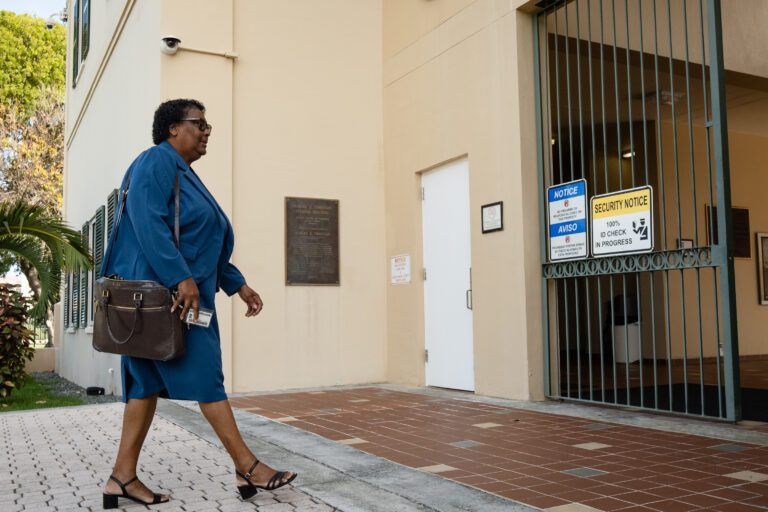
A federal lawsuit is challenging ballot access rules and candidate certification procedures in the Virgin Islands. (Source photo by Kit MacAvoy)

A federal lawsuit filed in District Court is widening the legal battle over how candidates qualify for the ballot in the Virgin Islands — challenging not only the Elections System’s treatment of independent candidates, but also a recent agreement that gave political parties a direct role in determining who advances to the primary ballot.

The case, filed by Delegate to Congress candidate Shelley Moorhead, along with legislative candidates Collister Fahie and Lorelei Monsanto, argues that the territory’s current election framework now operates under multiple sets of rules depending on who a candidate is, what party they belong to, and even which voters sign their nomination papers.

At stake is something larger than a dispute over paperwork deadlines or technical election procedures. The lawsuit goes directly at the mechanics of ballot access — who gets on the ballot, who helps put them there, and whether the government can enforce rules that plaintiffs argue treat similarly situated candidates differently.

For independent candidates, the complaint argues, the process has become especially burdensome.

Under Virgin Islands law, an independent candidate for Delegate to Congress must collect at least 200 valid signatures from voters in at least two districts. But the lawsuit says the actual hurdle is much higher because election officials are rejecting signatures from voters labeled “inactive,” even though those same voters can still cast ballots in the election after confirming their identity and residency.

That distinction matters because candidates gathering signatures often have no practical way of knowing, in real time, which registered voters may later be flagged during verification. The result, according to the filing, is that independent candidates are forced to over-collect signatures simply to survive the review process — spending more time, money, and organizational effort than party-backed candidates competing for the same office.

The lawsuit repeatedly frames that imbalance as a constitutional issue, arguing that ballot access in the territory now depends less on uniform election law and more on which political lane a candidate occupies.

The complaint also takes aim at a March clarification notice issued by Supervisor of Elections Caroline Fawkes stating that signatures submitted by inactive voters “are invalid and will be rejected.”

Plaintiffs argue the policy effectively excludes a category of otherwise eligible voters from participating in the nomination process, even while allowing them to vote in the same election months later.

But the filing’s most politically significant challenge may involve a mediated settlement reached last month between the Democratic Party of the Virgin Islands and election officials. That agreement, signed April 23, created a process in which the Elections System would first determine whether Democratic candidates met statutory requirements, after which the Democratic Party would separately certify which candidates move forward to the primary ballot.

Monsanto — who is running as a Democrat — argues in the lawsuit that she was never part of the mediation that produced the agreement, yet is now subject to a certification process controlled by a private political organization.

The complaint argues that distinction is critical because political parties, while free to manage their internal affairs, do not have unrestricted authority over access to a public ballot administered by the government. To support that argument, the plaintiffs point to legal opinions issued earlier this year by Attorney General Gordon Rhea following the federal court’s 2024 ruling striking down portions of Virgin Islands election law dealing with party nominations and political committees.

Those opinions concluded that while parties may choose their officers and govern internal operations, the actual process of determining who qualifies for public office remains controlled by Virgin Islands law and election officials.

The lawsuit argues the recent settlement blurred that line by effectively allowing a private organization to participate in deciding ballot access under government enforcement.

The case arrives at a moment when the territory’s election system is already facing mounting legal pressure ahead of the 2026 cycle.

What started earlier this year as a dispute over party certification procedures has steadily expanded into a broader courtroom fight over constitutional protections, voter participation, and whether Virgin Islands election law is being applied consistently across candidates and parties.

The plaintiffs are asking the court to block enforcement of the inactive-voter signature policy, halt implementation of the April 23 settlement agreement, and declare portions of the current ballot access framework unconstitutional.
Op-Ed: The Cost of Being Misunderstood: Living With Mental Illness in Plain Sight

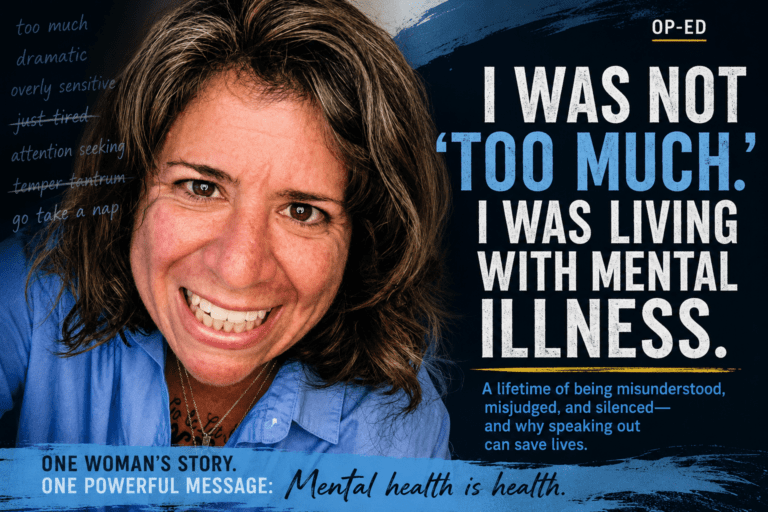
Michele L. Weichman reflects on her lifelong experience with mental illness and the impact of stigma in her community. (Photo courtesy Michele L Weichman)
There is a particular kind of exhaustion that comes from trying to survive inside your own mind while the world tells you nothing is wrong. It is the exhaustion of being misunderstood. Of being mislabeled. Of learning, at a very young age, that what you are feeling is either too much or not real at all. I have lived with mental illness for as long as I can remember. I just did not always know what to call it. As a child, I did not have the language. I only had the experience of living in a mind that never seemed to quiet down. My thoughts would latch onto something and loop endlessly, circling until I felt like I could not breathe. My emotions did not rise and fall gently. They hit hard. Fast. All at once. There were moments when I felt like I was lit from the inside out. Talking fast, thinking faster, full of energy, I could not contain. And then there were moments when everything in me slowed to a stop, when even getting out of bed felt like trying to move through cement. I had obsessions that would not let me go. Thoughts that replayed over and over no matter how badly I wanted them to stop. I had compulsions that felt urgent and necessary, even when I did not understand why. I just knew that if I did not do them, the discomfort inside me would grow until it was unbearable. I did not understand any of it. I only understood that I felt different. And in the 1980s, there was no space for a child to say that out loud and be heard. Mental illness was not a conversation. It was something people ignored, minimized, or brushed aside. The idea that a child could be living with something real, something clinical, something that needed support, was not part of how people thought. So I was labeled. Too sensitive. Too emotional. Too much. My mother was doing the best she could, but like so many families at the time, she did not have the tools or the language to see what was really happening. So when I spiraled, it was called a temper tantrum. When I shut down, it was assumed I was just tired. I was often told to go lie down and take a nap. I remember going to my room, lying there, staring at the ceiling, my mind still racing, my chest still tight, my thoughts still looping. Nothing had changed except now I was alone with it. That does something to a child. It teaches you to doubt yourself. It teaches you to hide. It teaches you that what you are experiencing is not something anyone is going to help you understand. So you carry it. Quietly. For years. It wasn’t until I got clean and sober at 30 that I finally heard the words that would change everything. Bipolar disorder. Obsessive-compulsive disorder. I wish I could say that moment felt like relief. In some ways, it did. But it also hurt. Because it meant looking back at my life and realizing how long I had been struggling without knowing why. At the same time, it gave me something I had never had before. An explanation. A name. A truth I could finally hold onto. I was not failing. I was not broken. I was living with conditions that had never been recognized. But even with that understanding, the world does not suddenly become more compassionate. When I was working at a local school, I saw just how quickly people turn fear into judgment. After being hospitalized due to a medication crisis, an overdose caused by being overmedicated by a former psychiatrist, I became the subject of whispers. Even though I had never experienced an episode at work, people called me “unhinged.” That word sticks with you. It follows you. It reduces everything you are into something small and easy for others to dismiss. In small communities, those labels move fast. And once they are out there, they are hard to take back. I was no longer being seen for my work, my dedication, or my character. I was being seen through the narrow lens of a diagnosis that people did not understand. The environment shifted. It became heavy. Uncomfortable. Unsafe. Not because I could not do my job, but because I was no longer being treated like a person. So I left. Not because I was incapable. But because I refused to stay somewhere that stripped me of my dignity. And that is what stigma does. It does not just hurt feelings. It costs people their sense of safety. Their opportunities. Their place in the world. We need to talk about why. The brain is an organ. It is not separate from the body. It can become ill, just like the heart, lungs, or liver. If someone were in heart failure, we would not question their strength or their effort. If someone were in liver failure, we would not tell them to go lie down and hope it passes. We would show up. We would act. We would care. But when the brain is involved, something shifts. Suddenly, it becomes personal. Suddenly, it becomes something people judge. Something they fear. Something they distance themselves from. Mental illness is not a character flaw. It is not a lack of discipline. It is not a choice. It is a health condition. And the cost of pretending otherwise is written all over stories like mine. Living with bipolar disorder and OCD has challenged me in ways that are hard to put into words, but it has also shaped me in ways I carry with me every single day. It has made me deeply empathetic. It has taught me how to sit with pain, not run from it. It has shown me what resilience really looks like. I know what it feels like to be inside a mind that will not let you rest. I also know what it feels like to keep going anyway. If this makes you uncomfortable, sit with that feeling. Do not turn away from it. If it challenges what you thought you knew, let it. Because this is not rare. One in five adults in the United States lives with mental illness. That means this is not someone else’s story. It is happening all around you. This Mental Health Awareness Month, we need more than awareness. We need honesty. We need compassion that is not conditional. Check on people. Really check on them. Not just the ones who seem to be struggling, but especially the ones who seem to have it all together. The ones who show up, perform, smile, and keep moving no matter what is happening inside them. Those are often the people carrying the most. I want a world where people with mental illness are not treated with suspicion. Where we do not have to choose between our health and our careers. Where being honest about what we live with does not come with consequences. We are not broken. We are not “crazy.” We are human beings living with an illness. And we deserve dignity. We deserve safety. We deserve to be seen. I am still here. I am still doing the work. I am still choosing to speak. Because if one person reads this and feels less alone, then every word is worth it. Mental health is health. —Michele L. Weichman is a longtime St. Thomas resident, business owner, educator, writer, mentor, advocacy worker and editor. She is the founder and president of Weichy Wisdom, LLC and serves as the main editor for the Virgin Islands Source.

Editor’s Note: Opinion articles do not represent the views of the Virgin Islands Source newsroom and are the sole expressed opinion of the writer. Submissions can be made to visource@gmail.com

________________________________________________________________________ National Mental Health Resources National Suicide & Crisis Lifeline
  • 988 (Call or text 24/7)
  • 988lifeline.org Free and confidential support for people in distress.
National Alliance on Mental Illness 
  • 800-950-NAMI (6264)
  • nami.org Education, advocacy, support groups for individuals and families affected by mental illness.
Crisis Text Line
  • Text HELLO to 741741
  • crisistextline.org 24/7 free text support from trained counselors.
 Substance Abuse and Mental Health Services Administration
  • 800-662-HELP (4357)
  • samhsa.gov National helpline for mental health and substance use treatment referrals.
The Trevor Project (LGBTQ+ Youth)
  • 1-866-488-7386
  • Text START to 678678
  • thetrevorproject.org 24/7 crisis support and resources for LGBTQ+ youth.
Veterans Crisis Line U.S. Virgin Islands Local Resources V.I. Health Department – Behavioral Health Services
  • St. Thomas-St. John district: 340-774-9000
  • St. Croix district: 340-718-1311
  • doh.vi.gov Outpatient mental health services, case management, and crisis response.
Frederiksted Health Care, Inc. – Behavioral Health
  • 516 Strand Street, Frederiksted, St. Croix
  • 340-772-0260
  • http://fhc-inc.net/ Offers therapy, psychiatric evaluations, and substance abuse services.
East End Medical Center Corporation – Behavioral Health
  • 4605 Tutu Park Mall, St. Thomas
  • 340-775-3700
  • https://steemcc.org/savant/ Comprehensive medical and behavioral health services on St. Thomas.
Private Mental Health Providers Local Peer Support & Recovery AA – U.S. Virgin Islands 

GVI Appeals St. Thomas Prison Monitor Costs to Third Circuit

(Shutterstock image)
Virgin Islands government and corrections officials have appealed parts of a decades-old consent decree governing St. Thomas correctional facilities to the U.S. Third Circuit Court of Appeals. (Shutterstock image)

The government is appealing a federal judge’s recent order requiring them to bear the majority of costs associated with court-mandated monitoring of the St. Thomas jail, which has been under some form of consent decree for more than 30 years.

Inmates and people in the custody of the V.I. Corrections Bureau on St. Thomas initially filed the lawsuit in 1994 amid unconstitutional conditions in the island’s corrections facilities, which, U.S. District Court Judge Curtis Gomez wrote in 2020, “ largely have remained unresolved for over twenty-five years.” Gomez noted that the court had found the Virgin Islands in contempt of the original consent decree four times. The settlement was amended in 2013 and 2015, leading to quarterly hearings on jail conditions that included testimony from court-appointed experts.

Gomez wrote in a 2020 enforcement order that the “totality of evidence has consistently demonstrated” that the territory remained out of compliance with the consent decree and that in “the wake of multiple decades of a glacial pace towards compliance, many have continued to suffer injury.” Gomez cited evidence of prison cell arson, attacks on inmates — both by other inmates and by corrections officers — rape, suicide, officers sleeping on shift, falsified log records and other failings.

Conditions have little improved, according to plaintiffs who asked Chief Judge Robert Molloy last year to issue a second enforcement order and sanctions against the territory. They noted that in 2024 — when “a full complement of Court Experts assessed Defendants’ compliance for the first time” since the consent decree was amended in 2013 — monitors found the jail to be compliant with just two percent of the provisions outlined in the settlement agreement.

“The time for Defendants to be held to account for their repeated and flagrant failures to comply with either the Consent Decree or this Court’s prior orders has come,” they argued. In a status report filed last week, they said violations of the consent decree persist.

One inmate who was booked in August 2025 was unable to go to the recreation area for six months because the route did not accommodate a wheelchair, they claimed. He was later transferred to St. Croix.

The report also highlighted a Feb. 11 assault, which was discovered “only after a maintenance worker who happened to be in the area heard it and called for help.” The plaintiffs claim that the victim was left in the same cluster as the detainee who assaulted him for an hour and a half afterward, allowing the assailant to enter the victim’s cell and spit in his face.

Other claims include examples of incarcerated people being confined in cells for more than 12 hours a day, lack of air conditioning, insufficient recreation, poor record-keeping, lack of a sprinkler system and inadequate staffing.

Molloy denied the request for an enforcement order in March, but only because monitoring was suspended amid a payment dispute between the plaintiffs and the government. In the same order, Molloy wrote that the consent decree is clear and unambiguous: the defendants are solely responsible for paying monitors’ fees up to $100,000. Any amount beyond that is apportioned by the court. Molloy said he looked at a number of factors in deciding how to break down the costs, including the parties’ ability to pay.

“As Plaintiffs are pretrial detainees and inmates, their ability to pay is limited,” he wrote, while the defendants operate a budget of more than one billion dollars on an annual basis and have “a much greater ability to pay, as amply demonstrated by their retention of numerous outside counsel.”

He ultimately ordered that the territory would bear 95% of any costs in excess of $100,000.

The notice of appeal, submitted last week by V.I. Attorney General Gordon Rhea and signed by attorney William Lunsford of the law firm Butler Snow and V.I. Assistant Attorney General Sheena Conway, indicated that the government intends to challenge Molloy’s recent order as well as “all underlying orders and opinions,” including Gomez’s 2020 enforcement order.

Above-Average Temperatures Expected This Week With Passing Showers and Moderate Rip Current Risks

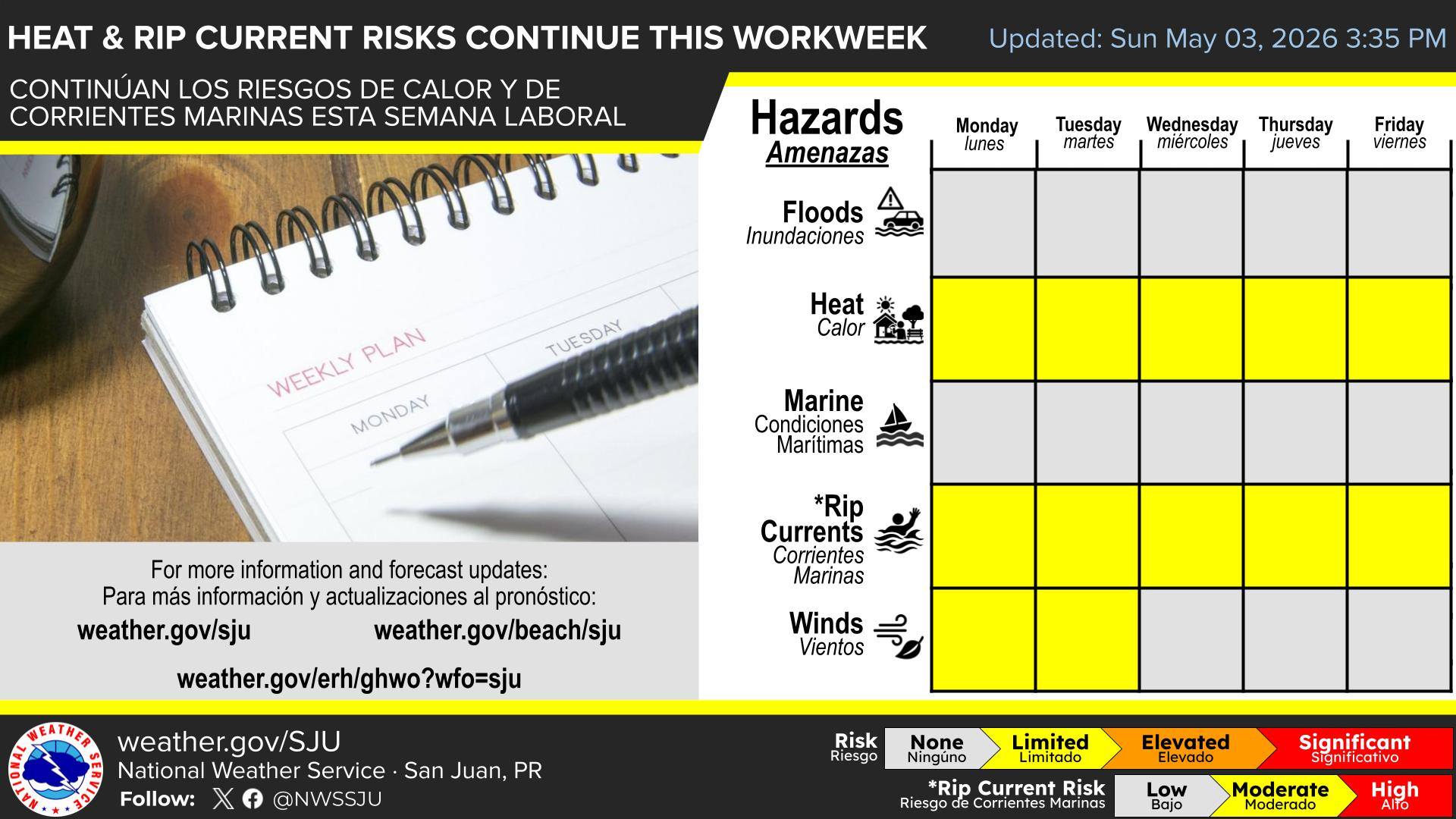
The U.S. Virgin Islands and Puerto Rico are set for a week of above-average temperatures and intermittent showers, as well as a moderate rip current risk affecting marine conditions, according to the National Weather Service in San Juan. Heat and Weather Overview As the month of May begins and the summer months approach, meteorologists at the NWS explained that hot and humid temperatures will be exacerbated by the potential for high heat indexes. Afternoon high temperatures across the USVI are expected to reach the mid to upper 80s Fahrenheit, with humid conditions making it feel even hotter.
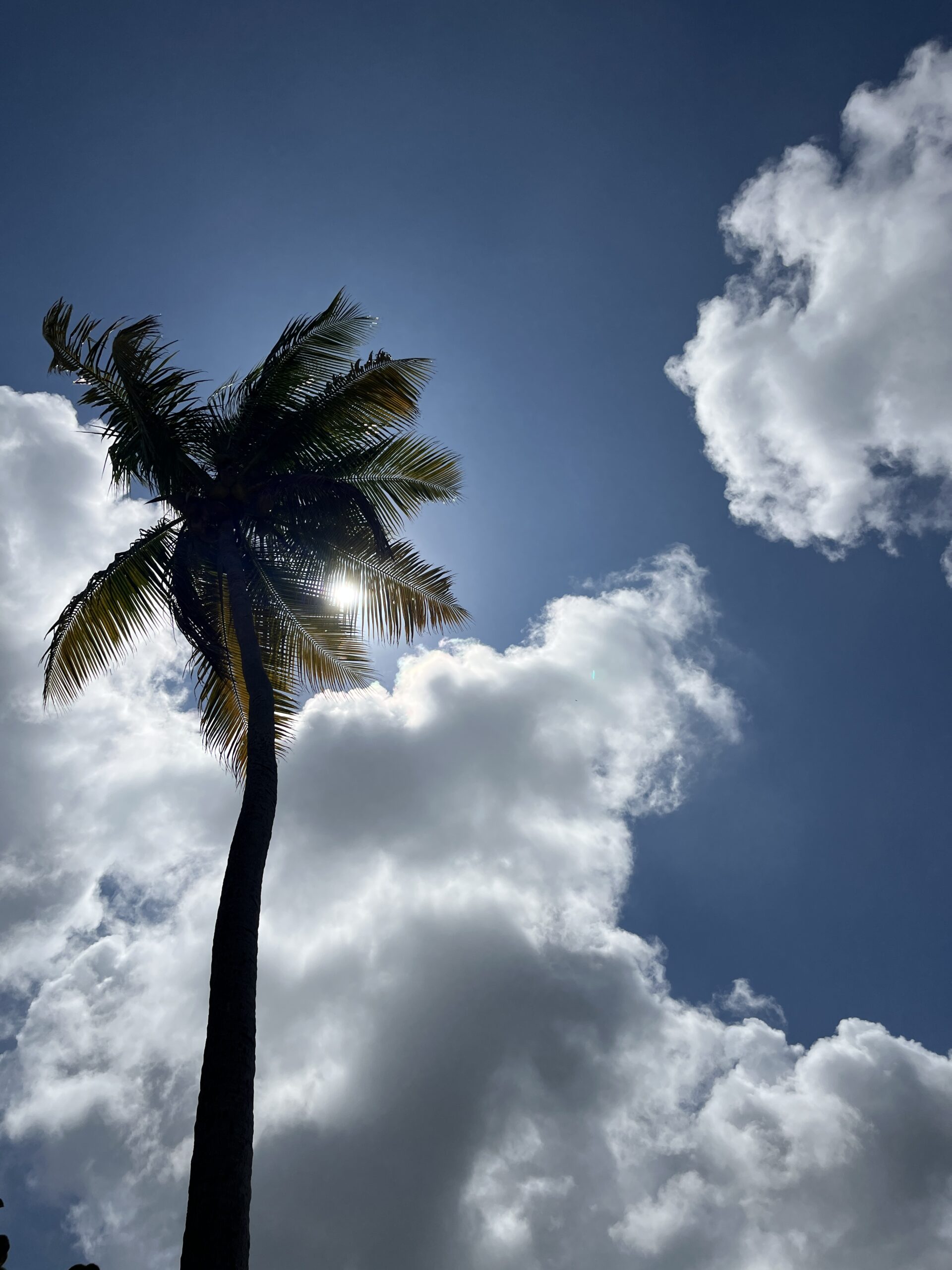
Sunshine peeks through the fronds of a palm tree in Christiansted on St. Croix during warm weather conditions on Tuesday. (Source photo by Jesse Daley)
“Above-normal temperatures will persist, promoting elevated heat indexes across urban and coastal areas,” the NWS stated in an update on Tuesday. According to the NWS, “The heat index, also known as the apparent temperature, is what the temperature feels like to the human body when relative humidity is combined with the air temperature.” Forecasters said that the warm weather pattern is driven in part by a southeasterly wind flow. While winds are expected to shift to a more easterly direction by early next week, the risk of excessive heat will remain. “A limited heat risk is also forecast for most of the period, affecting sensitive individuals and individuals with prolonged exposure and/or inadequate hydration. Current computer forecast model guidance suggests a more easterly steering flow to start the next week, veering to become more easterly to east-southeasterly to start the next workweek and continuing to bring patches of both drier and more humid air,” advised the NWS.
Heat and rip current risks are expected across the region during the workweek according to the National Weather Service in San Juan, Puerto Rico. (Photo courtesy NWS, San Juan, Puerto Rico)
Individuals across the region are encouraged to monitor their hydration, limit strenuous activity during peak afternoon heat, and check on vulnerable populations such as children, the elderly, and pets. Isolated Showers are Possible Although sunshine is expected to dominate, isolated showers and brief thunderstorms are possible, and gusty winds will occur at times. “Mostly fair weather will prevail during the forecast period, with passing trade wind moisture bringing isolated showers, mainly during overnight and morning hours,” the NWS said. Saharan Dust May Reach the Region NWS meteorologists also noted that minor amounts of Saharan dust may be present in the coming days, although the majority of the desert sand should remain south of the region. “Low concentrations of Saharan Dust will reach the area while the bulk of a Saharan Air Layer will stay south of the local islands,” the NWS said. “Under breezy conditions, increasing temperatures and with patches of drier air approaching, the potential for elevated fire danger remains,” the NWS continued. Saharan dust can also aggravate respiratory conditions such as asthma and allergies. Residents and visitors with sensitivities are advised to monitor air quality and limit prolonged outdoor activity, particularly when dust concentrations are high. Marine Conditions and Rip Currents The NWS explained that winds and long-period northeasterly swells are anticipated to generate some choppy seas. While the overall risks of hazardous marine conditions may remain relatively limited, a moderate risk of rip currents is expected across portions of Puerto Rico and the USVI. “Moderate rip current risk will continue along northern and eastern exposed beaches through Thursday, improve to low risk on Friday, and then return to moderate by the weekend as winds increase,” the NWS stated. Small craft operators should exercise caution, and swimmers are urged to remain vigilant. Detailed rip current safety tips can be found on the official website of the National Oceanic and Atmospheric Administration. Looking Ahead to Hurricane Season As the region approaches the 2026 Atlantic Hurricane Season, the National Hurricane Center will resume daily tropical outlook posts starting May 15. The official start of hurricane season is June 1, and NOAA plans to release its official hurricane season forecast on May 21.
The National Hurricane Center will begin issuing daily Tropical Weather Outlooks on May 15, ahead of the 2026 Atlantic Hurricane Season, which begins June 1 and runs through Nov. 30. (Photo courtesy NOAA)
As reported previously by the Source, forecasters at Colorado State University and AccuWeather predict a season that could be below average. This is largely due to a potentially strong El Niño weather pattern currently developing in the Pacific. When an El Niño phase occurs, wind shear can increase across the Atlantic basin, helping to disrupt tropical cyclone development.
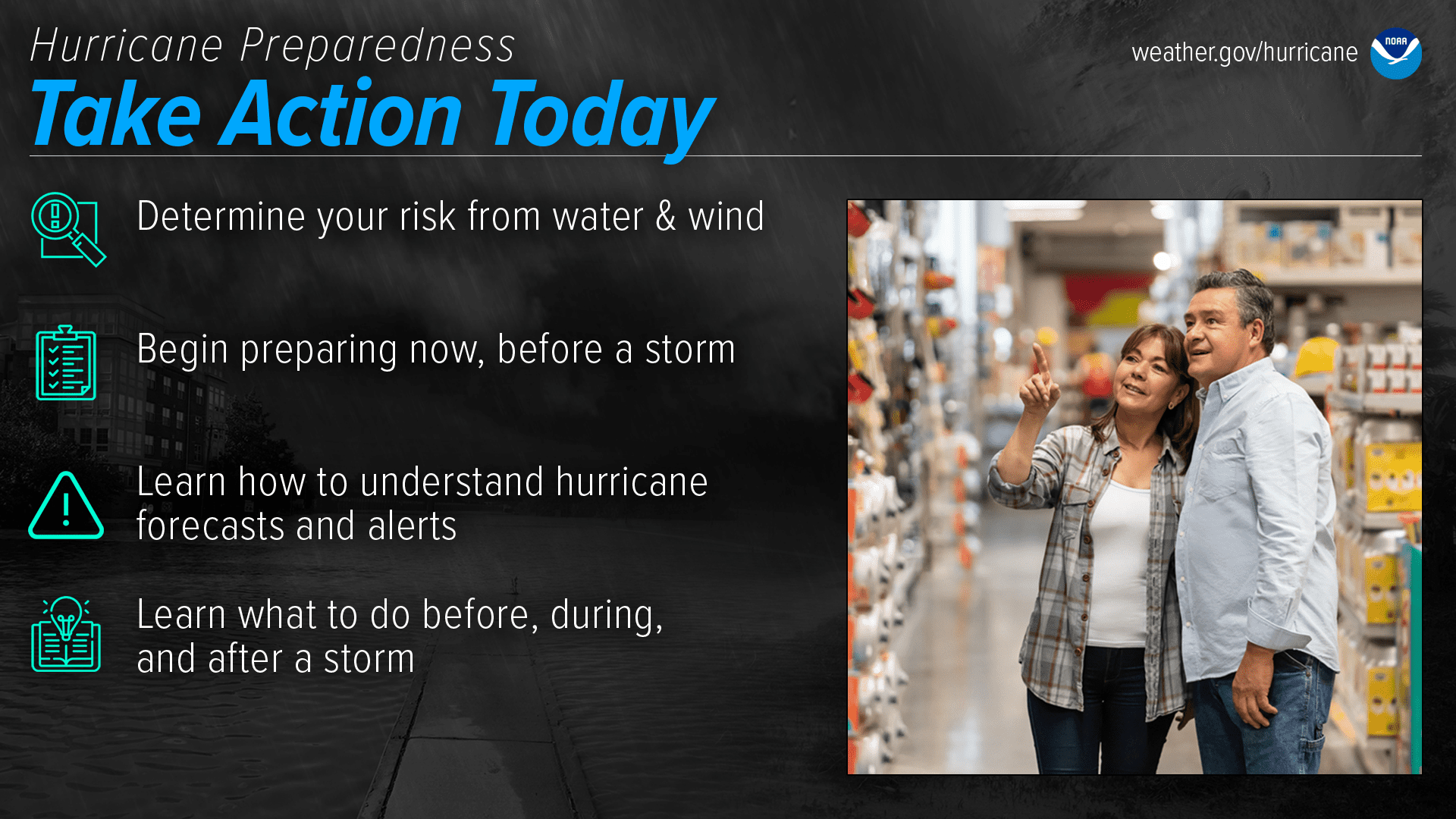
NOAA encourages residents to take action now and prepare before the official start of hurricane season, including reviewing risks, understanding alerts, and making plans before a storm develops. (Photo courtesy NOAA)
However, even with a forecast for fewer storms, residents are encouraged to remain prepared and informed, as it only takes one storm to cause significant destruction. Daily Weather Forecasts Information regarding the weather across the USVI, including marine forecasts, is available from the NWS and NOAA. With the Atlantic hurricane season set to begin June 1, individuals across the islands are also encouraged to begin preparing for hurricane season. The local forecast is regularly updated on the Source Weather Page, and a weekly video forecast is available. Additionally, residents and visitors can view weather alerts and disaster preparedness information from the Virgin Islands Territorial Emergency Management Agency

Dozens of Bauxite Suits Settled, Dozens More Await Trial

The long-running St. Croix bauxite-exposure suit has been settled. (Photo courtesy Today)
One-time St. Croix aluminum manufacturers and about 80 of their former employees reached a formal settlement Tuesday, according to court records, just as the long-awaited trial for alleged exposure to carcinogenic industrial dust was to begin. Details of the settlement have not been revealed but roughly 85 more bauxite and asbestos suits remain open against former Virgin Islands aluminum refiners. Attorneys for Lockheed Martin, the defense and aerospace giant that now owns companies that processed bauxite for aluminum manufacturing for decades in St. Croix, and attorneys for former maintenance worker Milton Burt filed papers in Superior Court Monday indicating they were approaching a settlement. Judge Alphonso Andrews Jr. released the jury that afternoon. Some of the cases settled were first filed in 2007, although most were brought between 2020 and 2022. Similar suits go back even further. Many of the original claimants died, with the suits carried on by family members. St. Croix-based attorneys for Lockheed did not immediately reply to messages seeking comment. Attorneys for Burt and other plaintiffs confirmed a settlement had been reached but declined to comment further. Employees of aluminum manufacturer Martin Marietta, which later became Lockheed Martin, claimed the company failed to equip or properly warn them of exposure to bauxite dust and other cancer-causing lung irritants. Burt was a maintenance worker at the plant for 26 years, according to a lawsuit he filed in 2021, who had little or no protection from bauxite dust, asbestos and more. Burt and others developed pneumoconiosis — respiratory ailments sometimes called black lung, according to court records. Still pending before the Superior Court are other allegations of lung scarring from exposure to bauxite dust and asbestos. Anthony Allick and Martin Matthew, also suffering from pneumoconiosis, sued their former employers, now called Glencore, in 2021 with claims similar to Burt’s: Lax industrial oversight led to otherwise preventable illness. Attorneys for the men hoped for November or January jury trials. More than 80 others have filed similar suits.

Man Arrested After Alleged Assault on Officer at St. Croix Bank

A St. Croix man was arrested Monday after police said he struck an officer with a metal crutch at a local bank, according to the Virgin Islands Police Department. The incident occurred about 4 p.m. Monday, when the 911 Emergency Call Center dispatched officers to Oriental Bank at Estate Diamond for a report of a disturbance. According to the release, the responding officer ordered Warren Freeman to leave the premises, but he refused. Police said that while the officer was speaking with another individual, Freeman rose from his wheelchair and struck the officer with a metal hand crutch, causing an open laceration to the officer’s face. Freeman was arrested and transported to the Wilbur Francis Command, where he was processed and refused to be booked, police said. He was charged with assault third, aggravated assault and battery, disturbance of the peace, and interfering with an officer discharging his duties. Bail was set at $25,000. Unable to post bail, Freeman was remanded to the John Bell Adult Correctional Facility pending his advice of rights hearing, according to the press release.

Man Arrested in St. Croix After Unauthorized Entry and Assault

A St. Croix man was arrested Tuesday in connection with an incident involving unauthorized entry and an assault that was reported earlier this year, according to the Virgin Islands Police Department. Police said the case began on Jan. 7, 2026, at about 5:47 p.m., when a complainant reported to the Ancilmo Marshall Command Police Station that a male had entered her home and assaulted a male acquaintance inside. An investigation identified Lionel Benjamin as the suspect. Police said he entered the complainant’s apartment without authorization and became involved in a physical altercation with the male inside. On Monday, Benjamin was apprehended and arrested on charges of burglary first, simple assault and battery, and disturbing the peace, according to the VIPD. Bail was set at $75,000. He was booked and transported to the John Bell Adult Correction Facility pending his advice of rights hearing.

Breeze Airways to Offer Flights Between St. Thomas, Tampa

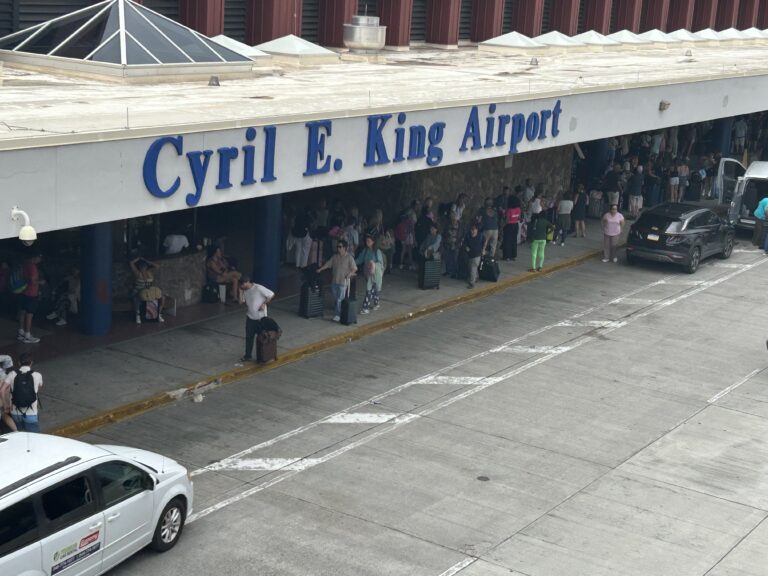
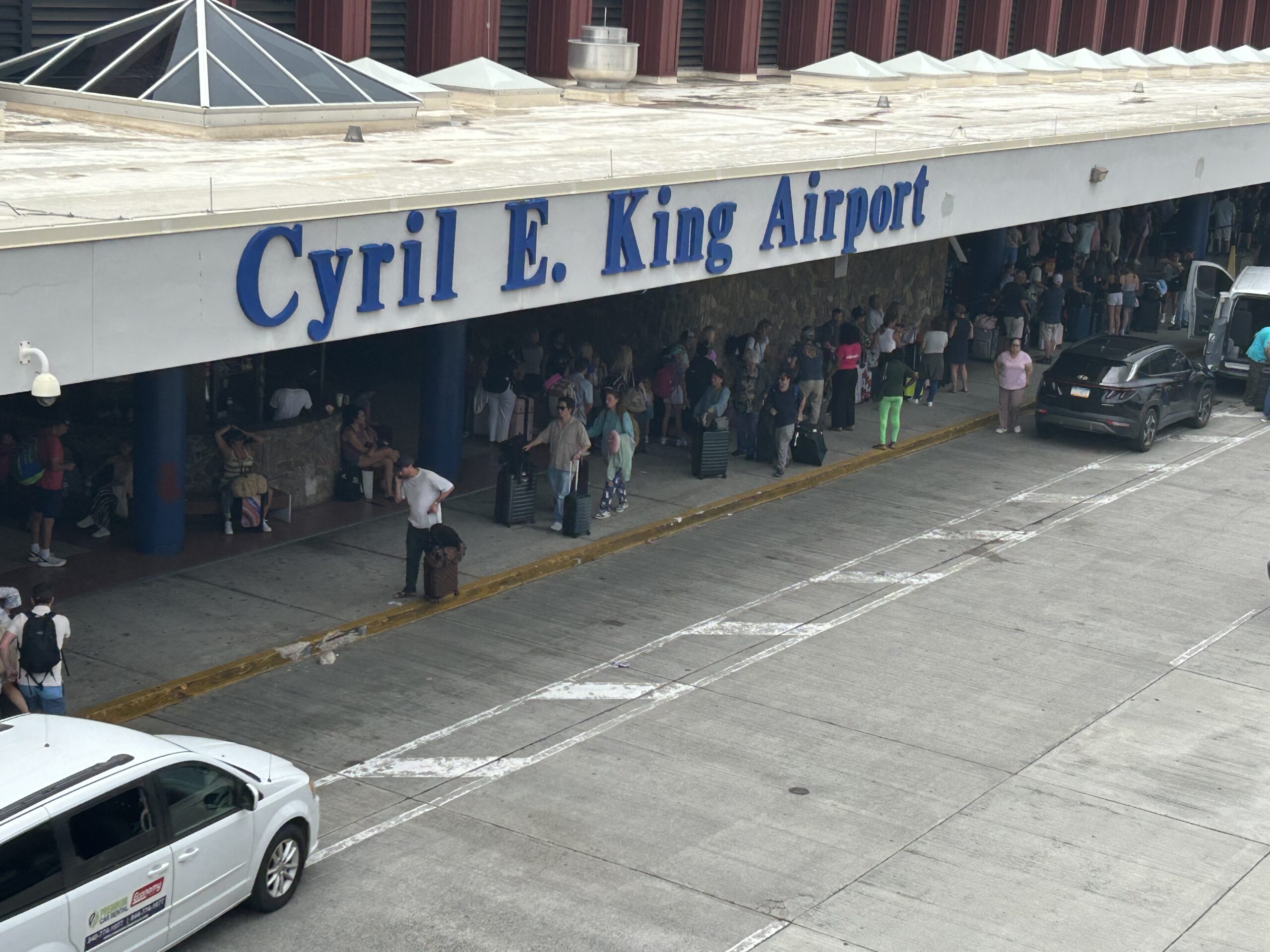
Travelers wait in long lines on Monday, March 23, 2026, at Cyril E. King Airport on St. Thomas as a partial government shutdown continues to affect workers with the Transportation Safety Administration. (Source photo by Siân Cobb)
Breeze Airways announced twice-weekly flights between Tampa, Fla. and St. Thomas starting on Dec. 16. (Source photo by Siân Cobb)

Low-cost airline Breeze Airways will begin twice-weekly nonstop flights between Tampa and St. Thomas starting Dec. 16.

Tampa International Airport announced the new routes in a press release Tuesday and said the flights will operate on Wednesdays and Saturdays. The airline is also launching nonstop flights between Tampa and Cancun, Mexico, on Dec. 19. Tampa airport chief executive Michael Stephens called the new routes “milestones” for the airport.

“Both destinations are in high demand among Tampa Bay travelers, and the timing couldn’t be better as we look ahead to this year’s busy holiday travel season,” he stated. “We can’t wait to celebrate the launch of these routes in December.”

The new routes were announced just days after Spirit Airlines shuttered all operations, leaving thousands of passengers stranded and reducing overall airlift for Virgin Islanders. Prior to shutting down, Spirit operated routes connecting St. Thomas to Orlando and Fort Lauderdale, the latter of which also connected to St. Croix.

With its new routes to St. Thomas and Cancun, Breeze will offer service to 37 destinations from Tampa. Flights will depart Tampa at 2:39 p.m. and arrive in St. Thomas at 5:39 p.m., then depart the territory at 6:39 p.m. and arrive back in Tampa at 10:09 p.m. The airline was cofounded in 2017 by Brazilian-American businessman David Gary Neeleman, who expressed confidence that Tampa travelers “will love these destinations.”

A V.I. Port Authority spokesperson could not be reached for additional comment on Tuesday evening.

Public Works Announces Project Completions and Ongoing Infrastructure Improvements Territory-Wide

The Virgin Islands Department of Public Works today announced the completion of several key infrastructure projects, along with continued progress on roadway improvements territory-wide. 
Public Works Derek Gabriel. (Screenshot from Facebook live stream)
These efforts reflect ongoing investments in the territory’s transportation network through a combination of local and federal funding sources. “These are not just projects—we are delivering long-overdue infrastructure improvements that our communities have been waiting on for years,” said Albert Bryan Jr. “We have secured the funding, we have worked through the challenges, and now we are executing. Every road we pave and every repair we complete, is about improving daily life for our residents and ensuring our infrastructure keeps pace with the needs of this territory. We are moving forward, and we are not slowing down.” St. Thomas / St. John District On St. Thomas, DPW contractors recently completed roadway rehabilitation along Irvin “Brownie” Brown Drive in Savan, as well as critical segments of Estate Bolongo and Valdemar A. Hill Sr. Drive (Skyline). These roadways serve as essential connectors for residents, businesses, and emergency services, and their improvement enhances safety, drivability, and overall accessibility. DPW contractors recently commenced paving operations along segments of Frydendahl Drive near Coki Point, continuing the Department’s phased roadway improvement efforts in high-traffic corridors. Looking ahead, paving is scheduled to begin in several areas of Bovoni, including segments of Benburin “Benny” Stephens Drive, Bovoni Hill, and Nadir Terrace (Lima Road). These long-awaited repairs are scheduled to begin on Wednesday, April 6, 2026, and continue through Friday, April 13, 2026, between the hours of 7:00 a.m. and 5:00 p.m. The work will deliver meaningful improvements to a community that has experienced significant roadway challenges and remains a priority for the Department. “Recognizing this is a high-traffic area, we are asking motorists and pedestrians to exercise caution when traveling through the area,” said DPW Commissioner Derek Gabriel. “Residents should also expect temporary impacts to on-street parking and property access during construction.” On St. John, DPW contractors completed repairs to the Wharf Bypass and segments of Fish Fry Drive in April, improving access and traffic flow in a key area for both residents and visitors. The Department is also finalizing additional paving task orders for other segments of Cruz Bay and Coral Bay, with work scheduled for completion this summer. St. Croix District Today, in the St. Croix District, DPW contractors completed temporary repairs to the Spring Gut bridge, maintaining safe and continued access ahead of a planned permanent replacement later this year as part of Phase 1 of the Spring Gut Improvements, funded through GARVEE Bonds. The Department also recently completed repairs along Midland Road and in the Estate Diamond Ruby community. Additionally, contractors will begin asphalt rehabilitation work at the East Airport Intersection along Melvin Evans Highway (Route 66) from Thursday, May 7, through Saturday, May 9, 2026, between 9 a.m. and 4 p.m. daily. During this period, the intersection will be closed to all traffic, with detours in place at the Industrial Park and Diageo intersections. The project scope includes shoulder grading to improve drainage, milling of the existing deteriorated asphalt surface, full roadway resurfacing, and restriping of the intersection. Motorists are strongly encouraged to avoid the area during work hours and utilize alternate routes. The Department advises the traveling public to access Route 70 (Queen Mary Highway) to bypass the East Airport Intersection: • Westbound traffic will be detoured at the Diageo Intersection via Route 663 to access Route 70. • Eastbound traffic will be detoured at the Industrial Park Intersection via Route 669 to access Route 70. • Airport access should be made via West Airport Road (Route 64) through the West Airport Intersection on Melvin Evans Highway. The Department appreciates the public’s patience as these long-awaited improvements are completed. “Every project we advance is about improving quality of life for our residents,” said DPW Commissioner Derek Gabriel. “From neighborhood roads to major corridors, we are committed to delivering infrastructure that is safer, more resilient, and reflective of the needs of our communities.

Op-Ed: Showing Up Matters: A Survivor’s Journey from the Virgin Islands to the National Stage

Diana Hampton and Denise Lenhardt Benoit join other advocates to lobby representatives on Capitol Hill, including Delegate Stacey Plaskett. (Photo courtesy Diane Hampton)
Diana Hampton and Denise Lenhardt Benoit, front left, join other advocates to lobby representatives on Capitol Hill, including Delegate Stacey Plaskett, during the National Breast Cancer Coalition Summit in Washington, D.C. (Photo courtesy Diane Hampton)

My journey with the National Breast Cancer Coalition Summit has been one of growth, determination, and purpose — not just for myself, but for the entire U.S. Virgin Islands community.

The VI Breast Cancer Project was founded in 2016 alongside my co-founder, Dr. Berhnard Bierlich, with a singular purpose: to support and advance research on breast cancer. From the very beginning, we understood that research is the pathway to understanding, treatment, and ultimately, a cure.

Since 2016, I have consistently attended the National Breast Cancer Coalition Summits, deepened my knowledge and strengthened my voice as an advocate. I am also a proud graduate of the NBCC LEAD Institute, where I received intensive training in breast cancer science, public policy, and advocacy — preparing me to effectively engage in the national dialogue on research and healthcare.

In 2023, there were five of us representing the Virgin Islands — one from St. Thomas and four from St. Croix. It was a proud moment to stand together, united in advocacy and committed to ensuring that our voices were part of the national conversation. In 2024, I found myself alone. I was the only voice representing the U.S. Virgin Islands. While that reality could have felt isolating, it instead strengthened my resolve. I understood more clearly than ever that showing up matters. If you are not at the table, no one knows what you want.

That same year brought an unexpected and memorable moment. While staying at the Park Hyatt Washington, we had a rare opportunity encounter with President Joe Biden. He was simply exiting the restaurant — not a scheduled meeting — but we were able to briefly speak with him. When he learned that we were from St. Croix, he was delighted, as he frequently visits the island during the Christmas holidays. That moment reminded me that sometimes the most meaningful connections happen when you simply show up and are present.

Diana Hampton and Denise Lenhardt Benoit lobby representatives on Capitol Hill, including Delegate Stacey Plaskett, during the National Breast Cancer Coalition Summit in Washington, D.C. (Photo courtesy Diane Hampton)

In 2026, I made a commitment: I would not go alone. Denise Lenhardt Benoit joined me, and together we represented the Virgin Islands with pride and purpose. As advocates, we stood alongside members of the National Breast Cancer Coalition and brought our voices to Capitol Hill. We met with senior staff from Congresswoman Stacey Plaskett, who has consistently supported the Department of Defense Breast Cancer Research Program.

What makes this work so impactful is the mission behind it. The National Breast Cancer Coalition provides a critical pathway to research through advocacy and federal funding, particularly through the Department of Defense Breast Cancer Research Program (BCRP). Attending the summit offers a unique opportunity to learn firsthand about the latest breakthroughs in breast cancer research, to engage with scientists, and to better understand how advocacy directly influences scientific progress. Their activism has generated more than $4 billion in new funding for breast cancer research. Through collaboration with scientists and stakeholders, they have helped shape new models of research — ones that are more inclusive, informed, and driven by urgency.

This is where my vision for the Virgin Islands becomes clear. It is my determination that one day the Virgin Islands will partner with leading professional research teams to specifically study breast cancer within our own population. Our community deserves research that reflects our unique experiences, our genetics, and our environment. And through continued advocacy, education, and participation in forums like the summit, I believe we can help make that vision a reality. This is why advocacy matters.

My goal is simple yet urgent: to encourage more breast cancer survivors and advocates from the Virgin Islands to participate in future summits. We have many cancer organizations across our islands, and each one carries voices that deserve to be heard on the national stage. I often say: if you’re not at the table, nobody knows what you want. You have to be there.
 You have to speak.
 And sometimes, you have to become the voice when no one else shows up.

Looking ahead to 2027, my vision is bold but achievable. I am committed to ensuring that every organization within our V.I. Cancer Coalition is represented by at least one breast cancer survivor or advocate at the summit. No matter what.

Closing Reflection

This work is bigger than me — it belongs to all of us. Together, we can ensure that the voices of the Virgin Islands are not only present, but powerful. And as long as I have a voice, I will use it to open doors for others to take their seat at the table at the National Breast Cancer Coalition Summit.

— Diane Hampton, Project Co-Founder/Project Director of Breast Cancer Project on St. Croix, cancer survivor and advocate

Editor’s Note: Opinion articles do not represent the views of the Virgin Islands Source newsroom and are the sole expressed opinion of the writer. Submissions can be made to visource@gmail.com.