

Gusty winds, choppy seas, passing showers and hot temperatures are expected across portions of the U.S. Virgin Islands and Puerto Rico this week, according to the National Weather Service in San Juan.
Heat and Weather Overview
As the month of May continues and the official start of the 2026 Atlantic hurricane season approaches, meteorologists at the NWS said hot and humid conditions will continue across portions of the U.S. Virgin Islands and Puerto Rico. Temperatures are forecast to reach the upper 80s to low 90s Fahrenheit, with a high heat index.
“Warmer temperatures for this time of the year are likely, with heat indices possibly exceeding 100 degrees Fahrenheit, particularly over urban and coastal areas of Puerto Rico and the U.S. Virgin Islands, the NWS explained in an update on Tuesday. Although the heat threat should remain limited, this level may affect individuals sensitive to heat even more without adequate hydration and long sun exposure,” the NWS said.
According to the NWS, “The heat index, also known as the apparent temperature, is what the temperature feels like to the human body when relative humidity is combined with the air temperature.”
Residents and visitors are encouraged to monitor their hydration, limit strenuous activity during peak afternoon heat, and check on vulnerable populations as well as pets.
Gusty Winds and Passing Showers
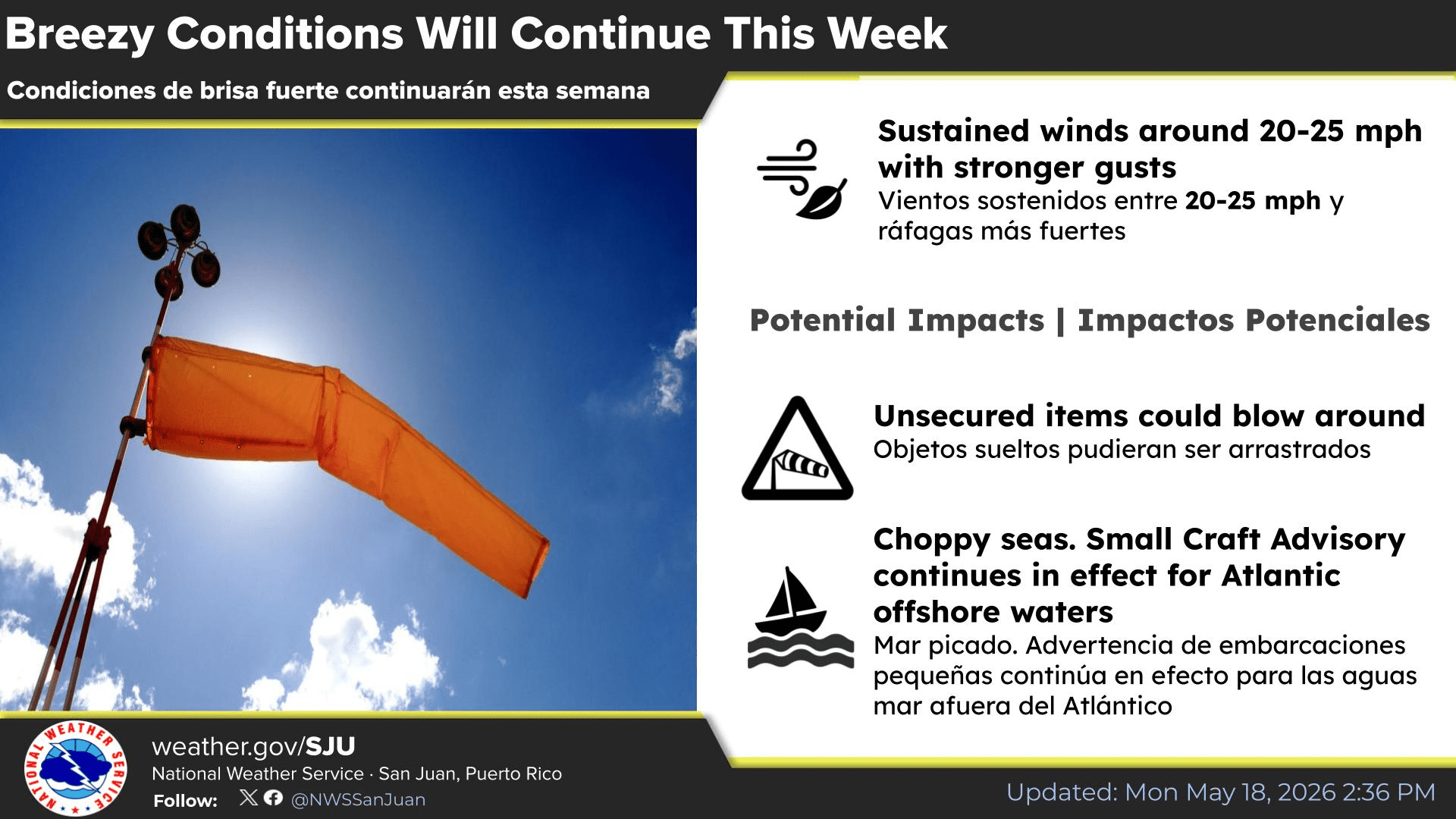
“Breezy to locally windy east to east-southeast winds will steer periods of fast-moving showers towards windward sectors and can cause unsecured items to blow around,” the NWS said.
Forecasters also noted that a trough of low pressure is forecast to approach the region early next week. Minor and localized flooding could occur across some areas, particularly in Puerto Rico.
“Although no significant flooding or lightning threat is expected, ponding of water over roadways and poorly drained areas is very likely, along with minor flooding. In addition to rainfall, hazards that could be expected in this scenario include gusty winds and lightning,” according to the NWS.
Additionally, meteorologists said that minor concentrations of Saharan dust will move across the islands at times.
Marine Conditions and Small Craft Advisory
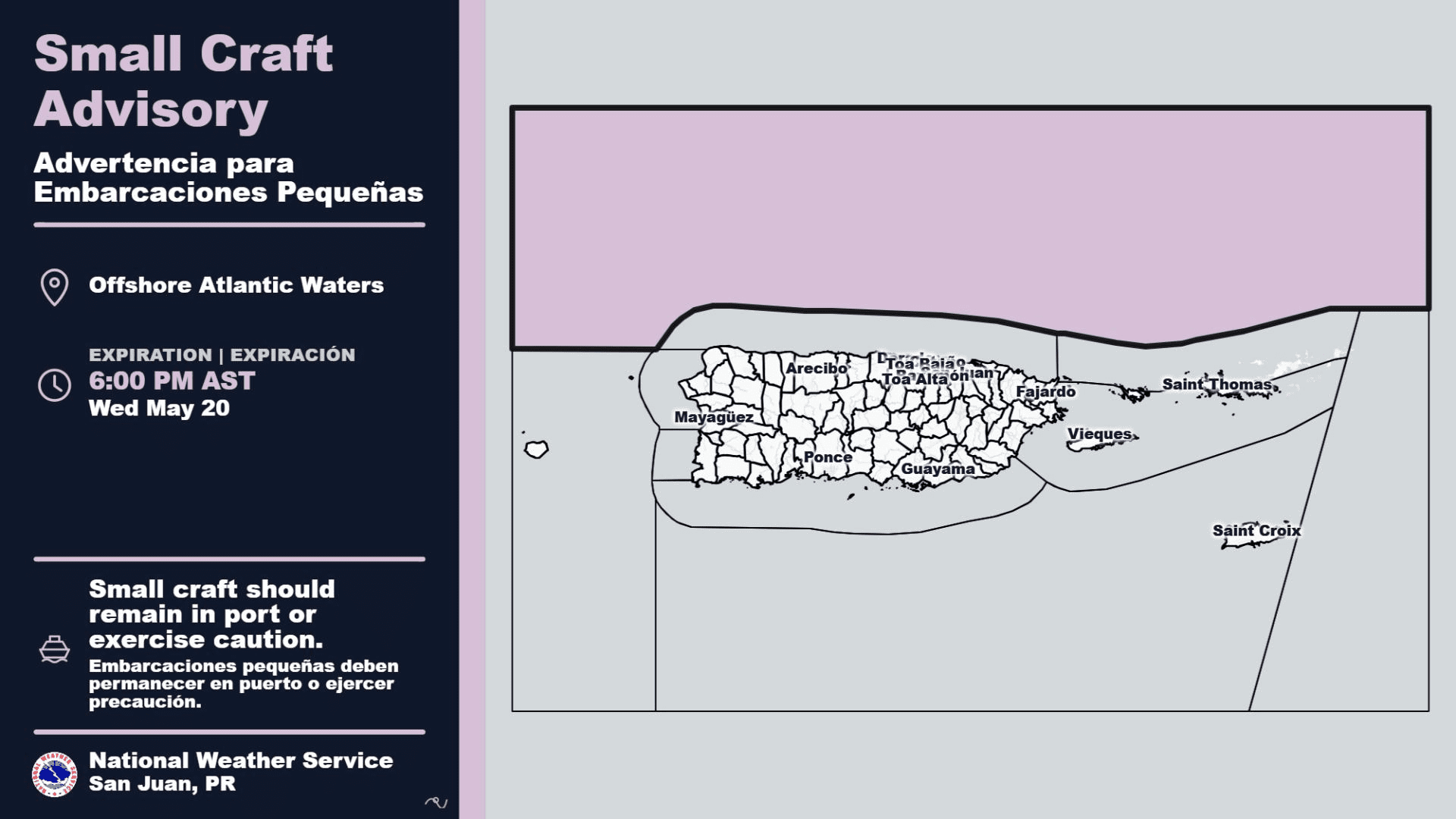
“A strong surface high pressure over the western Atlantic will promote moderate to fresh trades through midweek,” the NWS said. “Winds will turn more east to southeast thereafter as the surface high moves into the central Atlantic. These breezy conditions will maintain choppy seas, particularly across the offshore and exposed Atlantic and Caribbean waters. A Small Craft Advisory is in effect for the offshore Atlantic waters through at least late Wednesday,” the NWS continued.
Boaters are encouraged to monitor the latest marine alerts before heading out.
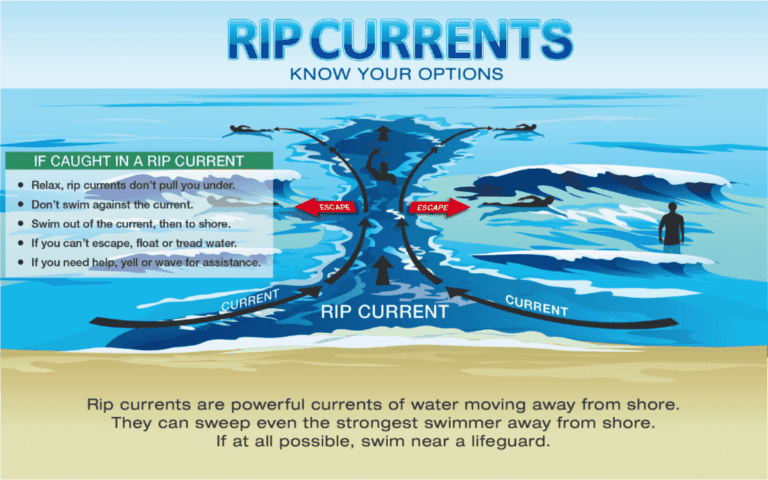
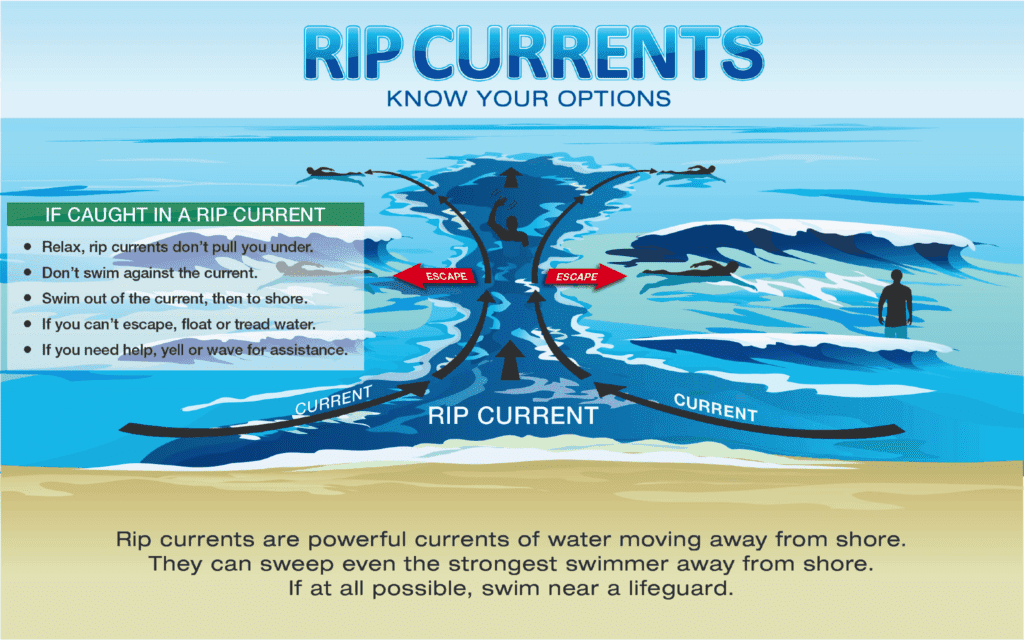
Moderate Rip Current Risk
Looking Ahead to Hurricane Season
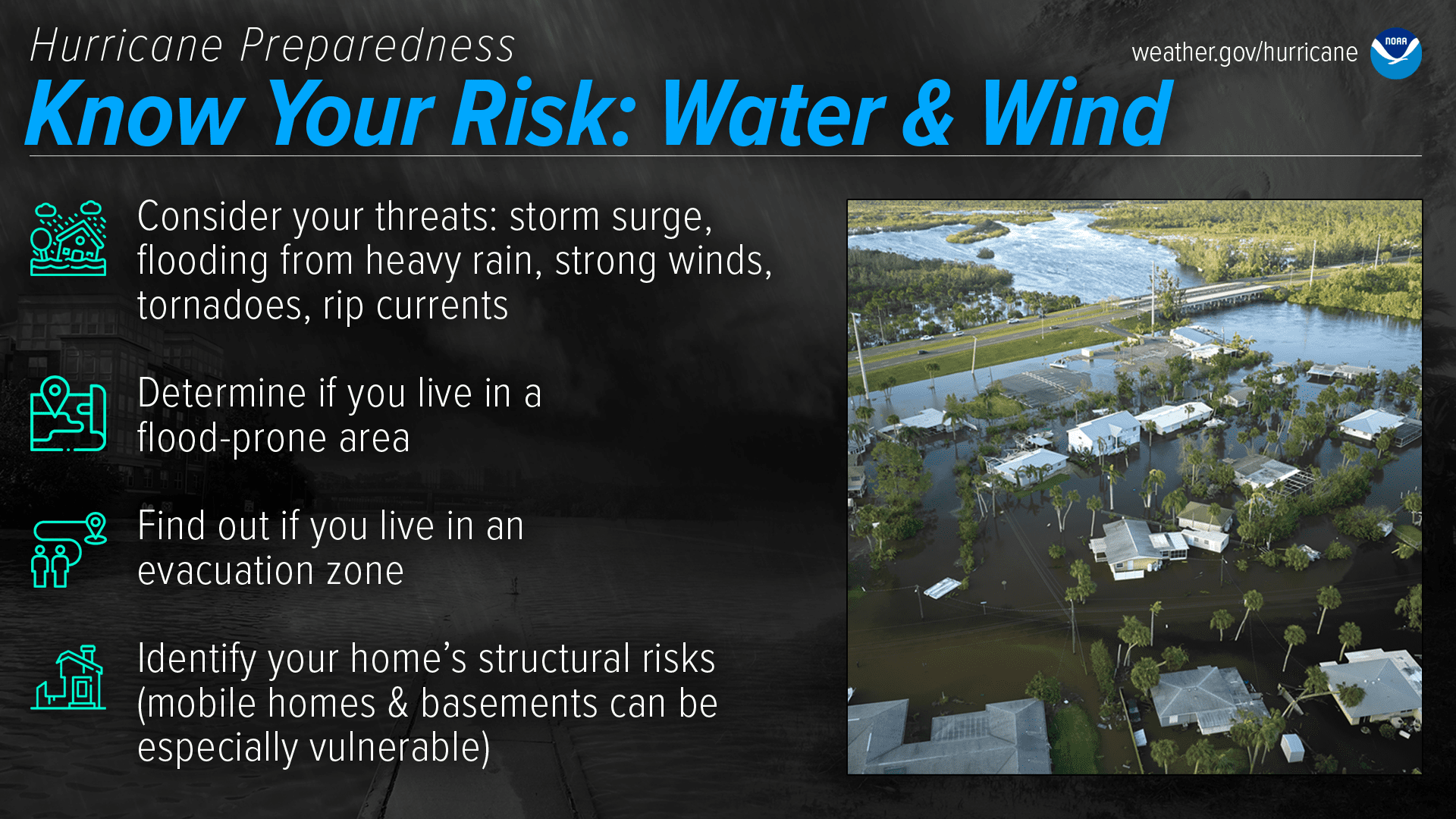
NOAA is scheduled to release its official 2026 Atlantic hurricane season outlook on Thursday, May 21. The outlook will include NOAA’s forecast for expected activity during the season, along with information about factors that may influence hurricane development. The Source plans to provide coverage of NOAA’s forecasts.
Hurricane season forecasts have already been released by AccuWeather and Colorado State University. Forecasters from both groups predict a potentially less active Atlantic hurricane season, due in large part to the expected development of a strong El Niño, which can increase wind shear across the Atlantic basin and help to disrupt the development of cyclones.
However, a quiet season is far from guaranteed, and regardless of the seasonal outlook, residents are encouraged to remain prepared and informed. It only takes one storm to cause significant destruction.
Daily Weather Updates
Information regarding the weather across the USVI, including marine forecasts, is available from the NWS and NOAA. With the Atlantic hurricane season set to begin June 1, individuals across the islands are also encouraged to begin preparing now.
The local forecast is regularly updated on the Source Weather Page, and a weekly video forecast is available. Additionally, residents and visitors can view weather alerts and disaster preparedness information from the Virgin Islands Territorial Emergency Management Agency.


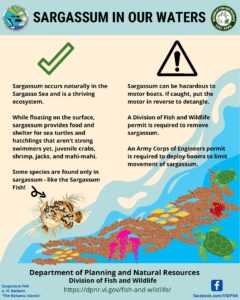 “When the brown, free-floating algae reaches the shore and begins to decompose, it releases hydrogen sulfide, which produces a strong ‘rotten egg’ odor and causes eye, nose, throat, and respiratory irritation, particularly for individuals with asthma,” Oriol said. “Avoiding beaches with large amounts of decaying sargassum is the best method of prevention.”
Beachfront businesses facing large amounts of nuisance sargassum are also invited to request authorization for mechanical removal from the Divisions of Fish & Wildlife and Coastal Zone Management. Deployment of containment booms requires a permit from the Army Corps of Engineers.
“When the brown, free-floating algae reaches the shore and begins to decompose, it releases hydrogen sulfide, which produces a strong ‘rotten egg’ odor and causes eye, nose, throat, and respiratory irritation, particularly for individuals with asthma,” Oriol said. “Avoiding beaches with large amounts of decaying sargassum is the best method of prevention.”
Beachfront businesses facing large amounts of nuisance sargassum are also invited to request authorization for mechanical removal from the Divisions of Fish & Wildlife and Coastal Zone Management. Deployment of containment booms requires a permit from the Army Corps of Engineers.
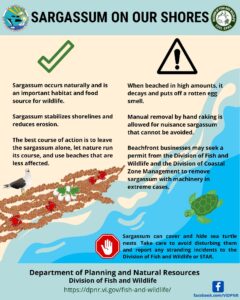 DFW also provides required training to ensure removal efforts follow ecological best practices and comply with Virgin Islands Code.
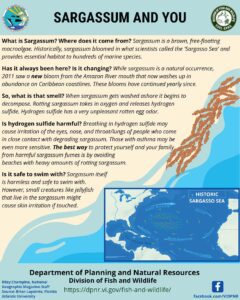 Daily reports can be viewed through NOAA’s Sargassum Inundation Risk tool has been updated to provide daily reports, thanks to this partnership as part of CoastWatch at https://cwcgom.aoml.noaa.gov/SIR/.
DPNR will continue issuing these monthly updates via press release.
For more information, visit dpnr.vi.gov or contact: Division of Fish and Wildlife:
Daily reports can be viewed through NOAA’s Sargassum Inundation Risk tool has been updated to provide daily reports, thanks to this partnership as part of CoastWatch at https://cwcgom.aoml.noaa.gov/SIR/.
DPNR will continue issuing these monthly updates via press release.
For more information, visit dpnr.vi.gov or contact: Division of Fish and Wildlife: