





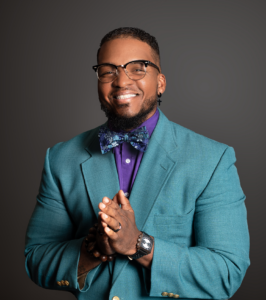
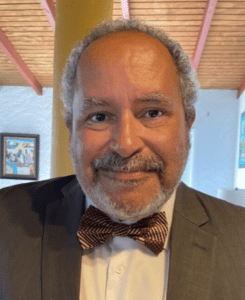
 In his biweekly column, Langley Shazor speaks to issues important to men within the territory.
For generations, strength has been defined in narrow terms. It has been measured by volume, dominance, endurance, and control. A strong man was the one who did not flinch, did not fold, and did not feel too much. He was steady, unshaken, and often unreachable. That image became the blueprint for masculinity, and many men shaped themselves around it, whether it fit or not.
But strength is evolving.
The world today demands a different kind of resilience. It requires men who can lead without intimidation, who can endure without emotional shutdown, and who can hold responsibility without losing their humanity. The traditional image of strength as stoicism alone is no longer sufficient. In relationships, especially, strength that refuses to feel becomes distance, and distance erodes connection.
When strength looks different, it does not mean it disappears. It becomes more complete.
True strength includes emotional mastery. It is the ability to remain grounded when conflict arises. It is the discipline to pause before reacting and the wisdom to choose words carefully. It is restraint in moments when pride wants to escalate. Many men were taught that raising their voice proves authority. In reality, control over one’s tone and temper often reveals far greater power.
Emotional steadiness is not softness. It is regulation. A man who can manage his anger without suppressing it demonstrates depth, not weakness. A man who can acknowledge hurt without deflecting it shows security, not fragility. These expressions of strength are quieter, but they are often more transformative. They create safety in relationships rather than fear.
Women often struggle to recognize this shift because it challenges older expectations as well. Some may unconsciously associate strength with dominance simply because that was the model they grew up observing. When a man chooses calm over control, it can initially feel unfamiliar. But calm leadership creates consistency. Consistency builds trust. And trust forms the foundation of emotional security.
Strength that looks different also includes accountability. Admitting fault has long been seen as diminishing authority. Yet in healthy relationships, accountability increases respect. When a man can say, “I was wrong,” without collapsing into shame or defensiveness, it signals maturity. It communicates that the relationship matters more than ego. That posture does not reduce influence. It deepens it.
Another expression of evolved strength is vulnerability with boundaries. Vulnerability does not mean emotional chaos or unfiltered expression. It means choosing to share internal experiences in ways that invite connection. A man who can articulate stress, fear, or uncertainty without feeling diminished demonstrates self-awareness. He is not abandoning strength. He is expanding it.
Strength also shows up in patience. In a culture that rewards immediacy and reaction, patience requires intention. It is the willingness to sit in discomfort long enough to understand before responding. Many relational conflicts escalate because neither side pauses. When a man models patience, he changes the rhythm of the conversation. He signals that clarity is more important than control.
There is also strength in emotional presence. Being physically present but emotionally absent is not resilience. It is withdrawal. Emotional presence means engaging, listening, and responding with care. It means showing up consistently, not only when convenient. This kind of presence reassures a partner far more than performative gestures.
For men who were raised in environments where emotion was minimized, this transition can feel unnatural. It requires unlearning habits that once protected them. It requires stepping into spaces that feel unfamiliar. But growth always feels unfamiliar at first. The discomfort is not proof of weakness. It is evidence of expansion.
Strength that looks different benefits everyone involved. Women feel safer when emotional steadiness replaces volatility. Children feel more secure when they see fathers express both conviction and compassion. Communities become healthier when leadership reflects balance rather than bravado.
Importantly, redefining strength does not require abandoning traditional masculine traits. Decisiveness, protection, ambition, and responsibility still matter. The difference lies in how they are expressed. Decisiveness paired with empathy becomes wise leadership. Protection paired with gentleness becomes safety. Ambition paired with humility becomes purpose. Responsibility paired with rest becomes sustainability.
The tension between men and women often arises when strength is misinterpreted. A man who withdraws to regulate himself may be seen as detached. A man who expresses frustration calmly may be seen as cold. Communication becomes essential here. Explaining intention reduces assumption. When men articulate why they respond the way they do, and women articulate how those responses feel, clarity replaces confusion.
Strength is not static. It adapts to context. What once required physical endurance now often requires emotional intelligence. What once required dominance now often requires diplomacy. The strongest man in a room today may not be the loudest or the most imposing. He may be the one who listens carefully, speaks deliberately, and responds thoughtfully.
When strength looks different, relationships flourish because fear is replaced with respect. Performance gives way to authenticity. Pride yields to partnership. Men are no longer forced to choose between being strong and being emotionally available. They discover that the two can coexist.
This shift does not weaken masculinity. It refines it. It allows men to embody both firmness and empathy without contradiction. It creates space for relationships built on mutual understanding rather than silent tension.
When strength evolves, connection deepens. And when connection deepens, the bridge between men and women becomes far more stable than any display of dominance ever could.
Editor’s Note: Opinion articles do not represent the views of the Virgin Islands Source newsroom and are the sole expressed opinion of the writer. Submissions can be made to visource@gmail.com.
Related Links:
Op-Ed: The Lounge | A Column for Men: Before the Bridge: Why This Work Matters
Op-Ed: The Lounge | A Column for Men: Before the Bridge: What Men Wish Women Knew and Why We Never Said It
Op-Ed: The Lounge | A Column for Men: Before the Bridge: What Women Wish Men Would Hear
In his biweekly column, Langley Shazor speaks to issues important to men within the territory.
For generations, strength has been defined in narrow terms. It has been measured by volume, dominance, endurance, and control. A strong man was the one who did not flinch, did not fold, and did not feel too much. He was steady, unshaken, and often unreachable. That image became the blueprint for masculinity, and many men shaped themselves around it, whether it fit or not.
But strength is evolving.
The world today demands a different kind of resilience. It requires men who can lead without intimidation, who can endure without emotional shutdown, and who can hold responsibility without losing their humanity. The traditional image of strength as stoicism alone is no longer sufficient. In relationships, especially, strength that refuses to feel becomes distance, and distance erodes connection.
When strength looks different, it does not mean it disappears. It becomes more complete.
True strength includes emotional mastery. It is the ability to remain grounded when conflict arises. It is the discipline to pause before reacting and the wisdom to choose words carefully. It is restraint in moments when pride wants to escalate. Many men were taught that raising their voice proves authority. In reality, control over one’s tone and temper often reveals far greater power.
Emotional steadiness is not softness. It is regulation. A man who can manage his anger without suppressing it demonstrates depth, not weakness. A man who can acknowledge hurt without deflecting it shows security, not fragility. These expressions of strength are quieter, but they are often more transformative. They create safety in relationships rather than fear.
Women often struggle to recognize this shift because it challenges older expectations as well. Some may unconsciously associate strength with dominance simply because that was the model they grew up observing. When a man chooses calm over control, it can initially feel unfamiliar. But calm leadership creates consistency. Consistency builds trust. And trust forms the foundation of emotional security.
Strength that looks different also includes accountability. Admitting fault has long been seen as diminishing authority. Yet in healthy relationships, accountability increases respect. When a man can say, “I was wrong,” without collapsing into shame or defensiveness, it signals maturity. It communicates that the relationship matters more than ego. That posture does not reduce influence. It deepens it.
Another expression of evolved strength is vulnerability with boundaries. Vulnerability does not mean emotional chaos or unfiltered expression. It means choosing to share internal experiences in ways that invite connection. A man who can articulate stress, fear, or uncertainty without feeling diminished demonstrates self-awareness. He is not abandoning strength. He is expanding it.
Strength also shows up in patience. In a culture that rewards immediacy and reaction, patience requires intention. It is the willingness to sit in discomfort long enough to understand before responding. Many relational conflicts escalate because neither side pauses. When a man models patience, he changes the rhythm of the conversation. He signals that clarity is more important than control.
There is also strength in emotional presence. Being physically present but emotionally absent is not resilience. It is withdrawal. Emotional presence means engaging, listening, and responding with care. It means showing up consistently, not only when convenient. This kind of presence reassures a partner far more than performative gestures.
For men who were raised in environments where emotion was minimized, this transition can feel unnatural. It requires unlearning habits that once protected them. It requires stepping into spaces that feel unfamiliar. But growth always feels unfamiliar at first. The discomfort is not proof of weakness. It is evidence of expansion.
Strength that looks different benefits everyone involved. Women feel safer when emotional steadiness replaces volatility. Children feel more secure when they see fathers express both conviction and compassion. Communities become healthier when leadership reflects balance rather than bravado.
Importantly, redefining strength does not require abandoning traditional masculine traits. Decisiveness, protection, ambition, and responsibility still matter. The difference lies in how they are expressed. Decisiveness paired with empathy becomes wise leadership. Protection paired with gentleness becomes safety. Ambition paired with humility becomes purpose. Responsibility paired with rest becomes sustainability.
The tension between men and women often arises when strength is misinterpreted. A man who withdraws to regulate himself may be seen as detached. A man who expresses frustration calmly may be seen as cold. Communication becomes essential here. Explaining intention reduces assumption. When men articulate why they respond the way they do, and women articulate how those responses feel, clarity replaces confusion.
Strength is not static. It adapts to context. What once required physical endurance now often requires emotional intelligence. What once required dominance now often requires diplomacy. The strongest man in a room today may not be the loudest or the most imposing. He may be the one who listens carefully, speaks deliberately, and responds thoughtfully.
When strength looks different, relationships flourish because fear is replaced with respect. Performance gives way to authenticity. Pride yields to partnership. Men are no longer forced to choose between being strong and being emotionally available. They discover that the two can coexist.
This shift does not weaken masculinity. It refines it. It allows men to embody both firmness and empathy without contradiction. It creates space for relationships built on mutual understanding rather than silent tension.
When strength evolves, connection deepens. And when connection deepens, the bridge between men and women becomes far more stable than any display of dominance ever could.
Editor’s Note: Opinion articles do not represent the views of the Virgin Islands Source newsroom and are the sole expressed opinion of the writer. Submissions can be made to visource@gmail.com.
Related Links:
Op-Ed: The Lounge | A Column for Men: Before the Bridge: Why This Work Matters
Op-Ed: The Lounge | A Column for Men: Before the Bridge: What Men Wish Women Knew and Why We Never Said It
Op-Ed: The Lounge | A Column for Men: Before the Bridge: What Women Wish Men Would Hear 
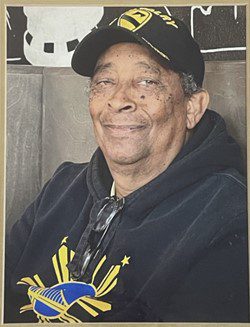

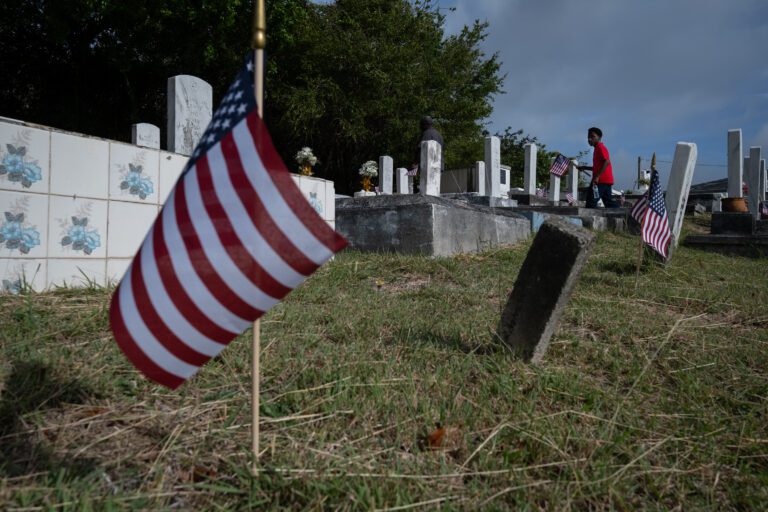
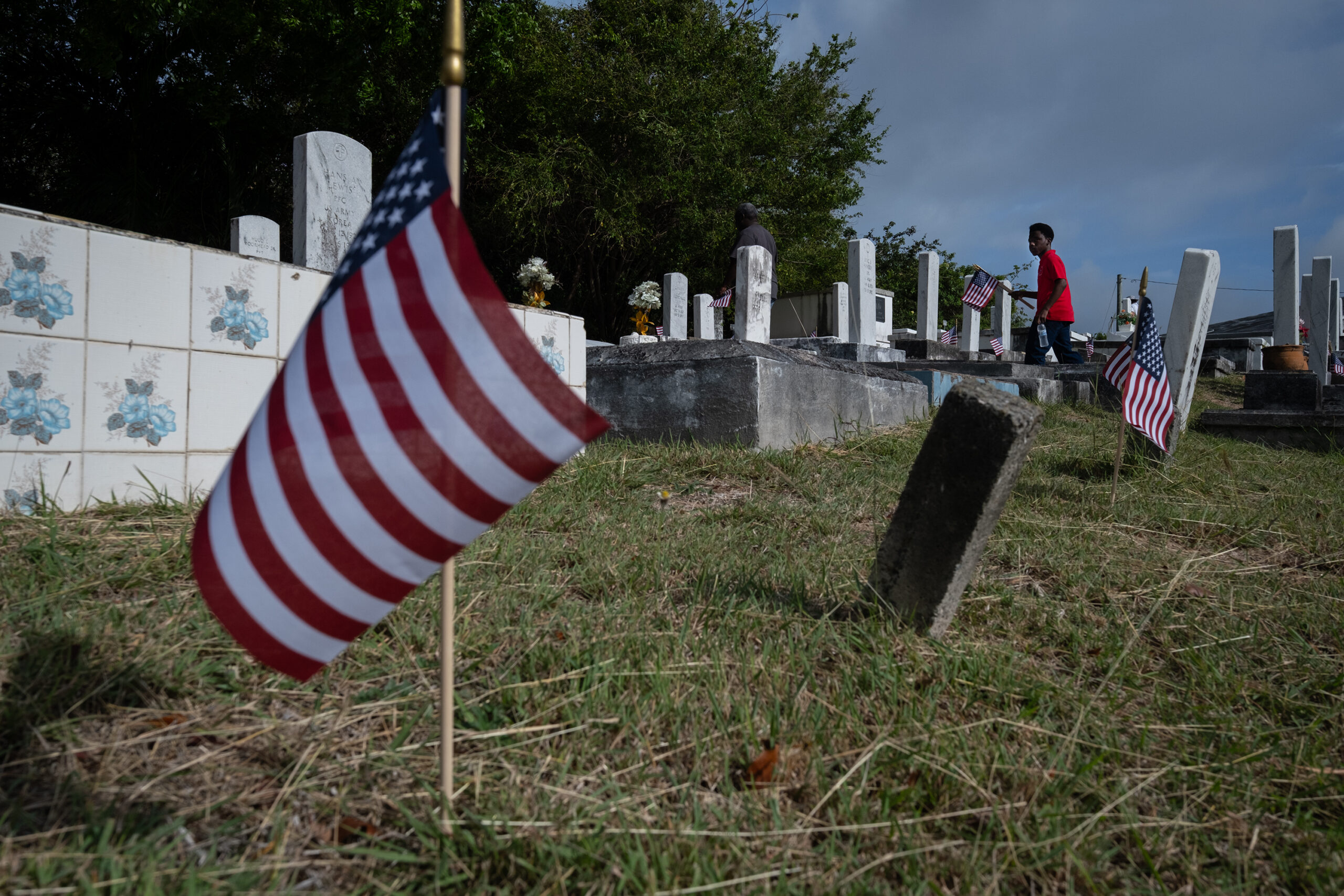
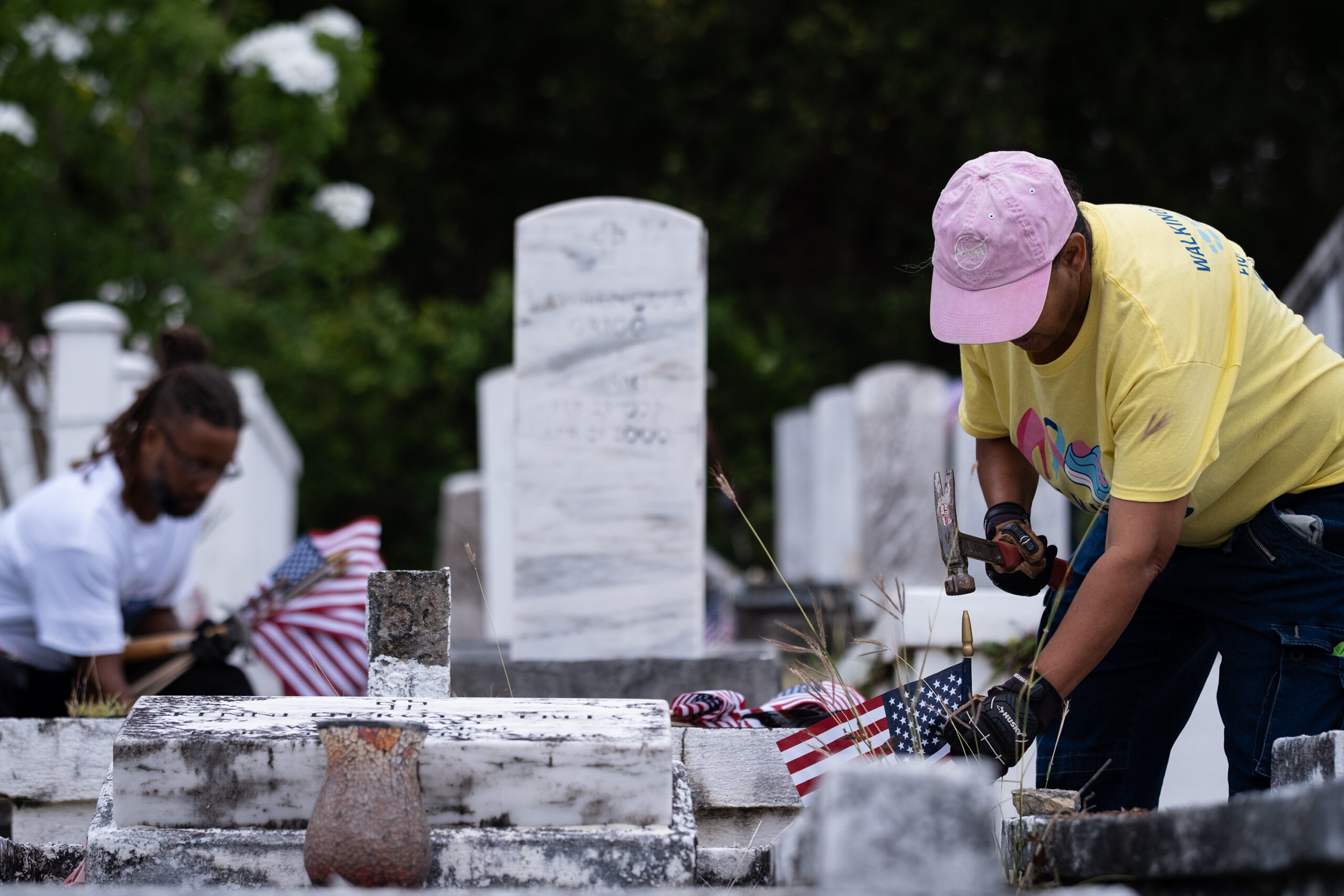
Members of the American Legion Post 102, the V.I. Chapter Tuskegee Airmen and volunteers, braved the rain Saturday morning on St. Croix to place flags on the graves of veterans interred at the Kingshill Cemetery.
“This is not ‘happy Memorial Day,’” 1st Vice Commander Annie Henry said. “This is honoring and remembering those who have fallen.”
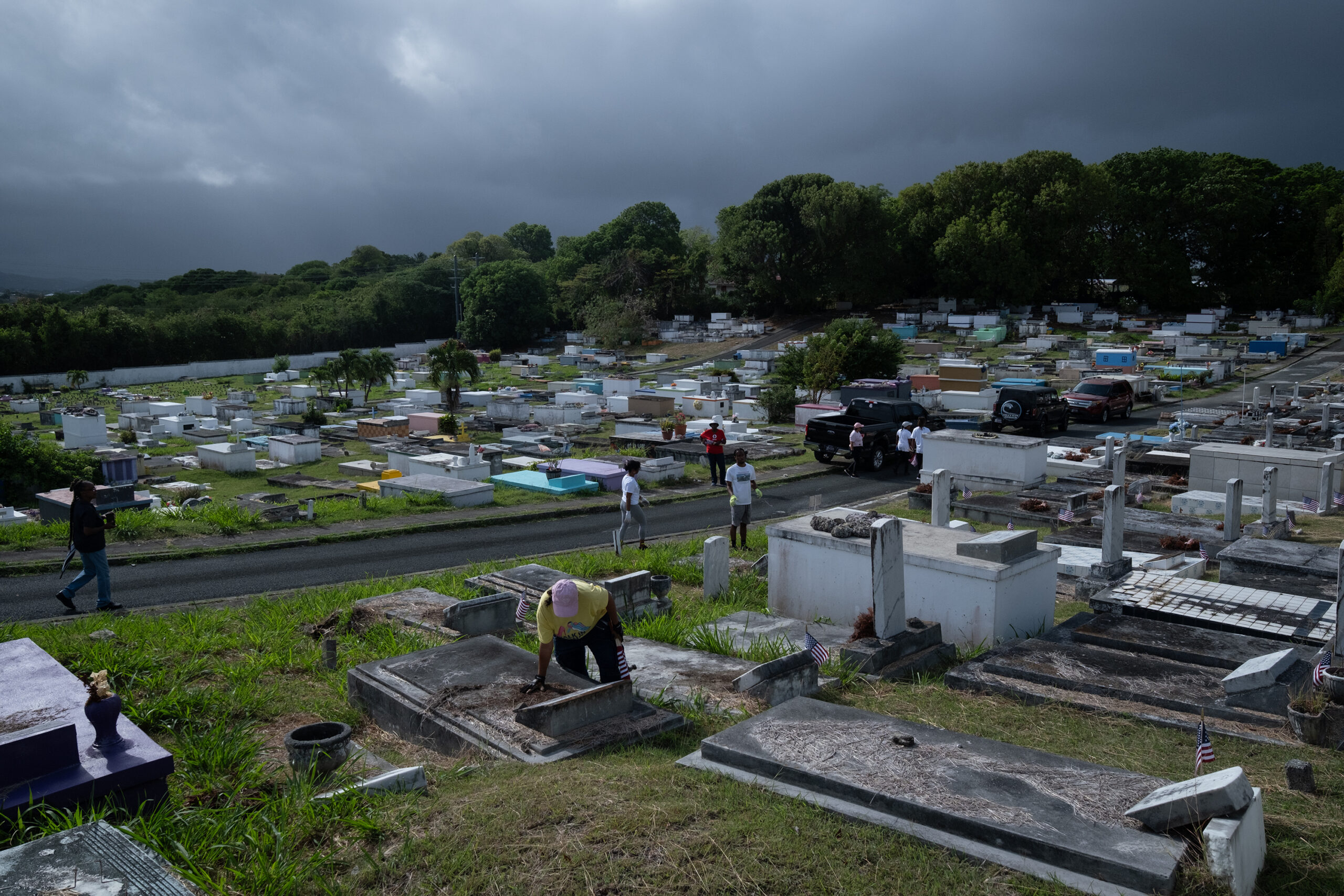
Henry estimated that the group would end up placing around 750 flags throughout the cemetery that morning, in addition to other resting places across the island. This Memorial Day, she said she wants Virgin Islanders to remember the living veterans as well as those who have passed, and she noted that the freedoms enjoyed by so many Americans are “not cheap.”
“We wouldn’t be here if they were cheap, because we wouldn’t be honoring those that have fallen,” she said.
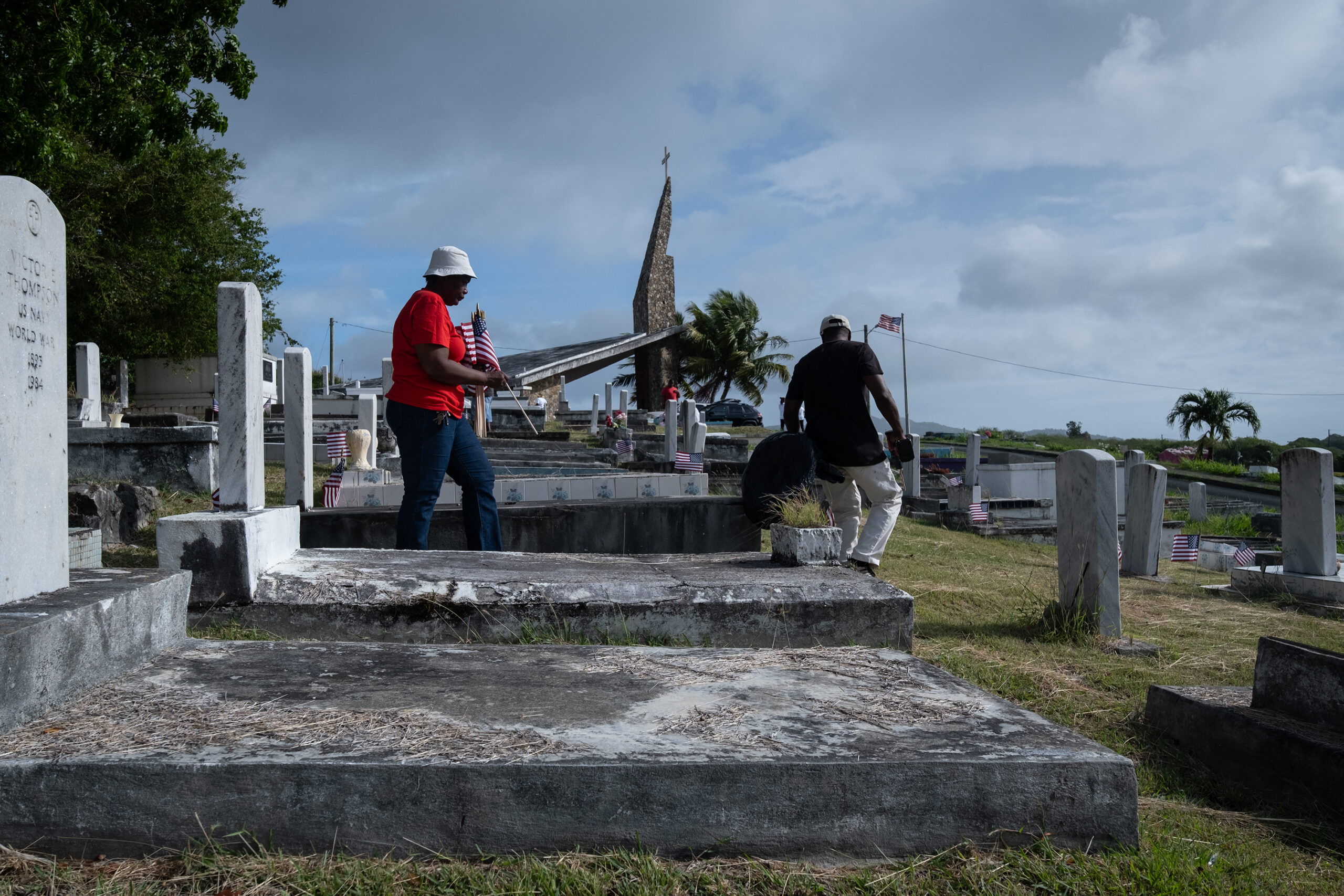
Despite the high percentage of Virgin Islanders who serve in the armed forces, Post 102 Commander Secundino Roman-Cruz said that the territory’s veterans face greater challenges than their counterparts on the mainland, particularly when it comes to accessing health care.
“The costs that we put on the veterans to get the treatment that they should get for free is unfair,” he said. “Sometimes they have to travel, and then they will get reimbursement sometimes — but at a later time. It’s not that they come and are handed tickets and they get the money back immediately.”
Roman-Cruz lauded the work of V.I. Veterans Affairs Director Patrick Farrell but urged community members to show their support too.
Ceremonies to commemorate territory veterans have been planned for all three islands at 9 a.m. Monday. On St. John, a wreath-laying ceremony will be held at the Franklin Powell Park in Cruz Bay. On St. Croix, the ceremony will be held at the Verne I. Richards Veterans Memorial Park. On St. Thomas, the ceremony will be held in the Veteran Section of the Eastern Cemetery in Smith Bay.


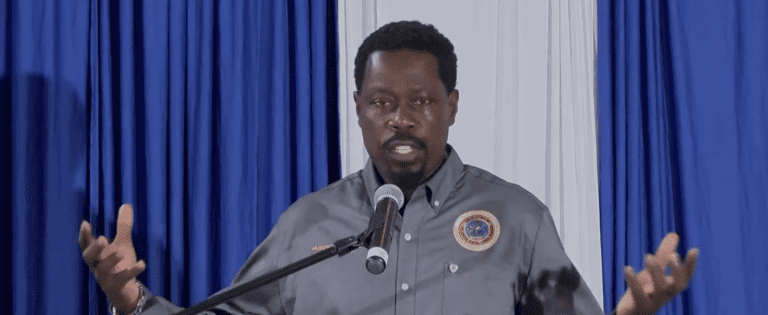
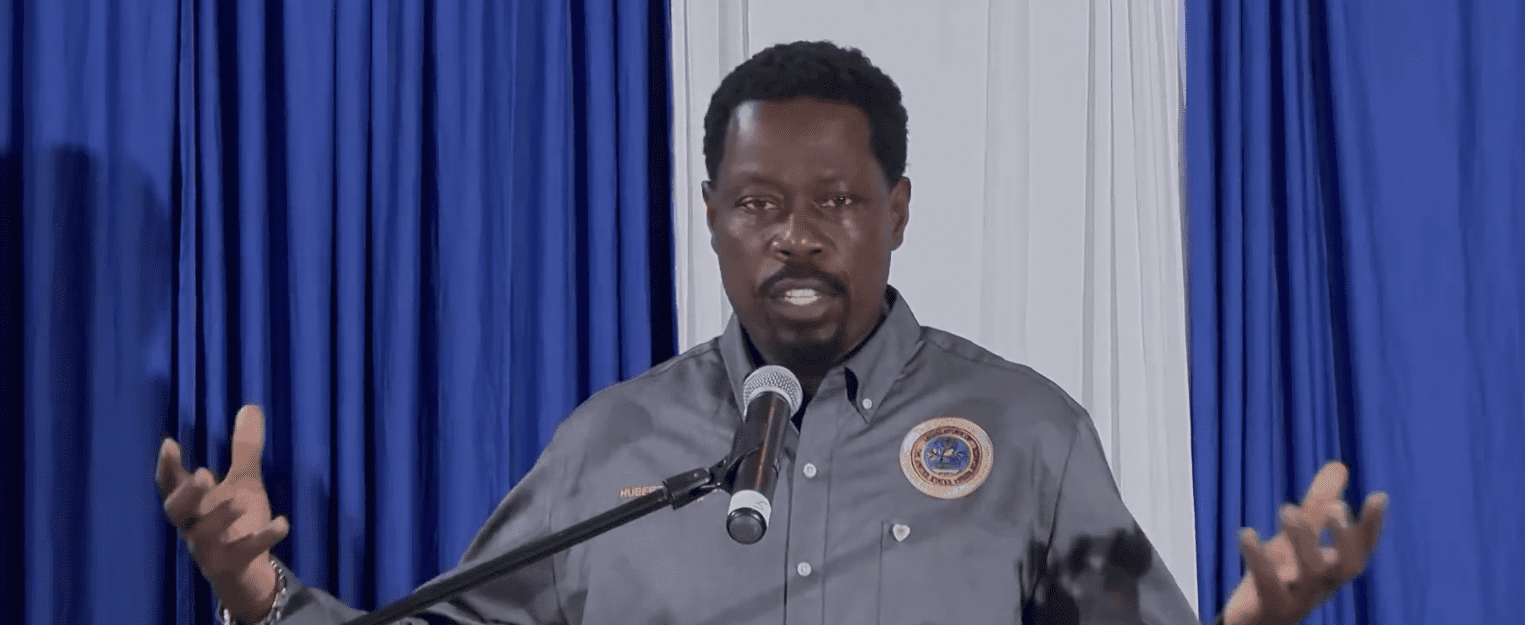
With approximately $25 billion in federal disaster recovery and infrastructure funds committed to the U.S. Virgin Islands, lawmakers and business leaders gathered on St. Croix on Friday to ask whether the rebuilding will truly transform the territory’s economy or simply fuel a short-lived construction boom that collapses once federal spending winds down.
At the 2026 Economic Development Summit, hosted by the 36th Legislature’s Committee on Economic Development and Agriculture and chaired by Sen. Hubert L. Frederick, senators, agency heads, contractors, energy executives and nonprofit leaders met under the theme “From Recovery to Renaissance.” Throughout the day, panels examined whether post‑hurricane reconstruction, infrastructure upgrades and economic development projects can translate into lasting gains in jobs, local ownership and economic resilience.
The discussion repeatedly returned to a central concern: whether the Virgin Islands has the workforce, business capacity and infrastructure to absorb and sustain a surge of federally funded rebuilding work. Speakers pointed to three interconnected pressures, a shrinking population, high operating costs and limited local contracting capacity, that they said could determine whether the recovery becomes a turning point or a temporary spike.
One of the sharpest pressure points was the territory’s workforce shortage. Bureau of Economic Research Director Haldane Davies told lawmakers that as peak construction years approach around 2027 to 2029, the Virgin Islands will need thousands more workers on top of an already constrained labor pool, even as population levels have fallen sharply over the past decade.
He attributed the decline to the closure of the Hovensa refinery, the 2017 hurricanes and the COVID-19 pandemic, which together accelerated the loss of residents to the states.
Labor Commissioner Gary Molloy underscored the scale of the gap. He cited a study by the RAND Corporation, a nonprofit policy research organization that provides economic and workforce analysis for governments, estimating that the territory will still be short between 5,000 and 7,000 workers even if every employable Virgin Islander is working. “We are not going to be able to do this ourselves,” he said, arguing that outside labor will be required in the near term as the territory rebuilds its own workforce pipeline.
Contractors said that even when workers are available, structural barriers can still limit local participation in the rebuilding effort. Contractor Jay Benton said many local firms “can do the work … in the field,” but lack the “back of house staff” needed for larger projects, including estimating, project management, marketing and accounting. Without upfront support, he said, companies struggle to scale in time for major contracts.
“You need money to be able to hire people to do all these things,” he said, arguing that on today’s mega‑projects, many local firms are already behind by the time awards are made. Once the contracts land, he said, companies often don’t have enough time to build the internal systems they need to manage them. The territory “needs an incubator program,” he added, to help firms staff up and invest in back‑office capacity before bids are awarded.
Energy and permitting emerged as two additional structural constraints shaping the recovery. Business leaders said electricity costs, several times higher than in many mainland markets, are already a major drag on competitiveness, increasing operating costs for hotels, manufacturers and small businesses.
Steven Adams, chief executive of the Virgin Islands Next Generation Network, said high power prices “stifle growth … across all industries,” noting that hotels here spend a far larger share of their costs on electricity than their stateside counterparts and that the burden also hits education and health care.
Deanna James, president of the St. Croix Foundation, warned that the Virgin Islands is drifting into what she called a “disaster economy,” sustained by a “windfall of resources” rather than lasting structural change. “This disaster economy is not real,” she told the summit, cautioning that “if we don’t start thinking about what happens on the other end of it … we will be in the worst case that the Virgin Islands has ever been at the end of this windfall of resources.”
In the end, the day’s debate left a clear test for the years ahead: whether billions in recovery spending will build a larger, better-trained workforce and stronger local businesses, or leave the territory with new infrastructure but the same structural weaknesses that existed before.
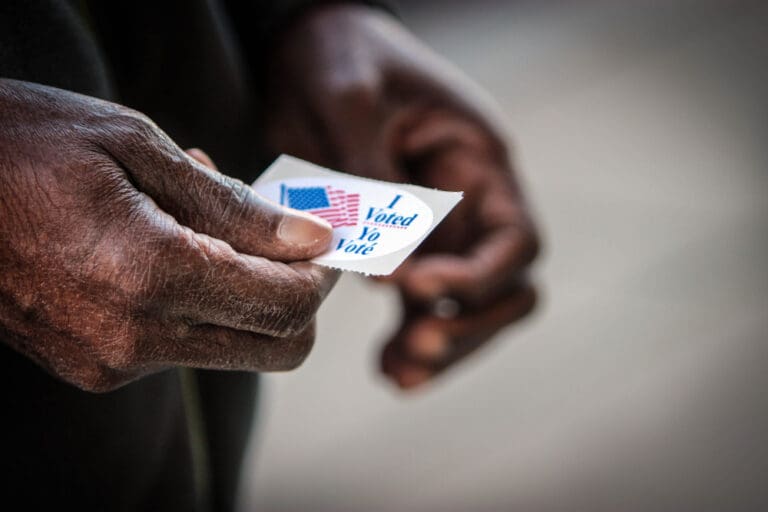
Election season is here. As of May 19, the filing deadline for the November 2026 elections, unofficially, 107 aspirants had filed for Governor and Lt. Governor teams, Delegate to Congress, 15 Senate seats, and 10 Boards of Education and Elections seats. Eighteen persons in nine teams are seeking the Governorship/Lt. Governorship, 10 people are competing for Delegate, and more than 57 for the Senate. Most are running as Independents, followed by Democrats, with two Republicans and one Independent Citizen Movement. This raises a larger question: how effective are political parties in the USVI? Are they vetting candidates, building coherent policy platforms, and helping produce good governance — or do they need major reform?
Background
The USVI has three registered parties: the Democratic Party of the Virgin Islands (DPVI), the Republican Party in the Virgin Islands (USVIGOP), and the Independent Citizens’ Movement (ICM). Since the mid-1980s, however, the DPVI has dominated territorial politics, holding the governorship for 32 of 56 years and controlling the Legislature in all but two terms since 1970. That one-party dominance has coincided with economic stagnation, fiscal imbalance, weak public services, dependence on federal aid, procurement problems, patronage hiring, and corruption.
The Democratic Party began in 1936, formally sponsored candidates in 1952, and merged with the Unity Party in 1962. The Republican Party was founded in 1948, succeeding the earlier Republican Committee started in 1924. The ICM emerged in 1968 as a reform breakaway from Democrats frustrated by corruption and the hostile takeover of the Donkey Democrat Party by the Unity Party. Although the local Democratic and Republican parties are tied to their national counterparts, all three territorial parties have long been weakly institutionalized, candidate-centered, personality-driven, and only minimally differentiated ideologically. Those traits limit how well they govern and represent the public.
Core Functions of Modern Political Parties
In a democracy, political parties should encourage civic participation, coalesce interests, recruit leaders, shape policy, structure debate, educate voters, raise campaign funds, win elections, and govern transparently and accountably.
The key functions are:
Evaluation of Party Effectiveness in the USVI
USVI parties can be evaluated against these benchmarks.
A. Recruitment and Nomination
The Democratic Party is the only consistently functional party in the USVI and the only one that regularly holds primaries. Even so, party loyalty is weak. Candidates frequently leave the party to run as independents or under another label when it offers a strategic advantage, then return when convenient. That pattern underscores how personal ambition often outweighs party identity in territorial politics.
By contrast, the Republican Party participates mainly in presidential primary cycles and does not conduct local primaries or caucuses. The last time the Republican Party had an electoral presence was in the 1990s. The ICM likewise does not field full slates consistently and has relied heavily on the same gubernatorial candidate despite repeated losses. The last ICM senator held office between 2016 and 2018. Meanwhile, independent candidates remain competitive and have won both the governorship and multiple Senate seats since 1970. The number of Independent Senate seats ranges from 2 to 5 in most terms, and Independents have won the governorship three times.
Overall, party labels matter less in the Virgin Islands than personal reputation, family networks, and community ties. The parties do not consistently perform the gatekeeping role expected in mature democracies, and candidate vetting appears limited. Politics remains highly candidate-centered, but the Democratic Party is still the dominant electoral vehicle. With roughly two-thirds of registered active voters, it usually enters general elections with a decisive structural advantage.
B. Voter Mobilization
Between elections, voter outreach is limited. During campaign season, however, the Democratic Party is by far the most effective at mobilizing turnout. The other organized parties are largely inactive, with little evidence of sustained outreach or voter-registration efforts. As of May 2026, the DPVI had 19,058 registered active voters (66%), compared with 743 for the ICM (2.5%), 1,007 for Republicans (3.5%), and 8,022 independents (27%), according to the V.I. Board of Elections. The DPVI also maintains seven political clubs and organizes registration drives, campaign outreach, get-out-the-vote efforts, and transportation to polling places.
In short, voter mobilization is reasonably effective during elections but weak between them. Civic engagement is not sustained. Voter turnout is trending downward and currently averages in the low to mid-50% range. Moreover, voters ages 18 to 24 are the least likely age bracket to participate (3.8%). In this environment, even though the number of eligible voters is approximately 50,000, gubernatorial races can be won with roughly 10,000 to 12,000 votes, and Senate seats with about 3,000 to 5,000 votes.
C. Policy Formulation and Ideological Guidance
No major party appears to maintain a formal internal structure for research, data analysis, policy development, or long-term strategy formulation, and none publishes detailed, well-supported policy or strategy papers. The DPVI and ICM also remain only loosely differentiated ideologically. Both generally support a larger public role in the economy, stronger public services, continued reliance on legacy industries, the use of tax incentives to attract business, access to federal support, and a close relationship with the United States. Differences tend to be pragmatic rather than ideological. The Republican Party’s current territorial platform is even less clear, with little public evidence of an updated local agenda. The party’s website has mostly dated materials from 2012 and 2013.
In sum, the parties lack detailed policy statements, rarely articulate long-term development strategies, and seldom enforce policy discipline among elected officials. Public debate, therefore, centers more on personalities than on programs and policies, weakening ideological and policy coherence.
D. Governance Coordination and Accountability
In strong party systems, elected officials coordinate through formal caucuses, committees, and coalitions that set priorities and enforce discipline. In the USVI, by contrast, legislators often act independently, party discipline is weak, and coalition-building is informal. Although the DPVI has held legislative majorities for most of the past 50 years, that dominance has not produced sustained fiscal discipline, major institutional reform, or robust checks on the executive. Difficult reforms involving pensions, utilities, education, housing, waste management, policing, procurement, and public finance have repeatedly been deferred, while symbolic legislation often outpaces substantive reform.
The result is a weak governing structure marked by inconsistent policy and limited accountability. Major corruption and procurement scandals have often been pursued by federal authorities rather than local institutions, reinforcing the perception that territorial parties have not built strong mechanisms for self-correction, oversight, and disassociation from members guilty of misconduct and ethical lapses.
E. Representation of Social Interests
USVI parties represent the Territory’s diverse communities only partially and mostly through informal, personalized networks rather than structured outreach. Some groups have historically received attention, but many others remain weakly engaged or largely absent from party organization and platform development. Few parties maintain formal outreach bodies or sustained efforts to incorporate the concerns of immigrant communities, environmental advocates, Ancestral St. Johnians, small business owners, or other distinct constituencies into a coherent policy agenda.
F. Internal Organization and Institutional Development
Compared with mainland state parties, USVI parties have smaller organizations, limited professional staff, weaker fundraising capacity, and less developed data and voter-targeting systems. Overall, they remain resource-constrained. The DPVI appears to be the most fully developed organization with well-articulated committee structures and regular meetings, while the ICM remains heavily tied to founding personalities and is largely non-functional, and the Republican Party continues to recover from prolonged internal conflict over leadership and presents neither a policy agenda nor a set of competitive candidates to the public.
The Impact of Weak Political Parties
Weak parties and de facto one-party dominance have had three broad effects on the Territory. First, they have weakened accountability, reduced public trust, and contributed to civic disengagement. Second, they have encouraged short-term, inconsistent policymaking and hindered structural economic reform, leaving the USVI vulnerable to external shocks and natural disasters. Third, they have reinforced patronage and cronyism, which undermine merit-based hiring, distort contracting, weaken institutions, and deepen social divisions. These patterns also diminished public sector performance, lower private investment, and foster out-migration. Honest businesses struggle to compete in a pay-to-play environment; competent and highly qualified people are not attracted to public service because government jobs are given to political supporters, and political party sycophants are the only ones promoted. Lastly, many younger residents see limited opportunities, disengage, and ultimately leave, contributing to depopulation and an aging, unproductive workforce. The cumulative, long-term result is a cycle of weakened institutions, low trust in government, reduced voter participation, and continuing stagnation.
What Should Be Done?
The future of party politics in the Virgin Islands depends on renewal: stronger internal governance, broader participation, clearer policy platforms, more substantive public debate, and genuine accountability in office. If the established parties are unwilling or unable to reform, the case for a new political party becomes stronger. At present, the Democratic Party remains dominant but shows little sign of meaningful internal reckoning; the ICM has struggled to move beyond familiar personalities; and the Republican Party has little visible territorial presence. The large number of independent gubernatorial candidates in the current election is itself evidence that many aspirants are unwilling to affiliate with ineffective and compromised established political parties, and that party labels have diminished in meaning. The rise of Independents just reinforces personality-driven politics and retards the development of sustained political movements.
— Mark D. Wenner is a resident of St. Thomas, USVI, and a professor of economics at the UVI.
Editor’s Note: The opening paragraph of this column was updated Monday, May 25 to reflect the latest information on candidate filings from the Supervisor of Elections office. Editor’s Note: Opinion articles do not represent the views of the Virgin Islands Source newsroom and are the sole expressed opinion of the writer. Submissions can be made to visource@gmail.com.Since 1999 the Virgin Islands Source – the only online newspaper of general circulation in the U.S. Virgin Islands – has been providing the community with reliable, accurate and balanced local journalism.
Contact us: visource@gmail.com
© 1999-2025 Virgin Islands Source