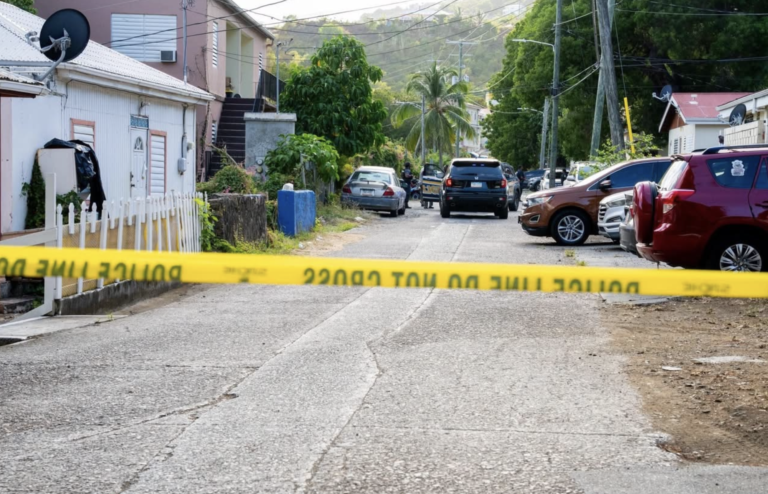
Two more men were killed in separate incidents on St. Thomas and St. Croix Tuesday evening, adding to a string of deadly shootings that has shaken the territory in recent days.
The killings in Sanchez Town in Estate Bovoni on St. Thomas and near the Profit Hills community on St. Croix came just hours after a separate homicide in Hospital Ground and four days after the fatal shooting of 15-year-old Tre’Vante Etienne.
At approximately 6:29 p.m. Tuesday, the 911 Emergency Call Center received a report of shots fired followed by reports of a male victim down in the Sanchez Town area of St. Thomas. Officers and emergency personnel responding to the scene discovered an unresponsive male who was pronounced dead. The Virgin Islands Police Department said the investigation remains active. The victim was positively identified by next of kin as 55-year-old Fitzroy W. Wattley.
Wattley’s death marks the 10th homicide on St. Thomas and the 21st in the territory, according to the Source Homicide List.*
Less than 90 minutes later, at approximately 7:53 p.m., a concerned citizen reported a possible body in the vicinity of the Profit Hills community on St. Croix. According to the VIPD, Criminal Investigation Bureau and Special Operations Bureau personnel searched the area and located the body of a male in a heavily vegetated area north of Profit Hills. Police said the victim appeared to have sustained several gunshot wounds to the upper body. Emergency Medical Services personnel confirmed he had no signs of life. The deceased was later identified by next of kin as 20-year-old Amani Daley.
Daley’s death marks the 11th death on St. Croix and the 22nd in the territory, according to the Source Homicide List.*
The two investigations followed an earlier homicide Tuesday afternoon in Hospital Ground, where 23-year-old Asani Henry was also shot and killed.
Together, the three homicides occurred against the backdrop of growing concern over gun violence following a murder reported Monday in the Whim area of St. Croix and less than a week after the killing of 15-year-old Tre’Vante Etienne on St. Thomas, extending a troubling stretch of gun violence across both districts.
On Monday, VIPD officials joined representatives from the Office of Gun Violence Prevention and community members near the Savan basketball court where Tre’Vante was fatally shot, urging residents to assist investigators and stressing that information can be provided anonymously through Crime Stoppers.
While investigators have released few details about possible suspects or motives in any of the recent cases, the violence has intensified concerns about public safety across both districts.
The latest deaths also come as government officials, educators, clergy, and community leaders continue to grapple with the broader implications of youth violence and gun crime. In remarks issued following Tre’Vante’s death, Gov. Albert Bryan Jr. called on the community to work together to create safe spaces and opportunities for young people, while the Department of Health has announced behavioral health resources for those affected by the tragedy.
As of Tuesday night, no arrests had been announced in connection with any of the homicides reported.
Anyone with information regarding the St. Thomas homicides is urged to contact the Criminal Investigation Bureau at 340-774-2211, 911, or Crime Stoppers USVI at 1-800-222-TIPS (8477).
Anyone with information regarding the homicide near Profit Hills is urged to contact 911, the Criminal Investigation Bureau at 340-778-2211, or Crime Stoppers VI at 800-222-TIPS (8477).
*The Source Homicide List is a chronological log of the homicides recorded in 2026 in the U.S. Virgin Islands, as reported by the VIPD. Cases are broken down by island. While this listing is based on VIPD reports, the Source does not include suicides or vehicular homicides in its listing, which the police and some other media do. This can lead to a discrepancy in the number of incidents reported.
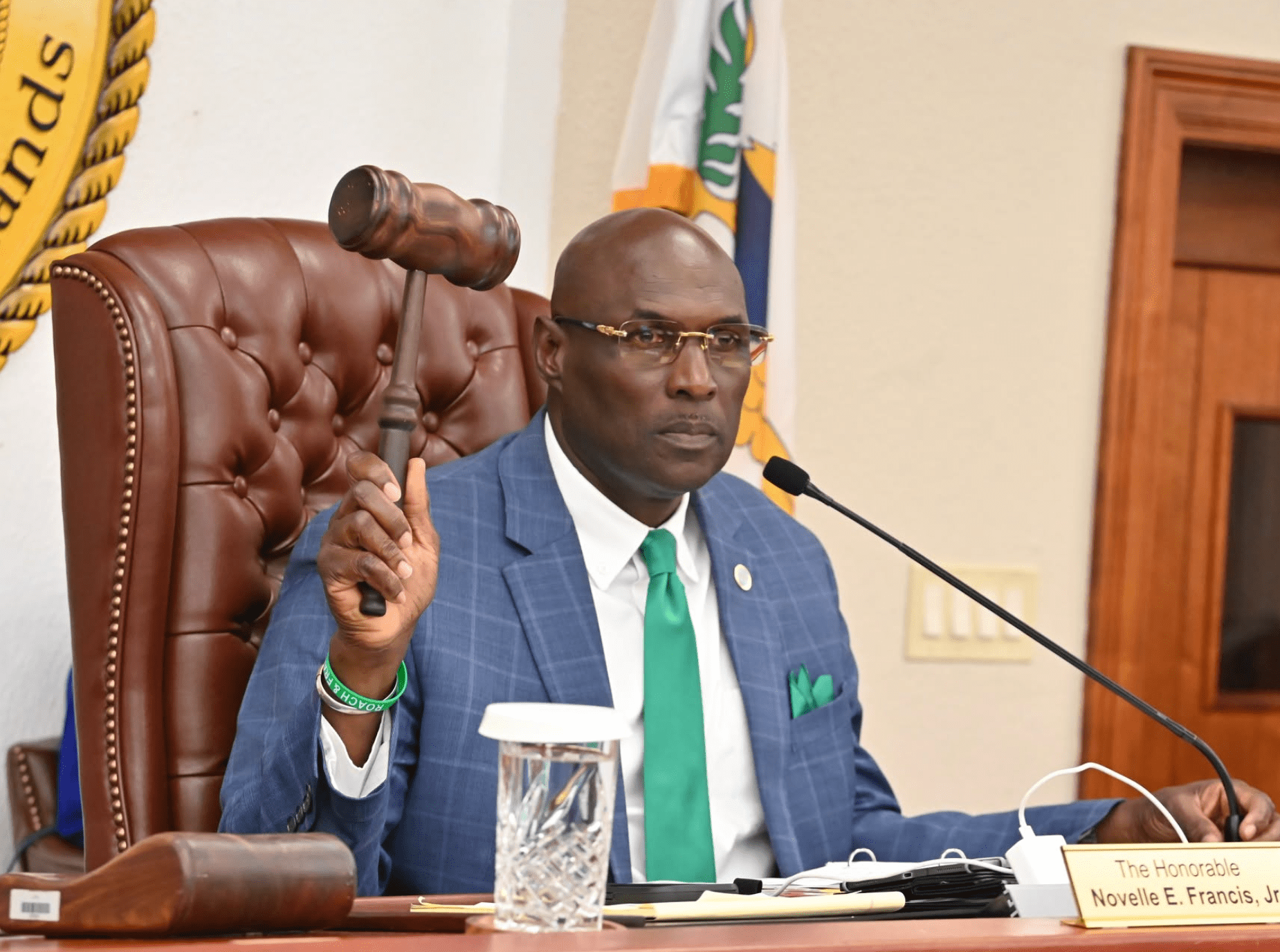
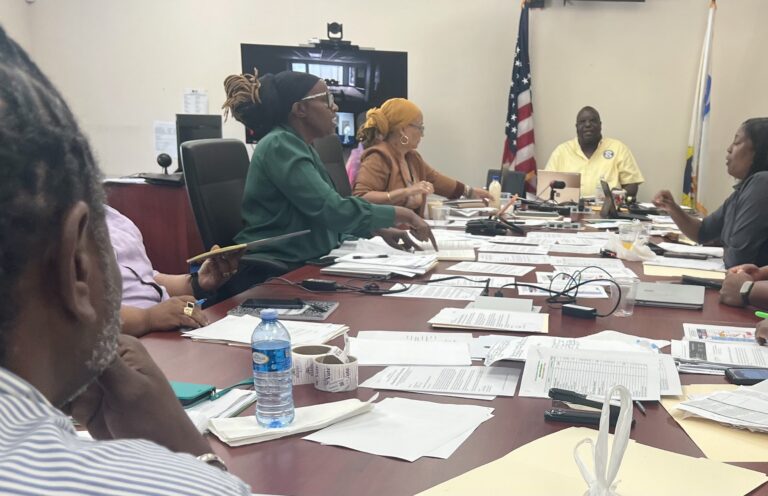
Sen. Novelle E. Francis Jr. chaired the June 16 Budget, Appropriations and Finance Committee hearing, where senators questioned officials from the Finance Department, the Public Finance Authority and the Office of Disaster Recovery on the territory’s finances and disaster recovery spending. (Photo courtesy V.I. Legislature)
During a budget hearing before the Senate Budget, Appropriations and Finance Committee, senators pressed the Finance Department, the Virgin Islands Public Finance Authority and the Office of Disaster Recovery on the territory’s financial condition and long-term obligations.
Finance Commissioner Kevin McCurdy told lawmakers the government still has roughly $36 million in unpaid vendor invoices, including more than $16 million that is more than 90 days overdue. Senators questioned why businesses continue to face long waits for payment, while finance officials argued that many invoices arrive late from individual agencies before reaching the Treasury.
Lawmakers also focused on the government’s broader financial condition. McCurdy said the Treasury currently holds about $48 million in cash, equal to roughly 12 days of operating expenses, and noted that government spending has grown faster than revenues in recent years. “Expenditures … have increased by 15%,” he told senators, compared with about 6% growth in revenues.
He also estimated that the government still owes more than $100 million in retroactive wage payments tied to long-standing labor agreements, even after a previous appropriation intended to reduce the backlog.
Finance officials said the territory is making progress on long‑delayed audits and working to restore timely financial reporting. McCurdy told senators the governmentwide audit for fiscal year 2023 was completed in January, the 2024 audit is expected by the end of June, and officials are targeting completion of the 2025 audit by the end of 2026. However, officials acknowledged that many audit findings remain unresolved because agencies continue to struggle with documentation, reconciliations and other reporting requirements. “Paramount is the documentation … that has been plaguing us for a while,” McCurdy said.
Senators also raised concerns about internal financial controls after learning that some departments have gone extended periods without depositing collected funds and that the government continues to deal with bounced checks and other accounting issues. Several lawmakers called for tighter oversight and stronger accountability across agencies.
Attention then shifted to the Public Finance Authority, which manages much of the territory’s borrowing. PFA Director Nathan Simmons said the authority oversees approximately $1.47 billion in outstanding debt, including bonds backed by gross receipts taxes, federal highway revenues and federal rum-tax revenues.
Senators expressed concern about rum‑tax collections coming in below projections, which help support major government obligations, including financing connected to the Government Employees’ Retirement System. Simmons said a reassessment of expected federal rum-tax revenues reduced the Virgin Islands’ fiscal 2026 advance from $252.5 million to about $225.5 million, a decrease of roughly $27 million.
He also noted that because those rum-tax revenues are now pledged to the retirement-system financing, the authority now depends on annual support from the General Fund to pay for its own basic operating costs.
Lawmakers also questioned spending on lawyers, financial advisers and federal lobbyists, spending that Simmons linked to managing complex financial and legal matters and to working with legal and government relations consultants in Washington on issues such as rum taxes and federal policy.
The hearing also included testimony from the Office of Disaster Recovery on the territory’s ongoing disaster recovery and rebuilding effort.
ODR Director Adrienne Williams‑Octalien told senators that about $24.5 billion in federal disaster recovery funding has been obligated to the Virgin Islands, and about $4.5 billion has been spent so far, leaving roughly $20 billion in obligated funds still to be spent within an overall program covering about 1,600 projects.
Those projects include schools, hospitals, housing, public facilities and major infrastructure upgrades. Williams‑Octalien said the territory has secured favorable FEMA cost‑sharing terms that reduce the local share to 2% for critical facilities and 5 percent for most others, instead of the usual 10 percent. However, she noted that this benefit depends on completing projects by 2035; after that, the local cost share will revert to 5 percent for all projects.
To avoid missing that deadline, ODR is targeting completion by about 2032, providing a buffer for delays. Williams‑Octalien acknowledged that large projects, including the Roy Lester Schneider Hospital rebuild, remain the most difficult.
She pointed to visible progress, saying 34 of 38 Rebuild USVI school projects are under contract, including work at Charlotte Amalie High School, the reconstruction of St. Croix Central High School, and a new Arthur A. Richards K‑8 school expected to open for the 2026–27 school year. Other major projects include hospital and health facility upgrades, public libraries, Head Start centers, and power‑plant improvements with new backup generators. Williams‑Octalien said 1,120 of about 1,600 projects have already been completed, with dozens more shovel‑ready or under construction.
Lawmakers also raised concerns about reliance on outside contractors after learning ODR paid roughly $66 million to consultants over the past year. Williams‑Octalien said outside firms are needed to manage the scale and federal requirements of the work, while senators warned against long‑term dependence on contractors.
The testimony underscored how the government is trying to stabilize its finances, manage long‑term debt and push nearly $20 billion in recovery work to completion before federal cost‑sharing terms change in 2035.
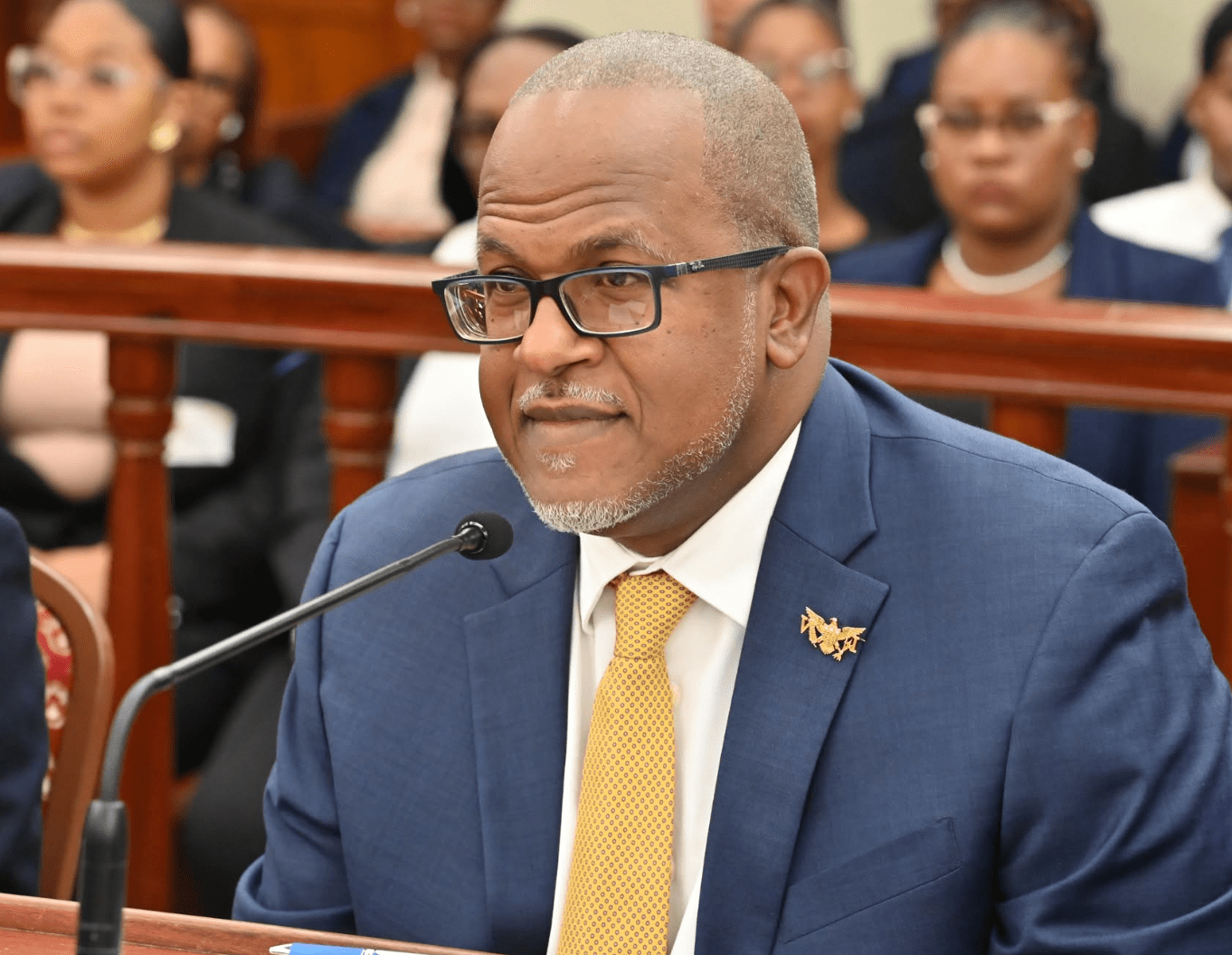
Office of Management and Budget Director Julio Rhymer Sr. at the June 16, 2026, Senate Committee on Budget, Appropriations and Finance hearing, where he told lawmakers about ongoing financial management and oversight issues across government agencies. (Photo courtesy V.I. Legislature)
The Senate Budget, Appropriations and Finance Committee heard testimony Tuesday from Office of Management and Budget Director Julio Rhymer Sr. on financial management issues.
Rhymer told lawmakers the government has paid about $140 million in prior-year obligations that were not entered into the financial system when they were incurred and instead appeared later, sometimes after new appropriations had been approved. He said repeated audit findings show that agencies have failed to reconcile accounts and record invoices on time, leaving the administration and the Legislature without a complete picture of the government’s liabilities.
Rhymer said the government’s response to ongoing financial control issues is to centralize oversight of agency finances. He said all chief financial officers and business office directors now report to the commissioner of Finance, working with OMB, under an executive order issued earlier in the term.
As part of the restructuring, Rhymer said OMB has established a Financial Responsibility Unit and a separate compliance unit to focus on agencies with repeated audit findings, delayed federal grant drawdowns or weak budget controls. The units can be assigned to work within an agency’s finance office to review spending, assist with reporting and develop corrective action plans, and may recommend changes in financial leadership if problems persist.
He identified the Health Department and Agriculture Department as agencies requiring significant intervention under the model. He also pointed to the Education Department, which remains under federal third-party fiduciary oversight and continues to face audit and grant management issues.
Ending the third-party arrangement could save the territory about $2.6 million annually in fiduciary costs, according to Rhymer, who said the government has asked the U.S. Department of Education to transfer oversight to OMB’s Financial Responsibility Unit. He said federal officials have required additional steps before approving the transition, including strengthening Education’s fixed asset policy and completing a biannual inventory of its assets. Rhymer said the department is “on the cusp” of meeting those requirements but there is no confirmed timeline for when the arrangement will end.
The hearing also examined the use of federal pandemic aid and the impact of its expiration. Rhymer said the Virgin Islands received about $547 million under the American Rescue Plan Act to support health care, infrastructure, workforce development, and community revitalization. He said roughly $14.7 million remained as of the hearing, down from about $16 million in late March, with all funds required to be spent by Dec. 31.
According to figures cited during the hearing, about $195.6 million in ARPA funds have been used for payroll and vendor payments. Senators said the federal aid has helped cover operating costs that would otherwise fall on the general fund. Sen. Kurt Vialet said the current spending framework is “a false budget floated with federal funds” and warned that “reality is beginning to hit us” as that support runs out.
Hospitals are another major source of financial pressure on the government, with lawmakers questioning how they are managing revenue they are already owed. Rhymer, who chairs the hospitals’ finance committee, said staff at Schneider Regional Medical Center and Gov. Juan F. Luis Hospital do not consistently collect patient co-pays at the time of service. He said he has observed patients leaving without paying and that bills are sometimes issued months later, reducing the likelihood of full recovery.
To address outstanding obligations, the Legislature previously authorized a $3.5 million line of credit for each hospital, allowing the government to pay certain overdue bills directly upon receipt of documentation. Rhymer said Juan F. Luis Hospital has begun submitting bills under the arrangement and receiving payments, while Schneider Regional Medical Center has not yet accessed the line of credit.
Rhymer said the government is pursuing longer-term structural changes, including a $400,000 U.S. Department of the Interior grant to hire a consultant to develop a consolidated strategy for both hospitals. The plan includes a single executive leadership structure and a consolidated financial strategy for the two facilities.
The committee also discussed new oversight measures for nonprofit organizations that receive government funding. Rhymer said the territory funds roughly 200 nonprofits through the miscellaneous section of the budget at a total cost of about $7 million a year.
He said OMB has established a Not-for-Profit Unit to review whether those organizations are in good standing with local and federal tax and corporate agencies, withhold payments from groups that are not compliant, and, in cases where problems persist for more than a year, he said OMB would “request the legislature to no longer fund” that organization.
Sen. Marvin Blyden said many nonprofits “play a critical role” and “fill the gaps in many areas” and urged OMB to work with them rather than “just cutting them off” when compliance problems arise.
Rhymer also acknowledged that the government’s transparency website is offline. He said the previous version contained data accuracy issues and that OMB and the Department of Finance are working with IT staff to rebuild the data system. He said the goal is to relaunch the site by Oct. 1, the start of the next fiscal year.
Rhymer said one of the government’s most persistent audit findings is that agencies fail to reconcile accounts and record expenses in a timely manner, leaving some invoices out of the financial system altogether. Several senators said those weaknesses could open the door to improper or even fraudulent spending and make it harder to track how public funds are used, while Rhymer maintained that better “accountability” and stricter adherence to existing financial procedures will be needed to prevent similar problems in future budgets.
A dispute over candidate qualifications for the 2026 election intensified this week after Delegate to Congress aspirant Brett “Mac” McClafferty appealed his disqualification from the ballot, prompting two members of the Board of Elections to publicly challenge the authority of Supervisor of Elections Caroline Fawkes to investigate and disqualify candidates.
The dispute began June 15 when Fawkes notified McClafferty that he had been disqualified from seeking the office of Delegate to the U.S. House of Representatives following an Elections System investigation into his nomination petitions.
In a two-page letter, Fawkes said the Elections System received six complaints alleging signatures were obtained through false or misleading representations. The investigation concluded that voters were not fully informed about the identity of the candidate, that nomination papers were circulated by an individual who was not qualified to serve as a circulator in the St. Croix district, and that affidavits submitted with the nomination papers contained inaccuracies. Fawkes said the Elections System reviewed video evidence as part of its investigation and determined that the integrity of the nomination papers had been compromised.
“The Elections System of the Virgin Islands has determined all signatures obtained through misrepresentation are hereby invalidated,” Fawkes wrote before concluding that McClafferty’s candidacy could not be certified.
Later that day, McClafferty circulated a notice of appeal to Fawkes, members of the Board of Elections, Government House officials, attorneys, and media organizations, calling the decision “erroneous” and demanding an emergency hearing before the Board of Elections.
In his appeal, McClafferty argued that his campaign had successfully cured deficiencies previously identified by Elections officials and pointed to emails from deputy supervisors in both districts indicating that those defects had been resolved.
McClafferty’s appeal also points to what multiple candidates have described as inconsistencies in the Elections System’s handling of his nomination papers. A May 30 Notice of Defect in McClafferty’s case informed the campaign that it had three days to cure deficiencies in its petition filings, but also required any additional signatures to be submitted by 5 p.m. on June 1. As Elections officials have said, the cure period begins the day after notice is given. McClafferty argued the deadline provided less time than the notice itself stated and contends that, had additional time been provided, his campaign would have submitted even more signatures.
He also challenged the factual basis of the investigation, submitting affidavits from campaign associates Jonathan James and David Greaux disputing the allegations made by the Elections System. James stated that he served as the sole circulator of McClafferty’s St. Croix petitions and that all signatures were collected in his presence. Greaux acknowledged encouraging individuals to sign the petitions but denied serving as a circulator, stating that any signatures obtained were gathered by or in the presence of James.
McClafferty further alleged that he was subjected to disparate treatment and questioned whether the supervisor of Elections possessed the authority to conduct the investigation and issue a disqualification.
The challenge comes as election officials continue to struggle to finalize the list of candidates for the 2026 election. Earlier this month, Fawkes postponed publication of the official candidate roster again until June 17, citing the need for additional review of nomination papers and responses from aspirants undergoing vetting. The delay followed a string of candidate disputes and appeals, including challenges involving former Sen. James “Jimmy” Weber III, Roy Sheridan, and now McClafferty. The repeated reviews have exposed growing tensions between the Office of the Supervisor of Elections and some members of the Board of Elections over who has the authority to investigate, qualify, and ultimately disqualify candidates seeking office.
That disagreement became public Monday when Board of Elections member Cleopatra Peter responded to McClafferty’s appeal email, arguing that the supervisor of Elections is not authorized to conduct investigations and that such authority rests solely with the Board of Elections under Virgin Islands law.
“I strongly recommend that the Board convene an emergency meeting to review the cases of all aspirants disqualified by Supervisor Fawkes,” Peter wrote, adding that the board has a duty to ensure a smooth election process.
Board member Barbara LaRonde subsequently expressed support for Peter’s position, writing that an emergency meeting was needed to address what she described as a misrepresentation of local and federal election law.
“Ms. Fawkes has no legal authority to act on behalf of the Board of Election who is the only body that can disqualify a federal candidate,” LaRonde wrote.
The exchange highlights a growing disagreement within the Elections System over who ultimately has the authority to investigate candidate filings and determine whether aspirants qualify for the ballot.
It was not immediately clear Tuesday whether the Board of Elections intends to convene an emergency meeting to hear McClafferty’s appeal or whether the supervisor of Elections plans to reconsider the disqualification, though Fawkes did acknowledge receipt of the email.
The New York Knicks defeated the San Antonio Spurs 94-90, claiming their first NBA championship in 53 years. Game 5 of the NBA Finals drew 18,984 fans to the Frost Bank Center in San Antonio on June 13. Games 3 and 4 averaged 23.8 and 20.9 million viewers, respectively, with peaks of 26.3 and 23.2 million viewers. Altogether, 44,718,984 people watched these three games.
Otis D. Alexander
Beyond the impressive numbers, this series offers more than sports entertainment; it reveals how mass participation, enthusiasm, and community action, on display in arenas and homes, demonstrate the dynamics essential to a functioning democracy. Though the stadium erupted as the Knicks and their fans celebrated, and the owners quickly acted to protect their money, beneath this excitement lies a crucial lesson: society often celebrates collective action in entertainment but fails to apply a similar level of engagement and responsibility to democratic life. Many overlook this deeper meaning, in part because questioning the systems that shape daily life is discouraged. Some expect society to take care of them, avoiding hard work or responsibility. Wealth, education, or status do not guarantee self-awareness or humility. Even the rich may feel entitled to society’s benefits without giving back, an attitude that can be harmful.
To frame the issue, as an undergraduate, I studied with Trinidadian C.L.R. James, who introduced me to José Ortega y Gasset. In “The Revolt of the Masses,” Gasset warned of Western culture’s decline and the dangers of comfort, entitlement, and lack of effort, urging humility and responsibility.
Building on this, consider the NBA Finals audience, about 44,718,984 people, on par with the populations of countries like Canada, Chile, Denmark, or Saudi Arabia. This group could exert enormous political influence, potentially deciding national elections, including the U.S. presidency, and spearheading movements too large for any government to ignore.
If united on economic issues, nearly 45 million people could reshape markets through boycotts, strikes, or supporting specific businesses, forcing leaders to respond. They could sway media coverage, spark public debate, and influence legislation. Globally, they could lead climate and human rights campaigns, urging governments to act. Fans and consumers share views on ticket prices and the game experience via social media, forums, and direct feedback, pressuring teams and owners. If fans think prices are too high, they may stop attending or buying merchandise, prompting owners to reconsider prices or improve experiences. When democracy is at risk, people push governments through protests, petitions, strikes, media campaigns, and civil society action, demanding protection of democratic institutions, fair elections, free speech, and human rights. The effectiveness of such efforts depends on the political context, the strength of civil society, and government responsiveness. International groups may also help defend democracy.
I question the time and attention we, as Americans, and the 44,718,984 others, invest in the NBA Finals, given what those same energies could mean for a more engaged, participatory democracy. Ortega y Gasset might argue that while entertainment like sports showcases our collective enthusiasm, it also distracts from democracy’s core: the hard, sometimes uncomfortable work of staying informed, debating policy, voting carefully, and holding leaders accountable. The contrast between our engagement with the Finals and with democratic action underscores the text’s main point.
For Ortega y Gasset, this phenomenon marks a cultural transformation: entertainment and comfort supplant the engagement and responsibility required for democracy to thrive. When this shift occurs repeatedly, democracy’s visible structure may remain, but its substance, active, responsible citizen participation, gradually erodes. The lessons of the Finals point us to this danger, urging renewed commitment to democratic involvement.
This tension is personal for me, as I am often caught between cultural influences and my love for entertainment. A final takeaway is that personal passions, such as basketball, should not come at the expense of democratic engagement. My admiration for the Spurs, especially after teaching Tim Duncan at Saint Dunstan’s School in St. Croix, deepened my fandom. Still, I am determined not to trade my democratic freedoms for fleeting pleasures or support systems where wealth is hoarded at democracy’s expense.
Sources:
– Devon Henderson, “Knicks-Spurs is the most-watched NBA Finals Game 4 since end of Jordan era,” https://www.nytimes.com/athletic/7355788/2026/06/12/spurs-knicks-game-4-viewers-nba-finals/.
– José Ortega y Gasset, The Revolt of the Masses, (New York: W. W. Norton & Company, 1994).
– “Total Population by Country 2026,” https://worldpopulationreview.com/countries.
(Courtesy of Otis D. Alexander)
— Otis D. Alexander, PhD, is a retired music teacher who previously worked at St. Croix Central High School. He has also taught at Sprauve School and Guy Benjamin School on St. John. Additionally, he is an alumnus of Harvard’s Leadership for Academic Librarians program. If you’re interested in collaboration opportunities, you can reach him at od.alex1972@gmail.com.
Editor’s Note: Opinion articles do not represent the views of the Virgin Islands Source newsroom and are the sole expressed opinion of the writer. Submissions can be made to visource@gmail.com.
With a resonant voice delivering thoughts and ideas over radio and TV in the Virgin Islands for close to 20 years, Sam Topp died in Massachusetts June 13. (Source file photo)
St. Thomas popular talk show host Sam Topp is being remembered as a familiar voice on radio and public television for close to 20 years. Topp lost a battle with lung cancer and died June 13 in Massachusetts at the age of 75.
Fans of talk radio in the Virgin Islands would tune to WVWI-AM weekday mornings to hear what Topp had to say for the day and enjoy his conversations with government leaders, community notables and his exchange of ideas with everyday people on the show called Topp Talk. For close to nine years, he also hosted a WTJX-TV show called Behind the Headlines.
Topp joined the administration of former Gov. Kenneth Mapp as deputy communications director and later took the lead as chief spokesman from March to December 2017. He also served as a member of the Hospital and Health Facilities Corp. Board in the early 2000s.
Born in Virginia on Aug. 30, 1951, he frequently spoke about growing up in Farmville, a mid-sized college town with a legacy of struggle during the Civil Rights Era. Although he would from time to time say he’d like to go back home, his final days were spent on St. Thomas.
Shaun Pennington, who worked closely with Topp, remembered a story he told her that shocked her.
“Sam was born in Farmville, in Prince George’s County, Virginia, which closed down its schools in 1959 for five years because they refused to integrate when it became law,” Pennington said.
Pennington — founder of the Virgin Islands Source — said she was in awe of Topp’s ability, as someone who missed school from second grade to eighth grade, to rise in the field of communications in the Virgin Islands.
Former TV2 sportscaster Jeremy Nicholas said he flew in to see his dad around Memorial Day and brought him back with him to Massachusetts for medical care. “He was there for four or five days and then he passed on Saturday morning,” Nicholas said.
Their family ties date back to 1986, when Sam married Claire Marie Tutela — Jeremy’s mom. Claire Topp died of cancer in 2011. “He was a great mentor. There was a lot of encouragement,” Nicholas said.
Since word of his passing spread, government leaders who knew him shared their condolences.
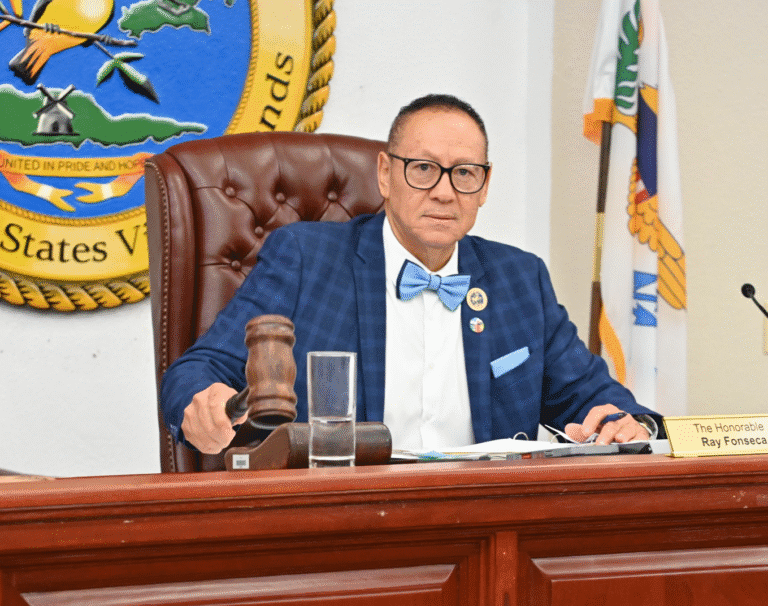
“Sam was more than a staff member; he was a brilliant thinker, a gifted writer, and a true storyteller who understood the power of words, ideas, and public service,” said Sen. Ray Fonseca.
“Topp Talk was more than a radio program. It was a public square, a place where Virgin Islanders could speak, be heard, and stay informed. Sam brought integrity, passion, and an unwavering love for the Virgin Islands to every broadcast,” said Delegate to Congress Stacey Plaskett.
And former Sen. Adlah Donastorg praised Topp’s ability to deliver complex concepts to his audience without speaking down or over the heads of anyone. “To know Sam Topp, or simply to listen to him, was to understand the power of a truly captivating voice. It was a voice rich with warmth, depth, and an undeniable authority — a unique instrument that resonated deeply across every hillside, valley, and shore of our territory. When Sam spoke, Virgin Islanders listened,” Donastorg said.
Funeral arrangements are pending; Nicholas said he would like to hold a memorial in the territory and will announce the date as arrangements come together.
Home Sweet Home, 1986 (2 editions)
Edition 2 published: 2012
Notes of a Crucian Son, 1989 (2 editions)Editio
n 2 published: 2004
St. Croix in Another Time, 1990 (2 editions)
Kallaloo: A Collection of Crucian Stories, 1991
Fungi: More Crucian Stories, 1993
Maufe, Quelbeˊ and T’ing: A Calabash of Stories, 1994 (2 editions)
Edition 2 published: 2001
Under de Taman Tree, 1996 (2 editions)
Hurricane Blows All Skin One Color, 1997
The Journey from La Vallee to the Legislature, 2000
A Musical Journey and Other Stories, 2002
The Men of the 872nd Port Company and Other Stories, 2005
Otto Tranberg of Mt. Washington and Nicholas and Other Stories, 2006
Sonny Barnes of West End, 2007
Teach a Man to Fish, 2009
Memories of My Enchanted Island and Other Stories, 2012
The Real Mackay and Other Stories, 2013
In a Heartbeat: Stories of the Virgin Islands Army National Guard, 2014
Celebration: Salute to the Living and the Dead, 2015 (2 editions)
Edition 2 published: 2017
Surviving Vietnam & Lost at Sea: The Dennis A. McIntosh Story, 2018
Let the Drums Roll: The Men and Women of The 666th and 73rd Army Bands of the Virgin Islands National Guard, 2023
Poetry and Haiku Collections:
Home Sweet Home, 1986 (2 editions)
Edition 2 published: 2012
Walking Through Kasha and Roses, 1988
Prayers and Poems from the Leeward Side by Lucia Christian, 1998
Compiled, edited, and published by Richard A. Schrader, Sr.
Like a Flower Blooming, 1999
This Little Island Mine, 2000
No Words Has the Rose, 2003
The Madras That Binds All Ahwe: The Inaugural Poem, 2003 (2 editions)
Edition 2 published: 2021
Haiku: This Other Joy, 2005
If the Gobi Tree Could Talk: A Calabash of Poems, 2007
Haiku: A Leaf in the Wind, 2010 (2 editions)
Red Flamboyant Blooming, 2022
Theatrical Playwright:
1878 Queen Mary and Dem, 1998
Editor’s Note: Opinion articles do not represent the views of the Virgin Islands Source newsroom and are the sole expressed opinion of the writer. Submissions can be made to visource@gmail.com.
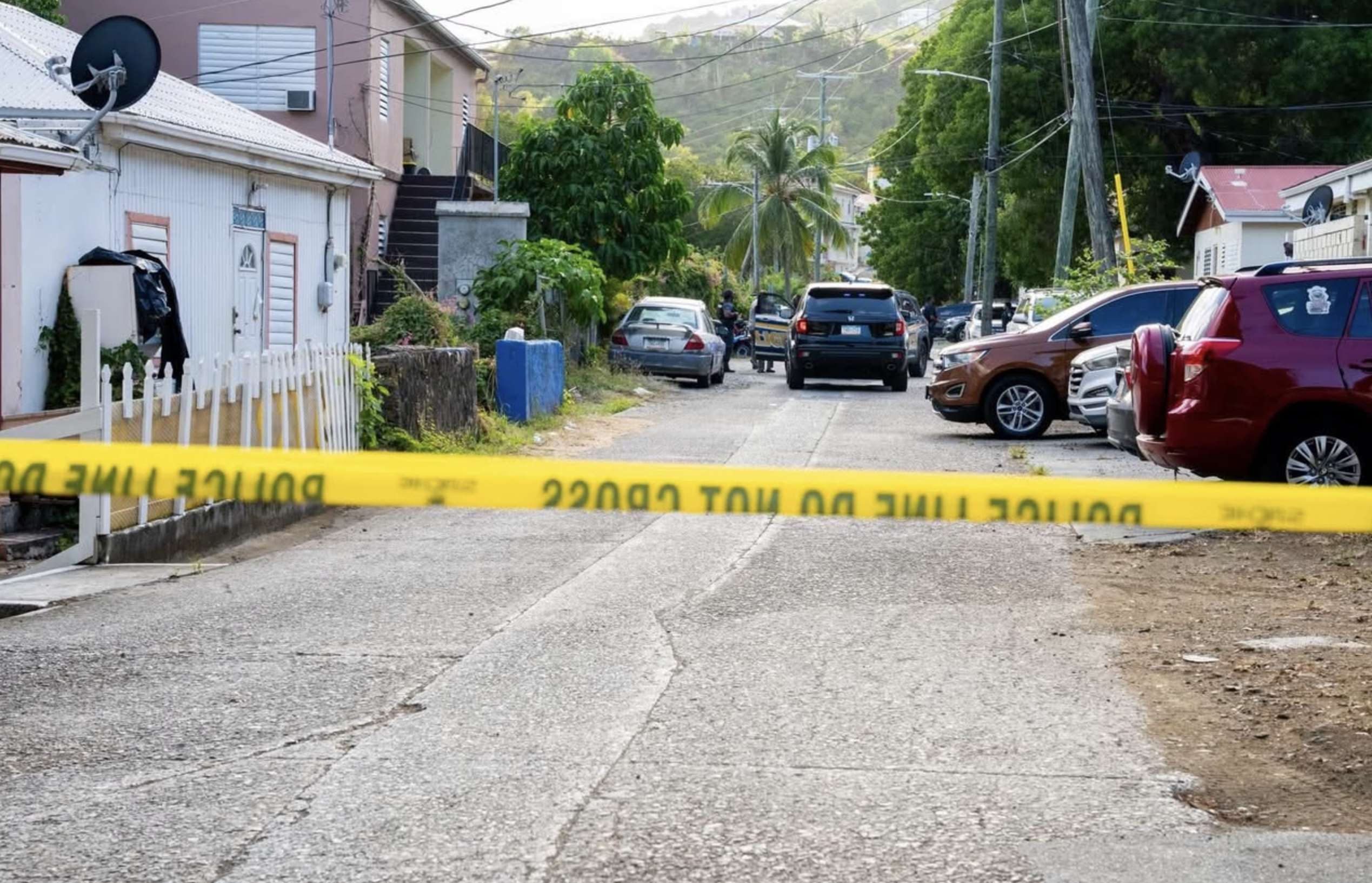
Hospital Ground was cordoned off by police Tuesday afternoon after a fatal shooting claimed the life of a man in the neighborhood. The incident remains under investigation by the Virgin Islands Police Department.(Photo courtesy VIPD)
A man was found dead Tuesday afternoon in the Hospital Ground area after reports of gunfire, according to the Virgin Islands Police Department.
A concerned citizen contacted the 911 Emergency Call Center at about 3:40 p.m. Tuesday to report shots fired in the area. Officers responding to the scene found an unresponsive male who appeared to have sustained multiple gunshot wounds, according to a VIPD police report.
Emergency Medical Technicians responded and determined the man showed no signs of life. The victim was later identified by next of kin as 23-year-old Asani Henry, the police report stated.
Henry’s death marks the ninth homicide on St. Thomas and the 20th for the territory, according to the Source Homicide List.*
The case is under investigation by the VIPD.
Anyone with information is asked to contact the Criminal Investigation Bureau at 340-774-2211, extensions 5555 or 5556, or the Major Crimes Unit at 340-642-8449 via WhatsApp. Tips can also be provided through Crime Stoppers USVI at 800-222-TIPS or by calling 911.
*The Source Homicide List is a chronological log of the homicides recorded in 2026 in the U.S. Virgin Islands, as reported by the VIPD. Cases are broken down by island. While this listing is based on VIPD reports, the Source does not include suicides or vehicular homicides in its listing, which the police and some other media do. This can lead to a discrepancy in the number of incidents reported.
Senator Ray Fonseca joins the Virgin Islands community in mourning the passing of Mr. Samuel “Sam” Topp, a former member of his legislative staff, and a respected journalist, writer, curator, storyteller, and community voice whose work and presence left a lasting impression on many throughout the territory.
Sam Topp in his radio days. (Source file photo)
Senator Fonseca said he was deeply saddened to learn of Mr. Topp’s passing over the weekend and reflected on the meaningful contributions he made during his time in public service.
Mr. Topp served as a member of Senator Fonseca’s staff during his first term in the 35th Legislature of the Virgin Islands. In that capacity, he brought a wealth of experience, insight, and institutional knowledge to the office. His understanding of local and federal government, public policy, laws, and community-based initiatives helped inform and shape legislative ideas and proposals advanced by Senator Fonseca on behalf of the people of the Virgin Islands.
“Sam was more than a staff member; he was a brilliant thinker, a gifted writer, and a true storyteller who understood the power of words, ideas, and public service,” Senator Fonseca said. “He brought tremendous knowledge and experience to my office during my first term, and his contributions helped strengthen the work we did for the people of the Virgin Islands. Sam had a unique ability to see the bigger picture, whether it involved legislation, government, community issues, or even offering thoughtful advice on how I should approach my radio show. I will always be grateful for his counsel, creativity, wisdom, and service.”
Senator Fonseca joins the wider Virgin Islands community in honoring the life and legacy of Samuel “Sam” Topp and offers prayers of comfort, peace, and strength to his loved ones during this difficult time.
Nijel Jamal Williams, of Maryland, passed away on June 1. He was 22 years old.
Nijel Jamal Williams
He was preceded by aunt, Marisol Marrero Benjamin; uncle, Kevin King.
He is survived by mother, Nicole Carr; father, Albert Williams; sisters, Janaliz Encarnacion, J’lise Encarnacion, Bryelle Williams; brothers, Nathan Williams, Jomari Encarnacion, Alani Williams; aunts, Akeshia Kirby, Ashlee Carr; great aunts, Annie Anglin, Amelia, Norma, Araceli Cepeda, Alma Roberts, Margarita Thompson; uncle, Miguel Marrero Sr.; great uncle, Roberto Cepeda, Ricardo Cepeda; cousins, Kiy’jahni Thomas, Rhise Moorhead, Sanjay Moorhead, Jose Rodriguez Jr., Zayden Carr, Darlene Jackson, Anna Armstrong, Shawn Thompson, Lydia Belardo, Eliji Mondesir, Elijah Mondesir, Nissa Cruz Vickers, Aracelis ( Annie) McQuitter; grandmothers, Delores King, Ilma Cepeda; grandfather, Albert Simmonds; great grandmother, Violet Williams; special friends, Kayvon Vacher, Jomar Encarnacion, Elida Ruiz, Needham ( Ao) Oscar, Earl Peter, Stephen Abdool, Duane Brown ( Staton Plumbing Family), Darlene Schuze ( Staton Plumbing Family), Ruby Correia Epps Family, Robert Thomas, The Harry J. Duffey Family and precious friends and other relatives too numerous to mention.
Funeral service will be held on June 25, at Free Will Baptist Church. Service begins at 10 a.m. Interment will be held at Kingshill Cemetery.
Funeral arrangements are entrusted to James Memorial Funeral Home, Inc.





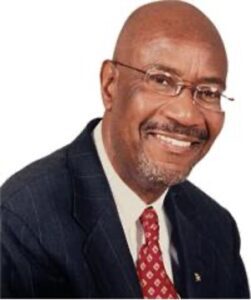
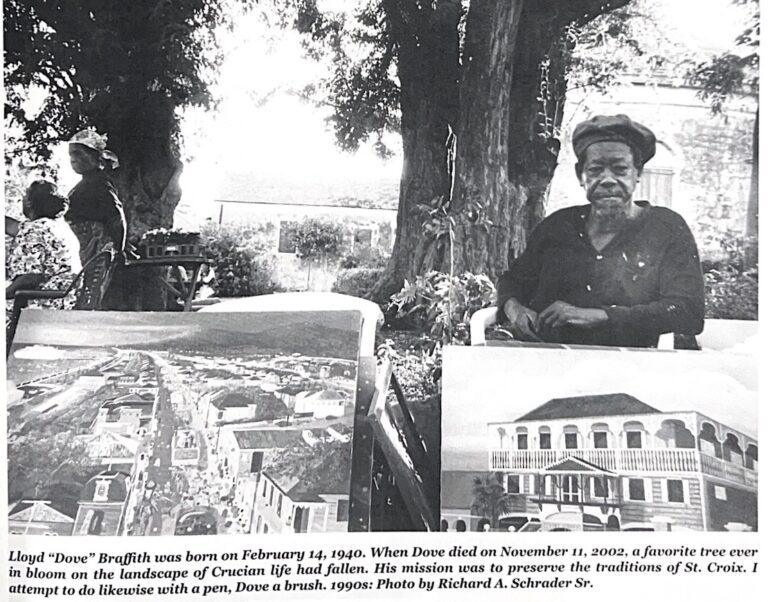
 few of Richard A. Schrader, Sr. ‘s published literary works. (Photo collage by Enrique Corneiro.)
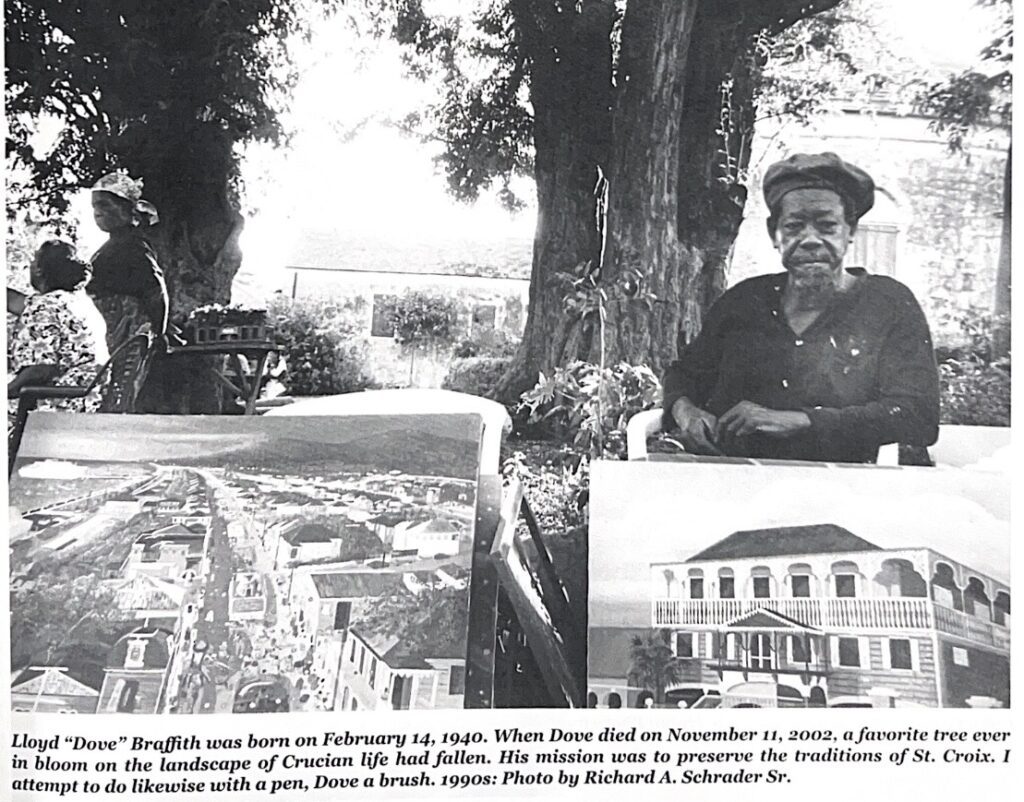
Schrader was a living, breathing vessel of wisdom. Through the publication of more than twenty-nine books on Virgin Islands history and culture, readers were privileged to enter the gobi of his time, immersing themselves in the tales of the “Good Old Taman” while nourishing their souls with seeds of oral traditional stories. It is especially the youth who gravitate to Schrader’s work, amazed by the historic facts his poems contain and the stories written in old Crucian dialect almost lost in passages of history. Schrader was like an archeologist excavating traditions of old and shining a light on legacies that should be told. He was a cultural preservationist who won the 1994 Humanist of the Year Award, an honor he proudly embraced.
In July of 2016, after the emancipation celebration at Fort Frederik in Freedom City, Frederiksted, Schrader spoke with me. He had just finished delivering his remarkable poem “Eighteen Forty-Eight” that depicts the legacy of the July 3 Emancipation of the Danish West Indies led by “Buddhoe the Star.”
few of Richard A. Schrader, Sr. ‘s published literary works. (Photo collage by Enrique Corneiro.)
Schrader was a living, breathing vessel of wisdom. Through the publication of more than twenty-nine books on Virgin Islands history and culture, readers were privileged to enter the gobi of his time, immersing themselves in the tales of the “Good Old Taman” while nourishing their souls with seeds of oral traditional stories. It is especially the youth who gravitate to Schrader’s work, amazed by the historic facts his poems contain and the stories written in old Crucian dialect almost lost in passages of history. Schrader was like an archeologist excavating traditions of old and shining a light on legacies that should be told. He was a cultural preservationist who won the 1994 Humanist of the Year Award, an honor he proudly embraced.
In July of 2016, after the emancipation celebration at Fort Frederik in Freedom City, Frederiksted, Schrader spoke with me. He had just finished delivering his remarkable poem “Eighteen Forty-Eight” that depicts the legacy of the July 3 Emancipation of the Danish West Indies led by “Buddhoe the Star.”