


St. Thomas Gas Station Shooting Claims 26-Year-Old Life

A man was shot dead Saturday evening at a gas station on St. Thomas, the V.I. Police Department reported.
The victim was identified as 26-year-old Venquon N. Richardson. He is the territory’s 27th homicide and the 17th on St. Thomas according to the Source Homicide List.* St. Croix has reported 10 homicides and St. John, none.
At approximately 8:35 p.m., 911 received a call reporting multiple gunshots fired in the Bovoni area. Police officers responded to Gas Works in Bovoni and discovered Richardson lying on the ground unresponsive, with what appeared to be multiple gunshot wounds to his body. Emergency Medical Technicians at the scene confirmed that Richardson had no vital signs, according to the police report.
Anyone with information about this crime can contact 911, the Major Crimes Unit at 340-642-8449, or Crime Stoppers at 800-222-8476 (TIPS).
*The Source Homicide List is a chronological log of the homicides recorded in 2024 in the U.S. Virgin Islands, as reported by the VIPD. Cases are broken down by island. While this listing is based on VIPD reports, the Source does not include suicides or vehicular homicides in its listing, which the police and some other media do. This can lead to a discrepancy in the number of incidents reported.
Weekly Weather Forecast With Jesse Daley
Check out our weekly weather forecast with Jesse Daley, covering Sunday, Oct. 20, through Saturday, Oct. 26. Our YouTube playlist is updated every week, AND check out Jesse’s daily weather updates here.
Army Corps Reviews Plan for Floating Dock in Cruz Bay; Public Has Until Friday to Respond
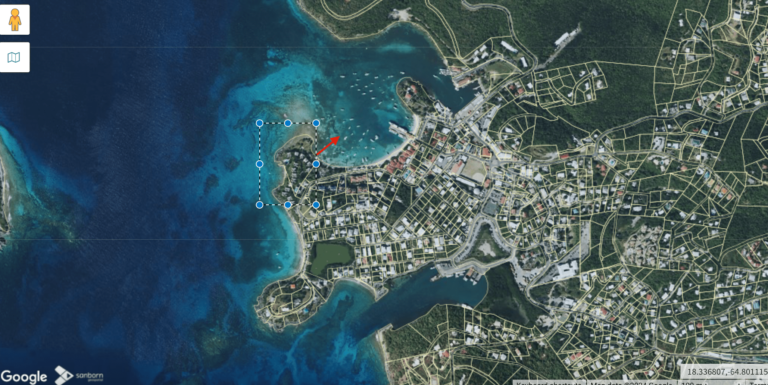
Gallows Point Resort in Cruz Bay has applied to the U.S. Army Corps of Engineers (USACE) to install a 96-foot floating dock in Cruz Bay to “provide safe access for boating and water-based recreational activities for owners and guests at Gallows Point Resort,” according to an announcement posted by the Army Corps on Sept. 25.
The plan calls for the installation of a 4-foot-wide dock (with a total area of 384 square feet) made of open-grated decking set in an aluminum frame on pontoons. “The dock would extend offshore to approximately 3.5 ft of water and would be used for small dinghies, sailboats, kayaks, and paddle boards,” the announcement states.
The public has until Friday to submit comments to USACE. Comments regarding the project – permit number SAJ-2024-01176 (SP-KMU) – may be sent to the attention of the district engineer through Karen Urelius, project manager, Antilles Permits Section at karen.m.urelius@usace.army.mil. Questions concerning this application should be directed to Urelius at karen.m.urelius@usace.army.mil or by calling 787-370-8359.
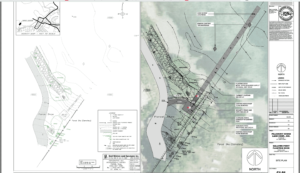
The proposed dock will be held in place in the water by six sand screws, and “the landward end of the dock would attach to a concrete platform with stairs….constructed landward of the high tide line.”
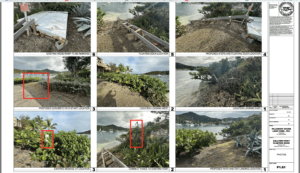
According to the announcement, the dock will be located in Galge Bay on the northeastern portion of the resort. The graphics provided indicate that the site is just inland of the reef on the western side of Cruz Bay.
Akhil Deshwal, manager of Gallows Point Resort, did not respond to messages left by the Source to clarify the dock’s location and use.
According to the Army Corps notice, “the dock will be placed in an area devoid of corals and native seagrass.” Cruz Bay includes the public ferry dock and is one of four bays on St. John where anchoring is permitted. It has been a site of continuous marine activity for decades.
It’s unclear whether the dock’s location will affect moorings that are currently in use as well as possible anchoring sites in Cruz Bay. The notice states, “Two mooring buoys in the bay and a wooden ramp on the shoreline would be removed prior to installation of the dock.”
It’s also unclear whether the Coastal Zone Commission will hold a public hearing about the project. “A floating dock attached to mooring anchors probably does not require a CZM permit,” said David Silverman, a former CZM commissioner. “It is like a boat attached to an anchor. In practice, it would be up to the discretion of the Department of Planning and Natural Resources.”
The project’s land portion, including the platform with steps, would require a minor CZM permit but would not automatically trigger a public hearing if its costs were less than $75,000, Silverman continued.
Members of the public may request that the Army Corps conduct a public hearing to review the project, but “The request must be submitted in writing to the District Engineer within the designated comment period of the notice and must state the specific reasons for requesting the public hearing,” the notice states.
Sailor From Virgin Islands Builds on ‘Seabees’ 82-Year Legacy
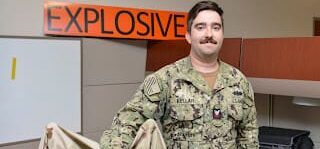
1st Class Jeffrey Yale)
Eighty-two years ago, members of Navy Construction Battalions were fittingly nicknamed “Seabees,” a play on the C and B initials. They are responsible for building military bases and airfields, supporting humanitarian efforts and conducting underwater construction projects. The Seabees’ motto is “We Build, We Fight.”
Kellar is an equipment operator currently serving with Naval Construction Group 2 at the headquarters for naval construction forces in Gulfport, Miss., which serves as a home base for the Atlantic Fleet Seabees.
Kellar, who graduated from the Virgin Islands Montessori School and Peter Gruber International Academy in 2014, joined the Navy seven years ago.
“I knew I always wanted to serve in the military in some capacity even with most of my classmates certain on attending college,” said Kellar. “By joining, it has allowed me to experience and view the world through a unique lens. Additionally, being a Seabee has allowed me to learn meaningful and useful skills, as well as gain experience in leadership and discipline.”
The skills and values needed to succeed in the Navy are similar to those found in the Virgin Islands.
“At age 12, I had moved from Seward, Alaska, to St. Thomas, Virgin Islands, over the summer,” said Kellar. “This was, to say the least, quite the culture shock. Growing up in both of these places, you had to learn to go without the luxuries we take advantage of in the rest of the United States. The lesson to improve your situation, even when times are difficult, is one I carry with me even today.”
With 90 percent of global commerce traveling by sea and access to the internet relying on the security of undersea fiber optic cables, Navy officials continue to emphasize that the prosperity of the United States is directly linked to recruiting and retaining talented people from across the rich fabric of America.
Kellar serves a Navy that operates far forward, around the world, and around the clock, promoting the nation’s prosperity and security.
“We will earn and reinforce the trust and confidence of the American people every day,” said Adm. Lisa Franchetti, chief of naval operations. “Together we will deliver the Navy the nation needs.”
Kellar has had many opportunities to achieve accomplishments during his military service.
“I am most proud of my personal growth in leadership,” said Kellar.
Kellar can take pride in serving America through military service.
“Serving in the Navy has given me a sense of personal accomplishment through the last seven and half years,” said Kellar. “While previously serving at Naval Mobile Construction Battalion 11, I had deployed numerous times and got to experience a myriad of different cultures.”
Kellar is grateful to others for helping make a Navy career possible.
“I would like to thank my father, Robert Kellar, for the life lessons he has taught me that I will take with me for the rest of my life,” added Kellar. “I also want to thank Steven Stevenson, my high school English teacher, who went above and beyond to make his classroom a great place to learn in.”
Op-Ed: It is High Time to Protect Our Trees in the USVI
It was at the Paul M. Pearson Gardens housing community on St. Thomas when I heard that a rubber tree was cut down because young men were smoking kaya under the tree. In other words, they were smoking marijuana. Do you think by cutting down a tree it solves our problems with marijuana smoking in the Virgin Islands? You tell me. I was in grammar school when this stupidity of cutting down a tree happened. You would think in this day and age we would get our act together and understand that trees are our friends and not our enemies.
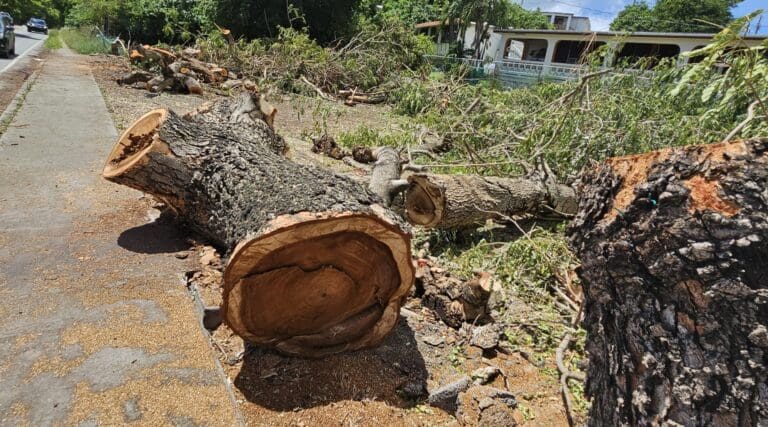
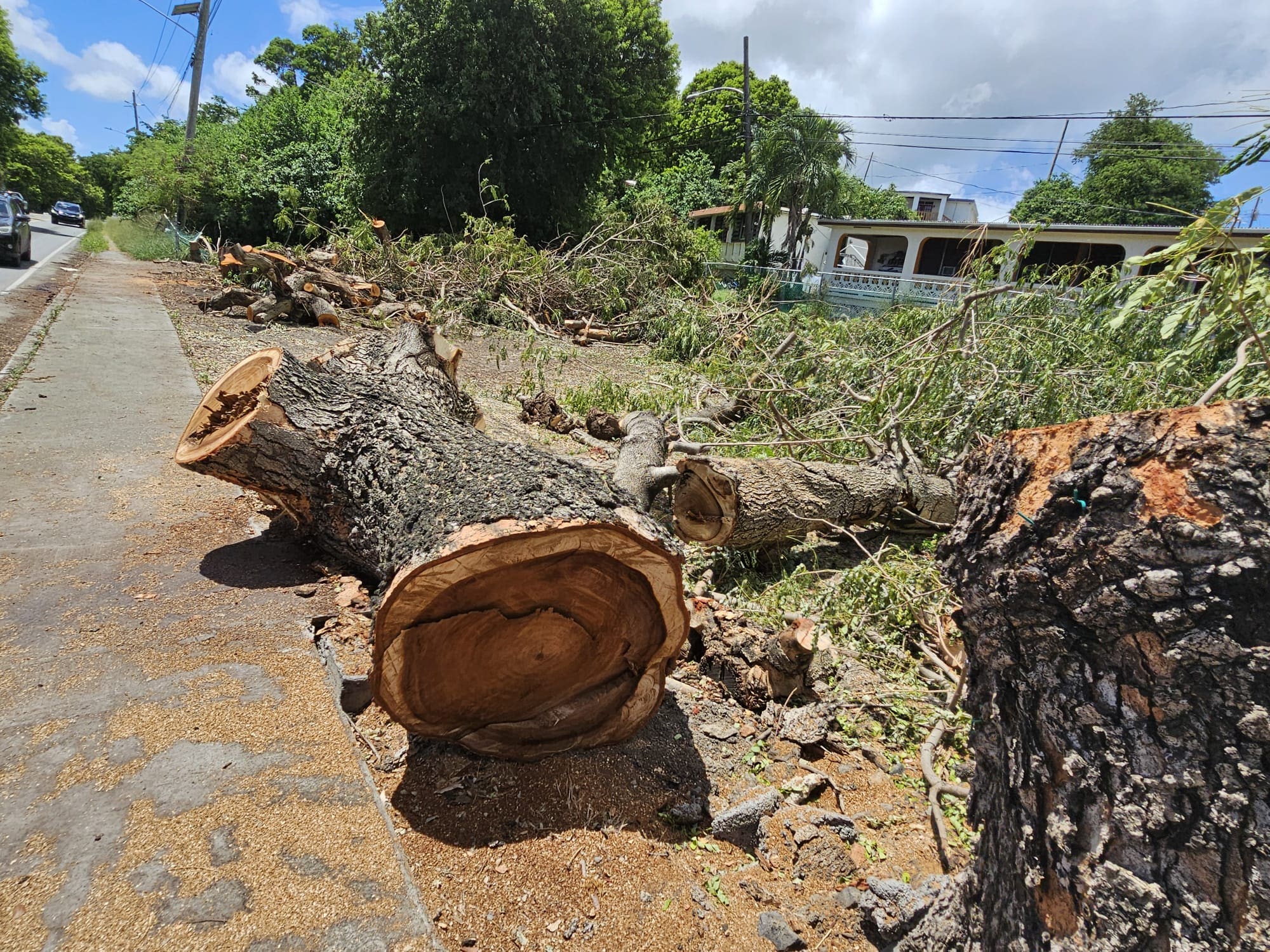
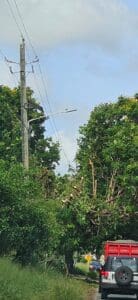
After Tropical Storm Ernesto passed across the Virgin Islands in August, it was brought to my attention that some public roadside trees on St. Croix were indiscriminately butchered like chop meat for the market. You know what the excuse I was told? The trees might catch afire with the wires of the poles. These trees across from the old H&H Tire Company on Queen Mary Highway have been there for donkey years. They were there when Hurricane Hugo impacted the Virgin Islands in 1989, especially the island of St. Croix, and as recent as the Ernesto storm of this year.
I am not a person by nature who complains. I like to see things get done properly where the community benefits. It started over 30 years ago when I came home from graduate school. I saw the trees on Queen Mary Highway needed care and attention. Believe me, trees on the highways and public roads of the Virgin Islands can become hazards to the general public, especially with dead hanging branches, cavities or rotten wood of the trunk, and mechanical injuries done by vehicles and poles where wires ran through them if not pruned properly.
Anyway, I took the initiative by asking different government agencies, such as the Department of Agriculture, Public Works and Planning and Natural Resources, who are responsible for the maintenance of trees along our public roads. I never got a straight answer. Nobody seems to be responsible for public trees along our highways and roads. About two years later, after my investigation as to who is responsible for our roadside trees, the late Gov. Alexander A. Farrelly called me to ask if I was willing to serve on the newly established Urban Forestry Board Council of the Virgin Islands.
I said, “Sure Governor, anything to help my Virgin Islands community.” On the urban forestry board, there were representatives from government agencies such as WAPA, Public Works, administrators from each island’s district, and individuals from the community, which included private companies. I believe the tree board had 16 members. We had an urban forest coordinator who managed the Virgin Islands community’s urban forestry program and worked in conjunction with the USDA Forest Service International Institute of Tropical Forestry of Puerto Rico.
I won’t go into all the details of operation of the forestry council in the Virgin Islands and Puerto Rico. However, one of our greatest accomplishments was getting a law passed to protect trees of the Virgin Islands. It took us, the Urban Forestry Board, about 20 years or more to get a law in place with all the political headache and the necessary mechanics of having something in place for managing trees properly in an urban community setting like the Virgin Islands.
In fact, a representative from WAPA, who is also a member of the forestry board, testified at the public hearing in support of passing the law to protect trees in the Virgin Islands. In 2019, Bill No. 32-0062, “The Community and Heritage Tree Law of the Virgin Islands,” was signed into law by Gov. Albert Bryan Jr. Therefore, unless an individual or entity of the government such as WAPA has an approved permit from the Virgin Islands Department of Agriculture, it is considered an offense to cause any destruction to or take any portion of a public tree, and it is punishable by law.
This tree law is supposed to be enforced by the Virgin Islands Department of Agriculture. And if the department needs assistance enforcing the tree law, they can request it from the Department of Planning and Natural Resources. No one in the Virgin Islands, including government agencies, has the authority to cut down public trees along our public highways and roads without going through the proper procedures.
In the past, the School of Agriculture of UVI, the USDA Forest Service International Institute of Tropical Forestry of Puerto Rico, and other entities such as the International Society of Arboriculture (ISA) have conducted many trainings for individuals, private companies, and government agencies that are interested in the proper management of trees in the Virgin Islands. Once you pass the written and physical training of the tree biology test, individuals can be certified as an arborist. An arborist should be present at all times when trees are being pruned, removed, etc.
There is a right way to prune trees that wouldn’t interfere with pole wires. Too often, I have seen poles planted right next to trees. And late on, the tree was blamed for interfering with the wires of the poles. I have seen also trees planted on the public roads which shouldn’t be planted there. However, at times there might be an emergency where a tree needs to be removed, which requires an arborist assessment before any action can take place.
Nevertheless, there is a proper channel where everybody needs to be on the same page. Whenever a tree is removed, according to the law, it needs to be replaced. Thus, to remove roadside trees in the Virgin Islands, a permit must be obtained by the Department of Agriculture whether for pruning or removal, and they must follow the guidelines and the best management practices.
Preston H. Brooks, a certified arborist and coordinator for the Virgin Islands Urban Community Forestry Program and employed by the Department of Agriculture, paid by the federal government not local government, is the person to contact about trees, especially roadside trees. WAPA or any other government agencies, private companies, or individuals should contact Mr. Brooks for professional training of urban forestry. His email address is preston.brooks.ctr@doa.vi.gov and his phone number is 340-778-0997, ext. 3314, or 340 208-9635.
It is high time we protect our trees instead of cutting them down and complaining that the island is hot. Trees are our best friends who help keep our islands cool from global warming.
— Olasee Davis is a bush professor who lectures and writes about the culture, history, ecology and environment of the Virgin Islands when he is not leading hiking tours of the wild places and spaces of St. Croix and beyond.
The Fish Fry | Episode 8: Rudel Hodge, Jr.
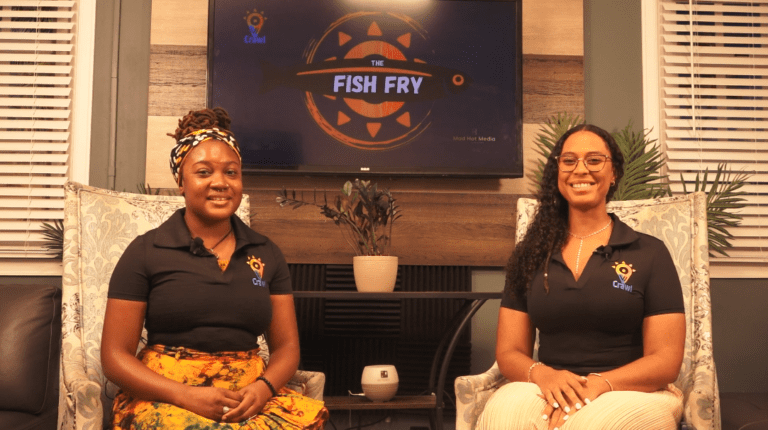
Our first candidate for Constitutional Convention delegate! Rudel Hodge, Jr. explains just how critical this position is and what he hopes to accomplish – hear more on this episode of The Fish Fry. The Fish Fry is produced by VI Crawl, powered by Mad Hot Media and the VI Source – there’s always something new!
Meet the Candidates | Dwayne M. DeGraff
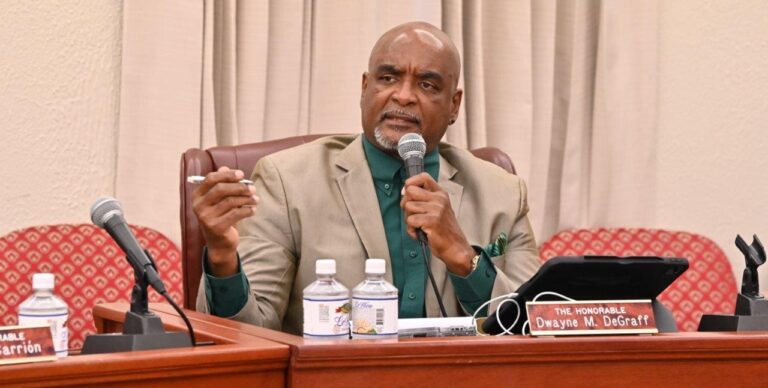
As we gear up for the 2024 Senate elections, it’s crucial to know where each candidate stands on issues that matter most to our community. To keep you informed, The Source has compiled a list of key questions on pressing topics affecting the Virgin Islands. The answers below are from incumbent St. Thomas-St. John District Sen. Dwayne M. DeGraff:
Why are you running for office, what are your qualifications, and why should voters choose you?
As a current sitting senator, I am running for office to continue to serve the people of the territory. I have been a committed public servant for 40-plus years to include 26 years as a police officer and retired as a Deputy Chief. I also served 22-plus years with the Army National Guard where I spent one year in Baghdad, Iraq at war, returned home, and was honorably discharged. My entire personal and professional life has been engaged in selfless service and leadership in the community.
How would you address the high cost of living in the territory and the lack of affordable housing?
We can address the high cost of living through the establishment of new industries. We should consider marketing the territory by attracting new companies to manufacture goods and services that are necessary for the territory. This would bring about diversity and create choices. As it relates to affordable housing, we should consider evaluating existing properties to allow for container homes or incentivizing the current housing stock by providing tax incentive for items such as building homes for disability access or energy efficiency.
How would you improve the territory’s electrical grid and implementation of renewable energy?
To improve the energy grid, we need to diversify the grid with more renewable options; for example, expanding the use of wind, solar, and hydro energy methods. Implementation of renewable energy can be accomplished by establishing legislation to encourage more companies to create availability and access.
What would you do to expedite or improve the territory’s disaster recovery, which has dragged on for seven years now?
In order to expedite or improve the territory’s disaster recovery, I would seek monthly updates and/or reports from the executive branch and collaborate with the Delegate to get the federal funds moved on a more expedited basis.
What reforms would you propose to ensure our children are receiving the public education that they deserve?
In addition to boosting the free tuition program, we should consider legislation to create a collaborative nexus between the Department of Education, the Board of Education, and the University of the Virgin Islands. This would create a link between what is expected of our children from the elementary level to the post-secondary level.
What are your solutions to address violent crime in the territory, especially among young men?
Some solutions that can address violent crime are to enact legislation establishing mandatory conflict resolution classes in our schools, expansion of the gun-buy-back program, and the implementation of one of my enacted legislations, Act #8547, which prohibits the use of ghost guns in the territory as well as requiring the declaration of firearm components entering the territory.
How can the territory improve upon its tourism product while addressing growing concerns about over-tourism? Are we too reliant on cruise tourism and what can be done to bring more overnight visitors?
We should consider augmenting our tourist product by focusing more on sports tourism. Creating annual tournaments in soccer, cricket and horse-racing would generate overnight visitors. More athletic tournaments can attract not only persons from the United States, but persons from the neighboring Caribbean and international visitors. I do not believe we are overly reliant on cruise tourism as that is seasonal.
What would you propose to better support people dealing with mental illness, alcoholism, addiction, and homelessness?
Sadly, since the pandemic, these issues have increased throughout the United States and the territory. Coincidently, mental illness, alcoholism, addiction, and homelessness can be corresponding issues. We have been awarded millions of federal dollars to support these issues. I believe we need to continue to financially support our non-profit agencies, the Department of Human Services, and the Department of Health to reach those in need.
What plans do you have to re-establish the libraries in the territory?
This very important issue is community affecting. We need to support any local and federal revenues by reopening and maintaining all libraries. We also need to consider redesigning the traditional library. We should consider designing libraries that can be virtually accessed, to include the use of artificial intelligence.
How can we provide access to affordable healthcare for individuals and small businesses?
Collaborate with our Delegate and the executive branch to revisit access through the Affordable Care Act. We should also consider incentivizing health care companies to come to the territory to diversify our local insurance industry. Greater access and availability will drive down cost.
Please tell us about any of your other priorities for the territory that are not addressed in the questions above.
I have always advocated for those that are most vulnerable in our territory — our seniors, our veterans, and our disabled. First, on my immediate radar is establishing senior facilities, one in each district that will house independent and geriatric persons. Finally, in accordance with Act 8650, I am awaiting the final rendering and building of a veteran’s multipurpose center that will provide an all-purpose venue for veteran services.
And finally, if you could have one superpower to move the V.I. forward, what would it be and why?
If I had a superpower, it would be a mind-controller. I would use my superpower to bring peace around the world. Peace is globally affecting. I would also use it to influence the decision to increase the rum cover-over funds, to receive all past due and future monies from the gasoline taxes, create an overall territorial master plan to maintain unification of the territory, to provide housing, health, and financial access for all.
Meet the Candidates | Margaret Price
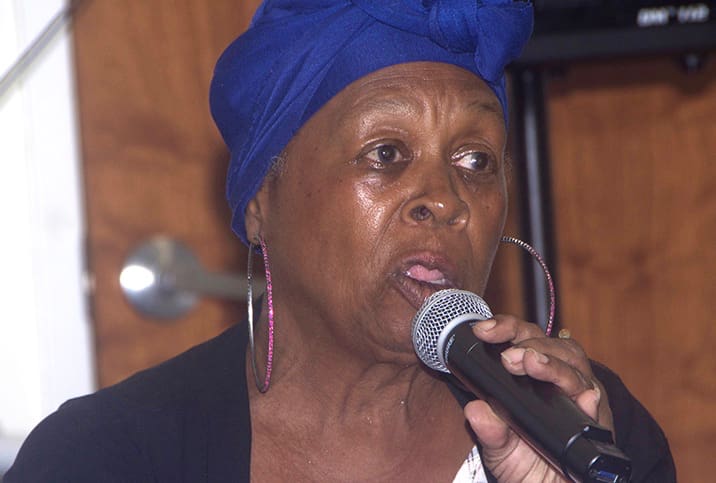
As we gear up for the 2024 Senate elections, it’s crucial to know where each candidate stands on issues that matter most to our community. To keep you informed, The Source has compiled a list of key questions on pressing topics affecting the Virgin Islands. The answers below are from St. Thomas-St. John District candidate Margaret Price:
Why are you running for office, what are your qualifications, and why should voters choose you?
I am running for office because I want to help those who live here by letting them know that all is not lost and to give them hope of having the territory returned back to a sense of normalcy. My qualifications include a background in the health and educational industry. I also have a Juris Doctorate of law. Voters should elect me because I care about them and the territory and want to make a difference.
How would you address the high cost of living in the territory and the lack of affordable housing?
The high cost of living is like a plague, especially for the elderly and those living in poverty. As a result, I would engage and encourage my colleagues in a fact-finding mission to come up with solutions and available funding that would be able to give out a yearly cost of living increase. Affordable housing, although an issue at the present, would and could actually be solved by first finding suitable land and then funding would come from a portion of the millions of dollars the Virgin Islands received from FEMA and other sources.
What would you do to expedite or improve the territory’s disaster recovery, which has dragged on for seven years now?
In order to improve the territory’s disaster recovery plan, outside companies and businesses that have a positive track record can be sought to help out and be held accountable from start to finish.
What reforms would you propose to ensure our children are receiving the public education that they deserve?
Our schools know that the education the youths are receiving is inadequate. The Commissioner of Education should appoint a qualified staff who have a strong educational background and skills to write an educational curriculum that meets the standards of quality education that will benefit the students.
What are your solutions to address violent crime in the territory, especially among young men?
In order to address violent crimes in the territory, especially amongst the young men, we must address the fact that we’re living in a lawless territory. Corruption along with lack of respect especially when it comes to human lives plays a role. There should be a gang unit within the VIPD that can address and red flag youths presenting problems as well as mentoring programs. Schools should have classes on conflict resolution. Last, but not least, parents should know their children(s) whereabouts and who their friends are.
How can the territory improve upon its tourism product while addressing growing concerns about over-tourism? Are we too reliant on cruise tourism and what can be done to bring more overnight visitors?
I believe that if we had an international airport, 90 percent of the problems would be solved. Remember, an international airport would bring in business and businesses attract tourists who follow the money. Which would in turn have tourists wanting to stay overnight because some of the businesses would have what it takes to attract tourists.
What would you propose to better support people dealing with mental illness, alcoholism, addiction, and homelessness?
We actually need a mental health facility. Housing out those with such illnesses to the mainland or putting them in jail by no means solves the problem. There’s all sorts of funding available. Why not rehab the old Michelle hotel?
What plans do you have to reestablish the libraries in the territory?
Libraries can be utilized and established when Senators decide that they are necessary and a priority. Until decent schools are built with libraries, utilize the traveling libraries. Have a modular library in a centralized location for the use of not only students but everyone.
How can we provide access to affordable healthcare for individuals and small businesses? Why is it that the V.I., although a territory, is still a part of America. So why has the Delagate to Congress not addressed this issue? Why can’t the territory have Obama care?Please tell us about any of your other priorities for the territory that are not addressed in the questions above.
Global warming is very serious all over the world. Senators and the governor need to revisit the global warming plan that former Gov. Mapp had in place. Cooling shelters are also needed throughout the territory.
And finally, if you could have one superpower to move the V.I. forward, what would it be and why?
If I had one superpower, it would be to rid the territory of corruption. Corruption breaks down the very fabric of the community. Look at the condition of the roads, increase in crime, lack of affordable housing, poverty, high crime rate, increase in the price of food, yet no cost of living raises, disrespect for our elders, inadequate education, lack of medical insurance coverage, etc. We know that we have these problems but we need to come together and find solutions. One of the best solutions is to eradicate corruption which causes the problems and to start holding those in office accountable.
Supervisor of Elections Sues Board of Elections Over Disqualified Candidate, Highlighting Broader Residency Debate
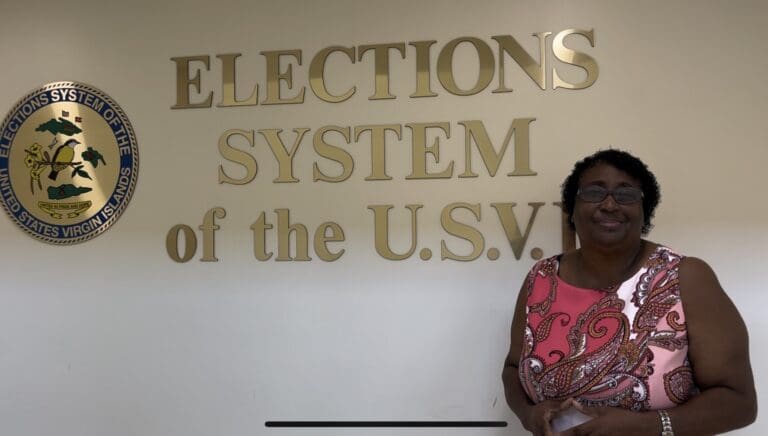
Supervisor of Elections Caroline Fawkes has officially filed suit against the V.I. Board of Elections, challenging its decision to reinstate disqualified candidate Ida Smith on the ballot for delegate to the U.S. House of Representatives. The legal action not only questions the board’s authority but also highlights a longstanding issue in the territory: the lack of clarity around residency terms like “inhabitant” and “resident.”
This ambiguity, some argue, could be resolved with the adoption of a territorial constitution, which has been debated for years.
Fawkes’ lawsuit, filed on Oct. 17 in the Superior Court of the Virgin Islands, seeks a temporary restraining order and an injunction to block Smith’s inclusion on the ballot. According to Fawkes, Smith was disqualified in June for failing to meet residency requirements, specifically for not submitting a tax return transcript by the June 10 deadline. Fawkes cited 18 V.I.C. §411, which grants the supervisor of Elections sole authority to determine a candidate’s qualifications. She argued that Smith’s failure to provide the necessary documentation was sufficient to remove her from the race.
Despite this, the Board of Elections, led by members Raymond J. Williams and Epiphane Joseph, voted on Sept. 4 to reinstate Smith, reversing Fawkes’ decision. In her lawsuit, Fawkes contends that this move was beyond the board’s legal authority, as determining whether a candidate meets the legal requirements falls solely under the supervisor of Elections’ jurisdiction. Fawkes is asking the court to declare the board’s actions illegal and reaffirm the power of her office in deciding candidate eligibility.
The legal dispute centers on residency requirements, an issue that has come up repeatedly in the Virgin Islands’ election system. Smith’s disqualification was based on her inability to prove that she met the residency standards required to run for delegate. However, broader questions about what it means to be a “resident” or “inhabitant” could still be seen as unclear, and without solid discussion and definitions, confusion and disputes – particularly in elections – could continue.
Framing the issue in a bigger context, Malik Sekou, director of the University of the Virgin Islands’ Office on Self Determination and Constitutional Development, said that the lack of an official constitution exacerbates this ambiguity. He noted that a constitution would provide a clear framework for interpreting key legal terms like “native,” “ancestral native,” “resident,” and “inhabitant,” which have been used interchangeably in the past, often without clear legal distinction.
“An official constitution would clarify what these terms mean in the context of the Virgin Islands,” Sekou said on Friday. “But it also needs to have the support of the public. We can’t just impose definitions, especially when they’re tied to special privileges, which has been a major issue in past constitutional conventions.”
The Virgin Islands has held five constitutional conventions to date, none of which have produced an approved document. On this year’s ballot, voters will elect delegates for a sixth constitutional convention, which will aim to draft a document that could finally address these lingering questions. The convention could also seek to resolve issues surrounding residency requirements and other legal gray areas that have plagued the territory for years.
Sekou acknowledged that defining these terms is a sensitive issue, particularly because of their historical ties to special rights and privileges. Still, he emphasized that clear definitions are essential to prevent future disputes, like the one currently unfolding between Fawkes and the Board of Elections.
“It’s important for these terms to be defined in a way that everyone understands so we can avoid the back-and-forth we’re seeing now,” Sekou added. “But there has to be a clear consensus.”
Smith’s case is just the latest in a series of challenges highlighting the need for clarity in election law, which Fawkes maintains that she followed when disqualifying Smith and that, instead, the board’s intervention is both improper and unlawful.
WICO Board Shares Minor Growth Expected for Cruise Ships Projection in 2025
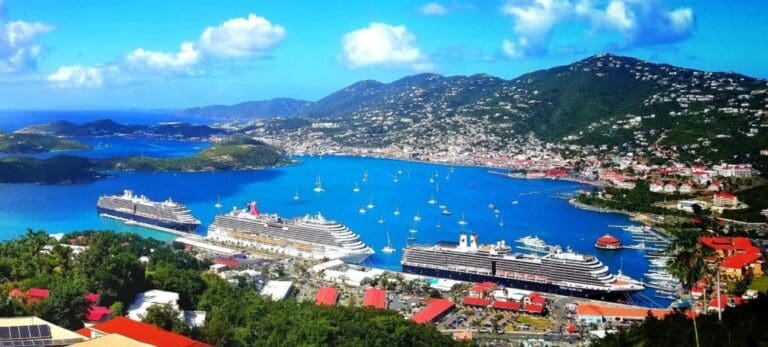
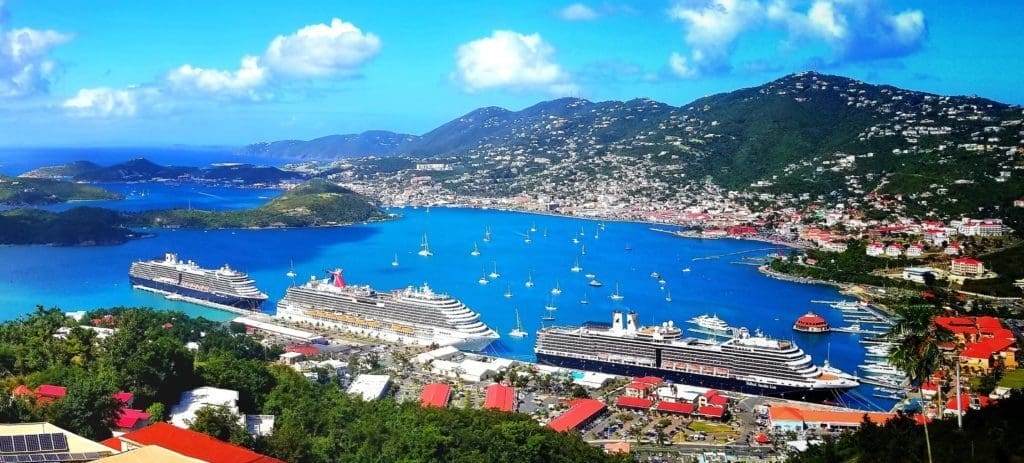
On Friday, the West Indian Company held a board meeting to share updates on the territory’s cruising industry and its projections for the 2025 season.
According to Anthony Ottley, chief executive officer, the WICO port is projected to have 288 ship calls in 2025, bringing over one million passengers to St. Thomas.
“These numbers slightly fluctuate depending on the increase or decrease in ship calls,” said Ottley. “Prior to COVID our numbers were between 1.1 to 1.2 million passengers.”
In 2024, WICO received 283 calls with 988,862 passengers. On average, the chief executive officer said each passenger spends between $145-160 once in the territory.
Board members inquired about how to increase cruise visits to the territory, to which Ottley replied that continued conversations with cruise line partners would allow the territory to see an increase in the cruising industry.
“In actuality, we have conversations in our next cruise conference where I’m meeting with cruise lines out of the UK to see if we can get more cruise lines to come to our shores that originate in Barbados or Martinique that may have customs and border challenges,” Ottley replied.
He added that there has been significant growth in the region of smaller boutique ships but also hinted that the decline in cruising to the territory can be related to the availability of other ports that have opened since closing during the COVID-19 pandemic.
“We‘re at the space two years later where the other destinations in the Caribbean are fully open, open for business, and that’s where you see a little bit more thinning,” said Ottley, referencing the slight decline of ships post-pandemic. But he noted that this is more in reference to the Norwegian cruise line.
Board member Pash Daswani questioned Ottley about the days of the week when cruise ships are more scarce.
“What did we do to fill the off days at WICO, for example, Thursday, Friday, Saturday is usually a slow day. And what are we doing to attract a 10-12 day ship,” asked Daswani.
Ottley replied that support of other port sites would facilitate an increase in cruising for the territory and could alleviate the scarcity. He highlighted that once Puerto Rico becomes “more robust in their home porting,” more visits will be pipelined.
“We have ships coming out of Puerto Rico that visit us on the next day,” said Ottley. “You have most of the cruise lines starting their seven-day cruise during the weekend. So once we could get that solidified in Puerto Rico, I think one of the challenges that they have is of course you have to get airfare into Puerto Rico.”
Ottley also mentioned that in the coming ten years, multiple ships will be built across the major cruise lines that can visit the territory. He noted, however, that limited berthing space could pose a challenge.
“We are having conversations with all the major lines so that we can figure out how we can accommodate as much ships as possible with the limited berthing that we do have,” Ottley said.
In other news, unconfirmed reports indicate that Ottley has stepped down from his position as chief executive officer. Despite multiple attempts by The Source to confirm the information, including outreach to Ottley, Board Chairman Jason Charles, and other staff members, no responses were provided. The potential resignation was not addressed during the meeting, and Charles declined to comment both before and after the session, though the board did issue a release Friday night saying that “personnel matters” were among the items addressed in executive session.
Further, ongoing construction projects are in the works for WICO, such as a water pipe replacement project, warehouse replacement project, and buoy and fender replacements. The board is also looking forward to the upcoming Charlotte Amalie Harbor dredging project.
Ananta Pancham contributed to this report.