Lucia A. Sackey of estate Mon Bijou transitioned into eternal life on March 4, 2026.She was preceded in death by her father, Louis J. Sackey, Sr.; Mother, Clementina (Clementia) Fahie-Milliner-Sackey; Brothers, Camile, Emile & Leroy Sackey; Grandchild, Kysian Nicholas.
She is survived by her daughters, Kysha M.M. Drummond & Kairstin “Kacy” Roberts; Daughter She Raised, Keema Drummond; Brothers, Lionel, Leander, Sr., Louis, Jr., & Tyrone Sackey; Sisters, Caroline Sackey-Lawrence, Louise Sackey-Johnson and Laverne Browne; Adopted Sisters, Omah Adams, Alicia Barnes, Vanessa Yarwood, & Dawn Petersen; Grandchildren, Randall Rising, Jr., Raheem, Isis, & Des’Tiny Ivy; Great Grandchildren, Ky’Lai & Ky’Nan Nicholas, & Vaeda Ivy; Granddaughter in law, Monet Lewis; Nephews, Aarol Charlemagne, Charles Wadsworth, Jr., Houston Pettway, D’Andre, D’Ante & Donnie Johnson-Sackey, Leander, Jr., LeAndre’, Leroy, II, Jahroy, Vernon Sackey, Sr.Vernon Sackey, Jr., Taheim Sackey; Nieces, Makaila Sackey-Gray, Caronique Cromwell, Amanda Sackey, Anna Sackey-Camacho, Alice Sackey, Verna Sackey and Desiree Sackey, Meagan Sackey, Khadishma Albert, Tenisha & Tyesha Sackey, Tremaine Creighton, & Dr. Carla Bastian-Knight; Cousins, Byron, Allick, Milligan, Sackey, Fahie, Milliner, Crabbe & McIntosh families; God Children, Benson Ward, Sanya Faith Joseph, Michael DeLande, & Ohdani Joseph; Special Friends, Rosie Mackay, Willis C. Todmann, Maureen Simmonds, Brenda Bastian, Suzette Bough-James, Coleen Hodge, Irma George, Gwen Pelle, Lisarose Bough, Blanca Maldonado, Paulette Edwards, & Valderia Miller; Close Family Friends, Mr. & Mrs. Clefryn DeLande & Family, Mr. & Mrs. Cornell Creighton & Family, Norma Barnes & Family, Mr. & Mrs. Okemo Felix, Halvor E. Hart, III, Thelma Christopher & Family, Andrea E, Christian & Family, Merline Felicien, Magnolia Paul, Patricia Gomes, Kenneth Henderson, Karen Blake & family, Friends from Prince Street & Whim Frederiksted, St. Joseph Class of 1973, Martin Marietta Aluminum Family, Mon Bijou Community, First Assembly of God Church Family & other family and friends too numerous to mention.
Funeral service will be held on Thursday, April 9 at First Assembly of God Church, #4 ABC Fisher & Queen Cross Street, Christiansted. Viewing will begin at 9 a.m. with service at 10 a.m. Interment will follow at Kingshill Cemetery.
Professional arrangements are entrusted to James Memorial Funeral Home, Inc.
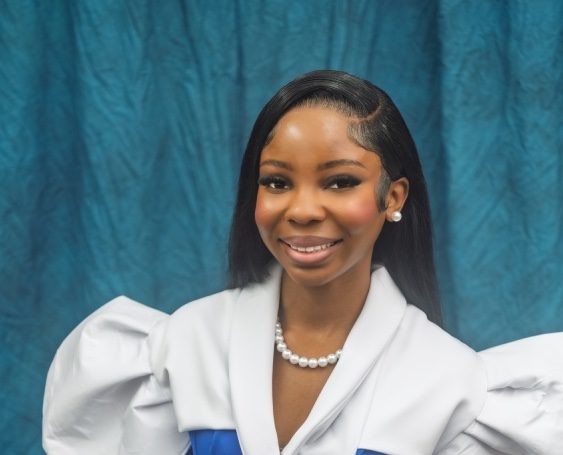
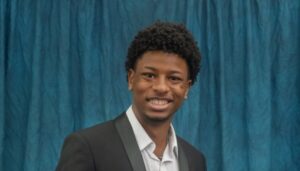
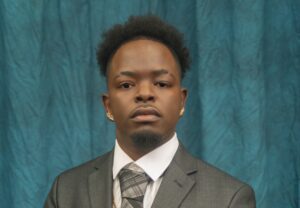
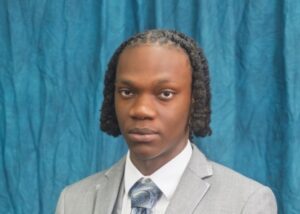
The University of the Virgin Islands will present four outstanding student leaders—Kavone Wyatt, Micah Crawford, Micah McCants, and Ja’Herah Chelcher—as they compete in the 2026–2027 Mister and Miss UVI Ambassadorship Competition on Saturday, April 4, at 6 p.m. at the Elridge W. Blake Sports and Fitness Center on the Orville E. Kean Campus on St. Thomas.
Micah McCants
Hosted by the Student Government Association Ambassadorship Committee, this highly anticipated annual event celebrates student leadership, cultural pride, and academic excellence under the theme: “Crowned by Culture, Empowered for the World.”
The competition will feature outstanding student leaders vying for the prestigious titles of Mister and Miss UVI, serving as ambassadors of the University.
Kavone Wyatt
Three contestants—Kavone Wyatt, Micah Crawford, and Micah McCants—will compete for the title of Mister UVI, while Ja’Herah Chelcher is the sole contestant vying for the title of Miss UVI.
This year’s competition includes:
Kavone Wyatt (Contender #1) – an Applied Mathematics and Civil Engineering student whose platform, “UVI Excellence, Beyond Boundaries,” emphasizes student achievement and global impact
Micah Crawford (Contender #2) – a sophomore Social Sciences major focused on “Culture Restoration Through Education,” with aspirations in public service
Micah McCants (Contender #3) – a junior Music Education major whose platform, “Amplifying Young Black Voices Through Music,” centers on using music as a tool to uplift identity, build confidence, and create visibility for young Black creatives at UVI through performance, mentorship, and artistic collaboration
Micah Crawford
Vying for the title of Miss UVI (uncontested):
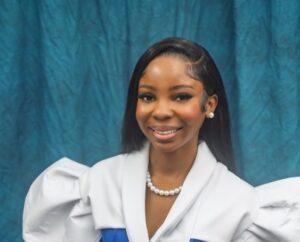
Ja’Herah Chelcher – a Biology major whose platform, “A Crown Creates: Where Creativity Becomes Community,” promotes innovation and community engagement
Throughout the competition, contestants will be evaluated on multiple categories including presentation, talent, cultural expression, intellect, and ambassadorial presence. The selected Mister and Miss UVI will represent the University at official functions, community engagements, and regional events throughout their reign.
“This competition reflects the very best of UVI—our students’ intellect, creativity, leadership, and deep connection to Caribbean culture,” said Jelani Smalls, Director of Student Life and Engagement. “Our ambassadors play a vital role in representing the University locally and globally.”
Ja’Herah Chelcher
Tickets are available in advance for $10 for students and $15 for faculty and staff with valid identification. General admission tickets are $20. Tickets may be purchased at the UVI Bookstore, the Student Activities Office, or at the door.
Tickets purchased at the door are $15 for students and $20 for faculty and staff with identification, and $25 for the general public.
The event is open to the University community and the public. Attendees can expect an evening of dynamic performances, inspiring platforms, and a celebration of Virgin Islands culture and excellence.
The Water and Power Authority experienced another trip while restoring customers. Plant personnel are working to restart the generator units to restore power in the shortest time possible.
I extend greetings to the entire Virgin Islands community in observance of Holy Week. The upcoming days are of great symbolic, historic, and religious significance, and provide families and friends throughout the territory the opportunity to engage in many local traditions.
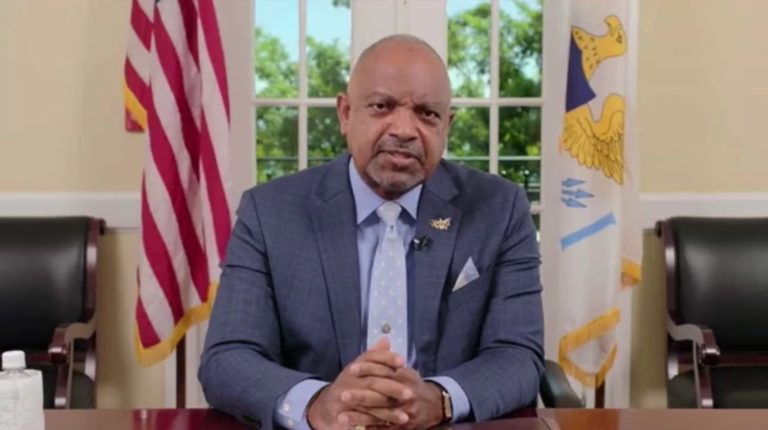
Lt. Gov. Tregenza Roach (Screenshot from V.I. Legislature livestream)
In reverence of Holy Thursday, Good Friday, Easter, and Passover, we recognize the importance of unwavering faith and recognize that there is strength in our diversity, even as we observe so much chaos on the national and world scene, fueled by intolerance. In the spirit of community and togetherness, I pray for God’s protection over everyone and that time spent with family, friends, and loved ones, will be both joyful and meaningful.
I recognize that many of our residents on St. Croix will be participating in the camping traditions that have been enjoyed for many generations. I wish for those participating in camping activities that they have a safe and enjoyable time as they enjoy our serene natural environment. Please look out for one another, especially the children who we expect to carry on these traditions and who we hope will learn to treat our natural resources with love and care.
I wish everyone a safe and blessed Holy Week. Happy Easter to all.
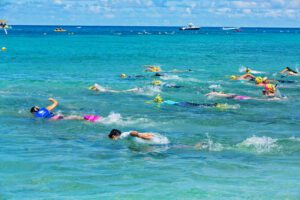
The annual St. Croix Sea Swim once again brought together athletes, supporters, and community partners for a successful day of competition and connection, reinforcing its role as a premier open water event and a vital fundraiser for local aquatic programs.
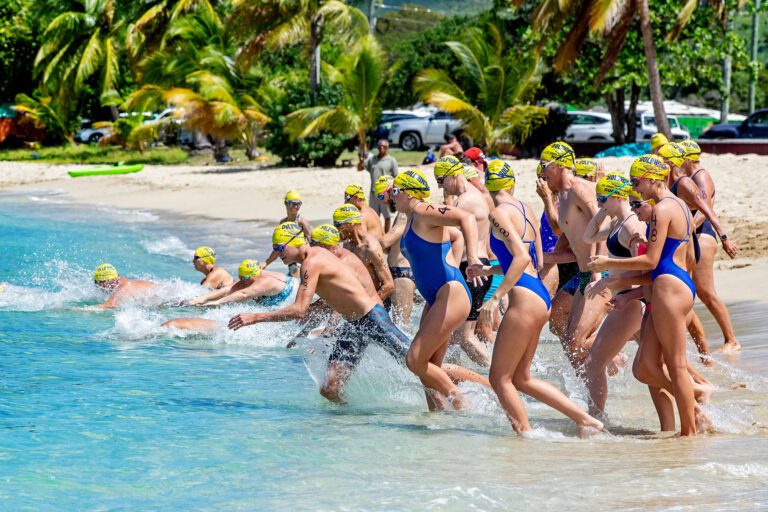
St. Croix Sea Swim competitors. (submitted photo)
This year’s race showcased impressive performances across all divisions, with top honors awarded to the overall male and female finishers. Cole Cullinan, 15, claimed first place in the male division with a standout performance, while Lu Joseph, 18, led the female division, demonstrating exceptional endurance and skill in open water conditions.
The annual Sea Swim is a one-mile swim traditionally from the Frederiksted Peir to Rainbow Beach, however, this year’s race featured a unique adjustment to the start. Over 60 swimmers entered the water from Frederiksted Public Beach north of the pier due to the presence of a naval vessel docked at the usual pier location. The change added a new dynamic to the course and was seamlessly executed thanks to coordinated planning with the dock master, DPNR and the flexibility of participants and race officials.
Beyond the competition, the event highlighted the strength of community collaboration. The organizing committee extends sincere appreciation to its generous sponsors, whose support is essential to the success and sustainability of the Sea Swim.
The event also benefited from the dedication of numerous community partners, including local safety personnel, volunteers, and supporting organizations who ensured a safe and well-executed race day experience. From water safety teams and logistics coordination to on-site registration and athlete support, their contributions were integral at every level.
“The Sea Swim is more than a race, it’s a reflection of what’s possible when community comes together with a shared purpose,” said Anna Holley, Committee Chair. “We are grateful for the athletes, sponsors, volunteers, and partners who make this event meaningful each year.”
Proceeds from the St. Croix Sea Swim directly support efforts to expand and sustain quality aquatic programs within the St. Croix community such as learn-to-swim for children and adults and Every Child A Swimmer.
Organizers remain committed to growing the event’s impact and continuing to meet fundraising goals that provide access, training, and opportunities for swimmers of all ages and abilities.
Full race results including top 10 male and female finishers can be found on the event website www.stxseaswim.com/results
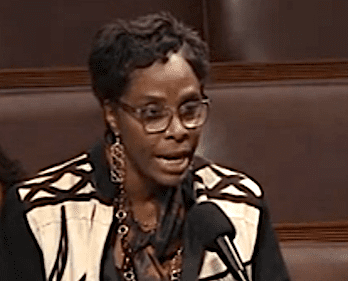
Congresswoman Stacey E. Plaskett released the following statement after the U.S. Supreme Court heard oral arguments today in Trump v. Barbara, a landmark case in which she joined current and former elected officials and judges from the U.S. Virgin Islands, Puerto Rico, Guam, the Northern Mariana Islands, and American Samoa in filing an amicus brief urging the Court to affirm that birthright citizenship is a constitutional guarantee that no executive order can override.
Stacey E. Plasket on Dec. 17 tuning in by Zoom for a town hall meeting. (Screenshot from Zoom meeting)
At the center of this case is whether the Trump administration can rewrite the meaning of the Fourteenth Amendment’s Citizenship Clause to deny birthright citizenship to children born in the United States to certain immigrant parents. The amicus brief, signed by leaders across the political spectrum with varying views on territorial status, makes clear that whatever their differences, they stand united against any executive branch attempt to unilaterally redefine who counts as a citizen.
The brief draws a troubling comparison to the period following the Spanish-American War of 1898, when the McKinley administration tried to redefine “in the United States” to exclude people born in Puerto Rico, Guam, and other newly acquired territories. The Supreme Court’s deference to the political branches on that question gave rise to the Insular Cases — a legal framework that left millions of territorial residents with statutory, rather than constitutionally protected, citizenship. The effects of that decision are still being felt today.
American Samoans, for example, are still classified under federal law as “non-citizen” U.S. nationals — a designation that has cost people military security clearances, created wrongful voter registration complications, and blocked full civic participation. The brief warns that allowing the administration’s executive order to stand would deepen that history, handing the executive branch sweeping power over one of the most fundamental rights guaranteed by the Constitution.
“For the people of the U.S. Territories, including the U.S. Virgin Islands, this fight is deeply personal. For generations, we have struggled to have our citizenship and our rights fully recognized. The Supreme Court’s long avoidance of the birthright citizenship question in the territories has left our residents in an unacceptable state of legal limbo — and now we are watching that same dangerous logic weaponized to strip citizenship from children born on American soil. The Fourteenth Amendment is unambiguous: Those born under the sovereignty and jurisdiction of the United States are Americans. No executive order can change that. The Constitution does not bend to the political preferences of any administration, and no president holds the power to rewrite it by executive order. I am proud to stand alongside leaders across our territories to make that case before the Supreme Court on April 1st,” said Congresswoman Stacey Plaskett.
BACKGROUND: The amicus brief was coordinated by Right to Democracy, co-founded by Neil C. Weare, and filed on February 26, 2026, by co-counsel Patricio Martinez Llompart and the team at KKL LLP. The signatures urge the Court not to repeat the errors of the past by deferring to the political branches on the scope of the Citizenship Clause. Instead, they call on the Court to affirm, unambiguously, that birthright citizenship is a constitutional right — one that belongs to all persons born under the sovereignty and jurisdiction of the United States, and right that cannot be narrowed by executive or legislative action.
The Randolph Harley Power Plant on St. Thomas remains under strain as WAPA works to restore generation capacity amid ongoing outages in the St. Thomas-St. John district. (Submitted photo)At an emergency meeting Wednesday, the V.I. Water and Power Authority governing board directed its management to deliver a plan for emergency temporary generation by April 8, following nearly two weeks of consistent outages on St. Thomas-St. John.Board Chair Maurice K. Muia said the emergency meeting was called to ensure the board, management, and key stakeholders were aligned on a plan to address ongoing generation failures and bring more stability and resilience to the St. Thomas–St. John district.“The public is tired,” Muia said during the meeting. “This is too much for everyone to bear.”Much of the meeting was held in executive session before Executive Director and CEO Karl Knight briefed the board on generation capacity, ongoing repairs, and emergency generation options.Knight said WAPA has been forced to conduct load shedding not only during peak evening hours but also during the daytime due to a generation shortfall that has at times been as little as 1 megawatt.“Sometimes it’s as little as a megawatt or two, but we have had to load shed throughout most of the day,” Knight said.He explained that part of the challenge involves balancing solar generation with traditional units as solar production ramps up in the morning and the system adjusts to changing load demands.“Part of that has to do with the interplay between the solar farm and how the generators are able to absorb that energy as the solar ramps up during the early morning hours,” Knight said.Knight said WAPA has expedited repairs to Unit 27 by sending a technician to retrieve critical parts directly rather than waiting for shipping, which would have taken about two weeks. Repairs were expected to begin immediately upon the technician’s return, and Knight said the authority is cautiously optimistic the unit could be restored soon.“We are cautiously optimistic that we can get that unit back in service by this weekend,” Knight said.In addition to repairing existing units, Knight said WAPA is pursuing emergency generation options to address the ongoing capacity shortfall.“We are looking at what we’re calling emergency generation — some smaller units just to help us meet the peak and fix this generation capacity shortfall,” Knight said.He said one promising option involves placing emergency generation on St. John, which would reduce the amount of power that must be generated on St. Thomas and ease pressure on the Randolph Harley Power Plant.“Any generation on St. John helps reduce the capacity that we need to generate in the Harley Plant,” Knight said.The board ultimately directed WAPA management to present a plan from a dedicated team outlining emergency temporary generation for the St. Thomas–St. John district by April 8.“We’re working on two fronts — restoring units and securing emergency generation — and by the 8th we should have a clear plan of action,” Knight said.The emergency meeting comes as rotational outages continue across both districts. On Tuesday, one of the Randolph Harley Power Plant’s aging generators, Unit 15, tripped again just one day after being returned to service, causing a districtwide interruption. WAPA said additional mechanical defects were identified and crews are continuing repairs while also working to restore Unit 27, which officials have said represents the fastest path to restoring generating capacity. Until sufficient capacity is restored, outages are expected to continue, particularly during peak usage periods between midmorning and late evening.The ongoing outages come as the territory continues work toward replacing its aging power infrastructure through a FEMA-funded prudent replacement initiative, which includes rebuilding the Randolph Harley Plant on St. Thomas and the Richmond Plant on St. Croix. The broader contract needed to move the project into its next phase — including the installation of temporary generation — is still being negotiated between the Public Finance Authority and the Office of Disaster Recovery.Government officials said negotiations are in the final stages, but no timeline has been announced for when the contract will be finalized.Gov. Albert Bryan Jr. said during his weekly press briefing that the territory’s response is focused on repairing existing units and bringing additional generation online, rather than pursuing an emergency declaration. He said an emergency declaration is typically used to unlock funding or bypass procurement, and neither is currently limiting the territory’s response.Bryan said he had hoped to see improvements earlier in the week, but more realistically by the end of the week.
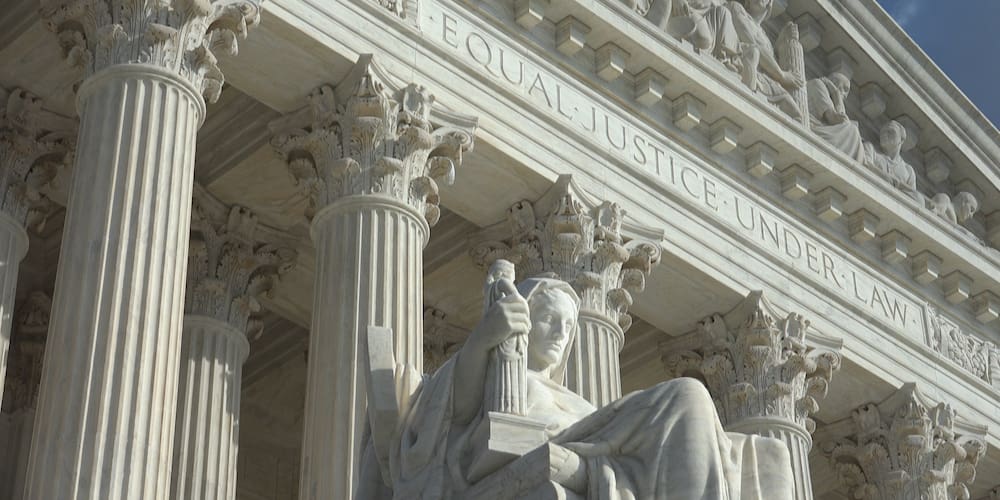
U.S. Solicitor General D. John Sauer and ACLU Legal Director Cecilla Wang presented oral arguments to the U.S. Supreme Court Wednesday in Trump v. Barbara. (Shutterstock image)
The U.S. Supreme Court heard oral arguments Wednesday in President Donald Trump’s challenge to birthright citizenship in a case that could have far-reaching implications for people born in U.S. territories.
“For the people of the U.S. Territories, including the U.S. Virgin Islands, this fight is deeply personal,” Delegate to Congress Stacey Plaskett said in a statement afterward. “For generations, we have struggled to have our citizenship and our rights fully recognized. The Supreme Court’s long avoidance of the birthright citizenship question in the territories has left our residents in an unacceptable state of legal limbo — and now we are watching that same dangerous logic weaponized to strip citizenship from children born on American soil.”
Wednesday’s arguments came more than a year after Trump signed an executive order seeking to end birthright citizenship for children whose parents are unauthorized immigrants or temporary residents. States and organizations quickly challenged the order, which was blocked by multiple lower courts. Trump petitioned the U.S. Supreme Court for a review of the case after a federal judge in New Hampshire granted an injunction to the American Civil Liberties Union and other organizations.
In an amicus brief submitted to the court, 21 current and former officials and judges from the U.S. Virgin Islands, Puerto Rico, Guam, American Samoa and the Northern Mariana Islands rejected the idea that a president or Congress can deny citizenship to people born in the United States, whose citizenship is enshrined by the 14th Amendment. The group included Plaskett, Gov. Albert Bryan Jr., Lt. Gov. Tregenza Roach, former Gov. Kenneth Mapp, former Delegate Donna Christian-Christensen, and former V.I. Superior Court judges Adam Christian and Soraya Diase Coffelt.
“It’s really important to not have the question of citizenship turn on the political whims of Congress or the president,” Neil Weare, co-director of Right to Democracy and the brief’s counsel of record, said in a call with the Source Wednesday. “And so the understanding in Congress and the Department of Justice that the federal government can turn citizenship on and off in the Virgin Islands and other territories is a very dangerous idea — and one that is contradicted by the text and history of the Citizenship Clause.”
Weare said in a statement earlier this week that the court has avoided answering whether people born in United States jurisdictions have a right to be recognized as citizens under the 14th Amendment for more than a century.
“As a result, presidents and congresses from both parties have claimed the power to unilaterally deny people born in U.S. territories recognition as citizens — even people who have been recognized as U.S. citizens their entire lives,” he stated. “This troubling experience offers a stark object lesson for the Justices as they consider whether to allow the Trump Administration to alter the long-settled meaning of the Citizenship Clause.”
Right to Democracy co-director Adi Martinez Roman said the case raised questions about presidential and congressional power, like whether they can “simply decide to exclude groups of people they do not want to be considered U.S. citizens.”
“The U.S. Constitution regulates the power of government and protects its subjects from abuse. Therefore, the Supreme Court can and should answer that question in the negative,” she stated, adding that the court’s “consistent avoidance of this issue in U.S. territories has created uncertainty and confusion when it comes to our own questions of self-determination and decolonization.”
Many of the arguments presented Wednesday by U.S. Solicitor General D. John Sauer and ACLU Legal Director Cecillia Wang referenced a precedent the court set in 1898 when it ruled that Wong Kim Ark, a child born to Chinese parents in San Francisco, was a U.S. citizen. Sauer said the Trump administration was not attempting to overturn the precedent but seized on mentions that, in that case, the child’s parents were “domiciled” residents — a designation he said doesn’t apply to many people in the United States illegally today.
Wang argued that the justices were merely reciting the facts of the case when they used the term and that under “common law” — laws based on court decisions rather than statutes — “‘domicile’ was not relevant, and the children born to temporary visitors … were always considered birthright citizens.”
“It really was a big day at the Supreme Court for the question of what citizenship means in the United States,” Weare said. “And what really came across from justices on kind of both sides of the ideological divide was a recognition of the continuing validity of the Supreme Court’s prior decision in Wong Kim Ark and its adoption of a common law understanding of what birthright citizenship means in the United States.”
Weare said that’s significant for people in the territories because under a common law understanding of birthright citizenship, constitutionalized by the 14th Amendment, people born in United States jurisdictions have a right to citizenship in states and territories alike.
“It was understood to apply through the ‘dominion’ of the United States, which, again, included both states and territories,” he said. “So while the issue of U.S. territories did not come up with the argument — we’re unlikely to see much about it in the Supreme Court’s decision — if what was previewed in the Supreme Court’s argument today holds, it could provide a very strong precedent moving forward for constitutional citizenship in U.S. territories.”
Weare noted that legal experts had an opportunity to discuss the territories’ issues at a V.I. Bar Association conference attended by Justice Neil Gorsuch, and he encouraged people who want to learn more to review a recent panel discussion. Right to Democracy is also planning to host events in the U.S. Virgin Islands and Washington, D.C., for the 250th anniversary of the Declaration of Independence and the 125th anniversary of the Insular Cases.
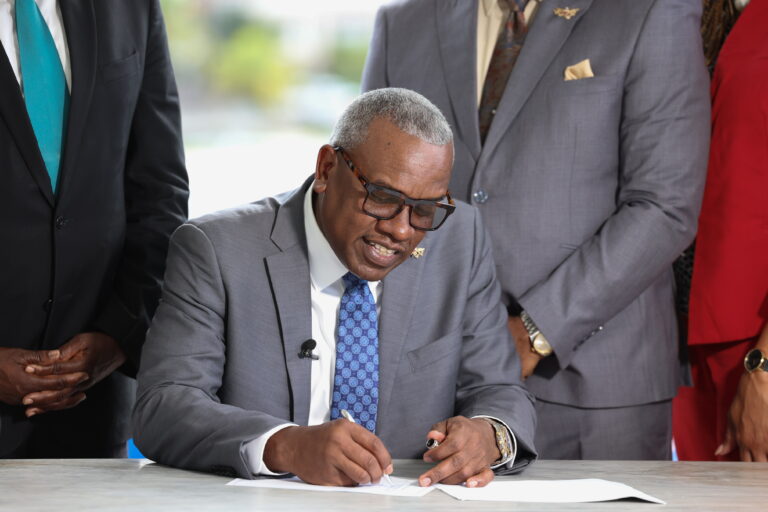
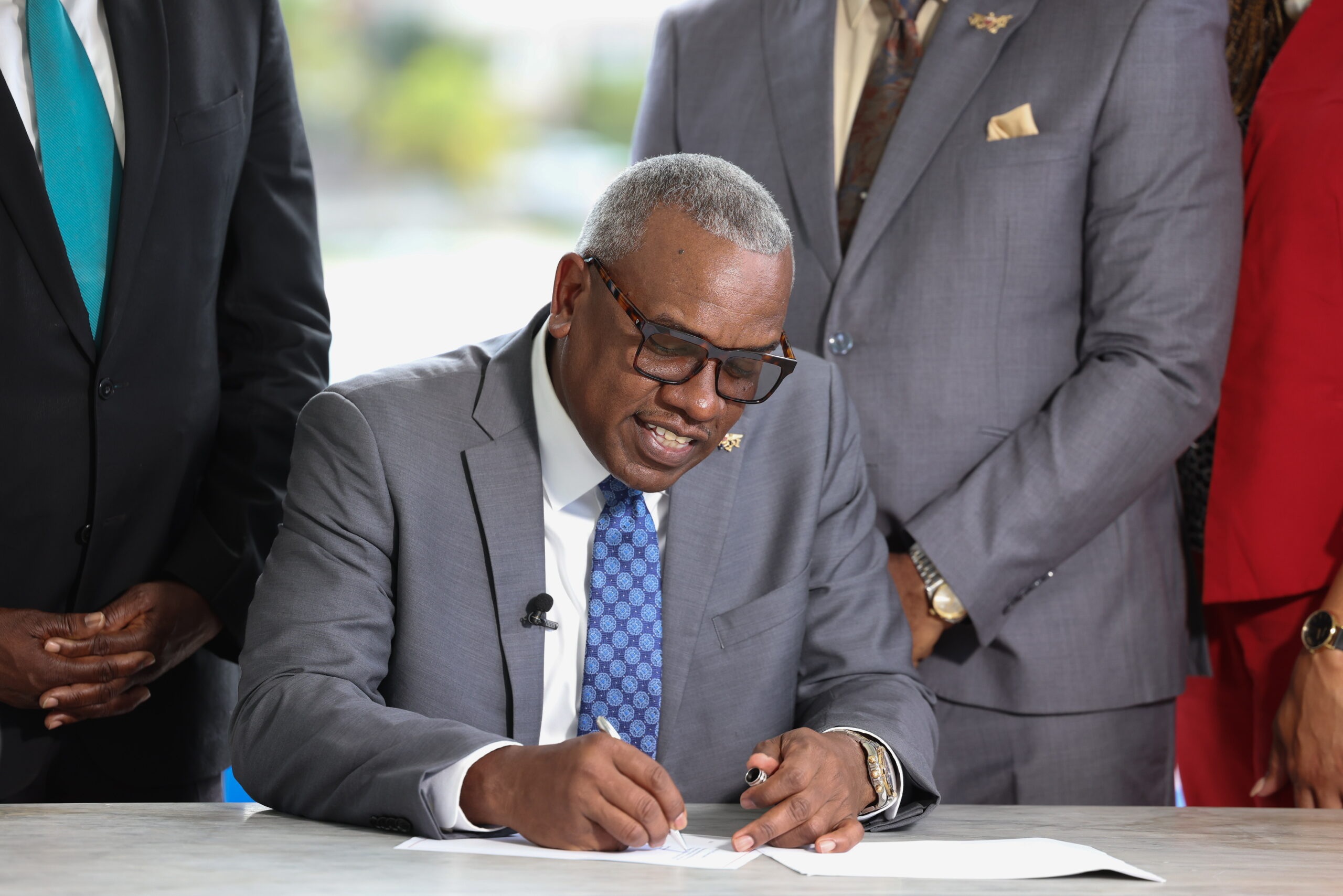
Gov. Albert Bryan Jr. signed 13 bills into law Tuesday, including several rezoning land in St. Thomas and St. Croix. (Submitted photo)
Gov. Albert Bryan Jr. signed 13 bills into law Tuesday that had been passed March 18 by the 36th Legislature.
Honoring the former Senate president, Bryan signed into law a bill renaming Hull Bay Road to Lorraine L. Berry Drive. Previously, the Earl B. Ottley Legislative Hall’s annex had been renamed for the longtime St. Thomas lawmaker in 2013. Berry was the only senator to serve 12 consecutive terms, the only one to serve as Senate president twice, and one of only two women to hold the position. Throughout her tenure as a legislator, Berry chaired eight Senate committees, served as majority leader, and drafted roughly 400 pieces of legislation.
The governor also signed into law an act honoring Alva Alphonse “Coach Tumba” Swan for his significant contributions to the sport of basketball in the Virgin Islands.
More controversial was a new law rezoning 15.9 acres of virgin green space in the Beeston Hill, St. Croix, to allow for as many as 800 people to move into the restive area. The new zoning meant buildings as high as six stories could be built, or potentially a hotel complex. The rezoning went against the recommendation of experts at the Department of Planning and Natural Resources, the new Comprehensive Land and Water Use Plan — which warned against the dangers of unplanned spot zoning — and the pleas of people in the neighborhood who worried noise, traffic, and environmental degradation would soon follow. Although the property’s owners have said they planned to use the land for housing, they had previously sought to build a strip mall, medical complex, and other business-related enterprises there.
The governor also approved rezoning part of Estate Smith Bay from agricultural use to allow for medium-density residential use, and part of Christiansted’s Strand Street from residential use to secondary business. He also granted a zoning variance for a bus and passenger terminal in Estate Body Slob, St. Croix.
Bryan allowed for $200,000 from the St. Croix Capital Improvement Fund to go to the Virgin Islands Department of Public Works for repairs to the Frederiksted Public Cemetery and signed off on a new law establishing a 15-business day amnesty to assist taxpayers and businesses recovering from the aftermath of Hurricanes Irma and Maria and Tropical Storm Ernesto by waiving penalties and interest imposed for the nonpayment of taxes.
Bryan approved a new law amending title 23 Virgin Islands Code, chapter 10, to establish civil penalties for disregarding marine advisories and to create the Territorial Marine Safety Fund. He also signed into law acts amending Title 22, Virgin Islands Code, Chapter 31, relating to the Virgin Islands Producer and Adjuster Licensing Act by modifying renewal provisions for insurance producer licenses, redesignating the funding source for several entities, and amending Act No. 9072 regarding the disposal of intoxicating cannabinoid products.
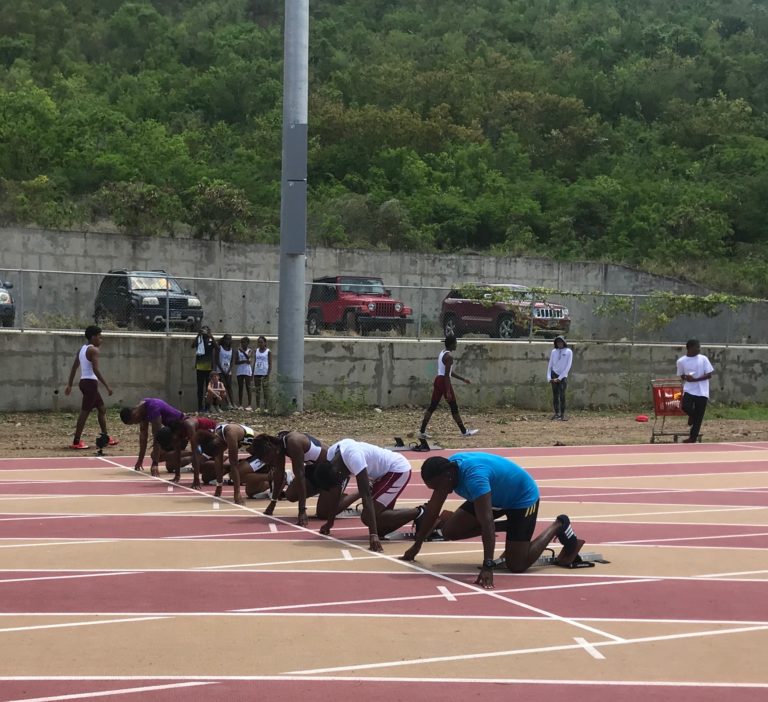
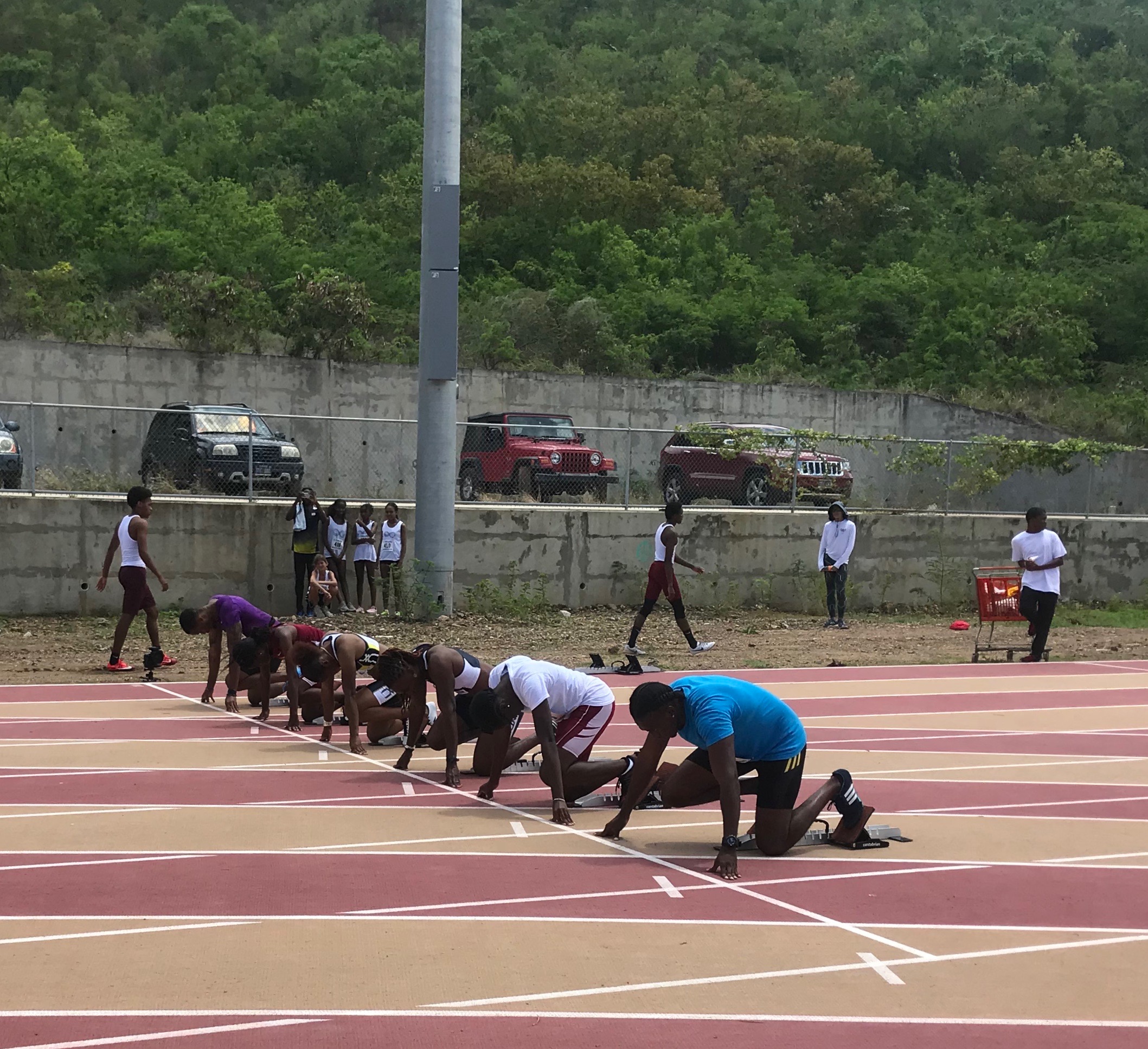
Concerns are mounting over the deteriorating condition of the Ivanna Eudora Kean High School track, as officials warn delays in a funded reconstruction project could put student-athletes at risk. (Kyle Murphy photo).
The Virgin Islands Track & Field Federation is voicing concerns over what it describes as unsafe conditions at the Ivanna Eudora Kean High School track and field facility, along with continued delays in beginning a fully funded reconstruction project.
A professional assessment conducted by John Beynon, chief executive officer of Beynon Sports, found that the track surface is severely deteriorated and poses direct risks to student-athletes. Beynon Sports is one of the world’s leading track and field construction companies.
According to the assessment, the current surface could contribute to growth plate injuries in developing athletes, stress fractures in teenagers, long-term joint and musculoskeletal damage and an increased risk of falls due to surface instability.
Because of these issues, the Legislature appropriated $2.5 million for the design and renovation of the Kean track, with a dedicated funding source and the money placed in the proper account.
Despite this, the Bureau of School Construction and Maintenance has not yet executed the contract required to begin the professional services phase of the project, even though all necessary documents are reportedly in place.
According to the VITFF, the Education Department has reversed its earlier position, now stating that the facility will be included as part of a broader school rebuild, despite previously confirming two years ago that it was not part of that project.
The shift raises concerns that the work could be delayed by five to seven years, leaving St. Thomas without a World Athletics Class 2 – certified track and, according to the federation, jeopardizing the development and health of hundreds of young athletes.
Keith A. Smith Sr., president of the Virgin Islands Track & Field Federation, said the issue involves both safety concerns and a broader missed opportunity for development.
“It’s a much bigger picture than just fixing the track,” Smith said. “When we look at the track and the possibilities in terms of sports tourism, it is something that goes unnoticed in terms of its potential. We have to really focus on the big picture.”
Smith said the territory is already attracting interest from outside organizations.
“We’ve been approached by youth organizations that want to bring 1,000 people to the VI for a track meet,” he said. “If you have 1,000 athletes, how many parents are coming? We’re talking about a big economic boost to the territory.”
He said interest from U.S.-based track and field organizations is strong in part because athletes can travel to the Virgin Islands without needing a passport, making it a more accessible destination for events than many other Caribbean locations.
Smith also pointed to interest from NCAA programs, which he said are limited by rules governing how often they can compete abroad and could instead return to the territory annually if a properly maintained facility were available.
He added that the Kean track was previously certified to World Athletics Class 2 standards, allowing it to host professional-level competition, and said restoring that status could position the Virgin Islands more competitively in the region as other areas, including Puerto Rico, work to improve their own track infrastructure.
Smith said the issue is not only about money or tourism, but also about safety for student-athletes.
“Anytime you operate on a faulty surface, as in a track, you find that injuries are reoccurring,” he said. “You have hip issues, knee issues, ankle issues … shin splints … stress fractures … those things really detrimentally affect our youths and end careers.”
“We have to take our youth seriously,” Smith said. “We have to show them that we care. We have to demonstrate that with our use of funding and money, not just by saying it.”
“That’s my impetus, as president of the VI Track and Field Federation,” he said. “To push to hold our elected officials accountable and to show the youths that I’m willing to focus on making sure they have somewhere to compete and train.”
Smith said Kean High School needs an operable track as soon as possible to allow for cross-territorial competitions, which he described as vital for raising the level of competition across the territory and attracting outside talent.
He said that if existing funding were used as intended, the track could be resurfaced and brought back to international standards within nine to 12 months. However, if the project is tied to a broader school reconstruction, Smith said the timeline could stretch to five to seven years, potentially delaying access to a certified facility for an entire generation of athletes.
In a press release, Mireille Smith, general secretary of the federation, said the delay is especially concerning given the risks identified in the report.
“The track is not in a condition that supports safe training or competition, and every delay increases the risk to our student-athletes,” she said. “The funding exists. The expert assessment is clear. The law requires action. Our athletes deserve better — and they deserve it now.”



 She was preceded in death by her father, Louis J. Sackey, Sr.; Mother, Clementina (Clementia) Fahie-Milliner-Sackey; Brothers, Camile, Emile & Leroy Sackey; Grandchild, Kysian Nicholas.
She is survived by her daughters, Kysha M.M. Drummond & Kairstin “Kacy” Roberts; Daughter She Raised, Keema Drummond; Brothers, Lionel, Leander, Sr., Louis, Jr., & Tyrone Sackey; Sisters, Caroline Sackey-Lawrence, Louise Sackey-Johnson and Laverne Browne; Adopted Sisters, Omah Adams, Alicia Barnes, Vanessa Yarwood, & Dawn Petersen; Grandchildren, Randall Rising, Jr., Raheem, Isis, & Des’Tiny Ivy; Great Grandchildren, Ky’Lai & Ky’Nan Nicholas, & Vaeda Ivy; Granddaughter in law, Monet Lewis; Nephews, Aarol Charlemagne, Charles Wadsworth, Jr., Houston Pettway, D’Andre, D’Ante & Donnie Johnson-Sackey, Leander, Jr., LeAndre’, Leroy, II, Jahroy, Vernon Sackey, Sr. Vernon Sackey, Jr., Taheim Sackey; Nieces, Makaila Sackey-Gray, Caronique Cromwell, Amanda Sackey, Anna Sackey-Camacho, Alice Sackey, Verna Sackey and Desiree Sackey, Meagan Sackey, Khadishma Albert, Tenisha & Tyesha Sackey, Tremaine Creighton, & Dr. Carla Bastian-Knight; Cousins, Byron, Allick, Milligan, Sackey, Fahie, Milliner, Crabbe & McIntosh families; God Children, Benson Ward, Sanya Faith Joseph, Michael DeLande, & Ohdani Joseph; Special Friends, Rosie Mackay, Willis C. Todmann, Maureen Simmonds, Brenda Bastian, Suzette Bough-James, Coleen Hodge, Irma George, Gwen Pelle, Lisarose Bough, Blanca Maldonado, Paulette Edwards, & Valderia Miller; Close Family Friends, Mr. & Mrs. Clefryn DeLande & Family, Mr. & Mrs. Cornell Creighton & Family, Norma Barnes & Family, Mr. & Mrs. Okemo Felix, Halvor E. Hart, III, Thelma Christopher & Family, Andrea E, Christian & Family, Merline Felicien, Magnolia Paul, Patricia Gomes, Kenneth Henderson, Karen Blake & family, Friends from Prince Street & Whim Frederiksted, St. Joseph Class of 1973, Martin Marietta Aluminum Family, Mon Bijou Community, First Assembly of God Church Family & other family and friends too numerous to mention.
Funeral service will be held on Thursday, April 9 at First Assembly of God Church, #4 ABC Fisher & Queen Cross Street, Christiansted. Viewing will begin at 9 a.m. with service at 10 a.m. Interment will follow at Kingshill Cemetery.
Professional arrangements are entrusted to James Memorial Funeral Home, Inc.
She was preceded in death by her father, Louis J. Sackey, Sr.; Mother, Clementina (Clementia) Fahie-Milliner-Sackey; Brothers, Camile, Emile & Leroy Sackey; Grandchild, Kysian Nicholas.
She is survived by her daughters, Kysha M.M. Drummond & Kairstin “Kacy” Roberts; Daughter She Raised, Keema Drummond; Brothers, Lionel, Leander, Sr., Louis, Jr., & Tyrone Sackey; Sisters, Caroline Sackey-Lawrence, Louise Sackey-Johnson and Laverne Browne; Adopted Sisters, Omah Adams, Alicia Barnes, Vanessa Yarwood, & Dawn Petersen; Grandchildren, Randall Rising, Jr., Raheem, Isis, & Des’Tiny Ivy; Great Grandchildren, Ky’Lai & Ky’Nan Nicholas, & Vaeda Ivy; Granddaughter in law, Monet Lewis; Nephews, Aarol Charlemagne, Charles Wadsworth, Jr., Houston Pettway, D’Andre, D’Ante & Donnie Johnson-Sackey, Leander, Jr., LeAndre’, Leroy, II, Jahroy, Vernon Sackey, Sr. Vernon Sackey, Jr., Taheim Sackey; Nieces, Makaila Sackey-Gray, Caronique Cromwell, Amanda Sackey, Anna Sackey-Camacho, Alice Sackey, Verna Sackey and Desiree Sackey, Meagan Sackey, Khadishma Albert, Tenisha & Tyesha Sackey, Tremaine Creighton, & Dr. Carla Bastian-Knight; Cousins, Byron, Allick, Milligan, Sackey, Fahie, Milliner, Crabbe & McIntosh families; God Children, Benson Ward, Sanya Faith Joseph, Michael DeLande, & Ohdani Joseph; Special Friends, Rosie Mackay, Willis C. Todmann, Maureen Simmonds, Brenda Bastian, Suzette Bough-James, Coleen Hodge, Irma George, Gwen Pelle, Lisarose Bough, Blanca Maldonado, Paulette Edwards, & Valderia Miller; Close Family Friends, Mr. & Mrs. Clefryn DeLande & Family, Mr. & Mrs. Cornell Creighton & Family, Norma Barnes & Family, Mr. & Mrs. Okemo Felix, Halvor E. Hart, III, Thelma Christopher & Family, Andrea E, Christian & Family, Merline Felicien, Magnolia Paul, Patricia Gomes, Kenneth Henderson, Karen Blake & family, Friends from Prince Street & Whim Frederiksted, St. Joseph Class of 1973, Martin Marietta Aluminum Family, Mon Bijou Community, First Assembly of God Church Family & other family and friends too numerous to mention.
Funeral service will be held on Thursday, April 9 at First Assembly of God Church, #4 ABC Fisher & Queen Cross Street, Christiansted. Viewing will begin at 9 a.m. with service at 10 a.m. Interment will follow at Kingshill Cemetery.
Professional arrangements are entrusted to James Memorial Funeral Home, Inc.