




In recent weeks, The Source has carried a series of exceptional opinion pieces by Donna-Frett Gregory (“Why Hope, Backed by Action is Key to Our Future”), Janelle Sarauw (“The Quiet Exhaustion of Virgin Islanders”) and Hadiya Sewer (“Building a Resilient Virgin Islands in a Time of Conflict”).

These columns ranged from the physical environment to the social and normative, and the impact of global events on the Territory. If you consider them as a “package,” they can be seen as an action agenda for the future of the Virgin Islands.
Taken together, the columns are an invaluable guide to the “what” and “why” of a better future for Virgin Islanders. What follows is not an “on the other hand.” It is an “in addition to.” These are thoughts about the hard part of securing that brighter “what” and “why” future. The “how.” How do you get from what we “should” do, to execution, the discipline of actually getting things done.
What follows is grounded in two big assumptions. The first is to accept the sad wisdom contained in Tolstoy’s quote in Anna Karenina, that “There are no conditions to which a person cannot become accustomed, especially if they see everyone around them living in the same way.” The success of the action agenda will depend on the difficult process of Virgin Islanders getting unaccustomed to a number of things, a prevailing pessimism about the possibility for significant change being a critical one.
The second big assumption, the “in addition to” the substance contained in those important Source columns. That assumption is that any success in any of these areas will only be achieved through solid execution. Success = Execution.
If success = execution, here, from the 2002 book Execution, is the checklist for what success will require if the changes that the columnists foresee are to become a reality. The starting point, the “front end,” is a clear and effective strategy for change, one that is broadly shared and that mobilizes people. Mobilizes them in the sense that there is an emotional commitment, well beyond “This makes sense,” that will sustain action over time. And, along with that strategy, a vision for what we want to be and look like in the future.
Then the hard part, the keys to successful execution. Here is the execution checklist.
– Do we have a solid strategy for change?
– Do we have the right people in the right roles/jobs?
– Do we have effective systems and work processes?
– Do we have solid internal and external communications? and, finally
– Do we have core values of trust, clarity, mutual accountability for achievable goals, problem solving as opposed to blaming/blame avoidance and a set of short-term visible wins, the fuel that sustains progress?
It should not come as a news flash that the Virgin Islands needs improvement in each of these critical areas. Or that, without these improvements, substantive change, whatever its value, is unlikely. Addressing these execution requirements is — must be — the starting point for substantive positive change.
Positive change will also have to be achieved in an age of reaction, during which, at least for the present, the government of the United States has become openly racist and white supremacist. A nation in which cruelty and its attendant violence are accepted norms by a significant portion of the American population. At least for the immediate future, that means that Virgin Islanders will be on their own in seeking to do positive things.
Returning to Tolstoy and what people naturally become accustomed to, a critical issue on any agenda for the Territory’s future is reducing the extraordinary levels of violence that currently exist. And that, like many other things, have become normalized. Applying the execution equation to this challenge would seem to be a natural. (Note: A television interviewer once asked a football coach whose team was losing 49-0 at halftime what he thought of his team’s execution. The coach’s response: “I’m in favor of it.” Just to be clear, that is not the “execution” we’re talking about. Once again, it’s the discipline of getting things done.”)
Whatever the issue, social life, the economy, the environment/climate change, or education, the starting point is that the execution equation represents the pathway to success. The first indicator of success will be a willingness, as part of an effective strategy, to address the deficiencies identified in that execution checklist.
That means making difficult, often uncomfortable choices, setting clear priorities, and avoiding the French formula for change: We demand fundamental improvement, with only one condition, that everything stays the same for me.
An achievable vision for the Territory’s future. Using the goals identified in these recent columns, along with the execution goals, to be able to look back and say, “We did it.” Going back to Tolstoy, the good news is that people also become accustomed to — and take great pride in — “We did it” and “We can do it.” Healthy, peaceful, thriving, trust-based communities can become the new thing that everyone becomes accustomed to.
Another way in which execution = success.
— Frank Schneiger has built and led three public sector organizations: The City of New York Assistant Health Commissioner and first Director of Prison Health Services; Executive Director of the HEW/HSS Region II Family Resource Center; and as the organizer and first Director of Department of Children and Family Services in the Commonwealth of Massachusetts, each recognized as national leader in its sector. Co-founded and built a $20 million specialty health care organization, and founded and sustained 40-year management consulting firm devoted to planning and execution, organizational change and building and sustaining healthy organizations. Frank holds a Bachelor’s Degree from the University of Wisconsin-Milwaukee and dual Masters Degrees and a Ph.D. from Columbia University. Editor’s Note: Opinion articles do not represent the views of the Virgin Islands Source newsroom and are the sole expressed opinion of the writer. Submissions can be made to visource@gmail.com.
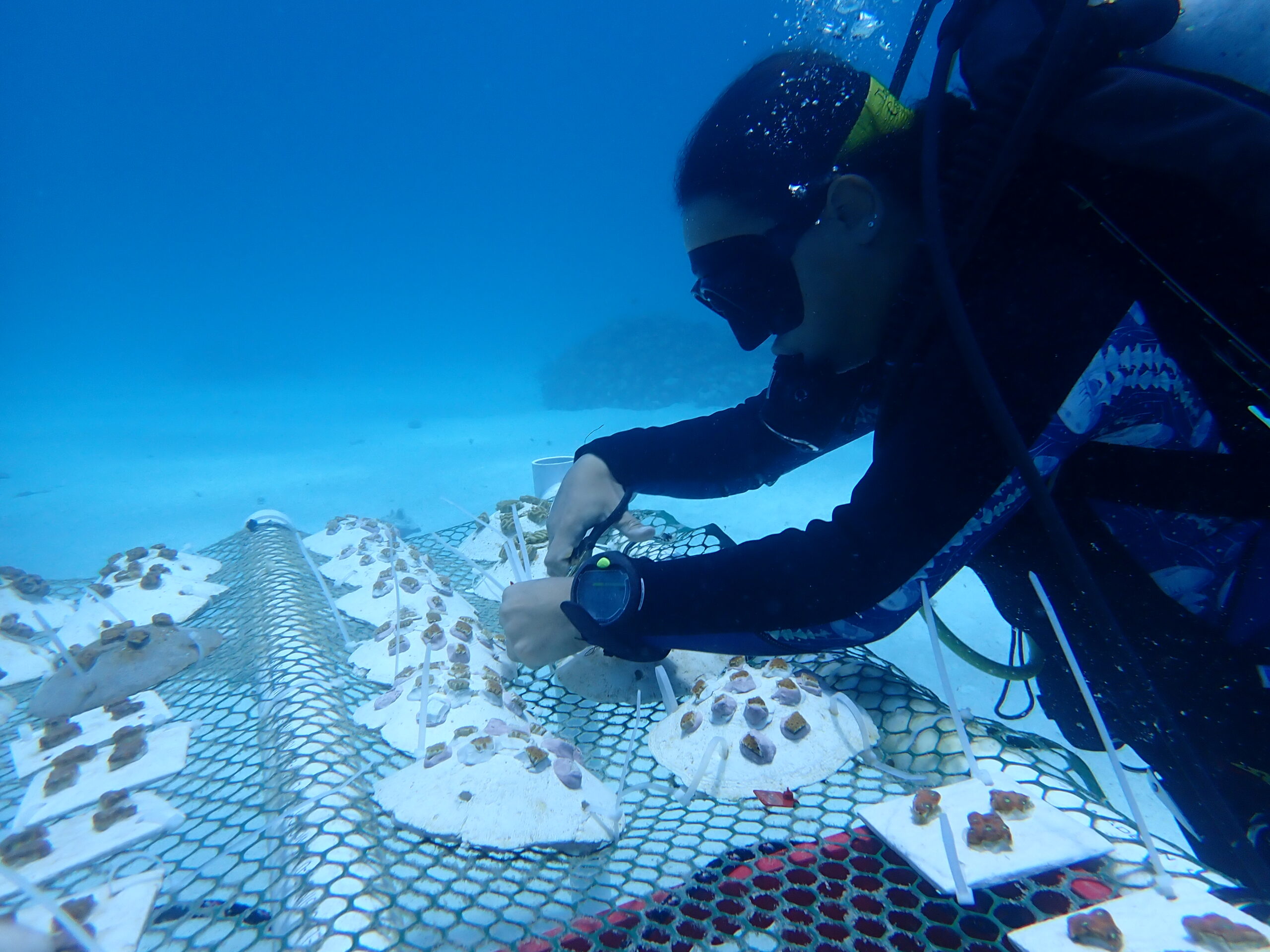
The St. Croix community is invited to enjoy a Coral Conservation Festival on Sunday, hosted by The Nature Conservancy U.S. Virgin Islands Program in collaboration with government agencies and community partners.
The festival will take place from 11 a.m. to 5 p.m. at the Coral Innovation Hub, Estate Little Princess on St Croix. It is a free public immersive youth and family experience celebrating community, connection and the protection of St Croix’s natural resources, according to a press release announcing the event.
Visitors to the festival can learn, play, explore and engage with more than 19 exhibitors as they participate in a variety of activities and tours of the Coral Innovation Hub, the release stated.
During the festival, there will be an Unplugging Ceremony to mark the addition of a renewable energy system to help power The Nature Conservancy’s coral restoration facility.
The ceremony takes place at 1 p.m. and will include remarks by dignitaries including Lt. Gov. Tregenza A. Roach; Dr. Rob Brumbaugh, executive director, TNC Caribbean Division; Darren Vanterpool, V.I. regional manager of Banco Popular; Kyle Flemming, director, Virgin Islands Energy Office; and Jessica Ward, TNC Virgin Islands program director.
The ceremony will also include recorded remarks from Jennifer Morris, The Nature Conservancy’s chief executive officer.
“The addition of a solar energy and battery storage system to The Nature Conservancy’s Coral Innovation Hub at Estate Little Princess is remarkable in two ways,” said Brumbaugh. “First, by pairing clean renewable energy with coral restoration, we can lead by example and share what we learn to help others adopt a nature-positive model for reef-restoration facilities worldwide. And second, it is a significant step toward meeting the organization’s global sustainability goal of reducing emissions across TNC’s global operational footprint” he said.
“Thanks to the generous support of our donors, the new solar system is now providing more than 50% of the energy needed to power our Coral Innovation Hub on St Croix,” said Ward. “This reduces our dependence on fossil fuels, lowers operating costs, and allows us to redirect those savings to conservation.”
This work was made possible through funding provided by Popular and Honda, the release stated.
The Nature Conservancy is a global conservation organization dedicated to conserving the lands and waters on which all life depends. Guided by science, it creates innovative, on-the-ground solutions to the world’s toughest challenges so that nature and people can thrive together, according to the release.
“We are tackling climate change, conserving lands, waters and oceans at an unprecedented scale, providing food and water sustainably and helping make cities more resilient,” it said.
The Nature Conservancy is working to make a lasting difference around the world in 83 countries and territories (39 by direct conservation impact and 44 through partners) through a collaborative approach that engages local communities, governments, the private sector, and other partners.




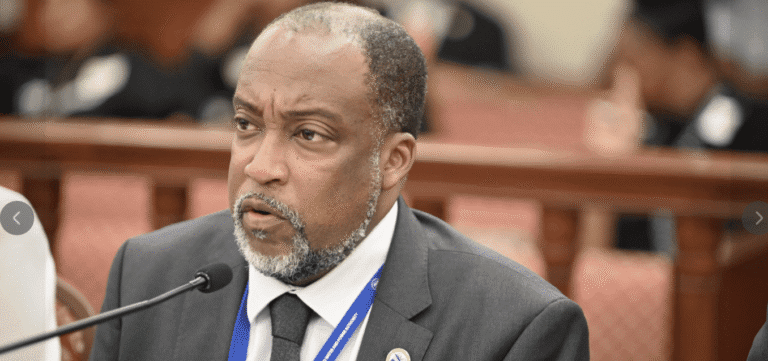
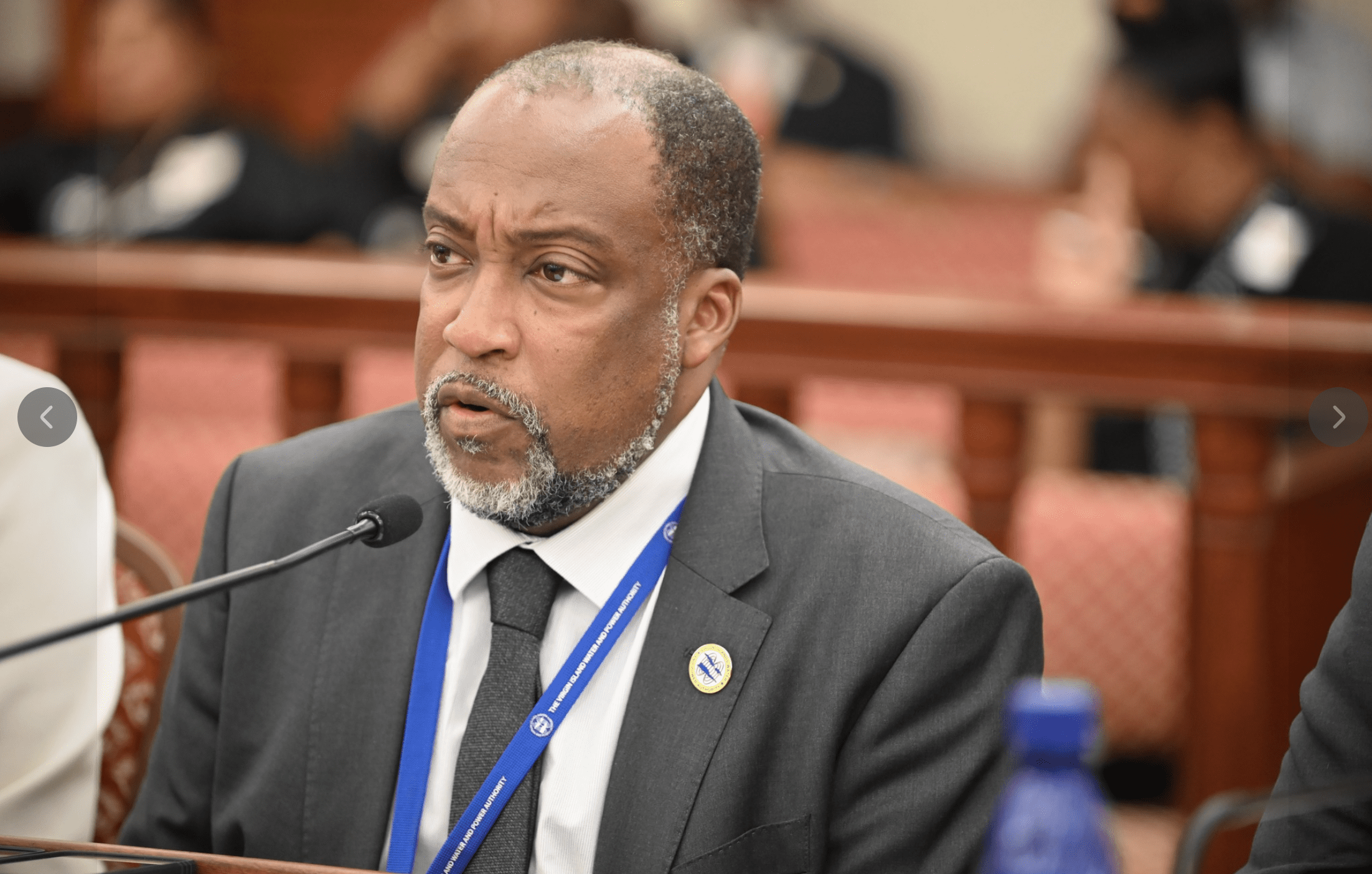
The Virgin Islands Water and Power Authority was called before lawmakers Thursday as residents on St. Thomas and St. John continue to grapple with weeks of rolling blackouts that left homes in the dark, spoiled food in refrigerators and shuttered small businesses across the district.
Meeting as a Committee of the Whole, the 36th Legislature spent hours pressing WAPA officials, federal recovery partners and regulators for a clear accounting of what went wrong, why the grid remains so fragile and when reliable service will return. Senators called for a straightforward timeline of recent outages, an honest assessment of aging generators such as Unit 15 at the Randolph Harley Power Plant on St. Thomas, and answers about how a deliberately severed submarine cable was able to trigger an island-wide outage on St. John.
Senators also pushed the utility to move beyond technical explanations and address deeper, long-standing issues, including deferred maintenance, reliance on obsolete equipment, delays in renewable energy projects and the lack of any plan to compensate customers for losses. Lawmakers noted that despite years of legislative support and federal funding, residents continue to face some of the highest electricity rates in the United States alongside unreliable service.
Karl Knight, executive director of WAPA, told senators the crisis was not caused by a single malfunction but by “multiple compounding failures.” He said February thunderstorms brought lightning, high winds and vegetation into power lines on St. Thomas, blowing fuses and breaking insulators. As crews worked through those problems, an underground section of Feeder 13 on the Charlotte Amalie waterfront failed, forcing load onto Feeder 12 and triggering rolling outages of up to five megawatts to prevent a system collapse.
On St. John, Knight said, a transmission line between Red Hook and Cruz Bay tripped and plunged the island into a blackout. Subsequent testing showed the submarine cable had been “deliberately cut with a mechanical device,” not damaged by an electrical fault. WAPA temporarily revived an older, retired cable and spliced sections of both lines to restore service.
The most severe blow came March 19, when Unit 15, a turbine commissioned in 1980, at the Randolph Harley Power Plant suffered an electrical fault and tripped offline, destabilizing the system and triggering a district-wide outage. The failure led to nearly three weeks of rotational blackouts until another large generator, Unit 27, was repaired and returned to service.
“Our system is operating with aging infrastructure, limited redundancy and very little margin for error,” Knight said. “This was not neglect; this was a system under pressure responding to multiple compounding failures.”
Knight told lawmakers the authority is pursuing a three‑tiered plan to stabilize the grid in the short term while larger projects move forward.
In the next six months, WAPA expects to complete a FEMA‑funded bypass for Feeder 13 on St. Thomas and install emergency standby generation on St. John, where a vendor has been selected. Temporary repairs to damaged submarine and distribution lines are also planned, though some work remains unfunded.
Over the following six to 24 months, the plan relies heavily on federally supported projects, including temporary generation at the Randolph Harley Power Plant and new solar and battery storage installations on St. Thomas and St. John. Longer‑term efforts, expected to take several years, include replacing aging generators such as Units 14 and 15, rebuilding key transmission feeders and developing microgrids to allow parts of the territory to maintain power during major outages. “We are not standing still,” Knight said. “The authority has a clear path forward that will provide tangible improvements to our delivery of reliable service.”
Public Services Commission Executive Director Sandra Satori said the outages were “entirely foreseeable and preventable,” pointing to a management audit and integrated resource plan completed nearly a decade ago that warned WAPA to modernize its generation fleet and expand renewables or risk reliability problems.
She said only portions of that road map were implemented, leaving the territory dependent on aging and obsolete units such as Units 15 and 23 and with insufficient backup capacity when multiple failures occurred at once.
“WAPA needs to become an asset to the Virgin Islands, providing reliable and affordable power,” Satori testified, urging lawmakers to require a detailed “recovery and stabilization plan” with enforceable benchmarks and oversight. Without it, she warned, the territory could “find ourselves back in this place” even after new FEMA-funded projects come online.
Senators echoed that frustration, saying residents have heard similar assurances for years without seeing lasting improvements. “What we have been doing for decades is not working, and it’s destroying the fabric of this territory,” Sen. Alma Francis Heyliger said. “It’s disrupting the everyday lives of the people of this territory … we need to actually start having serious conversations about how we’re going to get this fixed, because the constant talking, talking, talking is not working.”
One issue senators repeatedly raised was how the deliberate cut to the St. John submarine cable was handled and whether federal law enforcement was properly engaged. Several members pressed Knight to clarify whether the FBI had been notified, questioning why the incident was initially treated as a local police and fusion-center matter after an entire island lost power. Knight later told the committee that the Virgin Islands fusion center director had referred the case to the FBI, and added that WAPA has taken steps to secure the site.
Lawmakers were also sharply critical that St. John remained vulnerable nearly seven years after a 2019 proposal to install standby generators and battery storage was shelved. Senators said the decision left the island dependent on a single critical transmission link and highlighted a broader pattern in which planned upgrades and funded projects have not translated into the redundancy needed to protect residents when major lines or generation units fail.
Several senators focused on the human toll of the outages, recounting calls from constituents who lost televisions and refrigerators to power surges, small businesses forced to close during peak hours and elderly residents left without air conditioning or running water. Sen. Avery Lewis urged WAPA to halt disconnections while service remains unstable and to prioritize payment plans.
By the end of the day‑long hearing, senators said they were not convinced WAPA can avoid another crisis without clearer timelines and stronger oversight. Several senators said their anger was not only about broken equipment but about a lack of trust and oversight after years of similar hearings. They complained that WAPA still has no clear, written road map with deadlines that lawmakers and regulators can enforce.
PSC officials urged the Legislature to give the commission “full support and backing” to enforce its orders, while WAPA’s board chair, Maurice Muia, called for a standing “transformational leadership” committee that would bring lawmakers, regulators and utility executives into the same room to monitor progress.
Knight acknowledged that the system remains “on borrowed time” until new generation and grid projects come online, and said he does not want to ask residents to pay more. Instead, he told senators, WAPA must cut operating expenses to fit within existing rates — a path he described as difficult to walk without compromising service. “We will probably slip off the path every now and again, like we just did,” he said, “but I see a very positive future ahead.”
Editor’s Note: For an in-depth look at the history of WAPA’s issues, check out this series published by the Source in 2019.
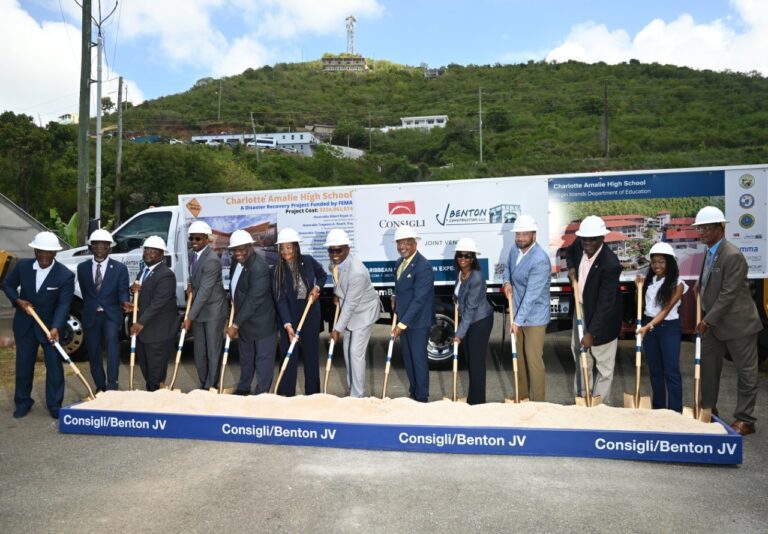
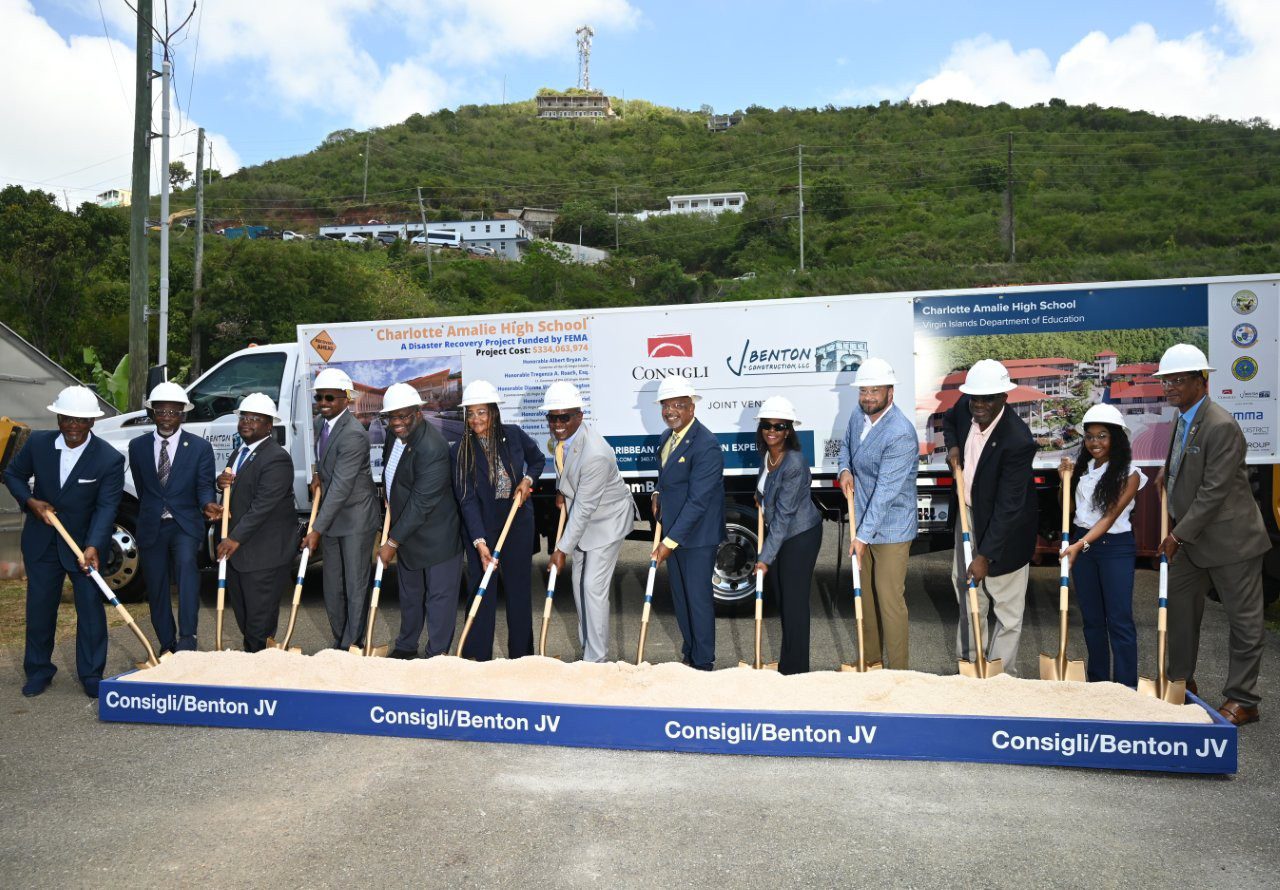
Eight years after the ferocious winds of hurricanes Irma and Maria ravaged the Virgin Islands, officials gathered at St. Thomas’ Charlotte Amalie High School to celebrate a new beginning. Gov. Albert Bryan and Lt. Gov. Tregenza Roach joined officials from the Education Department and the Office of Disaster Recovery at a groundbreaking ceremony on a $334 million reconstruction project.
Government leaders welcomed members of the construction and management team chosen to carry out a four-year project to rebuild St. Thomas’ 106-year-old public high school. James Benton, principal-in-charge of Consigli/Benton, led the host of speakers appearing in the Ruth E. Thomas Auditorium Thursday morning. “I understand that a school is more than a building. It is a place where lives are shaped and futures begin. It is a school our people know, a school our families care about, and a school our community is deeply invested in seeing rebuilt with excellence,” Benton said.
Those in attendance had a glimpse of the campus concept. One of the architects who worked on the new school design shared some of the details. “It’s actually going to be a tiered series of buildings similar to what the original Charlotte Amalie High School was,” said Michael Reid from SMMA Architects. “It’s three learning forts; each one is a floor higher than the previous one, and the gymnasium and the dining facility are on the lower part of the facility.”
The academic learning forts are supplemented by dedicated space for Career and Technical Education in Cosmetology, Construction, Automotive Repair, Occupational/Physical Therapy, and Nursing. There is also a media center which incorporates the music suite.
Disaster Recovery Director Adrienne Williams-Octalien said the CAHS reconstruction was part of a project bundle, along with work to be done at the Bertha C. Boschulte Middle School. Getting the work done in the education sector is testing the capacity of everyone involved, she said.
Education Commissioner Dionne Wells-Hedrington called the groundbreaking “a great day.” Bryan agreed with both of his cabinet members, heralding progress made since the 2017 storms, and pointing to the anticipated ribbon-cutting of the reconstructed Arthur Richards School this summer on St. Croix.
But the governor added that moving the project through to completion will test and sometimes strain the efforts of those involved.
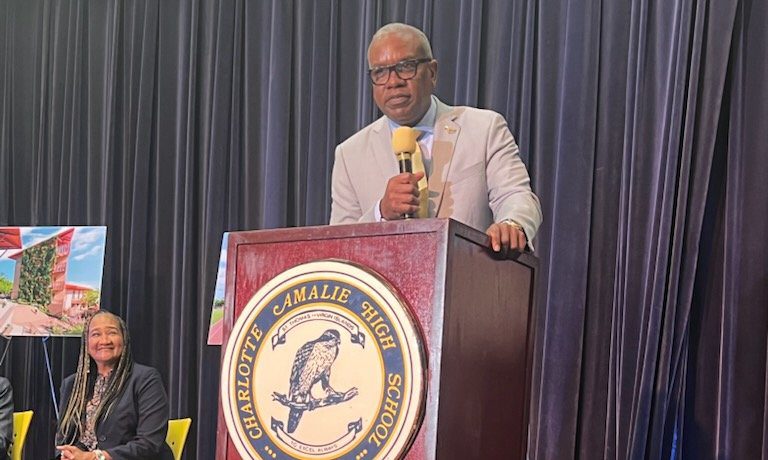
“As we rebuild Charlotte Amalie High School, we are strengthening public education, expanding the pathway to skills and workforce readiness, and making clear that our students must be ready not just to witness the territory’s transformation, but to help shape it. This school is an investment in their future and a declaration that we believe in what they can become,” the governor said.
Construction of the new Charlotte Amalie High School is expected to be completed by the end of 2030, according to a member of the contractor’s team.
To learn more about the New Charlotte Amalie High School and the Education Department’s plan to build new schools in the Virgin Islands, visit www.newschoolsvide.com.
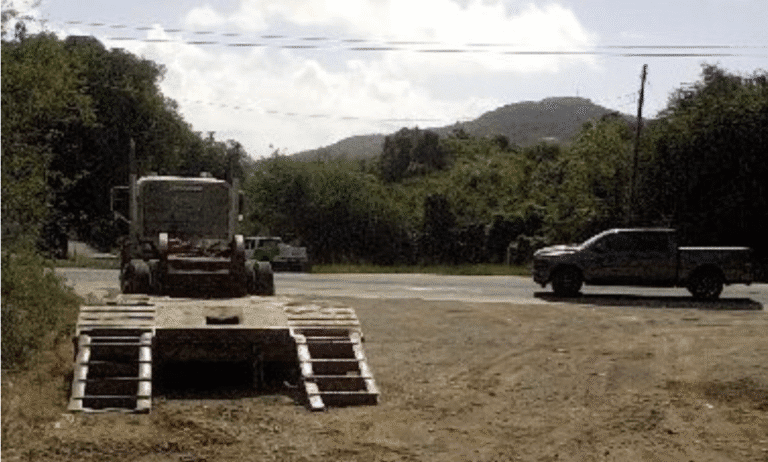
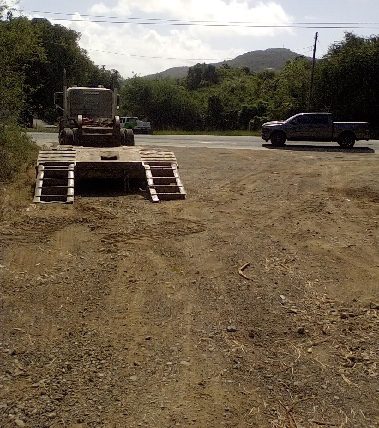
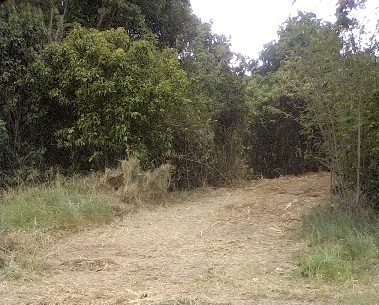

The deposition of a central figure in the federal case against Davidson and Sasha Charlemagne is set to move forward after it stalled nearly a year ago amid questions about immunity.
The witness, Morris Anselmi, and his co-defendant, Kimberly McCollum, were themselves indicted in 2024 and charged with pocketing half a million dollars in federal Paycheck Protection Program funds. The case against the Charlemagnes stems from a V.I. Housing Finance Authority lumber management contract awarded to Anselmi and McCollum’s company, ISG, and subcontracted to the Charlemagnes’ company, D&S Trucking. Anselmi’s court-ordered deposition in the so-called woodpile case was abruptly halted last year after he exercised his Fifth Amendment right against self-incrimination.
During a telephonic status conference with U.S. District Judge Mark Kearney Thursday afternoon, attorney Annabelle Nadler said both Anselmi and McCollum have signed pretrial diversion agreements with the government. Following Thursday’s status conference, Kearney granted a request filed by prosecutors Wednesday to compel Anselmi’s testimony in the woodpile case.
Anselmi “may not refuse to comply based on the privilege against self-incrimination,” according to Kearney’s order, but he will be allowed to confer with his attorney about procedural matters. None of the compelled testimony can be used against Anselmi “in any criminal case, except for a prosecution for perjury, giving a false statement,” or otherwise failing to comply with the judge’s order.
The Paycheck Protection Program-related case against Anselmi and McCollum and the fraud case against the Charlemagnes have both languished in large part because Anselmi has been receiving medical care on the mainland since his indictment more than two years ago. U.S. Marshals formally processed his arrest last month in Texas, and the Charlemagnes’ trial has been scheduled for July.
In the meantime, a third person charged alongside Davidson and Sasha Charlemagne — former V.I. Housing Finance Authority executive Darin Richardson — has already been tried, convicted and sentenced.
Since 1999 the Virgin Islands Source – the only online newspaper of general circulation in the U.S. Virgin Islands – has been providing the community with reliable, accurate and balanced local journalism.
Contact us: visource@gmail.com
© 1999-2025 Virgin Islands Source