


New Arthur A. Richards PreK-8 School Construction Update

Virgin Islands Education Department Commissioner Dionne Wells-Hedrington visited the construction site of the New Arthur A. Richards PreK-8 School on St. Croix, the department announced Monday.
During her visit, she met with the project manager from MCN Build to discuss the progress and developments in the construction of the state-of-the-art facility. The update highlights key milestones achieved so far. It provides insights into the project’s next phases, underscoring the commitment to delivering a modern and innovative learning environment for students in the Virgin Islands, according to the release.
The Education Department released the following video of the visit:
For additional updates, subscribe to the Virgin Islands Education Department’s YouTube page.
DHS Hosts Successful Inaugural Medicaid Territories Summit

The Virgin Islands Human Services Department hosted the inaugural U.S. Territories Medicaid Enterprise Systems Summit from Aug. 19-21, the department announced.
This groundbreaking three-day event at the Westin Beach Resort at Frenchman’s Reef brought together Medicaid program leaders, federal partners, healthcare professionals, and stakeholders from across the U.S. territories to engage in vital discussions on enhancing Medicaid services, according to the press release.
The summit featured a series of collaborative sessions focused on key areas, including Program Integrity, Workforce Development, Medicaid Financing, and Systems Enhancement. Attendees participated in in-depth workshops, panel discussions, and presentations to share insights, explore innovative solutions, and foster a collective approach to overcoming the unique challenges faced by Medicaid programs in the territories, the press release stated.
Hosting this inaugural summit was a significant milestone for the Virgin Islands, emphasizing its leadership role in bringing together territories to address shared healthcare goals and challenges. The summit not only highlighted the Virgin Islands’ commitment to advancing Medicaid services but also provided a unique platform for open dialogue and collaboration, the release stated.
Commissioner Averil George of the Human Services Department underscored the importance of the event, stating, “It was vital to have these meaningful conversations with our counterparts across the territories and federal partners. The summit allowed us to share our experiences, learn from one another, and develop strategies to enhance the quality of care for all our Medicaid beneficiaries. I am grateful for the opportunity to host this event and for the commitment shown by all participants to improve healthcare outcomes in our communities.”
DHS would like to extend its heartfelt thanks to all delegates from the U.S. territories, including Puerto Rico, the Commonwealth of the Northern Mariana Islands, American Samoa, and Guam, who participated and shared their valuable insights and to all the vendors, including Gainwell, RedMane, PointClickCare, and HealthTech Solutions, for their contributions to the summit’s success, the release stated.
Special thanks are due to the Centers for Medicare & Medicaid Services (CMS), the National Association of Medicaid Directors (NAMD), and the distinguished panelists and speakers, including Director Michelle Francis (OHIT), Justa Encarnacion (DOH), DR. Tae Hunte Caesar, (DOH), Tina Commissiong, Jay Woods (FHC), Basil Ottley from the Department of Interior (DOI), Kate McEvoy of NAMD, Senator Marvin Blyden, Senate Vice President of the 35th Legislature, and Director Rupert 0. Ross Jr.,(BIT). We also appreciate the support from the Department of Property and Procurement for their integral role in the event’s success, it said.
“This summit was an incredible opportunity for us to come together as a community of Medicaid professionals and leaders,” said Director Gary Smith.
“By sharing our experiences and challenges, we’ve laid the groundwork for stronger partnerships that will enhance the quality of care for Medicaid beneficiaries across the territories,” he said.
The summit concluded on a high note, with participants expressing optimism about the future of Medicaid in the territories, the release stated.
USVI Residents Sought to Participate in Passion Pulse: A Community Impact Survey

The Virgin Islands Economic Development Authority’s Enterprise Zone Commission invites individuals passionate about making a difference in their community through local non-profit organizations to participate in its “Passion Pulse: A Community Impact Survey.”
This survey aims to capture the interest of this U.S. Virgin Islands’ population in joining one of the dedicated community non-profit organizations in the towns of St. Croix and St. Thomas, USVI, which are also stakeholders within the USVI’s enterprise zones, according to the press release.
The survey will also help the EZC team understand how to serve the community better and create lasting change together, the press release stated.
The non-profit organizations include the
- St. Croix Foundation
- Our Town Frederiksted,
- Frederiksted Economic Development Association (FEDA)
- We From Upstreet,
- Long Path Association, and
- Community Action Now.
CBP Opens Global Entry Enrollment in Paradise Center at Cyril E. King International Airport


— U.S. Virgin Islands
Gittens Calls on WAPA to Cease and Desist Back Billing and Estimate Charges, Asks for Billing Audit
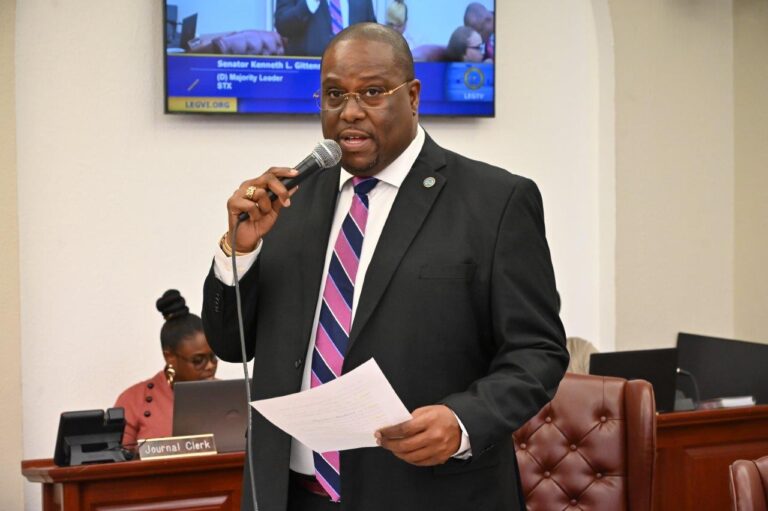
In a written statement Friday, Senate Majority Leader Kenneth L. Gittens said that he has written to Water and Power Authority Chief Executive Officer Karl Knight to help find answers amid chronic complaints of persistent unreliability and outrageous rates that have been plaguing residents of the territory, adding that now those issues are coupled with
consumers being faced with billing issues.
“Over the past few months, numerous residents have experienced significant
discrepancies in their utility bills, which have caused considerable stress and financial
strain. I wrote to formally request that WAPA cease and desist from its ongoing practice
of estimating utility bills and imposing back bills on customers,” he said. “These
practices are in clear violation of our local laws, which govern the proper methods of
billing and customer rights.”
Gittens said WAPA has been estimating bills without adequate justification or proper notification and this method of estimating not only undermines the accuracy of billing but also places an unfair burden on customers. “Back billing for services previously rendered but not accurately billed undermines consumer trust and violates the principles of fairness and transparency that should guide utility operations,” he said.
Gittens said customers have contacted his office to express that despite numerous attempts to resolve their issue through WAPA’s Customer Service Department, the problems persist, leaving many frustrated and unsupported. He said these billing practices are occurring during a time when WAPA’s reliability in providing consistent water and power services has been questionable at best.
“It is unacceptable for customers to bear the financial consequences of an unreliable service. If these illegal practices continue, I will have no choice but to pursue legal action
to protect the rights of all affected customers,” Senator Gittens said. “I urged WAPA, in my letter, to rectify these issues immediately and to adopt more transparent and accurate billing practices in accordance with the law.
Michelle Smith, Sofia Swindell and Brandon Pemberton Qualify for the World Athletics U20 Championships in Lima Peru


The Virgin Islands Track and Field Federation announced that Michelle Smith, Sofia Swindell, and Brandon Pemberton have been capturing attention with their outstanding athletic performances.
Smith and her family have a strong connection to Track and Field and hold a firm Christ-centered value system. Her mother, Mireille Sankatsing-Smith, was the 1992 NCAA National Indoor Champion in the 800m event, while her father, Keith A. Smith Sr., won a bronze medal in the 4x100m relay at the 1991 Pan-American Games. Additionally, Smith has two athletic siblings, Malique Smith and Mikaela Smith, who are also active in Track and Field, according to the press release.
Despite limited competition during her early years, Smith has demonstrated extraordinary skill and determination, making her a formidable contender on both regional and global stages. She also excelled academically, graduating from Montverde Academy with honors, such as Student-Athlete of the Year and Athlete of the Year. She was also awarded one of five students named All-USA Today HSSA Girls Track Team. Smith started her Collegiate career in August 2024 as a full scholarship athlete at the University of Georgia, majoring in Biology to become a Forensic Pathologist, the press release stated.
Smith qualified for the World Athletics U20 Championships in the 400m, 800m, 100m Hurdles, and 400m Hurdles. She will represent the Virgin Islands in the 400m Hurdles in these World Championships. The heats for the 400m Hurdles will be on Wednesday at 9:38 a.m. The semi-finals are on Friday at 3:35 p.m., and the final will be run on Saturday at 4:35 p.m., the release stated.
Smith holds the V.I. National record in the 800m, 300m Hurdles, 400m Hurdles. She has the V.I. National U20 record in all those and the 400m, 60m Hurdles, 100m Hurdles and Long Jump. Smith also has the CARIFTA record in the U17 400m Hurdles and NACAC U18 record in the 400m Hurdles and the 800m, it said.

Sofia Swindell is a Team Virgin Islands track and field athlete and a high school senior at The Lawrenceville School in New Jersey. She has been competing in track and field since the age of nine and specializes in sprints, hurdles, and triple jump, according to the press release.
Swindell’s exceptional performances and Virgin Islands heritage (her mother and generations before hailing from St. Croix) earned her a spot on the Virgin Islands national team. Since 2023, she has proudly represented the Virgin Islands in the NACAC Championships, U20 Pan American Games, and two CARIFTA Games. Swindell qualified for the World Athletics U20 Championships in the 200m and 100m Hurdles, the release stated.
Swindell is excited to represent the territory on the global stage in the 100m hurdles. The heat is on Thursday at 11:10 a.m., the semi-final is the same day at 3 p.m., and the final is on Friday at 5:10 p.m., it said.
A true competitor, Swindell already boasts an impressive list of accomplishments including being a bronze medalist in the 100m hurdles at both the 2023 NACAC U18/U23 Championships and the 51st CARIFTA Games in 2024 (with a personal best time of 13.95). She also holds the Virgin Islands U20 record in the 55m hurdles, the NJ State record in the 200m (her time of 23.97 broke the 2016 record previously held by Olympian Sydney McLaughlin-Levrone), and 16 individual and relay high school records, the release stated.

Virgin Islands Track and Field team member Brandon Pemberton is a rising sprinting star with a promising future ahead. He is currently a student-athlete at Barton Community College in Kansas, according to the release.
Last season he achieved his personal best performance in the 100m dash with a time of 10.51. The performance qualifies Pemberton for the World Athletics U20 Championships in Lima Peru. The 100m Heats will be at 11:10 a.m. on the first day of competition Tuesday; the semi-final for the 100m is at 5:07 p.m. the same day, and the final is on Wednesday at 7:47 p.m., it said.
Pemberton is the son of Derry Pemberton, who represented the U.S. Virgin Islands at the ‘92 Olympics in Barcelona. He was also part of the bronze medal-winning team in the 4x100m relay at the PanAm Games in 1991, the release stated.
Brandon Pemberton is the 2024 V.I National Champion in the 100m dash. As he continues to train and compete, his goal is to represent the U.S. Virgin Islands at the highest levels in the future, it said.
Additional St. John/St. Thomas Car Ferry Service Now Available

The Virgin Islands Port Authority announced Monday that four car ferries will now serve travelers using the car ferry services between Theovald E. Moorehead Dock and Terminal in Cruz Bay, St. John, and Urman V. Fredericks Marine Terminal in Red Hook, St. Thomas.
VIPA has authorized the Big Red Barge car ferry company to temporarily operate an additional vessel to increase the frequency of car ferry service between St. John and St. Thomas. The Big Red Barge will use the Virginia Pride vessel to provide barge service between Cruz Bay and Red Hook according to the following schedule:
 The Big Red Barge’s Todd G vessel is also back in service and operating per the following schedule Monday through Saturday:
 Love City Car Ferries also provides car ferry service between Cruz Bay and Red Hook per the following daily schedules on its Captain Vic and Grand Vic vessels:

The Big Red Barge’s Todd G vessel is also back in service and operating per the following schedule Monday through Saturday:
Love City Car Ferries also provides car ferry service between Cruz Bay and Red Hook per the following daily schedules on its Captain Vic and Grand Vic vessels:
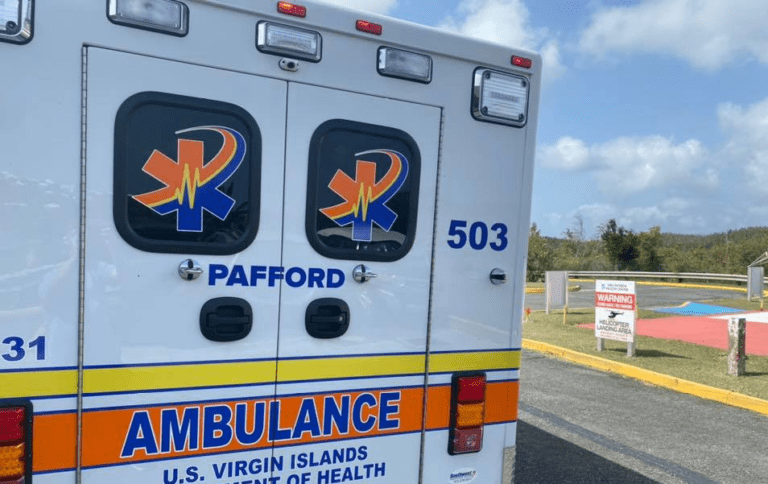
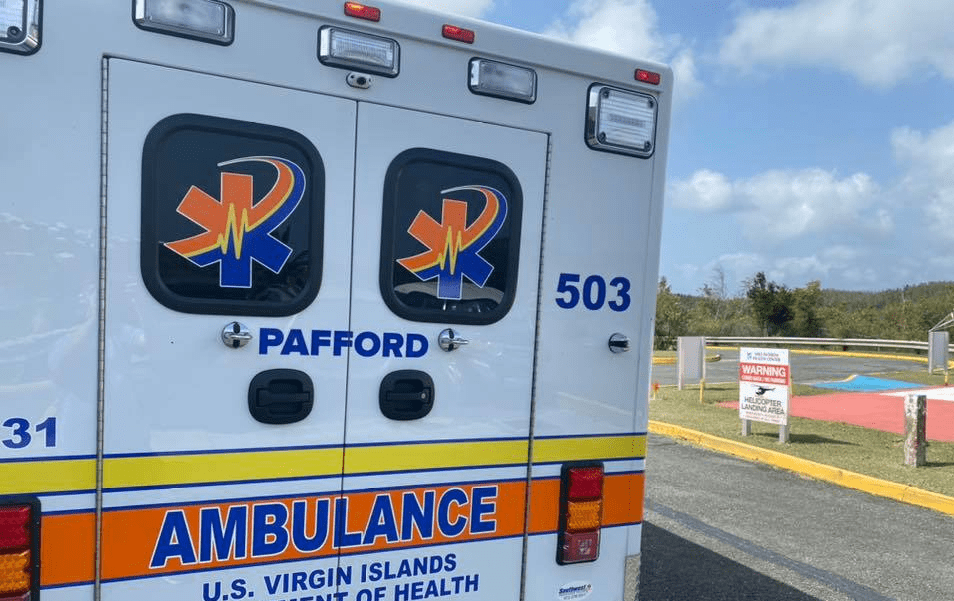
Government Makes Initial Payment to Pafford Medical Services Amid $10 Million Debt Crisis
State of the Territory | A Critical Examination of the Virgin Islands’ Proposed Budget: Addressing Over-Optimism, Broken Promises, and Unsustainable Practices

 In her bi-weekly column, “State of the Territory,” former Sen. Janelle K. Sarauw delves deeper into issues of concern for V.I. residents.
The Government of the Virgin Islands has put forward its proposed budget for Fiscal Year 2025, promoting it as a model of fiscal responsibility and conservative budgeting. While the intent to manage finances prudently is commendable, a deeper analysis of the budget raises significant concerns. The administration’s projections, spending strategies, and reliance on federal funds suggest that the budget may be more about maintaining appearances than addressing the territory’s long-term financial health.
Overly Optimistic Revenue Projections
One of the most troubling aspects of the Bryan FY25 budget is its optimistic revenue projections. Despite actual data from the Department of Finance showing a decrease in FY2024 collections compared to FY2023 across all tax categories, the FY25 budget forecasts an increase in all tax revenue categories except Property Tax. This stark contrast between reality and the administration’s projections raises serious concerns about the accuracy and reliability of the budget.
There is a significant risk that locally sourced revenues in the Bryan FY25 budget may be overestimated by as much as $100 million. This kind of overestimation is not just overly optimistic—it’s irresponsible. The consequences of such a miscalculation could be severe, leading to substantial budget shortfalls that would strain public services, undermine financial stability, and necessitate mid-year adjustments that could have been avoided with more realistic forecasting.
Spending Cuts and Broken Promises
The proposed budget also reflects a $77 million decrease in General Fund expenditures for FY25. While reducing spending can be a necessary part of fiscal management, the methods used to achieve this reduction are concerning. The budget eliminates $25 million in retroactive pay that was promised to public sector employees and removes funding for wage increases in contracts still under negotiation. These decisions represent broken promises to workers and a failure to honor commitments made in previous budgets.
The $25 million in retroactive pay, which was diverted last year to bolster the General Fund, is now entirely absent from the FY25 budget. This not only undermines trust but also disregards the financial rights of employees who were counting on these payments. Similarly, not funding wage increases for contracts yet to be negotiated is a short-sighted move that could lead to labor disputes and decreased morale among public sector workers, ultimately impacting the quality of public services.
Unsustainable Reliance on Federal Funds
Another significant issue is the sharp increase in federal budget support, which rises from $248 million in FY24 to $417 million in FY25—a 69% increase. This growing dependence on federal funds is unsustainable and positions the Virgin Islands as increasingly reliant on external support. Under the Bryan administration, federal support now accounts for 29% of the total budget, compared to just 16% in the last Mapp administration budget.
This level of dependence on federal funds is not only unsustainable but also risky. Should federal support diminish, the territory could face severe financial challenges, forcing cuts to essential services or leading to increased local taxes. The reliance on federal aid to this extent could turn the Virgin Islands into a welfare state, dependent on external sources rather than building a resilient local economy.
The Need for a Hiring Freeze and Increased Efficiency
Staffing levels within the Government of the Virgin Islands (GVI) have increased significantly during the Bryan administration, rising from 6,955 employees in FY18 to 7,814 in FY25, inclusive of vacancies—a 12% increase. Despite this rise in staffing, there has been no corresponding improvement in the quality of services provided by GVI departments. In fact, many argue that service quality has declined.
Rather than continuing to expand the workforce, the government should consider implementing a hiring freeze across all departments. The focus should shift to increasing efficiency and productivity among existing staff, ensuring that public services are delivered effectively without the need for additional hires. This approach would not only control costs but also address the perception that the government is bloated and inefficient.
The Need for Progress in Disaster Recovery
The budget highlights a substantial increase in federal disaster recovery funds, with $8.2 billion now available to the territory. This funding is crucial for rebuilding and strengthening infrastructure after the 2017 hurricanes. However, the pace of disaster recovery has been slow, and this budget presents an opportunity to accelerate these efforts. The Office of Disaster Recovery anticipates spending $474 million of these funds in FY2025, which will generate additional revenue through taxes associated with construction activities.
Timely and effective use of these funds is essential not only for recovery but also for stimulating the local economy by creating jobs and boosting related industries. The government must prioritize the swift implementation of recovery projects to ensure the territory is better prepared for future challenges and to prevent the territory from becoming overly reliant on federal support.
Addressing Outstanding Financial Obligations
We must acknowledge the territory’s outstanding debt, including the $90 million owed to vendors. This debt represents a significant financial obligation that must be managed carefully to avoid further straining the territory’s finances. Small businesses, which often comprise a large portion of these vendors, are the backbone of the local economy. They create jobs, drive economic growth, and contribute to the vibrancy of our communities.
Timely payments to these businesses are crucial for maintaining cash flow, enabling them to pay employees, invest in growth, and continue providing goods and services. When payments are delayed, it can lead to financial strain, reduced economic activity, and, in some cases, business closures. The government’s strategy for addressing this debt should be transparent, with a clear plan to repay vendors promptly. Ensuring that these obligations are met is essential for fiscal responsibility and maintaining trust and stability within the local economy.
The Retirement System’s Precarious Situation
Another pressing issue is the financial health of the Government Employees’ Retirement System (GERS). The budget notes the impact of the rum cover-over program on the retirement system, particularly the fact that the rate was not increased. This situation places additional pressure on an already strained system. The government needs to consider long-term solutions to ensure the retirement system’s viability for future retirees. Without careful management, the retirement system could face significant challenges, affecting the financial security of many residents.
Conclusion: A Need for Transparent and Sustainable Budgeting
The FY25 budget presented by the Bryan administration raises several red flags. From overly optimistic revenue projections and broken promises on spending to an unsustainable increase in federal support and unchecked growth in government staffing, the budget lacks the transparency and prudence needed to ensure the long-term financial health of the Virgin Islands.
The Legislature of the Virgin Islands must revamp and vote on a budget grounded in reality, respects prior commitments, and works towards reducing dependency on external support. Moving forward, it is crucial for the government to adopt a more cautious and responsible approach to budgeting, one that prioritizes efficiency, sustainability, and the well-being of all residents. By addressing these issues, the Virgin Islands can build a stronger, more resilient economy that is better equipped to face future challenges.
Editor’s Note: Opinion articles do not represent the views of the Virgin Islands Source newsroom and are the sole expressed opinion of the writer. Submissions can be made to visource@gmail.com.
In her bi-weekly column, “State of the Territory,” former Sen. Janelle K. Sarauw delves deeper into issues of concern for V.I. residents.
The Government of the Virgin Islands has put forward its proposed budget for Fiscal Year 2025, promoting it as a model of fiscal responsibility and conservative budgeting. While the intent to manage finances prudently is commendable, a deeper analysis of the budget raises significant concerns. The administration’s projections, spending strategies, and reliance on federal funds suggest that the budget may be more about maintaining appearances than addressing the territory’s long-term financial health.
Overly Optimistic Revenue Projections
One of the most troubling aspects of the Bryan FY25 budget is its optimistic revenue projections. Despite actual data from the Department of Finance showing a decrease in FY2024 collections compared to FY2023 across all tax categories, the FY25 budget forecasts an increase in all tax revenue categories except Property Tax. This stark contrast between reality and the administration’s projections raises serious concerns about the accuracy and reliability of the budget.
There is a significant risk that locally sourced revenues in the Bryan FY25 budget may be overestimated by as much as $100 million. This kind of overestimation is not just overly optimistic—it’s irresponsible. The consequences of such a miscalculation could be severe, leading to substantial budget shortfalls that would strain public services, undermine financial stability, and necessitate mid-year adjustments that could have been avoided with more realistic forecasting.
Spending Cuts and Broken Promises
The proposed budget also reflects a $77 million decrease in General Fund expenditures for FY25. While reducing spending can be a necessary part of fiscal management, the methods used to achieve this reduction are concerning. The budget eliminates $25 million in retroactive pay that was promised to public sector employees and removes funding for wage increases in contracts still under negotiation. These decisions represent broken promises to workers and a failure to honor commitments made in previous budgets.
The $25 million in retroactive pay, which was diverted last year to bolster the General Fund, is now entirely absent from the FY25 budget. This not only undermines trust but also disregards the financial rights of employees who were counting on these payments. Similarly, not funding wage increases for contracts yet to be negotiated is a short-sighted move that could lead to labor disputes and decreased morale among public sector workers, ultimately impacting the quality of public services.
Unsustainable Reliance on Federal Funds
Another significant issue is the sharp increase in federal budget support, which rises from $248 million in FY24 to $417 million in FY25—a 69% increase. This growing dependence on federal funds is unsustainable and positions the Virgin Islands as increasingly reliant on external support. Under the Bryan administration, federal support now accounts for 29% of the total budget, compared to just 16% in the last Mapp administration budget.
This level of dependence on federal funds is not only unsustainable but also risky. Should federal support diminish, the territory could face severe financial challenges, forcing cuts to essential services or leading to increased local taxes. The reliance on federal aid to this extent could turn the Virgin Islands into a welfare state, dependent on external sources rather than building a resilient local economy.
The Need for a Hiring Freeze and Increased Efficiency
Staffing levels within the Government of the Virgin Islands (GVI) have increased significantly during the Bryan administration, rising from 6,955 employees in FY18 to 7,814 in FY25, inclusive of vacancies—a 12% increase. Despite this rise in staffing, there has been no corresponding improvement in the quality of services provided by GVI departments. In fact, many argue that service quality has declined.
Rather than continuing to expand the workforce, the government should consider implementing a hiring freeze across all departments. The focus should shift to increasing efficiency and productivity among existing staff, ensuring that public services are delivered effectively without the need for additional hires. This approach would not only control costs but also address the perception that the government is bloated and inefficient.
The Need for Progress in Disaster Recovery
The budget highlights a substantial increase in federal disaster recovery funds, with $8.2 billion now available to the territory. This funding is crucial for rebuilding and strengthening infrastructure after the 2017 hurricanes. However, the pace of disaster recovery has been slow, and this budget presents an opportunity to accelerate these efforts. The Office of Disaster Recovery anticipates spending $474 million of these funds in FY2025, which will generate additional revenue through taxes associated with construction activities.
Timely and effective use of these funds is essential not only for recovery but also for stimulating the local economy by creating jobs and boosting related industries. The government must prioritize the swift implementation of recovery projects to ensure the territory is better prepared for future challenges and to prevent the territory from becoming overly reliant on federal support.
Addressing Outstanding Financial Obligations
We must acknowledge the territory’s outstanding debt, including the $90 million owed to vendors. This debt represents a significant financial obligation that must be managed carefully to avoid further straining the territory’s finances. Small businesses, which often comprise a large portion of these vendors, are the backbone of the local economy. They create jobs, drive economic growth, and contribute to the vibrancy of our communities.
Timely payments to these businesses are crucial for maintaining cash flow, enabling them to pay employees, invest in growth, and continue providing goods and services. When payments are delayed, it can lead to financial strain, reduced economic activity, and, in some cases, business closures. The government’s strategy for addressing this debt should be transparent, with a clear plan to repay vendors promptly. Ensuring that these obligations are met is essential for fiscal responsibility and maintaining trust and stability within the local economy.
The Retirement System’s Precarious Situation
Another pressing issue is the financial health of the Government Employees’ Retirement System (GERS). The budget notes the impact of the rum cover-over program on the retirement system, particularly the fact that the rate was not increased. This situation places additional pressure on an already strained system. The government needs to consider long-term solutions to ensure the retirement system’s viability for future retirees. Without careful management, the retirement system could face significant challenges, affecting the financial security of many residents.
Conclusion: A Need for Transparent and Sustainable Budgeting
The FY25 budget presented by the Bryan administration raises several red flags. From overly optimistic revenue projections and broken promises on spending to an unsustainable increase in federal support and unchecked growth in government staffing, the budget lacks the transparency and prudence needed to ensure the long-term financial health of the Virgin Islands.
The Legislature of the Virgin Islands must revamp and vote on a budget grounded in reality, respects prior commitments, and works towards reducing dependency on external support. Moving forward, it is crucial for the government to adopt a more cautious and responsible approach to budgeting, one that prioritizes efficiency, sustainability, and the well-being of all residents. By addressing these issues, the Virgin Islands can build a stronger, more resilient economy that is better equipped to face future challenges.
Editor’s Note: Opinion articles do not represent the views of the Virgin Islands Source newsroom and are the sole expressed opinion of the writer. Submissions can be made to visource@gmail.com. Havensight Shopping Mall Set To Be Renamed Among Other Revitalization Efforts