

WAPA Predicts Early Afternoon Electricity Return
Alma Parsons Dawson Dies at 72
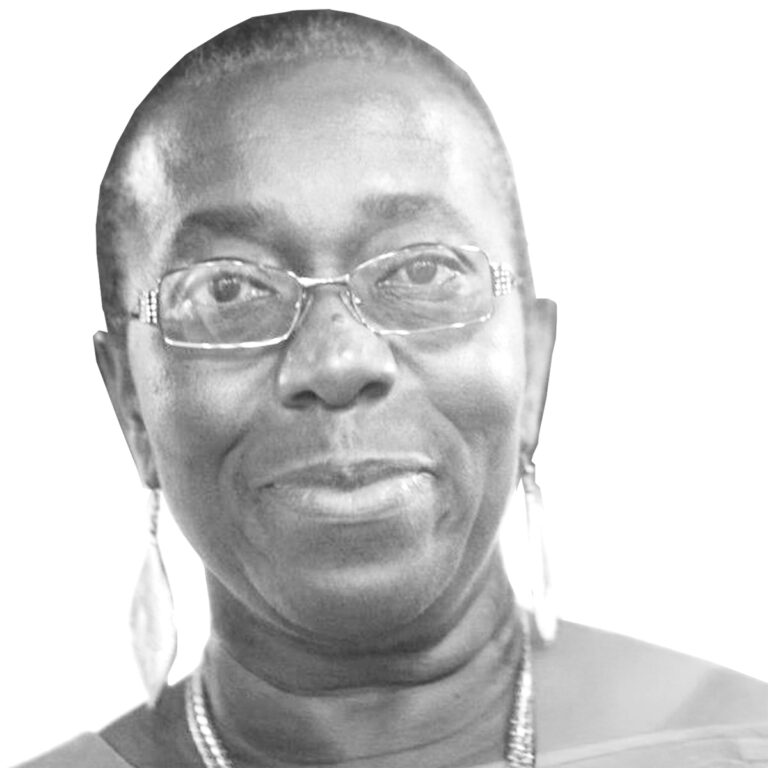
Claudet V. Hamilton Dies at 75
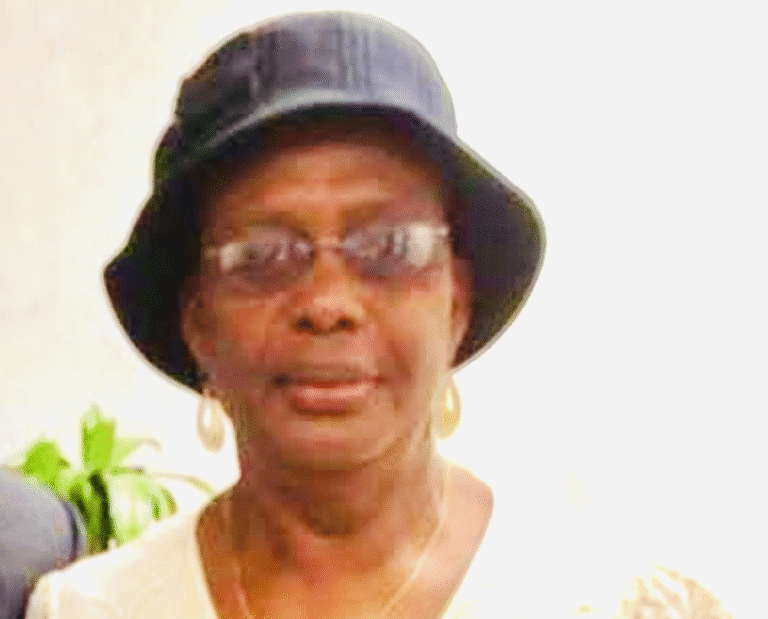
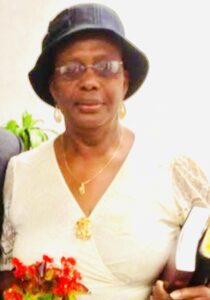
Carlos Sterling Dies at 83
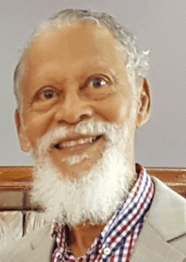
Op-Ed: Why Hope, Backed by Action and Accountability, is Key to Our Future
 As we conclude the first quarter of 2026, the global energy crisis driven in part by ongoing conflict in the Middle East is expected to further strain affordability across the Virgin Islands. Rising fuel costs will continue to ripple through our economy, increasing the price of electricity, food, transportation, and everyday living. For many families, the pressure is already real.
And yet, I am still hopeful. Virgin Islanders have never been defined by crisis. We have always been defined by how we respond to it. We have faced hardship before. And time and again, we have risen to the occasion.
Reflecting on our past is not an exercise in nostalgia; it is a reminder of what we are capable of. My own story, rooted right here in the Virgin Islands, shapes my belief in who we are and what we can achieve together.
I remember growing up in Hospital Ground (round-deh-field) on St. Thomas, spending afternoons at my father’s auto mechanic garage. The sounds of engines, the smell of oil and metal, and the constant movement of people left a lasting impression. My siblings and I ran a small shop nearby, selling snacks to help cover basic needs like school uniforms. We were young, but we understood responsibility. We understood hustle. We understood that if we wanted something, we had to work for it.
Later, in the Donoe Housing Community, I saw that same resilience in my mother. She worked tirelessly at Tropical Shipping and the University of the Virgin Islands to provide for our family. But we were never alone. Neighbors looked out for us. The community stepped in where needed. There was an unspoken understanding that we take care of each other. That was the Virgin Islands I knew. And while times were not easy, there was something powerful that carried us through, trust in one another and confidence that together, we could overcome anything.
Today, that confidence is being tested. We are experiencing a period of slow recovery from the hurricanes of 2017, burdened by failing infrastructure, poor fiscal management, and, at times, a lack of clear priorities. Our energy system is unreliable and expensive. Our healthcare system is fragile. Schools are under-resourced. The cost of living continues to rise faster than we can keep up with.
And most concerning, public trust has eroded. When systems don’t work, when leadership lacks focus, and when progress feels stalled, people begin to lose faith. Our community begins to look elsewhere for opportunity, not because we want to leave, but because we feel we have no choice.
But I refuse to accept that as our future. Because the truth is we are not without solutions. What we have lacked is alignment, discipline, and the willingness to make tough decisions. If we are serious about improving quality of life in this territory, we must start with clear priorities and bold, decisive action.
We must confront our energy crisis head-on. Fixing our energy system is not optional; it is foundational. Reliable and affordable energy will reduce the cost of living, strengthen businesses, stabilize government operations, and restore confidence across every sector of our economy.
We must also commit to responsible fiscal management, spending wisely, planning strategically, and ensuring that every dollar delivers value to the people. We must rebuild our institutions, not just structurally, but ethically, restoring integrity, transparency, and accountability in how we govern. And we must invest intentionally in our people, through quality education, accessible healthcare, and pathways to economic opportunity.
None of this will be easy. It will require discipline. It will require sacrifice. And it will require leadership that is willing to make hard choices, not popular ones, but necessary ones.
But I remain hopeful because I see the spirit of the Virgin Islands alive every day. I see it when neighbors check on elders during power outages. I see it when teachers go beyond their classrooms to support our children. I see it when community organizations come together to lift others in times of need.
That spirit has never left us. It is our foundation and it is our path forward. We can build a Virgin Islands defined by reliability, opportunity, and integrity. A Virgin Islands where systems work, where families can afford to live, and where future generations can thrive without having to leave home.
But hope alone will not get us there. Hope must be matched with action. Vision must be backed by execution. And leadership must be rooted in accountability and results.
As we move through this year, I invite all of us to recommit—not just to believing in a better Virgin Islands, but to building it together. Because our history has already shown us what is possible. Now it is up to us to deliver.
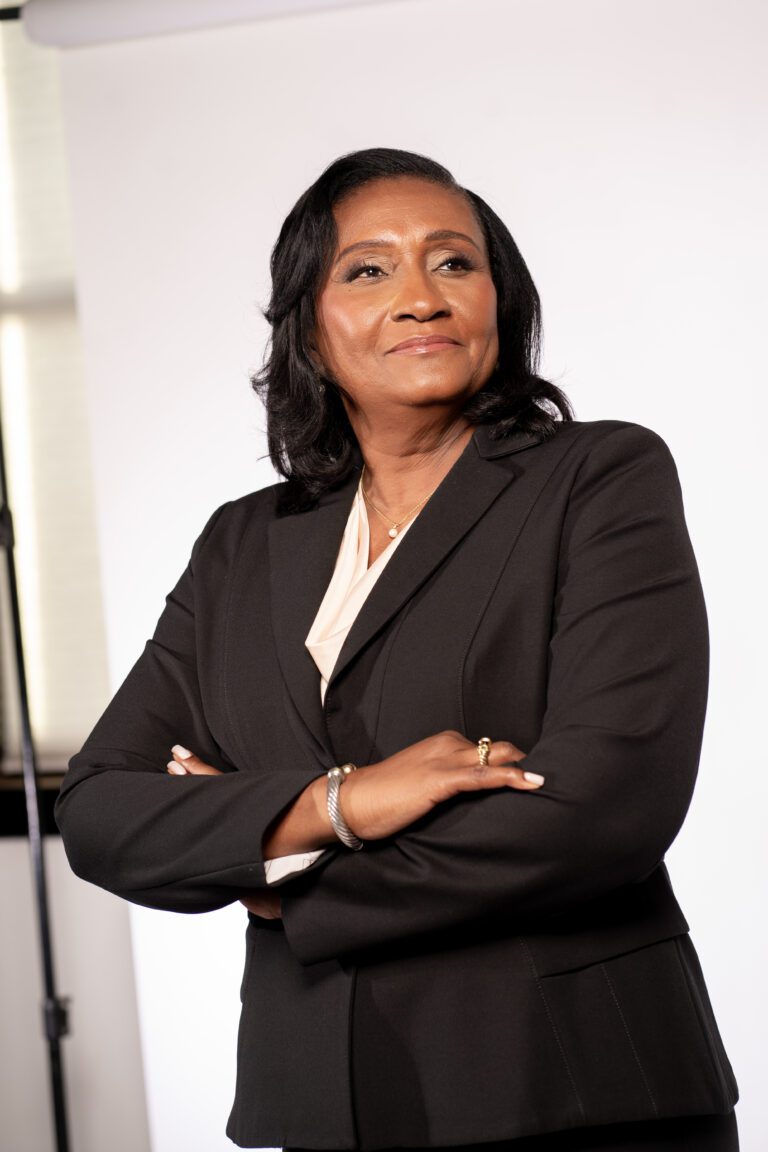
Donna Frett Gregory,
—Donna Frett-Gregory served as Senator in the 33rd, 34th, and 35th Legislatures of the U.S. Virgin Islands. Beyond public service, Frett-Gregory is the Chief Operating Officer of PivotPoint Strategies and executive director of DFG Community Impact Foundation of the Virgin Islands, a Non-profit organization.
As we conclude the first quarter of 2026, the global energy crisis driven in part by ongoing conflict in the Middle East is expected to further strain affordability across the Virgin Islands. Rising fuel costs will continue to ripple through our economy, increasing the price of electricity, food, transportation, and everyday living. For many families, the pressure is already real.
And yet, I am still hopeful. Virgin Islanders have never been defined by crisis. We have always been defined by how we respond to it. We have faced hardship before. And time and again, we have risen to the occasion.
Reflecting on our past is not an exercise in nostalgia; it is a reminder of what we are capable of. My own story, rooted right here in the Virgin Islands, shapes my belief in who we are and what we can achieve together.
I remember growing up in Hospital Ground (round-deh-field) on St. Thomas, spending afternoons at my father’s auto mechanic garage. The sounds of engines, the smell of oil and metal, and the constant movement of people left a lasting impression. My siblings and I ran a small shop nearby, selling snacks to help cover basic needs like school uniforms. We were young, but we understood responsibility. We understood hustle. We understood that if we wanted something, we had to work for it.
Later, in the Donoe Housing Community, I saw that same resilience in my mother. She worked tirelessly at Tropical Shipping and the University of the Virgin Islands to provide for our family. But we were never alone. Neighbors looked out for us. The community stepped in where needed. There was an unspoken understanding that we take care of each other. That was the Virgin Islands I knew. And while times were not easy, there was something powerful that carried us through, trust in one another and confidence that together, we could overcome anything.
Today, that confidence is being tested. We are experiencing a period of slow recovery from the hurricanes of 2017, burdened by failing infrastructure, poor fiscal management, and, at times, a lack of clear priorities. Our energy system is unreliable and expensive. Our healthcare system is fragile. Schools are under-resourced. The cost of living continues to rise faster than we can keep up with.
And most concerning, public trust has eroded. When systems don’t work, when leadership lacks focus, and when progress feels stalled, people begin to lose faith. Our community begins to look elsewhere for opportunity, not because we want to leave, but because we feel we have no choice.
But I refuse to accept that as our future. Because the truth is we are not without solutions. What we have lacked is alignment, discipline, and the willingness to make tough decisions. If we are serious about improving quality of life in this territory, we must start with clear priorities and bold, decisive action.
We must confront our energy crisis head-on. Fixing our energy system is not optional; it is foundational. Reliable and affordable energy will reduce the cost of living, strengthen businesses, stabilize government operations, and restore confidence across every sector of our economy.
We must also commit to responsible fiscal management, spending wisely, planning strategically, and ensuring that every dollar delivers value to the people. We must rebuild our institutions, not just structurally, but ethically, restoring integrity, transparency, and accountability in how we govern. And we must invest intentionally in our people, through quality education, accessible healthcare, and pathways to economic opportunity.
None of this will be easy. It will require discipline. It will require sacrifice. And it will require leadership that is willing to make hard choices, not popular ones, but necessary ones.
But I remain hopeful because I see the spirit of the Virgin Islands alive every day. I see it when neighbors check on elders during power outages. I see it when teachers go beyond their classrooms to support our children. I see it when community organizations come together to lift others in times of need.
That spirit has never left us. It is our foundation and it is our path forward. We can build a Virgin Islands defined by reliability, opportunity, and integrity. A Virgin Islands where systems work, where families can afford to live, and where future generations can thrive without having to leave home.
But hope alone will not get us there. Hope must be matched with action. Vision must be backed by execution. And leadership must be rooted in accountability and results.
As we move through this year, I invite all of us to recommit—not just to believing in a better Virgin Islands, but to building it together. Because our history has already shown us what is possible. Now it is up to us to deliver.
Donna Frett Gregory,
—Donna Frett-Gregory served as Senator in the 33rd, 34th, and 35th Legislatures of the U.S. Virgin Islands. Beyond public service, Frett-Gregory is the Chief Operating Officer of PivotPoint Strategies and executive director of DFG Community Impact Foundation of the Virgin Islands, a Non-profit organization. Two Government Employees Walk into a Bar: A Comprehensive Wealth-Building Policy for the Virgin Islands

Editor’s Note: Opinion articles do not represent the views of the Virgin Islands Source newsroom and are the sole expressed opinion of the writer. Submissions can be made to visource@gmail.com.
Bryan Urges Patience as WAPA Repairs Units, Awaits Parts – While Key Power Contract Remains Unsigned
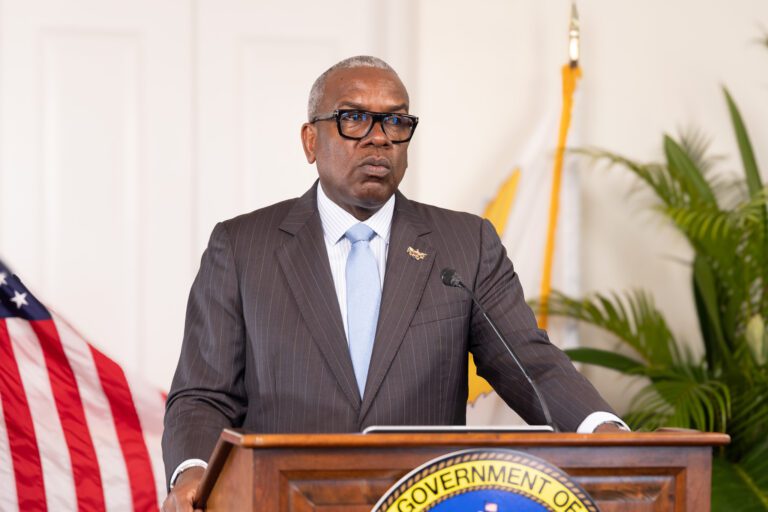
Gov. Albert Bryan Jr. urged residents to “bear with us” as outages continued across St. Thomas and St. John Monday, with repairs underway and a major contract tied to stabilizing the territory’s power system still pending.
Speaking at his weekly press briefing Monday, Bryan acknowledged the strain of the repeated blackouts and rotations, calling the past two weeks “absolutely hell” for residents, but said ongoing questions about declaring a state of emergency miss the core issue. He said such a declaration is typically used to unlock funding or bypass procurement, neither of which he believes is limiting the response at this stage.
Instead, Bryan said he directed WAPA to move forward with repairs and not delay work over cost concerns, telling officials to “give me the bill” and focus on fixing the system, with the government determining how to cover the cost as work progresses. He also indicated a preference to manage the response locally rather than triggering broader emergency mechanisms, particularly given uncertainty around federal response and timelines.
WAPA officials have said pressure has been building for months at the Randolph Harley Power Plant on St. Thomas, where multiple units have been offline, leaving the system with little room to absorb additional failures. Two of the plant’s largest legacy units — Unit 23 and Unit 27 — have been offline since May and December 2025, respectively, while Unit 15, installed in 1980 and well beyond its expected lifespan, had been carrying much of the load before its recent failure.
Over the past week, WAPA Chief Executive Officer Karl Knight shared Unit 15 had been running continuously since September, unable to come offline for routine maintenance without risking broader outages. When it failed earlier this month due to an electrical fault, it removed a key stabilizing component from the grid, leaving the system short of capacity and forcing rotational outages.
Knight said crews were able to bring the unit back online temporarily last week, but it failed again within roughly 24 hours due to a separate issue involving its automated voltage regulator. He noted that some of the components required to complete repairs are no longer manufactured, complicating efforts to source replacements and extending repair timelines.
He added in a call with the Source after the presser that parts for Unit 27 have already been ordered and are expected on island in early April, with installation projected to take about a week. Unit 23 remains in a longer repair cycle, with critical components sent off-island for specialized work.
Meanwhile, Bryan’s comments Monday also prompted questions about where that money would come from, particularly after he said the government would foot the cost for repairs. Asked how the bill would be covered, Bryan said he would not use funds tied to the Epstein settlements, instead pointing to existing funding sources and other options available to the government.
Interestingly, he also noted that WAPA is in a stronger financial position now than in previous years, suggesting the authority could be able to manage the costs itself, while leaving open the possibility of working with the Legislature if additional support is needed.
At the same time, Bryan emphasized that the situation does not rise to the level of an emergency requiring special funding mechanisms, reiterating that resources exist and that the focus is on getting the work done.
When asked after the briefing why the outages persist if WAPA has the money, Knight said one of the primary constraints is time. He noted that parts for key units have already been ordered and are in process, but must be fabricated, shipped, and installed before they can bring additional capacity back online.
Knight said restoring the system is not immediate, even once parts arrive. When units trip, the grid must be brought back in stages, with generators restarted in sequence — a process that can take hours and is further complicated when other units fail to come online as expected.
He added that while the authority is addressing immediate repairs, it is also looking more broadly at system needs, including deferred maintenance across multiple units, which the government’s money could be used to address instead — or expedited shipping costs. Knight said WAPA is compiling cost estimates for that wider scope of work, which he expects to have within 24 to 48 hours, to also include the cost of a “new generator off the shelf.”
Running parallel to those repairs is the long-anticipated replacement of WAPA’s aging generation, a process that formally began in December when the V.I. Public Finance Authority selected Puerto Rico-based RG Engineering to lead design and pre-construction work for the territory’s power plants.
At the time, officials described the effort as a FEMA-funded “prudent replacement” of both the Randolph Harley Plant on St. Thomas and the Richmond Plant on St. Croix — a project expected to total more than $300 million. RG Engineering’s initial contracts for design and pre-construction services were valued at just under $7 million for each site, part of a progressive design-build approach intended to move the projects forward while final scopes and costs are refined.
According to the Office of Disaster Recovery, the solicitation drew multiple bids, but RG Engineering was selected in part for its familiarity with the territory and its ability to navigate permitting and construction challenges unique to the islands. Officials said the approach would allow work to advance in phases, rather than waiting for full design completion before mobilizing.
But while that selection marked a key step forward, the broader contract needed to move the project into execution — including the installation of temporary generation — has not yet been finalized.
At last week’s press briefing, Knight said WAPA and the Public Finance Authority are “tantalizingly close” to executing the next phase of the agreement, which would allow the Authority to begin deploying temporary generation while longer-term replacements are built. However, as of Monday, the Source was unable to determine a firm timeline for when the contract would be signed or what the holdup is at this point.
The delay is significant because temporary generation is built into that larger agreement. Knight said WAPA could pursue temporary power separately, but doing so would require launching a new procurement process — something the authority has opted not to do given how close negotiations are to completion.
That leaves WAPA managing outages while waiting on two parallel tracks: the arrival of parts needed to restore existing units, and the execution of a contract that would bring additional generation online. Asked Monday if this means residents are waiting another three months for a more stable grid, Bryan said he is hoping to see improvements as soon as Tuesday, but more realistically by the end of the week — adding, “this is just ridiculous now.”
Bryan also added that the situation reflects years of deferred maintenance now converging at once, requiring the territory to address multiple failures simultaneously. He pointed to broader investments already underway — including solar projects, battery storage, and the replacement of aging infrastructure — but acknowledged those efforts are also part of a longer timeline.
Addressing questions about whether a presidential disaster declaration or local emergency order could provide relief to residents affected by the outages, including those who have lost groceries or rely on power for medical needs, Bryan added that such mechanisms would offer limited direct assistance in this case. He noted that federal disaster declarations are typically tied to large-scale natural disasters and may not result in immediate or guaranteed support.
At the local level, he said some assistance is already being explored. The Human Services Department is working to provide relief through existing programs, including the potential reissuance of food assistance benefits for eligible residents affected by extended outages. But Bryan said broader compensation for losses, such as spoiled food, is not something a state of emergency would automatically provide.
Meanwhile, an extended outage that began around 8 p.m. Sunday lasted through early Monday afternoon before power was restored, only to go out again briefly around 3:30 p.m. WAPA said service was fully restored by about 5:15 p.m., attributing the disruptions in part to two Wartsila units that had gone offline within the previous 24 hours.Government House Announces Unemployment Insurance Trust Fund ‘Back in the Black’
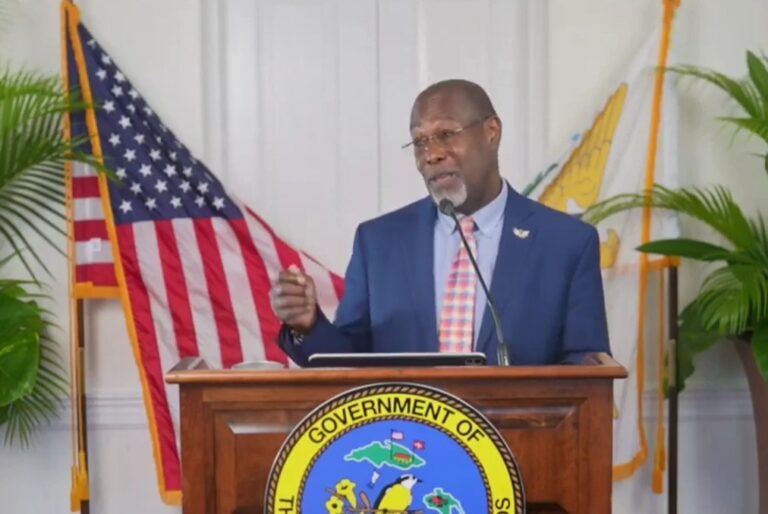
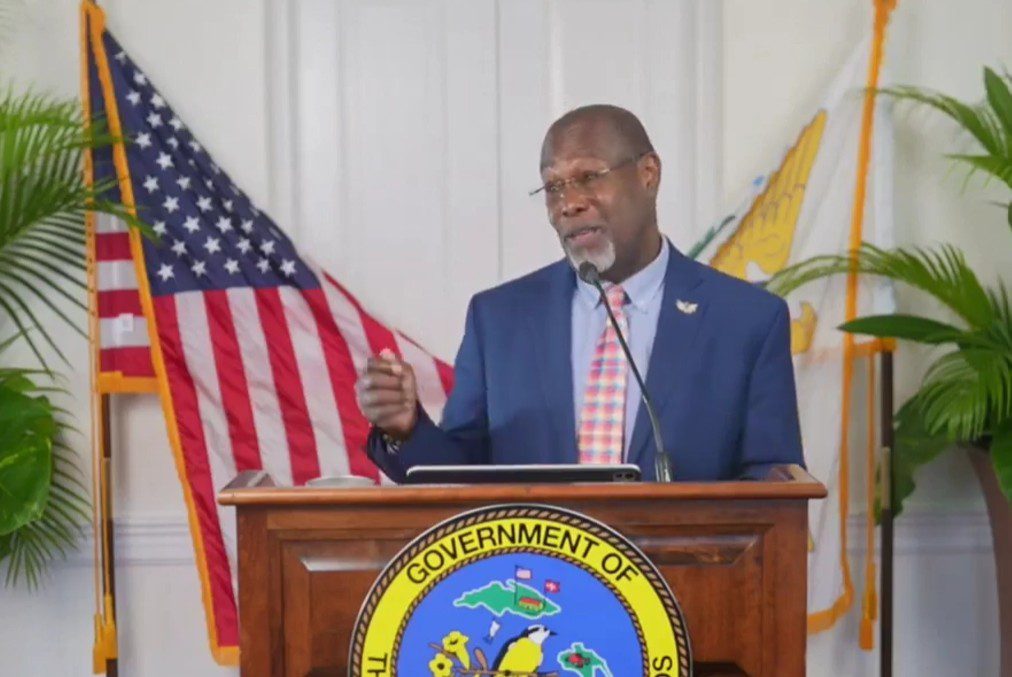
Gov. Albert Bryan Jr. spent much of Monday’s Government House press briefing addressing the ongoing power outages afflicting residents and businesses on St. Thomas and St. John, but he and V.I. Labor Commissioner Gary Molloy also took time to announce that the territory’s Unemployment Insurance Trust Fund is “back in the black” for the first time in 15 years.
Bryan noted that “in a small part, I created this problem because when I was commissioner of Labor we had the ‘Great Recession.’ We were under so much pressure, we borrowed like $80 million from the federal government, and because of that, we’ve been paying extra taxes.”
Molloy took to the podium to announce that the fund held a net positive balance of more than $4 million as of March 20.
“To put this in perspective, as recently as 2022 the Virgin Islands carried nearly $100 million in federal debt tied to the unemployment insurance system. This debt accumulated over time as a result of major economic shocks,” he said. Those include the Great Recession of 2008, Hovensa’s closure in 2012, hurricanes Irma and Maria in 2017 and the COVID-19 pandemic in 2020, “all of which placed significant strain on the economy and workforce.”
In 2016, former V.I. Attorney General Claude Walker and former Labor Commissioner Catherine Hendry announced that more than 3,000 of the territory’s businesses collectively owed upward of $32 million in contributions to the fund. Hendry said at the time that the fund contained $1.7 million but needed an approximately $8 million reserve to serve Virgin Islands workers. The joint statement prompted Bryan to respond in a lengthy op-ed published in local media outlets.
“The Legislature systematically began to lower the tax rate, eliminate penalties and increase the amount that was being paid out to unemployed individuals. This helped to decrease the tax fund, but it still would not go down significantly,” he wrote at the time. “The Legislature finally eliminated the tax rate by lowering it to zero in 2001. This meant that for more than 10 years, businesses did not have to pay any local Unemployment Tax.”
“It was only after much research and deliberation that we went to the Legislature in 2012 and got them to raise that minimum tax rate to 1.5 percent,” he added.
Molloy went before the 33rd Legislature in 2019 with proposed legislation that based employers’ tax rate on their payroll and contributions into the system instead of a flat rate and said the change was necessary to bring the territory into compliance with federal law.
“The results are clear,” he said during Monday’s briefing. “We have moved from deficit to surplus, from borrowing to stability, and from uncertainty to confidence. So what does this mean for you, the people of the Virgin Islands? First, it means greater economic stability — a solvent trust fund ensures that we can support workers during periods of unemployment without relying on federal emergency borrowing.
“Second, it means relief for employers,” he said. “As we approach full repayment of the federal loan, employers will begin transitioning back to standard federal unemployment tax rates, rather than the higher penalty rates associated with the outstanding debt. Third, it reflects stronger fiscal stewardship for the territory.”
Molloy said the Labor Department is on track to make its final loan payment in May.
On Monday, Bryan also announced his nomination of V.I. Internal Revenue Director Joel Lee to chair the V.I. Casino Control Commission and a recent effort to collect the stories of Virgin Islands residents and business owners who have been impacted by the Trump administration’s elimination of the “de minimis” exemption for packages from outside the U.S. Customs Zone.
“All we need is an execution by the president and the White House, and we’re just putting that together and sending that on,” he said, adding that he didn’t know offhand how many responses Government House had received. “You know, I thought for them to request it was kind of crazy anyway, but we just do what is requested to show the change on that.”
Bryan noted that he intends to follow up on the issue during a visit to Washington, D.C., scheduled for June.
Man Dies After Shooting Near Sunny Isles Gas Station on St. Croix

VIHFA Response to Claims Regarding Funding Delays for Infrastructure Projects

- There are no outstanding or pending payment requests in VIHFA’ s grant management system related to Wärtsilä or West Peak.
- On February 27, 2026, VIHFA program leads and leadership met with WAPA’s team and confirmed that there were no outstanding payments pending within our system.
- Six consultations with the Department of Planning and Natural Resources remain outstanding and are directly tied to key projects, including the Feeder 11 and 12 Rebuild, St. Thomas Substation BESS, Transformer Replacement Project, and Distribution Automated Devices. Completion of these consultations is required before VIHFA can finalize its environmental review and proceed with requesting authorization to use the Electrical Grid grant funds for project commencement.
- On August 8, 2025, VIHFA directed the Office of Disaster Recovery, which has programmatic oversight, to reassess West Peak Energy’s proposed amendment, align the budget with available line items, and revise the project scope so that the project is not deemed ineligible under HUD requirements. The Authority remains prepared to review the amendment upon receipt of the requested revisions.