





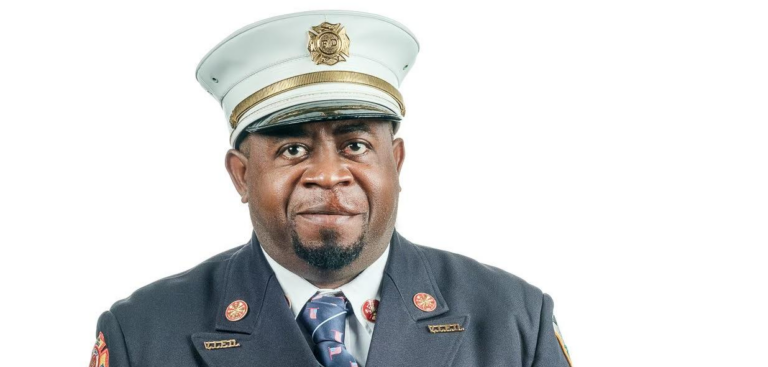
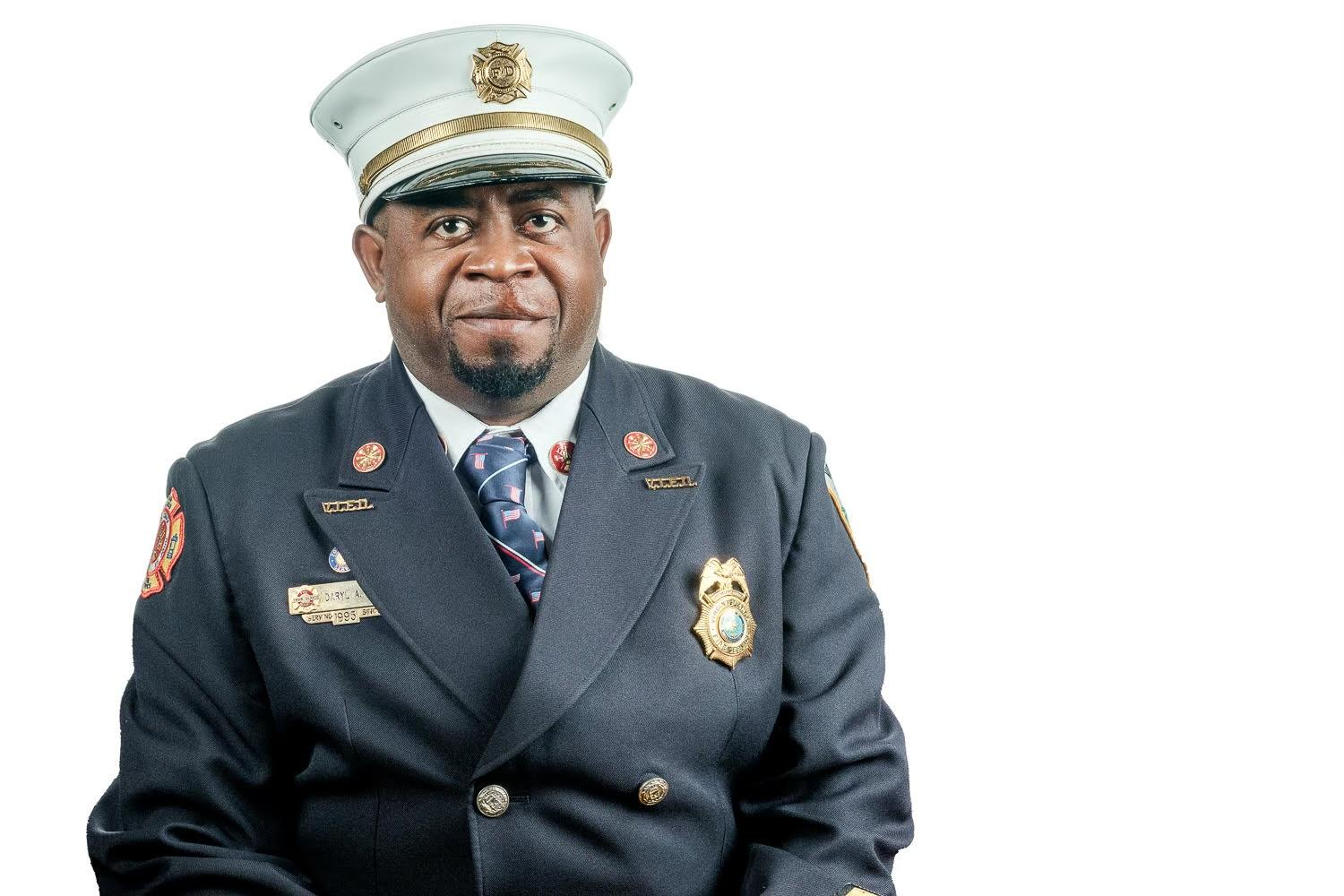
The funeral services for Virgin Islands Fire and Emergency Medical Director Daryl A. George Sr., who died on Oct. 24 following a sudden illness, will be held on Saturday at the Omar Brown Sr. Fire Station on St. Thomas.
Director George, who was better known as “Mousy,” will lie in state at the fire station on Friday from 9 a.m. to noon, providing an opportunity for friends, colleagues, and community members to pay their respects. Candlelight vigils were held Wednesday on St. Croix and Thursday on St. Thomas.
Viewing will be held on Saturday from 8:30 to 9:30 a.m., with the funeral service from 9:30 to 11 a.m. Immediately following the service, the interment will take place at Western Cemetery #1. A repast in honor of Director George will be hosted at Joe’s Hot Spot, located across from Property and Procurement.
Director George was preceded in death by his father, Alric A. George, and his mother, Nathena Thomas-George.
He is survived by his daugthers, Darline George and Te-Nae’ T. George; sons Daryl A. S. George Jr., D’Andre A. George and DeLani A. George; brother Victor N. Barry and family brother Leroy Adams; grandchildren Jaymecia Baham, Jalia Baham Brian and Copper Jr.; companion Deborah Hazelwood; sister-in-law Inger Barry; aunts Ann M. Vicars, Thomas, and Erma Thomas.
He also is survived by his cousins Enid Dowling-Lettsome, Maria Thomas-Lewis, Debra Thomas-Henry, Joyce Thomas, Edna Mae Thomas-Garcia, Diane Thomas-Seales, Silia Thomas-Brown, Xina Thomas-Joseph, Ibia Thomas-Jackson, Judith James, Laurie Thomas-Jacobs, Sandra Thomas, Deidre Thomas, Vanessa Thomas-Barrows, Eugene Thomas, Kai Thomas, Rhydel Robinson, Eric Thomas, Mario Thomas, Lee Thomas, George Thomas, Carol Thomas, Edwin Thomas Jr., Dean Thomas, Antoinette Garcia, Christine Steinmann, Fern McAlpin, Atty. Michael Joseph, Rodney Joseph, Ugel George Sr., James George Jr., Judith George-Savage, Joycelyn George-Donovan, Joanne Cooper, Jenifer O’Neal, and Jade O’Neal-Daniel.
Special friends include John P. De Jongh Jr., Henry C. Richardson, Cindy Richardson, Eugenie Williams, Shirleen Richards, Tamika D.R. Scatliffe, Gregory Ryhmer, David “Stuffy” Hodge, Samuel “Sammy” Blyden, Eustace “Dundeal” Grant, Lauriel “Jojo” Gumbs, Calvert White, Joseph “Joe” Challenger, Antonio Enrique, Aubrey Pickering Jr., Derek Gabriel, Melanie Turnbull, Orville Isaac, Claudette James, Bernadette Rivera, Ivy Broadbelt, Diane Broadbelt, Celestine Levy, Lekay Flax, Jose (Crash) and Joyce Kean, Rita Adams, Derek Vanholten, Dean Vanholten, Anthony Fleming, Kenrick Huyqhue, Janice Henley-Huyghue, Cassandra Adams, Castroy Adams, Lynette Quetal, Pethronella Wilkins, Jose (Tony) Rosario, George Richardson, Avrill Prince, Melvin “Belly” Harrigan, Derek Smith, Suzette Matthew, Elvis Matthews, Denis Mathews, Curtis Bradshaw, Dedra Ottley, Aurora Baptiste-Donovan, VIFEMS staff, and members of the St. Thomas Retired Firefighters Association.
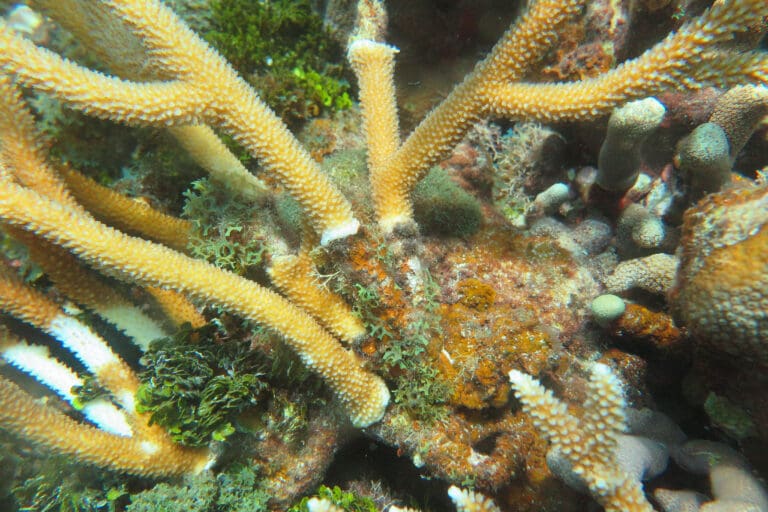
The outlook for coral reefs continues to dim worldwide, and regionally, the situation is particularly dire.
Already rapidly degrading from bleaching events, from the mysterious pathogen of Stony Coral Tissue Loss Disease, and from various human-development stresses, Caribbean reefs are now exploding with algae crusts that threaten to muscle out live coral.
So-called PAC (peyssonnelid algal crusts) are not a new phenomenon. Marine scientists have long been aware of their negative impact on coral reefs, where they compete for space and nutrients with coral. What is new is the speed at which PAC are overtaking corals in some parts of the world, including the Caribbean.
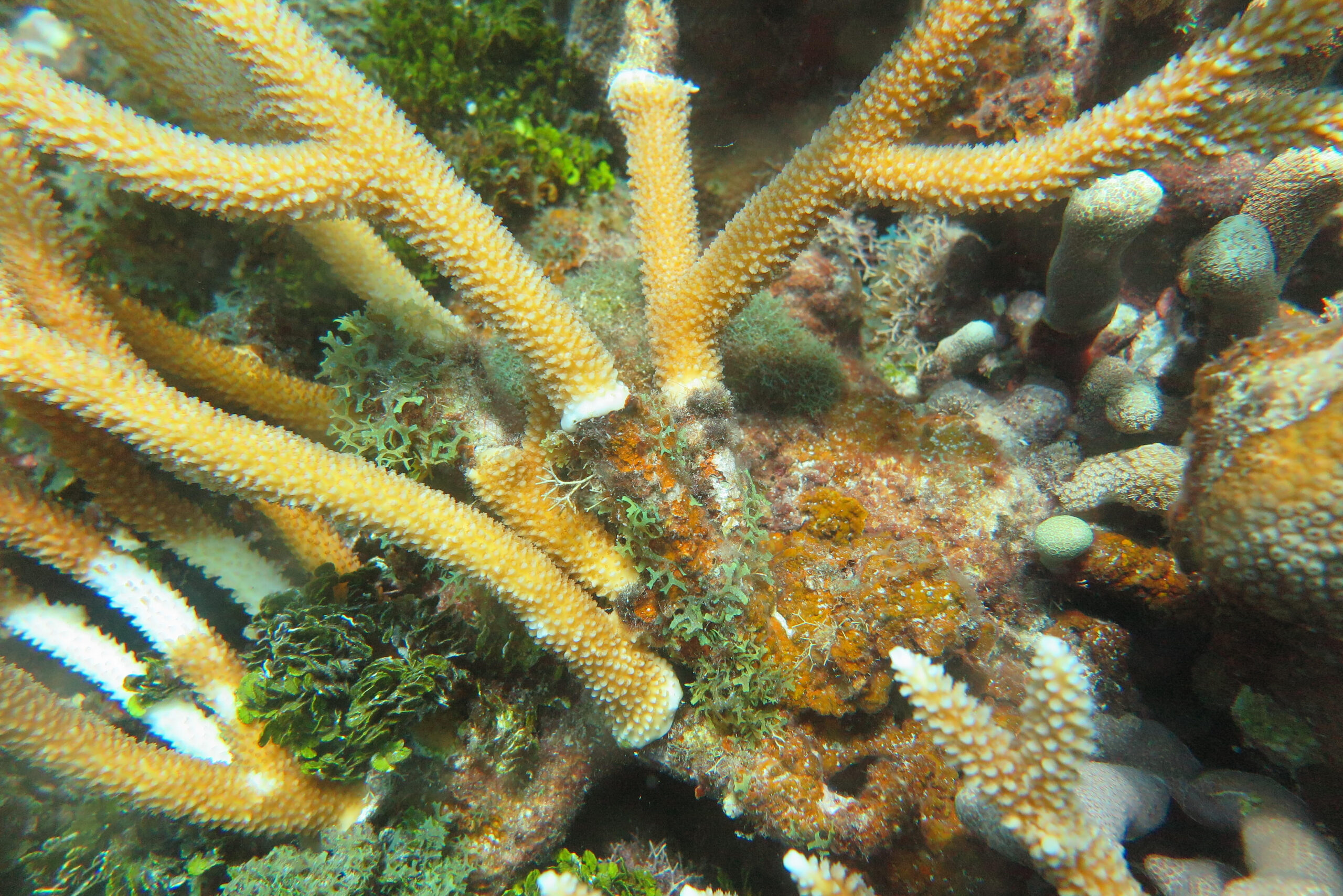
In a research paper entitled “The Rising Threat of Peyssonnelioid Algal Crusts on Coral Reefs,” published earlier this month in the peer-reviewed publication Cell, the authors suggest that PAC “could hasten the global demise of corals on reefs under accelerating climate change.”
The paper is the work of three researchers: Peter Edmunds of California State University, Thomas Schils of the University of Guam, and Bryan Wilson of the University of Oxford, United Kingdom.
Their findings dovetail with local research, according to Tyler Smith, a University of the Virgin Islands professor and the director of the territory’s coral reef monitoring program.
The local program tracks 34 reefs throughout the territory, in depths ranging from about seven feet to 220 feet, he said.
Smith said that one author of the recent report, Edmunds, has been studying reefs in St. John waters for about 40 years.
“PAC became conspicuous on the reefs of St. John, United States Virgin Islands, around 2012, and by 2019 they covered 47 percent to 64 percent of benthic space (ocean bottom) at three-meters depth,” the paper states.
“We really noticed it about 2016 or 2017,” Smith said. It prompted the V.I. researchers to look back at video records they had from previous surveys, and sure enough, they were able to spot a small amount of PAC that had previously been overlooked. The damaging algae crusts have been on St. John reefs “since at least 2004.”
PAC is easily mistaken for other types of algae, according to the report.
That’s one reason it is unclear whether the current prevalence of it on Caribbean reefs indicates an ecological change that has caused PAC production to rapidly accelerate or whether it is an invasive species that is multiplying rapidly because it has few predators in this area.
“Maybe we’re just seeing it more,” Smith said. Or maybe it hitched a ride on a vessel coming from the Indo-Pacific, where it has long been established.
Either way, controlling PAC is not going to be easy. Smith cited two UVI research projects that showed it is highly resilient.
One study conducted by Karli Hollister in 2018 found that only one in six coral species studied was able to stop the advance of PAC.
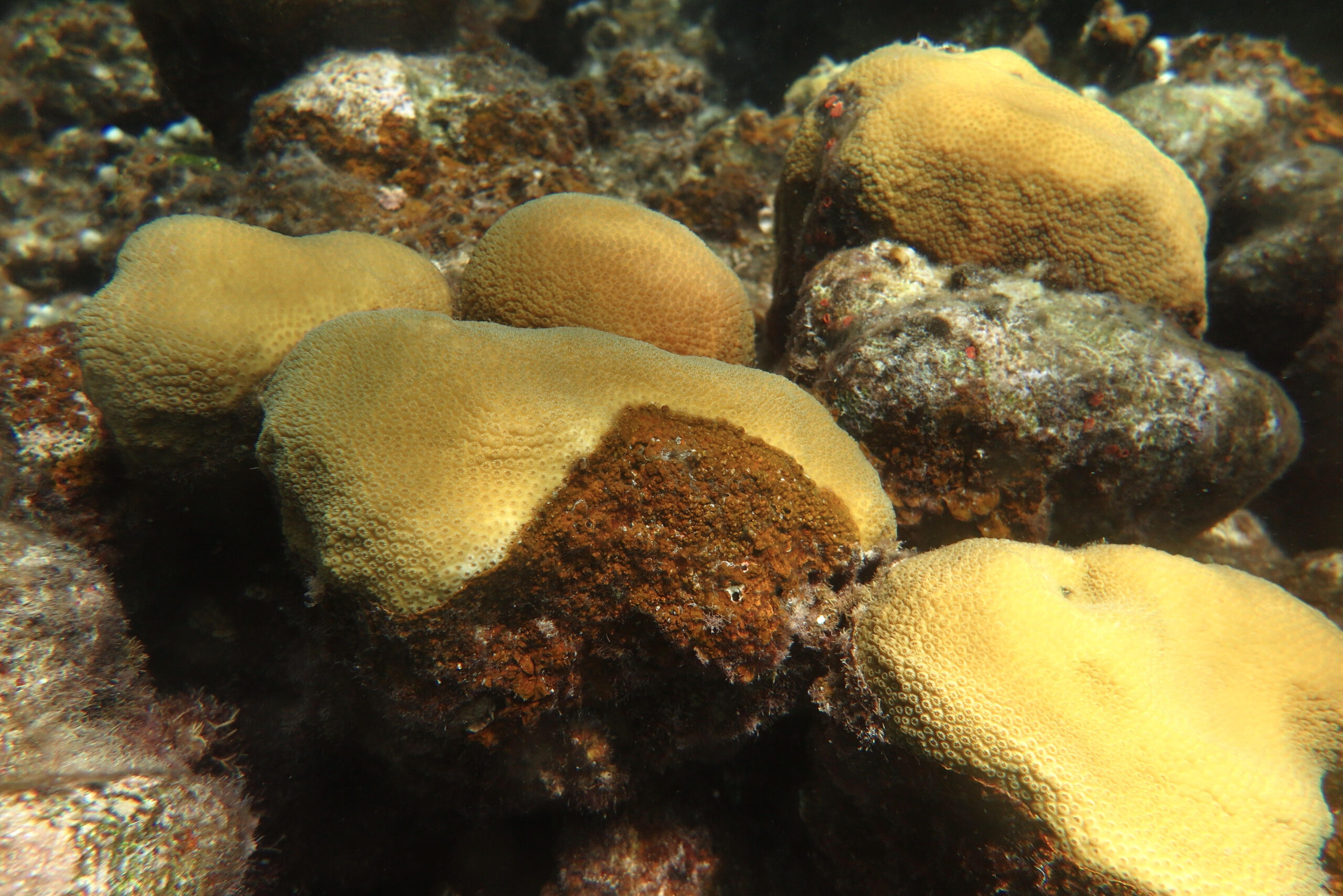
In a follow-up study, another UVI student, Alexys Long, tested the effect of providing extra nutrients to PAC. There was virtually no change, indicating that the algal crust already gets all the food it needs. Long also introduced some PAC to what may be their only serious predator in the Caribbean, the black spiny sea urchin, and showed “it took very high numbers” of sea urchins to control the spread of PAC.
Unfortunately, as the authors of the Cell report noted, the sea urchin is still recovering from a “population collapse” a few years ago.
Smith said there is an ongoing project in Puerto Rico to “grow” sea urchins that could prove useful.
Short of a massive effort to physically remove PAC – obviously an impractical undertaking except in a small, confined space – there apparently is little other method of intervention.
Smith said he leans towards the idea that PAC is an invasive species. If so, “eventually, natural controls will kick in.”
He also noted that although PAC has rapidly become pervasive, “It’s not taking over everywhere.” It tends to favor reefs in clear water where there is a lot of wave action.
Meanwhile, there are still other coral problems to worry about.
Record water temperatures at the end of the summer translated into a 2023 bleaching event that rivals that of 2005, Smith said. The event 18 years ago weakened a massive amount of the V.I. coral population and more than half of them died from resultant disease.
It’s too soon to know how this year’s bleached coral will fair in the aftermath of the event, Smith said, but added, “We do expect a lot of morbidity.” We’ll know the extent in early 2024 when reef surveys are conducted.
Last spring, a report on Stony Coral Tissue Loss Disease co-authored by another UVI professor, Marilyn Brandt, underscored the dangers facing coral reefs: Since the 1970s, there has been a decline of between 50 percent to 80 percent of living coral tissue.
The lush Caribbean reefs of the 1980s are gone, Smith said.
It was their beauty that lured him into the field of marine science, he said, adding with dark humor, “I didn’t expect to be a coroner or a hospice nurse.”
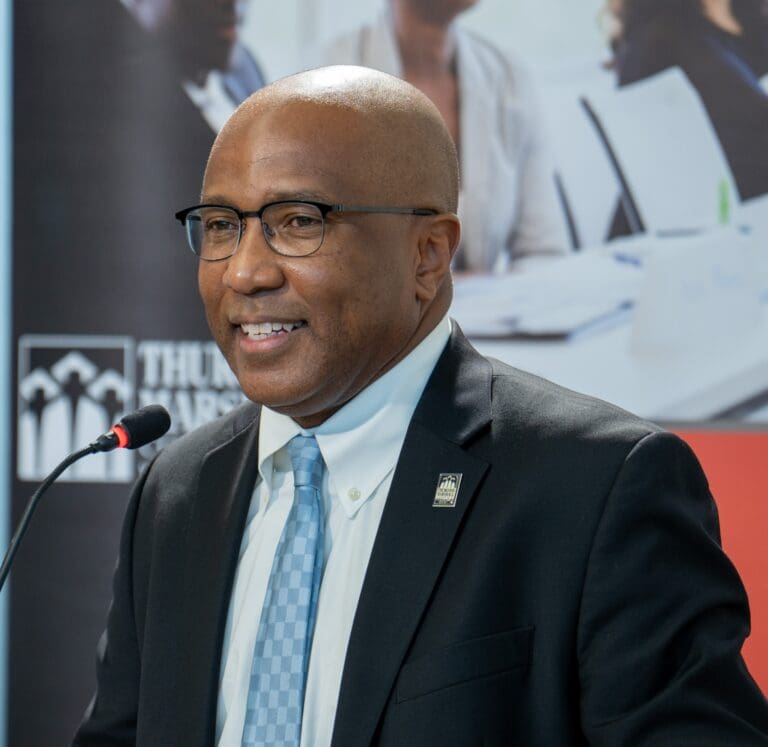



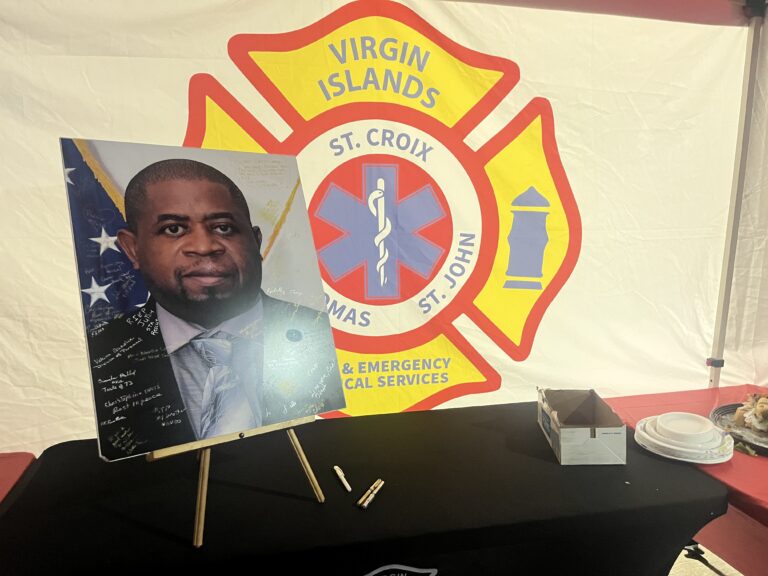
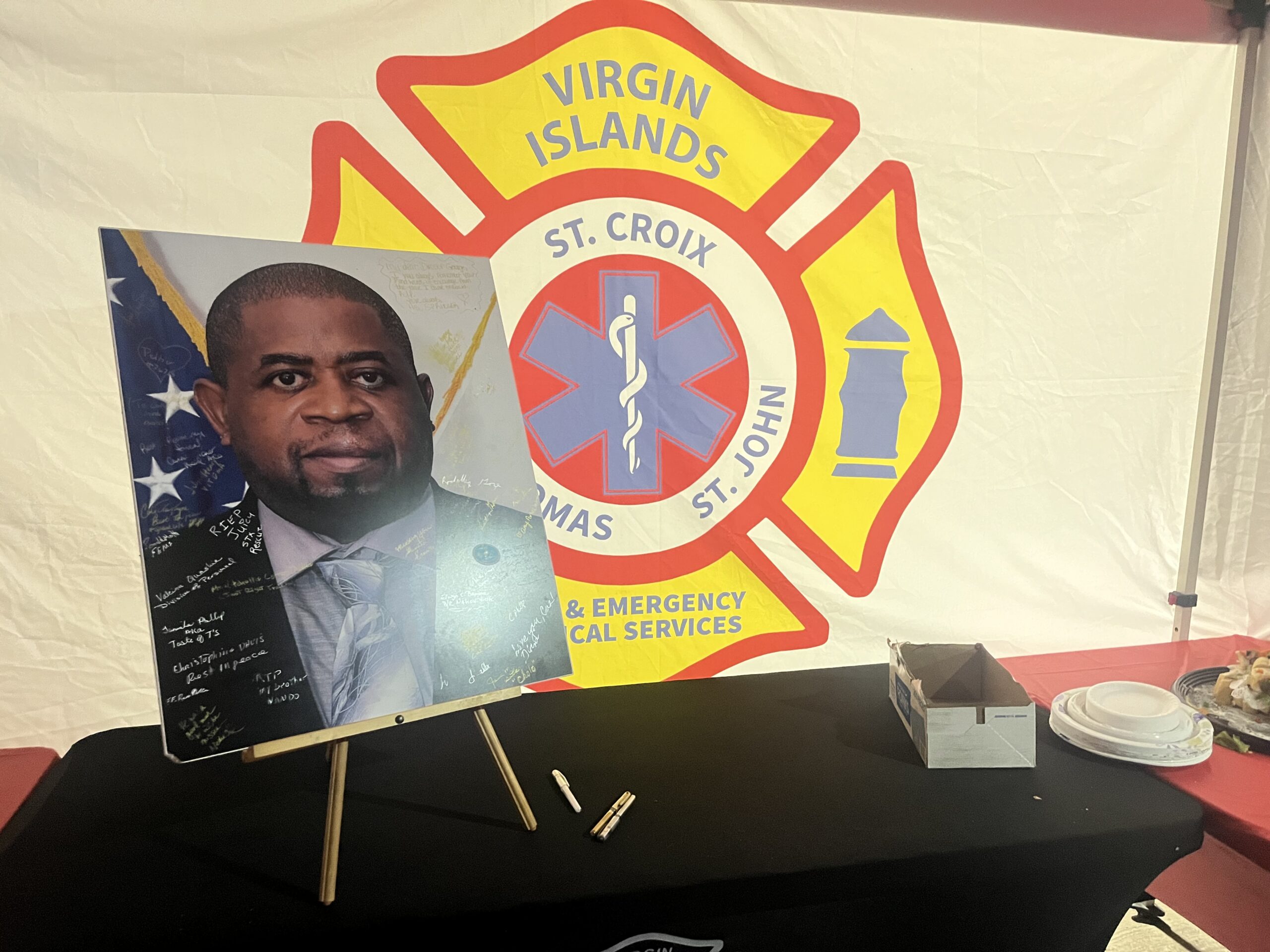
More than 100 community members lit candles in remembrance of the late Fire-EMS Director Daryl A. “Mousy” George on Wednesday evening at the Charles A. Seales Fire Station Annex in Estate Grove Place on St. Croix. The vigil was a moment for them to come out and share stories, pay remembrance, and support George’s family.
EMS Chief Robert Bryan called George “a man of the Virgin Islands.” He said, “Since the funeral arrangements are mostly being conducted on St. Thomas and being that he has touched so many souls here we wanted to make sure that everybody had the chance to be together. We also wanted to let the family see that they loaned him to us for 30 odd years and he just kept giving and giving and giving. We wanted to make sure that they knew how much he meant to us as well.”
The crowd, which also included senators such as Marise James, Diane Capehart, Kenneth Gittens, and other dignitaries, all came out to show their support. People gathered in front of the station to share stories of George while holding candles. Bryan said that after the crowds broke off into groups to reminisce about George, a DJ played music to make everyone feel comforted.
“So much heart and energy that he has put in to see projects complete. He got grants to purchase new fire apparatus. Make sure the fire training continues to happen,” said Bryan.
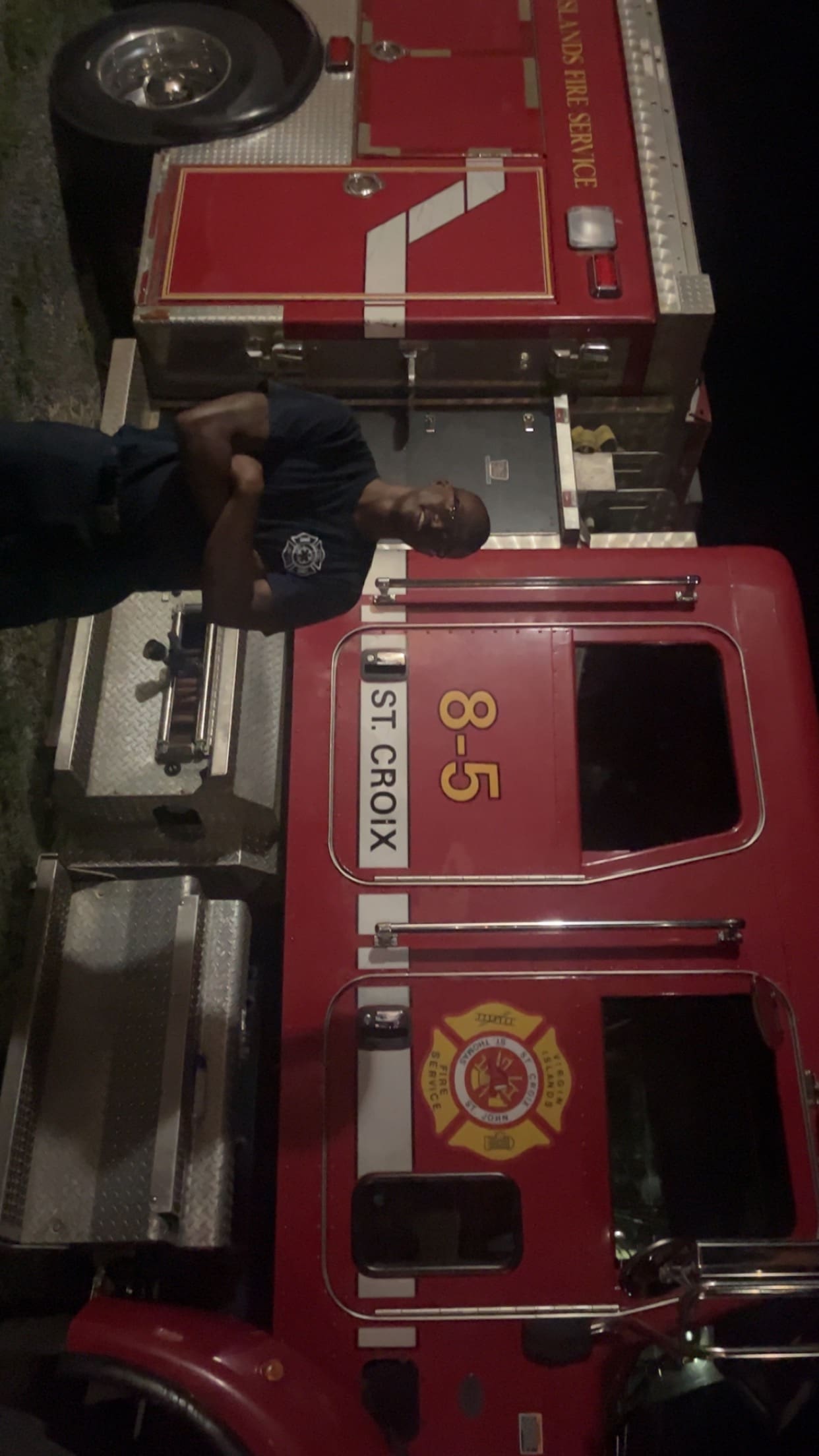
On Thursday, another candlelight vigil was held in memory of George at the Omar Brown Sr. Fire Station on St. Thomas. George will also lie in state at the station on Friday from 9 a.m. to noon, providing an opportunity for other friends, colleagues, and community members to pay their respects.
The funeral services to honor George will be held on Saturday at the Omar Brown Sr. Fire Station. The schedule for the funeral services is as follows:
— Viewing: 8:30 a.m. to 9:30 a.m.
— Funeral service: 9:30 a.m. to 11 a.m.
Following the funeral service, the interment will take place immediately at Western Cemetery #1. A repast in honor of George will be hosted at Joe’s Hot Spot, located across from Property and Procurement.
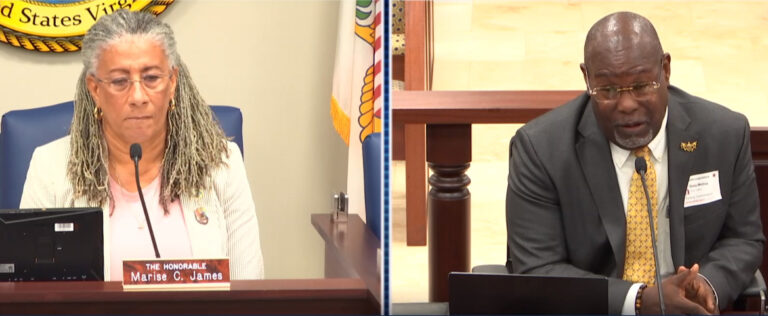
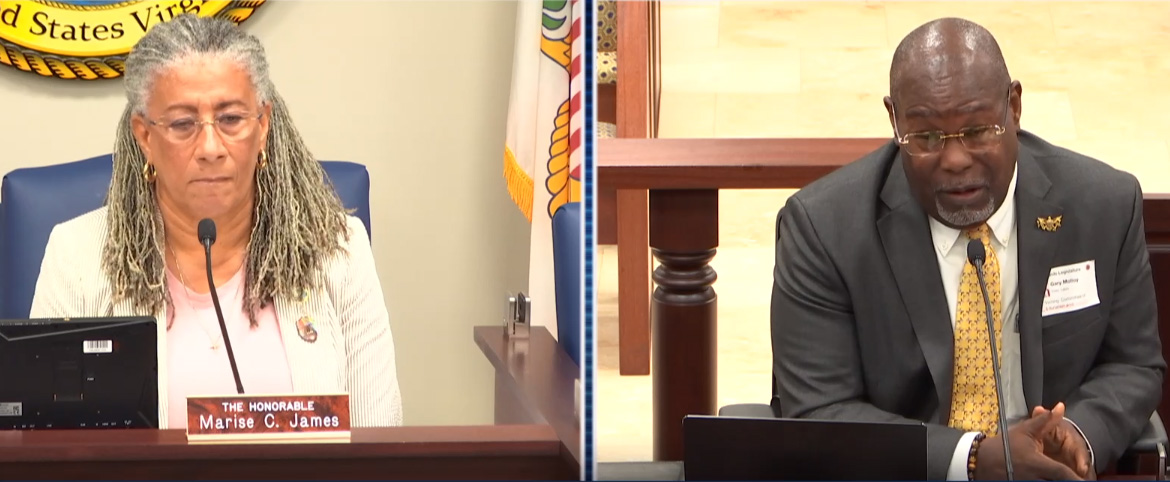
Thursday, senators on the Committee on Education and Workforce Development said agencies testifying had impressive programs, but problems were not being solved.
Gary Molloy, commissioner of Labor, testified, “The Workforce Innovation and Opportunity Act of 2014 federal legislation reinforced the role of local workforce boards in workforce development and stressed the importance of cooperation among stakeholders in the workforce development system.”
Sen. Novelle Francis said, “We have to move away from bureaucracy and red tape.”
Sen. Kenneth Gittens echoed that sentiment in a response to Molloy. “That sounds like a bunch of bureaucracy,” he said. Gittens went on to say that “someone is dropping the ball” regarding the listing of government vacancies with the Labor Department and the government agencies making hires.
The government lists the unemployment rate at 3.5 percent. However, Molloy said the rate is based on a 49 percent participation rate in the labor market. Gittens said the participation rate was “very concerning.” Government officials have said that the territory needs 5,000 to 7,000 more workers to complete all its disaster recovery projects.
Molloy testified that Labor’s Skills for Today initiative “stands out as a pivotal program in the Virgin Islands, providing essential training, certifications, and opportunities for individuals to actively contribute to the recovery, redevelopment, and transformation of our territory.”
He said 541 residents had gone through the program. Thirty-three had completed the supervisory curriculum, 62 welding, 86 electrical, 51 plumbing, and seven pipefitting.
Michael Carty, chairman of the Workforce Development Board, said it is charged with strengthening the workforce development system by collaboratively building partnerships with secondary and post-secondary education, economic development, and the public and private sectors to align and improve economic growth.
He added, “The programs offered by the Virgin Islands Workforce are more than just training; they are pathways to prosperity for individuals and the community.”
However, under questioning, he said the programs in the territory are behind where they should be. He said, “Young people are running into an old system” when they try to join the labor market.
Sen. Franklin Johnson said the programs offered by the Labor Department, the Workforce Development Board, and other agencies testifying, including the Career and Technical Education Board, Career Technical and Adult Education, UVI Cell, UVI RT Park, and My Brother’s Workshop, were amazing.
Johnson then talked about the unemployed young people he saw hanging out on the streets. “Where is the disconnect?” he asked.
After finding out that just about all the programs were free, Sen. Dwayne DeGraff asked, “Why can’t we get them to come in?” Sen. Donna Frett-Gregory questioned whether the “People on St. John were being afforded the same opportunities” as the rest of the territory.
Suzanne Darrow-Magras, director of UVI CELL, testified that CELL classes were income-based, and those who could afford to pay for them did.
She said CELL was launching the following programs this year: surveyor technician certificate program, residential appraiser program, cannabis commerce course, business development and entrepreneurship training, taxi and tour certificate, and community health worker certification.
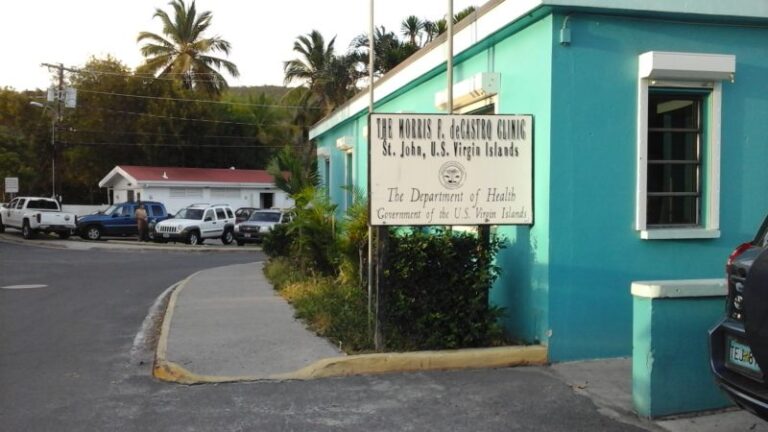
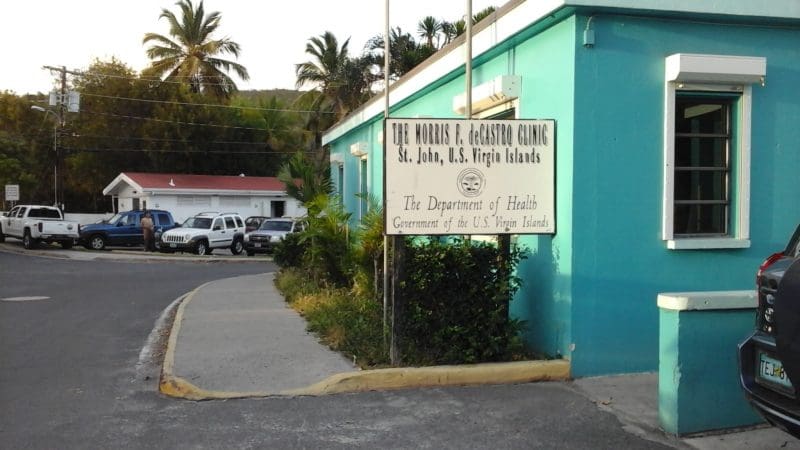
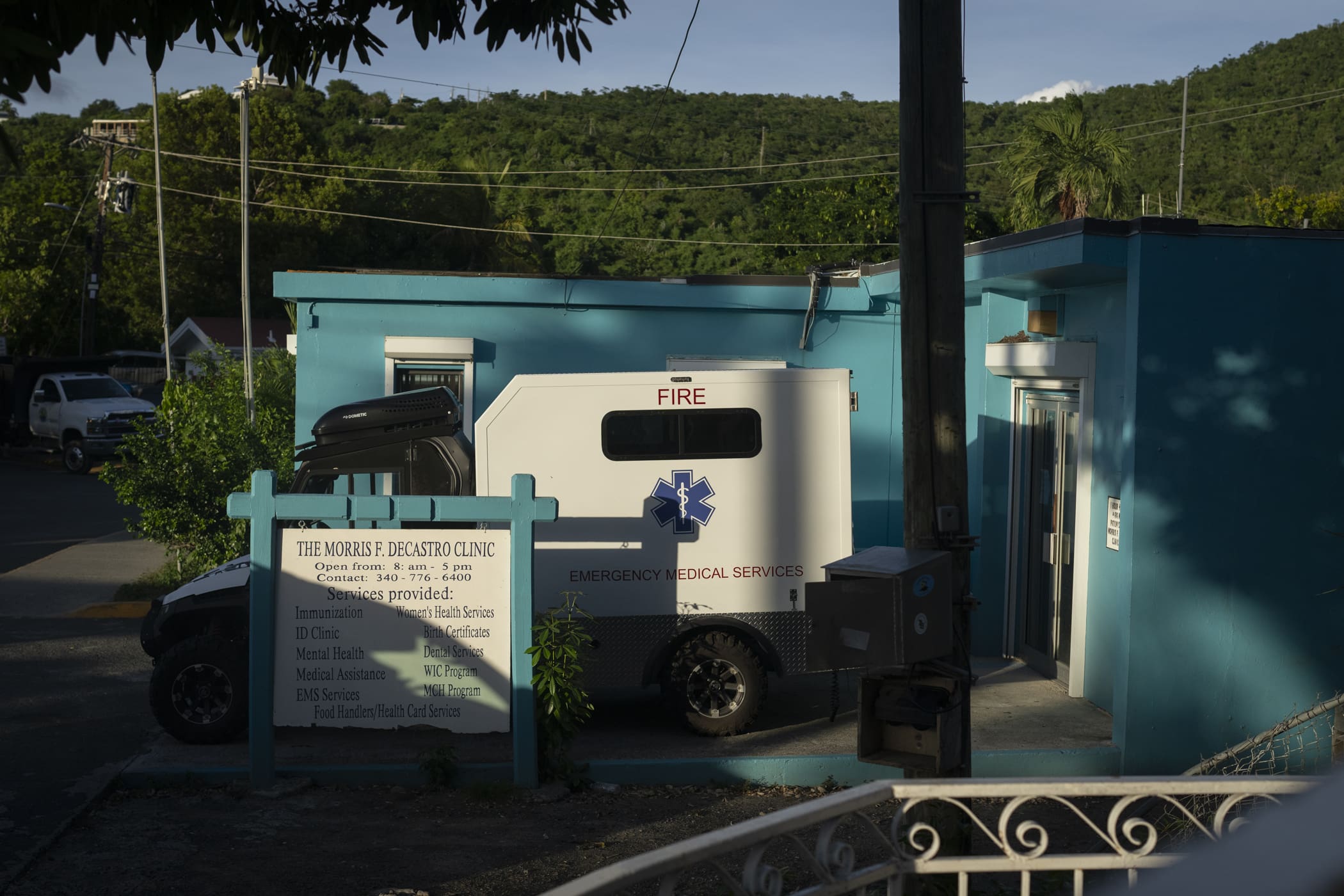
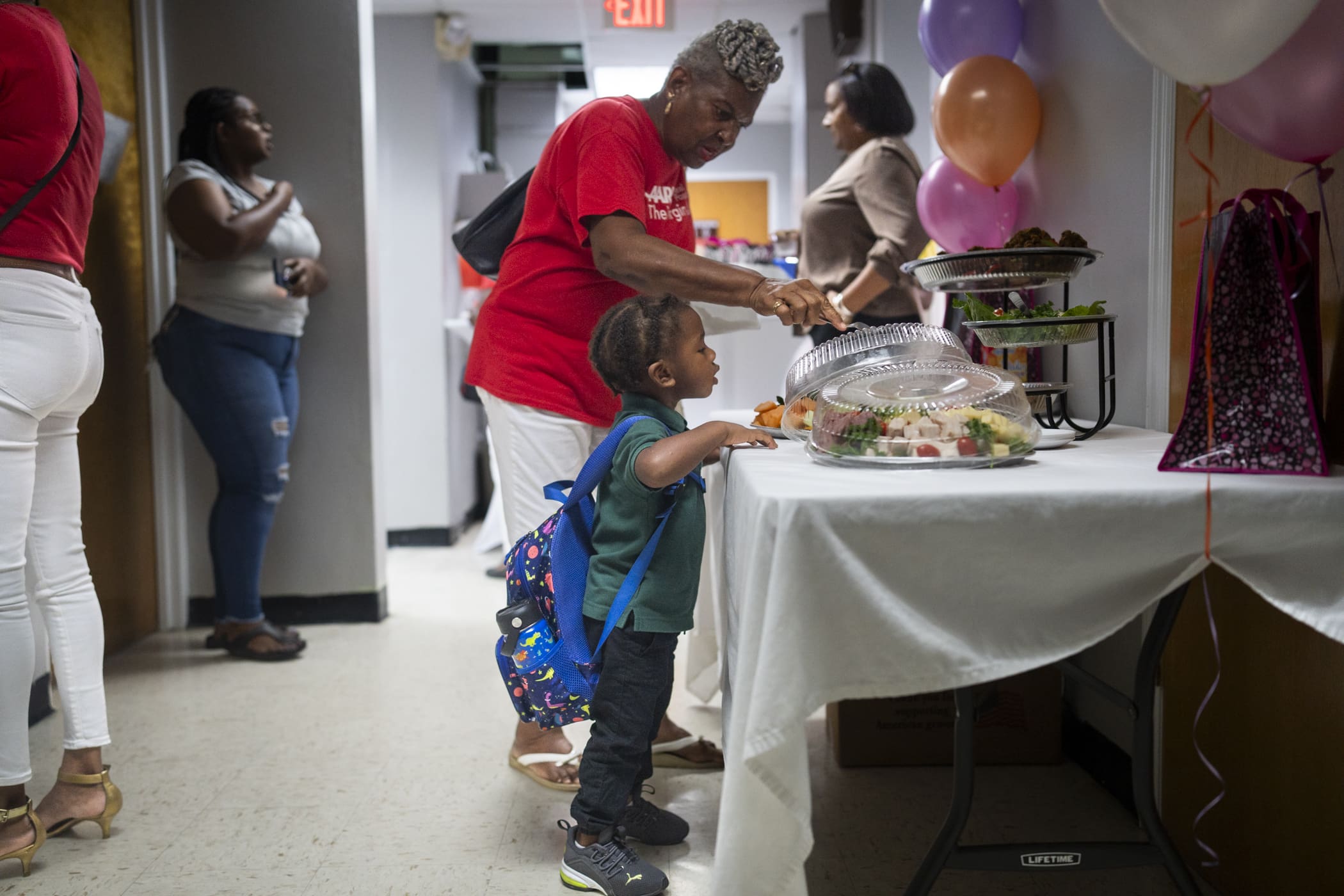
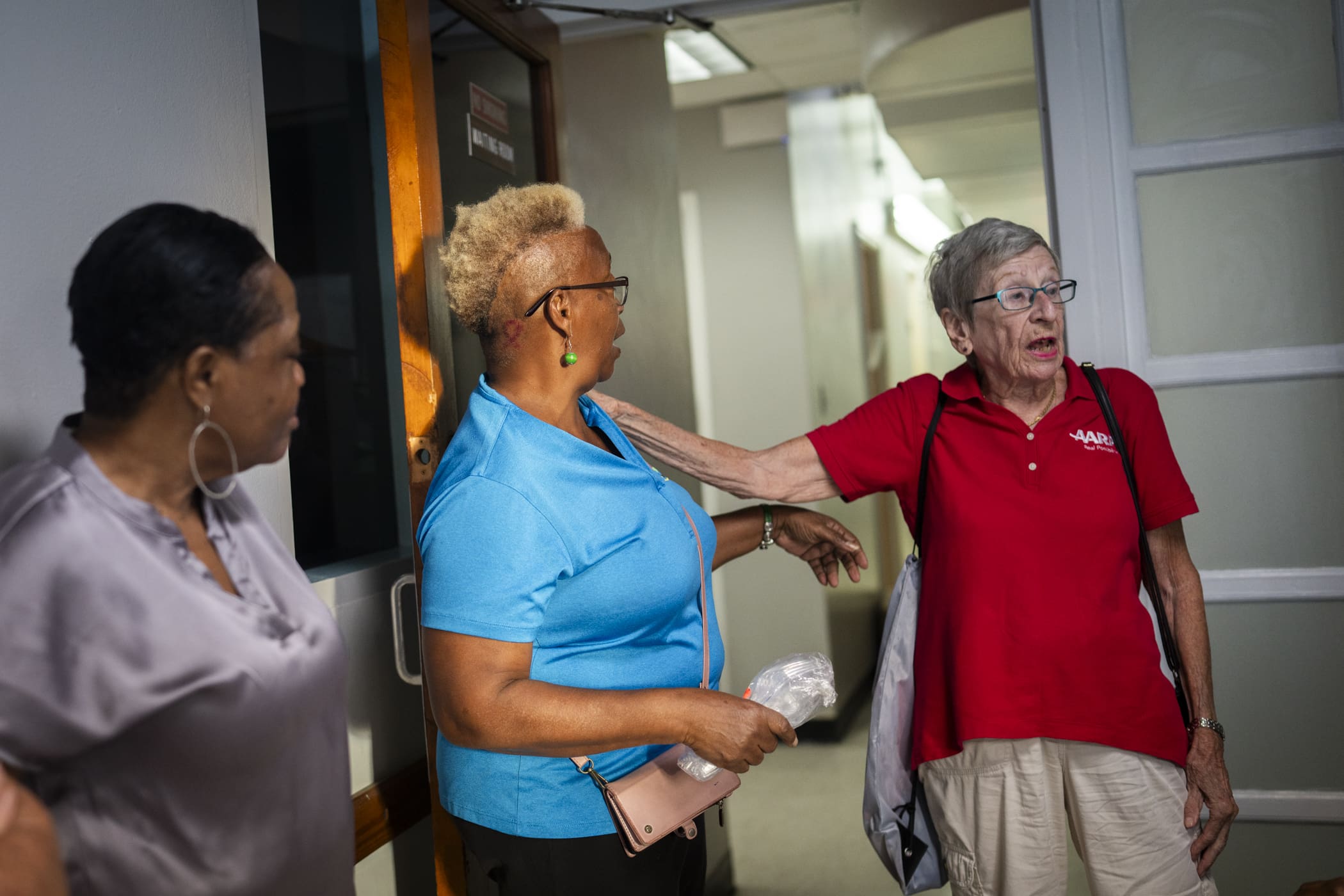
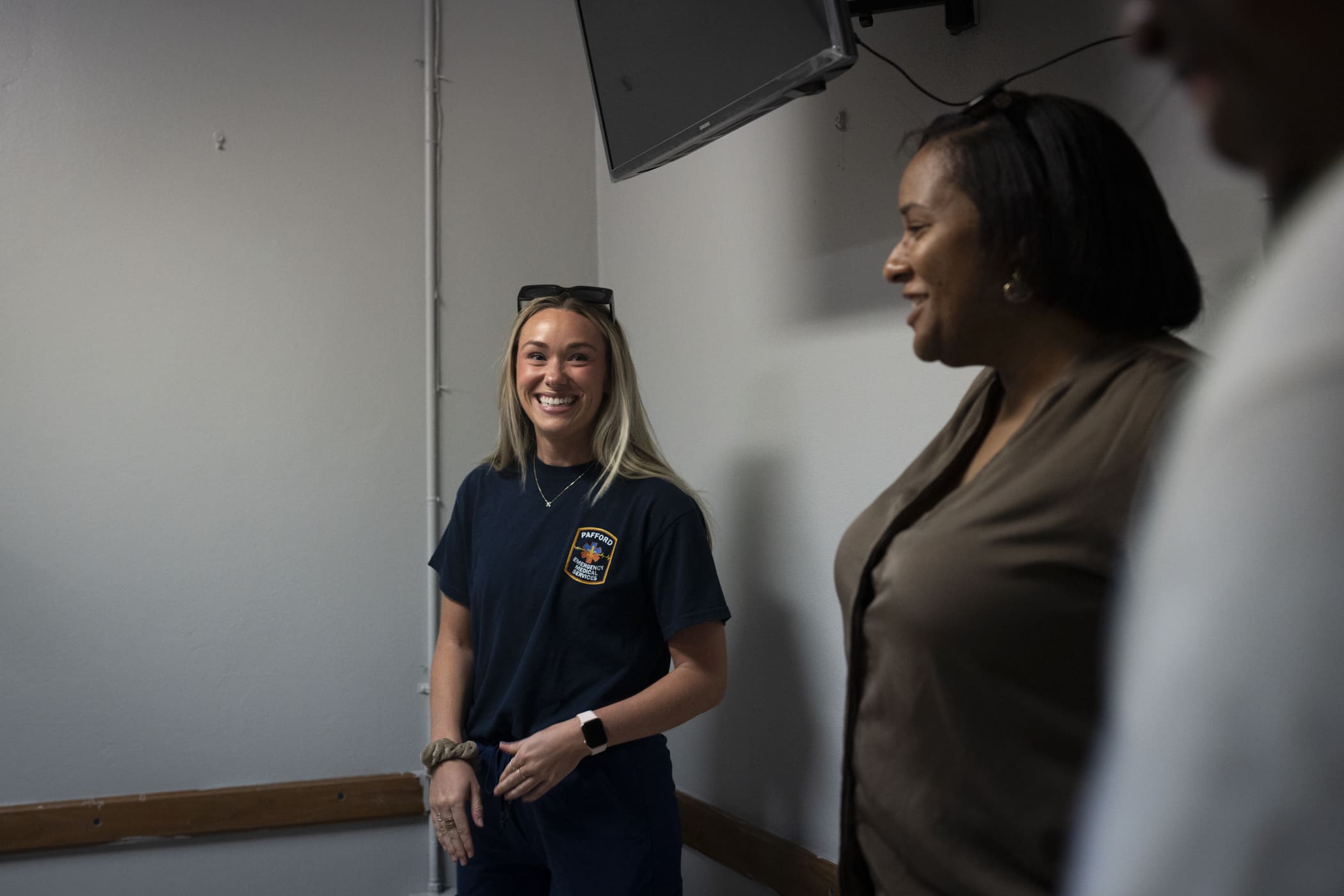
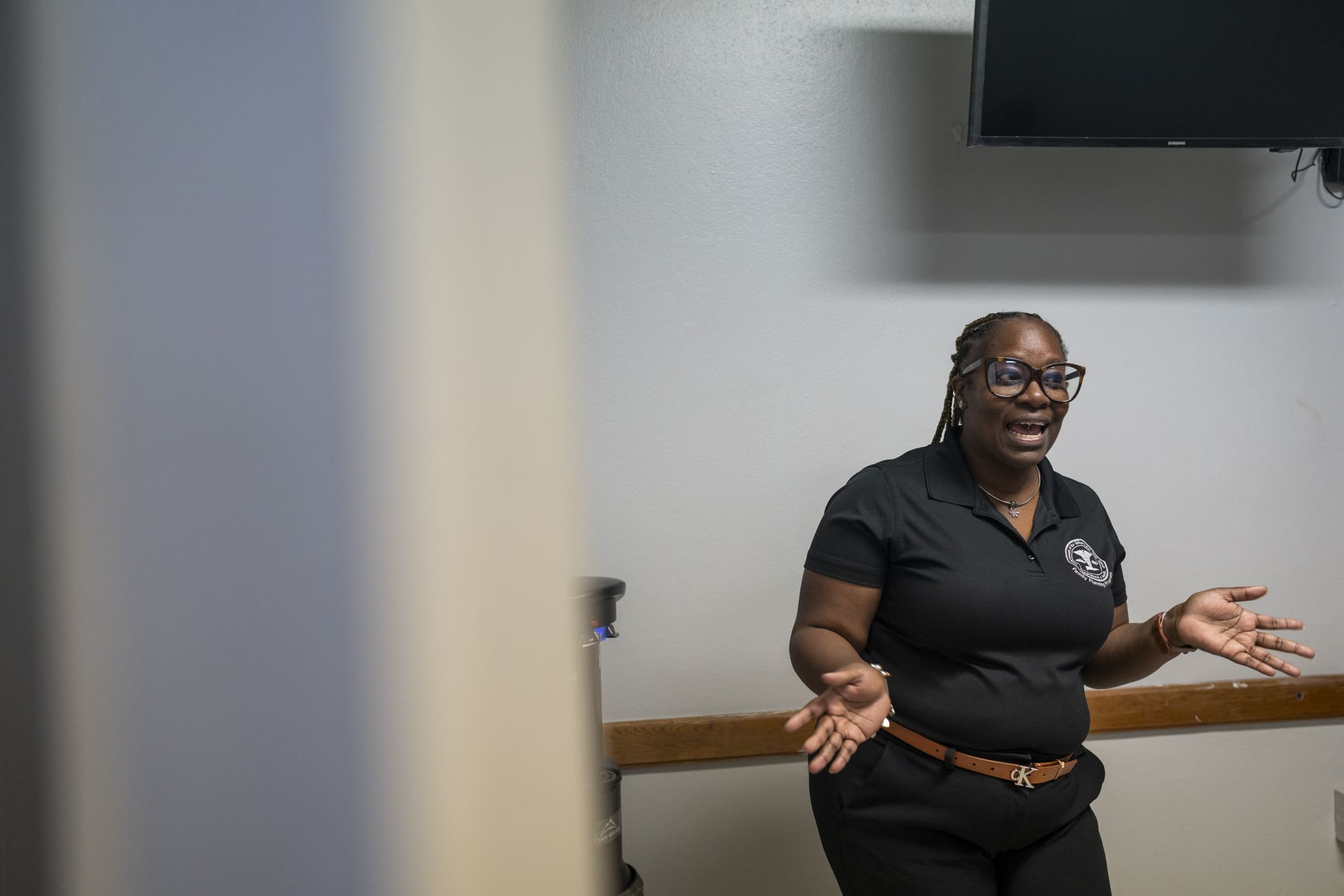
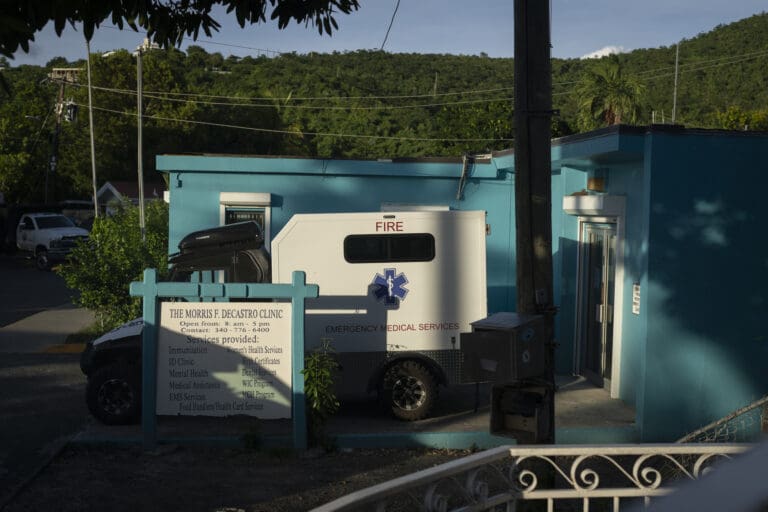
Health officials launched an outreach campaign Thursday to inform the public about the array of services available at the Morris F. deCastro Clinic on St. John. The clinic’s administrator said the Thursday get-together was the first in a series of nine monthly events allowing residents to meet the medical teams who will be on hand in Cruz Bay on a rotating basis.
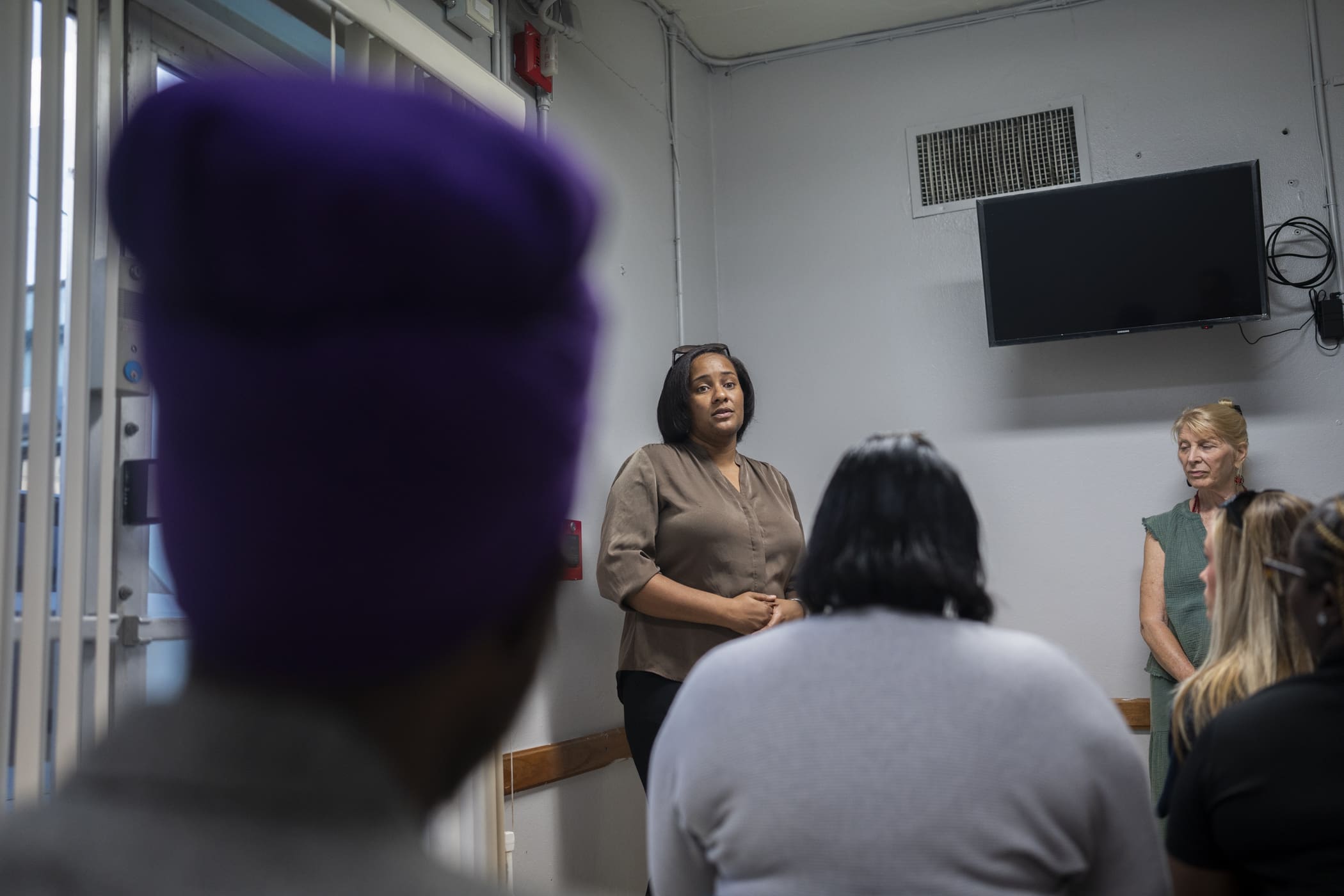
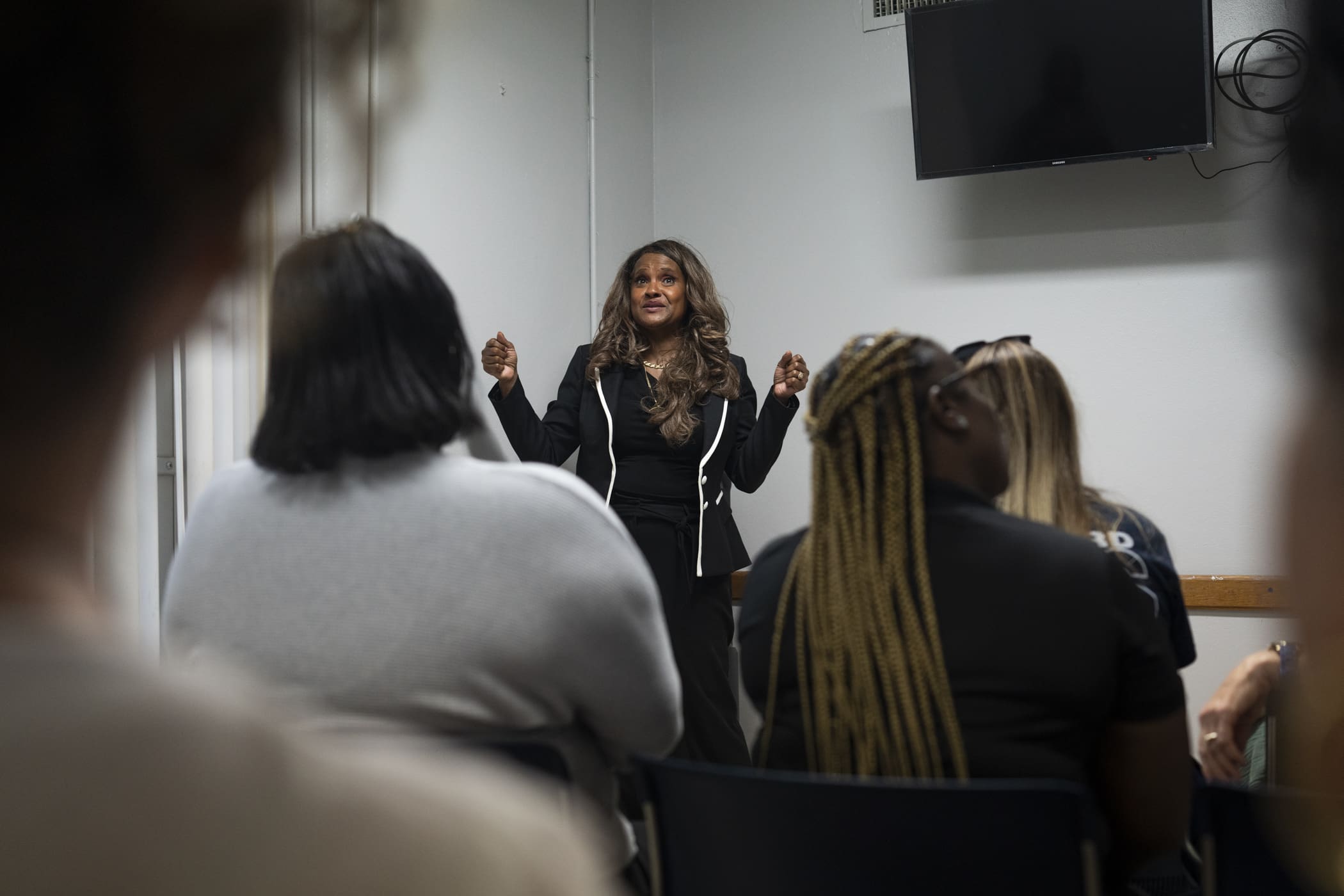
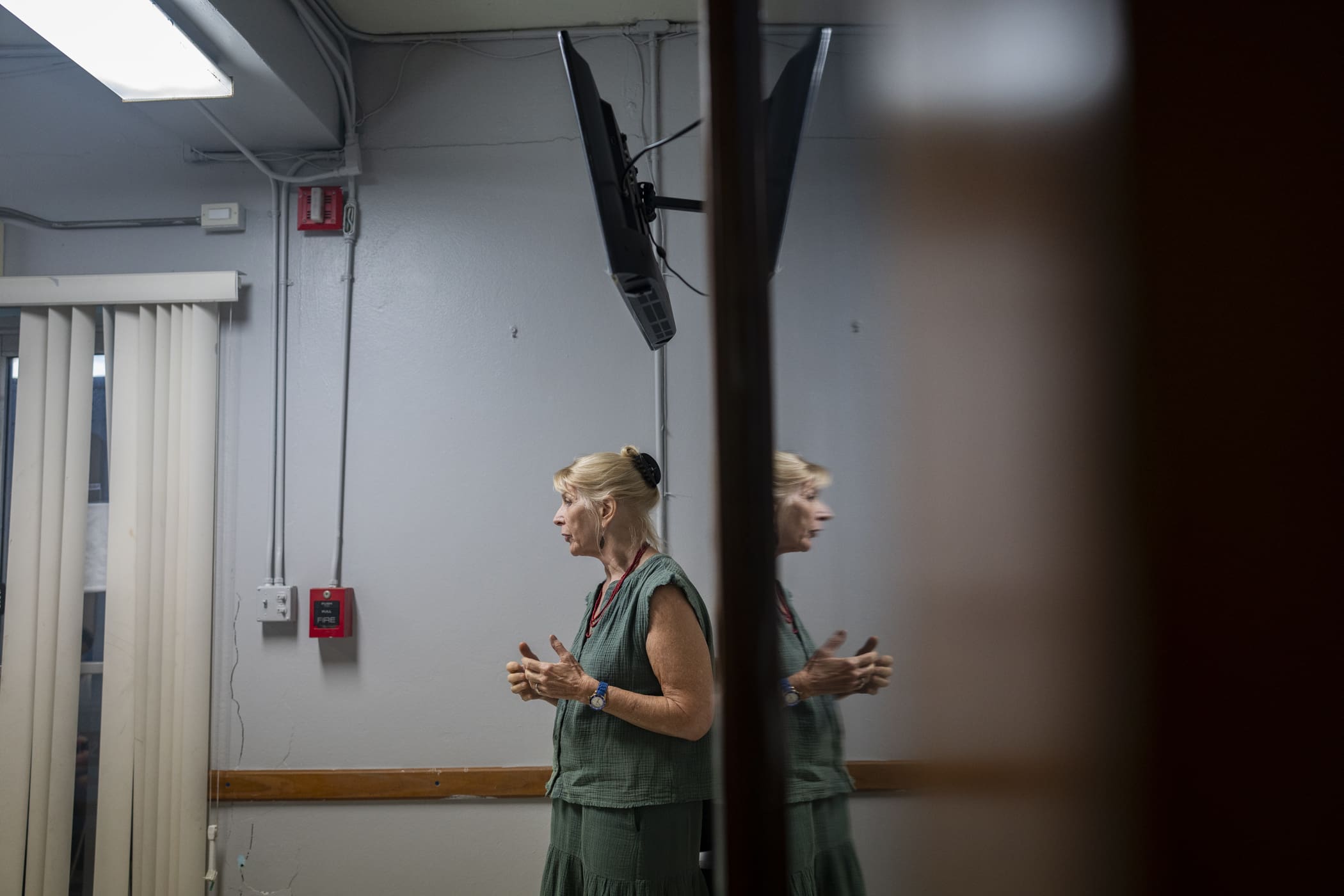
The first interface took place between residents and service providers for neonatal care, family planning, and maternal health. Leading the presenters was Dr. Debra Wright-Francis, an obstetrician-gynecologist who calls the Maternal and Child Health Clinic on St. Thomas home base.
Orientation sessions like the one held Thursday took place six weeks after a contentious public hearing with Sen. Ray Fonseca, chair of the 35th Legislature’s Committee on Health, Hospitals, and Human Services. Residents who showed up at that meeting — including former deCastro Clinic Public Health Nurse Sally Browne — said that almost none of the health care services affiliated with deCastro were active or available to the public.
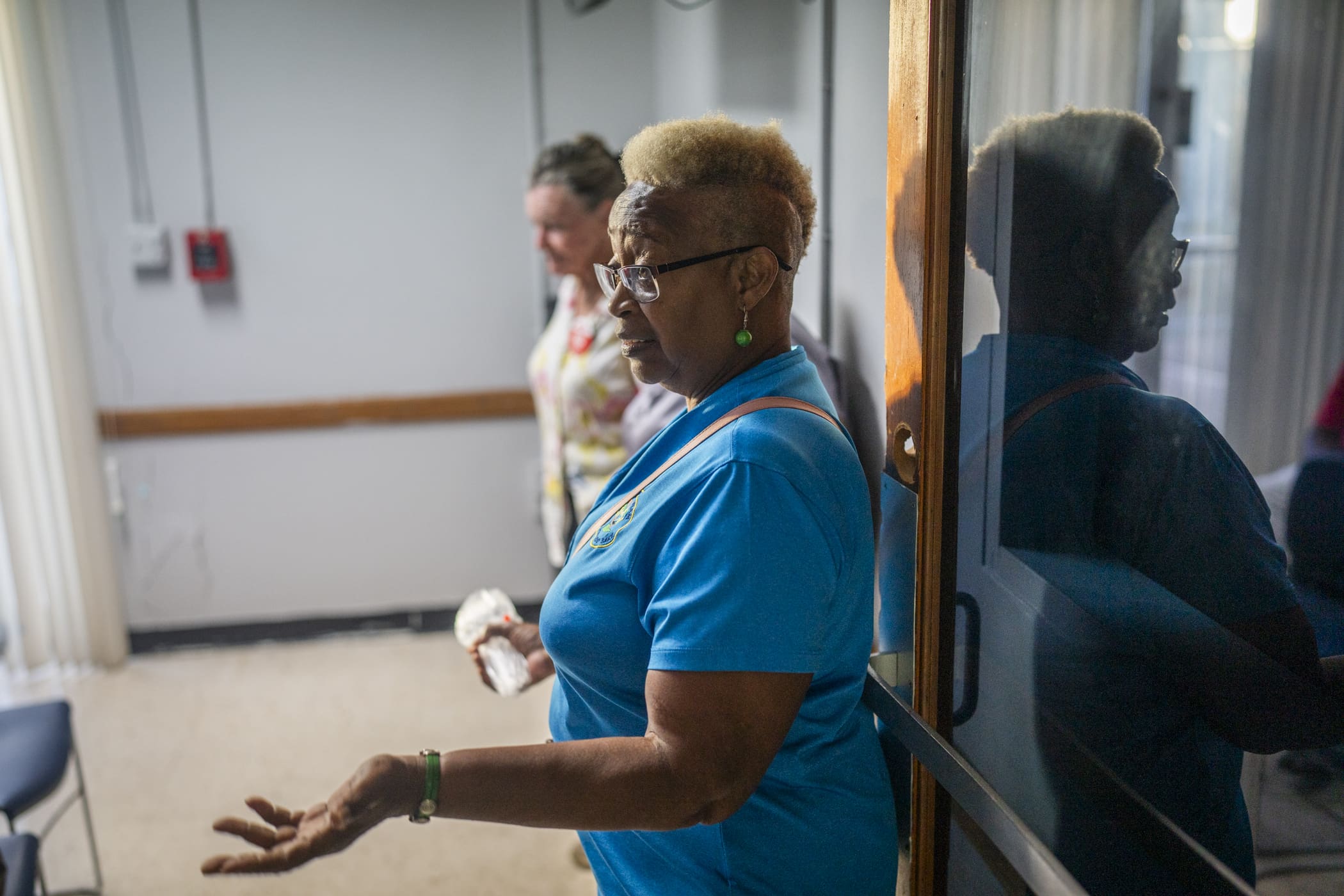
Browne appeared briefly at Thursday’s meeting to chastise officials about giving short notice. Francis said the staff used social media to get the word out. Lockhart said handbills were posted in some St. John shop windows. One audience member said she came after seeing a handbill posted Thursday at the St. John Marketplace.
A small group of parents and grandparents filled the seats in the clinic’s waiting room to hear about services ranging from birth control counseling to high-risk maternity care and a soon-to-be-introduced screening program for cervical and breast cancer.
Francis described the prenatal and maternal care team’s mission to provide in-person care on St. Thomas and St. John. But deCastro Clinic Administrator Aliah Lockhart urged audience members to let their family and friends know they no longer had to cross two islands in order to get needed services.
But when the need arose, the doctor said Health had acquired telemedicine technology that would allow them to deliver 21st-century healthcare virtually.
How often the service providers could meet patients on St. John will depend on the number that shows up at the clinic for treatment and care, they said. Health educator Kisha Williams added that services at deCastro are also available for St. Thomas residents, many of whom commute to St. John for work. Once their name and patient information is registered in the electronic record-keeping system, she said, they too can get counseling, checkups, treatment, and screenings at the Cruz Bay clinic.

The annual U.S. Virgin Islands Paradise Jam basketball tournaments return to St. Thomas and the University of Virgin Islands Elridge Blake Sports and Fitness Center, with the 23rd annual men’s competition taking place Friday through Monday and the 24th edition of the women’s contest Nov. 23-25.
 The men’s tournament will be a traditional eight-team bracket, with the women’s field being split into two four-team round-robin tournaments, according to Basketball Travelers Inc., the tournament organizer. All times are Atlantic Standard Time and are subject to change.
The eight-team men’s field for 2023 will begin Friday with Norfolk State vs. Fordham facing off at 2 p.m., followed by Abilene Christian and San Jose State at 4:15 p.m., according to the press release. In the evening doubleheader, Hampton will take on Kent State at 6:45 p.m., while Missouri State and Florida Gulf Coast will tangle at 9 p.m.
The consolation bracket will be played Saturday at 4:15 p.m. and 6:45 p.m., while day one winners advance to the semifinals that will be played Sunday at 6:45 p.m. and 9 p.m. The tournament will conclude Monday, the release stated.
The men’s tournament will be a traditional eight-team bracket, with the women’s field being split into two four-team round-robin tournaments, according to Basketball Travelers Inc., the tournament organizer. All times are Atlantic Standard Time and are subject to change.
The eight-team men’s field for 2023 will begin Friday with Norfolk State vs. Fordham facing off at 2 p.m., followed by Abilene Christian and San Jose State at 4:15 p.m., according to the press release. In the evening doubleheader, Hampton will take on Kent State at 6:45 p.m., while Missouri State and Florida Gulf Coast will tangle at 9 p.m.
The consolation bracket will be played Saturday at 4:15 p.m. and 6:45 p.m., while day one winners advance to the semifinals that will be played Sunday at 6:45 p.m. and 9 p.m. The tournament will conclude Monday, the release stated.
The seventh-place game will start at 2 p.m., followed by the fourth-place game at 4:15 p.m. The evening session will comprise the third-place game at 6:45 p.m. and tournament championship will tip-off at 9 p.m., it said.
The round-robin women’s tournament will start three straight days of four games each on Thanksgiving Day, Nov. 23. All-day session games will be the Island Tournament, as Cincinnati will face off against Colorado at 2 p.m., with Kentucky taking on NC State at 4:15 p.m., according to the release. The Reef Tournament will be played each evening as it is kicked off by High Point vs. South Florida at 6:45 p.m., followed by Arizona State and Texas at 9 p.m. On Nov. 24, Kentucky will play Colorado at 2 p.m., while Cincinnati and NC State will tangle at 4:15 p.m. Arizona State and South Florida will get the evening session going at 6:45 p.m., ending with a match-up between High Point and Texas at 9 p.m. On Nov. 25, Colorado and NC State will battle at 2 p.m., with Cincinnati and Kentucky finishing the Island Bracket at 4:15 p.m., according to the release. In the final day of action in the Reef Bracket, High Point will face-off against Arizona State at 6:45 p.m., with South Florida and Texas ending the Paradise Jam at 9 p.m. “On behalf of the entire U.S. Virgin Islands, I am excited to welcome the players, coaches, and fans from these amazing collegiate programs to St. Thomas for the 23rd and 24th annual Paradise Jam tournament,” said Tourism Commissioner Joseph Boschulte. “There’s no place in the world like our beautiful islands, and we invite everyone to fall ‘Naturally in Rhythm’ while enjoying the games, exploring the island’s unforgettable attractions, and enjoying our pristine beaches for a little pre-season relaxation,” he said, referencing Tourism’s slogan for St. Thomas.Ticket prices for residents with USVI identification are $15 adults; $10 seniors (65-plus) or military with ID; and $5 children (5 and older) and students (bring student ID). Non-resident ticket prices are $55 for the men’s tournament and $35 for the women’s competition.
Tickets may be purchased at the door to UVI arena. Doors open one hour prior to game time.
For more information, check out the Paradise Jam Tournament on social media and at its website, paradisejam.com. All games will be streamed on ESPN+. Men’s Field Highlights 2022 Champion — Drake; Drake and Howard were NCAA Tournament teams in 2023. 2023 participant Kent State was the AQ from the Mid-American Conference and played in last year’s NCAA Tournament. San Jose State +11 game improvement last year was one the best in the nation. The Spartans went 8-23 in 2022 before going 21-14 in 2023. Women’s Field Highlights 2022 Island Champion — Georgia (NCAA Tournament Team) 2022 Reef Champion — Arkansas Colorado is ranked No. 21 in the ESPN Way-Too-Early Top 25 for 2023-24 after making the Sweet 16 last year. Along with Colorado, NC State, South Florida and Texas were NCAA Tournament Teams in 2023. High Point participated in the WNIT this past season as well.For more information on Basketball Travelers Inc., visit Basketball Travelers and follow them on Twitter and Facebook.
Since 1999 the Virgin Islands Source – the only online newspaper of general circulation in the U.S. Virgin Islands – has been providing the community with reliable, accurate and balanced local journalism.
Contact us: visource@gmail.com
© 1999-2025 Virgin Islands Source