



As the world’s climate continues to change, every human being on planet Earth, including other organisms such as animals and plants, will be impacted by the repercussions.
According to an October study by Nature Climate Change, about 85 percent of the world’s population is already being affected by human-driven climate change. The great rivers of the United States, like the Mississippi, the Amazon River of South America, the Panama Canal in Central America, and other great rivers of the world that are used for transporting food across the globe to cities, towns and other countries worldwide are impacted by climate change.
As it stands in today’s world, what affects one part of the world affects the whole world — whether a war, droughts, hurricanes, earthquakes, viruses like COVID-19, etc. — and these things will have a major impact on the Virgin Islands. We seem to forget that when it comes to climate change, we all are on the same ship in rough seas of economic hardship. Let us not fool ourselves, food prices in the Virgin Islands will continue to go up. We can do all the complaining we want about food prices and other essential items we depend on in life, but that wouldn’t change the outcome of 1 + 1 = 2.
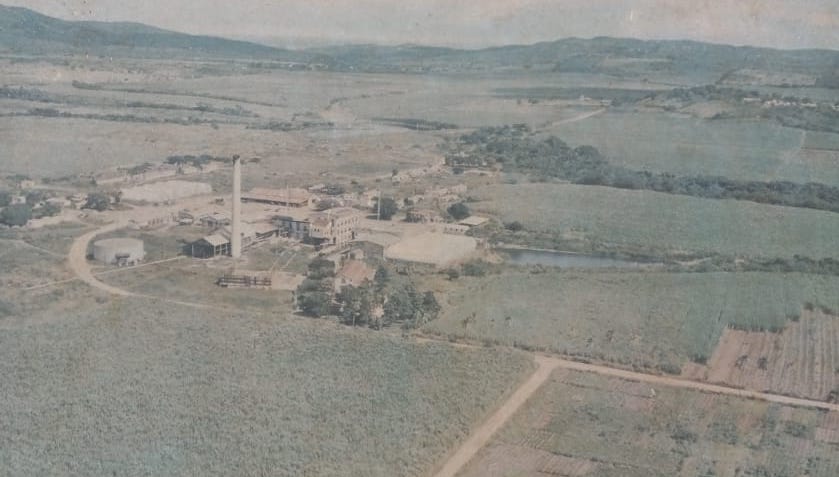
During the “Golden Era” when sugar was king, somewhere between 1760 to 1820, St. Croix was the fourth in the world for producing sugar. At its peak year of 1812, St. Croix had 175 sugar plantations and 26,000 enslaved Africans produced 46 million pounds of sugar and some 12 million gallons of rum for export into the world market economy. “By the beginning of the 19th century, 181 large plantations, manned by 27,000 enslaved laborers about half of whom had been born in Africa were producing 32 million pounds of raw (muscovado) sugar per annum, and St. Croix had become fourth largest sugar producer in the World,” noted George F. Tyson and Poul E. Olsen.
For the planters and merchants, this was the Golden Era. For their enslaved Africans it was hell. The island of St. Croix is only about 54,400 acres, or 85 square miles, give or take a couple of acres. The maximum acreage under sugar cultivation was about 30,000 acres. You can say the entire island of St. Croix was a garden and became known throughout the world as the “Garden Spot of the West Indies.” In 1847, just before emancipation, there were 23,971 acres in cane. A few years later, after emancipation, the area in sugar cane had decreased to 19,736 acres.
By the time the Bethlehem Sugar Factory phased out of sugar production in 1966, there were over 4,000 acres of cane land on St. Croix, 113 farms, and a gross farm return of more than $600,000 in less than one year. There were talks for decades to change St. Croix’s landscape from a monocultural system of sugarcane to a more diversified system, including a 1965 report titled “The Governor of the United States Virgin Islands on the Reconstruction of the Agricultural Economy of St. Croix.”
This 16-page investigative report basically said that if nothing is planted in place of cane, the fertile agricultural land, especially in the central plains of St. Croix, will disappear off the landscape of the island forever. “Urbanization of the agricultural area will radically alter the landscape of St. Croix and destroy a major share of its natural beauty. This is not only an aesthetic question, nor even simply a question of cultural pride for the inhabitants of St. Croix,” concluded the report.
It further stated, “It has important economic implications. The attractiveness of St. Croix is its most important asset for attracting settlers, tourists, and even certain high-value light industries.” As we stand today, countries all over the world are protecting prime agricultural land. Farmland now is an endangered species worldwide. There are governments in the United States, non-profit organizations, even countries such as China, that are buying up prime farmland in the United States.

In the Virgin Islands, we are destroying our prime agricultural land by building upon it with roads, houses, hotels, etc., although government farmland is protected by law. Believe me, food security is an important factor to climate change if we are to survive economically as a people. In 1962, a study was conducted on St. Croix before the phasing out of sugarcane to grow oranges. Planning Division National Bulk Carriers, Inc., a company from New York, conducted the study to replace sugarcane with oranges. It is a 47-page document titled, “A Proposed Project for Producing Oranges in St. Croix, Virgin Islands & Processing Them into Orange Juice Concentrate.”
The scope of the project was to establish and maintain 2,500 acres of orange groves on suitable sugar cane land to be leased from the Virgin Islands Corporation (VICORP) for a minimum period of 50 years. The 2,500 acres included estate Lower Love, Jealousy, Coble, Bethlehem Old Works, Castle Burke, Body Slob, Bonne Esperance, Adventure, Golden Grove, and Upper Bethlehem. The oranges produced would be used for making fresh orange juice and frozen orange juice concentrate.
On July 27, 1962, this is the summary written by the late Dr. Ralph L. Miller of the proposed orange project on St. Croix. However, due to the length of it, I will mention only a small section of it:
“A summary of the climatological and soil conditions, as well as these interviews, has indicated that oranges can be grown successfully on St. Croix Island in an area between the Centerline Road and the foothills in the West Central part of the Island, south of Mt. Eagle and Blue Mountain.
“In this area there is an estimated 2,500 to 3,500 acres of land level enough for citrus production in which there is sufficient rainfall and water available to support good orange tree growth and produce crops satisfactorily.”
We have gone from the “Garden Spot of the West Indies“ to a child to be fed instead of an adult feeding ourselves. Over a half century ago, an orange industry in the Virgin Islands was proposed as an alternate crop to the once-dominant sugar industry. What happen!
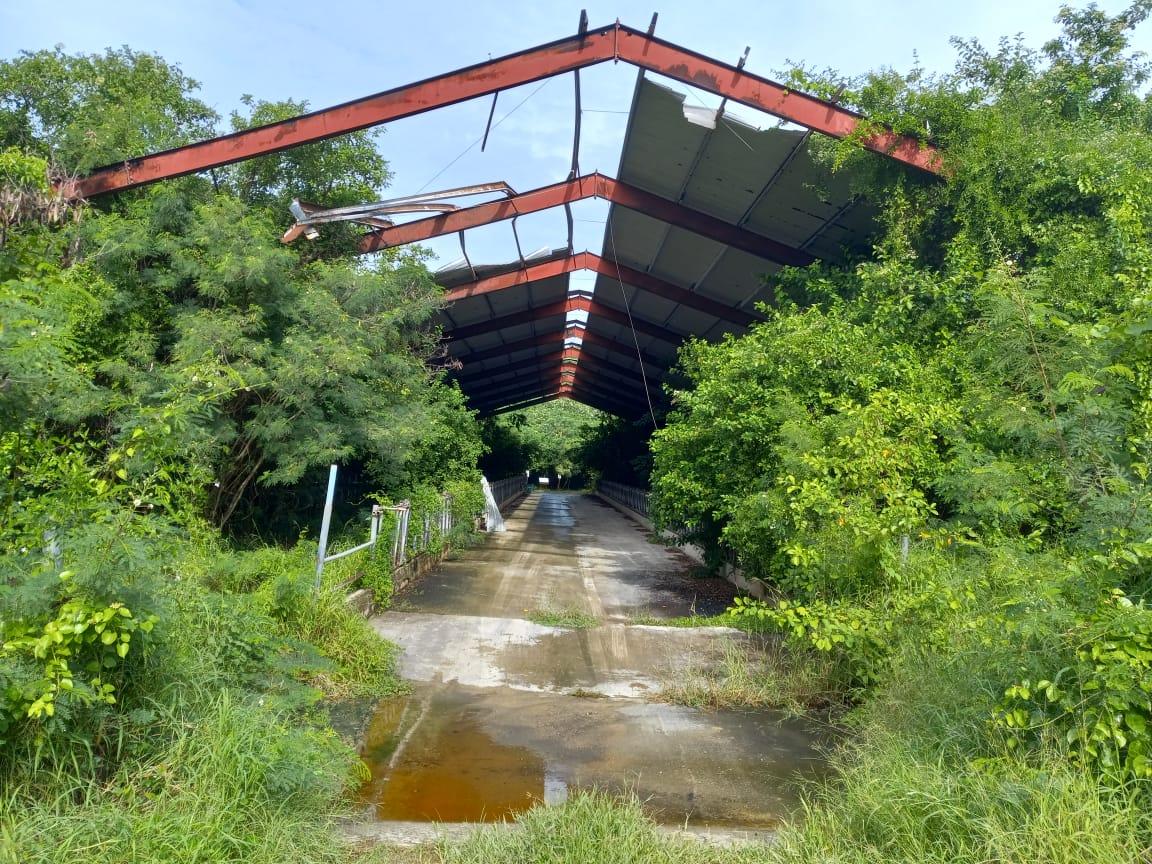
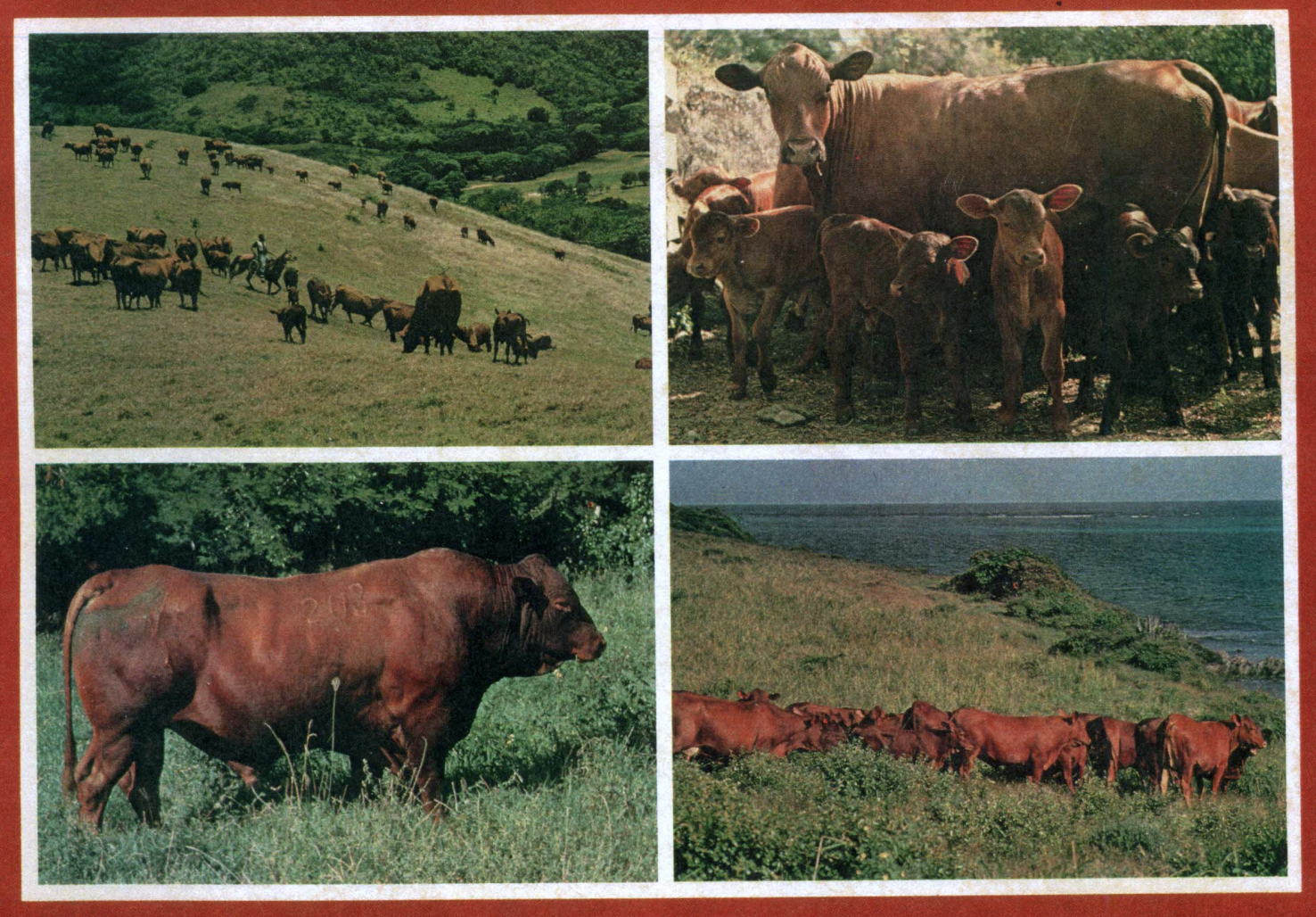
A few years ago, we lost our dairy industry producing fresh Crucian milk. Meanwhile, our rich fertile agricultural lands are turned into a concrete jungle. The Senepol cattle, which bred up on St. Croix, are known worldwide for their heat tolerance, insect and disease resistance, and their ability to thrive on poor pasture land, are not in abundance anymore on island. Then, we have the St. Croix White Hair Sheep bred on St. Croix. In fact, the St. Croix White Hair Sheep and the Senepol cattle have been part of the Virgin Islands’ history since the 1800s. These animals show great resilience to climate change.

Look at the world around us today. Governments worldwide are overwhelmed with issues, sometimes beyond their capacity to handle them. Climate change, wars, poverty, crime, viruses, the high cost of living, people crossing boarders to other countries for better living — the laundry list continues of what we human beings face today. The old folks would say, “God bless the child that has his own.” In other words, let us grow some of our own food. We don’t know what today brings, much less tomorrow. For one day, due to climate change, it could be a worldwide apocalypse.
— Olasee Davis is a bush professor who lectures and writes about the culture, history, ecology and environment of the Virgin Islands when he is not leading hiking tours of the wild places and spaces of St. Croix and beyond.





Lawmakers serving on a Senate committee addressing public safety and justice voted Thursday to compel the head of the Virgin Islands Police Department to appear at their next scheduled meeting. The vote to issue a subpoena to Police Commissioner Ray Martinez came after St. John residents came to present their public safety concerns.
The discussion was part of a day-long hearing where three bills were approved and moved on to the Rules and Judiciary Committee for further consideration. Testifiers pointed to communication problems, delayed responses, a lack of feedback, and what some said discourages people from calling police in the first place.
Fresh on the minds of those who appeared was a recent armed robbery. “Some days ago one of my drivers, with a passenger, was robbed at gunpoint,” said businessman James Penn.
Penn operates a fleet of safari taxis that transport tourists to and from the St. John Westin Resort and conduct island tours. Former Senator-At-Large Carmen Wesselhoft-Hendrington also testified on Thursday. She told the committee that she drives a taxi part-time, and since the latest incident, she hesitates to accept some transport requests.
“Wesselhoff-Hedrington, who works as a taxi driver, stated that she was recently uncomfortable transporting a passenger to Cinnamon Bay because she felt uneasy,” said Legislature spokesman Jamal Potter.
The robbery was the latest in a string of violent crimes affecting commerce on St. John. In October 2022, robbers stole the automatic cash machine at the Cinnamon Bay Campground. Two jewelry stores were invaded by armed robbers; one business owner was shot and wounded in a daylight robbery on May 18. A nearby officer on foot patrol responded to the scene, but by then, the robbers had fled.
Worried residents and merchants gathered for a town meeting about crime and the response by law enforcement. At that time, many said police seemed unresponsive. Some who came to the meeting offered suggestions to aid police by increasing security in the commercial district.
A police representative did appear at the May 23 meeting held in the Cleone Creque Legislative Conference Room. But after Thursday’s no-show at the committee hearing, Martinez spoke briefly to a reporter, saying he and his executive team were attending a conference that day. He sent a notice to the committee saying so, something that was confirmed by Committee Chairman Kenneth Gittens during the session.
But the chairman said more could be done to reassure citizens and inform lawmakers. “We did receive correspondence from the commissioner — the executive team’s unavailability today. I not only speak for me but I’m sure I speak for my colleagues, and you’ll hear from them about our disappointment of (police officials) not being able to be here,” Gittens said.
The commissioner also addressed the public expressions of concern. “We have an uptick in crime on St. John. We know about it, and we’re working on it,” Martinez said.
That statement was confirmed to the Source on Friday by one of the merchants whose store was targeted in February. Police responded to the scene and had since returned to do a follow-up, they said.
Testifiers said they were also disappointed that no police officials attended Thursday’s meeting. Wesselhoff-Hedrington pointed to a police shortage on the island. When a crime occurs, investigators must be sent from St. Thomas to help the one detective assigned to St. John.
The former senator-at-large said there must be a plan to help St. John, or else the island’s tourism product would suffer. In her testimony, business owner Myrtle Barry described her efforts to help a rape victim who was having trouble getting help or advice from authorities.
Others, like Coral Bay Community Council Volunteer President Sharon Coldren, said she was concerned about the present circumstances but wanted to help the search for solutions. “I’m here today to help with some ways we can collectively improve our systems and processes that protect people from injury and crime and make a safer community for the future,” she said.
Coldren along with two representatives from the all-volunteer St. John Rescue, told lawmakers they also wanted to see an improved emergency reporting system on island. Rescue Board Secretary Vicki Schoedel and Executive Director Valerie Hewitt said other agencies besides police can help in areas where cell phone dead zones made calling the 911 emergency line difficult.
Senate Minority Leader Dwayne DeGraff — a member of the committee — said he’d like to see changes in the system that would make it easier for St. John crime victims to get help when needed.
But DeGraff said he, too, was at a loss over the lack of representation at the meeting. “Absent — the police are absent. I am totally frustrated,” he said.
Sen. Alma Francis-Heyliger urged residents to stage a public protest.
Committee member Franklin Johnson made the motion for a subpoena. “This is about the fourth time Ray Martinez has been invited (sic) to testify. He ain’t show up once. You are short-staffed, I accept that, but we have to do something better,” Johnson said.
Gittens said the vote to issue a subpoena would be sent to Senate President Novelle Francis for further action.


Government House has announced a series of ceremonies to celebrate the life and contributions of the late Fire-EMS Director Daryl George Sr., who died Oct. 24 after a sudden illness.
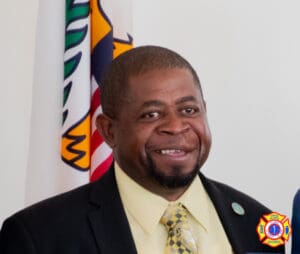
Candlelight vigils in memory of George will be held on both St. Thomas and St. Croix. The first, on Nov. 15, will be held at 6:30 p.m. at the Charles A. Seales Fire Station Annex in Estate Grove Place. The St. Thomas vigil will be held at 6:30 p.m. on Nov. 16 at the Omar Brown Sr. Fire Station, located across from Barbel Plaza.
George will lie in state at the Omar Brown Sr. Fire Station on Nov. 17 from 9 a.m. to noon, providing an opportunity for friends, colleagues, and community members to pay their respects, Government House said.
The funeral services to honor George will be held on Saturday at the Omar Brown Sr. Fire Station, with viewing from 8:30 to 9:30 a.m. and the service from 9:30 to 11 a.m.
Following the funeral service, the interment will take place immediately at Western Cemetery #1.
A repast in honor of George will be hosted at Joe’s Hot Spot, located across from the Property and Procurement Department on St. Thomas.
George was one of the first to join the Fire Service ranks from a youth program called Junior Firefighters. He also served as a union leader and later as assistant director before being picked as the agency head by former Gov. John deJongh.
He was known as Mousey because of his height, but George was also known for possessing standout leadership skills. One of his last achievements was overseeing the merger of Fire and Emergency Medical Services into a modern first-responder entity.
“Government House extends its deepest condolences to the family, friends, and colleagues of Director Daryl George,” Government House said in a statement announcing the services. “His dedication and service to the Virgin Islands Fire and Emergency Medical Services will be remembered and cherished by all. We invite the community to join us in these solemn ceremonies to celebrate his life and legacy.”



Since 1999 the Virgin Islands Source – the only online newspaper of general circulation in the U.S. Virgin Islands – has been providing the community with reliable, accurate and balanced local journalism.
Contact us: visource@gmail.com
© 1999-2025 Virgin Islands Source

