Top economic and education officials told senators Friday they are working to turn roughly $25 billion in federal funding into long-term growth, jobs and resilience for the territory, but acknowledged that inflation, housing costs and high energy prices remain major obstacles.
The testimony came during a hearing of the Senate Economic Development and Agriculture Committee, where lawmakers examined how disaster recovery and infrastructure dollars are being converted into sustainable economic development.
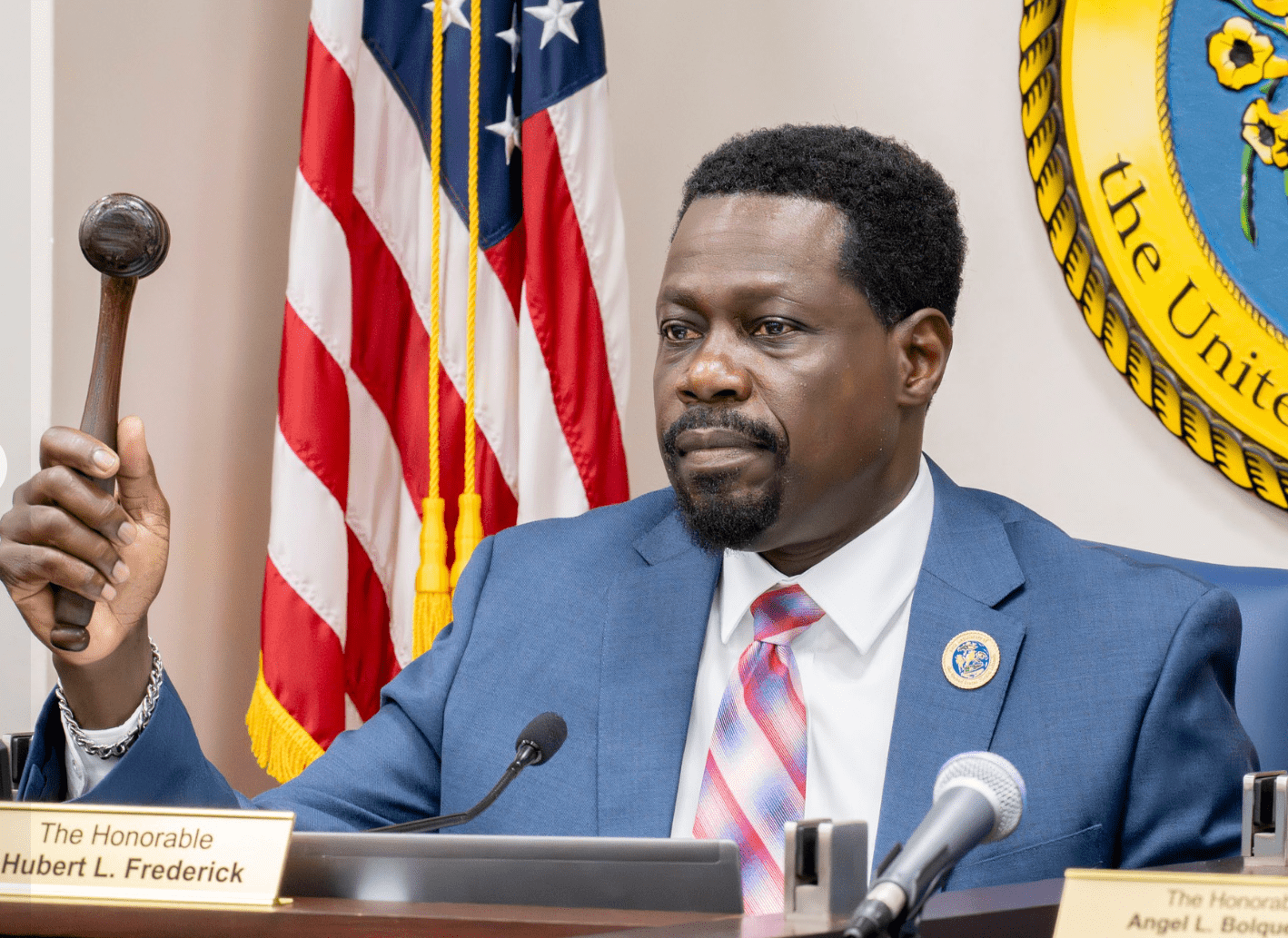
“This hearing is not simply about plans. It’s about performance,” said Committee Chair Sen. Hubert Frederick, calling the federal money an “unprecedented level of funding” that must result in “long, lasting sustainable development” across the territory and benefits for residents.
Wayne Biggs Jr., CEO of the Virgin Islands Economic Development Authority, said the agency is focused on balancing economic growth with environmental protection and social equity. He pointed to Vision 2040, the territory’s long-term strategic plan, and said recent efforts have expanded the Economic Development Commission portfolio.

“As a result of our sustainable economic development strategies, our EDC portfolio over the last four years has increased by about 47%, from 75 beneficiaries to 105,” Biggs said. “On the capital side, our Economic Development Bank has lent about $18.7 million under the first tranche of SSBCI funds.”
Haldane Davies, director of the Bureau of Economic Research, said the territory’s economy remains “stable and resilient,” with GDP rising to about $5.2 billion from $3.9 billion in 2018. However, he warned that inflation reached 7.6% in 2025, driven largely by a 22% increase in housing costs.
Davies also cautioned against “greedflation,” where businesses raise prices beyond actual cost increases, and emphasized that the territory must carefully manage its resources.
“In the USVI, we are blessed, albeit after unfortunate circumstances, to have approximately $25 billion in disaster recovery funds available to us as a territory,” he said. “This is a windfall we did not see coming, and we should ensure each dollar is effectively spent — not even one should be left on the table.”
Tourism Commissioner Jennifer Matarangas-King highlighted record visitor demand, noting that the territory welcomed 303,380 air arrivals in the first quarter of 2026, a 12% increase year over year.
But she stressed that tourism growth must extend beyond traditional hubs.
“Tourism must create opportunities for local entrepreneurs, small businesses and cultural practitioners,” she said, pointing to investments in workforce development and a shift toward higher-value travel such as ecotourism and cultural experiences.
At the University of the Virgin Islands Research and Technology Park, Executive Director Eric Sonnier pointed to a $1.1 million FEMA-funded solar project as an example of how targeted investments can deliver broader benefits.
“What began as a mitigation project ultimately grew into an opportunity to reduce our dependence on fossil fuel-based electricity, generate operational savings, and create a platform for education, workforce development and innovation,” Sonnier said.
He said the RTPark has already deployed about $1.3 million in loans and grants to small businesses and nonprofits and is preparing additional initiatives, including a mixed-use agriculture and innovation campus.
University of the Virgin Islands President Safiya George described the institution as central to building long-term capacity, emphasizing its role in workforce training, research and data development.
“With approximately $25 billion in federal investments flowing into our territory, we have a generational opportunity,” George said. “The critical question is how to ensure these investments translate into durable economic strength and improved quality of life.”
Several senators pressed testifiers on whether those promises are reaching ordinary residents. Sen. Franklin Johnson warned that late government payments and red tape can “kill an opportunity” for small contractors and vendors operating on thin margins. Sen. Marvin Blyden questioned how agencies are steering young people into high‑demand maritime and blue‑economy jobs, saying many students “do not know enough about the industry, and they are surrounded by it.”
Lawmakers also raised concerns about the cost of power and its impact on families and businesses. Sen. Carla Joseph called reliable and affordable energy “what’s going to fuel our economy” and urged officials to push harder on renewable projects already funded by federal money.
Beyond funding and growth, witnesses and senators also discussed broader structural issues, including possible changes to the tax system, concerns about lost revenue from unregulated short‑term rentals, and the need to improve the overall visitor experience, from airports to cruise ports. Several testifiers pointed to the maritime and “blue economy” sectors as major untapped sources of good jobs, and stressed that improving basic infrastructure and government processes will be critical to keeping local talent and attracting new investment.
Looking ahead, Frederick announced that the committee, in partnership with several testifying agencies, will host a 2026 Economic Development Summit at the University of the Virgin Islands on May 22 from 7:30 a.m. to 5 p.m. The event is designed to connect local entrepreneurs with agencies and companies managing hundreds of millions of dollars in projects. He urged residents to come prepared with business cards and a readiness to “step up to the plate” to grow their own enterprises and hire Virgin Islanders.