




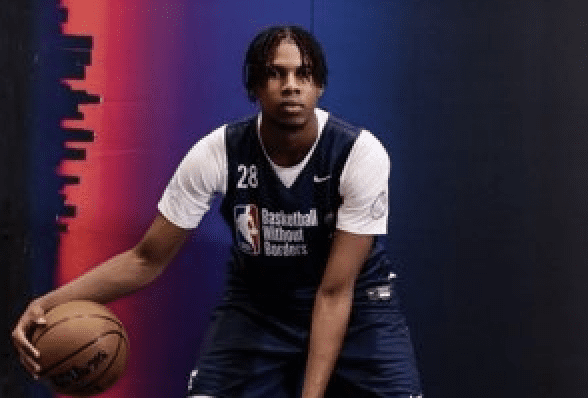
K’Nard Callendar became the first Virgin Islander to compete in the Basketball Without Borders All‑Star camp when he walked onto the court Feb. 13–15 at the UCLA Health Training Center in Los Angeles during NBA All‑Star Weekend.
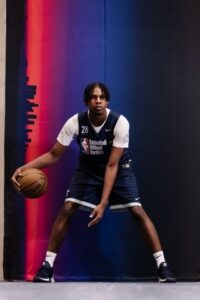
Organized by the NBA in partnership with the International Basketball Federation, Basketball Without Borders is a global basketball development and community outreach program that brings together elite young players from around the world for training and competition.
The All‑Star edition of the camp is invite-only and draws approximately 40 top high‑school‑age prospects from more than two dozen countries and territories. Participants receive coaching from current and former NBA and FIBA players and coaches, compete in five‑on‑five games, and attend events tied to NBA All‑Star Weekend, including the NBA All‑Star Game at the Intuit Dome.
Callendar, a standout at Overtime Elite, earned his spot-on the global stage through a string of accomplishments. He was named to the All-Star Five at the Basketball Without Borders camp in El Salvador, earned MVP honors at the FIBA Youth Development Program and Grind Session in Florida, and has been one of OTE’s premier two-way players this season.
When asked if he was nervous walking into a gym full of top-ranked prospects, K’Nard said, “I wouldn’t say I was nervous.” He added, “Over the past couple of months, I’ve been playing other players who are highly ranked. I also played in FIBA and at other camps, so it was just another day playing basketball.”
He said he’s accustomed to competing at high levels, having participated in past FIBA camps and winning championships with his teams. “I’ve been to two past FIBA camps before this, and in both of those camps my team won the championship,” said K’Nard. “Going out on the court, I just wanted to prove that I play winning basketball.”
As the first player from the Virgin Islands ever selected for the All-Star Global Camp, Callendar said, “I felt like I had to play with a chip on my shoulder. I’m the only one representing the VI, so I felt like it’s an honor to be there. I had to show my talents to prove that the Virgin Islands is a place where great basketball players can come from.”
Both K’Nard and his father, Kennard Callendar, stressed that the Virgin Islands produces players who can compete with anyone. What’s missing, they said, is exposure. With so few college coaches and scouts traveling to the territory, much of that talent never gets the chance to be seen.
“Being good enough is only one part of the equation. You have to be in a position so that you can get seen,” said Kennard. “We can compete at any level … Once we get the kind of exposure that we need, we can compete.”
Kennard pointed out that many families can’t afford to uproot their lives and move to the mainland for a better chance at visibility. He believes the gap can’t be closed by families alone; it has to be addressed by the people and institutions that oversee youth sports in the territory.
“The administration has to step up,” Kennard said. “Whoever is running the leagues, whoever is responsible for the various athletes. Whether it’s the schools, the IAA, or individual programs they’ve got to do better. They have to get systems in place so our kids can be seen and recognized … to expose our children to universities and schools so they can earn these scholarships.”
For K’Nard, the weekend in Los Angeles was “a nice experience, being coached by former NBA players and current NBA coaches,” he said. “We were being coached by professionals at the highest level, so they were giving us a lot of tips and tricks for us to use in the game.”
The camp was held at the Los Angeles Lakers’ practice facility, where the history on the walls was impossible to ignore. “The facility was nice,” K’Nard said. “They had a glass room with all the Larry O’Brien trophies up on pedestals.”
Unfortunately, K’Nard suffered a groin injury and did not make the tournament team, but his father said he still made waves at the Basketball Without Borders Global Camp. “Even though he did not make the tournament team, he’s getting a lot of accolades, and people are saying he is definitely pro material.”
When asked what his message would be, K’Nard said: “To all the younger kids, I’d say just keep grinding, keep working hard. Hard work pays off. The more work you put in, you’ll get better over time, and eventually the work will show.”

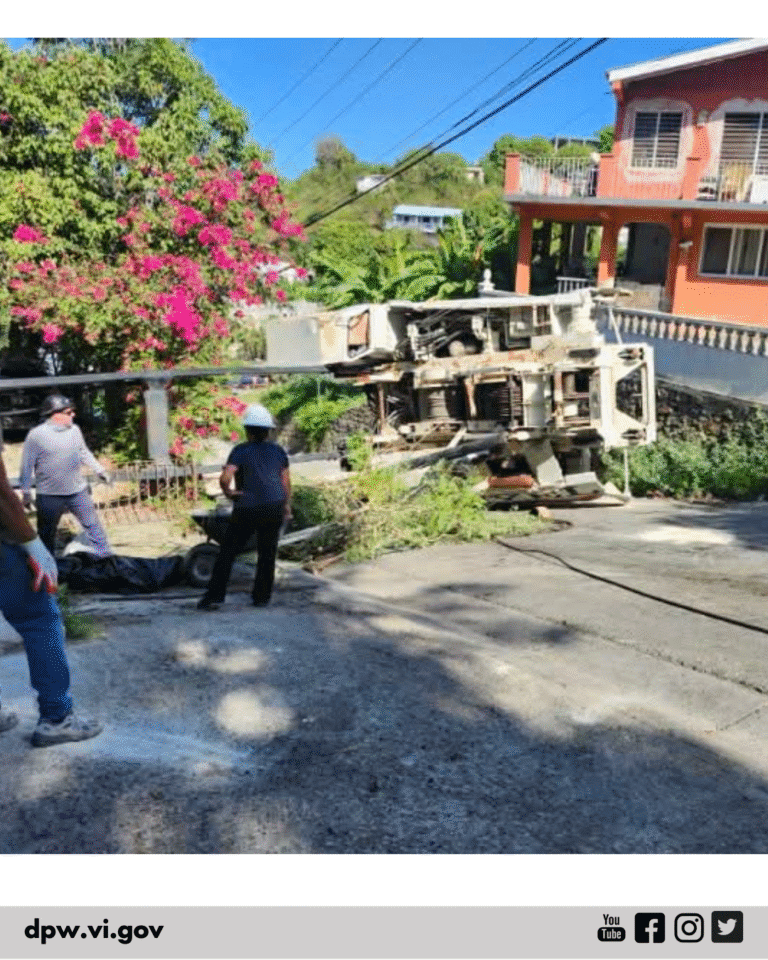
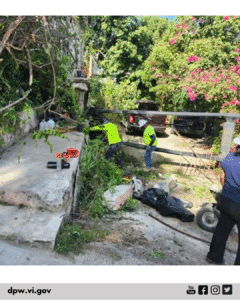 To safely remove the large machinery, there will be a temporary electrical disruption on Wednesday, Feb. 18, from 10 a.m. to 5 p.m.
Pedestrians are asked to refrain from utilizing the pathway until all work has been completed. Motorists are advised to continue using Contant Hill as an alternate route until further notice.
The Department of Public Works appreciates the community’s continued patience and cooperation.
To safely remove the large machinery, there will be a temporary electrical disruption on Wednesday, Feb. 18, from 10 a.m. to 5 p.m.
Pedestrians are asked to refrain from utilizing the pathway until all work has been completed. Motorists are advised to continue using Contant Hill as an alternate route until further notice.
The Department of Public Works appreciates the community’s continued patience and cooperation. 

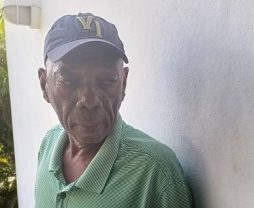
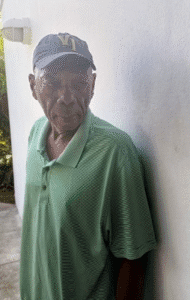
 Ocean Point’s Scholarship Program is open to all graduating seniors enrolled in a high school in the U. S. Virgin Islands, who have maintained a grade average of “B” (3.0 out of 4.0) or higher, and who have resided in the USVI for at least fifteen years prior to the date of their application.
Scholarships are awarded based on several factors, including scholastic achievement, evidence of good character, leadership and service, and financial need of the applicant. The amount of a scholarship award can be as much as $5,000.00 per year for a student to attend a 4-year accredited U.S. college or university, or a 2-year technical/vocational college. Ocean Point has noted that once it is awarded, a scholarship may continue for 2-4 years, based on the student’s course of study, and provided that the recipient continues to be enrolled as a full-time student and maintains good academic standing at an accredited U.S. college or university or technical/vocational school.
The scholarship application is available online and interested students can apply at: https://oceanpoint.smapply.io/ or on our website at https://www.opterminals.com/community/ under the Scholarship section. The deadline to submit an application for the Ocean Point Scholarship Program is March 22, 2026. For additional information, please contact: communications@opterminals.com or the Ocean Point Terminals’ Scholarship Administrator at (340) 692-3209.
Ocean Point’s Scholarship Program is open to all graduating seniors enrolled in a high school in the U. S. Virgin Islands, who have maintained a grade average of “B” (3.0 out of 4.0) or higher, and who have resided in the USVI for at least fifteen years prior to the date of their application.
Scholarships are awarded based on several factors, including scholastic achievement, evidence of good character, leadership and service, and financial need of the applicant. The amount of a scholarship award can be as much as $5,000.00 per year for a student to attend a 4-year accredited U.S. college or university, or a 2-year technical/vocational college. Ocean Point has noted that once it is awarded, a scholarship may continue for 2-4 years, based on the student’s course of study, and provided that the recipient continues to be enrolled as a full-time student and maintains good academic standing at an accredited U.S. college or university or technical/vocational school.
The scholarship application is available online and interested students can apply at: https://oceanpoint.smapply.io/ or on our website at https://www.opterminals.com/community/ under the Scholarship section. The deadline to submit an application for the Ocean Point Scholarship Program is March 22, 2026. For additional information, please contact: communications@opterminals.com or the Ocean Point Terminals’ Scholarship Administrator at (340) 692-3209. 
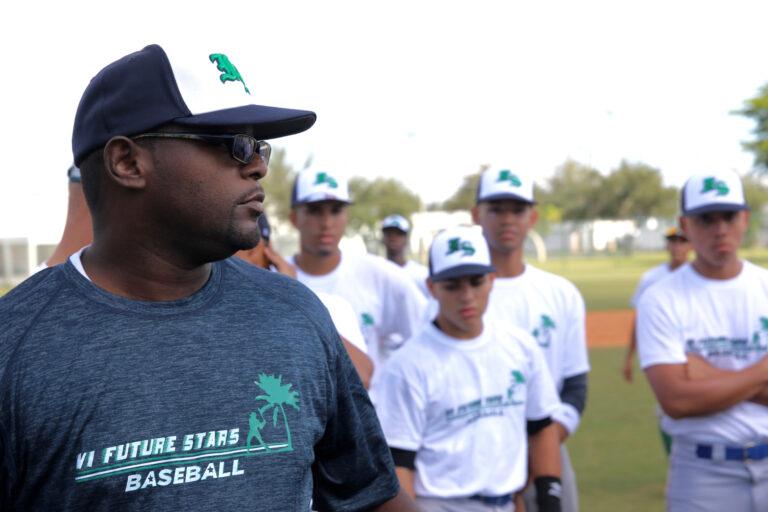
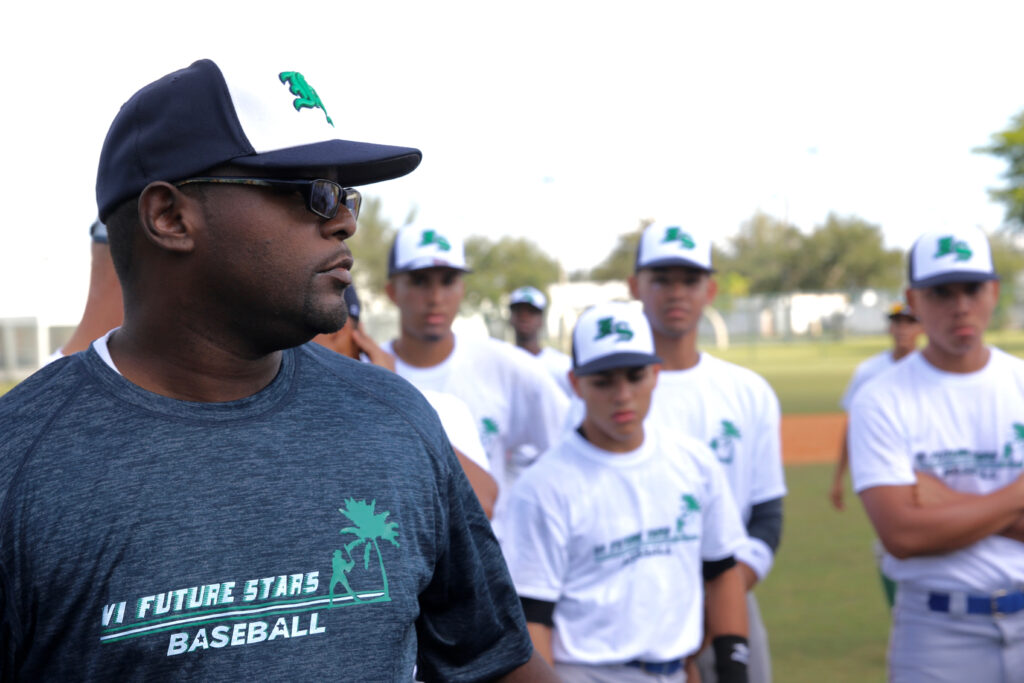
Darren was already deep into the work of building Future Stars Baseball, and what stood out wasn’t simply that he loved the game – it was that he was intent on building something durable. In a territory where talent has always been evident, sometimes in abundance, Darren understood that structure, exposure and mentorship were what separated potential from progress.
The idea for his program had taken root years earlier, after he watched territory players compete in Florida and realized how much ability was going unseen. A third-generation baseball player himself, Darren had once fielded Division I offers before an injury ended his own playing career. He often spoke about wanting the next generation to avoid some of the setbacks he had experienced — academically and otherwise — and to approach the game with discipline not just on the field, but in the classroom.
He didn’t try to do that alone.
Darren built a network around these young athletes. Alvis Christian became a steady presence in the organization, helping to manage operations and communication, while Darren reconnected with former coaches from his own Brooklyn’s Bonnie Youth Club, including Dharyl Russell, who, wear after year, came down to work with Virgin Islands players — not for spectacle, but for instruction, repetition, and accountability.
Years ago, practices ran three or four times a week during the summer, with freshman scouts brought in to evaluate talent. During Darren’s annual Future Stars showcases, meanwhile, major league scouts were invited to take a serious look at local players. The program traveled to South Florida at least twice a year, giving athletes the chance to compete against stateside talent and visit college campuses so they could see, firsthand, what continuing their education might look like.
Through Darren, our own family came to know many of the young men who would go on to represent the territory at higher levels — the Blashes, the Cottons, Akeel Morris, Joel Bellot. I remember going to film Jabari’s draft watch party at his mother’s home — a woman I had never met before — and watching Darren take it all in with a quiet pride, understanding what that moment meant, not only for one player, but for the broader idea he had been advancing for years.
He talked often about creating a system here — about building something that could, over time, resemble the development pipelines of Puerto Rico or the Dominican Republic, producing disciplined, college-ready, professionally visible players if the infrastructure existed. His tournaments in Florida and at home were not simply competitions; they were proof that the territory belonged in that conversation.
What Darren emphasized, especially to young men who were not yet standouts, was consistency. He was clear that raw talent was rarely enough. Dedication, academic focus, and resilience mattered just as much. He celebrated players who grew from an average high school athlete into a college scholarship recipient through steady work and strong grades and took pride in athletes who chose to complete four years of college before pursuing professional careers, because to him, the degree was as important as the draft.
Now, with such a committed and organizing force gone, the loss is deeply personal for many families — including ours — but it is also structural. Darren didn’t just encourage athletes; he assembled the professionals, built the schedule, made the calls, arranged the travel, and insisted that Virgin Islands players be evaluated alongside anyone else.
He believed that if given a fair look, they would measure up.
And, when someone who carried that belief so consistently is no longer here, the question is not only how he will be remembered, but what happens to the work itself. Darren was not simply a supporter of young athletes; he was an organizer, a connector, a bridge between this small territory and a much larger game. Much of what he built depended on his persistence, his relationships, and his willingness to keep pushing.
His belief changed trajectories. In the wake of his passing, honoring him now means continuing the work — and insisting, as he always did, that our athletes belong. Our sincere condolences to his children and family, loved ones, friends, teammates, and the athletes — including my own son — he has inspired.
Since 1999 the Virgin Islands Source – the only online newspaper of general circulation in the U.S. Virgin Islands – has been providing the community with reliable, accurate and balanced local journalism.
Contact us: visource@gmail.com
© 1999-2025 Virgin Islands Source