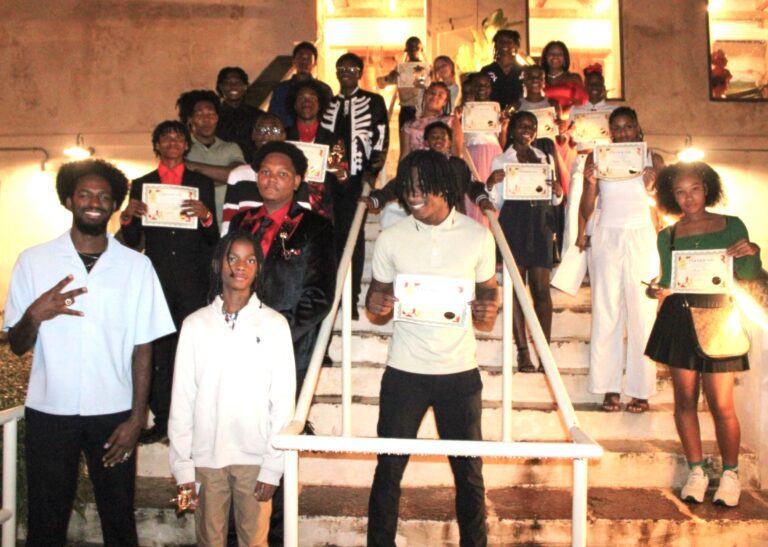
The St. Croix Track Club proudly marked its 19th anniversary on Saturday, Dec. 20, with a vibrant celebration attended by youth, junior, and senior athletes, families, and community supporters.
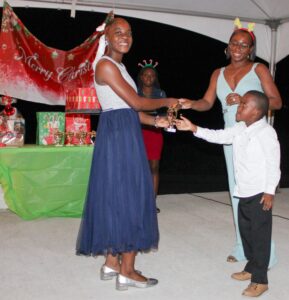
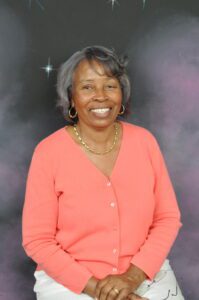
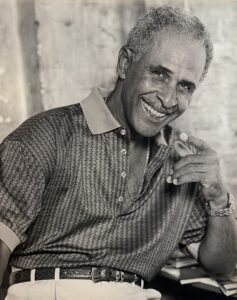
Faith Eatmon (Left)
Founded in 2006, STXTC has remained steadfast in its mission to harness the many facets of track and field to develop responsible, dedicated individuals who exemplify high moral character and strong values. Over the past 19 years, the club has positively impacted the lives of more than 500 students across the Virgin Islands, fostering athletic excellence, academic achievement, and community leadership.
Honoring Legacy and Talent
Among the many highlights of the celebration was the presence of Michelle Smith, a standout athlete who began her journey with STXTC at the tender age of four. Her inspiring trajectory from grassroots development to international competition is a testament to the club’s long-standing commitment to nurturing talent from an early age.
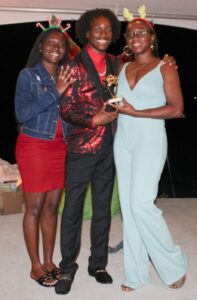
Juvante Hurst (Middle)
The anniversary event featured athletic demonstrations, reflections on the club’s legacy, and a renewed call to invest in the future of Virgin Islands youth through sport. Photos from the celebration captured the energy, unity, and pride that define the STXTC family.
Athletes of the Year
As part of the celebration, STXTC honored its Athletes of the Year, recognizing outstanding performances across all divisions:
Female Senior Athlete: Michelle Smith
Double gold medalist at the 2026 CARIFTA Games (400m Hurdles, 800m)
Silver medalist at the World University Games (400m Hurdles)
Silver medalist at the Junior Pan American Games (Hurdles)
Set Under-20 and Senior Virgin Islands records in the 400m Hurdles
Member of the national record-setting 4x400m relay team
Male Senior Athlete: Omar Simpson
Represented the Virgin Islands at the NACAC Senior Championships and World Championships
Member of the VI record-setting mixed 4x400m relay team
Female Junior Athlete: Faith Eatmon
Member of the VI Female U17 National record 4x100m team
Held fastest junior times in the 150m, 200m, 300m, 400m, 600m, and 1200m
Ranked #1 in the long jump
Cross Country MVP
Male Junior Athlete: Juvante Hurst
Member of the VI Male U17 National record 4x100m team
Held fastest junior times in the 300m, 400m, and 800m
Female Youth Athlete: Olivia Jones
Youth fastest times in the 800m, 1200m, 1500m, and 3000m
Long jump leader
Cross Country MVP
Male Youth Athlete: Khaiem Hansen
Youth fastest times in the 600m and 800m
Cross Country MVP
Record-Breaking Achievements
In 2025 alone, STXTC athletes contributed to six Virgin Islands National Records, including:
Male U17 4x100m relay – Juvante Hurst, Jah’Quan Creque
Looking Ahead
As the club approaches its 20th year, STXTC remains committed to empowering the next generation of leaders—on and off the track. With a legacy of excellence and community impact, the club continues to inspire Virgin Islands youth to pursue greatness in athletics, academics, and life.
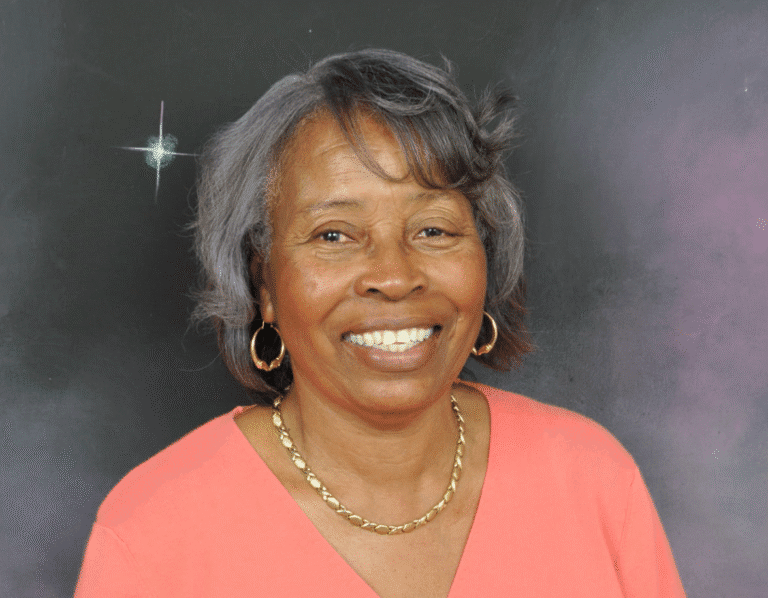
Pauline Brown Corbitt, affectionately known in her childhood as “Happy,” was born in 1950 in Newfield, Antigua to Muriel Walker Sealey and Checile Brown. She was raised in St. Thomas, U.S. Virgin Islands, where her life was shaped by faith, family, and a deep compassion for others.
Pauline Brown Corbitt
Pauline received her early education at Saints Peter and Paul Catholic School, where her Catholic faith took root and remained a guiding force throughout her life. She earned a Bachelor’s degree in Social Work from the University of the Virgin Islands, followed by a Master’s degree in Early Childhood Education from the University of Miami; a testament to her lifelong commitment to children and service.
She began her career as a social worker in St. Croix, where she was naturally drawn to the children on her caseload. That calling led her into education, where she served in several roles, including gym teacher and kindergarten teacher. Pauline ultimately found her professional home as a first grade teacher, a role she held for decades at Juanita Gardine Elementary School. She later served as Chair for First Grade Teachers, mentoring colleagues with patience, grace, and quiet leadership. To her students, Pauline was more than an educator; she was a steady presence, a source of encouragement, and often a second mother.
Pauline’s greatest joy was her family. Her life’s most meaningful journey began with the birth of her first child, Kareem. She later met the love of her life, Archie Corbitt, Jr., and together they welcomed their daughter, Alexis. On August 4, 1984, Pauline and Archie were united in marriage. Their family continued to grow with the birth of their son, Archie Corbitt III. Together, they nurtured a home grounded in love, faith, discipline, and joy.
In retirement, Pauline found happiness from additional time in her garden, cultural events on St. Croix, and spending treasured time with her grandchildren; Yasmin, Jonathan, Nyrelle, and Arielle; who brought her immense pride and joy.
Pauline is preceded in death by her parents; sister and best friend, Muriene; survived by her beloved husband; her children; her sister, Geraldine “Miss G”; her son and daughters in-law, Michelle, Abraham, and Neisha; and and a host of nieces, nephews, extended family, and friends; too numerous to mention. She also leaves behind her many “children”; the generations of students whose lives she touched during her decades of teaching.
Remembered for her gentle spirit, steadfast faith, and selfless heart, Pauline leaves a legacy of love, learning, and quiet strength that will endure for generations.
The funeral will be streamed from Fisher Memorial Funeral Parlor’s YouTube account on Dec. 27,2025 at 10 a.m. for the benefit of Pauline’s family and friends, near and far.
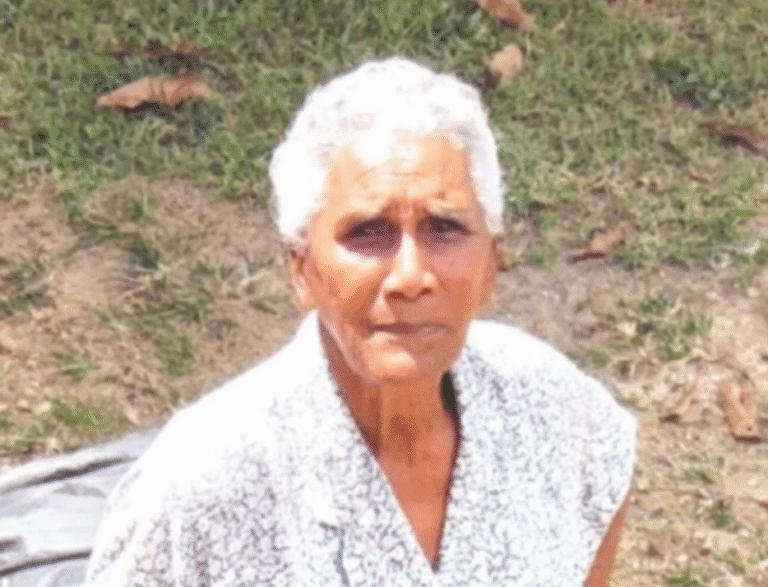
Vivian Patricia (Pat) de Chabert of Estate Two Williams, St. Croix, transitioned peacefully into Eternal Life on Sunday, Dec. 7, 2025, at the age of 91 years and 51 weeks.
Vivian Patricia de Chabert
She is survived by her sisters, Sarah Gillespie (Quebec), Marva Taylor (NS), Lois Wyse (NS), Glenda Jones (NS), Rhonda Hurst (NS), Janice MacLean (NS); brothers, Gary MacLean (NS), Reggie MacLean (NS), Randy MacLean (NS); daughters, Mariel J. de Chabert-Percy (STX), Shelly E. de Chabert (GA), Renee J. de Chabert-Edwards (NY), Dr. Meredith J. de Chabert (RI); daughter-in-Law, Claudia Shacter-de Chabert (NY); sons-in-law, Radclyffe A. Percy (STX), Courtney Edwards (NY), Charles Chapman (GA), and Istvan Szanto (RI); granddaughters, Siedah Smith (GA), Grace Edwards (NY);granddaughter-in-law, Shari Black Dorsey (NY); grandsons, Kalem Smith (CO), Jonathan C. Dorsey; great-granddaughter: Jasmyn Smith (GA); great-grandnephews, Jonathan G. Dorsey and Kyle W. Dorsey (NY); godsons, Michael John Dubois (STX), Judge Ernest Morris (STX); nieces, Bonnie Jewel & family (Ontario), Jo Ann Jewel & family (MI), Yolanda (Lani) Black & family (Ontario), Dianne Placentina & family (Quebec), Vivian Leigh Durant (Quebec), Lesa Dillard & family (MI), Deborah Allison & family (MI), Donna de Chabert (TX), Karen de Chabert (NJ); nephews, Ronnie Durant & family (Quebec), John Durant (Quebec), Alvin Gillespie (Toronto), Jerry Joel (Pops) Franklin (Quebec), Mark de Chabert & family (MA), Christopher de Chabert & family (FL); extended family, Teanketer, Kellam, Borden, Ash, Greencorn, Reuter, Isanhoggen, Whalen, and MacLean families, New York branch of de Chabert family, St. Croix branch of de Chabert, Schuster, Highfield, Brady and Jackson families; also, many other dear family members, students and friends gathered over 60 years of life on St. Croix.
Funeral services will be held at St. Patrick’s Church, 416 Custom House Street, Frederiksted, St. Croix, V.I., on Thursday, Jan. 8, 2026. Viewing will begin at 9 a.m. with the service at 10 a.m. Interment will follow at the Frederiksted Cemetery.
Funeral arrangements have been entrusted to James Memorial Funeral Home, Inc.
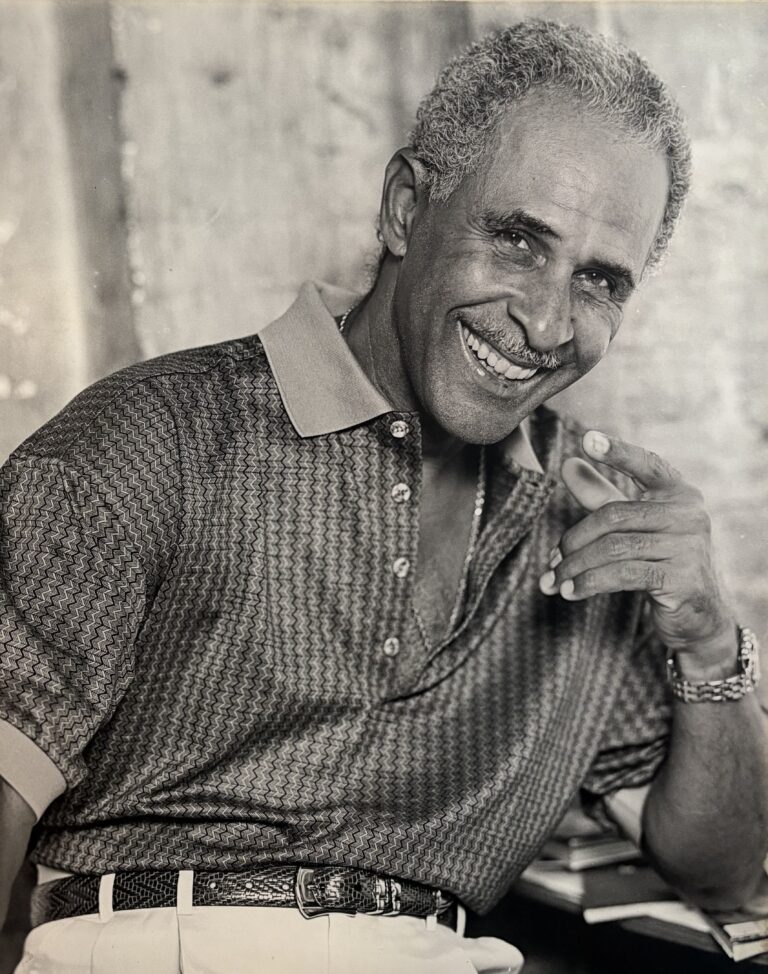
William Milton Collins, Jr.: Dec. 27, 1943 – Dec. 14, 2025
William Milton Collins
William Milton Collins, Jr., known to family and friends as Bill, passed away peacefully leaving behind a legacy of adventure, dedication and deep community roots.
Born in LaGrange, Texas, Bill grew up in Austin as the eldest of five children in a home shaped by educators. He carried forward that spirit of learning, first studying education at Southern University in Baton Rouge, then briefly pursuing law in Berkeley, California. Ultimately, Bill followed his true calling in education, as founder and director of Odyssey, part of the Experimental School Program of Berkeley Unified School District. This was a school designed to inspire and support at-risk students. As principal, he dedicated himself to keeping marginalized young people (particularly youth of color) educated, engaged, empowered, and on the path of discovery.
In time, Bill found another lifelong passion: sailing. In 1978, he competed in and completed the first single-handed Trans-Pacific Yacht Race from San Francisco to Kauai—a journey that would mark the beginning of HIS odyssey. Retiring from teaching, he set out aboard his 39-foot classic Alden sailboat, Susurro, and spent years exploring Central America. Alongside his future wife, Linda, who joined him as crew in Costa Rica, Bill worked in the marine industry—rigging, repairing sails and delivering vessels. Their voyage eventually brought them to St. Thomas, USVI, where what was meant to be a one-week stay blossomed into a new life.
Bill and Linda married in 1984 and built their home together in St. Thomas, where he immersed himself in the community he grew to love. He helped form the Texas Society, served as President of the U.S. Windsurfing Association, and championed junior sailing programs across the country. Never one to shy away from new endeavors, Bill also founded Texas Pit BBQ, a business through which he continued to support local youth and forged countless friendships that lasted a lifetime.
Bill is remembered for his adventurous spirit, his gift for connecting with people and his unwavering commitment to community and family. He is survived by his wife of 42 years, Linda; his son, Chris; and his cherished grandchildren, Chase and Chandler. He also leaves behind two brothers, one sister, and many nephews and grandnephews, along with a wide circle of friends who will forever feel his absence.
Bill’s life was one of purpose, passion and joy on both land and sea. He will be deeply missed and forever remembered.
A Celebration of Life will be held in St. Thomas a later date, details will be shared soon.
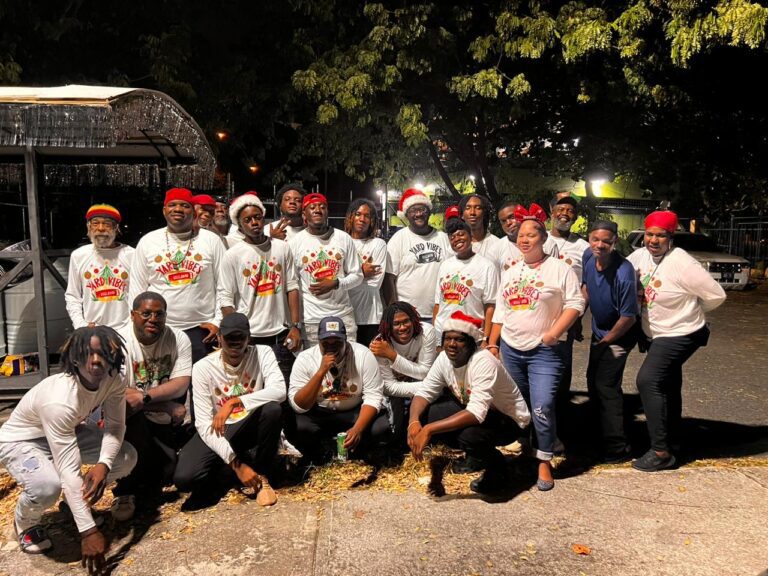
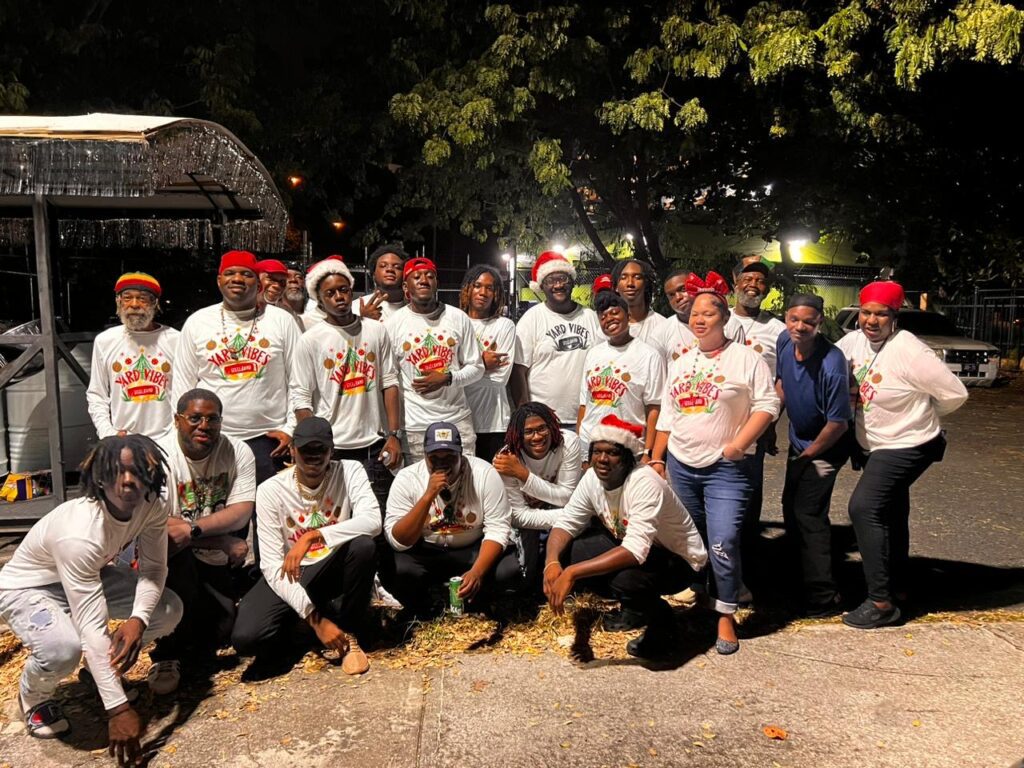
Yard Vibes is hosting its annual Christmas Eve tramp this Wednesday. (Submitted photo)
If you hear steelpan echoing through the streets of St. Thomas late Wednesday night, it’s not your imagination — it’s Yard Vibes Steelband’s annual Christmas Eve Tramp, returning for its fourth year.
The tramp gets underway at 10 p.m. Wednesday, starting across from the Lucinda Millin Home at Rising Stars’ Bayside Panyard. From there, the band will make a full loop through Charlotte Amalie, passing familiar landmarks including Yacht Haven Grande, Pearson Gardens, Wheatley Center, Lockhart Shopping Center, Charlotte Amalie High School, the Omar E. Brown Fire Station, and the Superior Court’s Magistrate Division, before ending back where it began.
Yard Vibes has been tramping with the community on Christmas Eve since 2022, quickly turning what began as a small gathering of friends and family into a tradition many now look forward to each year. Band captain Vicente Donastorg said the tramp is about sharing culture and celebrating the season together, road-style. “It started as something fun to do with our friends and family, and it grew into something much bigger,” he said. “We had to keep it going.”
Community members are encouraged to jump in as the band passes by — whether that means following along for the full route or joining for a stretch. Organizers say festive gear, whistles, tambourines, and noisemakers are all welcome, and no formal sign-up is required. If you hear the pan and iron, they say, just come out and tramp.
Yard Vibes is made up of adults and youth dedicated to keeping steelpan culture alive in the Virgin Islands. Many members are Rising Stars alumni who continue to perform, arrange, and share music through community events, Carnival, and long-standing traditions like Miracle on Main Street. The Christmas Eve Tramp, they say, is simply another way to bring people together — one step, one rhythm at a time.
For more information, contact Vicente Donastorg at (340) 626-7944 or Ralph “Rabbi” Felix at (340) 643-1623.
A St. John man convicted of stabbing and paralyzing a man in 2021 has been arrested again, just more than a year after his release, for stabbing another man.
Police detained Rupert Walters Jr., 50, Friday, four days after a warrant was issued for his arrest. Walters was allegedly harassing women walking near Cruz Bay’s Tap & Still around 9 p.m. on Dec. 10. Walters cursed the man who told him to stop before attacking him with a knife, according to court records.
A bystander intervened, throwing Walters to the ground, according to the Virgin Islands Police Department. The attack left blood on the street and a wooden fence. The victim was transported to the Myrah Keating-Smith Clinic for wounds to his head, hand, and abdomen.
Walters was charged with assault, use of a dangerous weapon, reckless endangerment, and other charges. His bail was set at $75,000. Walters, also known as Big Youth, has a long history of violence and arrests, and was well known to VIPD, according to court records.
In May 2021, a man leaving Beach Bar told police he saw Walters harassing an older man. When the victim told Walters to “chill out,” Walters attacked, stabbing the man in the neck. The two-inch puncture wound hit the victim’s spinal cord, leaving him partially paralyzed.
After a manhunt, Walters was arrested and charged with attempted murder, assault, use of a deadly weapon, mayhem, reckless endangerment, and other crimes. He pleaded not guilty at first but later accepted a deal. He was sentenced to three years in prison for third degree assault in February 2023, with credit given for time served.
Walters was released in 2024 but allegedly failed to pay associated fines and fees. The government filed a civil suit against him.
In 2016, Walters was charged with first-degree murder in the May 2015 shooting death of Kenson Jolly, 25. Jolly had been a suspect in a machete-and-knife fight that February that left the streets of Cruz Bay covered in blood.
Police came to suspect Walters in the murder and eventually charged him after a firearm was found in his vehicle that allegedly matched the murder weapon. Police searched Walters’ vehicle after he’d been involved in an altercation with another driver. A Virgin Islands Superior Court judge ruled the arrest and the search illegal and the firearm evidence was excluded, according to court records.
Incomplete court records online did not specify if Walters was convicted of a crime in the matter.
In 2012, Walters was charged with burglary, assault, and weapons charges that were eventually dismissed in 2014, according to court records.
In 2011, Walters was charged with assault with a deadly weapon, assault and battery, disturbance of the peace, and other crimes. He eventually pleaded guilty to aggravated assault and battery in a court or church and was sentenced to six months imprisonment — with all but 10 days suspended.
Court records were unclear on how or why the charges were resolved. That same year, Walters was charged with criminal contempt of court.
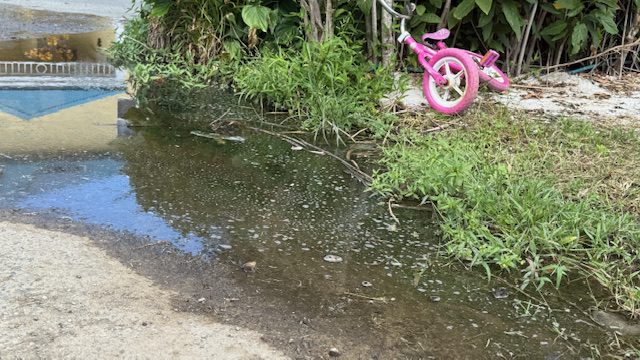
A child’s bike is parked near pooling gray water. (Submitted photo)
It’s pretty easy to guess what the residents of the Calabash Boom housing community on St. John want for the holidays: toilets that flush.
Residents of the affordable housing community located 2.5 miles south of Coral Bay (along the road to Salt Pond) have been without gray water in their toilets since Dec. 11, according to Mary Andrews, a 15-year resident.
The apartments at Calabash Boom are now owned by Jackson Development Company, LLC, which acquired the property about a year ago. JDC also bought several other affordable housing developments including Bellevue Village on Gifft Hill on St. John and Lovenlund on St. Thomas.
The townhouses on the Calabash Boom property are owned individually, but residents share infrastructure with the tenants of the eight apartment buildings.
Andrews said she made multiple attempts to reach officials at Jackson Development by phone and email, but her messages were not returned. Residents received letters on Dec. 16 stating that the pump at the gray-water treatment plant had failed, and a new one had been ordered.
The Source also tried to reach officials at Jackson Development Company starting on Dec. 15. On Monday, Dec. 22, an employee who answered the phone at the company’s office said, “A pump is to blame for (the breakdown) of the gray water circulation. A new one is on order and should arrive momentarily.” He identified himself only by his first name and said he is not an official spokesperson for the company.
The Calabash Boom housing community, which includes 24 townhouses and 48 apartments, has its own sewage treatment facility because there are no municipal systems for producing potable water or treating sewage beyond the town of Cruz Bay, roughly 10 miles away.
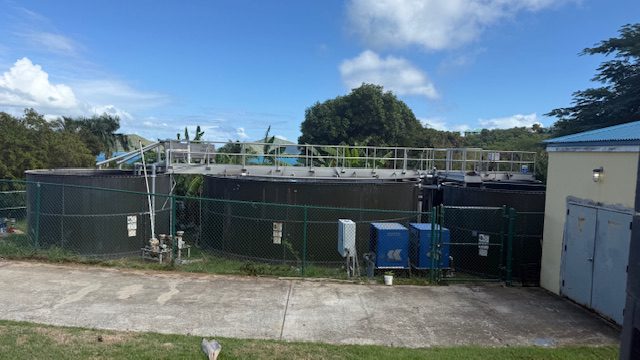
Water treatment plant at Calabash Boom. (Submitted photo)
The on-premises facility filters whatever is flushed down the toilets and cleans the effluent to the point where it is considered “gray water” — safe enough to be recycled to use in toilets or to water plants. Potable water for showers and cooking is trucked in for tenants in the apartments while townhouse owners rely on rainwater stored in their cisterns.
Since Dec. 11, residents in the townhouses and the apartments have been filling jugs with water from their sinks and pouring it into their toilets. “I’m here by myself at the townhouse, filling my toilet tank with gallon jugs from the tap,” said one resident, a retired teacher. “I tried rigging up a hose, but it didn’t work. At times the floor becomes wet from the transfer. That’s a real danger for me, because I don’t want to take a fall.”
At age 84, Andrews also lives alone and said she has trouble lifting and carrying the gallons of water. She wonders how some of her neighbors cope, especially those in multi-generational households with many family members sharing one bathroom.
This is not the first time that the gray water system at Calabash Boom has failed. According to Andrews, starting July 4 there was no water in the toilets for 12 days until repairs were made to underground pipes.
“When the septic system goes back on after being off, the gray water isn’t filtered properly. It goes in the toilets, and it’s nasty,” said the retired teacher.
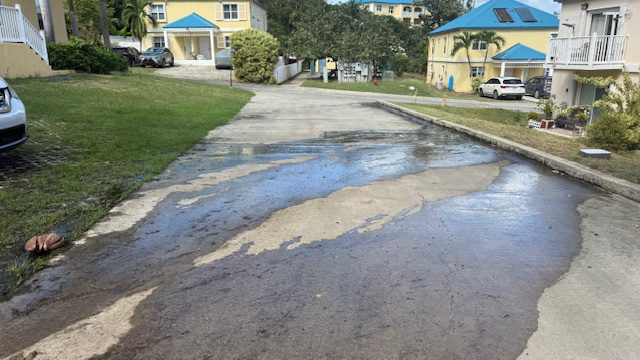
Gray water pours across a road in the housing community. (Submitted photo)
She said smelly effluent is now leaking from pipes, running down the roadways and pooling in places like the basketball courts and areas where children play.
After agreeing to take photographs and video clips for this story, the retired teacher said, “Now that I’ve walked around, I’m really upset with this situation. I’m thinking of the health hazard to residents, pets and wildlife in the area … there are donkeys, chickens, birds, tortoises, iguanas. When the septic reaches Coral Harbor and Johnson Bay, all marine life is affected by this sewage leak. It’s not just a pump issue.”
Calabash Boom residents say maintenance has often been a problem at the housing community. Since the development was built, there have been at least three management companies. “The first one wasn’t good. The next one was horrible. And the third tried, but there still was nothing going on,” said the retired teacher.
Jackson Development Company bought the property in the last year as a way to address maintenance concerns and allow tenants to purchase their units. Calabash Boom was built by Reliance Housing Foundation, the nonprofit affordable housing developer where Robert “Bob” Jackson was the CEO.
“These properties were originally built with federal Low Income Housing Tax Credit (LIHTC) funding allocated by the Virgin Islands Housing Finance Authority,” Jackson explained to the Source last January. Clifford Graham, one of Jackson’s current partners at Jackson Development Company, was the executive director at VIHFA when these properties were built. (VIHFA was instrumental in the financing of the recent sales of the properties.)
“An important part of the original development plan was to provide for the conversion to affordable homeownership after the initial 15-year rental period required under the tax credit program,” Jackson said. “I left employment at Reliance in 2013, and they closed their doors in 2015. Likewise, Cliff left VIHFA in 2011. However, we both have felt an obligation to fulfill the original promise to convert these properties to affordable homeownership.”
In many ways, Calabash Boom is a successful affordable housing community, many residents say. “It’s a great community,” said the retired teacher, “and a nice neighborhood. I’ve enjoyed it, but not with these health hazards.”
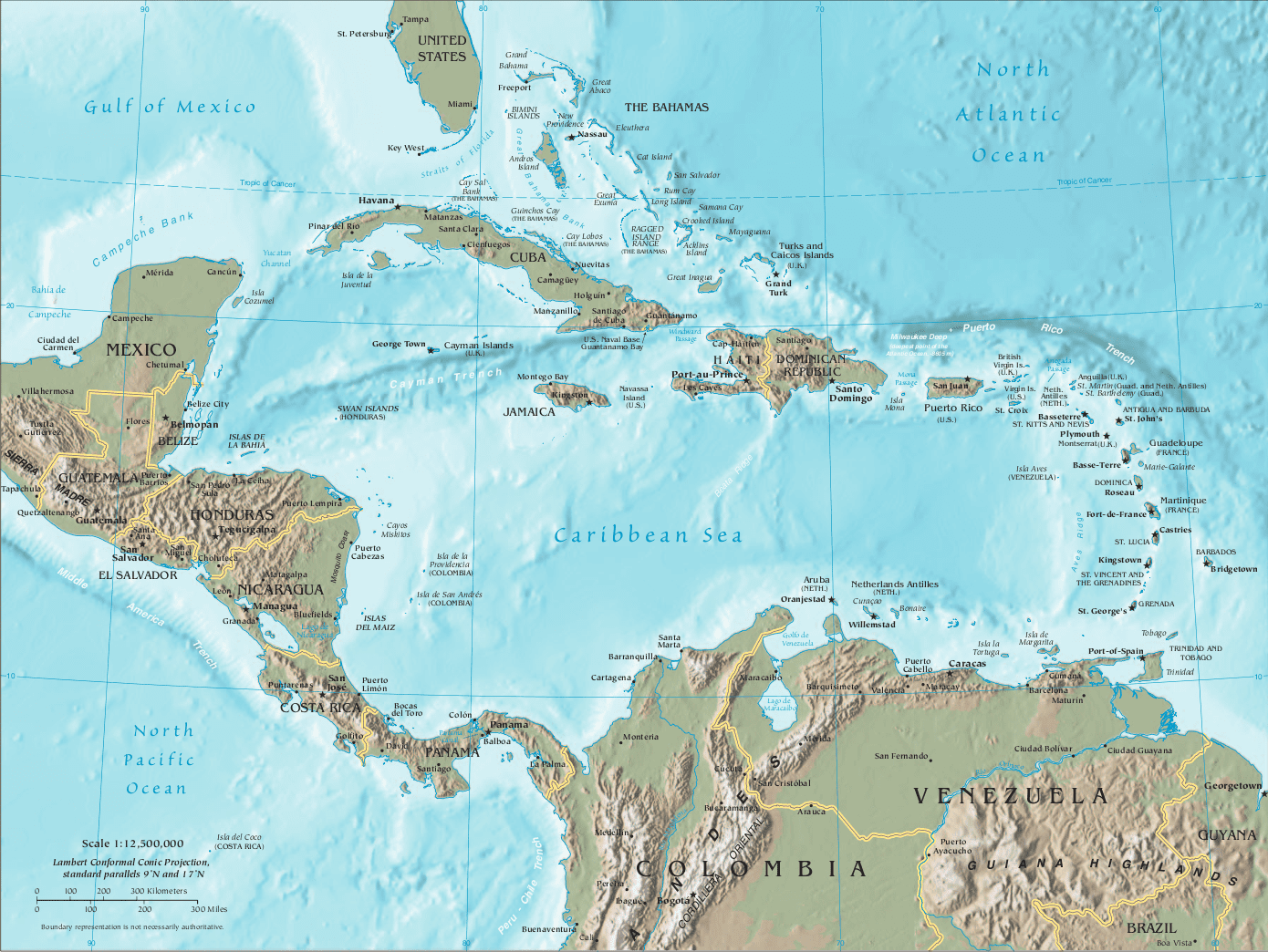
A map of Central America and the Caribbean by the CIA World Factbook. (Image courtesy CIA)
There is a persistent paradox at the heart of contemporary Caribbean emancipatory discourse, namely, the notion of the Caribbean itself may be, in significant respects, a colonial construction. The idea of a coherent Caribbean space emerged historically through colonial political administration, plantation economies, imperial historiography, European travel writing, and systems of governance designed for extraction and control.
The question, then, is unavoidable: when Guyana today seeks to deepen its “Caribbean‑ness”, whether through institutions, sport, music, economic integration, or diplomatic alignment, is this a radical departure from colonial history, or does it risk being a continuation of colonial categories under post‑colonial management and an eerie resurrection of the ghost of “massa”?
This concern is not merely theoretical. The Caribbean was not born as a self‑defined civilizational unit. It was assembled through European logics that grouped disparate societies according to trade routes, labor regimes, and imperial convenience.
Guyana’s inclusion itself reflects this history. Geographically South American, ecologically continental, and culturally plural, Guyana was administratively folded into the British West Indies largely because of language, law, and colonial governance, not because of geography or pre‑colonial cultural continuity.
From this perspective, the drive toward continuous Caribbean integration appears contradictory, especially when framed as part of a broader effort to escape colonial legacies. If the category “Caribbean” is itself a colonial artifact, then uncritical attachment to it risks reproducing inherited limits on political and cultural imagination.
Cricket diplomacy, Carnival circuits, CARICOM bureaucracy, and regional summitry can become rituals of belonging that obscure deeper asymmetries in development, infrastructure, and strategic interest. For example, while island states focus on tourism‑led economies and maritime vulnerabilities, Guyana’s growth trajectory is increasingly shaped by continental trade corridors, hinterland development, energy infrastructure, and extractive industries.
Yet this contradiction is not irresolvable. Caribbean identity has never been only a colonial imposition. It has also been reworked from below through anticolonial struggle, cultural creativity, and intellectual labor. Caribbean literature, music, and political thought have long transformed the memory of captivity into languages of resistance and survival.
To participate in Caribbean institutions, therefore, is not automatically to surrender to colonial inheritance. The problem arises when Caribbean identity is treated as an endpoint rather than a tool, as a fixed destiny rather than a strategic affiliation.
This is where the question of geography becomes decisive. Guyana’s future is not only cultural or diplomatic, it is physical, environmental, and spatial. The country’s population, infrastructure, and administrative core remain concentrated on a narrow coastal plain that lies at or below sea level.
This is not an abstract vulnerability. Rising sea levels, saltwater intrusion, intensified rainfall, and aging colonial drainage systems already threaten housing, agriculture, and public health. The historic sea defenses that once symbolized colonial engineering prowess now expose the fragility of our inherited spatial arrangements.
If climate change forces us to rethink where and how Guyanese live, then it must also force us to rethink how Guyana situates itself regionally. A long‑term vision that remains psychologically and institutionally northward‑looking risks ignoring the continental realities to the south and west. Turning South offers not only physical high ground but also alternative economic imaginaries, integrated river systems, overland connectivity, and regional climate adaptation frameworks better aligned with Guyana’s terrain and scale.
In this sense, a Southern turn is not a rejection of Caribbean culture or history. It is a rebalancing of perspective. Caribbean affiliation will remain one layer of identity and cooperation, but it must not confine strategic thinking. A future‑oriented Guyana must learn to operate simultaneously within Caribbean cultural space and South American geographic reality, without allowing either to harden into dogma.
The deeper decolonial task, then, is not to choose between Caribbean belonging and post‑colonial autonomy, but to refuse inherited categories as limits. Decolonization is not achieved by abandoning institutions, but by interrogating their origins, testing their usefulness, and refusing to let them define the horizon of possibility.
In an era of climate uncertainty and geopolitical realignment, Guyana’s survival and sovereignty will depend less on symbolic belonging and more on spatial intelligence, environmental foresight, and the courage to imagine a geography of the future that history did not design for us.
The decolonization of our horizons of possiblity is the most challenging task in the recovery of the self.
— Walter H. Persaud, Ph.D., is a retired Guyanese-Canadian professor of political and cultural studies. He has worked in national broadcasting media in Canada and taught in Thailand for a quarter century. He currently resides in Guyana where he publishs regularly on a variety of national and regional issues. Dr. Persaud holds a Bachelor’s in History and a Ph.D. in Social and Political Thought from York University, Toronto.
Editor’s Note: Opinion articles do not represent the views of the Virgin Islands Source newsroom and are the sole expressed opinion of the writer. Submissions can be made to visource@gmail.com.
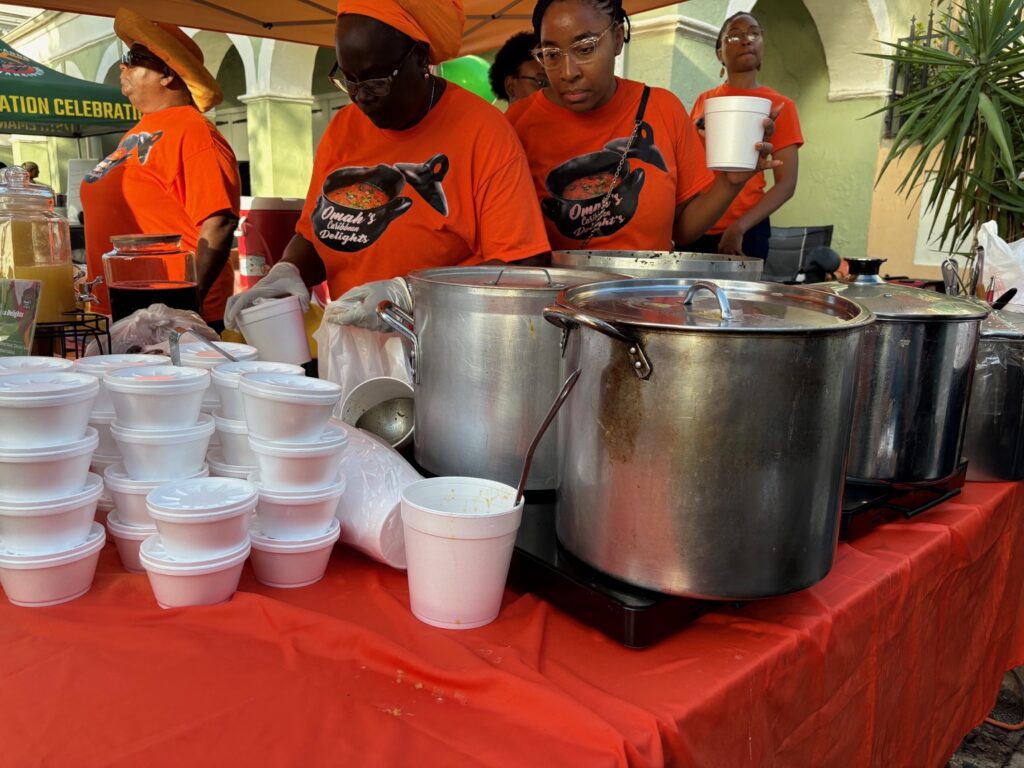
Omah’s Caribbean Delight drew a steady crowd with soups ranging from goat water to conch water. (Source photo by Diana Dias)
The second annual 2025 Soup Festival brought food, music, and community together along the Frederiksted waterfront, drawing residents and visitors eager to sample some of St. Croix’s most comforting and flavorful dishes.
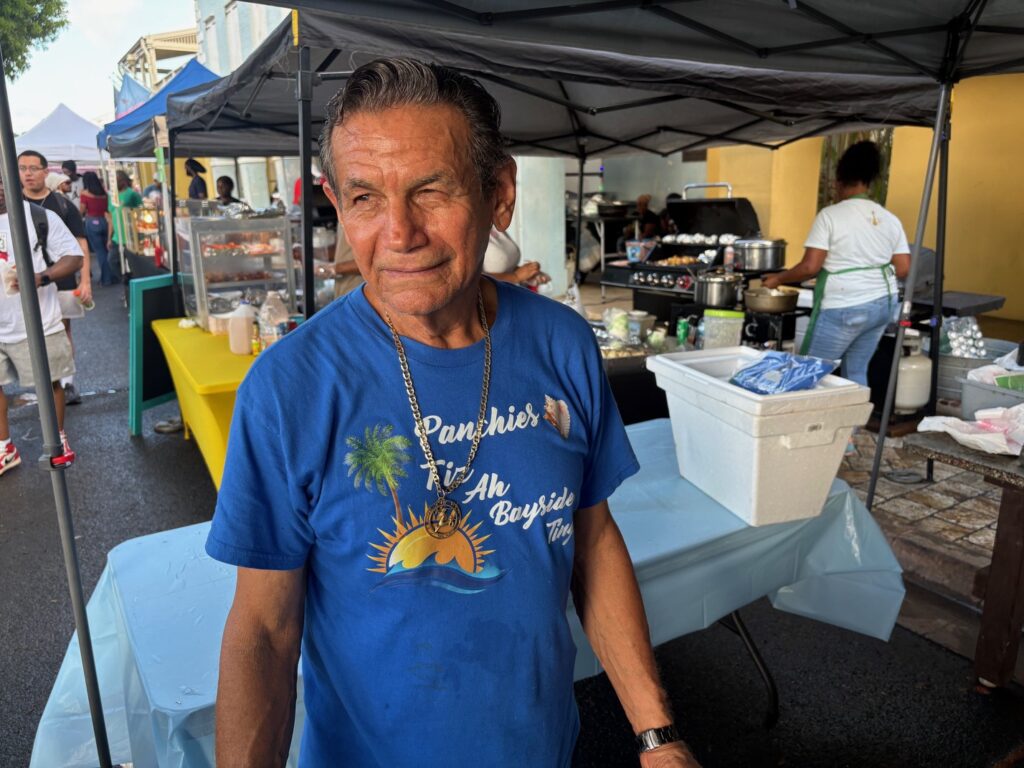
Panchi’s of Gallows Bay, a well-known early-morning stop for traditional Crucian cuisine, served festival favorites. (Source photo by Diana Dias)Panchi’s of Gallows Bay, a well-known early-morning stop for traditional Crucian cuisine, served festival favorites. (Source photo by Diana Dias)
Local chefs and home cooks lined the festival grounds, offering a wide variety of soups ranging from traditional favorites to creative specialties. Popular stops included Omah’s Caribbean Delight, which served goat water and conch water, and Ultra Lounge, where Miguel dished out generous cups of kallaloo. Panchi’s of Gallows Bay, a longtime favorite for traditional Crucian cuisine, also attracted steady lines throughout the day.
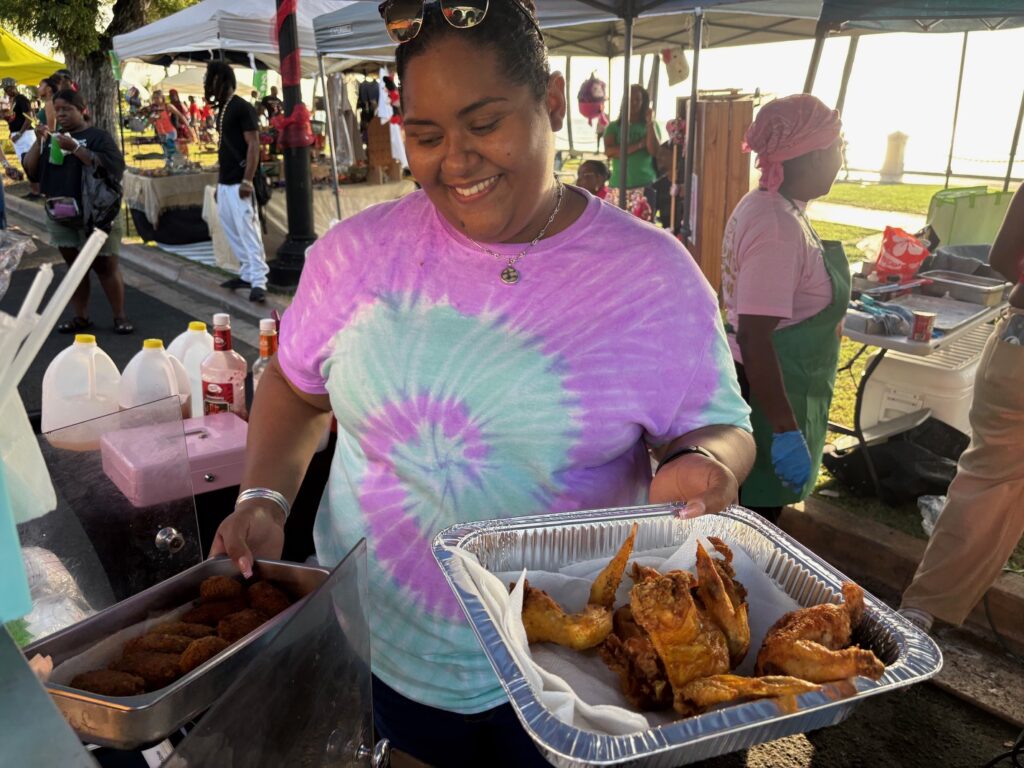
Spicy Sugar served up souse, potato salad, and a variety of flavorful soups. (Source photo by Diana Dias)
In the Virgin Islands, soup is more than just a meal — it is comfort, tradition, and a staple found at family gatherings, roadside stops, and holiday celebrations. From kallaloo to red pea soup, these dishes carry generations of flavor and warmth, especially during the holiday season when food becomes a way to bring people together.
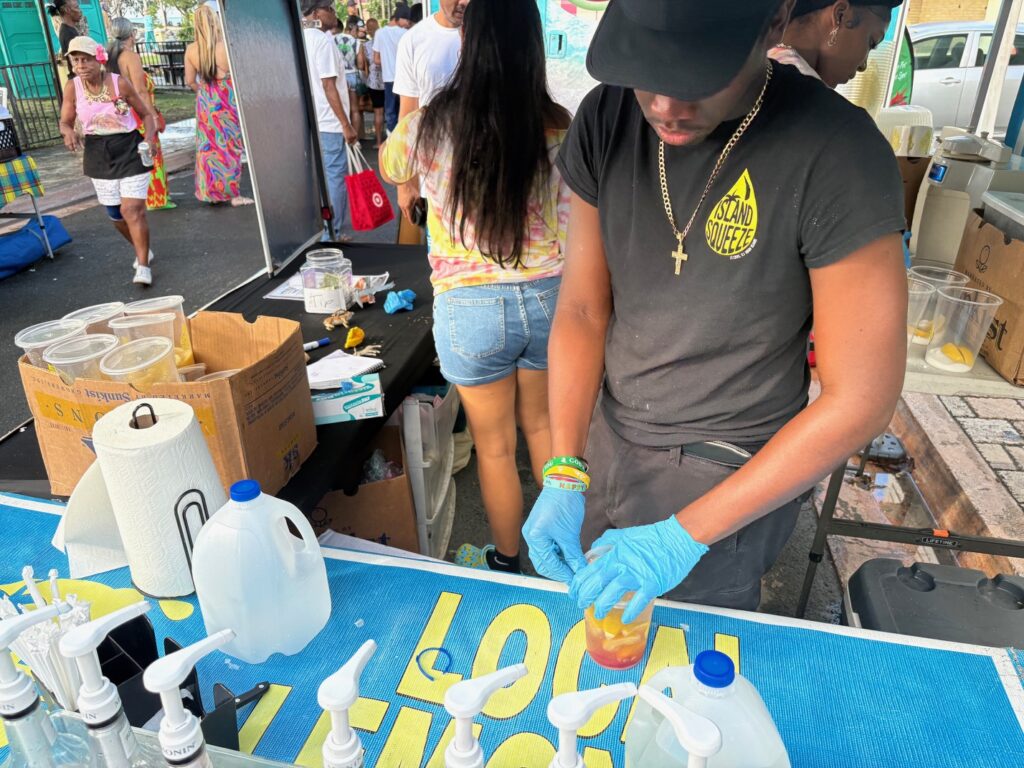
Lemonade helped festivalgoers cool down, with several booths, including Island Squeeze, offering refreshing drinks. (Source photo by Diana Dias)
At the conclusion of the event, Ultra Lounge earned top honors, winning both People’s Choice and Best Kallaloo. The Landing Beach Bar received awards for Best Red Pea Soup and Best Conch Water.
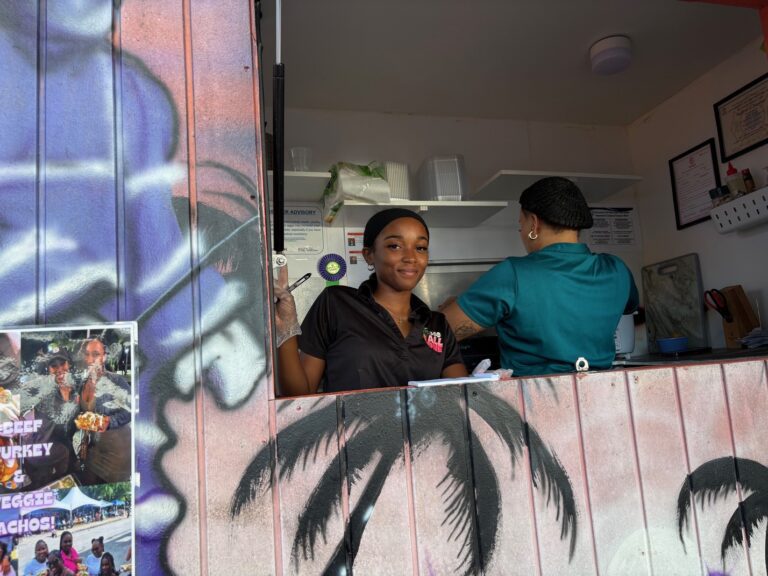
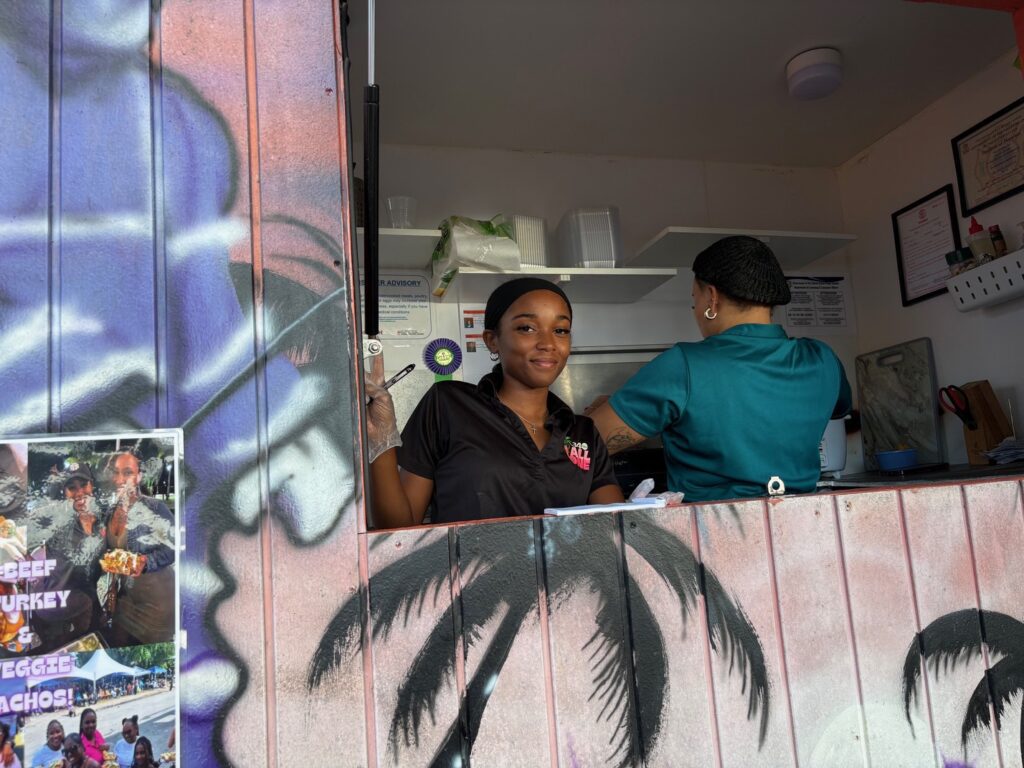
In addition to soups, vendors offered a range of foods, including roasted corn, pâtés, and signature nachos from 340 All In One, available with beef, turkey, or vegan options. (Source photo by Diana Dias)
While soup was the main attraction, festivalgoers enjoyed plenty of additional offerings. Over forty vendors served roasted corn, pâtés, souse, potato salad, and refreshing lemonade from booths such as Island Squeeze. 340 All In One also drew attention with its signature nachos, topped with beef, turkey, or vegan options.
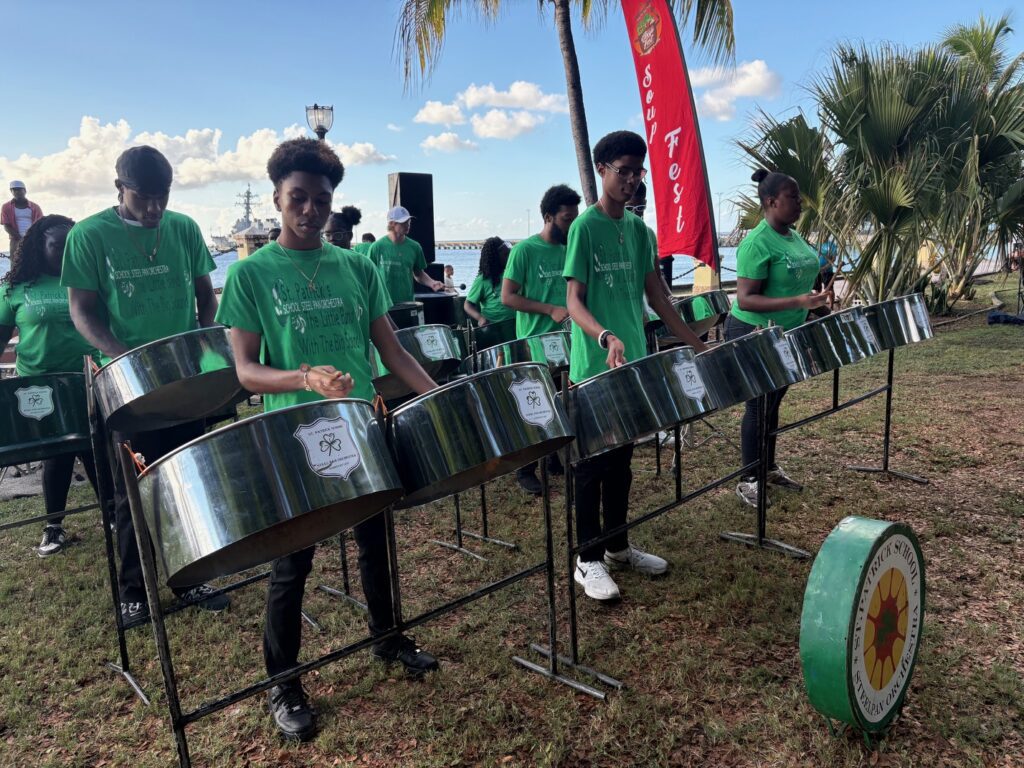
The St. Patrick School Steelpan Orchestra performs along the Frederiksted waterfront during the festival. (Source photo by Diana Dias)
Entertainment and family-friendly activities rounded out the event. The St. Patrick School Steelpan Orchestra performed on the waterfront, filling the area with lively rhythms, while children and families stopped for photos with Santa Claus and browsed booths selling sauces, cakes, and other locally made treats.
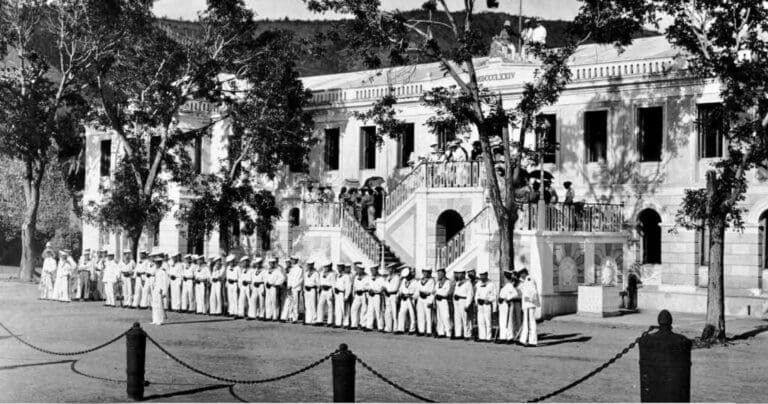
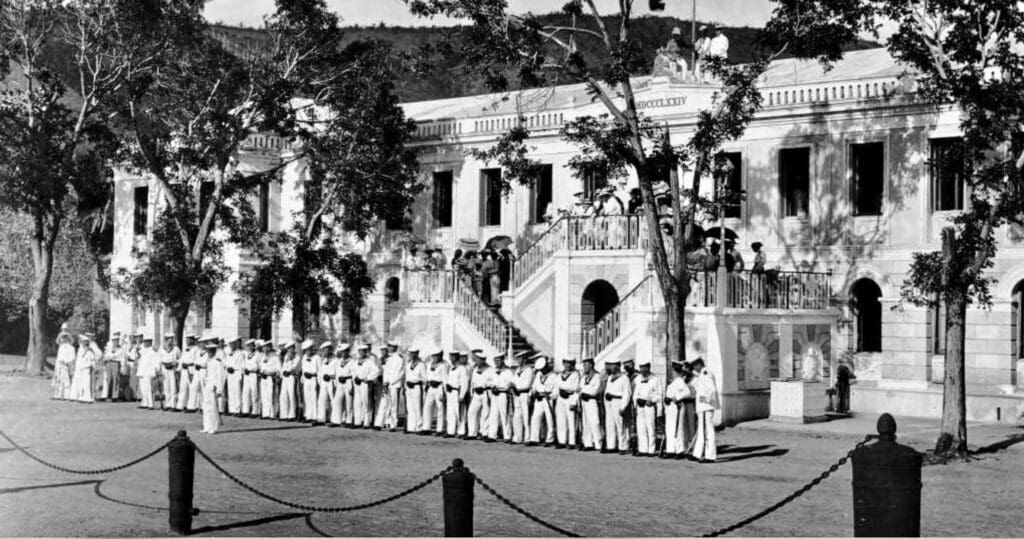
The Danish flag, the Dannebrog, was lowered for the last time on March 31, 1917. (Submitted photo)
For the first time in recent memory, Denmark has formally responded to a request from Virgin Islands advocates seeking accountability tied to Denmark’s former administration of the islands — and the response rejects any legal responsibility.
In a letter dated Dec. 10, Danish officials said they do not accept legal liability connected to their rule over what was then the Danish West Indies, now the U.S. Virgin Islands. The response followed months of outreach by the African-Caribbean Reparations and Resettlement Alliance (ACRRA), including a formal notice sent on Oct, 21, 2025, in which the organization said Denmark’s continued silence was being treated as a refusal to engage and was being documented accordingly, according to a news release this week.
In its letter, Denmark said the issues raised should be understood as historical rather than legal, and denied that it violated the treaty under which the territory was transferred to the United States.
ACRRA replied that it is willing to meet with Danish officials during a proposed visit to the Virgin Islands, but only under strict conditions. The organization said such a meeting would not waive any potential claims, would not mean the issues have been resolved, and could not later be cited as evidence that Denmark had addressed the concerns. ACRRA said any discussion would need to directly address unresolved questions, including why Denmark never responded to a 1917 petition from Virgin Islanders asking for a voice in their political future.
Those questions have been raised repeatedly over generations. As previously reported by The Virgin Islands Source, residents were not consulted before the islands were transferred in 1917, and no formal process was created to address political rights, redress, or long-term responsibility. Advocates have also pointed out that Denmark has taken different approaches with other former territories, while similar concerns raised by Virgin Islanders remain unresolved.
ACRRA said Denmark’s response is significant not because it offers resolution, but because it formally places Denmark’s position on the record. The organization said it will preserve the correspondence as part of the historical record and continue assessing regional and international options, while keeping the Virgin Islands public informed.