Masked Gunmen Rob Cardow Jewelers, Flee on Motorbikes

Elections System Releases Certified Candidate List After Weeks of Appeals and Disputes
Governor and Lieutenant Governor
- Oakland Benta / Merwin Potter (Independent)
- Adlah “Foncie” Donastorg / Positive Nelson (Independent)
- Donna Frett-Gregory / Rodney Moorehead (Democrat)
- Gustav James / Randolph Bennett (Independent)
- Warren Mosler / Colin Robertson (Independent)
- Stacey Plaskett / Milton Potter (Democrat)
- Tregenza A. Roach / Novelle E. Francis Jr. (Democrat)
Delegate to Congress
- Emmett Hansen (Democrat)
- Teri Helenese (Democrat)
- Shelley A. H. Moorhead (Independent)
- Janelle K. Sarauw (Democrat)
- Delia Smith (Democrat)
At-Large Senator
- Angel Bolques Jr. (Democrat)
- Hadiya Sewer (Independent)
St. Croix District Legislature
- Mutasem B.F. Mustafa (Independent)
- Elizabeth Hansen Watley (Independent)
- Alvin Milligan (Independent)
- Franklin Johnson (Independent)
- Diane Prosper (Independent)
- Tyler Courtland Fay (Independent)
- Luz “Lucy” Browne (Independent)
- Bianca Francis (Independent)
- Samuel Carrion (Independent)
- Julian S. Veira (Independent)
- Troy D. Mason (Independent)
- Jay Watson (Independent)
- Norman “Bapo” Jn Baptiste (Independent)
- Troy C. Williams Sr. (Independent)
- Gage Edmunds (Independent)
- Nereida Rivera O’Reilly (Independent)
- Dwight Mike Cartier (Democrat)
- Clifford A. Joseph (Democrat)
- Hubert L. Frederick (Democrat)
- Lynda “Nikki” Brooks (Democrat)
- Kurt A. Vialet (Democrat)
- Jose “Besse” Gonzalez (Democrat)
- Nemmy Williams-Jackson (Democrat)
- Kenneth “Kenny” Gittens (Democrat)
- Lisa J. Charles (Democrat)
- Omar B.U. Henry (Democrat)
- Raymond T. James (Republican)
Board of Education — St. Croix
- Winona A. Hendricks (Democrat)
- Mojania “Mo” Denis (Democrat)
- Christopher Jacobs Jr. (Democrat)
- Terrence T. Joseph (Democrat)
- Vincent H.A. Gordon Jr. (Independent)
- Lucy M. Jackson, Ph.D. (Independent)
Board of Elections — St. Croix
- Mary “Peggy” Moorhead (Independent)
- Shamari I. Haynes (Democrat)
- Juliet L. Liburd (Independent)
- Kareem T. Francis (Independent)
- Franz A. Christian Jr. (Republican)
St. Thomas-St. John Legislature
- David Sierra (ICM)
- Michael A. Smith (Democrat)
- Mayard “May” Leader (Democrat)
- Dwayne M. DeGraff (Independent)
- Carla J. Joseph (Democrat)
- Derrick A. Callwood (Republican)
- Avery L. Lewis (Democrat)
- Shenelle Fina Francis (Democrat)
- Ray “PuPa” Fonseca (Democrat)
- Alma Francis Heyliger (Independent)
- Peter Bailey (Democrat)
- Paula A. Duke (Independent)
- Larence “Larry” Boschulte (Democrat)
- Eric Tillet (Republican)
- Collister M. Fahie (Republican)
- Marvin A. Blyden (Democrat)
- Kashief Hamilton (Democrat)
- Joel S. Browne Connors (Democrat)
- Sennai Habtes (Independent)
- Imani Daniel (Independent)
- Dr. Krishna Kilaru, M.D. (Independent)
- Gregory P. Smith (Independent)
- Rudel A. Hodge Jr. (Democrat)
- Eugene D.J. Farrell (Independent)
- Vernon Araujo (Independent)
Board of Education — St. Thomas-St. John
- D’Vonte J. Xavier (Democrat)
- Bruce C. Flamon (Independent)
- Judy M. Gomez (Democrat)
- Michelle M. Cawthron (Democrat)
- Arah C. Lockhart (Democrat)
Board of Elections — St. Thomas-St. John
- Atanya Springette (Democrat)
- Barbara A. Petersen (Democrat)
- Raven Phillips (Independent)
- Preston R. Evans (Democrat)
- Kevin A. Rodriguez (Democrat)
- Harriet A. Mercer (Republican)
‘I am shot through my heart,’ a Poem by Corinne Van Rensselaer


Budget Committee Hears From Bureau of Corrections on Budget, Inmate Costs, Federal Oversight
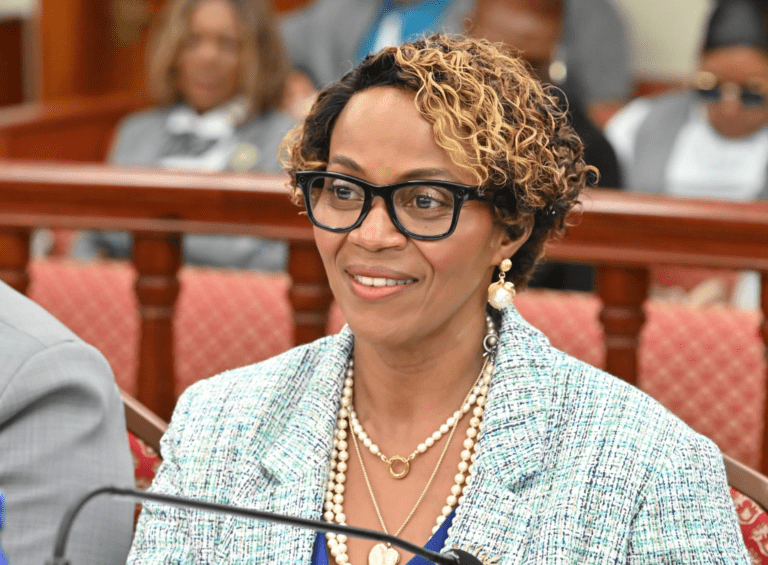
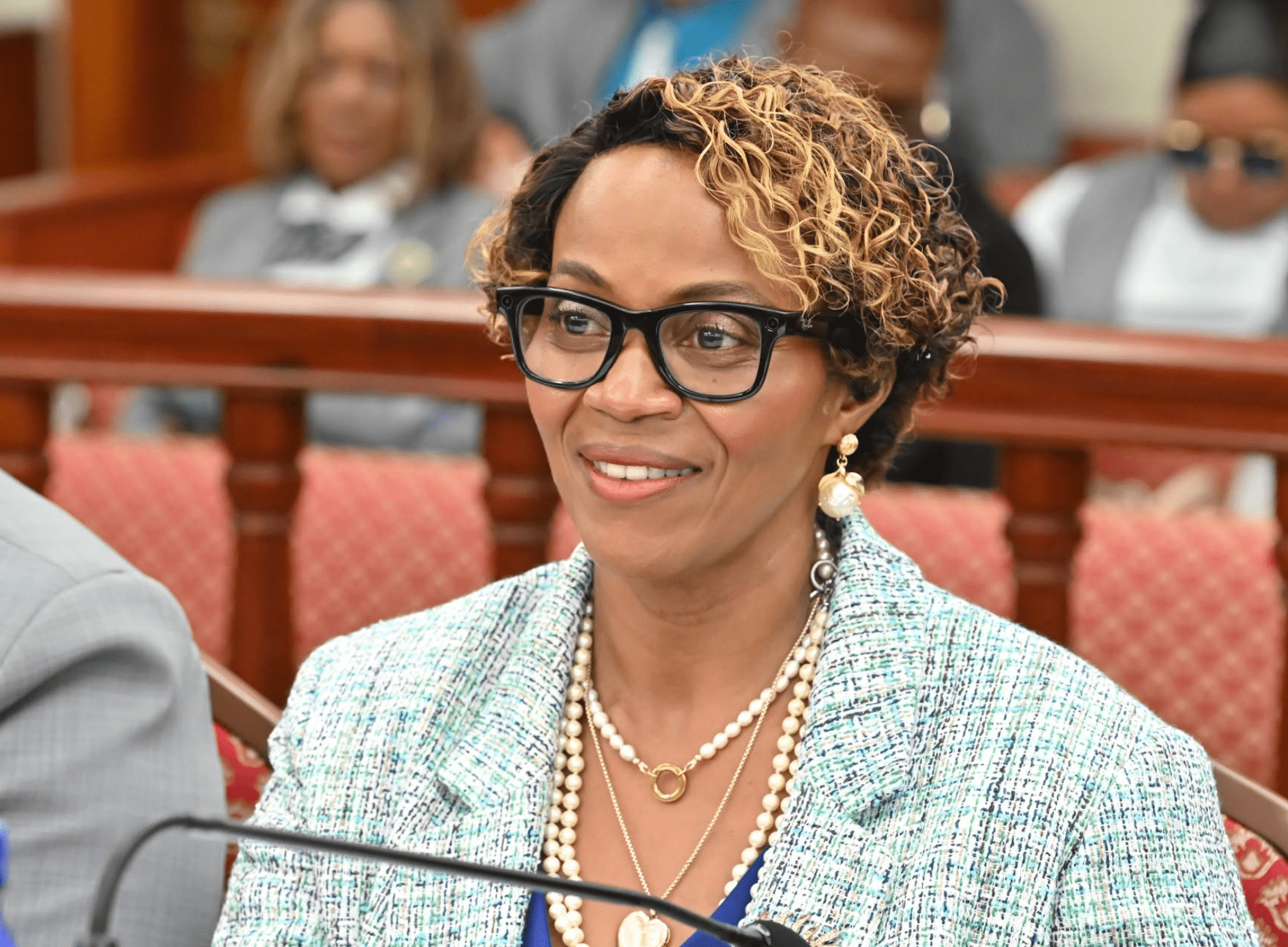
The Senate Budget, Appropriations and Finance Committee on Thursday reviewed the Bureau of Corrections’ proposed $36.4 million fiscal year 2027 budget, focusing on staffing shortages, incarceration costs and federal oversight requirements.
During the hearing, Bureau of Corrections Director Wynnie Testamark told lawmakers it costs the territory about $320 per day to house an inmate locally, compared with $89 per day through CoreCivic and $109 per day in Virginia facilities.
Senators pressed Testamark on why local incarceration costs are significantly higher than mainland rates. She said the gap reflects mandatory federal consent decree requirements, higher personnel costs, ongoing capital and safety projects, and vendor expenses such as off-island housing and food.
The bureau reported that as of June it had 351 people in custody, including 181 on island, with 70 at the Criminal Justice Complex on St. Thomas and 111 at John A. Bell Correctional Facility on St. Croix, and 170 off island, including 33 in Virginia and 137 in Mississippi.
Testamark said one of the bureau’s largest expenses remains housing and feeding inmates held off island, which was budgeted at $7.9 million in fiscal year 2025.
Beyond questions about cost, Sen. Franklin Johnson blasted how the government handles inmates housed on the mainland, citing cases where families only learned about a loved one’s death from other prisoners and one man was cremated before some relatives knew he had died. “This government will have to do a serious deep dive as to what’s going on with our prisoners on the mainland, because it’s a travesty as to what’s happening,” Johnson said.
Testamark said the Bureau of Corrections spent $340,000 on inpatient and outpatient services so far this fiscal year and has outstanding vendor payments for medical care totaling $1.2 million. She also said there are 39 outstanding vendor invoices totaling $3.8 million, with about $957,000 in the payment stage.
Despite payment delays, Testamark said services have continued without interruption. “All essential correctional services for inmates and staff have remained fully operational and uninterrupted,” she said.
The bureau has budgeted 223 positions for fiscal year 2027 but currently employs 154 people, leaving 69 vacancies. Correctional officers account for approximately 43% of the workforce.
Officials also warned that recruitment is lagging, saying about 30 employees are eligible to retire, seven have left in the current fiscal year and the bureau has not held a new correction officer class in about a year, with only one applicant currently awaiting admission.
Officials reported overtime expenditures of $5.2 million in fiscal year 2024, $4.8 million in fiscal year 2025 and $2.6 million as of June 8 in fiscal year 2026. Testamark attributed the decline to scheduling changes, technology improvements and lower inmate populations.
The hearing reviewed the bureau’s progress under two federal consent decrees covering St. Croix and St. Thomas. “The District Court of the Virgin Islands has granted the territory’s joint motion to terminate the medical provisions of the settlement agreement,” Testamark said, calling the decision a “significant milestone.”
She added that court-appointed monitors “reported continued progress across additional operational areas” and that the bureau remains under judicial oversight while it works toward sustained compliance.
Quality Assurance Manager Tamara McIntosh-George said provisional compliance has increased “from 55% to 66%,” with “115 points to be achieved for compliance” still remaining.
At John A. Bell Correctional Facility on St. Croix, officials said several major safety projects remain underway. Assistant Director Peter Abrahams said design work on a new perimeter fence is progressing, with full construction documents due by Dec. 15, 2026. Testamark said energy‑efficient perimeter lighting at John A. Bell is now 100% complete, and the bureau is working with engineers to review and refine draft designs for a new fire alarm and fire suppression system.
Testamark testified that mental health care is a major part of the system’s work, noting that “approximately 40% of inmates within the bureau facilities receive some form of mental health treatment.” Medical Director Dr. Linda Callwood told senators that “the services that the inmates … receive on the mainland is equal to that we provide here in the territory.”
Testamark said the bureau also shares a psychiatrist with other territorial agencies and supplements staffing through a private vendor, Indelible Management Solutions, which provides nurses, mental health counselors, physician assistants, nurse practitioners and social workers.
Asked what keeps her up at night, Testamark pointed to the limits of the territory’s behavioral health system, saying, “My biggest challenge again is taking care of the mentally ill that’s within our facilities.”
Testamark said a three-year cohort showed an 18.6% rearrest rate and added that the bureau operates a Dignity Bus and a Transitional Home as part of its reentry and community‑support efforts. She said the Dignity Bus is equipped with basic living and hygiene facilities and has served 85 people, while the Transitional Home has served 15. Some participants left early, she said, because living on correctional grounds can feel like an extension of incarceration.
Financial issues raised also included a dispute with Juan F. Luis Hospital over inmate medical costs. Testamark said bureau records show about $900,000 owed, while the hospital has claimed roughly $4 million. She said the hospital is reviewing the bureau’s documentation and verification of the discrepancy is still underway.
Lawmakers indicated they will continue scrutinizing staffing levels, facility upgrades, consent decree compliance and outstanding financial obligations as they move into markups of the bureau’s proposed fiscal year 2027 budget.
WAPA Board Extends Hurricane Recovery Contract


The V.I. Water and Power Authority governing board convened Thursday and approved a 536-day contract extension with Haugland VI, the construction firm tapped to provide line crews and equipment in the event of a major hurricane.
WAPA Project Management Director Maxwell George told board members that the no-cost extension covers the territory through the 2026 and 2027 hurricane season. WAPA’s general counsel, Dionne Sinclair, said the decision was made to extend the existing contract because this year’s hurricane season has already started, but the authority intends to put the contracts out to bid eventually.
“We do think the timing is right to go out for an open solicitation,” WAPA Chief Executive Officer Karl Knight said. “We know that there are a lot of other players — Jamaica attracted several contractors in the aftermath of Melissa — and there are other players in the region, and we think the timing is correct to explore who else can do this work and is willing to do this work in the U.S. Virgin Islands.”
The board also approved a resolution allowing the utility’s chief engineer to sign checks before convening a lengthy executive session during which no actions were taken. Afterward, Knight updated board members on the authority’s recent activities, which included a meeting with the St. Thomas-St. John Chamber of Commerce to discuss grid instability on St. John.
Knight said WAPA is in the midst of procuring 10 megawatts of generation and they have also identified temporary generators to power the territory during the FEMA-funded prudent replacement of the Randolph Harley and Richmond power plants. When asked by WAPA Board Chair Maurice Muia to provide an update on the authority’s advanced metering infrastructure efforts, Knight said that WAPA has 55,000 smart meters “sitting in warehouses right now, just waiting to be deployed.”
“So as soon as we can put those poles up and get connectors going, we’re ready to move,” he said. “I’m going to start in St. John — I think we’re still looking at the August start in St. John. It’s about a 30-day install, and by all accounts, by October we should be done with St. John and ready to test and commission those meters.”
Board elections and a planned discussion of the utility’s water and electric budgets were tabled.
The Airport-Sized Hole in Preventing Gun Violence
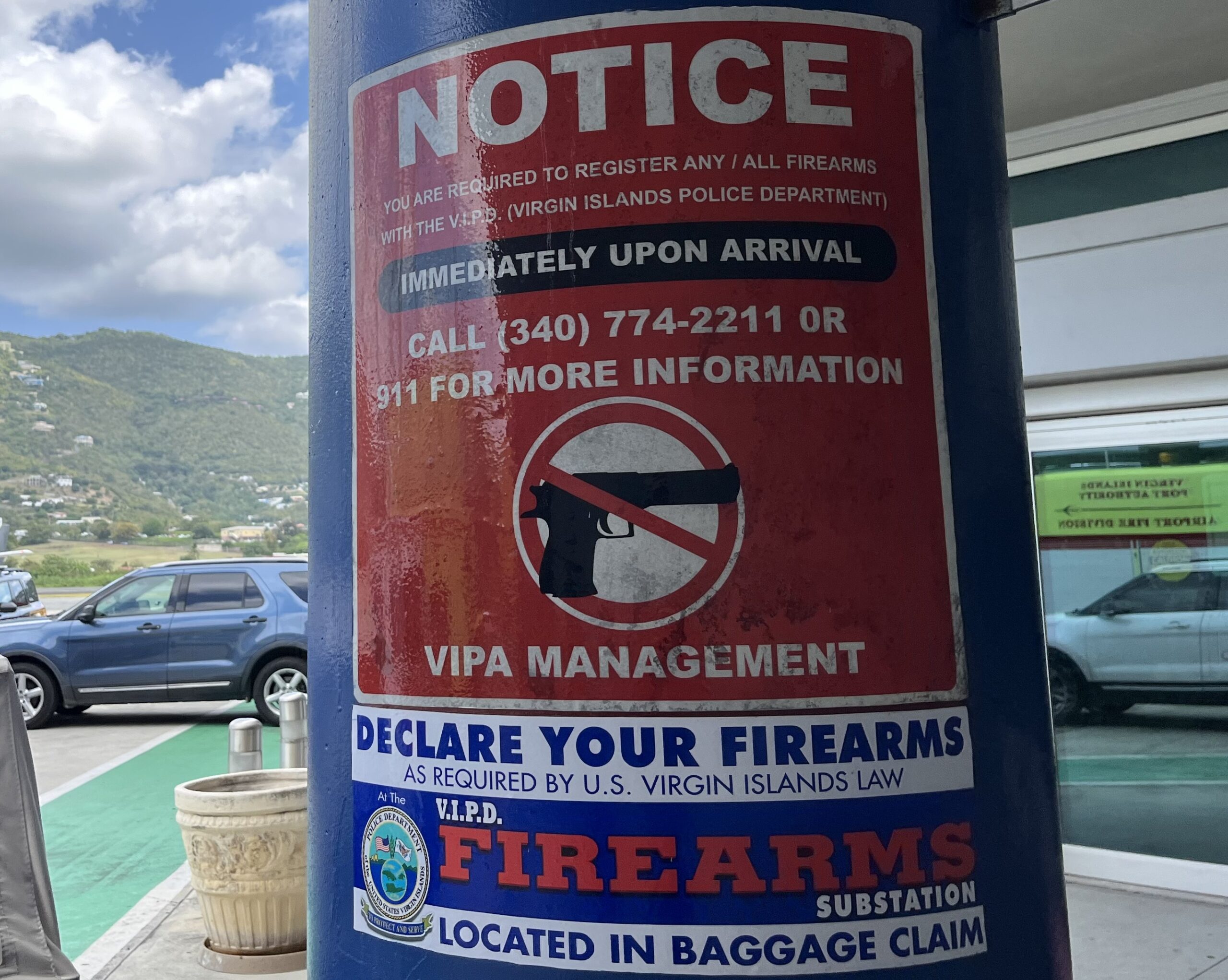
Editorial: If You See Something DO Something


“If you see something say something.” Forgive me, but if I hear that B*** S*** one more time coming from the mouth of someone who does not LIVE in a housing community in the USVI, well …. let’s not go there.
According to Google, that slogan was developed by an advertising agency in 2001 for the New York City transit system. It was after 9/11 when residents were asked to report packages or suspicious behavior or potential security threats in the subway and bus system. It was later trademarked by the Metropolitan Transit Authority.
It is not and never will be applicable in a tiny three-island territory where everybody knows everybody else and retaliatory killings are the number one proven reason for our record-breaking homicide rate.
[To attend a webinar by the John Jay College on Group Violence Intervention for Youth on June 24 at 11 a.m., register here.]“A Source study of homicide data in our archives, the V.I. Police Department and other online resources, going back to 1999, the year the Source came online, shows these revenge killings and tit for tat retaliations drive the territory’s troubling murder count.”
So wrote Bill Kossler, who spent months in 2014 to gather the information included in the updated 2020 story.
I have personal knowledge from close friends who do LIVE in a housing community, one of whom lost his 16-year-old son in the crossfire of just such a retaliatory murder.
When I asked him recently, after HE had been shot at, if I could help by getting the police involved, he was humorously horrified. Crossing his arms in front of his face, “Oh no!! They already think I am a snitch.”
Notice, this man still has a sense of humor. This man who I love is a beautiful human being. His son who was killed was not, “just another dead thug,” as one elitist attorney called the “young men dead in the street.” Sadly, this Black person, born to a middle class family, is not alone in his racist attitude.
Moving on.
Nor was 15-year-old Tre’Vante Etienne “rotten,” as a highly placed elected official once referred to all elementary students at Jane E. Tuitt — to my face.
I read to students at Jane E. Tuitt for years. They are precious. I could tell so many stories about their curiosity, altruism and amazing senses of humor.
Tre’Vante, whose name I recognized when I read of his tragic, unnecessary murder, may have been one of those adorable children, raising hands and questions and giggling among themselves as I shared many of my favorite children’s books with them.
I could also list the dozens of efforts — REAL efforts — beginning in 1982 when I tutored students from Charlotte Amalie High School in an after-school program — known as the St. Thomas/St. John Youth Multi service Center — that I have been associated with as an effort to do what each and every one of us was brought here to do according to, well, Jesus for one: Help each other
So, here we go again,
If you SEE something, DO something.
Readers, please join me on Wednesday at a webinar conducted by the National Network of Safe Communities. NNSC has been here on many occasions trying to implement their proven strategy in stopping the violence.
Here is what the meeting, led by NNSC executive director Sasha Cotton joined by practitioners and partners from Philadelphia, Minneapolis, and Pine Bluff — three jurisdictions participating in NNSC’s pilot efforts to adapt GVI (Group Violence Intervention) for youth — is scheduled to address :
“While juveniles account for a relatively small share of those involved in gun violence, communities have a responsibility to respond in ways that recognize the unique developmental needs of young people. Effective intervention requires more than enforcement alone — it demands coordinated support, meaningful opportunities, and services tailored to adolescence.
“Building on the core principles of GVI, this emerging work emphasizes intensive wraparound supports, family engagement, mentorship, behavioral health services, education, workforce pathways, and other youth-focused interventions. By strengthening connections to supportive adults and institutions and creating pathways to long-term success, communities can reduce violence and improve outcomes for young people.”
I have met with Ms. Cotton on prior webinars, before she was made executive director. In fact, I am well acquainted with the founder, David Kennedy. Numerous efforts to apply the Gun Violence Intervention strategy developed by Kennedy in the territory have obviously met with unmitigated failure.
As I write, we are charging fast forward to meet or exceed our average 40 murders for the year.
That is more than double the rate per capita of Louisiana and Mississippi, who come in with 14.3 per 100,000 and 18.6 per 100,000 residents respectively.
At last Census in 2020, our population is 83,400.
There were 45 murders in that year.
The elitists quoted above articulate an enormous reason for this hideous statistic. They don’t give a crap about those who are dying and grieving.
“We pray for them,” is the pat response.
With your permission, allow me to quote another onetime cabinet member in the late 1990s and early 2000s who this year, at a government agency meeting, performed a short skit, seemingly on my behalf, titled “I’m sick of you people who come here and want to tell US how to do it!!!”
Well, the NNSC team finally came here for the two-year strategy implementation that has reduced senseless murders across the globe — by half in many cases within one year. See: Homicide is Calculable and Curable: Part I
So, what happened, I asked founder David Kennedy, when absolutely nothing changed. “Lack of cooperation,” he said. So, it’s about what didn’t happen: cooperation (again).
If you are a reader who has finished this relatively long piece, you probably actually care about the people (so many of them) on the margins in our community, so sign up for the webinar. It’s free.
Let us break out of the “we don’t care how you do it in (fill in the blank)” or the simpler “we don’t care” mentality once and for all in the name of the more than 1,000 who have been shot down in our streets in the years since the Source started saying their names.
Let us show the elitists who are too busy counting their money in our Paradise temple to care about those less fortunate, who we the people ‘dem actually DO care about.
Let us try again and again and again. We truly have nothing BETTER that we could DO.
Matthew 25:40-45: And God said, “Truly I tell you, whatever you did for one of the least of these brothers and sisters of mine, you did for me.”
Register here please: https://jjay-cuny.zoom.us/meeting/register/3ZyeTV0wRcKUtDbfDOp5nw#/registration

Photo Focus: St. John Rescue Adds Canine Search and Rescue Duty to Its Capabilities

Volunteer rescue workers on St. John and St. Thomas gathered Thursday for a graduation celebration and the expansion of their search and rescue capabilities.
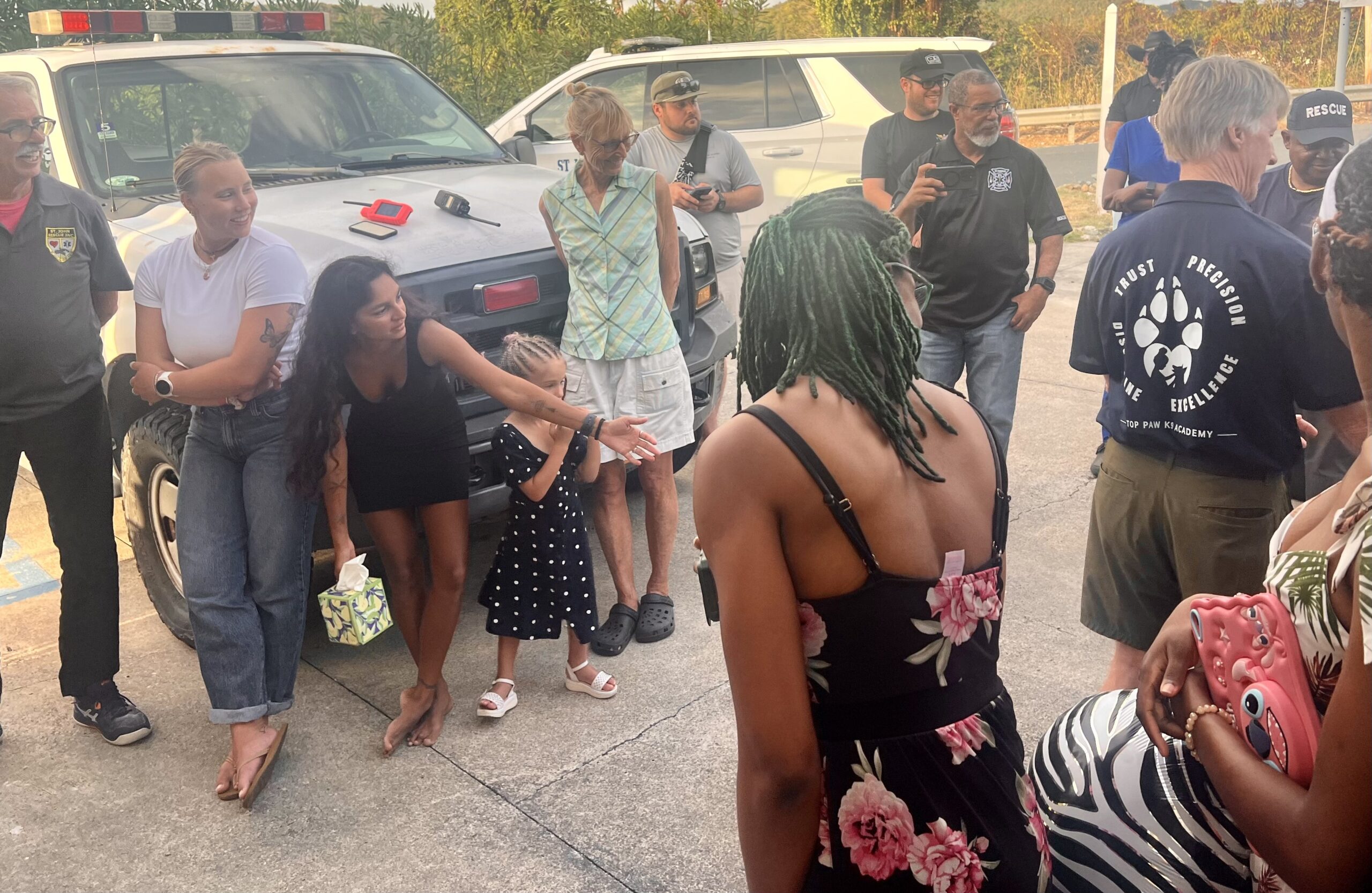
They came to hail two graduates — St. John Rescue Executive Director Valerie Boysen and Kiisa, her chocolate Labrador retriever.

As of Wednesday, the pair had completed a specialized Canine Search and Rescue Program from Top Paw K-9 Academy of Denver, Colorado. Trainer Jennifer Worswick led the training remotely, with members of the Boysen family pitching in by sending video recordings of instructions being carried out.
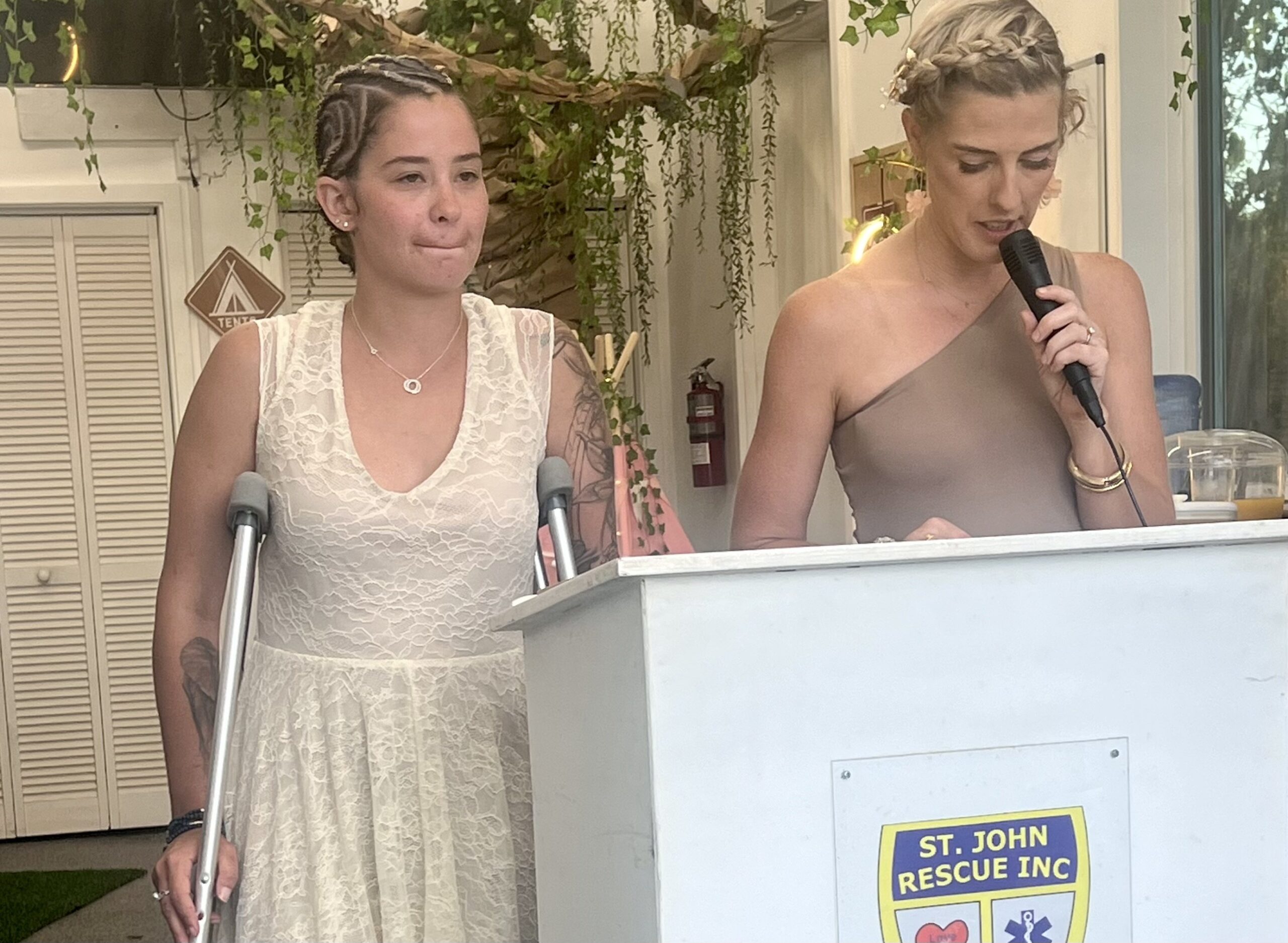
By Thursday’s celebration, Worswick and Riley — her German Shepherd — were on St. John to join the fete. “It’s a very special day. We are able to honor two special canines today; our trainer’s Colorado dog, Riley, after many years of service in the search and rescue field is finally retiring, and my wife and our dog Kiisa graduated from search and rescue training last night,” said St. John Rescue Vice President Landry Boysen.

Both Landry and St. Thomas Rescue Deputy Chief Abdul Smith said the district’s rescue teams recognized the need for expanded capabilities after a 2024 incident where an ecotour guide went missing near Magens Bay.
The search for the missing man took a turn when the family sent for a canine rescue dog from Florida, Smith said. What took volunteers several days of effort was resolved once the dog reached the search and found a set of human remains within hours.
“Having one locally, it’s going to benefit the whole territory,” the deputy chief said.
Through the training, Landry said, the family learned to read Kiisa’s body language to find out if she clearly understood the commands being given. Worswick commended the Boysen family for showing up for the rigorous remote training schedule daily without fail, in spite of other obligations and on days when energy levels weren’t at their peak.
On Thursday, as gathered attendees watched, the director of St. John Rescue returned the commendation. “Today, we honor not only Riley, but the person behind it all — the teacher, the mentor, the supporter and the driving force that helped turn our dream into a reality,” Valerie Boysen said.
Driver Charged After Pedestrian Killed on Veterans Drive

An Open Letter to the Virgin Islands Community: Violence Cannot be our Normal