UPDATED: Ferry Operators Raise Alarm About Rate Investigator, Rising Fuel Prices

0
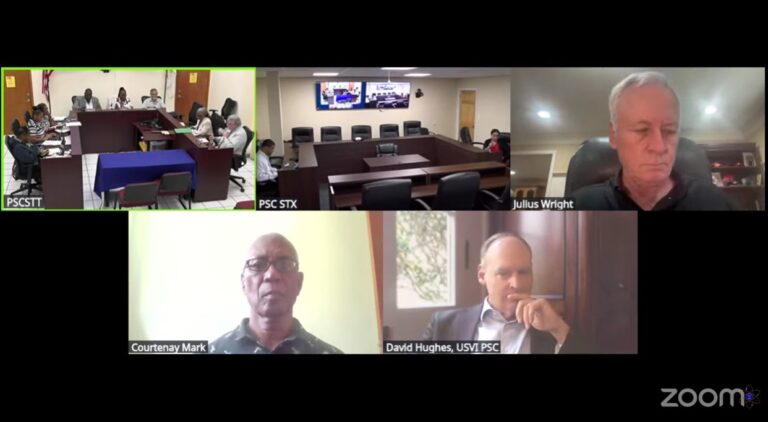
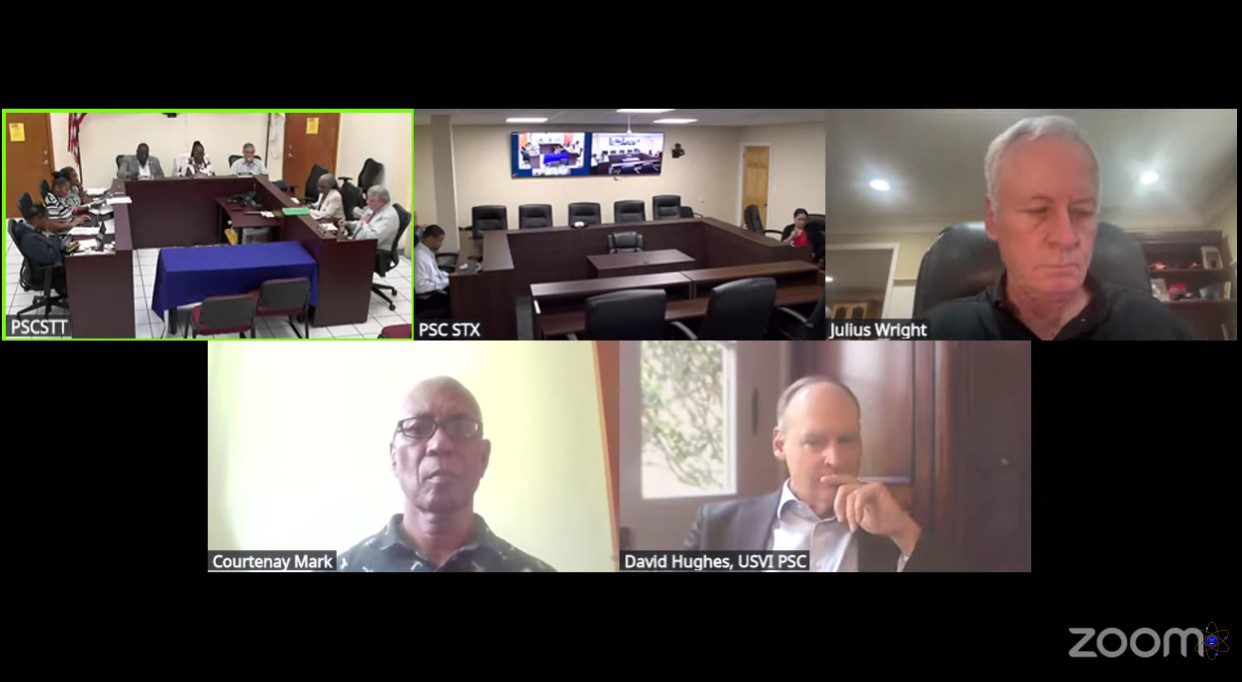
The V.I. Public Services Commission met with representatives from ferry operators, the V.I. Water and Power Authority and consultants during a regular meeting Tuesday. (Screenshot from Zoom)

Editor’s Note: After publication, hearing examiner Jed JohnHope contacted the Source to state that he was not given an opportunity to respond on the record to concerns raised during Tuesday’s PSC meeting regarding billing and travel expenses connected to the ferry rate investigation. The Source also did not reach out to JohnHope for comment prior to publication and apologizes for the omission. JohnHope’s statement is now included in the article below.

Members of the V.I. Public Services Commission tabled a vote to collect assessment costs Tuesday after an attorney representing two ferry companies claimed that the hearing examiner conducting the ferries’ rate investigation had billed her clients for tens of thousands in “excessive” fees.

The PSC tapped Jed JohnHope to review ferry rates in late 2024. Tuesday’s meeting came several months after a public hearing in Cruz Bay to gather community input on proposed fee hikes, which can be found on the PSC’s website. Attorney Maria Tankenson Hodge, who represented Varlack Ventures and Transportation Services of St. John during Tuesday’s hearing, said JohnHope charged her clients $400 per hour in addition to booking an $800 room “at what must be the most expensive hotel in the Virgin Islands” after attending the public hearing in February on St. John.

In total, Hodge said the companies were also billed approximately $80,000 for eight days of work last month.

“The concern that we have is that these two small family businesses are being assessed these massive amounts with what appears to be little scrutiny of the time that would be reasonable to perform these services,” she said. “And additionally these costs — these charges — are for travel that we submit are excessive.”

At PSC Chair David Hughes’s suggestion, the dispute was referred to the commission’s executive director, Sandra Setorie.

“I don’t have a problem with challenging the billings,” he said, but “it’s not done before the commission. It’s a function of our executive director’s administrative responsibility to manage hearing examiners.”

In a call with the Source Wednesday, JohnHope said several statements made during the hearing were inaccurate, including suggestions that he rented a vehicle during proceedings on St. John. JohnHope said he did not rent a car and noted that certain travel-related expenses — including lodging tied to the February public hearing on St. John — had been pre-approved through PSC administrative channels. He said the overnight stay became necessary after a hearing day that began around 7 a.m. and stretched until roughly 10 p.m. According to JohnHope, the hotel room itself was approximately $710 before taxes, bringing the total to roughly $800 — rates he noted are not uncommon on St. John during peak season.

After the discussion Tuesday, Hodge also put forward during the PSC meeting an emergency petition to implement a temporary $0.75 fuel surcharge, citing the rising costs of fuel caused by the War and Iran and ongoing closure of the Strait of Hormuz. Commissioners initially appeared open to the idea, but a vote on the request was tabled until June after Hughes questioned the number of boats in operation by the companies.

“The reason I bring this up is that the ferryboats have asked for a consideration for fuel, and I believe it’s the case that, for a very long period of time — and maybe still — you’re being compensated for assets that you’re legally obligated under the rate base to provide that you are not providing,” he said. “So you’re being overcompensated.”

Hughes said that such a conclusion would almost certainly be included in JohnHope’s rate report. When JohnHope presented his initial findings, he recommended denying any proposed rate increase.

“There are boats that have been outside of the territory for … almost 10 years, that are being compensated for,” he said. “There are boats that have been retired — they’re being compensated for. And the way that the Legislature seems to have structured the agreement, or the enabling statute, compensates the ferry companies for boats that they did not buy.”

JohnHope’s main recommendations included spinning off the Charlotte Amalie to Cruz Bay ferry route — which he said accounts for only three percent of ferry traffic — to gain a clearer understanding of passenger data and fuel costs.

“It’s nonsensical that the ferry companies own — jointly own — the ticketing apparatus, which makes it impossible to verify ridership and revenue,” he said before recommending that the commission audits payroll and staffing, fuel consumption and vessel disposition. “The numbers were not very transparent.”
Redaction and Reduction in Trump National Park Policy

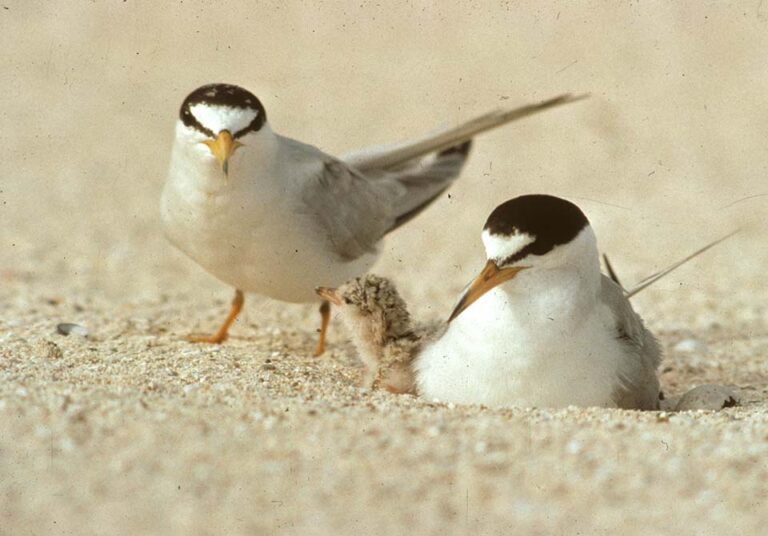
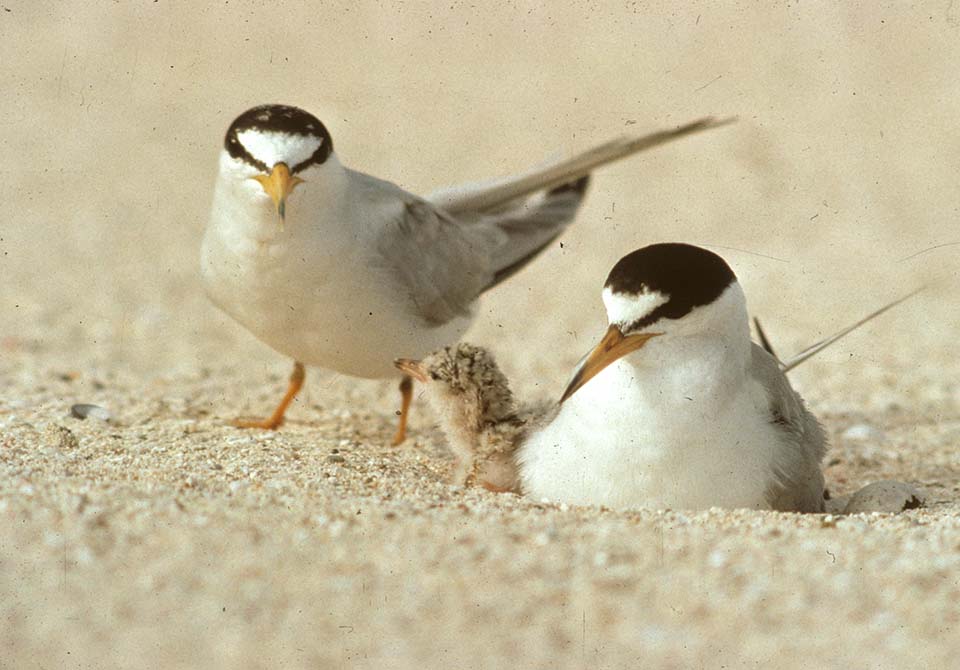
A small number of Least terns may be nesting on Buck Island, but the White House has forbidden National Park Service officials in St. Croix from saying so. (Photo courtesy Buck Island Reef National Monument)
Most years, staff at the Buck Island Reef National Monument issue a warning in late April or early May to stay off the island while Least terns nest. The National Park Service on St. Croix has not said whether the birds are back, however, because all media requests, including relatively benign ones, have been routed to Washington, D.C., where a skeleton staff reportedly struggles to keep up, according to people not authorized to speak on the record. The Source tried for three weeks to get information on the little, seasonal Buck Island birds, calling and writing the St. Croix offices and mainland headquarters but received no response — until Monday morning when a St. Croix park staffer called to say, in seemingly very-carefully chosen words, that they weren’t allowed to say. Officials in Washington did not reply to repeated requests for information on staffing in the territory’s national parks — nor the terns. They also did not respond to questions about restricting access to information previously offered freely. A public information officer at the Virgin Islands National Park on St. John could not comment on reports of staffing reductions but offered to pass the request to officials in Washington. Some media questions had always been routed to Washington, he said, but did not comment on whether that scope had changed in recent years. Rafe Boulon, the former chief of resource management at the V.I. National Park and Coral Reef National Monument, said he was deeply concerned about staffing reductions and hoped it would be reversed soon. “The current situation in our National Parks is very disturbing. Loss of employees has severely impacted both visitor services and resource protection,” Boulon said. “Reduced staff is hampering their efforts to protect and preserve our fragile natural and cultural resources. The inability of remaining NPS staff to communicate for fear of reprisal is great.” President Donald Trump has reportedly asked park employees to report signs that “disparage” Americans. Boulon said National Park staff — usually in the business of welcoming and educating visitors — were in a tough position. They are doing the best they can under the circumstances. We need to support them with understanding and hope that this current situation too shall pass soon. And hopefully not too much damage will have been done to our precious National Parks. The V.I. is not alone in this mess. People who care about our Parks need to help take care of our Parks,” he said. Civil rights advocates spoke out a week ago on further restrictions on public access to information, claiming efforts to erase non-English language in park signage and booklets was unfair and dangerous. Olivia Juarez, from the advocacy group GreenLatinos, said efforts to scrub facts from Salt River Bay National Historical Park and Ecological Preserve, the site of Europeans’ first recorded violent clash with Caribbean inhabitants, was to whitewash history. “We’re here to draw attention to Interior Secretary Doug Burgum’s policies undermining truthful histories at our national parks and making public land access more dangerous for kids and for everybody,” Juarez said in a May 4 press conference. “Telling our full history truthfully is worth fighting for, no matter the odds.” The group fears the Trump Administration’s push to purge signage critical of uglier aspects of American history — from slavery to the massacre of Indigenous people — could soon include removal of non-English language content in federal videos, and National Parks signage and books. Some non-English language scrubbing has already started, according to the parks advocacy group National Parks Traveler. Angelo Villagomez, of the Center for American Progress, said the Trump administration was specifically targeting colonial history in the mainland south and the Caribbean — including pre-United States Spanish colonialism. Targeting Salt River was similar to efforts to retell the history of the San Juan National Historic Site in Puerto Rico, where information on pre-European indigenous life and European contact were slated for change, Juarez said. Boulon, whose family once owned property now part of the Virgin Islands National Park, said changing signage was akin to lying about the territory and its people. “Attempts to rewrite our history is resulting in removal of signage and other information that relates to our cultural identity in the islands and nationally,” he said. The push to change how National Parks present information, and what parts of history are told, came from a March 2025 executive order from Trump, ordering the Department of the Interior to “take action, as appropriate and consistent with applicable law, to ensure that all public monuments, memorials, statues, markers, or similar properties within the Department of the Interior’s jurisdiction do not contain descriptions, depictions, or other content that inappropriately disparage Americans past or living (including persons living in colonial times), and instead focus on the greatness of the achievements and progress of the American people or, with respect to natural features, the beauty, abundance, and grandeur of the American landscape.” The goal, according to the order, was “to restore Federal sites dedicated to history, including parks and museums, to solemn and uplifting public monuments that remind Americans of our extraordinary heritage, consistent progress toward becoming a more perfect Union, and unmatched record of advancing liberty, prosperity, and human flourishing.” In January, the administration reportedly pulled signs referencing displaced Native Americans at the Grand Canyon and glacial loss at Glacier National Park in Montana. The Sierra Club sued, saying the Trump administration was attempting to “whitewash history.” In February, National Park conservation groups decried planned removal of Spanish language signs and those outlining the American institution of slavery and colonialism. As for the terns, a Christiansted-based park representative referred the Source to the 2026 Superintendent’s Compendium, which states: “Buck Island Reef National Monument has been designated as a critical habitat for seven species of threatened species of coral, including Elkhorn and Staghorn corals. The waters and bottom north of Buck Island are designated as non-recreational, and as a hazardous zone for these threatened and endangered coral species. The lands of Buck Island are designated critical habitat for the globally endangered St. Croix Ground Lizard (Ameiva polops) and is critical nesting habitat for four endangered sea turtle species, including hawksbill (Eretmochelys imbricata), for Least terns (Sternula antillarum), and other bird species. The new draft General Management Plan has designated the north side of Buck Island Reef National Monument as a non-recreational area and is listed as hazardous zone for these threatened coral species.”

Man Killed in Morning Shooting on St. Croix, VIPD Reports

A St. Croix man is dead following a shooting Tuesday morning in the Mon Bijou area, the V.I. Police Department reported. It is the second homicide in 10 days on the island, which has also been rocked by random gunfire in recent days. Police responding to several 911 calls and a ShotSpotter notification indicating numerous rounds fired around 8:17 a.m. Tuesday found a man suffering from several gunshot wounds. He was transported by ambulance to the hospital, where he died of his injuries, according to the report. Next of kind identified the victim as Kaleem Iles, 47. His death marks the seventh homicide of the year on St. Croix, and the 10th in the territory, according to the Source Homicide List.* This incident is currently under investigation by the Criminal Investigation Bureau and comes just 10 days after a man was gunned down in the Christiansted market area of St. Croix. Police have not confirmed his identity. On Saturday at 4:05 a.m., ShotSpotter and residents calling 911 reported shots being fired in the area of the Fire Station on Queen Street in Frederiksted on St. Croix. Officers dispatched to the scene found multiple spent cases in the area but no report of any injuries or suspect information, VIPD said. Anyone with information regarding Tuesday’s homicide or any of the incidents is urged to contact the VIPD Criminal Investigation Bureau at 340-778-2211, Crime Stoppers USVI at 1-800-222-TIPS (8477), or 911. Additional updates will be provided as information becomes available, police said. *The Source Homicide List is a chronological log of the homicides recorded in 2026 in the U.S. Virgin Islands, as reported by the VIPD. Cases are broken down by island. While this listing is based on VIPD reports, the Source does not include suicides or vehicular homicides in its listing, which the police and some other media do. This can lead to a discrepancy in the number of incidents reported.

VIBE Returns to Yacht Haven Grande With Yachts, Demos and Live Music

0
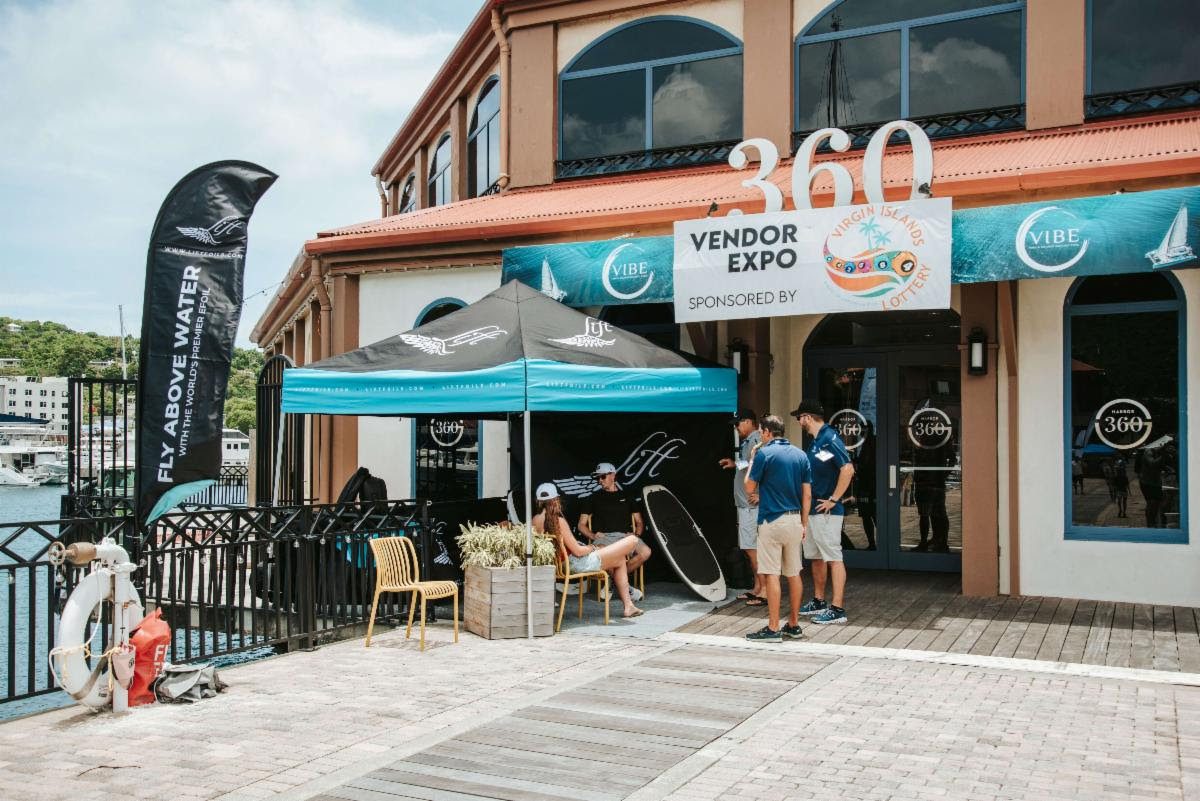
Entrance to the Vendor Expo at VIBE 2025. (Photo courtesy MediaBoostVI)
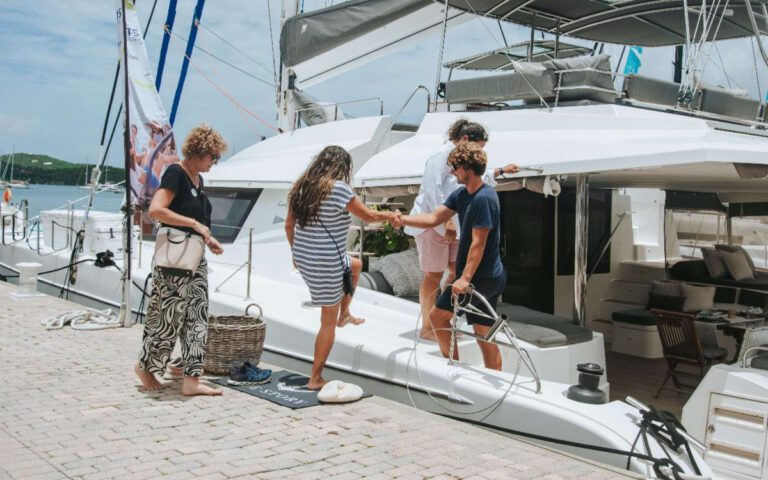
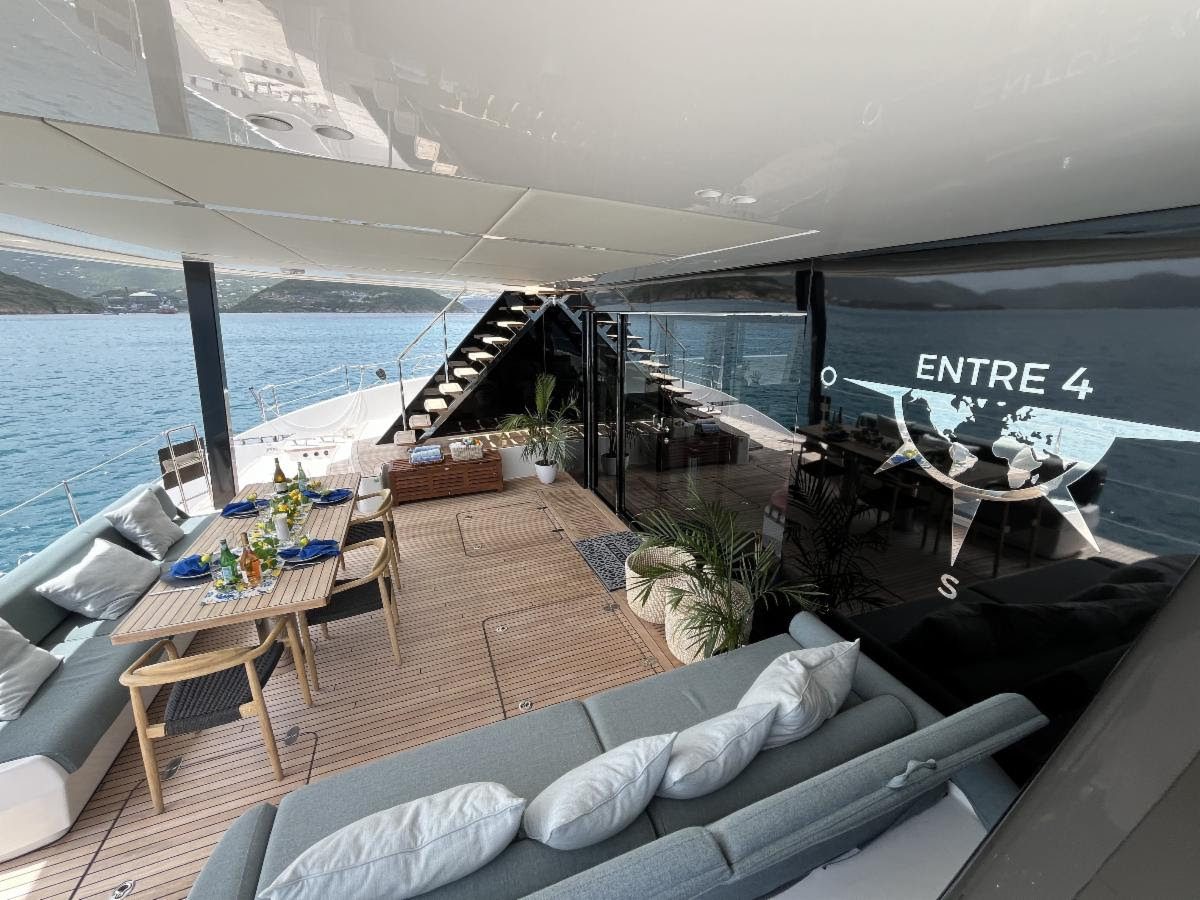
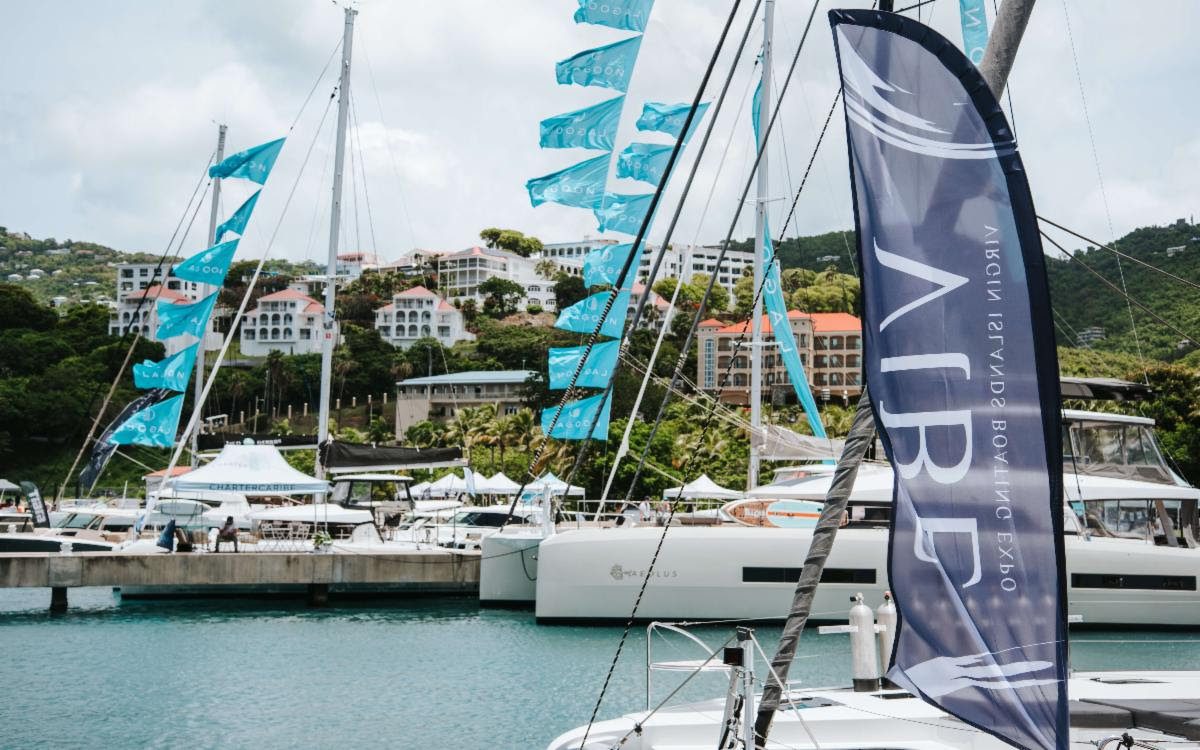
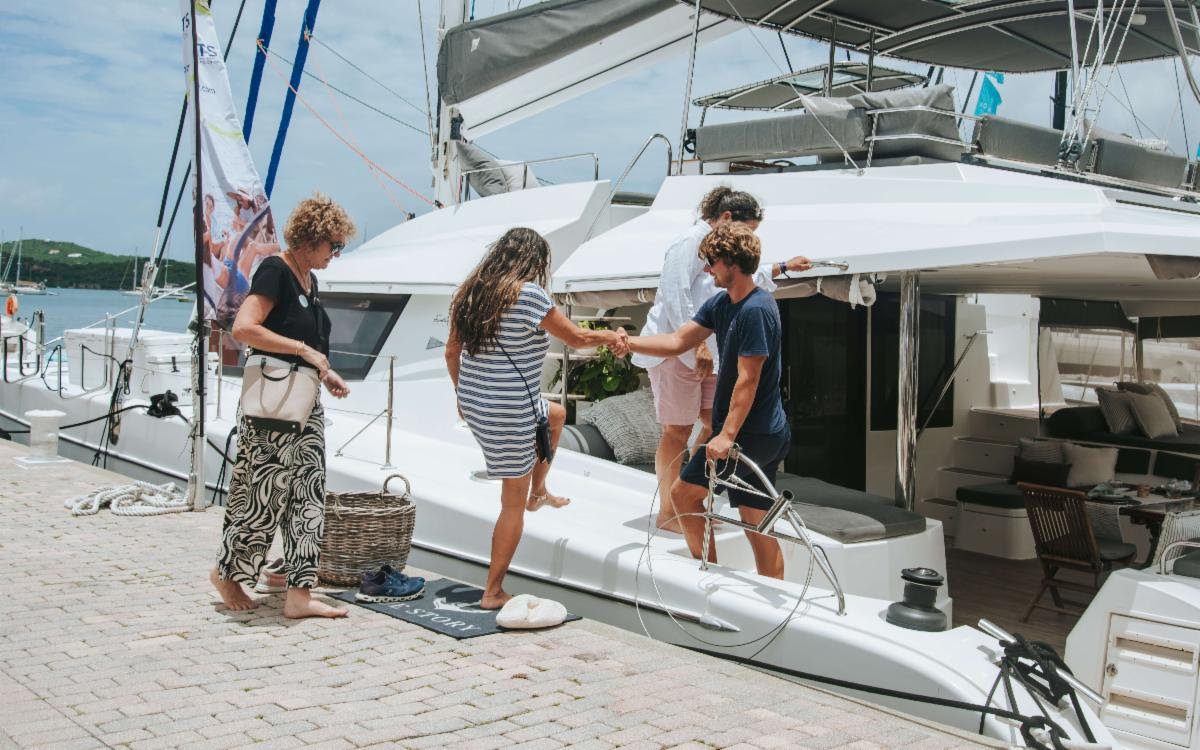
The third annual Virgin Islands Boating Expo returns to IGY’s Yacht Haven Grande Marina this week, bringing three days of yacht tours, marine demonstrations, live entertainment, and family activities to St. Thomas from Thursday through Saturday, the Virgin Islands Professional Charter Association announced in a press release. Presented by the Virgin Islands Professional Charter Association, the expo, known as VIBE, runs Thursday through Saturday and will feature yachts available for sale and charter, along with more than 30 vendors and exhibitors representing the marine, tourism and watersports industries, according to the press release. Attendees will be able to walk the docks and tour power and sailing vessels from brands including Axopar, Hanse, Lagoon, Leopard, Sunreef, Two Oceans and Voyage, the press release stated. Among the featured vessels is the Sunreef 80 “Entre4,” displayed by Pyper Yachts. The yacht includes four ensuite cabins, a panoramic flybridge, a transformable beach club platform and water toys such as SeaBobs, E-foils, paddleboards and wakeboards, the release stated.
Entre4 will be on display at the 2026 USVI Charter Yacht Show. (Photo courtesy Pyper Yachts)
“Having Sunreef’s VP of Sales for the region at the show adds a unique and valuable dimension to this year’s experience. It’s rare for attendees to have direct access to the people shaping one of the most influential brands in the luxury catamaran space,” said Heinrych Pyper, chief executive officer of Pyper Yachts. Dockside vendors and exhibitors will include companies from the U.S. Virgin Islands, British Virgin Islands, Puerto Rico, the U.S. mainland and Australia. Exhibits will cover luxury yachts, charter services, marine technology, watersports, aviation, conservation, food and beverage, the release stated.
Yachts on show at VIBE 2025 at IGY’s Yacht Haven Grande St. Thomas. (Photo courtesy MediaBoostVI)
“We will have an AB center console dinghy with a Yamaha 40 on the back for display,” said Chris Cilliers, general manager for Offshore Marine. Offshore Marine will also offer a 15% discount on Yamaha engines during the show. “With a great lineup of boats open for tours, fantastic deals on charters and gear, as well as an excellent local music lineup, VIBE 2026 is the place to be in the Virgin Islands, May 14-16,” said Kennon Jones, executive director of VIPCA. “We hope to see everyone out on the docks enjoying the event and celebrating all the various ways to enjoy the beautiful waters that surround us here.”
A Fountaine Pajot Victoria 67 on display at VIBE 2025. (Photo courtesy MediaBoostVI)
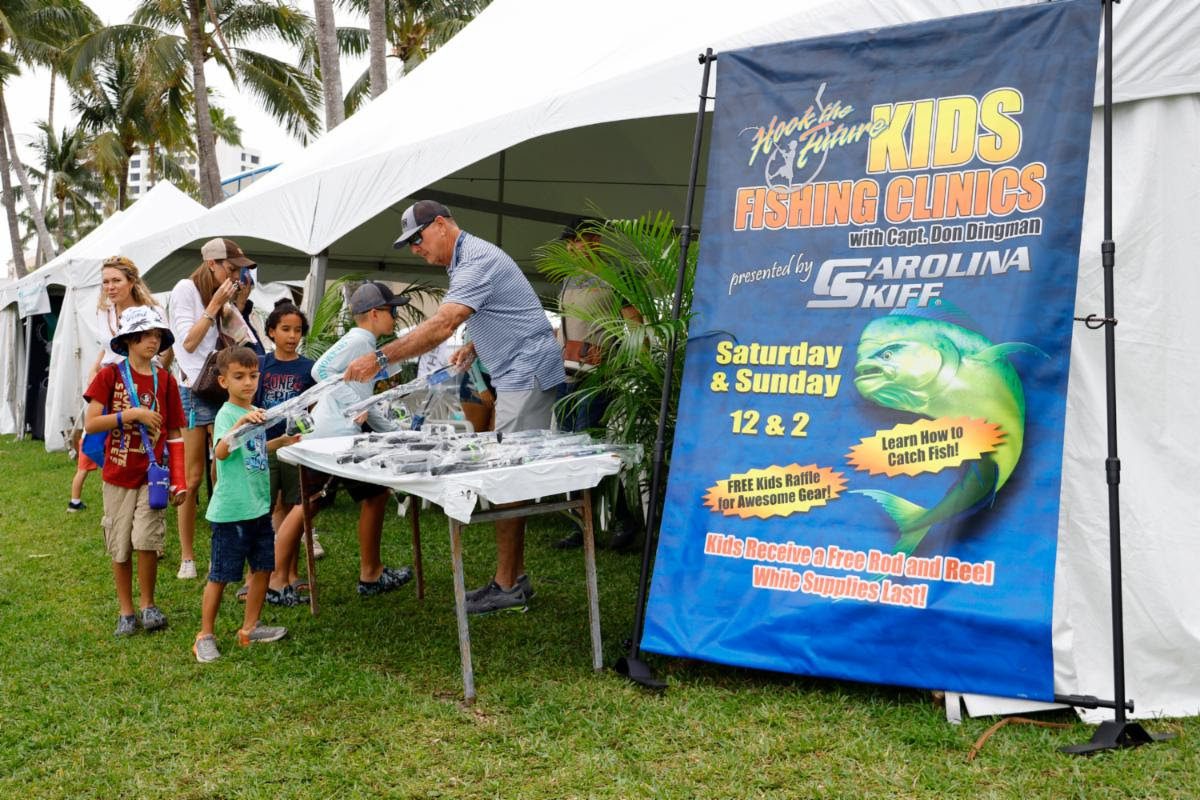
Expo hours for yacht tours and vendor exhibits are noon to 5 p.m. Thursday and 10 a.m. to 5 p.m. Friday and Saturday, the release stated. The event will also feature free children’s fishing clinics led by Don Dingman. Registered participants will receive complimentary rods and reels along with fishing instruction. Clinics are scheduled for Friday from 4 to 4:30 p.m. and Saturday at 11 to 11:30 a.m., 1 to 1:30 p.m. and 3 to 3:30 p.m, the release stated. Additional demonstrations include Motosurf jet board showcases, free IC24 sailing demos hosted by the St. Thomas Sailing Center, sportfishing demonstrations through the Virgin Islands Game Fishing Club and an underwater robotics and reef-mapping presentation by the Virgin Islands Center for Autonomous Research, the release stated.
Captain Don Dingman travels to boat shows around the USA to host his Kids Fishing Clinics. (Photo courtesy Hook the Future)
Seminars on vessel ownership and marine financing will be held Friday and Saturday. Steve McCauley of Caribe Yacht Group will discuss ownership opportunities, followed by Kim Madigan of Newcoast Financial Services on financing options, the release stated. Evening events include Thursday’s “Light the Night” dockside celebration, Friday’s meet-and-greet featuring an America’s Cup presentation by Tucker Thompson and Saturday’s “Charting the Future Gala.” Live entertainment throughout the weekend will include performances by Reggae Dynasty, Roxnonstop and Top Notch, the release stated. Tickets are available online and at the event. Admission includes yacht tours, access to the Harbor 360 Vendor Expo, a complimentary beverage, live music and cultural performances, the release stated. Sponsors include the U.S. Virgin Islands Department of Tourism, IGY Yacht Haven Grande, Joyride Aviation, Charter Smarter and the U.S. Virgin Islands Economic Development Authority. For tickets, click here.

VIPD Arrests Suspect in Williams Delight Shooting Investigation

A man accused in a September 2025 shooting incident in Williams Delight was arrested Monday after surrendering to police with his attorney, the V.I. Police Department reported. VIPD said 35-year-old Wakoi James was arrested Monday at the Wilbur H. Francis Command Police Station in connection with a Sept. 14, 2025, shooting investigation that began after the 911 Emergency Call Center received multiple reports of shots fired in the Williams Delight area. Police said a detective with the Criminal Investigation Bureau investigated the case and determined James was one of the shooters involved in the incident. A warrant was later issued for his arrest. James was booked and held pending his court appearance. Bail was not set, according to the police report. He faces charges of reckless endangerment first, carrying firearm openly or concealed, possession or sale of ammunition, assault third, and illegal discharge of firearm, the report stated. Police said James was transported to the John A. Bell Correctional Facility pending his advice of rights hearing.

Virgin Islands Children’s Museum Free For Military Families This Summer

The Virgin Islands Children’s Museum is pleased to participate in Blue Star Museums, a program that provides free admission to currently serving U.S. military personnel and their families during the summer. The 2026 program will begin on Armed Forces Day, Saturday, May 16, and end on Labor Day, Monday, Sept. 7.
Virgin Islands Children’s Museum
“As the daughter of a Marine father and an Army mother—and having been born on a Marine base and named Amber after the ‘amber waves of grain’ from America the Beautiful—supporting our military community is deeply personal to me,” said Amber McCammon, Executive Director of the Virgin Islands Children’s Museum. “We recognize the unique sacrifices made by service members and their families. While the Blue Star program celebrates them throughout the summer, the VICM is committed to this mission by offering a 10% admission discount for active duty and veterans year-round.” The VICM invites military families to visit our location at 9800 Buccaneer Mall, Havensight, St Thomas, USVI to explore our interactive exhibits and STREAM-based educational resources. We are open Tuesday through Saturday from 10 a.m. to 5 p.m., and Sunday from 11 a.m. to 4 p.m. (closed Mondays). Please note that the last admission is 30 minutes before closing. These shared museum experiences offer a sense of stability and connection for military families who often face frequent moves and time apart. Blue Star Museums is a partnership between the National Endowment for the Arts and Blue Star Families, in collaboration with the Department of Defense and participating museums across America. This free admission program is available for those currently serving in the United States military—Army, Marine Corps, Navy, Air Force, Space Force, Coast Guard, and members of the Reserves, National Guard, U.S. Public Health Commissioned Corps, NOAA Commissioned Corps—and up to five family members. Qualified members must show a Geneva Convention common access card (CAC), DD Form 1173 ID card (dependent ID), or the Next Generation Uniformed Services (Real) ID card for entrance. About the Virgin Islands Children’s Museum The Virgin Islands Children’s Museum serves educators, children, and families in the United States Virgin Islands and visitors to the Territory. We promote Science, Technology, Reading, Engineering, Arts and Humanities, Mathematics (STREAM) based educational exhibits and resources, facilitating family engagement while fostering explorative learning and a lifelong passion for knowledge. VICM celebrates Caribbean culture and serves as a community resource for a diverse, multi-lingual, multicultural, and multinational community. Our mission is to bring children and families together in an interactive educational space where dynamic play inspires a love of learning. About the National Endowment for the Arts Established by Congress, the National Endowment for the Arts is an independent federal agency that is the largest funder of the arts and arts education in communities nationwide. To learn more, visit arts.gov. About Blue Star Families Blue Star Families (BSF) is the nation’s largest military and veteran family support organization. Since its founding in 2009, BSF has delivered more than $336 million in benefits and impacts more than 1.5 million people annually. For more information, visit bluestarfam.org.

Op-Ed: The Nature of Springtime in the Virgin Islands

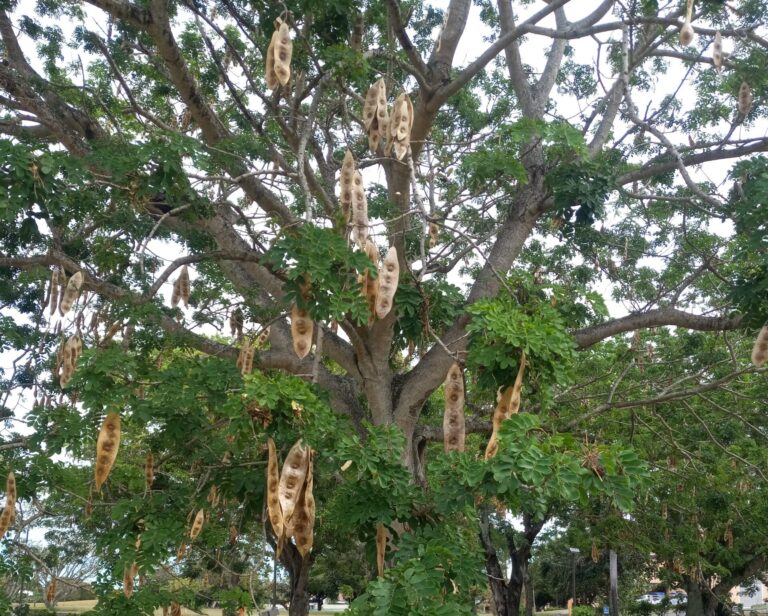
In the dry season, the Tibet (Albizia lebbek) hs not a leaf on her, just the bright, crisp yellow seed pods rattling in the wind on a dry thirsty land. The dry pods appear in March and into April where trees begin to flower, waiting for the spring rain to come. The Tibet tree is also known locally as Women's Tongues. (Photo by Olasee Davis)
In the dry season, the Tibet (Albizia lebbek) has not a leaf on her, just the bright, crisp yellow seed pods rattling in the wind on a dry thirsty land. The dry pods appear in March and into April when trees begin to flower, waiting for the spring rain to come. The Tibet tree is also known locally as Women’s Tongues. (Photo by Olasee Davis)

April is the month where the monstrous leatherback sea turtles (Dermochelys coriacea) come onto our shores to lay their eggs, particularly on the island of St. Croix. Some leatherback sea turtles do come in March, but when April arrives, we can say the season begins. Like the leatherback sea turtles, one of our rarest, beautiful wildflowers in the Virgin Islands, known as Watapama or Wattapania (Sabinea florida), which loves our dry weather, comes into bloom.

Olasee Davis
Olasee Davis, Ph.D. (Submitted photo)

This small native deciduous tree reaches 12 to 20 feet tall with a trunk 2-4 inches in diameter. Sometimes the tree can reach 40 feet high with a trunk up to 8 inches, and long slender spreading branches. The flowers have a slender stalk about one-quarter to half an inch long and sometimes could be single.

Watapama has a bell-shaped purple calyx about 3/16 of an inch long and minutely five-toothed. It has five pale purple, lavender or blue petals nearly 7/8 of an inch long which are stalked at the base. The Watapama tree flowers mostly from January to March, with mature fruits in spring (April) and summer. In 1793, the plant was described botanically when it was discovered on the island of St. Thomas.

In the dry season also, the Tibet (Albizia lebbek) has not a leaf on her, except for the bright, crisp yellow seed pods rattling in the wind on a dry thirsty land. The dry pods appear in March and into April where trees begin to flower waiting for the spring rain to come. The Tibet tree is also known locally as Women’s Tongues.

The late native naturalist George A. Seaman mentioned this about the Women’s Tongues tree in a poetic expression.

Women’s Tongues

Women’s tongues! I presume that you will wonder, Vainly ruminate and ponder, (If you have a chance between the clouds of dust and heat) How these carefree, happy people, With their toy fort and their ‘steeple’, (Now you stop to query if there are jiggers in your feet) Could have named so well a tree, With a failing wide and free: Women’s tongues! Women’s tongues! From the first dawn-peep they rattle, Purr of love and song of battle, (Oh, how like those ladies that you left behind at home!) Multiplying note on note, Till the whole bright world’s afloat, (White or black or yellow they will dog you where you roan) With calumnius exhibit From the branches of the thibet — Women’s tongues!

As I explained the other day to a group of hikers as we were hiking to the highest peak on St. Croix — Mount Eagle on the Great Northeast Central mountains range of Maroon Sanctuary Park — they felt much cooler as we climbed to the summit. St. Croix is the largest of the U.S. Virgin Islands with about 54,400 acres, or 85 square miles. St. Thomas and St. John could fit into St. Croix comfortably, and still have land to roam.

The Watapania (Poitea florida) is a small, endemic native ornamental tree to the Virgin Islands and Puerto Rico, with beautiful purple flowers adaptable to dry areas. (Photo by Olasee Davis)

Unlike the other two Virgin Islands, St. Croix contains three dominant kinds of landscapes. The northwest is mountainous, with the highest peak being Mount Eagle. The eastern part of the island is hilly, but the elevation is lower than the northwest and northeast central part of St. Croix. The middle part of St. Croix is generally covered with a large plain and slopes from the north, west, and central mountains range, dropping to the south shorelines.

Nonetheless, the absence of higher mountain peaks on the island, for example let us say 2,000, 3,000, or 4,000 feet above sea level, makes a difference in the climatic conditions of the weather system. The northwest and northeast central mountain ranges are not high enough to catch and lift the cool air and humid trade winds from the Atlantic Ocean, thus the climate of St. Croix is considered a semi-dry tropical island.

Whereas the island of Saba, for example, is only five square miles, with a peak of over 2,000 feet above sea level. The vegetation and climate are much different in the higher elevations of Saba than on any high peaks in the Virgin Islands. Therefore, the temperature and precipitation distribution across St. Croix makes a big different in the climatic conditions of plants and animals. The northwest and northeast central mountainous range is the wettest on St. Croix due to the topography elevation.

This has a lot to do with our dry season and what time in the year it occurs. However, there are great variations in the quantity of precipitation from year to year, particularly in the mountain range on the north side of the island. With that being said, the lowest precipitation is in March and the highest from September to November. Our rainy season is from May to November, typically, and the dry season is from December to April. However, the coolest time of the year is in the dry season (winter months).

Because of the island being relatively low and with variable amounts of precipitation, drought occurs sometimes, which is a natural phenomenon of the wet and dry season on St. Croix. Oftentimes, the rain is short and torrential with powerful showers that, combined with constant trade winds and high temperature, results in high levels of evaporation and transpiration that causes dry spill to occur on the island from time to time.

As a result, from June to November the warm humid trade winds from the Atlantic Ocean blow constantly, while on the other hand, the period from December to May features cool north-westerly winds from the North American continent. Hurricanes usually occur from August to October, occasionally. However, these storms can occur earlier, but this is not common due to our geography, topography, meteorology, and ecological location in the northeastern  Caribbean archipelago of the Lesser Antilles.

These climate conditions also apply to the other Virgin Islands but are different due to their topography and location in the Caribbean region. With this brief introduction of climate and geography, I hope you understand the dry and wet season of the Virgin Islands. The bottom line is, we all are impacted by the climate — culturally, agriculturally, and the season of the island’s meteorology.

 — Olasee Davis is a bush professor who lectures and writes about the culture, history, ecology and environment of the Virgin Islands when he is not leading hiking tours of the wild places and spaces of St. Croix and beyond.

Editor’s Note: Opinion articles do not represent the views of the Virgin Islands Source newsroom and are the sole expressed opinion of the writer. Submissions can be made to visource@gmail.com.

Infrastructure, Energy Projects Highlighted in Government House Briefing

0
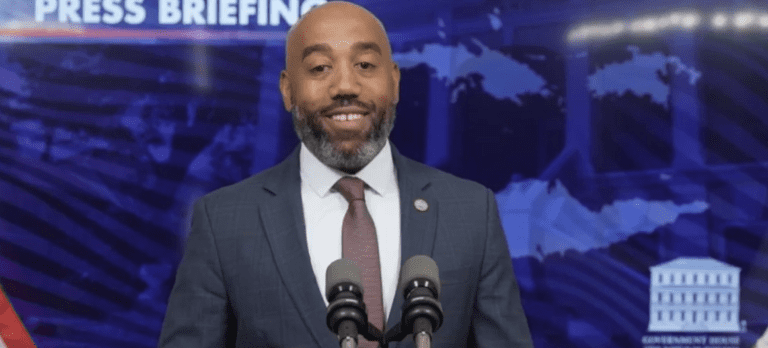
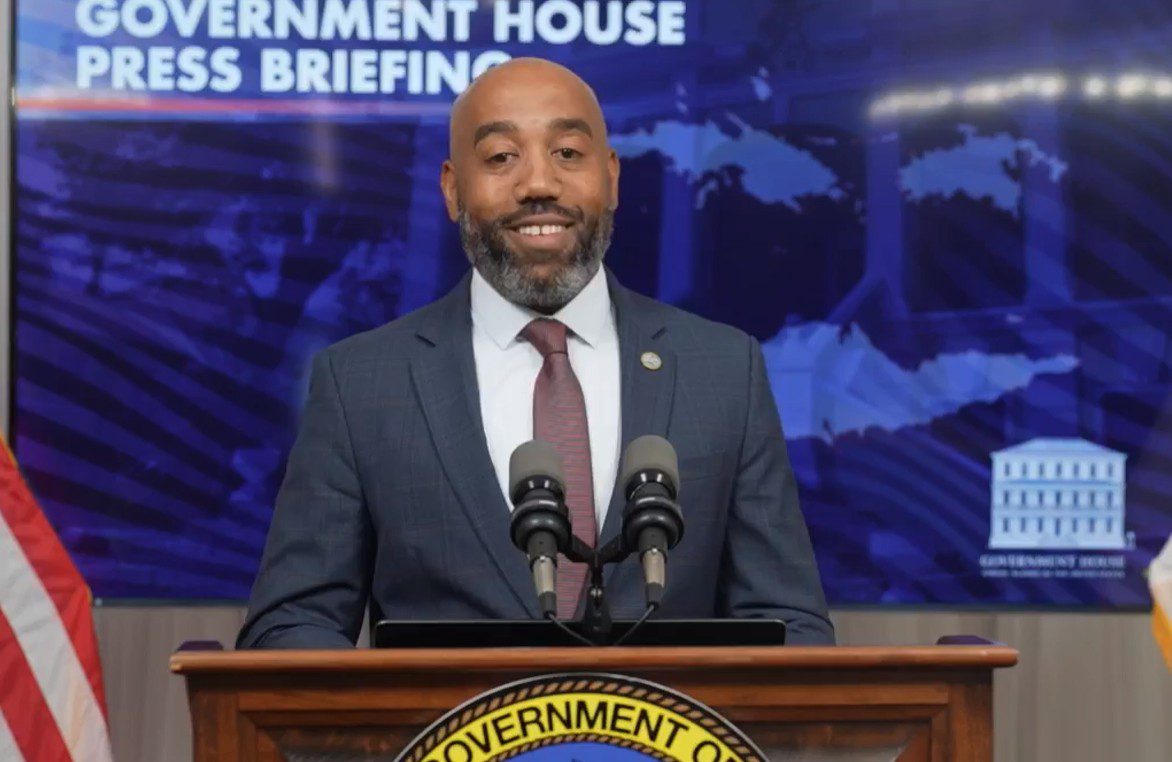
Government House Communications Director Richard Motta Jr. delivered a weekly press briefing Monday on St. Croix. (Screenshot from V.I. Government House livestream)

Officials announced a series of infrastructure improvements and projects during the weekly Government House briefing Monday.

After touting the recent groundbreaking of the Estate Profit community center, the launch of the St. Croix Educational Complex modernization effort, progress on the Charlotte Kimelman Cancer Institute and Donna M. Christian Christensen MD Health Center, and plans to develop the Randall “Doc” James Horse Racing Track, Government House spokesperson Richard Motta Jr. announced that the V.I. Department of Planning and Natural Resources and Disaster Recovery Office are moving forward with the demolition of Charlotte Amalie’s Hamburg building. The site will eventually house a new Virgin Islands Museum of Art.

“These are not just isolated projects,” Motta said. “They are connected investments in the places that tell our story, support our small businesses, strengthen our tourism product and improve the experience of residents and visitors alike.”

Motta also announced that the territory received approval from the U.S. Army Corps of Engineers for phase two of the Veterans Drive revitalization and the Summer’s End marina in Coral Bay.

“Both of these projects have been years in the making,” he said. “Both require extensive review and both speak to the larger point we have been making this afternoon, and through the years of this administration — that this administration is pressing forward on the infrastructure, permitting, town revitalization, economic development work necessary to move the Virgin Islands from plans on paper to real progress on the ground.”

Monday’s briefing also included updates from Public Works Commissioner Derek Gabriel, who announced a series of upcoming road repairs and safety improvements for Frederiksted’s Strand, King, Queen and Fisher streets.

“We were slated to start these repairs last year, but of course, we wanted to wait for the Festival season and some other things that we had going on to make sure these repairs are done safely and in a timely fashion,” he said.

Gabriel said that the bridge leading out of Frederiksted toward Rainbow Beach will be replaced and that the reconstruction of the East Airport Road intersection should be completed by Tuesday. On St. Thomas, Public Works has also started resurfacing parts of Skyline Drive as well as areas in estates Bolongo and Bovoni, he said.

“DPW is really doing our best to improve the quality of life for our visitors and our residents — not just on our major thoroughfares, but also in our neighborhoods,” he said. “So we ask for your continued patience and understanding as we continue our progress.”

The briefing’s final update came from V.I. Energy Office Director Kyle Fleming, who announced the launch of a “virtual power plant” whereby residents with Tesla Powerwall home battery systems can be compensated for sharing stored energy. Fleming said participating customers will receive $1,000 per Powerwall — and up to $4,000 per site.

“Now, let me be very clear: the VPP is not the silver bullet that solves every energy challenge facing our electrical system,” he said. “But as we approach the height of summer, it gives the Virgin Islands Water and Power Authority another important tool in their toolbelt to help mitigate the exact type of strain we historically experience during periods of elevated demand and generation shortfall.”

Lawmakers Debate Over 450-Bed Workforce Camp Proposed for Estate Bakkero

0
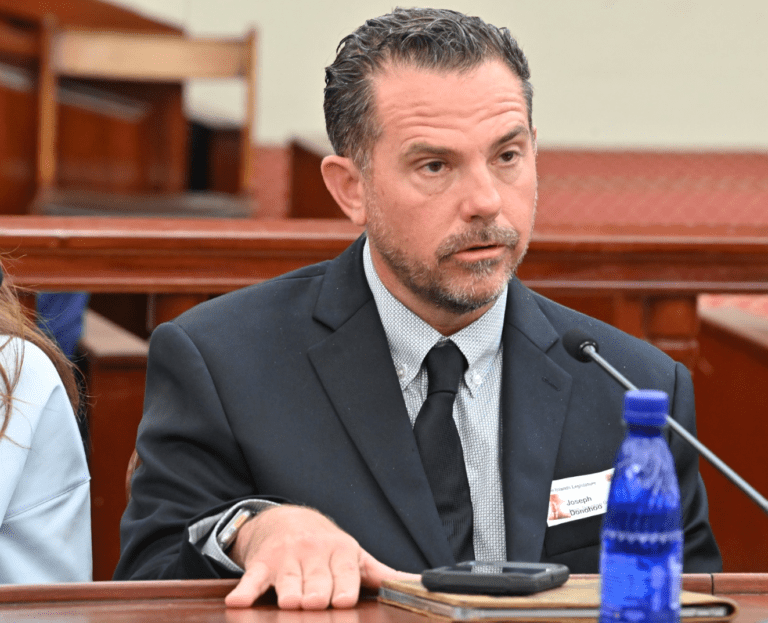
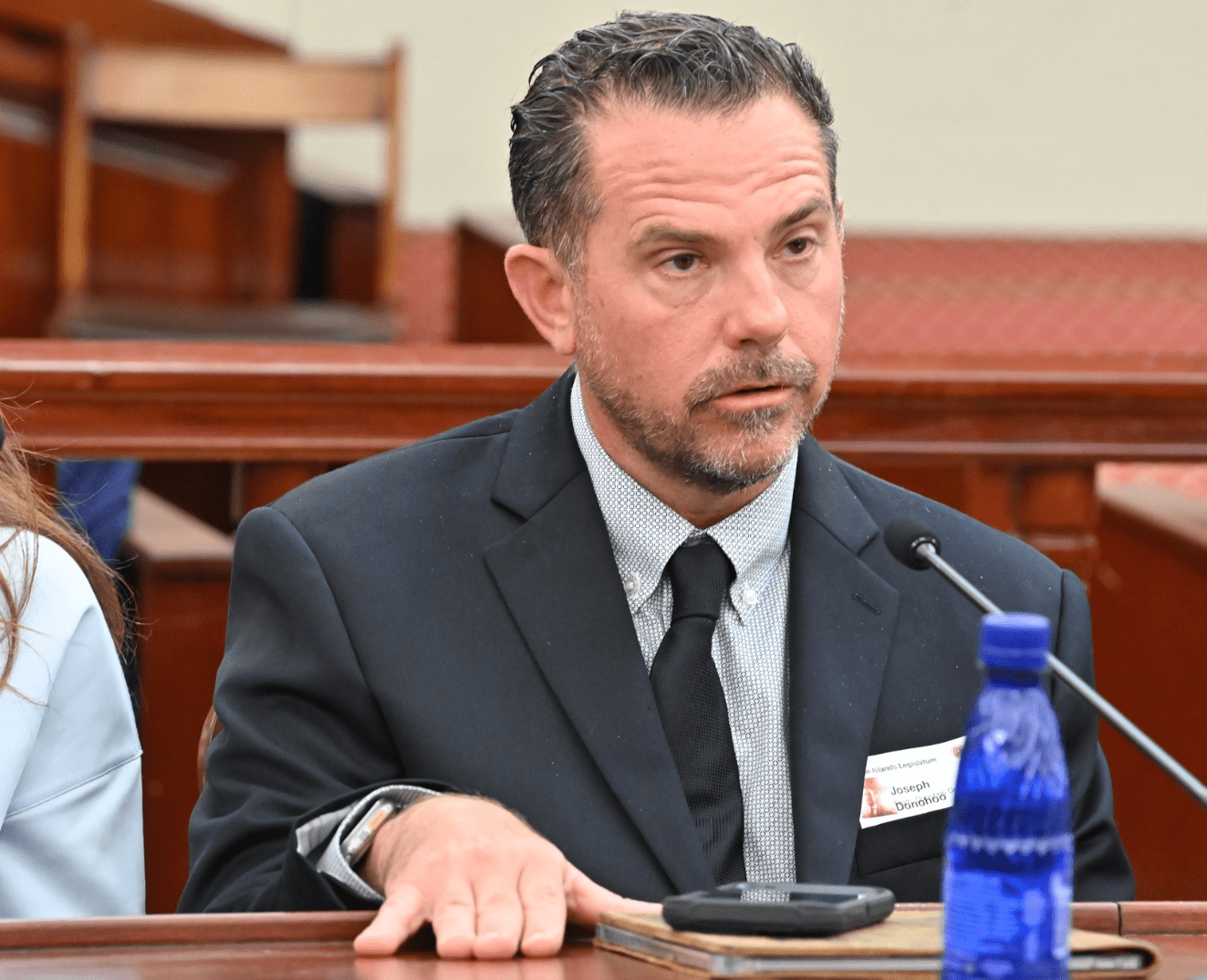
Joseph Todd Donohoo, principal of Sweetgrass Valley Properties LLC, testifies in support of Bill 36‑0287, a proposal to rezone about 14 acres in Estate Bakkero for a 450‑bed workforce housing complex tied to disaster recovery projects, during a Committee of the Whole hearing on Monday. (Photo courtesy V.I. Legislature)

Facing looming federal rebuilding deadlines, Virgin Islands lawmakers on Monday sharply questioned a proposal to build a 450-bed workforce housing complex in the St. Thomas neighborhood of Estate Bakkero, as residents warned the project would permanently alter their community.

Bill 36-0287 would rezone about 14 acres above the Frenchman’s Reef corridor from R-1 low-density residential to R-3 medium-density to allow “temporary” workforce housing, potentially for 10 to 15 years, for contractors working on schools, hospitals, roads and utility projects tied to billions of dollars in federal disaster recovery funding, which supporters say are already being delayed by the lack of dedicated worker housing.

Developer Joseph Todd Donohoo and former Sen. Roosevelt David argued the territory risks falling further behind on recovery projects without housing for off‑island workers. But residents, backed by a recommendation from the Department of Planning and Natural Resources to deny the rezoning, said the proposal would place what some called an “industrial man camp” inside a long‑standing residential subdivision.

The proposal, filed by Sweetgrass Valley Properties LLC, calls for 18 one‑story buildings, including 15 housing buildings, 30 modular units and shared dining, laundry and fitness facilities to house approximately 450 workers involved in major public reconstruction projects.

Opposition came largely from residents of the surrounding subdivision, who argued the development would permanently change the character of the area and worsen existing traffic and parking problems tied to nearby resort activity.

Resident Kurell Sheridan told senators the trailer-style workforce housing would be “fundamentally incompatible” with the surrounding “low-density single-family residential” neighborhood.

Residents also pointed to subdivision covenants dating back to the 1970s that prohibit trailers and temporary residential structures.

“This is not about opposing progress, workforce housing or economic development, and it’s certainly not simply about property value,” Attorney Alia Felix-Blyden told senators, adding that “established residential communities should not become the default location for cost‑saving workforce housing solutions, simply because doing so may be cheaper or more convenient.”

Supporters of the proposal said the territory cannot afford further delays in rebuilding hospitals, schools and basic infrastructure while it searches for a permanent workforce housing solution. Donohoo told lawmakers that “currently, these projects are delayed due to the lack of workforce housing,” and said “none of the major contractors involved in the GVI rebuild have a housing component secured.”

He cast the camp as a temporary stopgap rather than his intended long-term use for the 14 acres. “My permanent intent once I bought the property was for housing for local residents,” Donohoo said. “In light of the delays in major capital projects, I decided to assist the territory and government by assisting in providing workforce housing … to preserve the federal funds appropriated to the Virgin Islands.”

He told senators he has “no intention” of keeping the workforce units once recovery work is finished and said he would support writing a removal requirement into law, adding that he eventually hopes to redevelop the land as a mixed-use housing community for residents.

David, serving as a consultant on the project, urged lawmakers to weigh neighborhood concerns against the risk of stalled recovery work and lost federal funding. “This is more than a housing shortage. It is a housing crisis,” he said. “Lawmakers have an opportunity of a lifetime to fix this and fix it now.” He called the proposal an example of serving “the greater good of the community,” warning that without timely progress, the territory could miss its chance to rebuild modern hospitals and other essential facilities with federal dollars.

Despite those arguments, DPNR recommended denying the rezoning request, saying the project could instead proceed through a Planned Area Development process under the site’s existing R‑1 zoning designation.

Some residents, however, argued that moving the project into a PAD process would not fix the underlying conflict and could be used to push it through with less scrutiny. “A PAD should not become a mechanism to accomplish indirectly what cannot be justified directly through rezoning,” Felix‑Blyden told senators.

Territorial planner Leia LaPlace-Matthew also warned lawmakers that zoning changes cannot override private neighborhood covenants and said the dispute could ultimately end up in court. “The zoning law cannot be used to abrogate or annul covenants,” LaPlace-Matthew said. “This may end up being a court matter.”

Several senators signaled opposition to placing the workforce housing complex in Estate Bakkero even while acknowledging the territory’s broader housing shortage.

Sen. Franklin D. Johnson said the project did not fit the area’s residential scale. “I really can’t support this,” he said. “It just don’t feel right … People spend a lifetime building these homes.”

Sen. Kurt Vialet also rejected the proposal, warning that “temporary” projects often become permanent in the Virgin Islands. “In the Virgin Islands, temporary becomes permanent,” he said, citing a decades-old “temporary” housing facility he said was never removed. He urged officials to consider government land or existing facilities instead of rezoning an established subdivision.

Sen. Avery Lewis did not endorse the Bakkero project but stressed that reconstruction will bring disruptions across the territory. “With this rebuilding, we are going to feel some pain,” Lewis said. “We’re going to have to make some tough, unpopular decisions.”

Despite those concerns, lawmakers broadly agreed the territory must find ways to house both residents and the off-island workers needed to rebuild hospitals, schools, roads and utilities.

No votes were taken during Monday’s Committee of the Whole hearing. Bill 36-0287 will move to a future legislative session, where lawmakers will weigh neighborhood protections against the need for housing tied to billions of dollars in federal recovery projects.

Man Charged With Assault After Reported Attack on St. Thomas

A St. Thomas man was arrested after police said he assaulted another man during an incident reported earlier this month, the Virgin Islands Police Department reported. Luis Amaro Jr., 37, was charged with third-degree assault and related offenses following a complaint filed May 3 alleging that he physically assaulted a male victim, causing injuries, the VIPD said in a police report Monday. Police said the arrest was made by the Criminal Investigation Bureau. Bail for Amaro was set at $25,000. The VIPD asked anyone with information related to the case or other criminal activity to contact 911, the Office of the Police Chief or the Criminal Investigation Bureau at 340-774-2211, ext. 5577. Anonymous tips can also be submitted through Crime Stoppers VI.