In the dry season, the Tibet (Albizia lebbek) has not a leaf on her, just the bright, crisp yellow seed pods rattling in the wind on a dry thirsty land. The dry pods appear in March and into April when trees begin to flower, waiting for the spring rain to come. The Tibet tree is also known locally as Women’s Tongues. (Photo by Olasee Davis)
April is the month where the monstrous leatherback sea turtles (Dermochelys coriacea) come onto our shores to lay their eggs, particularly on the island of St. Croix. Some leatherback sea turtles do come in March, but when April arrives, we can say the season begins. Like the leatherback sea turtles, one of our rarest, beautiful wildflowers in the Virgin Islands, known as Watapama or Wattapania (Sabinea florida), which loves our dry weather, comes into bloom.
Olasee Davis, Ph.D. (Submitted photo)
This small native deciduous tree reaches 12 to 20 feet tall with a trunk 2-4 inches in diameter. Sometimes the tree can reach 40 feet high with a trunk up to 8 inches, and long slender spreading branches. The flowers have a slender stalk about one-quarter to half an inch long and sometimes could be single.
Watapama has a bell-shaped purple calyx about 3/16 of an inch long and minutely five-toothed. It has five pale purple, lavender or blue petals nearly 7/8 of an inch long which are stalked at the base. The Watapama tree flowers mostly from January to March, with mature fruits in spring (April) and summer. In 1793, the plant was described botanically when it was discovered on the island of St. Thomas.
In the dry season also, the Tibet (Albizia lebbek) has not a leaf on her, except for the bright, crisp yellow seed pods rattling in the wind on a dry thirsty land. The dry pods appear in March and into April where trees begin to flower waiting for the spring rain to come. The Tibet tree is also known locally as Women’s Tongues.
The late native naturalist George A. Seaman mentioned this about the Women’s Tongues tree in a poetic expression.
Women’s Tongues
Women’s tongues!I presume that you will wonder,Vainly ruminate and ponder,(If you have a chance between the clouds of dust and heat)How these carefree, happy people,With their toy fort and their ‘steeple’,(Now you stop to query if there are jiggers in your feet)Could have named so well a tree,With a failing wide and free:Women’s tongues!Women’s tongues!From the first dawn-peep they rattle,Purr of love and song of battle,(Oh, how like those ladies that you left behind at home!)Multiplying note on note,Till the whole bright world’s afloat,(White or black or yellow they will dog you where you roan)With calumnius exhibitFrom the branches of the thibet —Women’s tongues!
As I explained the other day to a group of hikers as we were hiking to the highest peak on St. Croix — Mount Eagle on the Great Northeast Central mountains range of Maroon Sanctuary Park — they felt much cooler as we climbed to the summit. St. Croix is the largest of the U.S. Virgin Islands with about 54,400 acres, or 85 square miles. St. Thomas and St. John could fit into St. Croix comfortably, and still have land to roam.
The Watapania (Poitea florida) is a small, endemic native ornamental tree to the Virgin Islands and Puerto Rico, with beautiful purple flowers adaptable to dry areas. (Photo by Olasee Davis)
Unlike the other two Virgin Islands, St. Croix contains three dominant kinds of landscapes. The northwest is mountainous, with the highest peak being Mount Eagle. The eastern part of the island is hilly, but the elevation is lower than the northwest and northeast central part of St. Croix. The middle part of St. Croix is generally covered with a large plain and slopes from the north, west, and central mountains range, dropping to the south shorelines.
Nonetheless, the absence of higher mountain peaks on the island, for example let us say 2,000, 3,000, or 4,000 feet above sea level, makes a difference in the climatic conditions of the weather system. The northwest and northeast central mountain ranges are not high enough to catch and lift the cool air and humid trade winds from the Atlantic Ocean, thus the climate of St. Croix is considered a semi-dry tropical island.
Whereas the island of Saba, for example, is only five square miles, with a peak of over 2,000 feet above sea level. The vegetation and climate are much different in the higher elevations of Saba than on any high peaks in the Virgin Islands. Therefore, the temperature and precipitation distribution across St. Croix makes a big different in the climatic conditions of plants and animals. The northwest and northeast central mountainous range is the wettest on St. Croix due to the topography elevation.
This has a lot to do with our dry season and what time in the year it occurs. However, there are great variations in the quantity of precipitation from year to year, particularly in the mountain range on the north side of the island. With that being said, the lowest precipitation is in March and the highest from September to November. Our rainy season is from May to November, typically, and the dry season is from December to April. However, the coolest time of the year is in the dry season (winter months).
Because of the island being relatively low and with variable amounts of precipitation, drought occurs sometimes, which is a natural phenomenon of the wet and dry season on St. Croix. Oftentimes, the rain is short and torrential with powerful showers that, combined with constant trade winds and high temperature, results in high levels of evaporation and transpiration that causes dry spill to occur on the island from time to time.
As a result, from June to November the warm humid trade winds from the Atlantic Ocean blow constantly, while on the other hand, the period from December to May features cool north-westerly winds from the North American continent. Hurricanes usually occur from August to October, occasionally. However, these storms can occur earlier, but this is not common due to our geography, topography, meteorology, and ecological location in the northeastern Caribbean archipelago of the Lesser Antilles.
These climate conditions also apply to the other Virgin Islands but are different due to their topography and location in the Caribbean region. With this brief introduction of climate and geography, I hope you understand the dry and wet season of the Virgin Islands. The bottom line is, we all are impacted by the climate — culturally, agriculturally, and the season of the island’s meteorology.
— Olasee Davis is a bush professor who lectures and writes about the culture, history, ecology and environment of the Virgin Islands when he is not leading hiking tours of the wild places and spaces of St. Croix and beyond.
Editor’s Note: Opinion articles do not represent the views of the Virgin Islands Source newsroom and are the sole expressed opinion of the writer. Submissions can be made to visource@gmail.com.
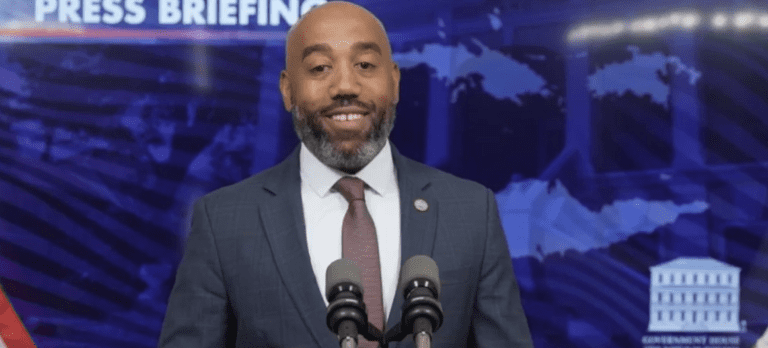
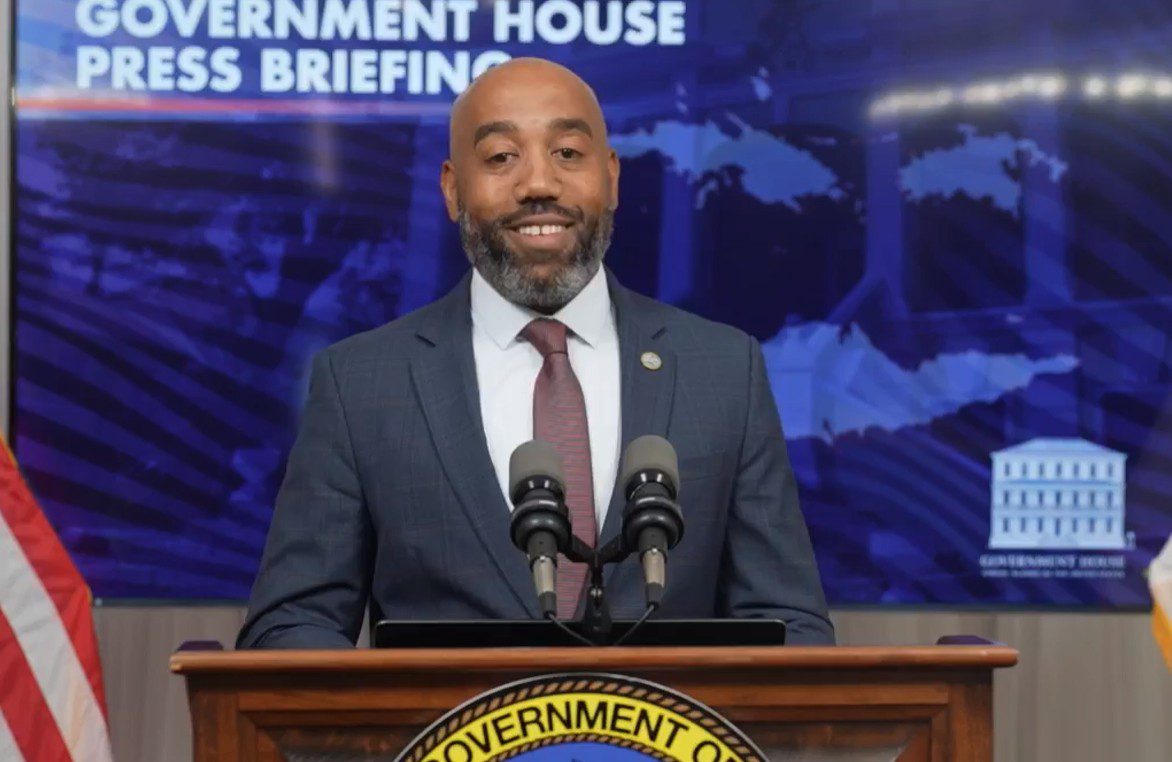
Government House Communications Director Richard Motta Jr. delivered a weekly press briefing Monday on St. Croix. (Screenshot from V.I. Government House livestream)
Officials announced a series of infrastructure improvements and projects during the weekly Government House briefing Monday.
After touting the recent groundbreaking of the Estate Profit community center, the launch of the St. Croix Educational Complex modernization effort, progress on the Charlotte Kimelman Cancer Institute and Donna M. Christian Christensen MD Health Center, and plans to develop the Randall “Doc” James Horse Racing Track, Government House spokesperson Richard Motta Jr. announced that the V.I. Department of Planning and Natural Resources and Disaster Recovery Office are moving forward with the demolition of Charlotte Amalie’s Hamburg building. The site will eventually house a new Virgin Islands Museum of Art.
“These are not just isolated projects,” Motta said. “They are connected investments in the places that tell our story, support our small businesses, strengthen our tourism product and improve the experience of residents and visitors alike.”
“Both of these projects have been years in the making,” he said. “Both require extensive review and both speak to the larger point we have been making this afternoon, and through the years of this administration — that this administration is pressing forward on the infrastructure, permitting, town revitalization, economic development work necessary to move the Virgin Islands from plans on paper to real progress on the ground.”
Monday’s briefing also included updates from Public Works Commissioner Derek Gabriel, who announced a series of upcoming road repairs and safety improvements for Frederiksted’s Strand, King, Queen and Fisher streets.
“We were slated to start these repairs last year, but of course, we wanted to wait for the Festival season and some other things that we had going on to make sure these repairs are done safely and in a timely fashion,” he said.
Gabriel said that the bridge leading out of Frederiksted toward Rainbow Beach will be replaced and that the reconstruction of the East Airport Road intersection should be completed by Tuesday. On St. Thomas, Public Works has also started resurfacing parts of Skyline Drive as well as areas in estates Bolongo and Bovoni, he said.
“DPW is really doing our best to improve the quality of life for our visitors and our residents — not just on our major thoroughfares, but also in our neighborhoods,” he said. “So we ask for your continued patience and understanding as we continue our progress.”
The briefing’s final update came from V.I. Energy Office Director Kyle Fleming, who announced the launch of a “virtual power plant” whereby residents with Tesla Powerwall home battery systems can be compensated for sharing stored energy. Fleming said participating customers will receive $1,000 per Powerwall — and up to $4,000 per site.
“Now, let me be very clear: the VPP is not the silver bullet that solves every energy challenge facing our electrical system,” he said. “But as we approach the height of summer, it gives the Virgin Islands Water and Power Authority another important tool in their toolbelt to help mitigate the exact type of strain we historically experience during periods of elevated demand and generation shortfall.”
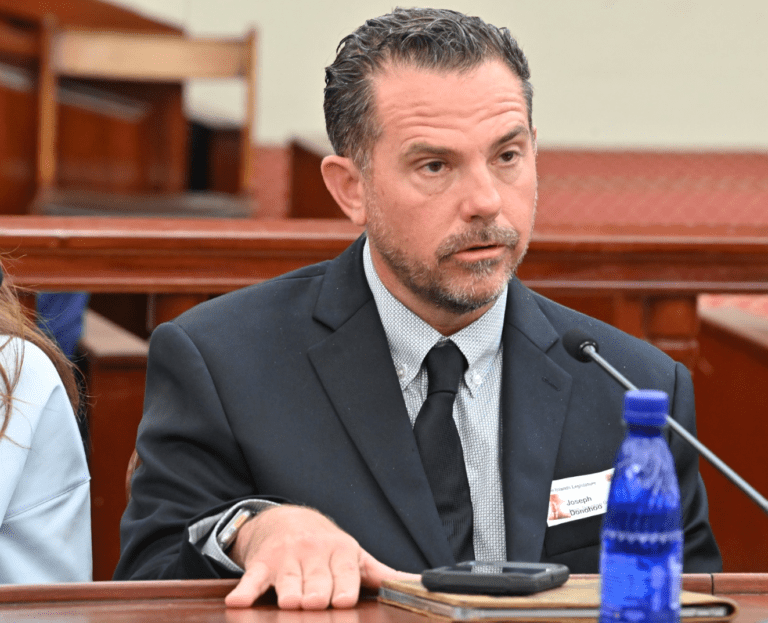
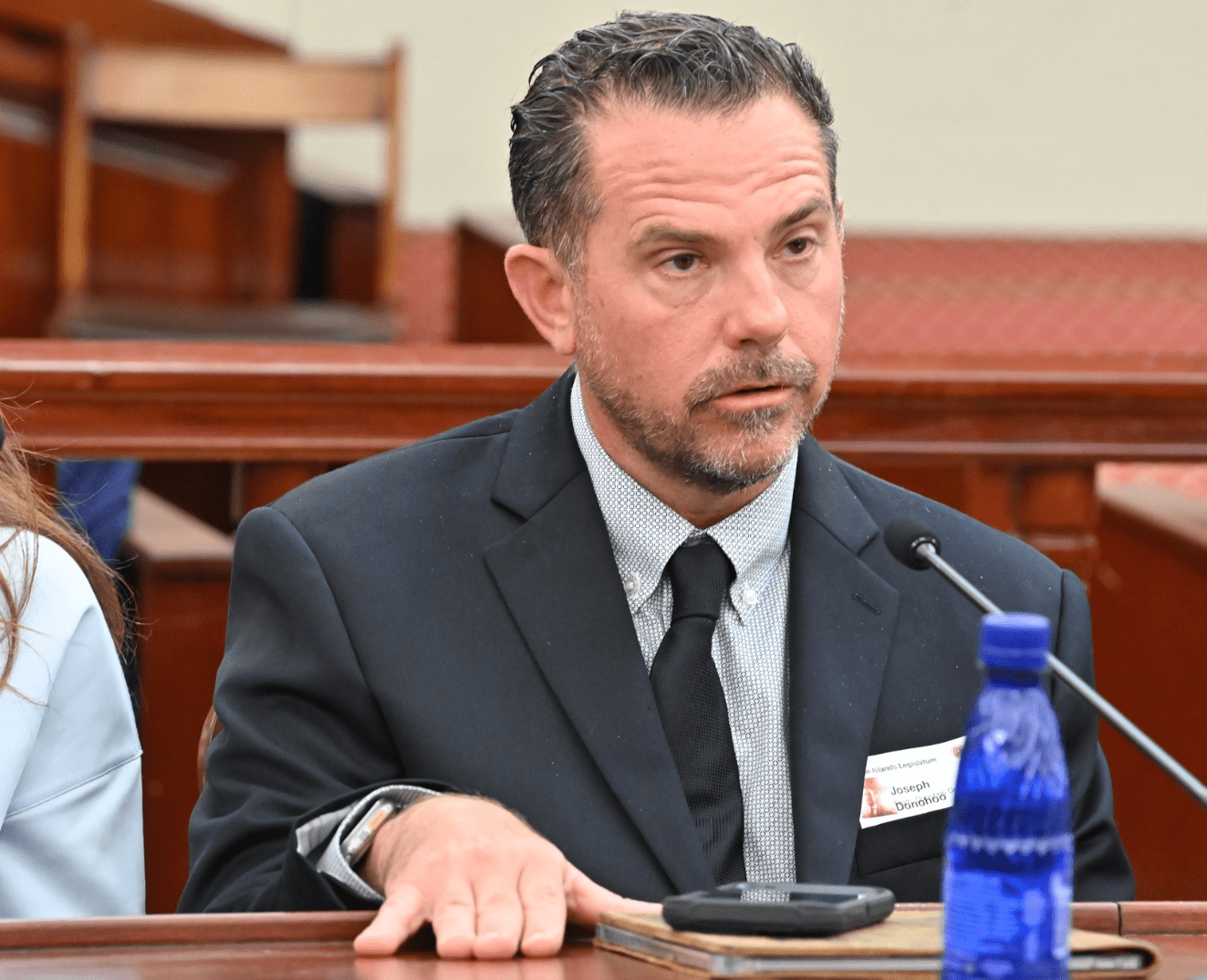
Joseph Todd Donohoo, principal of Sweetgrass Valley Properties LLC, testifies in support of Bill 36‑0287, a proposal to rezone about 14 acres in Estate Bakkero for a 450‑bed workforce housing complex tied to disaster recovery projects, during a Committee of the Whole hearing on Monday. (Photo courtesy V.I. Legislature)
Facing looming federal rebuilding deadlines, Virgin Islands lawmakers on Monday sharply questioned a proposal to build a 450-bed workforce housing complex in the St. Thomas neighborhood of Estate Bakkero, as residents warned the project would permanently alter their community.
Bill 36-0287 would rezone about 14 acres above the Frenchman’s Reef corridor from R-1 low-density residential to R-3 medium-density to allow “temporary” workforce housing, potentially for 10 to 15 years, for contractors working on schools, hospitals, roads and utility projects tied to billions of dollars in federal disaster recovery funding, which supporters say are already being delayed by the lack of dedicated worker housing.
Developer Joseph Todd Donohoo and former Sen. Roosevelt David argued the territory risks falling further behind on recovery projects without housing for off‑island workers. But residents, backed by a recommendation from the Department of Planning and Natural Resources to deny the rezoning, said the proposal would place what some called an “industrial man camp” inside a long‑standing residential subdivision.
The proposal, filed by Sweetgrass Valley Properties LLC, calls for 18 one‑story buildings, including 15 housing buildings, 30 modular units and shared dining, laundry and fitness facilities to house approximately 450 workers involved in major public reconstruction projects.
Opposition came largely from residents of the surrounding subdivision, who argued the development would permanently change the character of the area and worsen existing traffic and parking problems tied to nearby resort activity.
Resident Kurell Sheridan told senators the trailer-style workforce housing would be “fundamentally incompatible” with the surrounding “low-density single-family residential” neighborhood.
Residents also pointed to subdivision covenants dating back to the 1970s that prohibit trailers and temporary residential structures.
“This is not about opposing progress, workforce housing or economic development, and it’s certainly not simply about property value,” Attorney Alia Felix-Blyden told senators, adding that “established residential communities should not become the default location for cost‑saving workforce housing solutions, simply because doing so may be cheaper or more convenient.”
Supporters of the proposal said the territory cannot afford further delays in rebuilding hospitals, schools and basic infrastructure while it searches for a permanent workforce housing solution. Donohoo told lawmakers that “currently, these projects are delayed due to the lack of workforce housing,” and said “none of the major contractors involved in the GVI rebuild have a housing component secured.”
He cast the camp as a temporary stopgap rather than his intended long-term use for the 14 acres. “My permanent intent once I bought the property was for housing for local residents,” Donohoo said. “In light of the delays in major capital projects, I decided to assist the territory and government by assisting in providing workforce housing … to preserve the federal funds appropriated to the Virgin Islands.”
He told senators he has “no intention” of keeping the workforce units once recovery work is finished and said he would support writing a removal requirement into law, adding that he eventually hopes to redevelop the land as a mixed-use housing community for residents.
David, serving as a consultant on the project, urged lawmakers to weigh neighborhood concerns against the risk of stalled recovery work and lost federal funding. “This is more than a housing shortage. It is a housing crisis,” he said. “Lawmakers have an opportunity of a lifetime to fix this and fix it now.” He called the proposal an example of serving “the greater good of the community,” warning that without timely progress, the territory could miss its chance to rebuild modern hospitals and other essential facilities with federal dollars.
Despite those arguments, DPNR recommended denying the rezoning request, saying the project could instead proceed through a Planned Area Development process under the site’s existing R‑1 zoning designation.
Some residents, however, argued that moving the project into a PAD process would not fix the underlying conflict and could be used to push it through with less scrutiny. “A PAD should not become a mechanism to accomplish indirectly what cannot be justified directly through rezoning,” Felix‑Blyden told senators.
Territorial planner Leia LaPlace-Matthew also warned lawmakers that zoning changes cannot override private neighborhood covenants and said the dispute could ultimately end up in court. “The zoning law cannot be used to abrogate or annul covenants,” LaPlace-Matthew said. “This may end up being a court matter.”
Several senators signaled opposition to placing the workforce housing complex in Estate Bakkero even while acknowledging the territory’s broader housing shortage.
Sen. Franklin D. Johnson said the project did not fit the area’s residential scale. “I really can’t support this,” he said. “It just don’t feel right … People spend a lifetime building these homes.”
Sen. Kurt Vialet also rejected the proposal, warning that “temporary” projects often become permanent in the Virgin Islands. “In the Virgin Islands, temporary becomes permanent,” he said, citing a decades-old “temporary” housing facility he said was never removed. He urged officials to consider government land or existing facilities instead of rezoning an established subdivision.
Sen. Avery Lewis did not endorse the Bakkero project but stressed that reconstruction will bring disruptions across the territory. “With this rebuilding, we are going to feel some pain,” Lewis said. “We’re going to have to make some tough, unpopular decisions.”
Despite those concerns, lawmakers broadly agreed the territory must find ways to house both residents and the off-island workers needed to rebuild hospitals, schools, roads and utilities.
No votes were taken during Monday’s Committee of the Whole hearing. Bill 36-0287 will move to a future legislative session, where lawmakers will weigh neighborhood protections against the need for housing tied to billions of dollars in federal recovery projects.
A St. Thomas man was arrested after police said he assaulted another man during an incident reported earlier this month, the Virgin Islands Police Department reported.
Luis Amaro Jr., 37, was charged with third-degree assault and related offenses following a complaint filed May 3 alleging that he physically assaulted a male victim, causing injuries, the VIPD said in a police report Monday.
Police said the arrest was made by the Criminal Investigation Bureau. Bail for Amaro was set at $25,000.
The VIPD asked anyone with information related to the case or other criminal activity to contact 911, the Office of the Police Chief or the Criminal Investigation Bureau at 340-774-2211, ext. 5577. Anonymous tips can also be submitted through Crime Stoppers VI.
The Virgin Islands Waste Management Authority has successfully restored the Mon Bijou bin site on St. Croix following ongoing incidents of illegal tire dumping.
The Mon Bijou bin area before and after illegally dumped tires were removed. (Submitted photo)
The site had been repeatedly used as an unauthorized dumping location, particularly for discarded tires, creating environmental and public health concerns. Through dedicated cleanup efforts, the VIWMA team removed approximately 2,800 illegally dumped tires, significantly improved the condition of the area and restored its proper use.
“Restoring the Mon Bijou site reflects VIWMA’s commitment to protecting the environment and the health of our community members,” said Executive Director Hannibal “Mike” Ware. “We urge the community to partner with us by disposing of waste responsibly and reporting violations while we work toward a permanent solution to illegal tire dumping.”
VIWMA reminds the public that illegal dumping is against the law, and violators are subject to fines of not less than $1,000 and/or imprisonment for up to 180 days. Illegal dumping poses significant environmental risks, including soil and water contamination, as well as threats to public health and safety.
To report illegal dumping or other waste-related violations, please email customer_care@viwma.org or communications@viwma.org, or call 340-715-9100 (St. Thomas)or340-712-4962 (St. Croix). Stay connected with VIWMA on Facebook, X, and LinkedIn for updates.
81C is pleased to announce Krankie II: Middle of the Food Chain, an immersive contemporary art exhibition by collaborative duo Emily Braswell (strawberriemilk) and Jenna Rees (warmmilkwithsugar), opening in St. Thomas on May 15, 5 p.m.-12 a.m.
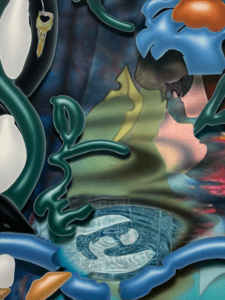
Tale as Old as Tuey by Braswell and Rees. (Submitted photo)
The opening reception at 81C will feature DJ Carbar and refreshments. Admission is free and the exhibiting artists will be present.
Expanding on their evolving Krankie series, the exhibition brings together painting, video, sculpture, and installation to construct a cinematic, psychologically charged world shaped by absurdist commentary on fame today versus pre internet times. Following its debut in Los Angeles, Krankie II arrives in the Virgin Islands as an immersive dual-location activation, presented at 81C in historic Charlotte Amalie and accompanied by a supporting component at the XIIID Research and Strategy Innovation Center at the University of the Virgin Islands.
Supported through a collaboration between 81C Arts, XIIID, and UVI, Krankie II represents a continued investment in advancing contemporary art and education in the territory. The exhibition creates direct pathways for student engagement, interdisciplinary learning, and public access to museum-quality creative production.
By positioning immersive, narrative-driven art within both a gallery and academic setting, the project highlights the role of the arts as a critical component of cultural and intellectual infrastructure in the Virgin Islands.
Show Description:
“Krankie II: Middle of the Food Chain by Emily Braswell (Strawberriemilk) and Jenna Rees (Warmmilkwithsugar) unfolds as a warped cinematic universe where painting, video, and sculpture collapse into a single, unstable narrative field. Centered around a fictional 1980s movie star in a meta-perspective of invented lore from parallel storylines, the work drifts between past and present, constructing a world where time folds in on itself and meaning emerges through fragments rather than sequence.
Hybrid airbrush and traditional paintings operate as imagined film artifacts: posters, stills, and visual residues from fictitious movies that are rendered with a hyper-saturated, almost synthetic clarity. Their surfaces oscillate between softness and precision, evoking the tactile nostalgia of analog media while simultaneously referencing the flattened glow of digital imagery. Sculptural interventions punctuate the space with quiet absurdity, grounding the work in physical form while amplifying its psychological tension.
Mystry by Braswell and Rees. (Submitted photo)
The accompanying video component extends this atmosphere into motion, offering a disjointed, voyeuristic glimpse into the interior lives orbiting this fictional figure. Rather than resolving into narrative, the work lingers in mood—an uneasy balance of humor, longing, and quiet unpredictability.
Drawing from the American south small-town culture and nostalgia for the sensationalized monolithic star style fame of pre-internet times, Krankie II: Middle of the Food Chain constructs a world that feels both intimately familiar and fundamentally distorted. It is less a story than a condition—one where fantasy and perception continuously rewrite one another.” — The Curators, 81C, Charlotte Amalie, 2026
About the Show:
Krankie II: Middle of the Food Chain expands the evolving Krankie universe into a dual-location experience spanning 81C in historic Charlotte Amalie and to the XIIID Research and Strategy Innovation Center at the University of the Virgin Islands, St. Thomas campus.
This two-part presentation deepens the narrative and physical experience of the work—bridging gallery and academic environments to create a layered, immersive encounter with contemporary art in the Virgin Islands.
At 81C, the exhibition unfolds as a fully realized environment, where painting, sculpture, and video merge into a cohesive sensory installation. Visitors enter a world shaped by reimagined retro visuals, nonlinear storytelling, and abstraction executed with realistic precision—an uncanny space where narrative operates more as atmosphere than linear story.
At The XIIID Research and Strategy Innovation Center at UVI, Krankie II activates XIIID’s Zen Room as a dedicated cinematic environment, highlighting the exhibition’s cinema components and offering viewers engagement with multi-screen moving-image. Accompanied by a selected sculptural element positioned within this academic and research-driven setting, the activation invites students and the public to encounter the work through curiosity, reflection, and shared viewing, ultimately driving visitation to the full scale show at 81C in Charlotte Amalie.
Together, this dual-location experience reflects a shared commitment between 81C, XIIID, and UVI to advance student engagement through arts production in the VI.
The show highlights the role of creative immersive experiences as an incubator for intellectual infrastructure—capable of constructively shaping how we observe, engage, and relate to fine arts.
Show Sponsors::
Foundation For Contemporary Arts, One Communication, UVI, VI Museum of Art, VICA, XIIID
Artist Statement:
Krankie II: Middle of the Food Chain is a sequel exhibition in the Krankie series. Krankie is a conceptual body of work that merges painting, video, and sculpture through installation. The concept is rooted in an imagined world that explores themes of anxiety around money and obsession with fame through a fictional story of an 80s movie star and his super fans.
The story begins in 1989 in a small southern town somewhere in rural America. Two unacquainted neighbors share a fanatic obsession with a hyper famous actor of their time, who goes by the stage name: Krankie. The two super fans live seemingly mundane lives, but are both plagued by mental and financial challenges. They find an escape in their hyper fixation on Krankie.
Krankie II: Middle of the Food Chain serves as a situational study that zooms in on the aged 80s movie star reflecting on his prime in this fictional world where time bends. He is able to revisit 1989 and leave treasures for his troubled super fans. In this mysterious warping of time, money from his Hollywood fortune becomes tangible for his super fans back in the peak of his prime.
Artists Bio:
Emily Braswell and Jenna Rees are collaborative art partners that work under the aliases Strawberriemilk & Warmmilkwithsugar. Their practice centers on painting, accompanied by video, installations and sculptures. Their lifelong friendship has fueled their collaborations for over a decade.
Their creative partnership began at UNCSA, a visual arts boarding school, in North Carolina, that they attended on merit-based scholarships. They went on to pursue higher education, then reconnected in Atlanta, where they gained recognition for pairing their paintings with conceptual installations.
Their work has a performative quality from their joint persona — layered with humor, matching attire and sensory experiences for their audiences. After recently relocating to the Caribbean, they exhibited in the Virgin Islands and Los Angeles. The duo now continues their studio practice in San Juan, PR.
Opening Reception Details:
May 15th, 2026 – 5PM-12AM
81C, Charlotte Amalie
Free admission
Park on waterfront
Gallery Run / Open Hours to view the show:
On View through July, 2026:
81C, Charlotte Amalie
Tues-Sat 5-8PM
The XIIID Research and Strategy Innovation Center at UVI
Mon-Fri 8:30AM-5:30PM
Show Sponsors:
Foundation For Contemporary Arts
One Communication
UVI
VI Museum of Art
VICA
XIIID
Introducing Business Matters, a new feature from the Source staff created specifically for local businesses. Our goal is to explore issues that impact business success, from branding and marketing to broader trends shaping both brick-and-mortar and online commerce.
Pick one: that’s how differently AI is being described now.
If AI systems are being adopted and being used by businesses more and more, there’s still no clear consensus about their value – especially for small businesses that lack the deep pockets for trial-and-error.
Fortunately, sound guides and recommendations are beginning to emerge.
A recent article from the University of Rhode Island’s Small Business Development Center points out that the key to capitalizing on AI lies in using AI to “speed up execution, not replace human decision-making.”
That is, AI works as a tool: you use it. It doesn’t use you – or replace you!
Where AI Works Effectively for Your Business
Not surprisingly, AI excels at handling routine often tedious sales, marketing and communications tasks.
For example, AI can be used to produce first drafts and outlines of all kinds of print and electronic communication.
It’s also adept at generating multiple versions of headlines and body content, even visuals, as well as repurposing content for varying formats.
For example, with a prompt, you can have an AI program serve up five, ten or more variations on headlines for ads or blog posts or sales copy – something that might take hours even for your experienced and knowledgeable team.
Where AI Must Be Managed
Just as important as understanding where AI can be an effective tool in your business is the awareness of where it won’t help.
In many critical areas, you and your team should maintain “oversight” of AI generated content – just as you would work product created or proposed by any outside contractor.
Some of this content represents the heart and soul of your business. For example, the Small Business Development Center specifies the following as tasks where human oversight remains paramount:
— Brand voice
— Messaging priorities
— Offer developments
— Customer understanding
— Fact checking
Note how all of these areas involve judgment and special understanding of human dynamics and relationships that may remain elusive blind spots to even the best AI systems.
AI can clearly assist in developing more effective business tactics – and it pays to take advantage of these capabilities.
But the fact remains, “AI helps teams using it move faster, but strategy remains human-led.”
Five teams representing the U.S. Virgin Islands hospitality and tourism industry competed in the 7th Annual Hotel & Tourism Association Regatta on Saturday, May 9, hosted by the St. Thomas Sailing Center at the St. Thomas Yacht Club.Coral World Women’s Team on the winners’ podium and right after winning a race. (Photo courtesy STSC)
Racing aboard the Center’s one-design IC24s, teams completed a series of competitive races that highlighted teamwork, communication, and sailing’s role in the territory’s marine tourism product. Coral World’s all-women team earned first place with 5 points, followed by one of Margaritaville’s teams in second with 13 points, and the U.S. Virgin Islands Department of Tourism team in third with 16 points.
Coral World’s all-women team of Erin Moran, Eryca Hassing, and Sam Shively, racing aboard Desperado, earned the regatta win after a half day of close competition.
“Winning is, of course, what we liked best,” says Moran. “There was so much interest among the employees that we were able to enter two teams. We’re all passionate about the water, so we all jumped at the opportunity. Today, it was fun to come together as a team, to work together even though we all had different levels of sailing experience, and ultimately have fun.”
The Margaritaville team of Mahlon Monsanto, Alique Briggs, Augustine Schneider, and K’Quadeem Christopher, racing aboard Voila, improved on their second year in the event with a runner-up finish.
“We were trying to get first place,” says Monsanto. “Even though we finished second, we had a lot of good teamwork.”
Representing the U.S. Virgin Islands Department of Tourism for the second consecutive year, Alani Hennaman-Todman, Ian Turnbull, Wilbert Smith, and Tanya Duran raced aboard One Love and successfully defended their third-place finish.
“We love sailing!” says Henneman-Todman. “The marine industry is an important part of our tourism product. It’s always good to enjoy spending time with other members of our industry. Overall, it was a beautiful day, true Emeralds of the Sea like no other.”
Coral World’s second team, racing aboard Stinger, finished fourth with 19 points, while Margaritaville’s second entry on Roundabout placed fifth with 22 points.
STYC members Amanda Attandi, Chuck Pessler, Rian Bareuther, Sam Martin, and Andy Johnson served as on-board team coaches
The Department of Public Works provides updated information on several road paving projects taking place on St. Thomas. Motorists are advised to proceed with caution in all affected areas. All vehicles must be removed from the work areas to avoid towing.
DPW contractor – Grace Civil, LIC – will begin roadway repairs and paving on Joseph Sibilly Circle in St. Thomas starting tomorrow, Tuesday, May 12, from 7 a.m. to 5 p.m. This project is expected to be completed by Friday, May 15.
Starting Wednesday, May 13, through Wednesday, May 20, from 7 a.m. to 4 p.m., DPW contractor – Grace Civil, LLC – will commence necessary paving repairs along a segment of Dalmida Road in Hospital Ground, near the Bethel Baptist Day School. All vehicles must be removed from the work area to avoid towing.
The Department of Public Works advises the community of nighttime roadwork on Maude Proudfoot Drive (Skyline Drive), from the top of the Mafolie Hotel & Restaurant area to the bottom of Blackbeard’s Castle. Work begins Wednesday, May 13, from 8 p.m. to 4 a.m. Motorists should use caution and follow posted signage.
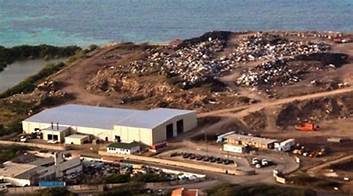
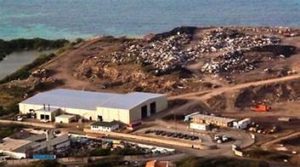
The Virgin Islands Waste Management Authority advises the public and waste haulers that the Solid Waste Division will conduct a trash survey at the Bovoni Landfill from May 12–14, between the hours of 6 a.m. and 4 p.m.
Bovoni Landfill on St. Thomas. (File photo)
As part of the survey process, selected haulers will be randomly directed to unload the contents of their vehicles at a designated area within the landfill. This will allow the survey team to assess and analyze the types of waste being collected and disposed of from various locations throughout the territory.
VIWMA advises that the assessment process may result in temporary delays for selected haulers. The authority appreciates the patience and cooperation of all haulers as this important initiative is conducted.
The survey will assist VIWMA in better understanding the composition of waste entering the landfill daily and support future planning efforts related to waste reduction, recycling initiatives, and landfill management.
For more information, contact the Division of Education and Communications Management at 340-715-9100 or email communications@viwma.org. Stay connected with us on Facebook, Twitter, and LinkedIn for updates.




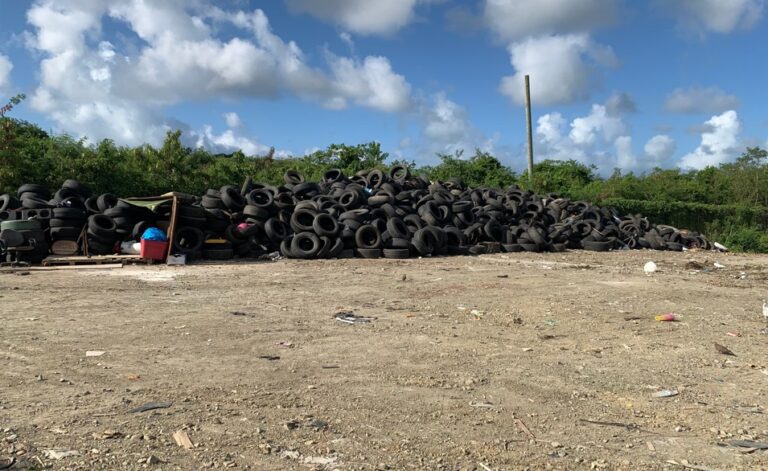
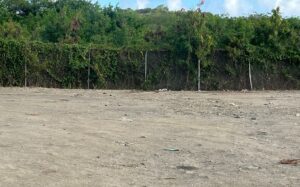
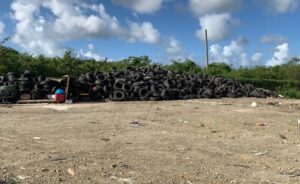 The site had been repeatedly used as an unauthorized dumping location, particularly for discarded tires, creating environmental and public health concerns. Through dedicated cleanup efforts, the VIWMA team removed approximately 2,800 illegally dumped tires, significantly improved the condition of the area and restored its proper use.

 Where AI Works Effectively for Your Business
 Where AI Must Be Managed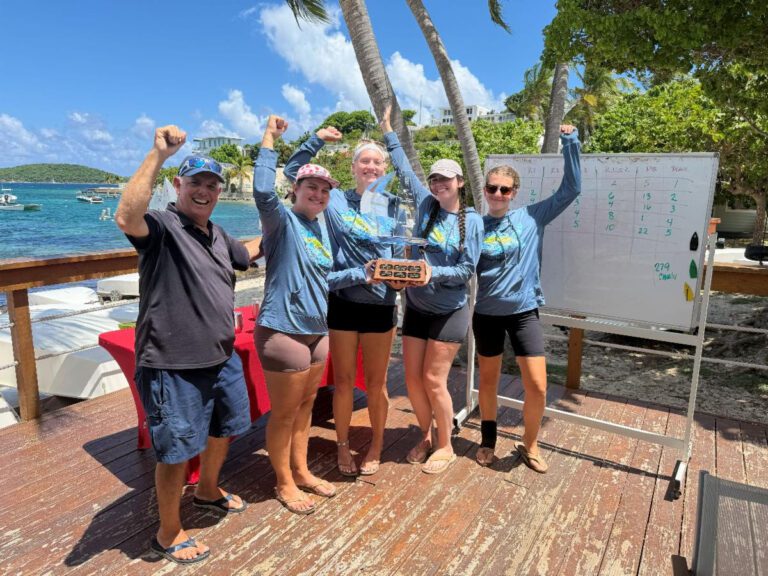


Op-Ed: The Nature of Springtime in the Virgin Islands
April is the month where the monstrous leatherback sea turtles (Dermochelys coriacea) come onto our shores to lay their eggs, particularly on the island of St. Croix. Some leatherback sea turtles do come in March, but when April arrives, we can say the season begins. Like the leatherback sea turtles, one of our rarest, beautiful wildflowers in the Virgin Islands, known as Watapama or Wattapania (Sabinea florida), which loves our dry weather, comes into bloom.
This small native deciduous tree reaches 12 to 20 feet tall with a trunk 2-4 inches in diameter. Sometimes the tree can reach 40 feet high with a trunk up to 8 inches, and long slender spreading branches. The flowers have a slender stalk about one-quarter to half an inch long and sometimes could be single.
Watapama has a bell-shaped purple calyx about 3/16 of an inch long and minutely five-toothed. It has five pale purple, lavender or blue petals nearly 7/8 of an inch long which are stalked at the base. The Watapama tree flowers mostly from January to March, with mature fruits in spring (April) and summer. In 1793, the plant was described botanically when it was discovered on the island of St. Thomas.
In the dry season also, the Tibet (Albizia lebbek) has not a leaf on her, except for the bright, crisp yellow seed pods rattling in the wind on a dry thirsty land. The dry pods appear in March and into April where trees begin to flower waiting for the spring rain to come. The Tibet tree is also known locally as Women’s Tongues.
The late native naturalist George A. Seaman mentioned this about the Women’s Tongues tree in a poetic expression.
Women’s Tongues
Women’s tongues! I presume that you will wonder, Vainly ruminate and ponder, (If you have a chance between the clouds of dust and heat) How these carefree, happy people, With their toy fort and their ‘steeple’, (Now you stop to query if there are jiggers in your feet) Could have named so well a tree, With a failing wide and free: Women’s tongues! Women’s tongues! From the first dawn-peep they rattle, Purr of love and song of battle, (Oh, how like those ladies that you left behind at home!) Multiplying note on note, Till the whole bright world’s afloat, (White or black or yellow they will dog you where you roan) With calumnius exhibit From the branches of the thibet — Women’s tongues!
As I explained the other day to a group of hikers as we were hiking to the highest peak on St. Croix — Mount Eagle on the Great Northeast Central mountains range of Maroon Sanctuary Park — they felt much cooler as we climbed to the summit. St. Croix is the largest of the U.S. Virgin Islands with about 54,400 acres, or 85 square miles. St. Thomas and St. John could fit into St. Croix comfortably, and still have land to roam.
Unlike the other two Virgin Islands, St. Croix contains three dominant kinds of landscapes. The northwest is mountainous, with the highest peak being Mount Eagle. The eastern part of the island is hilly, but the elevation is lower than the northwest and northeast central part of St. Croix. The middle part of St. Croix is generally covered with a large plain and slopes from the north, west, and central mountains range, dropping to the south shorelines.
Nonetheless, the absence of higher mountain peaks on the island, for example let us say 2,000, 3,000, or 4,000 feet above sea level, makes a difference in the climatic conditions of the weather system. The northwest and northeast central mountain ranges are not high enough to catch and lift the cool air and humid trade winds from the Atlantic Ocean, thus the climate of St. Croix is considered a semi-dry tropical island.
Whereas the island of Saba, for example, is only five square miles, with a peak of over 2,000 feet above sea level. The vegetation and climate are much different in the higher elevations of Saba than on any high peaks in the Virgin Islands. Therefore, the temperature and precipitation distribution across St. Croix makes a big different in the climatic conditions of plants and animals. The northwest and northeast central mountainous range is the wettest on St. Croix due to the topography elevation.
This has a lot to do with our dry season and what time in the year it occurs. However, there are great variations in the quantity of precipitation from year to year, particularly in the mountain range on the north side of the island. With that being said, the lowest precipitation is in March and the highest from September to November. Our rainy season is from May to November, typically, and the dry season is from December to April. However, the coolest time of the year is in the dry season (winter months).
Because of the island being relatively low and with variable amounts of precipitation, drought occurs sometimes, which is a natural phenomenon of the wet and dry season on St. Croix. Oftentimes, the rain is short and torrential with powerful showers that, combined with constant trade winds and high temperature, results in high levels of evaporation and transpiration that causes dry spill to occur on the island from time to time.
As a result, from June to November the warm humid trade winds from the Atlantic Ocean blow constantly, while on the other hand, the period from December to May features cool north-westerly winds from the North American continent. Hurricanes usually occur from August to October, occasionally. However, these storms can occur earlier, but this is not common due to our geography, topography, meteorology, and ecological location in the northeastern Caribbean archipelago of the Lesser Antilles.
These climate conditions also apply to the other Virgin Islands but are different due to their topography and location in the Caribbean region. With this brief introduction of climate and geography, I hope you understand the dry and wet season of the Virgin Islands. The bottom line is, we all are impacted by the climate — culturally, agriculturally, and the season of the island’s meteorology.
— Olasee Davis is a bush professor who lectures and writes about the culture, history, ecology and environment of the Virgin Islands when he is not leading hiking tours of the wild places and spaces of St. Croix and beyond.
Editor’s Note: Opinion articles do not represent the views of the Virgin Islands Source newsroom and are the sole expressed opinion of the writer. Submissions can be made to visource@gmail.com.