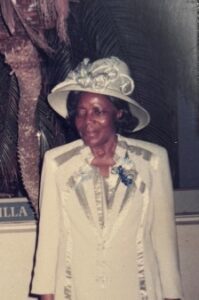
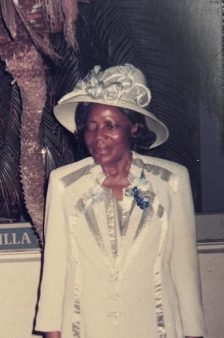
With faith in God’s promise, we celebrate the life and peaceful passing of Mabel Constantia Powell. A cherished mother, grandmother, and friend peacefully passed away on March 29, 2026, at the age of 89 on St. Croix, Virgin Islands. Born in Clay Ghaut, Gingerland, Nevis, Mabel later moved to St. Croix in the 1960’s, where she built a life defined by faith, strength, and quiet grace. She was preceded in death by her parents; her husband, John Powell; her sons, Michael Brady, Nigel Walters; and her twelve siblings.
Mabel Constantia Powell
Left to cherish her memory and continue her legacy are her children; Pearl Clarke, Sheila Prince, Olvis Butler, Anthony Walters, Caedmon Walters, and Melisia Hanley; her stepson, Michael Powell; her stepdaughter, Sonia Watts; and her adopted daughter, Rosanna Lafond.
She is also lovingly remembered by her twenty-three grandchildren; Maricia Walters Abraham (Samuel), Grayson Walters (Latoya), Akeeda Clarke Hodge (Jeffrey), Rasheeda Clarke, Sylvester and Shermin Walters, Francisco Prince, Bruce Walters, Zareena Bullock, Kimone and Lasherna Walters, Alphonso Jr., Jeremy and Kyam Butler, Captain Kadeen Walters (Jerri-Lee), Terrell Brandy, Shiniqua, Shanya, Oliver Jr., and Omari Hanley. Adopted Grand Children: Jermaine Hanley, Hilrianna and Hilsanna Chooran. She was further blessed with seventeen great grandchildren; Shenea and Shaheem Abraham, Brianna Walters, Egypt Hodge, Channel Hernandez, Desiree Lewis, Karter and Charlee Bea Walters, D’niyah, Dante and Devante Hendrickson, Eli and Onika Hanley, Noah and Adam Bullock, Jeremih and Adrian Butler;adopted great granddaughter, Je’Talia Hanley and one great great grandchild, Storm Delion. Sons-in-Law; Erald Clarke, Eustace Prince and Oliver Hanley Sr.and brothers-in-law: Samuel, Charles and Spencer Dyer.
Many nieces and nephews to include: Sylvania Harvey, Rona Chapman, Lorna Wilson, Ramona and Jeanette Walters, Joycelyn Sterling, Gracia James, Venetta, Yvonne, Gloria and Agnola Hendrickson, Gerda and Louisa Walters, Victor Simmonds, Vincent and Rodney Walters. Ashley, Ivan, Lornel and Revaldo Walters, Anthony, Hugh, McKenzie and Cassady Walters, Bandele Chinouyazue.Care Takers: Catherine Sabin, Human Service Home Care Workers: Acquilina Remy and Marva King. Special friends; Lorna Rhymer and family, Sister Ritter and family, Sister Evadney Christopher and family, Mr. Lewis and family, Sylvia Florent and family. Many other relatives and friends to include; The Walters Family, the Powell Family, The Pemberton Family, The Hanley Family, Floristine Morton, Sandra Dyer, Colin Liburd, The Independent Living Family, Joseph E. James Housing Community and Management, Department of Human Services, and Frederiksted Healthcare
A funeral service to honor and celebrate Mabel’s life will be held at Central Seventh Day Adventist Church located at 17-A Estate Plessen, Frederiksted, on May 4 at 10 a.m. Viewing precedes at 9am. Friends and family are invited to attend to pay their respects and memories. Professional funeral arrangements are entrusted to Divine Funeral Home.
Commissioner Jean-Pierre L. Oriol of the Department of Planning and Natural Resources announces the opening of Still We Rise: Art Behind the Walls, a powerful new exhibition presented by the Division of Libraries, Archives, and Museums at Fort Frederik Museum.
The “Still We Rise: Art Behind the Walls” exhibit opens Thursday. (Submitted photo)
The exhibition features original artwork created by incarcerated individuals at the John A. Bell Correctional Facility who participated in a volunteer led art and literacy program. Led by two committed volunteer instructors, the program has evolved into a meaningful rehabilitative initiative that encourages creative expression, skilldevelopment, and personal reflection.
A unique highlight of the exhibition is the use of locally sourced calabash gourds as an artistic medium. Traditionally simple natural vessels, the gourds have been transformed into compelling works of art that reflect the cultural heritage of St. Croix while giving voice to each artist’s individual story.
“What began as a modest classroom project has grown into something deeply transformative,” said Mary Mingus, one of the program’s instructors and organizers.
“Beyond artistic expression, the program offers participants a renewed sense of purpose, dignity, and hope.” Still We Rise: Art Behind the Walls invites the community to engage with the creativity and humanity of individuals who are often unseen, while highlighting the important role the arts play in rehabilitation, healing, and restorative justice.
Exhibition Details
Location: Fort Frederik Museum, Frederiksted
Opening Reception: Thursday, April 23, from 4 p.m. to 7 p.m.
Exhibition Hours: Monday–Friday, 9 a.m. to 4 p.m.
Admission: $10 for adults; free for students under 18.
For more information, please contact monica.marin@dpnr.vi.gov.
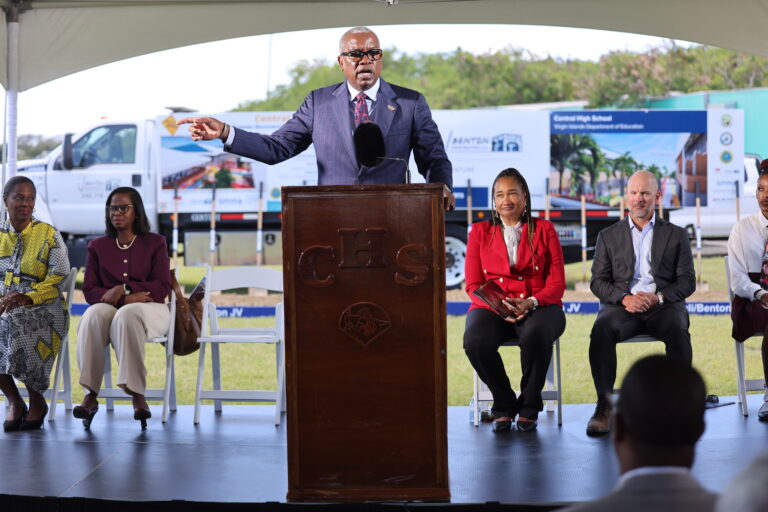
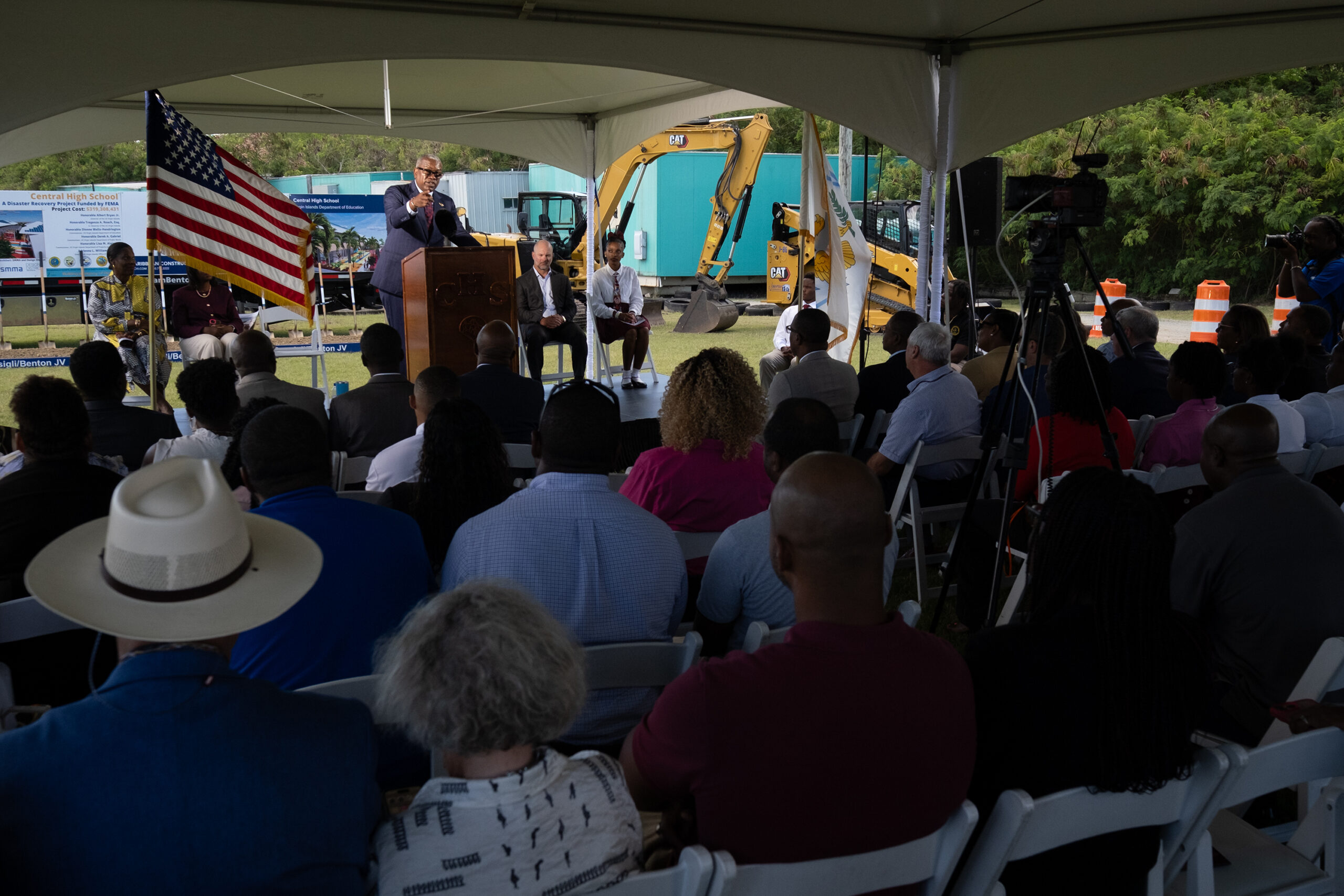
Gov. Albert Bryan Jr. on Tuesday hailed the groundbreaking of the new St. Croix Central High School as a defining moment in the ongoing transformation of public education in the Virgin Islands, calling the project another clear sign that the Territory is moving beyond deferred promises and into a period of visible, generational progress.
The $319 million project marks the latest milestone in the administration’s effort to rebuild schools and deliver modern campuses worthy of Virgin Islands students. (Submitted photo)
Joined by officials from the Virgin Islands Department of Education, the Office of Disaster Recovery, Consigli/Benton Joint Venture, students, alumni, and community members, the governor celebrated the launch of the $319 million design-build project at the school’s campus on St. Croix.
The new St. Croix Central High School will be a 165,000-square-foot campus designed to serve up to 1,000 students and support inquiry-based learning with a strong focus on the arts. The campus will include academic learning suites; dedicated spaces for theater, music, visual arts, and dance; labs and maker spaces; a gymnasium; and an ROTC building. Construction is slated for completion in December 2029.
Governor Bryan said the moment carries meaning far beyond the start of another construction project.
“Today is a good day for St. Croix and a good day for the Virgin Islands, because it is another clear sign of what is possible when we stay focused on the work of transformation before us,” Governor Bryan said. “I am deeply grateful for this moment, for the opportunity we have in this generation to remake and modernize our Territory, and for the many people across government, education, construction, and recovery who are doing the hard work every day to move that transformation forward.”
The governor said the groundbreaking reflects years of work to reverse decades of neglect in the Territory’s school infrastructure and to build learning environments that match the promise of Virgin Islands students.
“In 2009, after a serious infrastructure failure at one of our schools, an assessment found that it would take $1.5 billion just to modernize and improve the Territory’s school infrastructure,” Governor Bryan said. “Today, with the support of our federal partners in the recovery process, we have secured $4 billion for that broader work, and in just the last 30 days, we have broken ground on the modernization and reconstruction of three schools in the Virgin Islands. That is real progress.”
He said the reconstruction of St. Croix Central High School stands as part of a larger commitment by his administration to deliver safe, modern, resilient schools that support student achievement and strengthen communities for decades to come.
“The new St. Croix Central High School represents more than a construction project,” the governor said. “It represents a promise to our students, our families, and our future that the Virgin Islands is rising to meet this moment and building schools that match the talent, promise, and potential of our young people.”
Originally opened in 1967 as the successor to Christiansted High School, St. Croix Central High School has served generations of Crucian students and families. Governor Bryan said this next chapter honors that legacy while preparing the school community for a stronger future.
“For generations, Central High has held an important place in the life of St. Croix,” Governor Bryan said. “What we are building now is not just a new campus, but a foundation for the next generation of leaders, artists, thinkers, builders, and public servants who will shape the future of this island and this Territory.”
The governor also thanked Commissioner Dionne Wells-Hedrington, ODR Director Adrienne Williams-Octalien, the VIDE team, project partners, federal partners, and the Consigli/Benton Joint Venture team for helping move the project forward.
As the Bryan-Roach Administration advances the modernization and reconstruction of schools across the Territory, Governor Bryan said the work underway is proof that the Virgin Islands is making the kind of long-term investments that will define its future. “We are not talking about transformation anymore,” he said. “We are building it.”
Virgin Islands Energy Office initiative will provide portable backup battery systems to eligible residents as part of a broader strategy to expand resilience, renewable energy, and long-term energy affordability
Virgin Islands Energy Office
The Bryan-Roach Administration announced today during the Government House press briefing the launch of the Virgin Islands Resiliency Gateway, or VIRG, a new initiative through the Virgin Islands Energy Office designed to provide portable backup battery systems to medically vulnerable residents whose health and safety can be placed at risk when the power goes out.
Announced by Virgin Islands Energy Office Director Kyle Fleming during today’s briefing, the VIRG program is aimed at helping vulnerable Virgin Islanders maintain essential services during outages by providing portable battery systems that can keep critical household equipment running when the grid is down.
“These are user-friendly, plug-and-play systems that require no installation and can provide immediate support when residents need it most,” Fleming said.
The portable battery systems can be recharged using an included solar panel or a standard wall outlet and are designed to provide clean, silent backup electricity during outages. When fully charged, the units can provide up to a day of backup power for essential needs such as CPAP machines, oxygen concentrators, refrigerators used to store medication, and devices that help residents remain connected to loved ones and emergency information.
“This is a targeted, people-first initiative designed to deliver immediate energy resilience to residents who need it most,” Fleming said. “Across the territory, we know that power outages are not just an inconvenience. They are a matter of health, safety, and quality of life.”
The Virgin Islands Energy Office is procuring 900 portable battery systems, each paired with a 400-watt solar panel, and will work with local vendors in each district to distribute the systems efficiently to eligible participants. The program is being launched in coordination with the Department of Human Services, which is assisting the Energy Office in identifying medically vulnerable, elderly, and disabled residents across the Territory who may qualify to receive the units free of charge.
Governor Albert Bryan Jr. said the program reflects the administration’s commitment to delivering practical support to residents while continuing the larger work of transforming the Territory’s energy future.
“For many Virgin Islanders, a power outage is more than an inconvenience. It can become a serious threat to health, safety, and peace of mind,” Governor Bryan said. “The VIRG program is about protecting the people who are most vulnerable and making sure they have access to backup power when they need it most.”
Governor Bryan said the launch of VIRG is part of a broader administration strategy focused on building a more resilient, renewable, and affordable energy system for the Virgin Islands. That work has included support for battery storage, incentives for electric vehicles, expansion of charging infrastructure, and continued efforts to bring more solar generation onto the grid.
The administration has also advanced the Virgin Islands Battery Energy Storage Program, which helps qualifying residents and businesses offset the cost of battery backup systems, and has supported electric vehicle rebates through the Virgin Islands Energy Office as part of a broader push to reduce dependence on imported fuel.
During today’s briefing, Government House also pointed to the administration’s efforts to modernize the Government of the Virgin Islands vehicle fleet with electric vehicles as part of a long-term strategy to reduce fuel costs and protect taxpayers from the volatility of global oil markets. That strategy has become even more urgent as international conflict, including the war involving Iran, continues to create uncertainty in fuel prices and expose the vulnerability that comes with dependence on imported petroleum.
At the utility level, the administration continues to support the expansion of renewable energy generation and storage as part of its effort to bring cleaner and more affordable power to Virgin Islanders. That includes battery energy storage initiatives and ongoing work to add utility-scale solar farms to the grid, steps the administration has repeatedly identified as central to reducing long-term energy costs and improving system resilience.
Governor Bryan said the administration’s energy strategy is rooted in a simple goal: giving the people of the Virgin Islands a more dependable future.
“Whether we are helping a resident keep medical equipment powered during an outage, supporting households that invest in battery storage, transitioning government vehicles away from gasoline, or expanding solar generation across the Territory, the goal is the same,” Governor Bryan said. “We are working to build an energy future that is more stable, more modern, and more affordable for the people of the Virgin Islands.”
Additional details regarding VIRG eligibility, the application process, and distribution timelines will be announced in the coming weeks.
The U.S. Virgin Islands Department of Human Services announces the availability of Sexual Assault Services Formula Grant Program funding opportunity for eligible nonprofit and nongovernmental domestic violence and sexual assault service providers. The award period will end on July 31, 2027.
Virgin Islands Department of Human Services
The SASP Formula Program allocates federal grant funding to states and territories to support rape crisis centers and nonprofit, nongovernmental organizations that provide core services, direct intervention, and related assistance to victims of sexual assault of all ages. These funds are intended to supplement existing state and territorial resources dedicated to addressing sexual assault.
Rape crisis centers and other nonprofit organizations—including dual service providers offering both domestic violence and sexual assault intervention services—play a critical role in supporting survivors throughout their healing process. These organizations assist victims in navigating medical care, the criminal justice system, and other essential social support services.
VIDHS encourages all eligible organizations to apply for this funding opportunity to enhance their programs and strengthen services for sexual assault survivors across the Virgin Islands.
To request an application, interested organizations should email lavern.marsh@dhs.vi.gov with the subject line: “REQUEST FOR SASP FORMULA PROGRAM APPLICATION.”
Applications may also be obtained in person at the Virgin Islands Department of Human Services offices:
• St. Thomas: Knud Hansen Complex, Hospital Ground
• St. Croix: 3012 Golden Rock, Christiansted, VI 00820
For additional information, please call (340) 725-3123. Completed applications must be submitted electronically or delivered in person no later than May 15, 2026.
The Department of Human Services (VIDHS) exists to provide social services to members in our community with diverse needs. In times of national uncertainty and hardship we act as a safety-net and exist to inspire hope and empower change through non-judgmental, quality delivery of needed services and resources. Please visit the Department of Human Services website, www.dhs.gov.vi or on Facebook https://www.facebook.com/usvidhs.
The Bryan-Roach Administration is investing in the Territory’s people, infrastructure, and future through transparency, stabilizing the economy, restoring trust in the government, and ensuring that recovery projects are completed as quickly as possible. Visit transparency.vi.gov
GERS Administrator and CEO Angel Dawson Jr. testifies before the Senate Budget, Appropriations and Finance Committee Tuesday. (Photo courtesy V.I. Legislature)
The Senate Budget, Appropriations and Finance Committee on Tuesday weighed two major proposals to bolster the Government Employees’ Retirement System: one to tighten rules on disability pensions and another to redirect hotel development net bond proceeds into the fund.
The bills reflected growing urgency over GERS’s long‑term solvency, even as they exposed disagreements over fairness, legal risk and how aggressively the pension system should be reformed.
One measure, Bill 36‑0122, sponsored by Sen. Alma Francis Heyliger, would significantly tighten the rules for retirees receiving GERS disability annuities who go back to work.
Under current law, GERS can reduce a disability annuity if a retiree’s wages plus benefits exceed their pre‑retirement salary. The bill would go further, requiring GERS to cut off disability payments entirely if a retiree resumes any employment.
Francis Heyliger said the bill is aimed at preventing abuse of a benefit meant for people deemed “100% or permanently disabled,” questioning why some of those retirees are later able to return to full‑time work while still drawing a disability check.
She cast the proposal as a “clean up” of disability rules designed to stop people from collecting two full incomes, a disability annuity and a new full‑time salary, rather than an effort to punish legitimately disabled retirees who pick up limited side work.
GERS Administrator and CEO Angel Dawson Jr. said the system does not oppose the bill, but stressed that disability approvals already go through a multistep medical review process involving several physicians and a medical review committee. Because of that, he is not concerned that ineligible people are receiving disability benefits. Disability retirees make up fewer than 2% of GERS’s roughly 9,000 beneficiaries, and any suspected cases would still be sent back for medical reevaluation rather than triggering an automatic cutoff.
Lawmakers and legal counsel also raised concerns about whether the proposal could run afoul of constitutional due process protections by cutting off benefits without clear procedures. Sen. Ray Fonseca warned the language could be “overly punitive” and legally vulnerable to challenge, while legislative counsel agreed that disability benefits are a protected property interest and said they can only be modified when a retiree no longer meets the statutory eligibility requirements and due process is observed.
Other senators questioned whether the proposal was too broad, pointing to the phrase “any employment” and noting that disabled retirees may need limited work to offset rising living costs.
The committee ultimately chose not to advance the bill, instead holding it in committee. Francis Heyliger said the measure is meant to tighten safeguards in the disability system without penalizing retirees who have already been properly approved for benefits or those taking on limited side work. She emphasized that her focus is on people who, after securing a specific diagnosis, return to full‑time employment while continuing to draw full disability payments, effectively collecting dual incomes.
Francis Heyliger said she is preparing amendments to explore a tiered disability structure in coordination with GERS and indicated she intends to bring them forward as the bill continues through the legislative process.
In a separate measure, Bill 36-0238, Sen. Avery Lewis proposed steering future net sale proceeds from certain bond-financed hotel projects into the Government Employees’ Retirement System. Under current law, any net sale proceeds left after a bond-financed hotel’s debt is repaid go to the government of the Virgin Islands. Lewis’s bill would instead redirect those proceeds to GERS.
Any payout to GERS would likely come years or even decades from now and would depend on whether and when the hotels are ultimately sold after their bonds are repaid.
After colleagues raised concerns about competing needs, Lewis pledged to amend the bill so that 75% of any net sale proceeds would go to GERS and 25% to the government, earmarked for health care infrastructure.
Lewis argued the shift is needed to address what he called a “present-day crisis” in GERS funding, pointing to the system’s multibillion-dollar unfunded liability and projected cash shortfalls in the coming decade. He said the government did not put direct capital into the hotel projects but instead facilitated them through tax-exempt bonds, making it appropriate to use any eventual sale proceeds to shore up the pension fund.
GERS leadership supported the concept in testimony, saying directing future net sale proceeds from hotel projects to the retirement system would help chip away at its multibillion‑dollar shortfall. Administrator and CEO Angel Dawson Jr. called it a meaningful step toward strengthening the fund, which faces about $3.4 billion in unfunded liabilities and a projected liquidity crunch around 2033 if no further action is taken.
Dawson urged lawmakers to clarify the bill’s language to ensure GERS benefits not only when a hotel is sold before its bonds mature but also when projects reach full repayment and transfer to the government without a sale. He said the system should receive “both sides of the nickel,” regardless of how the asset transitions.
For its part, the Public Finance Authority said it does not oppose the bill, stressing that the hotel bonds are not general obligations of the government and are repaid solely from hotel revenues, not tax dollars. Under current law, once those bonds are paid off, any net sale proceeds go to the government of the Virgin Islands; the bill would simply change the beneficiary, sending that money to GERS instead.
Some senators cautioned against directing all potential windfall revenue to GERS, citing competing needs such as health care facilities and the troubled utility system. In response, Lewis agreed to a 75/25 compromise, pledging to amend the bill so that most future hotel proceeds would still go to the pension fund while reserving a share for the central government.
The committee then voted 7-0 to advance the bill to the Rules and Judiciary Committee, where it will undergo further review and formal amendment before possible consideration by the full Senate. Following the vote, Lewis thanked colleagues for supporting the measure, saying he initially favored directing all proceeds to GERS but accepted a compromise after negotiations. “Seventy-five percent will go to the GERS and 25 percent to the government of the Virgin Islands … to our health care facilities.” He called the measure “a step in the right direction” toward strengthening the retirement system.
Sen. Novelle E. Francis Jr. at Tuesday’s Senate Budget, Appropriations and Finance Committee meeting where lawmakers advanced a bill to support the Charlotte Amalie High School rebuild and another to reduce rent for a nonprofit. (Screenshot from V.I. Legislature livestream)
Senators on Tuesday advanced two property bills that would shift government land and buildings to support the reconstruction of Charlotte Amalie High School and expand services for homeless and low-income residents.
The Senate Budget, Appropriations and Finance Committee unanimously approved Bill 36-0257, which would take a key parcel next to Charlotte Amalie High School out of the Virgin Islands Housing Finance Authority’s portfolio and place it under the Property and Procurement Department for the exclusive use of the Education Department.
The bill covers Parcel 2C, Estate Ross on St. Thomas, where Education already uses two buildings. Officials said the land is needed as a construction lay-down area and, long term, for parking, safer access and expansion as CAHS is rebuilt.
Sen. Avery Lewis, the bill’s sponsor, said the campus has been forced to use up its limited space for years. Education officials have described the school as effectively landlocked, with little room to grow, and Lewis noted it has already turned its running track into classrooms, leaving students with fewer athletic options.
“At its core, this bill is about education. It is about ensuring that the Charlotte Amalie High School has the space, stability and long-term capacity it needs to serve our students, not just today, but for generations to come,” Lewis said.
Education Commissioner Dionne Wells-Hedrington said the land transfer is critical to the territory’s $3.5 billion FEMA grant cap for school rebuilding.
“This is a capped grant … the longer we wait, the more it costs,” she told senators. “Stated another way, the longer we take to build, the less we will be able to build. Time is of the essence.”
She noted that, unlike other high schools, CAHS has no extra land, forcing the department to lease Parcel 2C from the Housing Finance Authority to stage demolition and construction. Under a renegotiated lease, she said, the department now pays about $78,000 a year for the same land covered by the bill, money she argued could be better spent on the project itself.
The Office of Disaster Recovery and Property and Procurement also submitted testimony supporting the transfer as necessary to keep the CAHS rebuild on schedule and make better use of public land.
The committee adopted an amendment to clarify that the land would be deeded to Property and Procurement, not directly to Education, and to have that department handle the survey and recording of the new parcel. Assistant Commissioner Vincent Richards said that change “places the property under the jurisdiction of the agency best suited to advance its intended public purpose.”
VIHFA, in written testimony, opposed the original bill, citing the active lease, ongoing talks about siting law‑enforcement facilities there with the Virgin Islands Police Department and the loss of what VIHFA Executive Director Eugene Jones Jr. called a “strategically positioned asset” that “is not surplus land.”
Senators acknowledged those concerns, and some worried about losing land that could otherwise support housing and public safety, but ultimately voted 7‑0 to send the amended bill to the Rules and Judiciary Committee.
Lewis said after the vote that the territory has “short‑changed” CAHS students through hurricanes and delays. “No more short‑changing,” he said. “This is a step forward.”
In a separate unanimous vote, the committee advanced Bill 36‑0275, which would sharply cut the rent on a government‑owned former senior center in Estate Anna’s Retreat so Hearts in Service Association Inc. can expand services for homeless and low‑income residents.
The amendment covers Parcel 175C, Estate Anna’s Retreat No. 1, St. Thomas, a deteriorated two-story concrete structure that once housed a senior citizens’ center. It would reduce the annual rent from $12,000 to $1,200, or from $1,000 to $100 a month, lower the liability insurance requirement from $3 million to $1 million and remove an automatic rent escalation clause. Richards said the change brings the lease in line with the department’s current policy for nonprofits.
“We found it necessary and right and just that we adjust this lease agreement to make sure that this project is viable,” Richards told senators.
Hearts in Service, a faith‑based nonprofit founded in 2004, plans to convert the building into a “one‑stop centralized outreach center” with a daily soup kitchen, life‑skills classes and case management and other support services for homeless families, individuals, veterans and at‑risk youth. Executive Director Beverly Stephens-Samuel said the previous rent was a major obstacle even before renovations could start.
“At this early stage, before funding has been fully secured and before renovations can even begin, this cost presents a significant challenge,” she said. “We respectfully request that the lease be at a rate of $100 a month.”
Hearts in Service representatives said the nonprofit has already paid about $41,000 in rent under the old terms and spent more than $63,000 on consultants, while relying on a $100,000 annual human‑services appropriation and an annual Mother’s Day fundraiser to keep operating.
“By granting this request, you are simply not lowering a lease,” she told senators. “You are helping to lay the foundation for a resource hub that can reduce homelessness, support working families and strengthen our community as a whole.”
Both bills now head to the Senate’s Rules and Judiciary Committee for further review before any final vote by the full Legislature.
Officials break ground at St. Croix Central High School on Tuesday morning on St. Croix. (Source photo by Kit MacAvoy)
Officials and contractors broke ground Tuesday at the new home of the Mighty Caribs, marking the territory’s third school groundbreaking in the past 30 days.
Once completed, the rebuilt St. Croix Central High School will serve up to one thousand students. The campus is slated to include a theater, football field, dedicated suites for learning, music, visual arts and dance, and — eventually — an Olympic-sized swimming pool. Construction is expected to cost $319 million and is being done by Consigli/Benton, who aim to finish work by December 2029.
For V.I. Education Commissioner Dionne Wells-Hedrington, the rebuild “represents far more than bricks.”
“For years, this community has endured. For years, we have had to pivot. For years, we have had to deal with the issues of life,” she said. “We have seen disruption, displacement and delay, but we have also seen determination. We have seen a community that refused to give up on its children, its educators and its future. Today, we declare this as a season of rebuilding and replanting.”
J. Benton vice president Eric Cusin shared memories of playing soccer on the St. Croix Central field — “mostly losing,” he acknowledged — and said the school will be rebuilt “to withstand whatever Mother Nature decides to test us with.” V.I. Disaster Recovery Office Director Adrienne Williams-Octalien, a proud Carib, said that some of the territory’s 1,600-plus recovery projects “just hit a little different, and this is one of them.”
A jovial Gov. Albert Bryan Jr. offered closing remarks and pointed to the groundbreaking, which came on the heels of similar ceremonies at Charlotte Amalie High School and the Bertha C. Boschulte PreK-8 School on St. Thomas, as proof against complaints that major disaster recovery projects have taken too long to start.
Gov. Albert Bryan Jr. speaks to public officials, contractors and educators Tuesday morning on St. Croix. (Source photo by Kit MacAvoy)
“They throw shade on the administration, but they’re not throwing shade on the administration, you know — Albert Bryan is good, Tregenza Roach is good — they throwing shade on you,” he told attendees, noting that the work was performed by people at ODR, the V.I. Public Works Department, and people who work with the Federal Emergency Management Agency. “Everybody know that that money that’s coming, it’s the people of the Virgin Islands that work hard with their partners from here and there to go and get that money — not Albert Bryan. I just stand at the head of it.”
He added that when people criticize the recovery effort, “they’re insulting the people of the Virgin Islands.”
“Because there is nobody new coming,” he said. “Y’all know somebody new coming to take over the recovery after the election? It’s the same people. So today, I want to apologize for them and say to you, thank you for your hard work.”
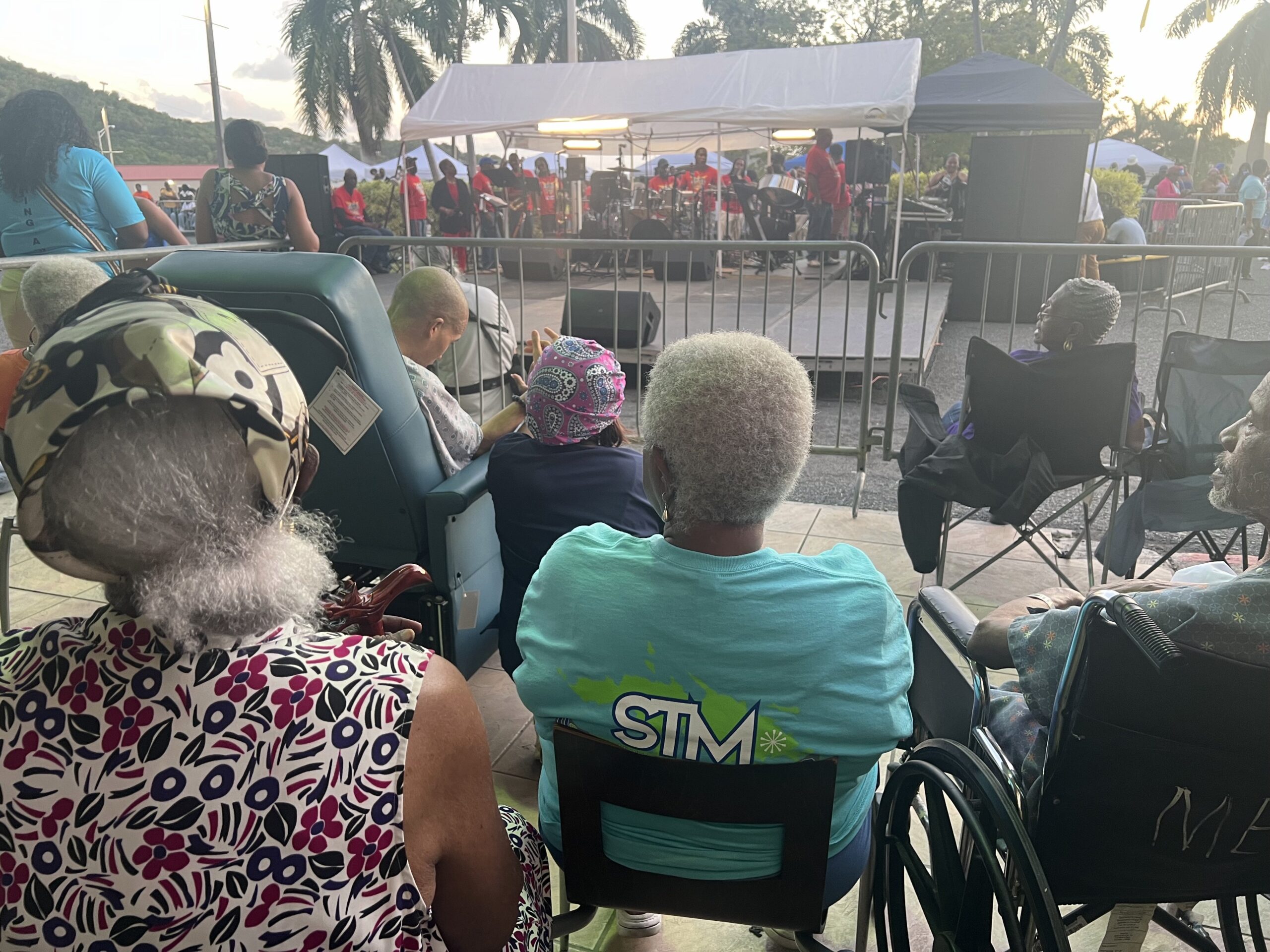
Monday night was a family night at Schneider Regional Medical Center as the Division of Festivals hosted the V.I. Carnival Hospital Show. Mild spring weather and a new moon set in twilight provided the backdrop for an evening of outdoor entertainment.
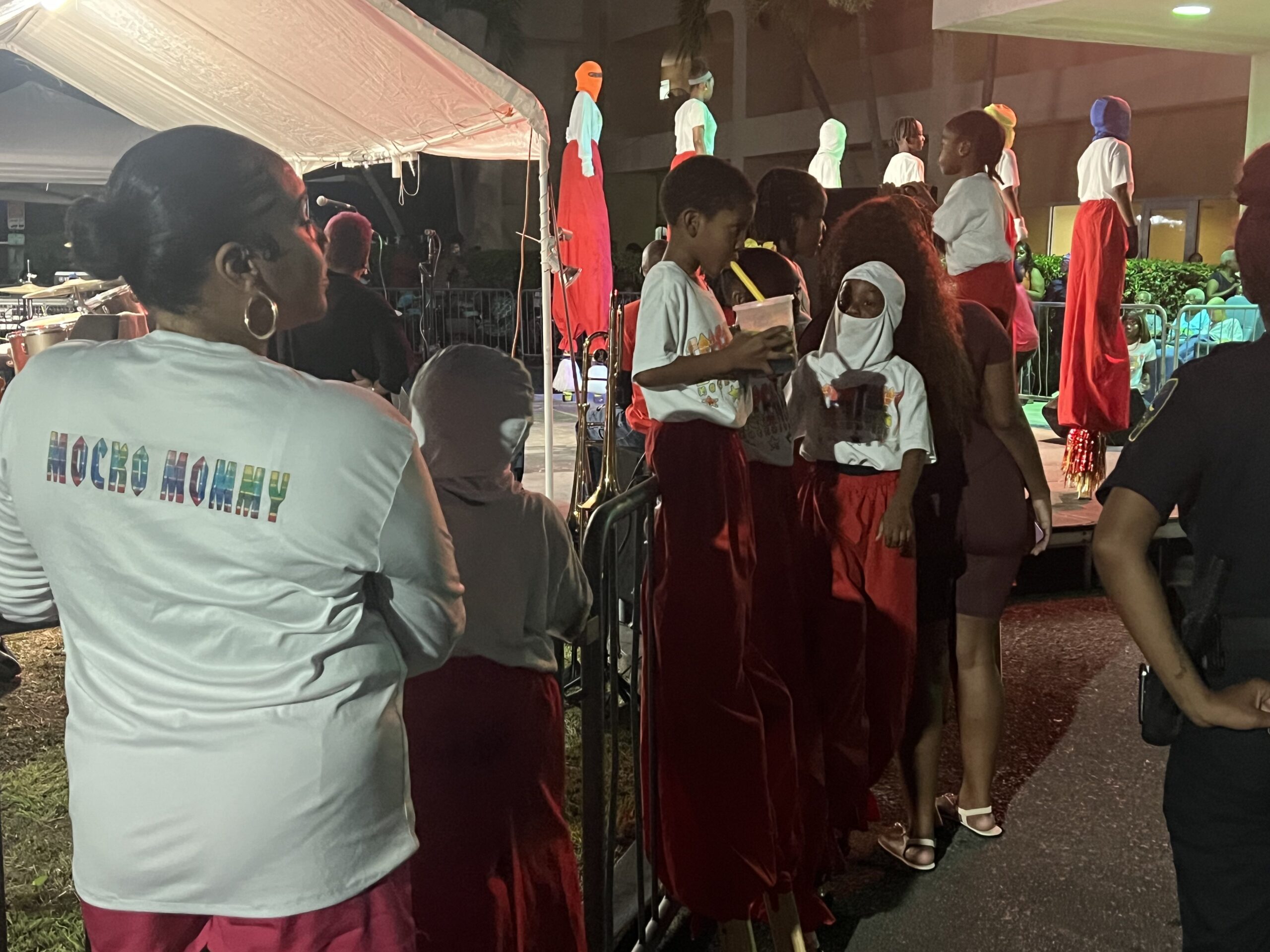
Majorettes, moko jumbies and music captured the attention of spectators ringed around the hospital’s main entrance. Performers billed as entries in the upcoming Carnival Children’s Day Parade kicked off the evening with a parade around the parking lot and up to the stage, where hospital patients had a front-row seat to the action.
Ulla Muller School Phantastic Cheerleading Squad leads the line of march. (Source photo by Judi Shimel)Hospital patients enjoy a Carnival evening outdoors. (Source photo by Judi Shimel)
Organizers with the then-Virgin Islands Carnival Committee started the tradition in the early 2000s as a way to bring the celebrations to patients, the disabled, and the elderly so they could enjoy a taste of culture. Brensuili Marsh sat with his wife and daughter in her wheelchair.
“The family comes out to the show sometimes — it’s excellent,” he said, adding that his other daughter was on stage performing.
Sen. Ray Fonseca stood among the crowd, recalling the days of the first hospital show around the year 2002.
“This event has been going on for many years,” Fonseca said, “When I was here at the hospital in Health, working in this building, the event was going on … they bring the young children out, they perform — it’s a community event.”
Parents and grandparents shot photos and proudly told passersby their child was on stage with this group or that. As each group finished their performance, they were led out toward the parking lot, where vendor tents sold layer cake and popcorn.
A volunteer working with the Eccentric Moko Jumbie Troupe supervises snack time. (Source photo by Judi Shimel)
Monday was also a first for newly-crowned Ambassadorial Carnival Queen Safiah Wharton. Fresh from a Saturday night win at the Elridge Blake Sports and Fitness Center, she strolled across the hospital lawn with First-Runner-Up Jahniya Williams and D’Quana Lewis. Wharton said she had performed in Children’s Day Parades in the past, but, “it is the first time I’m experiencing it from this point of view as a Queen.”
Queen Safiah and her court performing their first official duty. (Source photo by Judi Shimel)
The first Carnival event of the season rolled out on Easter Sunday with the Children’s Fun Day, one of several family-oriented celebrations marking the season. Next up, said Festival Divisions Chief Ian Turnbull, is the Children’s Calypso Competition on Thursday at the Fort Christian Parking Lot.
“I have five contestants. We have a former Junior Calypsonian and a former St. John queen who is managing that; she is the committee lead for that,” Turnbull said.
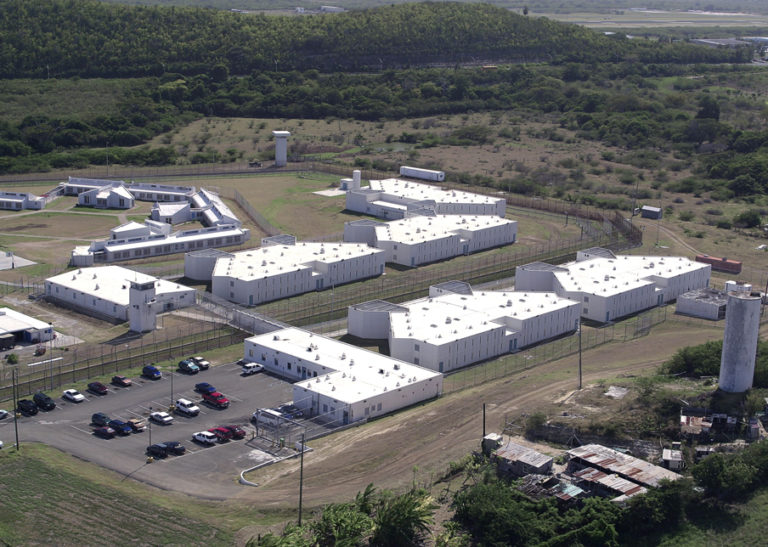
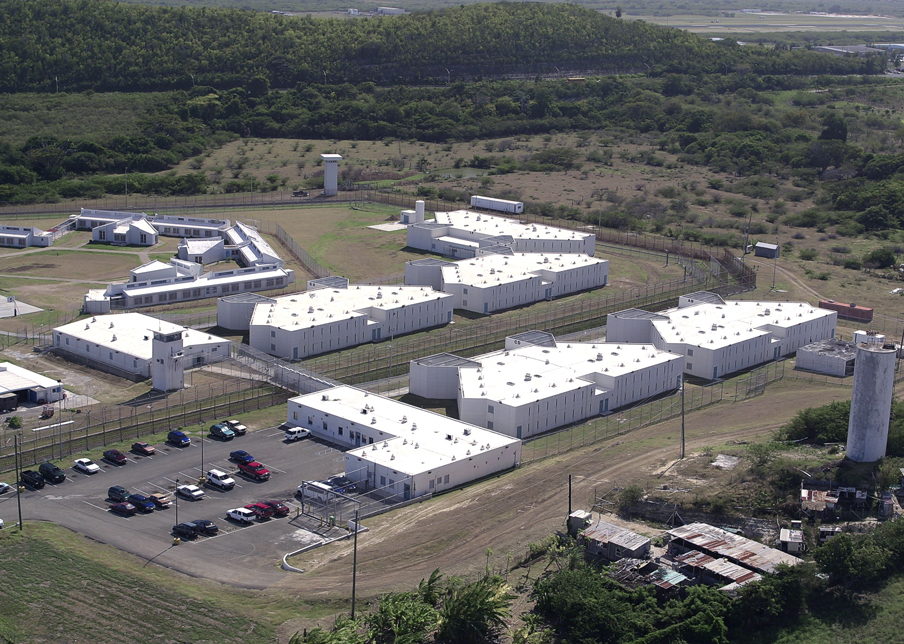
The V.I. Police Department thanked the public in a social media post after capturing a John A. Bell Adult Correctional Facility escapee Tuesday afternoon on St. Croix. (Source file photo)
Police announced Tuesday afternoon that a person incarcerated at the John A. Bell Adult Correctional Facility, Francisco Cruz-Santiago, was back in V.I. Corrections Bureau custody after briefly escaping.
Cruz-Santiago was most recently arrested for destruction of property and disturbing the peace in January after police were called to his mother’s house, where they found him with a hammer and machete. According to police, Cruz-Santiago admitted to damaging a storage room, pump room and tool shed on the property. He was taken to Juan F. Luis Hospital before being remanded to the Corrections Bureau.
During a status conference in V.I. Superior Court this month, Assistant Attorney General Chad Mitchell and Assistant Territorial Public Defender Leslie E. Davis told Magistrate Judge Christopher Timmons that Cruz-Santiago was unfit to stand trial. They requested 60 days to find a treatment facility, which Timmons granted.
Cruz-Santiago was previously arrested in 2024 and charged with attempted murder in what police at the time described as a fight over a chair at the Level Up Service Station. According to police, Cruz-Santiago filled a water bottle with gasoline, doused another man and attempted to light him on fire. He then put the other man in a chokehold, left, and returned with a metal baseball bat.
Cruz-Santiago was found incompetent to stand trial in that case as well. After failed attempts to place him in a treatment facility on the mainland, he was released to his mother’s custody to receive outpatient care. The charges were ultimately dismissed.