


Loanna Cameron-Vanterpool Dies at 69
Maria Baptiste Dies at 75


Eleanor Phillips Dies

PSC Invites Customers to Liberty Listening-Sessions
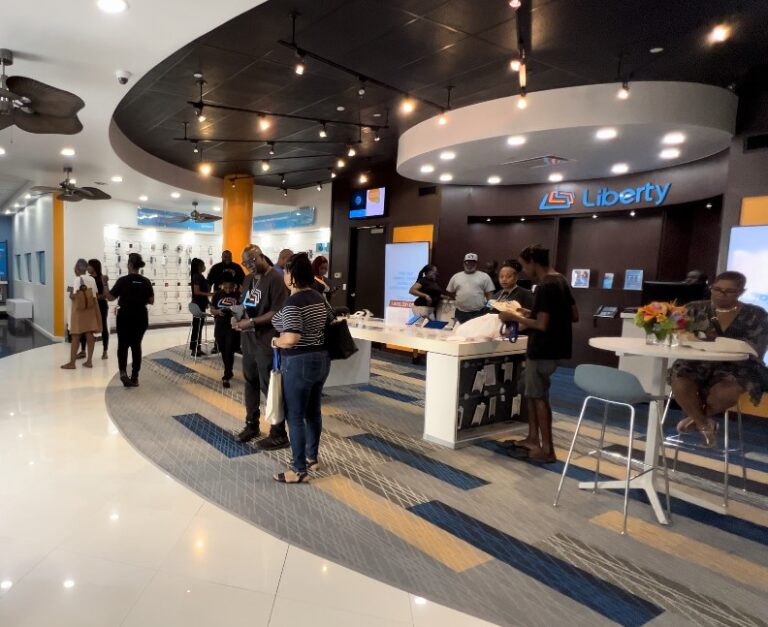
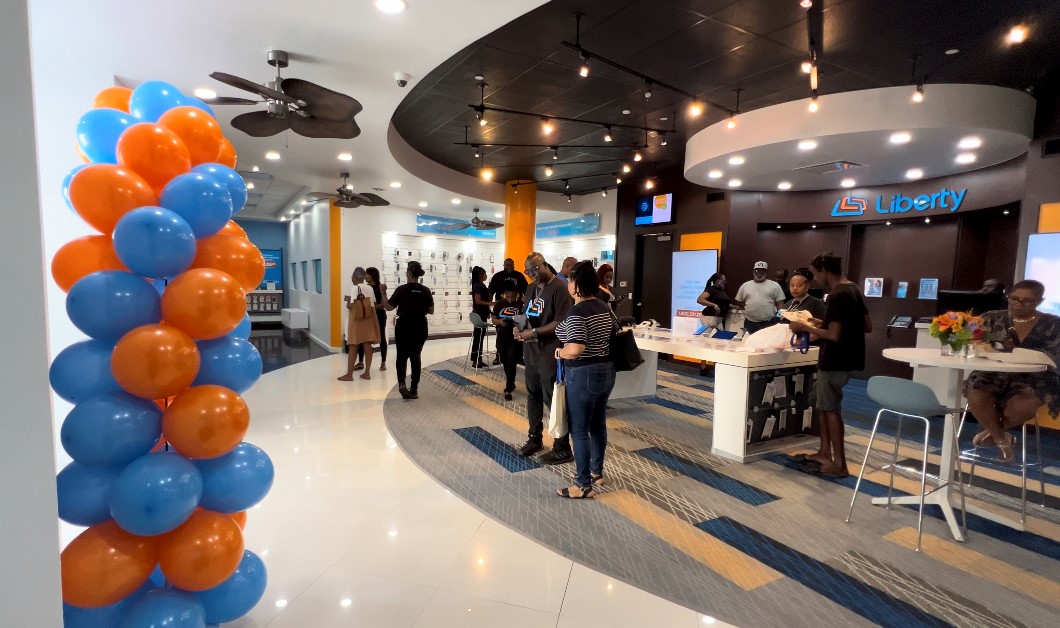
The Public Services Commission is inviting the public to attend listening sessions about Liberty phone service on Wednesday and Thursday territory-wide. PSC regulators and lawmakers say they want the public to speak out about the service — or lack thereof — they have experienced with Liberty V.I.
So far, 20 people have registered to speak at the public sessions scheduled on Wednesday for St. Thomas and St. Croix. A third listening session is set for St. John on Thursday. All sessions run from 5:30 p.m. to 7:30 p.m., and can be attended in person or by way of livestream video over Facebook Live.
“We’re expecting about 20 people; we hope for more. We haven’t gotten a lot of registrants,” PSC Public Information Coordinator Symra Hendrickson said.
That stands in contrast to hundreds of social media posts appearing on popular platforms like Facebook and testimony heard at recent Senate hearings. Several complaints dating back to August 2023 appearing on the site What’s Going on St. Thomas mention Liberty’s migration process where former AT&T customers had their telecommunications links moved onto Liberty’s network. Some more recent posts mention difficulties accessing voicemail.
Others mention service disruptions occurring when an “SOS” notice appears on their phone screens.
In one post, appearing Tuesday evening, one customer added that “nothing seems to be working.”
In testimony heard at a hearing of the 35th Legislature earlier this year, lawmakers had unhappy customer experience stories of their own.
“… this is the worst service experienced in this territory,” said St. Croix Sen. Franklin Johnson.
At the time of the January hearing, every participating lawmaker said their offices were inundated with complaints about Liberty. In late March, the Senate approved a resolution directing the PSC to file a complaint about Liberty service with the Federal Communications Commission.
One V.I. lawmaker familiar with the commission’s work to set up the public outreach effort said these sessions offer a chance to spur federal authorities to act. Those who add their comments to the public record will help regulators support their petition to the FCC.
St. Thomas-St. John District Sen. Carla Joseph — one of two non-voting members of the commission — said she attended the March 12 PSC meeting where the listening sessions were approved by commissioners.
“I believe the PSC in their effort is trying to let the public know they have a place to file a complaint about service or any communications issues, similar to having water issues, or VIYA issues, or issues with any services that are regulated,” Joseph said.
‘What this listening session looks like, I’m not sure because I’m an ex-officio member. I’m not going to be able to be at this listening session because the Committee of the Whole will be meeting at the same time,” she added.
Hendrickson suggested that up until now, the public may not have thought of the commission as a place to lodge their complaints. Some of that uncertainty may stem from the migration process, she said.
In-person listening session locations include Public Services Commission Offices at Estate Carlton on St. Croix, and Barbel Plaza on St. Thomas. The Cleone Creque Legislative Conference Room in Cruz Bay will serve as the venue on Thursday afternoon.
Those who wish to register and have not done so yet will be able to add their names and contact information to sign-in sheets available at all in-person venues, the PSC spokeswoman said. A poster announcing the sessions includes a website link where the public can complete electronic registration forms.
Open Forum: WAPA Silent on Wartsila Project Delays
On April 11, 2024 the Virgin Islands Water and Power Authority released a press release stating that there would be rotational outages in the St. Thomas/St. John district due to inclement weather conditions and low fuel inventory. The outages continued through Tuesday on St. Croix, according to the authority.
A press release with prior notice does not lessen the pain and suffering that blackouts pose to the community. The hardship on families, particularly those unable to afford generators, is heavy. Businesses and families already struggling with the high cost of electricity must also be saddled with frequent power failures. Outages kill store revenues and can cause expensive equipment damage.
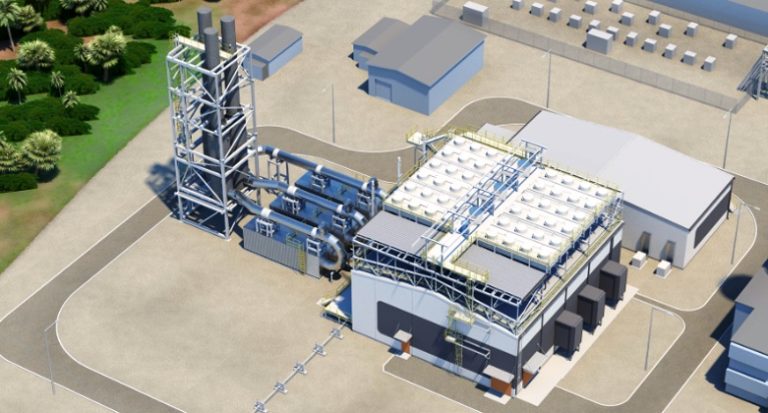
Back on Nov. 27, 2021, The Daily News reported, “WAPA gets new Wartsila generators but customers must wait for reliable service.” It was reported to be the first acquisition of generators by the Virgin Islands Water and Power Authoritysince the mid 1990’s and would take 15 months to become operational, immediately improving reliability and reducing customers’ utility bills.
WAPA’s Chief Executive Officer Andy Smith and Gov. Albert Bryan Jr. have publicly committed to improving the territory’s energy reliability and affordability through the Wartsila generator project, which was originally scheduled to be operational in early 2023.
Both men have emphasized the infrastructure project’s potential to provide a more reliable and economical power source, underscoring its importance in the strategic plan for the future of the Virgin Islands. The implementation of this $95 million, fully federally funded disaster relief project was heralded as the long awaited solution to WAPA’s notoriously unreliable service.
WAPA and the Bryan administration should issue a press release to update the public on the status of this critical infrastructure project which was, according to a joint press release issued June 28, 2023 by the Office of the Governor and WAPA, slated for final completion in August of 2023.
Sadly, as of April 2024 the four new Wartsila generators continue to sit idle at the St. Thomas Randolph Harley Power Plant since arriving on island in November 2021, while rotating blackouts continue to undermine the quality of life of the community and damage businesses throughout the territory.
— Filippo Cassinelli, St. Thomas
44-Unit Group Dwelling in Smith Bay Applies for Permit Approval
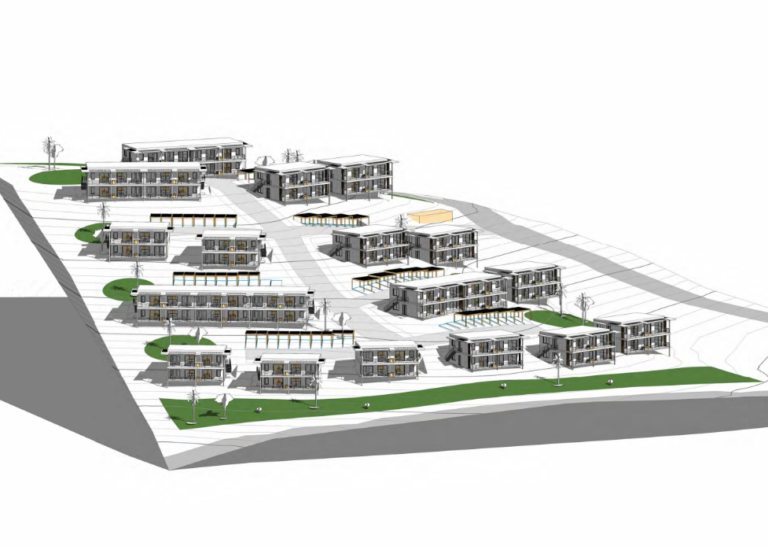
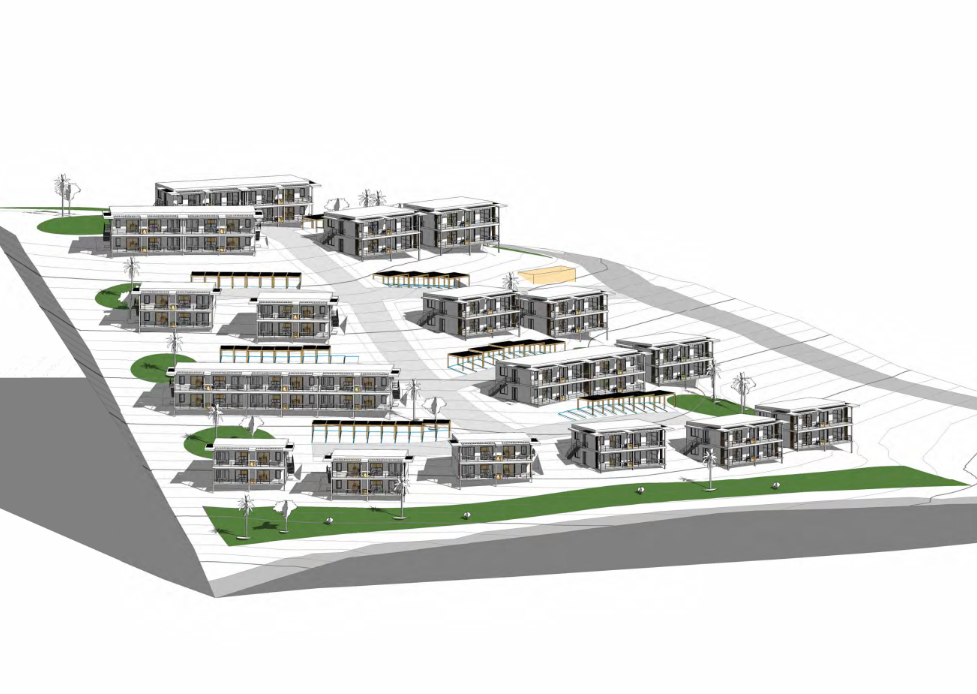
A virtual public hearing was held for the construction of 44 two- and three-bedroom units in Smith Bay on St. Thomas. The Department of Planning and Natural Resources’ Division of Comprehensive and Coastal Zone Planning presented the dwelling permit application to the public for parcel numbers 19-C-A and 19-C-B Estate Smith Bay, numbers 1, 2 and 3 East End Quarter.
The development request is to allow a grouped dwelling of 17 buildings for the 44 units on the sloping residential low-density one and two-family (R-2) 5.14-acre property. Michael Bornn, property and majority owner of Smith Bay 19-C-A, LLC, intends for the development to cater to middle-income Virgin Islanders.
“The goal and the mission of Smith Bay 19-C-A is to develop middle-income housing. The government does a very good job on the low-income side, and the wealthy have their own niche, but we’re dedicated to building a house for the middle-income program, in combining with the government’s program of V.I. Slice,” said Bornn.
The property is located directly across the street from Pavillions and Pools. Adjacent to the parcels is R3 zoning. Bornn mentioned that there were inquiries as to why the development was not used for the R3 zone, but he responded that “we want to do this as a quality development and not a quantity development.”
Modular steel structures from BAUHU – a provider of custom-designed modular buildings specializing in hurricane-resistant homes and construction services – will be used to construct the buildings. The buildings will be Miami-Dade hurricane-resilient. The Portuguese home development company creates homes for hurricane-prone locations. According to Bornn, they have developed homes in Jamaica, St. John and other Caribbean islands.
“This system gets you a more rapidly built house, a secure house, and an attractive house,” said Bornn. One big feature of the property is that it “is going to be environmental,” he added.
There will be three different building types, two levels per building, and two-six units per building that will make up the 17-building community. Each unit will be equipped with two parking spaces under covered parking sheds. There will be solar panels on the buildings and parking sheds, recyclable gray water, a closed sewage system, insulated window systems, rainwater catchment, installation of electrical vehicle charging systems, and use of native vegetation. Though potable water is available, the units will also have shared cisterns that are individually metered.
Once building permits are approved the development is anticipated to take 24 months to construct, but because of the modular nature of the development, construction can be completed sooner.
“This product is insurable, it’s secure, it’s cost-effective, and it’s gorgeous,” said Bornn who added that the units will not be used for short-term rentals but as a condominium form of ownership. “This idea is for Virgin Islanders who are willing to buy,” he said. He added that he has been asked by companies to buy the 44 constructed units from him to use as housing for their workers, but declined their offers.
Etienne Bertrand, development consultant for the project, said there is a “big need for housing that is unmet.” Of the construction, he said, “We do plan to phase the development from top to bottom in three steps.”
The intention is to begin at the top of the sloping property with four buildings, move to the second phase with the construction of seven buildings, and complete the remaining six buildings in the third phase.
According to Bertrand, an old water trough was found on site while surveying the property but there has been “no objection to the development of the site.” There is also a gut on the west side that will be protected by a buffer, and stormwater control will be implemented for the property.
At the end, Bornn said the company hopes “to cater to that proverbial middle income who many a time gets left out of housing in not the Virgin Islands but everywhere.”
The public comment period for this hearing ends on April 30. Email questions, comments, and concerns to DPNR territorial planner Lei LaPlace at leia.laplace@dpnr.vi.gov.
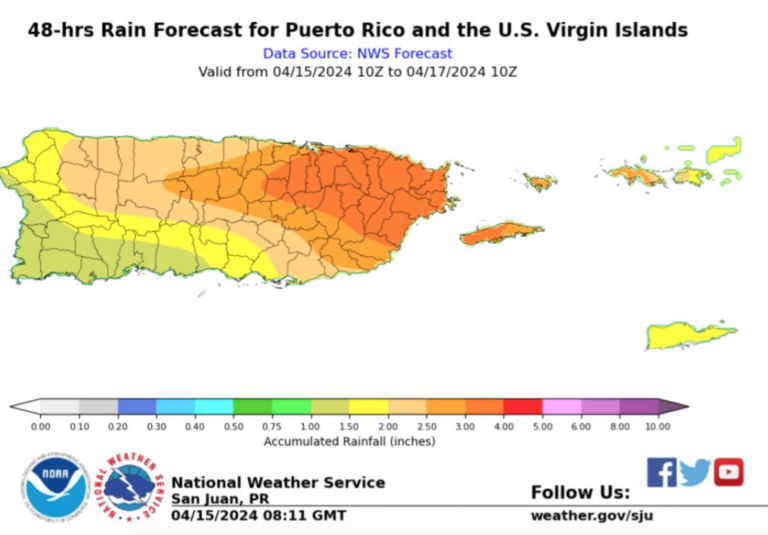
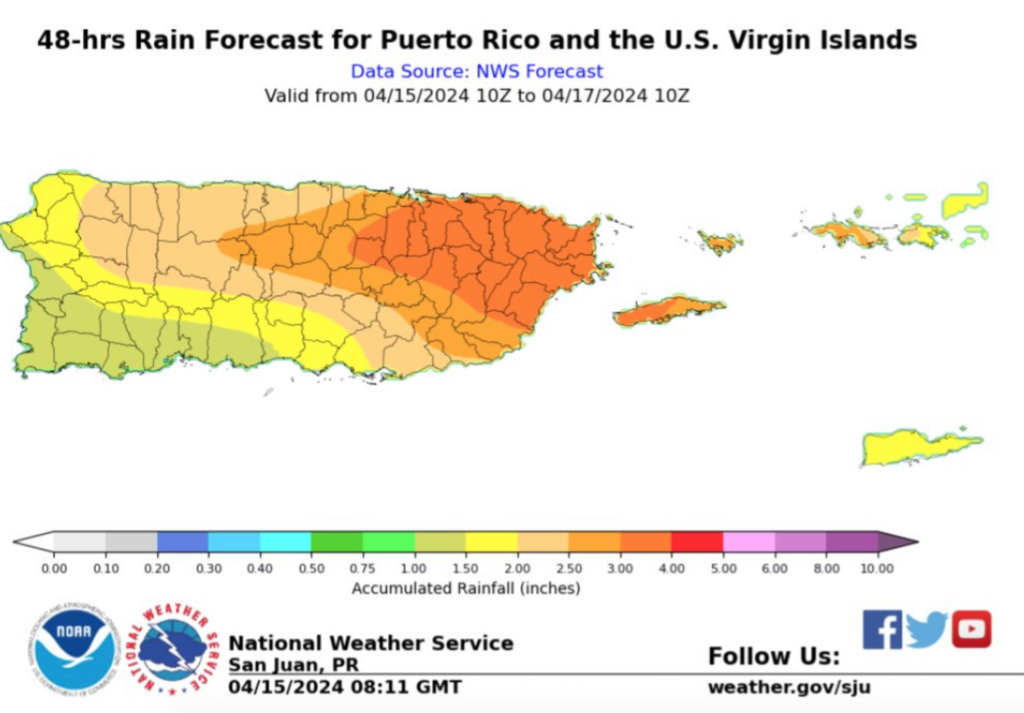
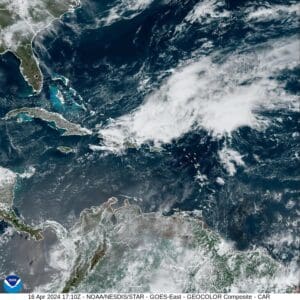
Unsettled Weather Pattern Expected Through the Middle of the Week
Local-Grown Food Plan Town Halls Coming Up

Officials plan to update Virgin Islanders later this month on the ambitious agriculture agenda aiming to upend the territory’s overwhelming reliance on outside food sources.
The three town-hall style events — one on St. Thomas, one on St. John, and one on St. Croix — will feature presentations from Local Food and Farm Council representatives about island-specific issues in implementing the territorial Agricultural Plan for farmers and fishers, as well as next steps, organizers said.
The 2021-implemented plan calls for ramping up local agricultural production to increase Virgin Islands food security and sovereignty. A 2021 United Nations study found 97 percent of food in the territory was imported, making Virgin Islanders vulnerable to supply chain issues and price fluctuations.
“The events will highlight progress, including the availability of grant money, launch of agriculture business centers on each island, hiring of an interim Local Food and Farm coordinator, and more, as well as upcoming endeavors,” organizers said.
The hybrid, in-person and video conference events start April 22 in St. Thomas at the University of the Virgin Islands’ LaVerne E. Ragster Administration & Conference Center; then at the Legislature of the Virgin Islands’ annex in St. John April 23; then they conclude May 1 on St. Croixat the University of the Virgin Islands’ Great Hall. They are all scheduled for 6 p.m. to 8 p.m. on those dates.
For virtual attendance, log on to https://uvi-edu.zoom.us/j/3850929463?omn=99085015807 using the meeting ID 385 092 9463.
Organizers asked that people planning to attend in person make a reservation at 340-693-1003 or vilocalfoodandfarmcouncil@doa.vi.gov.
Organizers from UVI, the Education Department, the Department of Planning and Natural Resources, and others said they hoped farmers, fishers, and anyone interested in food security would attend the event titled “Let’s Grow! The Implementation of the Virgin Islands Agricultural Plan for Farmers and Fishers.”
The 2021 plan, which draws on previous plans going back to 1999, includes the eight mandates of the Territorial Agricultural Plan:
- comprehensive regulations for local farming industries;
- building business models for profitable and sustainable community-based local food and farming businesses;
- creating a Local Food & Farm coordinator position;
- creating a Local Food and Farm fund from voluntary sources to support initiatives and agriculture-related activities;
- establishing a local Food and Farm advisory committee;
- creation of a symbol indicating “local food;”
- developing education and training programs, and collection data; and
- creating benchmarks, and assessing progress on the building of food and farm economy.
Some high-priority goal projects include devising a comprehensive irrigation system and water supply, enhancing infrastructure, strategic increases in personnel at the Virgin Islands Department of Agriculture, support for an orchard development initiative, and enhancing grant writing at the Department of Agriculture.
USVI Earth Day PLANET vs PLASTICS Hybrid Presentation and Panel Discussion Set for April 22

V.I. Afternoon on the Green Cooking Competition Winners, Two Students Awarded Scholarships