





I always tell people that my office has become international. I get so many phone calls and email messages from around the world, as well as locally and nationally, from people looking for information on a wide range of topics such as the history, culture, and the natural resources of the Virgin Islands. I never thought in my short life here on Earth, although I am more than a half a century old, that I would be in such demand by the world public.
The other day, I got a text about snakes, particularly the red-tailed boa (Boa constrictor), which is becoming a major invasive species on the island of St. Croix. The text came from one of our local TSA officers. As I spoke to the person, it got me thinking to write an article about snakes, although I have written about snakes in the past. Then I really began to think and say, why not mention the Virgin Islands tree boa (Chilabothrus granti)?
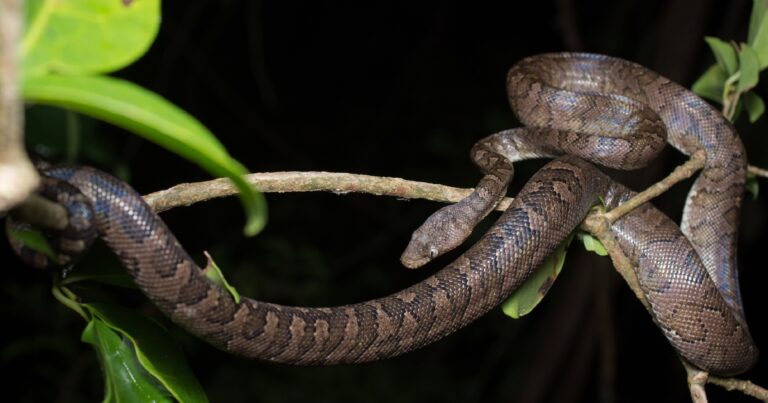
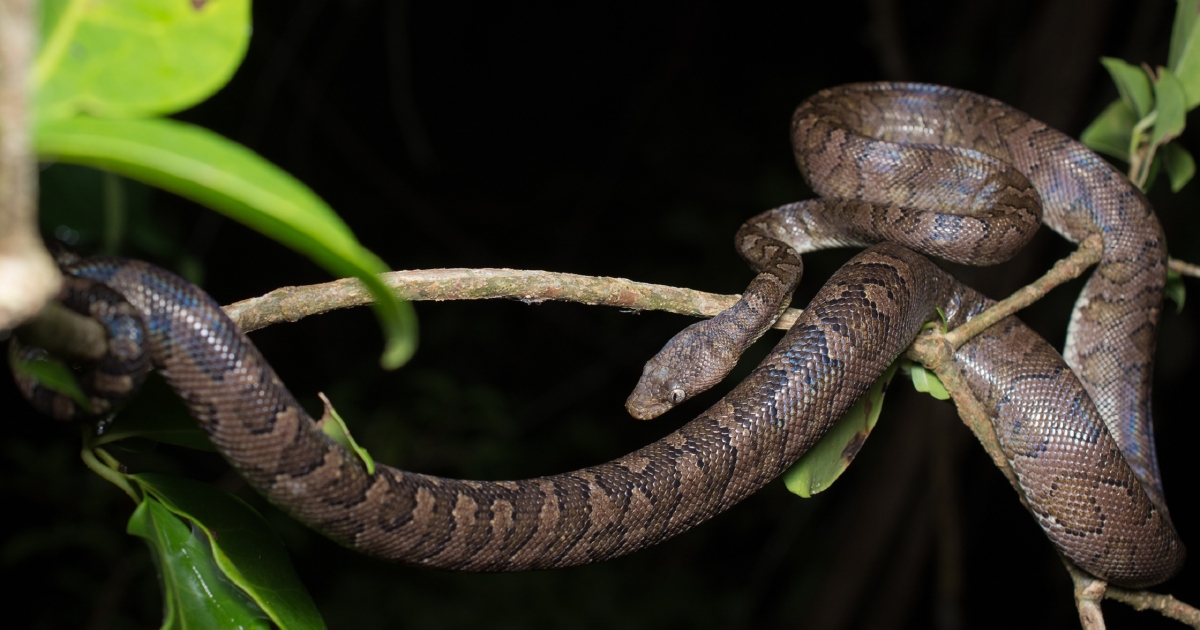
In the general public, there might be confusion at times about which snake is a red-tailed boa and which is the Virgin Islands tree boa. The V.I. tree boa is a federally and locally endangered protected snake species that is native to the British Virgin Islands, U.S. Virgin Islands, and Mona Island between Puerto Rico and Hispaniola, but not on Puerto Rico itself. The V.I. tree boa’s scientific name has been changed from Epicrates monensis granti to Chilabothrus granti, which reflects the currently accepted taxonomy. According to the Federal Register, the “Virgin Islands tree boa is a distinct species, not a subspecies, and Epicrates is no longer the scientifically accepted genus for this species.”
Our native V.I. tree boa is a non-poisonous snake. In other words, completely harmless to humans. These are the only snakes in our region with a very distinct pattern. According to the late Dr. William P. MacLean, the Virgin Islands tree boa’s body and tail are covered with irregular crossbars in dark brown on a light gray-brown background. Their bodies are cream with irregular darker markings. Their necks are quite distinct, and their heads are covered with irregular, small scales. The snake grows between 3 to 4 feet long.
Historically speaking, V.I. tree boas are usually found on the East End of St. Thomas’ dry, tropical semi-deciduous forests. These snakes are active primarily at night and eat nice, rats, and other small creatures like sleeping lizards. The habitats of these snakes are threatened due to the rapid East End developments on St. Thomas. However, there are ongoing scientific research projects by the North Carolina Zoo in collaboration with our local Fish and Wildlife Division of the Department of Planning and Natural Resources to find out and learn more about the V.I. tree boa’s behavior in the wild. Believe me, it is our V.I. tree boa that keeps rats and other rodents in check within our island’s natural environment.
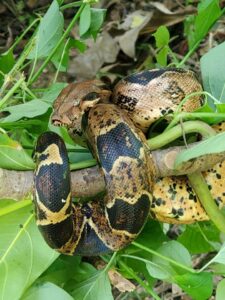
Nevertheless, the V.I. tree boa is not native to St. Croix and not found on the island. Like I mentioned earlier, it is native to the northern Virgin Islands and Mona Island. However, the red-tailed boa snake is becoming destructive to the wildlife population and the fear it has put in the people on St. Croix. Whenever I conduct a hike, I give rules and regulations, such as don’t touch plants — they might be poisonous — and stay behind the tour guide at all times unless I give you permission to be in front.
Also, I mention that we have wild exotic snakes on the island. The red-tailed boa snake is native to tropical South America. It is a large, non-venomous, heavy-bodied snake that sometimes can reach 13 feet long and is generally brown, gray, or cream in color, with patterns of brown or reddish-brown toward the tail. Thus, the name red-tailed boa constrictor.
The red-tailed boa (Boa constrictor) was brought into St. Croix illegally. It is against the law in the Virgin Islands to bring in exotic pets without getting permission from the proper authorities. The boa is becoming a nuisance to humans and wildlife on St. Croix. I have gotten reports where the red-tailed boa has eaten farmers’ chickens, roosters, eggs, and small animals. They also have eaten cats, iguanas, mongoose, wild birds, and small dogs.
While residents of St. Croix think the red-tailed boa lives in bushes or forest areas on the island, which they do to some extent, oftentimes these animals are being found in neighborhoods, backyards, or sometimes in somebody’s vehicle. This past year, there was a news release in the media telling residents in the Frederiksted area to check under the hood of your vehicle for snakes. Apparently, this species of snake loves warm areas.
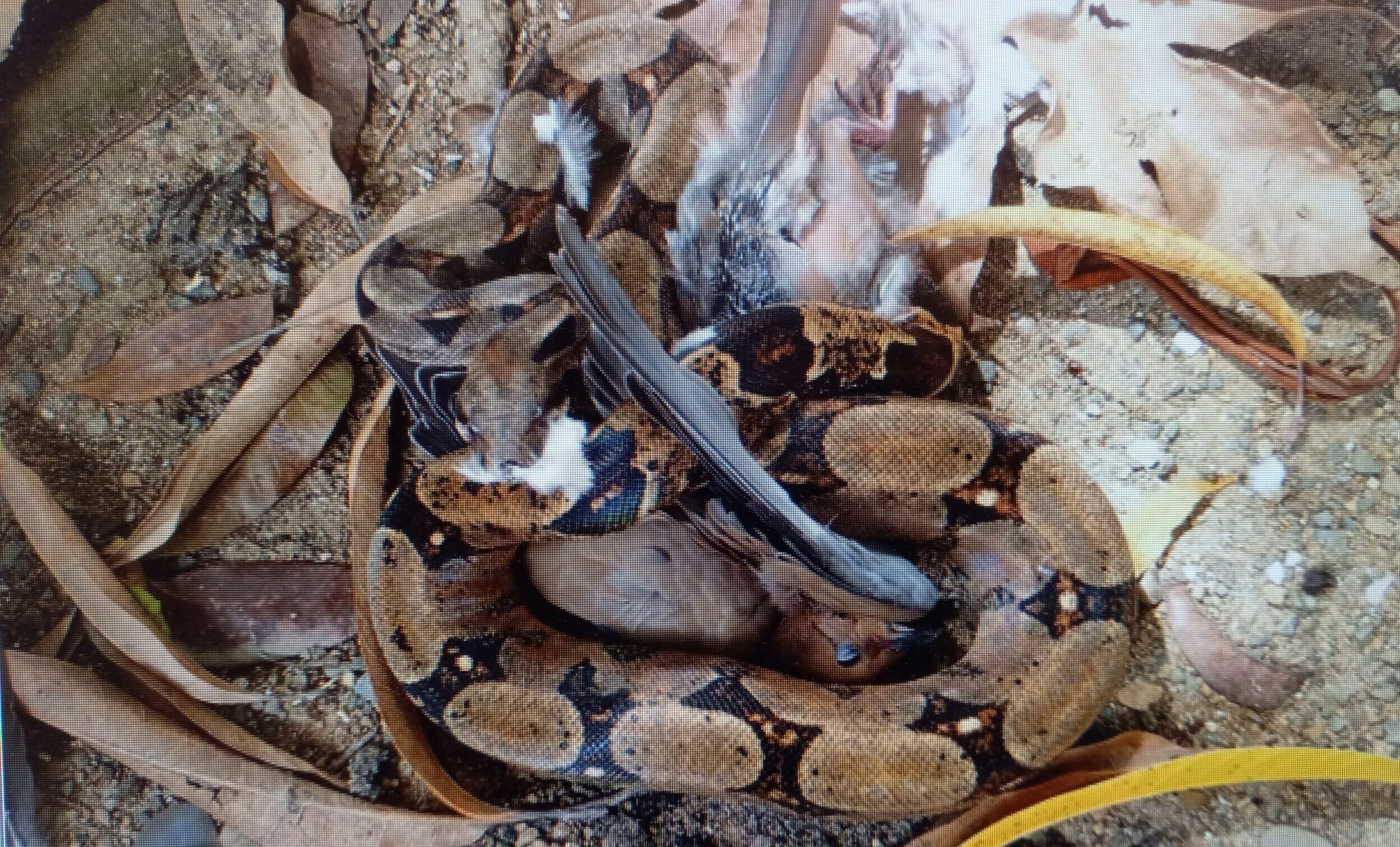
I don’t know of any in-depth local ecological research studies on the red-tailed boa’s behavior and movement in the natural environment of St. Croix. There is a paper, titled “Introduction of an Exotic Constricting Snake (Boa constrictor) and Its Establishments on St. Croix, U.S. Virgin Islands,” written by Nicole E. Angeli, William Coles, Shane McKinley, and Daniel G. Mulcahy.
“The temperate, suitable climate for the boas and an abundance of domestic mammals on St. Croix facilitates further boa spread and establishment in the years to come. Cats, dogs, goats, rats, mice, deer, tortoises, and mongoose are free ranging. Smaller livestock including pigs, sheep, calves, and chickens may be impacted,” noted the research paper. What we generally know is that the red-tailed boa is viviparous, which means they give live birth. In other words, the red-tailed boa doesn’t necessarily need a male to breed.
These animals are nocturnal. However, it all depends on the species or subspecies. The young boa constrictors may climb into trees to forage or just to bask in the sun. They become terrestrial mostly once they become much older and heavier snakes. If you see a red-tailed boa, it wouldn’t run after you. The snake is afraid of you as much as you might be afraid of it. When they perceive a threat, they will strike. Their bite can be painful, especially from a large snake. However, these snakes are rarely dangerous to humans if bitten.
Most of the snakes being caught on St. Croix are from the west and northwest of the island. However, snakes have been spotted at Food Town, Grove Place, Salt River Bay, Market and Marley Community in Frederiksted area to the Estate Little Princess. It is a matter of time how far the boas would spread throughout St. Croix. Again, they might create a niche in the environment depending on many factors in the island ecosystem.
Bill No. 34-0023 was passed to establish the Invasive Species Eradication Community Program. As of now, there is a bounty on the heads of the red-tailed boa. There is money involved in catching the boa. However, you must be a certified wildlife control operator. There are nearly 30 certified operators on St. Croix to help the public with invasive species such as the boa. St. Thomas and St. John are not out of the loop. The boa constrictor can be carried by people if not caught by TSA officers or on containers (boat/ship) traveling to our sister islands. Please don’t handle the snake yourself. Contact the DPNR through its website or by calling 340 7731082.
— Olasee Davis is a bush professor who lectures and writes about the culture, history, ecology and environment of the Virgin Islands when he is not leading hiking tours of the wild places and spaces of St. Croix and beyond.
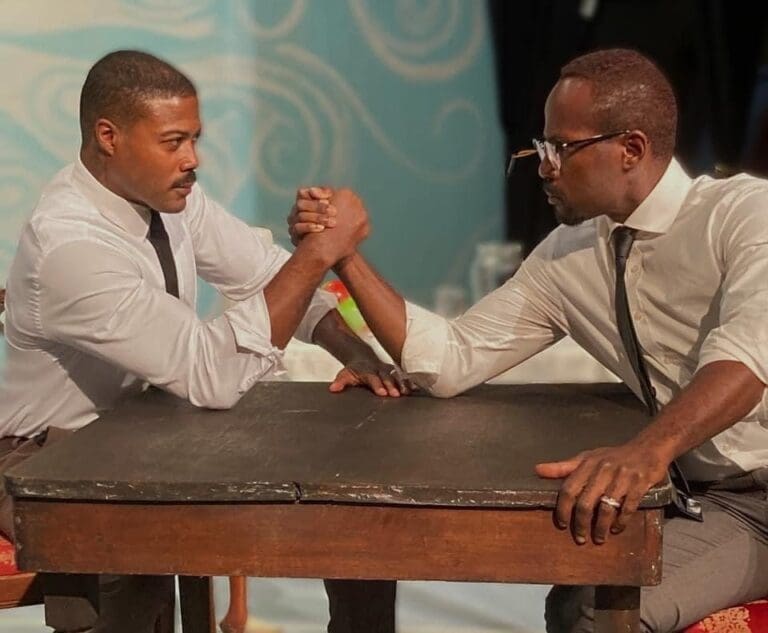
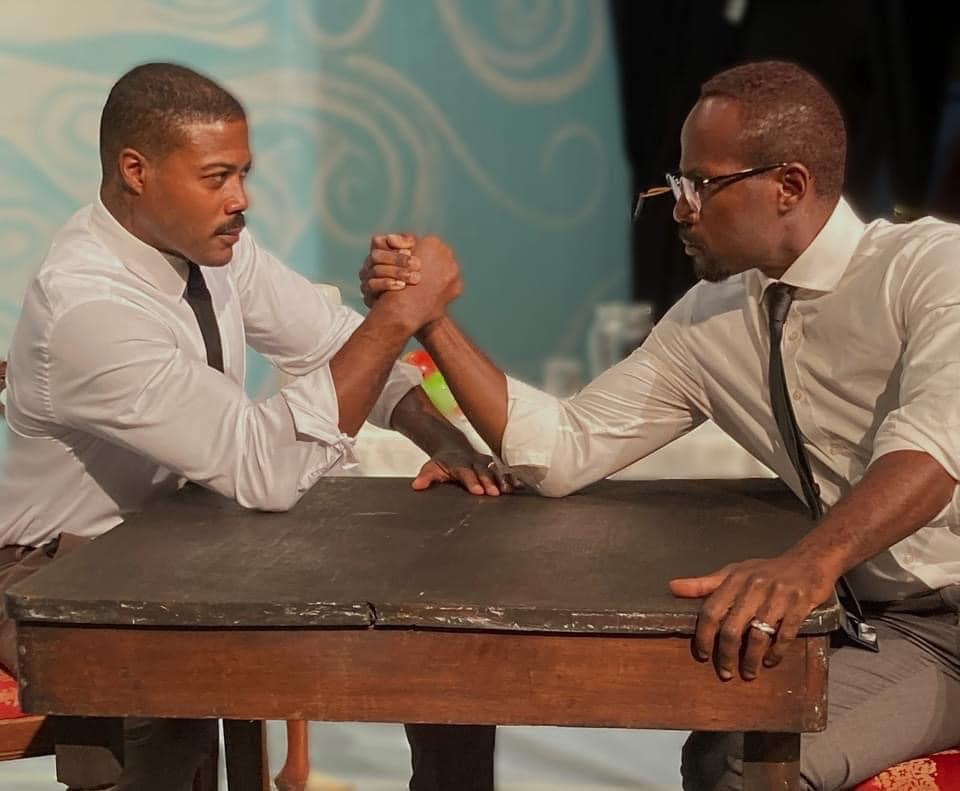
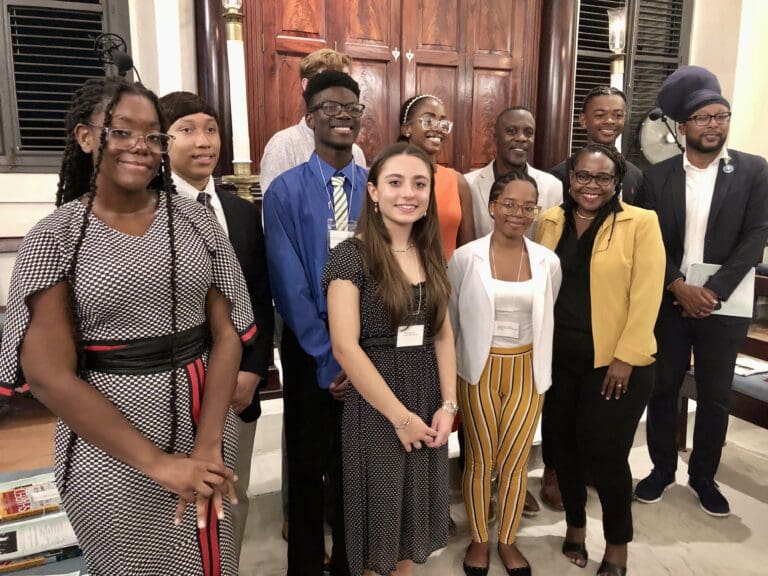

Parishioners, educators, and proud relatives filled the seats at the Hebrew Congregation of St. Thomas Friday night to witness the annual Dr. Martin Luther King Jr. Memorial Scholarship Awards Ceremony. They came to honor eight high school students from public, private and parochial schools from the St. Thomas-St. John District.
Honorees were chosen for their community service contributions as well as submitted essays. In their essays, students were asked to express how their experiences demonstrate the principles expressed by the late Civil Rights leader.
Students from Charlotte Amalie High School, Antilles School, Sts. Peter and Paul Catholic School, Gifft Hill School, Ivanna Eudora Kean High School, St. Thomas-St. John Seventh-day Adventist School, V.I. Montessori School and Peter Gruber International Academy and All Saints Cathedral School took turns answering that question before the congregation and Rabbi Julia Margolis.
When they had finished, Margolis congratulated each scholarship winner and presented them with their prize. Included for each was a copy of the book, Shared Dreams: Martin Luther King and the Jewish Community.
“Our congregation is really happy to have you here tonight … each student honors their high school, their parents, their teachers and their principals,” Margolis said.
Four of the awardees cited King’s concerns for the environment in their presentations. Edward Foerstel from All Saints chose that as his focus, saying the most difficult challenge to improving the environment will be “uniting countries and our people” in taking a unified approach.
Portia Miles from Antilles School has put her concerns for the environment into service with the University of the Virgin Islands Marine Science Division. Miles said that towards the end of his life, King was “increasingly turning his attention towards the environment.”
VIMSIA’s Jackson Auchincloss also expressed concerns about “climate change that affects the most vulnerable populations.” To alleviate the problem, Auchincloss said he would like to redesign construction systems and methods and work on developing electric cars.
Donnalee Isaac from Eudora Kean focused on King’s efforts to promote “respectful dialogue among people.”
Danya Esprit from Sts. Peter and Paul spoke about her work with a group that visited the Dominican Republic to feed the poor.
Szuri Malaika Zene Joshua from Seventh-day Adventist said she was using her role as a student leader to encourage others to think of ways to serve humanity. “The greatest impact I can do for my community is to serve others,” Joshua said.
Justin Richards from Gifft Hill highlighted King’s work to relieve the struggles of the poor as well. He said he wanted to work towards addressing the delivery of healthcare services and relieve healthcare disparities.
Anthony-Marvin Adimado from CAHS addressed King’s efforts to build unity among people, and his wish to use artificial intelligence systems to erase language barriers.
Keynote speaker, UVI Provost Camille McKayle, praised students for delivering “eight amazing essays,” and for taking on the challenge of linking the inspiration for their service efforts to King’s teachings. “I encourage you to look at the life of Dr. King for attributes that you can incorporate into your lives,” McKayle said.
McKayle also heads the university’s division of Science and Mathematics.
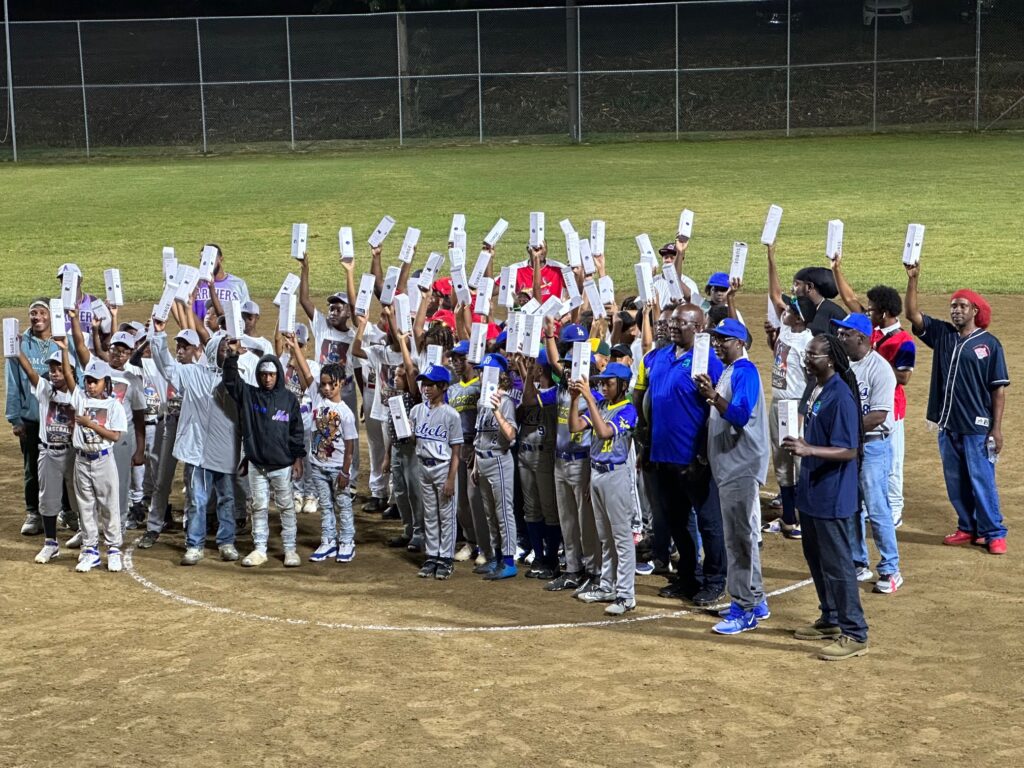
Batter Up! Pivot to Success Inc. hit a home run with the first Dennis Brow Baseball Invitational that began on Friday to a roaring crowd of about 100 people at the Rudy Krieger Ballpark on St. Croix – a first step toward welcoming other Little League teams from outside the U.S. Virgin Islands, said manager for the Junior National Team Denis Lynch.
In an opening ceremony Lynch said, “This is just the beginning – we are going to make this a staple point in the Virgin Islands. We have teams willing to come here from California, New York, and Atlanta, ready to touch down in the Virgin Islands, but we decided to bring it here first for interisland competition.”
Teams participating in the invitational include the Cubs, Archers, Indians, Rebels, Cardinals, and the Diamond Defenders, all teams from both St. Croix and St. Thomas.
The invitational was named in honor of living Virgin Islands legend Dennis Brow who played for the New York Yankees. Lynch said that in a loss last year they had a vision.
“St. Thomas made it very clear to us and that’s why we are here right now at this tournament. We need to address the deficits and gaps with baseball in the community and give the chances and the opportunities to the kids. The man that I am paying homage to right now is very instrumental in terms of pushing things forward in the Virgin Islands,” he said.
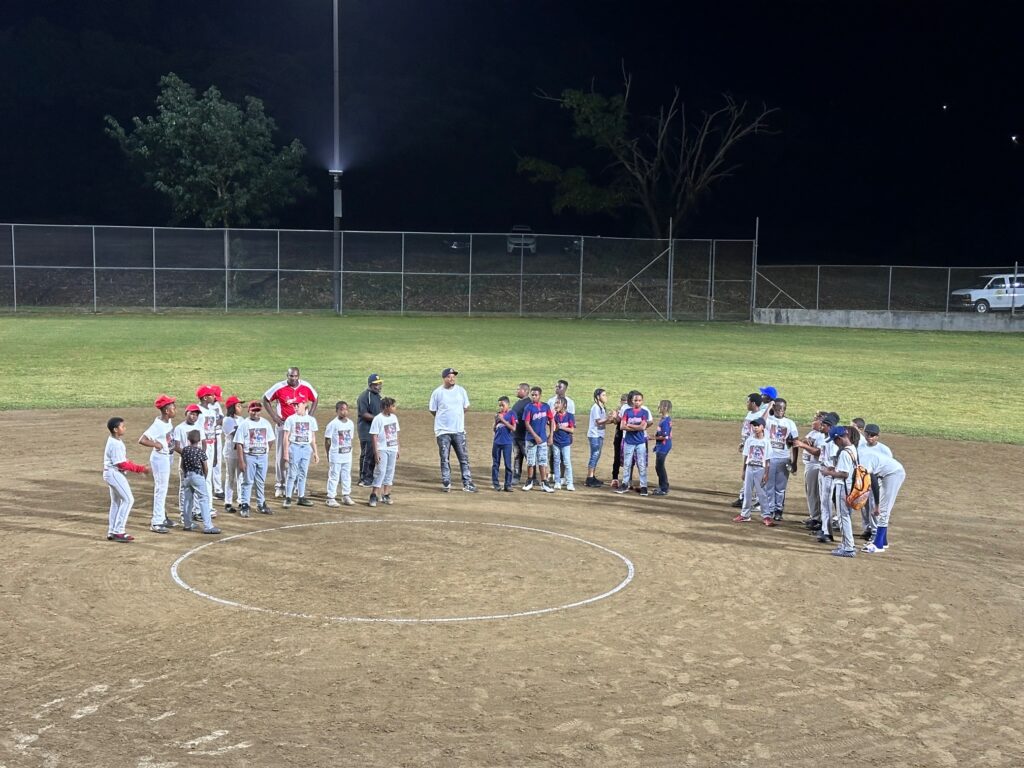
Lynch said that Brow gave him the chance to represent the Virgin Islands in the Dominican Republic. “Most times in our culture, we do not tend to step aside and allow the youth to come forward and show their talent. Mr. Brow allowed me to do that and the respect I am giving every child the opportunity to do that as well,” he added.
Brow who was present at the opening ceremony said, “It is a great honor to be here and to be given this privilege.”
“To the youths, we all started right here,” Brow said as he pointed out a few previous Little League players in the crowd who were now adults serving as coaches, umpires, etc.
Brow said, “It is here we developed our skill set. Some of us are going to go far and some of us are going to benefit from this game that we respect so much called baseball. It is not about making it to the major leagues. I went to school on scholarship and played in college baseball and then the Yankees had an opportunity to see me, they liked what I presented and gave me the chance.”
Brow then thanked the coaches and said, “These are the people who dedicate the time, the effort in helping you kids to develop their skills to move to the next level.”
In a departing note, Brow shared, “One thing I have to say to you guys is to respect this game. This game is not a game to take as fun, have respect for it and respect your coaches, fellow players, umpires, and anyone who has contributed to this game. If you want to be good, you must prepare. You must work hard, day in and day out. What you do inside the game will help your ability to improve your skill.”
Games continued into Saturday at 9 a.m. and will continue Sunday at 11 a.m. at the Rudy Krieger Ballpark.
Sponsors for this event include Jolly Rogers, Her Care, IB Designs, Leumes Engineering Group, Plaza Extra East, J&P Construction LLC, Law Offices of Martial Webster, Medical Offices of Dr. Titus, V’Hair Affair LLC, St. Croix Dental, One Love Service Station, Reich LLC, Triple Beam Management and Consulting LLC, and Kai A. Nielsen the Water Smart Schools Grant.

Since 1999 the Virgin Islands Source – the only online newspaper of general circulation in the U.S. Virgin Islands – has been providing the community with reliable, accurate and balanced local journalism.
Contact us: visource@gmail.com
© 1999-2025 Virgin Islands Source