It has been a month since Bad Bunny’s (Benito Antonio Martínez Ocasio) Super Bowl LX Half Time Show. The artist who just turned 32 (March 10, 2026) has broken so many records with his Debí Tirar Más Fotos World Tour that it is worth sharing some numbers: tickets sold for the tour, over 2.6 million (a record), fastest (under 24 hours) sellout for concert series in Mexico (6 concerts), Colombia (3), and Costa Rica (2). In Spain, twelve sold-out stadium shows (600,000 tickets) sold faster than Taylor Swift’s Eras Tour. Bad Bunny is the first Latino artist to sell out stadium concerts in Italy, France, Poland, Portugal (2), Sweden, Australia and the UK. Buenos Aires, Sao Paulo, more records shattered.
Singing in Puerto Rican Spanish at the Super Bowl LX and being the biggest musical artist on the planet for 4 of the last 6 years are important landmark achievements. I covered those subjects in parts 1 and 2 of this series. But perhaps the most fascinating part of Bad Bunny’s stardom is the way in which he has achieved it.
Benito matters to many people, as the numbers above prove, but strangely he also matters to people that do not care for his music.
There are reasons for that, as I will explain. With “Debí Tirar Más Fotos”, his latest album, the artist galvanized something that perhaps was inside of him from the beginning of his career, how to make the music he wanted and enjoys (Latin trap, reggaeton, dem bow, etc.) with the music he grew up with, the music of his parents. But that is not just a rhythmic issue. There is a thematic side to the equation that is also interesting. As his music became more popular, he felt more at ease with looking backwards in order to go forward and also speaking about subjects important to him.

Like many other reggaetoneros and hip-hop artists, Bad Bunny has songs filled with adolescent fantasies (or perhaps rich reggaetonero realities) bragging about money and obsessed with luxury cars, parties, drinking, and girls. But in every studio album Bad Bunny also took detours away from the VIP lounge, the mansions, and the yachts.
He tackled face-first the persistent, almost universal, machismo and misogyny in our societies which are often, but by no means always, proudly displayed in the lyrics and videos of the musical genres that Bad Bunny is mostly identified with.
In “Yo Perreo Sola” (I Twerk Alone), from his 2020 album “YHLQMDLG”, an acronym for I Do Whatever I Want, Bad Bunny sings dressed in full drag about the rights of women to dance alone if they want to, without being harassed, even if the dancing is “perreo” (twerking). And he did it by dressing like one of them. The song, which he included in the Super Bowl LX halftime show, was danced by women alone, while the rest of the dance sequences had couples.
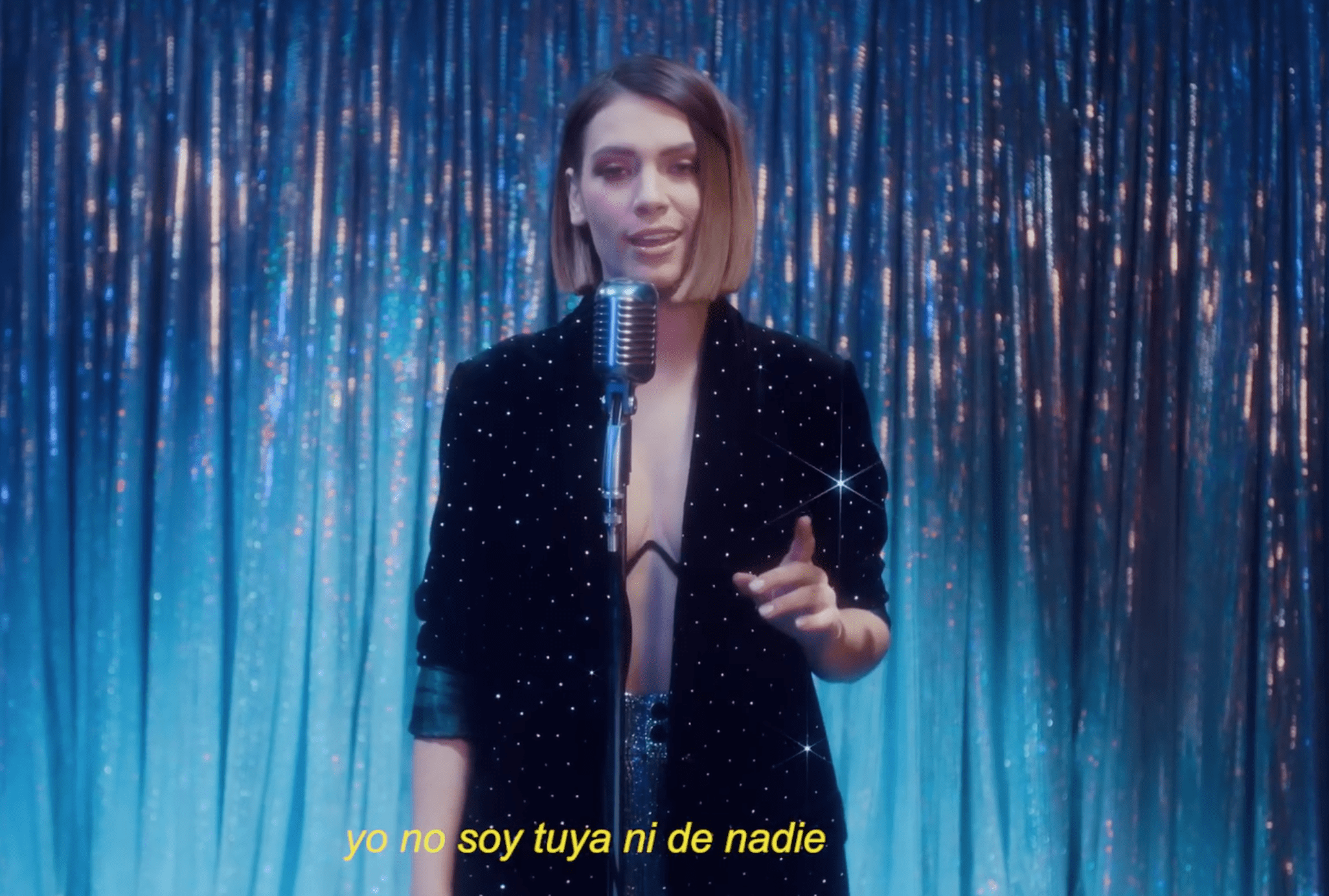
Even earlier in “Solo De Mi” (Only of Me), a song from his 2018 debut studio album “X100pre,” a woman (Venezuelan actress and singer Laura Chimaras) sings looking straight at the camera in Bad Bunny’s dubbed voice. She says, “Don’t call me baby again, I am not yours, I’m not anyone’s, I am mine.” As the song progresses, the woman faces away from the camera to return her glance, but this time with a bruised cheek, next time also a black eye, next a bloody nose. Finally, the woman stretches her arms, blocking her face, and when we see her again, she is fine, without bruises. We assume it means that she left the abusive relationship behind. Bad Bunny confirms our assumption when the video unexpectedly cuts to dance music and a party in full swing. Bad Bunny is dancing with the same woman. A happy ending.
In 2020, in an article in Rolling Stone magazine by Suzy Exposito, Bad Bunny explained that he dressed in drag to “show support to those who need it.” In the article, he explained that he used to prepare music tracks for one of his cousins who performed in drag. In that same interview, the artist said, “As a human being, violence against women affects me. So I am going to do what is within my reach to [work] against that.”
His disassembling of the hip-hop/trap/reggaeton male artist stereotype, his plight against gender and domestic violence, and non-defined public sexual orientation (he says he is straight while cross-dressing in “Yo perreo sola” and wearing skirts for magazine covers or galas) has only made Benito more popular, more admired, more respected.
Those musical statements are not a gimmick or a commercial decision, they are truly Benito. He has proven it by putting his money where his mouth is for all the causes that he believes in, including his political stance during the last gubernatorial election in Puerto Rico.
His songs on the subject of Puerto Rico’s politics reflect the same level of advocacy. Benito has sung implicitly and very much explicitly as well against gentrification, against losing land and beaches to speculators and wealthy outsiders, against tax breaks for individuals and corporations that contribute little and take much, as well as sadness at the displacement of Puerto Ricans who migrate to the U.S. mainland because they cannot afford to live in their own island anymore. In his 2022 album “Un Verano Sin Ti”, he sang against his homeland’s chronic blackouts (“El Apagón“) and addressed the large death toll of Puerto Ricans during Hurricane Maria in 2017. He continued on the subject in the single “Una Velita” (A Little Candle). Both songs place direct responsibility on the disastrous response to the natural disaster on poor political decisions and corruption.
In the more recent “Lo Que Le Pasó a Hawaii” (What Happened to Hawaii) sung by Ricky Martin during the halftime show, he articulates his fear for the future of the island. Click on the link to listen to the song with English translation.
In that song, he uses Hawaii as a cautionary tale, warning Puerto Rico to avoid becoming the 51st state. He foresees the status change as the end of the island identity, its music, its culture, perhaps its language. He sings, “They want to take your river, and also your beach, they want to take my neighborhood and for our grandparents to leave, No! Don’t let go of your flag, don’t forget your le lo lai (your traditional music, your culture) I don’t want them to do to you what happened (what they did) to Hawaii.”
The song has been adopted and adapted by people in U.S. overseas territories and by native and Indigenous citizens of many other regions, islands in many instances, where the population feels the same loss of rights, of land, community and traditional ways of living due to external financial interests, non-sustainable tourism included.
Benito’s social and political concerns are paired with his close-to-agony obsession with missing moments that will never return, not seeing loved ones again, not sharing special occasions with family and friends or losing the Puerto Rico that he feels is worth fighting for.
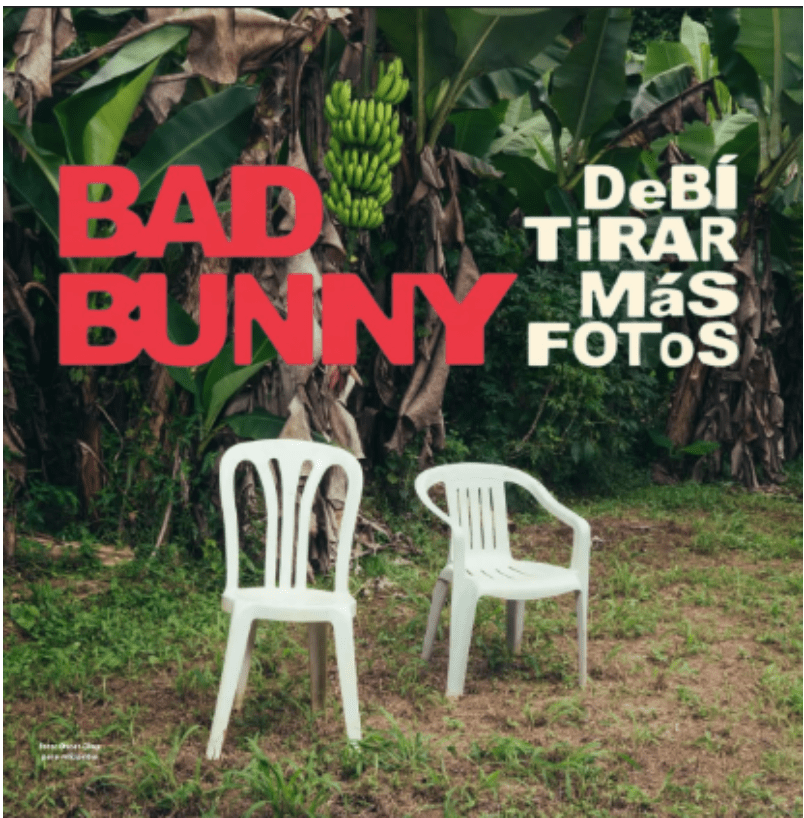
“Debí Tirar Más Fotos” (Grammy, Album of the Year 2025), the recording that finally brought his music and that of his parents together, is all about paying attention. What you will miss once it is gone is the main and recurring theme. The song that gives title to the album is literally about not letting moments pass you by. “I should have taken more photos when I had you, should have given you more kisses and hugs the times when I could, may my people never move away, and if I get drunk may they be there to help me.”
In “Baile Inolvidable” (Unforgettable Dance – here with English translation) from the same record and sang during the wedding scene at the halftime show, he is again singing about lost moments that will never return and people we will never see again if we don’t do our best to keep them around. The phrase he said during the wedding scene at the halftime show, “As long as we live we should love as much as we can,” is heard towards the beginning of the song (in the voice of Puerto Rican living treasure Jacobo Morales).
The subject returns in “Pitorro De Coco” (Coconut Cane Rum), and on and on. The whole album is unexpectedly and profoundly concerned with living life at its fullest, but not anymore with the gold chains, fast cars and luxury, but instead with, as he says, the things what matter; family, friends, home, the motherland.
Even the aforementioned “Lo Que Le Pasó a Hawaii” at its core is about not losing what we have and cherish. And about the sadness of leaving your homeland when you don’t want to, dreaming of returning . . . No wonder then, that he returned to his roots and created an album with the music that he grew up with. Or that Benito decided to present his series of 36 concerts last year not in Las Vegas or Los Angeles, but in San Juan. He named the show series “No Me Quiero Ir de Aquí.” (I Don’t Want to Leave – or Move – from Here).
As per the artist, “Debí Tirar Más Fotos” is his mother, Lysaurie Ocasio, a retired school teacher, favorite record of his. In an interview, he revealed that he was very excited and nervous to hear his mother’s reaction to the album. After Lysaurie heard it, she told him how proud and happy she was that he had gone from trap to Jíbaro music (meaning Puerto Rican traditional). According to Bad Bunny, that praise and her feeling of pride meant more to him than any award he has received.
I am not the only follower of Benito Antonio Martinez Ocasio’s music that wonders what is next.
After the huge success of his previous albums, no fan could have imagined that the artist at the peak of his career would follow those blockbusters with the very traditional and completely different “Debí Tirar Más Fotos.” It might have been unimaginable even for Bad Bunny that the album farthest from his most identifiable sound, and closer to the music of his parents, would become his most acclaimed, and the one that took him to be the featured artist at Super Bowl LX’s halftime show.
As I wrote in part one, by being genuine, by caring for his community and his island, by describing his “village” and expressing those feelings in his music, Bad Bunny has become universal. May that be a lesson for all young artists, and a lesson for all of us.
— Mario Picayo is a Caribbean cultural activist, writer and publisher. He is chief editor of the publishing houses Little Bell Caribbean and Guaní Press. Born in Cuba, he lived many of his formative years in Puerto Rico, and later in the U.S. Virgin Islands. For close to four decades he has resided between the U.S. Virgin Islands and New York. Previously, and also parallel, to his publishing career he has worked as photographer specialized in documenting cultural celebrations, like carnival, and similar joyful, musical, community-unifying events from Trinidad to the Bahamas.
Editor’s Note: Opinion articles do not represent the views of the Virgin Islands Source newsroom and are the sole expressed opinion of the writer. Submissions can be made to visource@gmail.com.
Related Link:
Op-Ed: Bad Bunny’s Super Bowl Halftime Show, Part One: Singing in Puerto Rican, Speaking Caribbean
Op-Ed: Bad Bunny’s Caribbean Super Bowl Halftime Show Part Two: Carnival Goes to the Super Bowl
****
Ha pasado un mes desde el Espectáculo de Medio Tiempo del Super Bowl LX de Bad Bunny (Benito Antonio Martínez Ocasio). El artista, que acaba de cumplir 32 años (10 de marzo de 2026), ha batido tantos récords con su gira mundial “Debi Tirar Más Fotos” que vale la pena compartir algunas cifras: entradas vendidas para la gira: más de 2,6 millones (un récord). Las entradas agotadas más rápido (en menos de 24 horas) para una serie de conciertos en, México (6 conciertos), Colombia (3) y Costa Rica (2). España, doce conciertos en estadios con entradas agotadas (600,000 entradas), se vendieron más rápido que las entradas de Taylor Swift en España para su gira “Eras”. Bad Bunny es el primer artista latino en agotar entradas para conciertos en estadios en Italia, Francia, Polonia, Portugal (2), Suecia, Australia y el Reino Unido. En Buenos Aires y São Paulo se batieron más récords.
Cantar en español puertorriqueño en el Super Bowl LX y ser el artista musical más escuchado del planeta durante 4 de los últimos 6 años son logros importantes. Abordé esos temas en las partes 1 y 2 de este artículo. Pero quizás lo más fascinante del estrellato de Bad Bunny es la forma en que lo ha logrado.
Benito es importante para mucha gente, como lo demuestran las cifras anteriores, pero curiosamente también es importante para muchos a quienes la mayoría de su música no les gusta.
Hay razones para ello que detallaré a continuación. Con su último álbum, Bad Bunny logro algo que quizás llevaba dentro desde el principio de su carrera: cómo combinar la música que hace, la que disfruta hacer (trap latino, reguetón, dem bow, etc.) con la música con la que creció, la música de sus padres. Pero además de esa búsqueda rítmica, también es interesante el aspecto temático. A medida que su música se hizo más popular, Benito se ha ido sintiendo más cómodo mirando hacia atrás para avanzar musicalmente y también para hablar de temas importantes para él en sus canciones.
Como muchos otros reggaetoneros, y artistas de hip-hop Bad Bunny tiene canciones llenas de fantasías adolescentes (o quizás realidades de reggaetoneros adinerados), donde presume de dinero y obsesionado con autos de lujo, fiestas, alcohol y chicas. Pero en cada álbum grabado en estudio, Bad Bunny también se desvió de las salas VIP, las mansiones y los yates.
Abordó de frente el persistente machismo y la misoginia casi universales en nuestras sociedades, que a menudo, aunque no siempre, se muestran con orgullo en las letras y videos de los géneros musicales con los que Bad Bunny se identifica mayormente.
En Yo perreo sola, de su álbum de 2020 YHLQMDLG (acrónimo de Yo Hago Lo Que Me Da La Gana), Benito, vestido de drag, canta sobre el derecho de las mujeres a bailar solas si quieren, sin ser acosadas, incluso si el baile es perreo. Y lo hizo vistiéndose como una de ellas. La canción, incluida en el espectáculo de medio tiempo, fue bailada solo por mujeres; el resto de las secuencias de baile fueron parejas.
Incluso años antes, en Solo de mí, una canción de su álbum debut de estudio de 2018, X100pre, una mujer (la cantante y actriz venezolana Laura Chimaras) canta mirando directamente a la cámara con la voz doblada de Bad Bunny. Dice: “No me vuelvas a decir bebe, yo no soy tuya, ni de nadie, soy solo mía”. A medida que avanza la canción, la mujer aparta la mirada de la cámara para regresar, pero esta vez con una mejilla magullada, la siguiente con un ojo morado, la siguiente con la nariz ensangrentada. La canción se usó para una campaña contra la violencia doméstica. El video, incongruentemente, sigue esas escenas con una de una fiesta en pleno apogeo. Bad Bunny, bailando con la misma mujer, parece decir que el respeto a la mujer y la fiesta no son ni deben ser contradictorios. Quería cerrar con un final feliz.
En 2020, en un artículo de Suzy Exposito en la revista Rolling Stone, Bad Bunny explicó que se vestía de drag para “mostrar apoyo a quienes lo necesitan”. En el artículo, explicó que solía preparar canciones para un primo suyo que actuaba en drag. En esa misma entrevista, el artista dijo: “Como ser humano, la violencia contra la mujer me afecta. Así que voy a hacer todo lo posible para combatirla”. Su desmitificación del estereotipo masculino del artista latino de trap/reguetón, su lucha contra la violencia de género y doméstica, y su orientación sexual pública no definida (se declara heterosexual mientras se viste de mujer en “Yo perreo sola” y usar faldas en portadas de revistas o galas) solo han hecho a Benito más popular, más admirado y más respetado.
Esas declaraciones musicales no son un truco ni una decisión comercial; son verdaderamente Benito. Lo ha demostrado al apoyar con convicción y fondos, todas las causas en las que cree, incluyendo su postura política durante las últimas elecciones gubernamentales de Puerto Rico.
Sus canciones sobre la política puertorriqueña reflejan el mismo nivel de activismo. Benito ha cantado implícita y explícitamente contra la gentrificación, contra la pérdida de tierras y playas a manos de especuladores y extranjeros ricos, contra las exenciones fiscales para individuos y corporaciones que aportan poco y se llevan mucho, y también ha expresado su tristeza por el desplazamiento de los puertorriqueños que migran a Estados Unidos continental porque la economía no les permite vivir en su propia isla.
En su álbum de 2022, Un verano sin ti, cantó contra los apagones crónicos de su tierra natal (El apagón) y habló sobre el tema de la gran cantidad de puertorriqueños que murieron durante el huracán María en 2017. Continuó con el tema en Una velita. Ambas canciones responsabilizan directamente a las malas decisiones políticas y a la corrupción por la desastrosa respuesta al desastre natural.
En la más reciente, Lo que le pasó a Hawaii, interpretada por Ricky Martin durante el espectáculo de medio tiempo, expresa su temor por el futuro de la isla.
En esa canción, usa el estatus político de Hawái como una advertencia para Puerto Rico, exhortando a evitar convertir a la isla en el estado número 51 de los Estados Unidos. Prevé el cambio de estatus como el fin de la identidad isleña, su música, su cultura, quizás su idioma. “Quieren quitarme el río, y también la playa, quieren el barrio mío y que abuelita se vaya. No suelten la bandera, ni olviden el le lo lai (su música tradicional, su cultura). Que no quiero que hagan contigo lo que le pasó a Hawaii”, canta Bad Bunny.
La canción ha sido adoptada y adaptada por personas en territorios estadounidenses de ultramar y por ciudadanos nativos e indígenas de muchas otras regiones, islas en muchos casos, donde la población siente la misma pérdida de derechos, de tierras, de comunidad y de formas de vida tradicionales debido a intereses financieros externos, incluido el turismo no sostenible.
Las preocupaciones sociales y políticas de Benito se combinan con su obsesión casi agónica por perder momentos que nunca volverán, no volver a ver a sus seres queridos, no compartir ocasiones especiales con familiares y amigos, o perder el Puerto Rico por el que siente que vale la pena luchar.
Debí tirar más fotos (2025), el disco que finalmente unió su música con la de sus padres, se centra en ese tema ¿Qué extrañarás una vez que se haya ido? La canción que da título al álbum trata literalmente sobre no dejar pasar los momentos. “Debí tirar más fotos de cuando te tuve, debí darte más besos y abrazos las veces que pude, ojalá que los míos nunca se muden, y si yo me emborracho que ellos me ayuden”.
En Baile inolvidable, del mismo disco, y cantada durante la escena de la boda en el espectáculo de medio tiempo, regresa al tema de los momentos perdidos que nunca volverán y personas que nunca volveremos a ver si no hacemos todo lo posible por conservarlas. La frase que pronunció durante la escena de la boda en ese espectáculo, «Mientras estemos vivos uno debe amar lo más que pueda», se escucha hacia el comienzo de la canción en la voz del tesoro viviente puertorriqueño Jacobo Morales.
El tema regresa con Pitorro de coco, y así sucesivamente. Todo el álbum se centra, de forma inesperada y profunda, en vivir la vida al máximo, pero ya no con cadenas de oro, autos veloces y lujos, sino, como él mismo dice, con lo que importa: la familia, los amigos, el hogar, la patria. Incluso el ya mencionado Lo que le pasó a Hawaii, en esencia, trata sobre no perder lo que tenemos y apreciamos, la tristeza de dejar tu tierra natal cuando no quieres, siempre soñando con regresar… No es de extrañar entonces, que Benito volviera a sus raíces y creara un álbum con la música con la que creció. Tampoco debe extrañar que con toda su fama y dinero, él haya decidido presentar su serie de 36 conciertos en 2025 , no en Las Vegas, o Los Angeles, sino en San Juan, o que le haya puesto a la serie No quiero irme de aquí.
Según el artista, Debí Tirar Más Fotos es el disco favorito de su madre, Lysaurie Ocasio, maestra jubilada. En una entrevista, reveló que estaba muy emocionado y nervioso esperando escuchar la reacción de su madre al álbum. Tras escucharlo, Lysaurie le expresó lo orgullosa y feliz que estaba de que hubiera pasado del trap a la música jíbara (tradicional puertorriqueña). Según Bad Bunny, esos elogios y el orgullo de su madre significaron más para él que cualquier premio que ha recibido.
No soy el único seguidor de la música de Benito Antonio Martínez Ocasio que se pregunta qué sigue. Tras el enorme éxito de sus álbumes anteriores, ningún fan podría haber imaginado que el artista, en la cima de su carrera, seguiría esos éxitos con Debí tan tradicional y completamente diferente.
Que ese álbum el más alejado de la música que lo hizo famoso, el más cercano a la música de sus padres, fuese el que la que lo llevó a ser el artista principal del espectáculo de medio tiempo del Super Bowl LX debe haber sido tan sorprendente para Bad Bunny como para muchos de sus seguidores.
Como escribí en la primera parte, al ser genuino, al preocuparse por su comunidad y su isla, al describir a su pueblo y expresar esos sentimientos en su música, Bad Bunny se ha vuelto universal. Que esta sea una lección para todos los jóvenes artistas, una lección para todos nosotros.
— Mario Picayo. Activista cultural caribeño, escritor y editor. Es director de las editoriales Little Bell Caribbean y Guaní Press. Nacido en Cuba, vivió gran parte de sus años formativos en Puerto Rico y en las Islas Vírgenes de los EEUU. Durante casi cuatro décadas ha residido entre las Islas Vírgenes y Nueva York. Anteriormente, y en paralelo a su carrera editorial, ha trabajado como fotógrafo especializado en documentar fiestas tradicionales de un lado al otro del Caribe insular. Estas incluyen carnavales, fiestas patronales y otras celebraciones comunitarias honrando la musica, las artes y las tradiciones de sus pueblos.