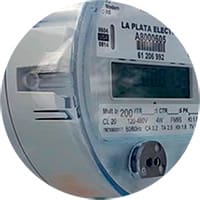
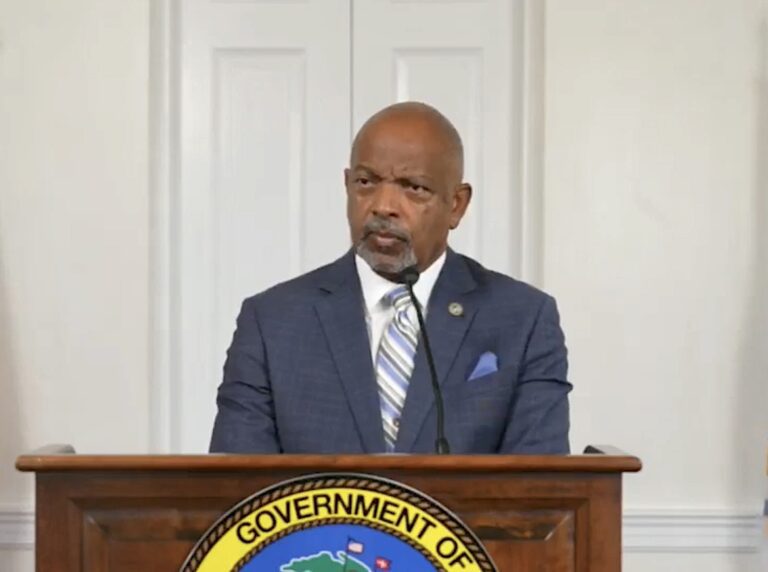
New water and electricity meters will provide accurate readings where older ones had failed, WAPA CEO Karl Knight said. One possible meter failure has a St. Croix medical company in dire straits after potentially overpaying by more than $21,000. (Photo from WAPA webpage)
A St. Croix medical company may have overpaid the Virgin Islands Water and Power Authority $21,600 because of faulty meter readings, leaving bank accounts too dry to buy patients’ medication, an owner said Tuesday.
Joanna Garcia, the practice manager at the Family Wellness and Health Center, said she had utility payments for the business and other properties she controlled come out of her account automatically because they had remained steady for years. Then there was a sudden jump.
“I’m on autopay and I only noticed it when they sent me a bill for $7,000,” Garcia said. “We’re talking about water from $40 to $3,000, and now down to $1200.”
$3,000 worth of water would have flooded her small office, she said.
Fed up, Garcia sent an email to federal and local officials, as well as the Source, pleading for an investigation into “corruption and abuse” at WAPA. The email detailed attempts to resolve billing discrepancies with the utility going back to at least April.
In January 2025, the center providing health services to Medicaid patients received a water bill of $29. In October, it was $3,065. The electricity bill in January 2025 was about $363. A year later it was $868 and by March $7,970. All without substantial changes in use, according to the emails.
“This represents an increase of 30 to 100 times my normal usage, despite no changes in occupancy, usage patterns, or property conditions that would justify such a spike. As a matter of fact, we have closed the cafe in January 2026,” Garcia wrote in the email, copying Justice Department officials. “These amounts are grossly inconsistent with our historical consumption and cannot be reasonably explained by normal usage.”
Inoperable or otherwise faulty WAPA meters may be behind many such erratic billing issues, CEO Karl Knight acknowledged Monday. He cautioned that recognizing the issue didn’t mean it’s a quick fix.
WAPA crews plan to start installing 55,000 new, better meters in September, Knight said, but the equipment swap won’t correct roughly two years of billing discrepancies.
“Sometimes we overbill customers, sometimes we underbill customers,” Knight said Monday evening. “The erraticness in billing makes our cash management a little bit difficult. Imagine if I think you owe me thousands of dollars and it turns out that instead I owe you thousands of dollars, and that’s a big swing in our ability to forecast our revenues and to manage our cash.”
WAPA has a team going over billing errors but it’s slow going, he said. Part sleuthing in historical billing records and part estimated guessing, the back office team has a pile of bills to go through.
“Sometimes it does take a while because we do have quite a preponderance of cases that we work through as quickly as we can. Some cases are a little bit more complicated than others, and so some cases do require a little bit more investigation. Some are pretty straightforward, especially if we catch it early enough,” Knight said.
“I encourage customers in that situation to come in and sit with a customer service rep and have them walk through their billing history and see if there’s anomalies that are obvious. We can then turn it over to the customer accounts folks to investigate further and determine what level of adjustment should be made to the bill,” he said.
Even after a billing error is identified, resolving the issue can be difficult. If the customer had been under billed, WAPA could help set up a payment plan. If the customer had been overbilled, they may need to settle for an account credit with the long cash-strapped utility.
That won’t work for Garcia, who was left with $700 in the bank. She needs a refund.
“I’ve never been in that situation,” she said. “I have been a very successful business owner here because I hustle.”
Knight said the authority has issued refunds in the past but usually when an account is closed. To address cases like Garcia’s, Knight said WAPA was working with the Legislature to offer payments.
The slow process has Garcia exasperated.
“I have to shoulder all these bills on my own,” she said, saying she’s considered more than once shuttering her business but feels responsible for her clients’ well-being. I cannot let go of our mental health patients. We have patients here with major PTSD; patients with real trauma from gun violence on this island. I’m not going to shut down service to these people just because WAPA decided to bully me.”
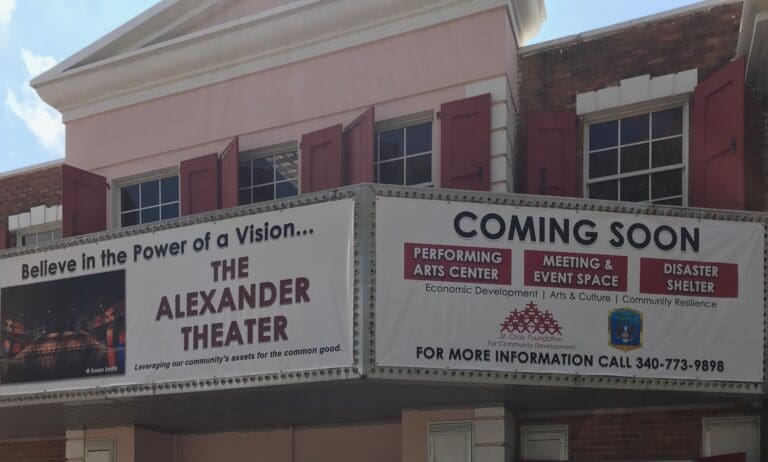
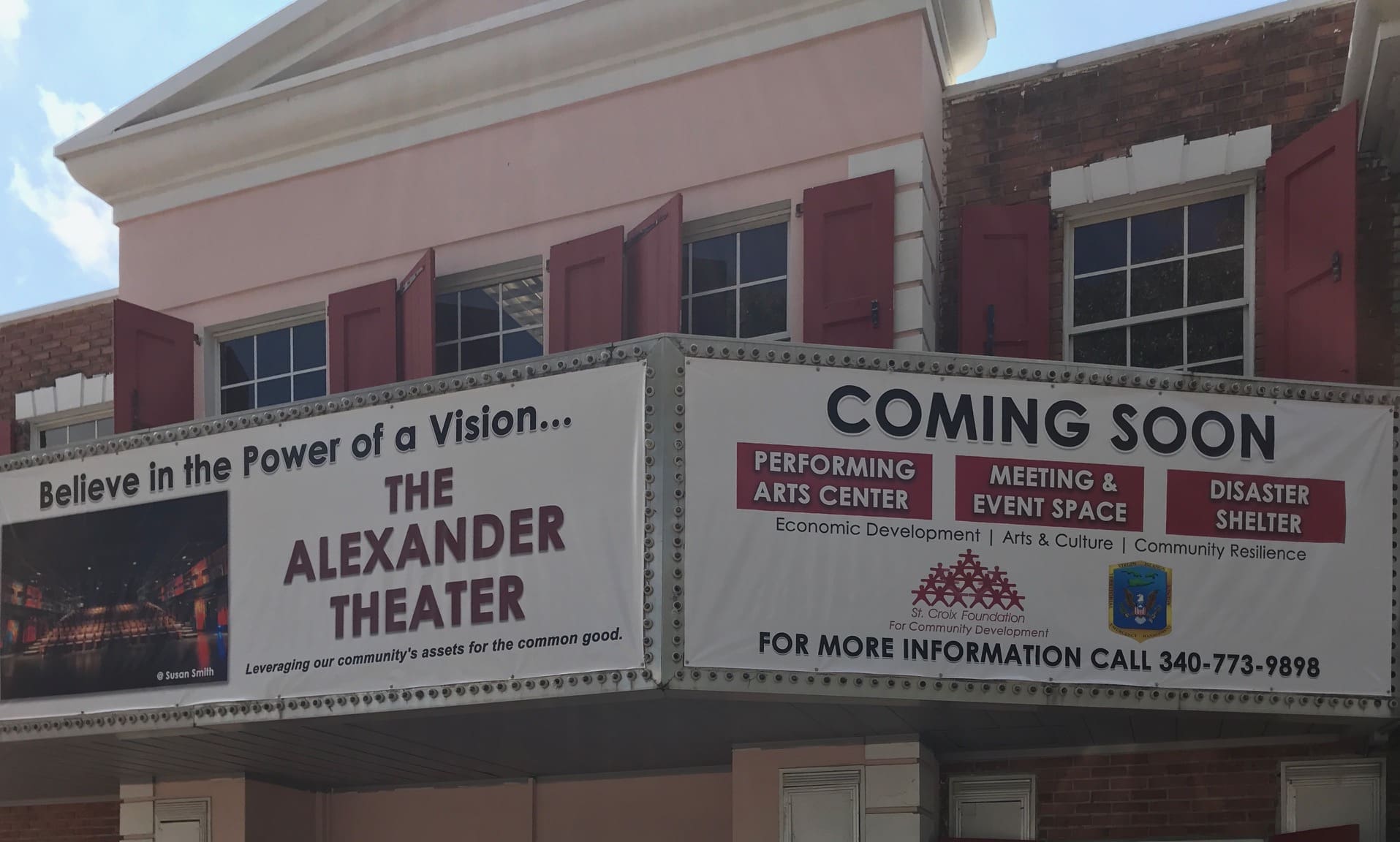
Christiansted’s Alexander Theater is slated to be restored and hardened to meet Federal Emergency Management Agency safe room standards. (Source file photo)
St. Croix Coastal Zone Management commissioners approved both a rebuild and hardening of Christiansted’s historic Alexander Theater and a reverse osmosis water purification unit in back-to-back decision meetings Tuesday evening.
The theater’s restoration will include a new, two-story addition that will house a lobby, classrooms, offices, two restaurants, a generator and pump room and storage spaces. A third-floor “utility penthouse” will house air conditioning equipment, and a reinforced cistern will also be built on the site. The facility will also meet Federal Emergency Management Agency safe room standards. After noting that the project was discussed in detail during a public hearing in October, committee chair Kai Nielsen asked representatives from the St. Croix Foundation for Community Development, which is spearheading the restoration, about its long-term maintenance plan.
“I’ve found this in every project that I’ve looked for, for the government of the Virgin Islands,” he said. “They want to build these grandiose facilities with state-of-the-art this and state-of-the-art that, but they have no maintenance at all. You cannot build these big facilities and cannot maintain them — it makes no sense.”
Foundation Vice President Haley Cutler said the maintenance budget will be “multipronged.”
“So when it is actually serving as a performing and cultural arts center — and we’re partnering with organizations who are hosting after-school programs, summer camps, as well as performances — there will be … performance rental income,” she said. “And then it’ll also be available for private events, so that’ll be part of the rental income.”
Cutler added that the foundation will also be seeking operating grants for the theater that can fund maintenance as well.
“And then during its ‘gray sky’ use as a safe room, all the costs for operating the safe room are … part of a contracted relationship with VITEMA,” she said. “And there is compensation for the use of the facility for that purpose, and there is a cost-share agreement that would go into place in terms of whose responsibilities maintaining the emergency functionalities of the shelter operations are — things like the generator and stuff like that.”
Commissioners later voted on a St. Croix Renaissance Group plan to install a reverse osmosis water purification system on the island’s southern shore. Environmental engineer Benjamin Keularts, from the consultant firm Tysam Tech, said the plan builds on an existing, damaged seawater intake system.
“The intake structure is there — with existing pumps that are damaged, they’re beyond repair — but the piping infrastructure is there,” he said. “And setup of a saltwater RO system that’s containerized should be very quick and not impact any sort of green space.”
The project’s first phase is expected to produce 200 gallons per minute of “double-pass” water meant for industrial use and 40 gallons per minute of “single pass” water that is “relatively equivalent to Safe Drinking Water Act potable water standards,” Keularts said. He added that the VI Water and Power Authority currently can’t meet the demand for “ultra-pure double-pass” water needed for industrial applications and food and beverage production.
An independent audit found the Virgin Islands Economic Development Authority remained in compliance with federal requirements while improving its overall financial position during fiscal year 2024, according to findings presented Tuesday to the authority’s governing board. (Shutterstock image)
The Virgin Islands Economic Development Authority governing board convened Tuesday morning to review the findings of an independent financial audit for fiscal year 2024, which concluded on Sept. 30, 2024.
The audit was conducted by Bert Smith and Company, a Washington, D.C. based professional services firm with deep ties to the Virgin Islands. Managing Partner George Willie and Senior Auditor Keisha Bridgewater joined the meeting on behalf of BSC to present their findings.
“We were engaged to perform an audit in accordance with auditing standards generally accepted in the United States, and in accordance with government auditing standards. We performed a federal compliance audit in accordance with uniform guidance for the year ended September 30, 2024, and this presentation is to inform those charged with governance of our findings, results, and observations,” Willie told the board.
Before revealing the audit’s quantitative findings, Willie painted a positive picture of the EDA and its compliance with relevant federal statutes that govern its operations.
“There are a number of areas of focus. Critical in these times is management’s ability to circumvent controls and override controls. We tested those. We did not find that that occurred. We also perform significant work over grant revenue in compliance with federal statutes, and we are happy to report that we found EDA to be in compliance,” he said.
Compared with fiscal year 2023, fiscal year 2024 saw an overall improvement in the EDA’s financial health.
“We have an actual decrease in the negative net position, $5.6 million in [fiscal year] 2023 versus $3.382 in [fiscal year] 2024, so we have about a $2.3 million change,” Bridgewater said.
In accounting, an organization’s net position is roughly defined as the difference between its assets and liabilities. While the EDA’s net position was negative in both 2023 and 2024, representing a financial deficit, this deficit shrank by $2.3 million year over year.
Bridgewater noted that, while the EDA’s assets decreased by roughly $13 million, this decrease was offset by a larger decrease in the authority’s liabilities.
“You can see that this larger decrease in liabilities is flowing down to your net position,” she said.
Bridgewater also pointed out the EDA’s move to convert many of its cash reserves to investments. From 2023 to 2024, the value of all EDA investments increased from $957,562 to $20,973,787 as a result of this choice.
Following the audit presentation, the board entered an executive session. No votes were taken, and the meeting was subsequently adjourned.
A St. Croix man has been sentenced to 10 years in federal prison for firing a gun inside a Christiansted restaurant during a confrontation with employees, the U.S. Attorney’s Office for the District of the Virgin Islands announced Tuesday.
Terrell E. Johnson was sentenced by Chief U.S. District Judge Robert A. Molloy after being convicted of discharging a firearm during a crime of violence inside Cruzian Bayou Bistro Restaurant in King’s Alley Walk, according to a press release from the U.S. Attorney’s Office.
According to court documents, Johnson entered the restaurant on Feb. 10, 2024, and sat at the bar. Employees told him smoking was prohibited after he began rolling a marijuana cigarette. When he refused to stop and was asked to leave, Johnson pulled a Glock .40-caliber handgun from a fanny pack and threatened to shoot one of the restaurant’s owners.
Court documents state that Johnson then fired one shot into the air inside the restaurant. As he walked away from the establishment, he fired three additional shots.
A British Virgin Islands citizen has been arrested on federal charges of illegal reentry into the United States and possession and distribution of child exploitation material, the U.S. Attorney’s Office for the District of the Virgin Islands announced Monday.
Bruce Wheatley appeared Monday before U.S. Magistrate Judge G. Alan Teague for an initial appearance, according to a press release from the U.S. Attorney’s Office.
According to court documents, federal agents identified Wheatley in Havensight on St. Thomas on June 26. Authorities said Wheatley had been deported from the United States in May 2026 and was prohibited from returning for five years. He was detained pending arrest on the illegal reentry charge.
According to court documents, agents searched Wheatley’s cellphone and found sexually explicit content depicting what appeared to be a minor and an adult engaged in a sexual act.
Wheatley remains detained pending further court proceedings.
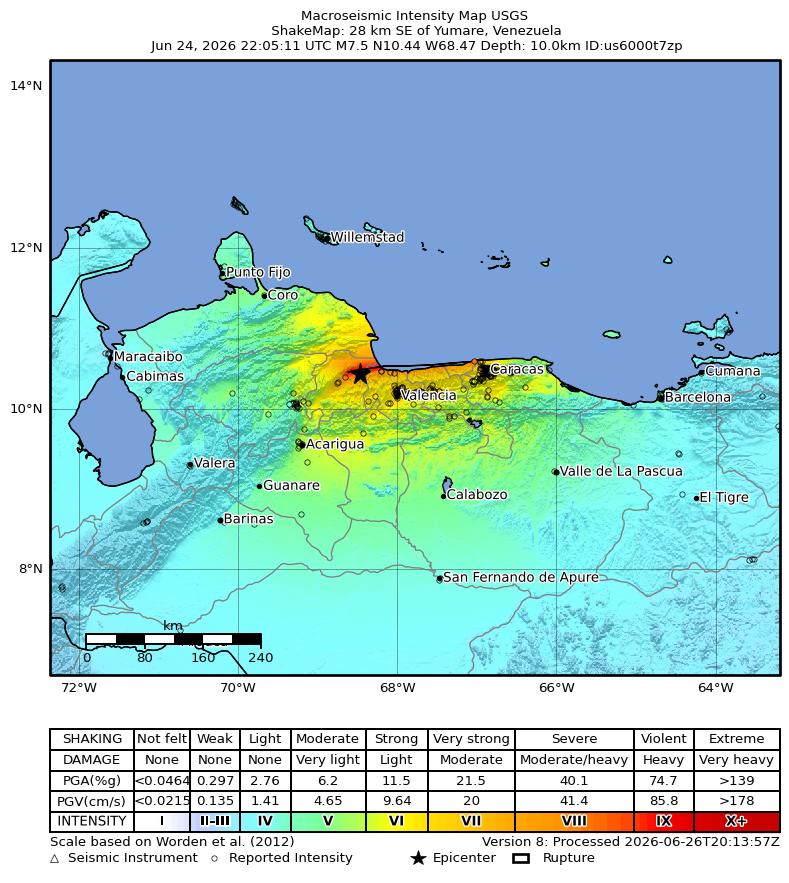
A USGS ShakeMap shows shaking intensity from a major magnitude 7.5 earthquake near Venezuela, where temblors struck the region on June 24. (Photo courtesy USGS)
Powerful earthquakes on June 24 rocked Venezuela and briefly prompted the issuance of a Tsunami Advisory for Puerto Rico and the U.S. Virgin Islands. While the advisory was canceled, experts say the event serves as an important reminder that Caribbean earthquake and tsunami preparedness must be understood.
The Caribbean sits along active plate boundaries capable of producing damaging earthquakes and, in certain circumstances, tsunamis. Earthquakes and tsunamis do not arrive like hurricanes, with days of forecast tracks and preparations. In some scenarios, especially with a nearby earthquake, coastal communities may have only minutes to respond.
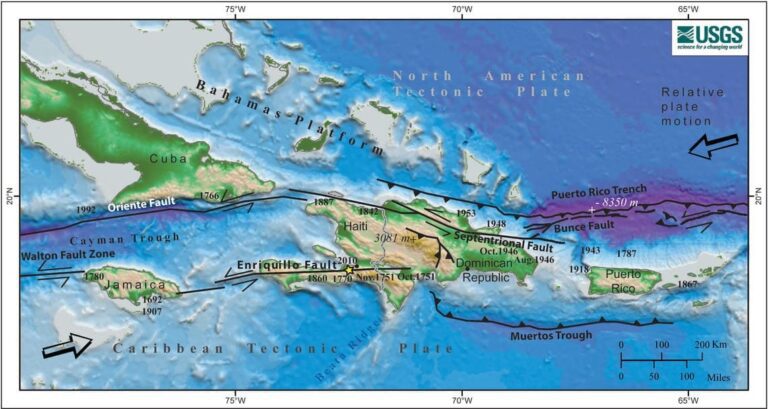
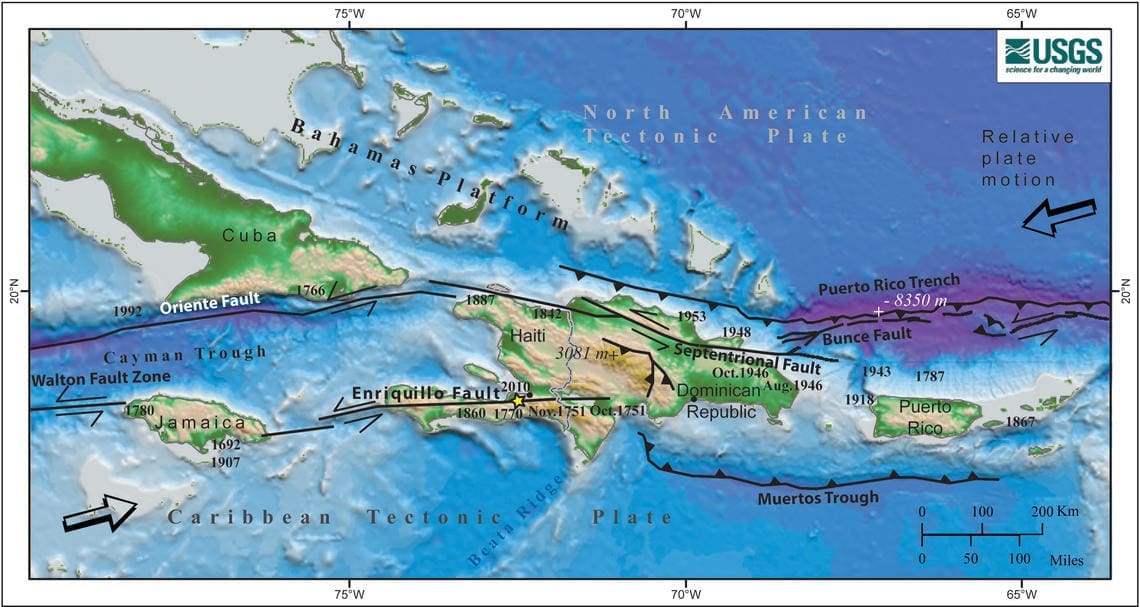
United States Geological Survey map of tectonic plates in the Caribbean region. Caribbean islands are located where earthquakes frequently strike due to their proximity to tectonic plates and fault systems. (Photo courtesy USGS)
For the USVI and Puerto Rico, experts said the Venezuela seismic activity does not mean a major local earthquake is now more likely. However, they also said the event underscores why residents and visitors should understand the difference between an advisory and a warning, review evacuation routes, and know the natural warning signs of a tsunami.
To better understand what happened in Venezuela and what it means for the region, the Source connected with the Virgin Islands Territorial Emergency Management Agency, the U.S. Geological Survey, and the University of the West Indies Seismic Research Centre.
USGS: The Venezuela Quakes Occurred in a Known Area of Active Faulting
Christopher DuRoss, a research geologist with the U.S. Geological Survey in Golden, Colorado, provided the Source with detailed information about the earthquakes. He said the Venezuela sequence included two major earthquakes within seconds of each other in an active fault area along the boundary between the South American and Caribbean plates near Caracas, the capital of Venezuela.
“Venezuela experienced a magnitude 7.2 foreshock followed 39 seconds later by a magnitude 7.5 mainshock,” DuRoss said. “The epicenters of the two earthquakes are located about 10 km apart and about 175 km west of Caracas. The earthquakes occurred in a known area of active faulting, where right-lateral strike-slip faults form a complicated boundary between the South America and Caribbean plates.”
The earthquakes had severe impacts in Venezuela, and aftershocks have continued to rock the region as recently as June 29. The USGS Prompt Assessment of Global Earthquakes for Response system issued a red alert for the magnitude 7.5 event, stating, “High casualties and extensive damage are probable, and the disaster is likely widespread.”
DuRoss explained that the earthquakes occurred in the southern Caribbean, where the Caribbean plate is moving eastward and interacting with nearby plates and fault systems.
The recent earthquakes in Venezuela occurred along faults that accommodate eastward motion of the Caribbean plate. The earthquakes were right-lateral strike-slip earthquakes, where the Earth’s crust moved to the right from an observer on one side of the fault. In the eastern Caribbean, a convergent plate margin, which is a subduction zone forming the Puerto Rico trench, creates an earthquake hazard for Hispaniola, Puerto Rico, the Virgin Islands, and the Lesser Antilles. Subduction zone earthquakes can be large, up to magnitude 8+, and devastating, and seafloor uplift or subsidence can generate tsunamis with far-reaching effects on coastal communities.Why a Large Earthquake Does Not Always Mean a Large Tsunami
After the quakes struck Venezuela, a Tsunami Advisory was issued for Puerto Rico and the USVI. DuRoss said tsunami generation depends on more than earthquake magnitude. The type of fault movement, the location of the rupture, and whether the seafloor moves vertically are all important factors.
“Tsunami generation is more likely to occur when substantial vertical motion of the seafloor occurs during an earthquake,” DuRoss clarified. “This is more likely to happen in large reverse or thrust earthquakes, for example at a convergent boundary or subduction zone. Examples of tsunami generating earthquakes include the 2004 magnitude 9.1 Sumatra–Andaman earthquake and the 2011 magnitude 9.1 Tohoku, Japan earthquake. More information can be found here.”
The Venezuela earthquakes occurred along strike-slip faults. That type of motion is generally less likely to generate a tsunami, but DuRoss said it does not completely eliminate the possibility.
“The earthquake in Venezuela occurred along strike-slip faults, where the earth’s crust moves horizontally. Strike-slip earthquakes are less likely to generate tsunamis. However, because these faults continue offshore, they can still vertically displace the seafloor, and tsunami generation is possible. These earthquakes are an important reminder that the region is seismically active,” said DuRoss.
VITEMA: Tsunami Sirens Are Activated for Tsunami Warnings, Not Advisories
Regina Browne, deputy director of planning and preparedness with VITEMA, spoke with the Source along with J’Lisa Martinez, public information officer with the agency. Browne explained that the tsunami sirens across the USVI are not activated for every tsunami alert product.
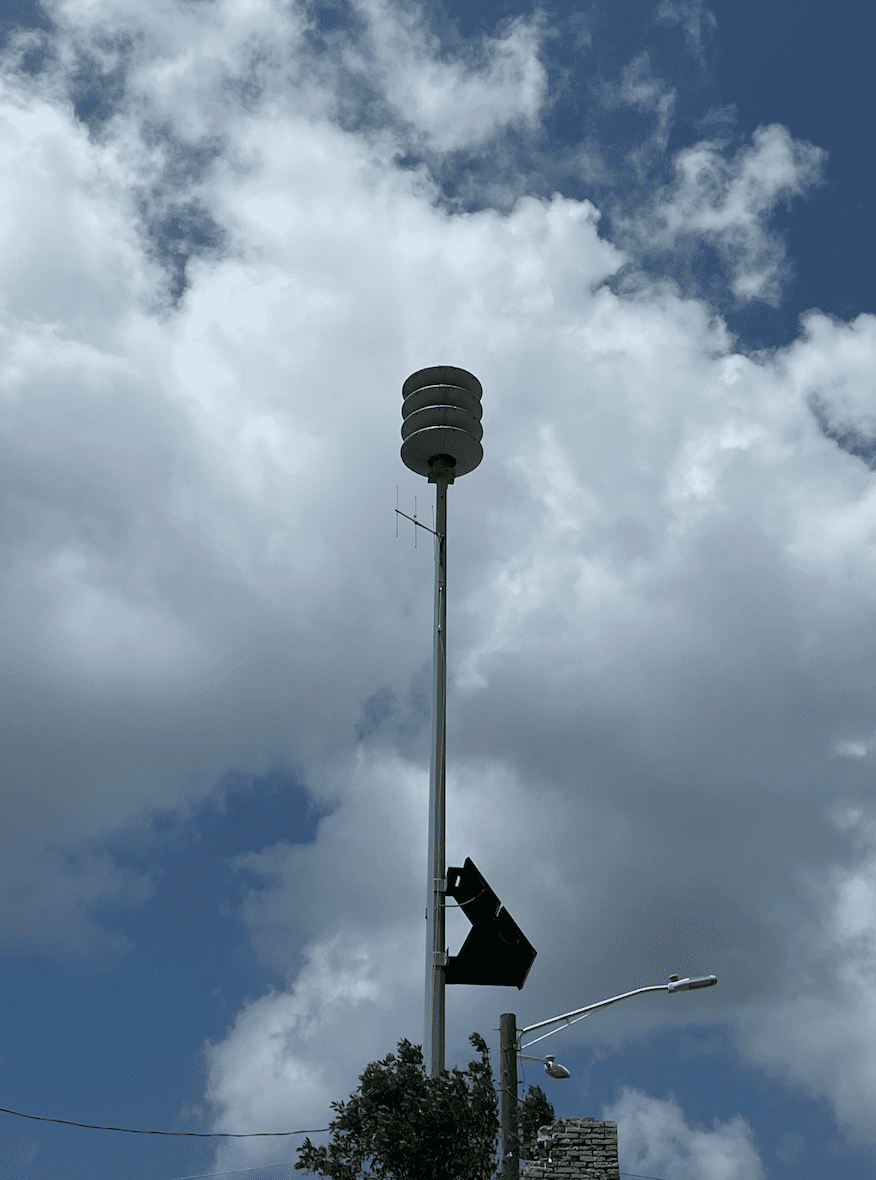
A VITEMA tsunami siren in Christiansted, St. Croix. VITEMA officials said the territory’s sirens are activated for a tsunami warning. NOAA defines a tsunami warning as an alert issued when dangerous coastal flooding and powerful currents are possible from an imminent, expected or occurring tsunami. (Source photo by Jesse Daley)
“The sirens in the territory are only activated for a Tsunami Warning. Because we were under a Tsunami Advisory on June 24, that would not have prompted us to activate the sirens throughout the territory.”
Browne explained that a warning indicates a more serious and urgent threat than an advisory.
“When a Tsunami Warning is issued, that is when a tsunami threat is imminent. It can happen very quickly.”
Tsunami Alerts
According to the National Weather Service, various tsunami alerts are issued when a threat arises.
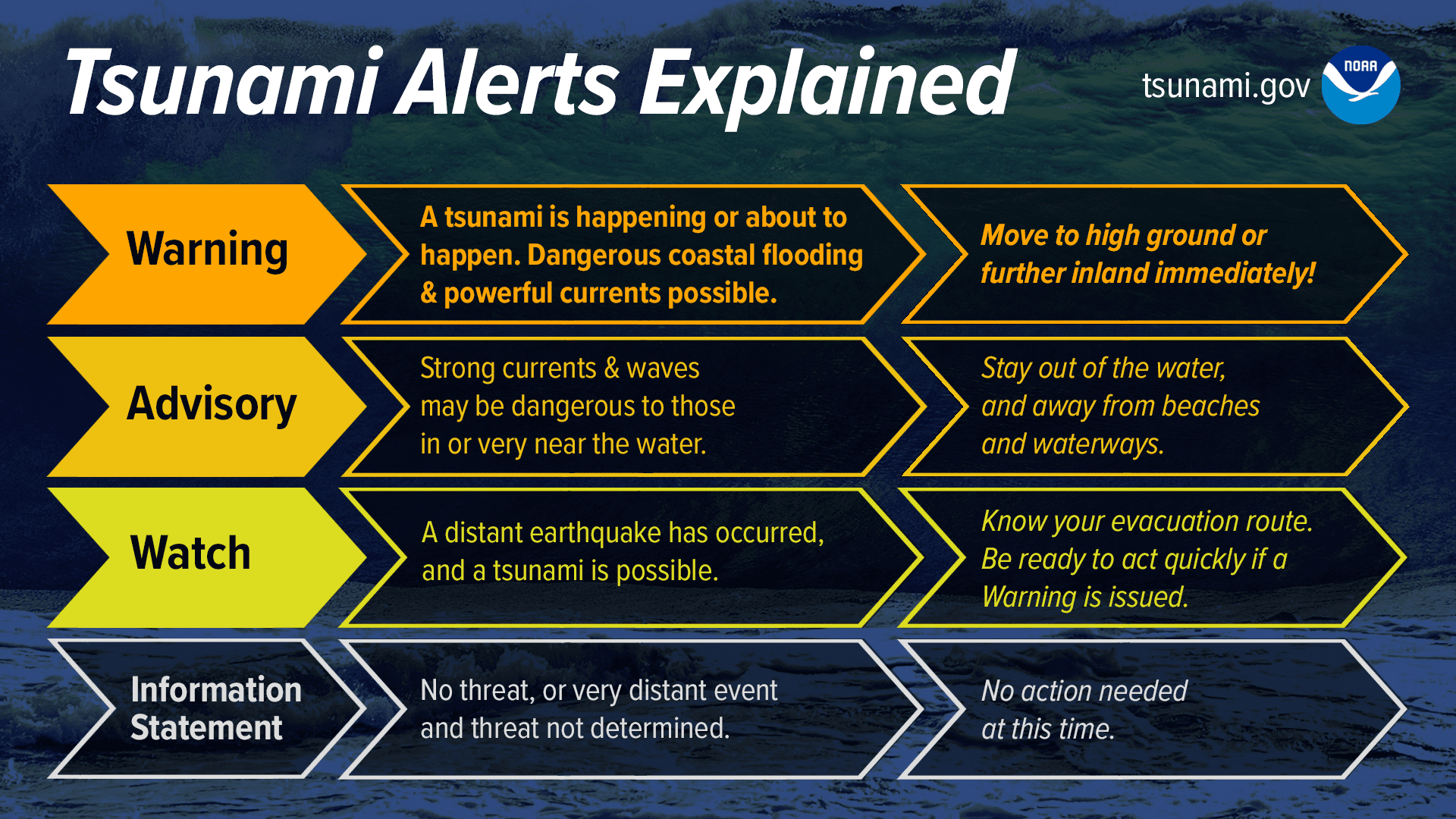
A NOAA graphic explains the differences between tsunami warnings, advisories, watches and information statements, including when residents should move to high ground or stay away from beaches and waterways. (Photo courtesy NOAA/tsunami.gov)
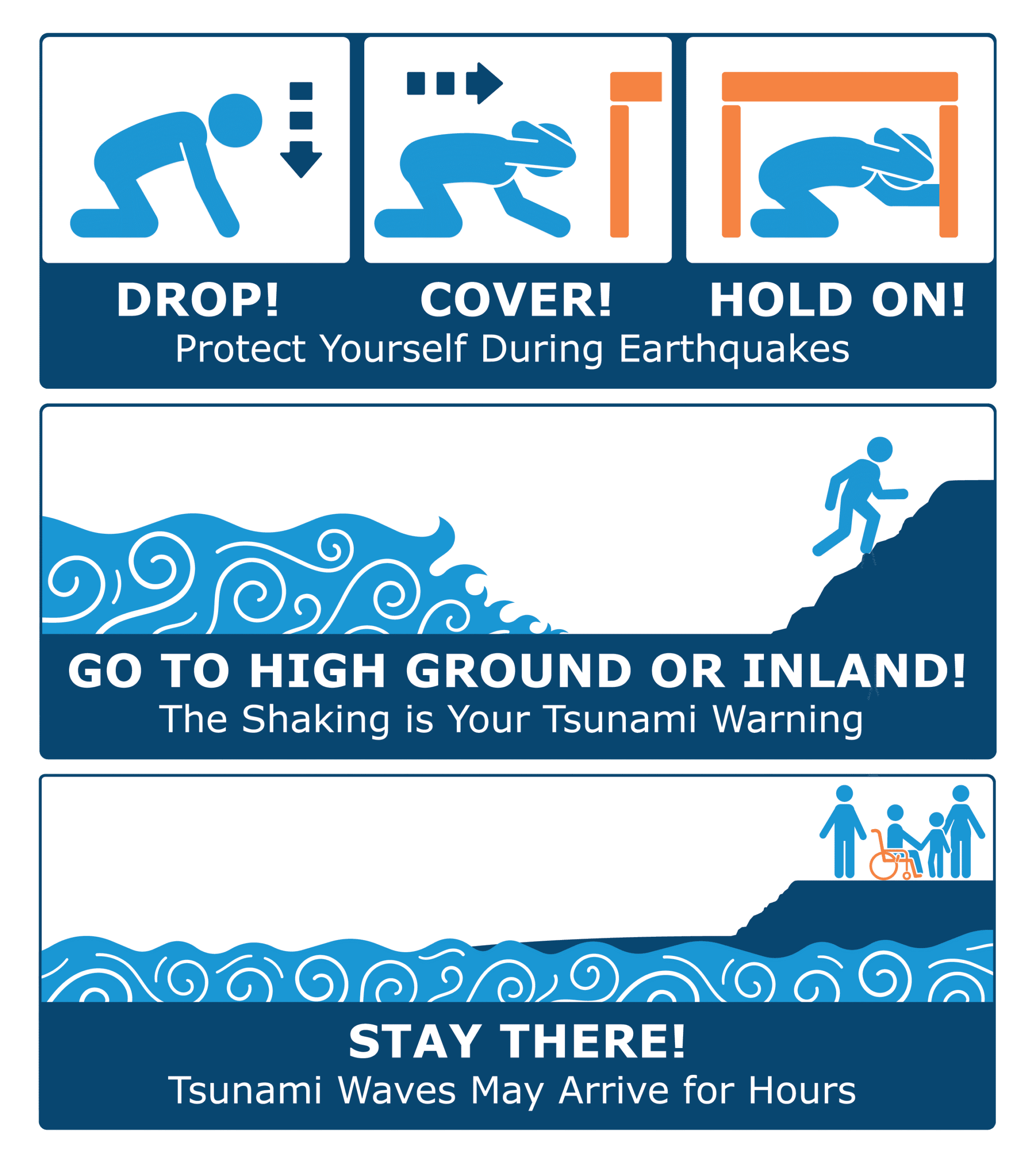
“Tsunami Warning: Take Action – Danger! A tsunami that may cause widespread flooding is expected or occurring. Dangerous coastal flooding and powerful currents are possible and may continue for several hours or days after initial arrival. Follow instructions from local officials. Evacuation is recommended. Move to high ground or inland (away from the water).
“Tsunami Advisory: Take Action—A tsunami with potential for strong currents or waves dangerous to those in or very near the water is expected or occurring. There may be flooding of beach and harbor areas. Stay out of the water and away from beaches and waterways. Follow instructions from local officials.
“Tsunami Watch: Be Prepared: a distant earthquake has occurred. A tsunami is possible. Stay tuned for more information. Be prepared to take action if necessary.
“Tsunami Information Statement: Relax – An earthquake has occurred, but there is no threat or it was very far away, and the threat has not been determined. In most cases, there is no threat of a destructive tsunami.”
VITEMA’s tsunami preparedness page also emphasizes that residents should review evacuation information before an event happens. The same VITEMA page includes evacuation maps for St. Croix, St. John and St. Thomas and urges residents to move quickly if a tsunami threat develops.
UWI Seismic Research Centre: Significant, But Not Unexpected
Dr. Erouscilla P. Joseph, director of the University of the West Indies Seismic Research Centre in St. Augustine, Trinidad, said the Venezuela earthquakes were substantial but not surprising.
According to Joseph, “The recent earthquakes were significant but not unexpected given the tectonic setting of northern Venezuela. This region lies along the active boundary between the Caribbean and South American tectonic plates and has produced numerous damaging earthquakes throughout history.
“The sequence was noteworthy, because it involved two large earthquakes occurring approximately 39 seconds apart – a magnitude 7.2 followed by a magnitude 7.5. This suggests a complex rupture process involving multiple fault segments or cascading fault rupture. While such sequences are relatively uncommon, they are well documented globally and reflect the complexity of how stress is released during major earthquakes.”
Joseph said the event should not be interpreted as a sign that Puerto Rico or the USVI now face a heightened immediate earthquake threat.
“While a large earthquake changes stress locally, there is currently no evidence that this event has increased the immediate likelihood of a major earthquake in Puerto Rico or the Virgin Islands. However, the event serves as an important reminder that earthquakes can occur throughout the Caribbean, and preparedness should remain a regional priority.”
Why the Advisory Was Issued and Later Canceled
“A Tsunami Advisory was issued for Puerto Rico and the U.S. Virgin Islands because the magnitude and location of the earthquake warranted further evaluation. Small tsunami waves were subsequently observed at several sea-level stations in the northeastern Caribbean, confirming that the earthquake had generated a tsunami. However, observations from coastal tide gauges and deep-ocean tsunami detection buoys showed that the waves remained small and did not pose a significant hazard to the region. As additional data became available and forecast models were confirmed by observations, the advisory was canceled,” Joseph said.
Joseph cautioned that advisories are important, even when they are later canceled.
“This event illustrates why tsunami advisories should be taken seriously. The initial seismic information tells us that a tsunami is possible, but it is the combination of seismic analysis, forecast modeling, and real-time sea-level observations that allows warning centers to determine whether the tsunami poses a significant threat, and when it is safe to cancel the advisory.”
A Shared Regional Responsibility
Joseph explained that the Venezuela earthquakes should be understood as part of a broader regional hazard that requires continued monitoring, public education, and preparedness across the Caribbean.
A tsunami safety graphic advises residents to drop, cover and hold on during an earthquake, then move to high ground or inland if a tsunami threat is possible. Tsunami waves can arrive within minutes of a powerful quake. (Photo courtesy U.S. Tsunami Warning System)
“One of the key messages I would like readers to take away is that the Caribbean is an active tectonic region where earthquakes are a natural part of our geological setting. While this recent event occurred near Venezuela, it serves as a reminder that earthquake and tsunami preparedness is a shared regional responsibility. Continued investment in scientific monitoring, resilient infrastructure, effective warning systems, and public education is essential to reducing risk across all Caribbean territories,” Joseph urged.
Local Weather Updates
Across the U.S. Virgin Islands, local weather information is updated regularly on the Source Weather Page and on the official website of the National Weather Service in San Juan, Puerto Rico. USVI residents and visitors can also sign up for emergency alerts, including earthquake and tsunami notifications, from VITEMA.
A man is facing an attempted murder charge after police took him into custody in connection with a shooting that left two people injured Monday morning in Lorraine Village, according to the Virgin Islands Police Department.
Janigh Gonsalves was charged with attempted murder, first-degree reckless endangerment, carrying firearms openly or concealed, possession or sale of ammunition, brandishing or using deadly weapons, and carrying or using dangerous weapons, according to a VIPD police report. No bail was set under the territory’s domestic violence statute.
Police said the St. Croix 911 Emergency Call Center received a report at 8:48 a.m. Monday that a man and a woman had been shot multiple times in Lorraine Village. Both victims were transported by ambulance to Juan F. Luis Hospital, where they remain in stable condition.
The VIPD announced Tuesday that Gonsalves had been taken into custody in connection with the shooting.
Anyone with information about the shooting is asked to call 911, the Criminal Investigation Bureau at 340-778-2211 or Crime Stoppers VI at 1-800-222-TIPS (8477).
Phyllis Eudora Irwin Charles, of Whim, passed away on June 24. She was 89 years old.
Phyllis Eudora Irwin Charles
She was preceded by spouse, Earl A. Charles Sr.; mother, Inez Erazo Capehart; father, Leon Irwin; sons, Earl A. Charles Jr., Ray A. Charles; grandson, Hanif Charles; sister, Velarice Mitchelson; brother, Norman Erazo.
She is survived by daughter, Alice A. Charles; sons, Michael A. Charles, Wayne A. Charles, Mark A. Charles; adopted son, Addison James; grandchildren, Naeemah Charles, Michael Charles Jr., N’zinga Charles, Akilah Charles, Shaka Charles, Osiris Charles, Rashid Charles, Imhotep Charles, Requanda Charles, Nyama Gibbs; great grandchildren, Maliki Charles, Senai O’Brien, Khalid Isles, Eli Charles, Cataleya Charles, Masai Charles, India Charles, Niley Laudat, Leyla Charles; sisters, Violet Irwin de Lagarde; brothers, Charles Capehart, Rueben Irwin; special niece, Diane Capehart; sister in laws; Charmaine Capehart, Radiance Roebuck Irwin; daughter in law, Lolita K. Charles; god daughter, Juliet C. James; precious friends and other relatives too numerous to mention.
Funeral service will be held on July 10, at Holy Trinity Lutheran Church. Service begins at 10 am. Interment will be held at Kingshill Cemetery.
Funeral arrangements are entrusted to James Memorial Funeral Home, Inc.
I join a deeply saddened Virgin Islands community in mourning the loss of Joseph Nathaniel Ponteen, who was a prominent attorney and long-standing public servant in the Virgin Islands. I pray for God’s comfort for his family, his loved ones, his colleagues, and for all those who mourn his passing.
(Shutterstock image)
Attorney Ponteen has held many distinguished positions in the Government of the Virgin Islands to include Acting Director of the Bureau of Corrections and Senior Budget Analyst in the Office of Management and Budget. At the Virgin Islands Department of Justice, Attorney Ponteen holds the distinction as serving as Acting Attorney General, Assistant Attorney General, and Managing Attorney in the Office of the Attorney General, under the leadership of the late Julio Brady.
The diversity of leadership roles shows both the debt and breadth of knowledge and capacity possessed by Attorney Ponteen. He was a man of an amiable nature who served with compassion and grace.
I honor the memory of Attorney Ponteen for his service to the Virgin Islands community, marked with integrity and distinction. He was a man of wisdom and inspiration. With a grateful heart, I am thankful for his service and many contributions to this Territory. His life and legacy will remain a constant reminder of the great man that he was.
May he now rest in peace.
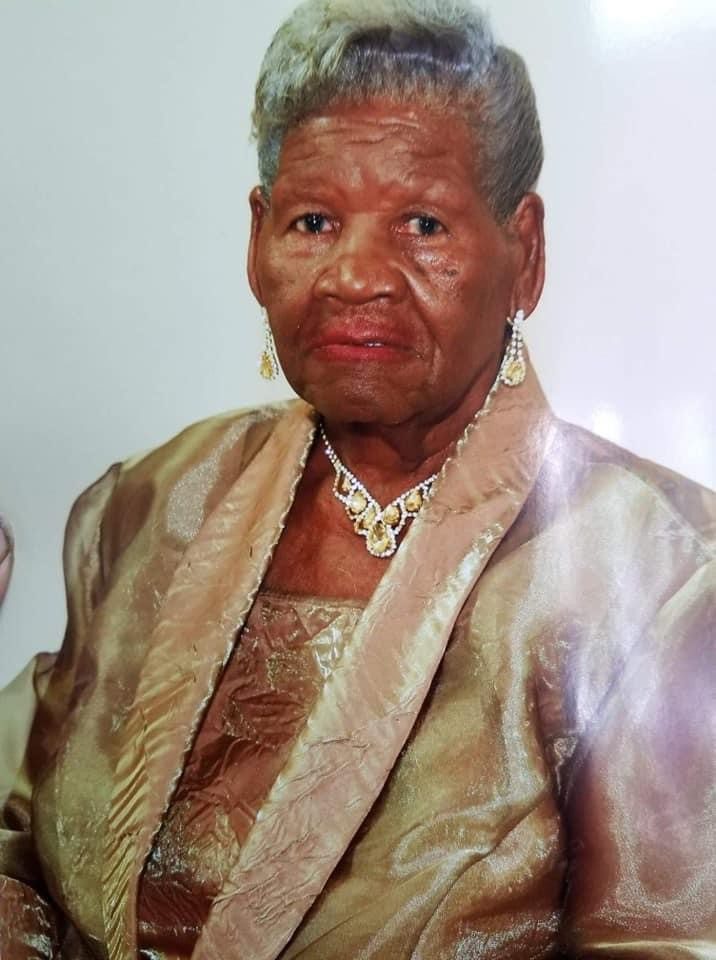
With our deepest condolences, we announce the passing of Ovilda Williams Haynes, age 101, of Williams Delight, originally of Antigua, who departed this life on June 14, 2026.Ovilda Williams Haynes
A funeral service celebrating her life will be held on July 23, at Friedensberg Moravian Church. Viewing will begin at 9 a.m., followed by the funeral service at 10 a.m. Interment will take place at Kingshill Cemetery.
Funeral arrangements are entrusted to James Memorial Funeral Home, Inc.