A Puerto Rican couple has been charged with drug conspiracy, United States Attorney Delia L. Smith announced Friday.
According to court records, on September 29, 2023, Pedro Negron-Rodgriguez and Emma
Mueses-Dilone were ticketed passengers on Spirit Airlines departing St. Thomas to
Orlando, FL, with a final destination of Philadelphia, PA. During inspection by
Customs and Border Protection officers recovered eight kilograms of cocaine from
Mueses-Dilone’s suitcase. Prior to the search, Dilone confirmed that she had personally
packed the suitcase and that the suitcase belonged to her. Negron-Rodriguez and
Mueses-Dilone also confirmed that they were traveling together.
A St. Thomas man has pleaded guilty to drug conspiracy charges, United States Attorney Delia L. Smith announced Friday.
According to court documents, in January 2022, Yefri Martinez Herrera brokered a 200-kilogram cocaine deal with individuals later revealed to be a confidential source and an undercover Drug Enforcement Administration agent. On Feb. 2, 2022, Martinez Herrera agreed to sell the undercover agent 86 kilograms of cocaine as part of that 200-kilogram deal. Federal agents later executed a search warrant on Martinez Herrera’s home in Frenchtown, where 87 kilograms of cocaine and a Glock pistol were seized. Martinez Herrera was taken into custody after an agent found him hiding inside a bedroom closet.
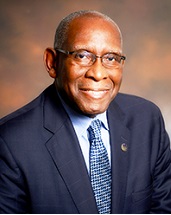
UVI President Dr. David Hall (File photo)
As all of you are aware, on this past Saturday over 1,300 women, men and children were killed in a senseless massacre in Israel. The more we learn about the atrocities that occurred the more outraged and saddened we should become. This attack was not just an attack on the people of Israel but an attack on the values and preciousness of life that all of us should embrace.
On behalf of the University of the Virgin Islands, I extend our deepest sympathy and sadness to our Jewish brothers and sisters, members of our university community who have family and friends in the region, and our Jewish friends who have stood by us and supported this university over the years.
May this tragic and unspeakable event remind us that evil still exists all around us and inspire us to increase our resolve to find peace among and between people and nations, even in the most difficult situations.
May the families of those who lost their lives and those who are being held as hostages be comforted. We also mourn the lives of innocent Palestinians who have died in this cycle of violence that we have yet to find a way to end.
As a university dedicated to the quest for social justice for all people, we must understand that what occurred on Saturday is not part of that quest or our values. Let us remember our common values of empathy and respect for one another and come together to support each other during this challenging time.
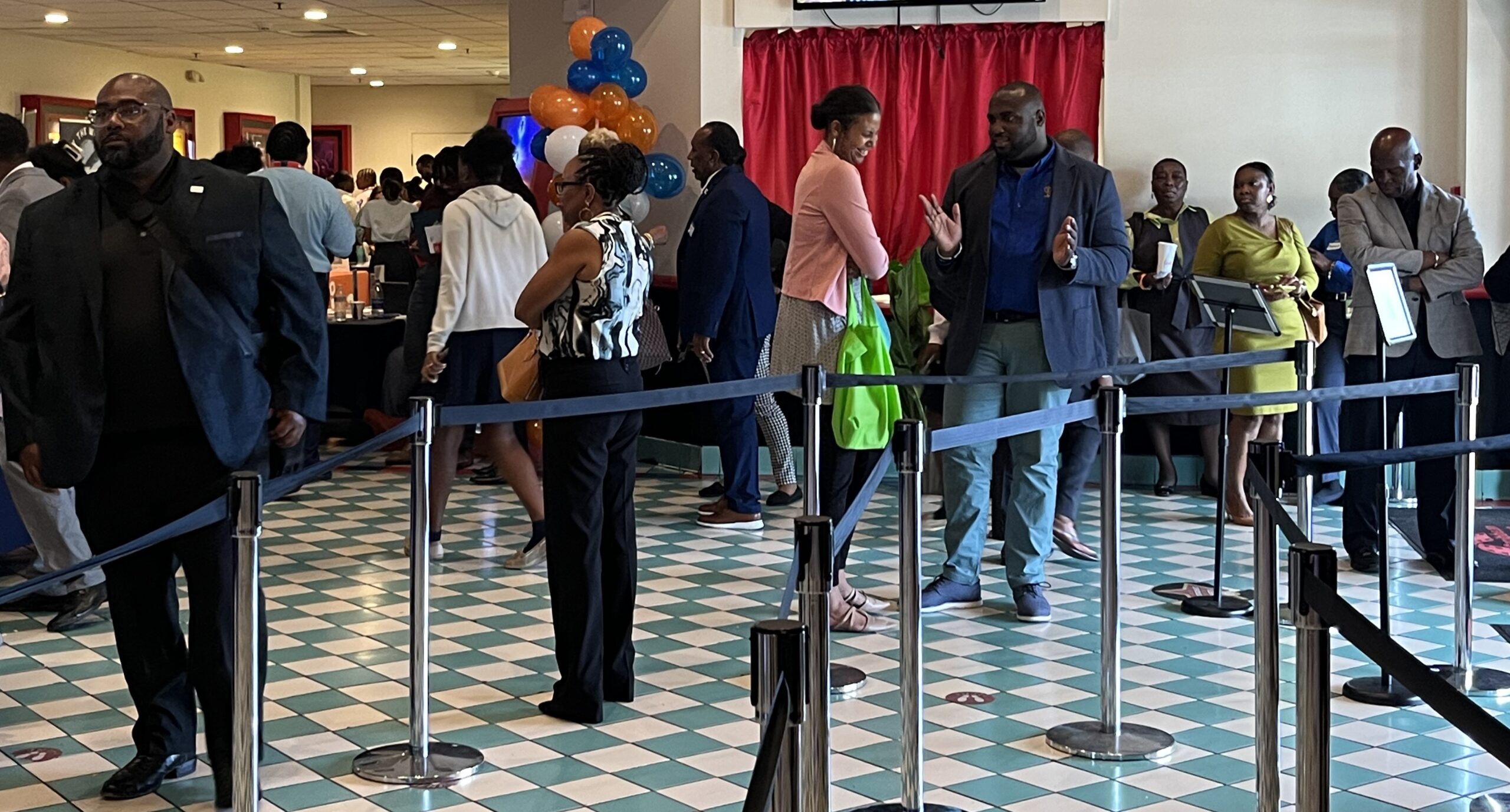
Over 200 community members, students, non-profits, employers and employees across the public, private and non-profit sectors came together at the 2023 Governor’s Workforce Summit on St. Thomas held at Caribbean Cinemas on Thursday to network and learn from the administration and panelists on varying topics on economic development, entrepreneurship, personal branding, the role of AI in the workplace and more.
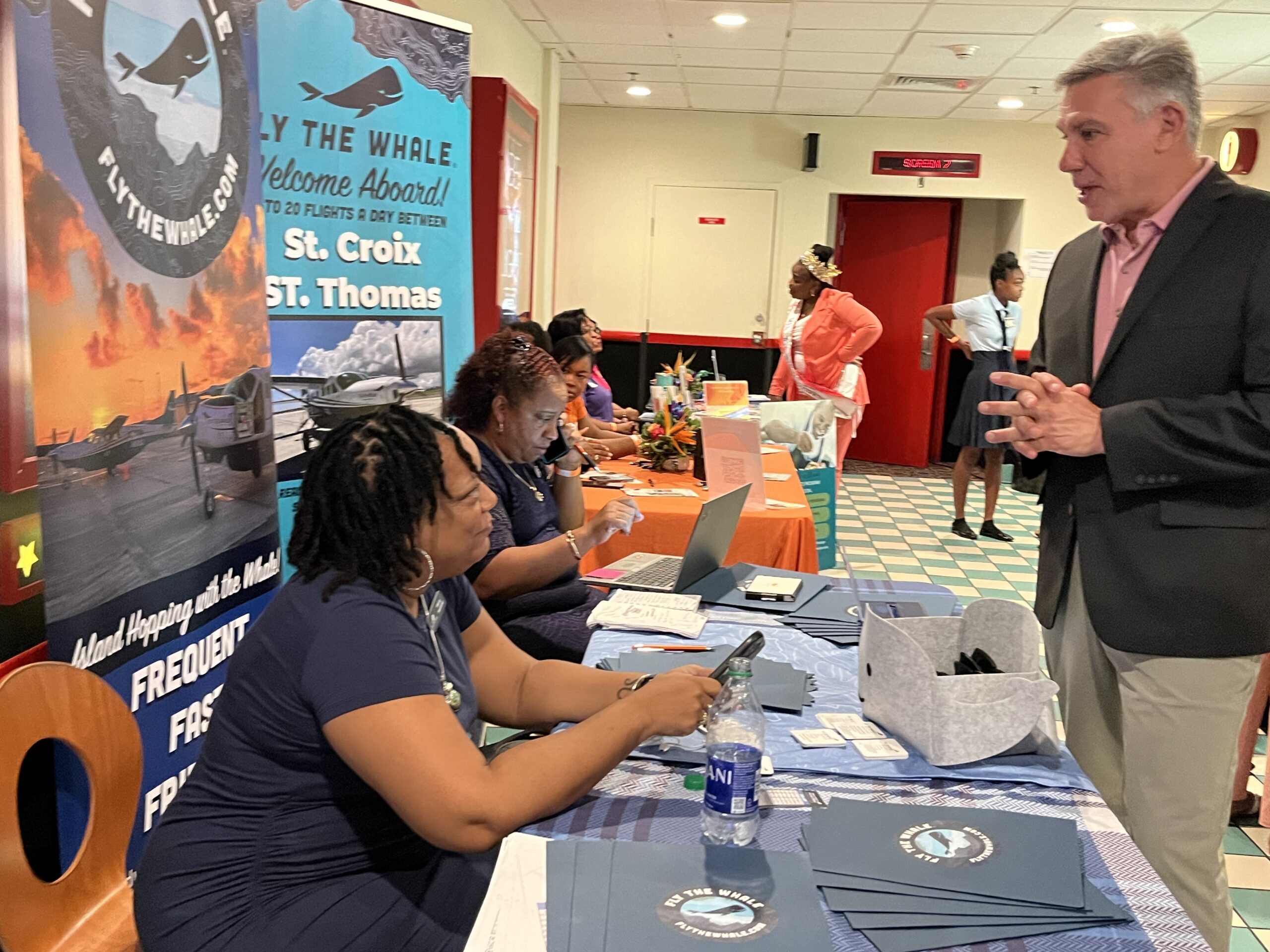
(Photo by Shanell Petersen)In addition to panel discussions, several booths offering resources for jobs, career advancement, and giveaways were part of the Governor’s Workforce Summit. Representatives from Fly the Whale, sponsors of the Summit, speak with Mike Fazio (right), President of Workforce 180. (Photo by Shanell Petersen)Panelists shared their stories and experiences on “Making Technology Work for Us: Strengthening Our Economy and Our Workforce” during the “Governor’s Session” with Gov. Albert Bryan Jr. (left to right), including Michael DelGiacco, General Partner, Twin City Fund; Wayne L. Biggs, Jr., Chief Executive Officer, USVI Economic Development Authority; Daryl Wade, Chief Information Officer, ViNGN; and Michael Carty, Founder & CEO, Smartnet. (Photo by Shanell Petersen)(Photo by Shanell Petersen)Students within the Future Jobs of America program from Ivanna Eudora Kean High School and Charlotte Amalie High School and students on the hospitality track from Seventh-day Adventist Secondary School had their own private viewing of the 2023 Governor’s Workforce Summit at Caribbean Cinemas on St. Thomas. (Photo by Shanell Petersen)
Chief District Judge Robert Molloy says he wants more details while mulling over a plea deal for admitted child predator Alfredo Smith. (Shutterstock image)
The judge overseeing the case of sexual predation at a St. Thomas public high school says he will take more time to consider a plea deal submitted Sept. 13. But at the same time, Chief District Judge Robert Molloy set a sentencing date for defendant Alfredo Bruce Smith.
He also ordered the federal probation office to prepare a pre-sentencing report and to have that report ready for review by the government and Smith’s lawyer by Dec. 8. “After careful consideration and review, the court will defer a decision on accepting or rejecting the plea until the court reviews the presentence report and have heard from the parties,” Molloy said.
When Smith, 53 — a former hall monitor and athletic coach at the Charlotte Amalie High School — appeared at a change of plea hearing in September, he admitted to 20 different offenses committed against a dozen student-athletes over a 15-year period. Offenses acknowledged in the form of guilty pleas included rape, unlawful sexual contact, production of child pornography, enticement and coercion of minors to commit unlawful sex acts, and transportation of minors for the purpose of committing sex crimes.
In the plea deal promoted by both legal teams, the defendant would be sentenced to a prison term of 30-35 years. Information contained in the pre-sentencing report factors into the calculations used by judges to formulate the actual penalty.
Sentencing has been scheduled for Feb. 9 at 9 a.m. in the Ron deLugo Federal Building, Courtroom 1, St. Thomas.
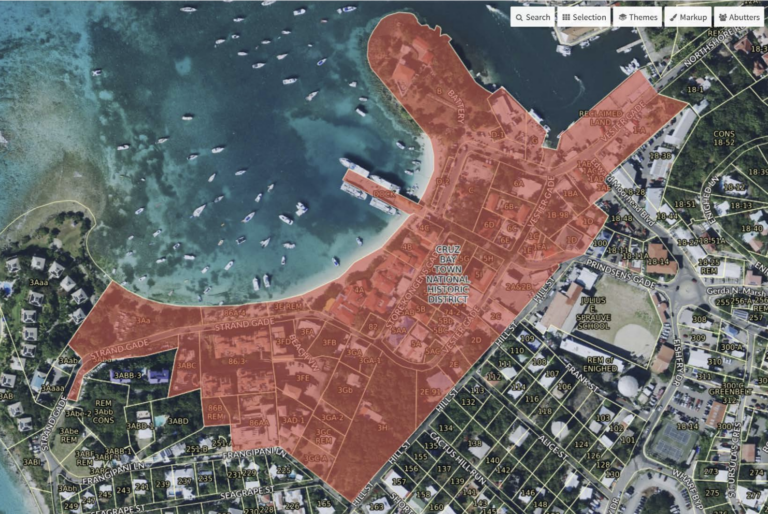
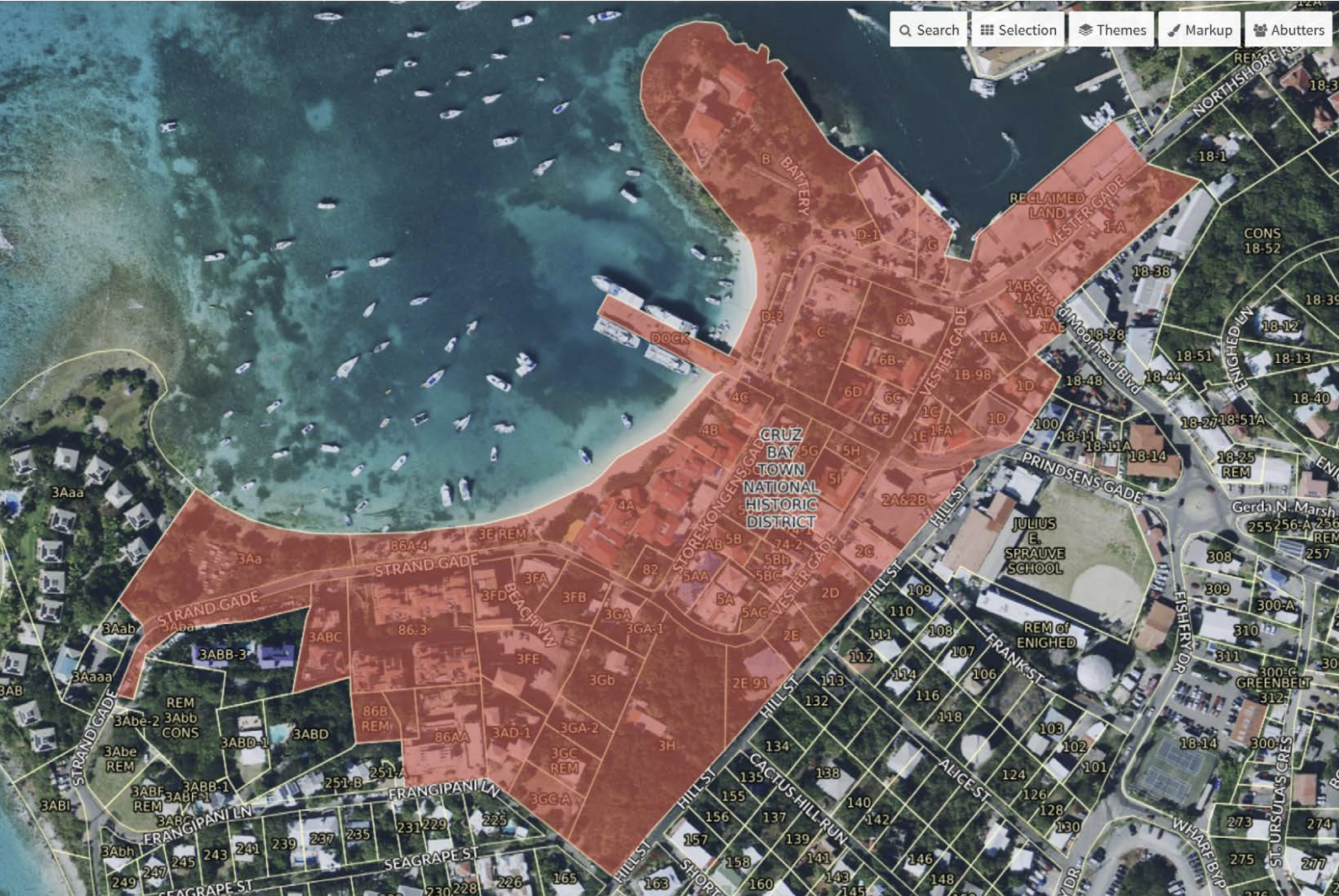
A map shows the Cruz Bay Historic District. (Image courtesy V.I. Historic Preservation Commission)
In recent years, more than one business owner has attempted to erect a neon sign in Cruz Bay, only to discover that this type of signage is not permitted within the boundaries of the Cruz Bay Historic District.
It’s now been seven years since the Cruz Bay Historic District was established, but property owners and businesses are often unaware that regulations prevail regarding the appearance of roofs, shutters, trim, windows, signage and paint color within the boundaries of the historic district.
On Thursday afternoon, St. John resident Kurt Marsh, who now serves as chairman of the V.I. Historic Preservation Commission, met with St. John residents at the St. John Legislative Annex to inform them about regulations and the process for applying for exterior design modifications.
Kurt Marsh fields questions at a meeting to discuss regulations concerning the Cruz Bay Historic District while Historic Preservation Technician Patton Mulford, right, listens. (Screenshot from a meeting of the V.I. Historic Preservation Commission on Oct. 12)
This meeting — as well as one held in the morning for government officials — is part of an initiative to improve communication between property owners seeking to upgrade their property and the territorial agencies that oversee their efforts, including the V.I. State Historic Preservation Office. Both meetings were held virtually as well as in person.
Marsh made it clear that the Historic Preservation Commission is open to working with property owners and businesses. “We’re not a brick wall. We don’t want to prevent enhancements to your property. We’re trying to alleviate your burden as we move towards compliance,” he said.
Marsh said that the commission bases its enforcement on regulations established for the Charlotte Amalie Historic District, but Cruz Bay is fundamentally different as its prevailing architecture is not Danish Colonial.
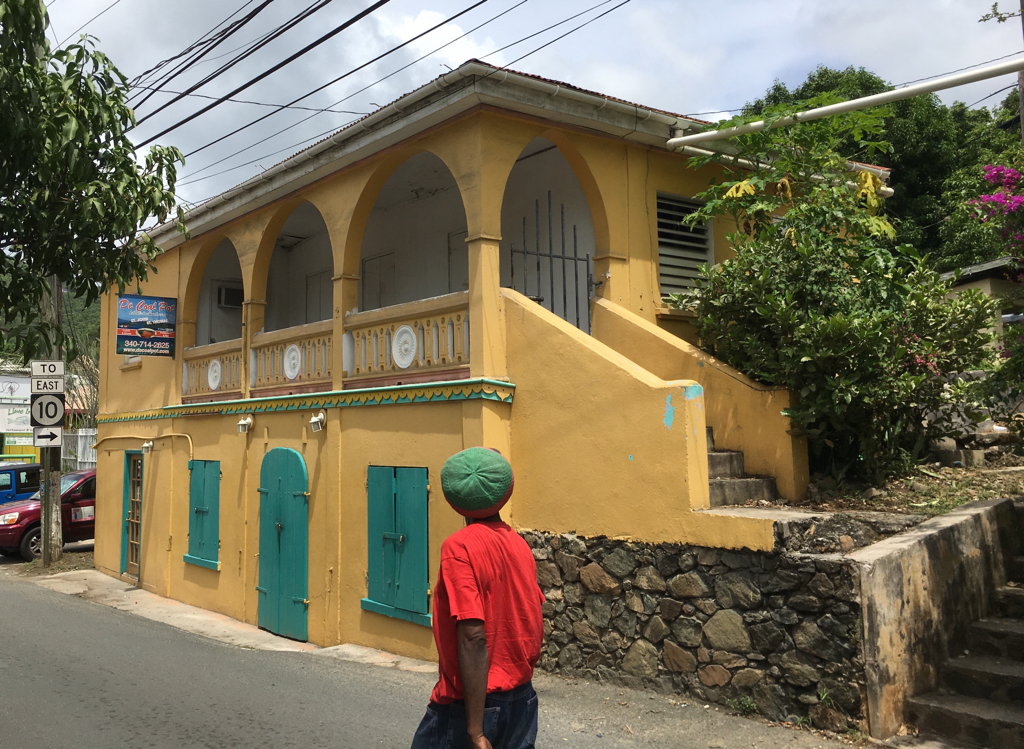
Most of the structures in Cruz Bay were built within the last hundred years and are classified as “Neo-Vernacular” architecture. (Examples of this are the Sprauve family complex and the concrete building that became Fred’s Bar and Restaurant.)
The Sprauve family complex in Cruz Bay is an example of Neo-Vernacular architecture. (Photo by Amy H. Roberts)
Marsh said Cruz Bay has few vacant lots and dilapidated structures compared to Charlotte Amalie, Christiansted and Frederiksted — the other three historic districts in the territory.
“We have a built space. Let’s come together and decide what it should look like moving forward,“ Marsh said.
The question is especially timely as a team of professional planners is preparing to present its report on ways to improve Cruz Bay after holding a series of public sessions.
One of the main concerns during those sessions was the lack of “walkability” in Cruz Bay, and the issue was raised again at Thursday’s meeting. Marsh explained that historically, property owners’ boundaries extended all the way to the road, so the majority of sidewalks in the town are privately owned. He called for a larger conversation to consider how to compensate property owners to create publicly-owned sidewalks.
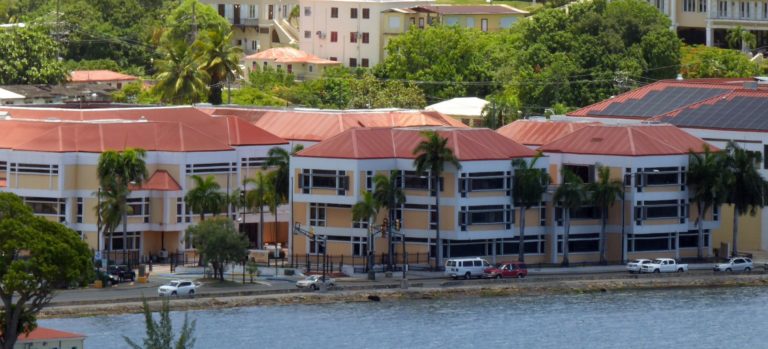
Members of the audience also asked if regulations would allow solar panels to be deployed on roofs. Marsh said solar panels would be allowed; in fact, a vendor selling red solar panels had been found for a property in Charlotte Amalie where roofs must be painted a certain shade of red.
Questions also arose about the design of Wharfside Village, which has been undergoing major structural changes. Marsh explained that Wharfside Village’s application for construction was submitted before Cruz Bay’s designation as a historic district.
When Wharfside’s owner applied for readjustments more recently, members of the St. Thomas-St. John Committee of the Historic Preservation Commission approved the plans, including the round windows. “The architect explained why they were relevant,” Marsh said, citing their nautical look at a waterfront location where warehouses had historically stood.
Marsh said the V.I. State Historic Preservation Office has some funding to assist property owners for small projects like signage to comply with regulations. In the future, a separate committee for overseeing design changes in Cruz Bay Historic District — with a unique set of regulations — could be implemented.
Those attending Thursday’s meeting were given a handout explaining the regulations designed to preserve the features of structures within historic districts.
Marsh said the St. Thomas-St. John Committee of the V.I. Historic Preservation Commission will meet next on Nov. 14. Applications for consideration at this meeting must be submitted to officials by Oct. 31.
While growing more rare, single-use plastics are still easy to find in the territory. (Photo by Mat Probasco)
Plastic go-cups and polystyrene takeaway boxes are in the sights of local and federal policymakers hoping to keep the trash out of Virgin Islands landfills, off roadsides, and far from beaches.
Federal officials granted the USVI nearly $700,000 to combat restaurant-related pollution like single-use plastics and other waste, the Environmental Protection Agency announced Thursday.
The $699,000 grant targets restaurants, bars, food trucks, concessions, marinas, charter boats, and other food distributors. Department of Planning and Natural Resources employees will visit decision-makers on site to discuss ways to reduce and ultimately eliminate plastic trash from the restaurant industry by developing practices that prevent pollution at the source locally.
The money helps expand the V.I. Clean Coasts program, which focuses on significantly reducing single-use food plastics. The project also will engage stakeholders and gather community input, according to the EPA. The idea is to reduce people’s exposure to harmful chemicals and waste, especially in historically marginalized, underserved, and overburdened communities across the Virgin Islands.
DPNR Commissioner Jean-Pierre Oriol said he was excited to expand the V.I. Clean Coasts program — implemented in 2018 with the intended goal of assisting small businesses with eliminating the use of polystyrene.
“We are proud that six years later it has become an invaluable tool for the territory in ridding our islands from single use plastics and other harmful pollutants,” Oriol said in a written statement. “With the expansion made possible with this grant we are excited to continue this work for the health of our people and environment.”
While paper or wooden straws have become commonplace in much of the Caribbean, the plastic go-cup and polystyrene take-away box remain stubbornly in place.
EPA Regional Administrator Lisa F. Garcia has become a regular face in the territory during the Agency’s overseeing of chemical removals from St. Croix’s oil refinery recently, said while the Virgin Islands has a great diversity of food outlets, changing how that food is delivered will create a healthier environment for all.
“The U.S. Virgin Islands has a rich tapestry of excellent food — whether it be from neighborhood restaurants, food trucks or places geared toward tourists. But these businesses sometimes use single-use plastics and other food containers or implements to serve food that unnecessarily fill up the U.S. Virgin Islands landfills,” Garcia said in a written statement. “This federal funding, available through the Bipartisan Infrastructure Law, will support a program to give these businesses the help they need to find alternatives and reduce the waste they generate.”
The money comes through the EPA’s Environmental Justice in Communities program, which assists food service companies in cutting waste. The funding was made possible by President Joe Biden’s Bipartisan Infrastructure Law. DPNR is one of 24 recipients across the country that were selected to collectively receive nearly $16 million in pollution prevention grants. DPNR likely won’t see the money for several months, said the EPA’s Kenneth Labbe, as legal and administrative hurdles need to be surmounted.
Between 2011-2021, EPA’s Pollution Prevention program has issued nearly 500 grants totaling more than $50 million, which have helped businesses identify, develop and adopt P2 approaches. These approaches have resulted in eliminating 19.8 million metric tons of greenhouse gases, saving 49 billion gallons of water, reducing 917 million pounds of hazardous materials and pollutants, and saving more than $2.2 billion for business, the EPA said.
Several tenants complained to their management company after getting late rent notices. An employee was fired and later arrested. (Source file photo)
An agent for a housing management company made an appearance in Superior Court on Wednesday, charged with grand larceny and embezzlement. Investigators say executives at Royal American Management found out something was wrong after tenants complained about receiving late rent notices.
Executives from Royal American said they also noticed an unusual number of late notices being sent to one of their three St. Thomas properties, including many that were disputed.
Disgruntled tenants were asked to furnish proof of payment, either by money order or electronic transaction. Tenant payment ledgers were checked and were found with missing entries. Disciplinary action was taken against the agent, who was fired after being on the job for two years.
After filing a complaint with police, investigators from the VIPD Economic Crime Unit got involved. In June, authorities questioned former Community Manager Jalessa Carr about 26 allegedly missing money orders totaling $17,377. Earlier this week, Carr was arrested on a warrant charging her with grand larceny, embezzlement and obtaining money by false pretense.
On Wednesday, Superior Court Magistrate Paula Norkadis found probable cause to uphold the charges. Bail was set at $20,000. The defendant was released, pending trial, after posing a $3,000 cash bond.
She is expected to return to court on Oct. 27 for a scheduled arraignment hearing.
I have noticed that the chorus of insanity appears to be at an all-time high, and I have patiently sat and watched as things have developed. While reading last week’s articles, I came across an Op-Ed by Mr. Olasee Davis, entitled Let’s Take the Government to Court Over St. John Land Swap.
Jed JohnHope (Submitted photo)
In this article, Mr. Davis bemoans the recent land swap on St. John and makes an awkward parallel between the land swap and the development of St. Croix’s south shore by Harvey Aluminum Company and the Hess Corporation. In the best interest of data, I will set aside the discussion of the merits of the recent land swap and leave that debate to others. However, I would like to set the record straight as Mr. Davis parrots numerous misleading statements regarding the economic development of the Virgin Islands. While I appreciate Mr. Davis’ involvement in community-based activism, I would hate for others to read and accept that article as an accurate or complete account.
Cultivation of sugarcane on St. Croix, circa 1941. (Frank Delano photo/Library of Congress Archives)
Fact 1: St. Croix’s Agricultural Industry was Killed by Beets, Not Oil.
Mr. Davis decries, “In the 1960s, politicians killed agriculture on St. Croix, particularly the administration of Gov. Ralph Paiewonsky.” That statement could not be more false or misleading. The agricultural industry on St. Croix was primarily the cultivation of sugar. The entire sugarcane industry in the early 1960s was in upheaval. The sugar industry in the Caribbean was heavily dependent on enslaved labor during the colonial era. The abolition of slavery in the 19th century led to a shortage of cheap labor, making sugar production via cane less economically viable. After emancipation, former slaves sought higher wages and better working conditions, which increased labor costs for sugar plantation owners. This made Caribbean sugar less competitive on the global market. In addition, the development of sugar beet farming and sugar beet sugar extraction methods in Europe provided competition to Caribbean cane sugar. Sugar beet sugar was cheaper, reducing the demand for Caribbean sugar. In addition, global economic shifts, including the end of preferential trade agreements for former colonies and changes in global sugar prices, made it difficult for Caribbean sugar producers to remain competitive. These factors and changing international trade dynamics and consumer preferences led to a significant decline in the Caribbean sugarcane industry.
Roger Iger, CEO of the Walt Disney Company, famously said, “Innovate or die.” Economies must evolve as well, even small economies like ours. In the early 1960s, the sugarcane industry was dying, and the territory was forced to pivot. Mr. Davis bemoaning the death of the sugarcane industry in the 1960s is like someone mourning the end of the cordless phone in 2023. You surely cannot kill a dead horse, and you cannot use it to get anywhere else. So, it is best to acknowledge that the horse is dead, get off it, and move on. Thankfully, Gov. Paiewonsky had the foresight to transition the territory to the next era, and that decision paved the way for the Virgin Islands’ economic prosperity for the next 50 years.
Fact 2: The Hess Oil Corporation and Subsequent Refining-related Activity Have Been a Net Positive for the Territory.
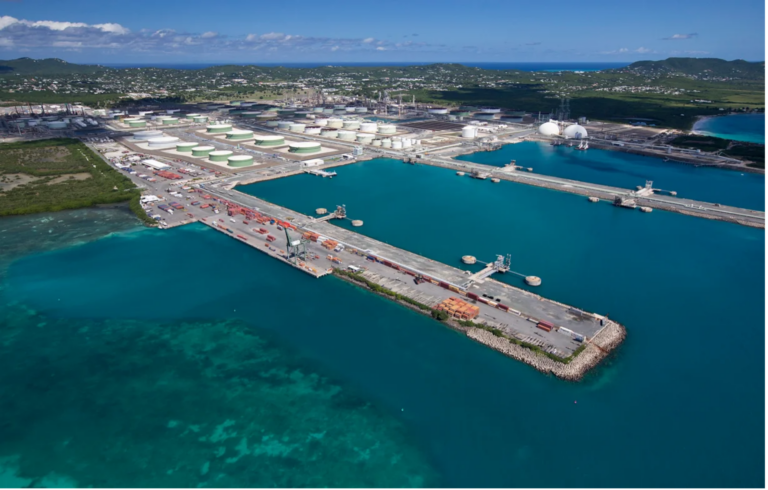
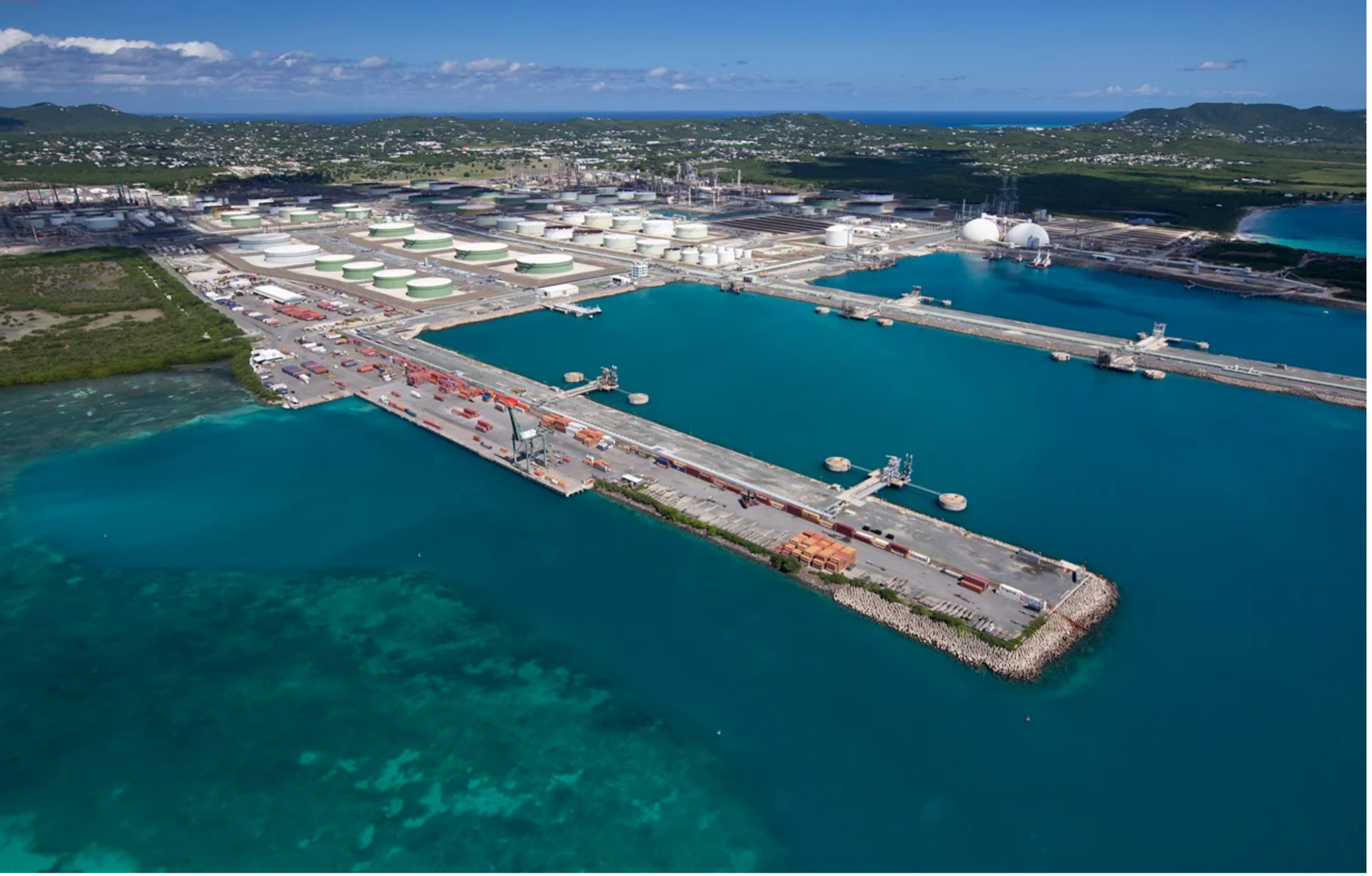
For decades, the Hess Oil Corporation and subsequent refineries have played an instrumental role in shaping the economy of St. Croix and the wider Virgin Islands. Their impact extends far beyond the confines of oil production, reaching into the very fabric of our communities. In 1979, the Hess Corporation struck a deal and broke ground on an $18 million (approximately $80 million in 2023) project, which today is affectionately known to all Crucians as the “Container Port.” Leon Hess needed the Container Port to complement the world’s largest refinery and struck a deal with our former leaders to make St. Croix a central Caribbean cargo point. By doing so, Mr. Hess eliminated the time-consuming and costly shipment of goods through San Juan, Puerto Rico, and provided numerous jobs for Virgin Islanders. By constructing the Container Port, the price of all goods entering the territory was estimated to save residents an estimated 33% in extra freight costs. I want to reiterate that those savings have been realized on all goods, e.g., food, merchandise, and vehicles, from 1981 to the present.
The Wilfred “Bomba” Allick Port and Transshipment Center on St. Croix. (Photo courtesy Virgin Islands Port Authority)
What is more inspiring is that Mr. Hess constructed the terminal in exchange for tax breaks and immediately turned the facility over to the government. This is a model that I would love to see for future large capital projects. In exchange for tax breaks, the government should tap private corporations to complete large projects, following which they hand the asset over to the people of the Virgin Islands. Why? Private corporations are better at completing large, complex, multi-year projects than the government. If a private corporation were to construct the Paul E. Joseph Stadium, it would not have taken 20 years (and counting) and $30 million (and counting). Likewise, if a corporation had managed the VITOL project, it would not have cost the territory’s citizens over $200 million, which was $113 million over budget and $92 million in unapproved change orders. Just imagine if, in exchange for the $300 million in tax breaks that Jeffrey Epstein received, the territory received new hospitals, ports, or other necessary infrastructure. I would much prefer that to the two johnny cakes and the embarrassment we received in return.
Fact 3: The South Shore Industrial Complex Created Numerous High-Paying Jobs and Supported a Black Middle Class on St. Croix.
Hovensa’s closure in 2012 resulted in the loss of 1,200 direct jobs and 950 contractor jobs — 2,150 total jobs, approximately 10% of the St. Croix workforce. However, the economic impact was more widespread because we lost 2,150 high-paying jobs. The V.I. Bureau of Economic Research estimated that Hovensa accounted for 21% of the territory’s gross domestic product (GDP). Then Gov. John de Jongh estimated that the resulting impact on tax revenues was at least $60 million of real property taxes and income taxes paid by Hovensa, contractors, and staff. Based on the 2012 budget, the $60 million represents approximately 9% of net revenue — or, in layman’s terms, about 1 in 10 dollars that the government spent on public services such as education, healthcare, and public infrastructure was generated by the refinery.
The refinery’s closure also impacted my family. My brother, Carl Richards Jr., returned home from the military in the late ’90s with few job prospects. However, through diligence and hard work, he landed a job as an operator at Hovensa. When Hovensa closed, my brother relocated to New Orleans to work for the Shell Corporation as a Class A operator, earning a six-figure salary. He traces his professional success to his start on St. Croix’s south shore. I could not be prouder of my brother and thankful that he could learn skills at that refinery that he could take anywhere in the world. However, my brother is not the only success story resulting from Leon Hess’ decision to construct a refinery on the south shore — there are thousands (of success stories). The best part of these stories is that thousands of local Virgin Islanders could earn an above-average living and support their families for decades. In fact, to this day, Ocean Point operates a storage terminal on the former Hovensa site and remains the territory’s largest private employer, employing more than 650 Virgin Islanders and contractors. Furthermore, the average employee at Ocean Point makes approximately $150,000 per year, more than 2.5 times the average Virgin Islands salary. What else does Mr. Davis propose our young Crucian men and women do to earn a six-figure salary? Plant chibble and cucumbers? I challenge Mr. Davis to identify a thriving, post-colonial island economy powered by agriculture.
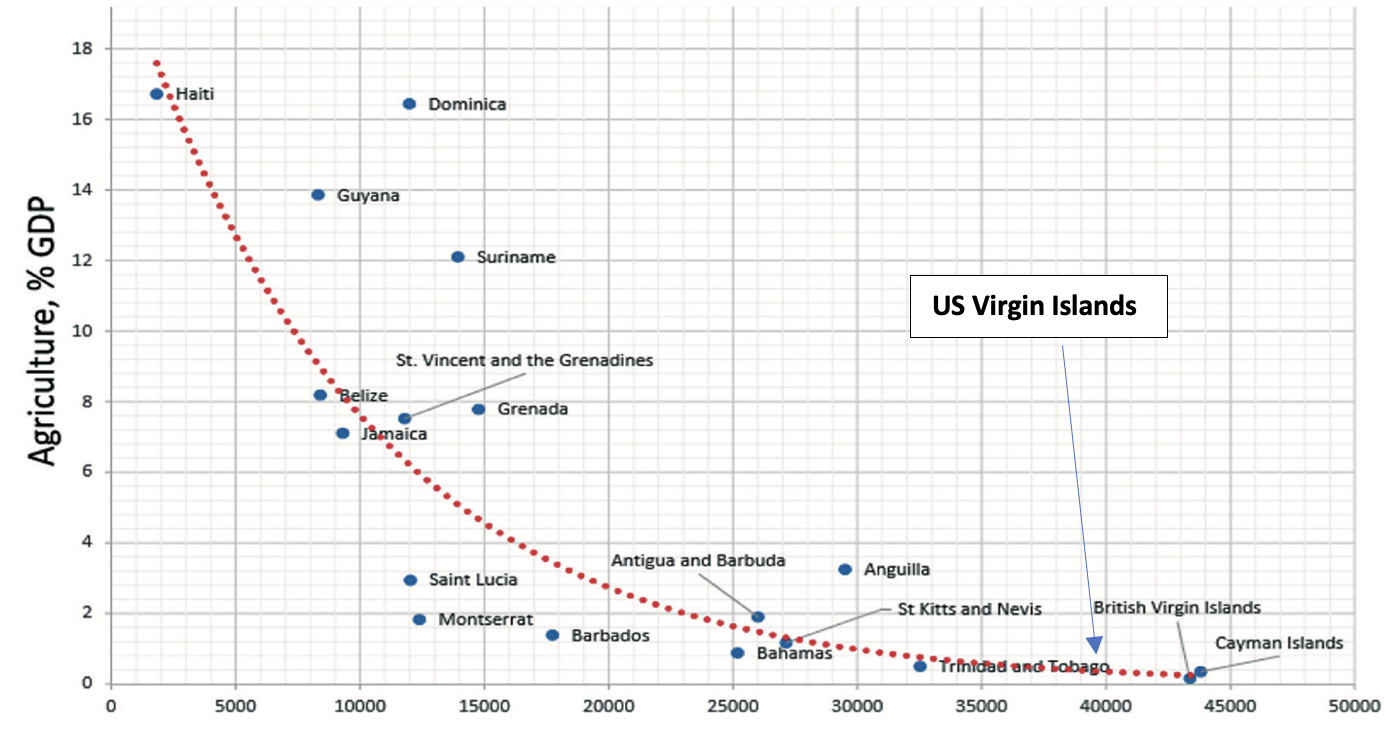
The following chart illustrates agriculture’s percent of GDP versus GDP for various Caribbean nations. One can quickly notice a few things:
– Haiti is the Caribbean economy with the most significant agricultural share of GDP at approximately 17%.
– The average Haitian makes less than $2,000 USD per year.
– The islands with higher GDPs are in the bottom right-hand corner, and those with lower GDPs are in the upper left-hand corner. In short, one may conclude that agriculture is labor intensive and reliant on cheap labor — something that the U.S. Virgin Islands do not have.
GDP per capita (USD) and share of agriculture in GDP in the Caribbean.(Source: Food and Agriculture Organization of the United Nations)
All jokes aside, we must figure out what will power the Virgin Islands’ economy in 2050 and beyond before it is too late. In my opinion, St. Croix needs a battery factory. With the advent of electric vehicles, the International Energy Agency predicts global energy demand will slow significantly by 2028. Like the early 1960s, the territory needs to diversify its economy into new emerging sectors. Given our workforce, we need to make something. I would love for the Virgin Islands to recruit a battery manufacturer similar to other jurisdictions. For example, Quebec recently lured a $5 billion Northvolt battery factory for electric cars by offering $2 billion in incentives. That factory will employ 3,000 people and be among North America’s most significant battery factories when it begins production in 2026.
Fact 4: The Hess Corporation Made Significant Civic Contributions to the Territory Through Philanthropy, Supporting Education, Healthcare, and Cultural Initiatives.
The condition of our education system has made numerous headlines in recent weeks, but have the conditions gotten worse, or has social media made images of the disrepair more accessible? I contend that our schools have always been in disorder. My mother was a 34-year employee of the Department of Education and an elementary school teacher at the Alexander Henderson School. When I was a child, she was very concerned about the poor state of our schools. She elected to send me to the Good Hope School, which was an enormous sacrifice for our family but instrumental in my educational development and career success. In the early 1960s, the Good Hope School was started with a $250,000 grant (approximately $2.6 million in 2023) from the Hess Corporation. Unfortunately, the Good Hope School closed in 2012 immediately following the refinery’s closure and has remained shuttered. As a proud Good Hope alumnus, I thank the Hess Corporation for creating that institution.
Fact 5: The Virgin Islands Economy Has Not Recovered from HOVENSA’s Closure.
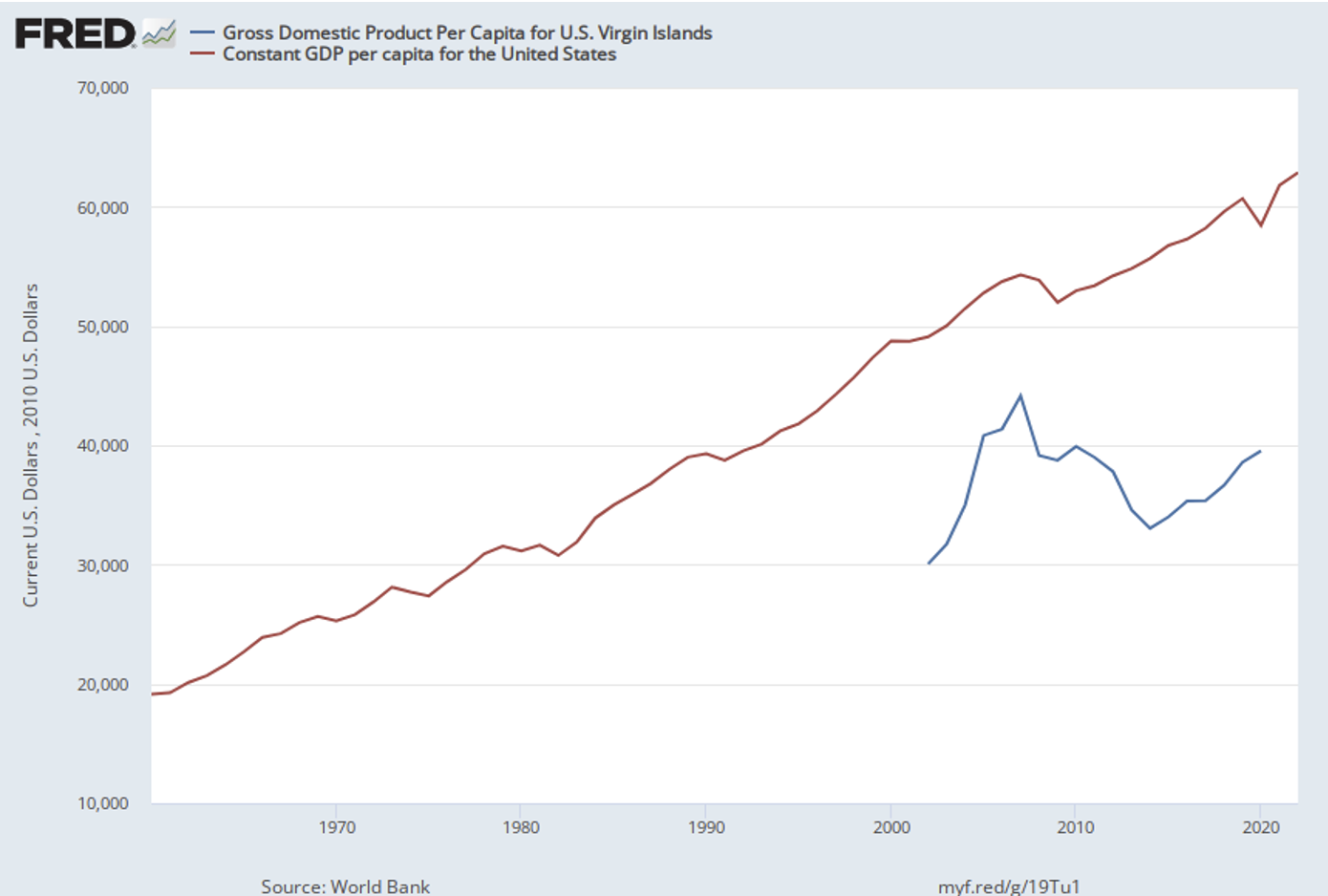
While researching this article, I visited the United States Bureau of Economic Analysis site and was disappointed to learn that our economy peaked in 2007 at $4.78 billion ($44,159 per capita, $65,985 in 2023). 2007! In 2020 (the latest year for which data is available), our economy was $4.20 billion ($39,552 per capita). The Virgin Islander makes approximately $25,000 less than in 2007. That is a depressing fact and a fact that is exacerbated by the lack of funds to operate our government. In recent news, Gov. Albert Bryan Jr. mentioned that we do not have the 10% local match required to participate in $15 billion of disaster-related recovery projects. In other words, if rebuilding a school costs $100, the feds will give us $90, but we must pay $10. That sounds like a great deal, right? However, the only problem is that we do not have $10 and have no plan to generate an additional $10. We need to attract more businesses to the territory. Our livelihood depends on it.
USA and U.S. Virgin Islands Gross Domestic Product per capita.Fact 6: While Refineries Pose Environmental Challenges, Those Challenges are Not Insurmountable.
I fully acknowledge that the oil industry has not been without its challenges, including environmental concerns. However, the industry and the EPA have continuously evolved to address issues. The EPA was created in late 1970 and is a relatively young organization. Thankfully, the EPA has continued to grow its scope, and the businesses it regulates continue evolving. I empathize with residents who live near the south shore industrial complex and fully support efforts to make impacted individuals whole. However, I caution that we should not throw the baby out with the bath water.
Conclusion
The industrial development of St. Croix’s south shore has been good for the Virgin Islands. While challenges exist, the overall impact of the Hess Oil Corporation, the Harvey Corporation, and subsequent companies on the economy of St. Croix and the Virgin Islands has been overwhelmingly positive. These institutions have been vital contributors to our growth and prosperity, and their continued presence holds the potential for a brighter economic future. Too often, we allow the conversation to be dominated by naysayers without a viable alternative pathway to prosperity. Too often, our only position is opposition. I dream of a future St. Croix where we can successfully balance economic development, conservatism, and environmental concerns.
— Jed JohnHope, St Croix, is president of Generation Next, an organization driven to make meaningful, enduring change in our beloved islands. In addition, Mr. JohnHope is a former professional engineer who focused on environmental issues. He is a strategy and finance professional with over 20 years of experience in the Energy, Manufacturing, Financial Services, and Oil and Gas sectors. This experience includes significant work within the USVI. Former employers include Morgan Stanley, the Hess Corporation, Liberty Mutual, and ARCADIS. Mr. JohnHope is a native Crucian and an alumnus of the Good Hope School, the University of Delaware, London Business School, and the Kellogg School of Management at Northwestern University. In his spare time, Jed is an avid chess player, traveler, and CrossFit athlete.
The Virgin Islands Police Department, along with The Mall of St. Croix, West Indian Company, Fire and Emergency Medical Services, Department of Health, Cost U Less, Plaza Extra, and Karibbean Kuts, will be hosting the Second Annual Trunk or Treat Halloween event, according to a press release.
The Trunk or Treat event on St. Croix will be held on Oct. 28 at The Mall of St. Croix (formerly K-mart-West) parking lot and Oct. 29 on St. Thomas at the West Indian Company Dock (adjacent to Pier 22), the press release stated.
Both events will be from 2:00 p.m. to 6:00 p.m. This is a free event for children and families of the territory to engage in a fun and safe Halloween event, the release stated.