


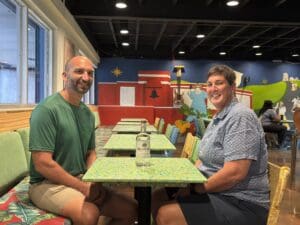
Two companies that talk about “sustainability,” Mutiny Island Vodka and RePlastic Recycle, recently collaborated to furnish one location with recycled plastic table tops and chairs while ridding the other, and St. Croix, of more than 2,300 pounds of plastic refuse.
Shannon Manns of Mutiny Island Vodka, which makes distilled spirits from breadfruit, contracted RePlastic Recycle when she needed to outfit the distillery and restaurant with furniture. She finalized a deal for more than a dozen sturdy plastic tabletops and dozens of chairs.
“So, their brand works with ours. We’re an eco-conscious brand. Our facilities run on solar power. Our tag line is ‘better cocktails, better planet.’ When I was shopping around for furniture, I knew I needed to get with RePlastic Recycle, so not only is our back of house eco-conscious, our dining room is eco-conscious. It’s become quite the conversation piece, and I hope it continues the momentum and spreads the word that they’re doing some amazing things for the island,” she said.
For RePlastic Recycle co-founder and chief executive officer Steve Chmura and the staff of five, it began almost three months of intense work to complete the project. Since opening their doors more than two years ago, they have made various items of plastic, including children’s chairs and Adirondack lounges.

“It’s (Mutiny) the first big project we’ve done, because we collected all of the plastic here on the island. The plastic isn’t dyed — color is the plastic we’ve collected. Gain green, Arm and Hammer yellow, and Surf blue,” Chmura explained.
“You can fill this dining room twice with the amount of bottles it took to make the tables and chairs,” he said.
RePlastic Recycle accepts cottage cheese and milk containers, detergent and fryer oil containers, and other number two and number five plastics.
“Anything that has food in it, that’s not clear, we take,” Chmura said.
The process begins with breaking the plastic into pieces and shredding it. Then, it is washed and separated by color into containers. Then, a sheet press forces the plastic to the desired thickness, and ultraviolet protection and hardeners are added.
In the near future, Chmura said extruding will allow more plastic to be processed in less time. Eventually, they hope to make bricks to rebuild after hurricanes.
Currently, Chmura said they are looking for at least 10,000 square feet for a new home to expand the business. Recently, the company signed a memorandum of understanding with V.I. Waste Management Authority, and eventually will start using WMA collection stations.
“As we are moving down the road, we’ll have a lot more options.”
Before settling on St. Croix, Chmura and his wife sailed to various Caribbean islands for five years researching plastic use and disposal. He has an engineering background and has owned several businesses, making him “a serial entrepreneur.”