



A boy no older than eight sits in the back seat of a Toyota Corolla, legs swinging as he unwraps a foil-warmed cheeseburger. His mother, still in her scrubs from Schneider, hands him a Styrofoam cup larger than his forearm. Outside the car window, a digital display beams down like a sermon as they are greeted by Raphune Hill traffic: a cartoon chicken dances beside a $5 combo on the chyron.

A few blocks away, a community clinic prints its daily report: two deaths from heart disease, five new cases of high blood pressure, 20 new diabetes referrals, and another mother asking if they can test her six-year-old daughter’s blood sugar since she was recently diagnosed as obese.
There is no mystery here. Just a quiet system working exactly as designed.
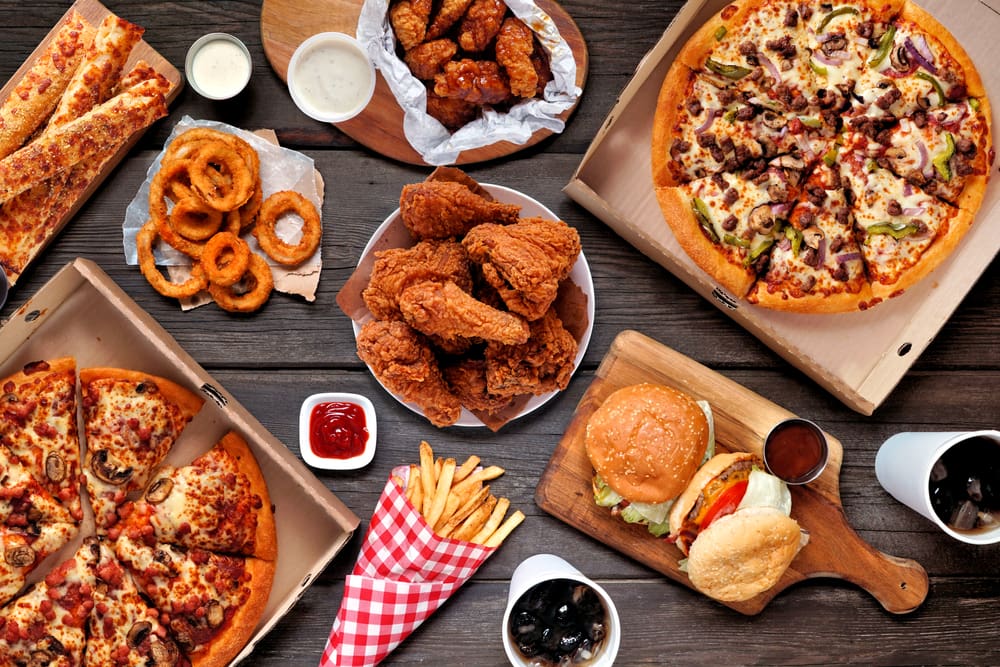
If you’re craving a quick meal in the Virgin Islands, your options are few — but familiar: Wendy’s, KFC, McDonald’s, and Little Caesars. These four chains dominate the islands’ fast-food landscape. But a recent national report lists them all among the 10 most unhealthy chains in the United States — each one packing enough sodium, fat, and sugar to derail a day’s diet in a single sitting.

For Virgin Islanders, that’s not a warning. That’s the menu.
Now, let’s be clear: the Virgin Islands isn’t short on choices. We have plenty of local restaurants — some family-owned, some farm-to-table — that offer healthier, more culturally rooted alternatives. But when it comes to commercialized fast food, the possibilities are narrowed down to this quartet. Successfully singing their way onto the national health hazard charts. Which is not just unfortunate. It’s potentially deadly.
The World Atlas list didn’t hold back. These chains weren’t just singled out for calorie counts — they were called out for marketing tactics, portion sizes, and menu designs that encourage regular overconsumption.
- A Triple Baconator meal at Wendy’s pushes past 2,100 calories.
- A three-piece combo at KFC loads nearly 3,000 milligrams of sodium — more than a day’s limit.
- A Hot-N-Ready pizza from Little Caesars hits 2,140 calories before you even touch the Crazy Bread.
- A Big Mac meal at McDonald’s? Over 1,300 calories, and that’s without dessert.
In most cities, these chains are just several out of thousands you can decide on. In the Virgin Islands, they are the decision.
And it’s not just what’s here — it’s what’s missing. While we have Subway, notably missing are Chipotle, Panera, or even Chick-fil-A — brands that, while far from perfect, at least attempt to market leaner meats, vegetables, or customizable meals. Here, we don’t even get the illusion of variety. Just the worst America has to offer, exported wholesale.
Which raises a bigger question: why are the only big-box giants operating here the ones ranked the severest impact in terms of health?
The consequences are real — and rising.
According to the Institute for Health Metrics and Evaluation (IHME), the top causes of poor health and early death in the U.S. Virgin Islands are ischemic heart disease, diabetes, and COVID-19 complications. The No. 1 risk factor? High blood sugar. And it’s growing faster than any other major health threat.
Government data backs this up. A 2021 health survey reported that:
- 8.7% of Virgin Islanders live with diabetes
- 67% of women and 50% of men are overweight or obese
- Nearly 90% don’t get enough physical activity
- Over 80% don’t eat enough fruits and vegetables
Based on the numbers we’ve moved past concern. We’re now managing fallout. Which makes it ironic that the only quick service restaurants allowed to push their products across our islands are the very chains that exploit and feed these exact conditions.
No one’s saying fried chicken or pizza shouldn’t exist. Culture matters, comfort matters, and nobody’s coming for your occasional cravings. But what does matter is how often, how aggressively, and how exclusively these meals are marketed and made available — especially in communities already battling chronic disease.
From $5 Biggie Bags to 44-ounce sodas to late-night “third meal” advertising, these brands don’t just sell food. They sell habits. Habits that become normalized. Habits that become addictive.
And when the same meal deals, mascots, and jingles keep showing up on every container, cup, combo, and commercial, those habits have nowhere to hide. That addiction becomes instinct.
The Healthy Virgin Islands 2030 plan aims to tackle this. It lays out a bold public-health vision built on education, equity, and access. Local leaders are pushing for things like:
- National nutrition guidelines
- Collaboration with food importers to reduce trans fats and sugar
- Expansion of community-based counseling and exercise programs
- A territory-wide push to “Change Systems, Live Healthier”
All of it sounds good — on paper. But we can’t just educate our way out of this. We need to confront the prepackaged bias already baked into our food environment. If the average resident sees billboards of smiling children holding Happy Meals and beaming over Chicken McNuggets — but not one shows a local kid planting a garden or holding a bowl of fruit, and not one lesson is taught about fiber, diabetes, or real nutrition — that’s not just marketing. That’s miseducation.
We can’t preach healthy living while serving up a 24-hour diet of America’s most profitable poison — designed by chemists, not chefs.
Yes, personal responsibility plays a role. But so does food access, pricing, and corporate presence. If your only fast, affordable meal on the way home from work is a $5 pizza or a hot wings combo, it may not look like entrapment — but then again that’s the point. What trick ever does?
The truth is, the Virgin Islands is not some passive consumer. It’s a target market — one that corporations have flooded with high-calorie, low-nutrition menus while offering none of the healthier or even mid-tier alternatives available in larger stateside cities.
And while the burden is heaviest on our health systems, the impact runs deeper — into our schools, our families, our lifespan.
This story isn’t about guilt — it’s about awareness. If we want a healthier Virgin Islands by 2030, we need more than public service announcements. We need:
- Greater support for local food entrepreneurs
- Policies that hold franchises accountable to health standards
- Conversations about why we only have the most harmful chains in our backyard
The islands deserve better than conglomerate leftovers. We deserve food that doesn’t come with a side of fatality. And we deserve a public health system that doesn’t have to clean up what billion-dollar businesses leave behind.
Because if all we get is the worst America has to offer, the question isn’t what we’re eating — it’s who’s deciding we deserve it. This isn’t just a red flag — it’s a stop sign we’ve been running for years. Maybe it’s time we pump the brakes — because no one deserves to be handed their fate out of a drive-thru window.
— Oliver Wilson Ottley III, St. Thomas
Editor’s Note: Opinion articles do not represent the views of the Virgin Islands Source newsroom and are the sole expressed opinion of the writer. Submissions can be made to visource@gmail.com.