


In the second article of my series on the northeast central Maroon Country, I mentioned some of the owners of North Star Northside B Quarter. In this third article I will continue the history of the forest and the names of the planters that once owned Estate North Star, and share more on why the forest in the northeast central hills and mountainous terrain of St. Croix was critical as a Maroon refuge. In fact, the surrounding estates of this region, including North Star, Mount Eagle, Blue Mountain, and Cane Bay, were havens for runaway slaves.
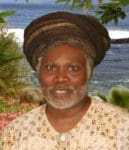
The plantation villages of Estate Hermitage, Solitude, Parasol, Rust Up Twist, La Vallee, Big Fountain, River, and other surrounding estates including the fertile central plain of the island became an attractive destination for runaway slaves to the mountainous and high rolling hills region of northeast central St. Croix. Let me remind you that the natural vegetation of St. Croix is classified into two Holdridge Life Zones.
The sub-tropical dry forest of St. Croix comprises 83 percent of the island. The sub-tropical moist forest located in the northwest and northeast central part of the island occupies the remainder. There are 10 ecosystems/types of forest on the island, but the subtropical dry forest and subtropical moist forests are most important in the make-up of St. Croix forestlands. These forests provide habitat for rare plants and animals, but also are a supply for our underground water, recharging the aquifers on the island.
Therefore, it is critical to protect the northwest and northeast central forests of St. Croix. The island was known historically for its abundance of native hardwood trees, which were exported as timber. The rich stands of timbers attracted impoverished English colonists from the British Virgin Islands, who came in search of land for their provision crops and livelihoods. By the 1730s, several hundred Englishmen, along with their families and their slaves were living on St. Croix illegally.

It was the uninterrupted growth of hardwood forests on St. Croix that attracted Danish interest in the island in the first place. There were very large trees — useful in the construction of everything from canoes and ship building to charcoal, dwellings, and machinery for sugar work — that grew abundantly on all sides of the island, covering the plain on the south side and the mountains to the northwest and northeast central in a dense greenery. When Reimert Haagensen visited St. Croix in the 1730s, he said, “The thick forests had to be cleared, large trees felled and hauled to the seashores for sale, roads had to be cut and maintained, and the initial dwellings and estate structure — the mills and factories — had to be constructed.”
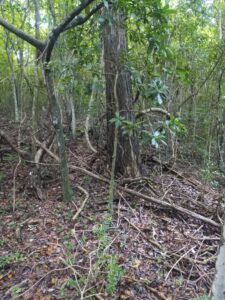
Believe me, the amount of valuable timber and rare trees on St. Croix that were destroyed by fire and by ax when the Danes started to develop the island was unbelievable. At that time in St. Croix’s colonial history, there was a great deal of forest and little else. I mentioned early in the second article of this series on Maroon Country in the northeast central part of the island, that Maroons governed St. Croix for decades before the Danes purchased the island from the French in 1733.
It was the forests, deep valleys, steep slopes, cliffs, and caves that were a haven to runaway slaves. The Mastic woods (Mastichodenron foetifissimun) were one of the most highly prized commercially valuable hardwood tree species on St. Croix. They were employed primarily to repair boats and build sugar mills and great houses, and to make spars and planking. Forests on St. Croix were like the gold rush in California during the late 1700s and mid-1800s. Shipments of timber were sold at high prices year after year.
Since there was a lack of timber in the English possession of island colonies, Englishmen had to pay high prices for it. They looked for it in other places, principally St. Croix as being perhaps the closest island and the best source in that part of Americas. Thus, some of the most beautiful houses in Europe and the English Caribbean islands, namely St. Christopher (St. Kitts), Montserrat, Nevis, St. Martin, Tortola, and others are witness to the timber trade of St. Croix.
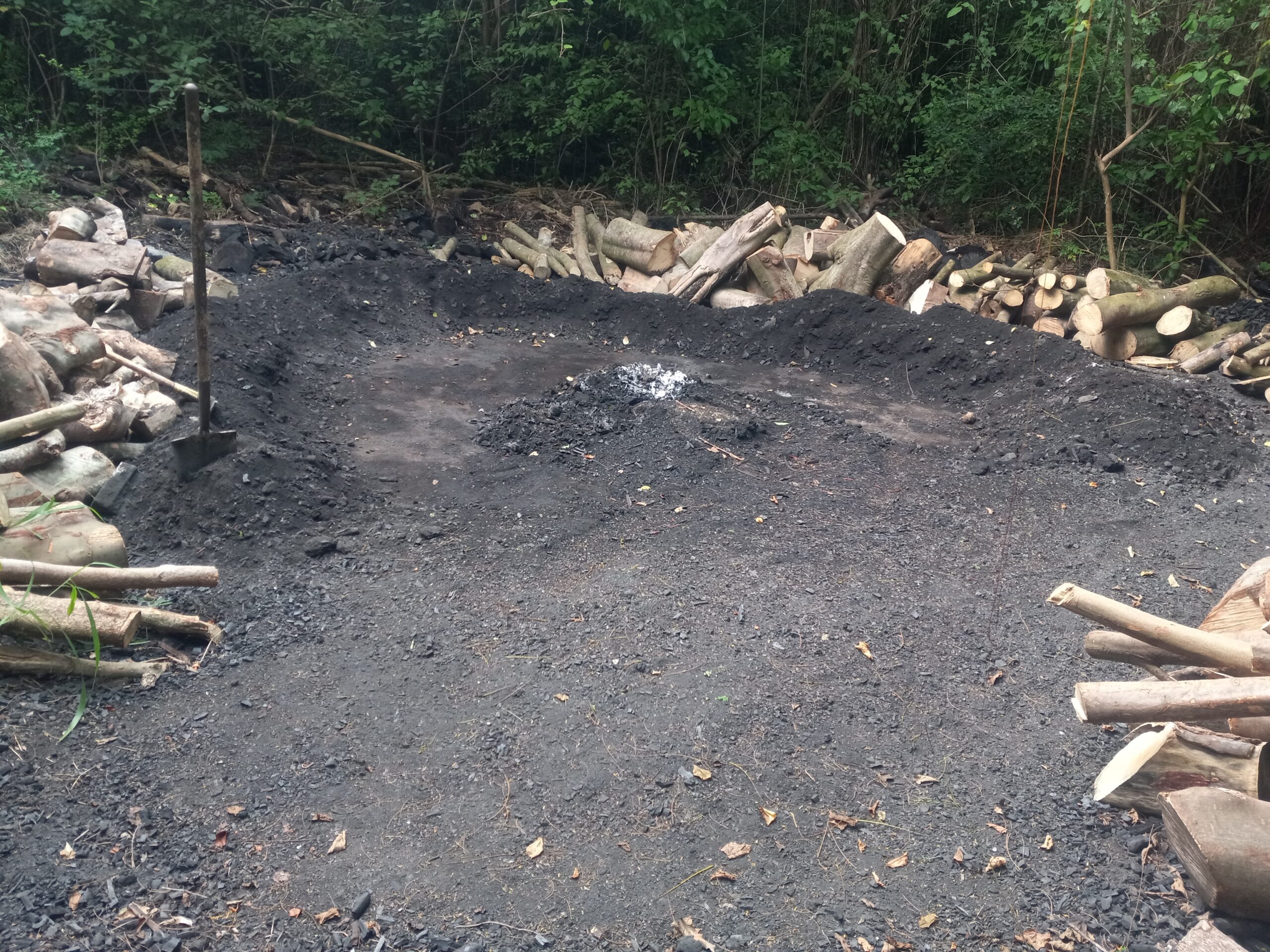
In 1625, the Dutch occupied St. Croix and that same year the British attempted to establish themselves on the island. During this period, the French Protestants joined the Dutch. It was during this period that the Dutch controlled the east side of St. Croix and the British controlled the west. However, it was the Dutch that called the northwest of the island “No Man Land.” In other words, the dense thick forest was impossible to penetrate. This was considered Maroon Country because of the forests, cliffs, and other impossible penetration into the forest to capture runaway slaves. It was during the reign of first governor of St. Croix, Frederik Moth in 1734, that the northwest was called Maronberg. In the second article, I mentioned some of the planters of Estate North Star. Dr. Lorentz Grundel owned the property from 1756 to 1759, and his widow Grundel managed the estate from 1760 to 1762.
Other planters who owned Estate North Star as follow and prepared by historian George F. Tyson:
1762 Hans Berg
1762-1768 Thomas Kirwin
1768-1771 Edward Bladwell
1771-1777 E. Bladwell heirs
1777-1778 Edward White
1778-1789 Christopher McEvoy Sr.
1789-1793 Christopher McEvoy heirs (John McEvoy)
1793-1797 John B. Thomsen
1797-1804 George Allen
1804-1806 Edmund Armstrong
1806-1817 Nathaniel Strode and his heirs
1817-1822 Edmund Armstrong
1822-1830 John Plaskett
1830-1850 The King of Denmark
1850-1856 Carl Bithorn and John Foss
1856-1863 Chamberlain Louis Rothe
1864-1866 John William Whitehead — along with northside Estate Prosperity
1866-1868 A. Forsberg — along with northside Estate Prosperity
1868-1872 Carl Sarauw — along with northside Estate Prosperity
1872-1876 George A. Fontaine and Hugh McWilliam
1876-1935 G.A.E. Sarauw and heirs
1935-1948 Nicholas Sarauw
1948-? Milton Rosemary Jr.
2014 Virgin Islands government as a territorial park
These planters had slaves until the Emancipation of 1848. The king of Denmark was the last owner of Estate North Star to have enslaved Africans.
Read Part 1 here: Op-Ed: Exploring the V.I.’s Maroon Country
Read Part 2 here: Op-Ed: Exploring the V.I.’s Maroon Country, Part 2
— Olasee Davis is a bush professor who lectures and writes about the culture, history, ecology and environment of the Virgin Islands when he is not leading hiking tours of the wild places and spaces of St. Croix and beyond.