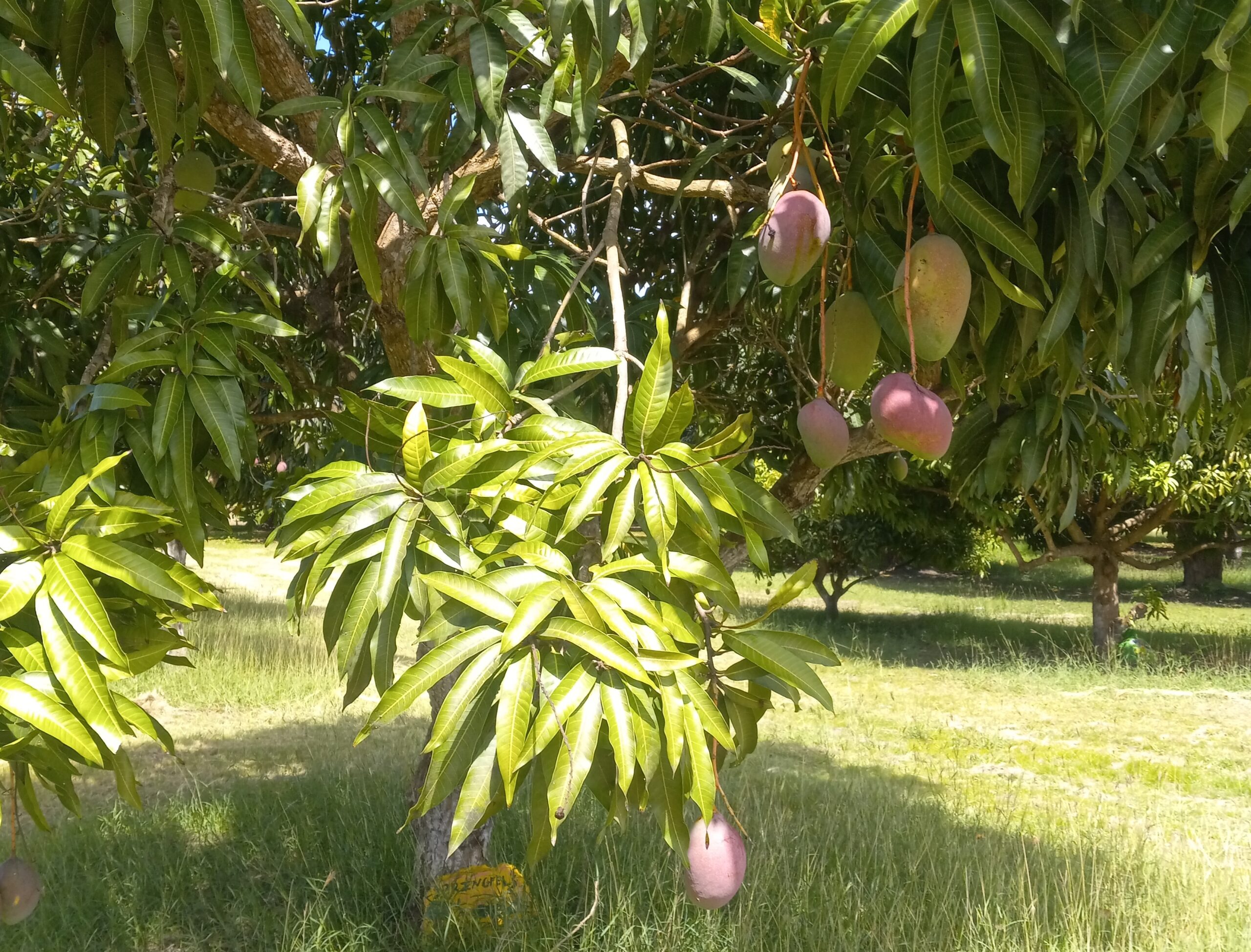
If you are paying attention this year, there are not a lot of mango trees flowering. You (Virgin Islands residents) probably didn’t notice that with the many issues our global community is facing these days, who has paid attention to if a mango tree is blossoming or not? We are in April, and soon it will be hurricane season. However, the greatest teacher of humankind is the environment. Thus, from living organisms such as plants, animals, and fungi, we can learn a whole lot. By observing our natural world surroundings, we can learn more about our weather system, food, and about ourselves on a physical and spiritual level.
Mangoes are very prone to environmental conditions. Bearing of fruits is irregular or biannual. This habit, however, varies between varieties of mango trees. Although no solution has yet been found for this behavior of flowering mango trees, the climatic conditions appear to have considerable effect on their characteristics. The longer and more severe the dry season is, the more regular the cropping habit. This is not just with mangoes, but every living organism on Earth, including the human species.
We are already in the dry season. The trees’ foliage is changing colors and falling. The blowing of winds is more often, as well as erratic rainfall, ocean currents’ movement, and animal behavior patterns. Believe me, we are in a different climate zone this time of the year. It is for this reason that man is forever gaining knowledge of what season and what months play a major role in our Earth ecosystems. Thus, our tradition as the human species is dictated by the season of a changing environment. For example, it is Carnival time in the Virgin Islands, April, and May on the island of St. Thomas — springtime. For the island of St. Croix, December and January, the fall and winter seasons, bring Crucian Christmas Festival. And, for the island of St. John’s summer, the June and July season yields Festival time and the celebration of the U.S. Virgin Islands’ Emancipation.
Where are we? Let us get back to mango and how this fruit is so much a part of our lives, from food to festivals like the Mango Melee on the Big Island of St. Croix. In fact, this year, 2026, will be the 30th anniversary of the mango festival. All thanks to the late Clinton George, a colleague of mine at the University of the Virgin Islands School of Agriculture, who came up with the idea and implemented it as a mango summer festival in the Virgin Islands.
Nevertheless, mango is native to southern Asia, especially eastern India. It was said that the Buddhist monks took mango to Malaya and eastern Asia in the 4th and 5th centuries B.C. History also mentioned that the Persians carried the fruit to East Africa about the 10th century A.D. The Portuguese, we were told, also introduced the fruit to West Africa in the early 16th century and later to Brazil.
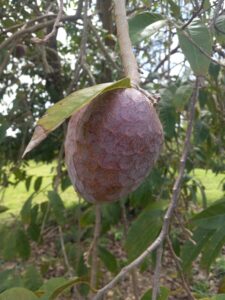
From Brazil, the mango found its way to the West Indies, being first planted in Barbados about 1742 and later carried to the Dominican Republic. Later, the fruit arrived in Jamaica about 1782 and in the early 19th century to Mexico and from the Philippines to the entire West Indies. On a cultural level in the Virgin Islands, as a child I learned about local fruits. One of my favorite teachers was the late Dr. Ruth Moolenaar and others who put a booklet together called “Sugar Apples Are Apples Too! (A Read and Do Book About Our Fruits).” It was a small book about fruits for Virgin Islands schoolchildren. Today, I don’t know if our children learn about local fruits and their nutritional values in school.
There was also a cultural Virgin Islands song about various foods back in my day when I was a child. Probably children today can learn the song. As you know, children learn faster when they sing.
“The West Indian Weed Woman”
“One day I met an old woman selling. And I wanted something to eat. I thought I was going to put a bit in her way. Bit I take back when I meet. I thought she had bananas, oranges pears, but ‘twas nothing that I need. For when I asked the old woman what she was selling. She said she was selling weeds.
“She had her dress tied up over her waist. And was wriggling down the street. She had on a pair of old slaps on her feet. And was wriggling down the street. Just then she started to name the different weeds. And I really was more than glad. Although I can’t remember all that she called. These are a few she had:
“Man tiabba, woman tiabba, Tantan fall back and lemon grass Ninny root, gully root granny backbone, Bitter payee, Lime leaf and toyo, Coolie bitters, corilah bush, That ah the old time iron weed, Sweet broom, sprout and wild daisies, Sweet fate and even toyo.
“She had bitter gomma, portogee bomba, Conga Larua and twelve o’clock broom, Sarsparilla, wild tomato, sour sop leaf and Papa bitch weed, Wild bush, wild cane, wild leaf, monkey liver, That’s bitterer than wild bay root, Action stands and even monkey liver, And all the rest you may need.
“When I hear how much bush she had. I was dumb. I couldn’t even talk. She started to call from Capry Corner. And never stop ‘till she reached Orange Walk. The woman had me so surprised. That I didn’t know what to do. That my girl came and give me. A cuff in my eye and I didn’t even know who was.
“Sweet broom, sweet fate, and lemon grass. I hear them good for making tea. And then I hear bed grass and wild daisy. Is good to cool the body. The woman’s tongue was even lisping. But she was calling out all the time. She even had a little canawa eye. And the other that left was blind.
“She had pap bush, elder bush, black pepper bush. Then soldier, corporal and carpadulla. Fabian leaf, money bush, soldier posely. Pumpkin blossom and even devil doer. Demon congo, grass in galore. Physic nut, and lily root. In fact, the only bush she didn’t have. Was the bush for the everyday soup.”
The source of this local food song is from: Jones, Trandailer: Impressions of Nutrition Habits in the Virgin Islands Bulletin 11. Virgin Islands Department of Health 1952.
Enjoy your mangoes! There are no guarantees mangoes will be bountiful this year, as they were last year.
— Olasee Davis is a bush professor who lectures and writes about the culture, history, ecology and environment of the Virgin Islands when he is not leading hiking tours of the wild places and spaces of St. Croix and beyond.
Editor’s Note: Opinion articles do not represent the views of the Virgin Islands Source newsroom and are the sole expressed opinion of the writer. Submissions can be made to visource@gmail.com.