


The Charlotte Kimelman Cancer Institute is 99% reconstructed and targeted for full operational occupancy by November, with officials saying its reopening could expand cancer treatment and reduce off-island care.
The update came during Wednesday’s Senate Health, Hospitals and Human Services Committee hearing on cancer in the Virgin Islands, available patient services and support programs, and how government agencies, healthcare providers, nonprofits and community partners can support the cancer institute once it becomes operational.
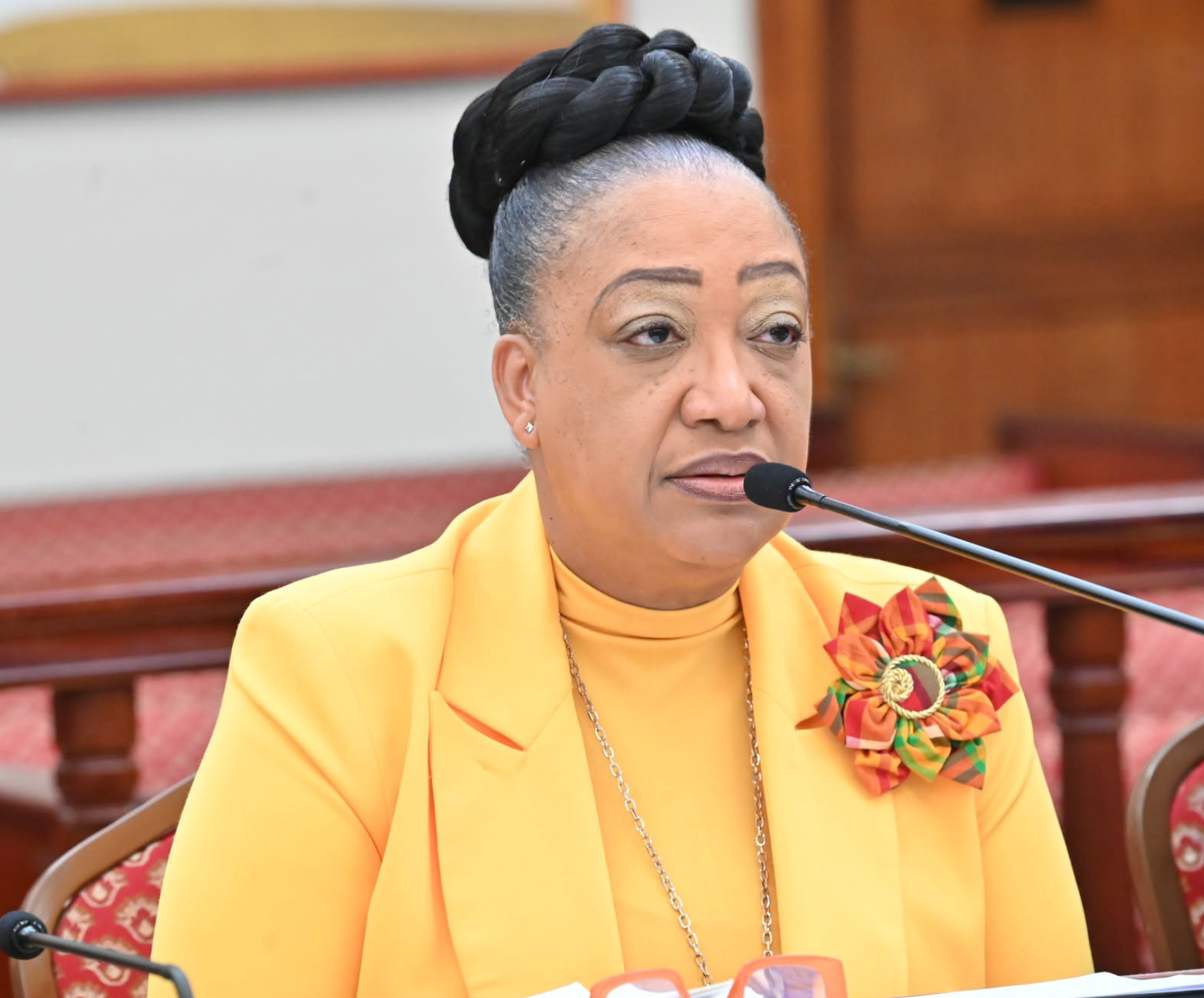
Dr. Janis Valmond, deputy commissioner of the Health Department, said cancer was the second-leading cause of death among Virgin Islands residents in 2024, behind heart disease, and health officials told senators that incomplete cancer data and limited access to some services continue to complicate efforts to address the territory’s cancer burden.
The Virgin Islands Central Cancer Registry identified 2,910 reportable cancer cases between 2016 and 2023. The most frequently diagnosed cancers were prostate cancer, with 656 cases, breast cancer with 564, colorectal cancer with 344, hematopoietic malignancies with 223 and lung and bronchus cancer with 141. Approximately 22% of prostate cancers and 8% of breast cancers were diagnosed at the distant stage.
Valmond said prostate, colorectal and breast cancers accounted for the greatest number of cancer-related deaths between 2011 and 2024. Valmond said lung and pancreatic cancers contributed disproportionately to mortality “because they are often diagnosed at more advanced stages and have poor survival outcomes.”
Valmond said the registry faces incomplete provider reporting and gaps in its data. Dr. Lyna Fredericks, chronic disease prevention director at the Health Department, said the registry has data for 2016 and 2017 and for 2022 and 2023 and is working to obtain missing reports from providers for the intervening years. Valmond said the registry also cannot yet calculate scientifically valid age-adjusted incidence rates because updated population estimates based on the 2020 census are not available.
Under the Virgin Islands Cancer Registry Act, eligible cancer cases must be reported. Violations can carry fines of up to $5,000. Valmond said they have generally relied on letters from the health commissioner and cooperation from providers rather than fines to obtain missing data.
Darryl A. Smalls, executive director of the Territorial Hospital Redevelopment Team, said the reconstruction of CKCI, which began in March 2024, is in its final punch-list phase. The project has a contract value of $35.19 million, with $34.93 million billed to date.
Smalls said furniture installation is expected to begin in September and that procurement delays have affected minor medical equipment needed for final testing.
“Collectively, the remaining IT equipment, furniture installation, and minor medical equipment procurement represent the final fit-out activities necessary to prepare the cancer center for full operational occupancy by November of 2026,” he said.
CKCI Administrator Angela Warner said the facility is expected to open with medical oncology services, including chemotherapy, immunotherapy, hormone therapy and other cancer medications, alongside radiation oncology.
Radiation oncologist Dr. Jacquelyn Dunmore-Griffith said the CT simulator will be used to develop treatment plans and the linear accelerator to deliver radiation treatment. She told senators the center “should be able to treat all cancer patients, various tumor types with radiation, as well as with the medical oncology capabilities that we have here on the island.”
Warner said the center could provide 20 to 25 daily radiation treatments with one radiation oncologist. She said key personnel already in place include a radiation oncologist, administrator, physicist, dosimetrist and radiation therapists, with additional hiring continuing.
A fiscal year 2027 operating budget of $4.916 million has been developed for CKCI’s first full year of operations, including 14 full-time-equivalent positions. Darlene A. Baptiste, CEO of Schneider Regional Medical Center and Juan F. Luis Hospital, said projected patient revenue is about $4.7 million, with an anticipated loss of nearly $2 million.
Baptiste said CKCI’s care model will be supported by diagnostic imaging, laboratory, pharmacy, nursing and patient navigation services, forming a multidisciplinary team around radiation oncology. She said partnerships with the American Cancer Society, Cancer Support VI and the Health Department are intended to strengthen patient navigation, community education and survivorship programs.
Baptiste said Congress has approved money for a PET scanner at CKCI through a community project funding request, but the hospital is still waiting on the official award notice from the U.S. House of Representatives. Once operational, the PET/CT imaging, she said, “will enhance the territory’s cancer diagnostics by improving disease staging, treatment planning, and posttreatment surveillance, while reducing the need for off-island travel.”
Officials also told senators that breast imaging services remain limited. “Currently, only one facility on St. Thomas provides mammography services, resulting in average wait times of approximately six weeks, while breast biopsies are available only once each month,” said Valmond, adding, “Residents of St. Croix face additional barriers because certain specialized breast diagnostic services are unavailable on the island.”
Baptiste said there is no 3D mammography capability in the territory. SRMC is evaluating replacement technology and seeking funding for a new system, while partnerships with private radiology providers on St. Thomas and renewed mammography services at JFL on St. Croix provide interim access.
Valmond said the reopening of CKCI represents a significant opportunity to expand local treatment capacity and reduce the need for some residents to travel off-island for oncology services.