


When administrators from the Schneider Regional Medical Center sat down before the 35th Legislature’s Committee on Appropriations, Budgets, and Finance, lawmakers listened carefully to a long list of concerns. The medical center team came to justify their request for $46.3 million for the spending year that begins Oct. 1.
Wednesday’s budget hearing agenda focused on healthcare in the St. Thomas-St. John district. The Schneider Regional presentation, along with questions-and-answer rounds, began by mid-morning and wrapped up after 1 p.m. Officials from the St. Thomas East End Medical Center defended their budget request on Wednesday afternoon.
Both entities had one major concern in common: the expected loss of Medicaid coverage for thousands of V.I. patients using hospital and East End Medical Center services. The end of a policy barring U.S. states and territories from trimming their Medicaid rolls during the COVID-19 pandemic took effect in spring 2023.
And even as administrators spoke about scant Medicaid reimbursements hurting their bottom lines, the loss of funds they could rely on further dimmed their financial pictures.
“The main threat to STEEMCC remains financial instability,” said Interim Executive Director Tess Richards. Shortfalls in government allotments and Medicaid reimbursements have left East End Medical with a $1.2 million deficit.
The clinic, located at Tutu Park Mall, is seeking $7.7 million in fiscal year 2025.
Schneider Regional Chief Executive Officer Tina Commissiong identified uncompensated healthcare costs and aging infrastructure as her two most pressing challenges. Topping the list of unreliables are the emergency generators at the Roy L. Schneider Hospital.
The hospital’s backup system has been working overtime during the district’s recent rounds of WAPA power failures, Commissiong said. “We are also in need of a third generator to serve as a backup for the two we presently have since they are both 20 years old,” she said. “The total cost to bring our backup power system to our current functioning status is $1.5 million.”
Then came the list of needs for St. John’s Myrah Keating Smith Clinic at an estimated $400,000.
However, the medical center teams also brought encouraging news to the Legislature. Increased hiring for the nursing staff had produced cost savings; efforts to do the same for hospital physicians are planned to start in the new fiscal year, Commissiong said.
Richards told lawmakers about the acquisition of a dermatologist for the East End Medical Center. The specialist sees clients at the center three days a week, working on a per diem basis, the director said and is the only dermatologist in the district.
“And that was a deliberate decision to affect the payer mix, so we are not as heavily reliant on the government,” she said. Since the dermatologist opened their practice, several undiagnosed cases of skin cancer had been detected, Richards said.
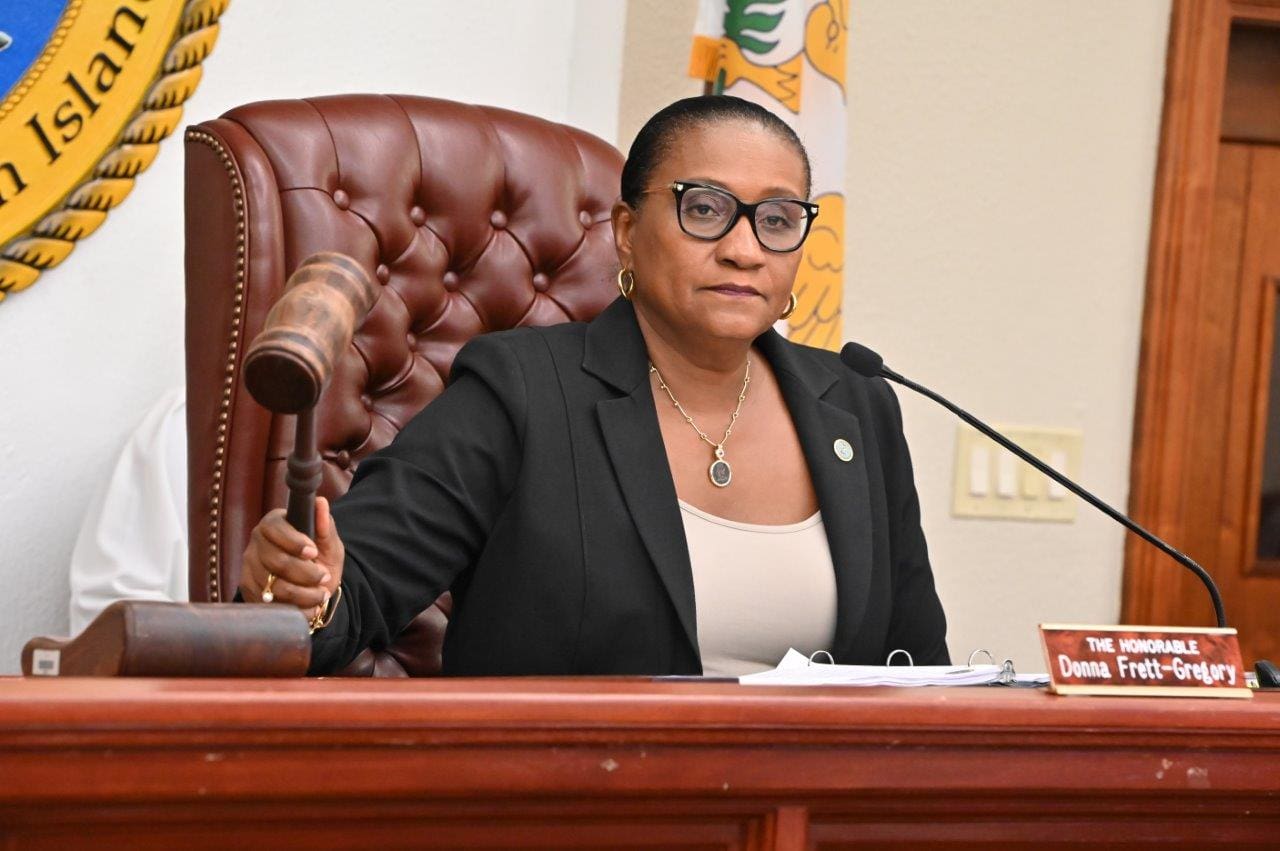
Committee Chair Donna Frett-Gregory questioned the idea, but Sen. Ray Fonseca — head of the Finance Committee on Health, Hospitals and Human Services — expressed his support.
So did non-committee member Sen. Milton Potter, who called adding a dermatologist to the staff a good idea. “I believe we have to work together collectively to ensure the survival, the growth of STEEMCC,” Potter said.
Frett-Gregory said the services provided by the medical centers — especially Schneider Regional — are essential for the people they serve. She added that her appreciation for the work done at Schneider Regional had grown in recent days since her 91-year-old mother was admitted after suffering a medical emergency.
After one committee member mentioned one agency’s request for $1 million to cut back growth along the roadsides, the finance committee chair sighed and said the territory’s leaders needed to rethink their priorities.