The Virgin Islands Police Department reported a 13% drop in violent crime Thursday as lawmakers questioned its staffing levels, surveillance system and homicide investigations.
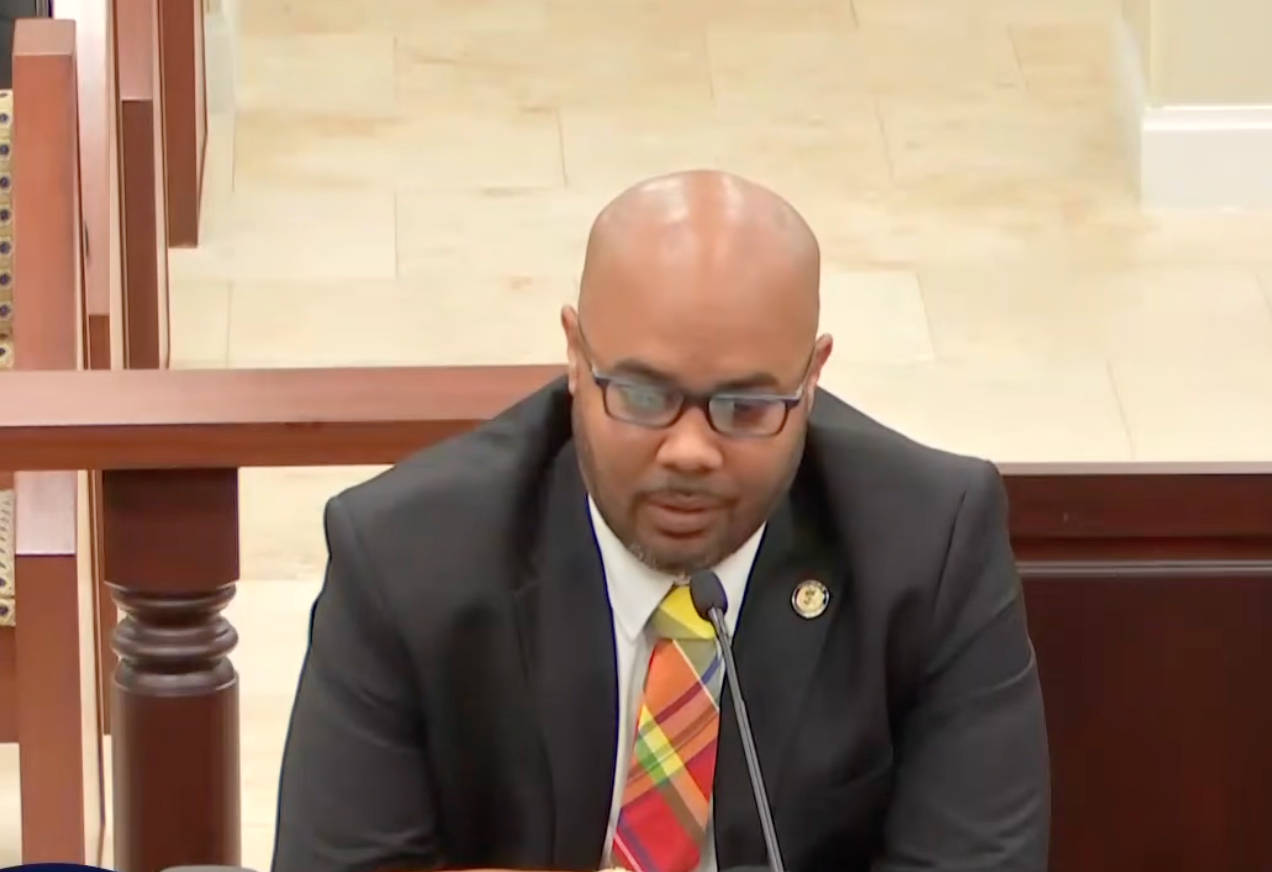
Assistant Commissioner Sean A. Santos, testifying on behalf of Police Commissioner Mario Brooks before the Senate Homeland Security, Justice and Public Safety Committee, said VIPD’s Part One statistics show violent crime is down 13% in calendar year 2026 compared with 2025, though the figures remain subject to change as investigations continue.
The hearing focused on Gov. Albert Bryan Jr.’s Executive Order 547-2026, the territorywide camera project, recent robberies and homicides, and the department’s short- and long-term strategies for reducing crime.
Santos also acknowledged ongoing staffing shortages, telling senators both the St. Croix and St. Thomas-St. John districts are operating at about half the officers they need.

Lawmakers repeatedly pressed VIPD about its expanding surveillance network and whether the technology is producing results.
Santos said VIPD has deployed more than 100 surveillance cameras across the territory and more than 50 license plate recognition cameras at “strategic locations,” with additional license plate readers planned for Frederiksted on St. Croix. He said the systems, along with ShotSpotter gunshot-detection technology, are integrated into a centralized platform that supports the department’s real-time crime centers on St. Croix and St. Thomas.
Director of Information Systems Kishana Tweed told senators the camera deployment is complete in the St. Thomas–St. John district and about 85% complete on St. Croix. She said both real-time crime centers are complete in terms of technology and staffing and are currently operating.
Deputy Chief Naomi Joseph described the technology as “a blessing,” saying it allows officers on St. Croix “to see things in real time and actually track individuals’ movements back and forth.” Deputy Chief Rael Donastorg said the St. Thomas – Water Island district “highly rely on the modern technology, and has been utilizing the real-time crime centers.”
However, senators questioned whether the camera and technology systems were producing sufficient results. After Santos reported that the territory had recorded 25 homicides and one arrest so far this year, Sen. Franklin D. Johnson said, “that’s not a good number, that’s not a good number,” and questioned whether cameras are positioned and used effectively to track vehicles leaving crime scenes.
Santos said VIPD does monitor the cameras and that one of the first steps in a homicide investigation is to go “back to our camera systems to see what we could pick up,” including footage from intersections that may lead to or exit from the area where the killing occurred. He said the technology is already helping investigators identify suspects, locate stolen vehicles and track criminal activity, but acknowledged the department still faces technical challenges.
“We do have some challenges sometimes where one or two may be down,” Santos said, citing weather damage or utility work as reasons cameras may temporarily go offline. He said the department’s technology team works to get affected cameras “back up and running as soon as possible.”
Santos said Bryan’s June 29 executive order temporarily reassigned peace officers from multiple government agencies to support VIPD during a recent increase in violent crime, as the department was operating at “half capacity” in both major districts. He said the 14-day initiative, which ran through July 12 and overlapped with the St. John Celebration, included saturation patrols, traffic enforcement, marine operations, gun violence reduction operations and strengthened celebration security.
Santos told senators the order did not provide the “significant increase” in staffing he had hoped for. Joseph said St. Croix received six officers from outside agencies, while Donastorg said the St. Thomas-Water Island district received 11. Santos said some agencies on St. Croix have only one or two peace officers that VIPD can draw from, and that collective bargaining agreements in those agencies limited their overtime and meant most could only be used within their regular eight-hour shifts.
Despite the overall decline in Part One violent crime, Joseph said St. Croix is seeing increases in first-degree robberies and first-degree burglaries, including home invasions, and that those crimes are now being targeted by the Special Operations Bureau and a quick response unit.
She and Donastorg both identified homicides, robberies and burglaries as top priorities, with Donastorg describing daytime robberies in downtown commercial areas as a particular concern and high on his priority list. Senators from both districts pressed VIPD on visible foot and bike patrols in town areas and near popular restaurants, saying a lack of police presence can affect residents’ and businesses’ sense of security.
The staffing shortage also extended to recruitment. Santos said a police academy class that began June 29 on St. Croix started with eight recruits, while 14 additional applicants were still waiting for psychological and medical evaluations. He told senators the department remains “at half capacity” in both districts and said delays in screening, along with some applicants withdrawing during the process, contributed to the small class size.
Senators urged VIPD to speed up evaluations so candidates are not lost to other jobs or jurisdictions. Sen. Novelle E. Francis Jr., a former police commissioner, suggested hiring qualified applicants temporarily as Community Service Officers until they complete the remaining requirements, and Santos agreed to consider that approach.