


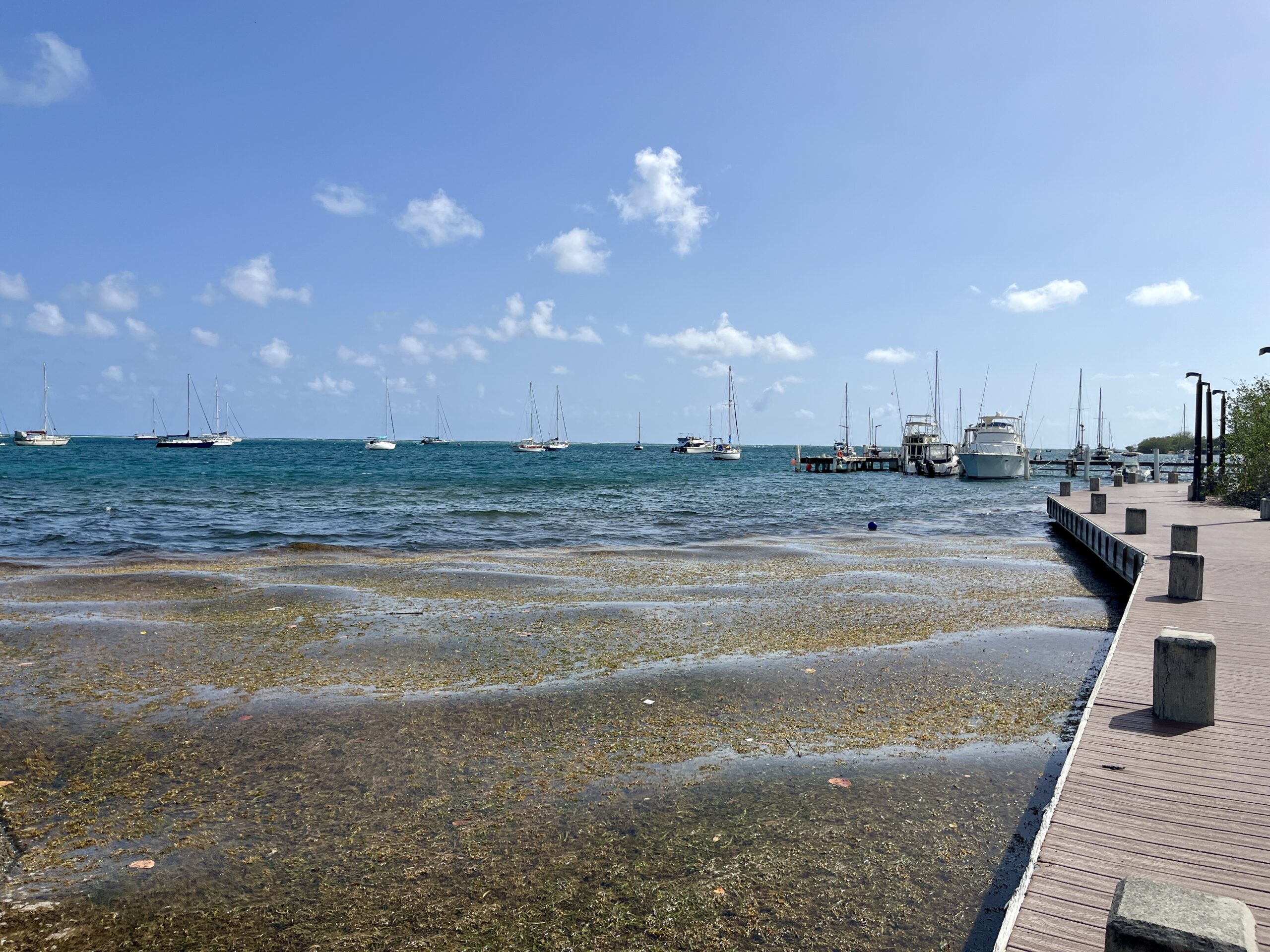
As sargassum continues to wash ashore across the Caribbean, researchers are studying whether the seaweed can be transformed from a coastal nuisance into a resource for medicine, agriculture, and industry while exploring a better understanding of what fuels the blooms.
A Scientific Opportunity
For many individuals across the Caribbean, sargassum is most often associated with the thick brown seaweed that can pile up along beaches, emitting an unpleasant stench and affecting tourism, marine life, air quality, and coastal cleanup efforts.
However, recent and exciting research in Barbados is examining whether sargassum could also become a valuable resource.
An article in Barbados TODAY newspaper recently reported that Bidyut Mohapatra, Ph.D., a scientist at the University of the West Indies Cave Hill Campus, discovered three new species of microorganisms in decomposing sargassum. The report described the discovery as a possible step toward building a homegrown biotechnology industry from a persistent coastal problem.
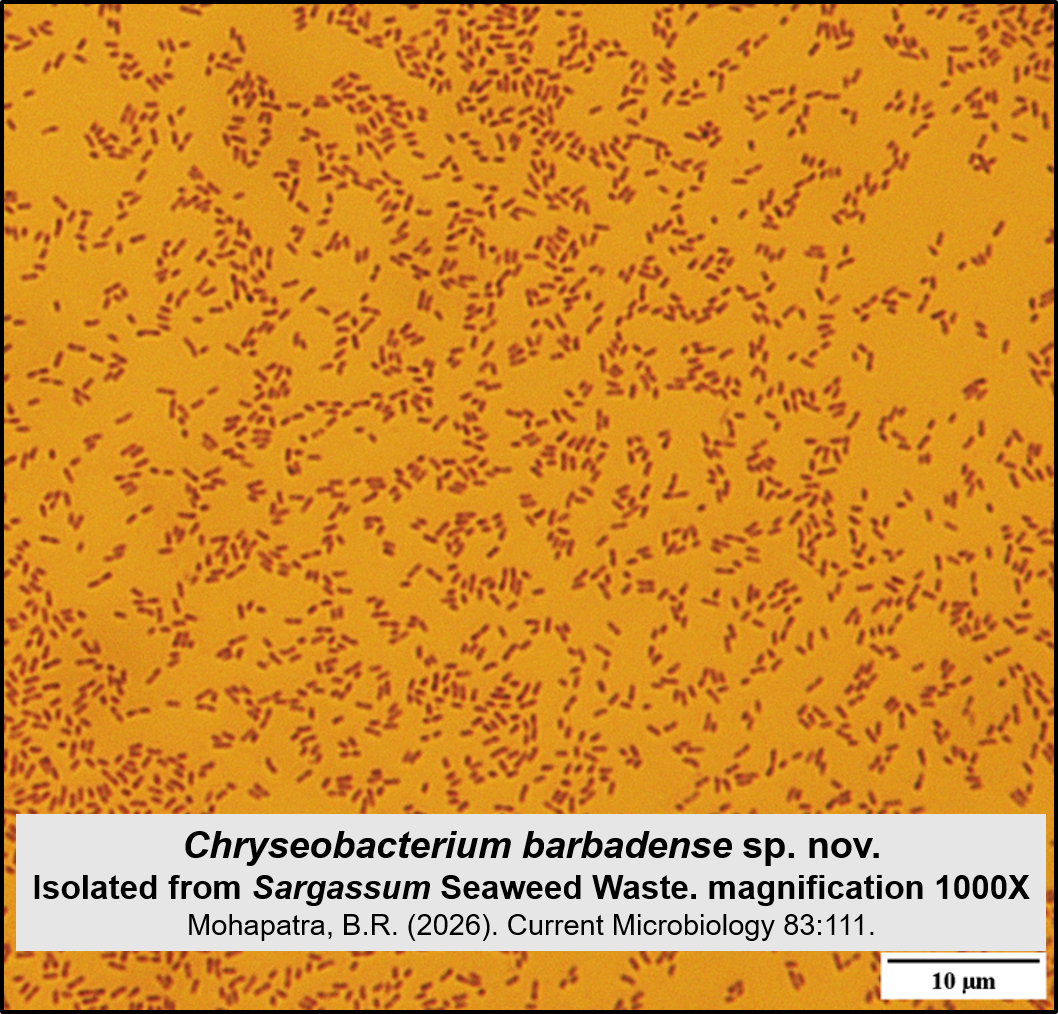
The Source connected with Mohapatra to learn more about the discovery and its possible uses for Barbados and the wider Caribbean.
Mohapatra said decomposing sargassum contains proteins, minerals, carbohydrates, and vitamins. Its complex chemical structure can support diverse microbial populations involved in natural decomposition.
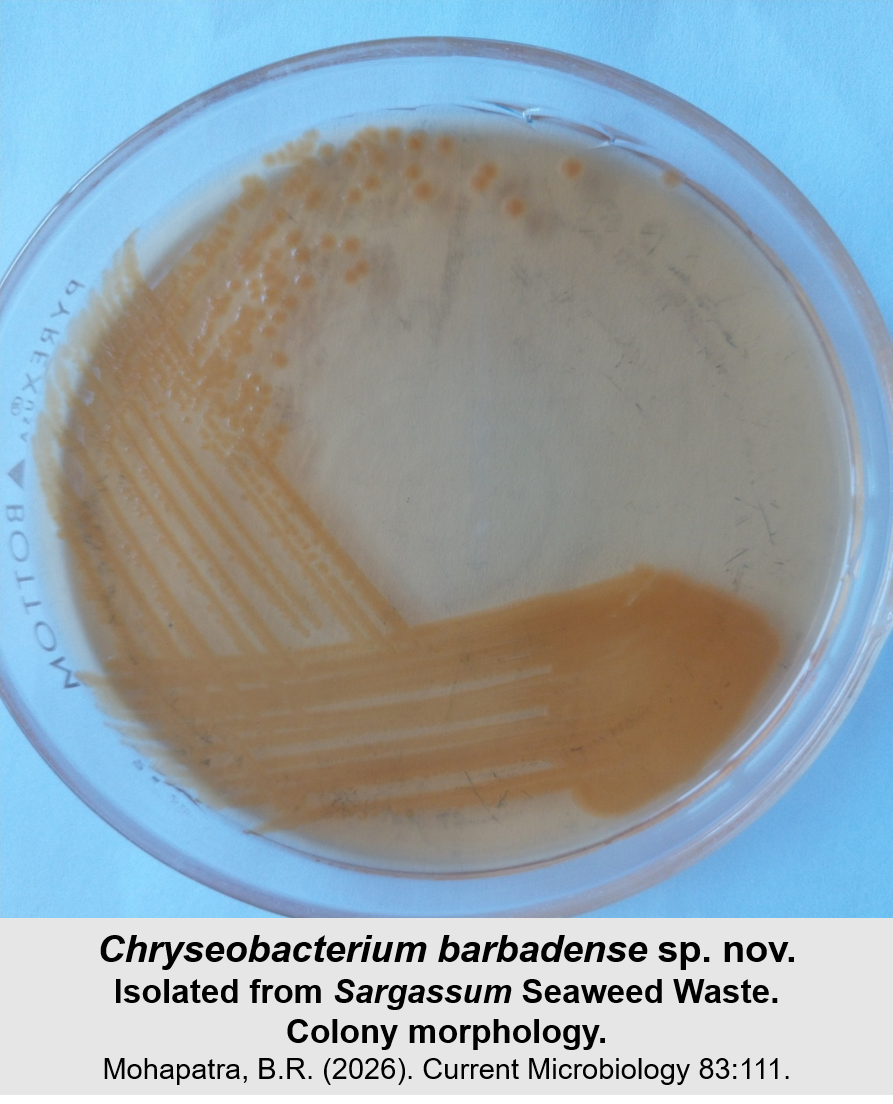
“Recently, I have discovered three new bacteria: Chryseobacterium barbadense sp. nov. (species novel), Arthrobacter bajanensis sp. nov., and Streptomyces sargassi sp. nov.,” Mohapatra said. “These three novel microbial isolates have been publicized by the National Center for Biotechnology Information (NCBI) in the USA. The first two microorganisms are named in honor of Barbados. It is worth noting that this is the first time a microorganism is named after Barbados,” Mohapatra continued.
Possible Medical Uses
Among the discoveries, Streptomyces sargassi may be especially significant because of the long history of Streptomyces bacteria in pharmaceutical research.
Barbados TODAY reported that Mohapatra described Streptomyces sargassi as a “cell factory” with the potential to produce more than twenty novel antibiotics. The same report noted that the bacteria could also have uses beyond medicine, including enzymes, plastic degradation, biofuels, and agricultural chemicals.
In Mohapatra’s comments to the Source, he provided further details about why the discovery may be significant for future medical or pharmaceutical research.
“The species of the genus Streptomyces have been considered as a bio-factory for the production of a diverse range of natural products, including antibiotics, antivirals, cytotoxic, anti-tumor, antihypertensive, immunosuppressive, insecticide, antioxidative, plant growth-promoting, and herbicidal agents because of their powerful and complex secondary metabolism,” Mohapatra said.
“The species of Streptomyces produce around 100,000 antibiotic compounds, which account for 70 to 80% of all-natural bioactive products with pharmacological or agrochemical applications,” he added.
“Therefore, identifying a novel species of Streptomyces in sargassum waste is an important achievement, because substantial research efforts have been directed by the pharmaceutical industries to hunt for novel antibiotics from this genus.”
Mohapatra said the work is also moving toward possible commercial applications.
“These three novel microorganisms have already been publicized by the NCBI in the USA, and I am currently in process for filing the intellectual property right documents for the commercial applications of these novel microorganisms,” Mohapatra stated.
Uses Beyond Medicine
The potential applications are not limited to healthcare. Mohapatra emphasized that sargassum-associated microbes may also be useful in breaking down the major components of the seaweed and could support other industries.
“The biotechnological applications of sargassum waste inhabiting microbes include production of carbohydrate-active enzymes that degrade alginate, cellulose, and mannan, which are the major components of the sargassum cell wall, plastic degradation, plant growth promotion, and disease prevention.”
Asked whether there are safety concerns with microbes found in decomposing sargassum, Mohapatra said the organisms are naturally part of the sargassum ecosystem.
“As the discovered microbes are indigenous to the sargassum ecosystem, they facilitate the natural degradation process of the biomass,” Mohapatra explained. “The microbes are neither pathogens nor produce toxins. Genome sequencing results also revealed that these microbes are non-pathogens.”
The research fits into a broader regional conversation about whether the Caribbean can turn the sargassum challenge into economic opportunity.
Mohapatra pointed to Nobel Prize-winning chemist Professor Morten Meldal, who has urged Caribbean scientists to treat the region’s sargassum crisis as a catalyst for innovation. A separate story in Barbados TODAY reported that Meldal called for investment in research that could help transform the seaweed threat into new industries involving materials, healthcare, and cosmetics.
Mohapatra said support will be needed if the Caribbean is to benefit from its own sargassum-related discoveries.
What Fuels the Sargassum Blooms?
Another area of research involves whether Saharan dust may play a role in sargassum growth.
According to information from Barbados TODAY, scientists at the Barbados Atmospheric Chemistry Observatory are investigating whether dust transported from Africa could be contributing nutrients that influence sargassum.
The story noted that the research was discussed at the Ragged Point Station in Barbados, which has recorded 60 years of continuous atmospheric measurements and is one of the world’s longest-running climate and aerosol monitoring sites.
The Source connected with Cassandra Gaston, professor of atmospheric sciences at the University of Miami and principal investigator for the Ragged Point research site.
Gaston said her lab has studied the relationship between nutrients from Saharan dust and marine productivity for years.
“My lab has been studying the connection between nutrients supplied by Saharan dust and marine productivity for some years now,” Gaston stated. “The dust is known to impact marine productivity positively and also helps grow harmful algae, such as red tides. Given this, we became interested in whether the dust could also impact sargassum,” she added.
Gaston said the two most important nutrients Saharan dust can supply are phosphorus and iron. Still, she noted that sargassum growth is affected by many factors, and researchers are not looking at dust as the only possible cause.
When asked about how difficult it is to separate the possible role of Saharan dust from other factors that affect sargassum, such as ocean currents, water temperatures, river runoff, wastewater, or nutrient pollution, Gaston acknowledged that the answer is complex.
“This is a hugely complicated issue and requires multiple disciplines to come together to answer this question. Usually, we are looking at synergies between multiple factors, such as the ones that you point out, rather than one single factor,” Gaston said.
Gaston also stressed that the dust-sargassum connection is still in the early stages of research.
Understanding a Regional Challenge
For Caribbean islands such as Barbados, Puerto Rico, and the U.S. Virgin Islands, a better understanding of sargassum could eventually help with preparation and planning.
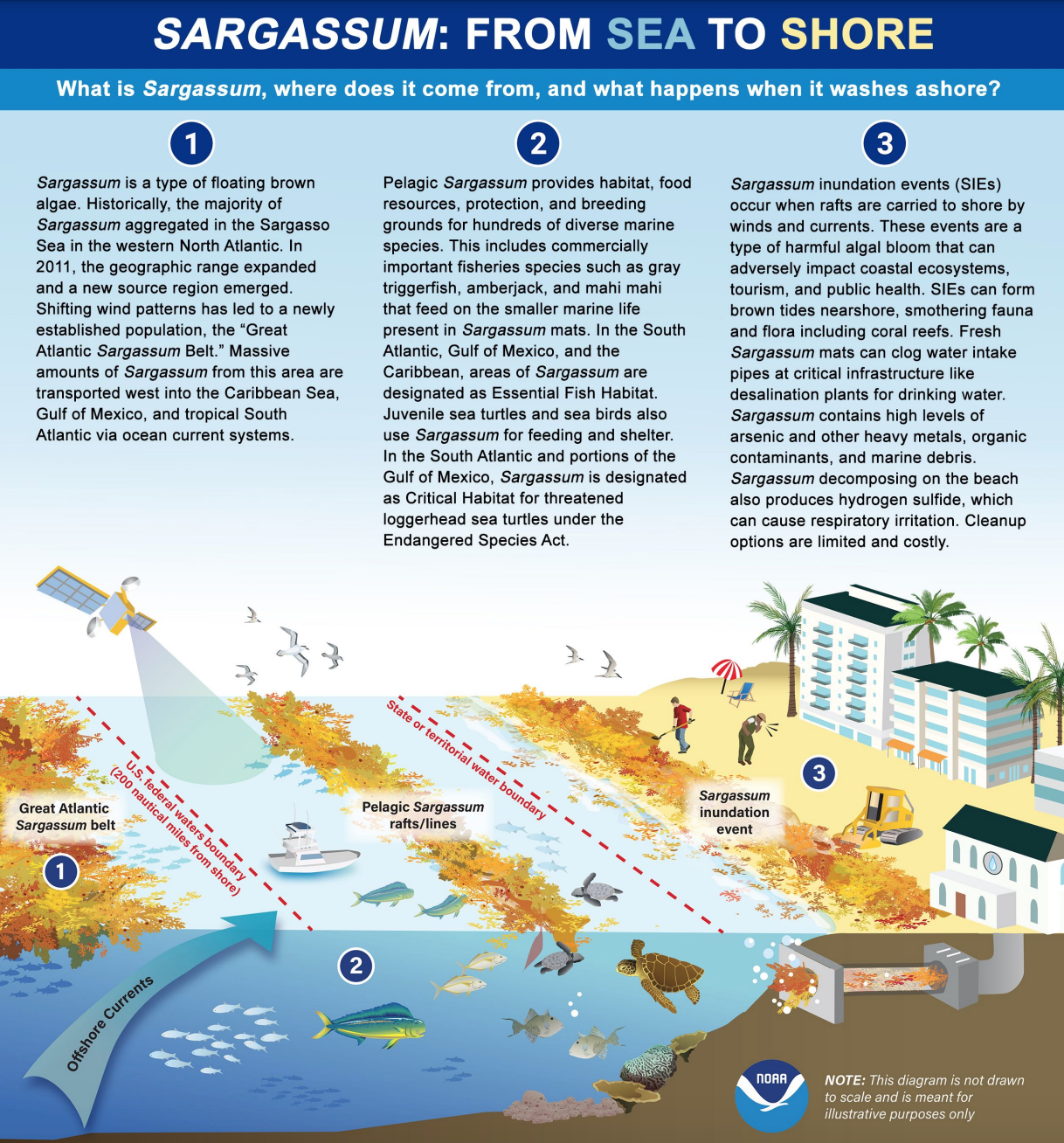
When asked whether research into the dust-sargassum link could improve forecasting or early warning for islands, Gaston said it may be possible, but more research is needed.
“I would think so. This requires a deeper understanding of both the chemistry and biology of the sargassum.”
At the same time, Gaston cautioned that Saharan dust was reaching the Caribbean long before sargassum became such a major regional concern.
“Saharan dust has both positive and negative impacts on communities, and the sargassum could be another impact that is partially linked to the dust,” Gaston emphasized. “It is important to remember that the dust has been transported to the Caribbean long before sargassum became a problem in the region.”
For island communities, the research does not offer an immediate solution to sargassum. But it does point to a growing scientific effort to better understand the seaweed and possibly transform part of the problem into new opportunities for the region.
Monitoring Local Conditions
Residents and visitors across the U.S. Virgin Islands can follow the progression of the current algae bloom and monthly sargassum updates through the University of South Florida’s Sargassum Watch System.
Individuals are also encouraged to follow local weather and marine forecasts, since winds, currents, and sea conditions can influence where and when sargassum reaches the shoreline. Weather information is available from the National Weather Service, in San Juan, Puerto Rico, the National Oceanic and Atmospheric Administration, and the Source Weather Page.