


After heavy rain occurs in the U.S. Virgin Islands, runoff can temporarily raise bacteria levels in nearshore waters, especially near guts, drainage basins, and storm-water outfalls. Health officials advise swimmers to take extra precautions and check advisories before getting back in the ocean.
Rain Runoff and Bacteria
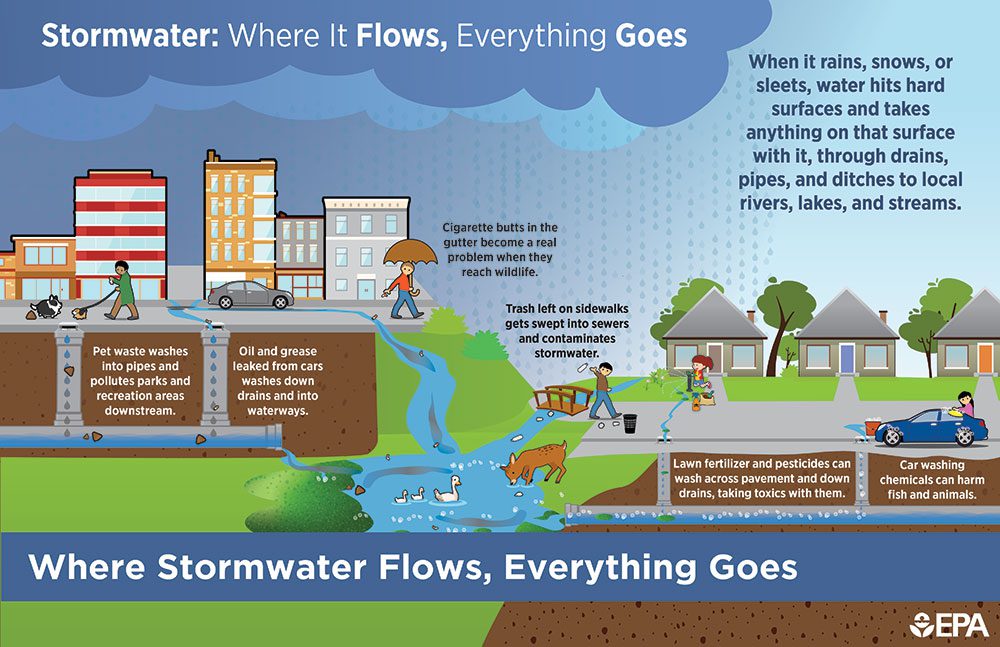
According to National Oceanic and Atmospheric Administration’s National Ocean Service, much of what’s known as “nonpoint source pollution,” or “polluted runoff,” happens when rainwater moves over land, collects pollutants, and carries them into guts, bays, and ultimately coastal waters.
NOAA describes runoff as stormwater moving over surfaces that can “pick up, absorb, and carry pollutants,” especially in developed areas with lots of impervious pavement where water doesn’t soak into the ground.
As water flows from land to coastal waters, NOAA explains that it can become contaminated by a range of sources, including sewage, pet waste, and failing septic systems, and that high bacteria levels can cause gastrointestinal illness in swimmers.
The Environmental Protection Agency also notes that polluted runoff and untreated sewage can expose swimmers to harmful germs.
“Polluted runoff and untreated sewage released into the water can expose swimmers to harmful microorganisms called ‘pathogens,’ the EPA explained. “These pathogens can be present at or near the site where polluted discharges enter the water. Pollution can also come from high concentrations of farm animals like pigs and chickens that can contaminate local waterways with runoff, which is then carried to beaches and swimming areas.”
“In addition, pollution is created by people who leave trash or animal wastes at beaches,” the EPA added.
A Meteorologist’s Perspective
The Source contacted Carlos Anselmi-Molina, a lead meteorologist with the National Weather Service in San Juan, Puerto Rico, for details regarding bacteria in the ocean and how residents and visitors can stay safe in the ocean after a rainstorm.
“Heavy rainfall runoff can carry fecal bacteria, such as Enterococcus, E. coli, viruses, and other pathogens into nearshore waters, increasing the risk of gastrointestinal illness, skin or eye infections, and ear infections, especially for swimmers and surfers.”
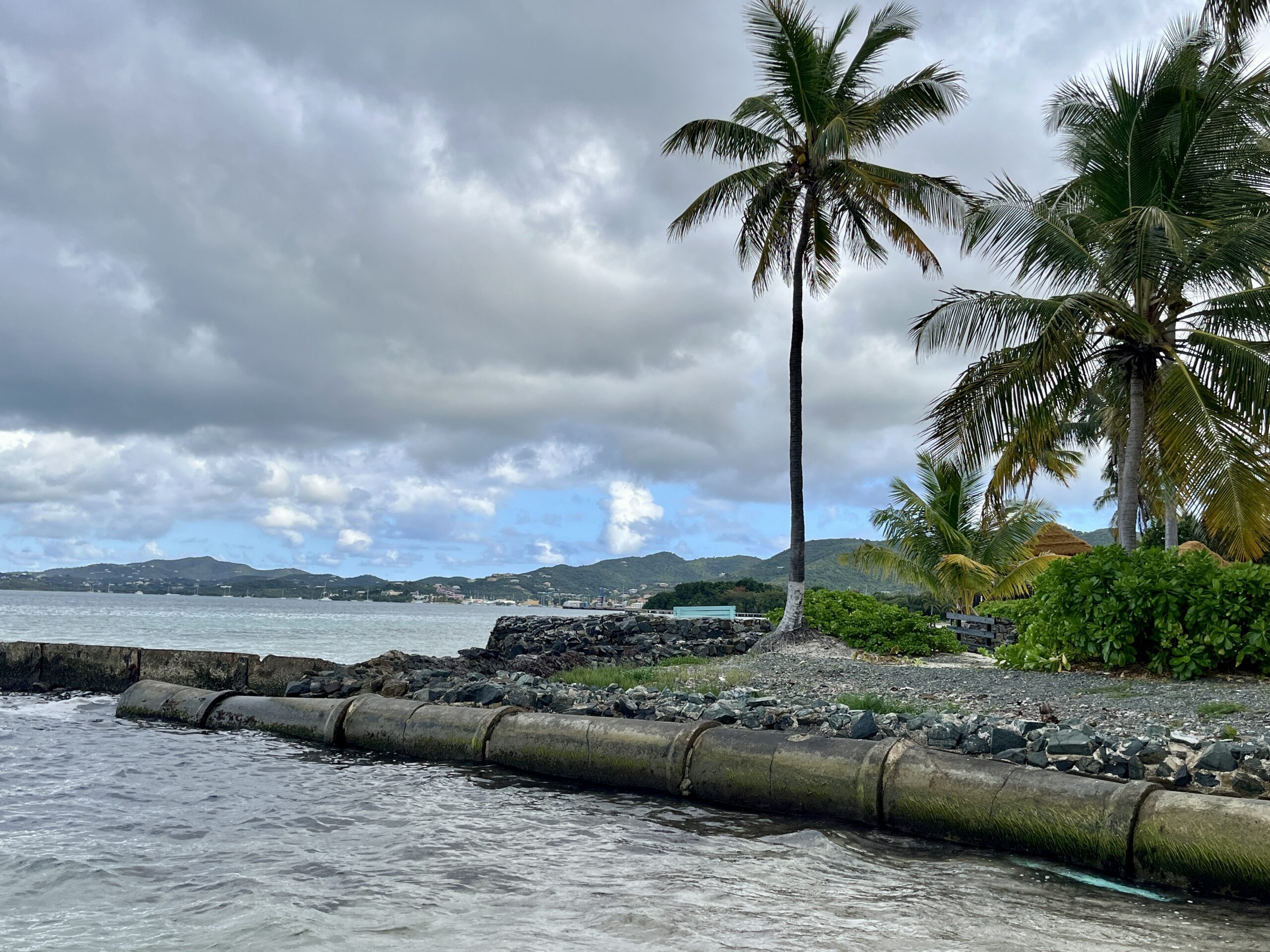
Regarding locations where bacteria can be found more consistently after a storm, Anselmi-Molina said, “Areas more prone to runoff and bacteria impacts are beaches that are near river mouths, storm drains, urbanized watersheds, marinas, and enclosed bays, which are consistently at a higher risk after heavy rains.”
Anselmi-Molina emphasized that while the NWS issues weather and marine-related advisories, water quality advisories and bacterial testing are issued by local entities such as local health and environmental agencies.
“For example, in Puerto Rico, local entities collect water samples at intervals to keep a water quality record, including Puerto Rico Blue Water Task Force and Beach Water Quality,” stated Anselmi-Molina.
“This is a collaborative effort between the SurfRider Foundation, the Puerto Rico Department of Natural Resources, Sociedad Ambiente Marino, Sea Grant, the Caribbean Coastal Ocean Observing System, State of the Beach/State Reports/PR/Water Quality – Beachapedia the EPA, and DRNA | Programa de Monitoría de Playas,” he said.
“After heavy rain, precautionary advisories are commonly recommended even before test results are available,” Anselmi-Molina added.
USVI Bacteria Monitoring
Across the USVI, the VI Department of Planning and Natural Resources Water Quality Monitoring Program evaluates weekly water quality by sampling for Enterococci bacteria and turbidity, also known as water clarity.
In its Feb. 6, 2026 beach advisory, DPNR explained that the agency conducted water quality analysis at 14 designated beaches across the territory during the week of Feb. 2 through Feb. 6. However, beaches on St. Croix and St. John were not sampled during this period due to inclement weather. The agency shared details about locations that did not meet the safety criteria or beaches that were not tested.
“The following beaches do not meet water quality standards, because they exceed the established Enterococci bacteria threshold and are therefore unsafe for swimming or fishing: Cruz Bay on St. John and Honeymoon Beach, located at Druif Bay, on Water Island,” DPNR said.
“Samples were not collected at Water Bay and Morningstar Beach on St. Thomas, beaches on St. Croix, and beaches on St. John. Therefore, the water quality at these beaches is unknown,” DPNR continued.
In the same Feb. 6 advisory, DPNR provided the following recommendations for swimmers:
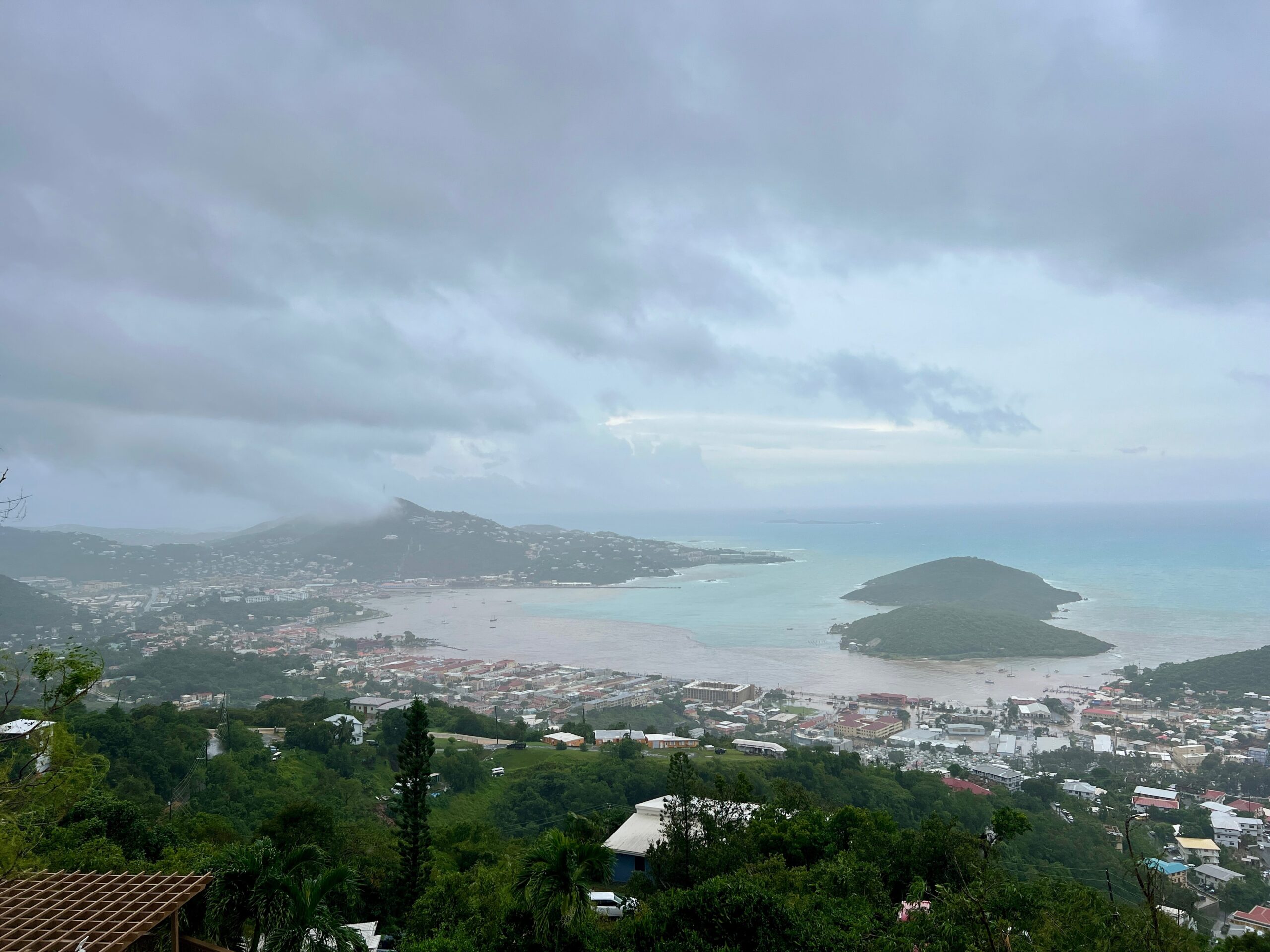
“Please be advised that anyone swimming in waters contaminated with sewage, stormwater, or with large amounts of sargassum may be at an elevated health risk due to elevated concentrations of bacteria or other contaminants. Waters impacted by sewage, stormwater runoff, including guts, puddles, and drainage basins, large amounts of sargassum, or any area that appears discolored or has foul odors should be avoided. DPNR will continue to monitor the impacted waters,” DPNR said.
Residents can report suspected pollution or environmental concerns, including impacts to coastal waters that may not be caused by rainwater, through the DPNR Hotline or to the Department of Planning and Natural Resources’ Division of Environmental Protection for follow-up.
Tips for Swimmers After Heavy Rain
Guidance from public health and environmental agencies is consistent: after heavy rain, runoff can affect nearshore water quality, and swimmers should take extra precautions.
Give it time after heavy rain.
Carlos Anselmi-Molina advises individuals to “Avoid swimming for at least 48 hours after heavy rainfall to reduce the risk of exposure.”
Do not swim in obvious runoff areas.
DPNR’s beach advisories specifically warn swimmers to stay away from waters impacted by stormwater runoff, including guts, puddles, and drainage basins. EPA guidance also notes that pathogens are often more concentrated near polluted discharge points such as outfalls and drains, particularly after rainfall.
Look for signs and choose locations carefully.
The EPA advises swimmers to pay attention to posted warnings and to keep away from beaches where discharge pipes are visible or at urban beaches after heavy rain. In areas that are not regularly monitored, choosing less developed beaches with good water circulation can reduce risk.
Avoid swallowing water.
EPA notes that most swimmer illnesses occur when contaminated water is swallowed. Wading or swimming without submerging your head can reduce risk.
Keep open wounds out of the water.
EPA and Centers for Disease Control and Prevention both caution that polluted water can cause infections if it comes into contact with open cuts or wounds.
Wash hands after playing in sand.
EPA has linked digging in beach sand to an increased risk of gastrointestinal illness.
Don’t swim if the water looks “off.”
CDC Healthy Swimming guidance advises avoiding water that is cloudier than usual, discolored, or has a foul smell — all signs that runoff or contamination may be present.
Check advisories before you go.
DPNR’s weekly Beach Water Quality Monitoring Program tests for Enterococci bacteria and publishes advisories showing which monitored beaches are meeting standards and which are not. Swimmers should also watch for posted signs at beaches that may be unsafe for swimming.
Watching the Local Weather
Local weather information, including marine weather conditions, is available from the NWS, the NHC, and the National Oceanic and Atmospheric Administration. Additionally, the local weather forecast for the U.S. Virgin Islands is regularly updated on the Source Weather Page.
Residents and visitors can also find weather alerts and preparedness information from the Virgin Islands Territorial Emergency Management Agency.